
Set out 21 gourd displays on the porch, each built from a named variety with a hard shell and a shape that reads from the street. That is thanksgiving gourd display ideas for the porch: warty, Turk’s Turban, swan, bottle, luffa, and spoon gourds, grown at home or bought at a farm stand, then arranged on steps, rails, and door frames. I have learned that gourds cured until the seeds rattle outlast gourds set out straight from the vine.
The rest of this page is 21 displays, from the steps to the door. Pumpkins are grown for eating. Ornamental gourds are grown for hard shells and shapes. The flesh runs bitter, so these gourds stay on display and off the plate.
Work from the top if Thursday is close. Cure first. Build on a covered table. Clear soft fruit after the meal.
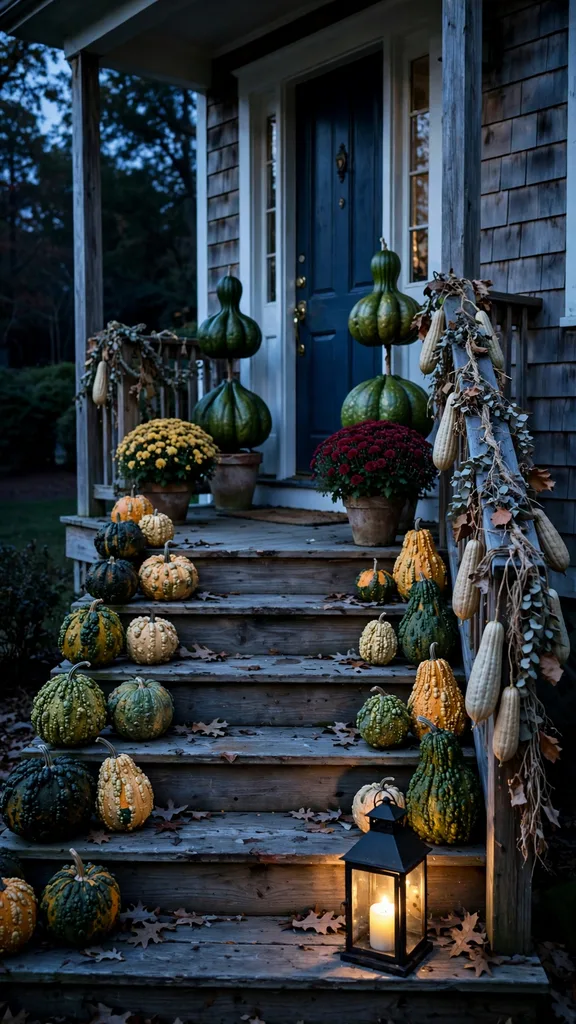
1. Run a Warty Gourd Staircase Down the Steps
Set the largest warty gourds on the bottom step and shrink the size as the steps climb. Place two or three gourds per step in odd groups, and let a few minis spill onto the walkway so the run looks gathered. Warty gourds carry knobby, bumpy skin in orange or pale green, and the bumps catch light that smooth pumpkins miss.
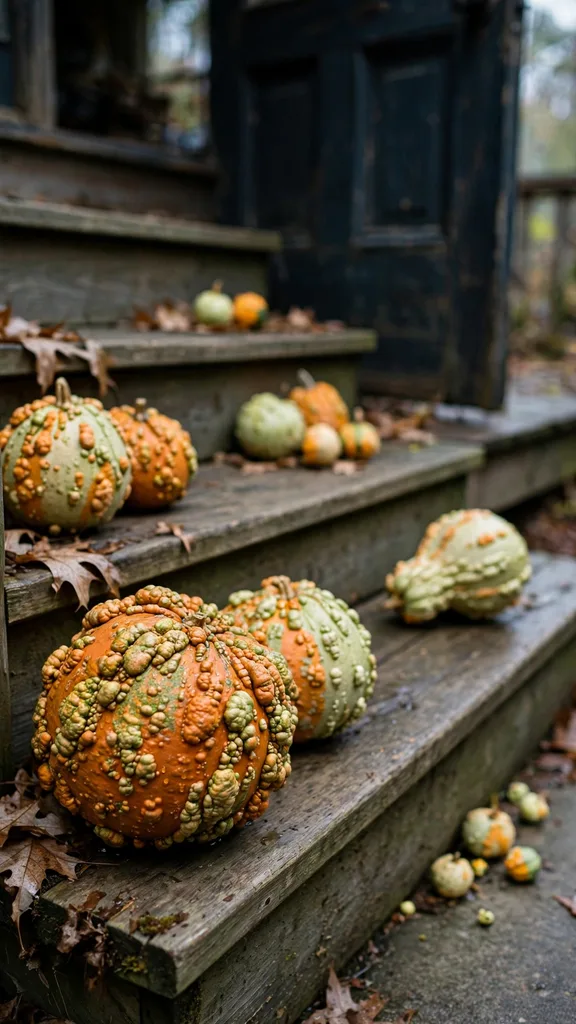
A single file of gourds up the middle reads as clutter. Keep the groups tight to one side of each step so feet still find the tread. Pull any gourd that softens, since one rotting fruit spreads mold to its neighbors. Step back to the street after placing each step. A staircase that reads as a gradient from the road works. A staircase that reads as random piles does not, and the fix is to swap two gourds between steps until the sizes fall evenly.
2. Stack a Turk’s Turban Topiary Beside the Door
Drive a wooden dowel into a clay pot filled with sand, then thread Turk’s Turban gourds onto it from largest at the bottom to smallest at the top. Twist each gourd slightly so the stripes spiral up the stack. Finish with one small crowned gourd as the finial.
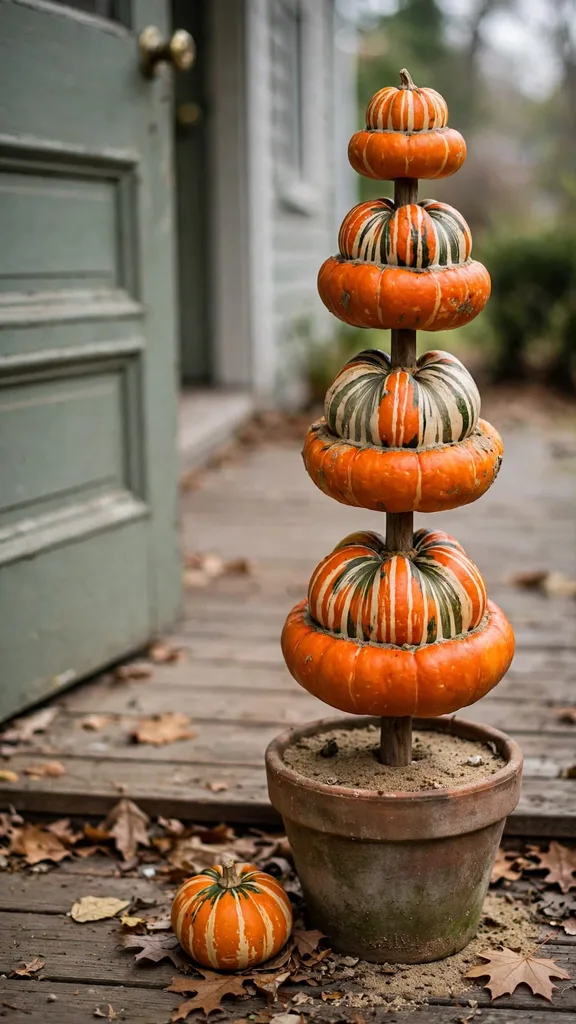
Turk’s Turban gourds carry a flattened body with a bright orange cap over a striped base, and that cap shape reads clearly from the street. A topiary built from soft or bruised fruit leans within days. Use only hard shells with dry stems, and set the pot where the roof overhang keeps rain off the sand. Water never touches the pot interior, since wet sand adds weight and tips the stack in wind. Check the dowel after the first storm. A leaning topiary gets one straightening push at the base, not a rebuild.
3. Hang Swan Gourds From the Porch Beam
Drill a small pilot hole through the stem end of three to five dried swan gourds, thread jute twine through, and hang them from the porch beam at staggered heights. Swan gourds, also called gooseneck gourds, carry a long curved neck that looks graceful in the air. A light breeze sets them swaying, and the motion draws the eye upward.
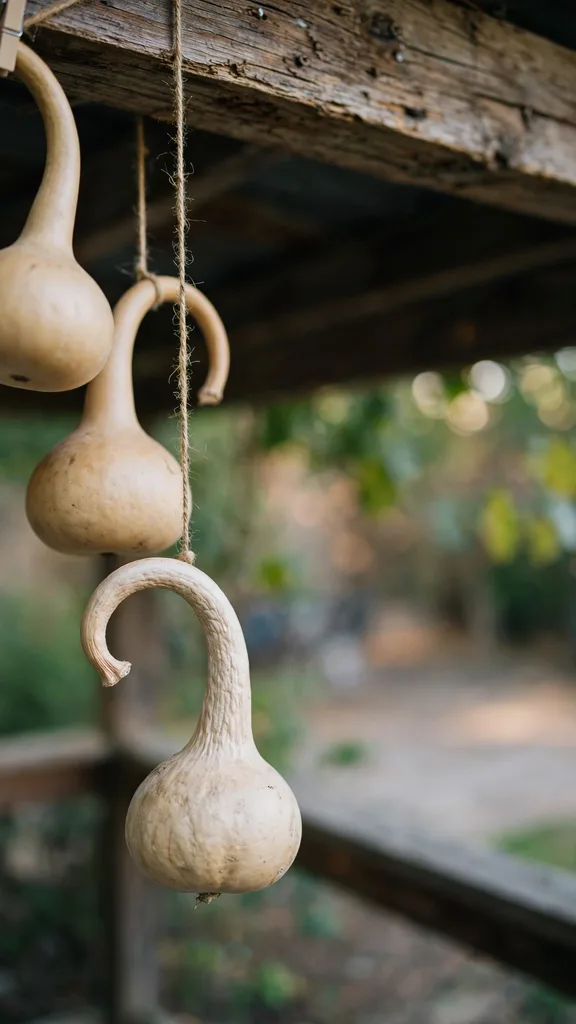
Hang dried gourds only. Fresh swan gourds carry weight that stretches twine and drops the display. Check each knot after the first windy night, since a fallen gourd cracks on stone and the crack invites rot. Twine rated for outdoor use holds through rain. Indoor twine frays and snaps in wet weather. Replace any frayed length before it breaks, since a swan gourd dropped on stone cracks beyond repair.
4. Spike Spoon Gourds Into Fall Planters
Push each spoon gourd onto the end of a bamboo skewer and stick three to five skewers into the soil of fall planters at different heights. The flat two-lobed gourds hover above the mums like strange flowers. Spoon gourds survive light frost better than most blooms, so the planters stay interesting after the first cold snap.
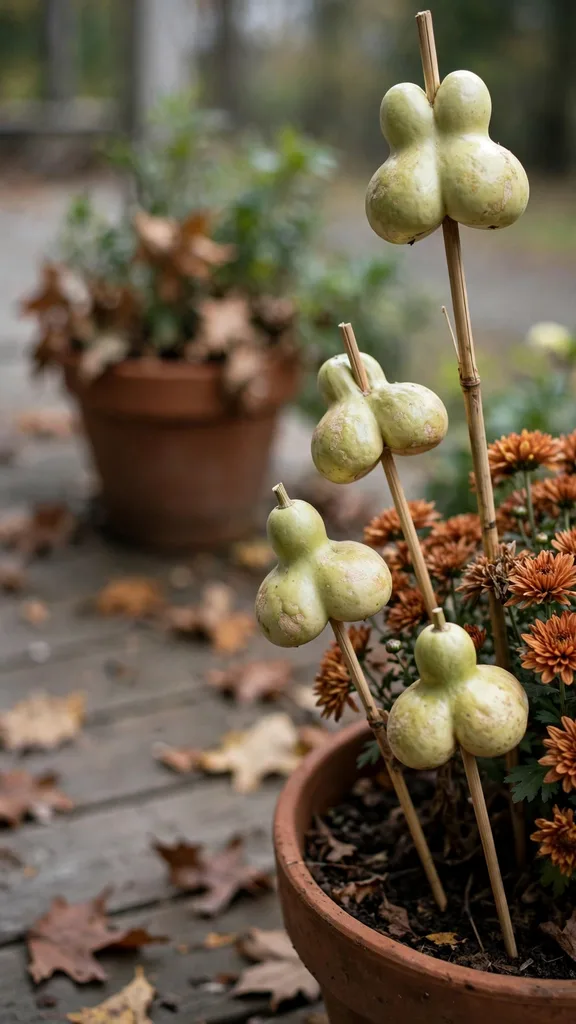
For the full planter treatment, the site’s thanksgiving planter ideas build runs from soil mix to thriller plants. A skewer pushed too deep splits the gourd base. Push only far enough to hold, and pull the skewers before a hard rain soaks the soil and loosens them. Replace a skewer that bends in wet soil. A bent skewer leans the gourd into the mums and hides the flower heads. Straight skewers at varied heights read as a small bouquet of gourds above the planting.
5. Weave Bottle Gourds Along the Railing With Lights
Wire six to eight small bottle gourds to the railing spindles with floral wire, spacing them evenly, then weave one strand of outdoor LED lights in and out around them. Bottle gourds carry a tall neck over a round body, and the smooth skin catches light well after dark. The whole railing turns into a glow line visible from the sidewalk.
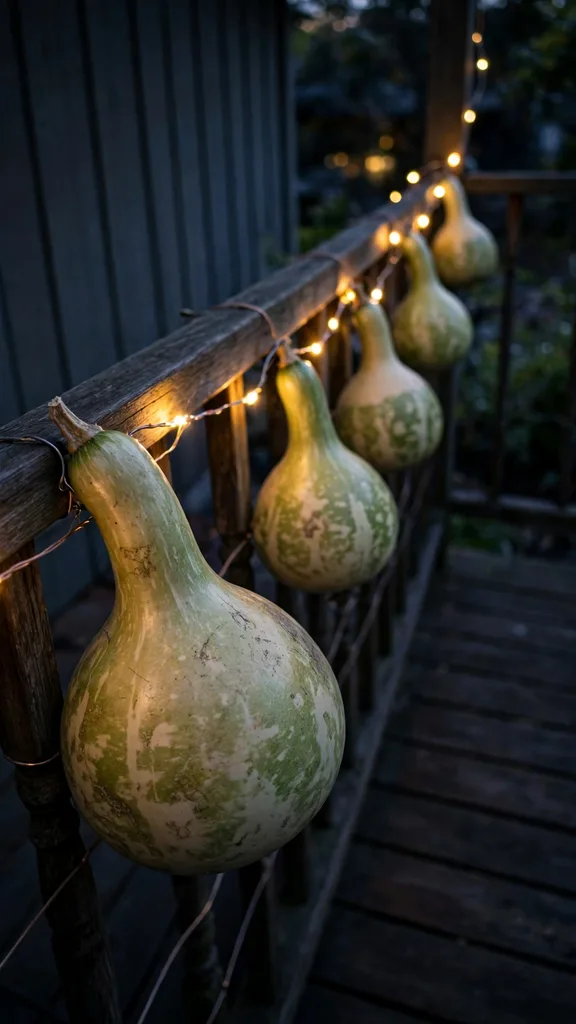
Use LED lights only. A real flame near a dried gourd is a fire risk, and a dried shell catches fast. Wire each gourd at two points so wind cannot spin it, and keep the light strand clear of dry leaves that collect on the rail. Run the light strand on a timer so the display glows at dusk without an evening trip outside. A timer also keeps the strand from burning through the whole night. Check wire ends for sharp points that scratch the railing paint.
6. String a Luffa Garland Across the Rail
Cut dried luffa gourds into half-inch rounds, drill a small hole through the center of each slice, and alternate the slices with dried mini gourds on a length of jute twine. Knot the twine on each side of every piece so nothing slides. Drape the garland across the railing or around the door frame.
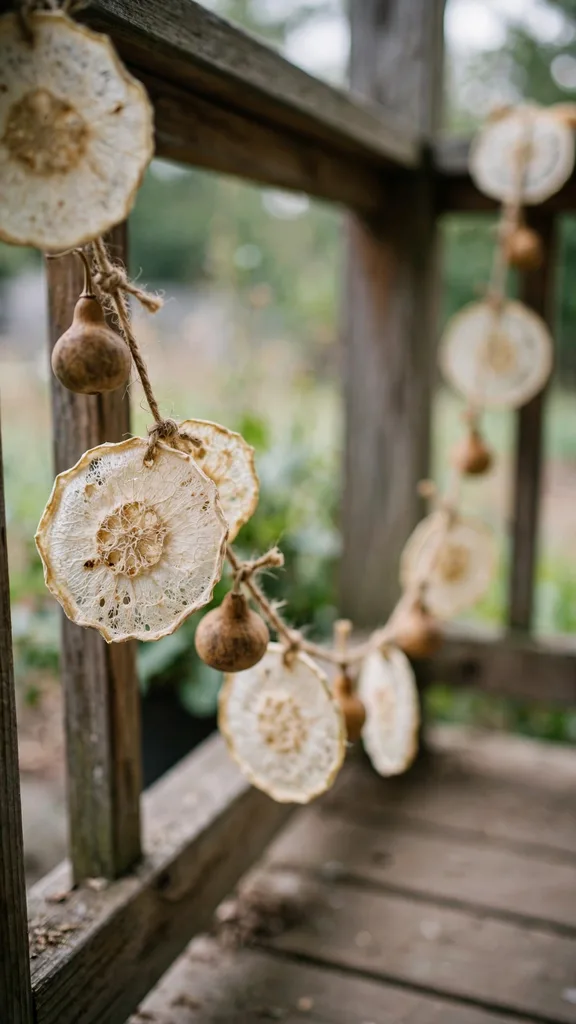
Luffa gourds grow long, with prominent ribs or smooth skin. A garland built from fresh luffa sags and molds. Use fully dried slices only, and bring the garland under cover in a driving rain so the twine does not stay wet for days. Soak a dried slice briefly if it resists the drill, then let the slice dry again before stringing. A cracked slice still strings fine if the hole sits clear of the crack. Hang the finished garland where hands cannot tug it at the rail ends.
7. Set Tennessee Dancing Gourds in a Windy Corner
Place a cluster of five or six Tennessee Dancing gourds in an exposed railing corner or on top of a porch post cap where the wind catches them. The tiny round bodies on long thin necks bob in even a light breeze, and the motion reads as dancing. Mix in a few still, heavy warty gourds for contrast so the movement stands out.
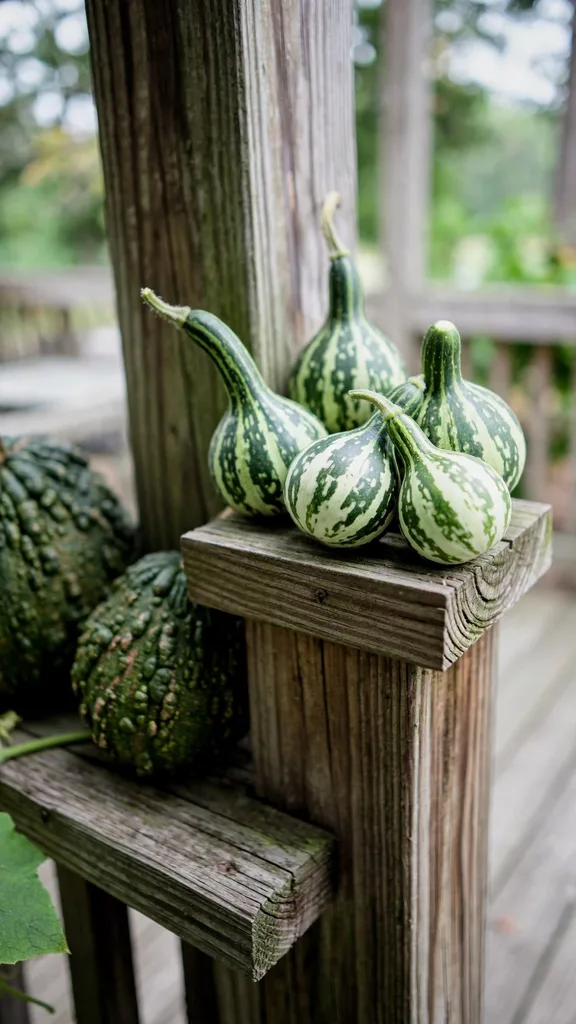
A sheltered corner kills the effect. The dancing gourds need moving air, and a still cluster looks like any other pile of minis. Anchor the post cap cluster with a dab of floral clay so a gust does not send the whole group to the walkway. A post cap cluster needs a flat base to sit level. A wobbly base sends gourds rolling at the first gust. Set the cluster on a scrap of burlap for grip, and check the group after every storm.
8. Fill a Wooden Crate With Crown of Thorns Minis
Line an old wooden crate with a handful of straw, then mound mini gourds inside so they spill slightly over the front edge. Mix in striped Crown of Thorns gourds for contrast against round minis. Set the crate beside the doormat or under a porch bench where guests see it up close.
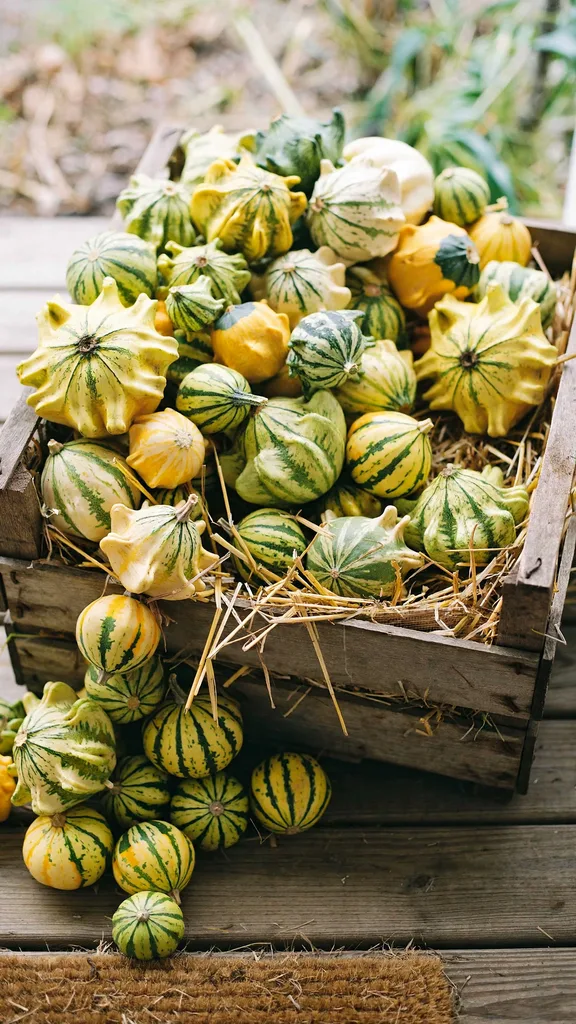
A crate packed tight with no straw shifts in transit and bruises the fruit. Straw locks each gourd in place and hides the crate bottom. Check the bottom layer weekly, since the lowest gourds sit in trapped moisture and soften first. A crate under a bench stays drier than a crate in open rain. Move the crate under cover when storms arrive, and return it to the doormat for guests. Straw replaced midseason keeps the crate fresh.
9. Fill a Lantern With Mini Gourds and an LED Candle
Fill the bottom of a tall black metal lantern with a dozen mini gourds, nestle a flameless LED pillar candle in the center, and set the lantern on the porch floor beside the door. The candlelight throws the gourds’ shadows onto the glass panels after dark, and the effect looks far more expensive than the materials.
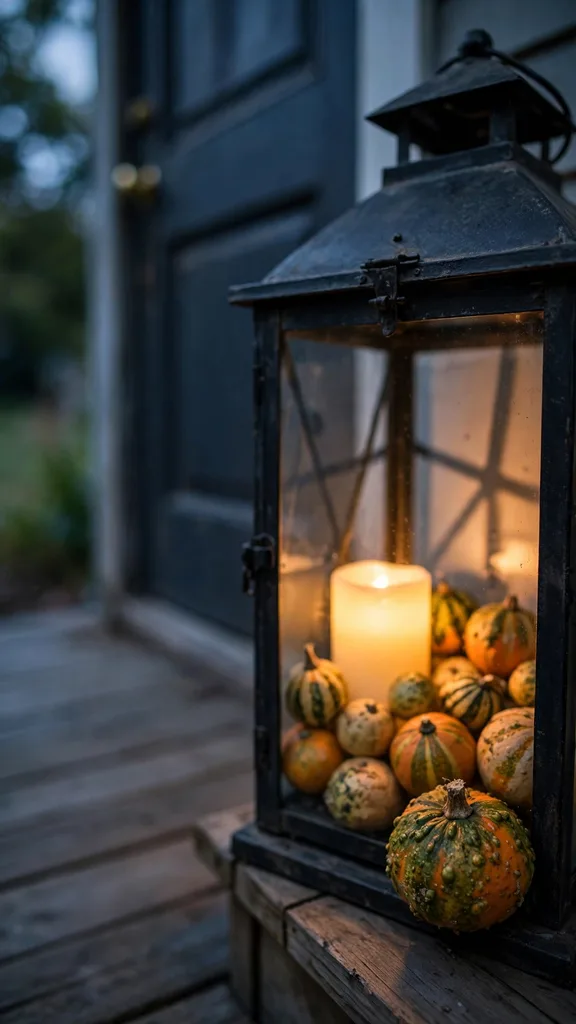
Use LED candles only inside a lantern full of dried gourds. A real flame and dried shells share a small glass box, and that combination ends badly. Wipe the glass before guests arrive, since dust dulls the light fast. A lantern on the porch floor needs a level spot. A tilted lantern leans the candle against glass and dims one side. Set the lantern on a flat stone if the porch boards run uneven.
10. Lay a Two-Color Gourd Story on the Porch Ledge
Pick exactly two colors and commit. Cream and deep orange is a classic: gather only white mini gourds, pale bottle gourds, and orange Turk’s Turban and warty types, then arrange them in alternating bands along a porch ledge or windowsill. Limiting the palette turns a random pile of gourds into a design. Green and yellow works well against brick.
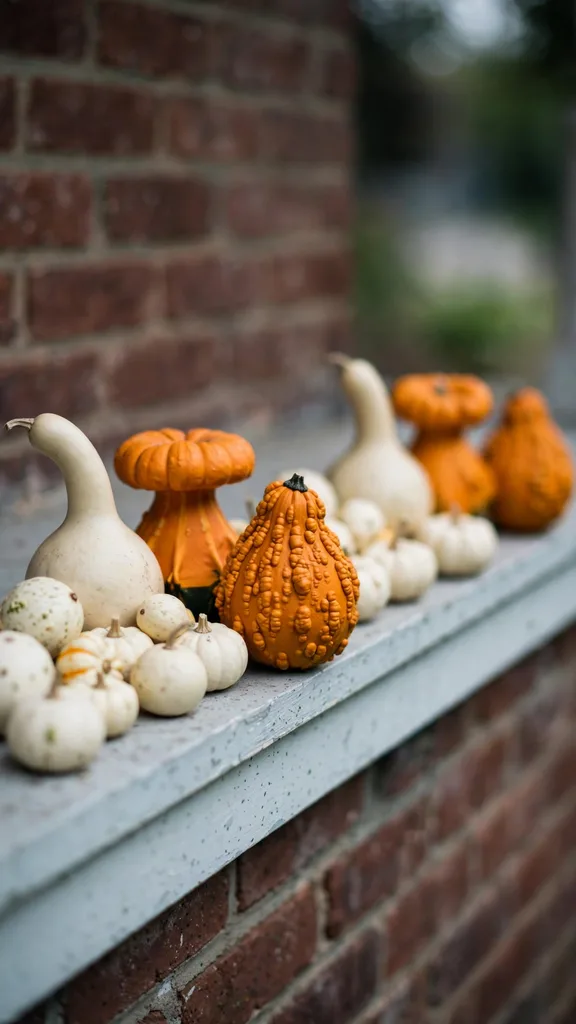
A third color sneaks in through a stray gourd and breaks the whole scheme. Sort the pile on the table first and set rejects aside for another display. Dust the ledge gourds weekly, since a flat ledge collects dust that dulls pale shells first. Photograph the ledge from the street before calling it done. A palette that holds at arm’s length can still break at distance when one pale gourd glares. Swap the glaring gourd for a deeper tone.
11. Pair Warty Gourds With Mums at the Doorstep
Flank each side of the door with a pot of rust or burgundy mums, then nestle two warty gourds into the mulch at the base of each pot, one upright and one tipped on its side. The contrast between bumpy skin and soft petals is what makes the pairing work. The site’s mums and pumpkins porch decor ideas cover the living side of this pairing, from buying mums in bud to keeping the display fresh to the meal.
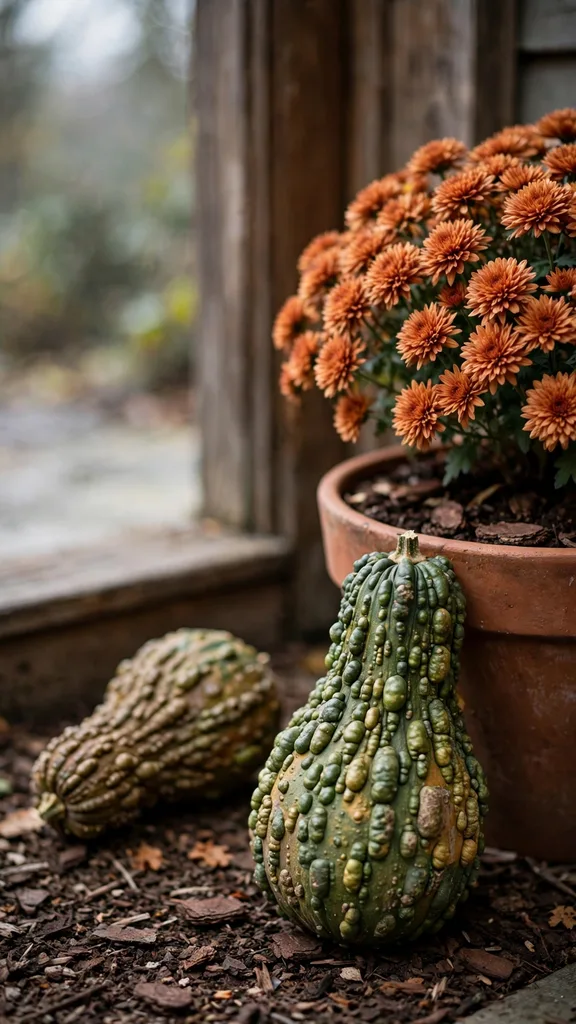
A gourd buried deep in wet mulch rots from the bottom up. Set each gourd on the mulch surface, not sunk into it, and lift them after rain to check the underside. Swap any gourd that softens before the soft spot spreads to the mulch. Water the mums at the soil line and keep water off the gourds. Wet shells in warm sun grow mold spots within days. A dry shell at the pot base lasts to the meal.
12. Raise a Hay Bale Riser in a Dead Corner
Set a half hay bale in a porch corner as a riser, drape burlap over it, and arrange five to seven gourds in a loose triangle with the tallest in back and the smallest in front. Use one hero gourd, like a big warty Knaven or a Turk’s Turban, surrounded by supporting minis. The same formula on both sides of the door gives instant symmetry.
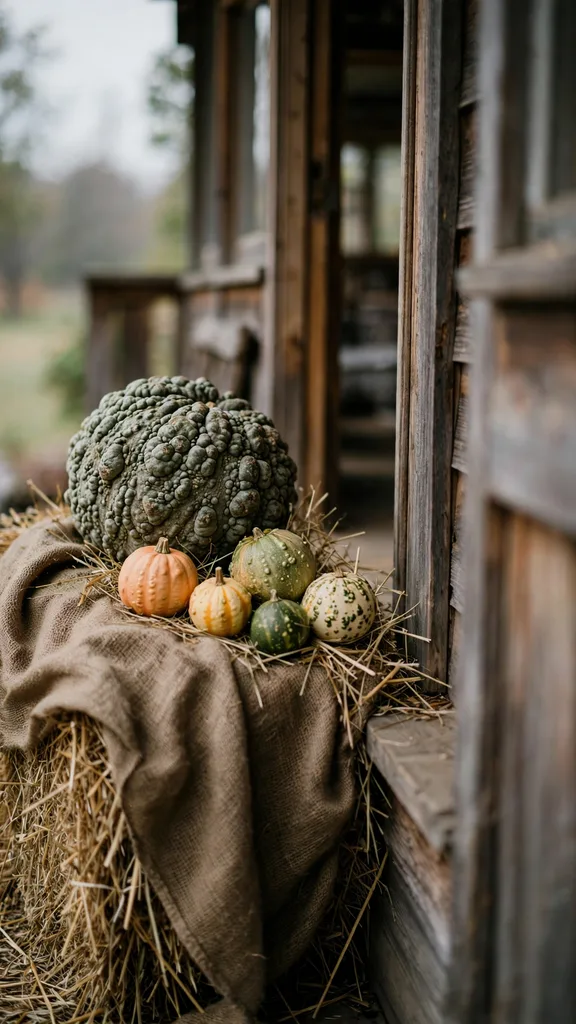
A full bale overwhelms a small porch and blocks the corner from view. A half bale lifts the display without eating the walkway. Keep the bale under the roof overhang, since a soaked bale sags and stains the porch floor beneath it. Burlap with a loose weave drapes better than stiff cloth. Tuck the burlap ends under the bale so no raw edge shows from the walk. A bale that smells musty comes inside, since musty straw stains the porch.
13. Set a Harvest Basket by the Door
Fill a deep woven basket or galvanized tub with an abundant mix of ornamental gourds, Indian corn, and dried corn cobs, and set it beside the door. The mix of shapes, colors, and textures reads as harvest itself, and a full basket greets guests before they reach the door. Let a few mini gourds spill onto the floor at the basket foot for a gathered look.
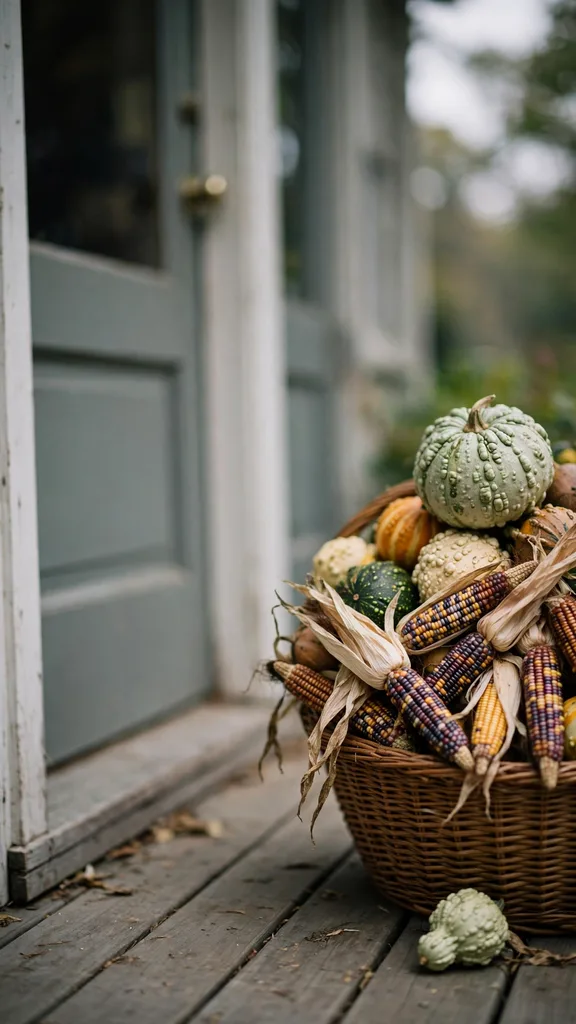
A basket left in open rain turns into a soup of wet husks. Set it under cover and lift the basket after storms to check the bottom layer. A basket with no drainage rots its lowest gourds first, so accept a damp bottom and check it. A basket handle wrapped in twine gives guests a grip point for lifting the whole display. A handle left bare slips in wet hands. Keep the basket off bare soil, since soil moisture wicks into the weave.
14. Wire Mini Gourds Into a Door Wreath
Wire dried mini gourds onto a grapevine or wire wreath ring, alternating shapes and colors, and tuck in a few dried leaves between them. Hang the wreath on the door at eye level. The round form reads from the street, and the gourds give the wreath a harvest weight that evergreen alone lacks.
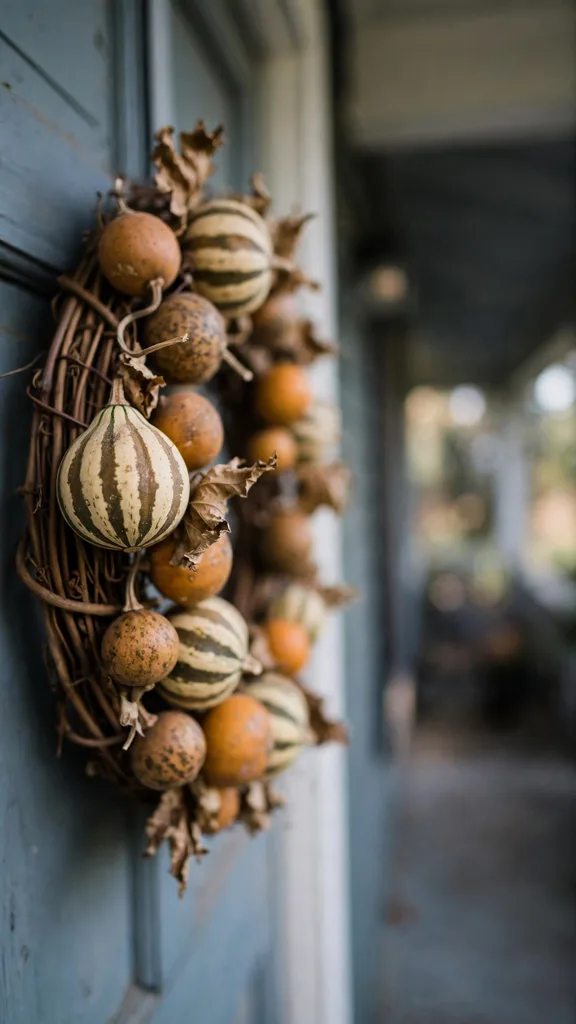
Fresh gourds wired into a wreath rot in place and stain the ring. Use cured hard shells only, and wire each gourd at two points so the door’s swing does not shake them loose. Take the wreath down in driving rain, since a soaked ring drips onto the door paint. Hang the wreath with a sturdy hook, not a nail that works loose in the door frame. A wreath that slips lands on the step and scatters minis. Test the hook by tugging the ring before guests arrive.
15. Grow Gourds Up a Porch Trellis for a Living Wall
Train gourd vines up a porch trellis and let the fruit hang where guests see it forming. Vines are vigorous and spreading, and trellising gives better shaped gourds while keeping fruit off the ground, which cuts rotting and soil staining. Plant seeds 1 inch (2.5 cm) deep when the soil is warm and frost danger is past, and space plants 2 feet (61 cm) apart when not trellising, according to Mississippi State University Extension notes on gourds.
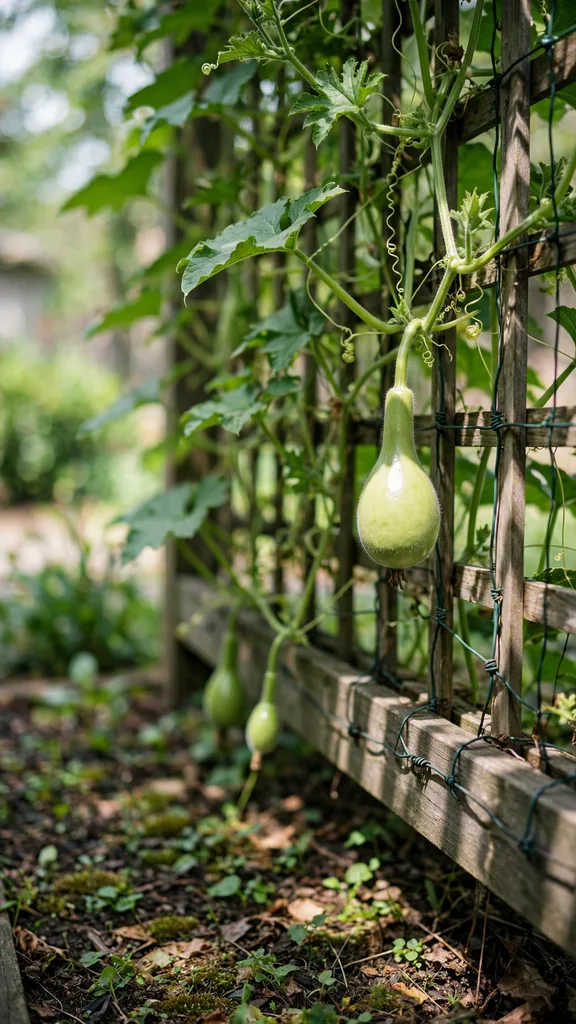
A vine left to sprawl across the porch floor trips guests and stains fruit on wet boards. Tie new growth to the trellis weekly during the fast growth stretch, and pick fruit as soon as the shell hardens so the vine keeps setting new gourds. A trellis panel wired to the porch rail holds more weight than a freestanding frame. Fruit hanging against the rail stays visible from the walk. Prune side shoots that block the door swing.
16. Line the Walkway With Gourd Clusters
Set clusters of three to five gourds along the walkway edges, mixing one hero gourd with minis in each group. Space the clusters unevenly so the walk reads as a path through a harvest, not a fence of fruit. Keep every cluster clear of the walking surface so feet never meet a rolling gourd.
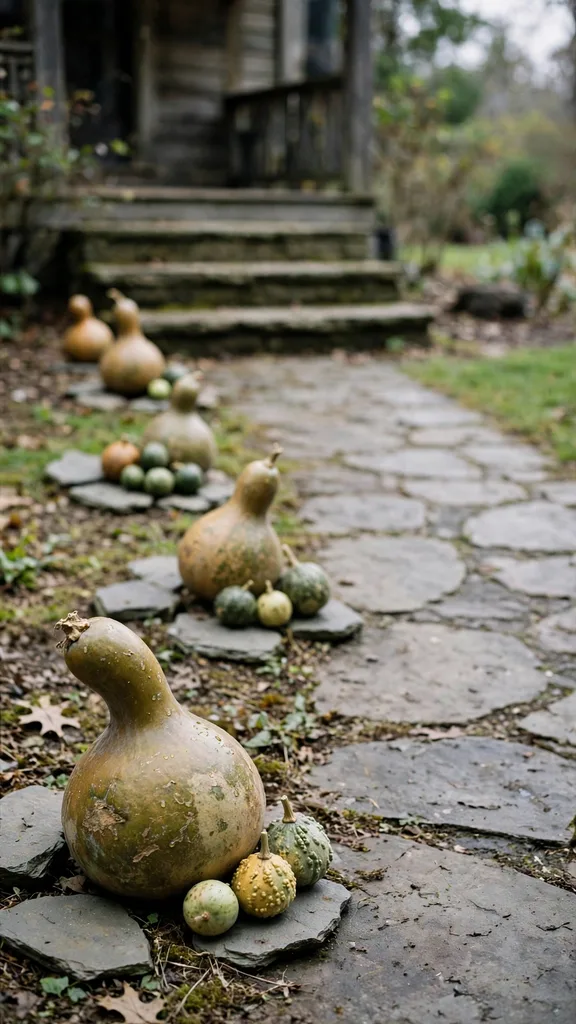
A gourd that rolls onto the path is a fall risk after dark. Set clusters back from the tread edge and check them after wind. A cluster built on a slope migrates downhill, so level each group on a flat stone or a scrap of burlap. Mark cluster spots with small flat stones so the groups return to the same place after sweeping. A cluster that migrates onto the tread becomes a trip risk at dusk. Level each group before guests arrive.
17. Hang a Birdhouse Gourd on the Porch Post
Hang a dried birdhouse gourd from a hook on the porch post, with the entrance hole facing away from prevailing wind. Birdhouse gourds carry a round body with a long neck, and the dried shell lasts season after season outdoors once cured. The gourd works as decor through fall and as a real birdhouse come spring.
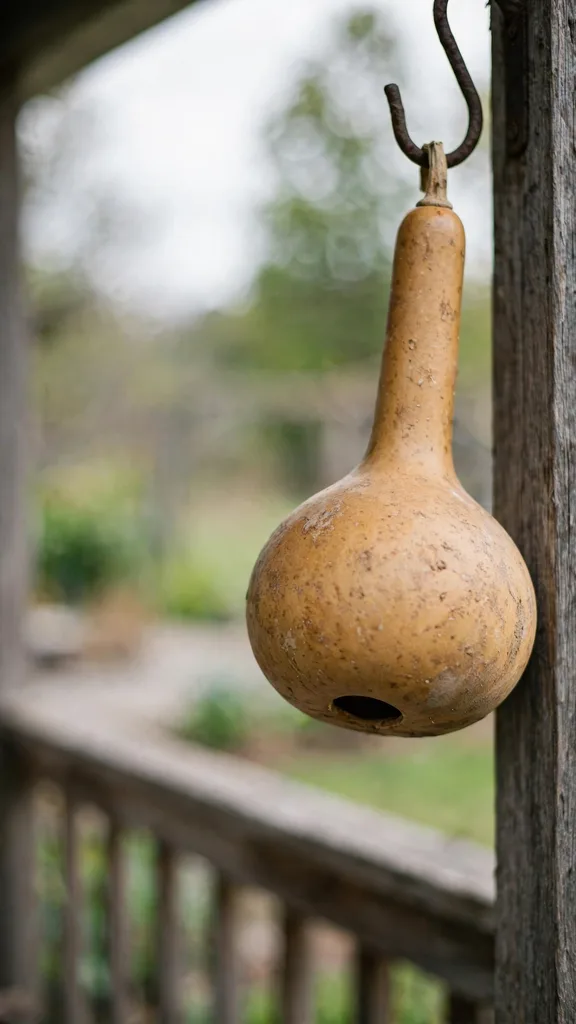
A birdhouse gourd hung with the hole facing the wind fills with rain and rots from inside. Face the hole downwind and slightly downward so water runs out. Clean out old nesting material each spring before new birds claim the gourd. A hook screwed into solid post wood holds better than a nail in soft trim. Test the hook with a firm tug before hanging the gourd. A gourd that falls cracks the neck and ruins the entrance hole.
18. Build a Porch Table Centerpiece From Gourds
Fill a low wooden dough bowl or ceramic tray with mixed gourds, pinecones, and dry fall leaves, and set it on the porch table. Keep the arrangement low so sightlines across the table stay open. The bowl reads as a harvest gathering, and guests can lift a gourd to look at it without dismantling the display.
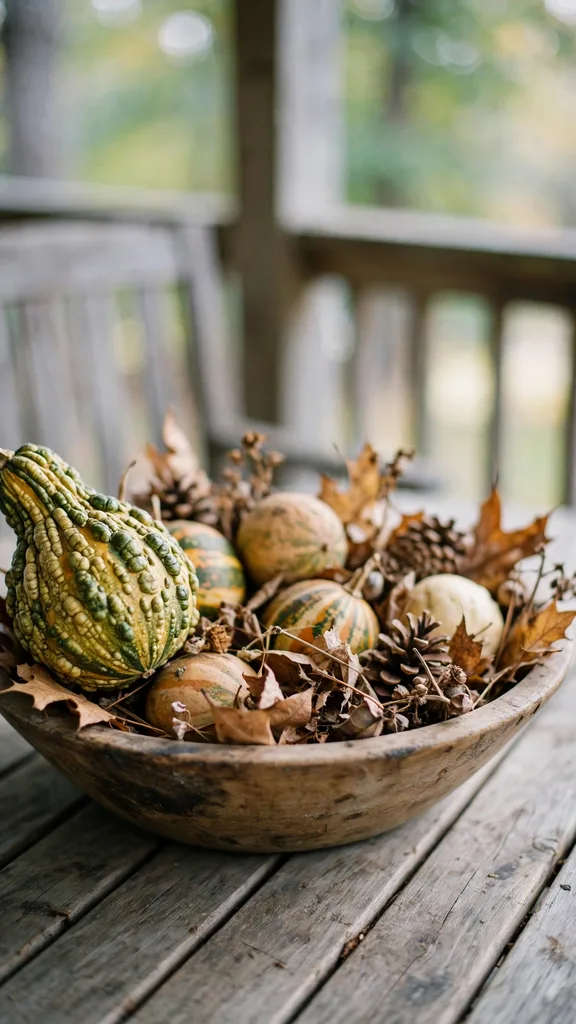
A tall centerpiece on a porch table blocks faces and conversation. Keep the tallest gourd below eye level when seated. A tray with no lip sheds gourds at the first bump, so use a bowl or tray with a raised edge. A tray lined with burlap keeps gourds from rolling when the table gets bumped. A bare tray sends minis to the floor at the first elbow. Lift the tray indoors during storms to keep the leaves dry.
19. Dry Gourds on a Screen Rack in Plain Sight
Spread harvested gourds in a single layer on a screen rack on the porch, spaced so none touch, and let the rack stand as part of the display. Turn each gourd often and pull any that show rot. Wash harvested gourds in warm soapy water, wipe each one with a household disinfectant, and dry it with a soft cloth first, according to Iowa State University Extension notes on harvesting and curing gourds.
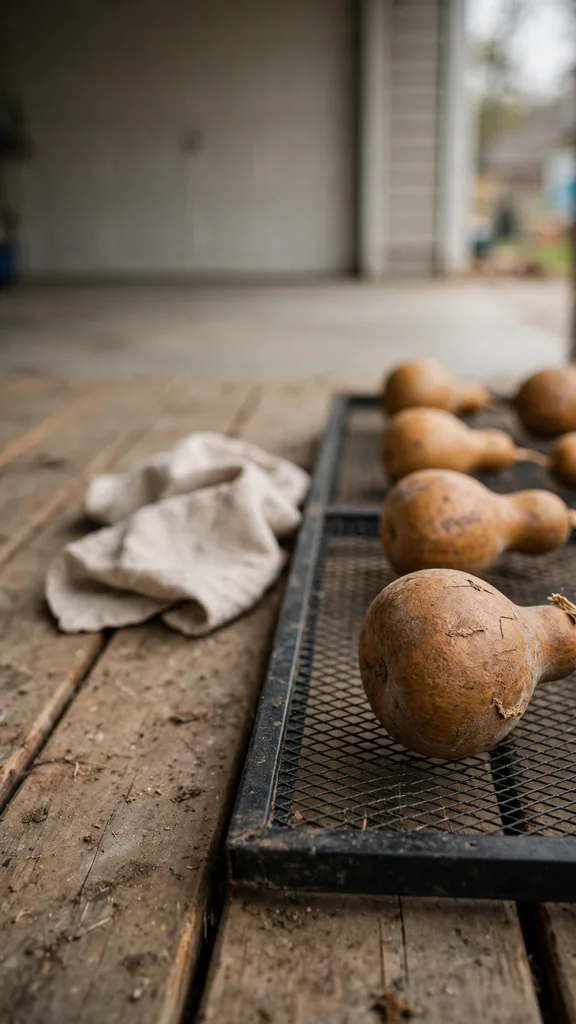
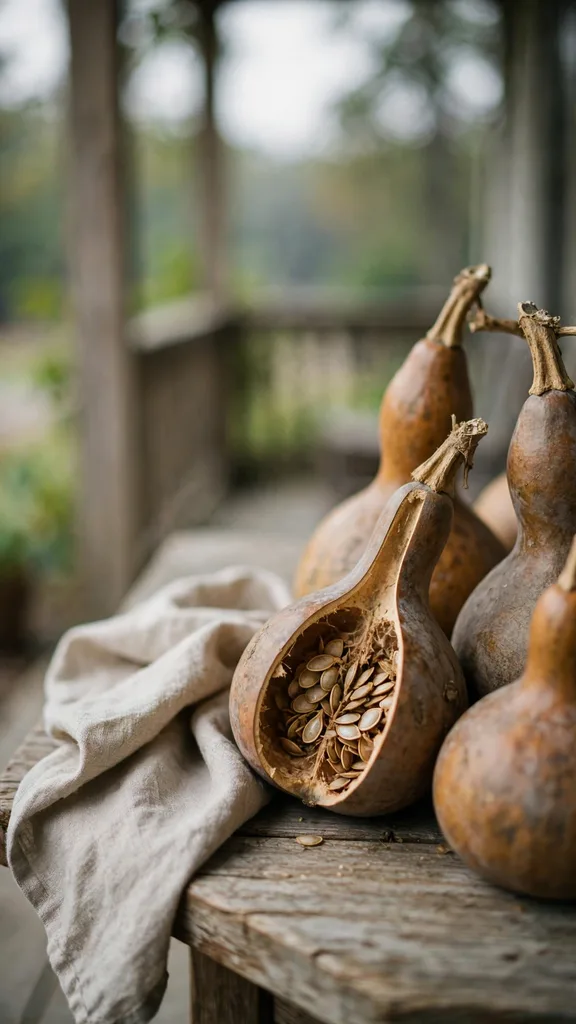
The outer skin dries and hardens in one to two weeks, and internal drying takes several additional weeks, according to the same notes. A rack packed tight traps moisture between fruit and grows mold in the contact spots. The gourds are dry when the seeds rattle inside, and only then do they move to wreaths, garlands, and lanterns. A screen rack near the door stays in sight, which helps, since a rack out of sight gets forgotten and the fruit rots unnoticed. Check the rack each morning. A daily glance catches soft spots early.
20. Pair Gourds With Ornamental Kale in a Tall Planter
Set tall ornamental kale at the back of a tall planter, ring the middle with mums or dusty miller, and nestle gourds at the base where the pot meets the porch. The kale gives height, the middle ring gives color, and the gourds anchor the whole pot to the ground visually. The combination holds after the first cold snap, when summer annuals give up.
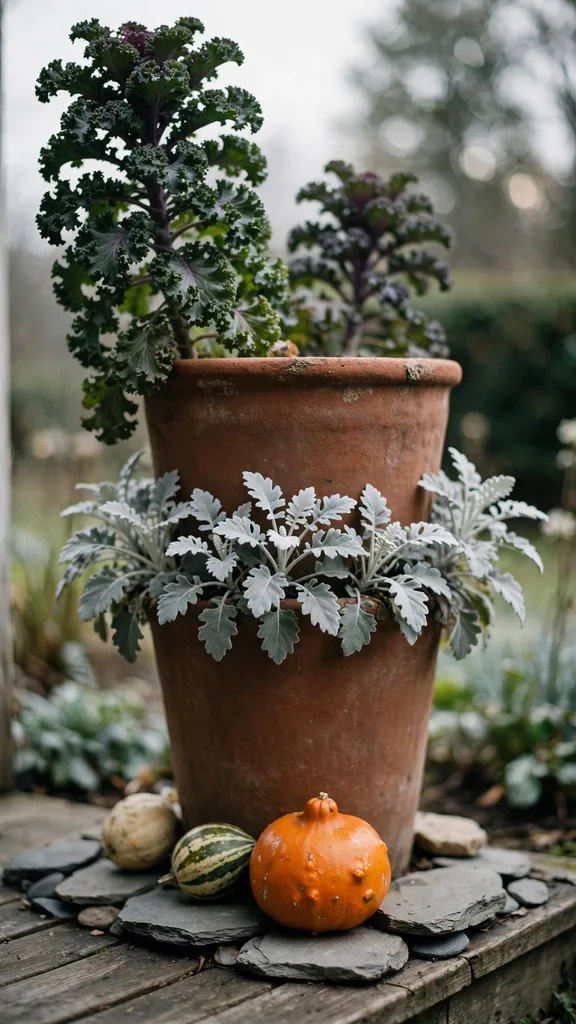
A planter with gourds piled on wet soil rots the lowest fruit within days. Set each gourd on a dry saucer or a flat stone inside the pot rim, not sunk into wet mix. Water the kale at the soil line and keep water off the gourds. Feed the kale at planting and again midseason so the leaves stay full to the meal. Thin kale leaves expose the pot rim and break the composition. Pinch yellowed outer leaves weekly to keep the ring tidy.
21. Finish the Whole Porch With One Hero Display
Pull the whole porch together with one hero display: the step staircase, the door topiary, and the rail garland, all in the same two colors, with one oversized warty gourd as the anchor at the door. Walk the porch at dusk and check the scene from the street, since the street view is the one guests get first. Adjust any cluster that reads as a gap from that distance.
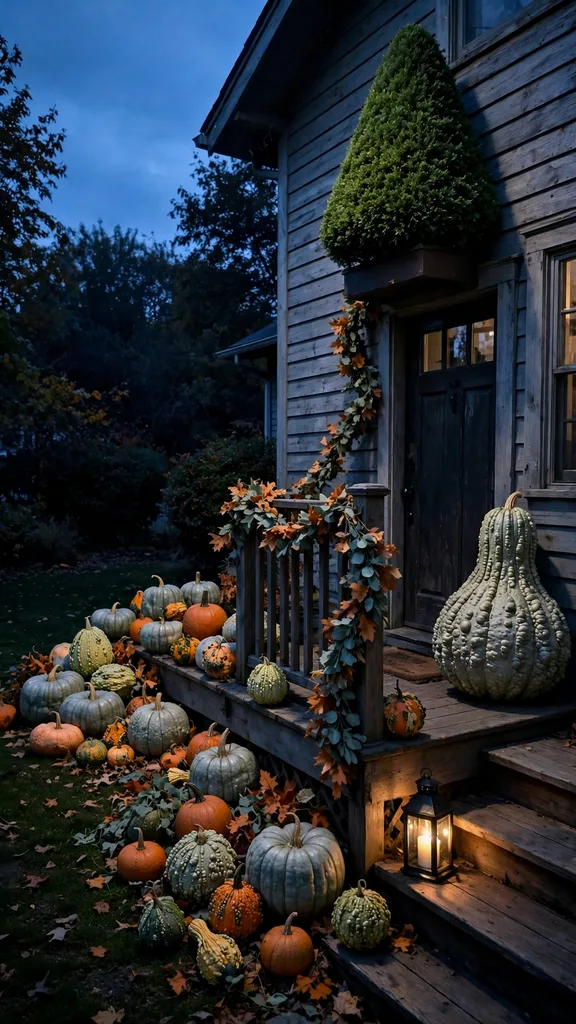
A porch with one more object in every gap tips into clutter. Stop when each zone has one job: steps guide, door welcomes, rail glows. One hero anchor beats five competing focal points, and the porch reads as a single harvest scene. For the entryway itself, the site’s thanksgiving entryway decor carries the door, steps, and foyer treatment that turns a gourd porch into a full arrival. Start with gourds on the porch, then let the entryway carry the same colors inside. A porch and an entryway in the same palette read as one welcome.
Pick Your Thanksgiving Gourd Display Ideas by Variety at a Glance
Ornamental gourds fall into two groups. Cucurbita types carry softer shells, and Lagenaria types carry hard shells, according to the University of Vermont Extension notes on decorative gourds. The table sorts these varieties by shape, shell, best porch job, and grow note.
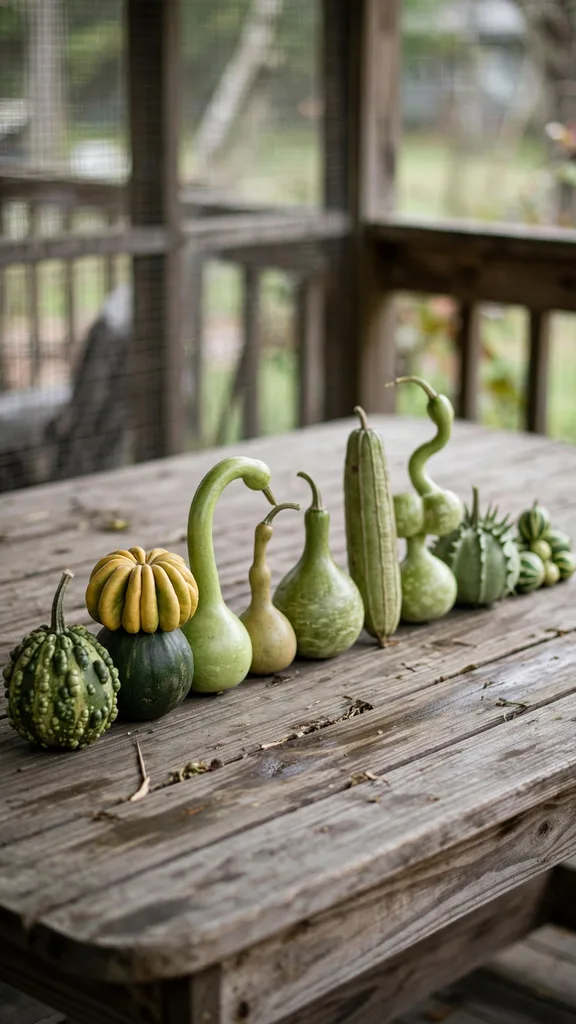
| Variety | Shape and shell | Best porch job | Grow note |
|---|---|---|---|
| Warty (Knaven) | Knobby, bumpy skin; orange or pale green | Steps, doorstep pairs, ledges | Harvest when the shell feels hard |
| Turk’s Turban | Flattened fruit with a bright cap and striped base | Topiary, hero spots, crates | Needs a long season; give vines room |
| Swan (gooseneck) | Long curved neck, smooth skin | Hanging beams, tall corners | Dry fully before hanging |
| Spoon | Small, flat, two-lobed | Planter spikes, wreaths, small clusters | Cure in a single layer |
| Bottle | Tall neck over a round body | Railings, tall planters, floor clusters | Hard shell; hang to dry |
| Luffa | Long fruit, ribbed or smooth | Garlands, hanging displays | Needs a long season; slice only when dry |
| Tennessee Dancing | Tiny round body on a long thin neck | Windy corners, post caps | Pair with heavy gourds for contrast |
| Crown of Thorns | Small, striped, crowned top | Crates, bowls, small clusters | Mix with round minis |
| Mini mix | Mixed shapes and colors, small size | Lanterns, wreaths, ledges | Sold mixed at farm stands |
Frequently Asked Questions
Cured gourds last through the season on a covered porch. Fresh gourds with soft shells fail sooner, since moisture and mold work through thin skin. Keep displays under the roof overhang and out of standing water. Pull any gourd that softens or spots, since one rotting fruit spreads mold to its neighbors. A cured hard shell holds shape and color to the meal and past it.
Ornamental gourds and pumpkins share the cucurbit family, and some gourds sit in the same genus as pumpkins. The difference is the job. Pumpkins are bred for flesh. Ornamental gourds are bred for hard shells and unusual shapes. The flesh runs bitter, so ornamental gourds stay on display and off the plate. Grow both if the garden has room, and label rows at planting time.
Pick when the stem turns brown and the shell feels hard under the hand. A ripe shell resists a fingernail. Cut with shears and leave a few inches of stem on the fruit. Handle each gourd gently, since bruises and scratches turn into rot spots in storage. Leave immature fruit on the vine longer, since soft shells collapse once cut.
A light frost that kills vines leaves mature hard shells intact. Immature fruit collapses in a freeze. Pick before the first hard frost to stay safe. Move displays under the roof overhang when a cold night is forecast. Bring soft or fresh gourds indoors overnight. Cured hard shells handle cold nights far better than fresh fruit.
Wash each gourd in warm soapy water, wipe it with a household disinfectant, and dry it with a soft cloth. Set gourds in a single layer in a warm, dry place with moving air, spaced so none touch. Turn them often and pull any that rot. The skin dries first, then the inside. Seeds that rattle inside mean the gourd is dry.