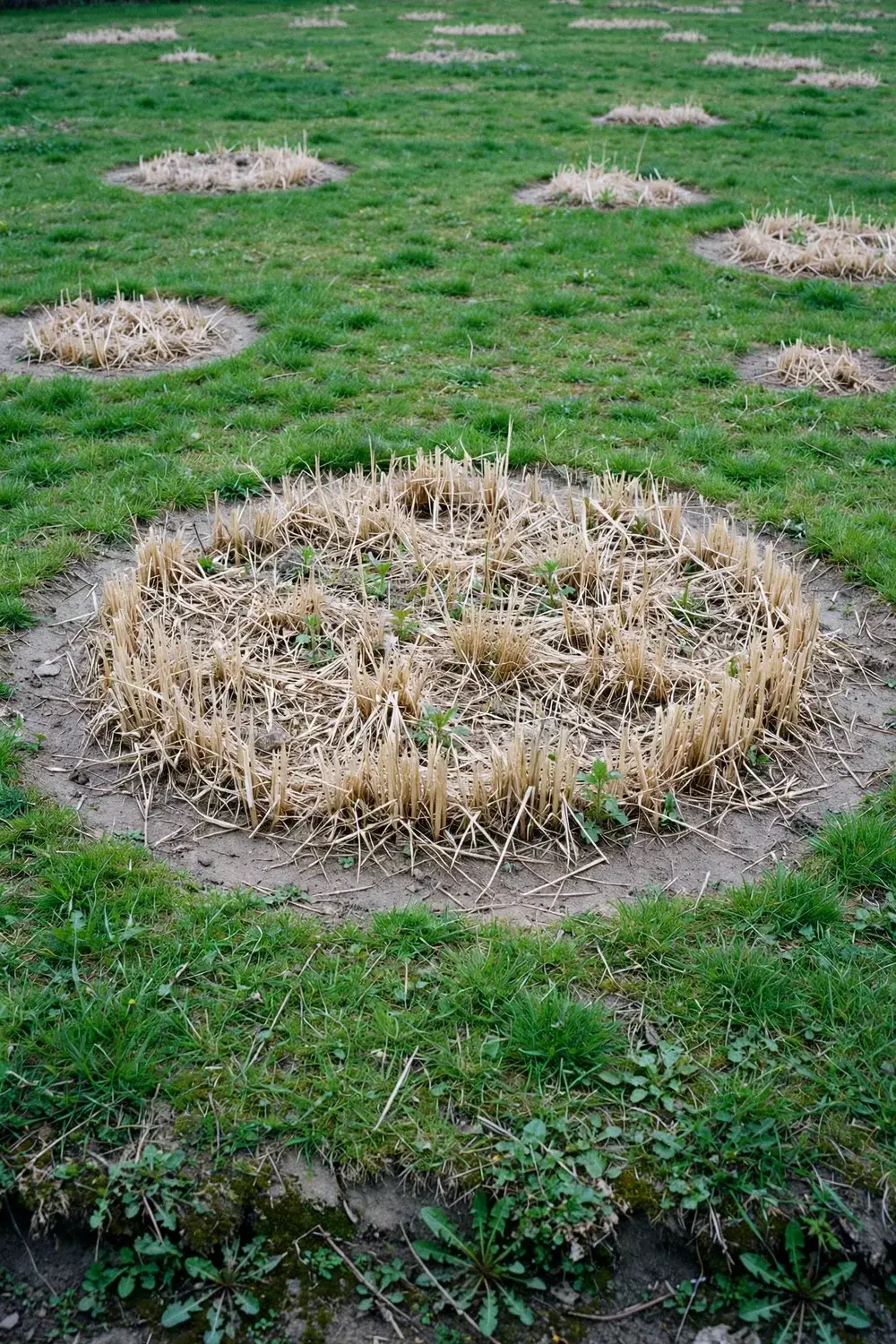

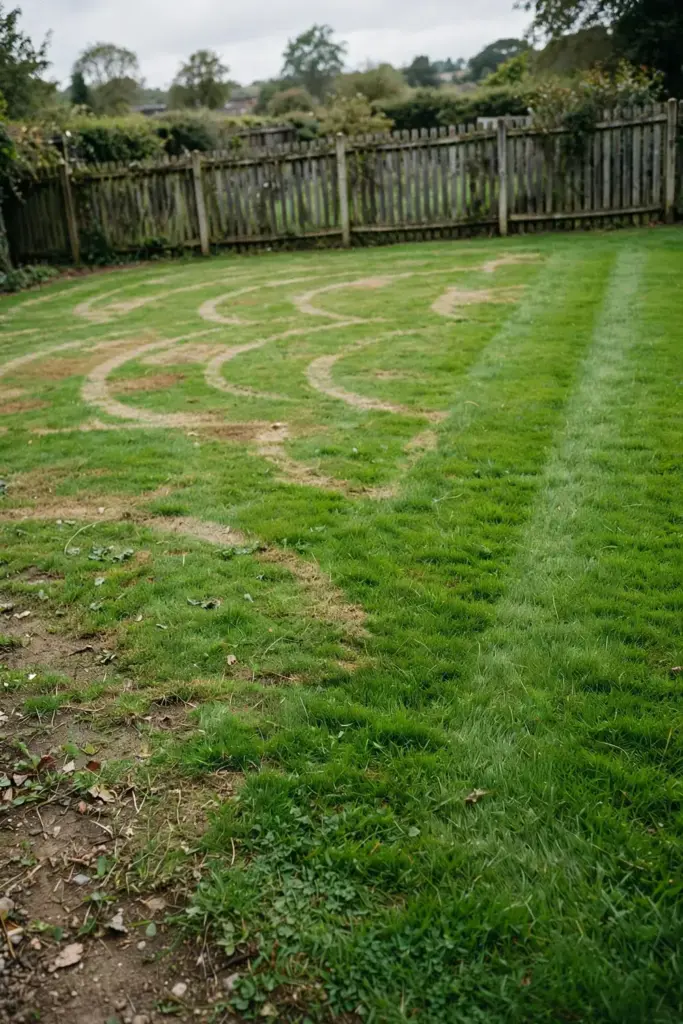
Walk your lawn at green-up. The circles that stay brown while the rest of the grass greens up are the clue. Spring dead spot on bermudagrass leaves circular patches 6 inches to several feet across that stay dead while healthy turf wakes up, and those patches return to the same spots year after year.
I have learned to read those spring circles as a fall problem showing up late.
Spring dead spot is a fungal disease of bermudagrass roots, stolons, and rhizomes. Two fungi in the genus Ophiosphaerella cause nearly all of it in the United States, Ophiosphaerella herpotricha and Ophiosphaerella korrae, and the infection starts in fall while the lawn still looks healthy. The rest of this page is 9 strategies, from the honest cost and benefit call in Step 1 to the fall routine that protects next winter.
1. What Spring Dead Spot Actually Is
Spring dead spot on bermudagrass is a root disease caused by fungi in the genus Ophiosphaerella. Two species do most of the damage in the United States, Ophiosphaerella herpotricha and Ophiosphaerella korrae, with O. herpotricha found across Oklahoma and O. korrae concentrated in the eastern part of that state, according to Oklahoma State Extension. The fungi spread mainly through movement of infected plants or infested soil by equipment, animals, running water, and foot traffic.
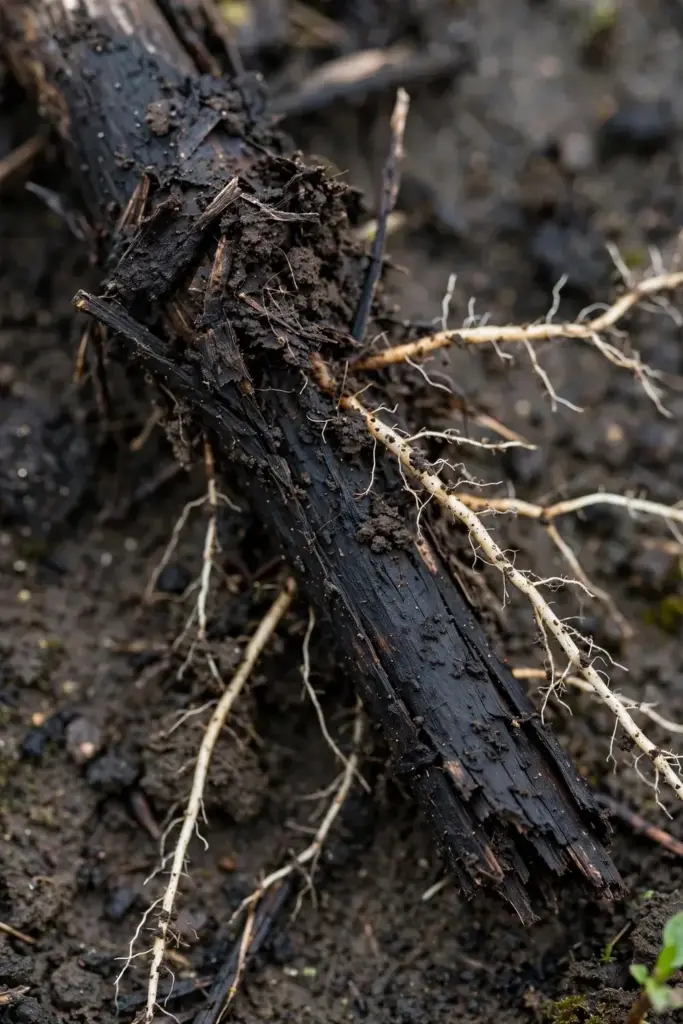
The fungi feed on roots, rhizomes, and stolons during the cool, moist conditions of fall and spring. That feeding weakens the grass and makes it more susceptible to cold and freeze injury, as University of Georgia Extension describes. The grass in the patch is dead by spring, not dormant. Recovery happens only when healthy stolons from the patch margin spread back into the dead area.
Spring dead spot is a disease of the transition zone and the northern range of bermudagrass adaptation. It is most severe after extremely cold winters, because the fungus reduces cold hardiness rather than killing outright, according to NC State Extension. A mild winter can mask a bad infection. A hard winter exposes it.
2. How to Identify Spring Dead Spot on Roots, Stolons, and Rhizomes
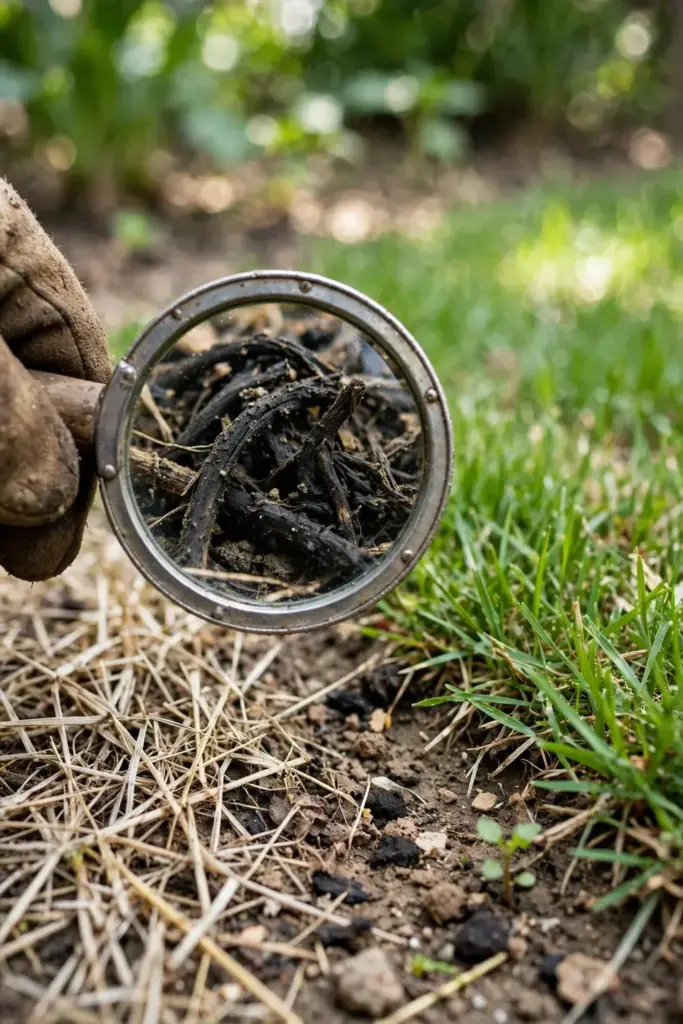
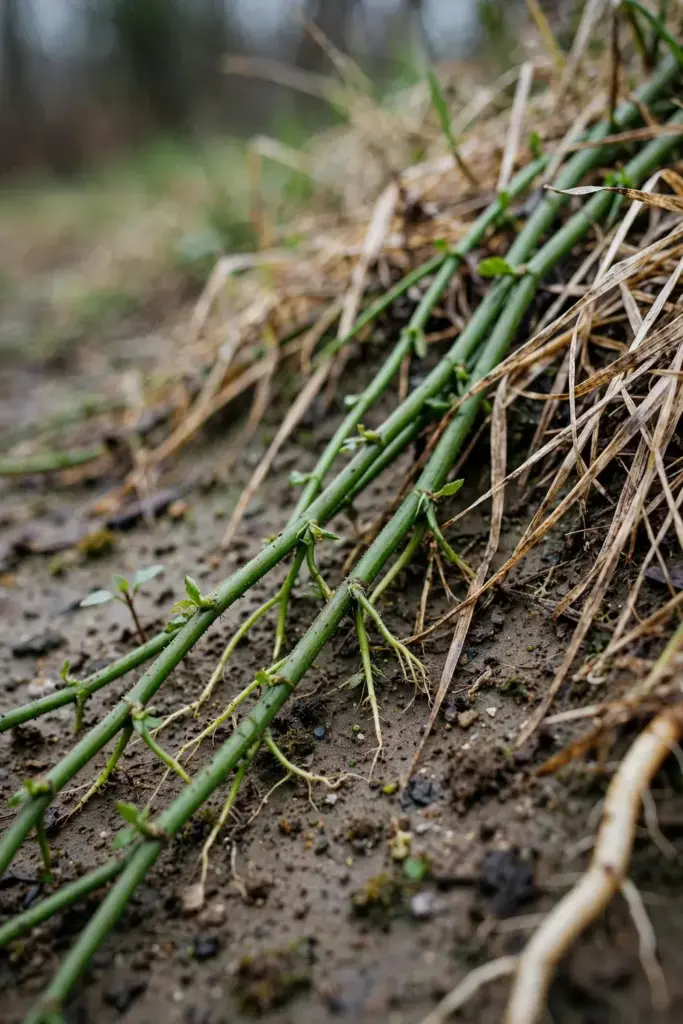
Dig at the margin of a suspect patch and look underground. Spring dead spot turns roots, stolons, rhizomes, and crowns dark brown or black, and the tissue feels rotted when you pull it from the soil. NC State Extension lists dark brown or black roots, stolons, rhizomes, and crowns as the defining belowground symptom. Healthy bermudagrass roots beside the patch stay pale and firm. That contrast is the fastest field test you own.
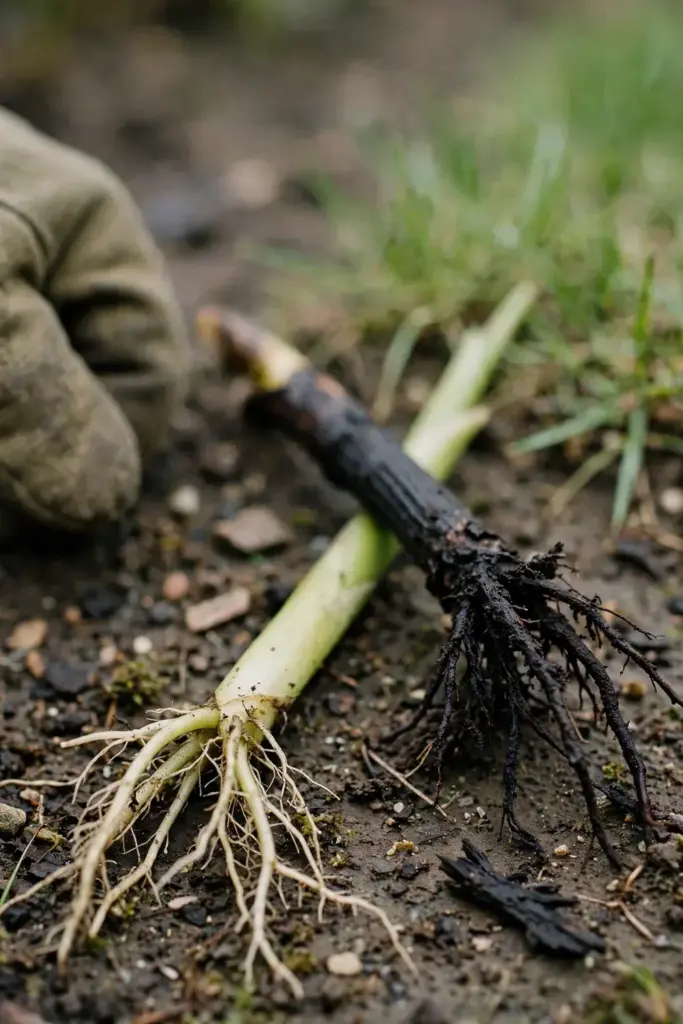
Pull one stolon across the patch edge and compare it against a healthy stolon from outside the patch. A healthy stolon resists and stays light colored inside. An infected stolon snaps easily and shows dark, dead tissue. Check three spots around the same patch before you decide. One dark stolon proves little. Three dark stolons around one circle, with pale roots outside it, point straight at spring dead spot.
Do this test in spring, when the patch is visible. The fungi are active in fall and early spring, and the damage is already set by green-up. A summer dig tells you less, because the patch may already be filling in from the margin while the fungus rests in infected plants as mycelium.
3. How to Identify Spring Dead Spot on Leaves and Across the Lawn
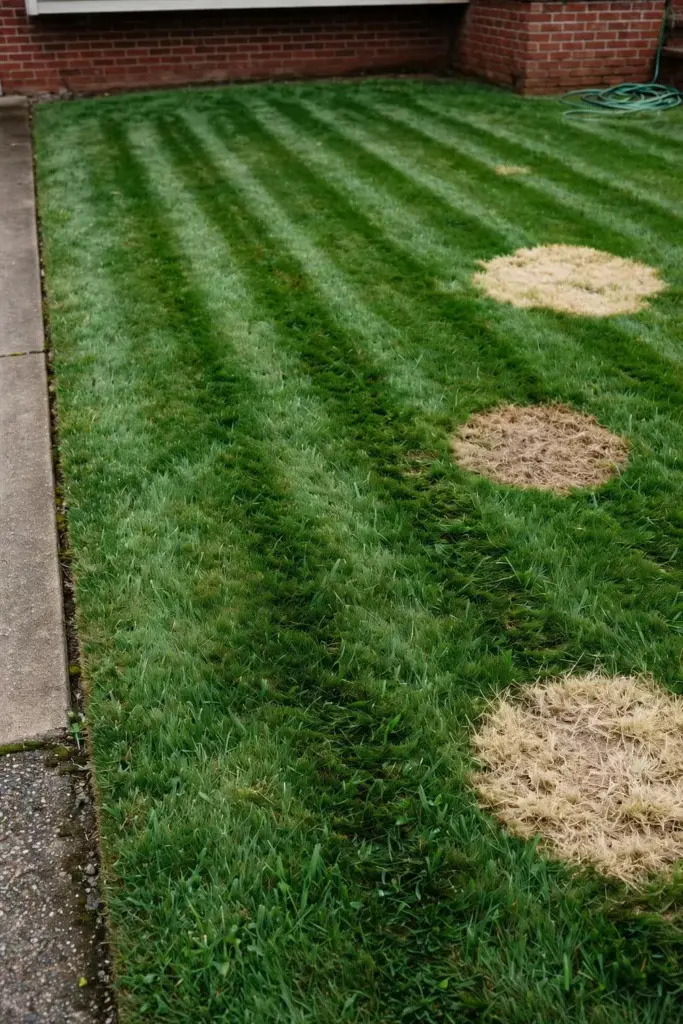
Above ground, spring dead spot shows as circular, semicircular, or arc-shaped patches of dead turf. The leaves inside the patch look bleached white or straw colored against the green lawn, and the patch may sit slightly sunken. Oklahoma State Extension describes affected areas from inches to many yards across, with dead, bleached-white turf inside. NC State Extension gives the common range as circular patches from 6 inches to several feet in diameter.
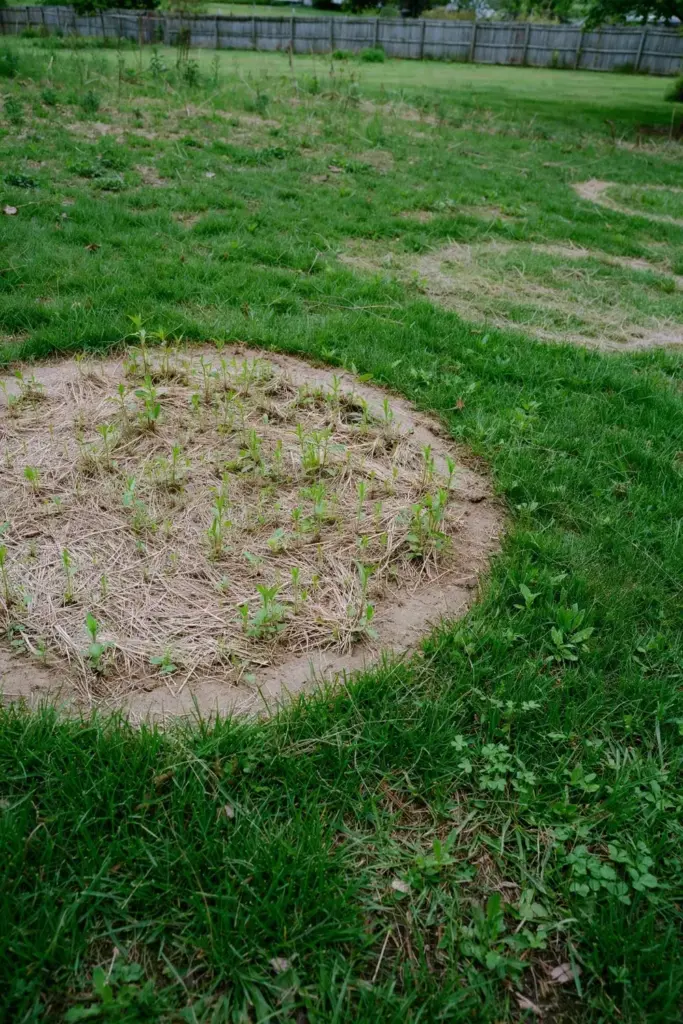
Watch the patch across the season. Spring dead spot patches recur in the same spot each year and increase in size by up to several inches each season, according to NC State Extension. As a patch expands, the center sometimes fills back in with bermudagrass or weeds, leaving a ring-like outline. Weeds move into the dead area fast, because nothing alive holds the ground.
Time the symptoms. Spring dead spot is most noticeable in spring and into early summer as bermudagrass breaks dormancy. New symptoms do not appear in mid-to-late summer or fall, according to Oklahoma State Extension. A dead circle that first shows in July points at a different problem. A dead circle that shows at green-up and lingers into summer points at spring dead spot.
4. Which Bermudagrass Lawns Get Hit Hardest
Highly managed lawns get hit hardest. Spring dead spot primarily occurs in highly managed residential, commercial, and recreational bermudagrass lawns, according to Oklahoma State Extension. Lawns that are seldom fertilized, irrigated, or treated with herbicides are less likely to develop severe levels. Heavy feeding, heavy watering, and a thick thatch layer build the exact conditions the fungi use.
Young lawns get a grace period. The disease typically takes 3 to 5 years to become established in a new bermudagrass stand, according to NC State Extension. A two-year-old lawn with dead circles probably suffers from something else, such as poor establishment, winter injury, or a different root problem. A five-year-old lawn with recurring circles fits the spring dead spot pattern.
Cultivar choice shifts the odds. Certain bermudagrass varieties carry better partial resistance to spring dead spot than others, and more cold-tolerant varieties generally show less disease than varieties without cold tolerance, according to Oklahoma State Extension. No cultivar is immune. When you replant, ask your supplier for a cold-tolerant bermudagrass with partial resistance, and treat the answer as one layer of protection, not a cure.
5. Spring Dead Spot vs Take-All Patch vs Winterkill
Three problems leave dead circles in spring. Only one of them is spring dead spot. The table below separates them by the field signs you can check without a lab.
| Feature | Spring Dead Spot | Take-All Patch | Winterkill |
|---|---|---|---|
| Cause | Ophiosphaerella fungi infecting roots, stolons, and rhizomes | Gaeumannomyces graminis infecting roots | Abiotic cold injury with no pathogen |
| Patch shape and size | Circular, semicircular, or arc-shaped patches, 6 inches to several feet across | Wilted circular patches, brown or bronze, up to several feet across | Irregular dead areas that follow cold exposure and drainage patterns |
| Roots and stolons | Dark brown to black and rotted at the patch margin | Dark brown roots on infected plants | Roots look normal for dead turf, with no black rotted stolons or rhizomes |
| Same-spot recurrence | Returns to the same spots each year and grows larger | Does not show the same perennial same-spot expansion | Does not recur in the same exact outline year after year |
| Soil and site clue | Worse after extremely cold winters and in highly managed lawns | Worse in wet soil with pH at or above 6.5, and on less fertile, sandy soils | Worse after hard freezes, on exposed high spots, and where drainage is poor |
| First move | Map the patch, dig the margin, and plan fall prevention | Test soil pH, improve drainage, and use acidifying fertilizer | Check the roots, then reestablish turf and fix the exposure |
The sharpest split is the long-term behavior. Unlike take-all patch, spring dead spot does not decline in severity as the turf matures, and it becomes more severe if left unmanaged, according to NC State Extension. A patch disease that fades as the lawn ages points away from spring dead spot. A patch disease that returns to the same outline, larger each spring, points toward it.
The soil clue separates take-all patch from spring dead spot. Take-all patch typically occurs in wet conditions and in areas with soil pH at 6.5 or above, and it is more severe on less fertile and sandy soils, according to the University of Georgia turfgrass diseases quick reference. A soil test that reads 6.5 or higher, plus wilted bronze circles, favors take-all patch. A soil test near the bermudagrass range with black rotted stolons favors spring dead spot.
Winterkill is the hardest lookalike, because spring dead spot damage itself is winter injury mediated by fungus. The fungus attacks roots, rhizomes, and stolons during fall and winter, and that activity makes the bermudagrass more susceptible to freezing injury, according to NC State Extension. Pure winterkill leaves no black rotted roots and no perennial same-spot outline. If the roots at the margin are black and rotted, fungus drove the winter kill. If the roots look normal, cold alone did the job.
6. Why Fall Infection and Winter Injury Drive Spring Dead Spot
Spring dead spot is a fall disease with spring symptoms. Infection begins when soil temperatures are mild, near 70 degrees Fahrenheit, and in Oklahoma it starts in late September and continues as long as soil temperatures stay above 50 degrees Fahrenheit, according to Oklahoma State Extension. Fungal growth and plant infection resume in early spring, then subside once soil temperatures climb above 70 degrees Fahrenheit.
The same window appears in Georgia. Spring dead spot infection starts in the fall when soil temperature drops below 70 degrees Fahrenheit, the fungi keep feeding on roots until soil cools below 50 degrees Fahrenheit, and they resume feeding when soil warms in spring, according to University of Georgia Extension. That is why spring sprays arrive too late. The fungi already did the root damage months before the lawn shows it.
The mechanism runs through cold hardiness. The spring dead spot fungus attacks the roots, rhizomes, and stolons of bermudagrass during the fall and winter, and that activity does not directly kill the plant, according to NC State Extension. The attack strips the plant of the root system it needs to survive dormancy. The plant then dies from freezing injury that healthy roots would have survived. Cold is the executioner. The fungus set the trap in fall.
This timing sets the whole management calendar. Fall is the infection window, spring is the symptom window, and summer is the recovery window. Every strategy below follows that order. Map in spring, feed and aerate in summer, prevent in fall. A plan that starts in spring and ends in spring misses the only window that matters.
7. What Makes Spring Dead Spot Worse in a Home Lawn
Nitrogen discipline decides more than any product. Turfgrass grown under high nitrogen fertility, or given late-season nitrogen applications to extend green color, is more prone to spring dead spot, according to Oklahoma State Extension. Late nitrogen pushes soft top growth into dormancy and feeds the fungi at the same time. A lawn fed hard in September pays for it in April.
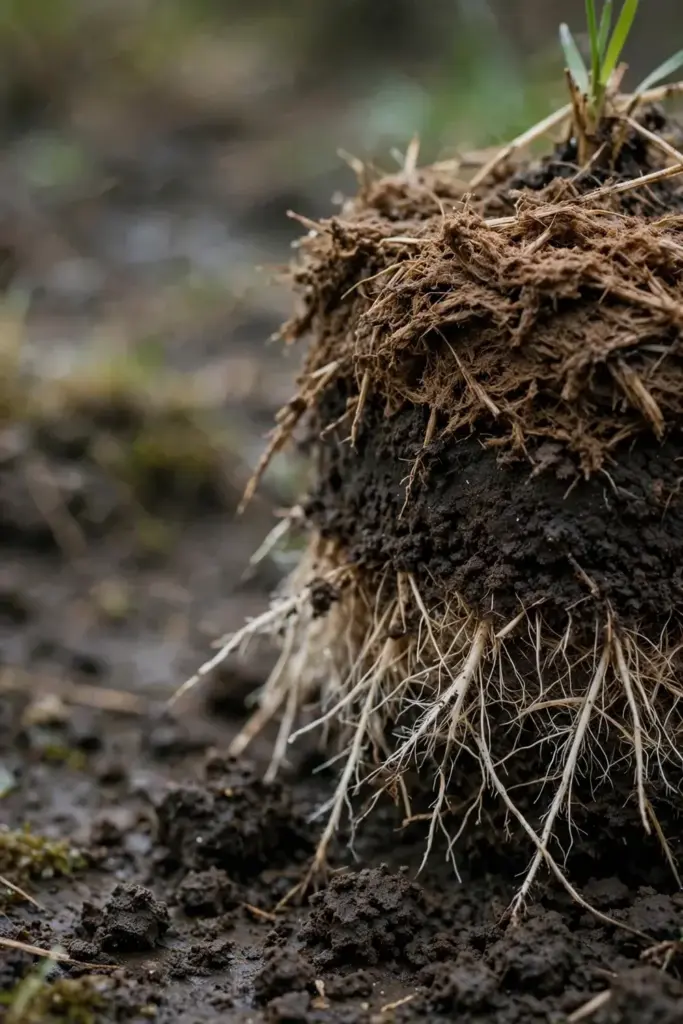
Thatch, compaction, and water pile on. Excessive nitrogen, potassium deficiencies, poor soil drainage, over-irrigation, excessive thatch accumulation, and soil compaction encourage disease development, according to NC State Extension. Each factor restricts root growth or increases susceptibility to winter injury. A lawn with two of these factors carries more risk than a lawn with one, and a lawn with four of them is a spring dead spot farm.
Timing errors compound the biology. Dethatching or core aerating while the disease is active can spread the fungus, so Oklahoma State Extension advises waiting until summer for thatch removal and aeration. Dragging infected stolons across a healthy lawn in March moves the problem to new ground. Summer work keeps the fungus where it already is.
Weeds finish the damage. As patches expand and more dead area develops, weed growth within the patches during spring and summer months is common, according to Oklahoma State Extension. Weeds in the patch compete with the surviving bermudagrass stolons trying to fill the void. A patch left weedy fills slowly. A patch kept clean fills faster.
8. Step 1: Decide Whether Treatment Is Worth It This Year
Start with an honest count, not a shopping trip. Walk the lawn at green-up and count the patches, then pace off the largest one. A lawn with one small circle needs cultural care, not a chemical program. A lawn with many circles, returning to the same spots, needs the full fall plan. The size of the problem decides the size of the response.
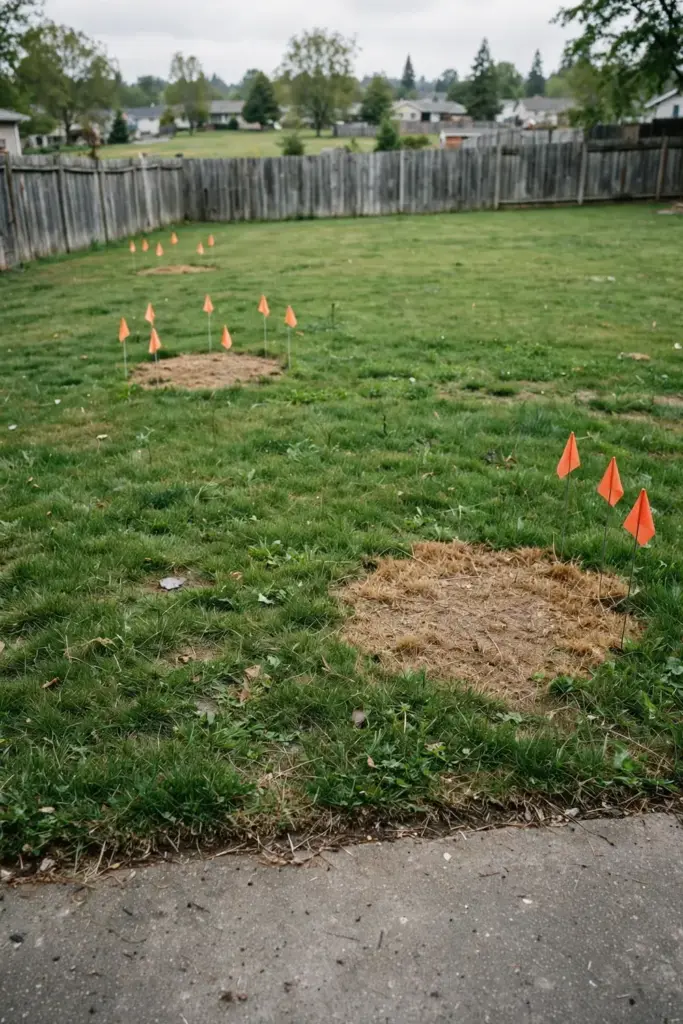
Weigh what fungicide can and cannot do. Fungicides for spring dead spot work only as fall prevention, and even then they give partial control. A single spring application is generally not effective, while a spring plus fall application matches two fall applications, according to Oklahoma State Extension. Cultural practices carry most of the recovery. Fungicide is a supplement to those practices, never a replacement.
Set a budget line before you buy anything. Cultural work costs time and a soil test. A fall fungicide program costs product, water, and repeat applications, and some extension-listed products are not labeled for home lawn use. If the lawn has a few small patches, skip the chemical route for one season and run the cultural steps. If the patches keep growing after a full season of cultural work, revisit the fungicide decision next fall with a mapped patch record in hand.
9. Step 2: Map Every Patch in Spring for Fall Action
Map the patches while they are visible. Photograph each patch with a fixed landmark in the frame, such as a fence post or a driveway corner, and sketch the outline on a sheet of paper with distances to two fixed points. Oklahoma State Extension recommends photographing or otherwise mapping affected areas in spring so fall fungicide applications target only the areas where the disease was present. A map turns a vague memory into a treatment zone.
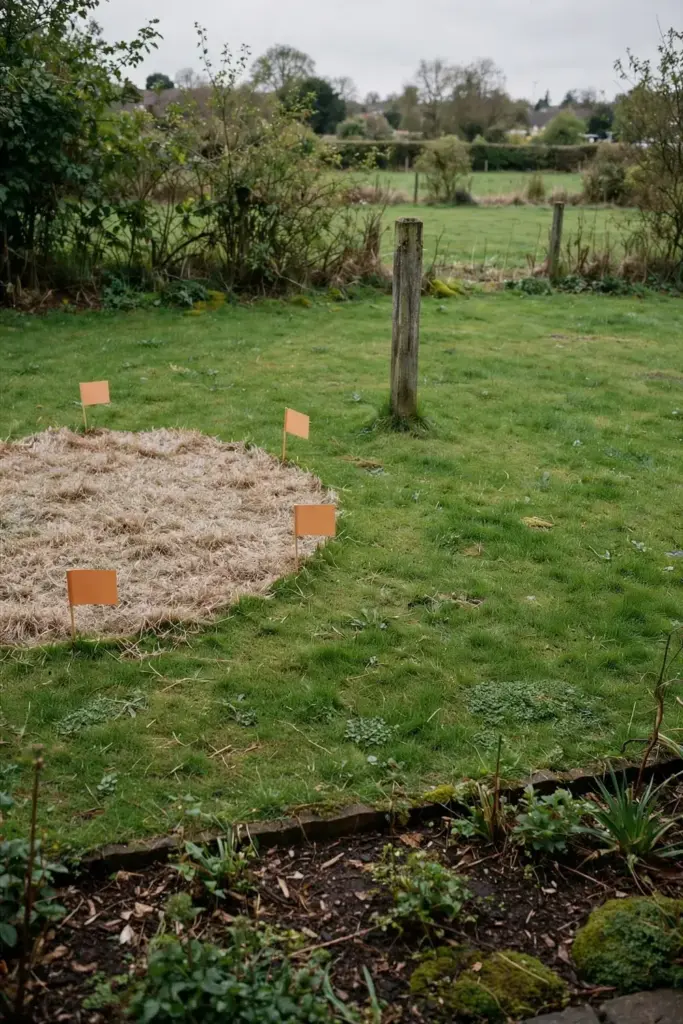
Mark the patch edges with small landscape flags or a ring of biodegradable marking paint. Flags survive mowing if you set them just outside the dead outline and note the date on your sketch. Pull the flags before the mower passes, then reset them from the sketch. The goal is a patch record that still reads clearly in September, when the lawn looks uniform and every patch has vanished from view.
Keep the map through the season. Note which patches fill in by midsummer and which stay open, and note where weeds took hold. Patches that fill fast need less fall attention. Patches that stay open or collect weeds go to the top of the fall list. A one-page map, updated twice a season, beats a perfect memory every time.
10. Step 3: Feed Recovery Without Feeding the Fungus
Feed for stolon spread, not for color. Balanced soil fertility programs in early summer increase the speed of recovery and help bermudagrass outcompete weed encroachment, according to Oklahoma State Extension. Apply nitrogen to meet the turf’s nutritional needs, and stop before the rate turns excessive. The recovering patch needs steady growth through summer, not a dark green flush in September.
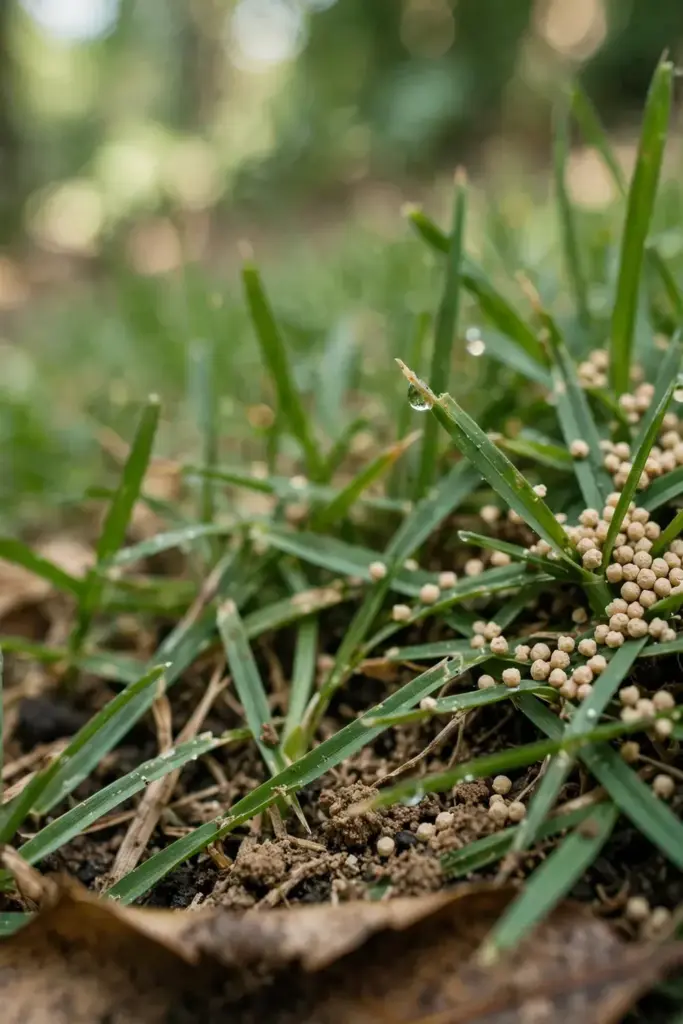
Follow the two nitrogen limits that extension sets. Do not apply nitrogen within 6 weeks of winter dormancy, and do not exceed more than 1 pound of nitrogen per 1,000 square feet per application at any time during the growing season, according to NC State Extension. Time the first spring feeding with the site’s guide to the best time to fertilize a lawn in spring, then feed lightly and evenly through early summer. A soil test tells you whether phosphorus or potassium is actually short before you add either.
Handle pH and potassium with the conflicts in plain view. University of Georgia Extension advises adjusting soil pH to 5.8 to 6.2 and fertilizing with acid-forming nitrogen, while reducing nitrogen as the dormant season approaches in late August. NC State Extension reports that the two main pathogens respond differently to nitrogen sources, with Ophiosphaerella korrae controlled effectively by calcium nitrate as the sole nitrogen source and O. herpotricha suppressed by ammonium sulfate. The same NC State research found that fall applications of potassium had no effect on the disease. Follow your soil test for pH and potassium, and do not buy potassium or acidifying fertilizer as a spring dead spot cure. A lab diagnosis is the only way to know which species you carry, and the species decides which nitrogen source helps.
11. Step 4: Aerate and Dethatch on a Summer Schedule
Wait for summer, then aerate hard. Areas that are severely affected by spring dead spot should be hollow-tine aerified at least three times per year, during the summer when bermudagrass is most actively growing, according to NC State Extension. Summer aeration breaks up the mat of dead turf in the patch and opens channels for stolons to root in. Spring aeration spreads the fungus. Fall aeration wastes the recovery window.
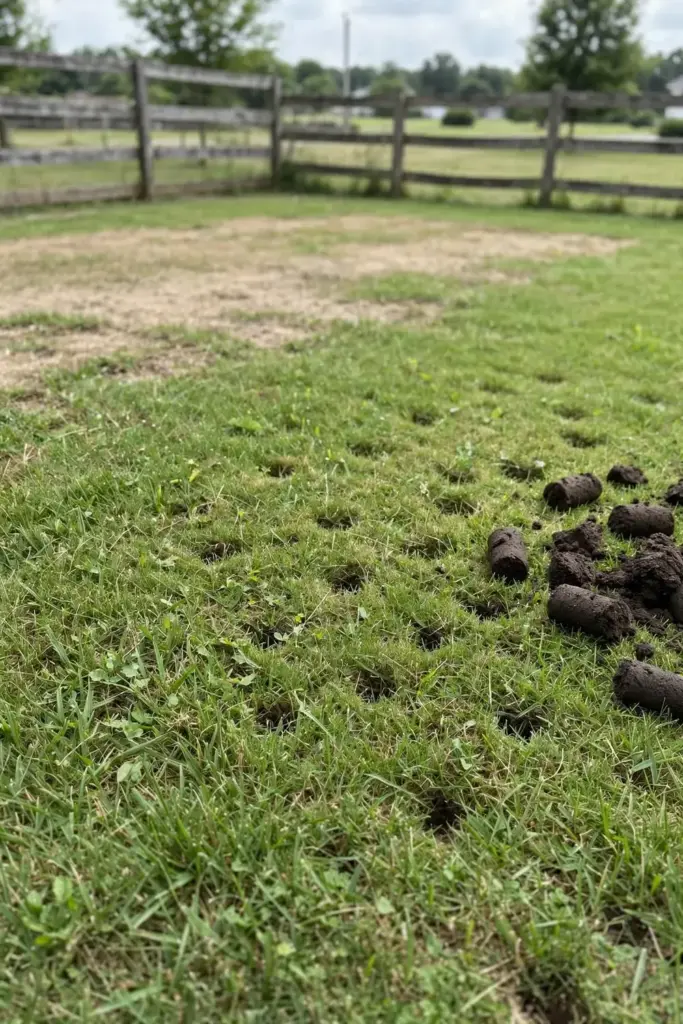
Remove excessive thatch in summer as well. Thatch thicker than the turf can breathe through holds moisture against the stolons and shelters the fungus. A core aerator with hollow tines pulls plugs that break down over a few weeks, and a vertical mower can cut through a heavy mat when plugs alone are not enough. Run the aerator across the patch in two directions, then leave the plugs on the lawn to break down.
Time dethatching to full green-up and active growth. Oklahoma State Extension advises waiting until summer to remove excessive thatch or aerify, since these activities may help reduce disease severity when the turf is growing hard. A patch that gets aerated in June and fed lightly through July fills visibly faster than a patch left sealed. Watch the patch margin for new stolon runners crossing into the dead area. Those runners are the recovery you are buying with the aerator.
12. Step 5: Keep Weeds Out of the Dead Patches
Weeds are the second disease in a spring dead spot patch. Open ground invites crabgrass, goosegrass, and broadleaf weeds, and every weed in the patch steals water, light, and space from the bermudagrass stolons trying to close the gap. Hand-pull weeds in small patches weekly through summer. A small patch kept clean can close in one season. A small patch left weedy stays open for two.
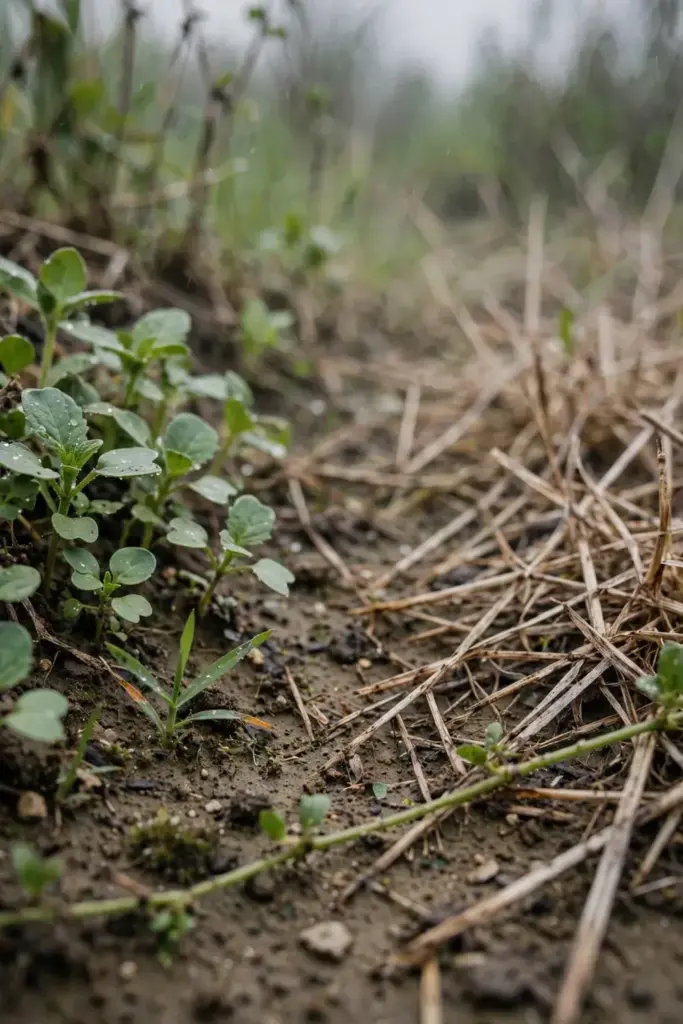
Treat weed control as recovery work, not cosmetic work. Once the symptoms of spring dead spot appear, the only means of control is to encourage the spread of bermudagrass into the affected patches, according to NC State Extension. Every weed you pull is space handed back to a stolon. Every weed you leave is a root system competing for the same square foot.
Skip one tool in patch ground. Dinitroaniline herbicides, commonly used for preemergent control of annual grasses, can slow the recovery of bermudagrass from spring dead spot injury and should not be used in sites with a history of the disease, according to NC State Extension. Check the active ingredient on any preemergent you plan to use near a mapped patch. If the turf thins and the crowns rot rather than dying in clean circles, compare the symptoms against the site’s Bipolaris crown rot guide before you treat a patch you have not identified.
13. Step 6: Fix Drainage, Thatch, and Compaction
Fix the water before you fix the grass. Poor soil drainage keeps the root zone wet through fall and winter, and wet soil favors both the fungus and the freeze injury that follows. Walk the lawn after a heavy rain and mark where water stands for more than a day. A patch that sits in a low, wet pocket needs grade or drainage work before it needs anything else.
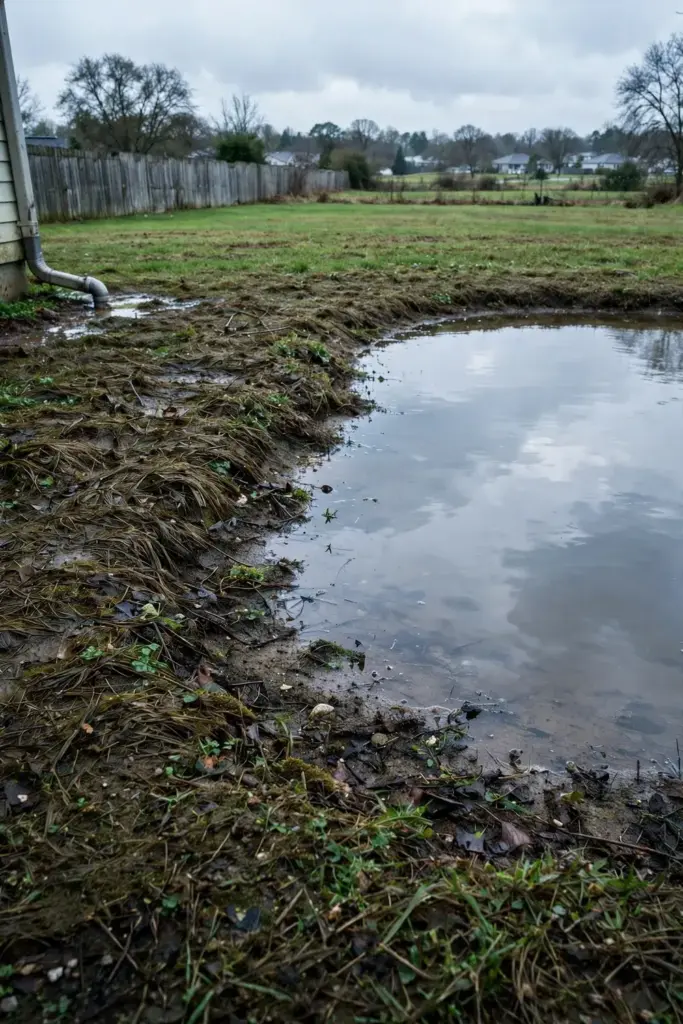
Relieve compaction across the whole lawn, not just in the patch. Compacted soil starves roots of air and pushes stolons to run along the surface instead of rooting down. Core aeration, covered in Step 4, is the first fix. A soil test and organic matter improvement come next, and the site’s guide to building soil health covers the drainage and compaction fixes in detail. Deep, airy soil grows roots that survive winter.
Keep thatch under control every season, not just in outbreak years. Excessive thatch accumulation encourages disease development, according to NC State Extension. Measure thatch once a year by cutting a small plug and looking at the brown spongy layer between the green shoots and the soil. A thin layer insulates the crown. A thick layer holds water, shelters fungi, and blocks stolon rooting. Summer aeration and vertical mowing keep the layer thin.
14. Step 7: Choose Cold-Tolerant Bermudagrass When You Replant
Replant the worst patches instead of nursing them forever. When a patch stays open after a full season of feeding, aeration, and weed control, the turf in it is dead and the soil around it carries the fungus. Dig out the dead turf and the soil and plant material around the dead area, as Oklahoma State Extension advises for small lawns where patches are found before they grow large. Small, early patches are the ones worth digging out. Large, old patches usually recover better by stolon spread than by excavation.
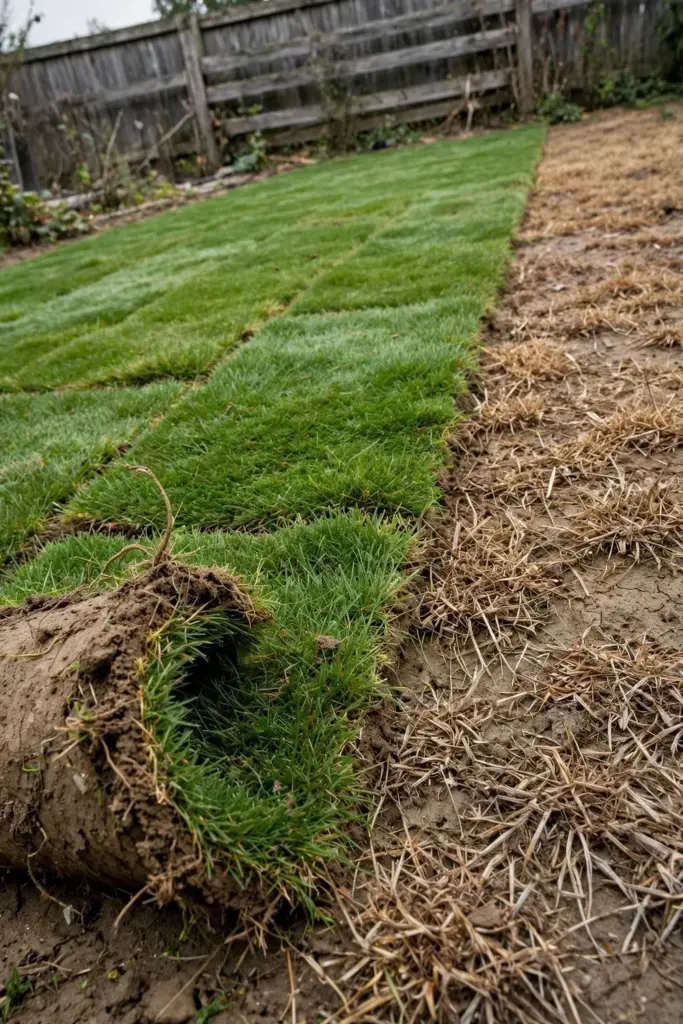
Pick the replacement grass for cold tolerance first. More cold-tolerant bermudagrass varieties generally show less spring dead spot than varieties without cold tolerance, and numerous cultivars with partial resistance are commercially available, according to Oklahoma State Extension. Ask the supplier which cultivars in stock carry partial resistance and which ones the local extension lists for your zone. Sod from a named, cold-tolerant cultivar beats an unlabeled bale every time.
Set expectations before you lay the sod. No cultivar should be expected to be immune, according to Oklahoma State Extension. New sod in an old patch still faces the fungus in the surrounding soil, so pair replanting with the fall prevention steps below. A resistant cultivar plus a mapped fall program is a strong combination. A resistant cultivar alone is a hope, not a plan.
15. Step 8: Use Fall Fungicide Only as a Verified Last Resort
Fungicide belongs in fall, and only after cultural work. Fungicides for spring dead spot must be applied preventatively in the fall, and applications are most effective when soil temperatures are between 60 and 80 degrees Fahrenheit, according to NC State Extension. To move the fungicide into the root zone, apply it in a high volume of water, 5 gallons per 1,000 square feet, or water it in with at least 1/8 inch of irrigation immediately after application.
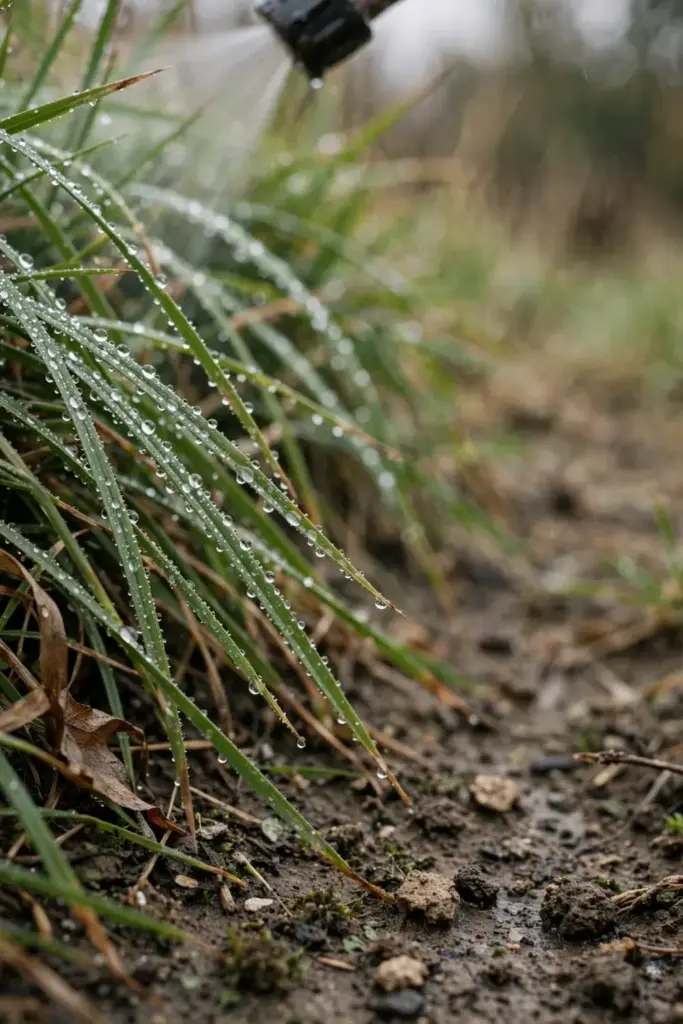
Follow the fall timing that extension research supports. Fungicides in the FRAC 3 group should be applied in the fall before soil temperatures drop to 70 degrees Fahrenheit, and a second application 30 days later gives better control than a single fall application, according to Oklahoma State Extension. Treat only the mapped areas where the disease appeared. Blanket spraying a lawn with two healthy acres wastes product and selects for resistance.
Verify the label before you buy. Some products on extension fungicide lists are not labeled for home lawn use, and NC State Extension marks those products with an asterisk on its list. Few effective fungicides are available for the homeowner to use for spring dead spot control, according to Oklahoma State Extension. If the label does not list home lawns, do not use it. Call your local extension office for the current home-lawn options, and treat the label as the final authority on rate, interval, and safety gear.
16. Step 9: Set the Lawn Up for Next Winter
Close the season with discipline, not generosity. Avoid late-season applications of nitrogen fertilizers, and Oklahoma State Extension gives the Oklahoma rule as no fertilizer after September 15. Your local date shifts with your first frost, and the principle stays the same. Stop feeding early enough that the turf hardens off before dormancy instead of pushing soft growth into the cold.
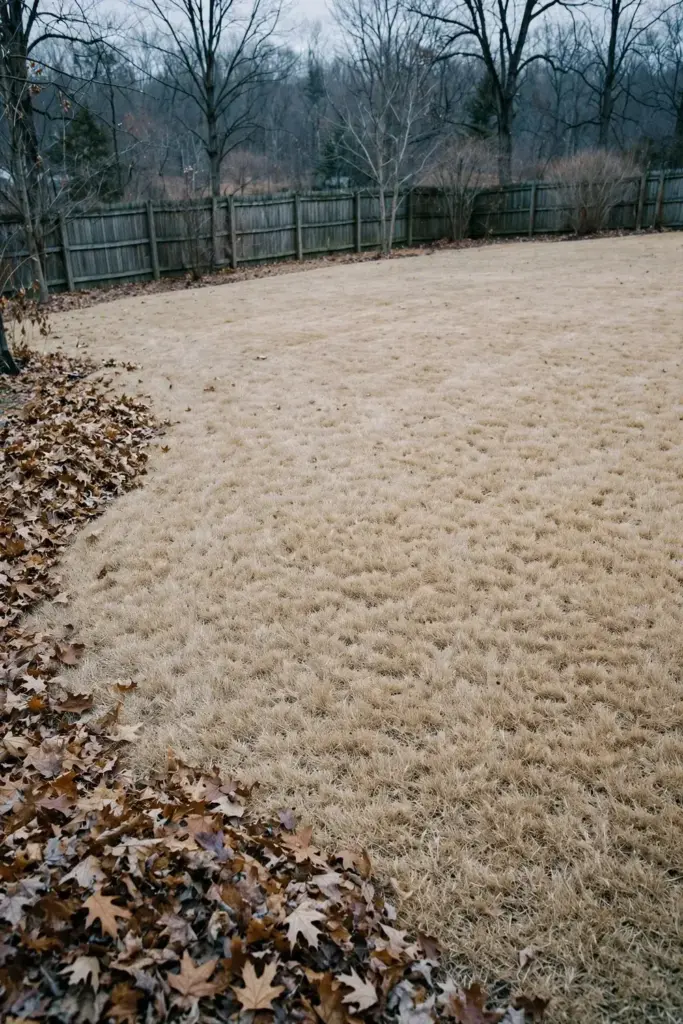
Run the fall checklist in order. Soil test first, then pH adjustment per the test, then drainage and thatch work while the turf still grows, then the fall fungicide window if you chose that route, using your spring map as the treatment zone. University of Georgia Extension advises applying potassium in fall in the amount indicated by a soil test report to improve winter hardiness, while NC State Extension found that fall potassium applications had no effect on spring dead spot in its research. Follow the soil test for potassium, and do not count on potassium to control this disease.
Keep the mower at a healthy height into dormancy and keep traffic off wet, dormant turf. A lawn that enters winter with a full root system, a thin thatch layer, and firm soil faces the cold with reserves intact. Spring dead spot punishes lawns that enter winter stressed. The fall routine is the disease program, even though no symptom is visible while you do it.
17. Living With Existing Spring Dead Spot Damage
Accept the timeline. Recovery of spring dead spot patches occurs by spread of the bermudagrass from the outside, and that process is very slow, taking the entire growing season in severe situations, according to NC State Extension. A patch that looks hopeless in May can look half-closed in August. Judge recovery in August, not in May.
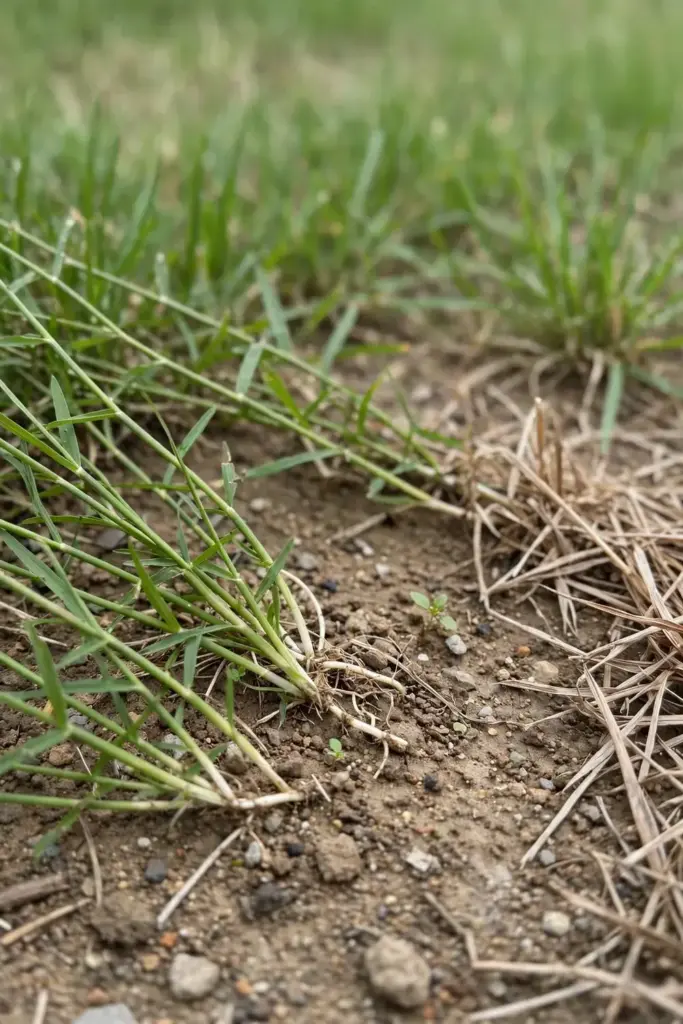
Work the patch through summer. Rake debris from the dead area so stolons can root into soil instead of tangling in dead mat. Feed lightly, water deeply and infrequently, and aerate on the summer schedule from Step 4. During summer months, spring dead spot subsides, and smaller patches fill in with new grass growth, while larger patches may not fully recover in a single season, according to Oklahoma State Extension. Summer is the recovery season. Use all of it.
Plan for recurrence, not for a single victory. Patches are perennial, and year to year some areas may expand in size while other areas diminish or disappear, according to Oklahoma State Extension. A patch that vanishes one spring can return the next. Keep the map, keep the fall routine, and treat each spring as a checkup rather than a final verdict. A lawn with a managed spring dead spot problem is still a good lawn. It is a lawn with one more chore on the fall list.
18. Frequently Asked Questions
It can kill large sections of a bermudagrass lawn, and patches grow larger each year when the lawn stays unmanaged. Total lawn death is rare. Healthy turf keeps spreading from the patch margins through the growing season, so the lawn rarely dies outright. The real loss is uniformity, since dead circles collect weeds and stay visible for months. Treat the worst patches first, and judge the lawn by recovery speed, not by spring appearance alone.
Small patches often fill in during one growing season as healthy stolons spread from the margins. Large patches can take the entire season, and the disease returns to the same spots the next spring when the lawn stays unmanaged. Recovery speed depends on feeding, aeration, and weed control through summer. The fungus survives in infected plants as mycelium, so a quiet summer is a pause, not a cure.
No. By the time patches show at green-up, the root damage already happened in fall and winter. A single spring application is generally not effective, while a spring plus fall application matches two fall applications. Save fungicide for fall, when soil temperatures sit between 60 and 80 degrees Fahrenheit. Map the patches now, and treat only those spots in fall.
Check three field signs. Spring dead spot patches return to the same spots each year and grow larger, while take-all patch fades as turf matures. Dig at a patch margin. Spring dead spot leaves roots, stolons, and rhizomes dark brown to black and rotted. Take-all patch favors wet soil with a pH at or above 6.5. A lab test settles close calls.
You can, and resodding works best when the new sod is a cold-tolerant bermudagrass with partial resistance to spring dead spot. Dig out the dead turf and the soil around it first, since the fungus survives in infected plants and infested soil. Fix drainage and thatch before laying sod, or the new grass faces the same pressure. No cultivar is immune, so pair new sod with fall prevention.
19. Where to Go From Here
Spring dead spot on bermudagrass rewards the gardener who acts in fall, not the one who panics in spring. Map the patches now. Feed lightly and aerate through summer. Stop nitrogen early, fix the drainage, and treat only the mapped spots in fall if you choose the fungicide route. The fungus works on a calendar, and a lawn managed on that same calendar beats it year by year.
If the damage on your lawn shows as leaf spots rather than dead circles, compare it against the Bipolaris leaf spot guide before you treat, since leaf-spot diseases follow a different program. If the patches came back larger after a season of cultural work, take your map and a soil sample to your local extension office and ask for a lab diagnosis. A confirmed identification turns a good guess into a targeted plan.