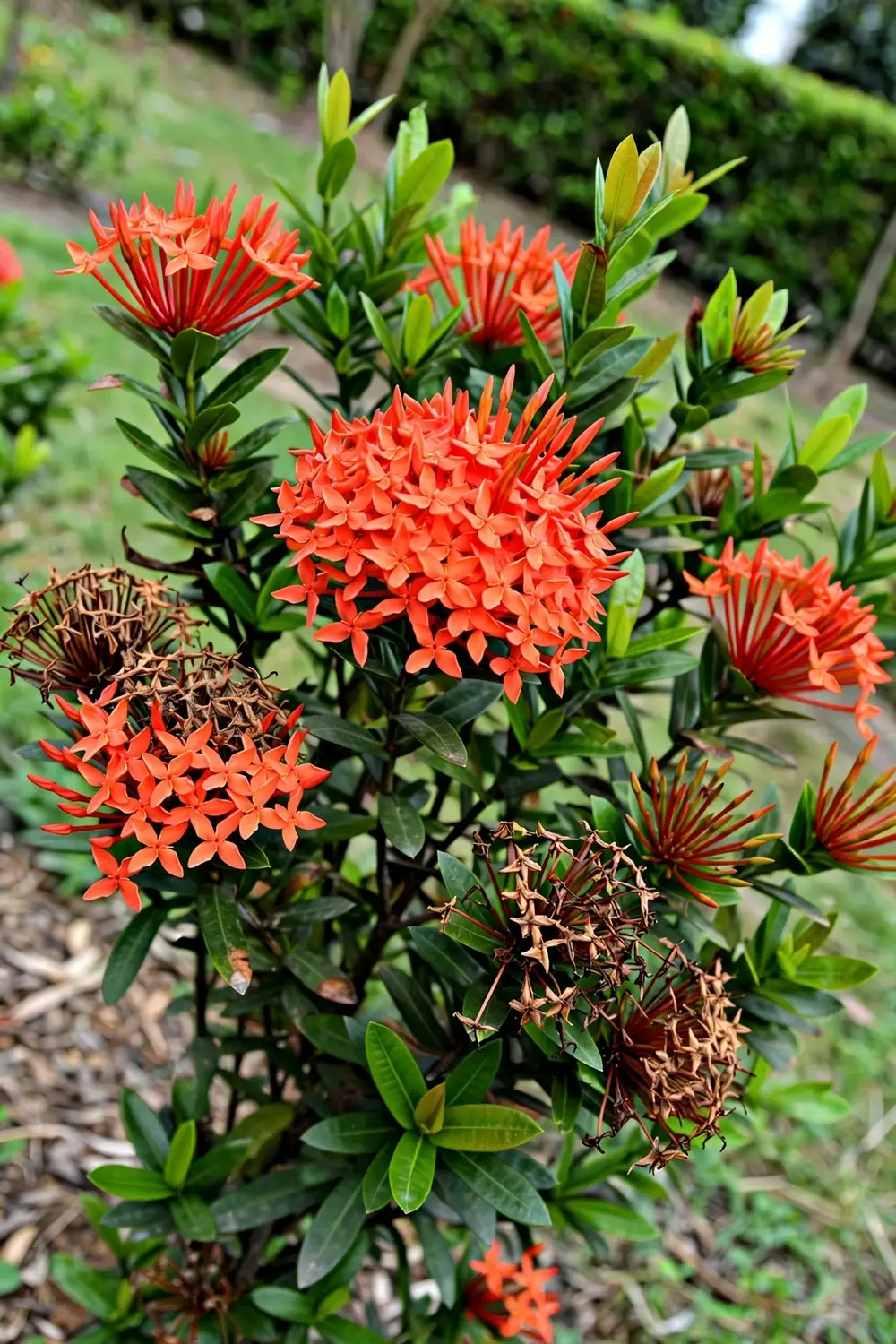

Tip your ixora after each flower flush finishes, not by a calendar month. When to tip ixora in Australia comes down to the flush, not the month, and the rule lands differently by zone: tropical gardens tip nearly year-round, subtropical gardens tip after each flush from spring to autumn, and Sydney gardens do their main work in late spring to early summer. The rest of this page is 12 moves, from the flush rule to the closing walk.
Ixora means the tropical shrub Ixora coccinea and its close relative Ixora chinensis, the two species Australian nurseries sell as ixora. Tip means pinching or snipping the soft growing tips. A flower flush means one full blooming cycle, the weeks when a cluster opens, peaks, and browns.
Tipping is a different job from shaping, and shaping is a different job from hard pruning. Shaping thins and forms the bush after the main flush, and hard pruning rebuilds an old leggy plant in early spring. This page stays on timing: when each cut happens across Australian climate zones.
1. Tip After Each Flower Flush Finishes
Tip when the flush finishes. Ixora flowers on new growth, so each spent cluster marks the moment to cut, and the new shoots that follow carry the next round of buds. A calendar month cannot tell you this. The plant can.
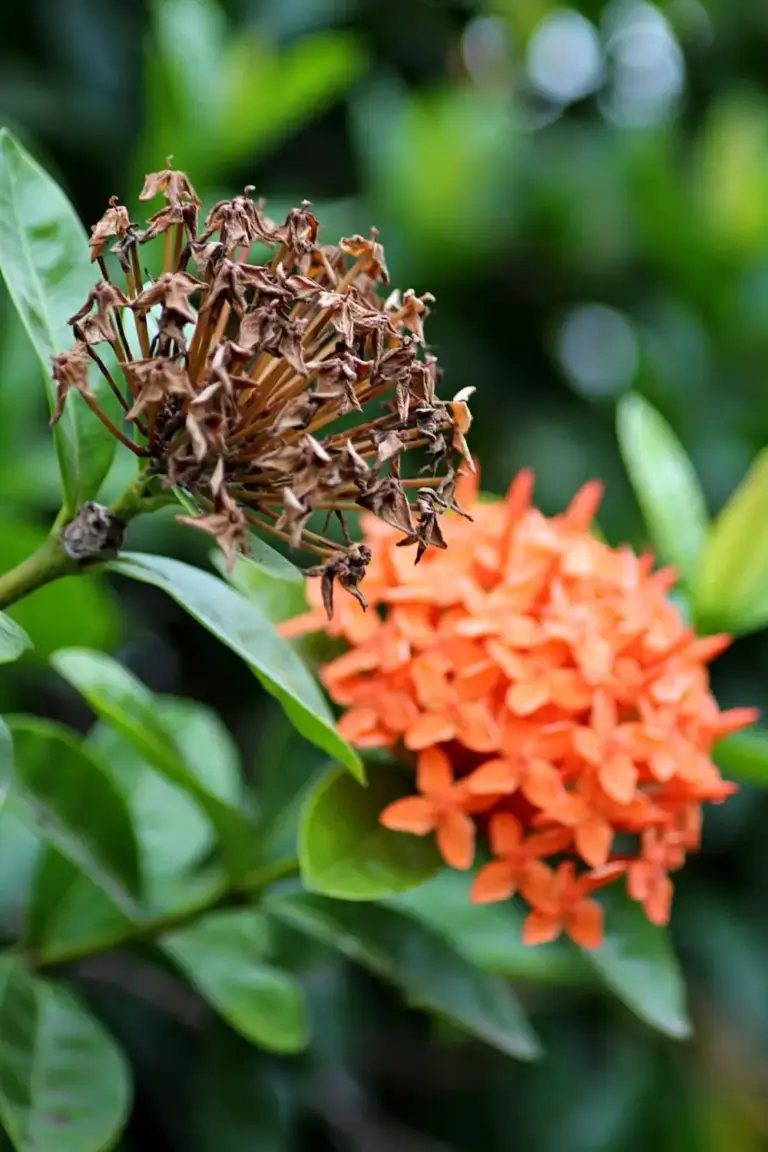
Watch the cluster, not the month. When the last flowers in a head brown and drop, the flush is done. Snip the spent head where it meets the stem within days. The longer a dead cluster sits, the longer the plant spends holding it instead of pushing new flowering wood.
This is the single habit that separates reliable ixoras from disappointing ones. Nursery Near Me puts the mechanism plainly in their ixora growing guide: ixora flowers on new growth, so a trim encourages the next round of buds. Every other timing decision on this page flows from that sentence.
A flush announces its end clearly. The individual flowers in the cluster shrivel one by one, the color drains from the head, and the whole cluster takes on a papery brown look. That is the signal. Some gardeners wait for every last petal to fall, but the flush is functionally over once the head stops opening new buds, and tipping at that point wastes no flowers at all.
2. Separate the Three Different Pruning Jobs
Tipping, shaping, and hard pruning are three different jobs with three different timings. Tipping pinches soft growing tips after each flush to multiply branches. Shaping trims and thins the bush after the main flush to control size and form. Hard pruning cuts old wood back to the base in early spring to rebuild a tired plant.
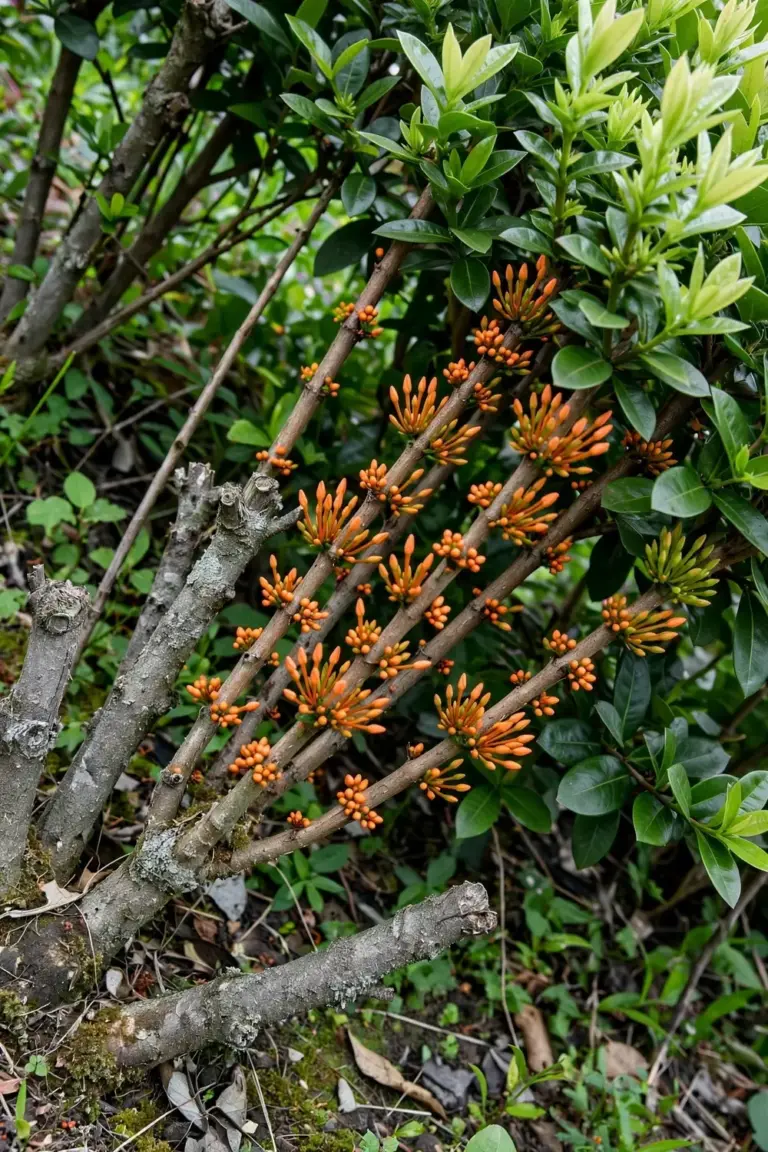
Mixing them up is how gardeners lose flowers. A hard shear in the middle of a flush removes the buds sitting on the stem tips. A shaping cut in winter removes the new wood that would have flowered in spring. Each job has its window, and the windows do not overlap.
Name the job before you pick up the secateurs. Ask which one the plant needs right now: more branches, better shape, or a full rebuild. Then cut only for that job. The sections below give each job its own timing.
The tools differ slightly by job as well. Tipping needs nothing more than fingers or small secateurs, because the growth is soft and thin. Shaping calls for bypass secateurs that make clean cuts on woody stems without crushing. Hard pruning may need loppers for the thick old wood at the base. Clean sharp blades matter for all three, since every cut is an open wound until it heals.
3. Tip Young Plants Regularly From the Base
Tip young ixoras often in their first two years. Pinch the soft terminal shoots to force side branches low on the plant, and the bush builds density from the base instead of growing tall and bare. A young plant tipped regularly becomes a dense shrub. One left alone becomes a leggy stalk with flowers only at the top.
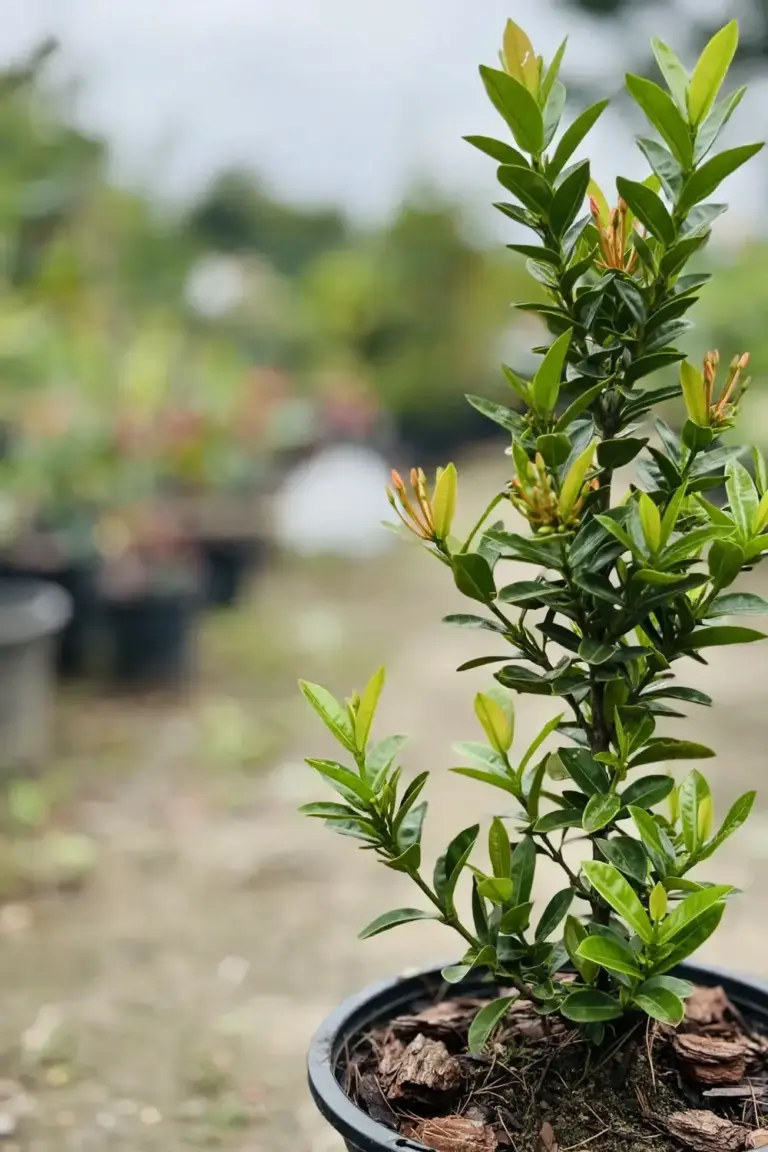
The mechanism is simple. Removing the growing tip stops the stem’s upward push and wakes the dormant buds below it. Several new branches grow where one stem stood. Each new branch ends in a flowering tip of its own, so the flower count multiplies with the branch count.
Nursery Near Me gives the young-plant rule directly in their ixora growing guide: tip prune young plants regularly to build density from the base. For a new hedge, tip through the first year and the plants knit into a continuous line instead of a row of separate sticks.
4. Time Tipping for the Tropics: After Every Flush
In tropical Queensland and Darwin, tip after every flush, all year. Flowering here barely stops, running close to year-round, so the flush rule fires again and again. Each finished cluster gets snipped. Each snip triggers the next wave.
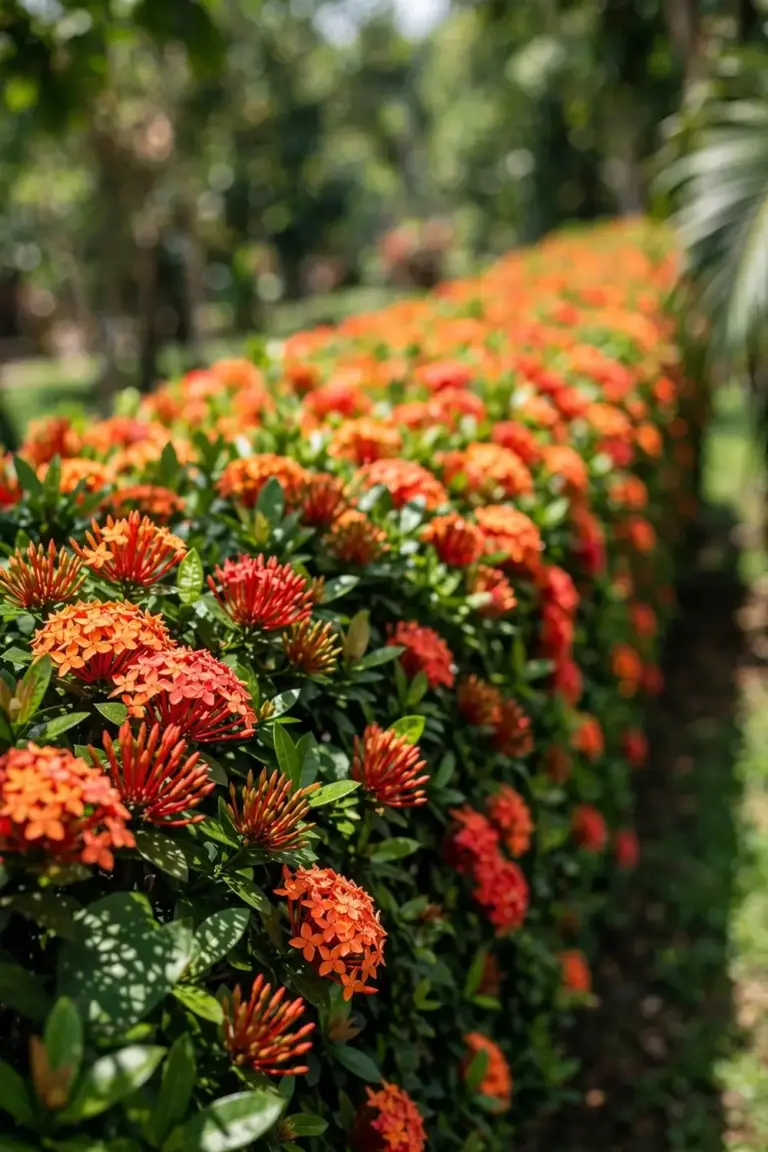
The rhythm is fast. A flush opens, peaks, and browns over a few weeks. Tip it the week it finishes and new shoots emerge within weeks. Because the warm season never really ends, there is no dormant window to avoid and no winter rest to protect.
Keep the cuts light. Tipping is not shearing. Remove the spent head and a short length of soft tip, and leave the woody framework alone. Heavy cuts in the tropics still cost flowers, because every stem you remove was carrying future buds.
The tropical flush cycle runs faster than most gardeners expect. In Darwin and far north Queensland the plant may push a new flush every six to eight weeks through the warmest months, which means the tipping round comes around again almost as soon as the last cuts have healed. Build the weekly walk into your routine and the plant never gets ahead of you. Miss a month and you will be tipping a backlog of brown heads instead of staying ahead of the cycle.
Water stays consistent through the warm months here. Nursery Near Me notes in their ixora growing guide that ixora dislikes drying out completely and will drop buds if stressed, so keep soil evenly moist while the plant is flowering. A thirsty plant aborts the very flush you are trying to encourage.
5. Time Tipping for the Subtropics: Spring to Autumn Flushes
In Brisbane, the Gold and Sunshine Coasts, and northern New South Wales, tip after each flush from spring through autumn. Flowering runs in repeated flushes across the warm months, then slows through winter. The tipping season follows the flowering season exactly.
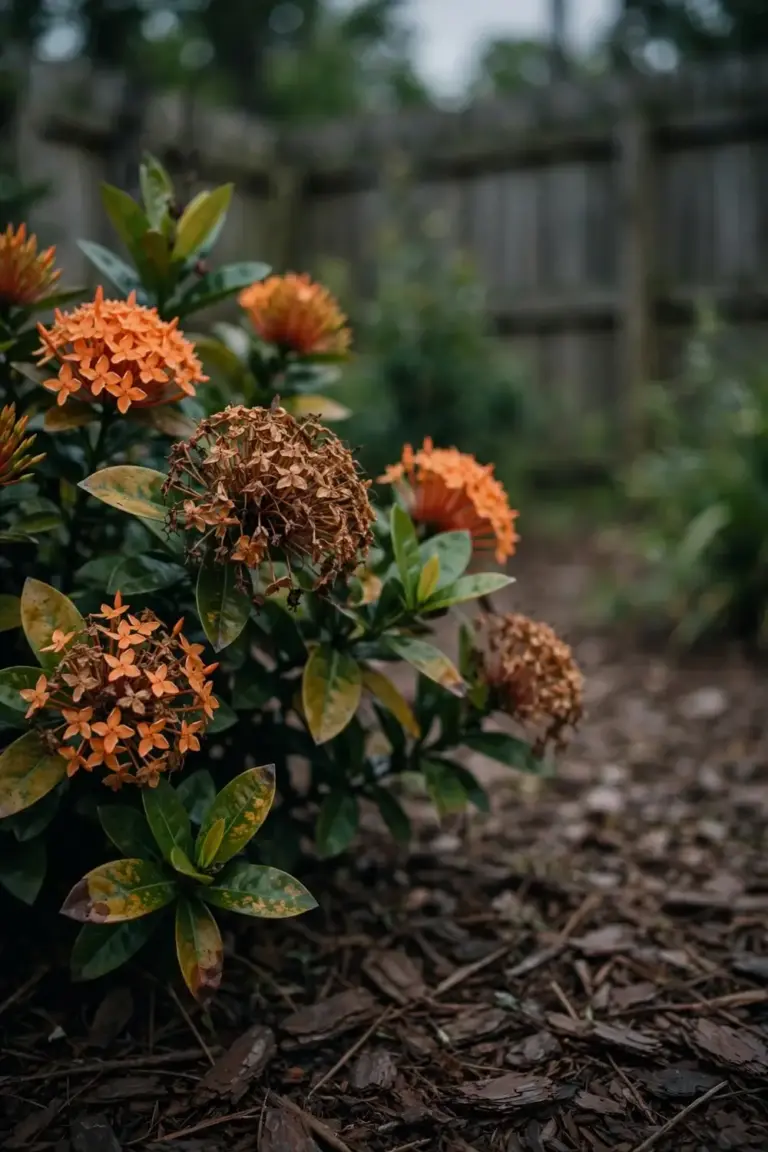
The main shaping cut lands in late autumn. Nursery Near Me states it in their ixora growing guide: prune lightly after the main flush of flowering, usually late autumn in the subtropics. This is the one bigger trim of the year, the shaping job, timed when the last big flush fades.
Between spring and that late-autumn trim, tip lightly after every smaller flush. These are the small maintenance cuts: spent heads off, soft tips pinched, the bush kept tidy and branching. Stop tipping as winter approaches. New soft growth made in cold weather gets damaged, and the plant needs its energy for the cold months.
Frost is the boundary here. Ixora is frost tender and suffers below about 5 degrees Celsius, according to the Nursery Near Me ixora guide. In the subtropics frost is rare, but a cold snap still checks growth, so late-season tipping that pushes soft new shoots into a cold night wastes the cut.
Late autumn in the subtropics means May. That is when the last big flush typically fades in Brisbane and the Gold Coast, and the light shaping trim goes on then. After that trim, the plant coasts through winter on stored energy. Do not be tempted by a warm June week to tip again. The calendar says winter is coming, and the plant knows it even when the weather briefly forgets.
6. When to Tip Ixora in Australia: Sydney and Warm Temperate Zones
In Sydney and the central New South Wales coast, do the main prune in late spring to early summer. Sai Nursery gives the Sydney timing directly in their ixora growing tips for Sydney: late spring to early summer is the best time to prune, because the plant recovers quickly and puts out fresh flowers. That is November to December in local months.
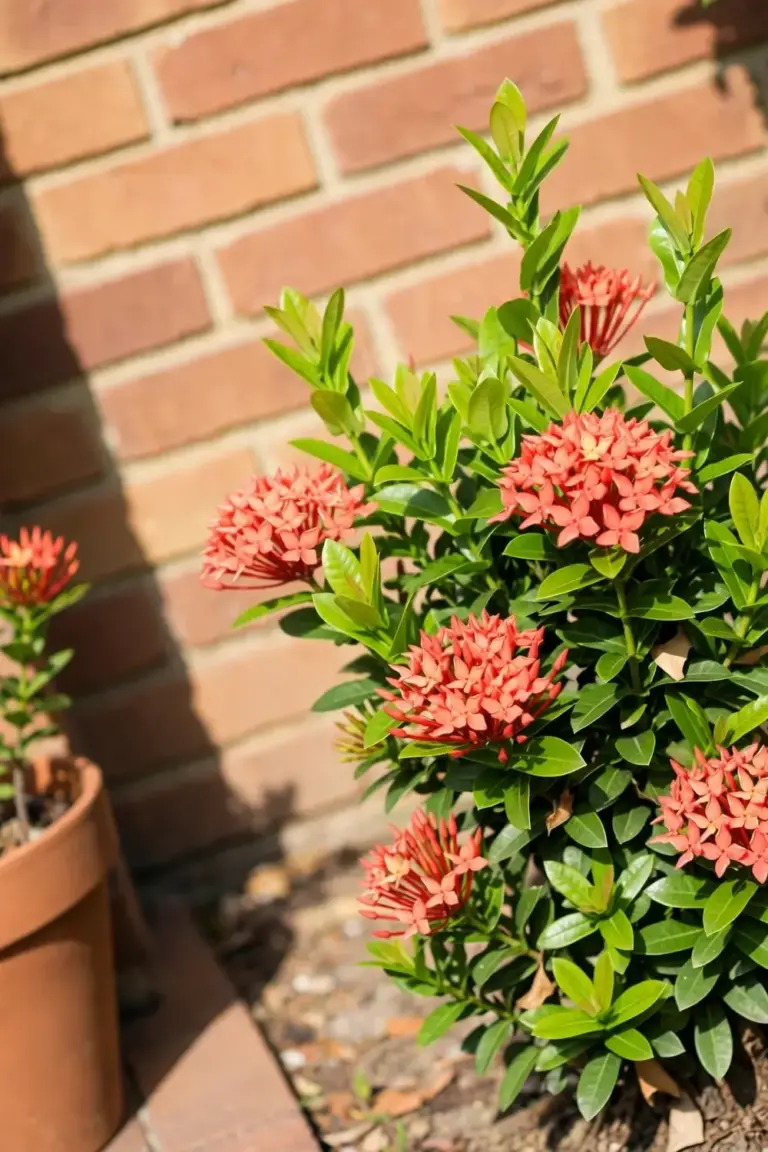
The Sydney season is shorter. Flowering concentrates in the warmest months, and winter brings a semi-dormant slowdown. Tip after each flush through summer, then stop. No winter tipping. The plant is resting, and cuts made now sit open in cold damp air instead of healing into new growth.
Site the plant for warmth. A sheltered position against a north-facing wall buys extra weeks of growth at both ends of the season. In Sydney, ixora wants at least 4 to 6 hours of direct sun a day, per the Sai Nursery Sydney guide. Sun is the fuel for the flushes, and the flushes set the tipping calendar.
South of Sydney, treat ixora as a pot plant. Melbourne, Adelaide, and Canberra are too cold for ixora in the ground. Grow it in a container that moves under cover for winter, and tip only during the warm months when it is actively growing outdoors.
7. Pinch Soft Tips With Fingers or Secateurs
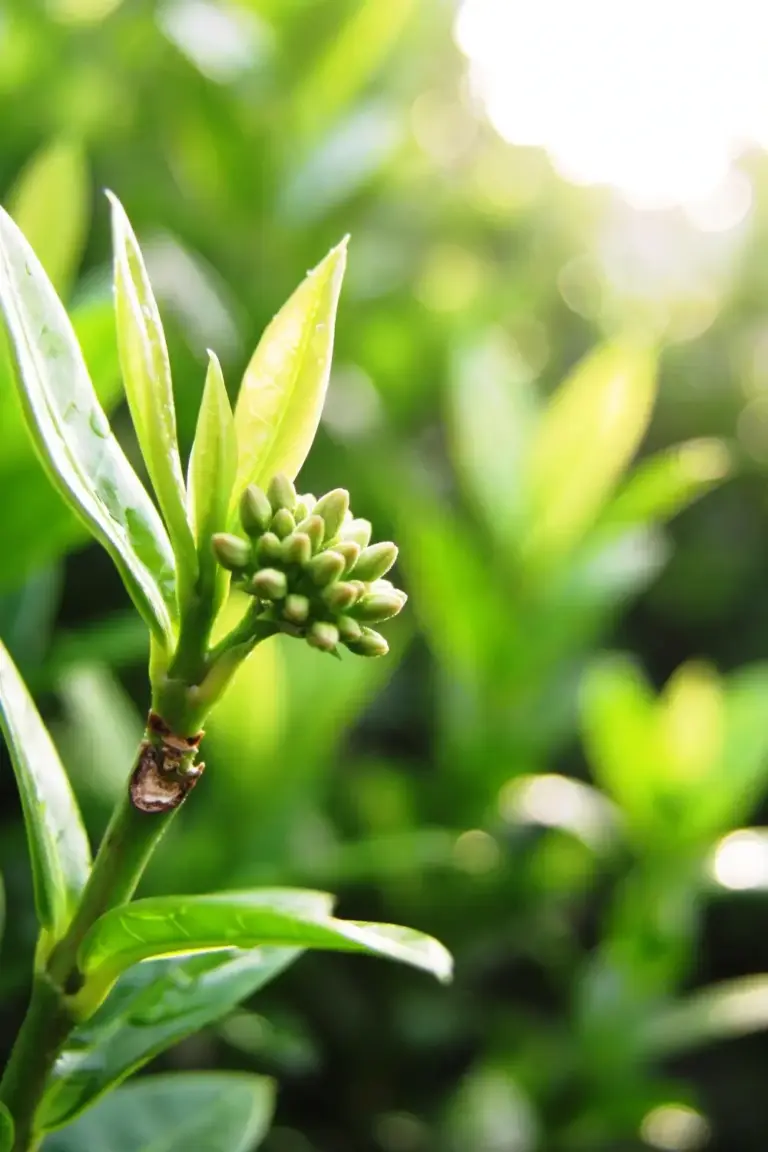
Pinch the soft growing tip with finger and thumb, or snip it with secateurs. Both work. Fingers suit the softest new growth, the pale green tips that snap cleanly. Secateurs suit firmer stems where a pinch would tear. The result is the same: the terminal bud goes, and the side buds wake.
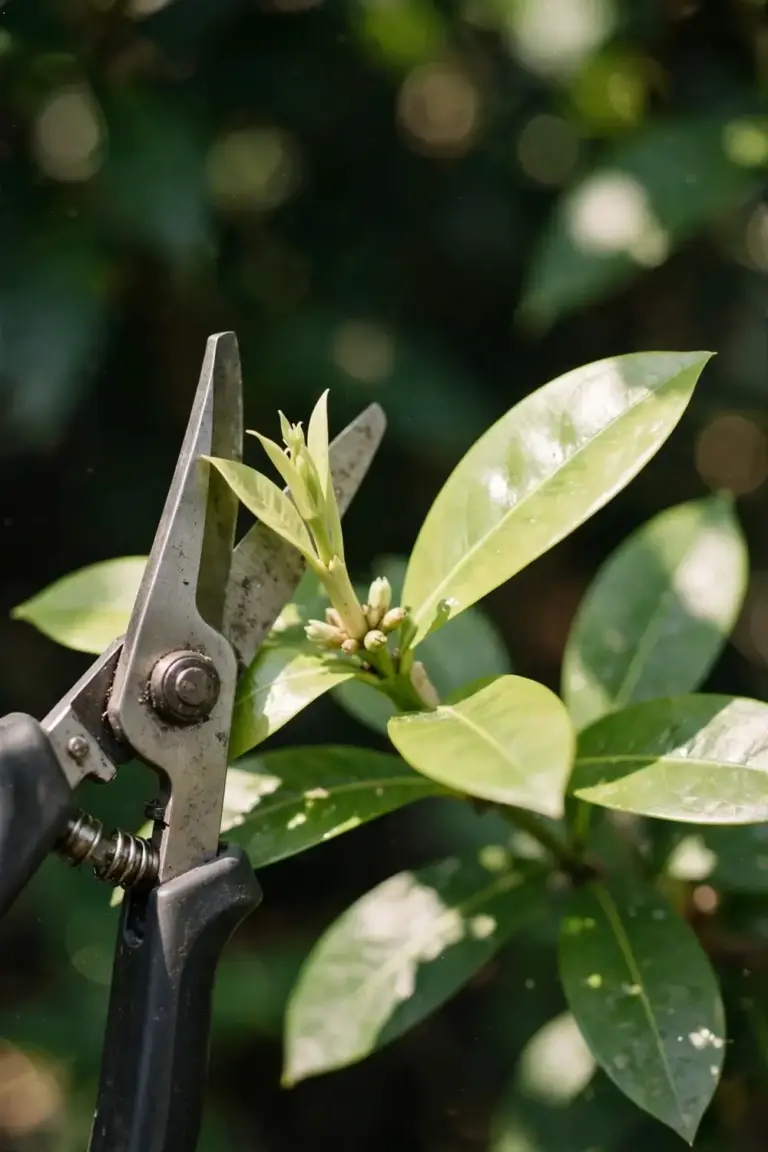
The Seed Collection describes the mechanism in their pinching guide: removing the top of the main stem encourages new growth in the form of side shoots, and removing the single main stem results in several new branches, each of which will produce flowers. One tip becomes three or four flowering branches.
Work on a dry, mild day. The Seed Collection advises pinching on a dry, sunny day that is not too hot or windy, so the cuts heal well and the plant recovers with less stress. Wet-day cuts stay damp and invite fungal problems. Midday heat wilts the fresh wounds. Morning on a calm dry day is the window.
Use clean sharp tools. Wipe secateur blades with isopropyl alcohol before you start and between plants. Dirty blades carry bacteria and fungi from cut to cut. This matters more than most gardeners think, because a tipped plant has dozens of small open wounds at once.
The Seed Collection adds a useful size cue for the first pinch in their pinching guide: pinch before the plant develops its first buds, when it is 20 to 40 cm tall with at least 4 to 5 sets of true leaves, cutting off the top 10 cm or so just above a set of leaves. That early pinch sets the branching pattern for the plant’s whole life. A seedling pinched at the right size grows into a bushy shrub. One left to stretch becomes a single stem that needs corrective pruning later.
8. Cut Above a Leaf Node and Keep One-Third
Cut just above a leaf node, and never remove more than one-third of the plant at once. The node is the slight swelling where a leaf or leaf pair joins the stem. New branches sprout from the buds at that node. A cut made just above it heals fast and branches fast.
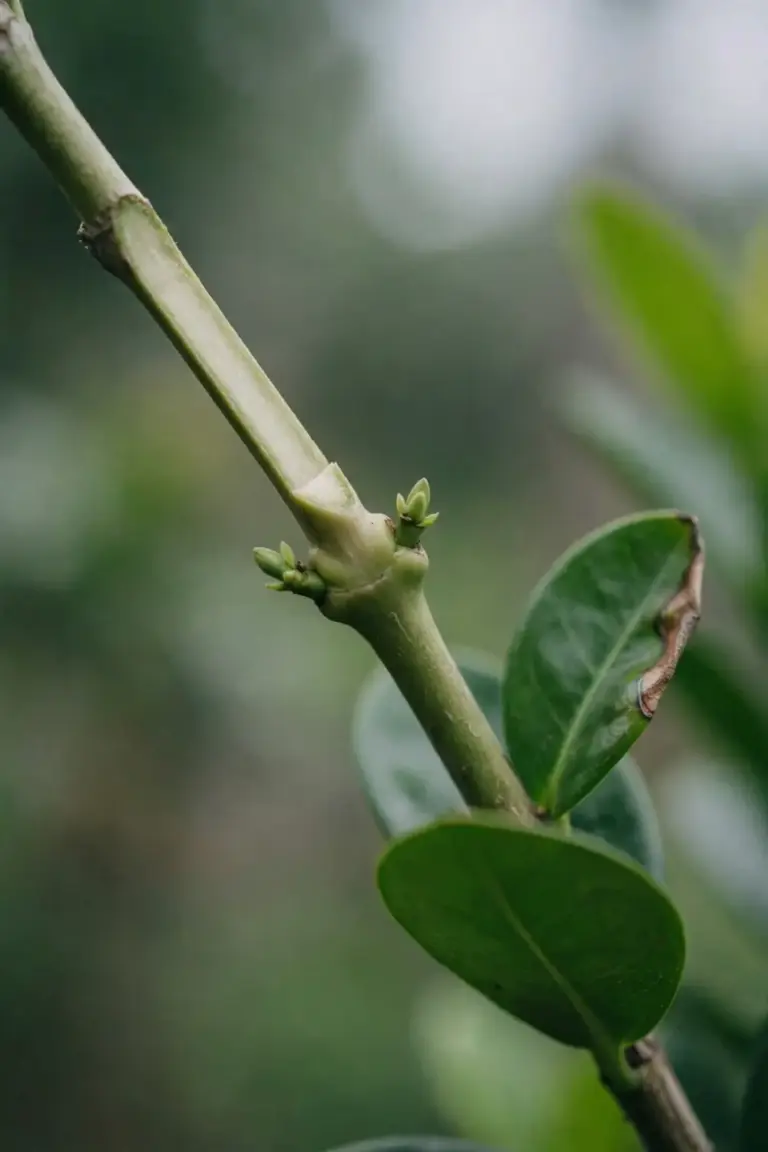
EatHealthy365 gives the placement in their ixora pruning guide: make the cut about 6 mm above a leaf node, where a new branch will sprout from that node. In their imperial original that is a quarter inch, which converts to about 6 mm. The principle holds at any scale: close above the node, angled so water runs off.
The one-third rule caps every session. EatHealthy365 states it as a rule of thumb in the same pruning guide: never remove more than one-third of the plant’s total mass at one time, so enough foliage remains for the plant to keep photosynthesizing while it recovers. Tipping rarely approaches this limit. Shaping must respect it.
For general shaping cuts, trim stems back by about one-third of their length. That figure comes from the EatHealthy365 ixora pruning guide as well. One-third off the length keeps the bush compact without shocking it. More than that, and the plant spends its energy recovering instead of flowering.
Angle the cut at 45 degrees, slanting away from the node, because the slant sheds water off the cut surface instead of letting it pool. A flat cut holds a bead of water after rain or irrigation. That standing moisture invites rot into the stem. The angle is a small detail with an outsized effect on how cleanly the wound heals, and EatHealthy365 recommends it in their ixora pruning guide.
9. Hard Prune Old Leggy Plants in Early Spring Only
Hard prune only in early spring, and only when the plant is old, woody, and sparse. Cut the whole plant back hard to 15 to 30 cm from the ground, which looks brutal but works. The plant reshoots from bare wood. Within one growing season it rebuilds as a dense shrub.
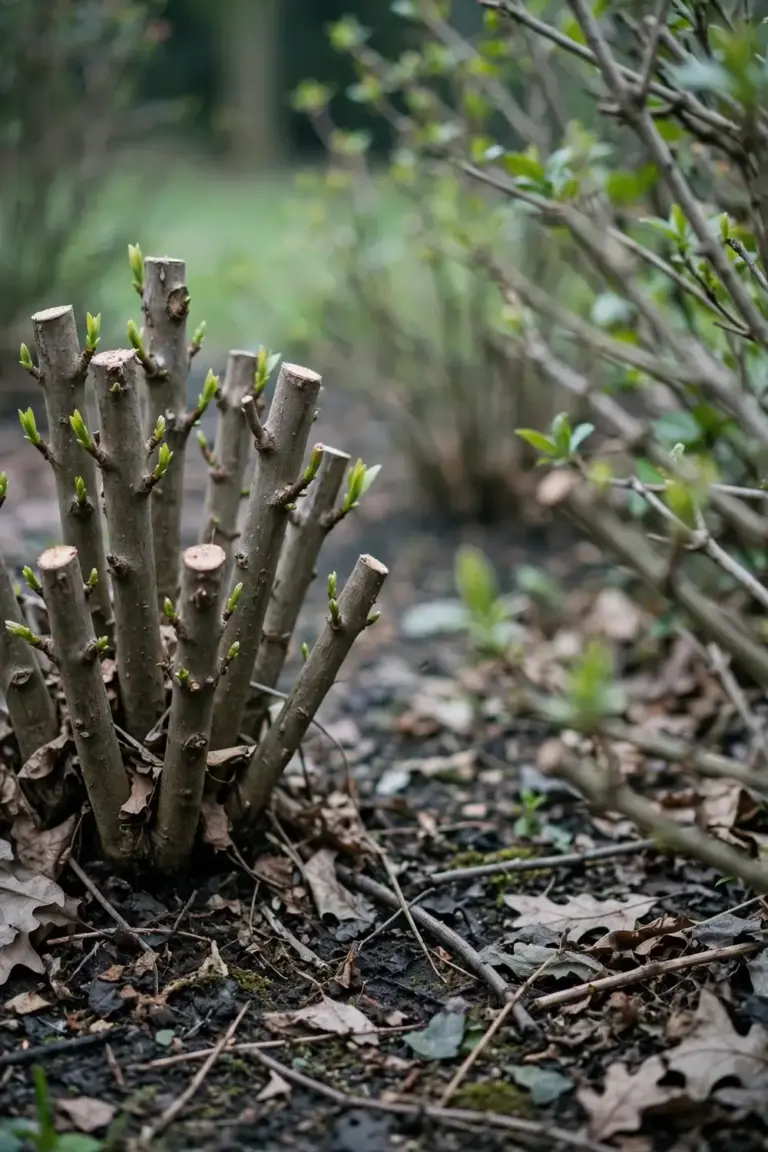
Nursery Near Me confirms the recovery in their ixora growing guide: older leggy plants can be cut back hard in early spring and will reshoot from bare wood, though they will skip a flowering cycle. That skipped cycle is the price. Budget for one quiet flowering season in exchange for a renewed plant.
EatHealthy365 gives the same window from the northern hemisphere in their ixora pruning guide: hard pruning should only be done in early spring, just before new growth begins, giving the plant the entire growing season to recover and rebuild. Their “early spring” means March. Yours means September. The season name is the same; the months flip.
Never hard prune in autumn or winter. Fresh cuts made late in the season push soft growth into cold weather, and the plant has no growing season left to recover. A hard prune at the wrong time can kill a plant that would have survived the same cut in spring.
10. Feed With Acid-Loving Fertilizer After Tipping
Wait a week or two after pruning, then feed with a fertilizer made for acid-loving plants. The pause lets the fresh cuts heal. The feed then fuels the new growth spurt the tipping triggered. Tipping without feeding asks the plant to branch on empty.
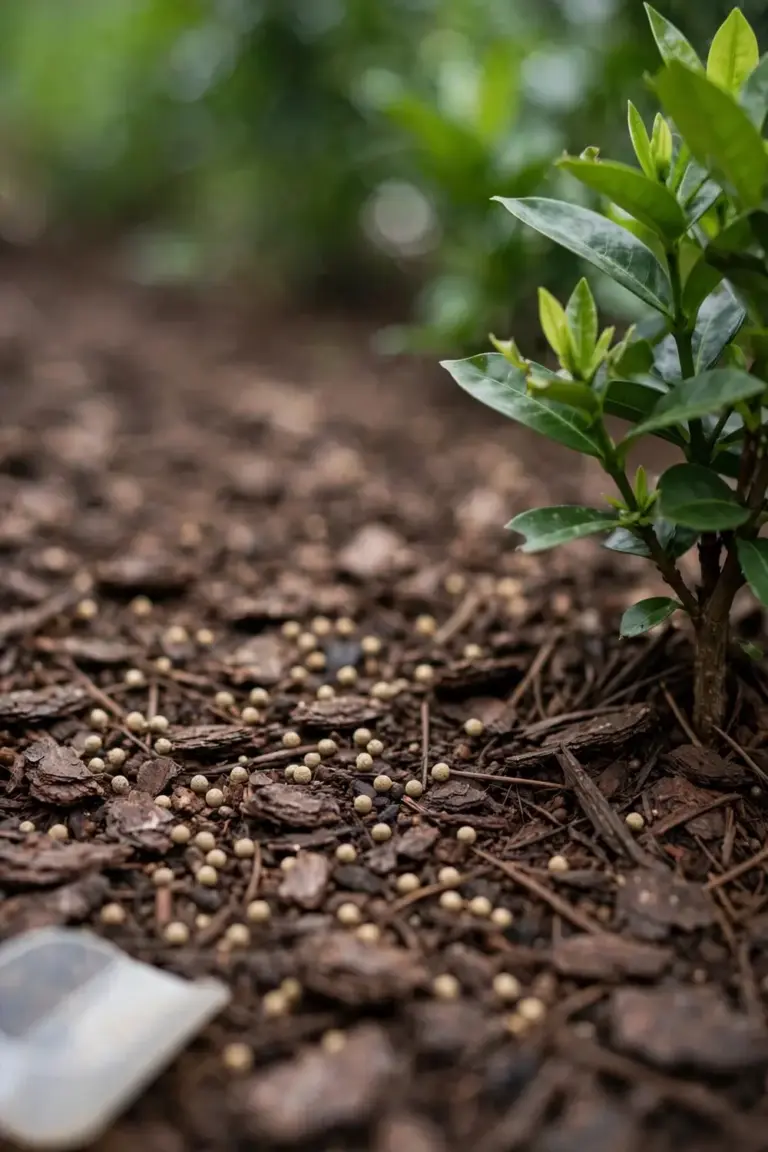
Nursery Near Me gives the Australian formula in their ixora growing guide: feed in early spring and again in mid-summer with a fertilizer formulated for azaleas, camellias or gardenias, because those blends are acidic and include the trace elements ixora needs. Two feeds a year, timed to the growth surges, beats constant light feeding.
Avoid general-purpose fertilizers high in lime or phosphorus. The same Nursery Near Me ixora guide warns against them, because lime raises the soil pH and ixora needs acidic soil around pH 5.0 to 6.0. Yellow leaves with green veins mean iron chlorosis from alkaline soil, not hunger, and more of the wrong fertilizer makes it worse.
Iron chlorosis is the most common ixora complaint in Australia, and it looks exactly like a feeding problem. The leaves yellow while the veins stay green, which tempts gardeners to add more fertilizer. The real fault is pH: alkaline soil locks iron away from the roots no matter how much fertilizer goes on. Test the soil pH first. If it reads above 6.0, acidify with an azalea and camellia mix or aged pine bark before feeding again.
EatHealthy365 adds the post-prune pause from the US side in their ixora pruning guide: wait a week or two after pruning before fertilizing, to give the fresh cuts time to heal, then feed with a fertilizer formulated for acid-loving flowering plants. The advice crosses hemispheres cleanly because wound healing works the same everywhere.
11. Skip the Three Timing Mistakes That Cost Flowers
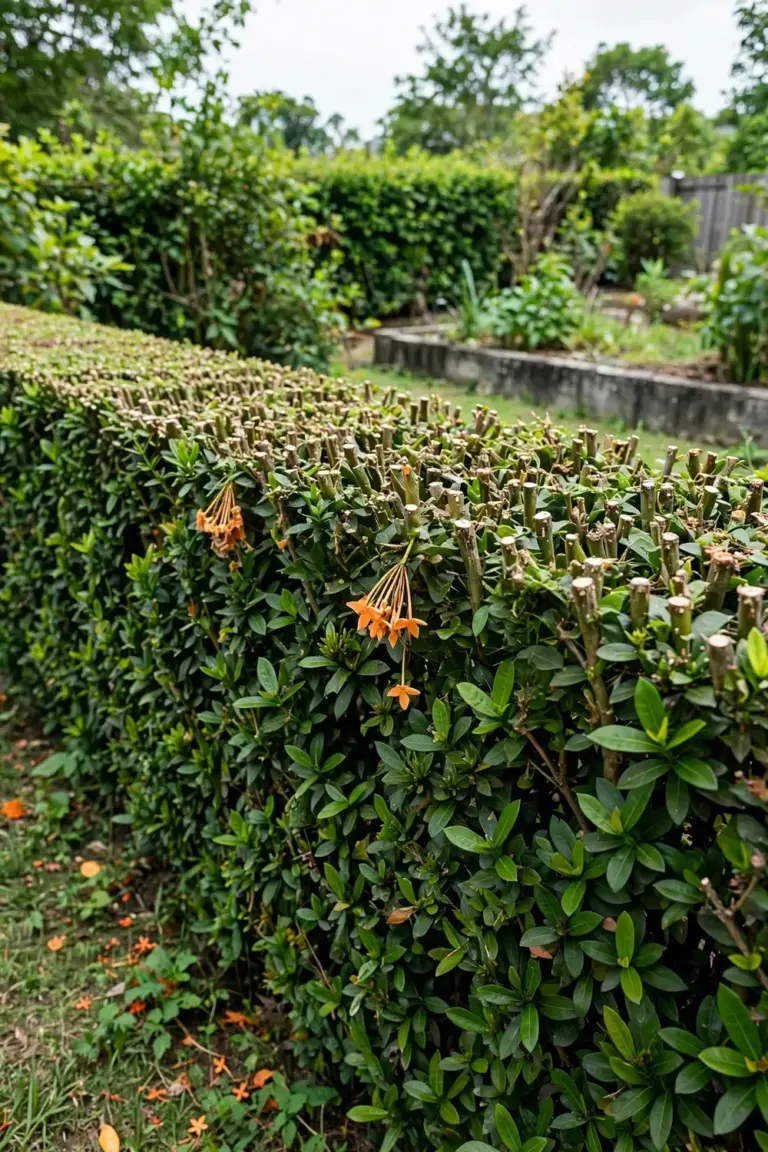
Three timing mistakes cost ixora flowers, and all three are avoidable. First, shearing with hedge trimmers during a flush. The blades take the stem tips, and the buds sit on exactly those tips. The flush dies on the blades.
Second, tipping or shaping in late autumn or winter in cool zones. EatHealthy365 marks this window clearly in their ixora pruning timing table: late fall and winter pruning cuts off the new wood that produces next year’s flowers and risks frost damage on fresh cuts. Their fall is your autumn. The warning translates directly.
Third, the deep mid-flush shear that some gardeners do to “tidy” a hedge. Nursery Near Me warns against a hard shear mid flowering in their ixora growing guide, because the buds sit on exactly the tips being removed. A hedge can be tipped lightly between flushes. It cannot be sheared hard during one.
The fix for all three is the flush rule from section 1. Tip when the flush finishes. Shape after the main flush. Hard prune in early spring. Every mistake on this list is a cut made at the wrong point in the flowering cycle.
The hedge-trimmer mistake deserves extra attention because it looks like good gardening. A freshly sheared hedge looks neat for a week, and the gardener feels productive. Then no flowers come, because the buds went into the green waste bin with the clippings. The tidy look cost the entire display. Hand-tipping the same hedge takes longer but leaves every future bud exactly where the plant put it.
12. Tip Hedges More Often Than Specimens
Tip hedges after every flush without exception. A hedge is a wall of flowers, and its job is density. Every finished cluster gets tipped, every soft tip gets pinched, and the plants knit into one continuous flowering surface. Skip a flush on a hedge and gaps open that take months to close.
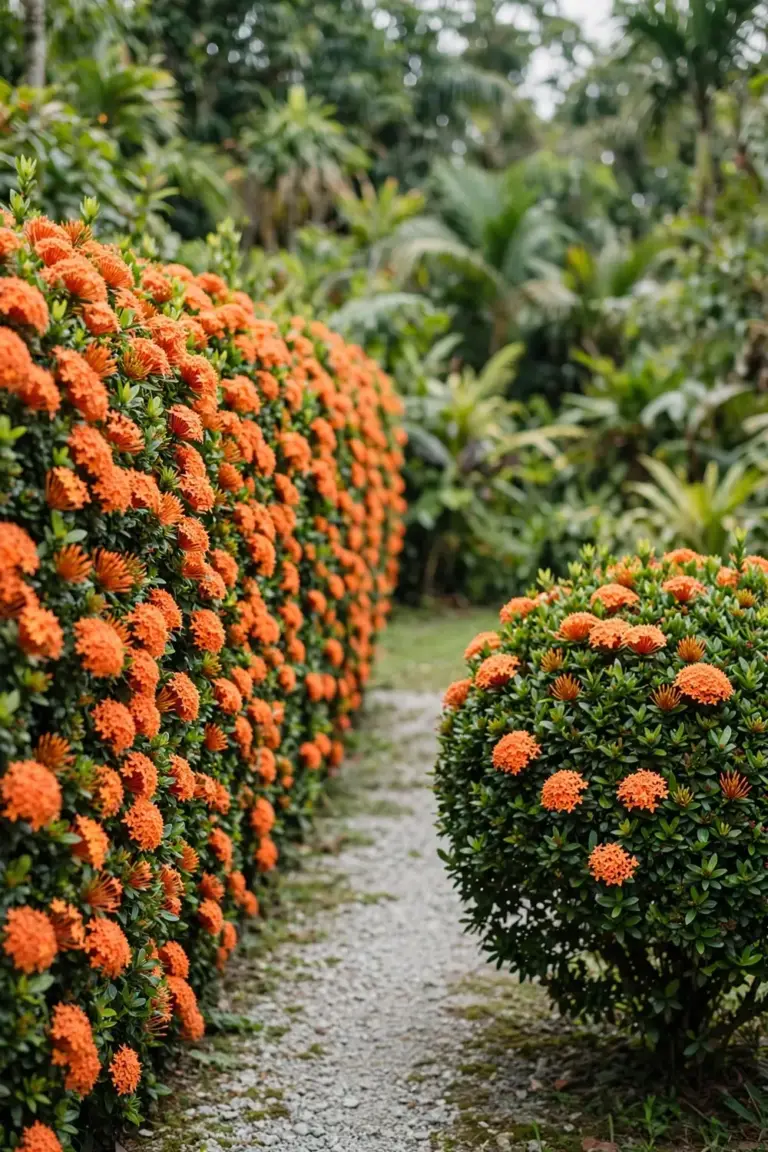
Tip specimens more selectively. A feature shrub earns its place with form as well as flowers, so tip for shape: pinch the tips that spoil the outline, leave the ones that build it. The flush rule still applies, but the eye edits which tips go.
For a new hedge, plant compact varieties 500 to 600 mm apart and tip through the first year. That spacing comes from the Nursery Near Me ixora guide. The plants meet faster, the base fills in, and the hedge reads as one plant instead of a row of individuals.
Spacing and tipping work together. Plants set too far apart take years to knit, no matter how often you tip, because too much gap stands between them to fill. Plants set at the right spacing and tipped through their first year close the line by the second season. Get the spacing right at planting time and the tipping does the rest.
For general pruning technique beyond ixora timing, the site’s spring pruning techniques cover the seasonal mechanics that apply across shrubs. And when the job needs tools, buying the right pruning shears matters more than most gardeners expect: bypass secateurs make the clean cuts that heal fast.
13. Walk the Flush Calendar Every Week
Walk past the ixora once a week in the growing season and look at the flower heads. Browned clusters mean tip now. Fresh buds mean hands off. This weekly glance replaces any calendar, because the plant reports its own timing.
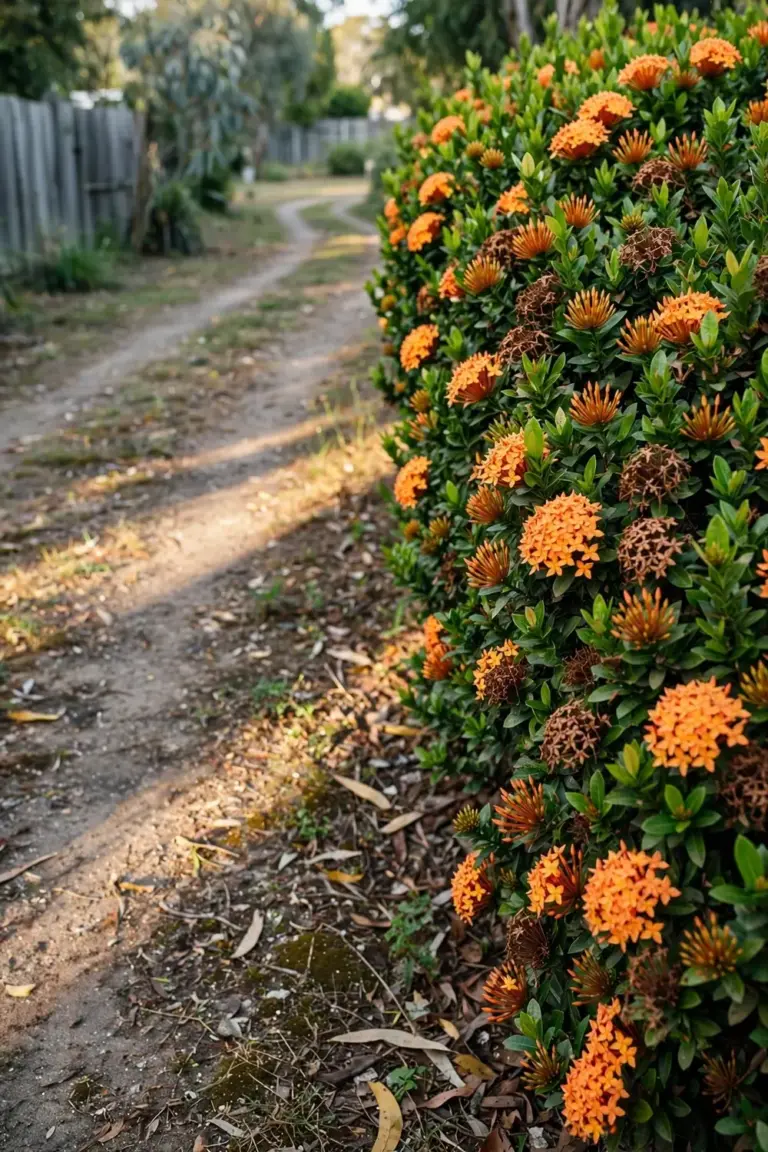
Keep a simple rhythm. Tip the finished flush. Water evenly through the warm months. Feed in early spring and mid-summer with acid-loving fertilizer. Shape lightly in late autumn in the subtropics, or in late spring to early summer in Sydney. Hard prune only in early spring, only when the plant is truly spent.
I tip the spent cluster the morning it browns, because a flush that lingers steals energy from the buds forming behind it. That is the whole article in one habit: watch the flowers, cut when they finish, and the next flush arrives on schedule.
Frequently Asked Questions
Tip after each flower flush finishes, from spring through autumn in most of Australia. In the tropics that means nearly year-round tipping. In the subtropics the main shaping trim lands in late autumn after the last big flush. In Sydney the best pruning window is late spring to early summer. Never tip in winter in cool zones, because new soft growth gets damaged and the cuts heal slowly in cold damp air.
Within days of the flush finishing. Snip the spent flower head where it meets the stem as soon as the last flowers brown and drop. Prompt tipping redirects the plant’s energy from holding dead clusters into pushing the new shoots that carry the next flush. Waiting weeks costs nothing fatal, but each idle week is a week of regrowth lost. The plant sets its own deadline: brown cluster, cut now.
Not in cool or temperate zones. Winter tipping pushes soft new growth into cold weather, and fresh cuts heal slowly in cold damp air, inviting fungal problems. In Sydney and further south, stop all tipping once growth slows in autumn and resume when spring growth starts. In the frost-free tropics winter barely exists as a season, so tipping continues whenever a flush finishes. Match the shears to the climate, not the calendar.
The cut came at the wrong time. Pruning during or just before a flush removes the buds sitting on the stem tips, and ixora flowers on new growth, so those buds were the entire coming display. Hard pruning also skips a flowering cycle while the plant rebuilds. The fix is timing: tip only after a flush finishes, shape only after the main flush, and hard prune only in early spring. The next flush returns once correctly timed new growth matures.
Do both, at different scales. Deadhead the spent flower cluster by snipping it where it meets the stem, and that alone redirects energy into new buds. Tip the soft stem tip behind it as well when you want branching, pinching just above a leaf node so several new shoots form. Deadheading maintains the display. Tipping builds the bush. On young plants tip aggressively to build density from the base. On established plants deadhead routinely and tip selectively for shape.