
Summer patch is the lawn disease that kills the plant while you watch the leaves. The patches appear in summer heat, but the infection happened in spring, weeks before you saw anything. The 10 strategies below tell you how to confirm the ID with the tug test, separate summer patch from brown patch with the root-versus-leaf rule, and save your lawn with mowing, watering, aeration, feeding, and overseeding, because dead patches will not recover on their own.
The timing trap is the whole story. Infection begins in spring when soil temperatures reach about 65 degrees, and foliar symptoms appear in summer heat. By the time you see patches, the infection is weeks old. Prevention is spring work. Recovery is fall work. Summer is diagnosis.
The pathogen is Magnaporthe poae, a fungus. The newer placement, Magnaporthiopsis poae, appears in some sources. This article uses Magnaporthe poae throughout after this introduction. The name does not change the playbook.
What Summer Patch Actually Is
Summer patch is a root-destroying turf disease of cool-season grasses. The fungus infects and destroys roots, crowns, and rhizomes, so the roots rot, the crowns blacken, and the plant dies from the bottom up, leaving dead patches that must be overseeded, because the plants inside them are gone.
Summer patch often kills the plants it infects. That sentence is the difference between summer patch and brown patch. Brown patch is a leaf disease, and the turf recovers when the weather cools. Summer patch is a root disease, and the plants die. The dead patches will not fill in on their own. The overseeding is not optional.
The disease hits established lawns hardest. Lawns about 2 years old or older are more vulnerable, though less-severe outbreaks in a lawn seeded the prior autumn are possible. The established lawn is the summer patch lawn. The new lawn is rarely the worst case.
Summer patch was once grouped with other patch diseases under the name Fusarium blight. Summer patch and necrotic ring spot were formerly collectively known as Fusarium blight. The grouping is history. The two diseases are separate. The history explains why old sources sound confused about which patch is which.
How to Identify Summer Patch on Your Lawn
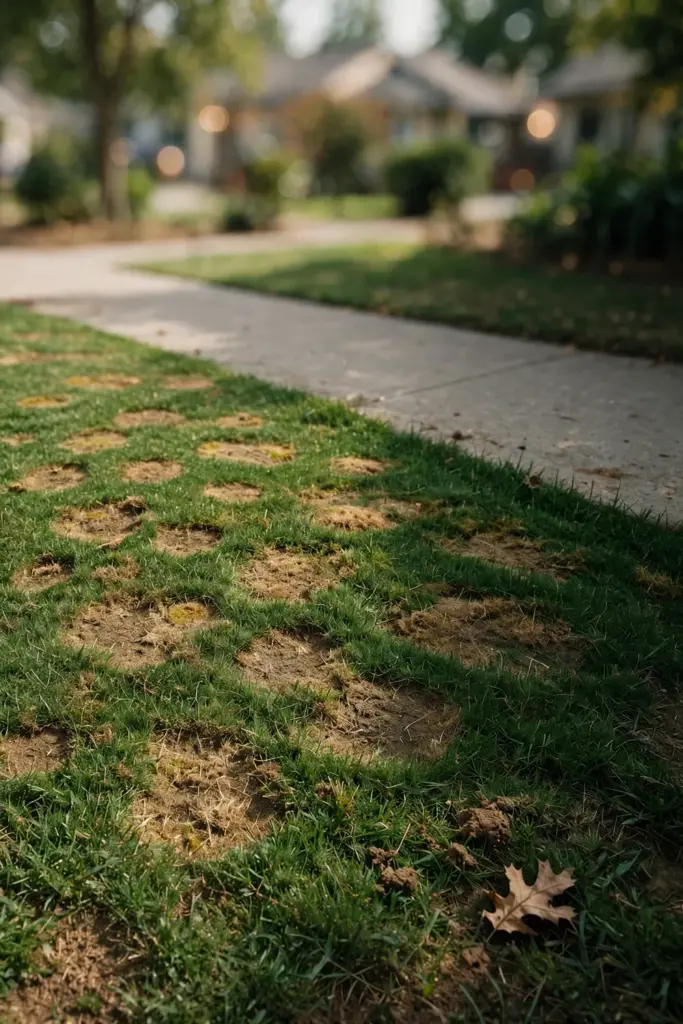
Watch the first wilt. Symptoms first appear as wilted, dark-green, roughly circular areas of turf 1 to 2 inches in diameter. The wilted dark-green circle is the earliest sign. A lawn with wilted dark-green circles in June is a lawn to check at once.
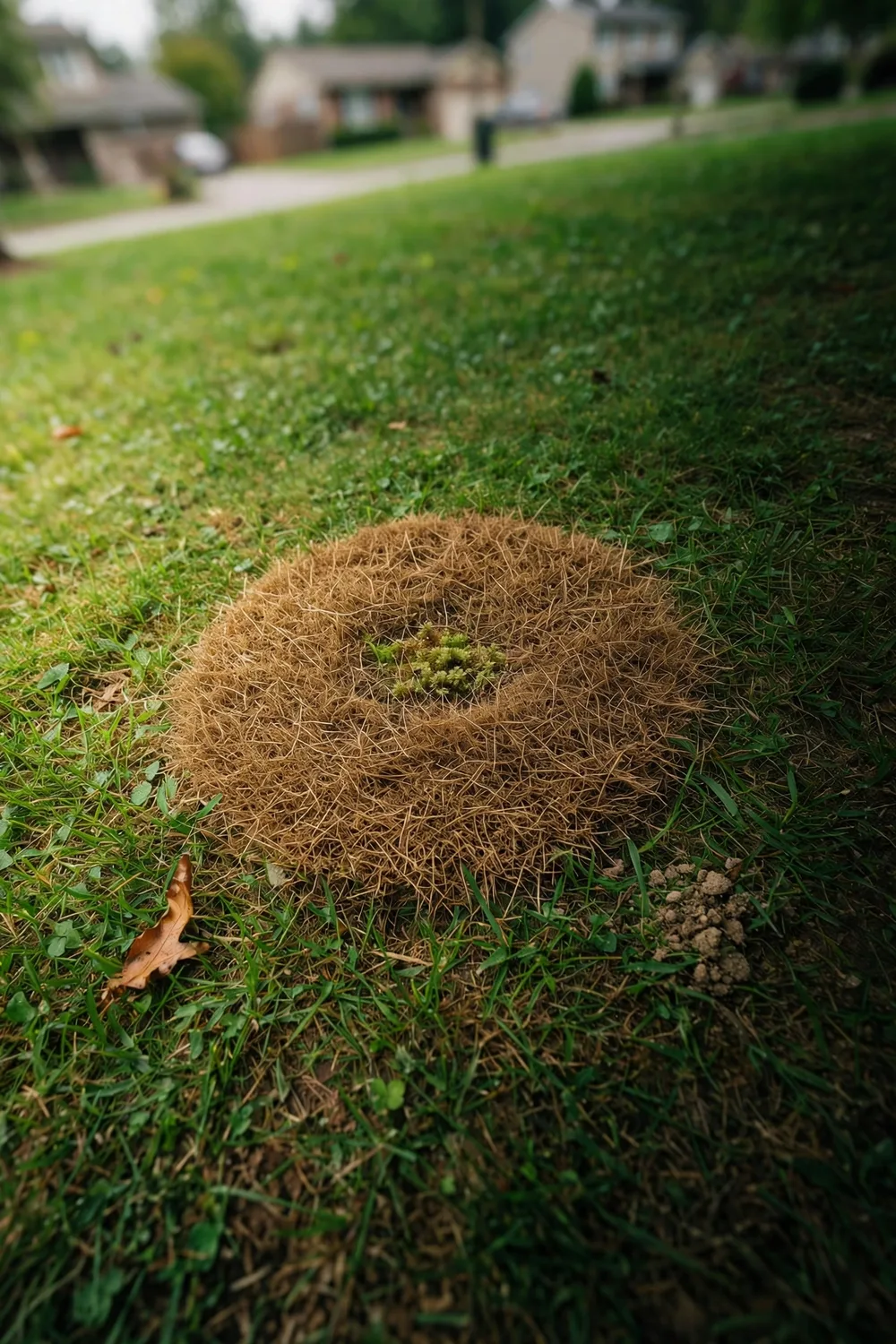
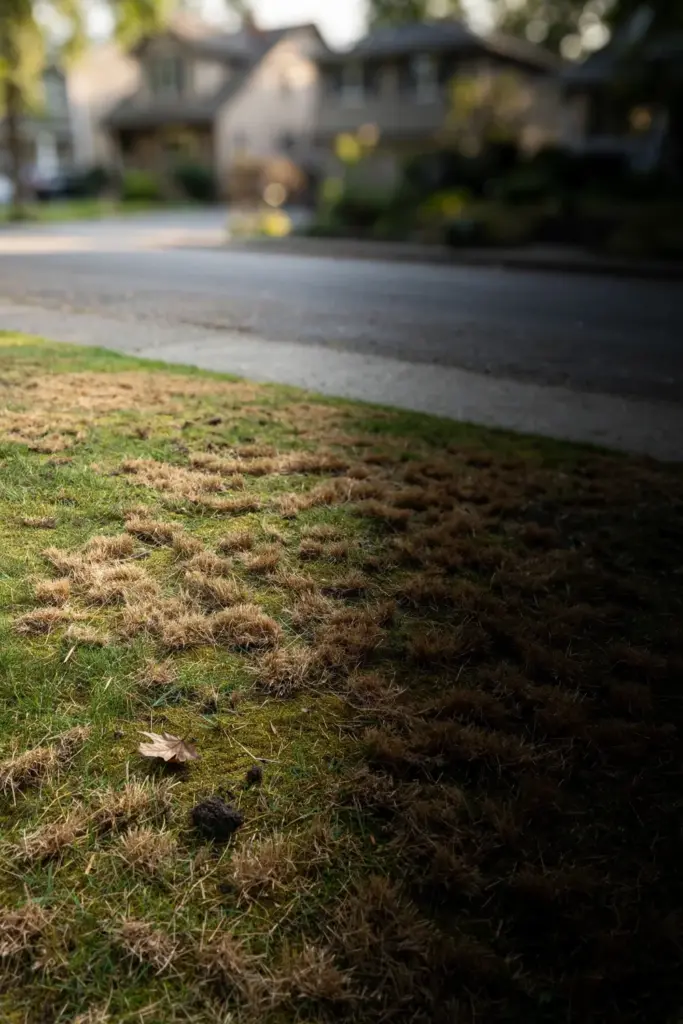
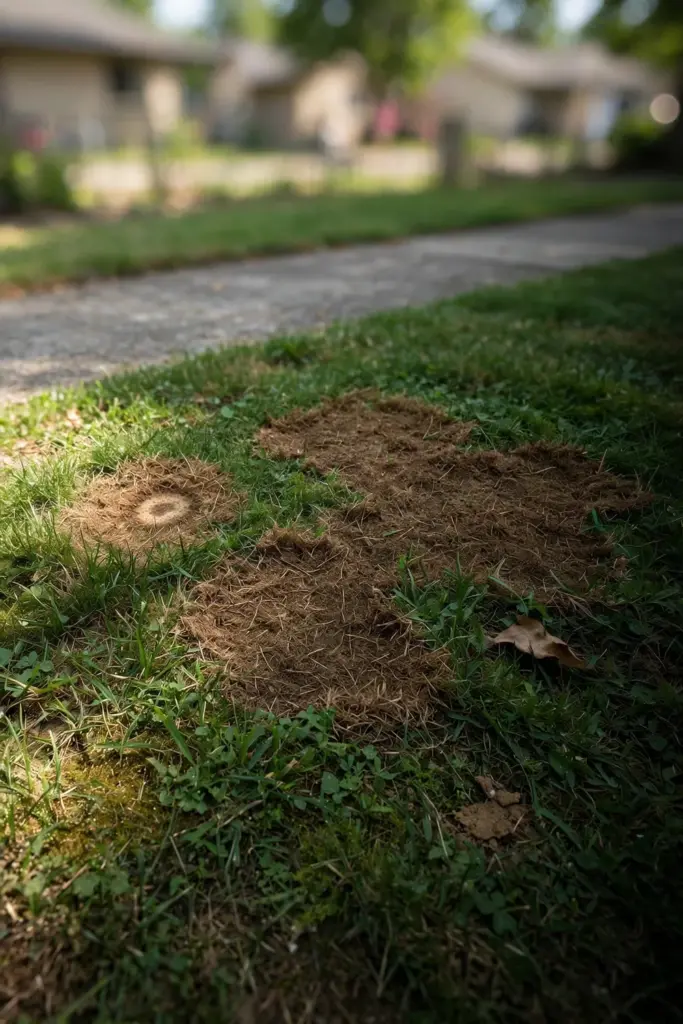
Watch the color change. The affected turf soon turns a straw-brown color. Grass blades in the patch change to a dull reddish brown, then tan, and finally a light straw color. The straw-brown patch is the classic form. The patch starts small and grows.
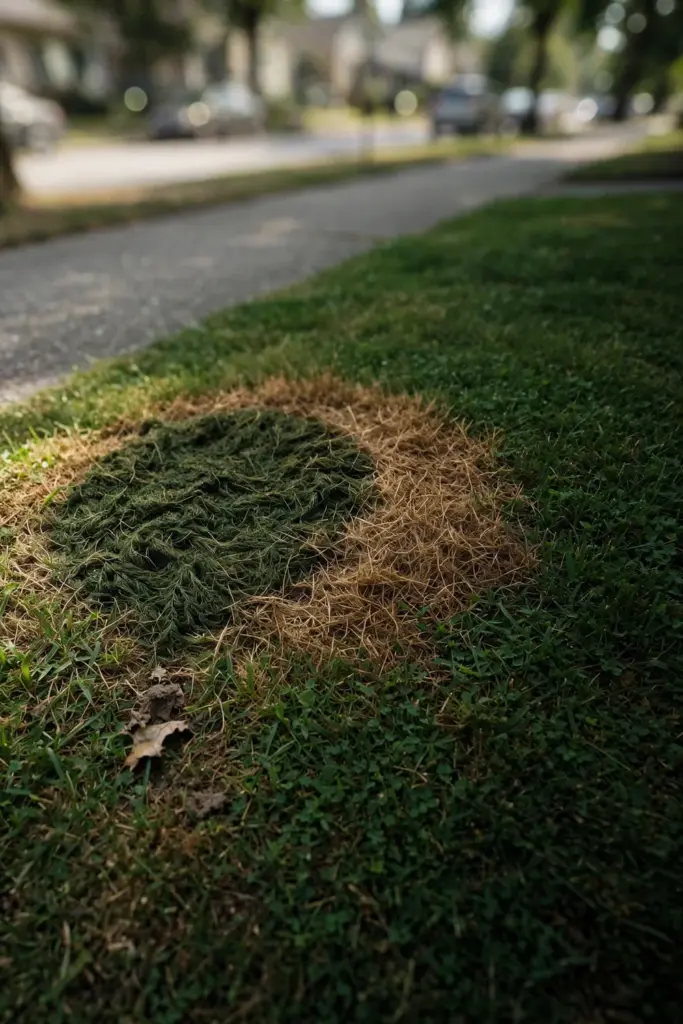
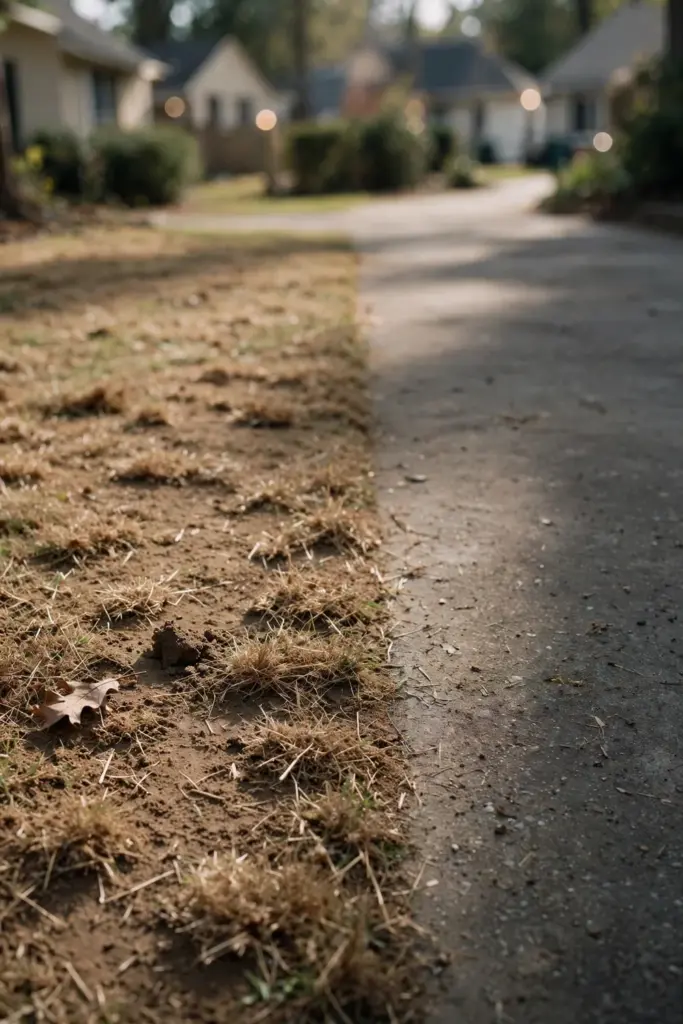
Measure the patches. The most common symptoms are circular, straw-colored patches that range from 3 to 12 inches in diameter. Advanced patches grow larger than 3 feet, in circles, rings, or crescents. Patches may coalesce, and large areas of turf can be destroyed within 7 to 21 days. The fast coalescence is the emergency.
Look for the frog-eye. Healthy turf may persist in the center of blighted patches, producing rings or frog-eye symptoms. The frog-eye center is the signature. A straw ring with a green center is summer patch until proven otherwise.
Run the tug test. Infected roots, crowns, and rhizomes turn dark brown or black and rot. Pull a tuft of turf at the patch edge. Blackened roots that pull away easily mark a root disease. A tug test that reveals blackened roots is the field confirmation.
Check the crowns. Dark brown or black fungal hyphae develop on roots, crowns, or stolons. Vascular discoloration may occur in later stages. The blackened crown is the underground evidence. The black crown with the straw patch above it is the pair.
Which Grasses Get Hit Hardest
Kentucky bluegrass suffers most. Summer patch is the most destructive disease of Kentucky bluegrass and creeping red fescue lawns in the Mid-Atlantic. Kentucky bluegrass is the most commonly infected grass. A Kentucky bluegrass lawn in a hot summer is the summer patch lawn.
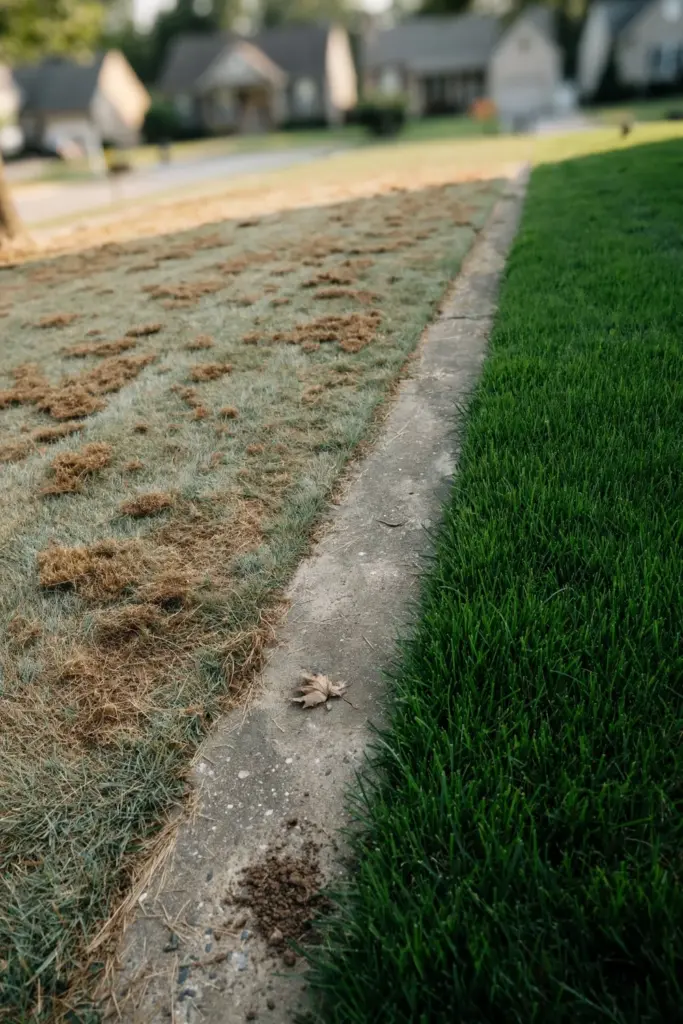
Fine fescues suffer too. Creeping red fescue develops orange or bronze-colored patches prior to affected plants turning straw-colored. Hard fescues are also susceptible, but they are somewhat more resistant than creeping red fescues. The fine fescue lawn is the second victim.
Annual bluegrass suffers on greens. Annual bluegrass is a common weed in turf, and it is a host. Infected annual bluegrass surrounding unaffected bentgrass clones turns yellow to bronze, a useful diagnostic feature. The bluegrass that dies while the bentgrass lives points at summer patch.
Bentgrass is the exception. Bentgrass may also become infected but shows very few symptoms and quickly recovers. The bentgrass lawn is not the summer patch lawn. The bentgrass in a mixed stand survives while the bluegrass dies.
Tall fescue and perennial ryegrass resist. Tall fescue lawns rarely have problems with summer patch disease, and perennial ryegrass is highly resistant. The resistant species are the recovery plan. The overseed uses them.
Summer Patch vs Brown Patch on Your Lawn
The root-versus-leaf rule settles it. Summer patch is a root disease. Brown patch is a foliar disease that does not affect crowns or roots. The rule is the differential. A disease that kills the roots kills the plant. A disease that hits the leaves lets the plant recover.
| Clue | Summer Patch (Magnaporthe poae) | Brown Patch (Rhizoctonia solani) |
|---|---|---|
| Plant part hit | Roots, crowns, rhizomes (root disease) | Leaves only (foliar disease) |
| Outcome | Plants killed; dead patches must be overseeded | Turf recovers when weather cools |
| Patch shape | Small, circular; rings, crescents, frog-eye centers | Larger, irregular; circular olive-green stains 4 to 12 inches |
| Edge mark | No smoke ring; outer edge yellow or bronze | Gray-white “smoke ring” at the perimeter |
| Roots | Blackened, rotted; tug test reveals damage | Roots unaffected |
| Infection timing | Spring, soil about 65 °F; symptoms in summer heat | Summer foliar infection; night temperatures above 70 °F, high humidity |
| Hosts hit hardest | Kentucky bluegrass, fine fescues, annual bluegrass | All turfgrass types, especially tall fescue and ryegrass |
| Treatment | Prevention in spring; overseed dead patches | Cultural controls; turf recovers |
The differential is published in home content (LawnStarter FAQ, Elite Lawn Care) and corroborated by Extension (Purdue: brown patch is a foliar disease that does not affect crowns or roots; Maryland: summer patch destroys roots and kills plants). Each row is verified against Extension, and the seasonal framing is corrected here: both diseases are summer diseases, and the season does not separate them.
Rule out the lookalikes in one pass. Necrotic ring spot has symptoms very similar to summer patch, and field separation is not reliable; lab confirmation settles it. Take-all is a different pathogen on warm-season hosts, St. Augustine and Bermuda, and pH management does not separate it from summer patch. Dollar spot resembles early summer patch, and the resemblance fades as the patches grow. Spring dead spot is a warm-season disease at spring emergence. Pink snow mold is a cold wet disease at snowmelt. Each lookalike gets one line, never a second table.
How Summer Patch Spreads
Infection starts in spring. The pathogen infects roots in spring at soil 65 degrees. The fungus may grow around turfgrass roots at any point in the growing season, but disease tends to develop only after heat and drought stress the grass. The spring infection is silent. The summer symptoms are loud.
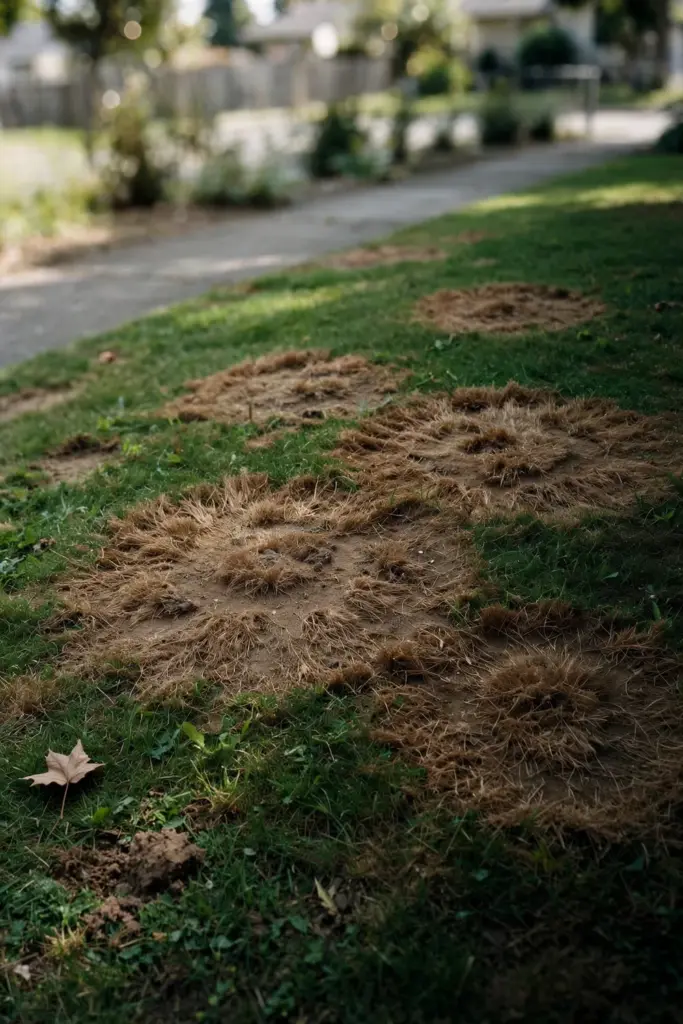
Heat triggers the symptoms. Disease tends to develop only after heat and drought stress the grass, so symptoms usually appear once the weather becomes hot. At that point, enough fungal growth has damaged or clogged the vessels supplying the grass blades with water that the plant dies. The heat is the trigger, not the infection.
The fungus moves on equipment. Infectious fragments of the fungus can be moved to new areas with dethatchers and digging equipment like core aerator and verticutter machines if they are not cleaned between uses. The aerator that moves from an infected lawn to a healthy lawn carries the fungus. The cleaning is the prevention.
The fungus grows radially. Circular patch symptoms develop because the fungus grows radially from a central infection point. The radial growth explains the circles. The coalescence explains the large dead areas. The circles are the growth pattern.
What Raises the Risk of Summer Patch
Low mowing raises the risk most. Low mowing is the cultural factor that most worsens severity. A lawn scalped in summer heat is a lawn primed for summer patch. The mowing height is the biggest lever.
Nitrate nitrogen raises the risk. Heavy spring nitrogen, especially nitrate nitrogen, worsens summer patch. Nitrate forms feed the problem. Slow-release forms do not. The nitrogen form matters as much as the nitrogen amount.
Frequent light irrigation raises the risk. Frequent light irrigation keeps the surface wet and the roots shallow. Shallow roots are weak roots. Weak roots are summer patch roots. The deep infrequent watering builds the deep roots that resist.
Thatch over half an inch raises the risk. Thatch over half an inch holds moisture and harbors the fungus. The thatch layer is the fungal home. The half-inch threshold is the line.
Compacted soil raises the risk. Compacted soils hold water, starve roots of air, and favor the fungus. The compacted lawn is the summer patch lawn. The aeration is the fix.
Drought stress after warm wet periods raises the risk. Drought stress after warm wet periods hits roots already weakened by infection. The wet period grows the fungus. The dry period finishes the plant. The combination is the killer.
High pH raises the risk. Summer patch favors soil pH above 6, and the disease is most resistant at pH 5.5 to 6. A soil test that reads above 6 is a summer patch warning. The pH lever is real, and it is verified by a soil test.
Strategy 1: Confirm the ID With the Tug Test
Check the patch pattern. Wilted dark-green circles turning straw-brown, in rings or crescents with frog-eye centers, mark summer patch. The pattern is the first check. The pattern alone is not the confirmation.
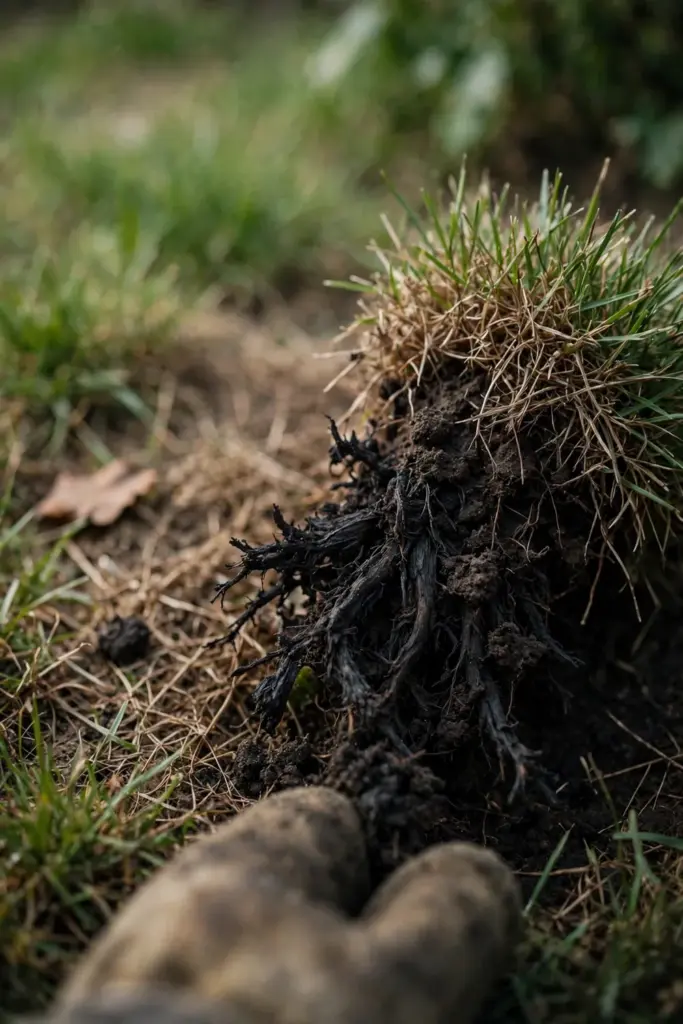
Run the tug test. Pull a tuft of turf at the patch edge. Blackened roots that pull away easily mark a root disease. A tug test that reveals blackened roots is the field confirmation. The tug test is free, and it works in seconds.
Check the crowns and rhizomes. Infected roots, crowns, and rhizomes turn dark brown or black and rot. The blackened crown confirms the root disease. The black crown with the straw patch above it is the pair.
Send a sample where the diagnosis matters. The best means of confirming this disease is to submit a turfgrass sample along with images of the symptoms to a plant disease diagnostic lab. Cut a 6-inch square from the patch margin, deep enough to include much of the root system. The lab settles the necrotic ring spot question, and the lab answer is worth the wait where the lawn is valuable.
Strategy 2: Tell It From Brown Patch With the Root-Versus-Leaf Rule
Check the plant part. Summer patch hits roots, crowns, and rhizomes. Brown patch hits leaves only and does not affect crowns or roots. The plant part is the differential. A disease that rots the roots is summer patch. A disease that spots the leaves is brown patch.
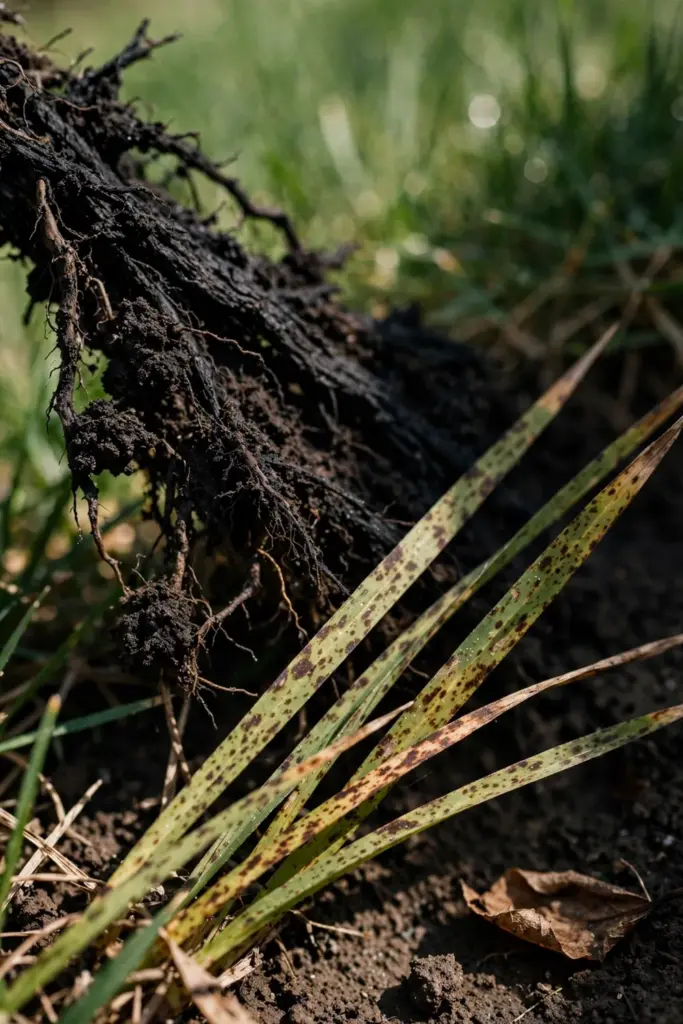
Check the outcome. Summer patch kills the plants, and dead patches must be overseeded, while brown patch lets the turf recover when the weather cools, so the outcome is the differential that matters for the wallet: a lawn that recovers on its own is brown patch, and a lawn with dead patches is summer patch.
Check the edge. Brown patch shows a gray-white smoke ring at the perimeter. Summer patch shows no smoke ring, and the outer edge is yellow or bronze. The smoke ring is the brown patch mark. The absence of a smoke ring is the summer patch mark.
Do not re-cover brown patch here. The live Brown Patch SOS article on this site owns brown patch. This article’s brown patch content stays in the differential table. The companion article is named, not linked, because its slug is not used in this batch.
Strategy 3: Rule Out the Lookalikes in One Pass
Check necrotic ring spot. Necrotic ring spot has symptoms very similar to summer patch, and field separation is not reliable. Lab confirmation settles it. Do not guess between the two in the field. The lab settles it.
Check take-all. Take-all is a different pathogen on warm-season hosts, St. Augustine and Bermuda. A cool-season lawn with patch disease is not take-all. The host is the fence. The warm-season lawn is the take-all lawn.
Check dollar spot. Early summer patch initially resembles dollar spot. The resemblance fades as the patches grow past dollar spot size and the roots blacken. The tug test separates them. The blackened roots are the summer patch mark.
Check spring dead spot and pink snow mold. Spring dead spot is a warm-season disease at spring emergence, and pink snow mold is a cold wet disease at snowmelt, so neither is a summer disease on a cool-season lawn, and the season is the fence.
Strategy 4: Understand the Timing Trap
Know that infection happens in spring. The pathogen infects roots in spring at soil 65 degrees. The spring infection is silent. The summer symptoms are loud. The spring work is the prevention. The summer work is the diagnosis.
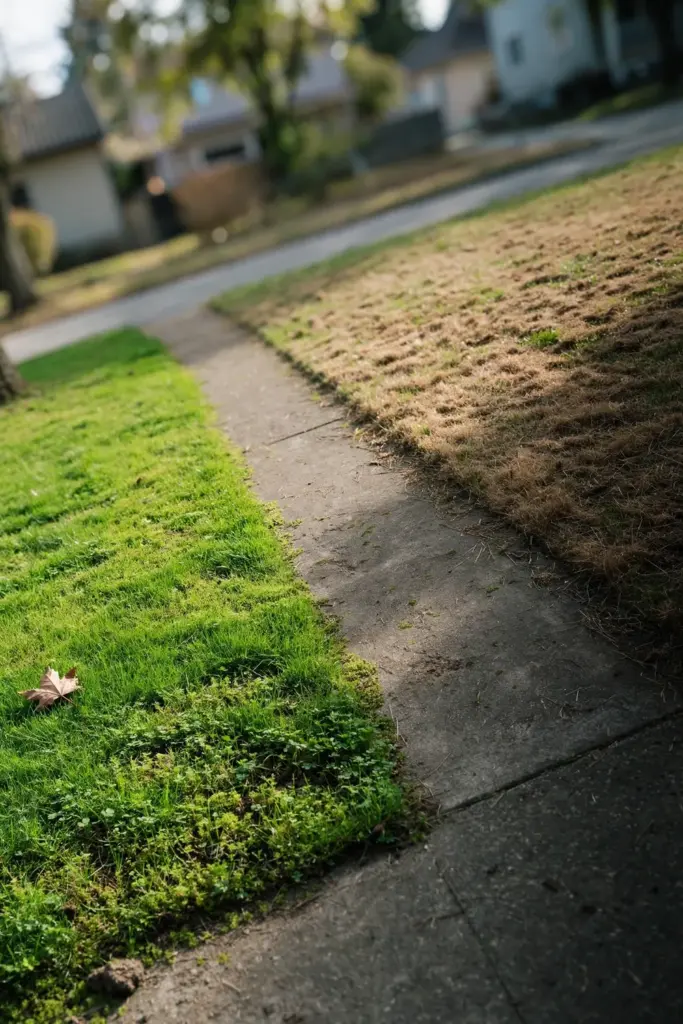
Know that symptoms appear in summer heat. Disease tends to develop only after heat and drought stress the grass, so symptoms usually appear once the weather becomes hot, and the heat is the trigger, not the infection, so a lawn that looks fine in May can die in July.
Know that curative sprays on dead patches waste money. Dead patches hold dead plants, and a fungicide cannot revive dead plants, so the spray on a dead patch is money on dead turf, and the overseed is the fix for dead patches.
Plan on two calendars. Spring is the prevention calendar, fall is the recovery calendar, and summer is the diagnosis calendar, so the three calendars are the year, and the gardener who works all three wins.
Strategy 5: Mow High, Never Scalp
Keep cool-season lawns at 3 to 3.5 inches in summer. The higher mowing height shades the soil, cools the roots, and feeds the roots with more leaf. The tall lawn is the summer patch resistant lawn. The short lawn is the summer patch lawn.
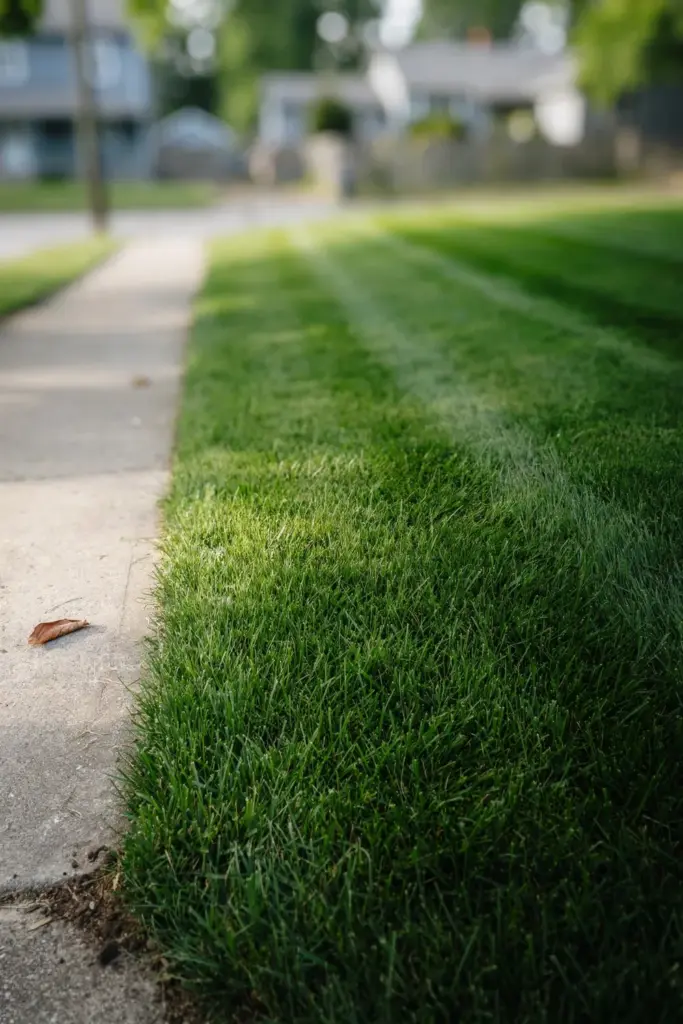
Never scalp. Low mowing is the cultural factor that most worsens severity. A scalped lawn in July is a lawn primed for summer patch. The scalping is the worst cut.
Mow at the higher end of the recommended range. Mow at the higher end of the recommended height range for your species. The higher end is the safe end. The lower end is the risk end.
Raise the height in high-stress periods. Raise mowing height in high-stress periods, especially during heat and drought. The raised height carries the lawn through the stress. The height is the lever.
Strategy 6: Water Deep and Infrequent
Water deeply and infrequently. Deep infrequent watering builds deep roots, deep roots resist, and shallow roots do not, so the deep watering is the root builder.
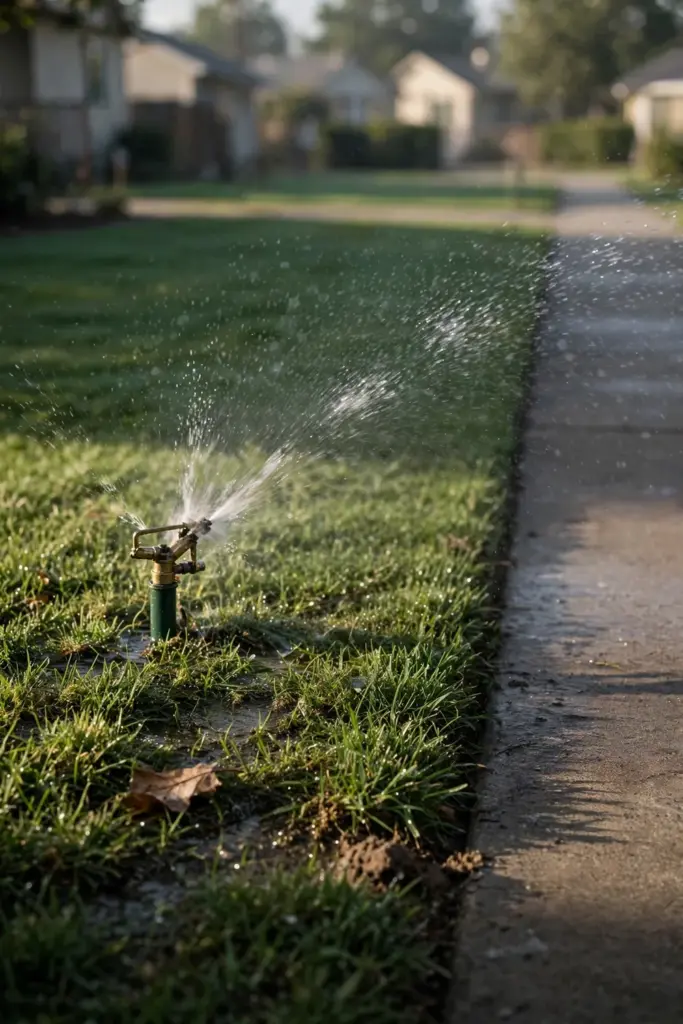
Water in the morning. Morning watering gives the leaves the day to dry. Evening watering leaves the leaves wet overnight. The dry leaves are the safe leaves. The morning is the watering time.
Avoid frequent light irrigation. Frequent light irrigation keeps the surface wet and the roots shallow, so the light watering is the shallow-root watering, and the deep watering is the deep-root watering.
Avoid drought stress after warm wet periods. Drought stress after warm wet periods hits roots already weakened by infection. Do not stop watering completely during active summer patch, since drought stress further weakens infected turf. The steady water is the stress reducer.
Strategy 7: Aerate, Drain, and Control Thatch
Core-aerate compacted soils. Core-aerate compacted soils in fall, plus spring if needed. The aeration opens the soil, feeds the roots air, and drains the water. The aerated lawn is the summer patch resistant lawn. The compacted lawn is the summer patch lawn.
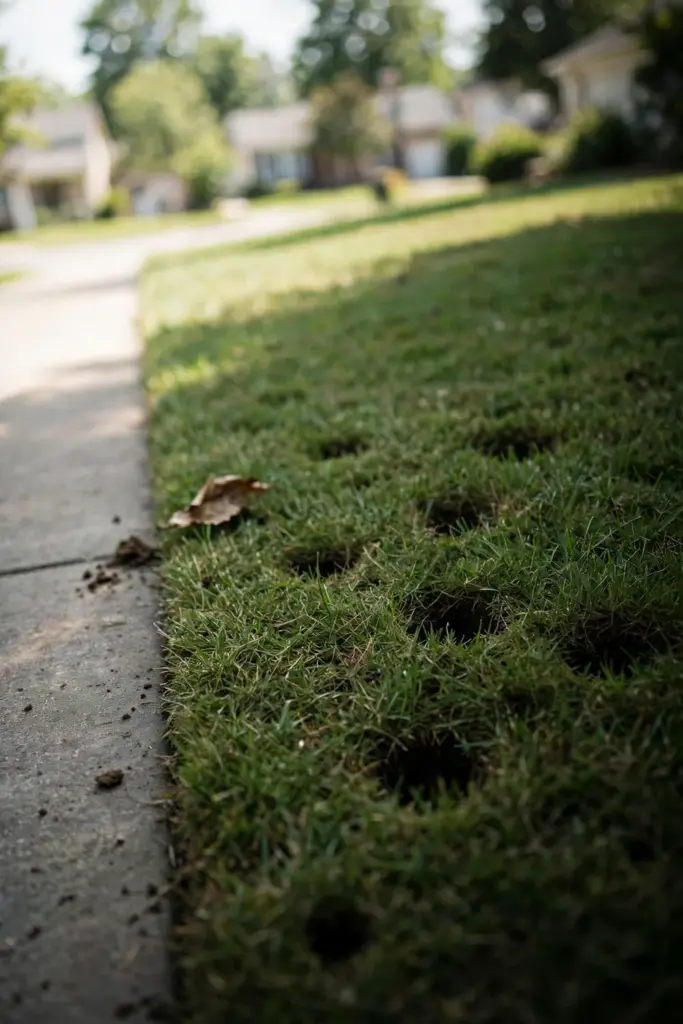
Improve drainage. Improve drainage so there is no standing water. A lawn that puddles after rain is a lawn that grows the fungus. The puddle is the enemy. The drain is the defense.
Reduce thatch over half an inch. Reduce thatch over half an inch by dethatching. The thatch layer is the fungal home. The half-inch threshold is the line. The dethatch removes the home.
Clean equipment between lawns. Infectious fragments can be moved to new areas with dethatchers and digging equipment if they are not cleaned between uses. Clean the aerator, dethatcher, and verticutter between lawns. The cleaning is the prevention.
Strategy 8: Feed Smart, Slow-Release, Mostly in Fall
Use slow-release nitrogen. Use slow-release nitrogen products over high-rate soluble nitrogen. Slow-release feeds the lawn steadily. Soluble feeds the fungus. The slow-release is the safe nitrogen.
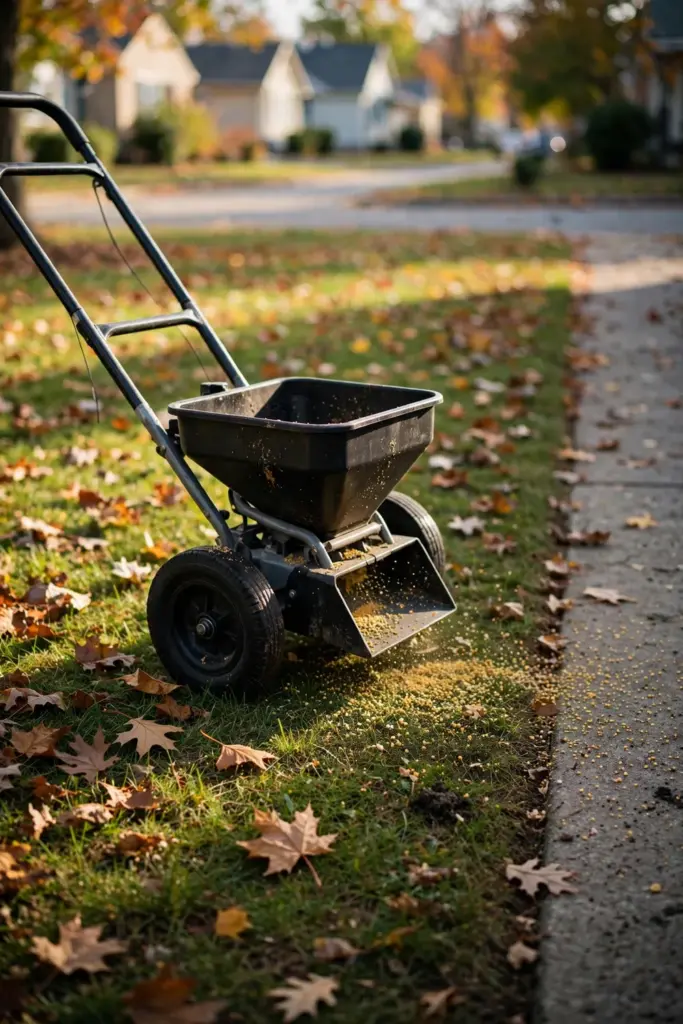
Avoid nitrate nitrogen. Avoid nitrate nitrogen forms, potassium, calcium, and sodium nitrate. Nitrate nitrogen worsens summer patch. The nitrate is the risk form. The ammonium is the safer form.
Apply 75 percent or more of annual nitrogen in autumn. Apply 75 percent or more of annual nitrogen in autumn. The autumn feeding builds the roots for spring. The spring feeding feeds the fungus. The autumn is the feeding season.
Feed lightly in midsummer only. Foliar spoon-feed ammonium sulfate at 0.1 to 0.3 pound nitrogen per 1,000 square feet can briefly reduce severity. The spoon-feed is a light touch, not a program. The light touch is the midsummer rule.
Strategy 9: Overseed Dead Patches and Choose Resistant Grass
Overseed dead patches in early fall. Dead patches will not recover, because the plants inside them are gone. Overseed in early fall, when the soil is warm and the air is cool. The fall overseed is the recovery. The dead patch is the seedbed.
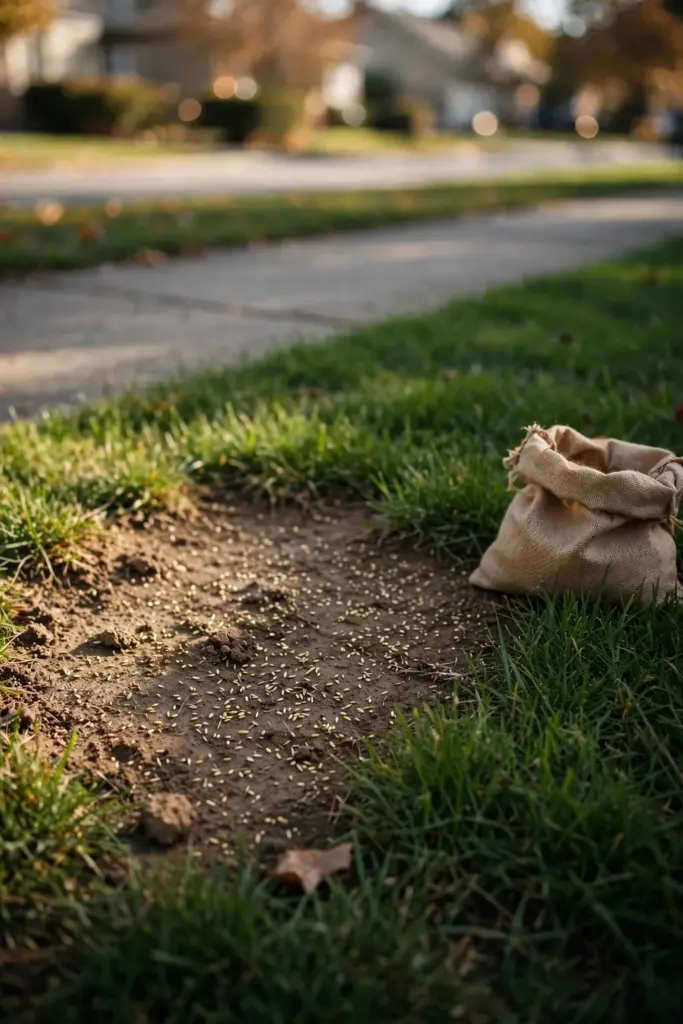
Choose resistant species. Tall fescue and perennial ryegrass are highly resistant. Tall fescue lawns rarely have problems with summer patch disease. The resistant species are the recovery plan. The overseed uses them.
Choose less-susceptible Kentucky bluegrass cultivars where bluegrass stays. Older Kentucky bluegrass cultivars such as Adelphi, Challenge, Eclipse, and Nuglade are moderately resistant, and Barvette, Nuglade, Midnight, Impact, and Sky are less susceptible. Verify the cultivar list against current Extension guidance before buying, since cultivar ratings change. The verified list is the buying list.
Overseed the whole lawn where the damage is wide. Patches may coalesce, and large areas of turf can be destroyed within 7 to 21 days. A lawn with wide coalesced damage needs a full overseed, not spot seeding. The full overseed is the renovation.
Strategy 10: Fungicides Preventive-Only, Never First Step
Use cultural controls first. Mowing, watering, aeration, feeding, and overseeding come first. Fungicides are the last resort, for lawns with a history of summer patch despite good culture. A fungicide without the cultural controls is a fungicide wasted.
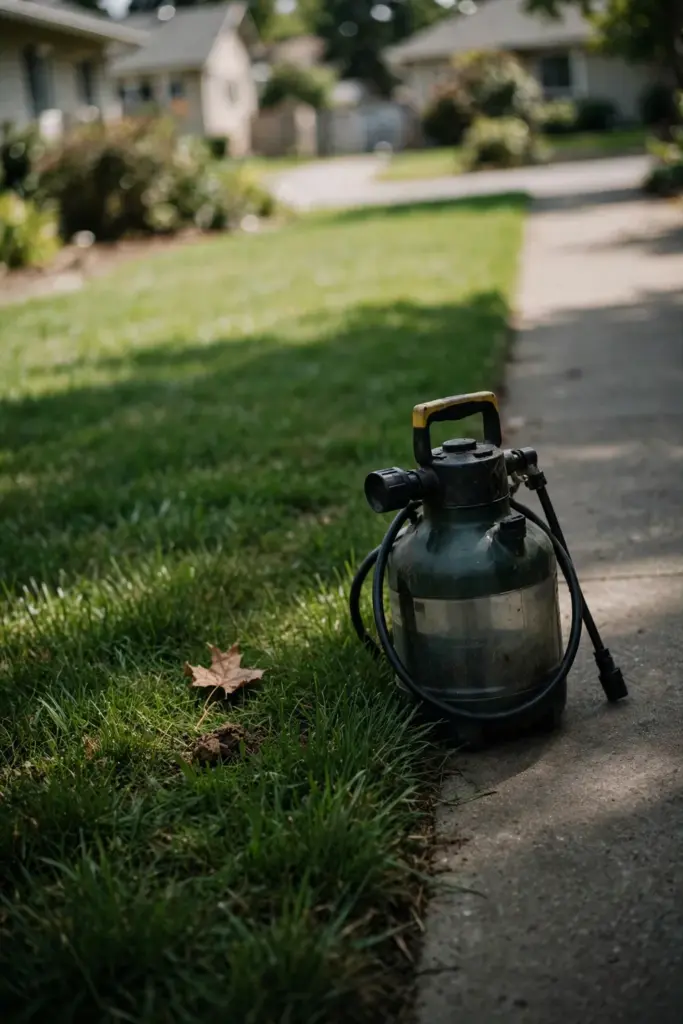
Use preventive timing, never curative. Preventive applications are timed before symptoms, in spring when the soil reaches 65 degrees. Curative sprays on dead patches waste money. The spray goes on before infection, not after. The timing is preventive, and the label governs.
Water the application into the soil. The fungus lives in the soil and roots, so the application must reach the soil. Water the application into the soil after spraying. The watering carries the fungicide to the fungus. The surface spray alone does not reach it.
Know the cost and the erratic results. Fungicides are costly and often erratic for summer patch. The cost is real, and the results are not guaranteed. The fungicide is a tool, not a promise. The cultural controls are the foundation.
Living With Summer Patch on a Lawn You Already Own
A lawn with summer patch is a lawn to manage, not a lawn to abandon. Mow high. Water deep and infrequent. Aerate in fall. Feed slow-release, mostly in autumn. Overseed dead patches in early fall. The patch will still appear, but it will appear late, light, and contained to the worst spots.
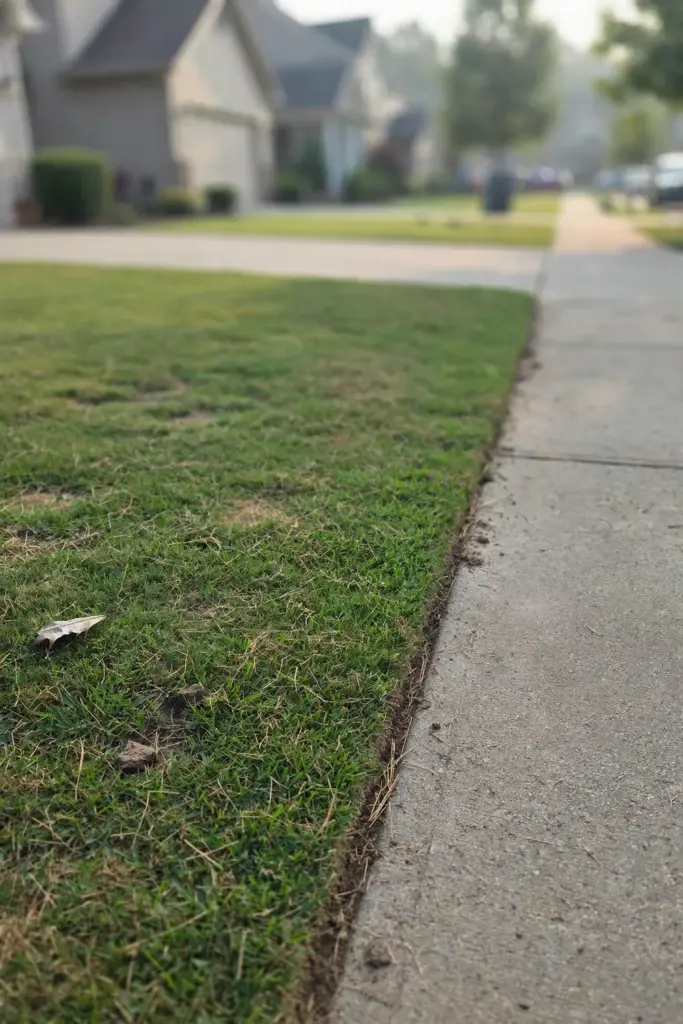
Stop three habits. Do not scalp. Do not feed heavy nitrate nitrogen in spring. Do not water lightly and often. Keep those three lines unbroken and the patch stays cosmetic. The Plant Care archive collects the site’s disease coverage for the next problem the lawn throws up.
Frequently Asked Questions
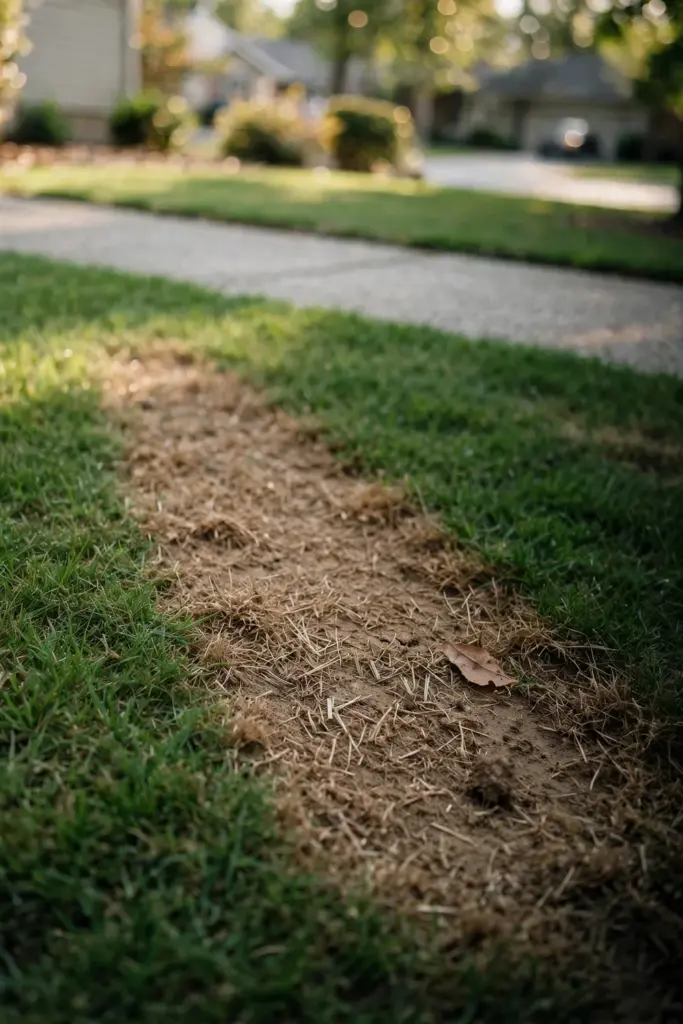
No, not the dead patches. Summer patch kills the plants it infects, and dead patches must be overseeded. Brown patch recovers when the weather cools, because it is a leaf disease, but summer patch is a root disease, and the roots are gone. Overseed dead patches in early fall with resistant species or less-susceptible cultivars. The overseed is the recovery.
No. Summer patch is a root disease caused by Magnaporthe poae, while brown patch is a foliar disease caused by Rhizoctonia solani. Both are active during summer on cool-season grasses, but they are different diseases and must be treated with different methods. Summer patch kills plants and needs overseeding, while brown patch lets the turf recover when the weather cools. The root-versus-leaf rule separates them.
In spring, before symptoms, when the soil reaches 65 degrees. Preventive applications are timed before infection, and the application must be watered into the soil. Curative sprays on dead patches waste money, because dead plants cannot be revived. Cultural controls come first, and fungicides are the last resort for lawns with a history of summer patch despite good culture. The label governs the product and the rate.
A soil test measures pH and nutrients. It does not detect the fungus, and it still helps. Summer patch favors soil pH above 6, and the disease is most resistant at pH 5.5 to 6, so a soil test that reads above 6 is a summer patch warning. For the fungus itself, submit a turf sample from the patch margin to a plant disease diagnostic lab. The lab settles the summer patch versus necrotic ring spot question.
Not at once. Kentucky bluegrass is the most susceptible grass, but a bluegrass lawn with good culture, mowing, watering, aeration, feeding, and overseeding can hold summer patch to a cosmetic level. Where the damage is wide and repeated, overseed with tall fescue or perennial ryegrass, which are highly resistant. The resistant overseed is the renovation. The full replacement is the last resort.
Where to Go From Here
Summer patch rewards the lawn owner who mows high, waters deep and infrequent, aerates in fall, feeds slow-release mostly in autumn, and overseeds dead patches in early fall. Confirm the ID with the tug test. Tell it from brown patch with the root-versus-leaf rule. Rule out the lookalikes. Respect the timing trap. Mow high. Water deep. Aerate and drain. Feed smart. Overseed. Spray preventive-only, last, and by the label.
Next spring, start before the soil hits 65 degrees. A lawn mowed high, watered deep, aerated, and fed slow-release will hold summer patch to the worst spots. The UC IPM page on summer patch is a useful companion for the full Extension picture, since it sets the home-lawn response here against the university evidence behind it, and the lawn-care category archive collects the site’s lawn coverage.