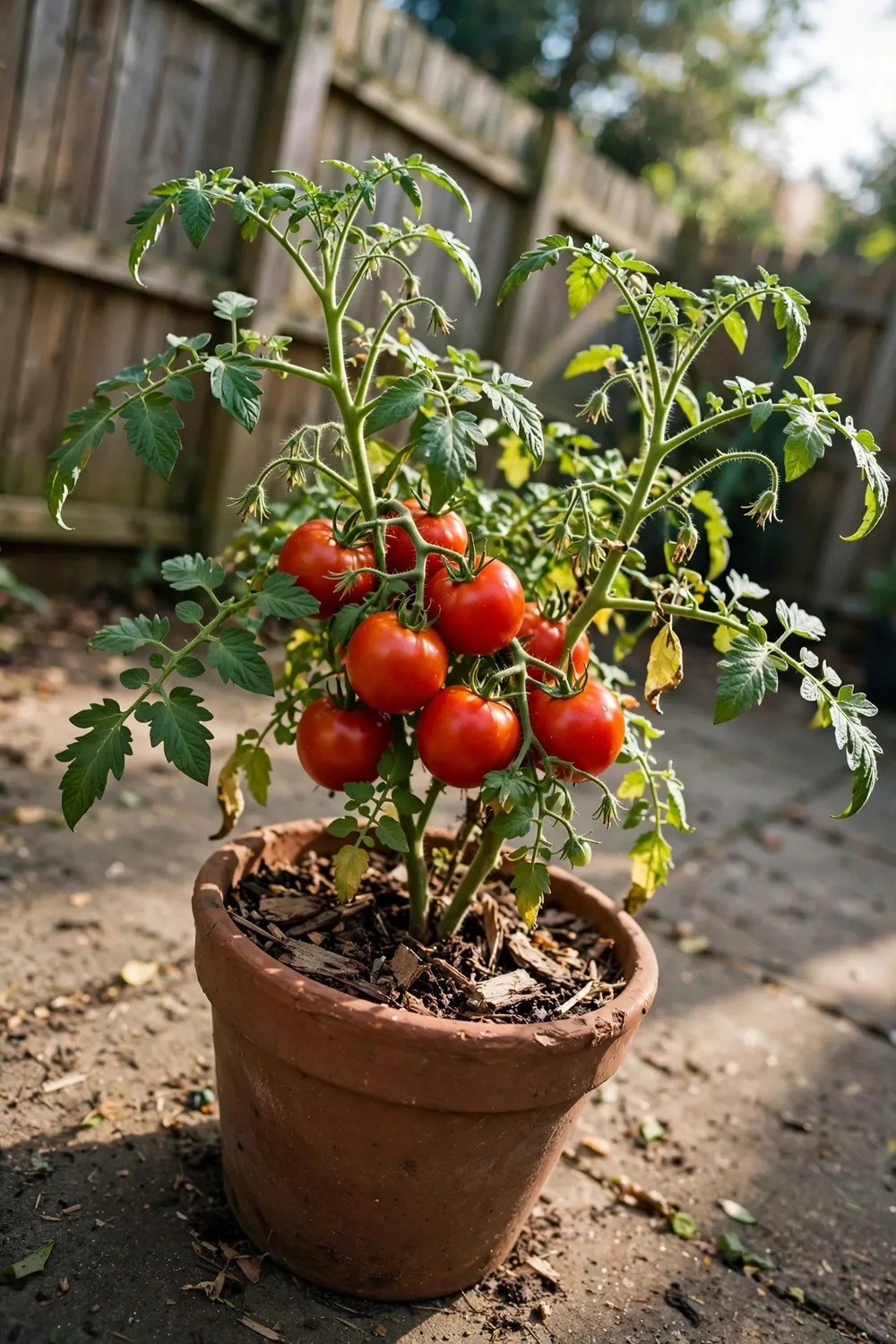

Pick a dwarf or determinate tomato for a small pot. Give it at least 19 L of premium potting mix, 6 to 8 hours of direct sun, steady water, and a cage set at planting time. That is growing tomatoes in pots in Australia: a small set of pot decisions, then a care routine that never lets the mix dry out.
I have learned that a pot tomato forgives a late feed and never forgives a dry weekend.
General container principles live on the site’s best Australian native plants for container gardens page. This page stays on tomatoes in pots: variety, pot size, mix, sun, water, feed, support, pruning, and the pot problems that matter.
A Pot Tomato Lives or Dies on Four Decisions
A pot tomato lives or dies on four decisions: the type, the pot, the mix, and the sun. Get those four right and the rest is routine water and feed. Get one wrong and no amount of fertilizer rescues the plant.
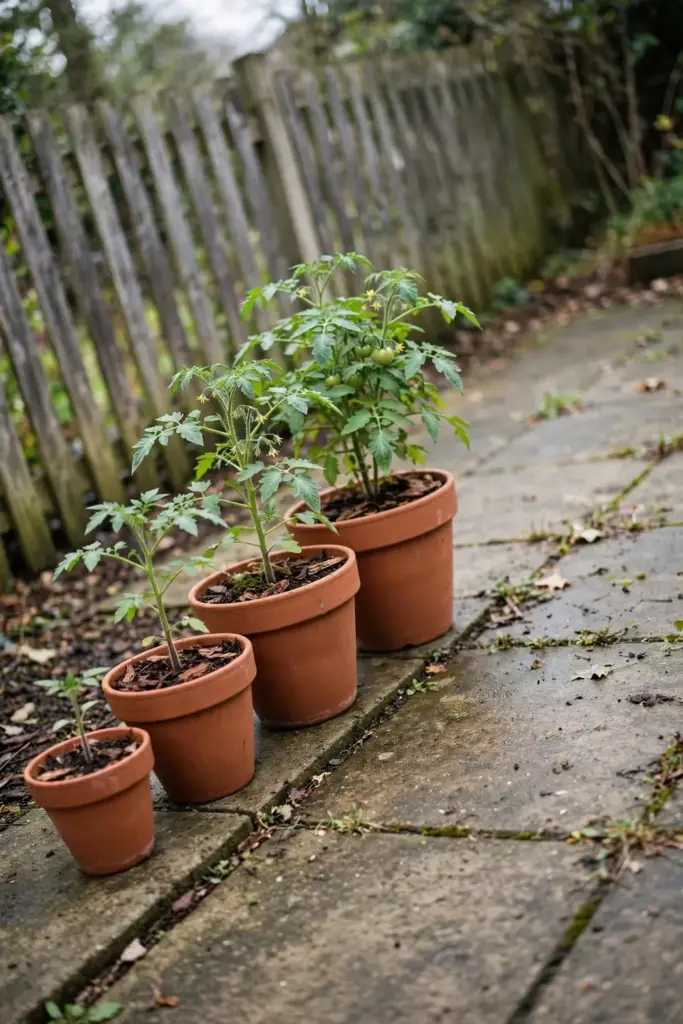
Type decides pot size. Pot size decides how often you water. Mix decides whether roots breathe or drown. Sun decides whether fruit sets or drops. Read the four decisions in order, then run the routine in the second half of this page.
A pot tomato also forgives small mistakes better than a bed tomato punishes them. A pot that dries out gets water today. A pot in shade moves into sun tomorrow. A bed in the wrong spot stays in the wrong spot all season. That mobility is the whole advantage of pots, and the tips below use it at every step.
1. Pick the Right Tomato Type for a Pot
Pick a dwarf or determinate type for a small pot. Save indeterminate types for the largest pot on the patio.
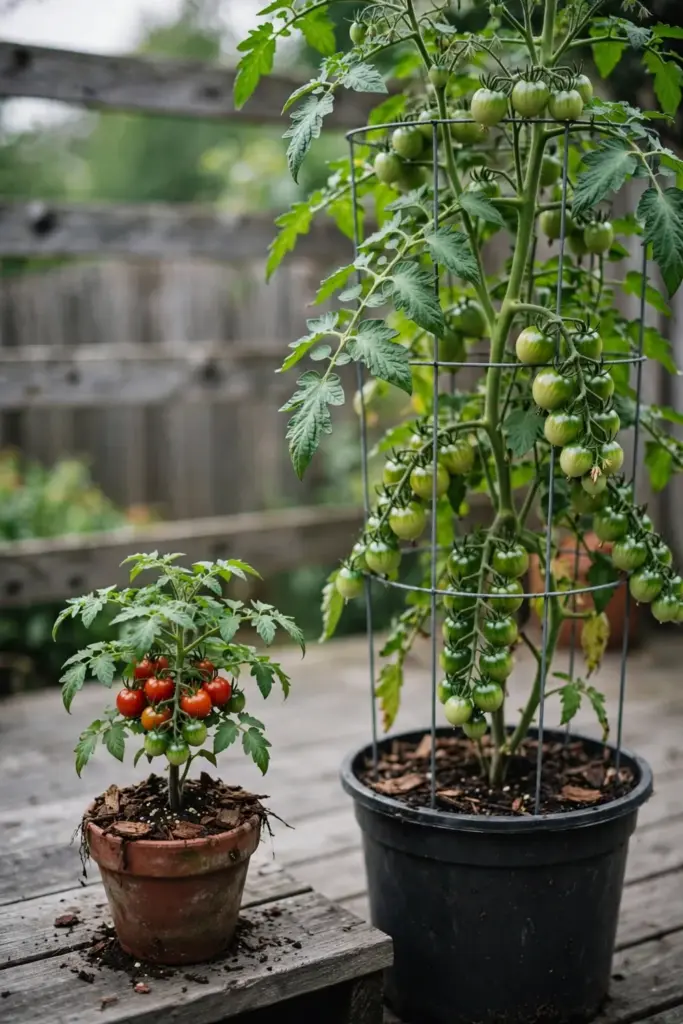
Determinate tomatoes grow to a set height, set fruit over a short window, then finish. They suit small pots and small patios because the plant stops on its own. Dwarf and tumbling types stay shorter still and suit pots and hanging baskets. Indeterminate tomatoes keep growing all season, vine upward, and fruit until frost stops them. They need the biggest pot and the strongest support.
Name the type on the label before you buy. A label that says only “tomato” tells you nothing about how tall the plant grows. Good pot picks include Tiny Tim, Patio, and Tatura Dwarf among dwarfs, Better Bush and Ida Gold among determinate bush types, and Grosse Lisse, Big Beef, and San Marzano among indeterminate types. Grosse Lisse is an Australian favorite for sandwiches and sauces. Tatura Dwarf is an Australian heirloom dwarf. Cherry types such as Gold Nugget, Sweet Bite, Yellow Pear, and Cherry Roma fruit fast and suit pots because the fruit is small and the trusses are light.
Cherry types deserve first place on a small balcony. A cherry truss ripens over weeks, so the plant pays you back from the first ripe fruit onward. A slicer type ripens fewer, larger fruit over a longer wait, and a slicer in a small pot may stall before it ever pays off. Start with cherries or a determinate bush type, learn the watering rhythm, then add a slicer in a big pot next season.
Buy seedlings, not seed, for your first pot season. A seedling skips the weeks of indoor care that seed needs, and it lands in the pot ready to grow. Save seed starting for a later season, once the watering routine feels automatic. One strong seedling in one good pot beats a tray of leggy seedlings every time.
2. Size the Pot to the Tomato Type
Give every tomato at least 19 L of mix. Give indeterminate types the largest pot you can carry.
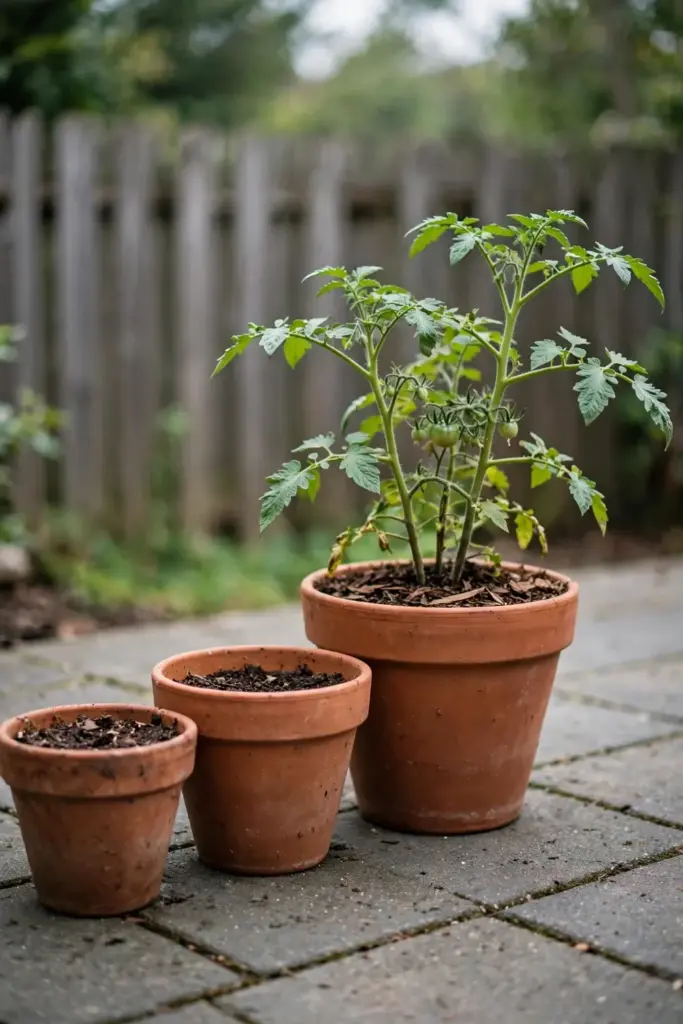
Oregon State University Extension’s container gardening guide sets the floor for both decisions: tomatoes need five-gallon containers and 6 to 8 hours of direct sun daily. Five gallons is about 19 L. A pot smaller than that starves the roots, dries out by midday, and caps the harvest no matter how well you feed it.
Australian guides disagree on exact widths, so the table below takes the larger figure where sources split. A pot that is too big never hurt a tomato. A pot that is too small always does.
When in doubt, buy the bigger pot. The price gap between a 40 cm pot and a 50 cm pot is small, and the bigger pot cuts watering work all summer. A gardener who waters twice a day in January usually owns a pot that was too small in October.
| Tomato Type | Minimum Pot | Support |
|---|---|---|
| Dwarf or tumbling | 30 to 35 cm wide | None, or a small cage |
| Cherry or determinate bush | 40 to 50 cm wide and deep | Cage or stake |
| Indeterminate | 70 cm or more wide and deep | Tall cage or trellis |
One tomato per pot. Two plants in one pot fight for water and feed, and both lose. A half wine barrel holds one large plant well. A pot with a saucer needs the saucer emptied after watering so the roots do not sit in water.
3. Choose a Pot That Drains and Stays Cool
Pick any pot with drainage holes. Pick a light color in a hot courtyard.
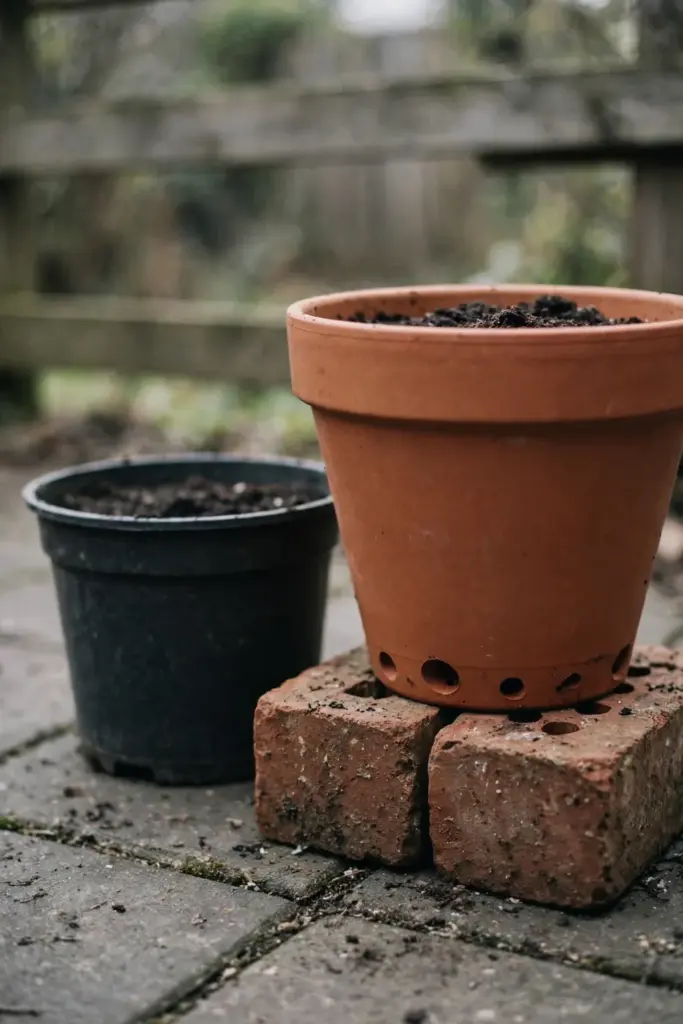
Drainage holes matter more than pot material. A pot without holes drowns the roots in the first wet week. Drill holes in any pot that lacks them, and set the pot on bricks or slats so water leaves freely instead of pooling under the base.
Plastic pots hold moisture longer and weigh little, which suits a balcony. Dark plastic overheats in full sun and cooks the roots on a hot day. Terracotta breathes and dries faster, so it needs more frequent watering. Metal troughs and wine barrels work well with drilled holes, but metal on asphalt in baking heat burns roots, so keep metal pots off hot paving. Fabric grow bags breathe on all sides and dry fast. Self-watering pots with a reservoir buy time between waterings and suit a gardener who works away from home.
Set pots on paving or decking. Pots on lawn kill the grass under them and draw roots out of the drainage holes into the soil below. A pot on paving stays a pot, and the lawn stays lawn.
Weight matters as much as material. A 70 cm pot full of wet mix weighs more than most people lift alone, so put it on a wheeled pot caddy before you fill it. A pot on a caddy moves with the sun, moves under cover in a storm, and moves indoors on a frost night. A pot that never moves bakes in the same hot corner all summer.
4. Fill the Pot With Premium Potting Mix, Not Garden Soil
Fill the pot with premium potting mix that carries the Australian Standard mark. Garden soil compacts in a pot and carries disease.
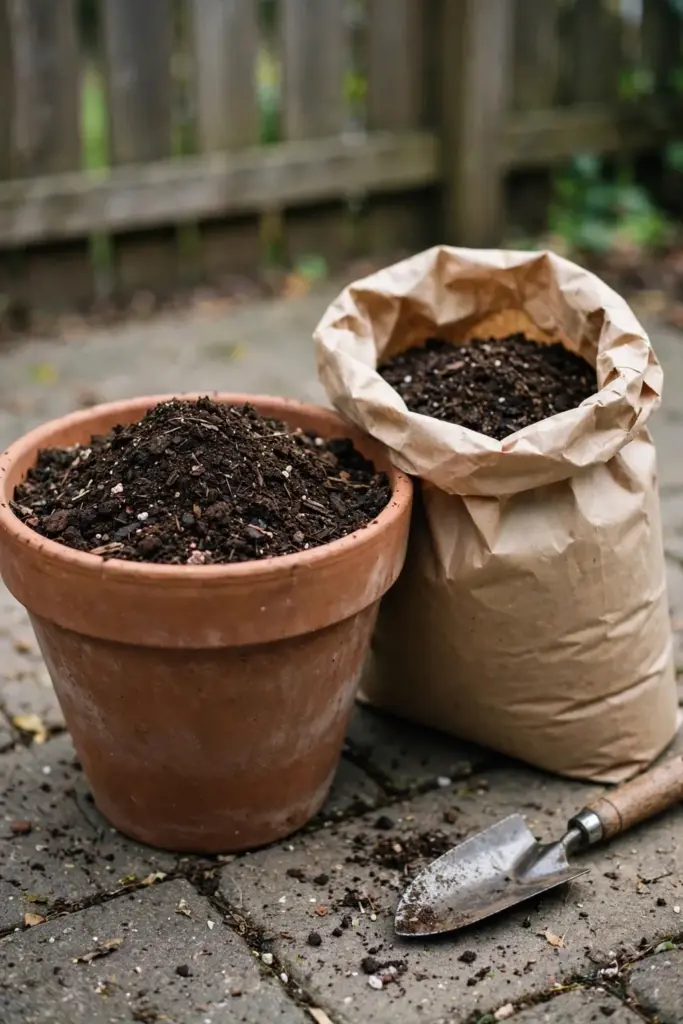
Garden soil looks free and feels familiar, but it packs down in a pot, squeezes air out of the root zone, and brings soil pests with it. Premium potting mix stays open, drains freely, and holds enough water for the roots to drink between waterings. Look for the red or black Australian Standard ticks on the bag. A mix with re-wetting granules resists drying out and suits pots that face hot afternoon sun.
Top the mix up as it settles. Potting mix sinks a few centimeters in the first weeks as it wets and compacts. Add fresh mix to the original level and leave a gap below the rim so water stays in the pot instead of running over the edge. Building healthy soil matters in beds too, and soil health covers the soil side of the job in full. Start each season with fresh mix. Tip spent mix onto a garden bed or into the compost, and refill the pot.
Never top the pot with garden soil to save money. A garden soil cap forms a crust that sheds water sideways and seals the mix below it. The plant then starves in a pot that looks watered. If the mix runs low mid-season, top it with fresh potting mix from the same bag, not soil from the yard.
5. Plant the Seedling Deep
Bury the stem up to the first true leaves at planting time. Roots form along the buried stem.
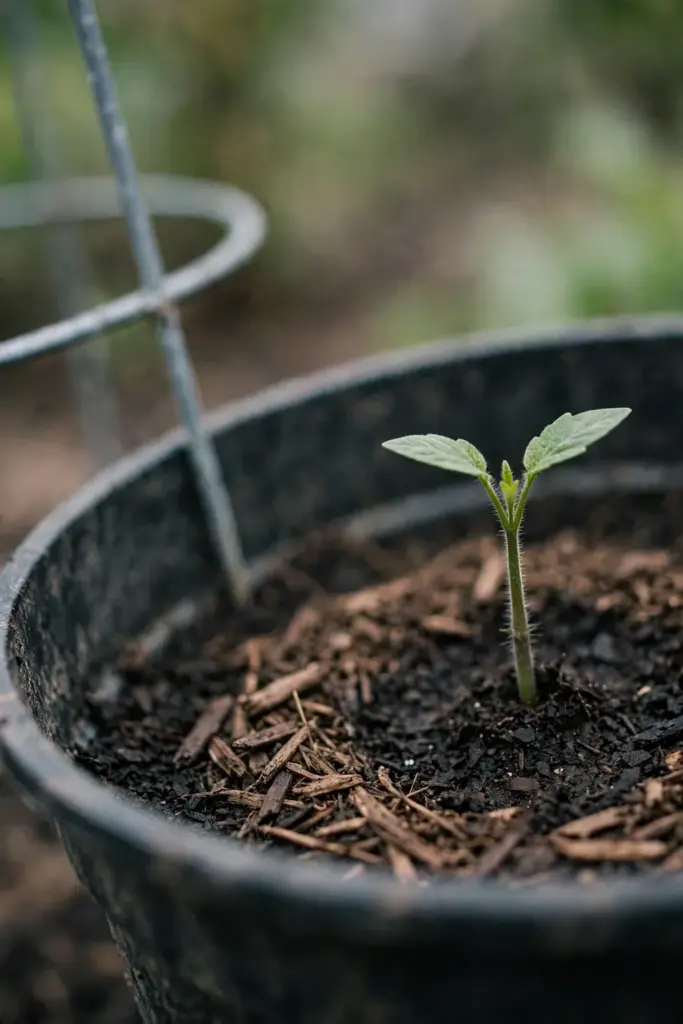
Tomatoes grow adventitious roots along any stem that sits underground. A deep-planted seedling grows a bigger root system than a shallow one, and a bigger root system drinks more steadily through summer. Strip the leaves below the soil line before planting, so no leaf rots underground. A leggy transplant can lie sideways in a trench with only the top above the mix, and the buried stem still roots along its length.
LSU AgCenter’s container tomato guide advises burying tomato transplants deep, watering containers daily in hot weather, and feeding with a basic water-soluble fertilizer while watering. Set the support in place at the same time as the seedling, so you never drive a stake through established roots later.
Water the pot in well after planting. A deep first watering settles the mix around the roots and shows whether the drainage holes run free. If water pools on the surface, the mix is too dense or the holes are blocked. Fix it now, while the plant is still easy to lift out, rather than in January when roots fill the pot.
6. Park the Pot in 6 to 8 Hours of Sun
Park the pot where it catches 6 to 8 hours of direct sun. Morning sun plus afternoon shade beats all-day baking heat in a hot courtyard.
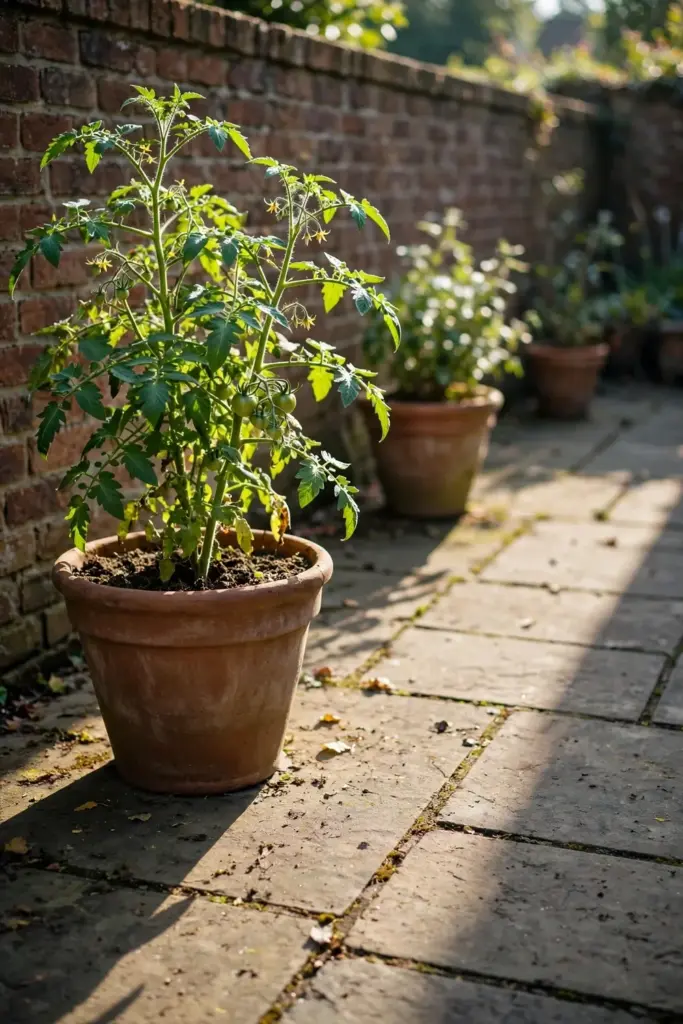
Tomatoes are fruiting plants, and fruiting plants need full sun. A pot on wheels earns its keep here: move it to follow the sun as the season shifts, and move it away from a wall that radiates afternoon heat in a heatwave. A north-facing patio is the best default spot in Australia. A walled courtyard may need the pot shifted mid-season as shadows move.
Frost kills tomato plants, so start pots against a sunny wall that holds night warmth and move them after frost danger passes. In warm frost-free climates, tomatoes fruit through much of the year. In temperate and cooler districts, plant after the last frost and expect fruit across summer. A pot that sits in shade grows leaves and drops flowers. A pot in full sun fruits.
A heatwave needs the opposite move. When the forecast shows several days of baking heat, shift pots to a spot that catches morning sun and afternoon shade, and water in the morning before the heat arrives. Leaves that wilt in afternoon heat and recover by evening are coping. Leaves that stay limp overnight are in trouble, and a bigger pot is the lasting fix.
A shade cloth buys time in a heatwave. Drape light shade cloth over the cage on the hottest days and remove it when the heat breaks. Shade cloth cuts leaf scorch without moving the pot. Leave it up all season and the plant gets leggy, so treat it as a heatwave tool, not a permanent roof.
7. Water Deep and Keep the Mix Evenly Moist
Water until it runs out the drainage holes. Check the mix daily in hot weather.
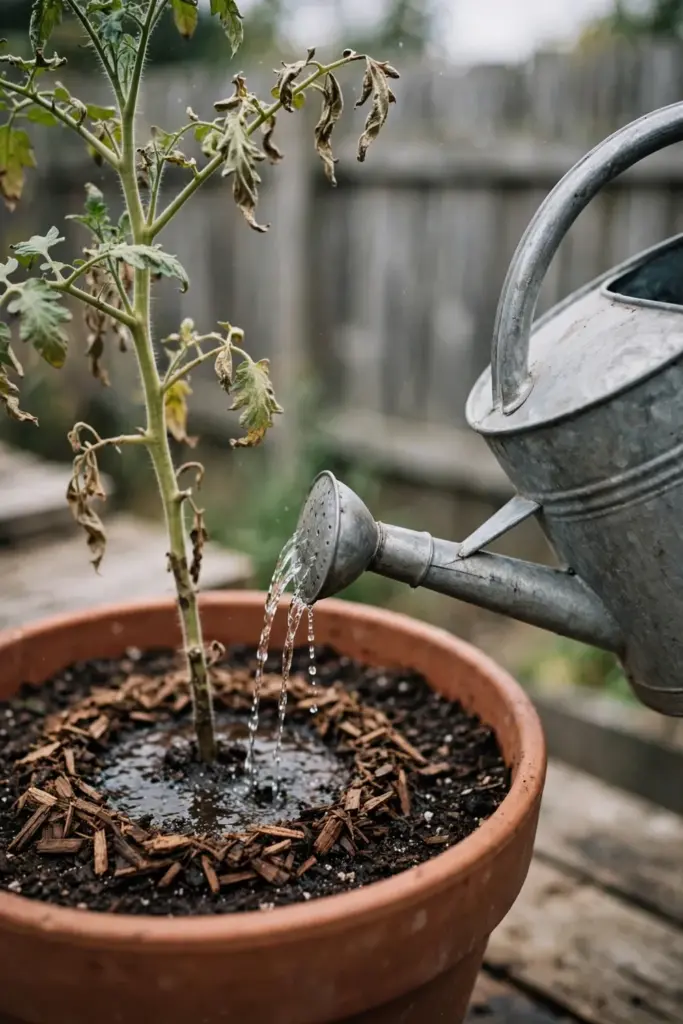
Pots dry faster than garden beds because the mix volume is small and the pot walls warm in the sun. A tomato in a pot may need water every day in summer, and twice a day in a heatwave. Water in the morning so the plant faces the day with a full root zone. Water the mix, not the leaves: wet foliage invites blight and fungus. Push a finger into the mix before watering. Water when the top few centimeters feel dry, and skip watering when the mix still feels damp.
Mulch the surface of the mix to slow drying. Straw, sugar cane mulch, or coarse bark keeps the mix cooler and cuts how fast the surface loses water. Keep mulch a finger width away from the stem so the stem stays dry. A saucer under the pot catches runoff, but empty it after watering so roots never sit in standing water.
Rain changes the rhythm. A heavy downpour saturates the pot and washes fertilizer out, so feed again after the storm passes. A week of rain on a pot with no drainage holes drowns the roots, which is why drainage comes before any other pot decision. After rain, check that the drainage holes still run free and that mulch has not formed a mat over the surface.
A watering can beats a hose for pots. A can pours slowly, so water soaks in instead of running off the dry surface. A hose on full blast washes mix out of the pot and splashes soil onto the lowest leaves. A drip line on a timer beats both for a gardener who travels, because it waters the mix and never wets the leaves.
8. Feed Little and Often While the Pot Fruits
Feed with liquid fertilizer while you water, from first flowers to last pick. Pots wash nutrients out fast.
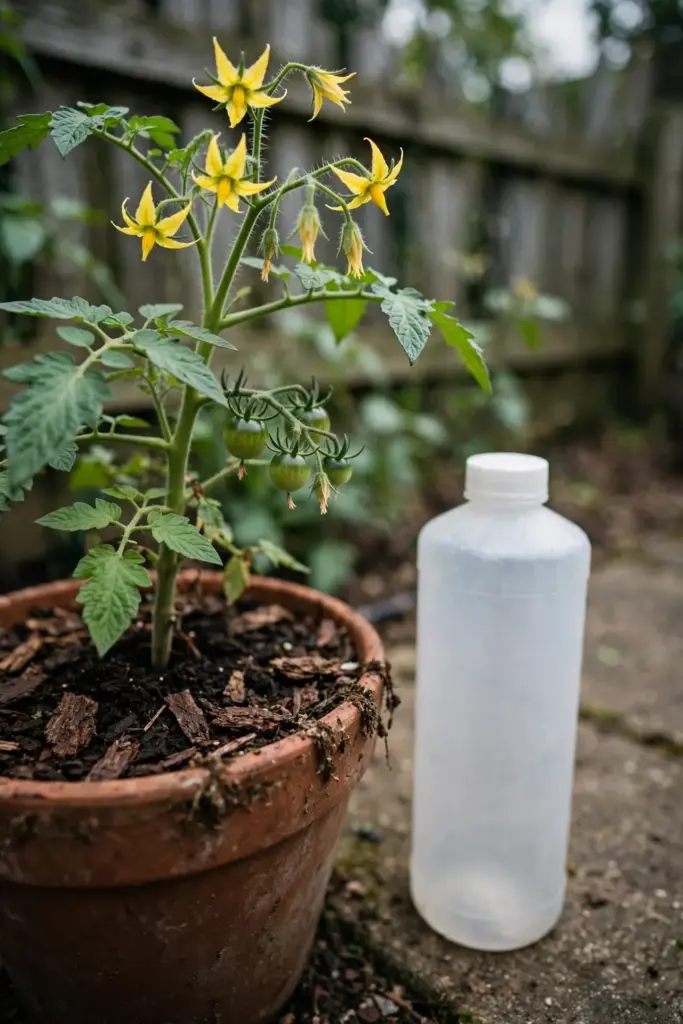
Every watering flushes some fertilizer out of the drainage holes. That is the price of a pot, and the fix is steady feeding rather than one big dose. A basic water-soluble fertilizer applied while watering keeps nutrients in the root zone through the season. Switch to a fruiting formula after the first flowers open. A fruiting formula carries more phosphorus and potassium and less nitrogen than a leafy growth feed.
Too much nitrogen grows leaves instead of fruit. A plant with dense dark foliage and few flowers is overfed on nitrogen. Ease off the feed and let the plant set fruit. Stop feeding when the plant finishes for the season. A plant that is still fruiting still eats, so keep feeding while it picks.
Watch the leaves for feeding cues. Pale lower leaves on a plant that is otherwise growing point to a hungry plant. Yellow leaves with green veins point to a different problem, and more fertilizer will not fix it. A plant that grows fast, flowers well, and sets fruit is fed right. Change nothing on a plant that is working.
Slow-release granules suit a gardener who forgets to feed. Mix them into the potting mix at planting time and they release nutrients over weeks. Liquid feed still wins in peak season, because it reaches the roots fast and lets you adjust the dose week to week. Use both if the label allows it, and never double the dose to catch up a missed feed.
9. Stake, Cage, or Trellis Before the Plant Needs It
Set the support at planting time. A plant tied after it flops never stands straight.
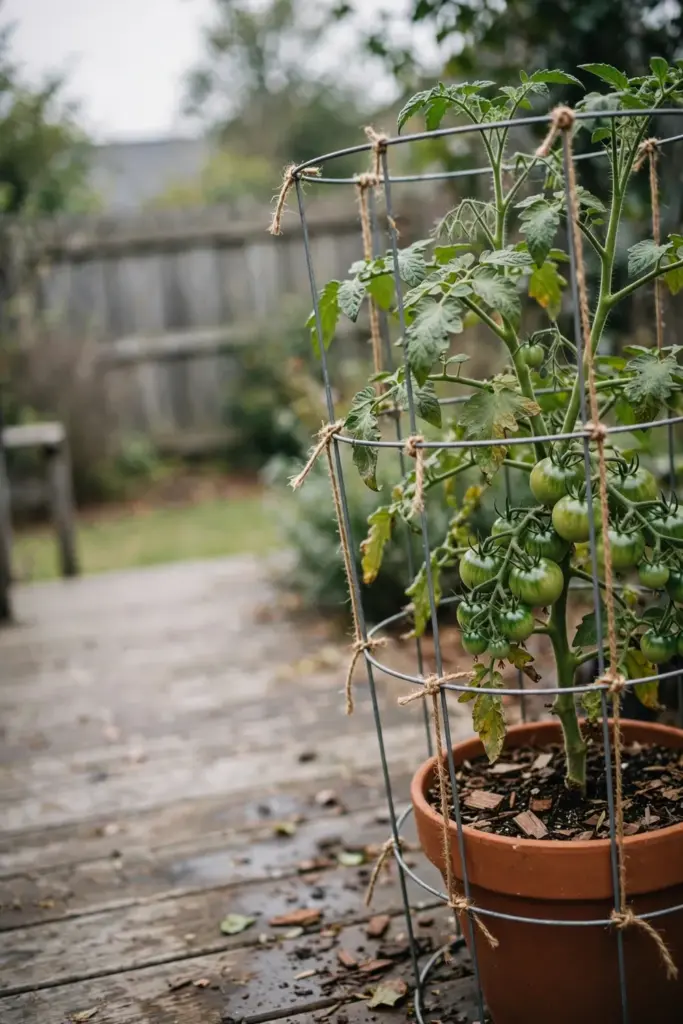
Determinate types need a cage or a stake. Indeterminate types need a tall cage, a trellis, or a string line they can climb all season. A cage contains the plant and holds fruiting branches off the mix. A stake suits one main stem trained upward. A trellis suits a row of pots against a wall. Tie stems loosely with soft twine and check the ties weekly, because stems thicken and a tight tie strangles them.
A good cage pays for itself in fruit that never touches the ground. Fruit on the mix rots, slugs reach it, and the plant loses leaves to soil splash. Tomato cages covers cage types and setup in full. Tumbling types skip the cage and suit hanging baskets, where the stems spill over the edge.
Tie stems with a figure-eight loop. One loop around the stem, a twist, one loop around the support. The twist keeps the twine from sawing into the stem as it thickens. Check ties weekly through summer, and loosen any tie that bites. A stem strangled by its own tie wilts above the tie while the rest of the plant looks fine.
Space pots a hand width apart so air moves between them. Pots jammed together hold damp air between the leaves, and damp air grows leaf disease. A gap also lets you walk around each pot to water, tie, and pick. A row of pots with breathing room out-yields a crowded row every time.
10. Prune Suckers on Indeterminate Types Only
Prune suckers on indeterminate types. Leave determinate types alone.
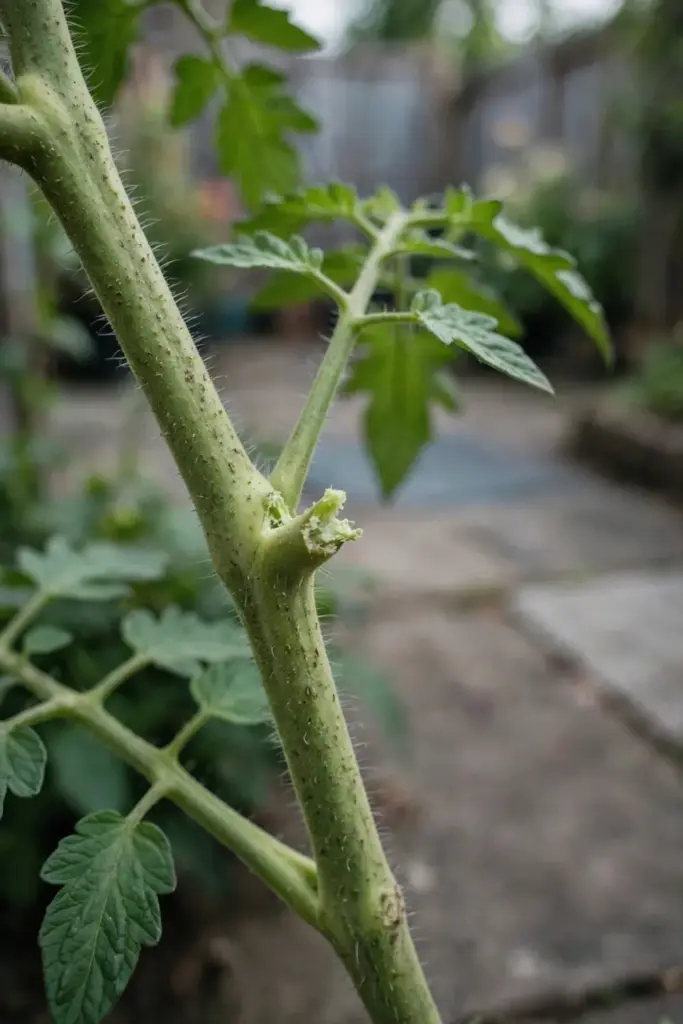
A sucker is the shoot that grows in the joint between a leaf stem and the main stem. On indeterminate types, suckers multiply into a thicket that shades fruit, blocks airflow, and invites disease. On determinate types, pruning removes fruit the plant already planned, so leave them alone except for damaged leaves.
LSU AgCenter’s tomato pruning guide advises pulling suckers at about 5.1 cm, leaving one sucker below the first flower cluster on determinate types and clearing suckers below the second flower cluster on indeterminate types. Snap small suckers off by hand. Leave a sucker that has grown past pencil thickness, since tearing it open wounds the stem. Prune when the foliage is dry, because wet foliage spreads disease from plant to plant. Over-pruning cuts photosynthesis and sunburns fruit, so take suckers, not leaves.
Pollination needs no help in a pot, but a nudge helps on still days. Tomato flowers pollinate themselves, so a gentle shake of the cage or a tap on the stem moves pollen onto the stigma. Do this in the morning when the flowers are open. A plant that flowers well and sets nothing usually lacks sun or water, not pollination.
11. Fix Blossom-End Rot, Cracking, and Pests Fast
Fix blossom-end rot with steady water, not a spray. Cracking means the same thing.
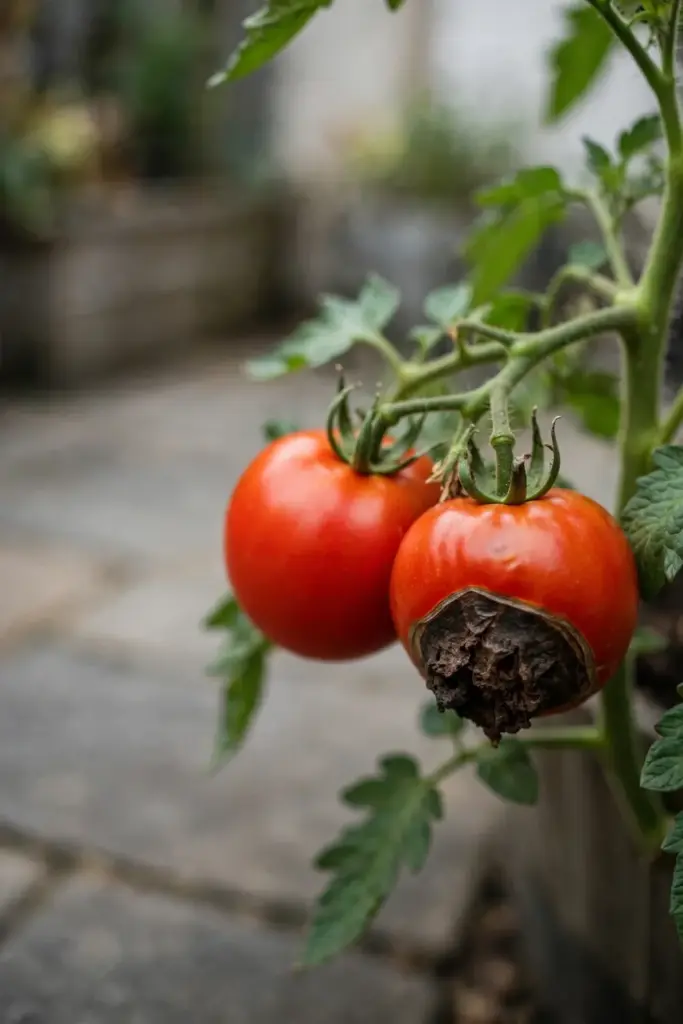
Blossom-end rot shows as a dark sunken patch on the bottom of the fruit. It is a calcium shortage in the enlarging fruit, and the usual cause is irregular water, even when the mix holds plenty of calcium. University of Maryland Extension’s blossom-end rot guide traces blossom-end rot to a calcium shortage in enlarging fruit, and lists soil pH of 6.3 to 6.8, a quarter cup of gypsum mixed into each planting hole, and deep watering at least once a week. Pick affected fruit off and bin it. No spray repairs a damaged fruit, but steady water protects the fruit still forming.
Cracking follows the same pattern: a dry spell, then a heavy watering, splits the skin. Keep the mix evenly moist and mulch the surface. Pests arrive in small numbers first. Aphids cluster on shoot tips, spider mites stipple leaves, and whiteflies lift in a cloud when you brush the plant. Blast aphids off with a hose, and check leaf undersides weekly. Organic pest control covers the full organic approach. Never spray open flowers: bees work them, and a sprayed flower loses its pollinators.
Leaf spots need a different response. Yellow or brown blotches that start on the lowest leaves and climb usually mean wet foliage and poor airflow. Strip the worst leaves, water only the mix, and space pots apart so air moves between them. A pot tomato that dries between waterings and keeps its leaves dry stays ahead of most leaf disease without any spray.
Check the undersides of leaves weekly, even when the plant looks fine. Pests settle on the undersides first, and a plant checked weekly gets caught at five pests instead of five hundred. A weekly check takes little time per pot and saves the crop more often than any spray.
Frequently Asked Questions About Growing Tomatoes in Pots in Australia
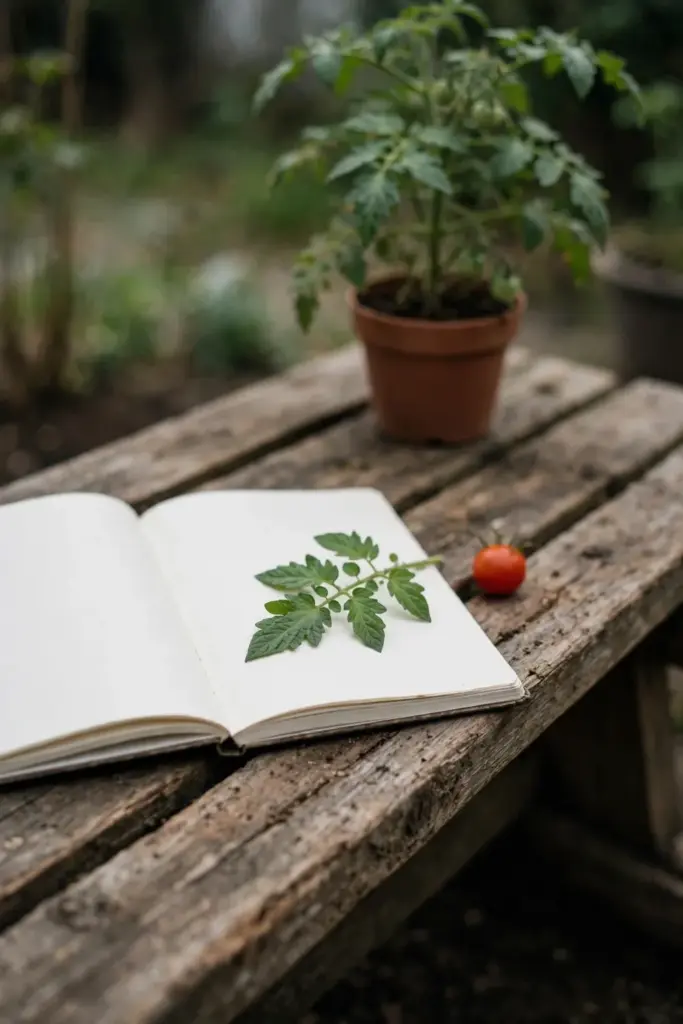
Yes. Drill drainage holes in the bottom, fill the bucket with premium potting mix, and grow one plant per bucket. A 5-gallon bucket suits dwarf, cherry, and determinate types best. Indeterminate types fruit in a bucket too, but they need the largest pot you can manage, a tall cage, and daily watering in summer heat.
Check the mix daily in summer and water when the top few centimeters feel dry. Most potted tomatoes need water every day in hot weather, and twice a day in a heatwave. Water until it runs out the drainage holes, then empty the saucer. Mulch slows drying. A pot that dries out between waterings grows cracked fruit and blossom-end rot.
Afternoon wilting usually means the pot is too small, the mix dried out, or heat is baking the root zone. Move the pot to morning sun and afternoon shade, mulch the surface, and water in the morning. A plant that recovers by evening is thirsty, not diseased. A plant that stays wilted overnight needs a root check.
Fresh mix grows the best tomatoes. Old mix compacts, holds fewer nutrients, and can carry disease from last season’s plant. Tip spent mix onto a garden bed, and refill the pot with fresh premium mix each season. Reusing mix saves little and risks the whole crop.
No. Pot size is decided at planting time, and repotting mid-season stresses the plant and drops flowers. A plant that outgrows its pot needed a bigger pot at the start. Next season, move up one pot size and set the support at planting time.
Pick One Pot and Start This Weekend
Pick one pot and start this weekend. One dwarf tomato in a 19 L pot teaches the routine in a single season: water daily, feed while watering, tie the stems, and pick fruit that ripens on the vine. The second pot gets easier, because the first one showed what the balcony actually grows.
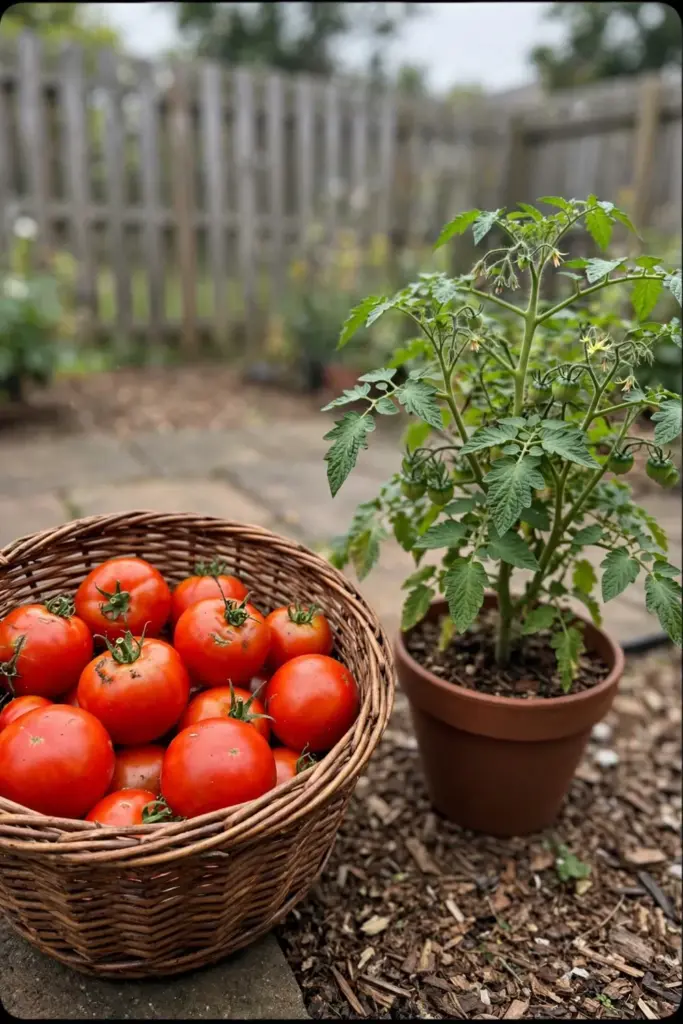
Keep a one-line note each week: watered, fed, tied, picked. Four words a week turns a season of guesses into a record you can repeat. Next season, the note tells you which pot, which type, and which corner of the balcony fruited best.
One pot. One seedling. One season of learning.