
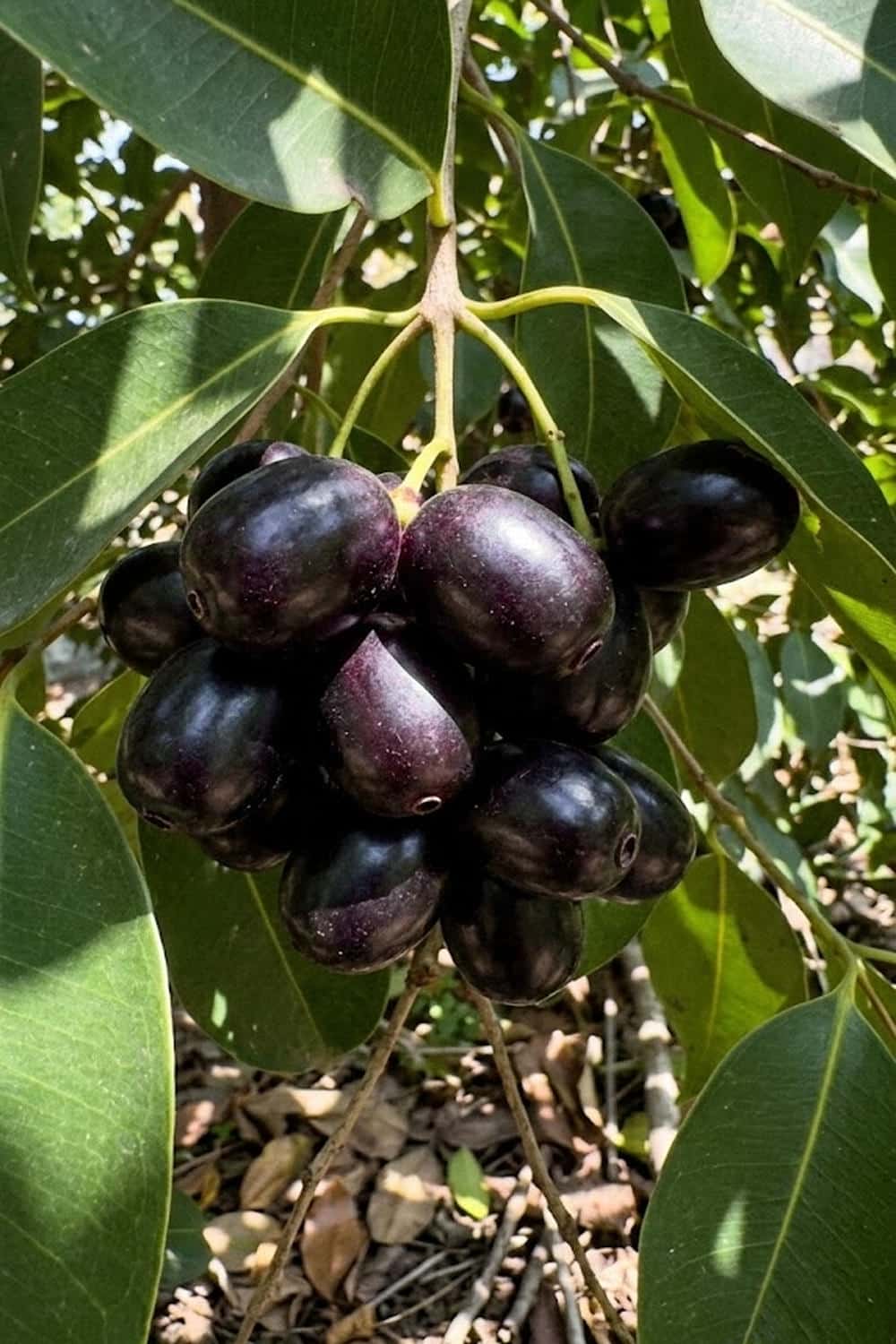

You walk into a high-end grocery store, looking for something unique, something healthy, only to find the same tired selection of apples and bananas, often priced higher than they should be. It is frustrating when you have the space and the desire to cultivate distinct, flavor-packed fruits like the Jambul, but local nurseries offer little advice, leaving you feeling like exotic gardening is a privilege reserved for experts with unlimited time and resources. I understand that frustration deeply; I once stared at a barren spot in my yard, dreaming of the deep purple harvests I remembered from childhood, feeling overwhelmed by the conflicting information online. You do not need to settle for a boring yard or flavorless store-bought fruit. I have spent years getting my hands dirty, trial-and-erroring my way to success with Syzygium cumini, and I am going to show you exactly how to grow Jambul fruit that will be the envy of your neighborhood.
1. Choose Grafted Varieties for a Five-Year Fruiting Timeline
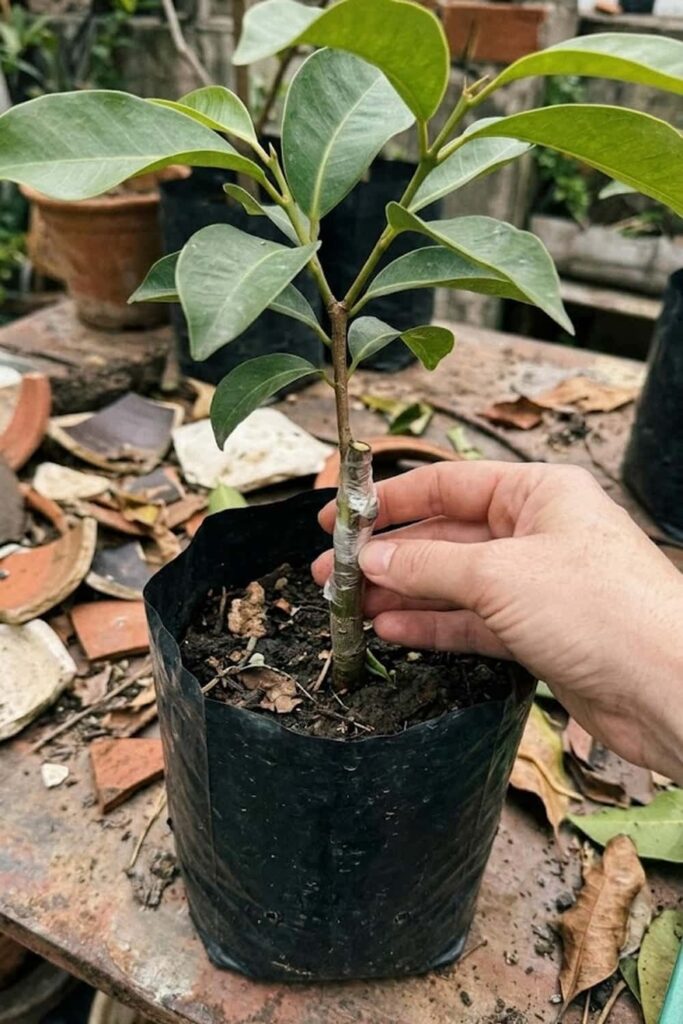
When I first decided to add a Jambul to my collection, I made the classic beginner mistake: I planted a seed from a fruit I had enjoyed. I waited. And waited. Nearly seven years later, I had a lovely shade tree, but still no fruit. I learned the hard way that while Syzygium cumini grows vigorously from seed, its juvenile period is exceptionally long, often stretching to eight or ten years before the first blossom appears. It was a disheartening waste of time. When I finally replaced it with a quality grafted sapling, the difference was night and day; I was harvesting my first “Purple Diamonds” in just four years.
You see, a grafted tree is essentially a clone of a mature, high-yielding parent. This means it bypasses that long youth, giving you a predictable timeline and, crucially, predictable fruit quality. I recommend looking for specific, curated cultivars that have been selected for traits modern gardeners desire, such as larger fruit size, a higher flesh-to-seed ratio, and, of course, superior sweetness. If you have limited space, do not despair; certain grafted varieties show less vigorous vertical growth, making them much more manageable in suburban settings or even large containers if you know how to grow Jambul fruit in pots for small gardens.
| Jambul Variety | Fruiting Age (Grafted) | Key Characteristics |
| Konkan Bahadoli | 3-4 Years | Exceptionally large fruit, very sweet pulp. |
| Narendra Jamun-6 | 4-5 Years | High yielding, distinctively aromatic berries. |
| CISH J-42 | 4 Years | Seedless or very small-seeded, excellent for processing. |
2. Prepare Deep Loamy Soil for Strong Root Establishment
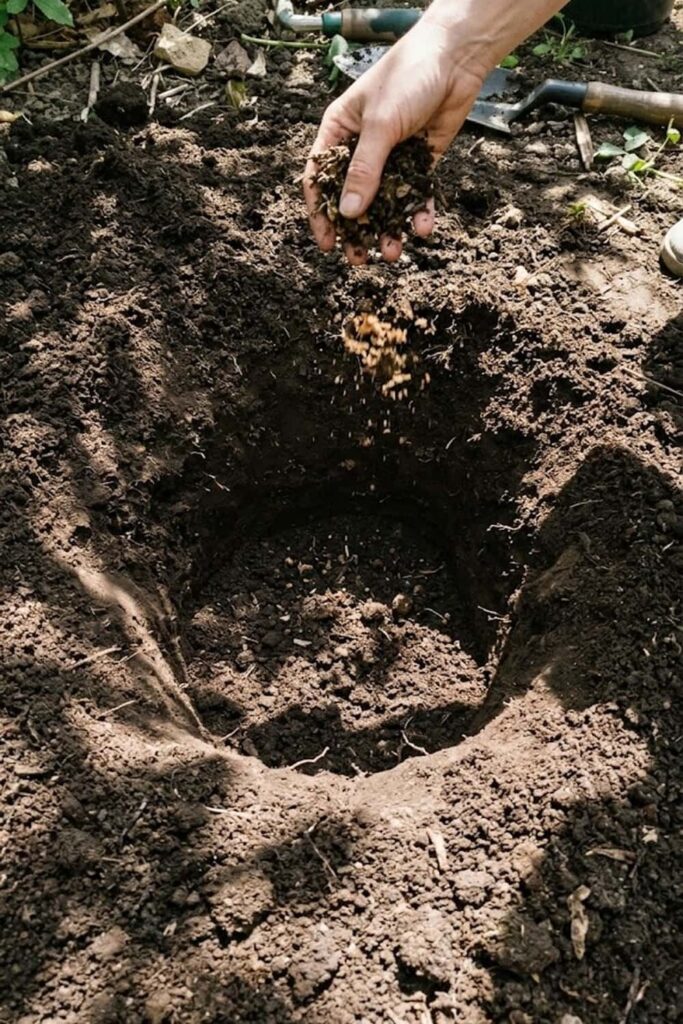
I cannot stress this enough: Syzygium cumini is not a surface-dweller. It does not just survive drought; it actively defends against it by sending a massive, persistent taproot straight down into the subsoil. If you plant your sapling in shallow dirt or, heaven forbid, hard clay, you are severely handicapping its care and long-term potential. I always approach soil preparation for a large tree like I am building a foundation for a house—it needs to be right from the start. I spend significant time digging a pit at least one meter deep and equally wide, even for a small sapling.
The goal is to break up any restrictive layers and create a vertical corridor of loosened earth. I mix the excavated topsoil with a generous amount—about 25kg—of well-rotted Farm Yard Manure (FYM) or high-quality compost before backfilling. This initial investment in soil conditioning ensures the young tree has immediate access to rich nutrients and, more importantly, can easily send its primary root downward without resistance. For you, this foundation management is the difference between a tree that struggles every summer and one that becomes a self-sufficient powerhouse.
| Soil Property | Ideal Value/Description | Why It’s Crucial |
| Texture | Deep, sandy loam to clay loam | Supports massive taproot penetration. |
| pH | 6.0–7.5 (Neutral to slightly acidic) | Optimal for nutrient bioavailability. |
| Drainage | Excellent | Prevents fatal root rot in young trees. |
| Depth | At least 1 meter of loose soil | Critical for drought resistance. |
3. Prioritize Full Sun Exposure to Maximize Anthocyanin Production
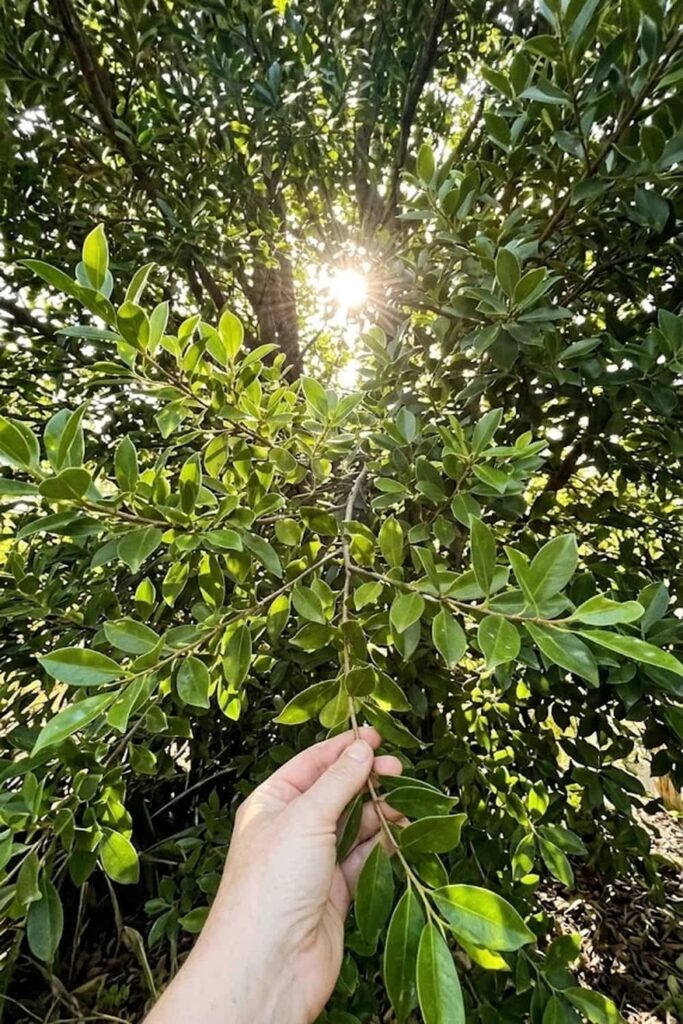
There is a very simple reason the Jambul fruit has that incredible, deep purple color: sunlight. The fruit is packed with powerful phytochemicals called anthocyanins, the same antioxidants found in blueberries, which the plant synthesizes in response to intense solar radiation. If you hide your tree in the shade of a larger building or evergreen, it might grow, but its energy will be diverted into creating lush, waxy green leaves instead of sugar and pigments. I have always seen my highest, sweetest, most purple harvests on the branches facing full south or west, where they soak up the powerful afternoon sun.
I understand that in smaller gardens, finding a perfectly open spot is a challenge. However, you must prioritize this. A Jambul tree requires at least eight hours, and ideally ten, of direct sunlight every day. This care and positioning strategy are non-negotiable. If you cannot offer this level of exposure, you should consider alternative locations or even pot-growing, which allows you to move the plant to maximize its solar intake throughout the season. Remember, you aren’t just growing a tree; you are fueling the antioxidant synthesis that makes this fruit special.
4. Time Your Planting with the Early Monsoon Rains
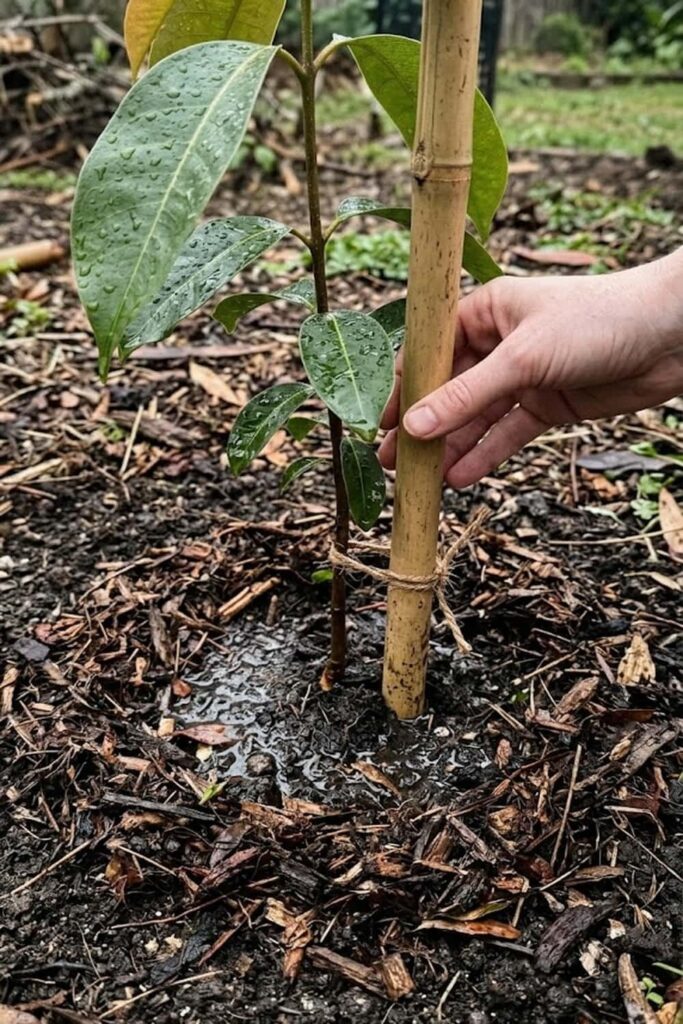
In gardening, prevention is always better than a cure, and there is no better example of this than minimizing transplant shock. I learned a brutal lesson years ago when I tried to force a planting in late spring, thinking my enthusiastic watering would overcome the rising heat. I was wrong; despite my daily efforts, the young sapling struggled and eventually died within two months. Its feeder roots simply could not establish themselves fast enough in the hot, drying soil to support the canopy.
When you plant at the onset of the monsoon (June–July), you are working with, rather than against, the natural environment. The ambient humidity is high, reducing stress on the leaves, and the ground is consistently warm and naturally moist, providing ideal conditions for rapid root development. This care means the sapling spends its first months focusing its energy outward and downward, not battling to survive. It sets the plant up for long-term health and is arguably the single best management decision you can make for its early survival.
5. Implement Regular Irrigation for Young Saplings
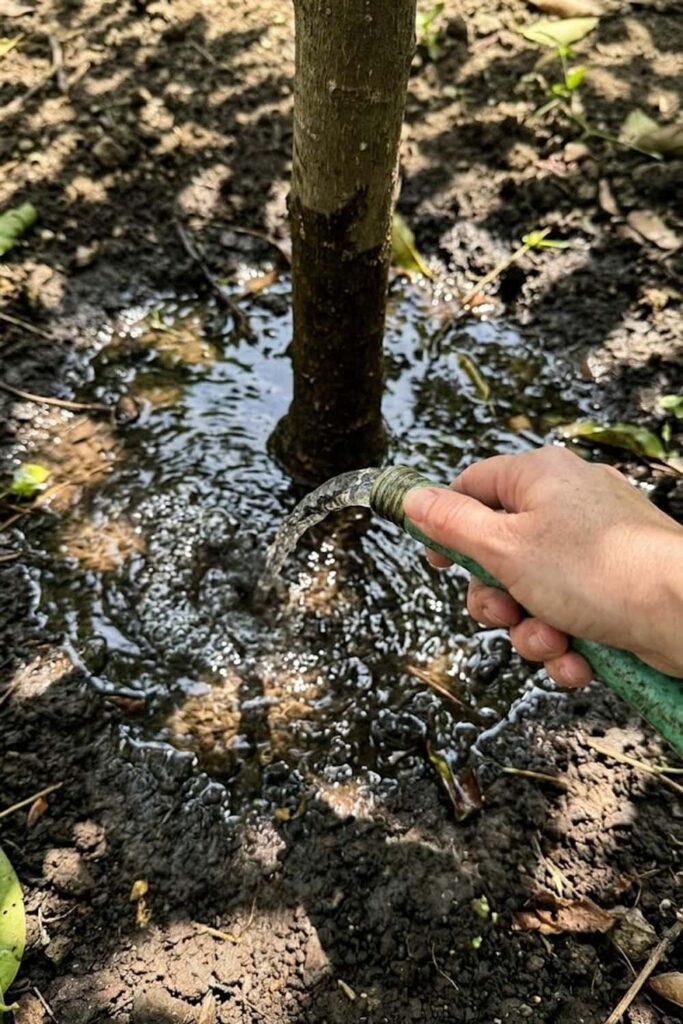
A mature Jambul tree is incredibly drought-tolerant; in fact, I often stop watering mine completely once the harvest is done to encourage it to rest. However, this resilience is earned, not inherited. During its first three years, and especially the initial twelve months, a young plant is highly susceptible to water stress. Its extensive taproot is its future lifeline, but it doesn’t exist yet. It relies on its smaller feeder roots near the surface, which dry out quickly in standard summer heat. This is a critical stage in how to grow Jambul fruit.
Your irrigation goal is not frequency, but depth. I highly recommend deep watering every 7 to 10 days rather than a light daily sprinkle. This care allows moisture to penetrate deep into the subsoil, encouraging the taproot to “chase” the water downward, strengthening its entire structure. By year four, once that root has tapped into deeper groundwater, you can reduce management to occasional supplemental watering during extreme droughts. For you, this early consistency is the single best predictor of your tree’s long-term survival.
6. Apply Organic Manure to Boost Fruit Quality
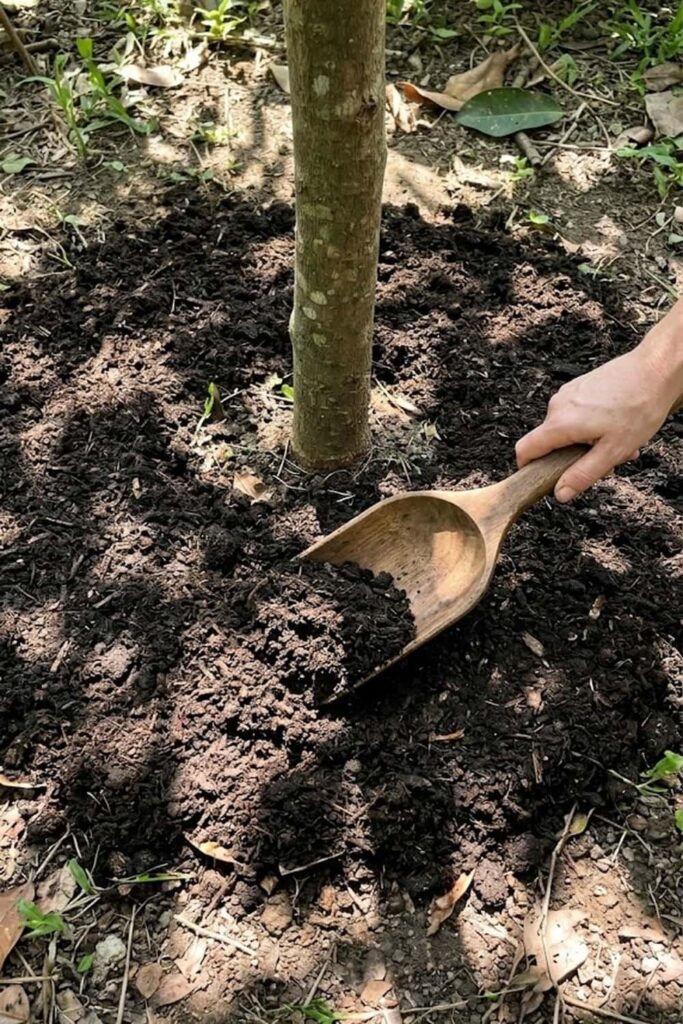
In my experience, the biggest difference between growing an ordinary tree and one that produces abundant, high-quality Jambul fruit lies in your approach to soil nutrition. I am a firm believer in the power of organic inputs, and I have always seen superior results—both in fruit size and complex flavor—when I prioritize organic manure over synthetic alternatives. The reason is simple: you aren’t just feeding the plant; you are feeding the complex soil ecosystem that supports it. While synthetic nitrogen might push fast foliage growth, a rich organic dressing improves soil structure and unlocks micro-nutrients that are essential for developing that coveted anthocyanin-packed pulp.
You must establish a regular fertilization schedule during the early monsoon season, when the plant is entering its maximum growth phase. I find that applying 20-25 kg of well-decomposed Farm Yard Manure (FYM) or high-grade compost annually around the drip line provides the perfect slow-release meal. This care ensures the tree maintains steady, robust growth, giving it the structural integrity required to support a heavy harvest within five years. It’s an essential part of sustainable management that pays off every time you bite into a juicy, home-grown Java Plum.
7. Prune Early for a Balanced Tree Framework
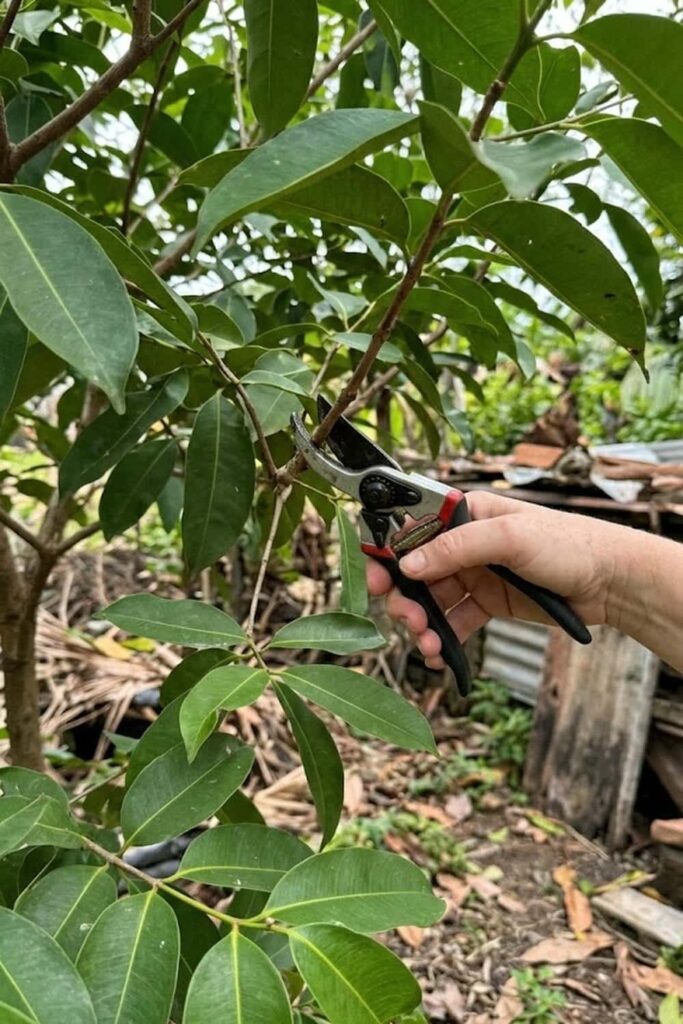
If I have learned anything about large, vigorous trees like Syzygium cumini, it is that early structural pruning is non-negotiable for how to grow Jambul fruit effectively. A Jambul tree wants to grow fast, often producing narrow V-shaped crotches that become weak and prone to splitting as the tree matures and the weight of the harvest increases. I learned this lesson by ignoring my young trees for the first three years, only to have a significant branch snap during a minor storm. It was a disheartening, permanent structural defect that could have been prevented with five minutes of simple work.
For you, this early structural care means identifying a single central leader and encouraging well-spaced scaffold branches. You must focus on creating wide crotch angles that can handle heavy fruit loads. It also involves removing any suckers or water sprouts that sap energy from the main canopy. I know it can feel scary to cut a vibrant young plant, but your prevention efforts now ensure the tree’s long-term protection against splitting and storm damage. Think of it as investing in the tree’s future skeleton.
8. Monitor for Pests to Ensure Crop Protection
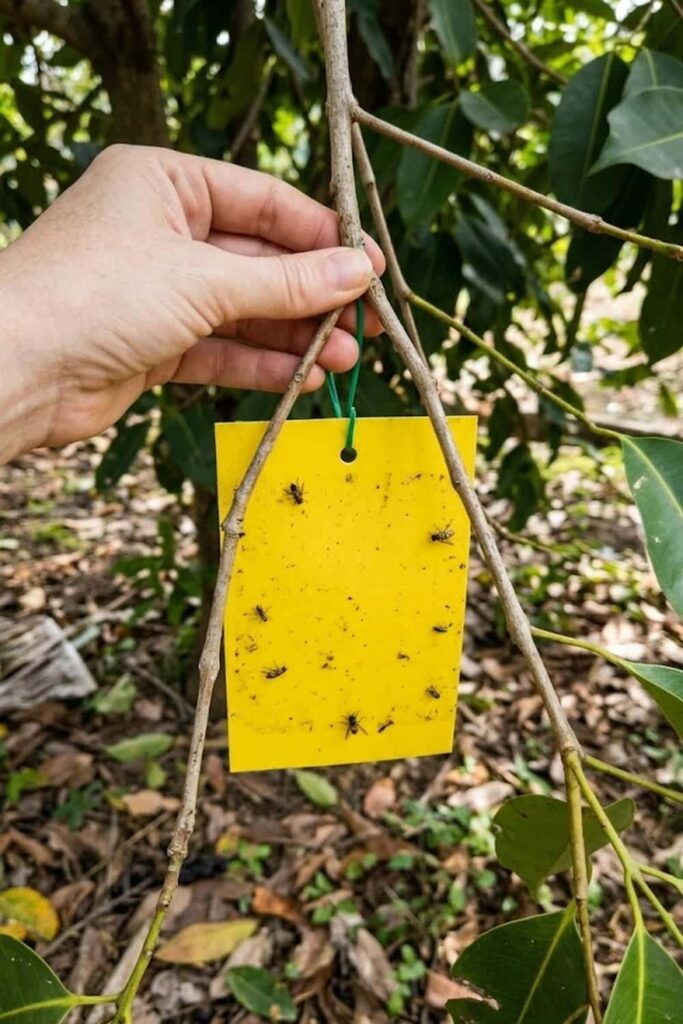
I have successfully grown many Jambul trees, but it is naive to assume they are invincible. The most heartbreaking moment in my gardening life was walking out to harvest my first massive crop only to find a devastating fruit fly infestation. I had ignored the recommended control protocols, believing my trees were inherently hardy. Now, I understand that hardy doesn’t mean bulletproof. While the Syzygium cumini tree itself is robust, its sugary fruit is an open invitation to pests. Early management is non-negotiable.
You must remain vigilant, particularly as the fruit begins to ripen. Look for leaf-eating caterpillars or the telltale stings of the fruit fly. In my experience, a proactive prevention strategy is far superior to trying to manage an full infestation. Use organic solutions like Neem oil and hang pheromone traps weeks before harvest to gauge pest activity. This consistent monitoring ensures you aren’t caught off guard. You are not just protecting a crop; you are securing the health benefits and hard work you have invested in your yard.
9. Maintain a Clear Mulch Ring for Weed Control
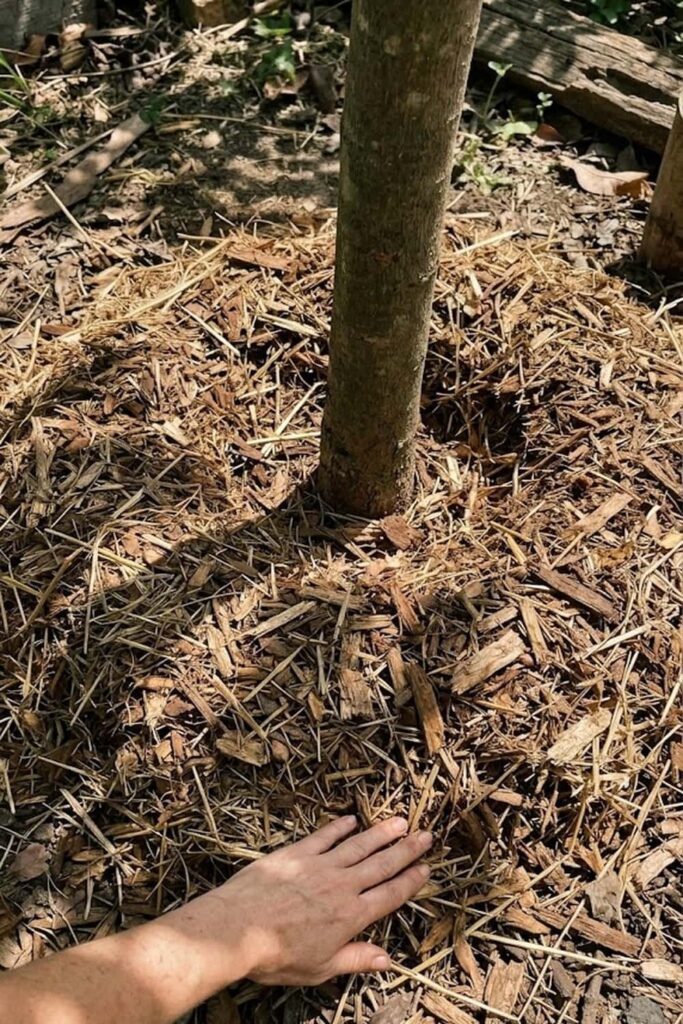
In my view, nothing says “neglected garden” faster than a tree trunk choking in grass and weeds. This isn’t just about aesthetics; a weedy base is a direct competitor for nutrients and, crucially, for water. When I was starting out, I underestimated how much water standard lawn grass could steal from a young tree. For you, establishing a clean, weedy-free care zone is essential for maximizing growth and ensuring your irrigation management is effective. The tree needs a zone where it doesn’t have to fight for survival.
Your best tool for this is a thick layer—at least 3-4 inches—of organic mulch. I prefer using wood chips or straw, as they break down slowly, improving soil texture. Spread this mulch in a generous ring around the trunk, keeping it a few inches away from the bark to prevent rot. This simple, sustainable layer provides essential protection, stabilizes soil temperature, and significantly reduces weed pressure. I can’t emphasize enough how much this one, simple step accelerates a tree’s development and simplifies your ongoing management.
10. Understand the Flowering Cycle for Harvest Planning
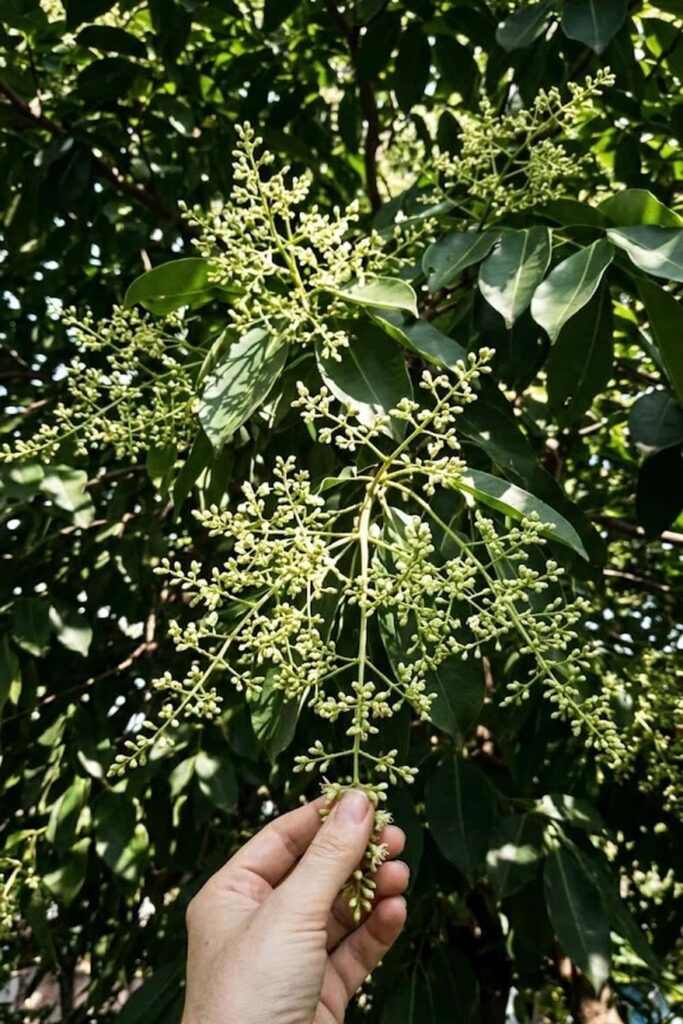
One of the most rewarding aspects of how to grow Jambul fruit is the sheer anticipation. I have learned to read my trees, and I can always tell when a massive harvest is coming by paying close attention to the flowering cycle. In my experience, Syzygium cumini usually begins its spectacular, if subtle, bloom in early spring (March-April). The tree becomes covered in small, greenish-white fragrant flowers, borne in dense panicles. For you, this is the first visible confirmation of your year-round care and successful nutritional management.
The appearance of these flowers is also my primary signal to adjust irrigation management. It is vital to ensure the tree is not water-stressed during this period, as excessive dry-out can cause the delicate blooms to drop before they are pollinated. Maintain a consistent watering schedule. This attentive care ensures a successful fruit set. Within weeks of pollination, those tiny flowers will transform into cluster of small, green, berry-like fruits, kicking off the exciting maturation process that leads to your deep purple summer harvest.
11. Thin Your Fruit for Larger, Sweeter Berries
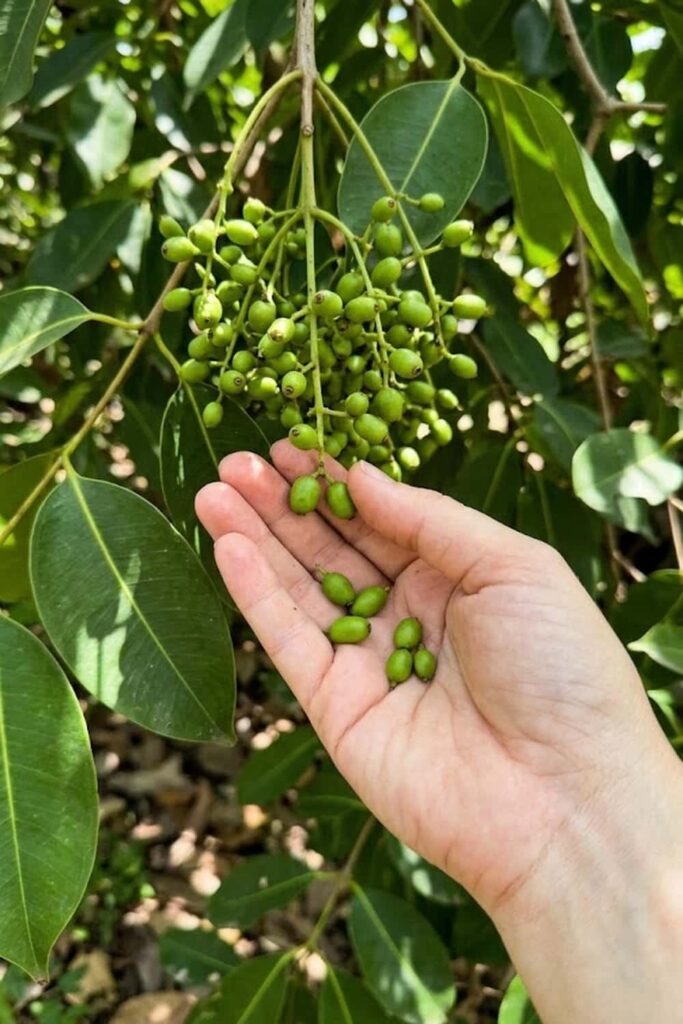
It might seem counterintuitive, but in my experience, the secret to those massive, juicy Jambul fruits isn’t more fertilizer; it’s fewer fruits. Syzygium cumini is incredibly prolific. When left to its own devices, a healthy tree will set thousands of tiny berries. I learned this lesson the hard way one summer when my trees were absolutely loaded, but the resulting harvest consisted of small, highly astringent fruits that were nearly all seed. The tree simply didn’t have enough resource energy to sweeten and size up that many berries. It was a disheartening, yet vital, lesson in crop management.
Now, I always thin my fruit. Once the plant completes its initial fruit set (usually around May), I perform a manual care sweep, removing a significant percentage of the developing green berries, especially within crowded clusters. For you, this care strategy means directing the tree’s maximum energy into the remaining fruits. Thinning effectively improves the pulp-to-seed ratio and significantly accelerates ripening. It is a fundamental aspect of sustainable management that guarantees quality over sheer quantity, ensuring you are proud of every purple berry you share.
12. Harvest at Peak Ripeness for Best Flavor
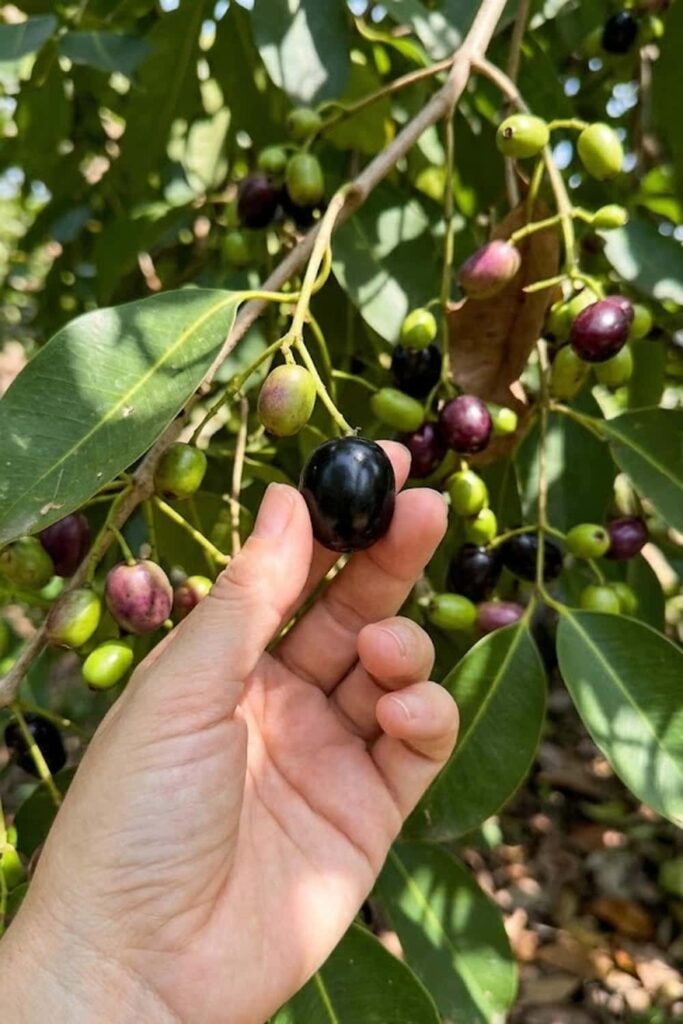
This is arguably the most critical stage of how to grow Jambul fruit. I cannot begin to tell you how many gardeners I see ruin an entire season’s worth of care by harvesting too early. Syzygium cumini does not ripen off the tree. Unlike a tomato or a banana, once you pluck that purple berry, its sugar content is locked in. If you harvest when it is merely crimson or light purple, you are guaranteeing an astringent, sour eating experience. You must wait for the definitive color change. A ripe Jambul is not purple; it is deep, glossy, jet black.
I understand the anticipation, especially when you are so close to your first harvest. However, you must exhibit patience. A true indicator of ripeness is “fruit drop,” where perfectly ripe berries begin falling naturally. For you, the most effective management technique during this peak care window is simply to wait. A perfectly ripe Jambul will have a smooth, almost shiny black skin, and it will give slightly when very gently squeezed. If it resists, it is not ready. Don’t compromise months of sustainable care with a premature pluck.
13. Protect the Harvest from Birds and Wildlife
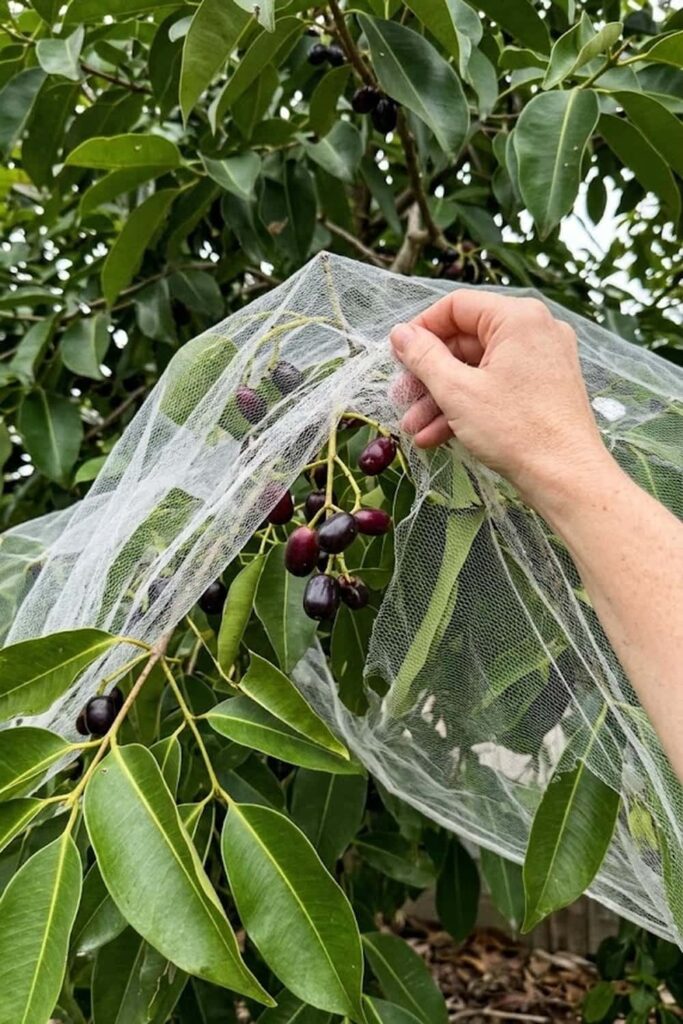
I can’t begin to describe the sheer frustration of watching months of meticulous nutritional care and watering culminate in a beautiful, ripe Jambul fruit crop, only to wake up one morning and find that local birds have systematically stripped the tree. Birds like parrots and starlings possess an uncanny ability to identify the exact moment of peak sugar ripeness, often hours before I do. Without definitive protection and control measures, you are essentially providing a buffet for local wildlife rather than securing a harvest for yourself.
For you, this definitive care window requires physical barriers. Don’t waste your time with plastic scarecrows or shiny reflective tape; in my experience, smart birds become accustomed to these within days. The only 100% effective management technique is complete exclusion. I highly recommend investing in lightweight, fine-mesh bird netting. Drape this completely over the tree, securing it at the base to prevent entry from below. You can also cover individual fruiting clusters with small, breathable mesh bags. This dedicated prevention ensures the antioxidant-rich fruits end up in your kitchen, not on the ground.
14. Utilize Sustainable Pruning After the Harvest
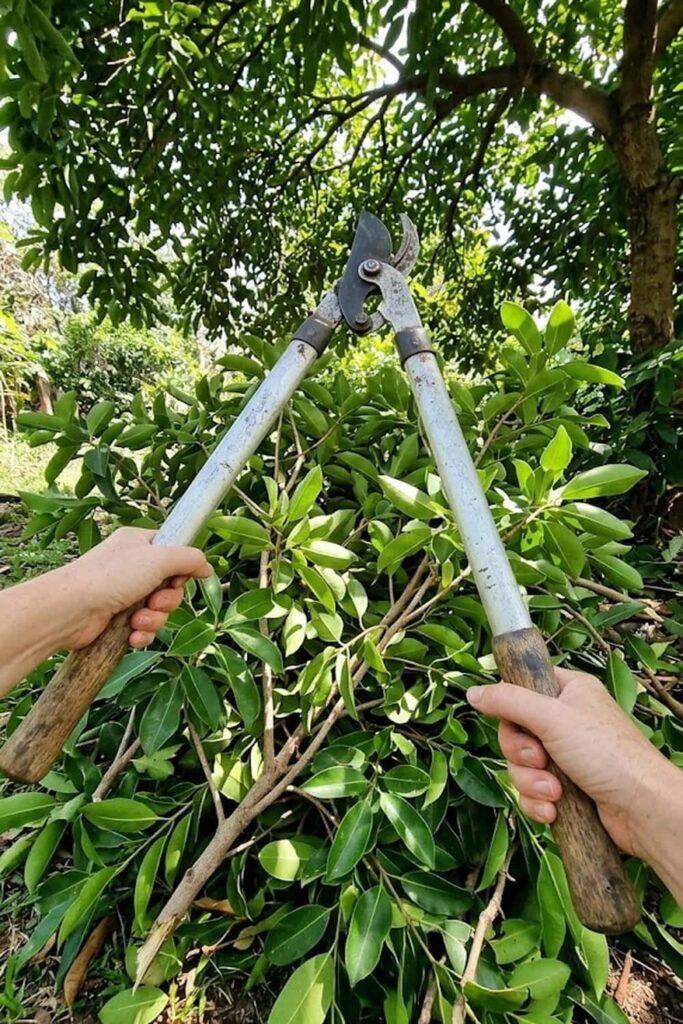
In my experience, the post-harvest period is one of the most overlooked stages in how to grow Jambul fruit. Once the busy harvest concludes (usually by August), many gardeners shift focus, leaving the tree to its own devices until the next flowering cycle. This is a critical mistake. Syzygium cumini is incredibly vigorous; without disciplined post-harvest management, it will quickly redirect all that energy into wild, vegetative vertical growth, significantly reducing fruit yield for the following year. Sustainable care means using this window to manage the canopy.
For you, this care stage means transitioning your strategy from structure to maintenance. Focus your efforts on removing any “water sprouts”—those rapid, vertical branches that emerge along main limbs and compete for resources. You must also prune back the outer canopy by about 10-15% to maintain a manageable height. Post-harvest pruning provides essential fungal disease prevention by improving internal airflow. This dedicated management ensures the remaining energy directs back into developing fruiting wood, guaranteeing another incredible summer of deep purple berries.
15. Propagate Your Own Success for Future Gardens
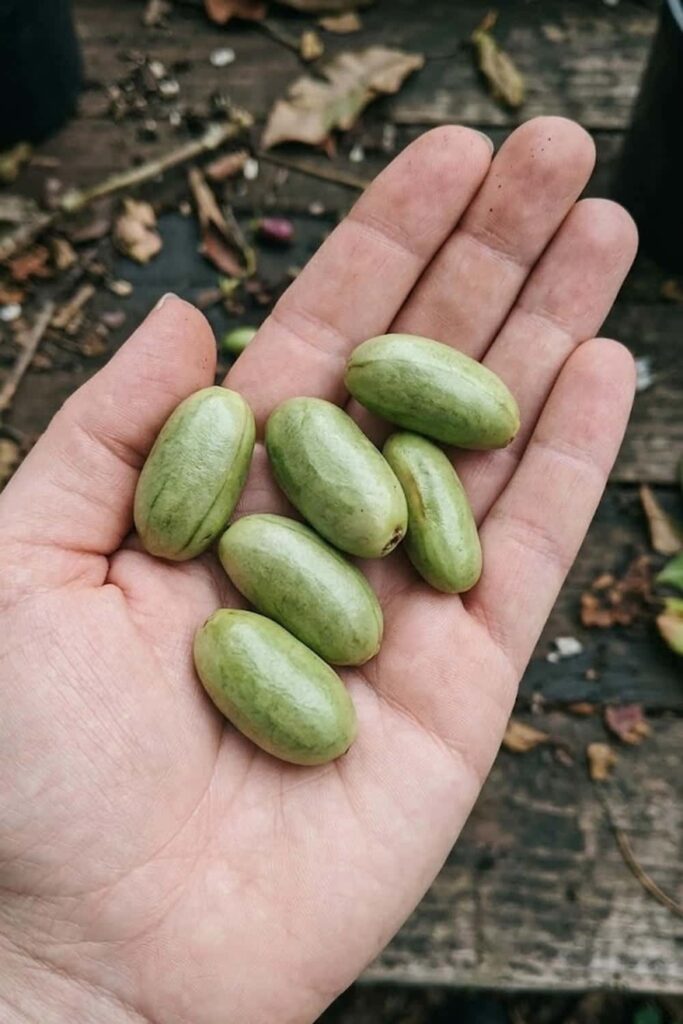
Once you experience the satisfaction of your first successful Jambul harvest, you will inevitably want more trees. In my view, the absolute best way to expand your orchard is to care for and utilize the seeds from your highest-performing tree. Propagating Syzygium cumini from seed is remarkably easy, but you must respect its unique physiology. The most critical aspect of this definitive care step is timing. Jambul seeds are recalcitrant; they do not enter dormancy. Once removed from the fresh fruit, they lose viability exceptionally quickly—often within days.
For you, this propagation management stage means acting immediately. Extract the large seeds from the ripest, healthiest fruits you have harvested. Clean the seeds thoroughly of all pulp, as lingering sugars can encourage fungal issues. Plant the fresh seeds immediately, 2-3cm deep, in a moist, high-quality potting mix. Keep the soil consistently warm and moist. I can promise you that within two weeks, you will see strong, viable sprouts, kicking off the exciting process of establishing the next generation of antioxidant-rich “Purple Diamonds” for your garden.
FAQ: Growing Jambul Like a Pro
How to grow Jambul fruit from seeds at home?
Growing Jambul from seeds requires immediate planting. Extract seeds from fresh, ripe fruit, clean them thoroughly of pulp, and plant 2cm deep in warm, moist potting soil within 24 hours of extraction; viability drops rapidly otherwise.
How to grow Jambul fruit in pots for small gardens?
Pot-growing is viable by choosing a large, 20-gallon container and focusing on definitive care and root management. Prioritize the use of dwarf Jambul varieties and execute regular root pruning every three years to sustain healthy growth.
How to grow Jambul fruit tree in tropical climate conditions?
Syzygium cumini is natively adapted to tropical and subtropical areas. Care and environmental management in these regions focus primarily on providing definitive irrigation during the intense dry season and ensuring excellent soil drainage during heavy monsoon rains to prevent root rot.
Conclusion
Growing the “Purple Diamond” is a deeply rewarding journey. When I look back at my trial-and-error days, I realize that success with Jambul fruit isn’t about expensive inputs; it’s about disciplined care, environmental management, and simple patience. By prioritizing grafted stock, deep soil, and natural protection, you can establish a self-sufficient tree that produces abundant, antioxidant-rich harvests for over 100 years.
Remember, every giant starts as a seedling. The legacy of shade, health, and bounty begins today.
What specific cultivar are you planning to start your Jambul journey with?








