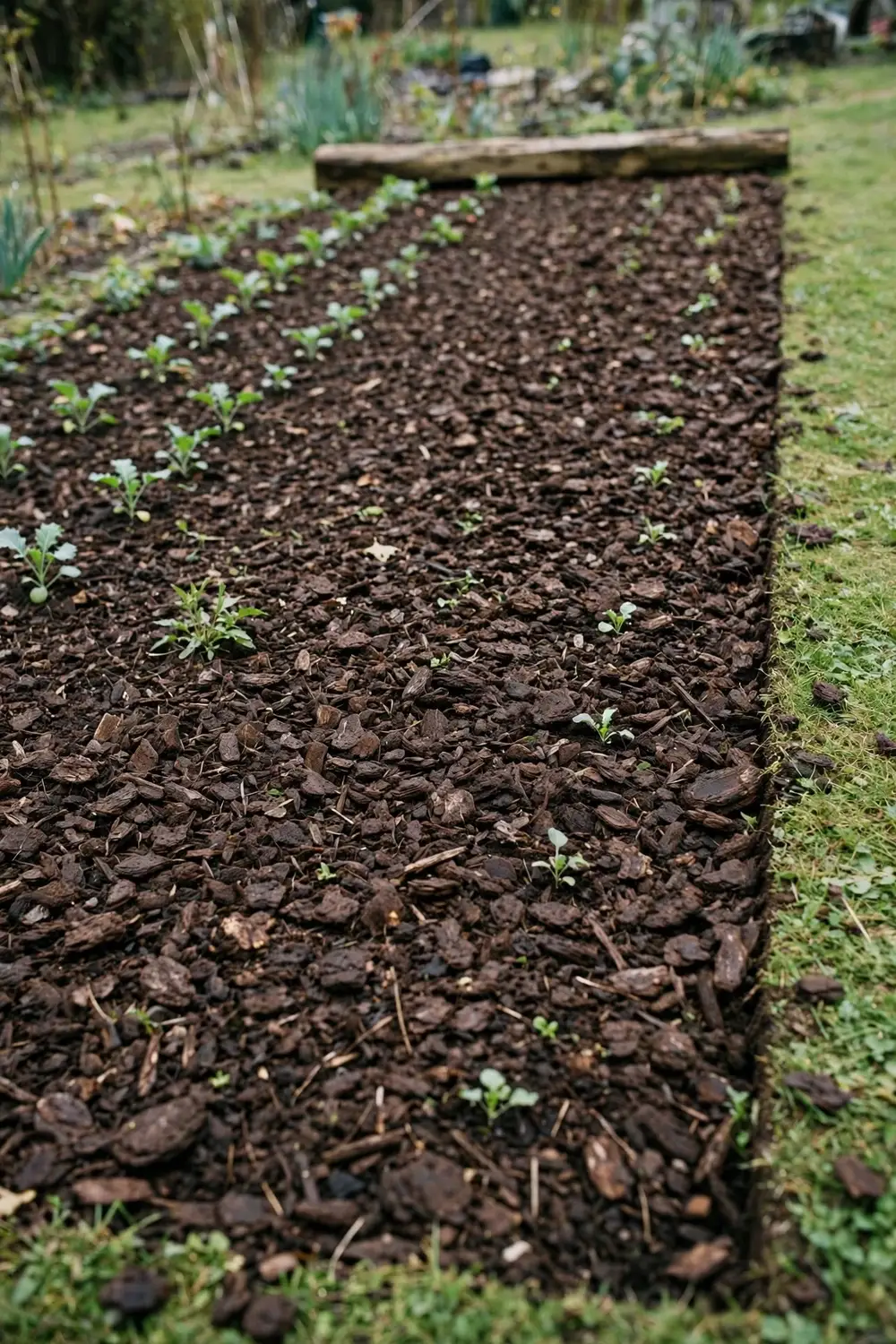

Spend 10 minutes a week pulling weeds, keep mulch 5 to 10 cm deep, and cut a hard edge between bed and lawn. That is how to reduce weeds in garden beds. A weed is any plant in the wrong place, and a bed stays clean when the routine starves weed seeds of light, blocks runners at the edge, and removes each weed before it sets seed. I have learned that the weed I pull before it seeds saves me a season of pulling later.
Work from the top if the bed is weedy today. Pull what is standing, lay mulch, cut the edge, then hold the weekly pull. The routine below runs on existing beds, the ones already planted, and it keeps working because each step removes one way weeds return. Spring brings the biggest flush, summer brings seed heads, and autumn brings the mulch top-up that sets up the next year.
1. Run the 3-Part Routine to Reduce Weeds in Garden Beds
Mulch, edge, and a weekly pull form the whole routine. Mulch blocks light so weed seeds stay dormant. A hard edge stops runner grasses from creeping in from the lawn. A weekly pull removes the few weeds that beat both defenses before they set seed. Miss one part and weeds find the gap.
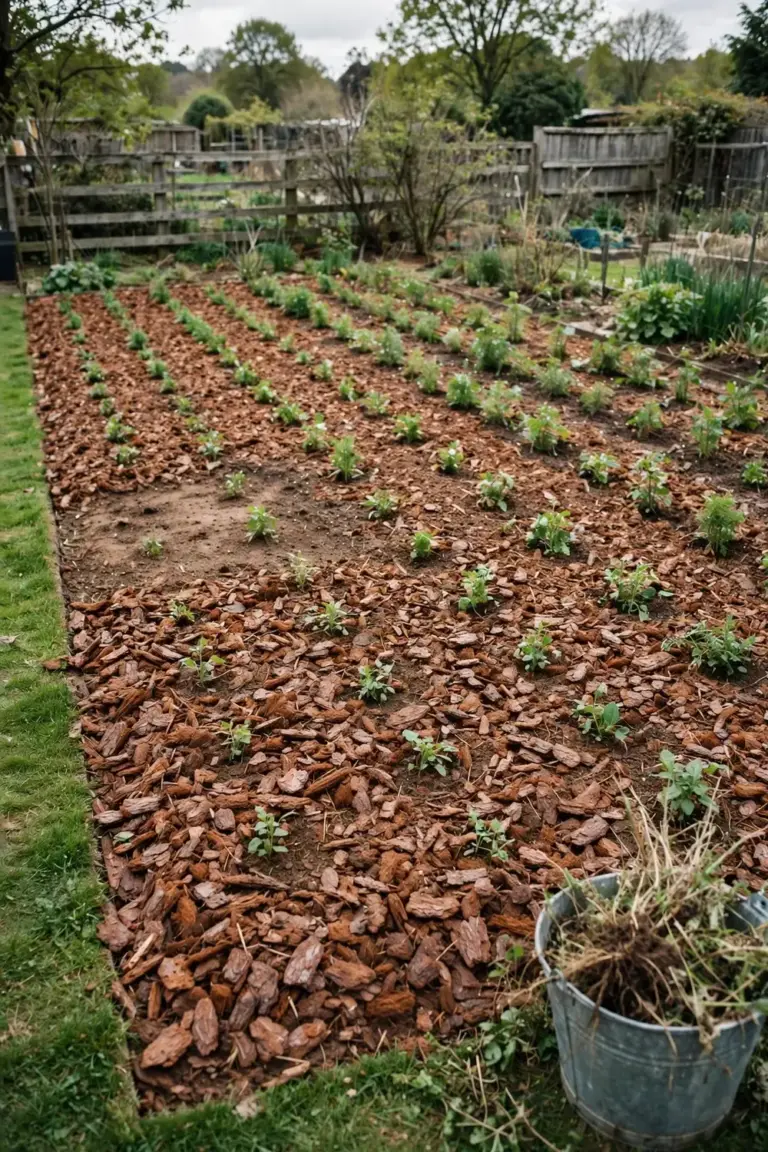
Run the three parts in order at the start. Pull the standing weeds first, so mulch lands on clean soil. Lay the mulch next. Cut the edge last, so the edge line sits clean against fresh mulch. After that first pass, the weekly pull holds the line. Ten minutes a week beats a full Saturday of clearing every few months, because a weed pulled young has a small root and no seeds.
Skip one part and the other two carry the load badly. Mulch without an edge lets runners creep in from the lawn under the mulch. An edge without mulch leaves bare soil that germinates every seed that lands on it. Mulch and edge without the weekly pull let the few weeds that beat both defenses grow, seed, and refill the seed bank. The routine works as a set, not as three separate tips.
Check the bed a week after the first pass. Pull the weeds that pushed through thin spots in the mulch. Top up mulch where soil shows. Re-cut any edge section that soil drifted across. That second pass closes the gaps the first pass missed, and after it the weekly pull drops to maintenance.
Start with one bed if the whole garden weeds up at once. One bed done well teaches the routine faster than five beds half done. Pull it, mulch it, edge it, and hold the weekly pull for a month. The clean bed shows what the routine delivers, and the habit carries to the next bed without a fresh decision each week.
2. Read the Weed by Behavior, Not by Name
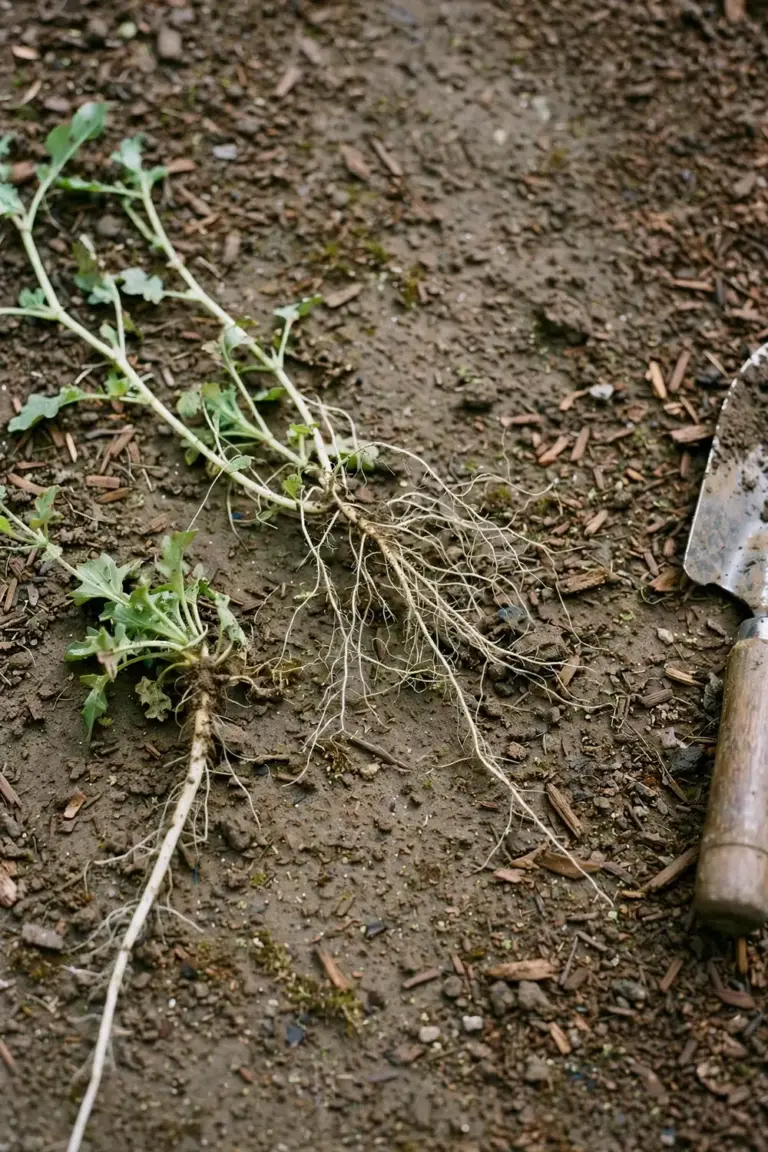
Behavior names the pull method. A weed that spreads by runners needs its runners traced and removed, not just its leaves pinched off. A weed with a taproot needs the whole root lifted, or it regrows from the stump. A weed that carries seed heads needs bagging before the seeds drop. A weed that grows from bulbs or tubers needs digging, because the storage organ underground outlives the leaves above it.
| Behavior | What It Means | Pull Method |
|---|---|---|
| Runner | A stem creeps along or under the soil and roots at each node | Trace the runner to each rooted node and lift the whole chain |
| Taproot | One thick root drives straight down | Loosen the soil with a fork, then lift the full root in one pull |
| Seed head | The plant already carries ripe or ripening seed | Bag the seed heads first, then pull the plant |
| Bulb or tuber | A storage organ sits underground and regrows after the leaves die | Dig the organ out with a trowel and bin it, since fragments regrow |
| Low mat | A flat weed spreads by seed and roots at the nodes | Hoe the mat off at the soil line before it seeds |
Learn four behaviors and you can handle most bed weeds. Couch and kikuyu run. Dandelion and sowthistle drive taproots. Purslane mats and seeds fast. Onion weed, oxalis, and nutgrass grow back from bulbs or tubers underground. The behavior tells you the method, and the method decides whether the weed returns.
Watch for behavior change across the season. A weed that starts as a low mat can throw up seed heads within weeks. A runner weed that looks dead after a dry spell can resprout from nodes after rain. Check the bed after rain and read each weed fresh, instead of assuming last week’s weed is this week’s weed. The behavior in front of you decides the pull, not the name you gave it last month.
Read a new weed in one minute. Look at the base first. A single thick root means taproot. Stems running sideways mean runner. A swollen base or a bulb at soil level means storage organ. Seed heads on top mean bag first, pull second. That one-minute read picks the right method before you touch the weed, and the right method keeps the weed from returning.
3. Lay Mulch 5 to 10 cm Deep and Keep It There
Mulch 5 to 10 cm deep blocks the light weed seeds need to germinate. Iowa State University Extension puts effective mulch depth at 2 to 4 inches, with coarser mulches on the deeper end and finer mulches on the shallower end. A thin layer lets light through, and weed seedlings push up through it. A layer past 10 cm stays wet, starves the soil of air, and roots grow shallow into the mulch instead of down into the soil.
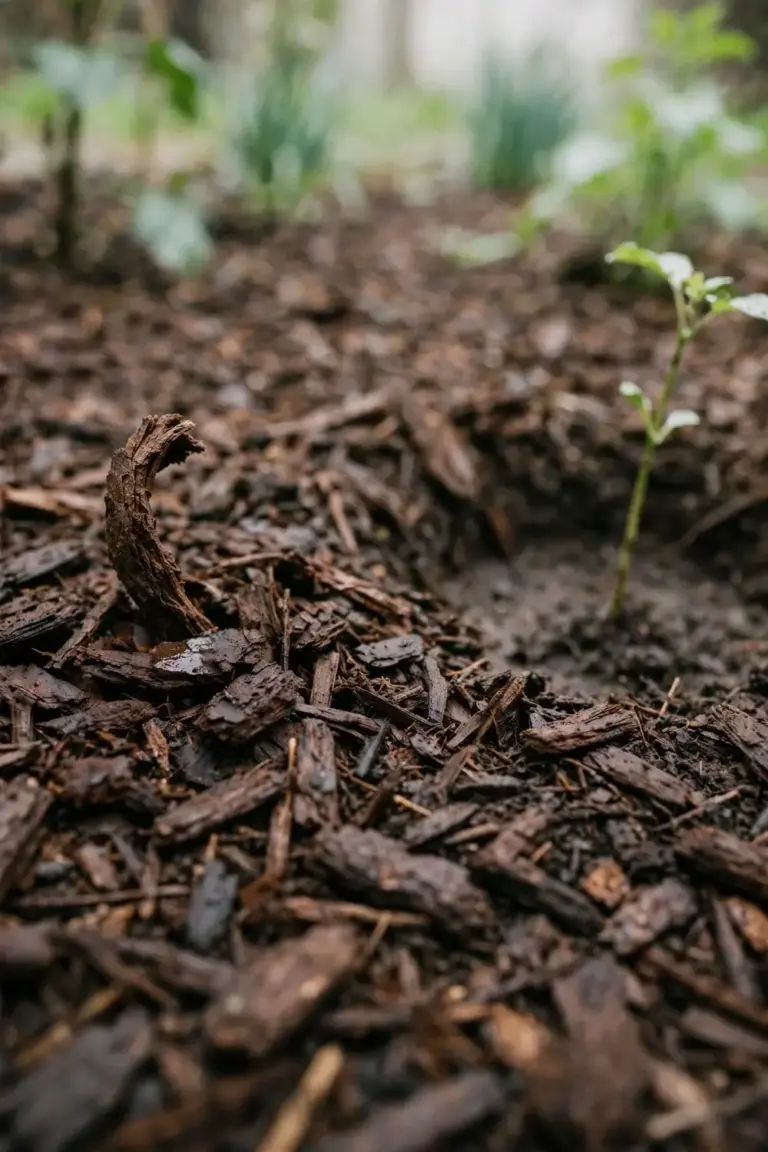
Pick a mulch that suits the bed. Sugar cane mulch suits vegetable beds and breaks down fast. Pine bark lasts longer around shrubs and perennials. Eucalyptus mulch carries a strong scent while fresh and suits paths and shrub beds. Arborist chips suit large beds and cost little, since tree crews need somewhere to drop them. Keep mulch 5 cm clear of stems and trunks, since mulch piled against bark holds moisture and rots it.
Top mulch up once a year. Organic mulch breaks down, thins out, and bare soil shows through. Bare soil grows weeds fast. Walk the beds each autumn and add mulch where the layer has dropped below 5 cm. Pull the weeds standing there first, then lay the fresh mulch on clean soil. Mulch laid over standing weeds hides them for a week and lets them seed under cover.
Water under mulch, not over it. Mulch holds moisture in the soil, so a bed that looks dry on top can hold damp soil underneath. Push a finger through the mulch into the soil before watering. Water only when the soil feels dry 5 cm down. Overwatering a mulched bed keeps the surface damp and grows moss, algae, and shallow weed roots in the mulch layer itself.
Match mulch life to the bed. Sugar cane mulch breaks down within a season and suits vegetable beds that get replanted. Pine bark lasts a year or more around shrubs and perennials. Arborist chips break down slowly and suit large beds where you want the longest cover between top-ups. A fast mulch feeds the soil sooner. A slow mulch suppresses weeds longer. Pick by the bed, not by the bag.
Skip weed mat under mulch in a planted bed. University of Maine Cooperative Extension warns that landscape fabric loses air and water permeability as it clogs with soil and organic matter, and it tangles into the roots of plants and weeds alike. Removal becomes a shredded mess pulled out in strips with plant material attached. Cardboard or newspaper under mulch breaks down and builds soil instead, and it suits an empty section of bed, not a planted one. A bed with living plants needs mulch straight on soil, so roots, worms, and water move freely. Building soil health starts with that free movement, since worms and microbes do the mixing no fabric can match.
4. Cut a Hard Edge Between Bed and Lawn
A hard edge stops runner grasses at the bed line. Couch and kikuyu spread by runners that creep across soft edges and root inside the bed. A spade-cut edge, a mowing strip, or a steel or timber edging strip breaks that run. The edge gives the runner nowhere to hide and gives you one clean line to defend.
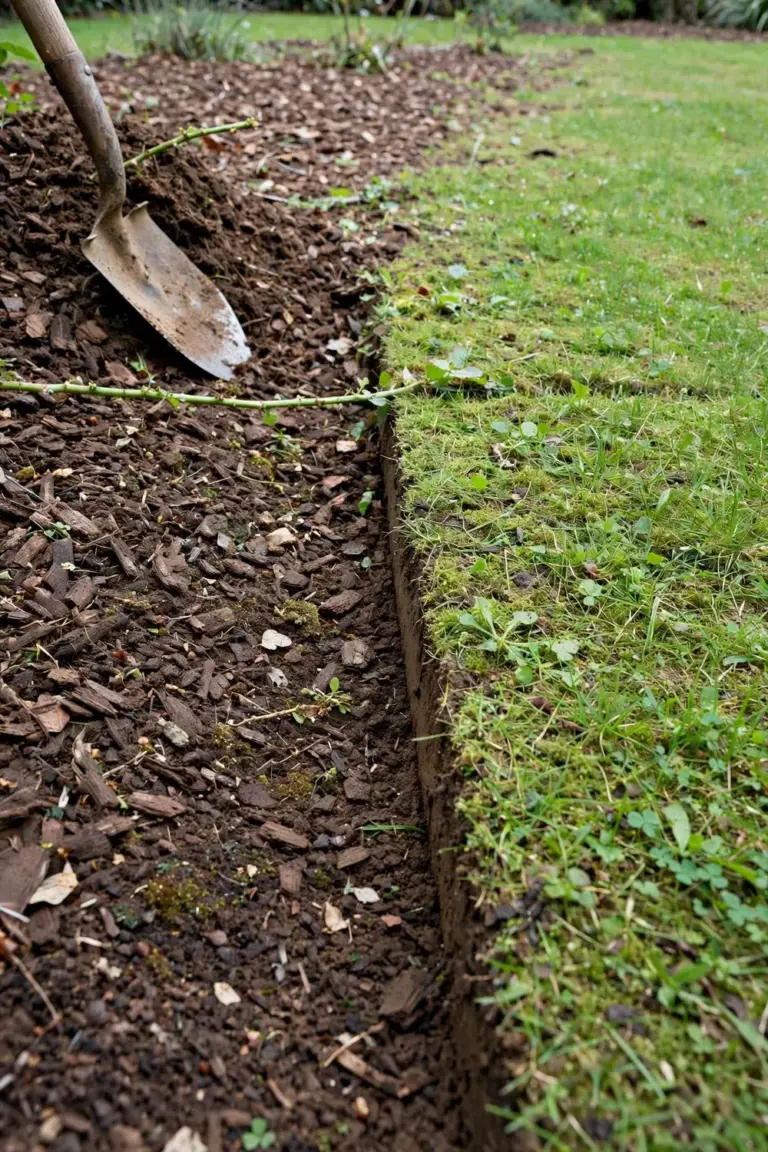
Cut the edge with a half-moon spade. Drive the blade straight down along the bed line, 10 to 15 cm deep, and lift the turf on the lawn side. Keep the cut vertical. A sloped edge lets runners climb over. A vertical edge drops the runner into the cut, where the mower or the weekly pull catches it. Re-cut the edge each spring and again in midsummer, since soil and mulch drift across the line and soften it.
A mowing strip earns its keep on beds beside lawn. Lay one row of pavers or bricks flat at soil level along the bed edge. The mower wheel rides the strip and cuts the grass tight to the bed, so no long grass flops over the edge and seeds into the mulch. A strip also keeps mulch inside the bed, since a hard line stops mulch drifting onto the lawn during rain. Set the strip level with the lawn, not proud of it, or the mower scalps it.
Pick the right edge tool for the soil. A half-moon spade cuts the cleanest edge in loam and sandy soil, and its curved blade follows a straight line well. A flat spade suits clay soil, where the straight blade drives deeper with less effort. A long-handled edger suits a long bed line and saves bending. Sharpen the blade before each edging session, since a dull blade tears turf instead of cutting it, and a torn edge heals slowly and lets runners through.
Watch the hidden edges too. Runners slip under fences, paths, and garden walls, then surface inside the bed a metre from the lawn. Check the bed side of every fence and wall on the weekly walk. Pull any runner that surfaced there and trace it back to the gap it came through. A gap under a fence board earns a timber strip or a row of bricks. A runner that crosses a path earns a deeper spade cut along the path edge.
5. Pull Weeds Wet and Whole
Pull weeds when the soil is wet. Rain or irrigation softens the soil, and roots slide out whole instead of snapping. A root left behind regrows. A whole root ends the weed. Wait a day after rain, when the soil drains but still holds moisture, and pull then. Dry soil grips roots tight. Wet soil releases them.
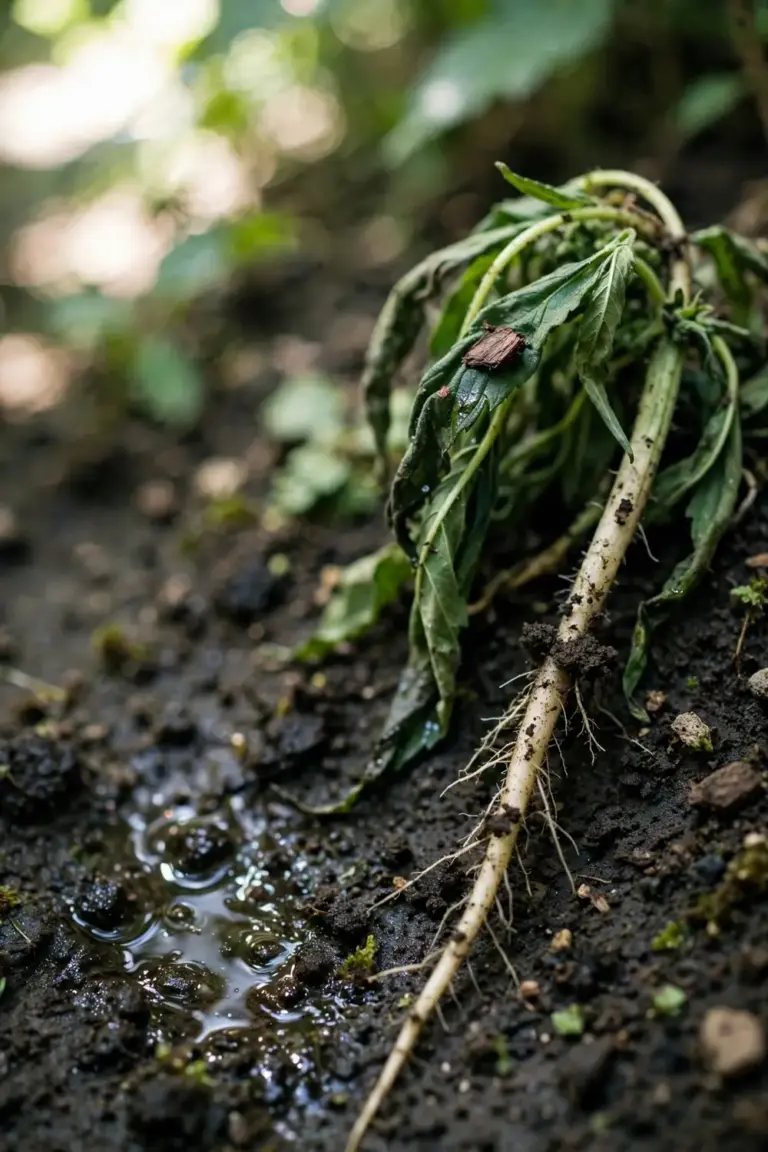
Pull slow and low. Grip the weed at the base, at soil level, not at the top leaves. Ease it out with steady pressure. A fast yank snaps the stem and leaves the root. A slow pull lifts the root with the stem. For taproot weeds, push a fork into the soil beside the root first, lever the soil loose, then pull. For runner weeds, trace the runner and lift each rooted node before pulling the next section. For bulb and tuber weeds, dig with a trowel and lift the storage organ, since the leaves regrow from it.
Nutgrass earns special care. Clemson Extension notes that hand weeding controls very young nutgrass before it reaches five or six leaves, and that mature tubers can re-sprout 10 to 12 times, so pulling must repeat every two to three weeks through summer to drain the tubers. Pull nutgrass young, pull it often, and bin every piece. Never compost nutgrass or bulb weeds, since home compost rarely heats enough to kill tubers, and the compost then plants them back into the bed.
Never leave pulled weeds on the soil. A pulled weed with seed heads drops seeds where it lands. A pulled runner with rooted nodes can reroot in damp soil. A pulled bulb weed left on the surface can survive and regrow. Bin every pulled weed. The bucket on the weekly walk exists for this reason. A weed in the bin ends the weed. A weed left on the soil starts the next one.
Hoe seedlings instead of pulling them. A hoe slices seedlings off at the soil line, and seedlings have no root reserves to regrow from. Hoe on a dry, sunny morning, and leave the sliced seedlings on the surface to dry out. Hoeing works for seedling flushes across open soil between plants. It does not work for taproot, runner, or tuber weeds, which regrow from the parts the hoe leaves behind.
6. Spend 10 Minutes a Week Pulling
Ten minutes a week keeps a bed clean. Walk the beds once a week with a bucket and a fork. Pull every weed you see, roots and all. Bin the weeds, since weeds left on the soil can root again or drop seed. A weekly pull catches weeds young, when roots are short and seeds are absent. A monthly pull meets weeds with deep roots and ripe seeds.
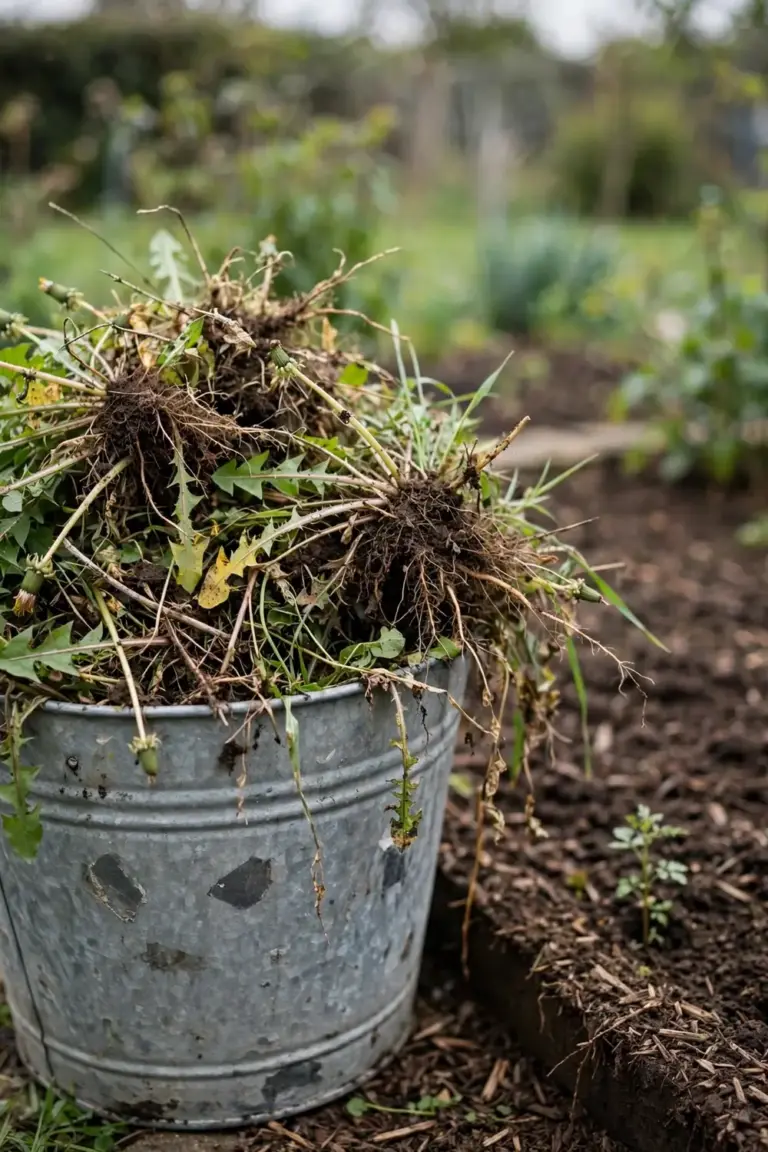
Weed after rain. Rain softens soil and triggers germination, so the week after rain brings a flush of seedlings. Pull that flush while the soil is still damp and the seedlings lift easy. Weeding after rain also catches the weeds that germinated in the last dry spell and waited for water. A dry-week pull still helps, but a post-rain pull clears twice the weeds for the same minutes.
Keep the tools in one place. A bucket, a hand fork, and a trowel cover most bed weeds. A bucket keeps pulled weeds off the soil. A fork loosens taproots. A trowel digs bulbs and tubers. Carry all three on the weekly walk. A weed left because the tool sat in the shed becomes next week’s seeding weed.
Add a monthly deep check to the weekly pull. Once a month, walk the beds and check mulch depth, edge lines, and the hidden edges along fences and walls. Top up mulch where soil shows. Re-cut edges that softened. Pull runners that crossed under fences. The monthly check catches the slow failures the weekly pull walks past, and it takes little longer than the weekly walk itself.
Follow the seasonal calendar. Spring brings the biggest germination flush, so pull twice a week for the first month of spring if the bed weeds up fast. Summer brings seed heads, so bag seed heads first on every pull. Autumn brings the mulch top-up and the edge re-cut before winter rains. Winter brings slow growth, so use the quiet weeks to repair edges and replace mowing strips. The routine stays the same all year. The emphasis shifts with the season.
7. Spot-Spray Only the Weeds You Cannot Pull
Spot-spray only the weeds that pulling cannot finish. A weed with deep tubers, a weed tangled into the roots of a wanted plant, or a weed on a path edge where digging wrecks the surface earns a spray. Everything else gets pulled. Spray is the last tool, not the first, because spray drifts onto wanted plants and kills soil life near the target.
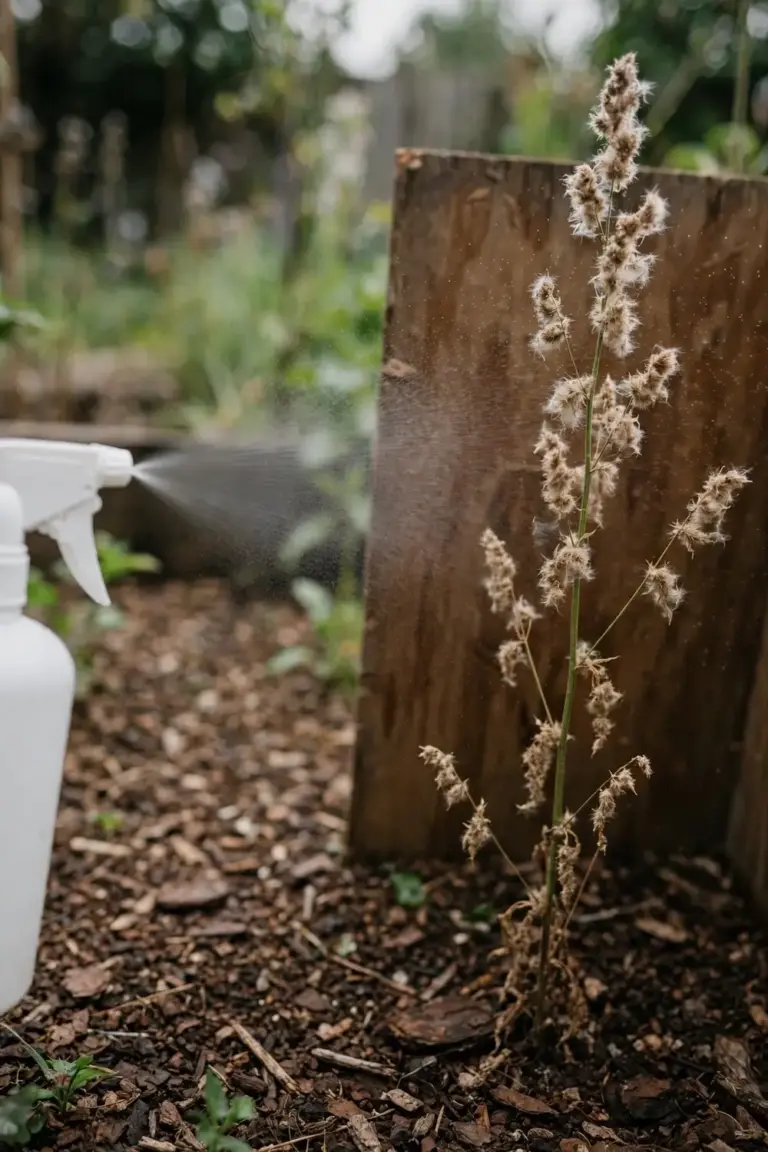
Follow the label on any spray product you use. The label sets the rate, the safety gear, and the weather limits. Spray on a calm morning, shield wanted plants with a board, and hit only the weed leaves. Never spray on a windy day, and never spray near open flowers where bees work. One careful spot-spray beats a broad spray that browns half the bed.
Skip spray near food plants you plan to harvest soon. Spray drift settles on leaves and fruit, and wash-off rules vary by product, so pull those weeds by hand instead. Skip spray near water, drains, and fish ponds too, since runoff carries spray into waterways. Hand pulling costs minutes. A spray mistake costs the bed.
Try smothering before spraying a stubborn patch. Cover the weed with an upturned bucket or a black pot for a week. No light means no growth, and the weed weakens without any chemical. Smothering suits a weed in open soil with nothing wanted beside it. Lift the cover after a week, pull the weakened weed whole, and mulch the bare spot.
8. Never Let a Weed Set Seed
Never let a weed set seed. One weed that seeds plants next season’s weeds. University of Nevada, Reno Extension notes that weed seeds can remain viable in soil for at least two years, and for some species 20 years or longer. A seed dropped this summer can wait in the soil and germinate years later. The seed bank is the reason a clean bed weeds up again after one careless month.
The counts make the rule concrete. Colorado State University PlantTalk reports that one pigweed plant can produce 117,400 seeds and one purslane plant 52,300 seeds, and that purslane seeds may persist in soil for 20 years while pigweed seeds may persist for 40 years. One mullein plant can produce over 220,000 seeds. Pull the weed before it flowers, and none of those seeds reach the soil. Pull it after it seeds, and the bed carries that seed bank for decades.
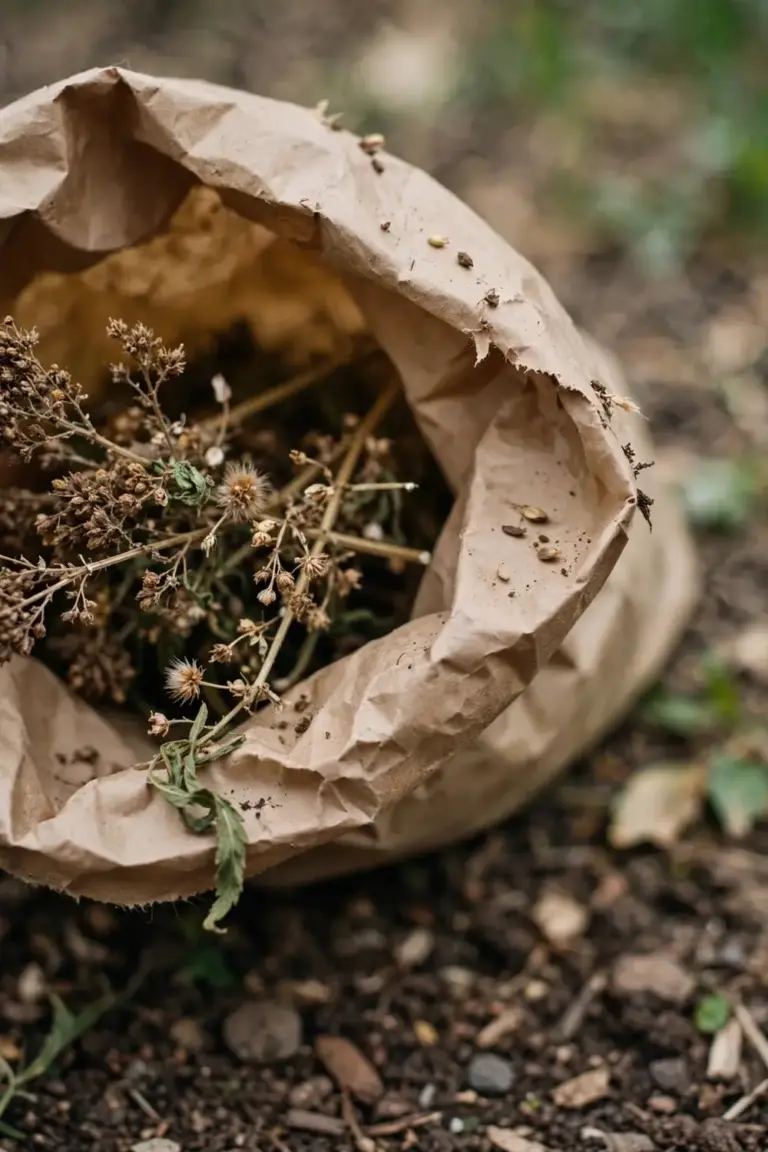
Bag seed heads before you pull. A weed with ripe seed heads drops seeds the moment you shake it. Hold a bag under the heads, snip them into the bag, then pull the plant. Bin the bag. Never compost seed heads. Home compost rarely heats enough to kill weed seeds, and the compost then spreads them across the bed with the next application. Fall garden bed prep includes this same bin-the-seed rule, since autumn cleanup decides how many weeds spring brings.
Dig less and the seed bank stays buried. Digging lifts buried seeds into light and air, and light wakes them. A bed dug over every season keeps bringing old seeds to the surface. A bed mulched and pulled without digging leaves the buried seeds dormant in the dark. Pull weeds, lay mulch, and leave the soil profile alone. The seeds already buried stay buried, and the routine stops fresh seeds from joining them.
Buy clean inputs. Bagged mulch and bagged compost arrive mostly weed-free. Loose topsoil and free manure can carry weed seeds, tubers, and root fragments. Ask the supplier whether the load was screened and heat-treated. Spread a small test patch first and watch it for two weeks. A weedy load shows itself fast, and it costs less to reject one load than to weed a whole bed for a season.
Frequently Asked Questions
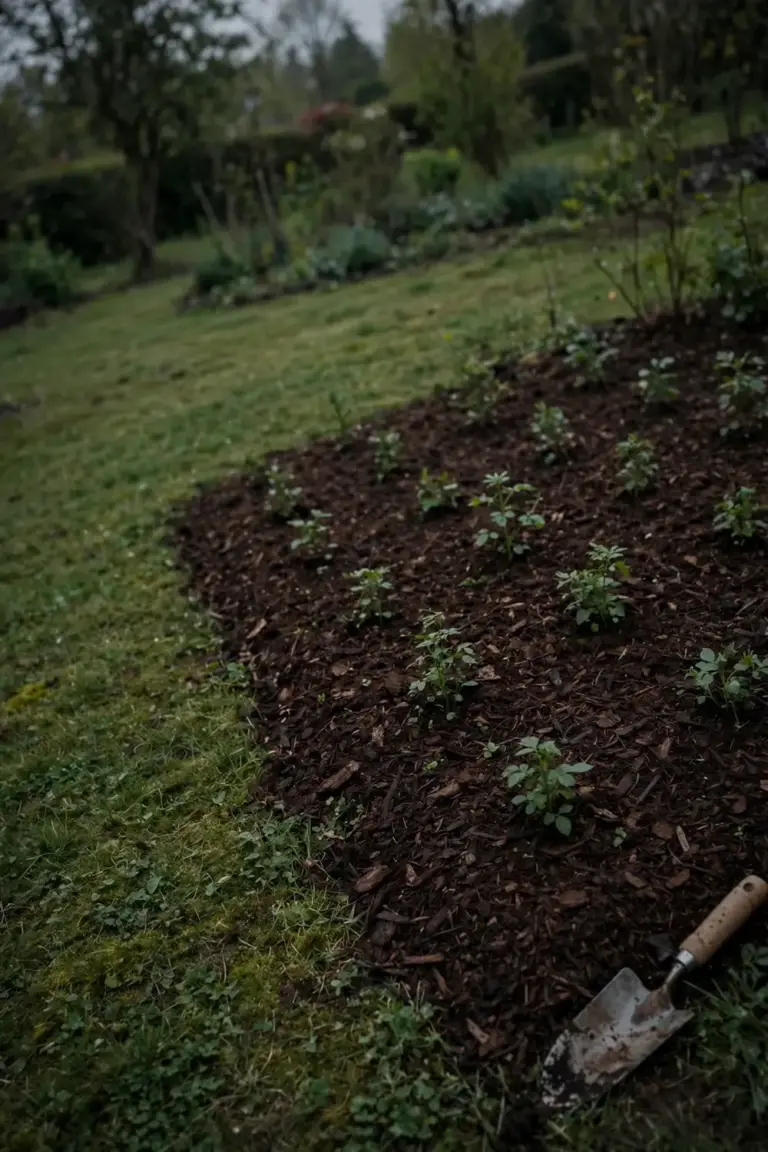
Top mulch up once a year, and check depth each autumn. Organic mulch breaks down and thins out, and bare soil shows through. Add mulch where the layer has dropped below 5 cm, after pulling the weeds standing there. A bed mulched once and left alone thins out within a year, and weeds return through the gaps.
Cardboard suits an empty section of bed, not a planted one. Cardboard laid over living plants smothers them along with the weeds. In a planted bed, use mulch straight on soil, so roots, worms, and water move freely. Save cardboard for a section you are clearing and replanting, where nothing wanted grows yet.
Mulch slows nutgrass but does not stop it. Nutgrass pushes shoots through mulch from tubers underground. Pull nutgrass young and often, every two to three weeks through summer, and bin every piece. Mulch still helps by keeping the soil moist, so pulled tubers lift out whole instead of snapping.
Weeds return from three sources: roots left behind, runners or tubers underground, and seeds already in the soil. A snapped taproot regrows. A missed tuber resprouts. A seed bank waits years. Pull whole roots, dig tubers out, and never let weeds set seed, and each source shrinks season by season.
No. Weed mat clogs with soil, blocks air and water, tangles into roots, and tears into a shredded mess at removal. Mulch straight on soil does the same weed job without the damage, and it feeds the soil as it breaks down. Save fabric for under gravel paths, where no roots need to cross it.
Keep the Routine Going
Mulch, edge, and a weekly pull keep beds clean. The routine needs no special gear and no new product. It needs ten minutes a week, mulch kept 5 to 10 cm deep, and an edge that stays hard. Start with the worst bed. Pull it, mulch it, edge it, then hold the weekly pull. The bed that gets the routine this season weeds less next season, because every weed pulled before seeding shrinks the seed bank.
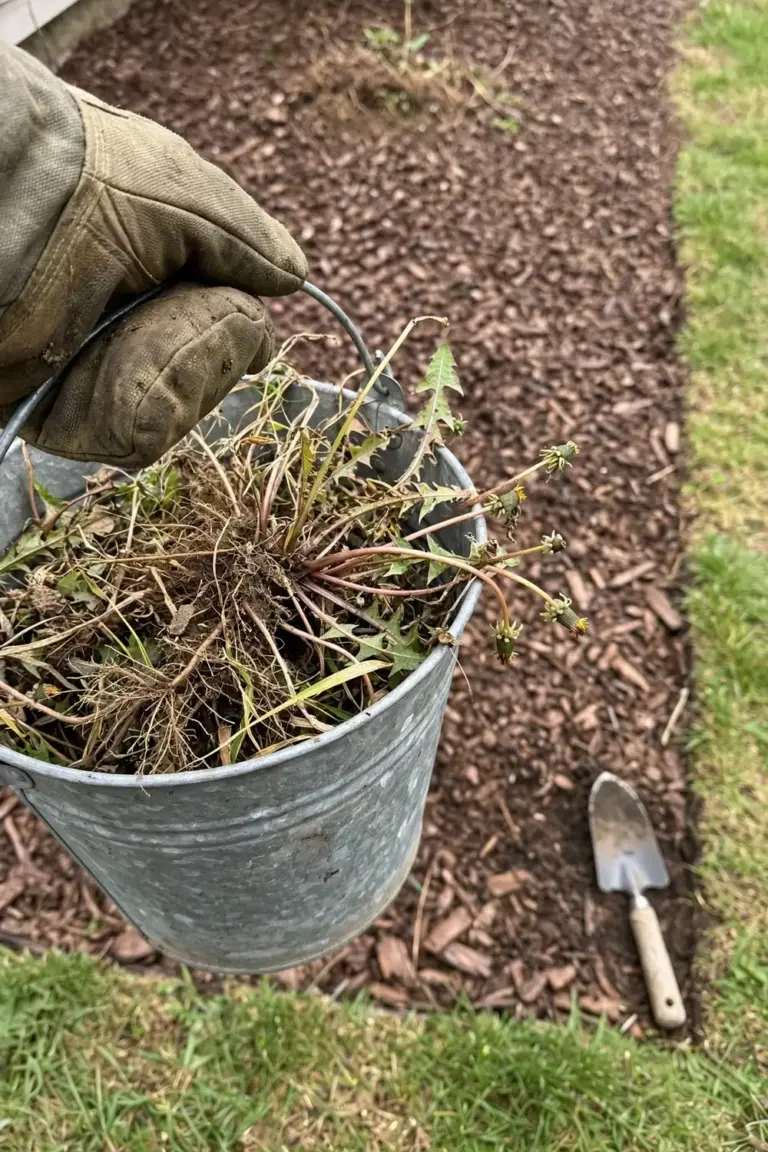
Expect the first season to feel like work and the second season to feel like maintenance. The first season clears the weeds standing in the bed and the seeds near the surface. The second season meets fewer weeds, because last season’s weeds never seeded. The seed bank shrinks each season the routine holds. That shrinking bank is the payoff for ten minutes a week, and it compounds while the routine runs. Mulching for weed control, moisture retention, and pest control explains the mulch half of the routine in full, if the mulch step needs a deeper read.