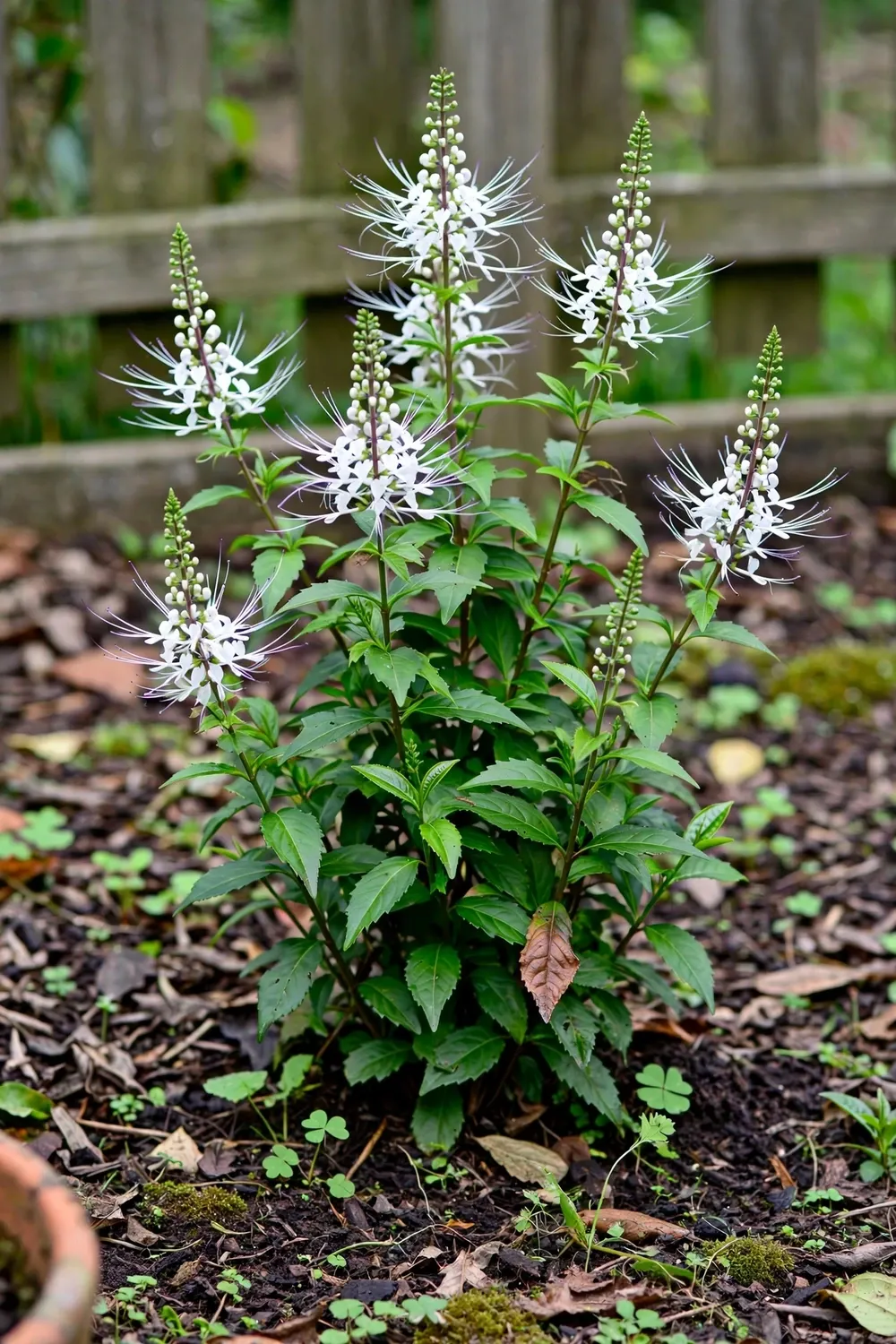

Grow Java tea in a pot of moist, compost-rich mix, give it full sun with afternoon shade in hot climates, and carry the pot indoors before nights fall toward 50 degrees Fahrenheit. That is how to grow java tea as a home gardener: one warm season of leafy growth, steady water, and a frost-free winter indoors. The plant answers with white or pale lilac flowers whose stamens stretch far past the petals like whiskers.
Java tea is Orthosiphon aristatus, a perennial herb in the mint family. The plant carries the Indonesian name kumis kucing, which means cat’s whiskers, and the English name cat’s whiskers for the same reason. Java tea contains no Camellia sinensis leaf. It is a herbal infusion, not a true tea. That distinction matters at the nursery, where a label that says only tea tells you nothing about the species inside the pot.
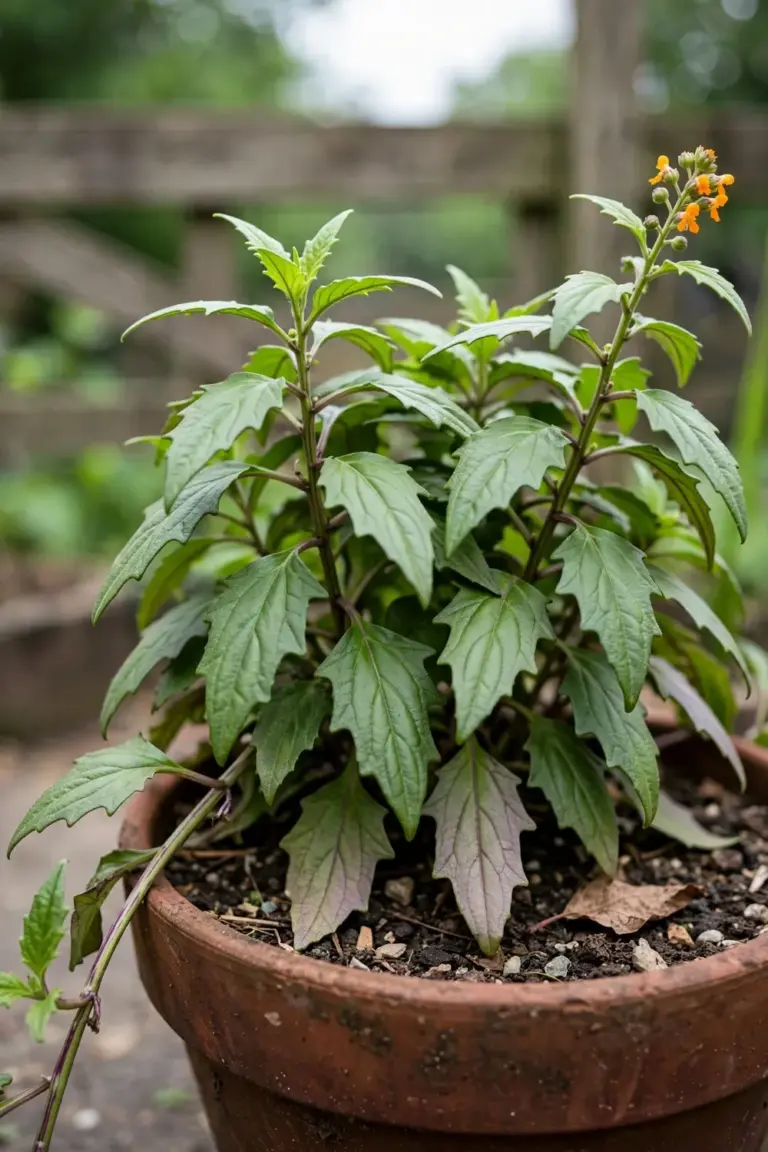
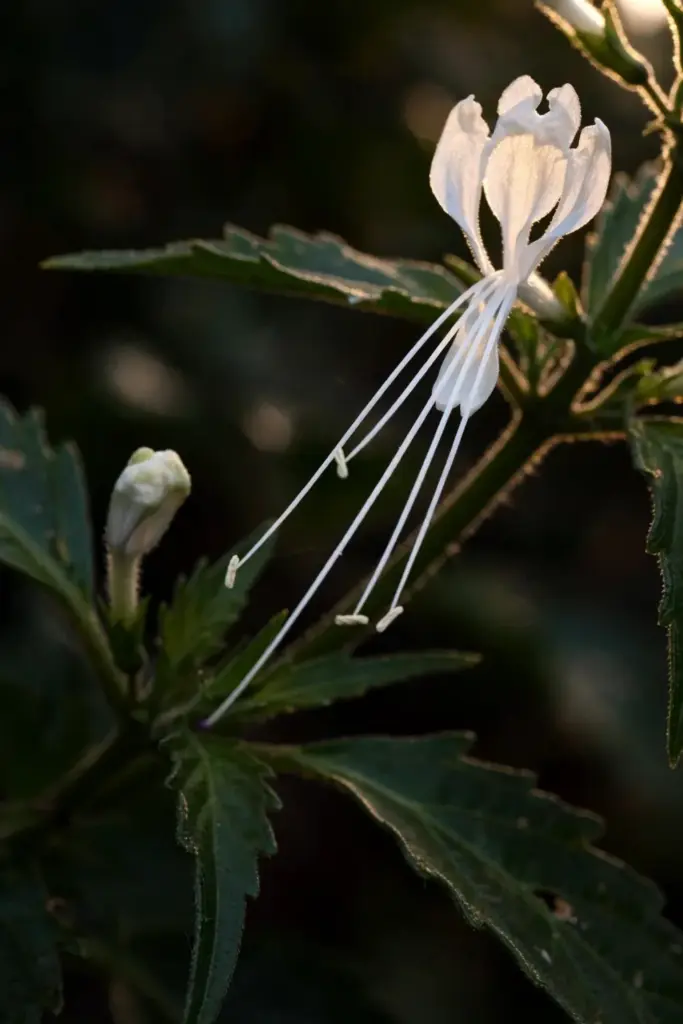
Java tea grows as an upright, bushy herb with square stems and opposite leaves with toothed margins. The flowers open in terminal racemes, white or pale lilac, with four stamens that project about 2 cm beyond the corolla. I have learned to check the label twice before buying any plant sold as Java tea. Java tea shares the mint family with peppermint, and the same peppermint growing guide covers the square stems and opposite leaves that mark the family.
1. Confirm the Real Java Tea Before You Buy Seeds or Plants
Java tea is Orthosiphon aristatus. Orthosiphon stamineus is a synonym for the same species, so a packet labeled either name holds the right plant. Kew’s Plants of the World Online lists Orthosiphon stamineus as a heterotypic synonym of Orthosiphon aristatus, and places the native range across Southeast Asia, including Jawa, Sumatera, Borneo, and the Malay Peninsula. Java is the island that gave the plant its English name, and the species grows wild at forest margins and along streams through that whole region.
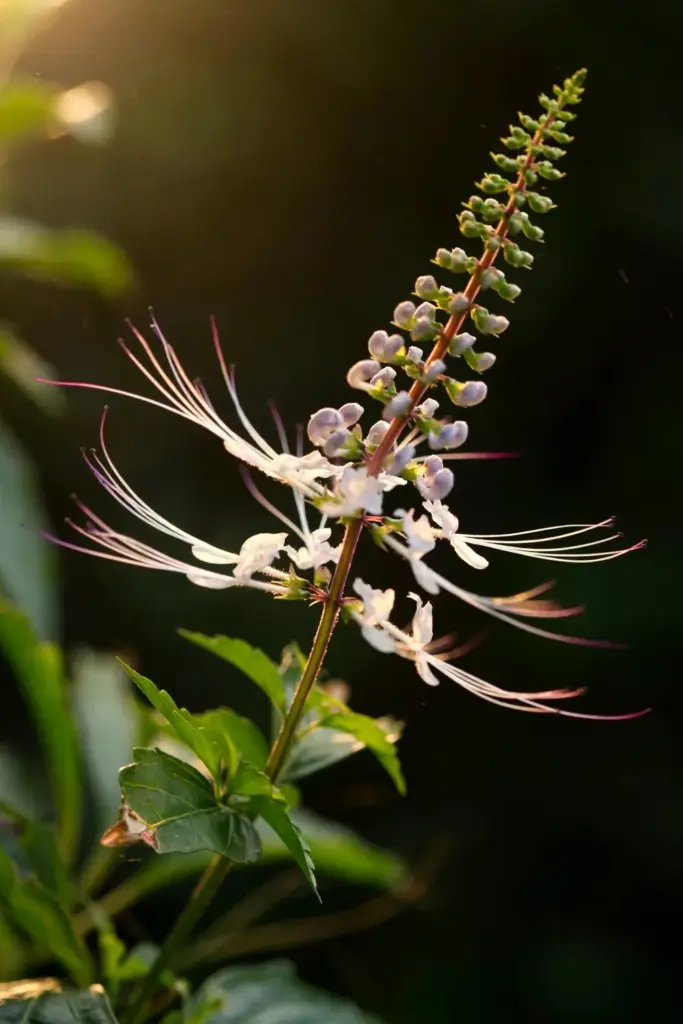
Other Orthosiphon species circulate in the trade, including Orthosiphon reflexus. Those plants are not Java tea. Buy only stock labeled Orthosiphon aristatus or Orthosiphon stamineus. A label that reads only cat’s whiskers, only Java tea, or only kumis kucing deserves a second question, because common names travel between species while botanical names stay put.
The table below separates Java tea from the two mix-ups that cost gardeners a season.
| Plant | Botanical Name | What Sets It Apart |
|---|---|---|
| Java tea | Orthosiphon aristatus, syn. Orthosiphon stamineus | Square mint-family stems, opposite toothed leaves, white or pale lilac flowers with stamens projecting about 2 cm past the petals |
| True tea | Camellia sinensis | An evergreen shrub in the tea family, with plain white flowers and no whisker stamens; the source of black, green, and oolong tea |
| Other Orthosiphon species | For example Orthosiphon reflexus | Different species in the same genus; not Java tea even when a seller uses a similar common name |
Java tea also carries a long traditional reputation as a diuretic herb in Southeast Asia. This guide treats that reputation as general background only. It makes no efficacy claim, gives no dosage, and frames no disease treatment. This article covers growing the plant. Talk to a qualified health professional before using any herb for a health purpose.
2. Match Your Climate to Java Tea’s Tropical Range
Java tea grows outdoors year round in USDA zones 9 to 11. Sow Exotic’s Java tea grow guide lists zones 9 to 11, a mature size of 2 to 4 feet tall and wide, and full sun to part shade. Gardeners outside those zones grow Java tea as a container plant that spends winter indoors, which the later sections cover in full.
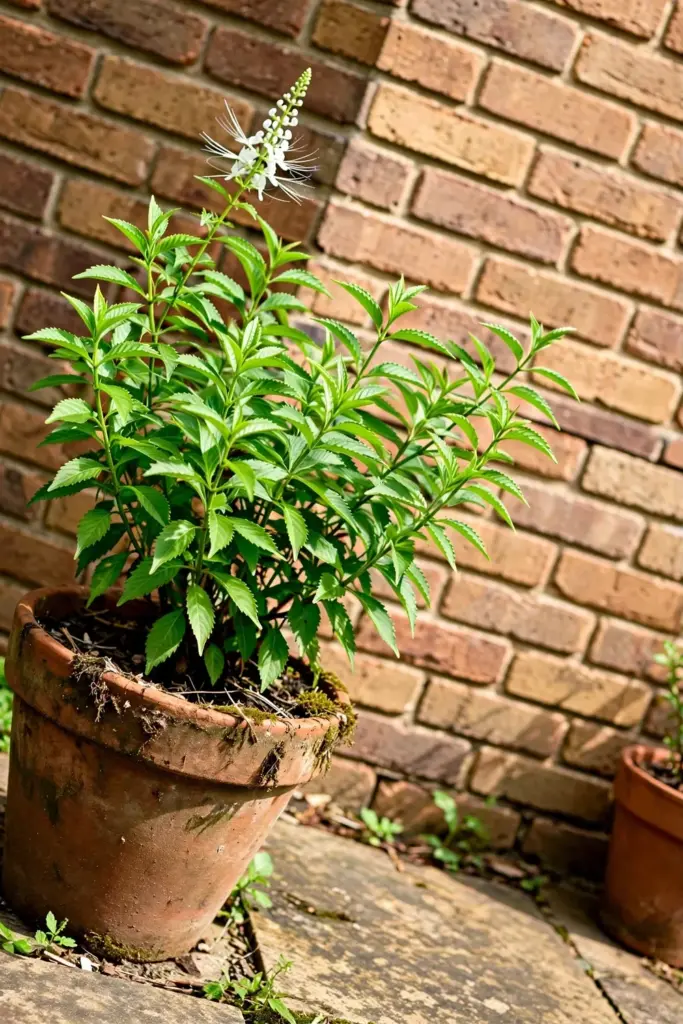
Heat suits Java tea. The plant grows fastest when days stay warm and nights stay above 50 degrees Fahrenheit. Growth slows as nights cool, and frost kills top growth outright. Treat the first forecast night near 50 degrees as the signal to start the move indoors, not the first frost warning. A plant that waits for frost has already suffered cold damage to its soft stems.
The table below turns your zone into a plan.
| Your Situation | How to Grow Java Tea |
|---|---|
| Zones 9 to 11, frost-free or nearly so | Plant in the ground or in a pot; mulch the root zone; expect an evergreen perennial |
| Zone 8 with light frost | Grow in a pot; move the pot under cover before the first frost; cut back frost-damaged stems in spring |
| Zone 7 and colder | Grow in a pot as a summer plant; overwinter indoors on a bright windowsill or under a grow light |
| Any zone with wet winters | Favor pots over open ground; wet cold soil rots roots faster than dry cold air damages tops |
Microclimate buys you margin in borderline zones. A pot against a warm south-facing wall runs several degrees warmer at night than a pot standing in open lawn. Cold air pools in low spots, so keep pots on a porch or a raised bench rather than at the bottom of a slope. Wind strips warmth from leaves, so a sheltered corner beats an exposed patio.
3. Choose Cuttings Over Seeds for Faster Java Tea Plants
Stem cuttings beat seeds for home gardeners on speed, reliability, and identity. A cutting roots as a clone of the parent plant, so the new plant carries the exact traits of the mother. Seeds vary, germinate slowly, and sometimes fail outright. Cuttings give you a known plant in weeks.
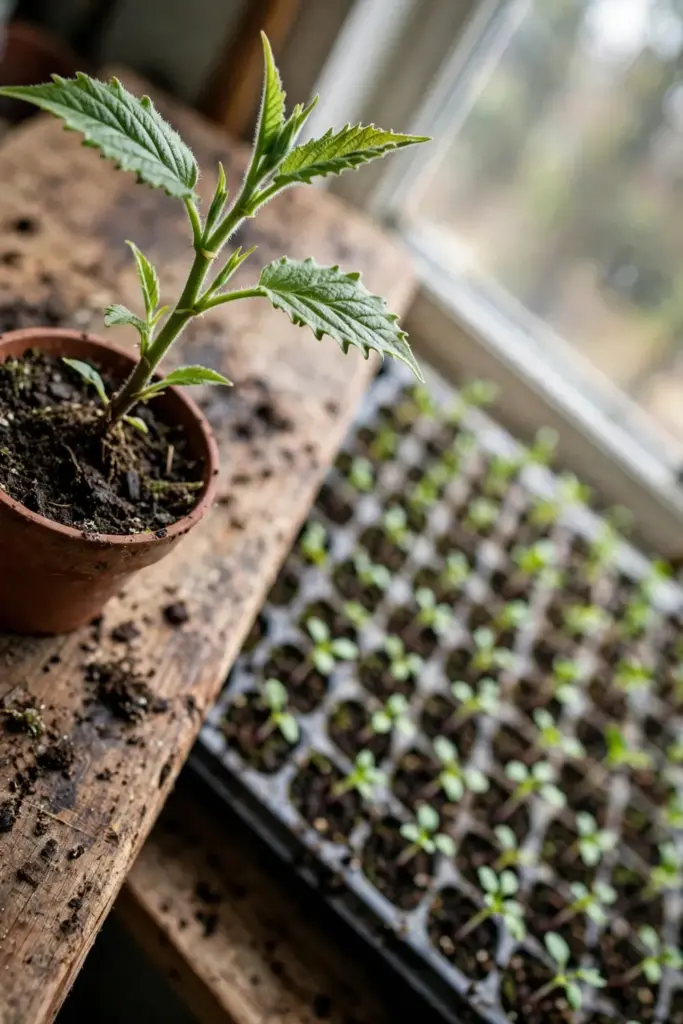
Seeds still have a place. Seeds cost little, travel by mail, and suit gardeners who enjoy the full cycle. Seed-grown plants also skip any soil-borne problem riding on a parent pot. The trade-off is time. A seedling needs months to reach the size a cutting reaches in a few weeks, and the germination window stays uncertain for home seed lots.
The table below compares the two routes head to head.
| Route | Time to a Usable Plant | Reliability | Identity | Best For |
|---|---|---|---|---|
| Stem cuttings | Weeks to rooted plants | High when stems stay moist | Exact clone of the parent | Most home gardeners, overwintering insurance |
| Seeds | Months to a sturdy seedling | Variable; sow extra seed | Seedling variation | Gardeners who want many plants cheaply |
Choose cuttings when you want one or two strong plants fast. Choose seeds when you want a dozen plants and enjoy the wait. Either route leads to the same shrub by midsummer when you start early enough. The next two sections cover each route in order.
4. Root 6 to 8 Inch Stem Cuttings in Water or Damp Mix
Take stem cuttings 6 to 8 inches long with a few buds, and plant them vertically with one bud above the soil. PlantCareToday’s cat whiskers propagation guide gives that cutting length, sets spacing at 16 to 24 inches between plants, and notes that cuttings grow best when planted at the start of the rainy season. In a temperate garden, the equivalent moment is late spring, when soil warms and rain still falls regularly.
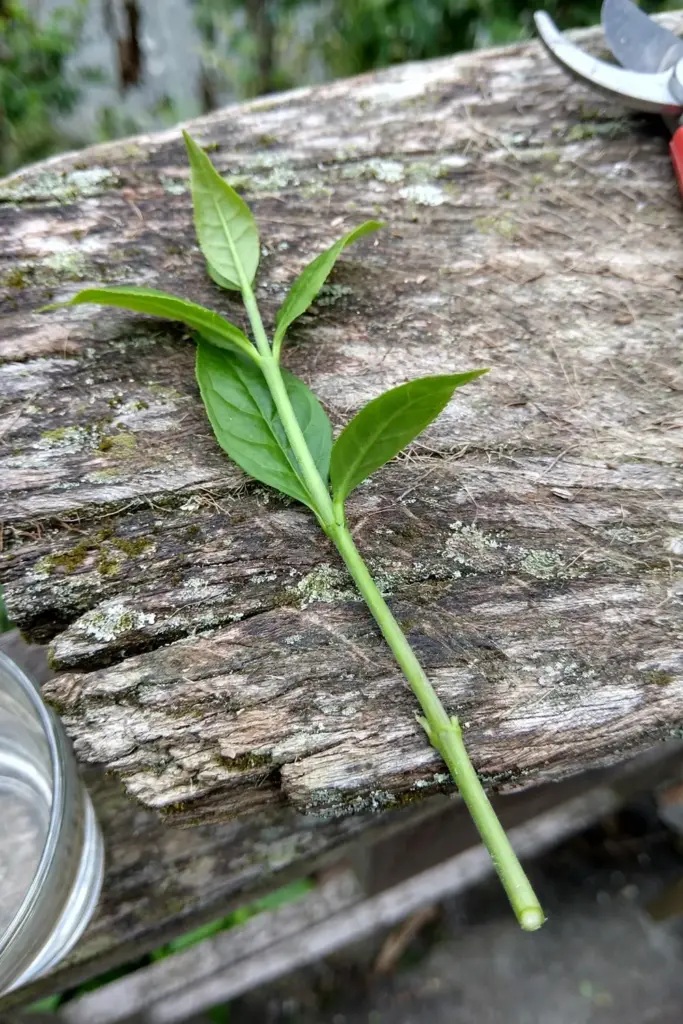
Cut in the morning, when stems hold the most moisture. Choose a healthy, non-flowering stem tip with firm green growth. Cut just below a leaf node with clean shears. Strip the lowest leaves so no leaf sits below the soil line, because buried leaves rot and sour the mix. Keep two or three leaf pairs at the top to feed the cutting while roots form.
Root cuttings in water or in damp mix. Water rooting lets you watch roots form, and it works well for a first cutting. Change the water every two or three days so it stays clear. Mix rooting gives sturdier roots that transplant with less shock. Set the cutting in a small pot of moist seed-starting mix, press the mix gently around the stem, and cover the pot with a clear bag or dome to hold humidity. Roots form in two to four weeks in steady warmth.
Harden the rooted cutting before it faces full sun. Move the pot into bright indirect light for a week, then into morning sun for a few days, then into its final spot. A cutting that jumps straight from a humidity dome to a hot patio wilts within hours. Water the new plant when the top inch of mix dries, and feed nothing until fresh growth shows.
5. Sow Java Tea Seeds 6 to 8 Weeks Before Your Last Frost
Start Java tea seeds indoors 6 to 8 weeks before your region’s last frost date. That head start gives seedlings time to reach transplant size before summer warmth arrives. Seeds of Java tea run small, so handle them over a tray and sow more than you need.
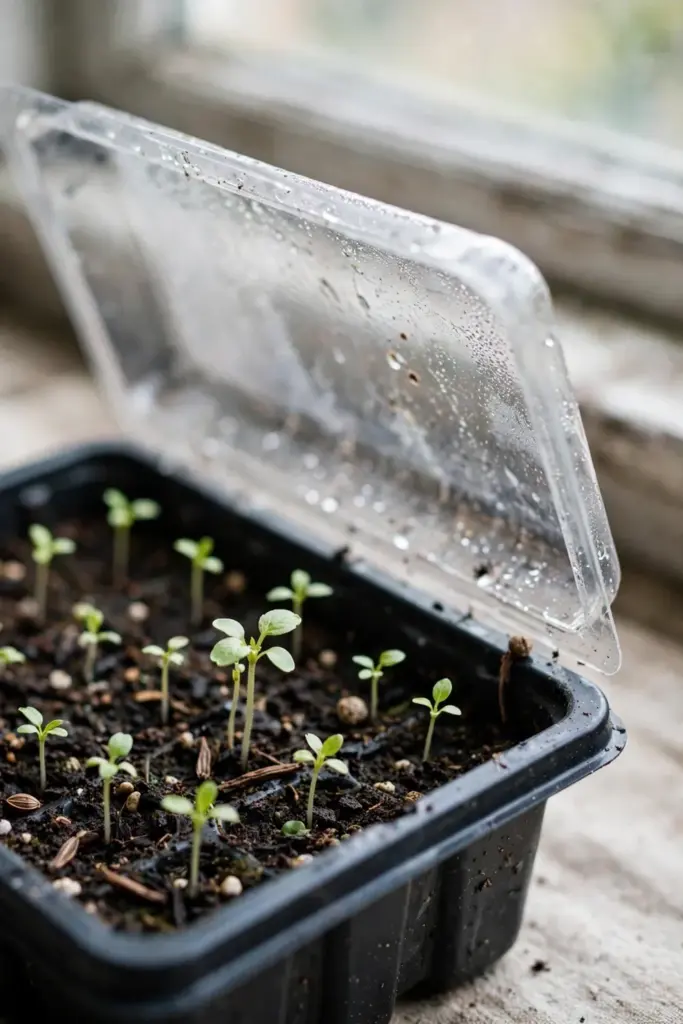
Fill a seed tray or small pots with fine, sterile seed-starting mix. Scatter the seeds thinly across the surface and press them in with a fingertip to make seed-to-soil contact. Cover with only a dusting of fine vermiculite, no deeper than a paper-thin layer. Java tea seeds germinate best with light reaching them, so never bury them deep.
Cover the tray with a clear dome or slide it into a sealable bag. The cover holds moisture around the tiny seeds during the long emergence window. Set the covered tray in bright, indirect light in steady warmth, because direct midday sun on a covered tray cooks the soil surface. A grow light or a warm room with indirect window light works.
Published germination data for home Java tea seed lots is thin. Data not available for an exact day count, so treat the tray as an experiment: sow extra seed, hold steady warmth, and wait. Check the tray daily and mist the surface when it begins to dry. When seedlings emerge, prop the dome open slightly to increase air circulation. For a full refresher on the basics, the site’s seed starting guide covers sterile mix, light distance, and hardening off in one place. The same surface-sowing logic suits other small-seeded Indonesian herbs, including lemongrass.
Transplant when seedlings carry two or three sets of true leaves and stand about 2 inches tall. Prick them out into 3-inch pots of rich, moisture-retentive potting mix. Hold them under bright, indirect light for one week before they move to their permanent pots or outdoors.
6. Build the Moist, Well-Drained Mix Java Tea Wants
Java tea wants soil that holds moisture and still drains freely. Plants for a Future lists the plant as a perennial growing to 1 m by 0.5 m, suited to sandy, loamy, and clay soils with good drainage, neutral to mildly alkaline pH, and moist soil. Those four traits together describe the target: fertile, moist, drained, and never sour.
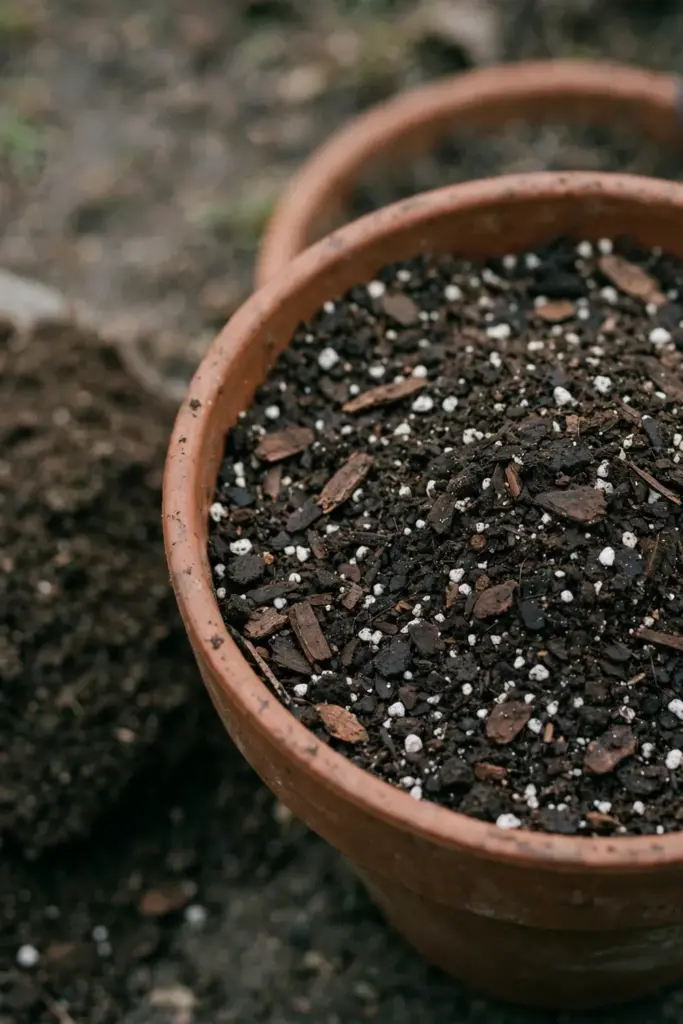
Build the mix from three parts. Start with one part good potting soil for structure. Add one part compost for fertility and moisture retention. Add one part perlite or coarse sand for drainage. That 1:1:1 blend holds water in the compost, drains through the perlite, and keeps roots breathing. A bag of plain potting soil alone stays wet too long in a pot, and straight garden soil compacts into a brick by midsummer.
Test the pH when you can. Java tea prefers neutral to mildly alkaline soil, so a reading near 7.0 suits it. Most bagged potting mixes land near neutral already, so no amendment is usually needed. Skip peat-heavy mixes that drift acidic, and skip mixes loaded with slow-release fertilizer beads, which push soft growth that wilts in heat.
Mulch the surface after planting. A 2-inch layer of shredded leaves or straw holds moisture through hot weeks and feeds the soil as it breaks down. Keep the mulch an inch away from the stem so the crown stays dry.
7. Give Java Tea Full Sun with Afternoon Shade in Hot Climates
Java tea flowers best in full sun in mild climates. Morning sun drives growth, and the plant rewards a bright spot with more flower spikes. In very hot regions, afternoon shade protects the leaves from scorch and keeps the soil moist through the worst heat.
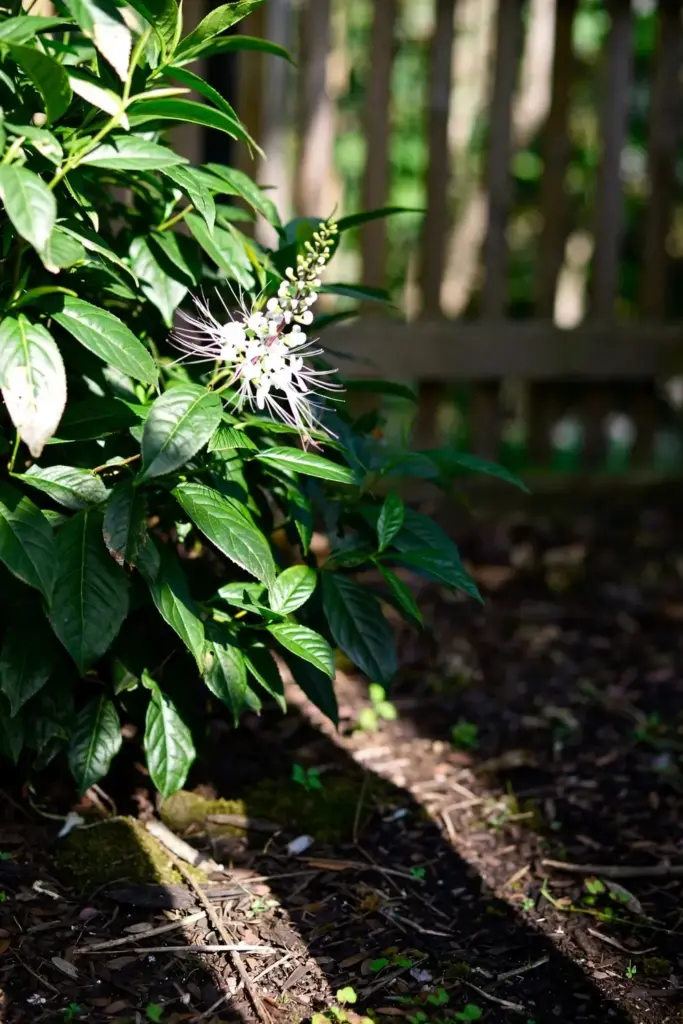
Read the leaves to judge the light. Leaves that yellow at the edges in midsummer signal too much sun. Leaves that stretch pale and leggy in shade signal too little. Move containers until you find the middle, or add shade cloth over a bed that burns. A plant that holds deep green leaves and keeps pushing new flower spikes sits in the right light.
Indoor plants need the brightest window you own. A south-facing or west-facing window suits Java tea through winter, with the pot turned a quarter turn each week so growth stays even. A grow light set 12 inches above the plant for 12 to 14 hours a day replaces a weak winter window. Without enough light, indoor Java tea drops lower leaves and stretches toward the glass.
Outdoor plants want shelter from strong wind. Wind dries leaves faster than sun does, and a wind-battered plant drinks constantly. A fence, a hedge, or a porch wall breaks the wind and lets the plant keep its moisture. Group pots together in summer so they shade each other’s sides and slow evaporation.
8. Water for Even Moisture Without Waterlogging the Roots
Java tea thrives in evenly moist soil. Water when the top inch of mix feels dry, and water deeply enough that a little runs from the drainage holes. Shallow sprinkles wet only the surface and leave roots thirsty below. A deep watering drives roots down into the pot and steadies the plant through hot afternoons.
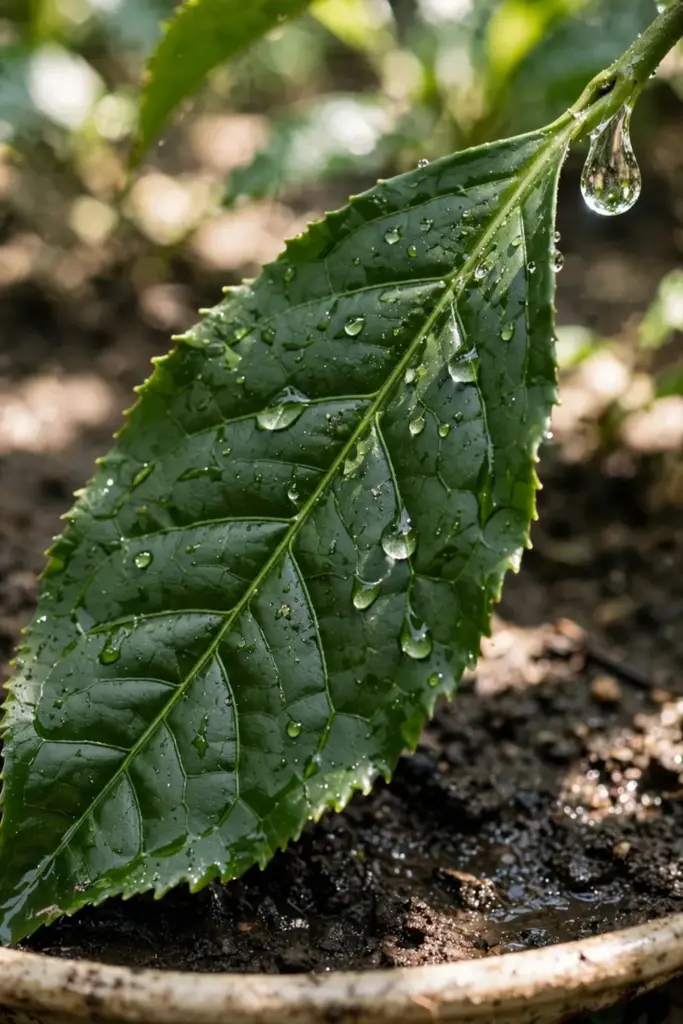
Pots dry faster than garden beds. Check container plants daily in summer heat, and water in the morning so foliage dries before nightfall. A pot that sits in a saucer of water rots roots within days, so empty the saucer after watering. In winter indoors, the same plant drinks far less, so check with a finger before watering rather than following a calendar.
Rain helps, and too much rain hurts. A week of steady rain in a pot with no drainage drowns roots and invites rot. Move pots under an eave during long wet spells, and confirm every pot drains freely before the rainy season starts. In a garden bed, a slight rise or a raised bed keeps the crown out of standing water.
Watch for the two watering failures. Leaves that wilt in the morning despite wet soil signal root trouble, not thirst, and adding more water makes it worse. Leaves that wilt in the afternoon and recover by evening signal heat and dry soil, and a deep watering fixes them. Learn which wilt you see before you reach for the can.
9. Feed Twice a Season and Prune for a Bushy Shrub
Feed Java tea lightly twice during the growing season: once in spring as growth resumes, and once in summer as flowering peaks. A balanced liquid fertilizer at half the label strength suits a potted plant. Full-strength feeds push soft, leggy growth that wilts in heat and flops after rain. Skip fertilizer entirely in winter, when the plant rests and cannot use it.
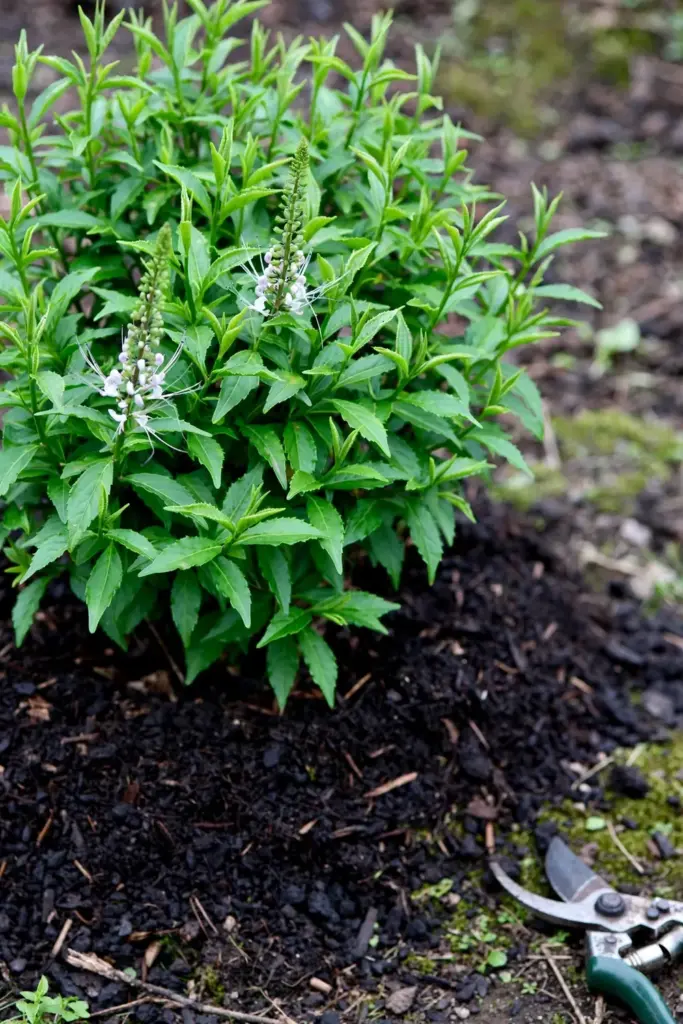
Compost does the quiet work between feeds. Top-dress the pot with an inch of compost in spring, and let each watering carry nutrients down to the roots. Compost also rebuilds the mix structure that watering compacts over a season. A pot fed only with liquid fertilizer and never refreshed with compost grows in dead mix by August.
Prune to keep the shrub bushy. Pinch the growing tips of young plants to force side branches. Snip spent flower spikes as they fade, which encourages new blooms to follow. Cut back leggy stems to a healthy leaf pair in early spring before new growth starts. A plant pruned twice a year holds a dense, rounded shape instead of a tall, bare-stemmed frame.
Clean the plant as you prune. Remove yellow leaves, fallen leaves, and spent spikes from the pot surface. Debris on wet mix invites fungus and hides pests. A tidy pot dries faster after watering and shows problems sooner.
10. Grow Java Tea in a 12-Inch Pot You Can Carry Indoors
A 12-inch pot suits one Java tea plant for a full season. The pot holds enough mix to keep moisture steady through summer, yet stays light enough to carry indoors in autumn. A larger pot works too, but it grows heavy fast once the mix is wet, so size the pot to your own strength.
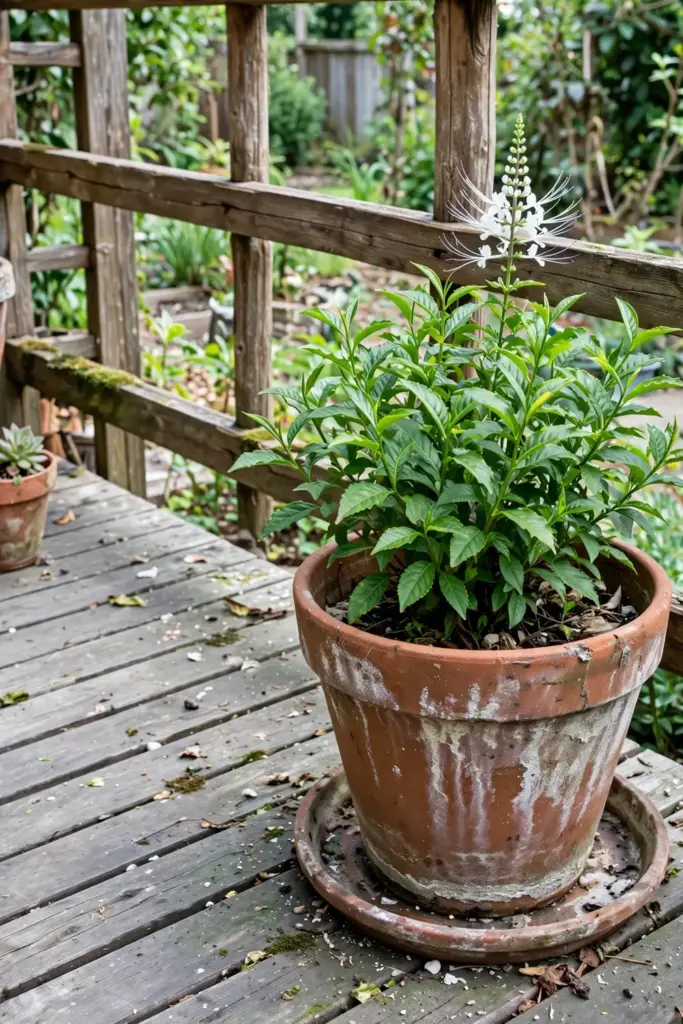
Choose a pot with drainage holes and a matching saucer. Terracotta breathes and dries faster, which suits wet climates. Plastic holds moisture longer, which suits hot, dry summers. Either material works when the mix drains well. Avoid pots with no drainage hole, because Java tea roots rot in standing water.
Set the pot where it gets morning sun and afternoon shade in hot climates. Group it with other pots so the sides shade each other. Turn the pot a quarter turn each week so all sides get light and growth stays even. The same container logic applies to the guide to growing ginger at home in containers, another tropical herb that winters indoors in a pot.
Repot when roots circle the pot or water runs straight through without wetting the mix. Move up one pot size, usually 2 inches wider, in spring before growth resumes. Fresh mix at repotting beats fertilizer for a tired plant. Tease the root ball gently, set the plant at the same depth, and water deeply to settle the mix.
11. Move Java Tea Indoors Before Nights Fall Toward 50°F
Move Java tea indoors before nights fall toward 50 degrees Fahrenheit. Frost kills the soft stems outright, and cold nights below that line stall growth and yellow the leaves. Watch the forecast in early autumn and plan the move a week ahead, so a sudden cold snap never catches the plant outside.
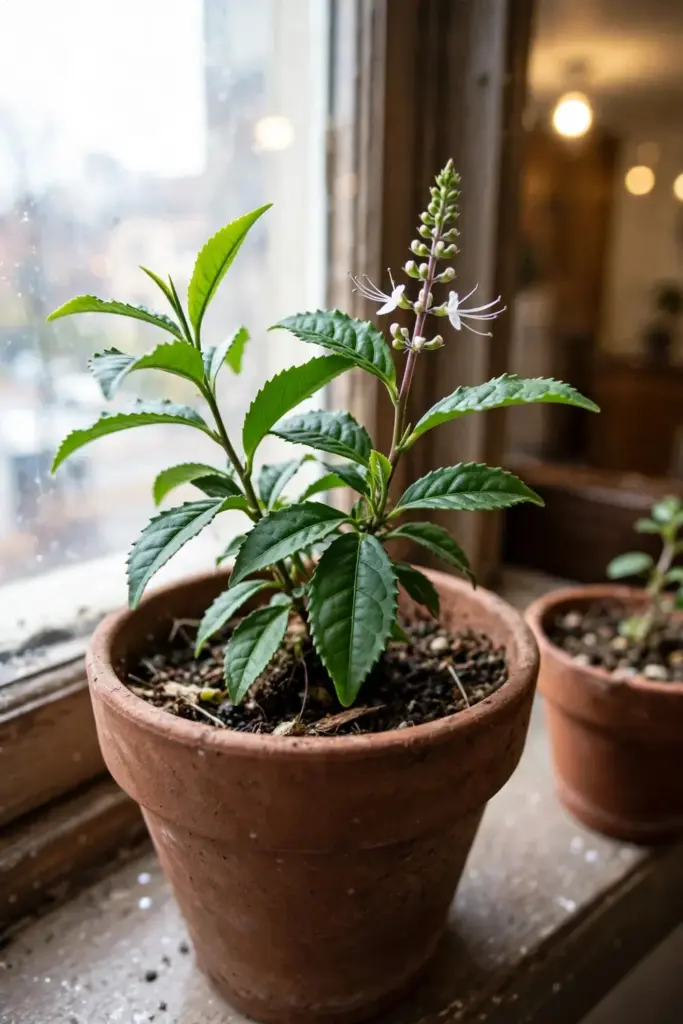
Acclimate the plant before the move. Set the pot in shade outdoors for a week, then in bright indoor light. That step-down in light prevents the leaf drop that follows a sudden move from full sun to a windowsill. Expect some leaf drop anyway. A plant that drops a few lower leaves while it adjusts is normal, and fresh growth follows once it settles.
Groom the plant before it crosses the threshold. Hose down the foliage, wipe the pot, and remove dead leaves and spent spikes. Check the undersides of leaves for aphids and spider mites, and rinse off any hitchhikers. A clean plant enters the house without bringing pests to your other indoor plants.
Indoors, Java tea wants the brightest window you own and steady room temperature. Water less often than in summer. Feed nothing until spring growth resumes. A sunny windowsill that suits fresh basil on the windowsill suits Java tea too: bright light, steady warmth, and a finger-check before every watering.
Take cuttings before the move as insurance. Root three or four stem cuttings in water on the windowsill. If the mother plant struggles indoors, the cuttings carry the line into spring. That backup costs nothing and saves the season when a mother plant fails.
12. Harvest Leaves at 60 to 90 Days Without Stripping the Plant
Harvest the first leaves 60 to 90 days after planting. Sow Exotic’s Java tea grow guide lists that 60 to 90 day window from planting to leaf harvest, with leaves harvestable from spring through fall. A plant that grew from a cutting reaches the window sooner than a plant that grew from seed, because the cutting started life at full size.
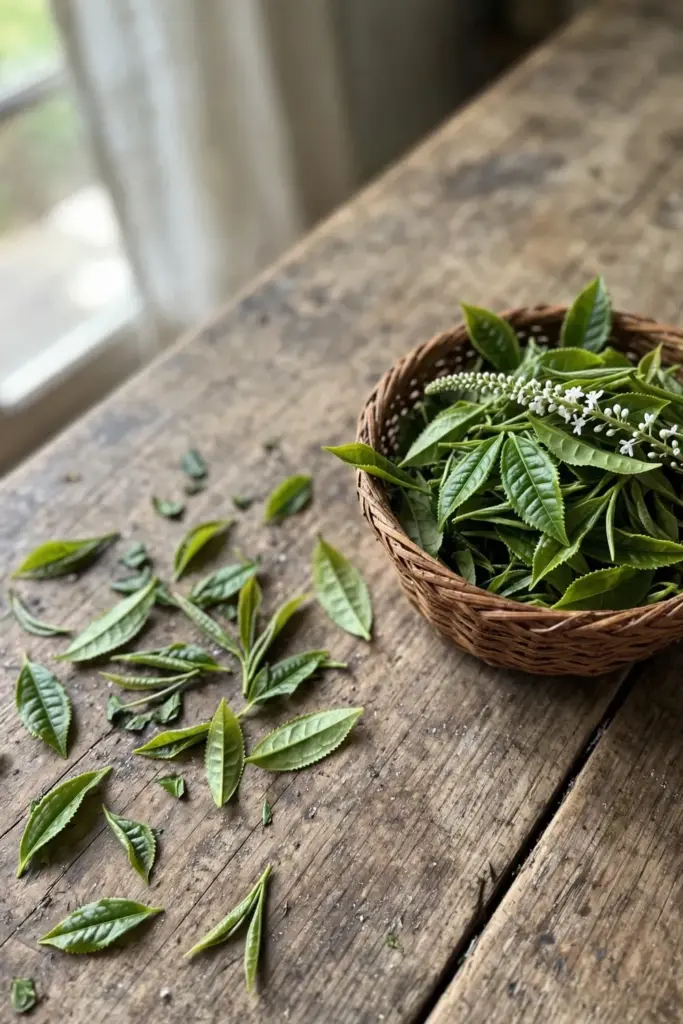
Harvest with restraint. Take no more than one-third of the leaves at any one picking. Pinch mature outer leaves and leave the growing tips to keep producing. A plant stripped bare stops growing and spends weeks recovering. A plant picked lightly keeps pushing new leaves all season.
Pick in the morning, after dew dries and before heat builds, when leaves hold the most aroma and dry fastest. Use clean scissors or pinch with a thumbnail at the leaf stem, and toss any yellowed, spotted, or chewed leaves into the compost. Keep only clean, fully green leaves for drying.
Harvest flowers too when they open. The flower spikes dry alongside the leaves and add color to the jar. Deadheading spent spikes through the season already keeps flowers coming, so a regular harvest doubles as pruning. Stop heavy harvesting six weeks before the first expected frost, so the plant stores energy for the winter move indoors.
13. Dry Java Tea Leaves in Shade with Moving Air
Dry Java tea leaves in shade with moving air until they crumble between your fingers. Spread the leaves in a single layer on a mesh rack, a clean screen, or a paper-lined tray. Turn them once a day so both sides dry evenly. Shade drying keeps the green color and aroma that direct sun bleaches away.
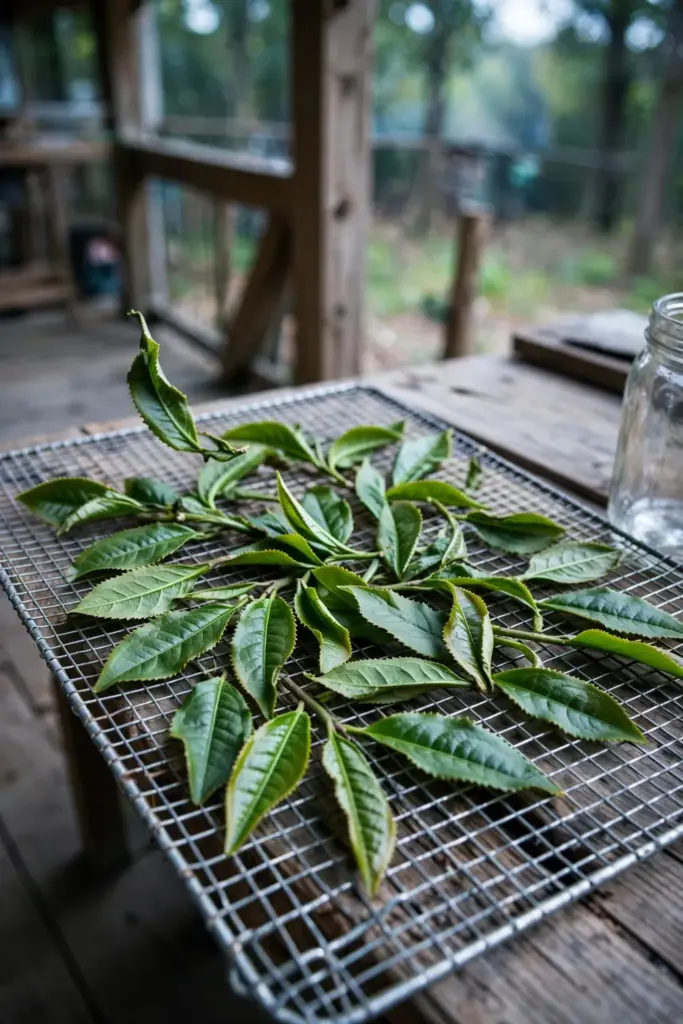
Airflow matters more than heat. A covered porch with a breeze, a shaded room with a fan, or a drying rack near an open window all work. Still, humid air invites mold, so never pile leaves thick or seal them in a bag before they dry fully. A leaf that bends is still wet. A leaf that snaps and crumbles is done.
Store dried leaves in a sealed glass jar in a cool, dark cupboard. Label the jar with the plant name and the drying date. Dried leaves keep their aroma for about a year, then fade. Check the jar after a week for any condensation on the glass, which signals trapped moisture. If you see droplets, spread the leaves out and dry them again before resealing.
Brew the dried leaves as a simple herbal infusion. Steep a small spoonful in hot water, strain, and sip. This guide gives no dosage and no health advice. Enjoy Java tea as a garden herb, and talk to a qualified health professional before using it for any health purpose.
14. Fix 5 Common Java Tea Growing Failures
Most Java tea failures trace to water, light, cold, pests, or feeding. The fixes below name the failure first, then the cure.
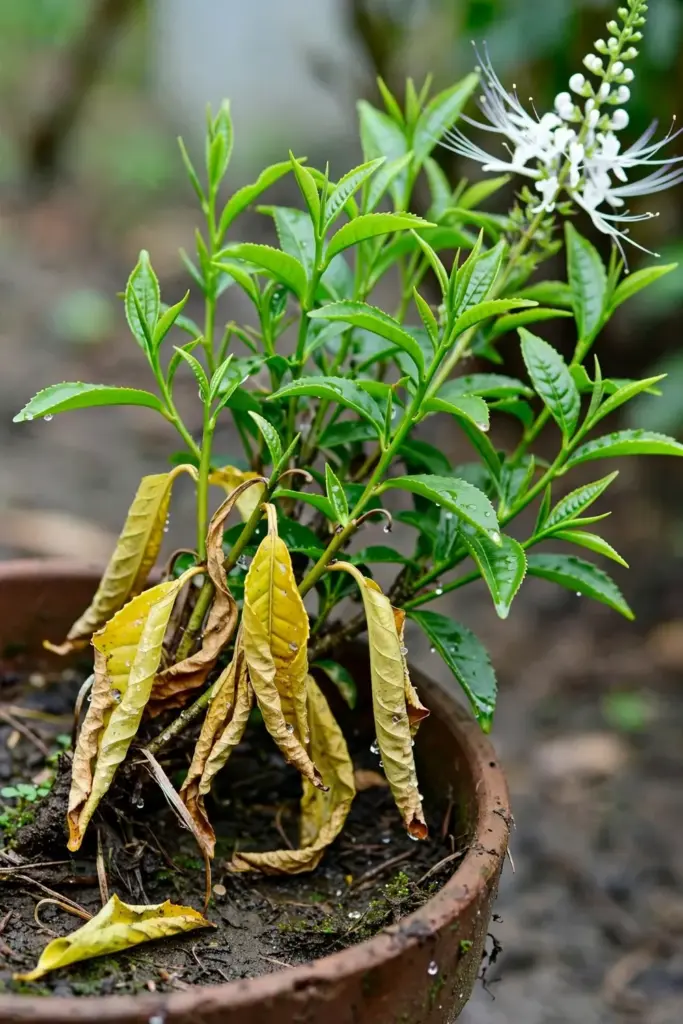
Yellow lower leaves in a wet pot signal overwatering. Roots sitting in soggy mix cannot breathe, and the lowest leaves yellow first. Empty the saucer, let the mix dry to the top inch, and check that the drainage holes run clear. Repot into fresh mix when the old mix stays wet for days after watering.
Leggy stems with sparse leaves signal too little light. The plant stretches toward the nearest window and drops lower leaves. Move the pot to the brightest spot you own, or add a grow light 12 inches above the plant. Prune the leggy stems back to a healthy leaf pair, and the plant branches from the cut.
Wilting in hot afternoons signals dry roots. A pot in full sun in midsummer can dry out by noon. Water deeply in the morning, mulch the surface, and shift the pot into afternoon shade. A wilted plant that recovers by evening needs water, not rescue. A wilted plant that stays wilted in the morning needs a root check.
Cold damage shows as blackened, limp stems after a cold night. Move the plant indoors at once, and cut away blackened stems to healthy green tissue. The crown may still regrow in spring when the roots stayed warm. Take cuttings from any healthy stem left, because a damaged mother plant may not recover.
Aphids and spider mites cluster on soft new growth and leaf undersides. Rinse them off with a strong jet of water, and repeat every three days until they stop returning. Isolate an infested plant from neighbors so pests cannot spread. Skip harsh sprays on a plant you plan to brew, and check new cuttings before they join the collection.
15. Answer 6 Java Tea Questions Before You Plant (FAQ)
Java tea and true tea come from different plants. Java tea is Orthosiphon aristatus, a mint-family herb from Southeast Asia. True tea is Camellia sinensis, an evergreen shrub in the tea family, and the source of black, green, and oolong tea. Java tea contains no Camellia sinensis leaf, so it is a herbal infusion rather than a true tea.
Java tea grows well in pots of 12 inches or more, with moist, well-drained mix and bright light. Containers suit cold climates because the pot moves indoors before frost. Water when the top inch of mix dries, feed lightly twice through summer, and stop feeding in winter. One pot yields fresh leaves for drying all season long.
Expect the first leaf harvest 60 to 90 days after planting, with leaves harvestable from spring through fall. Plants grown from cuttings reach the window sooner than plants grown from seed, because cuttings start at full size. Pick no more than one-third of the leaves at once, and leave the growing tips to keep producing.
Java tea survives winter outdoors only in USDA zones 9 to 11, where winters stay mild and frost-free. In colder zones, frost kills the soft stems. Grow Java tea in a pot, move it indoors before nights fall toward 50 degrees Fahrenheit, and give it the brightest window you own. Take cuttings before the move as insurance.
Java tea has a long traditional reputation as a diuretic herb in Southeast Asia, and this guide treats that reputation as general background only. It gives no dosage and no health advice. Talk to a qualified health professional before using any herb for a health purpose, and keep the plant away from children and pets who might nibble it.
Buy from nurseries that label the full botanical name Orthosiphon aristatus or Orthosiphon stamineus, or from specialist herb growers. Avoid stock sold only as cat’s whiskers or Java tea with no botanical name. Choose firm, healthy plants with green leaves and no pests, and choose seed packets with a harvest date.
These are the six questions readers ask before starting a how to grow java tea project, answered from the sources this guide cites.
16. Keep One Mother Plant for Next Season’s Cuttings
Keep one strong mother plant through winter, and it supplies next season’s cuttings. Choose the healthiest plant in autumn, before the move indoors. Label it with a tag so nobody harvests it bare through winter. The mother plant earns its windowsill by staying alive, not by producing leaves.
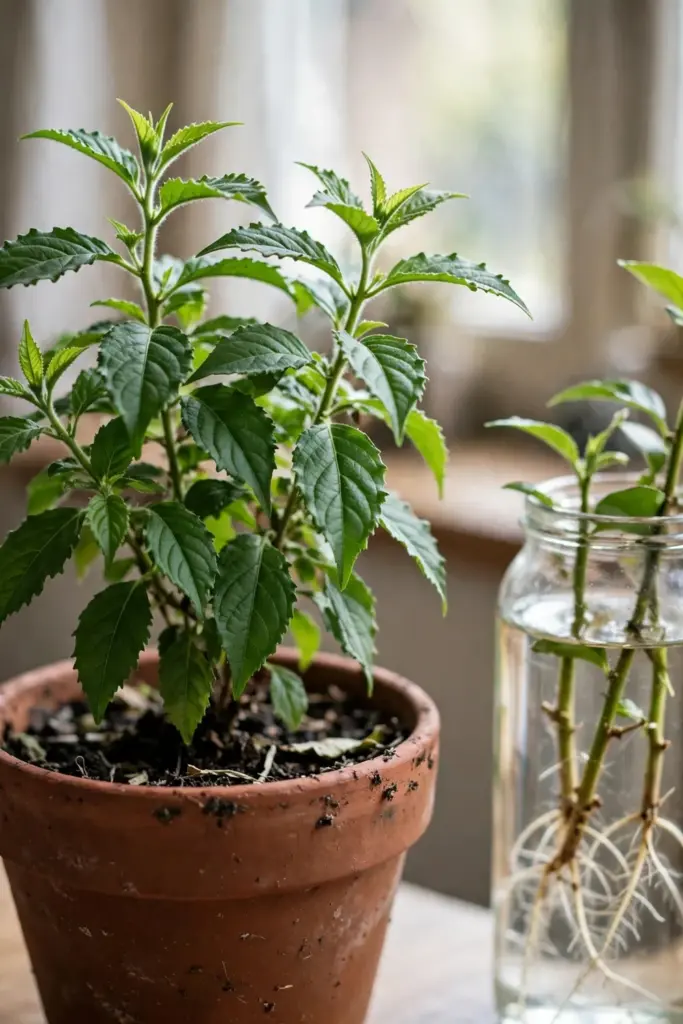
Feed the mother plant nothing in winter. Water sparingly, just enough to keep the mix from drying out fully. Prune lightly in early spring to wake branching, then take cuttings from the fresh growth once stems reach 6 to 8 inches. Three or four cuttings from one mother plant start a whole new patch.
A mother plant that lived through one winter knows your house already. It grew through your light, your air, and your watering habits. Keep it going, and each season starts from a proven plant rather than a gamble on a new packet. That is how to grow java tea year after year: one mother, a few cuttings, and a pot that moves indoors before the cold.