Sow carnation seed 6 weeks before your last frost and set the seedlings out once frost passes. That is how to grow carnation from a packet of seed to a vase of cut stems in one season. The work runs from seed tray to vase, with one pinch, weekly deadheading, and a dry crown at every step.
Work indoors in late winter. Plant out after frost. Cut stems in the morning. Pull the plants after the first hard frost in cold zones, or leave the crowns to overwinter where winters stay mild.
A carnation bed asks for four things: sun to bloom, gritty soil that drains fast, air around the crown, and a pinch to branch. Get those four right and the plants bloom from midsummer until frost.
Match the Carnation Type to Your Garden
Pick the type before you buy seed. Border carnations suit a sunny bed and give tall stems for cutting. Perpetual flowering carnations suit pots and a sheltered patio and bloom in flushes through the season. Spray carnations carry clusters of small blooms on one stem and suit a small vase.
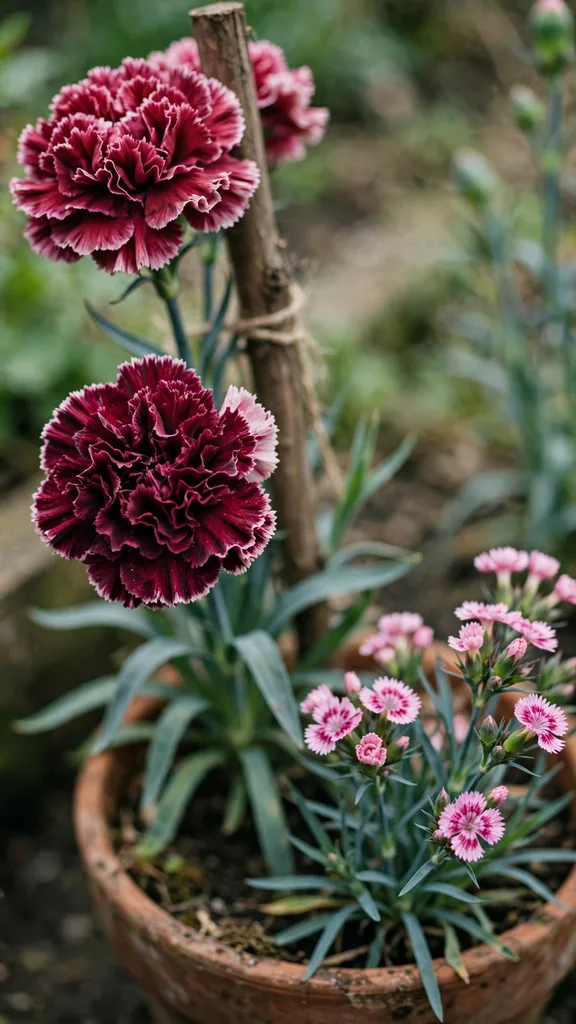
Border Carnation is the classic garden type, with tall stems and large ruffled blooms in pink, red, white, and yellow. It needs staking in a windy bed, and its stems flop after rain if left unsupported. Give it the back of the border, where a fence or wall breaks the wind.
Burgundy Carnation is a deep red border type with the same tall habit and a clove scent that carries across a path. Plant it where you walk past in the evening, and cut it for a vase that needs one strong color. Carnation Mix is a seed packet of mixed colors on plants of mixed height, and it suits a cutting bed where color matters more than a uniform row.
Spray carnations flower on shorter stems with more blooms per stem. They suit a pot on a sunny step and a small posy vase. A florist carnation from a shop bouquet is a perpetual flowering type grown under glass, and it rarely survives a cold winter outdoors. Grow it in a pot and bring it under cover before frost.
Check the Carnation Specs Before You Plant
Carnation is Dianthus caryophyllus, a herbaceous perennial that gardeners in cold zones grow as an annual. Its stems carry narrow blue green leaves, and its blooms carry fringed petals with a clove scent. The plant prefers cool summers and fails fast in wet soil.
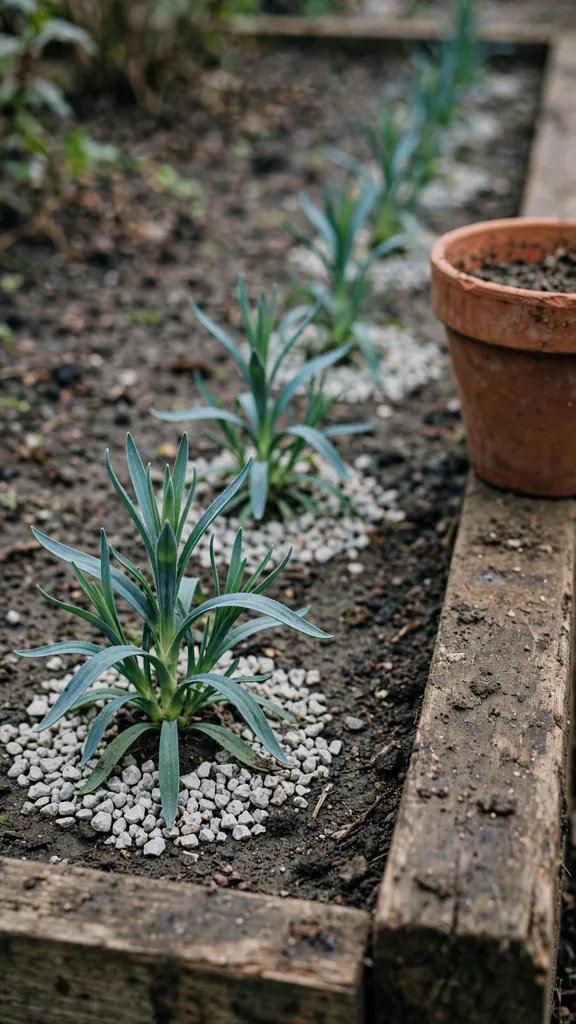
Carnations need full sun with 6 or more hours of direct light a day, and they need soil with a pH of 6.0 to 8.0, according to the North Carolina Extension Gardener Plant Toolbox page on Dianthus caryophyllus. The same notes put plant height at 10.2 to 91.4 cm and width at 30.5 to 61.0 cm, so a tall border type can reach waist height while a compact spray type stays near the edge of a pot. The same notes warn that carnations are intolerant of high heat and that rust and crown rot can be problems, so drainage and air matter more than feed.
Read the seed packet before you sow. A border type needs a stake and 30.5 cm of space. A spray type needs a pot and a sunny step. The packet tells you which one you hold, and the bed plan follows from it.
| Spec | Value |
|---|---|
| Type | Herbaceous perennial, grown as an annual in cold zones |
| Botanical name | Dianthus caryophyllus |
| Sun | Full sun, 6 or more hours a day |
| Soil | Gritty, moist, well drained, neutral to slightly alkaline |
| Soil pH | 6.0 to 8.0 |
| Spacing | 30.5 cm |
| Height | 10.2 to 91.4 cm by type |
| Width | 30.5 to 61.0 cm |
| Bloom | Midsummer to first hard frost |
| Zones | Perennial where winters stay mild, annual elsewhere |
Start Carnation Seed 6 Weeks Before Last Frost
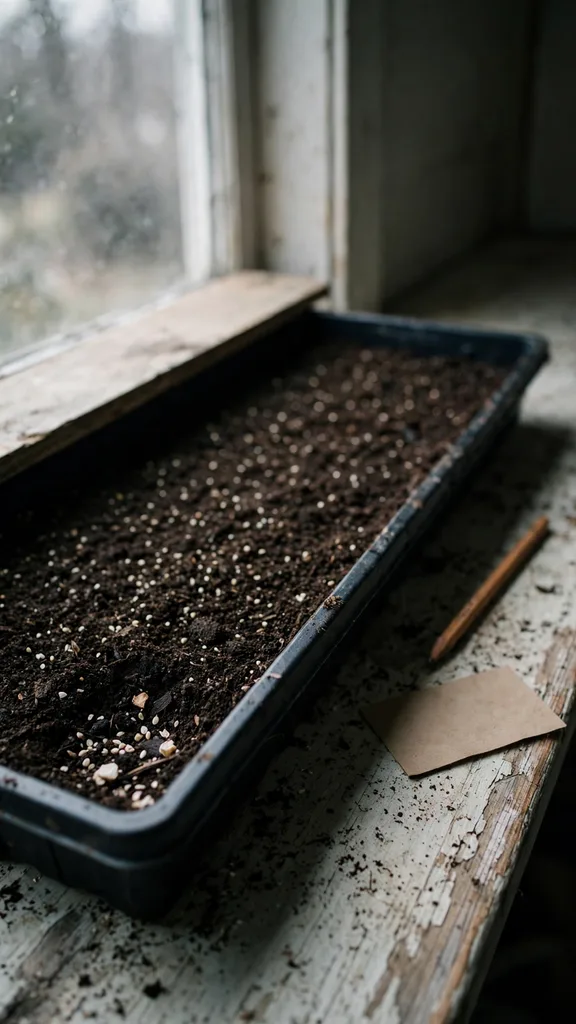
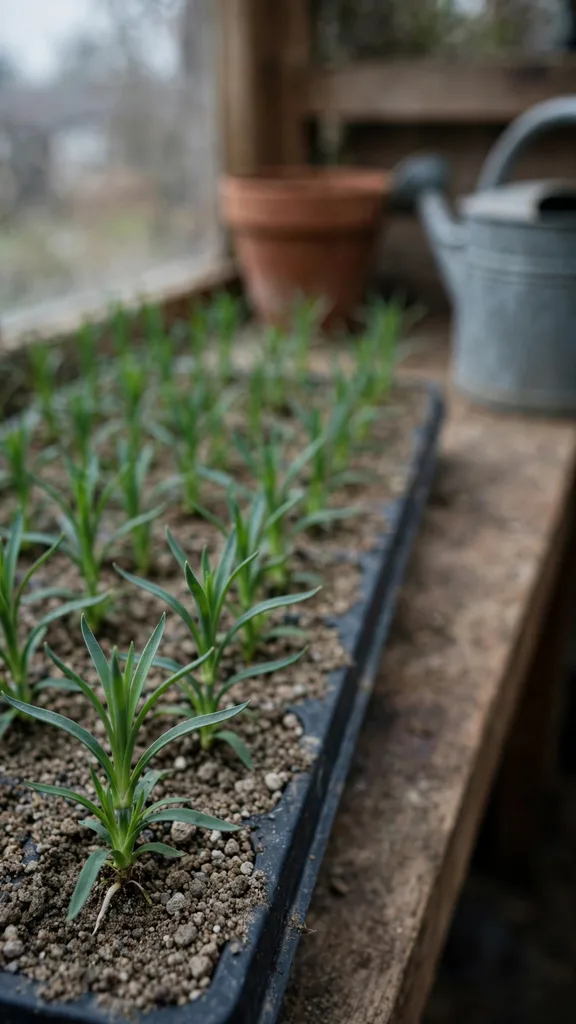
Sow indoors 6 weeks before your last frost. Seed gives you mixed colors at low cost, and it gives you plants ready to set out the week frost passes. Sow in a tray of fine seed mix, press the seed onto the surface, and cover it with a dusting of mix no deeper than 0.3 cm.
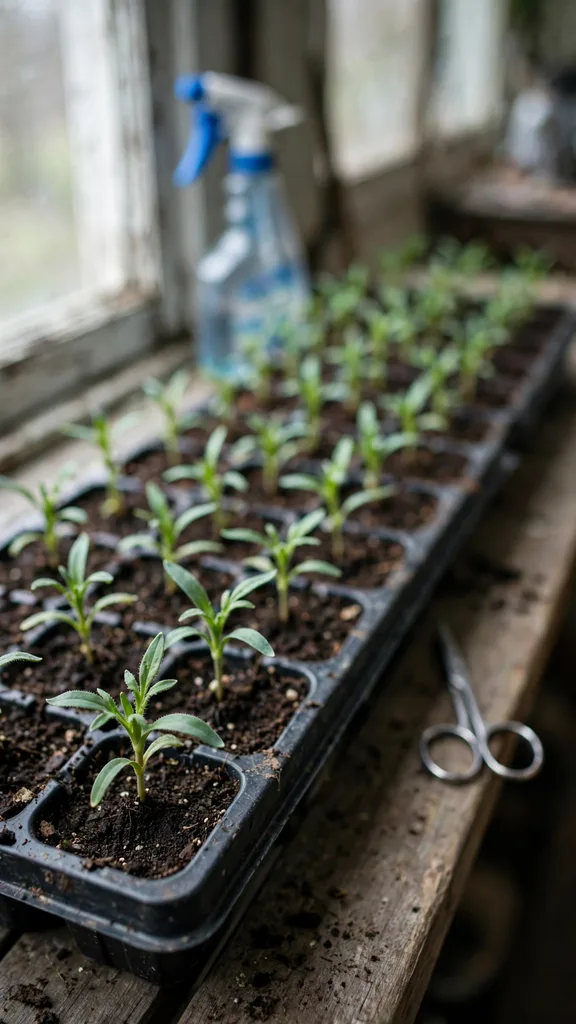
Sow seed indoors 6 to 8 weeks before transplanting, with 2 to 3 seeds per cell, and expect germination in 7 to 14 days at 18.3 to 22.2 degrees Celsius, according to the Utah State University Extension guide to miniature carnation cut flower production. The same guide puts the temperature for vigorous basal growth at 10.0 to 12.8 degrees Celsius, so a cool room grows a sturdier seedling than a hot windowsill. Keep the mix damp and never soggy, and give the tray bright light from the day seed goes in.
Thin to one seedling per cell once the second pair of true leaves opens. Snip the weak seedling at soil level with small scissors. Pulling it disturbs the roots of the seedling you keep. Feed the tray once with half strength liquid feed when the seedlings stand 5.1 cm tall, then stop. A second feed grows soft leaves that flop outdoors.
Harden the seedlings off over 7 to 10 days before planting out. Set the tray outside in shade for a few hours on day one, then add an hour of sun each day. Bring the tray in at night until frost passes. A seedling that goes straight from a warm room to a cold bed stalls for weeks.
Plant Carnations in Full Sun After Frost
Set seedlings out the week after your last frost. Carnations grow best in cool conditions, and a seedling planted into cold soil roots faster than one held in a warm tray. Dig a hole as deep as the root ball and twice as wide, and set the plant at the same depth it grew in the cell.
Pick the sunniest bed you own. A carnation in shade stretches, flops, and blooms little. A carnation in full sun stands upright and blooms from midsummer to frost. Morning sun dries dew from the leaves, and dry leaves resist the leaf spots that wet foliage invites.
Raise the bed if your soil holds water. Carnations rot in wet soil, and a crown that sits in a puddle dies in days. Fork grit and compost into heavy soil, then mound the row 7.6 cm above the path. The mound sheds rain away from the crown. A raised bed does the same work with less digging, and it suits a garden with clay soil.
Set plants 30.5 cm apart in the row. The gap lets air move between stems, and moving air dries leaves after rain. A tight row traps damp air, and damp air feeds gray mold. Water the row at the base on planting day, then leave the leaves dry.
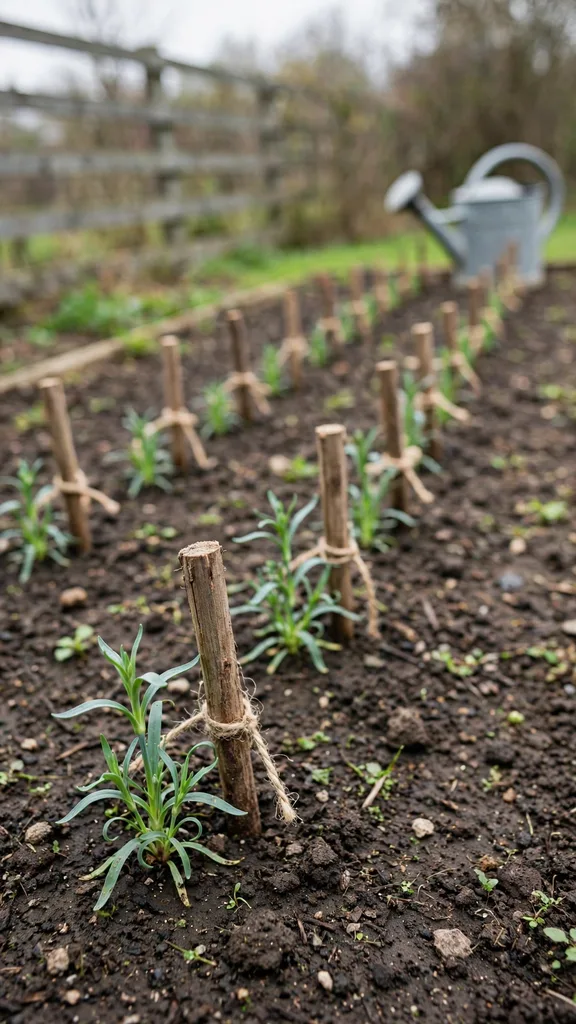
Push a stake beside each tall border plant at planting time. A stake driven in later spears roots. Tie the stem loosely with soft twine in a figure eight, and leave slack for the stem to thicken. A tight tie cuts into the stem as it grows.
Water at the Base and Feed Lightly
Water carnations at the base, and let the top 2.5 cm of soil dry between waterings. A carnation drinks deeply and then dries out, and its roots rot in soil that stays wet. Pour water onto the soil with a can, and keep it off the leaves and the crown. Wet leaves invite leaf spot, and a wet crown invites rot.
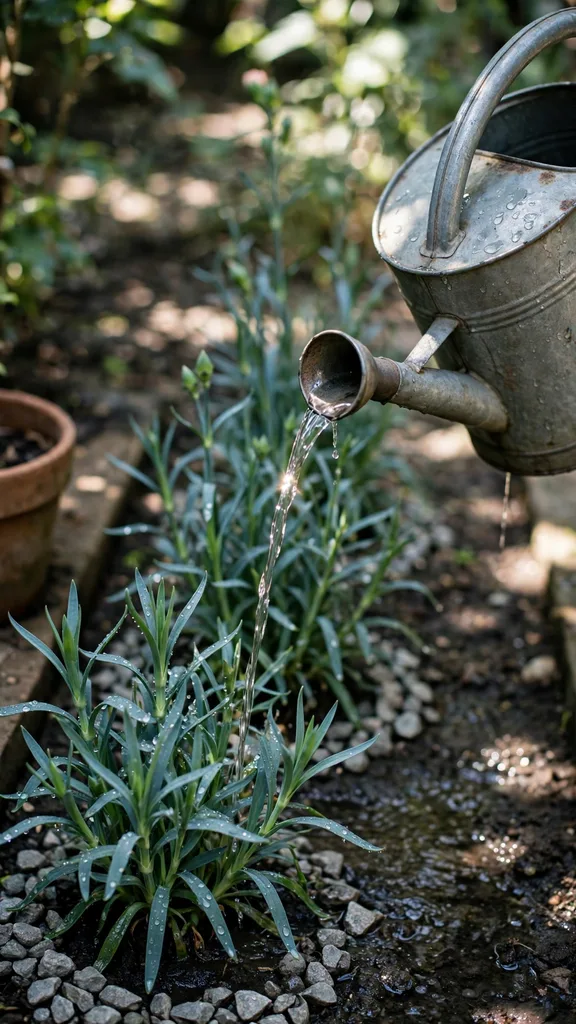
Water in the morning. Morning water soaks in before the heat of the day, and the leaves dry by noon. Evening water sits on the leaves overnight, and overnight dampness feeds disease. A soaker hose laid along the row waters the soil and leaves the foliage dry.
Feed lightly, once in spring, with a balanced granular feed scattered on damp soil and watered in. Carnations need little feed, and a heavy dose of nitrogen grows soft leafy stems with few blooms. The same notes that warn against high heat also warn against rich soil, so a lean bed grows a better carnation than a rich one. Skip a second feed if the plants stand upright and bloom well.
Mulch with gravel, not bark. A 2.5 cm layer of small gravel around the crown keeps rain from splashing soil onto the leaves, and it keeps the crown dry. Bark mulch holds dampness against the stem, and damp bark feeds crown rot. Keep the gravel clear of the stem by 2.5 cm so air reaches the crown.
Pinch Once and Deadhead Every Week
Pinch the growing tip out of each young plant once it stands 15.2 cm tall. Pinching the center out promotes bushy growth, and a bushy plant carries more stems than a single stem plant. Use clean fingers or small scissors, and take the tip just above a pair of leaves. Two side shoots grow from the leaf joints below the pinch.
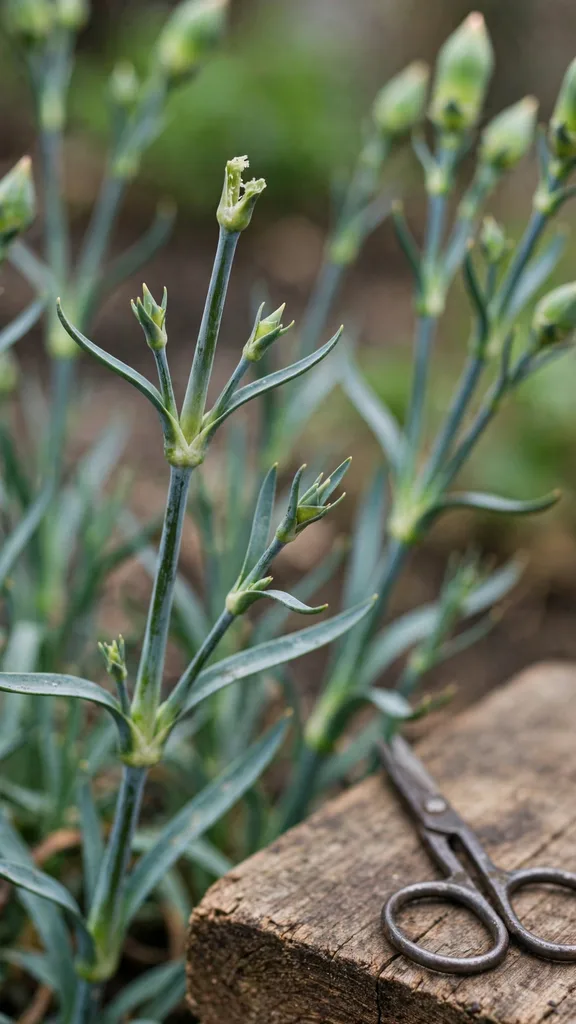
Pinch early, while the plant is young. A late pinch removes buds that would have opened in midsummer, and the plant blooms late. A plant pinched at 15.2 cm branches low and stands firm in wind. A plant left unpinched grows one tall stem that needs a stake and gives one bloom.
Deadhead spent blooms every week through the season. Deadheading prolongs the bloom time, and a plant stripped of spent blooms puts its strength into new buds. Cut the spent stem back to a pair of healthy leaves, not just the flower head. The cut wakes the side shoots below it, and each side shoot carries a new bud.
Cut back by one third after the main flush of flowers. The cut thickens a plant that has gone leggy at the base, and the regrowth carries a second flush before frost. Water the row at the base after the cut, and leave the leaves dry.
Grow Carnations in Pots and Raised Beds
Grow carnations in pots where your soil stays wet or your summers run hot. A pot drains fast, and fast drainage is the one condition a carnation will not compromise on. Pick a terracotta pot 30.5 cm across with a drainage hole, and fill it with gritty potting mix with a handful of coarse sand forked through it.
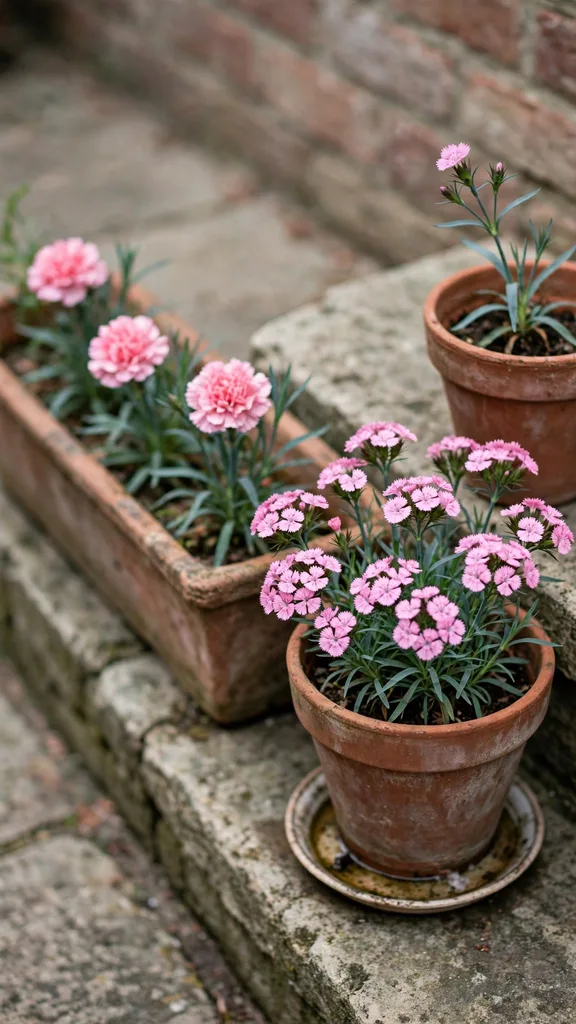
Set one spray carnation per 30.5 cm pot, or three border carnations in a 45.7 cm trough. A crowded pot traps damp air, and damp air feeds gray mold. Stand the pot where it gets full sun for 6 or more hours a day, and turn it a quarter turn each week so the stems grow straight.
Water a pot when the top 2.5 cm of mix feels dry. Pots dry faster than beds, and a carnation in a pot needs water every 2 to 3 days in hot weather. Water until it runs from the drainage hole, then empty the saucer. A saucer left full drowns the roots.
Bring potted perpetual flowering carnations under cover before the first hard frost. A cold frame, a porch, or a bright windowsill keeps the crown alive through winter. Cut the stems back by one third before moving the pot, and water sparingly through winter. A plant kept cold and dry survives winter. A plant kept warm and wet rots.
Cut Carnation Stems for a 9 to 28 Day Vase Life
Cut carnation stems in the early morning, when the stems stand full of water and the air stays cool. A stem cut at noon wilts faster, and a stem cut in the evening carries the heat of the day into the vase. Carry a bucket of clean water to the bed, and drop each stem straight into it.
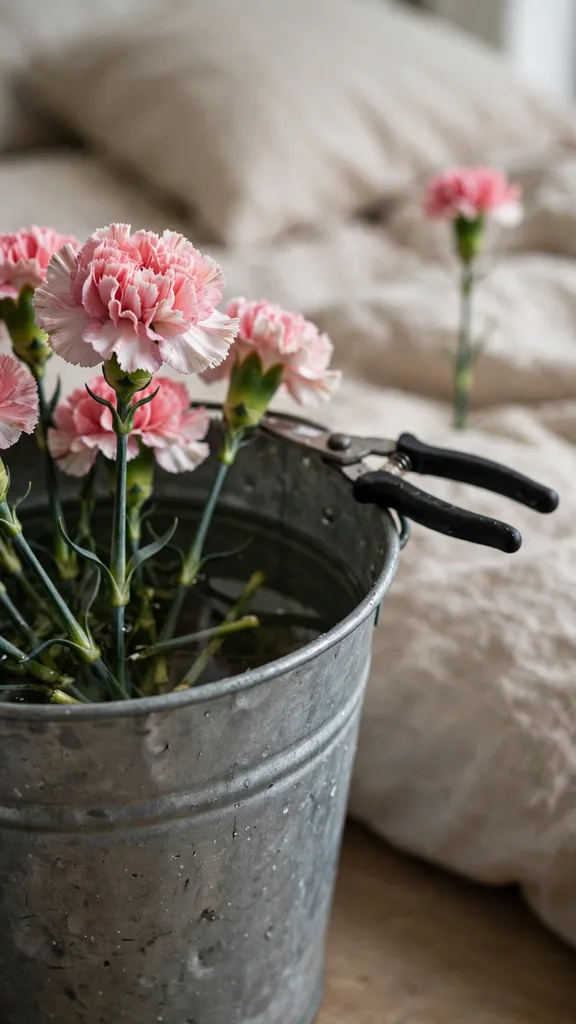
Cut at the paintbrush stage, when petals show above the calyx and the bloom has not yet opened fully. A bud cut too early never opens. A bloom cut fully open sheds petals in days. The paintbrush stage opens in the vase and holds its shape the longest.
Cut the stem just above a leaf node with sharp clean shears. A clean cut drinks. A crushed cut seals and starves. Strip the leaves that would sit below the waterline, and leave the upper leaves on the stem. Leaves underwater rot, and the water goes cloudy. A zinnia bed cut on the same morning fills a second vase, and its stems take the same treatment.
The same guide puts carnation vase life at 9 to 28 days when blooms are stored well, and it warns that carnation is sensitive to ethylene, so keep cut stems away from ripening fruit and car exhaust. Change the vase water every 2 days, recut the stem ends by 1.3 cm at each change, and keep the vase out of direct sun.
Spot Fairy Ring Leaf Spot, Rust, and Crown Rot Early
Check the leaves every week from planting day. A spot caught early costs one leaf. A spot ignored costs the plant. Walk the row in the morning, lift the lower leaves, and look at both sides of each leaf.
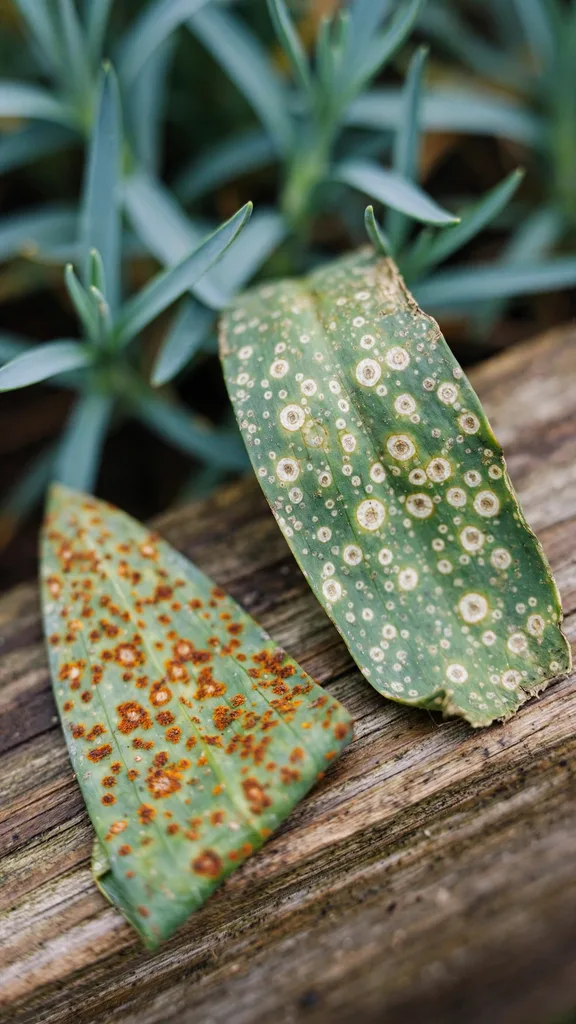
Fairy ring leaf spot shows as round spots with pale centers on carnation leaves, and it spreads fast in wet weather. Fairy ring leaf spot on carnations covers the symptoms and the cleanup steps in full, so use that page to confirm what you see before you cut. Remove spotted leaves into a bag, never onto the compost pile, and wash your shears after each cut. A spotted leaf left on the soil spreads spores with the next rain.
Rust shows as orange brown pustules on the undersides of leaves and on stems. A plant with rust loses leaves from the base upward, and the stems weaken. Cut rusted leaves into a bag, improve air flow by spacing the plants wider next season, and water only at the base. A rusted plant rarely recovers fully, so pull it if half the leaves carry pustules.
Crown rot shows as a plant that wilts while the soil stays damp, with a brown soft base at soil level. Crown rot has no cure once the base turns soft. Pull the plant, bag it, and do not replant carnations in that spot for a season. I have learned that a dry crown matters more than a rich feed. Improve drainage with grit before you plant again.
Gray mold shows as a soft gray fuzz on spent blooms and on stems in damp weather. Deadhead every week, space plants 30.5 cm apart, and water at the base. A bloom left to rot on the stem feeds the mold that spreads to the next bud.
Fix Leggy Stems, Yellow Leaves, and No Blooms
A leggy carnation tells you the light failed. Stems stretch toward light, and a stretched stem flops and blooms little. Move a potted plant into full sun, and cut a bed plant back by one third to force low branching. A plant cut back in early summer regrows compact and blooms again before frost.
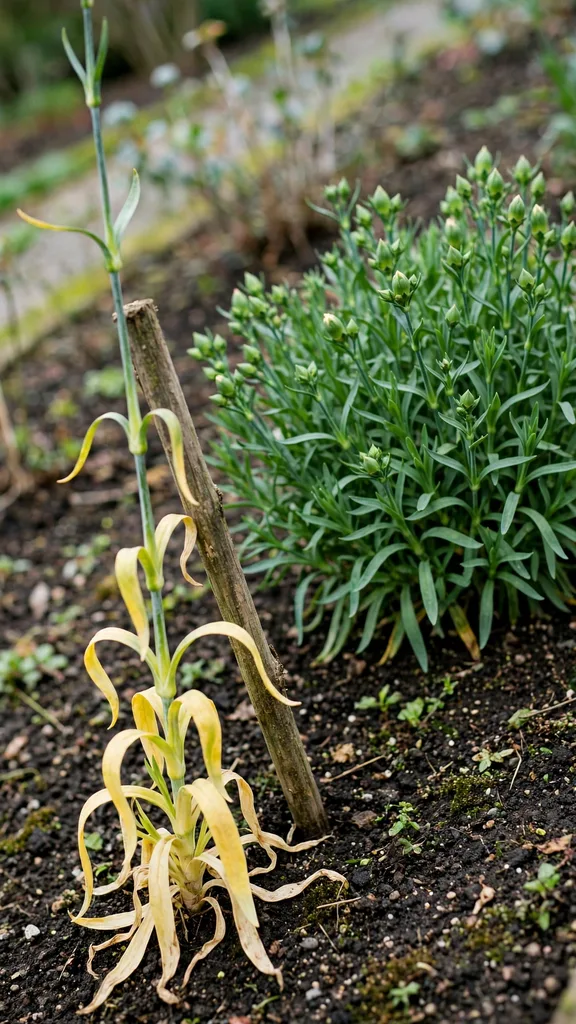
Yellow leaves tell you the water failed. Leaves yellow from the base upward when the soil stays wet, and they yellow at the tips when the soil dries out for days. Check the soil with a finger to 2.5 cm. Water only when the top feels dry, and water at the base. A plant watered on a fixed schedule without a soil check swings between wet and dry, and the leaves show it.
No blooms tells you the feed or the pinch failed. A plant fed heavily with nitrogen grows leaves and no buds. A plant never pinched grows one stem and one bloom. Stop feeding, pinch the tips of side shoots, and give the plant full sun. Buds follow within weeks if the season still has time.
A plant that wilts in damp soil has root or crown trouble, not thirst. Pull the mulch back from the crown, check the base for soft brown tissue, and stop watering that plant. A soft base means crown rot, and the plant goes in a bag. A firm base means the roots need air, so fork the soil gently around the plant and wait a day.
Avoid These 5 Carnation Mistakes
Planting in shade is the first mistake. A carnation in shade stretches, flops, and blooms little. A carnation in full sun stands upright and blooms from midsummer to frost. Give the plant the sunniest bed you own, and keep it out of the shadow of a fence.
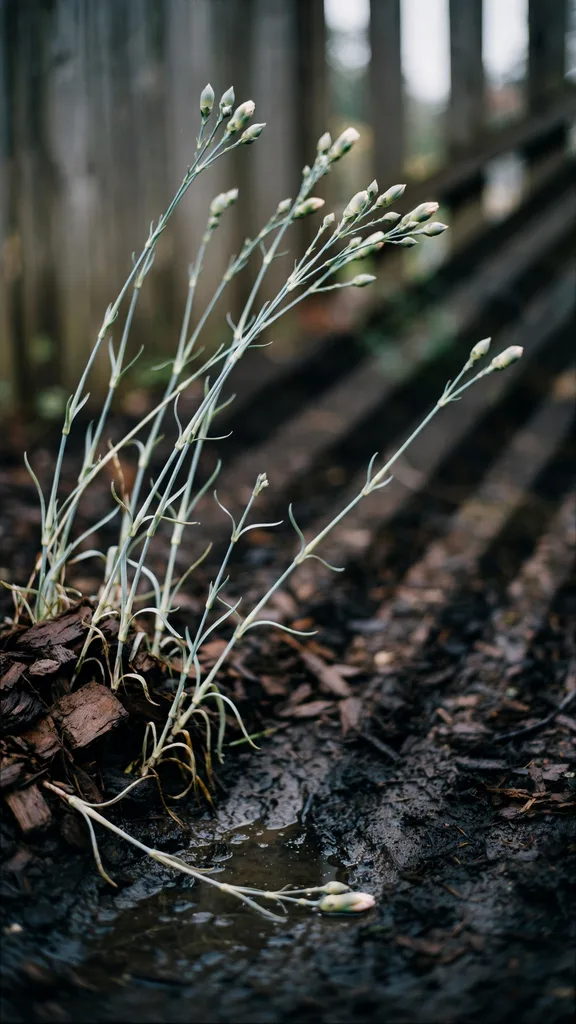
Watering overhead is the second mistake. Overhead water wets the leaves and the crown, and wet leaves invite leaf spot while a wet crown invites rot. Water at the base with a can or a soaker hose, and keep the foliage dry.
Feeding heavily is the third mistake. A heavy dose of nitrogen grows soft leafy stems with few blooms. Feed once in spring with a balanced granular feed, and skip a second feed if the plants bloom well. A lean bed grows a better carnation than a rich one.
Planting in wet soil is the fourth mistake. Carnations rot in wet soil, and a crown that sits in a puddle dies in days. Raise the bed 7.6 cm, fork grit into heavy soil, or grow the plant in a pot. Drainage decides whether the plant lives.
Skipping the pinch is the fifth mistake. A plant never pinched grows one tall stem that needs a stake and gives one bloom. Pinch once at 15.2 cm, and the plant branches low and carries stems all season. One pinch costs a minute, and it pays back in blooms.
Frequently Asked Questions About Growing Carnations
Carnations bloom in midsummer when sown indoors 6 weeks before the last frost and planted out after frost passes. Germination takes 7 to 14 days at 18.3 to 22.2 degrees Celsius, and seedlings need 6 to 8 weeks indoors before they move outside. Border types bloom later than spray types, and a plant pinched once branches low and carries more stems. Expect the first blooms in midsummer, with the main flush running to frost.
Carnations are herbaceous perennials that gardeners in cold zones grow as annuals. The plant survives winter where winters stay mild and the soil drains fast, and it dies at the first hard frost where winters run cold. Potted perpetual flowering types survive winter under cover in a cold frame or on a bright windowsill. Renew border plants from cuttings as the woody base ages and blooms less with each season.
Carnations need full sun with 6 or more hours of direct light a day. A plant in full sun stands upright and blooms from midsummer to frost, while a plant in shade stretches, flops, and blooms little. Morning sun dries dew from the leaves and keeps leaf spot at bay. Give the plant the sunniest bed you own, and keep it clear of the shadow cast by a fence or a wall through the afternoon.
Yellow leaves point to water trouble in most cases. Leaves yellow from the base upward when the soil stays wet, and they yellow at the tips when the soil dries out for days. Check the soil with a finger to 2.5 cm and water only when the top feels dry, always at the base. Crown rot also yellows leaves, so check the base for soft brown tissue and pull the plant if the base has turned soft.
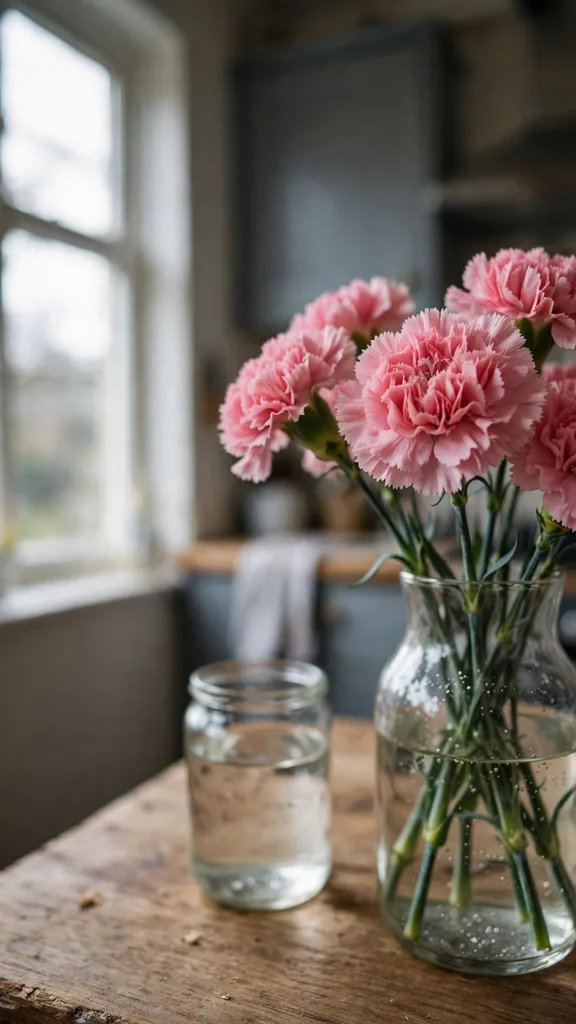
Cut carnations last 9 to 28 days when cut at the paintbrush stage and stored well. Cut stems in the early morning, strip the leaves below the waterline, and keep the vase away from ripening fruit, since carnations react badly to ethylene gas. Change the water every 2 days and recut the stem ends by 1.3 cm at each change. A vase kept out of direct sun holds its blooms longer than one left on a sunny sill.
What to Do Next
Sow the seed, set the seedlings out after frost, and pinch once at 15.2 cm. Water at the base, deadhead every week, and cut stems at the paintbrush stage for the vase. A carnation bed asks for little beyond sun, grit, and air, and it pays back with blooms from midsummer to frost.
Start with one border type for cutting and one spray type for a pot. Compare them through the season, and keep the type that suits your soil and your summers. For a bed that keeps cutting into fall, fall cut flowers extend the season past the first carnation flush. Take cuttings from the winner in early summer, and the bed renews itself without another seed packet.