Sow delphinium seed in spring at 13 degrees Celsius and set the tray where seedlings appear in 14 days. That is how to grow delphinium from a packet of short-lived seed to tall blue spikes in early summer. The steps below run from cold seed to staked spikes, with the cut that brings a second flush.
Plant out in spring and early summer. Stake before shoots reach 30 cm. Cut faded spikes to the ground for a second flush in late summer.
I have learned that a cool tray wakes delphinium seed while a warm tray leaves it asleep. Buy fresh seed each year and sow it the same season. Old seed germinates erratically, and no amount of watering wakes a dead packet.
Sow Delphinium Seed 10 Weeks Before Last Frost
Start delphinium seed indoors 10 weeks before your last frost so the plants are strong enough to set out in spring. That head start matters because delphinium seed germinates slowly in cool soil and the plants need a full season to build the roots that carry a tall spike.
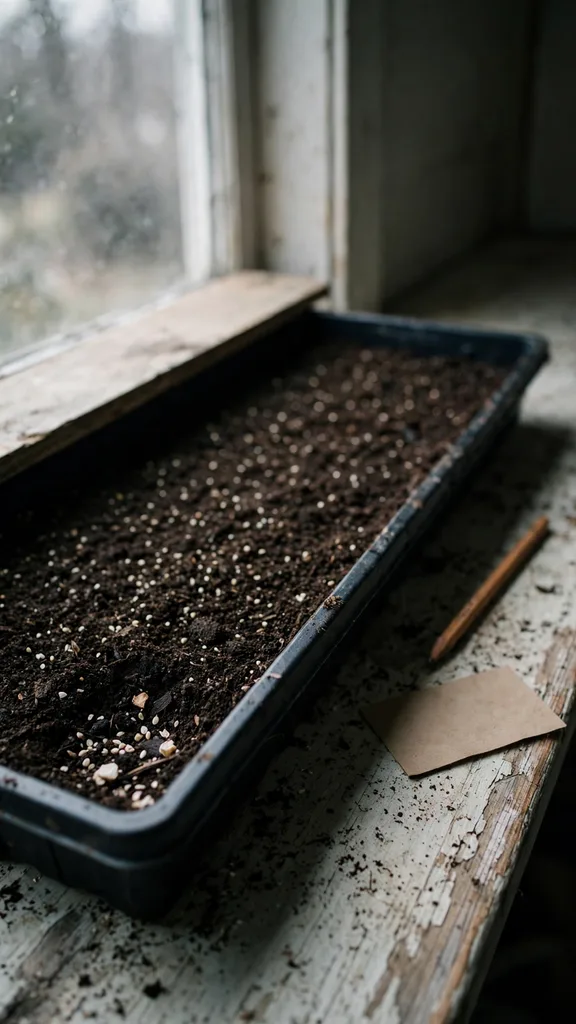
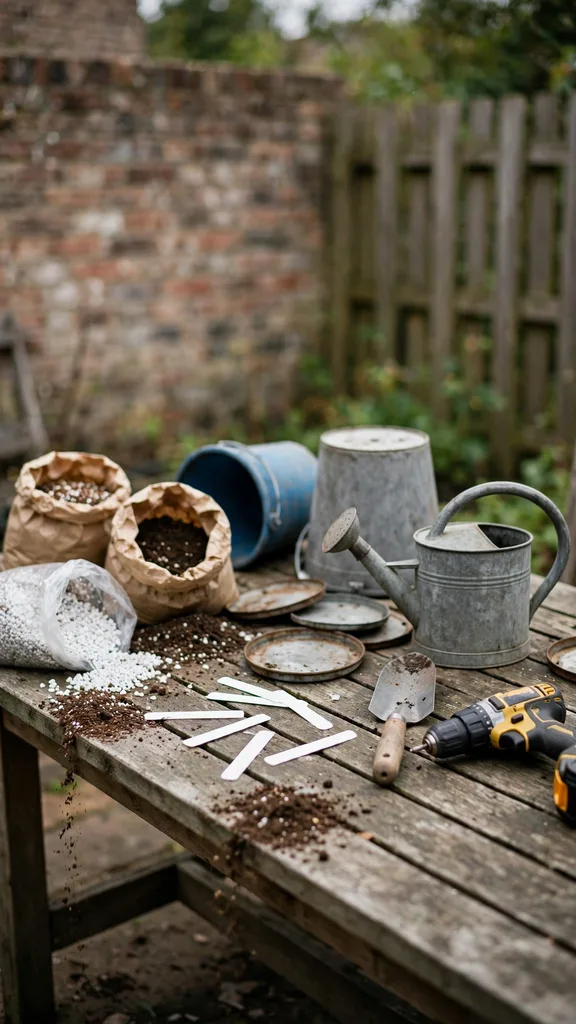
Sow in late winter on a cool windowsill or under grow lights. Fill a tray with fine seed mix, water it first, and press the seed onto the surface with a flat board. Cover the seed with a thin layer of mix, about 0.6 cm deep. Keep the tray at 13 degrees Celsius. Warmth above 20 degrees Celsius sends the seed back into dormancy, so a cool room beats a heated propagator every time.
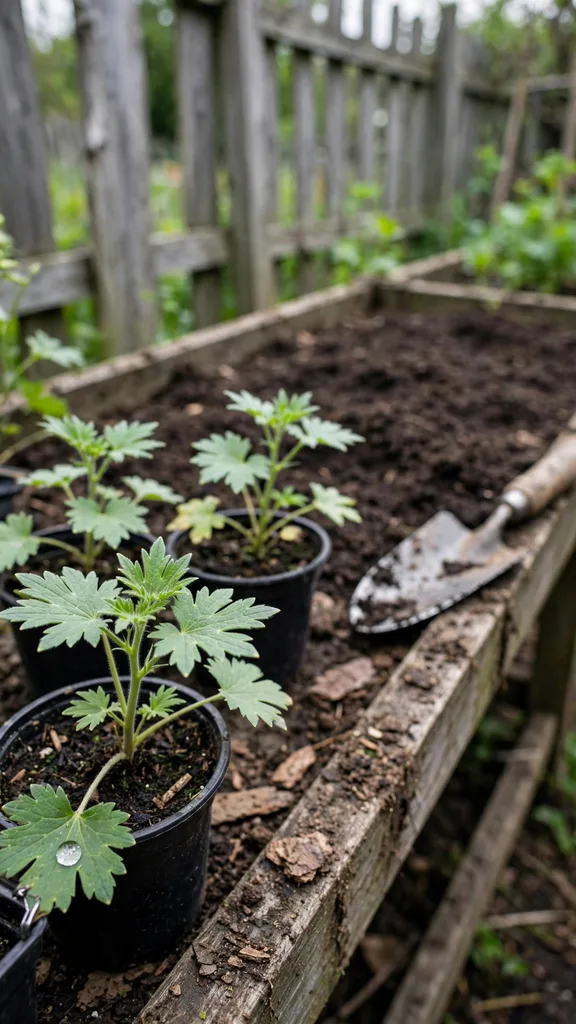
Give the tray steady moisture and strong light from the day the seed goes in. Seedlings appear in about 14 days when the temperature holds near 13 degrees Celsius. Pot each seedling into its own 9 cm pot once it holds 2 true leaves. Handle the seedling by a leaf, never by the stem. Grow the young plants on in bright light and harden them off for 7 days before they move outside.
Direct sowing suits mild gardens only. Sow where the plants will flower, thin the row to the strongest seedling at each station, and accept that direct-sown plants flower later than indoor-started plants. Indoor sowing gives you the plants to count, the spacing to plan, and the first flowers a full season sooner.
Pick a Delphinium Type That Fits Your Border
Match the delphinium type to the height of your border before you buy seed or plants. Tall types belong at the back of a border or in the middle of an island bed. Short types belong near the front or in a large pot.
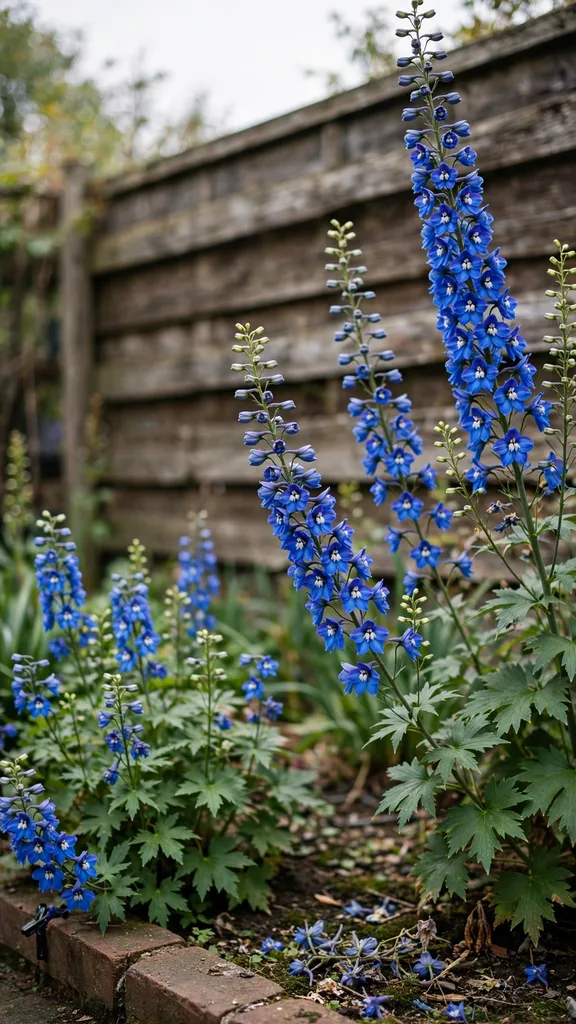
The Elatum group carries the tallest spikes. Plants in this group reach 1.5 to 2 m and spread 60.9 to 91.4 cm, as the RHS guide to growing perennial delphiniums sets out. Delphinium Blue Bird sits in this group, with deep blue spikes on a tall frame. Delphinium Cliveden Beauty also grows tall, with pale blue flowers that read well against a dark fence. Plant Elatum types in groups of 3 or 5 for the mass of color that a single plant cannot give.
The Belladonna group grows shorter and branches more freely. Plants reach 1 to 1.2 m and spread about 45.7 cm. Belladonna types flower in early summer and again in late summer, and they carry many side spikes instead of one heavy head. Their lighter habit needs less staking than the tall Elatum types, and their loose flowers cut well for a vase.
Pacific hybrids sit between the two groups. Plants reach about 1.8 m and spread about 76.2 cm. Pacific types are short-lived perennials, so many gardeners grow them as biennials and sow fresh seed every year or two. Delphinium Black Eyed Angels belongs with the tall hybrids, with white flowers and a dark center that stands out in a blue border.
Compact types suit small gardens and pots. The Magic Fountains series grows to about 1 m and needs little staking in an open spot. Blue Delphinium covers the compact blue forms that fit a front border or a tub. Buy compact types when your border is narrow, your wind is strong, or your only space is a patio.
Tall lupine spikes share the same cool-season habit and the same need for shelter, so the bed that suits delphinium often suits growing lupine in cool soil too. Plant the two in separate groups, not mixed in one clump, so each type gets its own stake and its own air.
Check the Delphinium Specs Before You Plant
Read the numbers below before you dig. They set the spacing, the stake height, and the season you can expect flowers.
Delphinium holds more than 500 species, and every part of the plant is toxic to humans and pets, as the North Carolina Extension plant profile for larkspur records. Wear gloves when you handle the foliage and keep seed packets away from children and pets.
| Spec | Delphinium |
|---|---|
| Type | Herbaceous perennial, often short-lived |
| Height | 1 to 2 m by type |
| Spread | 45.7 to 91.4 cm by type |
| Sun | Full sun, 6 or more hours a day |
| Soil | Fertile, moist, well drained |
| Hardiness | Hardy in cold winters in free-draining soil |
| Bloom | Early summer, with a second flush after deadheading |
| Seed | Sow at 13 degrees Celsius, seedlings in 14 days |
| First flowers | About 18 months from seed |
| Spacing | 45.7 to 91.4 cm by type |
Check your soil drainage before you plant anything. Dig a hole 30.5 cm deep, fill it with water, and watch it drain. Water that still sits after 4 hours means the spot will rot a delphinium crown in winter. Pick a higher spot or build a raised bed 15.2 cm tall and plant there instead.
Start Delphinium Seed at 13 Degrees in Spring
Sow delphinium seed in pots at 13 degrees Celsius in spring, and seedlings appear in 14 days. New plants flower in about 18 months. The same guide gives these numbers, and it adds one rule. Use fresh seed every year, since old seed germinates erratically.
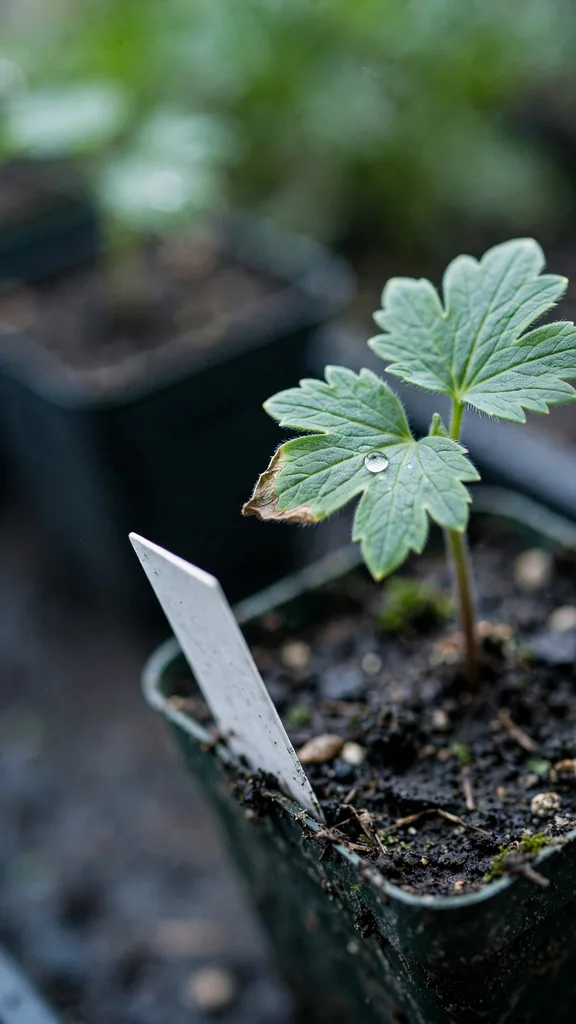
Chill the seed first when your packet is a year old or your last sowing came up patchy. Put the seed in a sealed bag with a pinch of barely damp vermiculite and keep it in the fridge for 14 days. Sow the chilled seed straight from the bag. The cold break mimics winter and wakes seed that would otherwise sit silent.
Sow 3 seeds per cell when the packet is fresh and 5 seeds per cell when the packet is old. Thin each cell to the strongest seedling once the plants hold 2 true leaves. Snip the weak seedlings at the soil line with small scissors. Pulling them disturbs the roots of the seedling you keep.
Water the tray from below. Set the tray in a shallow dish of water for 10 minutes, then lift it out and let it drain. Water on the leaves invites damping off, and a wet stem base rots a young delphinium in days. Keep the air moving with a small fan on its lowest setting, set well back from the tray.
Feed the seedlings once, lightly, when they hold 4 true leaves. Use a balanced liquid feed at half the label rate. Strong feed burns young roots and pushes soft growth that slugs eat first. Pot on into 9 cm pots when roots show at the drainage holes, and grow on in full light until planting time.
Snapdragon seed starts the same way, indoors before frost in a cool tray, so the routine you build for delphinium also covers starting snapdragon seed indoors. Keep the two trays labelled, since the seedlings look alike at 2 true leaves.
Plant Delphinium Crowns at Soil Level After Frost
Set delphinium plants out after the last frost, with the crown level with the soil surface. That single detail decides whether the plant lives or rots. A crown buried 2.5 cm deep rots in wet soil. A crown set proud dries out and stalls.
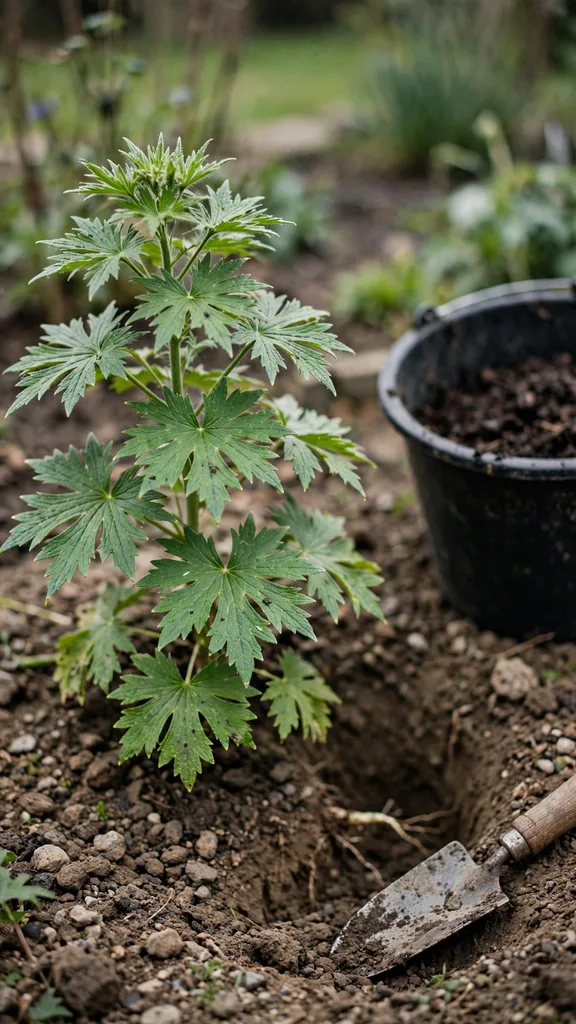
Dig a hole wider than the pot and as deep as the root ball. Mix a bucket of garden compost into the soil you took out. Set the plant in the hole, check the crown line against the soil with a straight stick laid across the hole, and backfill. Firm the soil with your palms and water the plant in with a full can.
Space tall types 60.9 to 91.4 cm apart and compact types 45.7 cm apart. The same guide that gives the seed temperature gives these widths as the spread of a mature clump. Crowded plants trap damp air, and damp air feeds powdery mildew. Give each plant its own air and its own light.
Plant in threes or fives when space allows, because a group of 3 plants reads as a drift while a group of 5 reads as a feature. A single plant reads as a stick. Set the group in a triangle or a loose cluster, not a straight row, so the spikes lean at different angles and catch the light.
Water the new plants through their first summer. Keep the soil around the roots moist until the plants are established, then water only in dry spells. Aim the water at the base. Wet leaves in evening air invite mildew, and a delphinium with mildew stops flowering early.
Stake Tall Spikes Before They Reach 30 cm
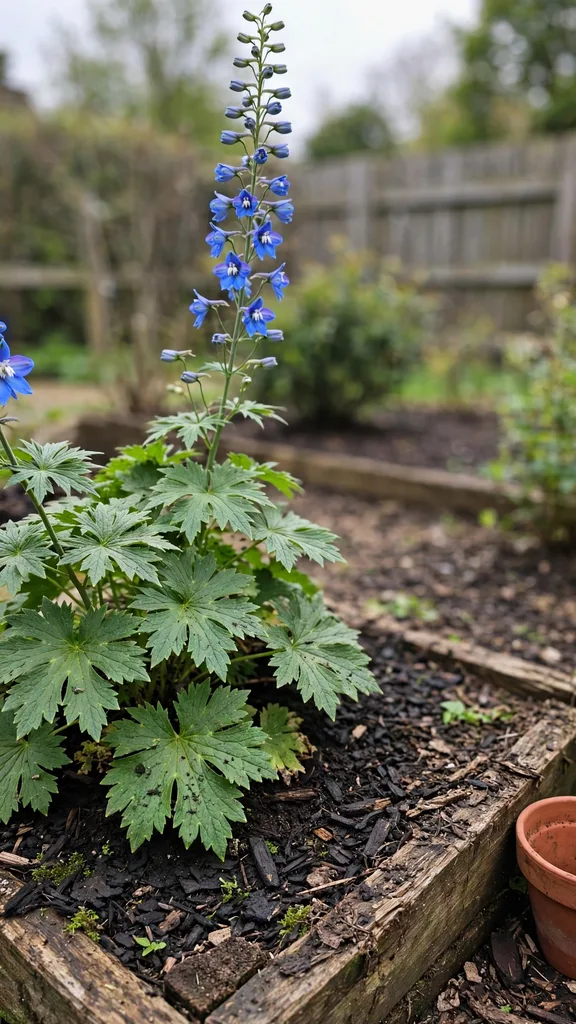
Put the support in place before new growth reaches 30 cm high. That timing comes from the same guide that gives the seed temperature, and it matters because a delphinium spike snaps in one gust once it passes knee height. A stake added after the spike bends cannot straighten it.
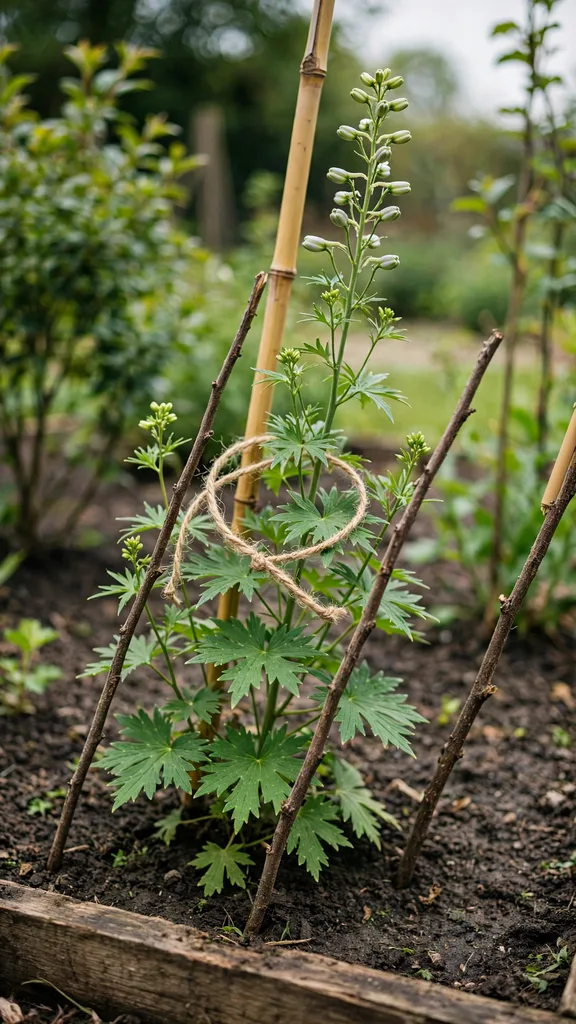
Use 3 twiggy sticks per clump for medium plants, pushed into the ground in a triangle around the crown. Tie the stems to the sticks with soft string as they grow, and add a new tie every 30.5 cm of growth. The ties must sit loose enough to fit a finger between string and stem. Tight ties cut the stem as it thickens.
Use a metal grow-through grid for tall Elatum types. Set the grid over the clump in early spring, while the shoots are short. The stems grow up through the grid and the grid holds them from every side at once. A single cane suits one exceptional spike, such as a show spike you plan to cut. Push the cane in at planting time so you never spear a root later.
Shelter the bed from strong wind. Plant tall delphinium at the back of a border, behind a hedge, or beside a fence that breaks the wind without shading the plants. A windy corner snaps spikes, shreds petals, and dries the soil faster than the roots can drink. A sheltered bed holds its flowers for weeks longer.
Check the ties every 7 days through May and June. Growth is fast then, and a tie that fit last week strangles this week. Loosen each tie, move it up the stem, and retie it with slack. The 5 minutes this takes saves the spike that took 18 months to grow.
Water at the Base and Feed Lightly Through Summer
Water delphinium at the base and keep the soil damp, never soggy. That is the whole watering rule. Delphinium roots drink steadily through summer and rot quickly in standing water, so the bed must drain as fast as you water it.
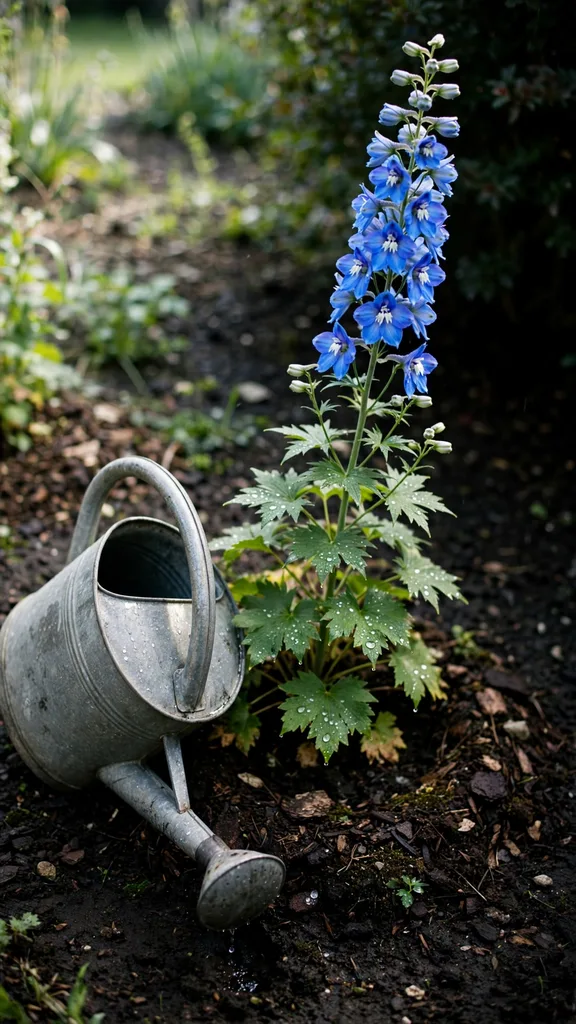
Water in the morning. Morning water soaks down before the sun lifts it, and the leaves dry by midday. Evening water sits on the leaves overnight, and wet leaves feed mildew. Set a soaker hose or a drip line along the row and run it for 30 minutes in dry weather. Overhead sprinklers waste water on petals and spread leaf disease from plant to plant.
Spread a 5.1 cm layer of mulch around the clump in spring. The same guide that gives the seed temperature gives this depth, and it uses well-rotted garden compost or farmyard manure. Keep the mulch 5.1 cm clear of the crown. Mulch piled against the crown holds damp against the stem and invites crown rot. Mulch spread in a ring holds moisture in the soil where the roots can reach it.
Feed bed plants almost nothing. Plants in rich ground need no feed at all, and a heavy feed pushes soft sappy growth that wind snaps and slugs eat. Feed container plants through summer with a high-potassium liquid feed, following the label rate. Containers hold little soil, and the feed replaces what watering washes out.
Watch the leaves for the first sign of thirst. Midday flagging that clears by evening means water tomorrow morning. Leaves that stay flagged overnight need water at once and shade for a day. A plant that wilts hard drops its lower buds, and dropped buds never open.
Skip These 5 Delphinium Mistakes
The 5 mistakes below kill plants that the rest of the routine would have saved, so avoid all of them and the bed runs for years. Small causes. Dead plants.
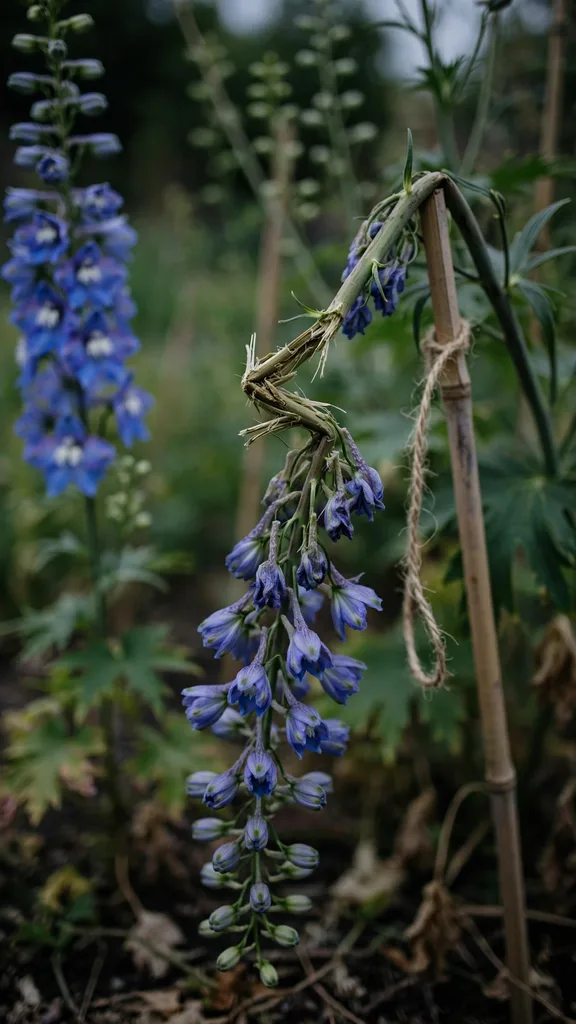
- Sowing old seed in a warm room. Old seed germinates erratically, and warmth above 20 degrees Celsius sends fresh seed into dormancy, so buy fresh seed, sow at 13 degrees Celsius, and chill an old packet for 14 days before you sow it.
- Burying the crown. A crown set 2.5 cm below the soil rots in the first wet winter, so set it level and check with a stick across the hole before you backfill.
- Staking after the spike bends. A bent spike never straightens, and a late cane spears roots. Put twiggy sticks or a grid in place before growth reaches 30 cm, while the shoots are still short enough to guide through the support without forcing them.
- Watering the leaves at dusk. Wet leaves overnight feed powdery mildew, and mildew ends flowering early. Water at the base in the morning and keep the leaves dry.
- Planting in a wet hollow. Delphinium roots rot in soil that stays wet through winter. Test the drainage with a hole full of water first. Water that sits after 4 hours means you plant on a raised bed or you plant something else there.
Walk the bed once a week and look at the crowns, the leaf bases, and the lowest buds. The mistakes above show first as a soft crown, a spotted leaf, or a bud that drops before it opens. Catch the sign in week one and the fix is small. Catch it in week four and the plant is gone.
Grow Delphinium Through Hot Summers and Cold Winters
Treat delphinium as a cool-summer plant and plan for its limits. It flowers best where nights stay cool and days stay warm, and it sulks where summers run hot and humid. That limit is not a flaw in your care. It is the plant telling you where it belongs.
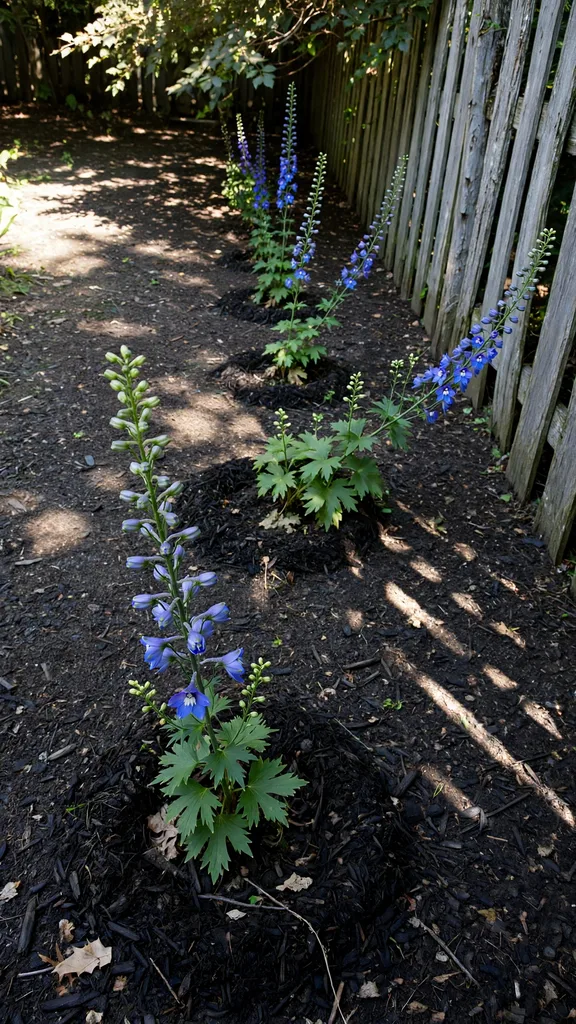
Delphinium struggles in humid summers south of Zone 7. The same profile that lists the genus size and the toxicity also sets this boundary, and it names the cost of crossing it as mildew, rot, and short life. Grow delphinium as an annual or a biennial south of that line, sow fresh seed each year, and enjoy one strong season instead of fighting for three weak ones.
Give afternoon shade in hot gardens. Full sun suits delphinium in cool regions, but a plant that takes full sun in a cool county burns in a hot one. Plant where a fence or a tall shrub shades the bed after 3 in the afternoon. Morning sun drives flowering. Afternoon shade saves the leaves.
Mulch the bed before winter and leave the mulch in place until spring growth starts. A 5.1 cm ring of compost keeps frost from heaving the crowns out of the soil. Pull the mulch back from the crown in early spring so the new shoots find light and air. Shoots that push through wet mulch rot at the base.
Cut the old leaves down after the first frosts. Carry the cut leaves to the compost heap, not the bed. Spent leaves carry mildew spores into winter, and spores on the bed wake with the first warm days of spring. A clean bed in winter is a clean start in spring.
Divide mature clumps in early spring every 2 to 5 years. The same guide that gives the seed temperature gives this interval. Dig the clump, discard the woody center, and replant the vigorous outer pieces. Division renews a tired clump, fills a second bed for free, and keeps one plant from turning into a bare ring with flowers only at the edge.
Diagnose Powdery Mildew, Slugs, and Crown Rot Early
Read the leaves every week from the day shoots appear. Delphinium problems announce themselves early, and the early sign is always small. A white patch the size of a coin, a leaf edge chewed overnight, a stem base gone soft. Each sign has one cause and one fix.
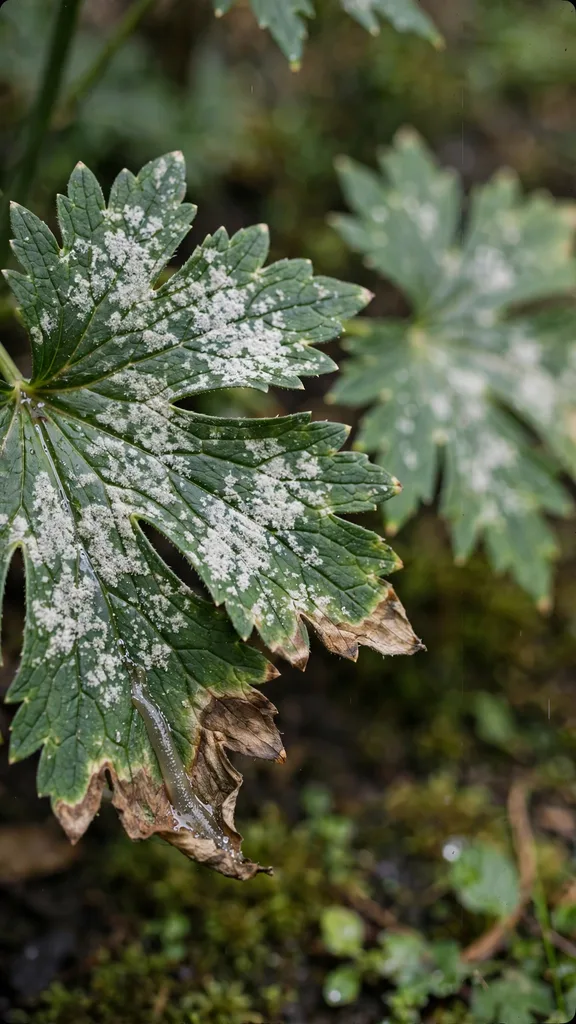
Powdery mildew shows as white powdery patches on the leaves. Plants in shade or in very dry soil suffer worst, and crowded plants catch it first. Thin the clump to 5 to 7 of the strongest shoots in spring, the count the same guide gives with the seed temperature. Air moving through the clump dries the leaves and starves the mildew. Cut out a badly coated leaf and bin it. Never compost a mildewed leaf.
Slugs and snails eat young growth in spring and can strip a shoot overnight. Go out after dark with a torch for 3 nights in a row when shoots first appear. Pick the slugs off by hand into a bucket and check the leaf bases where they hide by day. Keep the bed clear of damp debris. A ring of grit around the clump slows slugs and marks the shoots you must protect.
Crown rot kills the whole plant from the base up. The stem base turns soft and dark, the leaves wilt even in moist soil, and the plant pulls out of the ground with no resistance. Poor drainage causes it, and planting too deep causes it. The same profile that lists the genus size also warns that crown rot follows plants grown in poorly drained soil or planted too deep. Lift a rotted plant at once, bin it, and do not replant delphinium in that spot for a year. Improve the drainage first or the next plant rots the same way.
Aphids cluster on the buds and the soft shoot tips. Leaf miners draw pale trails through the leaves. Stem borers hollow a stem until it snaps. Wash aphids off with a sharp jet of water in the morning. Cut out a mined leaf and a bored stem and bin them. A plant with clean air, dry leaves, and space around it shrugs off the pests that finish a crowded plant.
Fix 4 Delphinium Failures Before They Spread
Work through the failure that matches your plant. Each fix takes minutes, and each one stops a small problem from taking the whole clump.
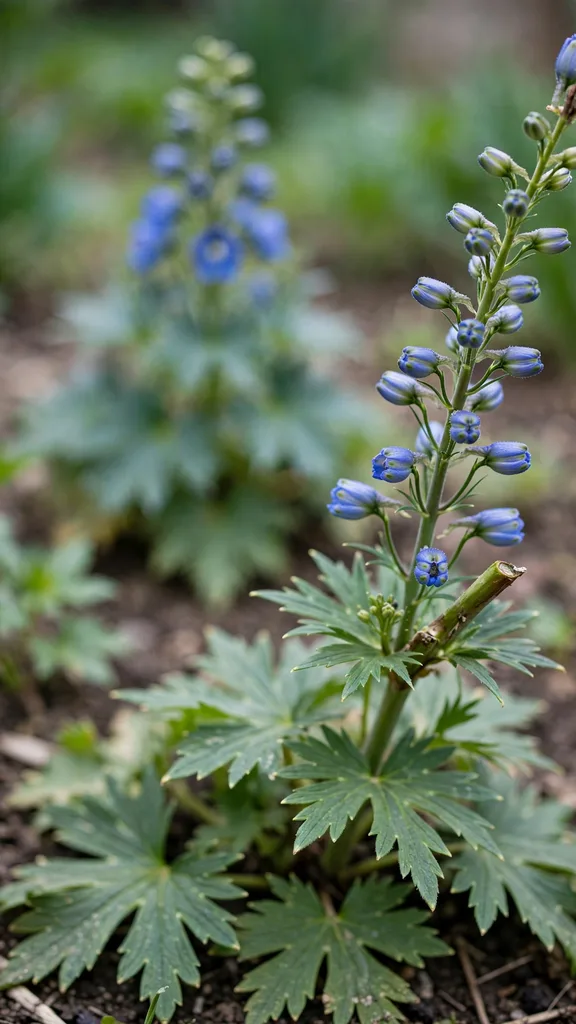
No flowers in year one. Seed-raised delphinium flowers in about 18 months, so a plant sown this spring owes you nothing until next summer. The same guide that gives the seed temperature gives this timeline. Feed the plant nothing extra and wait. A plant pushed with feed grows leaves, not buds, and the buds come later anyway.
Spikes snap in wind. The stake went in late or the tie sat too tight. Cut the snapped spike at the break, tie the next spike to its cane with slack, and add a second cane on the windward side. The plant sends a side spike within weeks, and the side spike often flowers better than the first.
Leaves yellow from the base up. The crown sits too deep, the soil stays wet, or the plant needs dividing. Check the crown line first. A buried crown needs lifting and replanting at soil level in spring. A wet bed needs drainage work before anything else. A clump older than 5 years with a bare center needs dividing into vigorous outer pieces.
Second flush never comes. The faded spike stayed on the plant. Cut spent flower spikes down to the basal leaves the day the last florets fade. The same profile that lists the genus size says this cut brings additional late summer and fall blooms. A plant left with dead spikes puts its strength into seed, and seed ends the season.
Cut Delphinium Spikes for Fresh Flowers Indoors
Cut delphinium spikes when the lower quarter of the flowers stands open and the upper buds show color. That is the cutting moment. A spike cut earlier opens slowly and drops buds. A spike cut later sheds petals on the table within a day.
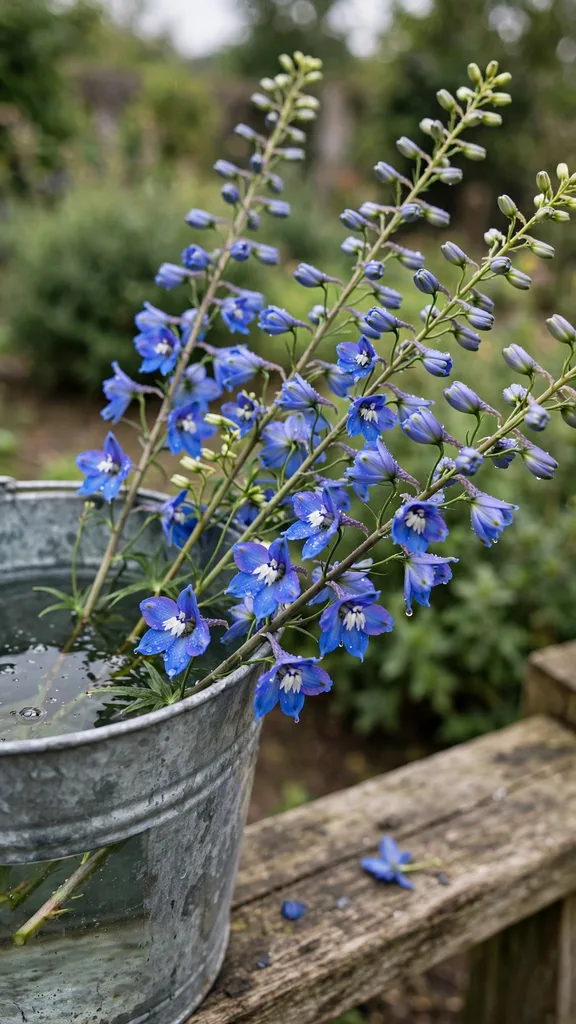
Cut in the early morning, when the stems hold the most water. Use sharp secateurs and cut the stem at the base, low enough to leave 2 leaves on the plant. Stand the stem in a bucket of deep clean water at once and carry the bucket into the shade. A stem left in the sun for 10 minutes wilts past recovery.
Recut the stem base under water before you arrange it. Cut 2.5 cm off the base at a slant, under the water line, so no air enters the stem. Strip every leaf that would sit below the water line in the vase. Leaves in water rot, and rotten water shortens the life of every stem in the vase.
Change the vase water every 2 days, recut the stem each time, and keep the vase out of direct sun and away from ripening fruit. A cool room doubles the life of a cut spike against a warm one. Belladonna types cut best of all, with loose branching spikes that fill a vase without crowding.
Cutting zinnias for vases follows the same morning routine, and cutting zinnias for vases uses the same deep-water bucket and the same 2-day water change. The vase that follows delphinium through summer also holds fall cut flowers for the vase once the season turns.
Frequently Asked Questions About Growing Delphinium
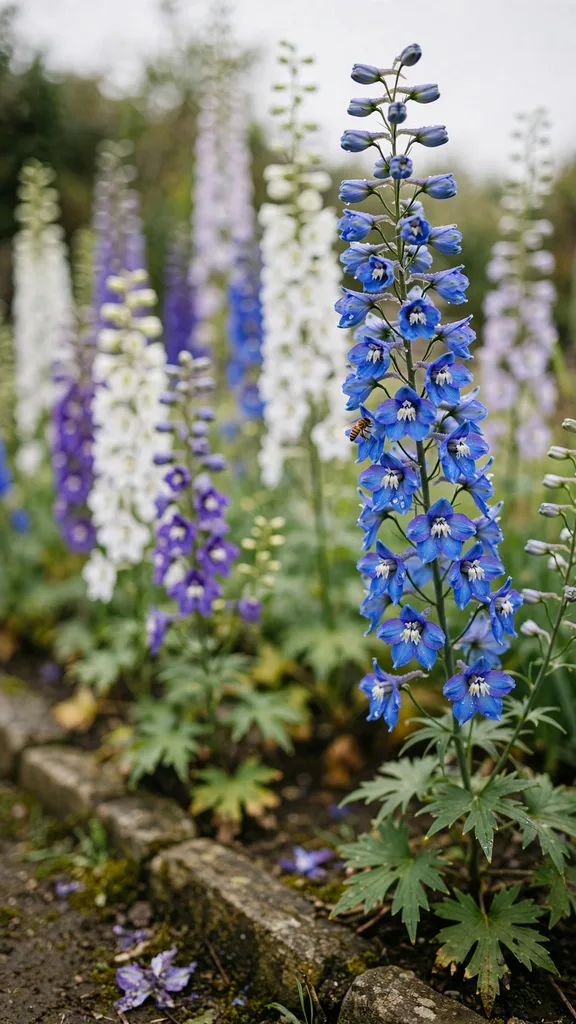
Delphinium seed germinates in about 14 days when sown at 13 degrees Celsius in spring. Fresh seed germinates best, and old seed germinates erratically. Chill an old packet in the fridge for 14 days before sowing. Keep the tray cool and moist, since warmth above 20 degrees Celsius sends the seed back into dormancy and stalls the whole tray.
Yes, every part of a delphinium plant is toxic to humans and pets if eaten, and the foliage can irritate skin. Wear gloves when you handle the plants, prune the spikes, or divide a clump. Keep seed packets out of reach and teach children not to pick the flowers. Wash your hands after handling the plants, even when you wore gloves.
Delphinium height depends on the type you plant. Elatum types reach 1.5 to 2 m, Pacific hybrids reach about 1.8 m, and Belladonna types reach 1 to 1.2 m. Compact series such as Magic Fountains grow to about 1 m. Tall types need staking and shelter from wind, while compact types need little support in an open spot.
Delphinium is a short-lived perennial, and a plant may last only a few years even with good care. Wet winter soil rots the crown, and a crown planted too deep rots faster. Hot humid summers shorten its life further. Sow fresh seed every year or two, divide mature clumps in spring, and keep a young plant coming on behind each old one.
Yes, compact delphinium types grow well in a large heavy pot, and tall types need a large container, staking, and frequent watering. Use a pot at least 50.8 cm across and deep, one plant to a pot, in loam-based compost with grit mixed through. Water daily in summer, stand the pot out of the wind, and still put in a cane.
Cut faded flower spikes down to the basal leaves as soon as the last florets fade. This cut often brings a second flush of flowers in late summer and fall. Cut the old leaves down to ground level after the first frosts and carry them to the compost heap. Clean beds in winter give the plant a clean start in spring.
What to Do Next
Sow fresh seed this spring at 13 degrees Celsius. Plant the seedlings out after frost, stake them before they reach 30 cm, and cut the faded spikes to the basal leaves. The bed that gets those 4 moves right carries tall blue spikes in early summer and a second flush before fall.