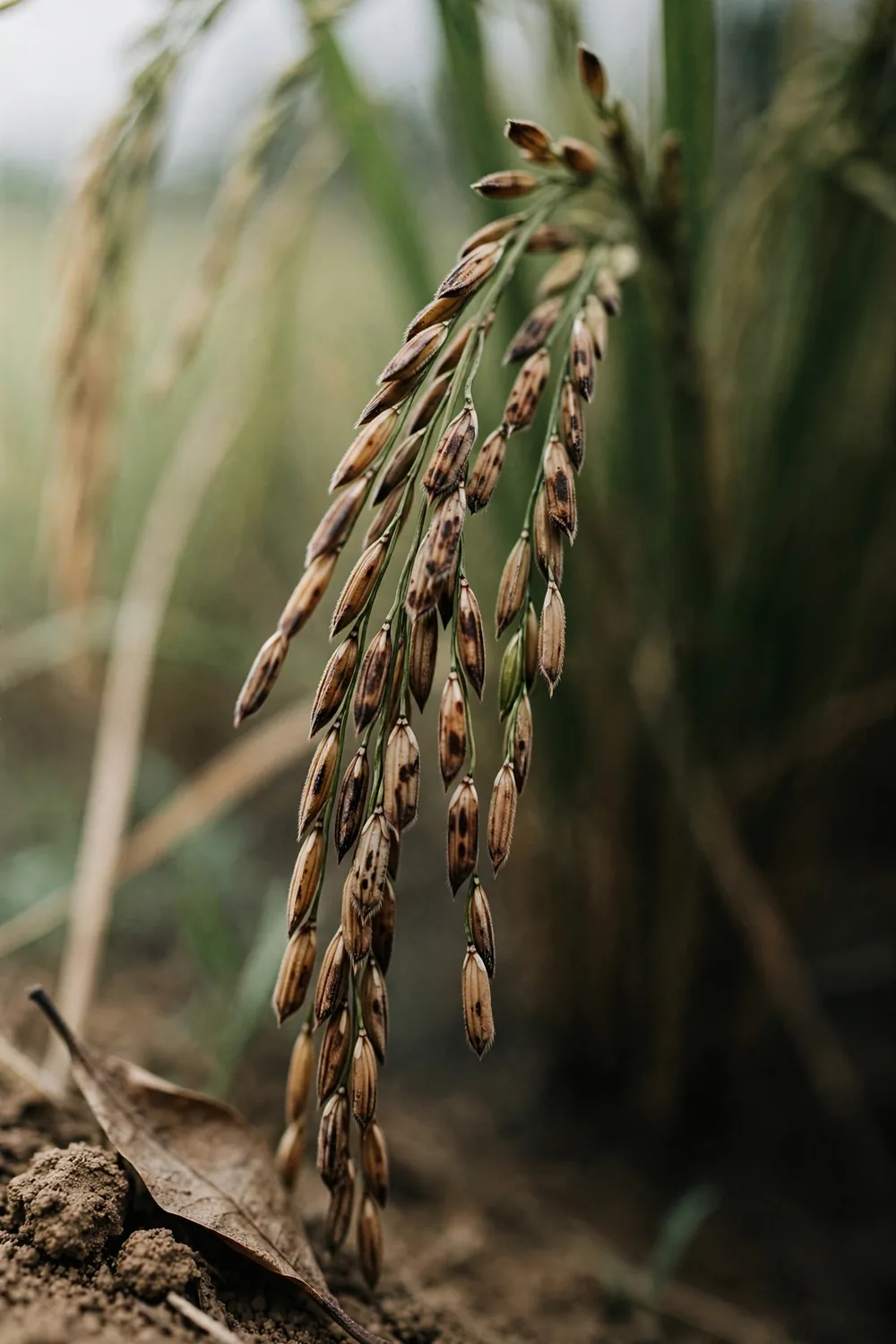

Glume mold on rice is not one disease. It is one Clemson entry inside a multi-fungi glume-discolouration complex of 7 or more genera. Clemson lists “Curvularia sp.: Glume mold” under rice, genus only, no species. The literature treats glume discolouration as a complex of many fungi, so the 5 strategies below tell you how to read the discoloured glumes, why the name misleads, and how to run the honest home response.
Start with the honesty. The name “glume mold” does not resolve to one pathogen. The bare name has been used for a Cladosporium disease of winter wheat (“sooty ear”) as well as the Curvularia entry on rice. This article covers the rice Curvularia entry and the complex it sits inside. It does not pretend the complex is one disease.
What Glume Mold Actually Is
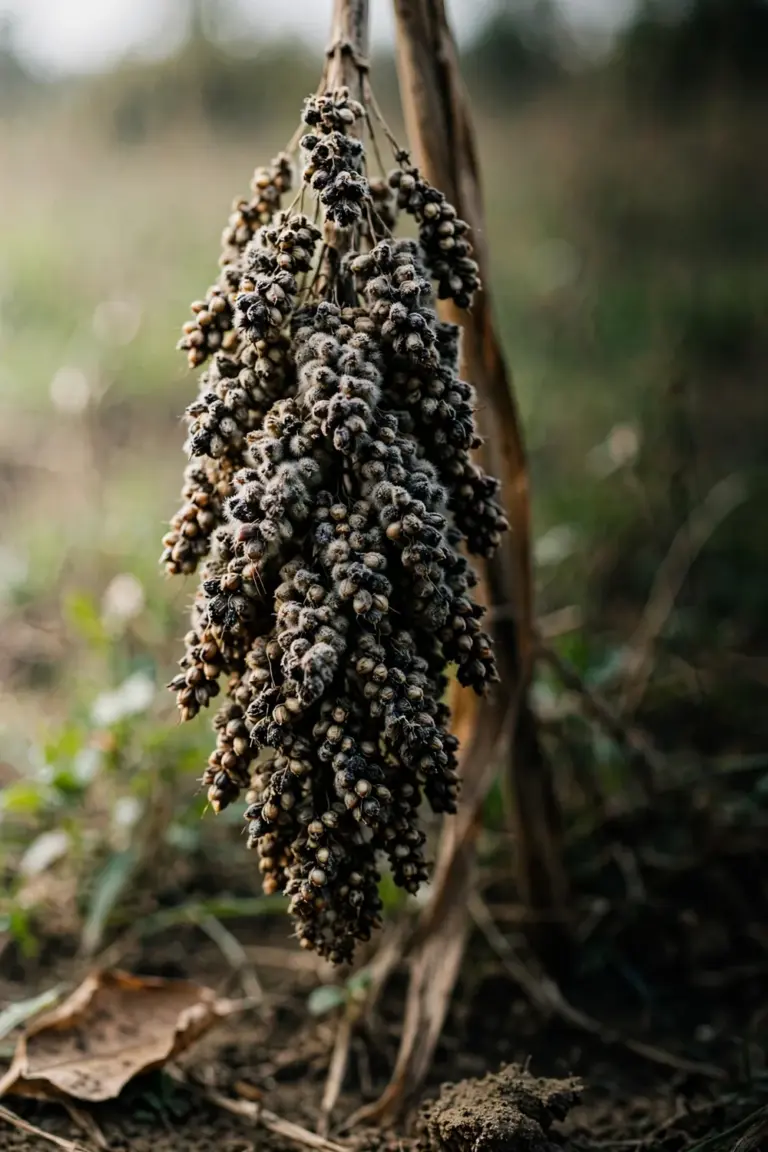
Glume mold is mold and discolouration of the glumes (hulls) of rice. The grains may be infected by various organisms before or after harvesting, causing discolouration, the extent of which varies according to season and locality, and the infection may be external or internal, causing discolouration of the glumes or kernels or both, while dark brown or black spots appear on the grains. The glumes are the hulls, the discolouration is the sign, and the complex is the cause.
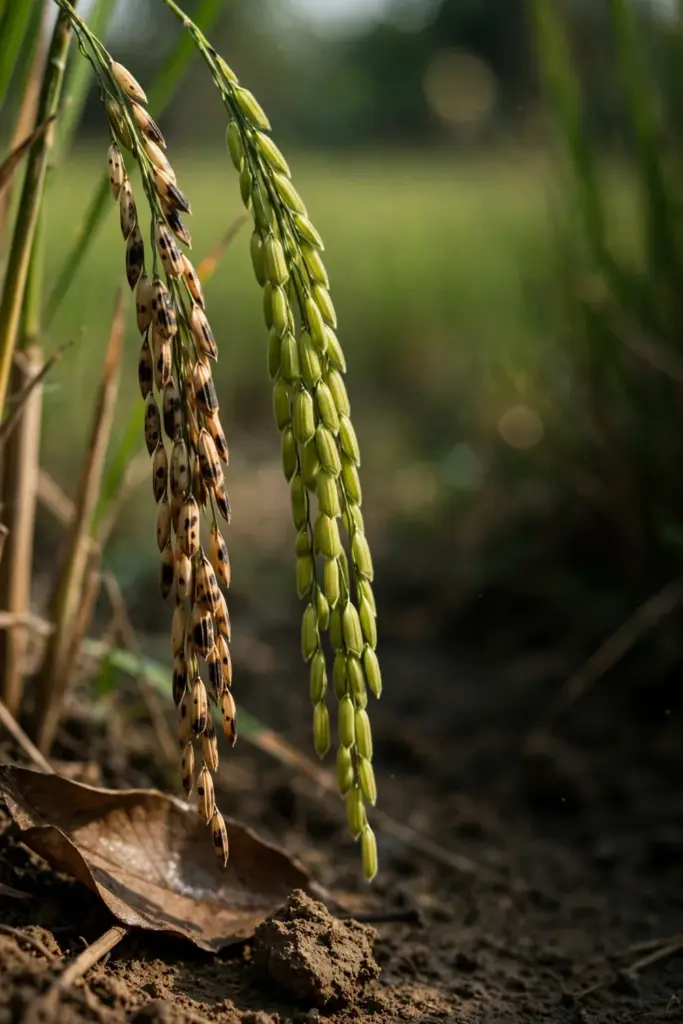
Dirty panicle disease or rice grain discoloration may be caused by many fungi, viz., Alternaria padwickii, Curvularia lunata, Fusarium moniliforme, and Bipolaris oryzae. Infection starts at the early boot stage and results in brown spots on rice hulls and the discoloration of rice grains, while the germination of infected rice seeds is poor. The many fungi are the complex. The one name is the label.
Clemson gives genus only. Curvularia sp. is the Clemson entry, no species epithet is given, and the complex behind the entry holds many fungi. The genus is the entry, the species stays unresolved, and the complex is the reality.
How to Identify Glume Mold on Your Rice
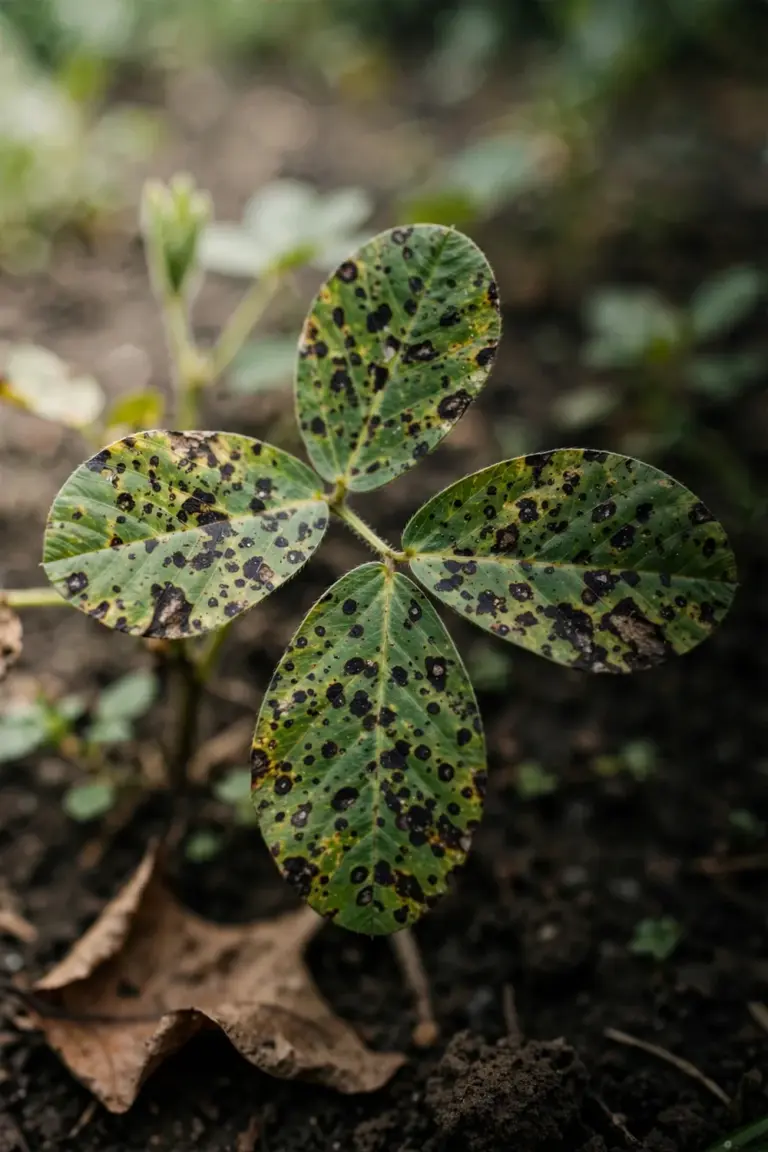
Look for dark brown or black spots on the grains. Dark brown or black spots appear on the grains, the spots are the sign, the discolouration is the disease, and the grains are the place.
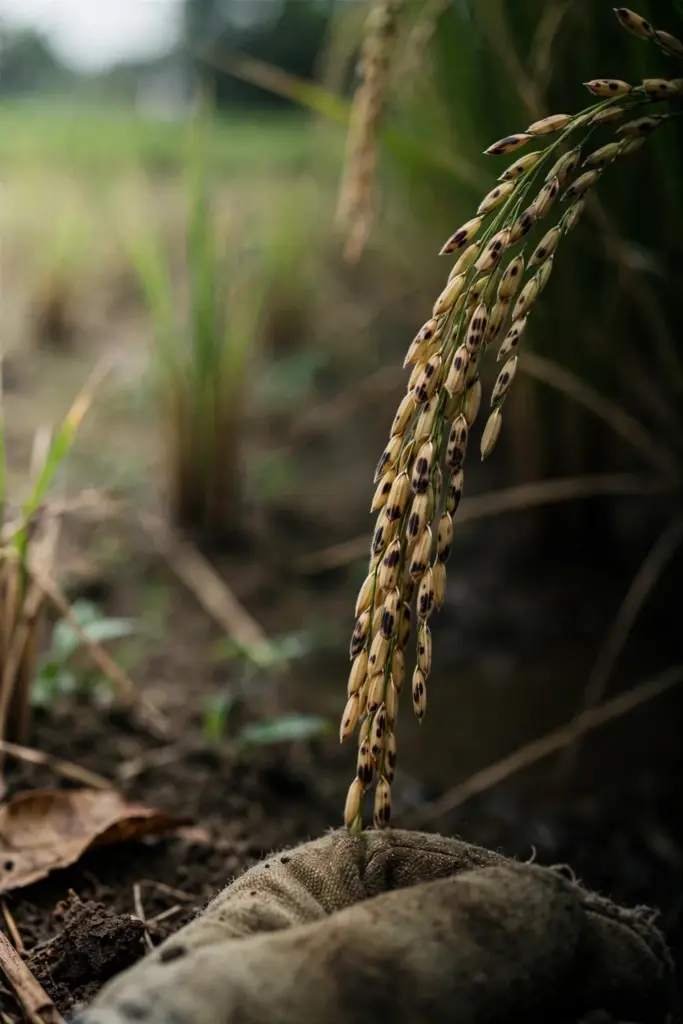
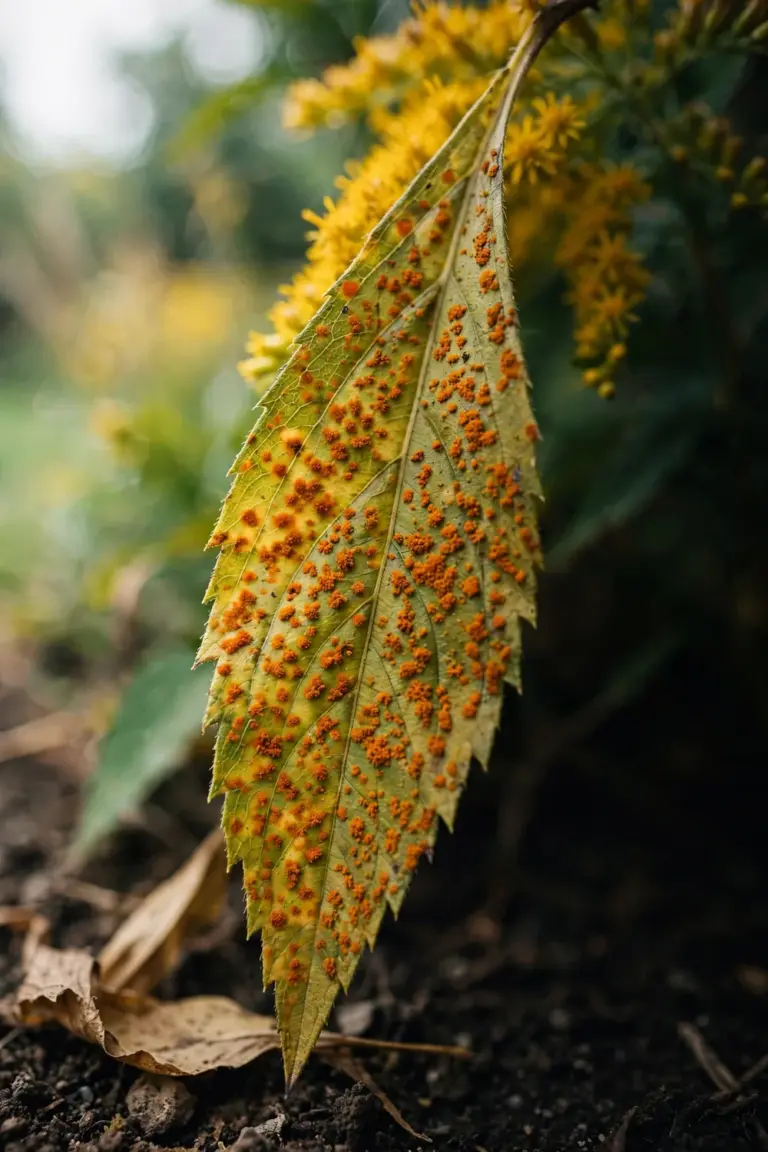
Look for the color range. The discoloration may be red, yellow, orange, pink or black, depending upon the organism involved and the degree of infection, so the color varies with the fungus and the color does not identify the fungus. The color range is the complex.
Check the growth stage. Infection at booting, heading, milking and doughing stages is recorded, with heading stage most vulnerable, and high humidity and cloudy weather during heading favour it. The heading stage is the vulnerable window, the humid weather is the trigger, and the wet heading is the risk.
Check for poor germination. The germination of infected rice seeds is poor, and seedlings, when they emerge, are abnormal, while infected rice seeds are also the source of the inoculum, so the poor germination is the seed clue and the discoloured seed is the inoculum.
Do not confuse with glume blotch. Glume blotch (Septoria / Stagonospora nodorum blotch) is a different disease, different pathogen, different host (wheat). The name sounds close. The disease is not close. The glume blotch is the fence.
Do not confuse with black kernel, brown spot, or blast. Black kernel of rice (Curvularia lunata) is a different disease name and syndrome. Brown spot (Curvularia oryzae / Bipolaris oryzae) is a leaf-spot disease. Blast glume spots (Pyricularia) are a different disease. The names are close. The diseases are not close. The fences are the names.
Why the Name Misleads
The name is a complex, not one disease. Glume discolouration is caused by a complex of fungi with the species of Alternaria, Curvularia, Fusarium, Helminthosporium, Nigrospora, Phyllosticta and Sclerotium. A standalone “Glume Mold” article would either pretend the complex is one disease or silently describe one fungus while the reader’s discoloured glumes carry another. The complex is the truth. The single disease is the pretense.
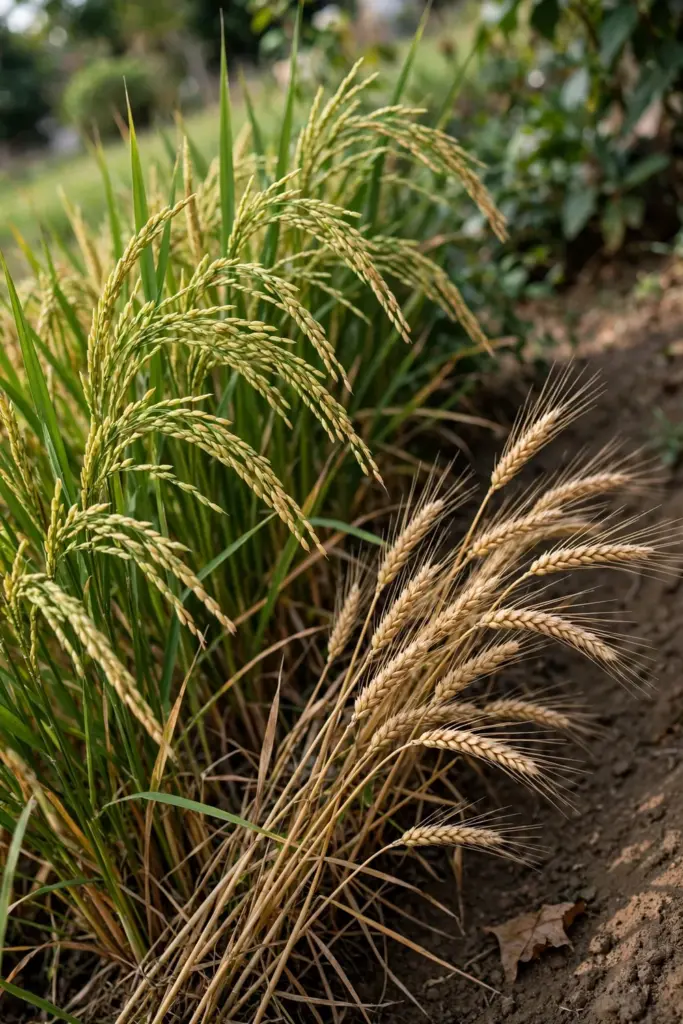
The name collides across crops. The 1945 Plant Disease Reporter lists “Cladosporium sp., glume mold, ‘sooty ear'” on winter wheat. The bare name does not resolve to one pathogen across sources. The rice scoping is the fence. The wheat usage is the collision.
There is no glume-vs-grain comparison. No glume-vs-grain comparison exists anywhere, and grain mold in the evidence is a sorghum head-mould / pearl-millet grain-mould complex or a storage-mold problem, not a rice disease paired with glume mold. There is nothing to compile. The differential does not exist. The article carries no differential. The Plant Care archive carries the site’s other complex explainers for readers who want the pattern across crops.
Strategy 1: Use Clean, Healthy Seed
Use disease-free seed. Infected rice seeds are the source of the inoculum, so the clean seed is the start and the discoloured seed is the inoculum. The seed is the first fence.
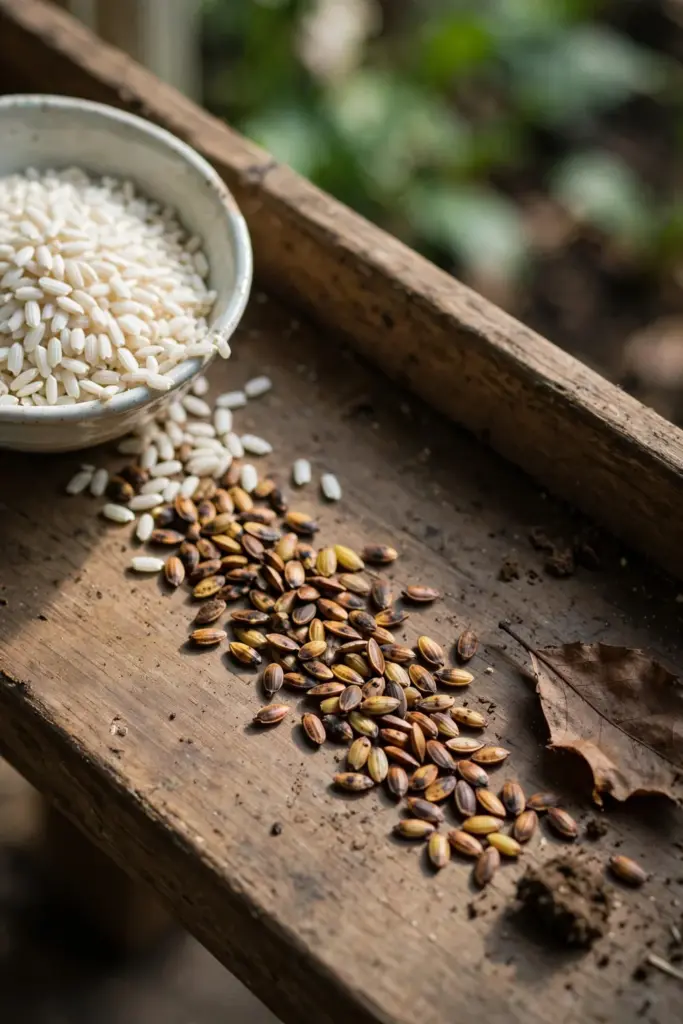
Discard discoloured seed. Discoloured grains carry the complex, so the discarded grain is the discarded inoculum, the kept grain is the risk, and the discard is the habit.
Do not carry commercial seed-treatment programs as home advice. Field seed treatments with fungicides at field rates are production guidance, not home advice. The label governs, the rate is the label rate, and the label is the law.
Strategy 2: Keep the Heading Window Dry
Watch the heading stage. Heading stage is most vulnerable, and high humidity and cloudy weather during heading favour it, so the heading window is the watch and the humid heading is the risk.
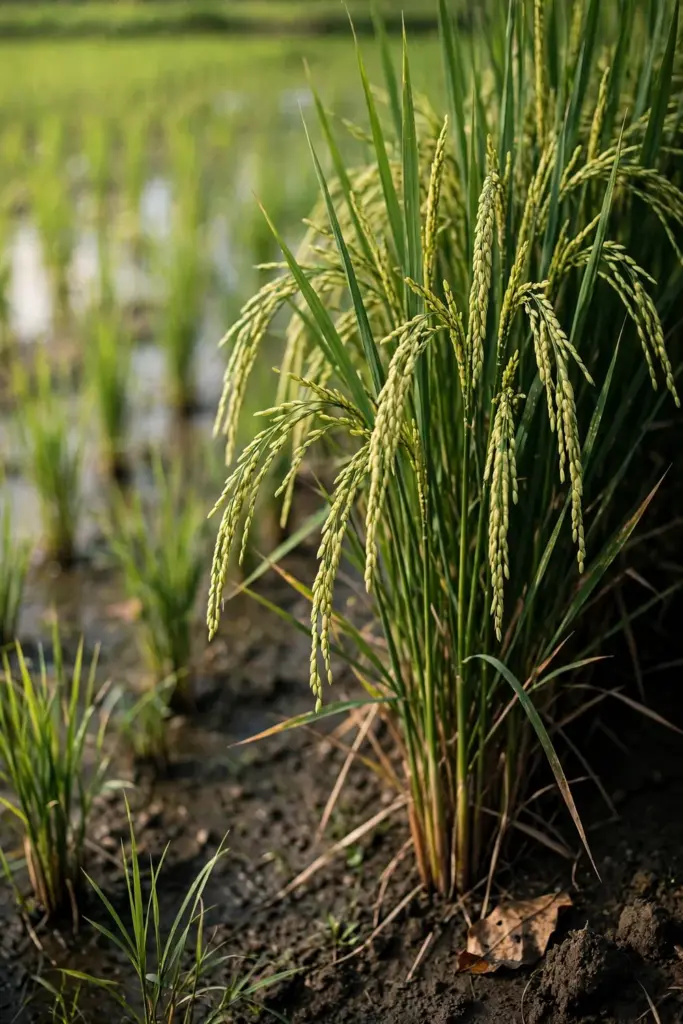
Improve airflow. Close plant spacing keeps plants wet longer, so the spaced plant dries faster and the crowded plant stays wet. The spacing is the airflow.
Avoid wetting the panicles. Overhead watering wets the panicles, so the base watering is the safe water, the sprinkler is the spreader, and the base is the watering place.
Strategy 3: Clean Up Debris and Crop Remains
Remove infected grains and plant debris. The fungus survives as parasite and saprophyte in the infected grains, plant debris and also on other crop debris, so the debris is the reservoir, the clean bed is the safe bed, and the cleanup is the break.
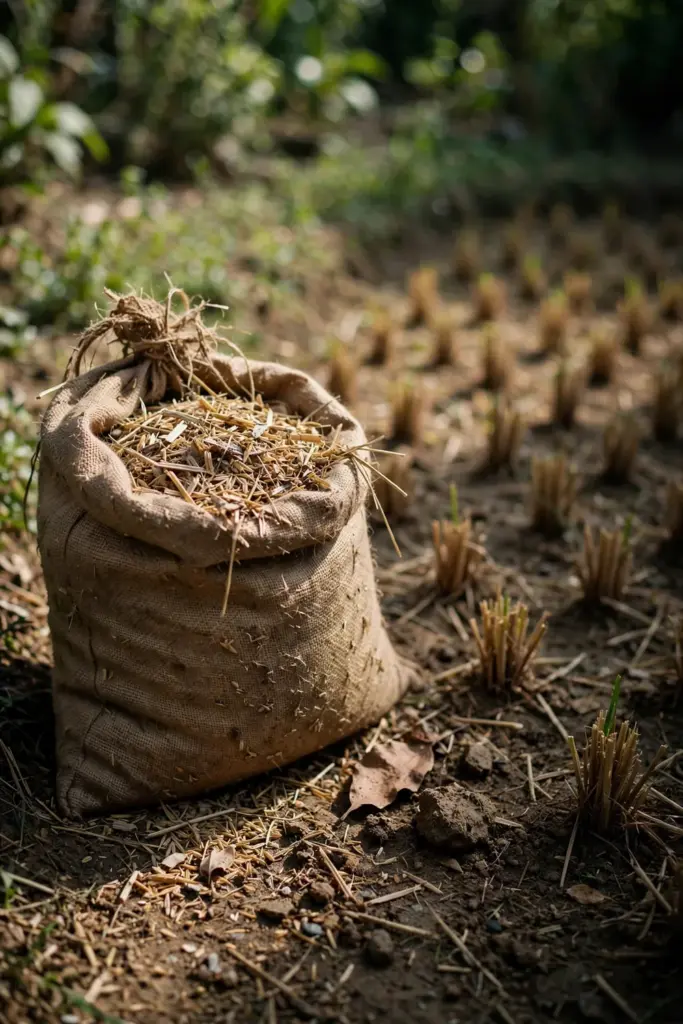
Do not leave discoloured panicles in the bed. The left panicles are the inoculum, and the removed panicles are the removed inoculum. The removal is the cut.
Do not compost infected material. Compost spreads the fungi, the compost pile is a distribution route, and the composted panicles are the next infection. The trash is the disposal.
Strategy 4: Store Grain Dry
Store the grains with 13.5 to 14 percent moisture content. The dry grain is the safe grain, the wet grain is the mold, and the moisture is the lever.
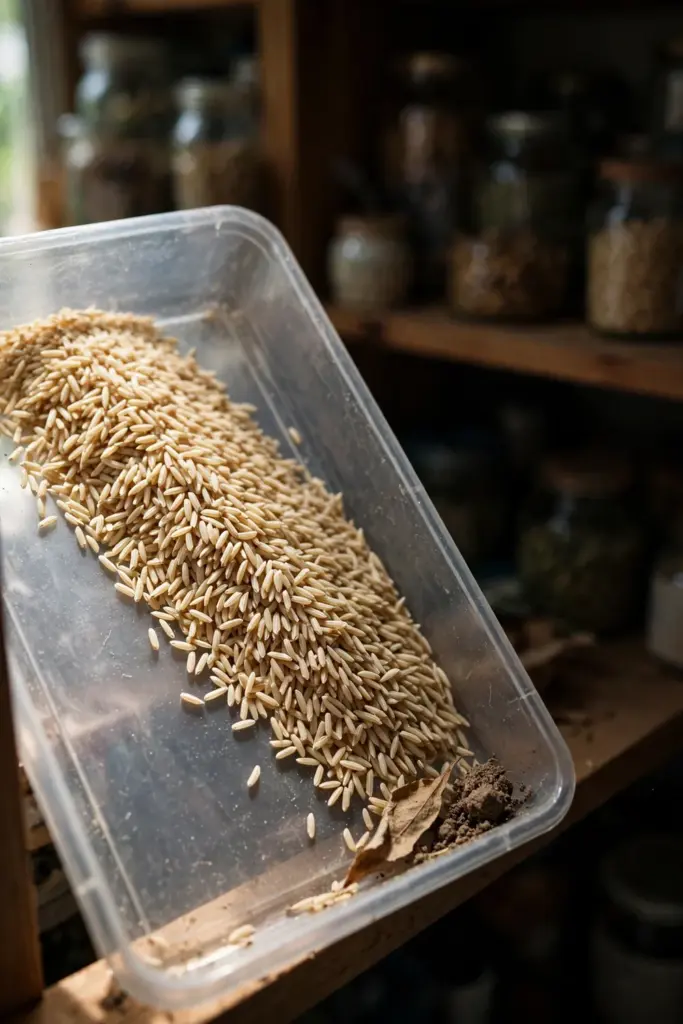
Dry grain before storage. Pre- and post-harvest measures should be taken into account for prevention of grain discolouration, so the drying is the prevention, the wet storage is the mold, and the dry storage is the fence.
Do not carry commercial storage-moisture regimes as home advice. Commercial drying and aerated-storage programs are production guidance, not home advice. The dry grain is the home goal, and the regime is the commercial program.
Strategy 5: Use Fungicide Last, Preventive Only, Never as a Cure
Know that fungicide is preventive-only. A protective fungicide shields healthy tissue, but it does not cure discoloured glumes. The spray is the shield, never the cure. The cultural steps lead.
Know that the complex limits the spray. No single fungicide targets the whole complex, so the spray aimed at one fungus misses the others. The spray is the backup. The culture is the program.
Do not carry commercial fungicide trials as home advice. Fungicide trial programs with field rates are research, not home advice. The label governs, the rate is the label rate, and the label is the law.
Living With Glume Mold on Rice You Already Grow
A rice patch with glume mold is a patch to manage, not a patch to abandon. Use clean, healthy seed, keep the heading window dry, clean up debris and crop remains, store grain dry, and use fungicide last, preventive only. The discolouration will still appear, but it will appear as a few spotted glumes, not as a ruined panicle.
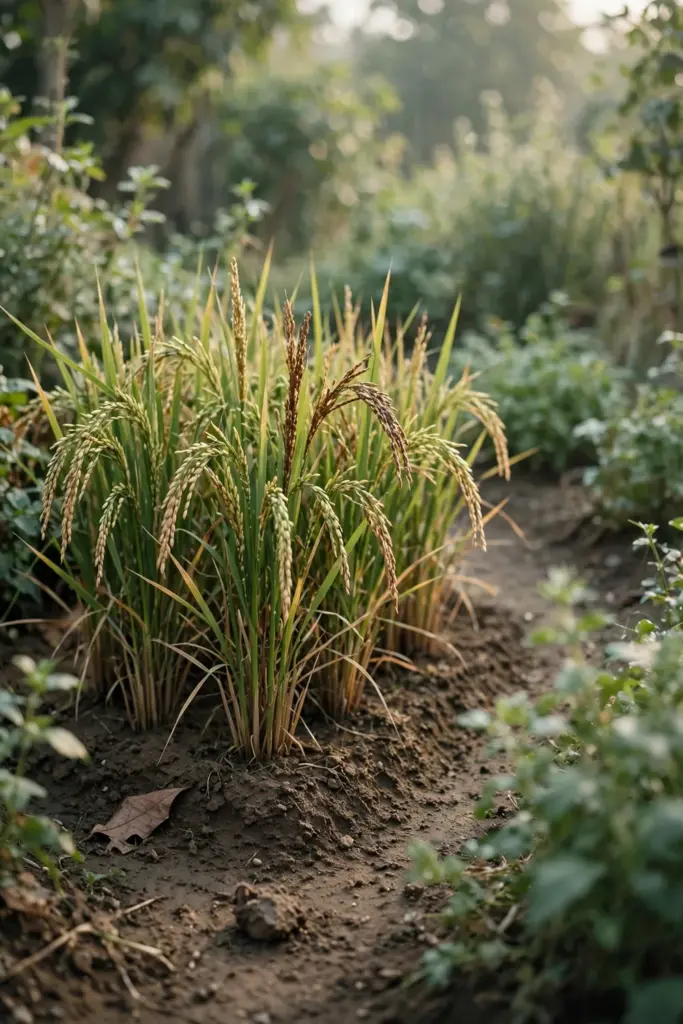
Stop three habits. Do not save discoloured seed, do not leave discoloured panicles in the bed, and do not store grain wet. Keep those three lines unbroken and the glume discolouration stays cosmetic. The Plant Care archive collects the site’s disease coverage for the next problem the garden throws up.
Frequently Asked Questions
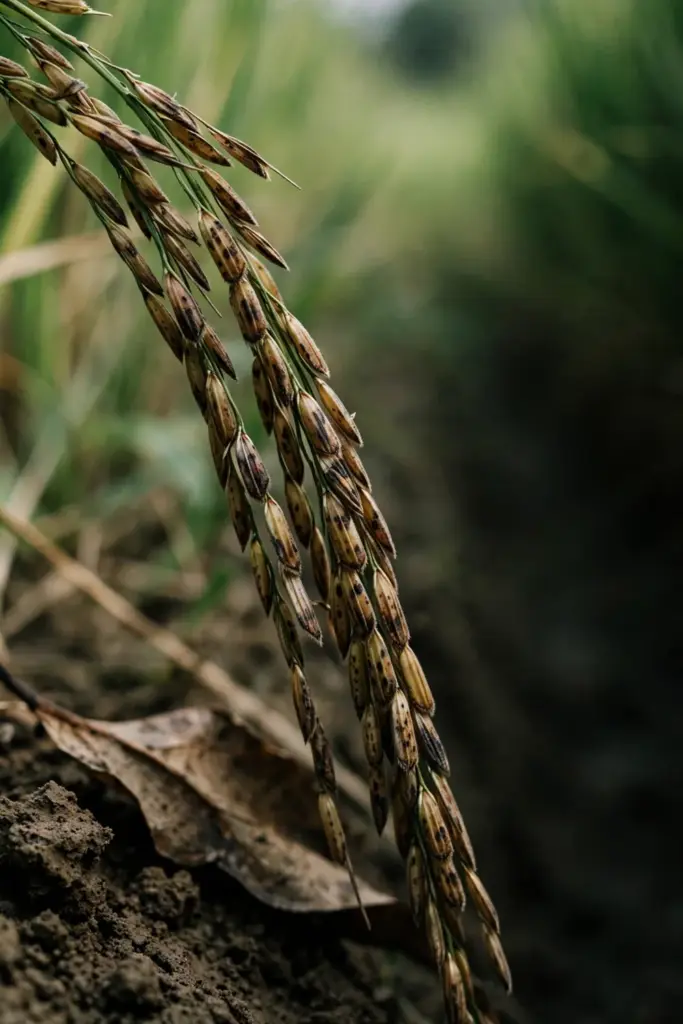
No. Glume discolouration is caused by a complex of fungi with the species of Alternaria, Curvularia, Fusarium, Helminthosporium, Nigrospora, Phyllosticta and Sclerotium. Clemson lists one entry, “Curvularia sp.: Glume mold” under rice, genus only. The complex is the cause. The one name is the label.
Dark brown or black spots appear on the grains. The discoloration may be red, yellow, orange, pink or black, depending upon the organism involved and the degree of infection. The color varies with the fungus, and the color does not identify the fungus. The color range is the complex.
At heading. Infection at booting, heading, milking and doughing stages is recorded, with heading stage most vulnerable. High humidity and cloudy weather during heading favour it. The heading window is the watch, the humid heading is the risk, and the dry heading is the goal.
Usually no. Clean seed, dry heading, debris cleanup, and dry storage lead. A protective fungicide shields healthy tissue and never cures discoloured glumes. No single fungicide targets the whole complex. The spray is the backup. The culture is the program. The label governs.
It can, if the seed and debris stay. The fungus survives as parasite and saprophyte in the infected grains, plant debris and also on other crop debris, so use clean seed, clean up debris, and store grain dry. The cleanup is the break. The skipped cleanup is the return.
Where to Go From Here
Glume mold rewards the gardener who uses clean seed, keeps the heading window dry, cleans up debris, stores grain dry, and sprays last, preventive only. Use clean seed, keep the heading window dry, clean up debris, and store grain dry.
Next season, start with a clean bed. A bed with clean seed, spaced plants, base watering, and dry storage will hold glume discolouration to a few spotted glumes. The Nature Scientific Reports paper on dirty panicle disease is a useful companion for the full research picture, since it sets the home-garden response here against the science behind the complex.