Spend 20 minutes walking through your kitchen, garage, and shed with a tape measure before you buy a single pot. That is what cheap container garden ideas look like in practice: 12 containers pulled from the house and the reuse shop, each one matched to a plant that fits it, and none of them bought new at full price. Work from the sunniest spot outward. Fill one container first. Water at the base and check the drainage holes after rain.
A companion guide covers budget container gardening as a system, soil and watering and feeding together. This page stays on the 12 ideas, what goes in each container, and the failure that ruins each one. A bucket grows a tomato. A tin can grows basil. A crate grows lettuce. The container decides the crop, and the crop decides the size.
Fall containers follow the same rules with autumn planting, and the site’s fall planter ideas show that seasonal version with plants that take cold nights. Start with the containers below and add a seasonal planting only when the first pots grow well.
| Idea | Space It Fits | Cost |
|---|---|---|
| Secondhand Buckets for Tomatoes and Peppers | Patio | Low |
| Fabric Grow Bags for Potatoes and Beans | Patio | Low |
| Wooden Crates for Leafy Greens | Patio corner | Low |
| Tin Cans for Herbs on a Windowsill | Windowsill | Low |
| Plastic Storage Totes for Salad Leaves | Patio | Low |
| Secondhand Terracotta Pots for Herbs | Patio steps | Low |
| Hanging Baskets for Trailing Herbs and Strawberries | Ceiling hook | Low |
| Window Boxes for Flowers and Salad Leaves | Windowsill | Low to mid |
| Cut Bottles and Milk Jugs for Seed Starting | Indoors | Low |
| Reclaimed Sink for Herbs and Lettuce | Patio | Low |
| Laundry Basket for Strawberries | Patio | Low |
| Concrete Blocks for Herbs and Strawberries | Patio wall | Low |
A single tomato needs a pot at least 50.8 cm wide, and peppers and eggplant manage in a 35.6 cm pot, with every pot at least as tall as it is wide, according to the Penn State Extension container guide. Tomatoes and peppers need at least 6 hours of sun per day, and most container vegetables need water at least once a day in hot summer months, the same guide notes. Feed with a slow-release fertilizer at planting time, then a soluble feed every 2 to 4 weeks through the season. The NC State Extension Gardener Handbook chapter on plants grown in containers puts one tomato in a 5 gallon pot, which is 18.9 L, with 30.5 to 61 cm of mix depth, and gives lettuce a 2 quart pot, which is 1.9 L, with 15.2 to 20.3 cm of depth.
| Crop | Minimum Pot | Mix Depth | Plants per Pot |
|---|---|---|---|
| Tomato | 5 gallon, 18.9 L | 30.5 to 61 cm | 1 |
| Peppers | 2 gallon, 7.6 L | 30.5 to 40.6 cm | 1 |
| Lettuce | 2 quart, 1.9 L | 15.2 to 20.3 cm | Several |
| Carrots | 2 quart, 1.9 L | 25.4 to 30.5 cm | Several |
| Potatoes | 30 gallon, 113.6 L | Deep bag | Several |
| Beans | 2 gallon, 7.6 L | 20.3 to 25.4 cm | 2 to 3 |
Secondhand Buckets for Tomatoes and Peppers
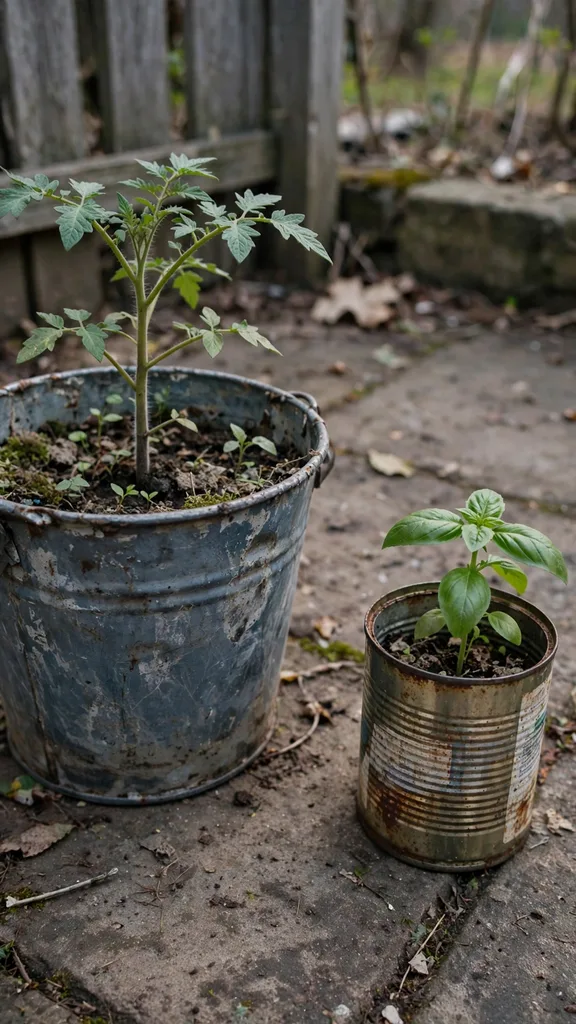
Take a secondhand food-grade bucket, drill 5 drainage holes in the base, and fill it with potting mix to 2.5 cm below the rim. One tomato grows in a bucket this size through summer, and one pepper grows in the same size with room to spare. Set a stake at planting time and tie the stem loosely as it grows. Water at the base in the morning until water runs from the holes.
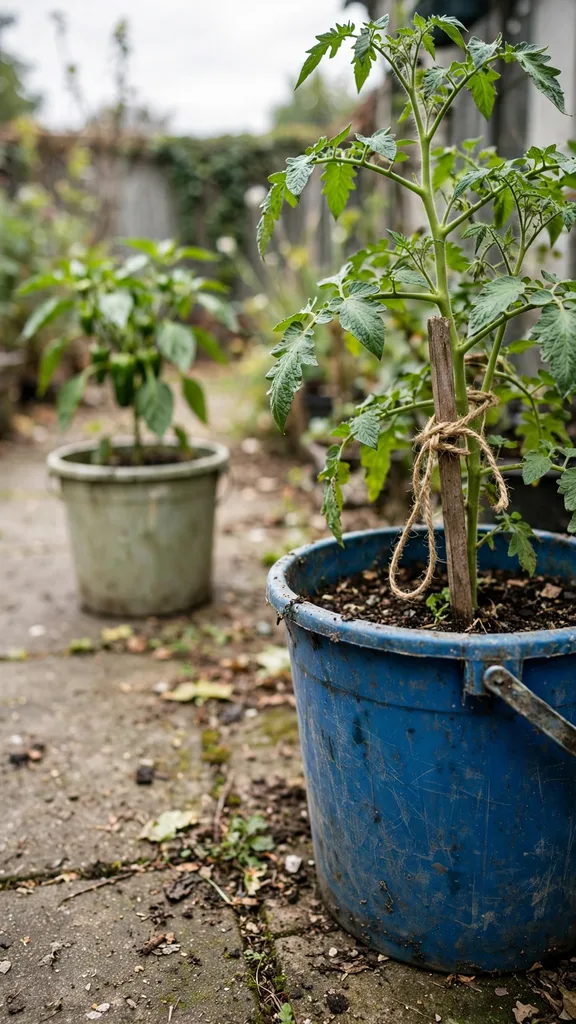
A bucket from a reuse shop costs a fraction of a new pot the same size, and it lasts for seasons when you store it out of the sun in winter. Scrub every secondhand bucket with hot soapy water and rinse it before you plant. A bucket that once held paint or chemicals never becomes a food pot, whatever the label says now. A bucket with no drainage holes drowns tomato roots in the first wet week.
Fabric Grow Bags for Potatoes and Beans
Set a fabric grow bag on a wooden board and fill it with potting mix. Bush beans grow in a bag through summer, and potatoes grow in a bag that you roll down at planting time and roll up as the stems rise. The fabric lets air reach the roots and lets extra water drain through the sides. The size table above puts potatoes in a 30 gallon bag, which is 113.6 L, so buy the largest bag you can carry when it is full of wet mix.
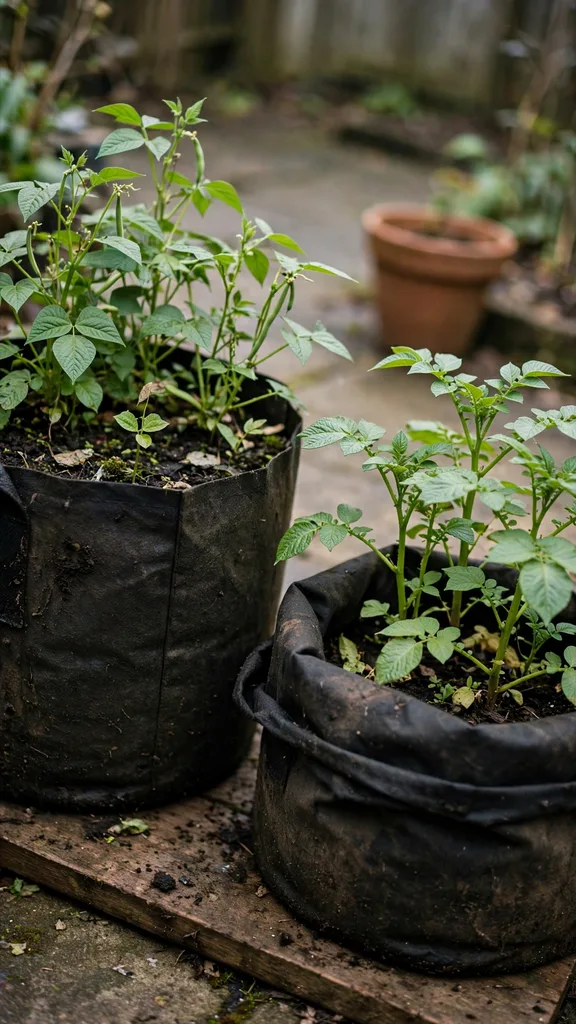
A grow bag costs less than a rigid pot of the same size, and it folds flat for storage when the season ends. Move a bag to the sunniest corner in spring and to a shaded corner in a heat wave. A bag left on bare concrete dries from the base on hot days. Stand it on a board or a plant saucer to slow that drying, and water at the base until the sides darken with moisture.
Wooden Crates for Leafy Greens
Stack two wooden crates in a patio corner and line each one with a breathable fabric liner. Lettuce and spinach grow in the top crate while the lower crate holds a second sowing that follows two weeks later. Sow a short row, wait for the first leaves, then sow the next row. The staggered sowing keeps leaves coming instead of one glut followed by bare soil.
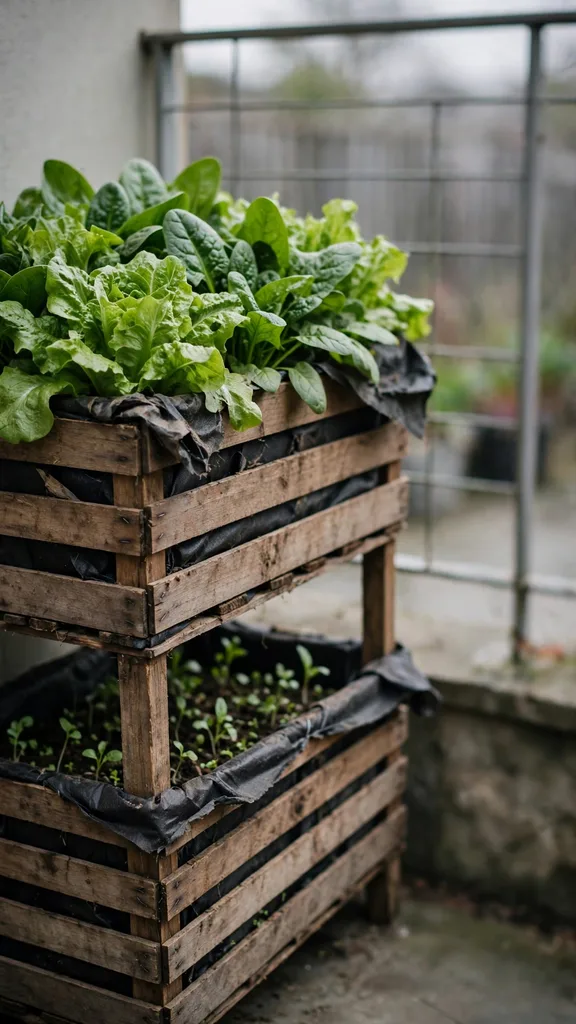
Crates cost little when you take them secondhand, and they stack into a corner that holds no full-size pot. Line the inside so mix stays in the crate and water drains out. The size table above gives lettuce 15.2 to 20.3 cm of mix depth, which a single crate provides. A crate with a plastic liner and no drainage holes holds water at the base and rots the roots. Cut slits in the liner base before you fill the crate.
Tin Cans for Herbs on a Windowsill
Punch 3 drainage holes in the base of a large tin can and fill it with potting mix. Basil grows in one can on a sunny windowsill, and chives grow in another beside it. Most herbs grow in a pot 10.2 to 15.2 cm across, which a large food can matches. Set the cans on a tray so water that drains out stays off the sill.
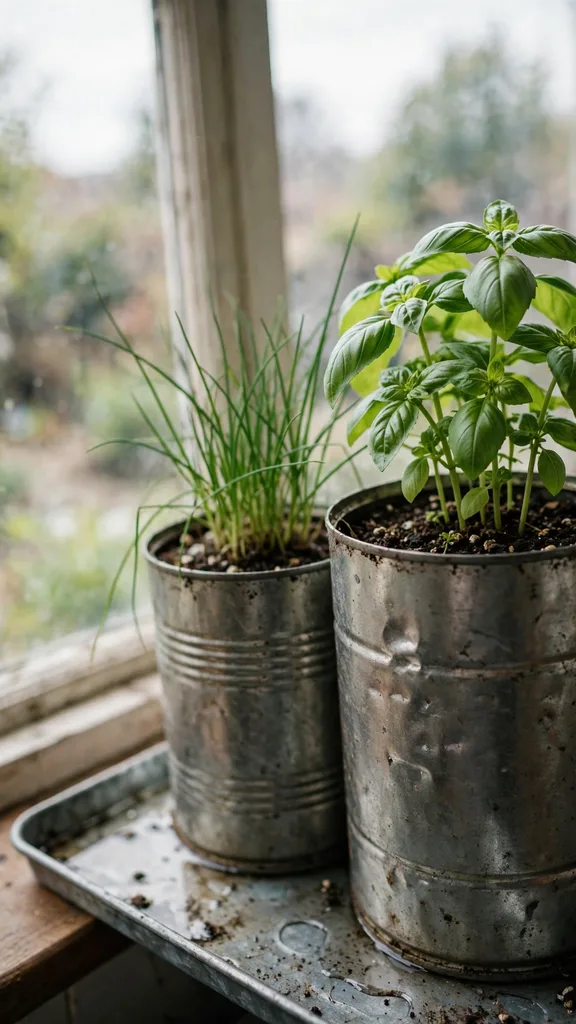
Tin cans cost nothing when they come from the kitchen, and a row of them turns a windowsill into a herb shelf for the season. Wash each can with hot soapy water and dry it before you fill it. A can with no drainage holes drowns basil roots in the first week. A can left in a saucer of standing water rots the roots from the base, so empty the tray after every watering.
Plastic Storage Totes for Salad Leaves
Take a shallow plastic storage tote, drill drainage holes along the base, and fill it with potting mix. Lettuce and mustard leaves grow thickly across the surface, and you cut the outer leaves with scissors when they reach 10 cm. The center keeps growing new leaves for the next cut. A tote this size holds a full sowing of salad leaves and sits on a patio slab where you can reach it without bending far.
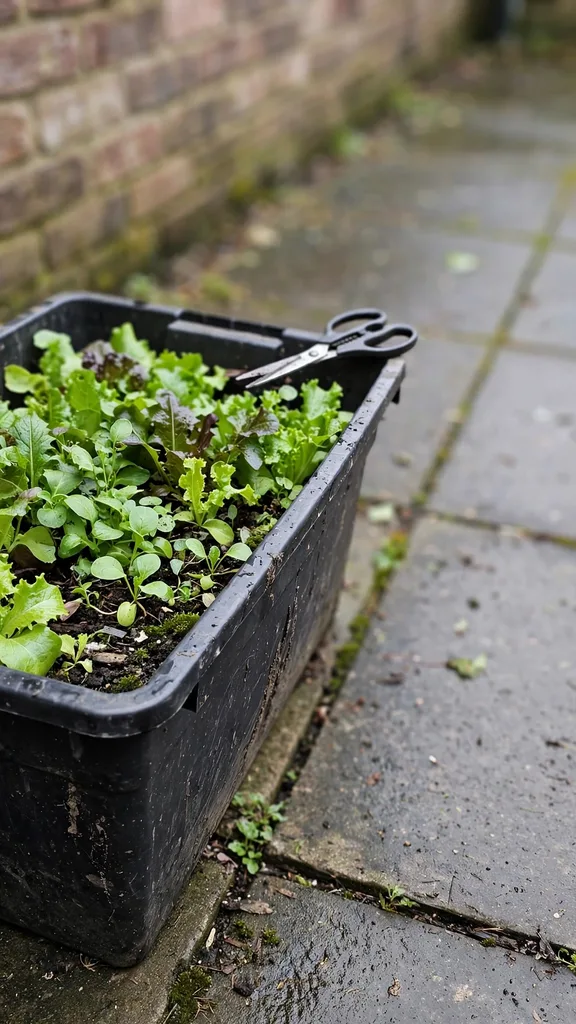
Fill the tote with potting mix, never with soil dug from the garden bed. The site’s soil health and pest resistance guide explains why garden soil packs down in a pot and starves roots of air. A tote costs less than three small pots and holds more leaves than all three. A tote with its lid left on in full sun cooks the seedlings by midday. Leave the lid off. Water at the base in the morning.
Secondhand Terracotta Pots for Herbs
Buy terracotta pots secondhand and plant rosemary and thyme in them. Terracotta is porous, so it dries fast and suits herbs that hate wet feet. Set the pots on patio steps in full sun. Water sparingly, only when the mix feels dry a finger deep, and let the pot dry between waterings.
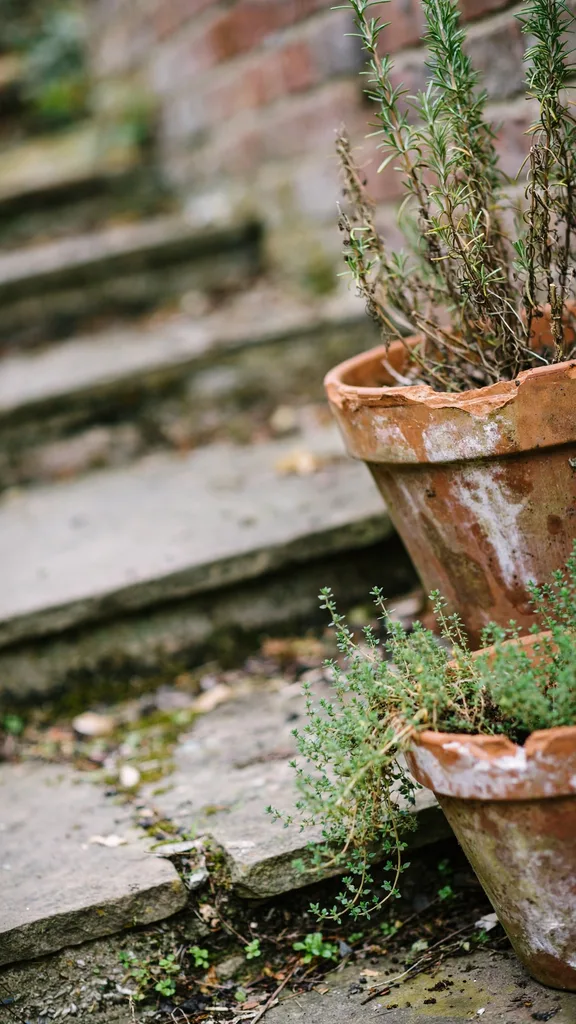
Secondhand terracotta costs a fraction of new pots, and a chipped rim changes nothing about how the plant grows. Check each pot for a drainage hole before you pay for it. The handbook chapter linked above warns that unglazed pots absorb water and crack when wet mix freezes, so bring terracotta under cover before the first hard frost. A rosemary plant in a glazed pot with no drainage hole rots at the base after the first heavy rain.
Hanging Baskets for Trailing Herbs and Strawberries
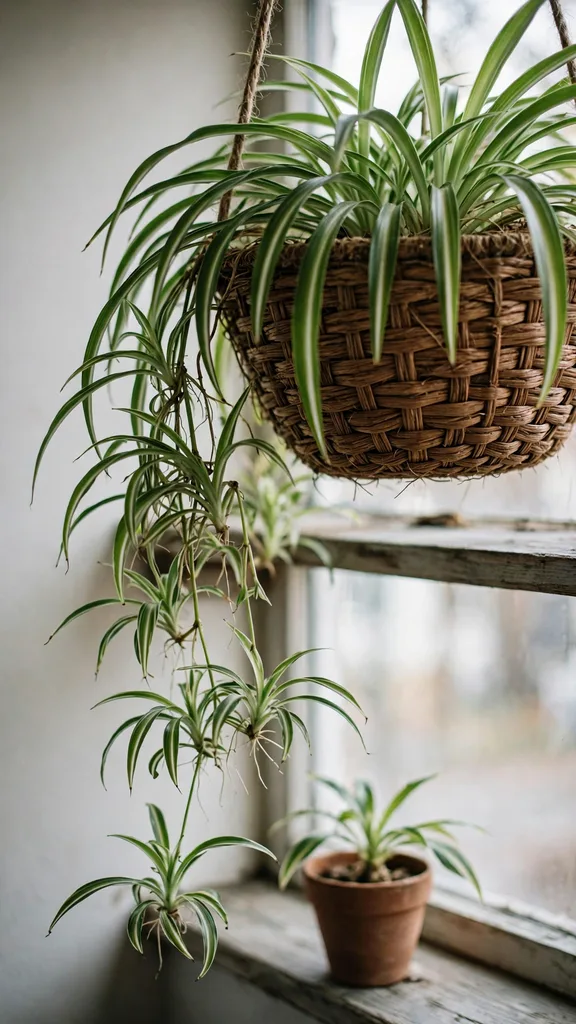
Hang a basket from a ceiling hook and plant it with trailing herbs that spill over the edge. Oregano and thyme grow down from a basket, and the leaves stay clean because they never touch the floor. Strawberries grow in a hanging basket too, with the fruit hanging clear of slugs and soil. Water slowly, so the mix absorbs it.
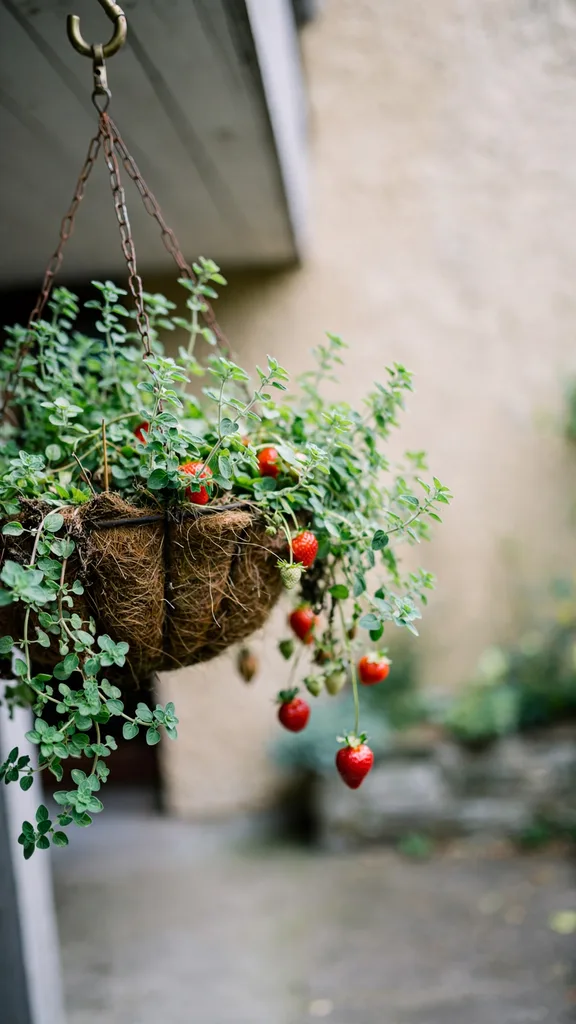
A hanging basket uses air space that no floor pot can use, and a secondhand basket costs little. Fall hanging baskets follow the same hanging build with autumn planting, and the site’s fall hanging baskets show that seasonal version. Hang the basket where you can reach it with a watering can without a chair. A basket hung too high dries out because nobody waters it. A basket with a solid liner and no drainage hole rots the roots from the base.
Window Boxes for Flowers and Salad Leaves
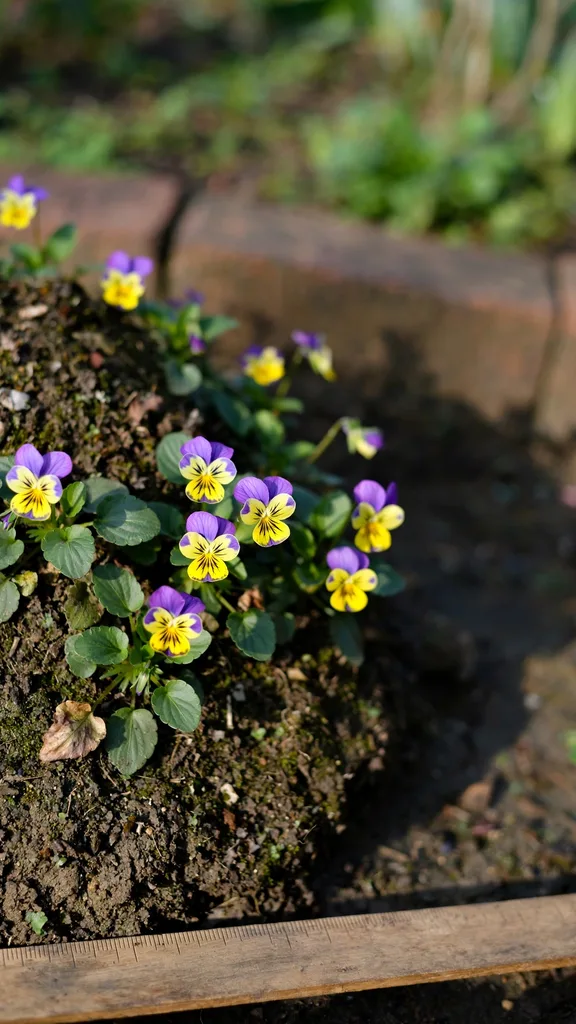
Fix a window box to the wall at waist height and plant it with herbs on one end and flowers on the other. Thyme takes the sunny end, and marigolds take the far end where their roots stay drier. Lettuce fills the middle in spring and autumn. A wall box turns dead wall into growing space and keeps the floor free for larger pots.
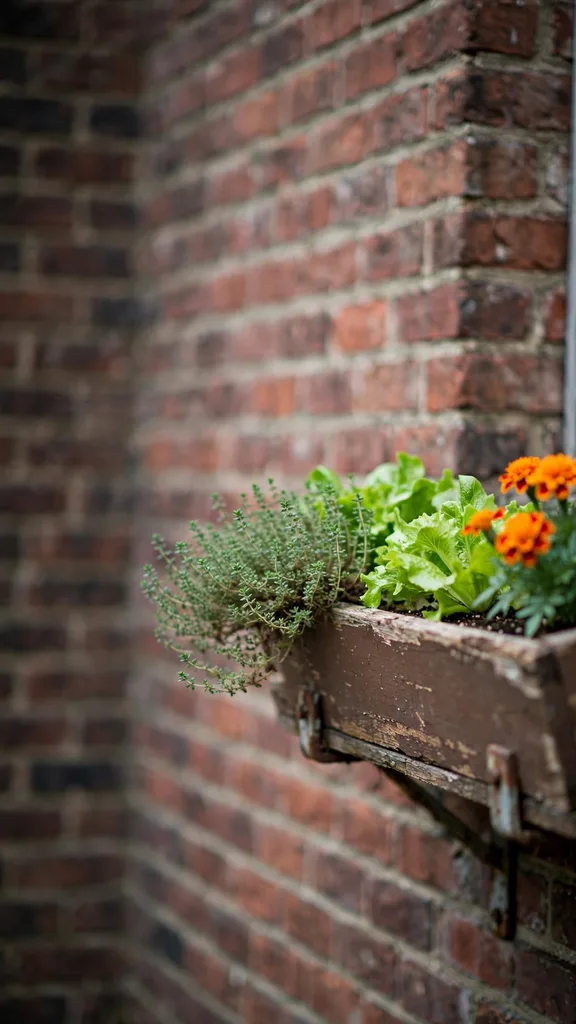
A wall box costs more than a rail planter because the brackets carry the full weight of wet mix. Fall window boxes follow the same mounting pattern, and the site’s fall window boxes show that seasonal version. Buy brackets rated for the loaded box, not the empty one. A box fixed with short screws pulls out of the wall in the first storm. A box with no drainage holes turns to soup after rain.
Cut Bottles and Milk Jugs for Seed Starting
Cut the top off a plastic milk jug and punch drainage holes in the base. Sow lettuce or basil straight into the mix, then set the cut top back on as a lid until the seeds sprout. Lift the lid each morning so the seedlings get air and light. Move the seedlings into their final pots when the first true leaves open. A jug on a windowsill starts the season two weeks before the floor pots warm up.
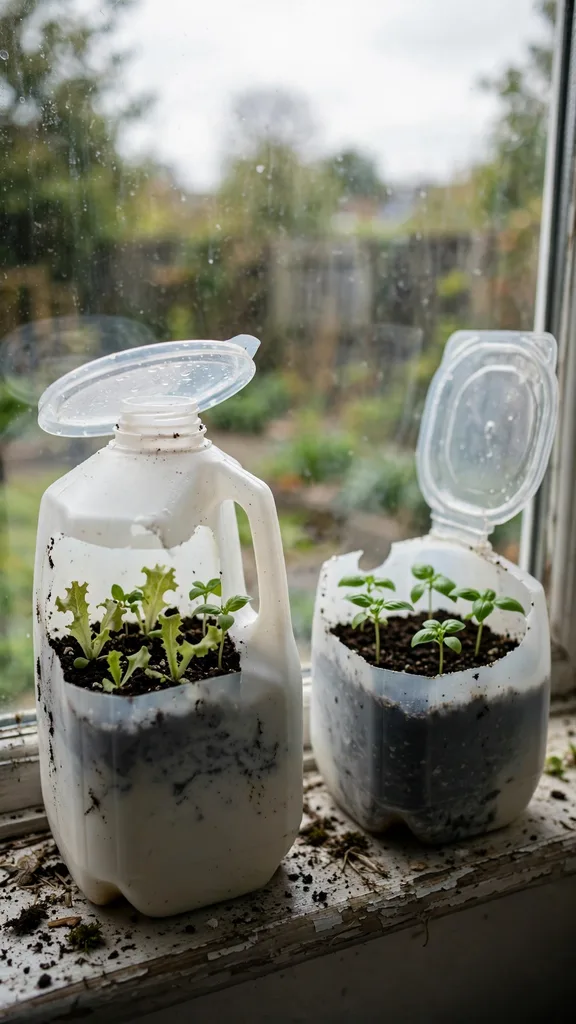
A jug costs nothing when it comes from the kitchen, and one tray of seedlings fills a whole patio with plants for the season. The site’s seed starting steps show the same jug method with timing for each crop. A jug with no drainage holes drowns the seeds in the first rain. A jug left under a closed lid in full sun cooks the seedlings by midday, so lift the lid each morning and water from the base.
Reclaimed Sink for Herbs and Lettuce
Set an old ceramic sink on bricks in a patio corner and fill it with potting mix. Herbs grow along the back edge where the tap once stood, and lettuce grows across the front where you can reach it without bending. The sink already has a drain hole, so water escapes freely. A sink this size holds a full herb collection and a row of lettuce in the space of one paving slab.
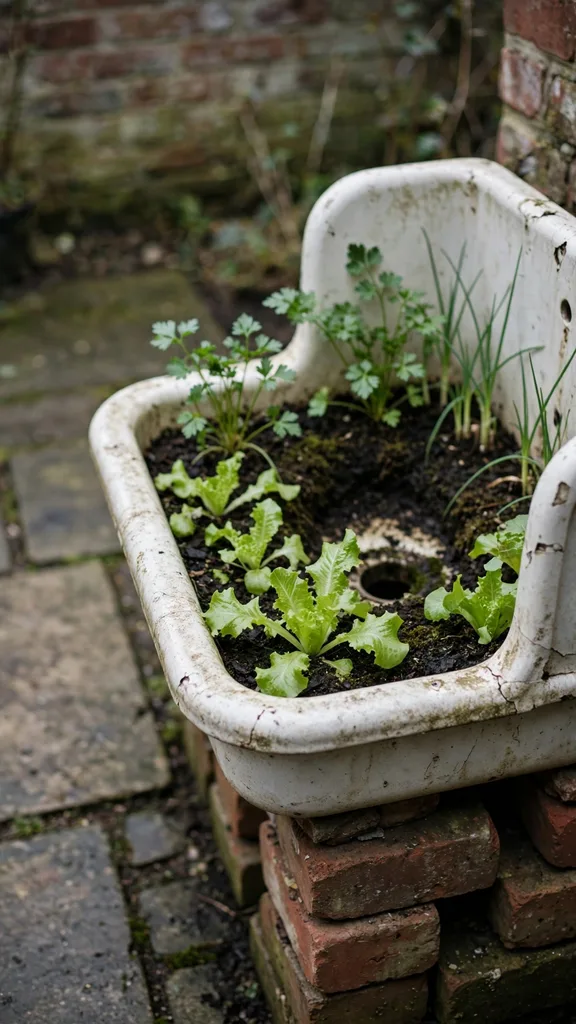
A sink from a salvage yard costs little, and it lasts longer than any timber crate. Check the drain before you fill it, and clear any blockage with a wire. A sink with a blocked drain holds water after rain and rots the roots. A sink set flat on the ground drains slowly, so raise it on bricks and check that water runs from the drain after the first watering.
Laundry Basket for Strawberries
Take a plastic laundry basket, line it with breathable fabric, and fill it with potting mix. Plant strawberries through the holes in the sides as well as across the top, so fruit hangs clear of the soil. The basket holds a dozen plants in the space of one floor pot. Water slowly from the top so the mix absorbs the water instead of letting it run straight out of the side holes.
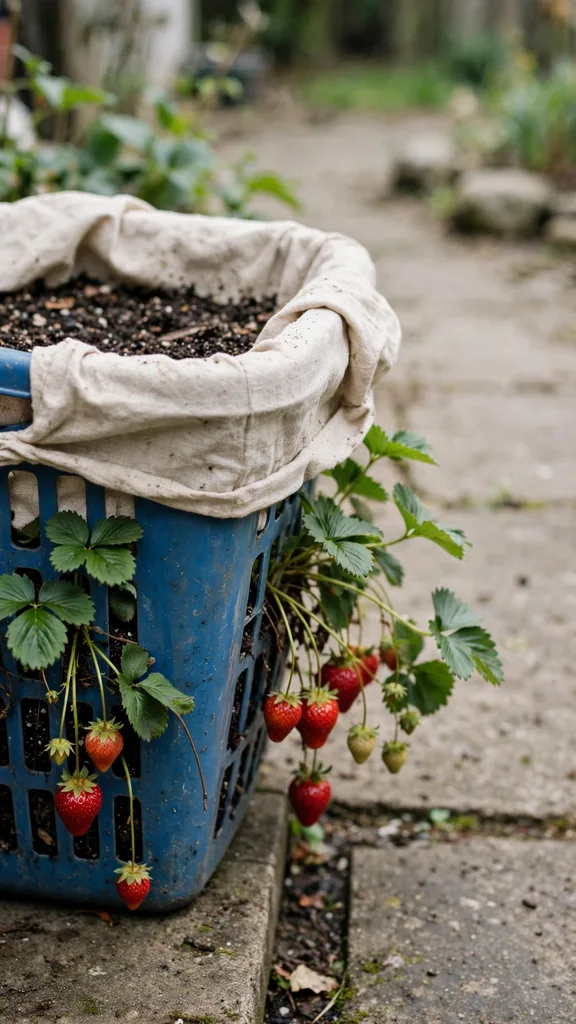
A laundry basket costs little new and nothing secondhand, and it moves easily when you need the space for something else. Line the inside so mix stays in the basket and water drains out. A basket with no liner loses mix through the holes with every watering. A basket left in full sun all day dries from the sides as well as the top, so water it at the base in the morning and again in the evening during a heat wave.
Concrete Blocks for Herbs and Strawberries
Stack the blocks into a low wall. Fill each hole with potting mix. Plant thyme and oregano in the top holes and strawberries in the lower ones, where the fruit hangs clear of the soil. The wall holds a dozen plants in a strip of patio that fits no pot. Water each hole slowly so the mix absorbs the water instead of running straight through the block.
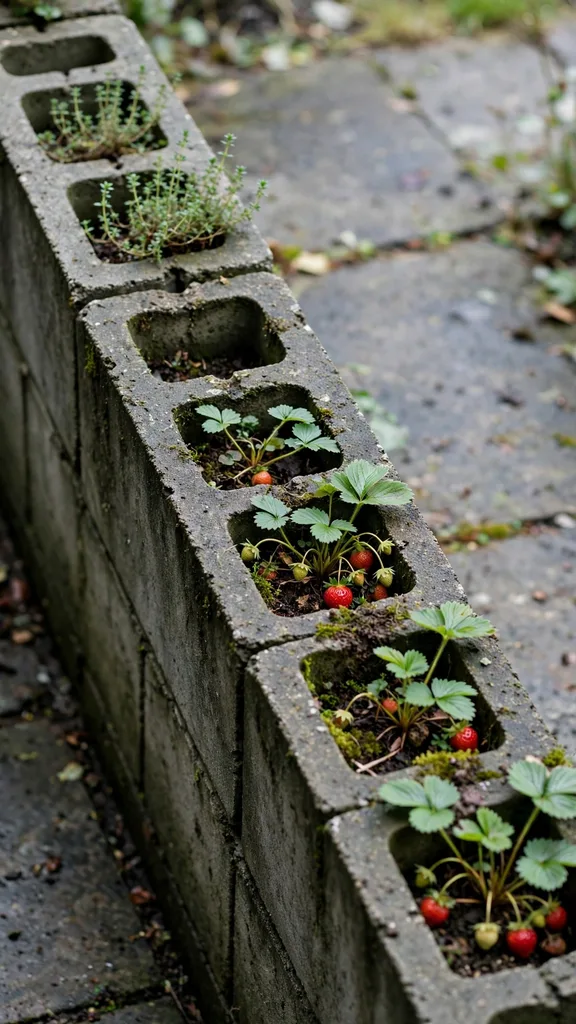
Concrete blocks cost little from a builders yard, and a wall of them lasts for years without paint or repair. Set the blocks level on firm ground. A wall built on soft soil leans after the first heavy rain and spills the plants. Blocks in full sun heat the mix fast, so water the wall at the base in the morning and shade it with a board on the hottest afternoons.
Mistakes That Ruin a Cheap Container Garden
- Buying pots before measuring. A pot that blocks the patio door wastes money twice, once at the shop and once when you replace it. Measure the space first.
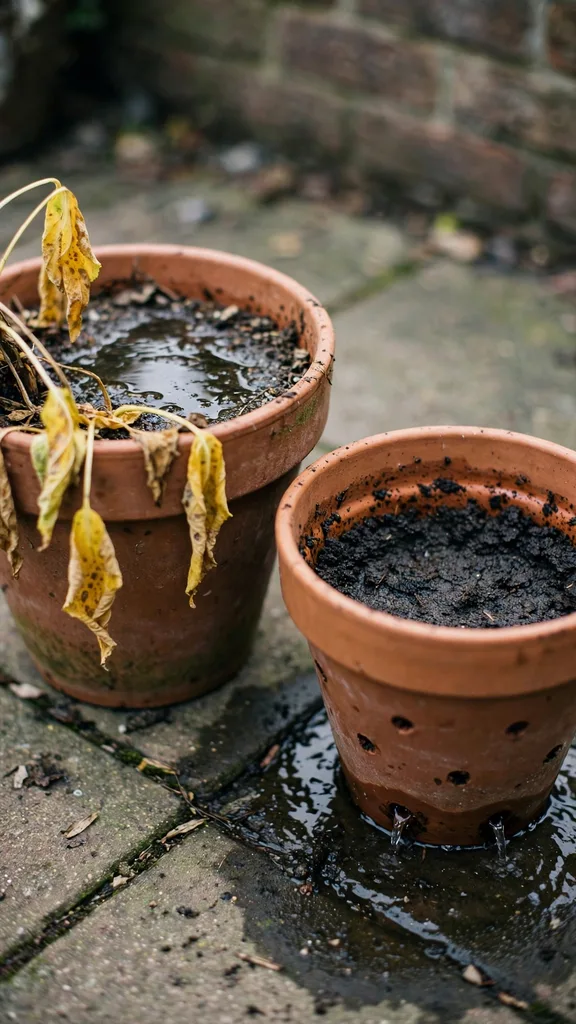
- Skipping drainage holes. A pot with no hole holds water after rain and rots the roots. Drill holes before you fill any container.
- Planting a tomato in a small pot. A tomato in a shallow pot dries out by midday and stops fruiting. Match the pot to the plant using the size table above.
- Filling pots with garden soil. Field soil is no longer used in containers, the handbook chapter linked above states, because it holds too much water, packs down, and carries weeds and disease. Fill every pot with potting mix.
- Buying every tool new. A container garden needs a trowel, a watering can, and shears. The site’s essential garden tools for beginners lists the three tools worth buying and the rest worth skipping.
- Watering from above in full sun. Water on hot leaves scorches them and most of it evaporates before it reaches the roots. Water at the base in the morning.
Frequently Asked Questions
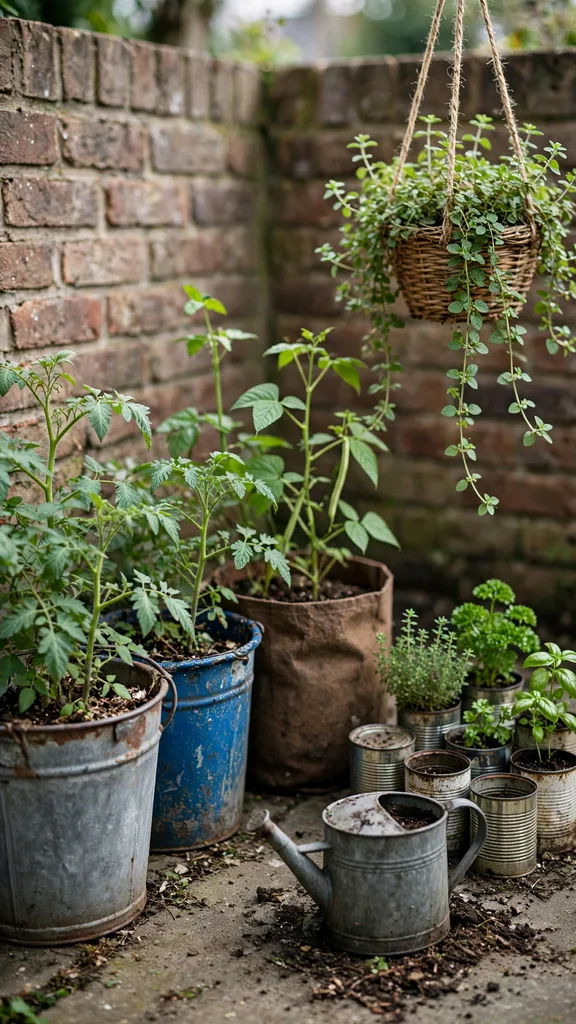
A cheap container garden starts for the price of potting mix and seed when the containers come secondhand. Buckets, crates, tin cans, and laundry baskets cost little or nothing from reuse shops and salvage yards. Spend the saved money on potting mix, which no secondhand find replaces, and on one bag of slow-release fertilizer. A garden built this way crops from the first season.
Tin cans, cut milk jugs, and secondhand buckets are the cheapest containers for growing vegetables, because they cost nothing or nearly nothing and already hold the right volume for herbs and salad leaves. A bucket holds one tomato or one pepper. A tote holds a full sowing of salad leaves. Check every secondhand container for a drainage hole and for what it held before, and never plant food in a container that held paint or chemicals.
Every container needs drainage holes, whatever it cost and whatever it is made from. Roots sitting in standing water rot, and a pot with no hole holds water after every rain. Drill holes in the base of buckets, totes, and cans, and cut slits in the liner of crates and baskets. Set the container on bricks or a board so the holes stay clear of the ground and water runs out freely.
Small cheap containers suit herbs, salad leaves, and strawberries best. Basil, parsley, and chives grow in tin cans. Lettuce and spinach grow in a shallow tote and regrow after each cut. Strawberries grow in a laundry basket and fruit from the side holes. Pick crops you eat weekly so nothing goes to waste.
A container garden stays cheap after the first season when you reuse the containers and the mix. Empty each pot in autumn, scrub it with hot soapy water, and store it under cover. Refresh the old mix with finished compost and a slow-release fertilizer at planting time. Sow salad leaves and herbs from seed each spring instead of buying plants, and swap cuttings with other gardeners.
Where to Go From Here
Start with one bucket and one tin can this weekend. Drill the holes, fill both with potting mix, and set a tomato in the bucket and basil in the can. Water both at the base each morning and watch which spot dries first, because that first week tells you more about your patio than any shopping list. Add the second idea only when the first two containers grow well. A pot with no drainage hole drowns the plant in the first wet week.