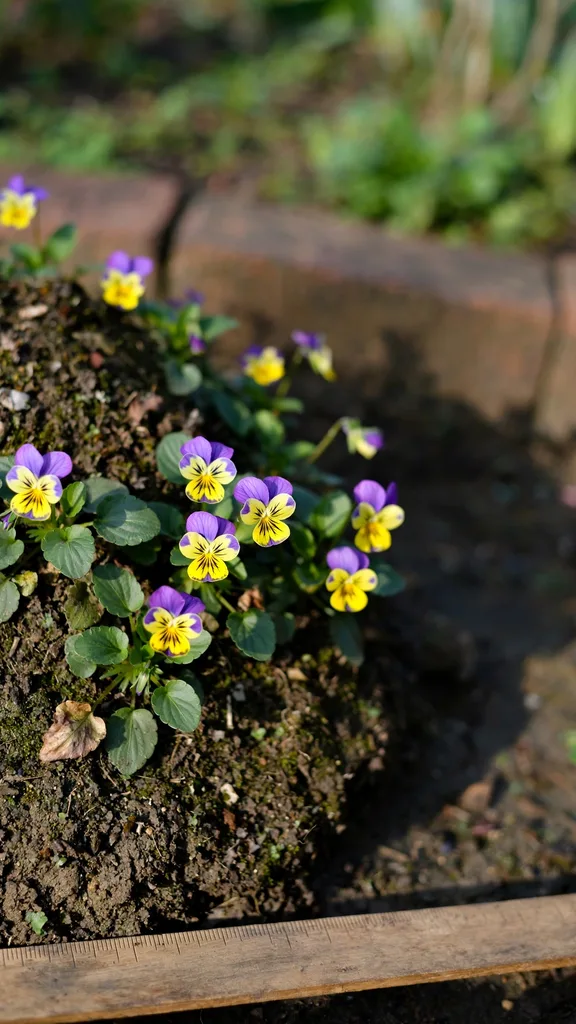
Plant 6 viola plants in a sunny bed 2 weeks before your last frost, then water at the base once a week through bloom. That is how to grow viola for months of cool-season color from small plants that ask for little and give back a long run of flowers. Viola flowers carry five petals in a flat face, and the plants stay low enough to edge a path, fill a pot, or line a window box without crowding the plants beside them.
Viola is a cool-season flower. It blooms through fall, winter in mild climates, and spring, then fades when hot summer weather arrives. Plant it at the right season and the flowers keep coming. Plant it in summer heat and the plants stretch, stop flowering, and die back fast. Timing decides more than any fertilizer or spray.
I have learned that viola forgives a missed deadheading faster than it forgives wet feet. Roots that sit in soggy soil rot, and no amount of feeding brings a rotted plant back. Get the drainage right first, then worry about flowers.
Check Viola Size, Sun, and Bloom Length First
Check the size before you buy. The North Carolina Extension plant profile lists garden pansy, Viola x wittrockiana, at 15.2 to 22.9 cm tall and 22.9 to 30.5 cm wide, with flowers 2.5 to 5.1 cm across and a bloom run of 4 to 6 months. Small-flowered viola types run smaller than pansy, with flowers near 2.5 cm across and a tighter mound. Buy the size that fits the spot, and the bed fills in without gaps or crowding.
| Spec | Viola |
|---|---|
| Height | 15.2 to 22.9 cm |
| Spread | 22.9 to 30.5 cm |
| Flower size | 2.5 to 5.1 cm across |
| Bloom length | 4 to 6 months |
| Light | Full sun to part shade |
| Soil | Humus-rich, moist, well drained |
| Flower colors | Purple, yellow, white, blue, orange, near black |
| Life cycle | Cool-season annual in most gardens |
Sun decides the flower count. Full sun in cool weather gives the most blooms. Part shade suits viola where spring warms fast, and afternoon shade keeps the flowers going a few weeks longer. Deep shade gives leggy stems and few flowers. A spot that gets morning sun and afternoon shade fits most gardens.
Soil decides whether the roots live. Viola wants humus-rich soil that holds moisture and drains fast. Dig compost into the top 15.2 cm of the bed before planting. Heavy clay holds water around the crown and invites rot. Sandy soil dries out between waterings and starves the flowers. Compost fixes both faults at once.
Pick a Viola Type That Fits Your Bed
Pick the flower size first. Large-flowered pansy, Viola x wittrockiana, gives the biggest faces and the boldest color blocks. Small-flowered viola gives many more flowers per plant, and the plants tolerate heat and cold a little better than pansy. Johnny-jump-up, Viola tricolor, reseeds freely and returns on its own in beds where you let it. Panola sits between the two, a pansy and viola cross with the cold hardiness of viola and a larger bloom than viola.
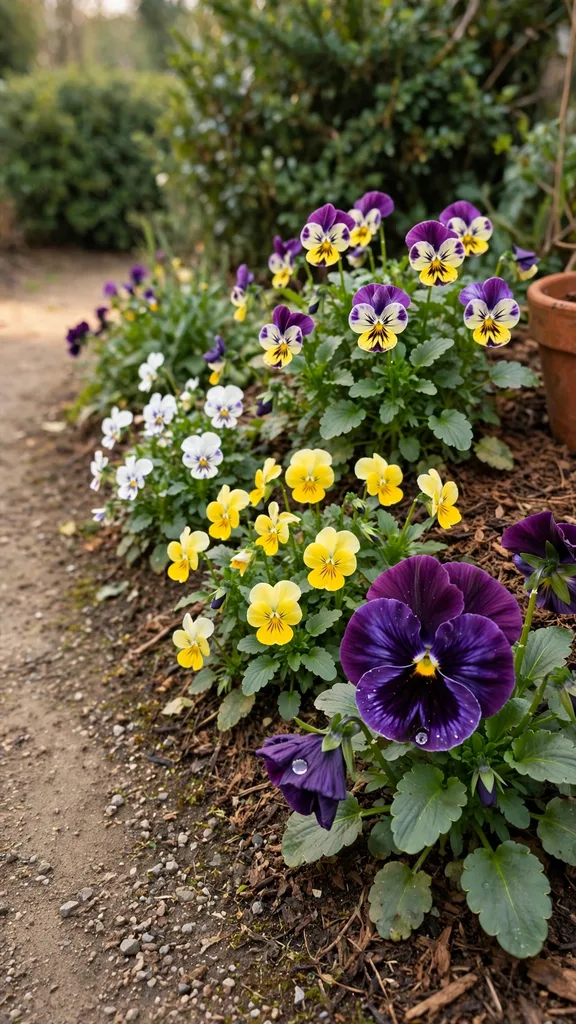
Viola Jewel leads the small-flowered group with a compact mound and a steady run of small faces in mixed colors. Viola Colossus grows larger than most viola types, with flowers that approach pansy size on a plant that still branches like a viola. Viola Blanda is a native woodland type with small white flowers and a quiet habit for a shaded edge. Viola Chamissoensis is a wild species type for a natural bed, not a bedding display. The queue lists 13 viola varieties, and the four named here cover the bed, the pot, the shade edge, and the wild corner.
Color choice follows the bed, not the catalog. One color in a long edge reads clean from the path. Mixed colors suit a pot by the door, where the eye stops close. Dark faces show best against pale mulch. A light wall works too. Pale yellow and white faces glow in a shaded corner where purple disappears into shadow.
Buy stocky plants. Choose plants with dark green leaves, short stems, and many buds with few open blooms. Tall pale plants with open flowers have already spent their first flush in the nursery tray. A stocky plant settles fast and flowers for weeks. A leggy plant sulks for a month and never catches up.
Time Viola Sowing to Your Frost Dates
Time the planting to the frost dates, not the calendar month. Fall planting suits mild winters, where viola flowers through winter into spring. Spring planting suits cold winters. Fall plants freeze out before they root there. Late summer sowing suits northern gardens, where seedlings size up before the cold arrives and bloom hard in spring.
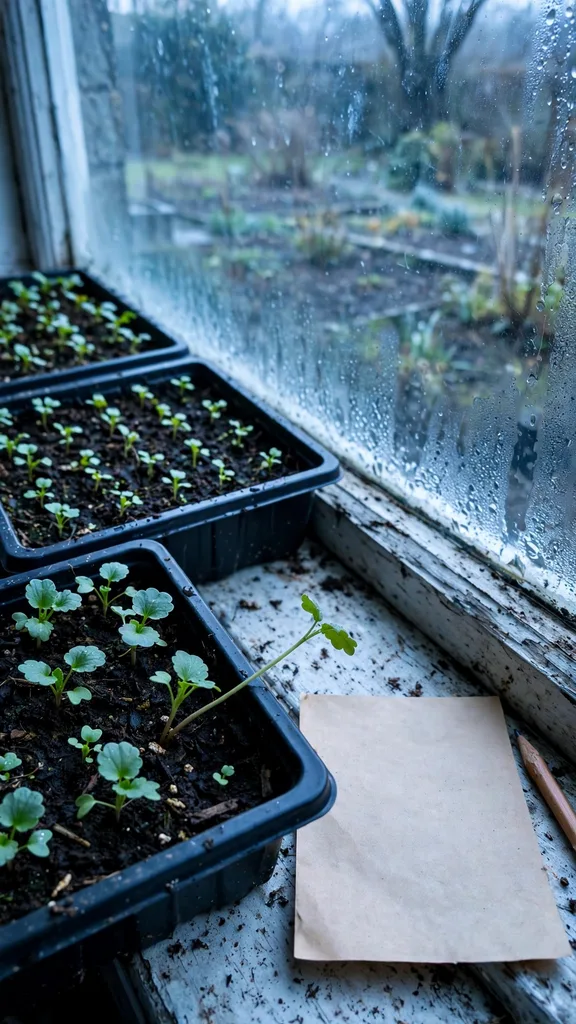
Count back from your last frost for spring planting. Set transplants out 2 weeks before the last frost in spring. Viola tolerates light frost, and the cool soil helps roots grow before the heat. A hard freeze after planting blackens the leaves, so cover the bed with cloth on a night when the forecast drops below freezing.
Count forward from the first fall frost for fall planting. Set transplants out 6 weeks before the first killing frost in fall. Roots need those 6 weeks to anchor before the cold stops growth. Plants set out a week before frost sit shallow all winter and heave out of the soil with the first freeze and thaw.
Seed sowing follows the same clock. Sow seed indoors in late summer, 6 to 8 weeks before transplanting, and move the seedlings out once the summer heat breaks and cooler weather arrives. Direct sowing in the bed works in mild climates, where the seed germinates in cool soil and the seedlings size up through fall.
Start Viola Seed Indoors 6 to 8 Weeks Before Transplanting
Start seed indoors 6 to 8 weeks before the transplant date. Fill a tray with fine seed mix and press the seed into the surface. Cover the seed with a thin layer of mix. Viola seed germinates in darkness, so the cover matters more than the depth. Water the tray from below so the seed stays put.
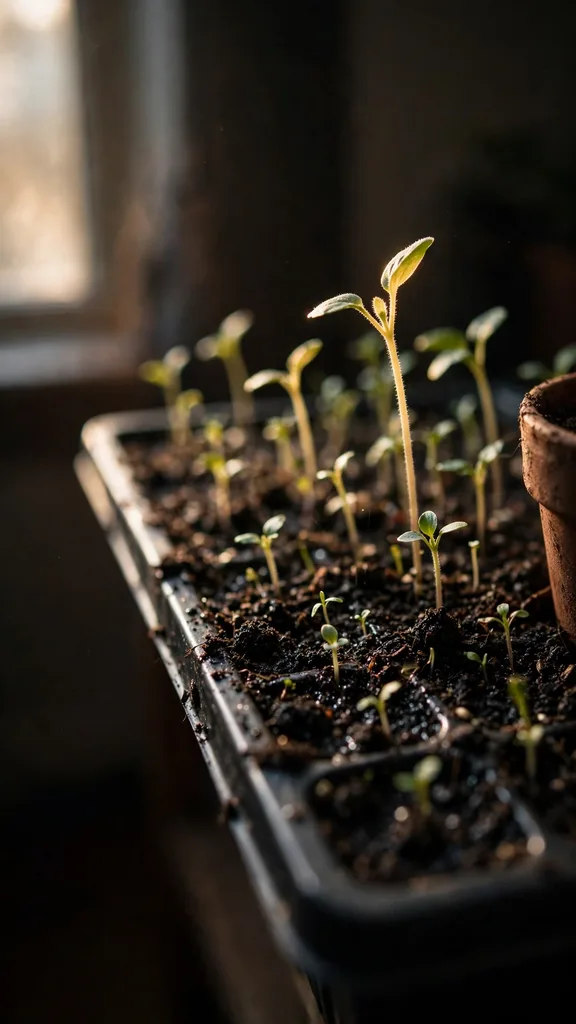
Hold the tray cool. Seed germinates best near 18.3 degrees Celsius in the dark. A warm room above 23.9 degrees Celsius slows germination and gives weak seedlings. A cool windowsill or a basement shelf under a light fits the job. Check the tray daily and move it into light the moment the first green hooks show.
Thin the seedlings early. Snip the weaker seedling at the soil line when the first true leaves open, and leave one strong plant per cell. Crowded seedlings stretch for light and flop at transplant. One strong plant per cell grows a thick stem and a full root ball.
Harden the seedlings off for 7 days before planting out. Set the tray outside in shade for a few hours on day one, then add an hour of sun each day. Bring the tray in at night until the last 2 nights, when it stays out if no frost threatens. Seedlings that skip hardening wilt in the first sun and lose a week of growth.
Plant Viola Transplants 15.2 to 25.4 cm Apart
Plant transplants at the same depth they grew in the pot. Dig a hole as deep as the root ball and twice as wide. Set the plant in, firm the soil around the roots, and water at the base. A buried crown rots. A raised crown dries out and the plant wilts by noon.
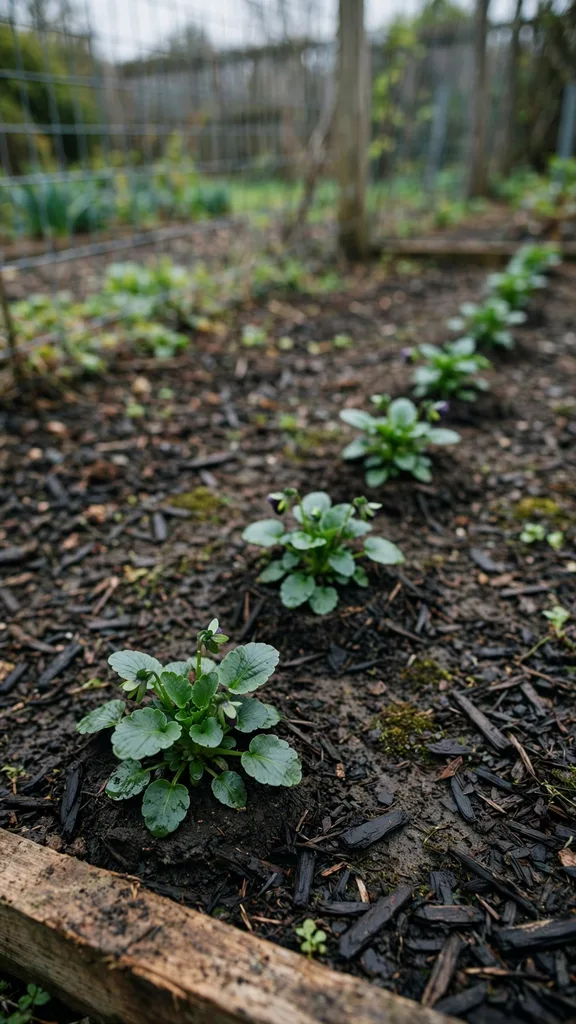
Space small-flowered types 15.2 to 20.3 cm apart. Space large-flowered pansy types 25.4 to 30.5 cm apart. Wide spacing moves air between the plants and keeps leaf disease down. Tight spacing looks full on planting day and turns into a damp mat of leaves by the second month, with rot starting in the middle where no air reaches.
Water well after planting. Soak the root zone until the soil is damp 15.2 cm down. Check the soil with a finger the next morning. Damp soil at finger depth means the roots have water. Dry soil at finger depth means the first watering ran off the surface and never reached the roots.
Mulch the bed with 5.1 cm of organic material after planting. Mulch holds moisture, keeps the soil cool, and cuts weed growth around the low plants. Keep the mulch 2.5 cm away from each crown. Mulch piled against the crown holds water on the stem and invites rot.
Water Viola at the Base Every Week in Bloom
Water at the base, in the morning, once a week in bloom. Give the bed 2.5 cm of water a week when rain falls short of that amount. A rain gauge or a straight-sided can under the sprinkler tells you what the bed received. Morning watering lets the leaves dry before night, and dry leaves resist disease.
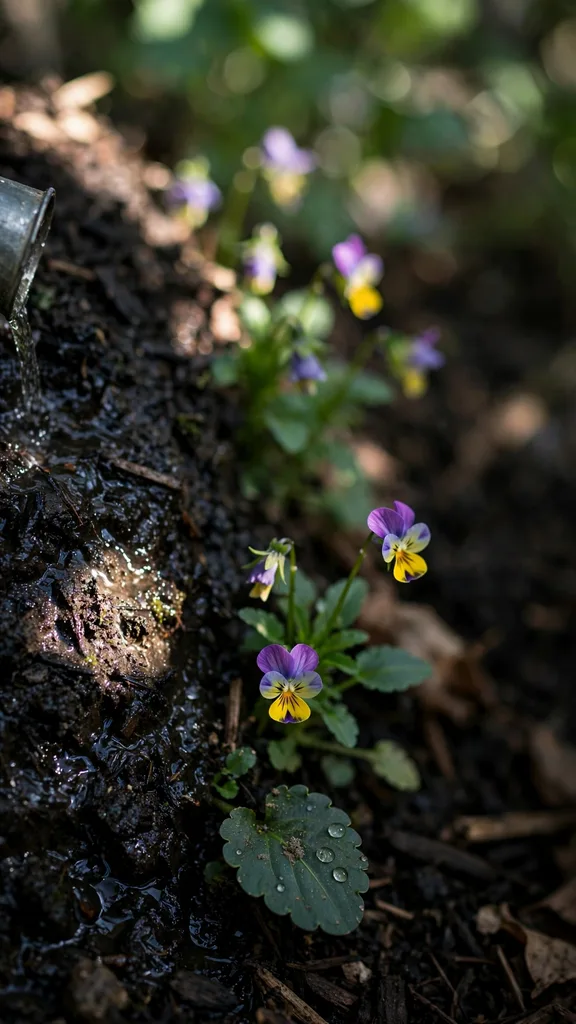
Water the soil, not the leaves. Overhead watering keeps the leaves wet and feeds fungal leaf spot. A soaker hose or a watering can at soil level puts the water where the roots live. Never water in the late afternoon or evening, since wet leaves overnight invite disease.
Watch the soil, not the calendar. Stick a finger 5.1 cm into the soil before watering. Water when the top 5.1 cm feels dry. Skip the watering when the top 5.1 cm still feels damp. Pots dry faster than beds, so check pots every 2 days in warm weather and daily when the sun hits the pot wall.
Wilting at noon does not always mean dry soil. Viola wilts in hot sun even when the soil holds water, then recovers by evening. Check the soil before adding water. Watering a wilted plant in wet soil drowns the roots and starts the rot that ends the season.
Feed Viola Lightly Every 2 to 3 Weeks
Feed lightly and often. Mix a granular slow-release fertilizer into the soil at planting time, then follow with a water-soluble liquid fertilizer every 2 to 3 weeks through bloom. Liquid feed reaches the roots fast and keeps the flowers coming without a heavy dose that burns the leaves.
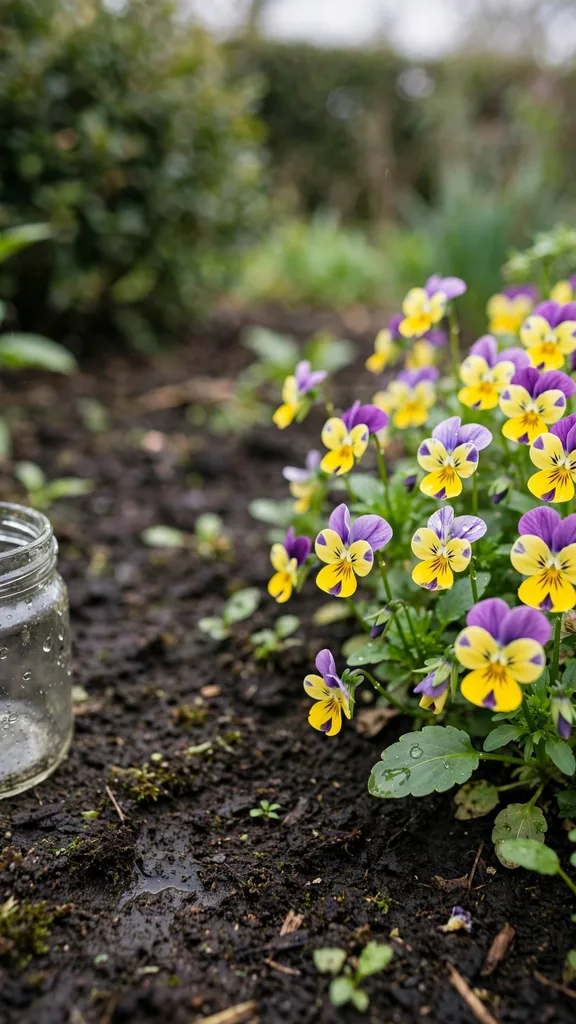
The Clemson Extension pansy guide gives the feeding numbers: pansy grows best at soil pH 5.4 to 5.8, and without a soil test report it recommends a 5-10-10 granular fertilizer in late fall and again in early spring. Test the soil once a year to set the pH and the nutrient levels. Lime stays out of the bed unless the test shows the pH sits below the range.
Skip high-nitrogen fertilizer. Nitrogen pushes soft leaf growth that flops in the first wind and invites rot. A balanced feed or a low-nitrogen bloom feed keeps the plant compact and flowering. Yellow leaves with green veins point to pH above the range locking iron away, and the fix starts with a soil test, not a bag of fertilizer.
Feed pots more often than beds. Potting mix holds few nutrients, and every watering washes some away. Feed a pot every 2 weeks at half the label rate. Feed a bed every 3 weeks at the label rate. Stop feeding when the plants fade in summer heat, since a dying plant gains nothing from fertilizer and the extra feed only feeds the rot.
Deadhead Viola and Cut Back Leggy Stems by a Third
Deadhead spent flowers every week. Pinch or snip the faded flower with its stalk, back to the next leaf. Deadheading stops the plant from setting seed, and the plant answers with new buds. Pansy needs deadheading to keep blooming well. Small-flowered viola flowers without much deadheading, and a weekly pass still lifts the flower count.
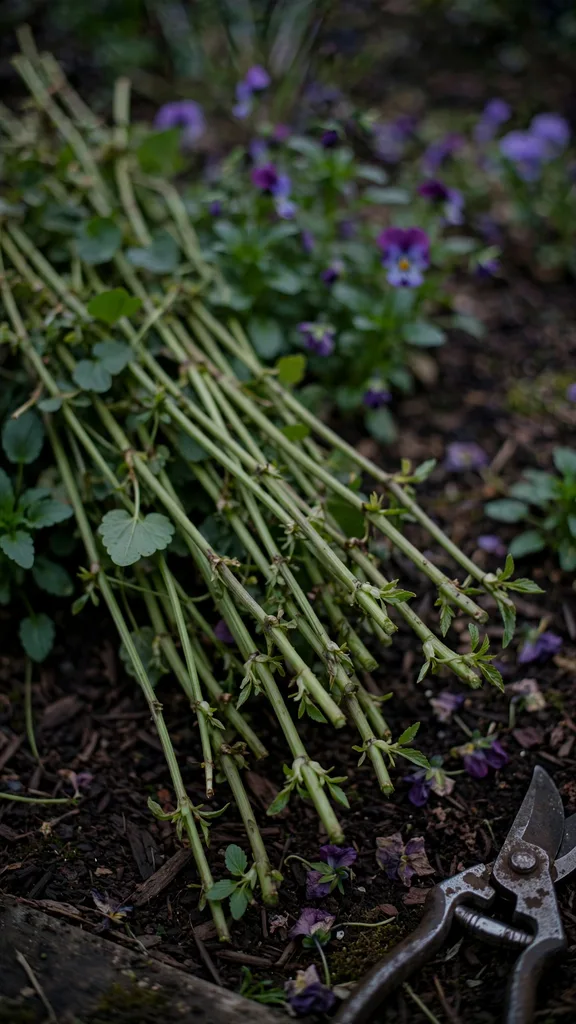
Remove seed heads on viola too. A plant that sets seed spends its energy on seed, not flowers. Snip the swollen pod behind the faded flower before it ripens. A bed that never sets seed blooms weeks longer than a bed left to seed itself, unless you want Johnny-jump-up seedlings next spring.
Cut leggy plants back by a third in midseason. Shears cut the stretched stems to leafy growth, then water at the base and feed lightly. New shoots break from the cut stems within 2 weeks. A plant cut back in spring gives a second flush. A plant left leggy flowers at the stem tips only, with bare stems below.
Pull the plants when summer heat ends the run. Viola fades with hot weather and should come out of the bed once the flowers shrink and the leaves yellow. Compost healthy plants. Bag plants with leaf spot or rot and put the bag in the trash, not the compost heap.
Grow Viola in Pots and Window Boxes
Grow viola in pots where the bed soil stays wet or the sun hits only part of the day. A pot moves to the sun in spring and to the shade in a warm spell. A 25.4 cm pot holds 3 plants. A 30.5 cm window box holds 4 plants at the spacing that keeps air moving between them.
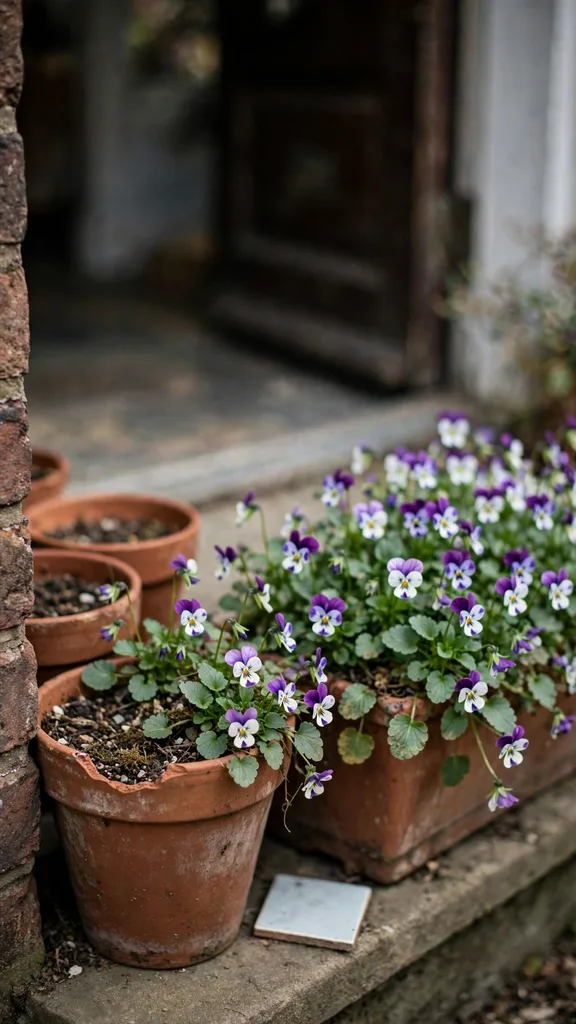
Fill the pot with a free-draining mix, not garden soil. Garden soil packs down in a pot and holds water around the roots. Potting mix with perlite drains fast and still holds moisture. Add a handful of compost to the mix for slow nutrients. Skip any mix that promises moisture retention control, since it stays too wet through a rainy winter and leads to root rot.
Water pots from the base when the top 2.5 cm feels dry. Pots dry from the sides as well as the top, so a pot in full sun needs water twice as often as the same plant in the ground. Feed pots every 2 weeks at half strength. A pot that dries out fully drops its buds, and the buds do not come back on that stem.
Pair viola with a cool-season partner that shares its water needs. Snapdragon stands tall behind a viola edge and flowers through the same cool months. Petunia takes over the same pot when summer heat ends the viola run, and the pot never sits empty. Zinnia follows viola in a sunny bed once the heat arrives, with flowers that love the warmth viola cannot stand.
Stop Slugs, Aphids, and Root Rot Before They Spread
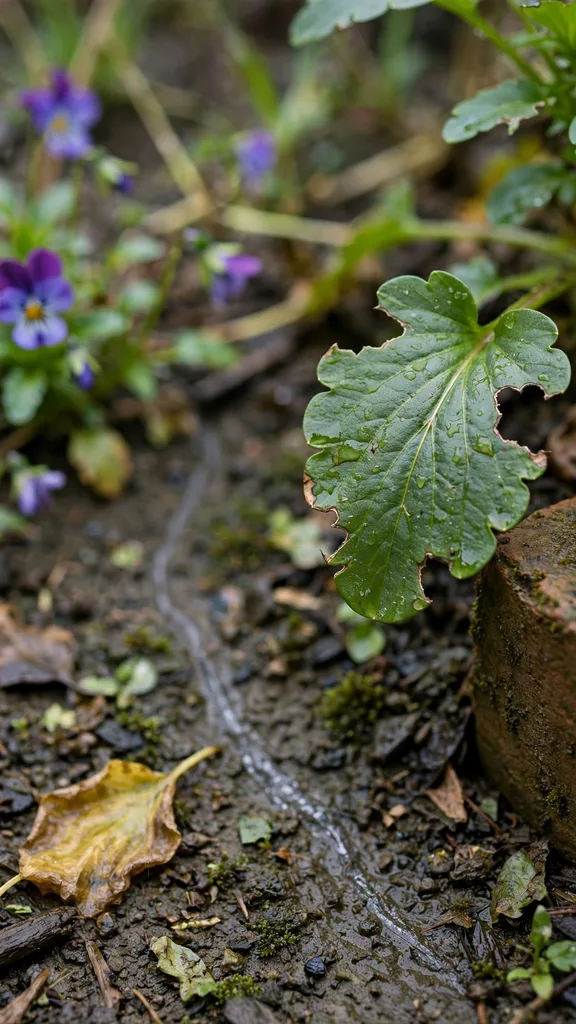
Stop slugs first. Slugs chew notches in the leaves at night and hide under the mulch by day. Lift the mulch on a damp morning and pick the slugs off by hand. Iron phosphate bait near the bed edge cuts the numbers without harming the plants. Keep the bed clear of fallen leaves where slugs shelter.
Check the leaf undersides for aphids every week. Aphids cluster on new growth and suck the sap, and the leaves curl and yellow. A strong jet of water knocks a light cluster off. Insecticidal soap covers a heavy cluster, sprayed to wet the undersides where the aphids feed. Check again in 3 days, since a few survivors rebuild the colony fast.
Watch for black root rot in wet soil. Plants wilt in damp soil, the leaves yellow from the base up, and the roots turn dark and soft. Pull the plant, bag it, and throw it away. Replanting in the same wet spot repeats the failure. Fix the drainage first, then replant with fresh mix and wider spacing.
Watch for fungal leaf spot after wet weather. Round spots with a pale center spread across the lower leaves first. Pick the spotted leaves off and throw them away. Water at the base from then on, and space the next planting wider so the leaves dry fast after rain. Overhead watering after leaf spot appears spreads the spores to every plant in the bed.
Match Viola to Your Zone and Heat Limit
Match viola to your winter before you buy it. Viola flowers through winter in mild climates, in zones 8 to 11, where the cold stays light. Viola flowers in spring and fall in cold climates, where winter freezes the plants out and spring planting starts the run again. The zone sets the season, and the season sets the planting date.
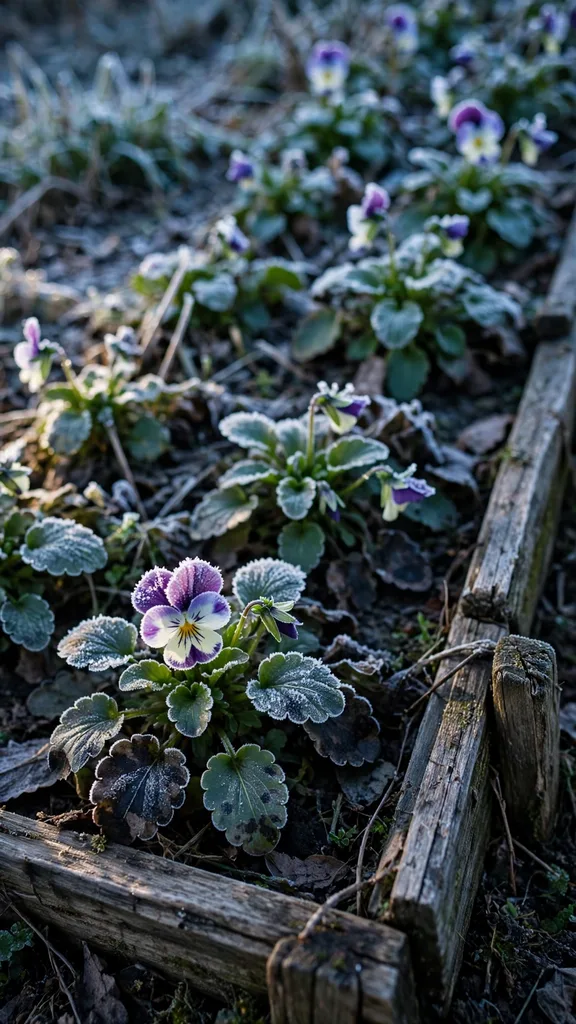
Cold hardiness differs by type. Small-flowered viola and Johnny-jump-up tolerate cold better than large-flowered pansy. A hard freeze stops pansy flowering for weeks, while viola beside it keeps a few flowers open. Water the bed well before a hard freeze, since moist soil holds heat and cuts cold stress on the roots.
Heat sets the end of the season everywhere. Viola fades when hot summer weather starts, and no shade cloth or extra water brings the flowers back once the plant decides the season is over. Pull the plants and plant a summer flower in the same spot. A bed that holds dead viola through July breeds slugs and leaf spot for the fall planting.
Southern gardens plant viola in fall for winter color. Northern gardens plant viola in spring for early color, then again in late summer for fall color. The same plant serves both calendars, and the only change is the planting month. Local frost dates set the month, so check the dates for your town before ordering seed.
Skip 5 Mistakes That End Viola Bloom Early
Skip planting in summer heat. Viola set out in hot soil stretches, yellows, and stops flowering within weeks. Plant in cool soil and the roots grow first, then the flowers follow. A plant that roots well in cool weather flowers for months.
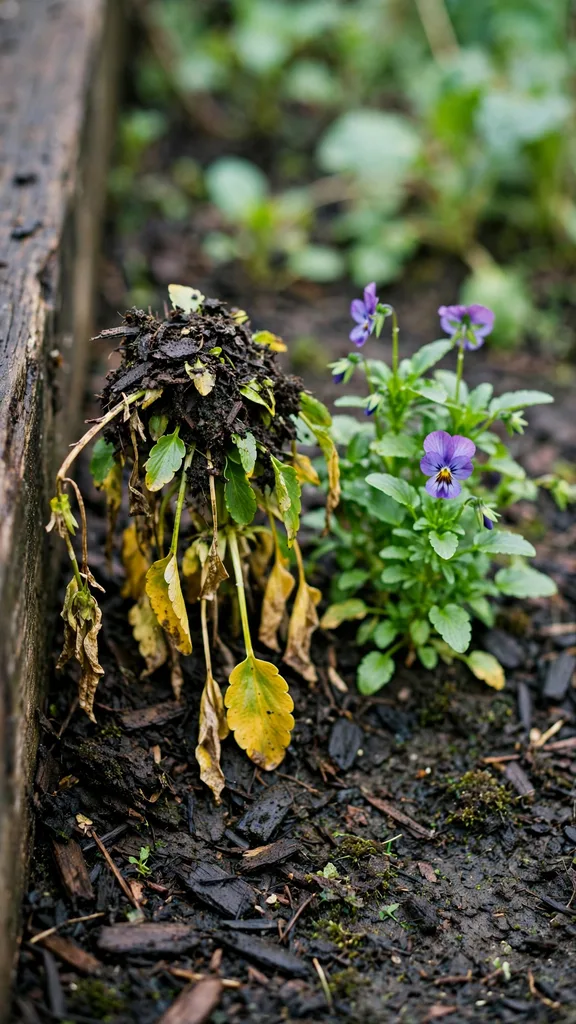
Skip burying the crown. A crown set below soil level rots in the first wet week. A crown set at pot depth stays dry and the plant grows. Check the depth on every plant before you firm the soil.
Skip overhead watering in the evening. Wet leaves overnight feed leaf spot and rot. Water at the base in the morning, and the leaves dry before dark. One evening of overhead watering in a damp week starts the disease that ends the bed.
Skip high-nitrogen fertilizer. Nitrogen grows soft leaves that flop and rot. Feed light, feed often, and let the flowers set the pace. A plant fed for leaves gives leaves. A plant fed lightly gives flowers.
Skip leaving spent flowers on the plant. A plant that sets seed stops flowering. Deadhead every week, cut leggy stems back by a third, and the plant keeps blooming until the heat arrives. Five minutes a week buys a month of flowers.
Frequently Asked Questions About Growing Viola
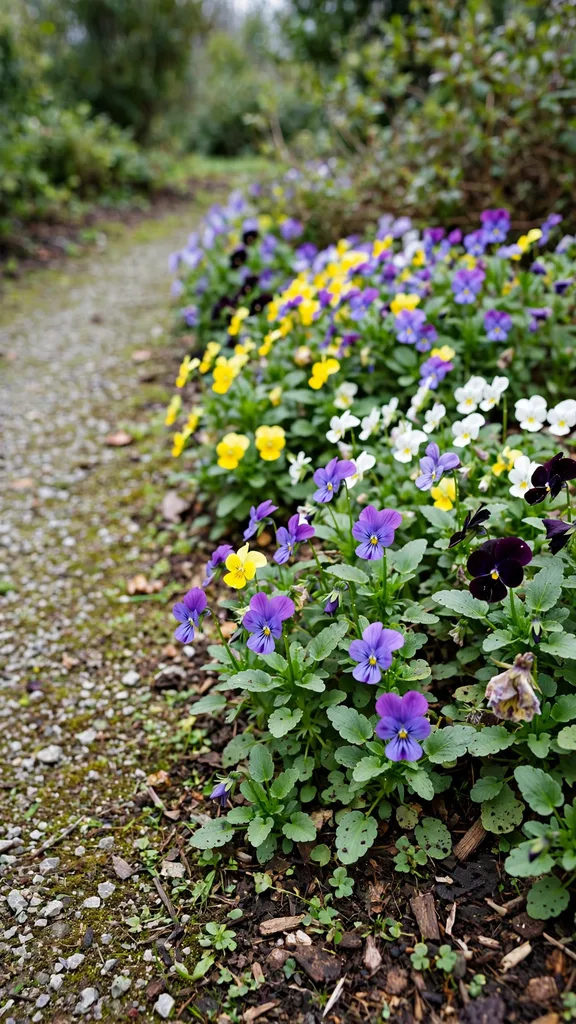
Viola blooms 4 to 6 months when planted at the right season in cool weather. Fall planting in mild climates gives winter color into spring. Spring planting in cold climates gives color from early spring into early summer. Deadheading every week stretches the run, and cutting leggy stems back by a third in midseason brings a second flush. Heat ends the bloom, so pull the plants when summer arrives and plant a warm-season flower in the same bed.
Viola grows in part shade and flowers best with morning sun and afternoon shade. Full sun in cool weather gives the most flowers. Deep shade gives leggy stems, pale leaves, and few flowers, so pick a spot with at least 4 hours of direct sun a day. A shaded corner suits pale yellow and white flowers, which show up where purple fades into shadow. Move a pot to a brighter spot when the stems start to stretch toward the light.
Space small-flowered viola types 15.2 to 20.3 cm apart and large-flowered pansy types 25.4 to 30.5 cm apart. Wide spacing moves air between the plants and keeps leaf disease down, while tight spacing turns into a damp mat where rot starts in the middle. Set each transplant at the same depth it grew in the pot, firm the soil around the roots, and water at the base. Mulch 5.1 cm deep, kept clear of each crown.
Viola flowers are edible, and pansy flowers are edible too, but only when the plants grew without systemic pesticides. Nursery bedding plants may carry systemic treatments, so never eat flowers from a plant bought in bloom unless the grower confirms no treatment. Grow viola from seed in clean soil for the table and use the flowers fresh. Leaves and stems stay out of the kitchen, and any flower that looks sprayed or dusty goes in the compost.
Hot soil above the cool range stops flowering. Deep shade stretches the stems toward light, so move the pot or thin the shade above the bed. High-nitrogen feed grows leaves at the cost of flowers, so switch to a light balanced feed. Cut stems back by a third and water at the base. New growth follows in 2 weeks.