
Spend five minutes on one dug-up organ, one leaf, and one flower, and you can name most bulbs in an Australian lawn or garden bed. That is bulb identification in Australia: four storage organs hide under the one word “bulb”, and 11 common bulbs split cleanly once you check the organ first and the flower second. I have learned that the bulb I name from its dug organ beats the bulb I name from its flower alone.
The rest of this page runs one key: the four organs, a three-step check, 11 bulbs by name, four extra weed bulbs, three natives to check before you dig, and a photo checklist that keeps protected plants in the ground.
1. Bulb Means Four Storage Organs, Not One
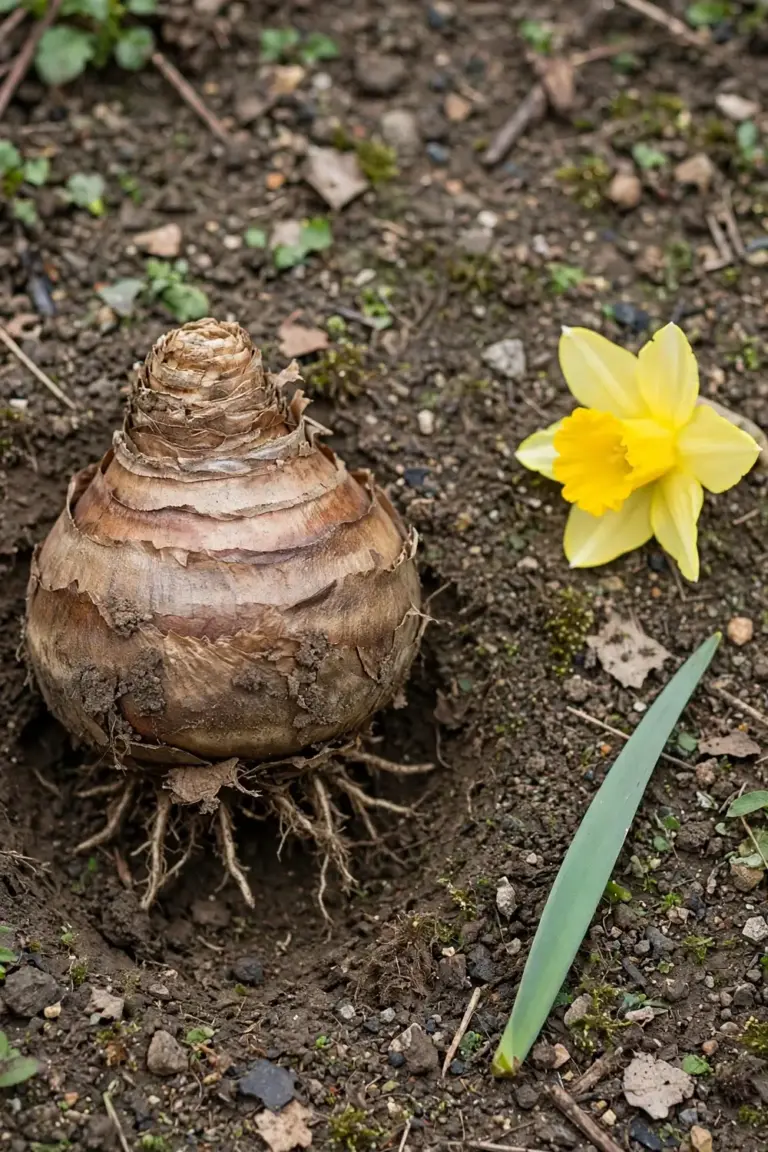
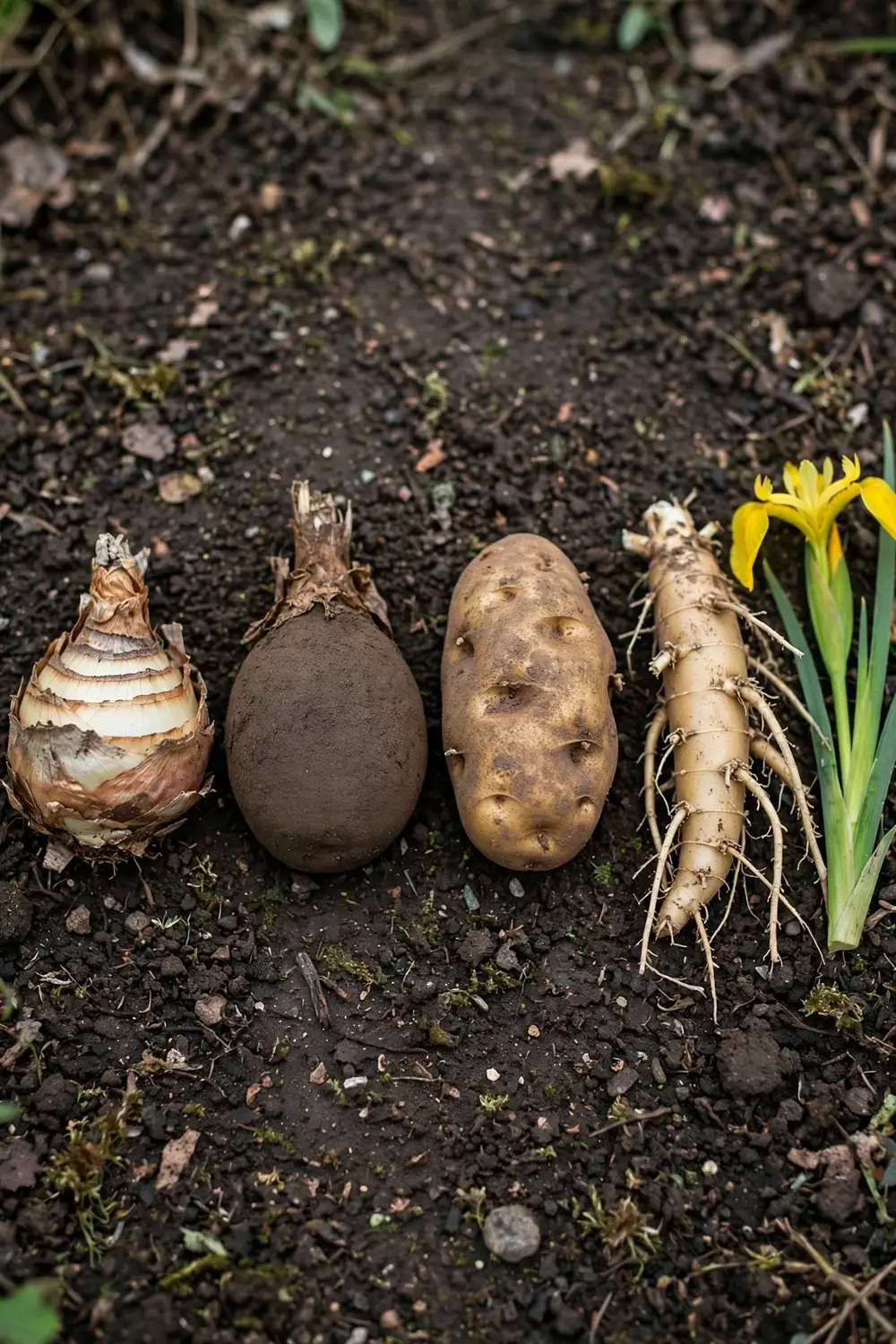
The word “bulb” covers four different underground organs, and the first test splits them in seconds. A true bulb shows layers. Cut one open and the fleshy scales wrap around a central bud like an onion. A corm shows solid tissue. Cut one open and no layers appear. A tuber shows eyes, the small buds that sit on its surface. A rhizome shows a horizontal stem with nodes, and shoots rise from those nodes.
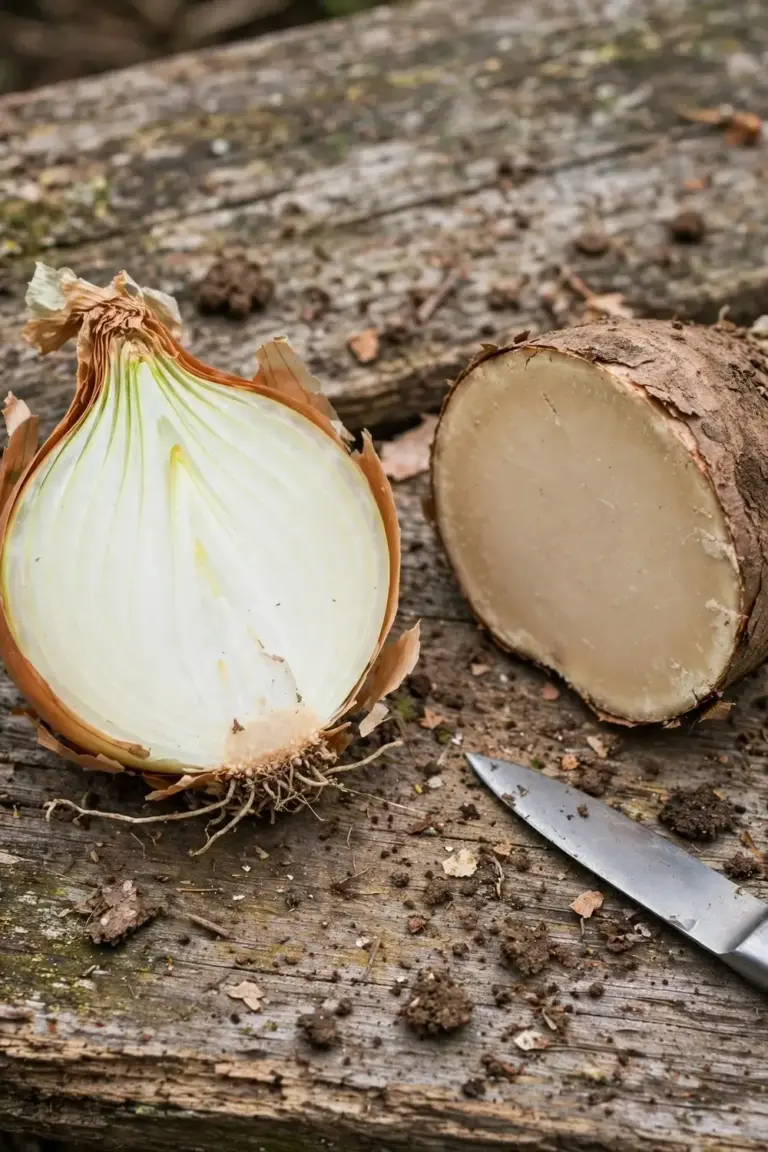
Penn State Extension sets out the four forms in plain terms: true bulbs carry layered scales on a basal plate, corms hold solid tissue with a papery coat, tubers carry eyes, and rhizomes run horizontally with nodes. Daffodils, tulips, and snowdrops sit in the true-bulb group. Crocuses and gladioli sit in the corm group. Potatoes sit in the tuber group. Irises sit in the rhizome group.
Use this table as the first move on every unknown plant.
| Organ | Cut Test | Surface Test | Examples In This Key |
|---|---|---|---|
| True bulb | Layers wrap a central bud | Papery tunic, roots from a basal plate | Daffodil, jonquil, tulip, hyacinth, belladonna lily, grape hyacinth, angled onion, onion weed, oxalis |
| Corm | Solid tissue, no layers | Papery coat, new growth from a top bud | Freesia, onion grass, cape tulip, montbretia |
| Tuber | Solid tissue with eyes | Eyes scattered over the surface | Nutgrass, bridal creeper |
| Rhizome | Horizontal stem with nodes | Shoots rise from nodes along the stem | None of the 11 carry one, and that absence is itself a clue |
A plant with a rhizome is not a bulb in the strict sense, even when gardeners call it one. The table keeps the four forms apart so the rest of the key starts from a firm split.
2. Run the 3-Step Key: Leaves, Flower, Dug Organ
The key runs in one order: leaves, flower, dug organ. Leaves come first because leaves stay visible longest. Flowers come second because flowers confirm the leaf reading. The dug organ comes last because it settles the name when leaves and flowers leave doubt.
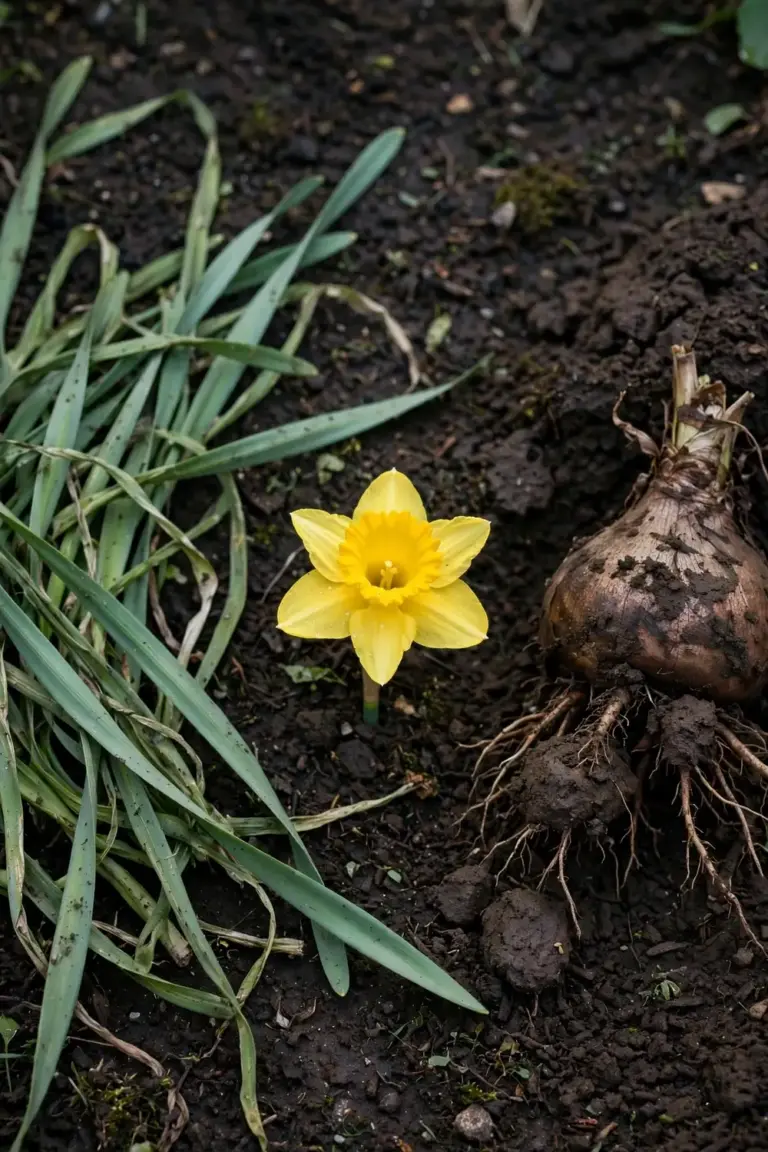
Step one reads the leaves. Strap leaves point toward daffodil, jonquil, tulip, hyacinth, belladonna lily, and freesia. Grass-like leaves point toward onion grass, grape hyacinth, and the native leek. Trefoil leaves point toward oxalis and nowhere else in this key. Leaves absent at flowering point toward belladonna lily, which flowers on a bare stem.
Step two reads the flower. A trumpet points toward daffodil, and a small sweet cluster points toward jonquil. A cup means tulip. A dense scented spike, packed tight along one stem, points toward hyacinth. A bare-stem pink trumpet points toward belladonna lily. Tiny blue bells in a tight cluster point toward grape hyacinth, and a one-sided spray points toward freesia. A white star on a three-sided stem points toward angled onion, while a white star on a round stem points toward onion weed. A pink-violet flower over grass-like leaves points toward onion grass. A yellow five-petalled flower over trefoil leaves points toward oxalis.
Stop when two checks agree. Leaves plus flower name most bulbs in this key, and the dug organ settles the rest. A plant with strap leaves and a trumpet needs no digging. A plant with trefoil leaves and a yellow five-petalled flower needs no digging. Dig only when leaves and flower disagree, or when two lookalikes share both. The onion pair is the classic case. Angled onion and onion weed share the white star and the onion smell, so the stem test or the dug organ must settle them.
Step three reads the dug organ. Only one plant needs digging. Lift one plant at the edge of the patch, shake the soil off, and check the organ against the table in the first section. Layers mean true bulb, solid tissue means corm, eyes mean tuber, and a horizontal stem with nodes means rhizome. Put the plant back when the organ still holds roots. Leave the shovel in the shed when the plant sits in bushland or a protected patch.
| Bulb | Organ | Leaves | Flower | Confused With |
|---|---|---|---|---|
| Daffodil | True bulb | Flat strap leaves | Trumpet, one per stem | Jonquil |
| Jonquil | True bulb | Rush-like narrow leaves | Small fragrant cluster | Daffodil |
| Tulip | True bulb | Broad strap leaves, waxy coat | Cup, one per stem | None in this key |
| Hyacinth | True bulb | Strap leaves | Dense scented spike | Grape hyacinth |
| Belladonna lily | True bulb | Absent at flowering | Pink trumpet on a bare stem | Amaryllis hybrids |
| Grape hyacinth | True bulb | Grass-like narrow leaves | Tiny blue bells in a tight cluster | Hyacinth |
| Freesia | Corm | Narrow leaves | One-sided fragrant spray | None in this key |
| Angled onion | True bulb | Strap leaves | White star, three-sided stem | Onion weed |
| Onion weed | True bulb | Strap leaves | White star, round stem | Angled onion |
| Onion grass | Corm | Grass-like leaves | Pink-violet flower | True grasses |
| Oxalis | True bulb | Trefoil leaves | Yellow five-petalled flower | Clover |
3. Name the Daffodil by Its Trumpet and Its Layers
The daffodil carries the clearest flower in this key. One trumpet sits at the center of each bloom, ringed by six petals. The leaves sit flat and strap-shaped, and they rise from the base in a loose fan. The dug organ shows layers when cut, which places the daffodil in the true-bulb group.
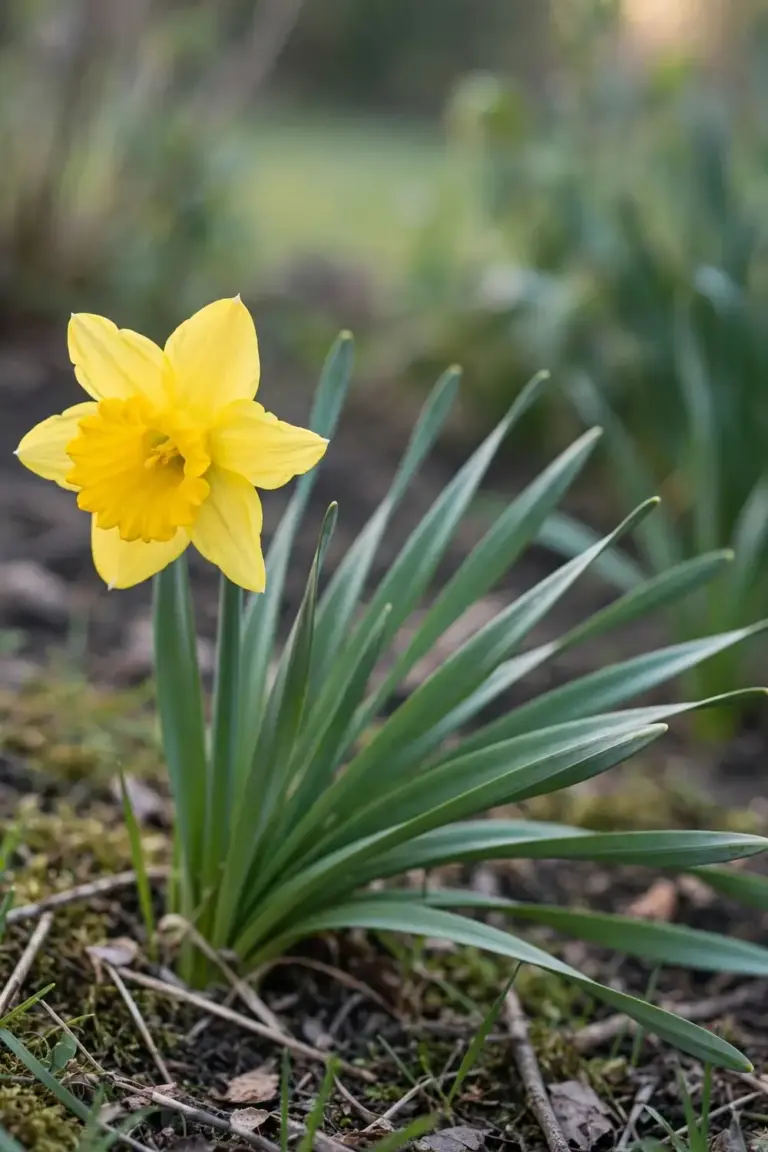
Two traits separate the daffodil from the jonquil. The daffodil flower stands alone on its stem, one bloom per stem, while the jonquil carries several small blooms on one stem. The daffodil leaf lies flat and broad, while the jonquil leaf stands narrow and rush-like. A plant with a single trumpet and flat leaves is a daffodil. A plant with a cluster of small blooms and rush-like leaves is a jonquil.
Confused with: jonquil. The trumpet settles it.
4. Name the Jonquil by Its Rush Leaves and Sweet Scent
The jonquil is a Narcissus, close kin to the daffodil, and the two share the true-bulb organ. The jonquil leaf gives the plant away. The leaves stand narrow, round in cross-section, and rush-like, unlike the flat strap leaves of the daffodil. The flowers arrive in a small cluster on one stem, each bloom smaller than a daffodil trumpet, and the scent runs strong and sweet on a warm day.
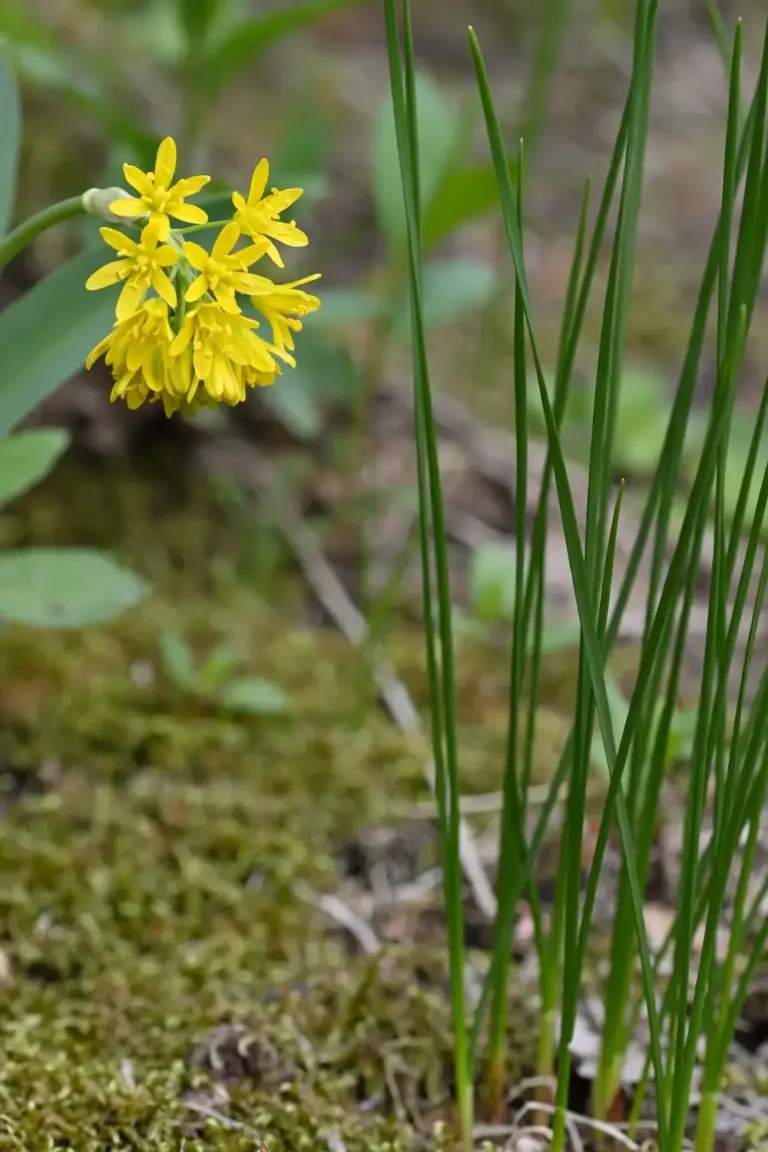
Three checks confirm the name, and the first is the leaf. The leaves read as rushes, narrow and round in cross-section. The stem carries several blooms. The scent reaches you before you bend down. A plant with all three checks is a jonquil, while a plant with flat leaves and one trumpet per stem is a daffodil.
Confused with: daffodil. The rush leaves settle it.
5. Name the Tulip by Its Cup and Its Single Leaf Wrap
The tulip carries a cup-shaped flower, one bloom per stem, and the cup closes at night in cool weather. The leaves wrap the stem base in a broad strap with a waxy coat, and the coat feels smooth under a fingertip. The dug organ shows layers, which places the tulip in the true-bulb group.
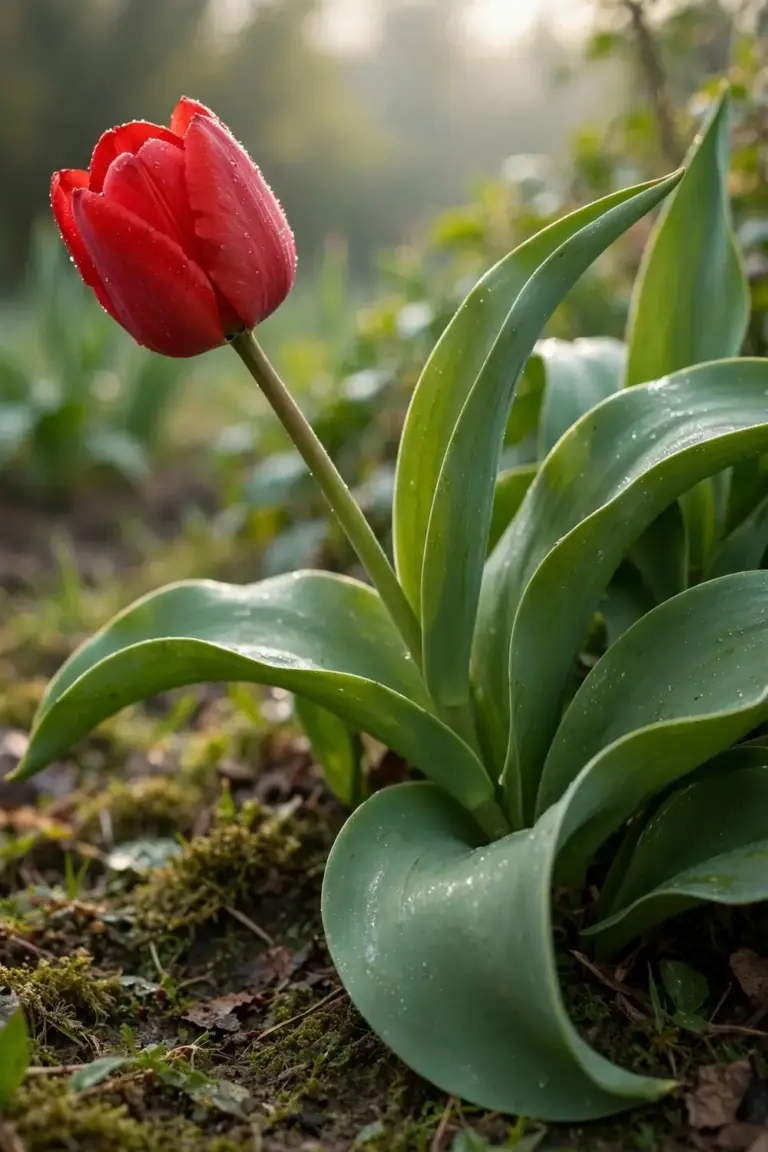
One trait separates the tulip from every other bulb in this key. The flower holds the cup form from bud to full bloom, with petals that meet at the rim. No other bulb here holds that shape. The daffodil opens into a trumpet. The hyacinth opens into a spike of small bells. The tulip stays a cup.
Confused with: none in this key. The cup settles it.
6. Name the Hyacinth by Its Dense Spike and Its Scent
The hyacinth carries a dense spike of small bell flowers, packed tight along one stem, and the scent carries across a garden bed. The leaves sit strap-shaped at the base, broad and smooth, and they rise before the spike opens. The dug organ shows layers, which places the hyacinth in the true-bulb group.
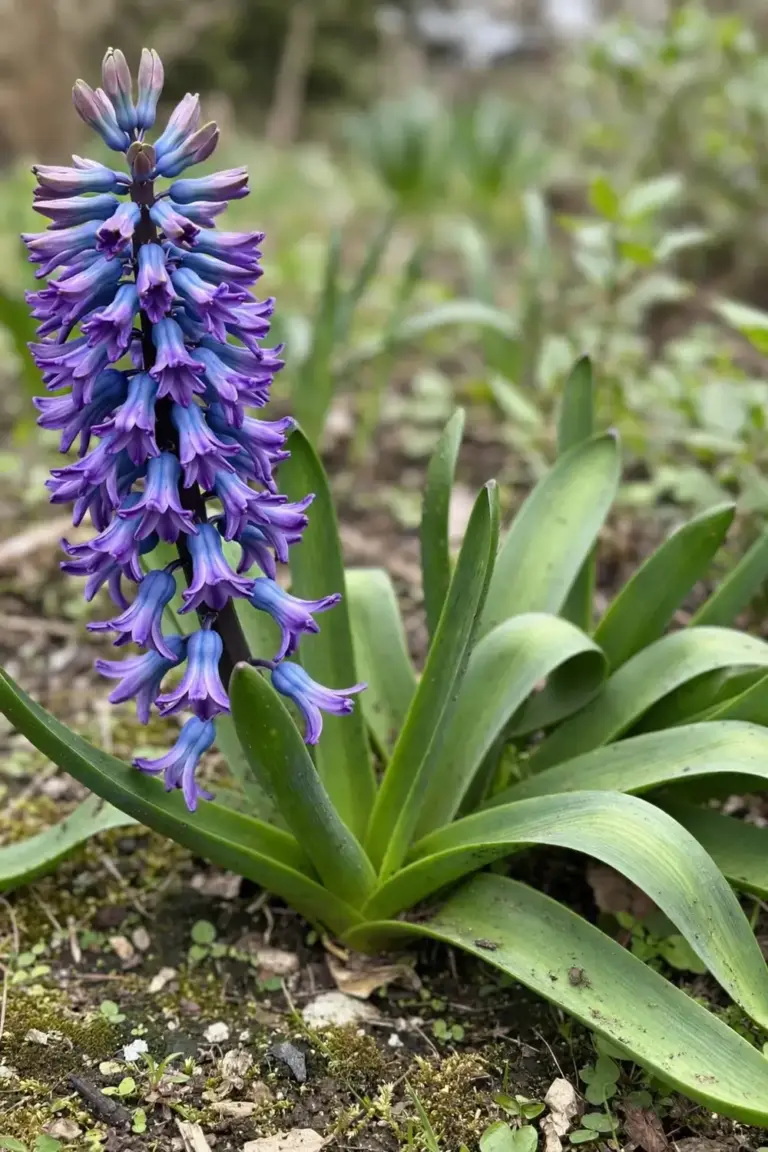
Two checks separate the hyacinth from the grape hyacinth. The hyacinth spike stands tall and full, with bells that open wide enough to show their shape. The grape hyacinth spike stays short and tight, with tiny bells that stay closed like beads. The hyacinth scent fills the air. The grape hyacinth scent stays faint.
Confused with: grape hyacinth. The tall open spike settles it.
7. Name the Belladonna Lily by Flowers Before Leaves
The belladonna lily flowers on a bare stem, with no leaves in sight. The pink trumpet blooms rise on a tall naked stalk in early autumn, and the strap leaves follow weeks later, after the flowers fade. Gardeners call it the naked lady for this bare-stem habit, and the habit is the strongest single clue in this key.
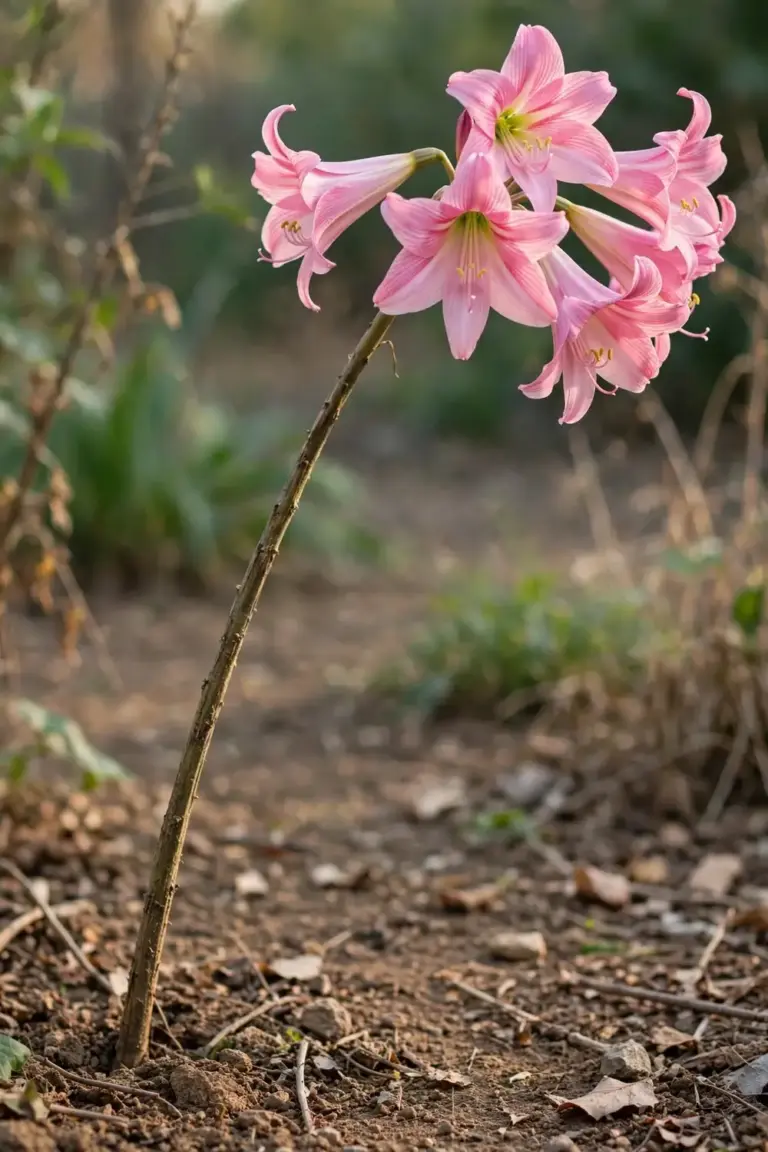
One check confirms the name. No leaves stand beside the flowering stem. The daffodil, jonquil, tulip, and hyacinth all flower with leaves present. The belladonna lily flowers alone. The dug organ shows layers, which places it in the true-bulb group, and the bulb sits large and deep.
Confused with: amaryllis hybrids. The bare-stem autumn flowering settles it.
8. Name the Grape Hyacinth by Its Tiny Blue Bells
The grape hyacinth carries a short tight spike of tiny blue bells, each bell the size of a bead, packed so close the spike reads as one cluster. The leaves sit grass-like and narrow, and they often appear before the spike opens. The dug organ shows layers, which places the grape hyacinth in the true-bulb group.
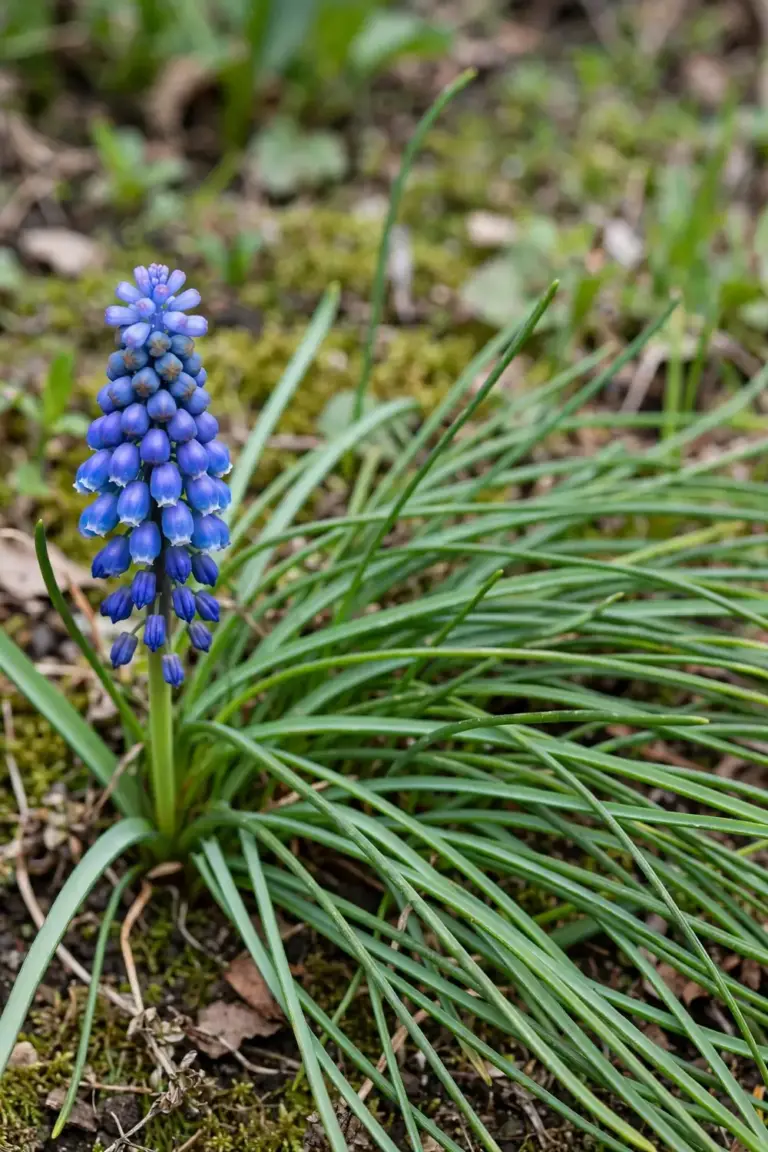
The NSW DPI weed factsheet lists grape hyacinth as a bulb that can jump the garden fence, and it turns up on roadsides where soil moves. The trait that matters for naming is the bead-like cluster. No other bulb here packs its bells this tight or this small.
Confused with: hyacinth. The bead-tight spike settles it.
9. Name the Freesia by Its Solid Corm and One-Sided Spray
The freesia carries its flowers on a one-sided spray, with blooms lined along one side of a bent stem, and the scent runs strong and sweet. The leaves stand narrow and sword-shaped, and they rise from the base in a flat fan. The dug organ shows solid tissue with no layers, which places the freesia in the corm group.
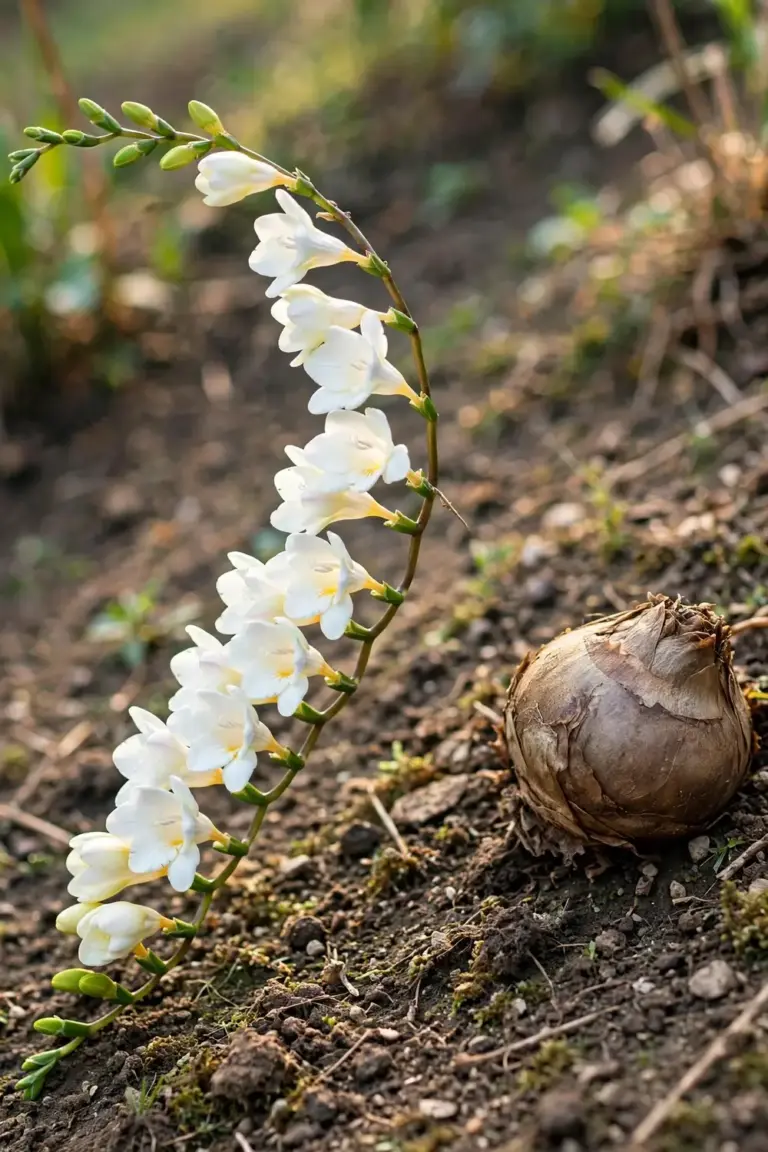
Two checks confirm the name. The organ reads solid, not layered, which rules out every true bulb in this key. The flowers sit on one side of the stem, not all around it. The NSW DPI weed factsheet lists freesia as a corm plant that spreads by seed, corms, and cormels, and it escapes gardens into bushland edges.
Confused with: none in this key. The one-sided spray plus the solid corm settles it.
10. Name the Angled Onion by Its Three-Sided Stem
The angled onion carries a stem with three flat sides, and the cross-section reads as a triangle when you roll the stem between two fingers. The flowers form a white star cluster at the stem tip, and the whole plant smells of onion when crushed. The dug organ shows layers, which places the angled onion in the true-bulb group.
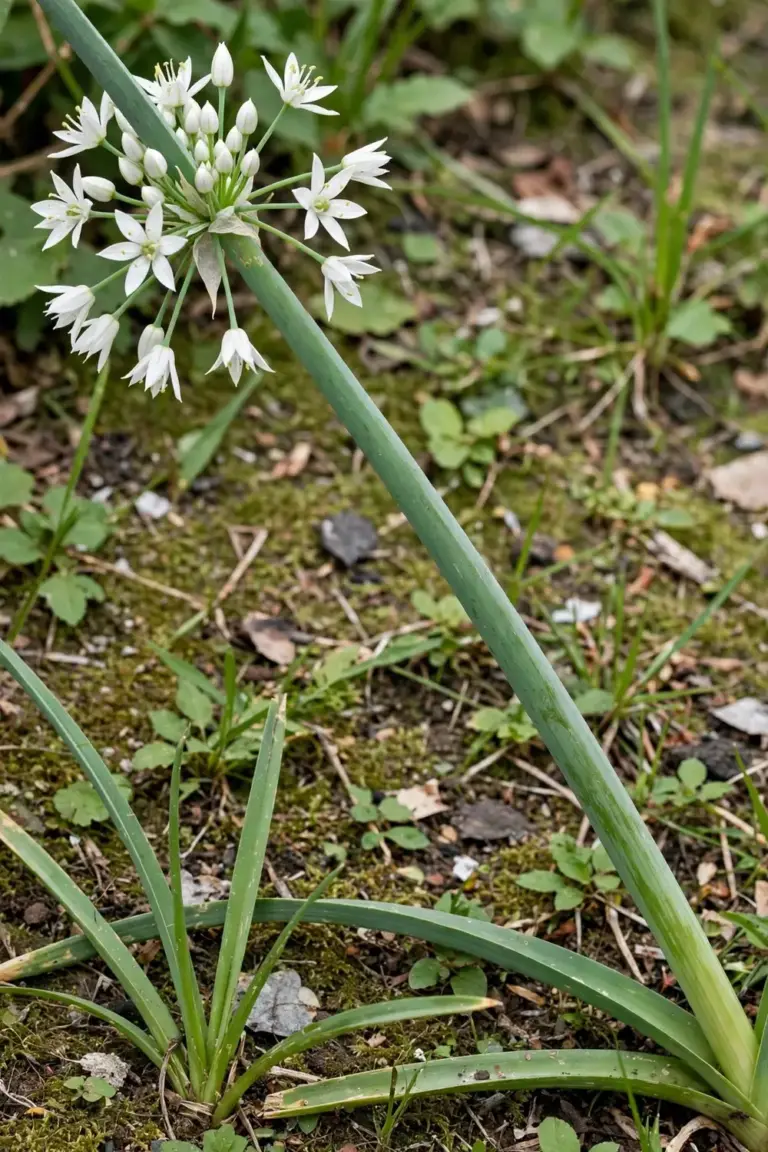
The stem test splits the angled onion from onion weed in one move. Roll the stem. Three flat sides mean angled onion. A round stem means onion weed. The crush-and-smell test backs up the stem test, and the two tests together beat either test alone.
Confused with: onion weed. The three-sided stem settles it.
11. Name Onion Weed by Its Round Stem and Garlic Smell
Onion weed carries a round stem, and the cross-section stays circular when you roll it between two fingers. The flowers form a small white star cluster, and the crushed leaves smell of garlic and onion. The dug organ shows layers, which places onion weed in the true-bulb group.
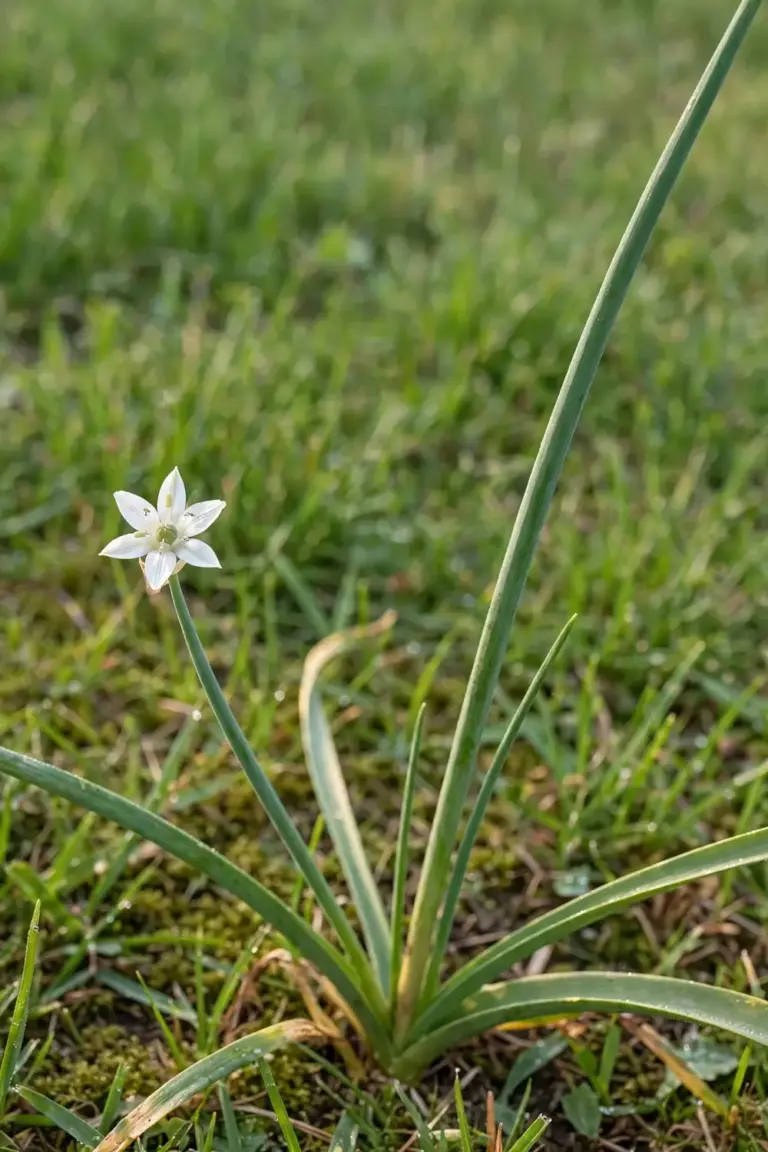
The name carries a trap. Onion weed is not an onion. It sits in a different genus, Nothoscordum, and it behaves as a weed in lawns and beds. The round stem separates it from the angled onion. The garlic smell separates it from the native leek, which carries yellow flowers, not white stars.
Confused with: angled onion. The round stem settles it.
12. Name Onion Grass by Its Pink Flower and Solid Corm
Onion grass carries grass-like leaves and a pink-violet flower, and the combination fools gardeners into reading it as a grass. The name is wrong twice over. Onion grass belongs to neither group. It sits in the iris family as Romulea rosea, and its dug organ shows solid tissue, which places it in the corm group.
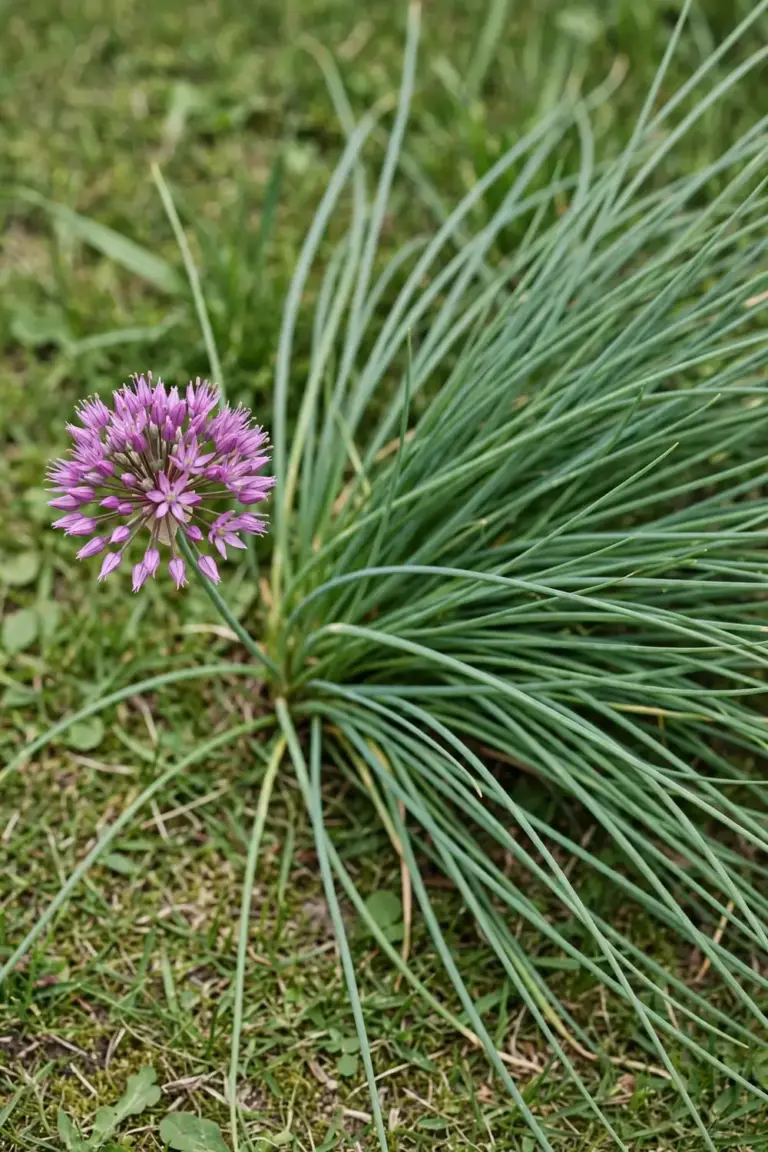
The NSW DPI weed factsheet lists onion grass as a corm plant with pink-violet flowers and heavy seed set. The flower settles the name. True grasses in a lawn carry no showy pink flower. A pink-violet flower over grass-like leaves, with a solid corm below, is onion grass.
Confused with: true grasses. The pink flower settles it.
13. Name Oxalis by Its Clover Leaves and Sour Stem
Oxalis carries trefoil leaves, three heart-shaped leaflets on one stalk, and a yellow five-petalled flower. The leaves read as clover at a glance, and the flower reads as a small yellow star. The dug organ shows a bulb, and the NSW DPI weed factsheet notes that oxalis spreads from bulbs that move with disturbed soil.
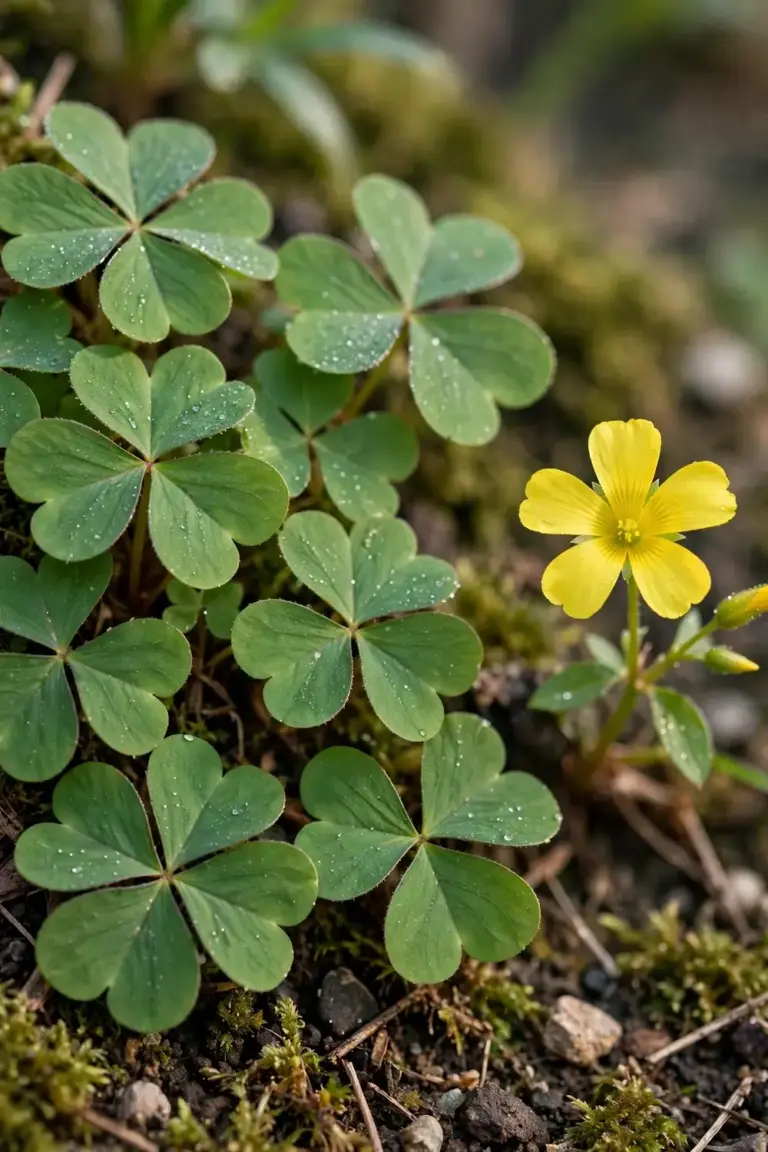
Two checks confirm the name. The leaves sit in threes with a heart shape on each leaflet, unlike true clover, which carries a pale mark on each leaflet. The flower shows five petals in yellow, and the stem tastes sour from oxalic acid in the leaves. Do not eat the plant to test it. The leaf shape plus the five-petalled yellow flower is enough.
Confused with: clover. The bulb below and the five petals settle it.
14. Check Four More Weed Bulbs Before You Dig
Four more weed bulbs turn up in Australian gardens, and each one needs a check before you act on it. Confirm the name first, then check the rules that apply in your state before you move soil or plants.
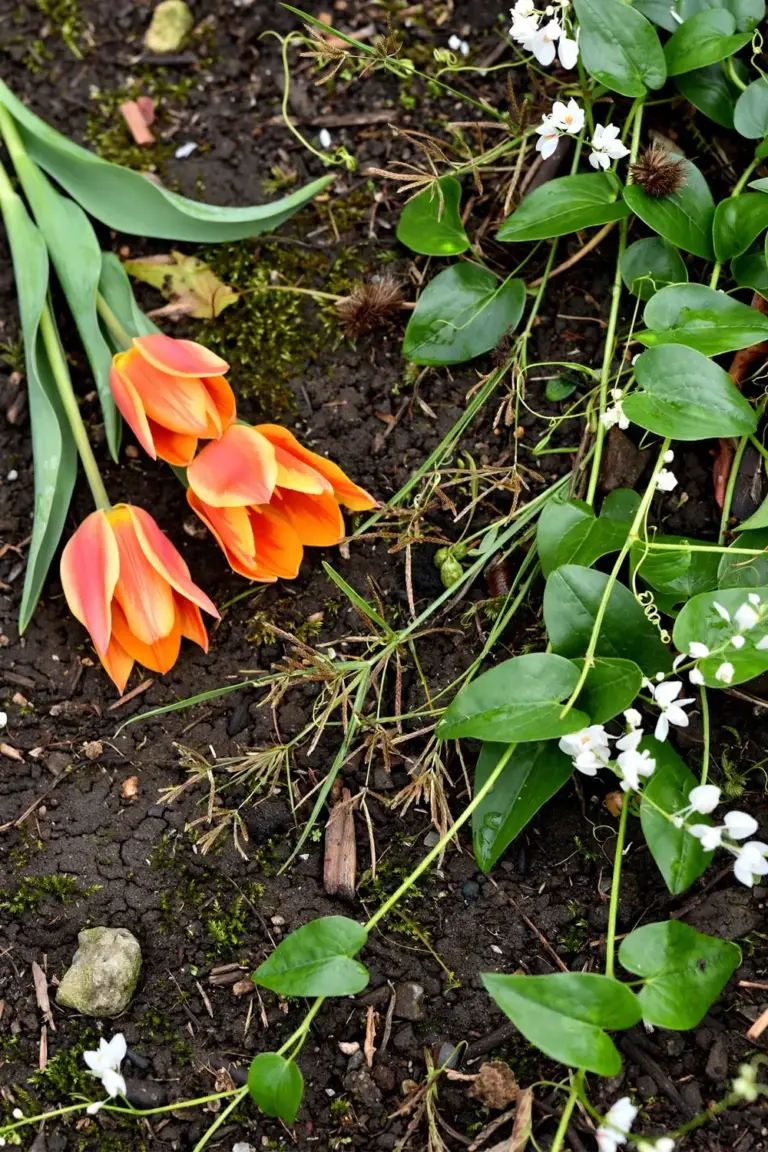
Cape tulip carries a corm with small cormels clustered at its base. The plant sends up an annual stem from a perennial rootstock, and the flowers show orange or yellow. The NSW DPI weed factsheet lists cape tulip under corms and cormels, and the cormels explain why one plant returns as a patch.
Nutgrass carries a tuber, and the name is wrong. Nutgrass is not a grass. It is a sedge, Cyperus rotundus, and its underground rhizomes produce tubers that persist in the soil. The stem reads triangular in cross-section, which marks a sedge, and the leaves run in threes from the base. The NSW DPI weed factsheet lists nutgrass under tubers.
Bridal creeper carries tubers and seeds, and the vine climbs and smothers ground plants and shrubs. The leaves sit heart-shaped and glossy, and the stems scramble over fences and shrubs. The NSW DPI weed factsheet lists bridal creeper under tubers and seeds, and the tubers explain why cutting the vine alone never finishes the job.
Montbretia carries a corm, and the orange tubular flowers open on wiry stems above strap-like leaves. The plant spreads by corms, rhizomes, and seed, and it colonises roadsides and creek banks after garden dumping. The corm sits globular and firm, and new corms form each season.
Confirm the name before you act on any of these four. A wrong name leads to the wrong response, and a right name still needs a check of local rules before soil moves. When the patch also shows chewed leaves or spots, the site’s pest disease identifiers page carries more lookalike checks for garden pests and diseases.
15. Check the Natives Before You Dig
Three natives look like weed bulbs, and digging one up by mistake costs a protected plant. Check the natives first when the patch sits near bushland, a creek line, or a lawn that borders native ground.
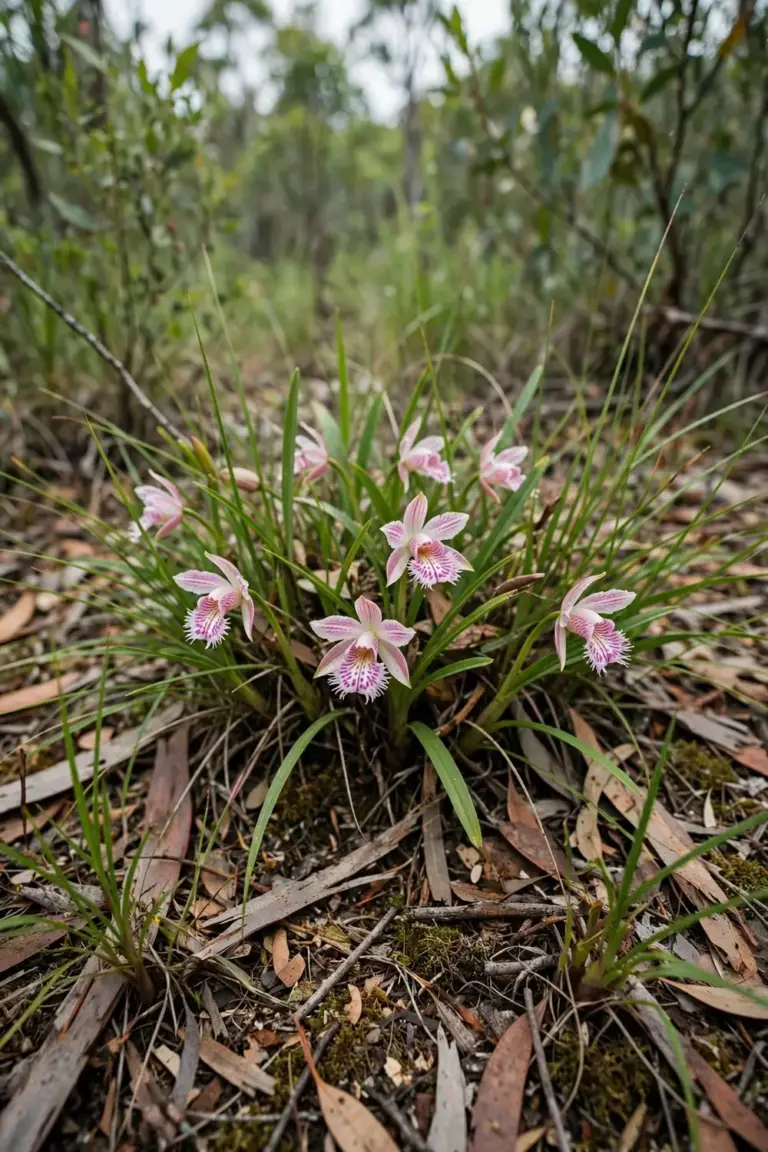
Milkmaids carry white star flowers on slender stems above grass-like leaves. The flowers open in spring, and the plant dies back to an underground store after flowering. The white stars and the slender habit separate milkmaids from onion weed, which carries a garlic smell and a round stem.
Early nancy carries small white or pink flowers on a slender stem above narrow leaves. The plant stands short, and the flowers open in spring. The slender habit and the small flowers separate early nancy from the weed bulbs, which carry larger flowers or a strong onion smell.
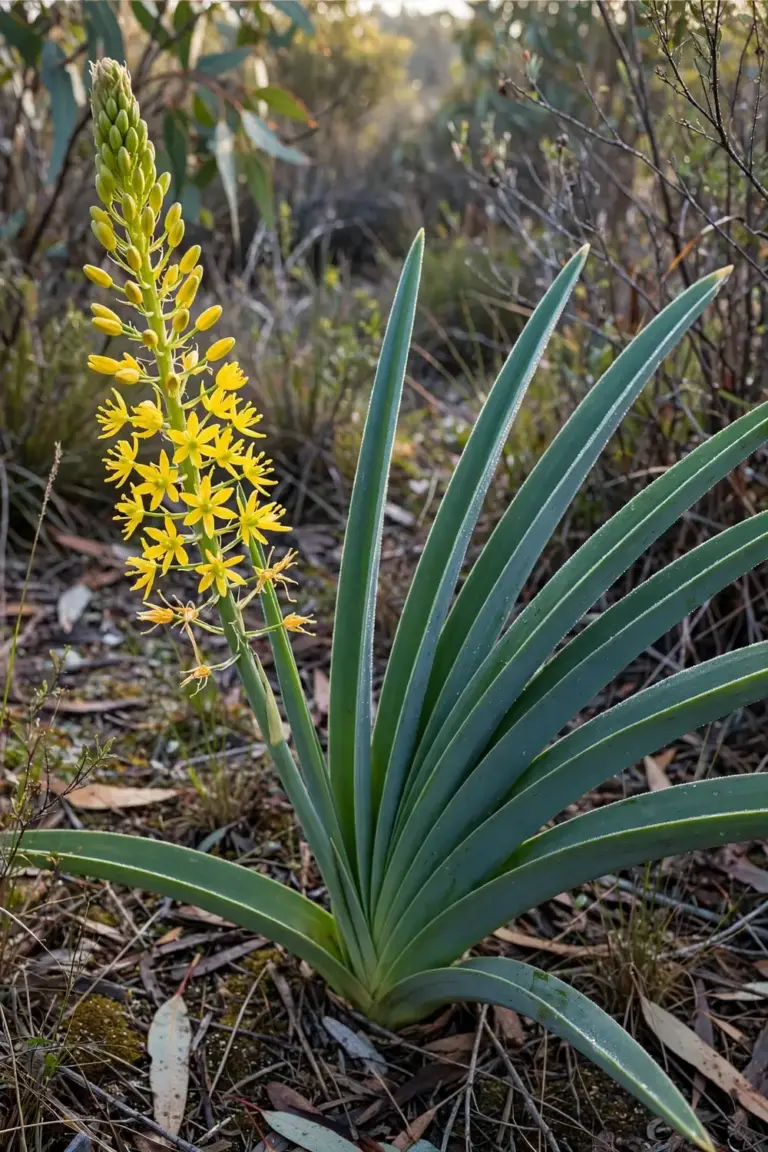
Native leek carries yellow star flowers in a raceme above channelled leaves. The name traps gardeners twice. Native leek is not a leek, and despite the name it carries a corm, not a bulb. The Australian National Botanic Gardens states plainly that Bulbine bulbosa holds a corm, not a bulb, and the yellow flowers reach about 2 cm wide in racemes that reach 50 flowers. PlantNET measures the storage organ at 7 to 25 mm long and 12 to 23 mm across, with leaves 4.5 to 48 cm long, and flowering from September to March.
Many native plants are protected, and the rule is simple. Photograph the plant. Leave the shovel in the shed. Check with your state herbarium or council when the name stays uncertain.
16. Record Four Photos, Then Leave the Shovel
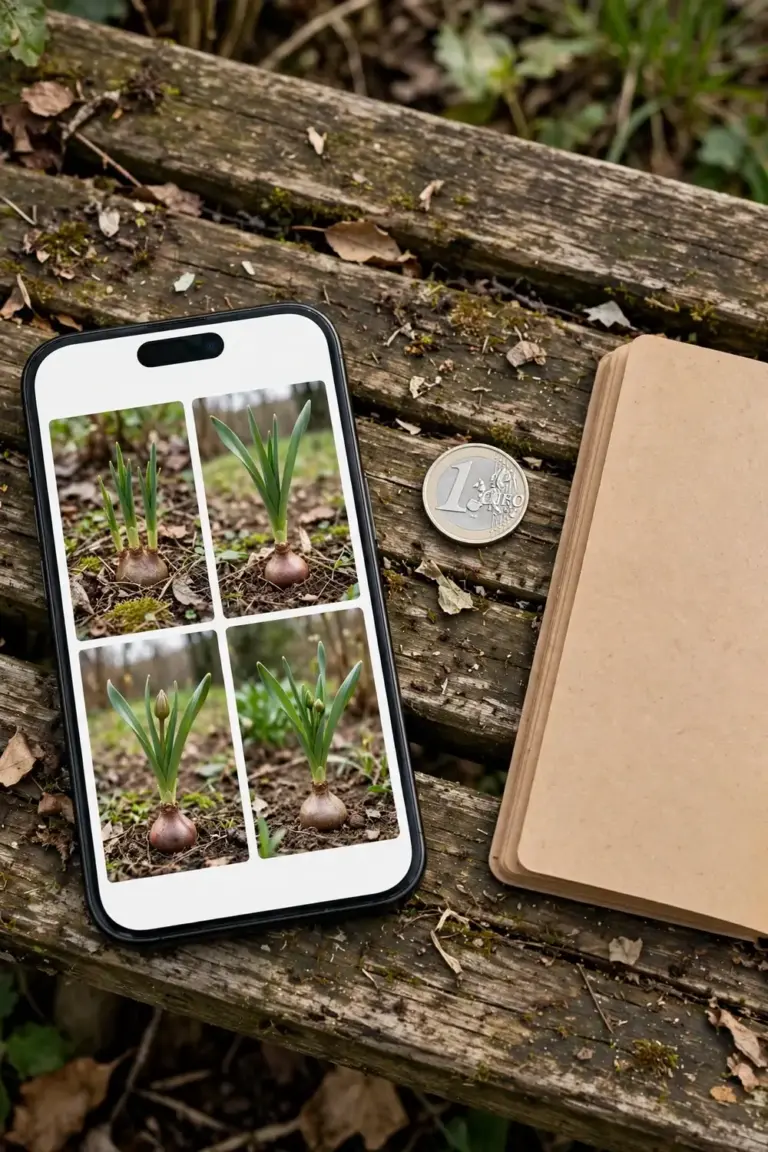
The field checklist runs in four photos, and the four photos together beat any single photo. Take the leaf photo first, with the leaf held flat beside a coin for scale. Take the flower photo second, with the flower held beside the leaves. Take the whole-plant photo third, with the plant in its setting. Take the dug-organ photo last, and only for one plant at the edge of a garden patch, never for a plant in bushland or a protected patch.
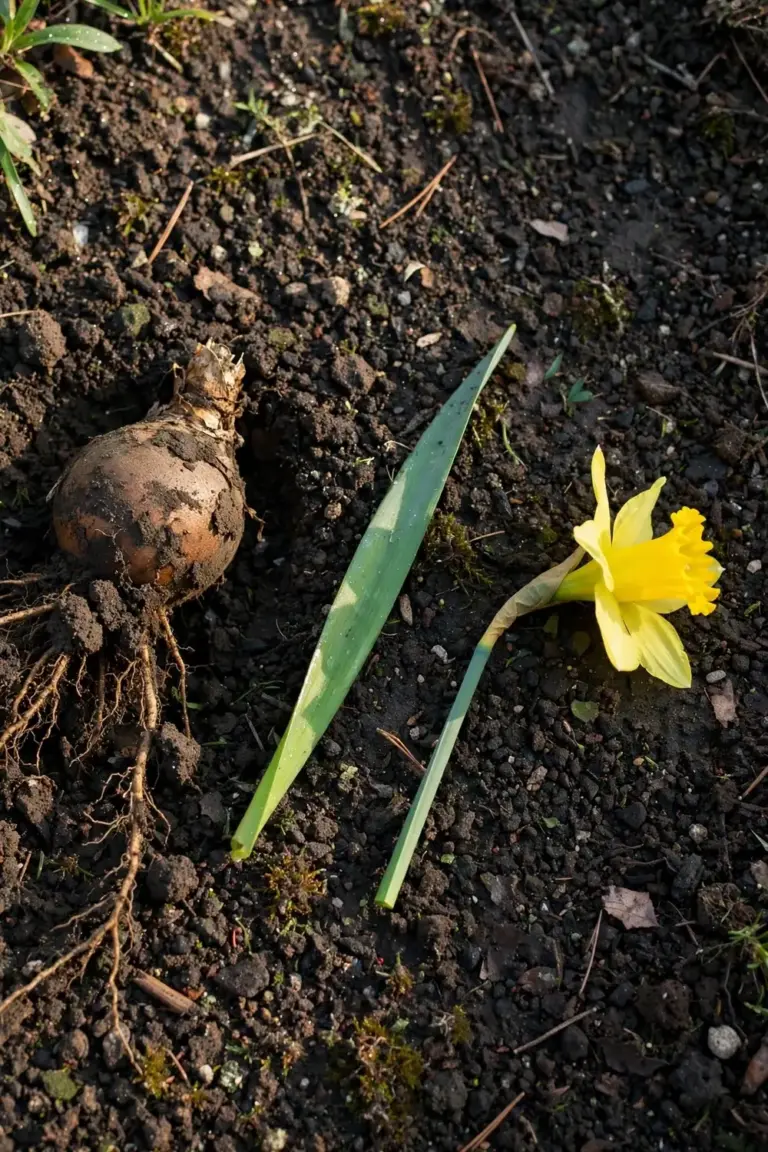
Soil clings to the dug organ, and the soil tells part of the story. Note whether the soil is sandy, clay, or rich loam, and whether the patch sits in sun or shade. A quick read of soil health helps you describe the ground the bulb sits in, and the description helps the next person who names the plant from your photos.
A coin in the leaf photo gives the next reader a scale reference, and a coin beside the dug organ does the same. Shoot the flower photo in shade, not direct sun, so the petals keep their color. Shoot the whole-plant photo from two steps back, wide enough to show the patch and its neighbours. Write the date and the suburb on the photo set before you send it, because flowering dates shift with latitude and a September flower in Hobart is not a September flower in Brisbane.
Send the four photos to your state herbarium or council weed officer when the name stays uncertain. The four photos carry more information than a bag of dug-up plants, and they leave the patch intact. When the name is confirmed, check local rules before soil or plants move. State biosecurity rules restrict bulb movement, and some nurseries will not ship bulbs to Tasmania or Western Australia.
17. Bulb Identification FAQ: Five Questions Answered
No. Four organs hide under the word “bulb”, and the cut test splits them. A true bulb shows layers around a central bud. A corm shows solid tissue. A tuber shows eyes. A rhizome shows a horizontal stem with nodes. Use the organ name that matches the cut test, and the rest of the key falls into place.
Roll the stem between two fingers. Angled onion carries three flat sides, and the cross-section reads as a triangle. Onion weed carries a round stem, and the cross-section stays circular. Back up the stem test with the crush-and-smell test. Both plants smell of onion when crushed, so the stem shape carries the decision.
The storage organ stays in the soil when the top breaks off. Bulbs, corms, and tubers all regrow from the organ left behind, and cormels and offsets multiply the patch. Pulling the top alone leaves the organ in place. Confirm the name first, then check local rules before you act on the patch.
No. Onion grass is Romulea rosea, a member of the iris family, and it is not a grass. The grass-like leaves cause the confusion. The pink-violet flower settles it, because true lawn grasses carry no showy pink flower. The dug organ shows a corm, which places onion grass in the corm group.
No. Leave native plants in the ground. Photograph the leaves, flower, whole plant, and setting, then send the photos to your state herbarium or council. Many native plants are protected, and digging one up can breach state rules. The four photos carry enough detail for an identification without disturbing the plant.
18. Start With the Organ, End With the Name
Name the organ first, and name the plant second. A layered organ means true bulb. A solid organ means corm. An eyed organ means tuber, and a horizontal stem with nodes means rhizome. The 11 bulbs in this key split cleanly once the organ is known. The weed bulbs and natives fall into place beside them. Photograph the four shots. Confirm the name. Leave the shovel in the shed when the plant sits in bushland or a protected patch.