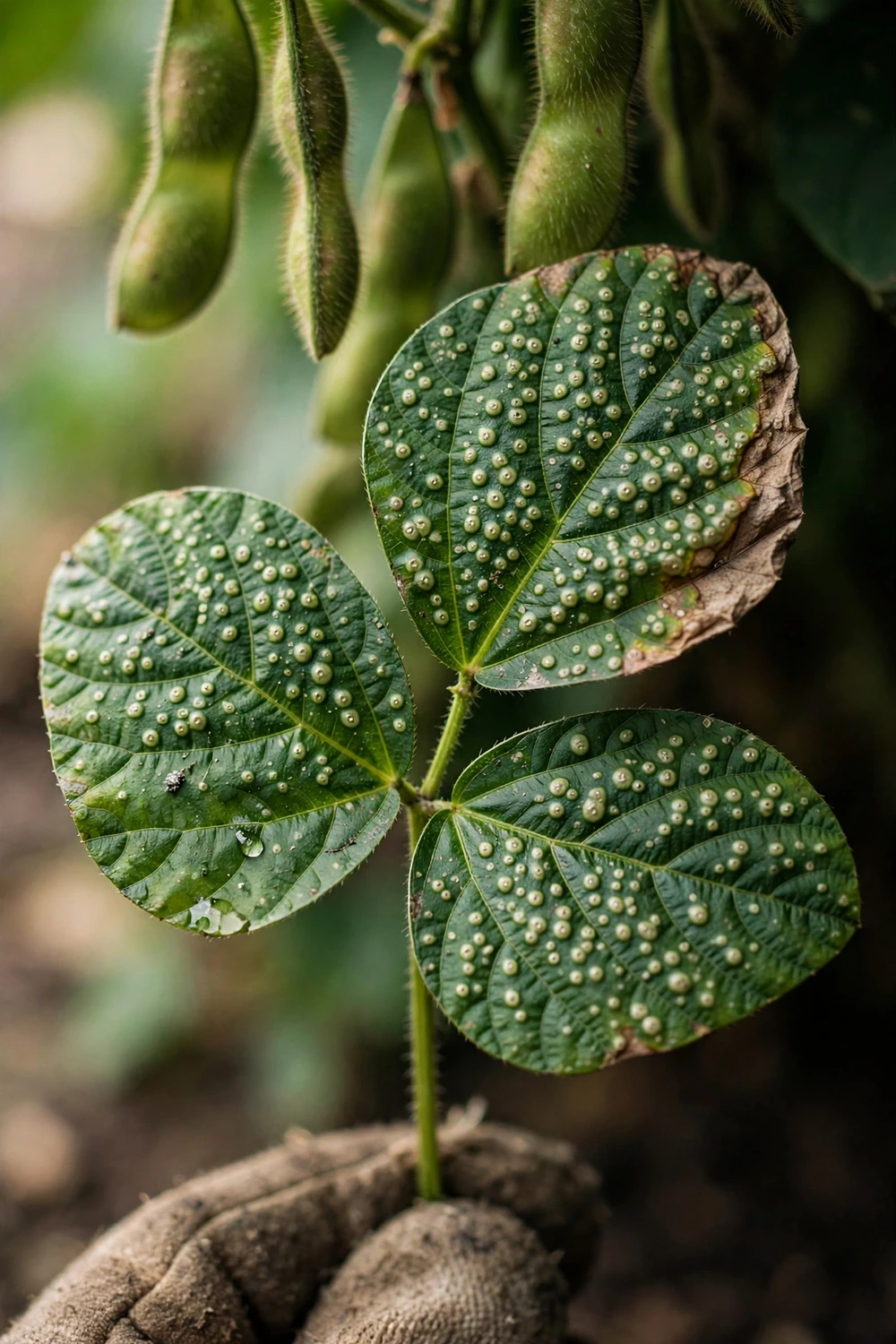

Bacterial pustule on edamame starts as tiny pale spots with raised centers, and it ends, in a bad wet season, with ragged leaves, sunscalded pods, and a harvest that is not worth picking. The 7 strategies below prevent it in a home garden, and they work because this bacterium spreads in water, on wet hands and tools, and in infected seed and residue.
The first fact to hold is the scope. This article covers edamame, the vegetable soybean grown for fresh eating in home gardens. It is not a field-soybean article. Field soybean is a commercial crop, and its management runs on resistant cultivars, certified-seed programs, and field-scale rotation that do not translate to a backyard row. I have learned that the home edamame patch rewards the same prevention habits at a smaller scale, and the smaller scale is exactly what makes them work.
The rest of this page walks the identification, the one lookalike that matters, and the 7 prevention moves. The disease name leads. The pathogen, Xanthomonas citri pv. glycines, stays in the background after this introduction.
What Bacterial Pustule on Edamame Actually Is
Bacterial pustule is a bacterial leaf disease of soybean and edamame. The pathogen is Xanthomonas citri pv. glycines, formerly known as Xanthomonas axonopodis pv. glycines and Xanthomonas campestris pv. glycines. Edamame is the same species as field soybean, Glycine max, bred for fresh eating. The bacterium does not care which form of the crop it meets.
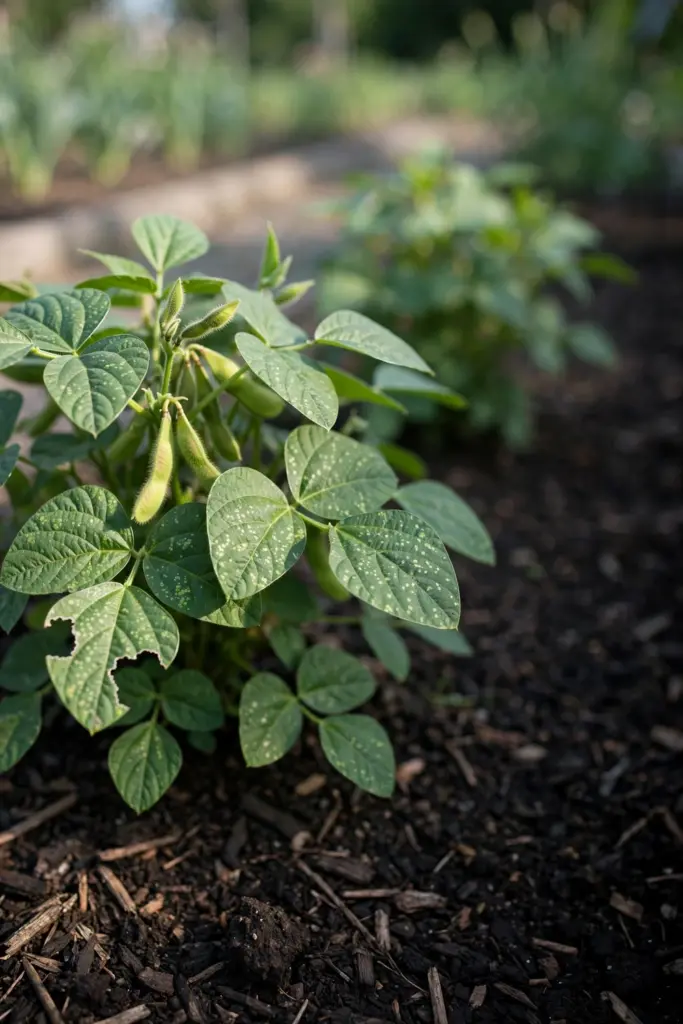
The bacterium is seedborne and it overwinters in crop residue. Infected seed carries it into the next planting. Infected leaves left in the bed carry it into the next season. The bacterium spreads in water: windblown rain, overhead watering, and wet cultivation all move it from leaf to leaf. Warm wet weather drives it, with an optimum around 86 to 92 degrees Fahrenheit.
Severity varies by genotype. Edamame germplasm trials in Virginia showed clear polarization: about 42 percent of genotypes showed minor symptoms, while about 54 percent showed pronounced symptoms with bacterial pustules covering more than 40 percent of total leaf surface area. The trials also recorded severe bacterial leaf pustule outbreaks at Kentland Farm in Virginia from July to September 2021. No bacterial-pustule-resistant edamame cultivars have been reported, so variety choice is not a fix.
The honest scale matters. United States Extension calls bacterial pustule a minor disease for commercial field soybean, rarely causing defoliation or yield loss. The edamame trials showed severe outbreaks with yield decline of 60 percent in the study context, plus pod sunscald where defoliation exposed pods. Both statements are true in their own contexts. Neither is a home-garden promise, and this article presents neither as one.
How to Spot Bacterial Pustule on Edamame Leaves and Pods
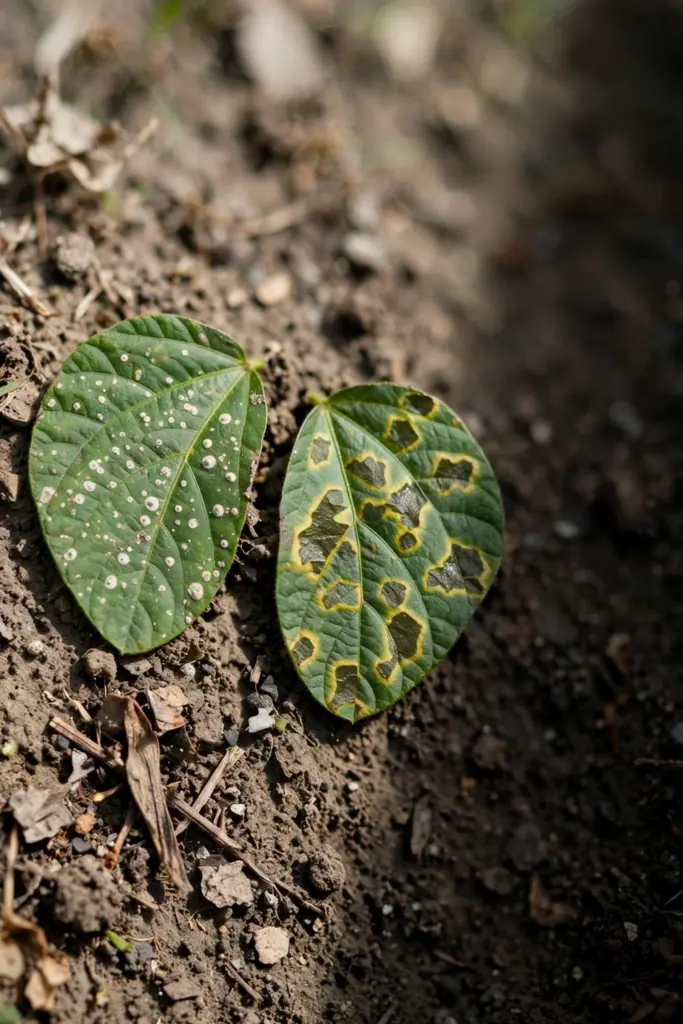
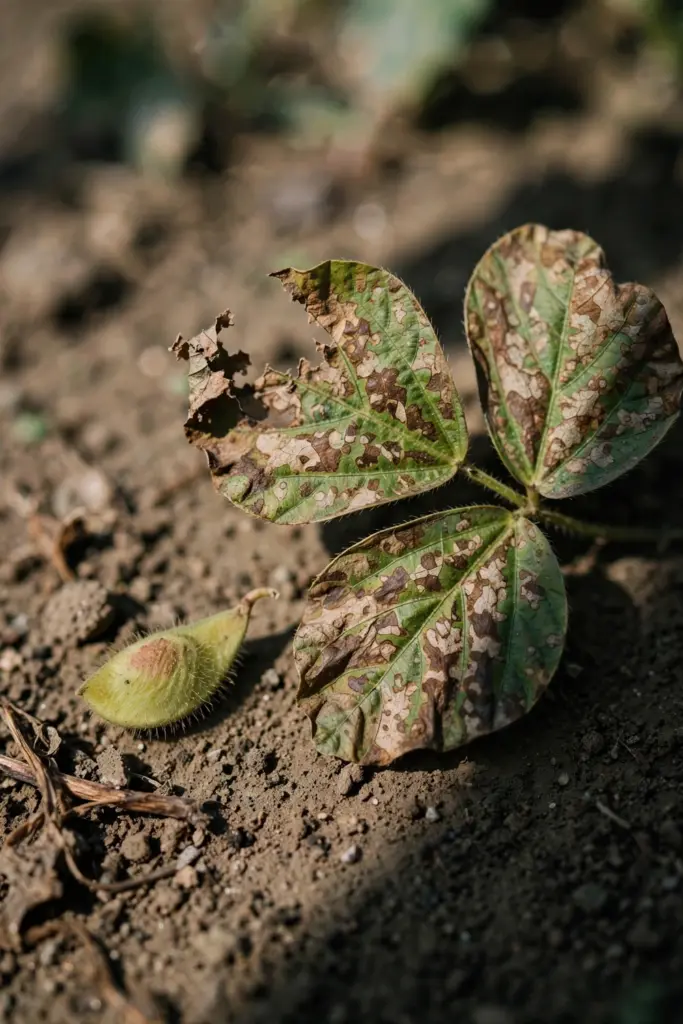
Bacterial pustule starts as small pale-green spots with raised centers on leaves. The raised center is the signature. Light-colored pustules form in the centers of the lesions, usually on the lower leaf surface. Run a fingertip lightly across the underside of a suspect leaf. A pustule lesion feels slightly raised, where a blight lesion feels flat.
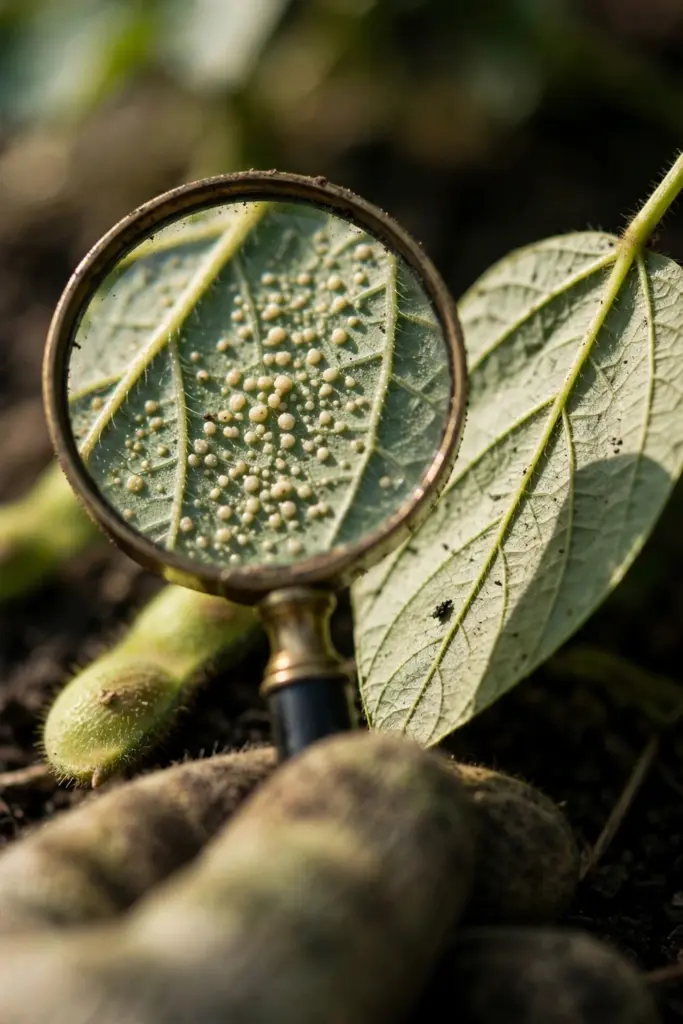
Lesions grow and merge. Coalescing spots form irregular brown areas, and heavily infected leaves turn ragged as dead tissue tears away. Severe infections defoliate plants. Defoliation exposes pods to sun, and sunscald follows. Pods carry small raised spots of their own, and infected pods turn nonmarketable. A pod with raised spots is a pod to discard, not a pod to eat fresh.
Check the tops of the canopy first in wet weather. University of Maryland Extension guidance for edamame notes that the disease first appears in the tops of the canopy during heavy dew or rainfall. The upper leaves catch the dew and the rain, and they show the first spots. A scout who checks only the lower leaves misses the early window.
Bacterial Pustule vs Bacterial Blight
The field check is the lesion surface plus the temperature. Bacterial pustule lesions carry raised centers and are not water-soaked early, and the disease favors warm weather around 86 to 92 degrees Fahrenheit. Bacterial blight lesions stay flat and angular, water-soaked with chlorotic halos, and blight favors cool weather at 70 to 80 degrees Fahrenheit. Raised and warm points one way. Flat, water-soaked, and cool points the other.
| Clue | Bacterial Pustule | Bacterial Blight |
|---|---|---|
| Pathogen | Xanthomonas citri pv. glycines | Pseudomonas syringae pv. glycinea |
| Lesion surface | Raised centers, light-colored pustules, usually lower leaf surface | Flat, angular, water-soaked lesions with chlorotic halos |
| Early feel | Slightly raised to the fingertip | Flat to the fingertip |
| Temperature favoring disease | Warm, 86 to 92 degrees Fahrenheit | Cool, 70 to 80 degrees Fahrenheit |
| Season behavior | Builds in warm wet weather | Builds in cool rainy weather, ceases in hot dry weather |
| Late-season reliability | Pustules rupture and dry, making the two difficult to tell apart | Same late-season confusion applies |
| Management | Same prevention: clean seed, dry canopy, sanitation | Same prevention: clean seed, dry canopy, sanitation |
No published head-to-head comparison for home growers exists. This table compiles the two sides from parallel Extension sources, including the University of Illinois RPD 502 bulletin on bacterial foliage diseases of soybeans. The Illinois bulletin carries the late-season caveat: late in the season, pustules rupture and dry, making the two diseases difficult to tell apart. Treat the differential as an early-season field check, not a clean all-season identification.
One more lookalike stays out of the field-check business. Separating bacterial pustule from soybean rust needs 20X magnification to check for the rust pustule opening and spore masses. That is lab-level work, not a home check. If rust is suspected, send a sample to a diagnostic clinic. The live Asian soybean rust guide covers that fungal disease as a companion, and it is not reproduced here.
Strategy 1: Start With Clean, Pathogen-Free Seed
Buy seed from a reputable supplier. Pathogen-free seed is the first line of defense because the bacterium is seedborne. Seed saved from infected plants carries the disease into the next planting. A packet from a supplier who tests seed stock is worth more than a jar of saved seed from a spotted patch.
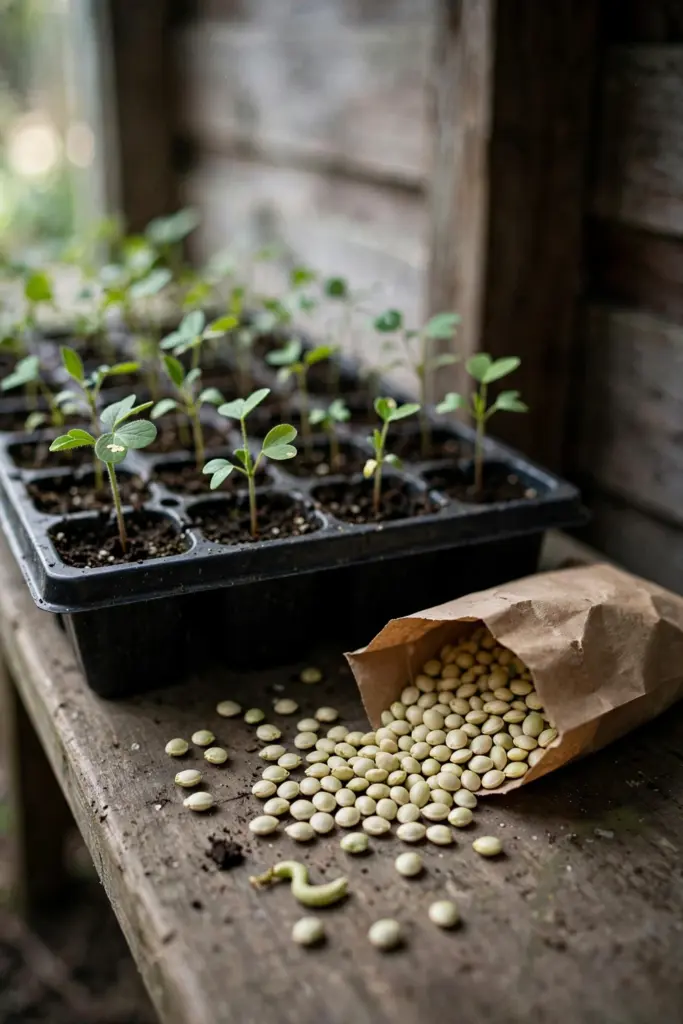
Never save seed from infected plants. A plant that showed pustules has infected seed until proven otherwise, and no home test proves otherwise. The seed that looks clean can still carry the bacterium. Discard seed from any plant that showed symptoms, and buy fresh stock for the next planting.
Inspect seedlings early. Cotyledons and first true leaves can show the first lesions if seed carried the bacterium. A seedling that spots early is a seedling to pull and destroy. Early removal keeps one infected seedling from becoming the bed’s inoculum source.
Strategy 2: Pick a Sunny, Airy Spot With Proper Spacing
Plant edamame in full sunshine. Sun dries the canopy fast after dew and rain, and a dry canopy starves the bacterium of the water film it needs to spread. A shaded bed stays wet for hours longer, and those hours are the infection window. Full sun is disease management before it is yield management.
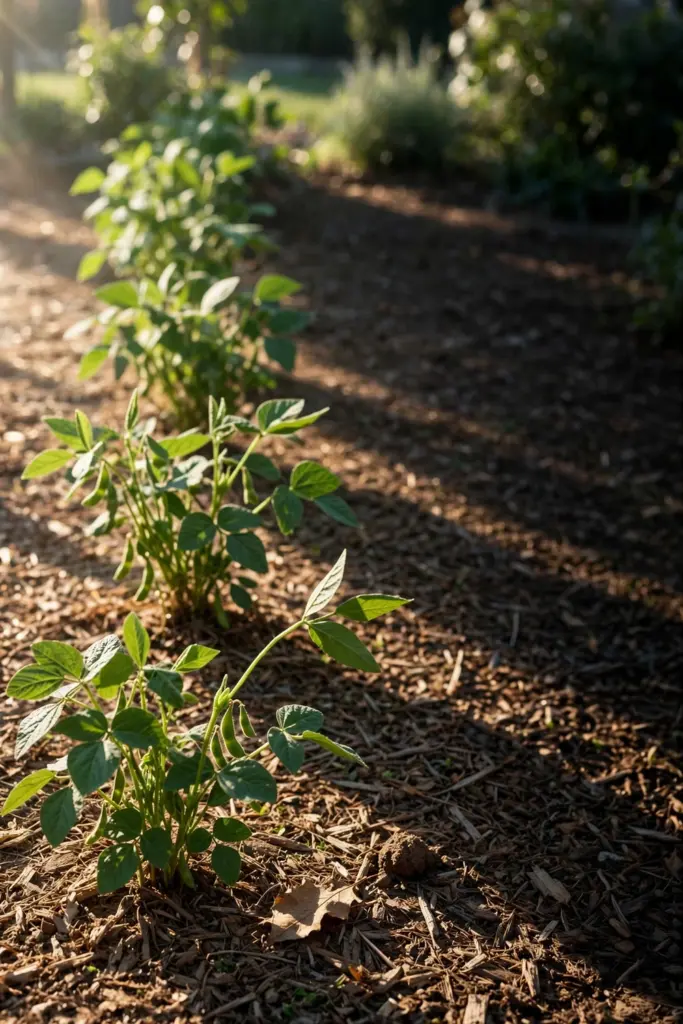
Space plants for airflow. Crowded plants trap humidity between leaves and hold dew on the canopy. The seed packet spacing is the minimum, not a suggestion to beat. Air moving through the row dries leaves faster than any spray dries them.
Orient rows with the prevailing breeze where the site allows. A row that faces the breeze dries faster than a row that blocks it. The difference is small on a calm day and real on a breezy one. Site habits compound across a season.
Strategy 3: Water at the Base, Never Overhead, in the Morning
Water at the base of the plants. Drip irrigation, a soaker hose, or a careful watering can at soil level keeps leaves dry. Overhead watering wets the canopy and mimics the rain that spreads the bacterium. The University of Maryland Extension edamame guidance warns against overhead watering and over-irrigation for exactly this reason.
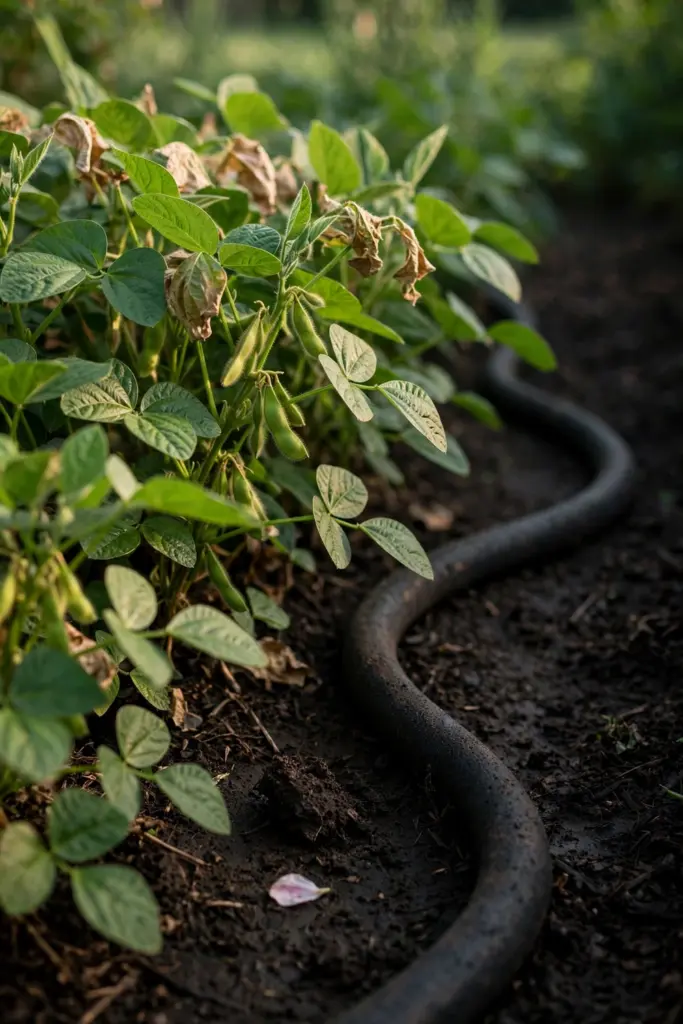
Water in the morning. Morning watering lets any splashed leaves dry during the day. Evening watering leaves the canopy wet overnight, and a wet night is a long infection window. The clock matters as much as the method.
Avoid over-irrigation. Soggy soil stresses plants and keeps humidity high around the canopy. Water deeply enough to reach the roots, then let the surface dry. A bed that stays wet between waterings is a bed that invites bacterial spread.
Strategy 4: Never Work Among Plants When Foliage Is Wet
Stay out of the bed when leaves are wet. Wet cultivation spreads the bacterium from plant to plant on hands, tools, and clothing. The Illinois bulletin names cultivation while foliage is wet as a spread route. A weeding session done in wet foliage can undo a season of dry-canopy discipline in one afternoon.
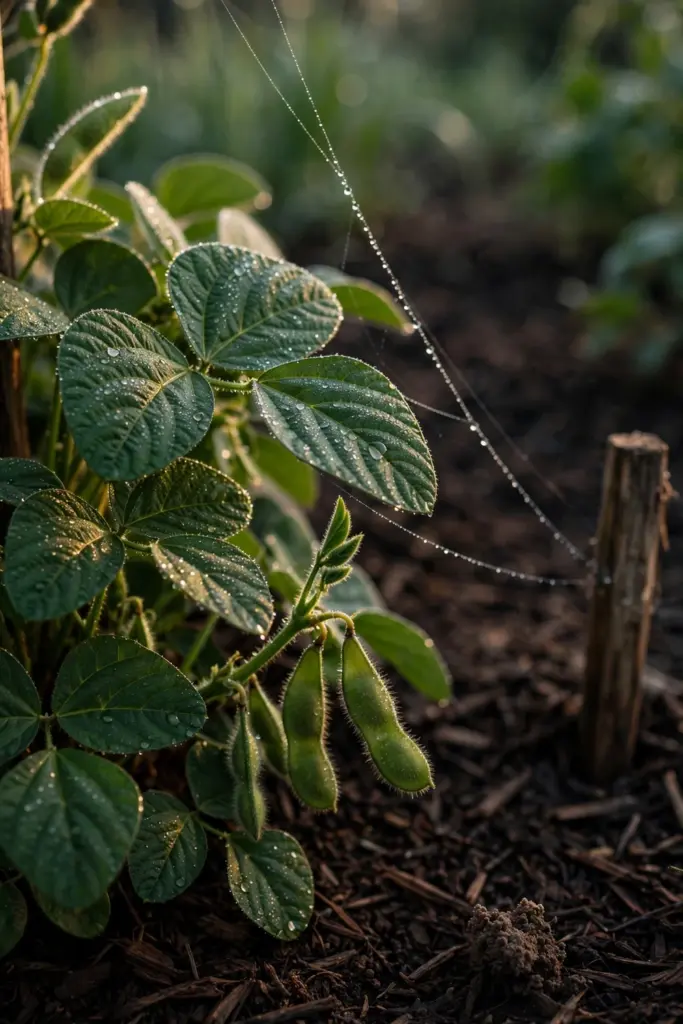
Wait for dry leaves before harvesting, pruning, or tying. Morning dew counts as wet. A harvest delayed by two hours costs nothing. A harvest done wet moves bacteria across every plant the picker touches.
Clean tools between beds. A wipe with a disinfectant after working a suspect bed keeps the next bed clean. The step takes seconds and it breaks the mechanical chain the bacterium rides on.
Strategy 5: Rotate Out of Legumes and Clean Up Residue
Rotate edamame out of legumes. The bacterium overwinters in crop residue, so a bed that grew edamame or soybean last season still holds inoculum. Plant a non-legume crop in that bed next season. Rotation starves the residue reservoir while it decays.
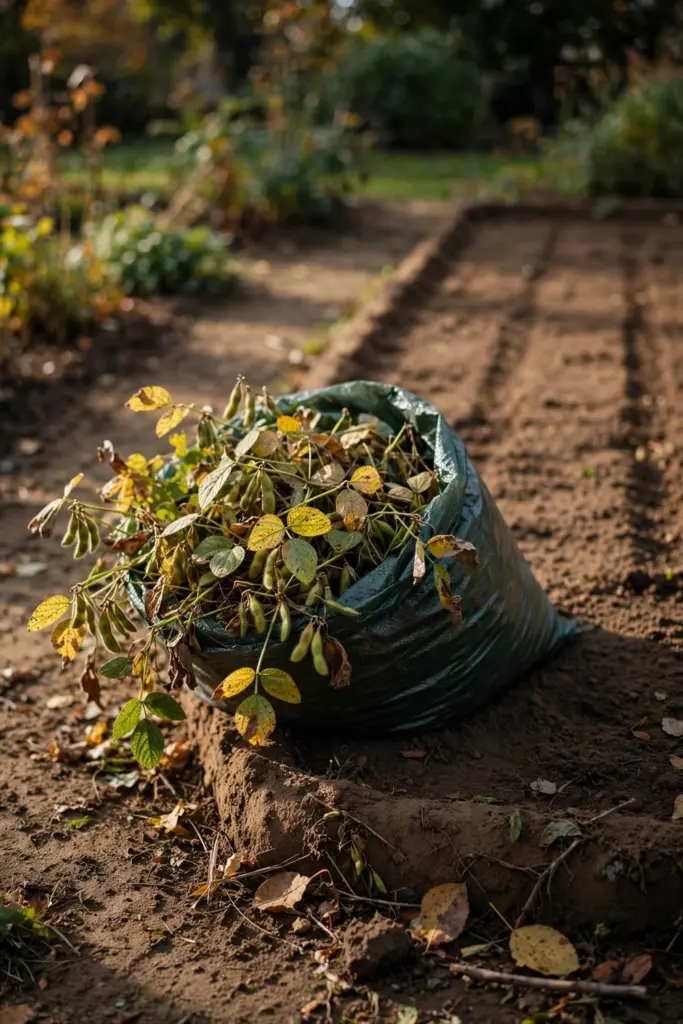
Clean up residue at season end. Pull spent plants, pick up fallen leaves, and clear the bed. Do not leave infected residue to overwinter in place. The cleanup is the rotation’s partner: rotation moves the crop, cleanup removes the reservoir.
Do not compost infected material. A home compost pile does not reliably kill this bacterium, and compost that returns to the garden returns the inoculum with it. Bag infected plants and leaves for municipal waste. Trash is the safe default for a home garden.
Strategy 6: Scout Early and Remove Infected Leaves Promptly
Scout weekly once the canopy closes. Check the tops of the canopy first during heavy dew or rainfall. The disease first appears there. A weekly walk with eyes on the upper leaves catches the first pustules while they are still few.
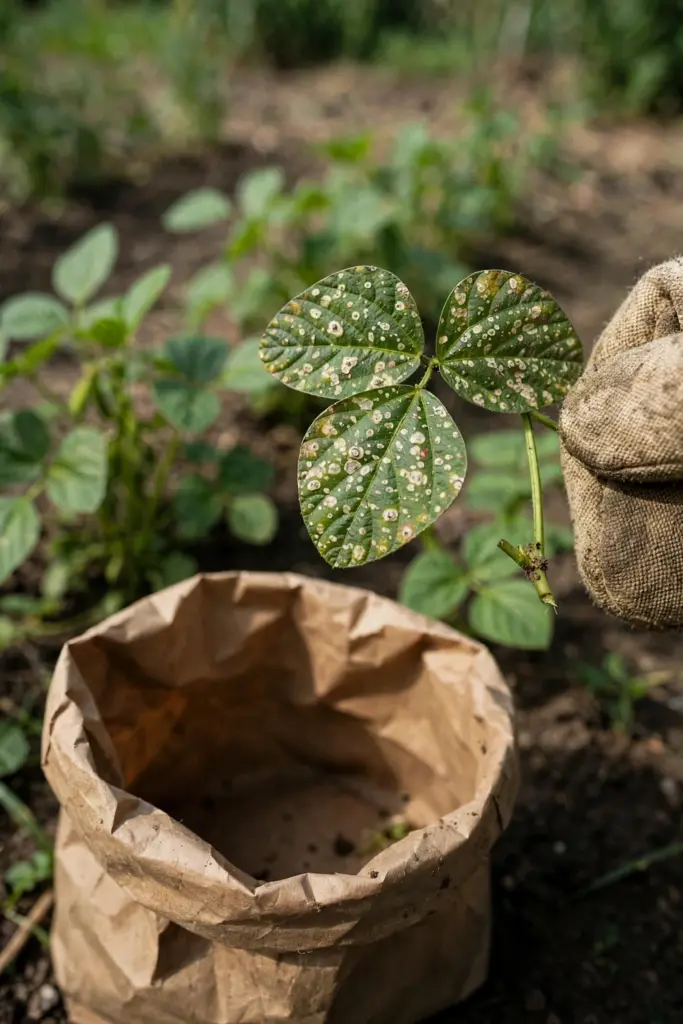
Remove infected leaves at once. Pull spotted leaves, bag them, and carry them out of the bed. Early removal works because the differential works early: the raised-center check separates pustule from blight while lesions are fresh. Late in the season the two blur together, and removal still helps, but identification no longer guides it.
Destroy removed material, never drop it in the row. A spotted leaf tossed on the path still holds bacteria that rain moves back into the bed. Bagged material leaves the property. The bag is the boundary.
Strategy 7: Use Copper Only as a Last Resort
Fixed copper may offer some suppression with thorough coverage. The University of Maryland Extension edamame guidance says exactly that much: some suppression, thorough coverage required, label governs. Copper is a protectant on the leaf surface. It never cures tissue that already shows pustules.
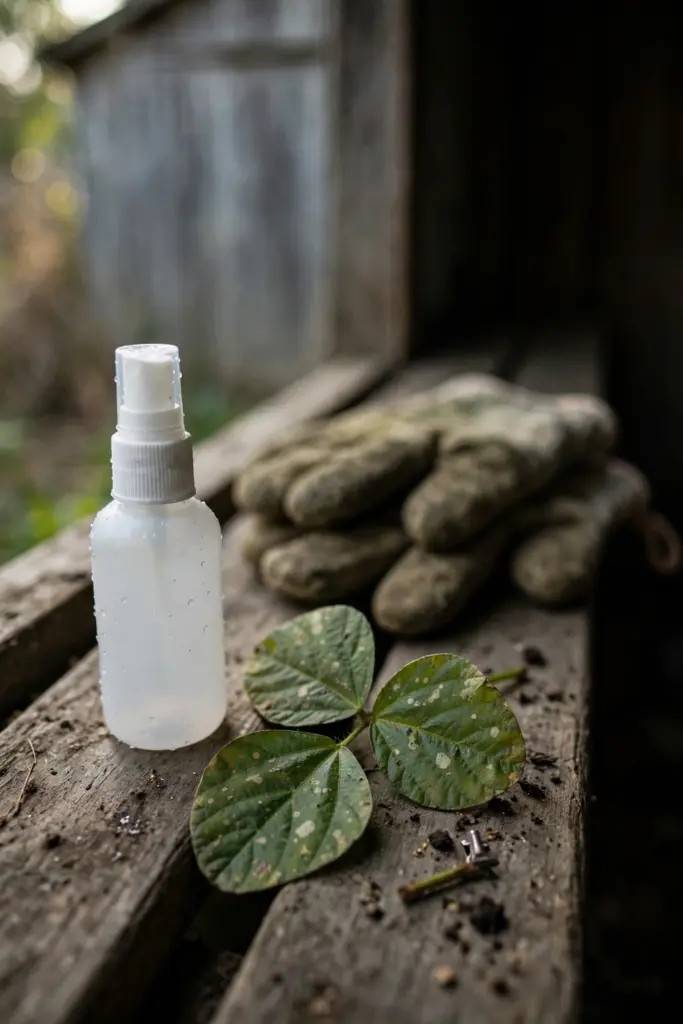
Read the label before buying. The label sets the crop, the rate, the interval, and the pre-harvest rules, and the label is the law. A copper product applied off-label risks the plants, the soil, and the harvest. If the label does not list edamame or soybean, the product does not go on edamame.
Never present copper as a cure, and never reach for fungicides. Fungicides do not work on bacteria, and a fungicide sprayed on a bacterial disease spends money for zero effect. Copper as last-resort suppression, after the six cultural strategies above, is the honest place for chemistry in this disease.
Living With Bacterial Pustule in an Edamame Patch You Already Grow
A patch with bacterial pustule is a managed patch, not a lost patch. Keep the canopy dry, keep scouting, keep pulling spotted leaves, and keep infected material bagged. The disease will still progress in a wet season, but it will progress slowly, and the harvest will stay worth picking.
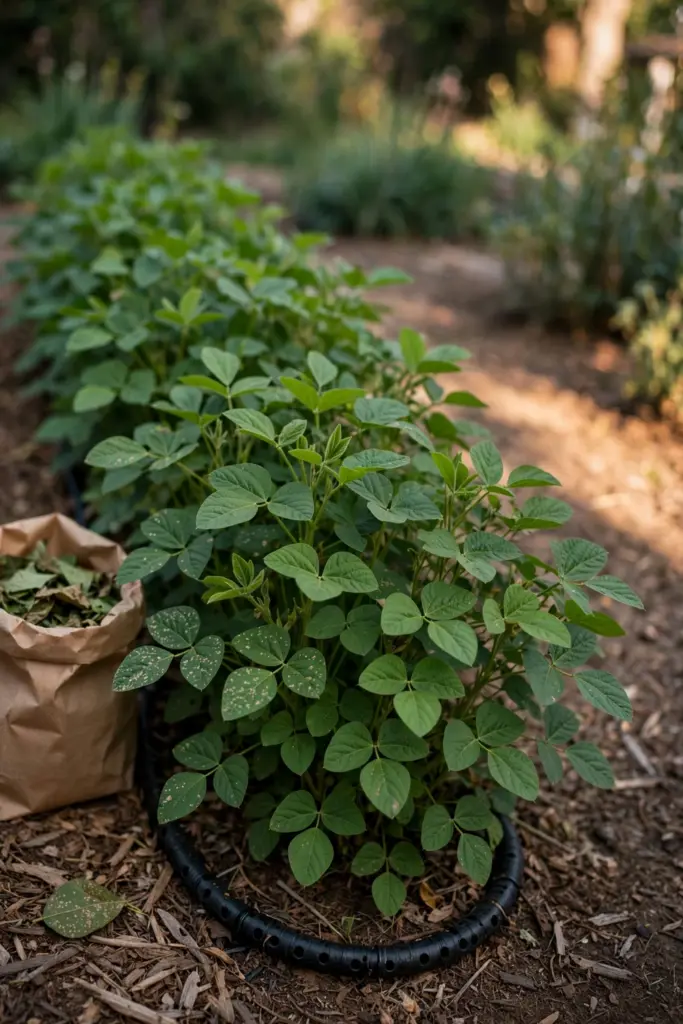
Stop three habits. Do not water overhead. Do not work wet foliage. Do not save seed from spotted plants. Keep those three lines unbroken and the bacterium stays contained to the plants that already carry it.
The Plant Care archive collects the site’s disease coverage, and the Asian soybean rust companion above covers the rust lookalike. Neither replaces the prevention routine here. Dry canopy, clean seed, and early removal carry the season.
Frequently Asked Questions
No. No spray cures tissue that already shows pustules. Copper offers some suppression on healthy leaf surfaces with thorough coverage, and the label governs. The real control is prevention: clean seed, a dry canopy, sanitation, and early removal. A plant that already shows pustules stays infected. Protect the plants still standing.
No. Bacterial pustule is a plant disease, not a human one. Do not eat pods with raised spots, since the tissue is damaged and the pods turn nonmarketable. Sound pods from a patch with pustule are safe to eat after washing. Discard spotted pods and spotted leaves. The loss is the harvest, not your health.
Not usually. United States Extension calls it a minor disease for commercial field soybean, and home patches with dry canopies and early removal usually hold the damage to scattered leaves. A wet season with overhead watering and no scouting can defoliate plants and sunscald pods. Prevention decides which outcome the patch gets. Start with clean seed and a dry canopy.
Bag them for municipal waste as the safe default. A home compost pile does not reliably kill this bacterium, and compost that returns to the garden returns the inoculum with it. Never leave infected residue in the bed over winter. Trash is the choice that never backfires, and it costs nothing but a bag.
Check the lesion surface and the temperature. Pustule lesions carry raised centers and favor warm weather around 86 to 92 degrees Fahrenheit. Blight lesions stay flat, angular, and water-soaked with halos, and favor cool weather at 70 to 80 degrees. Early in the season the check works well. Late in the season the pustules rupture and dry, and the two diseases become difficult to tell apart.
Where to Go From Here
Bacterial pustule on edamame rewards the gardener who keeps the canopy dry and the seed clean. Start with pathogen-free seed. Water at the base in the morning. Stay out of wet foliage. Rotate, clean up, scout early, and keep copper as the last resort.
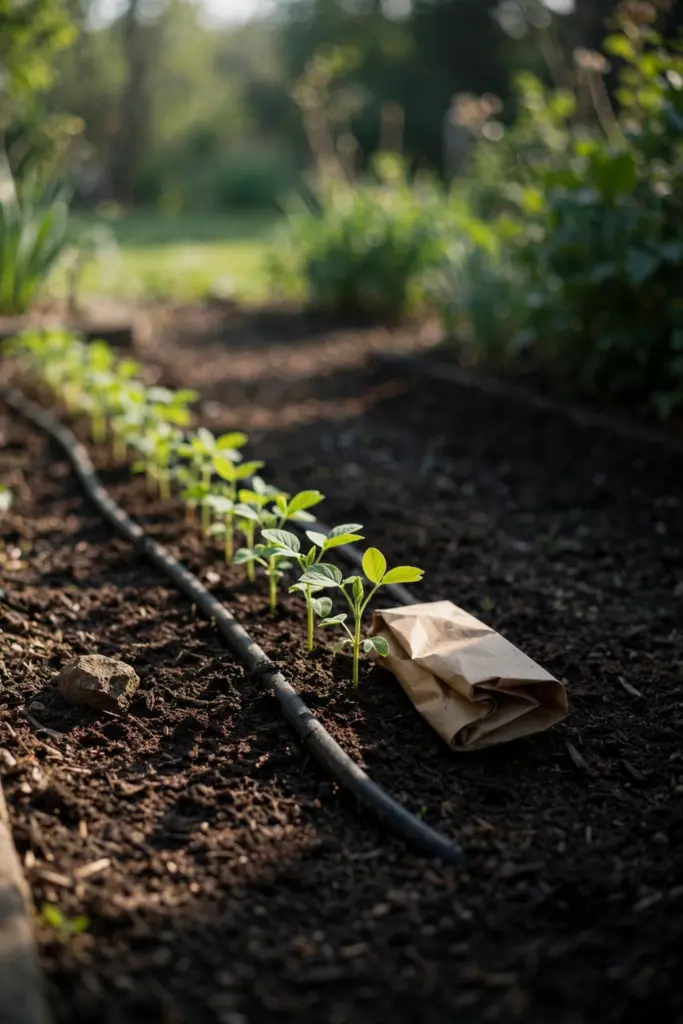
Next season, start clean. Fresh seed, a sunny airy bed, and a bag for infected leaves will do more than any spray. The University of Maryland Extension vegetable disease guidance is a useful companion for the wider vegetable disease picture, since it sets this one bacterium among the dozen prevention habits that keep a vegetable garden healthy.