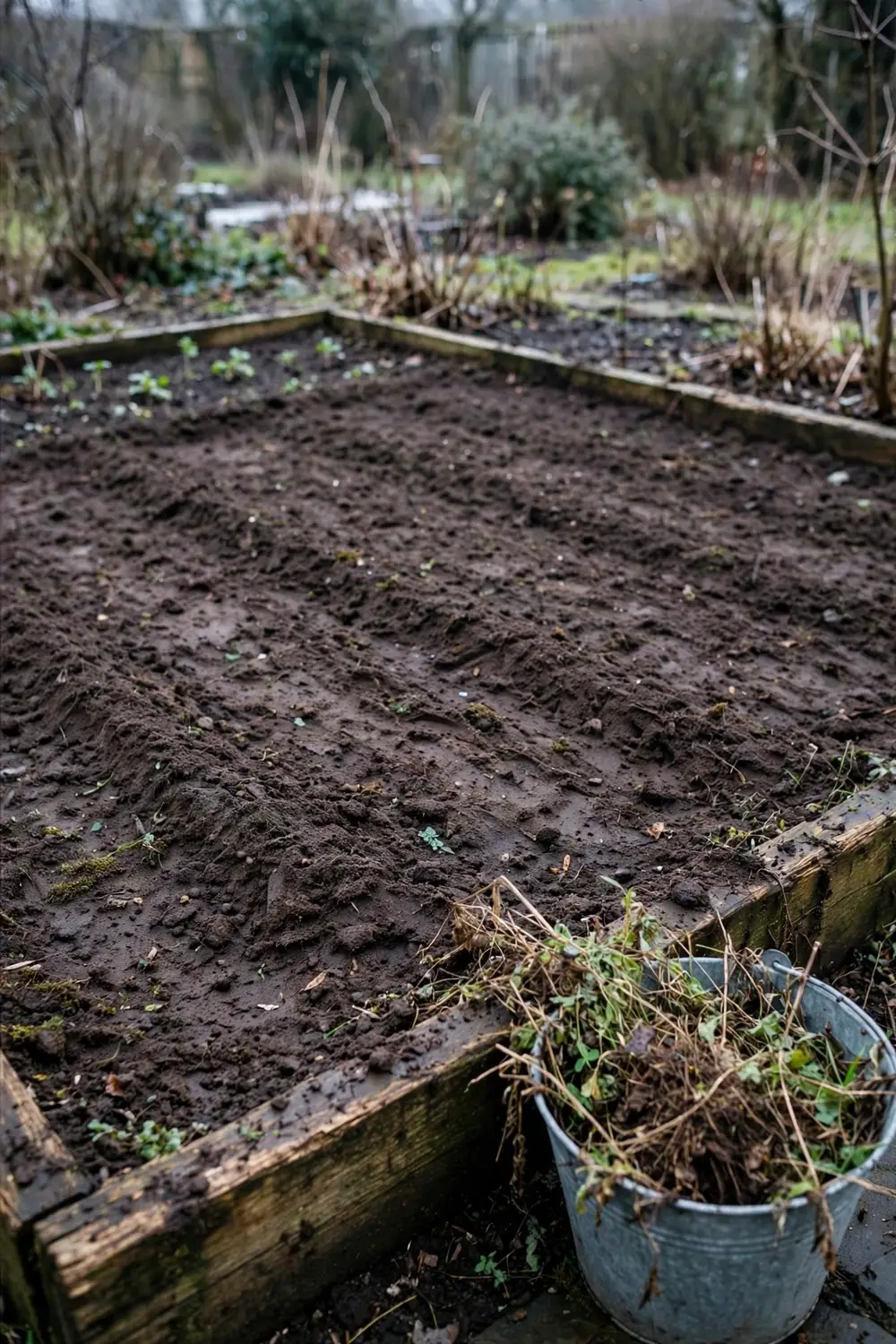

Pull every weed in one bed in 15 minutes this weekend, while the soil is still soft from winter rain. That is the whole decision behind should you start weeding now for spring. Start in late winter, around August, while weeds are small and root-shallow, and you beat them before they flower and seed. The rest of this page is 6 moves, from the first pull to the mulch that keeps the bed clean.
Work one bed at a time. Pull after rain. Mulch after the pull. Repeat weekly until spring growth takes off.
1. Start Weeding in Late Winter, Around August
Yes. Start now. Late winter is the cheapest weeding window of the year in Australian gardens. The soil is still moist from winter rain. Weeds are small. Their roots are shallow. A pull now removes the whole plant. A pull in October fights a flowering weed with a deep root and a seed head already forming.
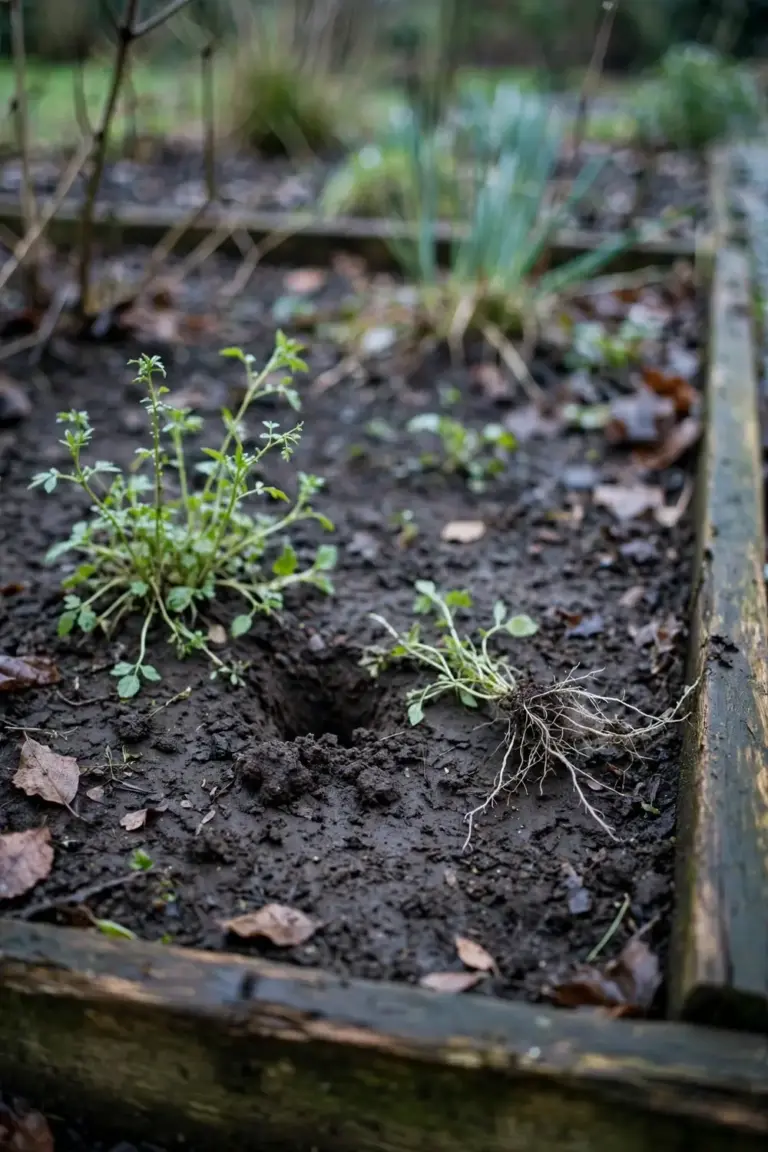
Start means pull, not clear. You are not stripping the garden bare. You are removing weeds before they seed, one bed at a time, while the job is still easy. The garden keeps its plants. The weeds lose their season.
The clock runs one way. A weed that flowers in spring drops seed into the soil. That seed waits. The University of California’s subtropical weed notes put the rule plainly: kill the weed before it produces seeds, because once seeds drop they join the seed bank and keep the weed population coming back. Every week you wait in August hands the weeds a bigger root and a closer flower.
Bioweed’s Australian guide puts the ideal start in late winter, around August, when soil stays moist from winter rain and weeds clear before the spring growth rush. Bunnings’ Australian spring-prep advice agrees on the other half of the timing: weed while weeds are young and before they spread. The two halves make one rule. August pulls are easy pulls. October pulls are rescue work.
Northern-hemisphere guides say March, so ignore the month and keep the season instead, because March is late winter in the north and August is late winter in Australia. The trigger stays the same in both hemispheres: soil moist from winter rain, weeds small, flowers still weeks away. When those three conditions line up, the window is open.
Test the window before you commit to it. Push a hand fork 5 cm into the bed and lift. The soil should crumble and the weeds should come up with their roots attached. Roots that snap mean the soil is still too dry, so wait for the next rain and test again. A fork that slides in clean and lifts a whole weed tells you the window is open.
Your council’s green-lid bin takes garden weeds in most areas. Check your council’s list for the local rules, since a few councils exclude declared noxious weeds or ask for bagging first. The bin is the safest path for seeded weeds in most areas. When the bin is full, bag the rest and wait for the next collection.
Start with the bed that seeds first. That is usually the vegie bed or the bed closest to the lawn edge, where couch and kikuyu runners creep in. Leave the deep shade bed for last. Its soil warms slowest and its weeds grow slowest. One bed per session keeps the job finishable. A finished bed beats three half-weeded beds.
2. Pull Weeds While the Soil Is Soft and the Roots Are Shallow
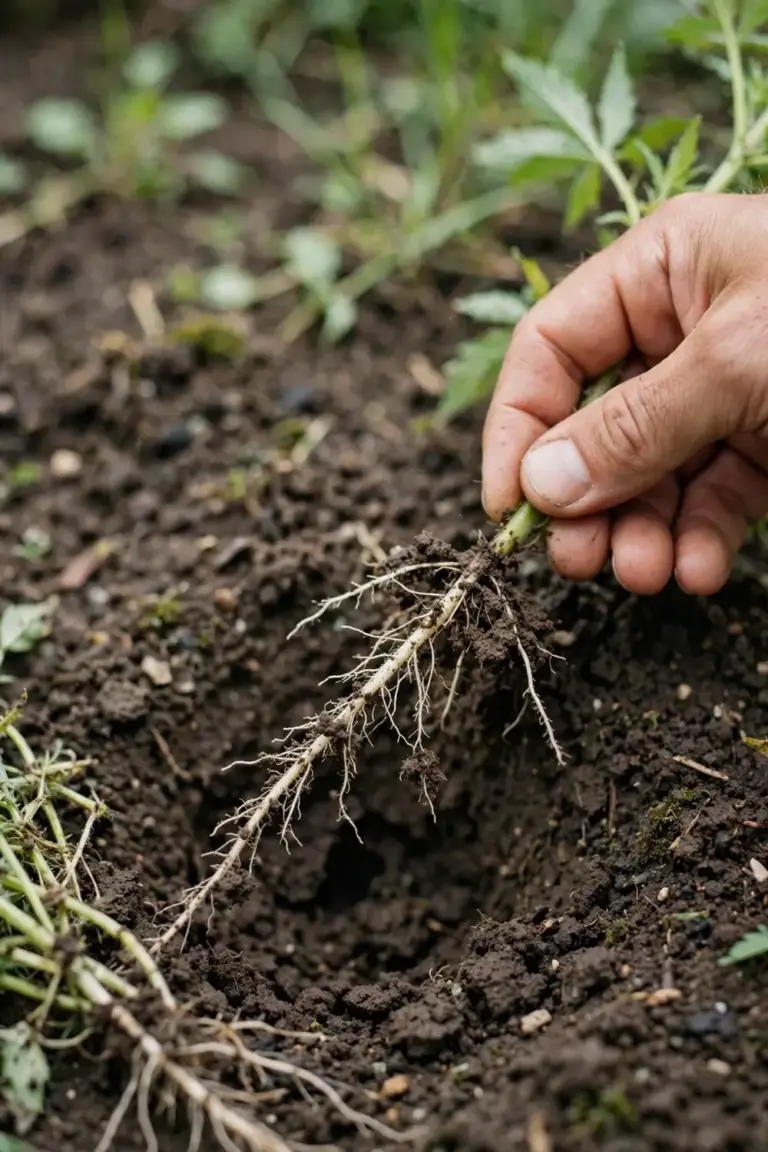
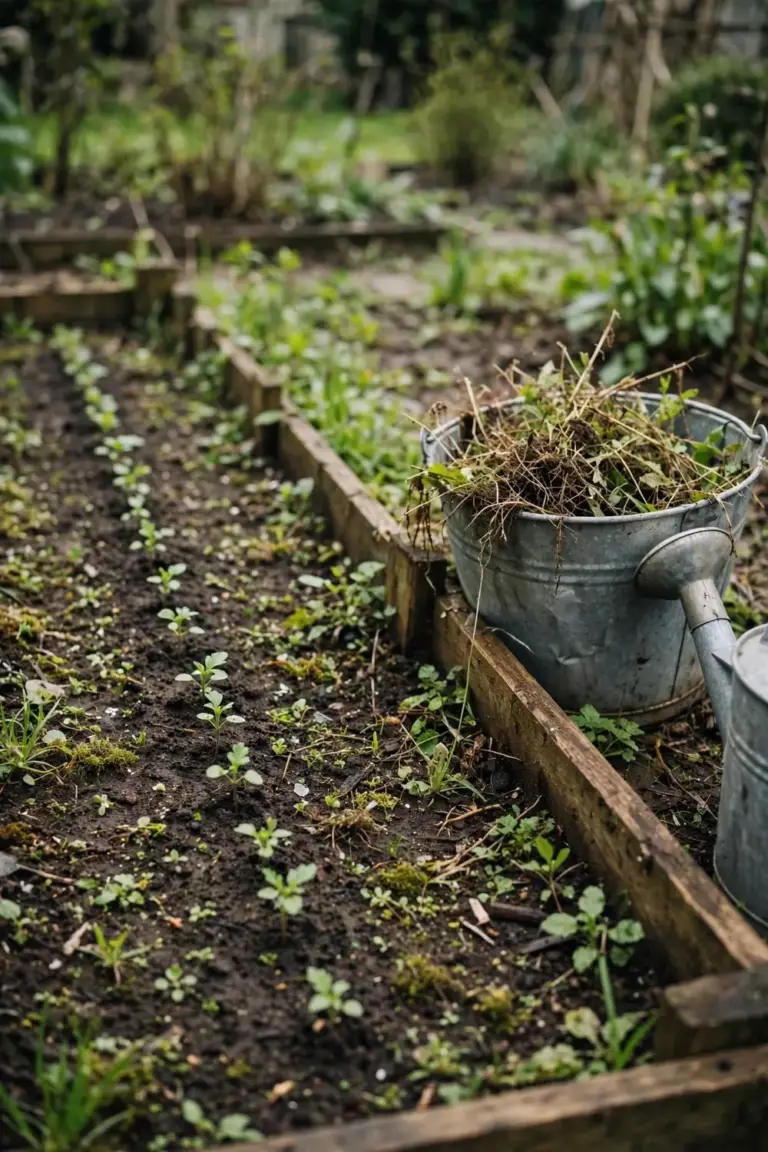
Soft soil is the whole advantage, because a weed pulled from moist soil comes out root and all. Dry soil snaps the stem and leaves the root behind to regrow. Rain does the loosening for you. Wait a day after rain, then pull, and the soil holds together around the roots instead of crumbling away from them. Dry-soil pulling is the single most common reason a weeded bed looks weedy again a week later.
No rain in the forecast? Water the bed the evening before you weed. A slow soak 5 cm deep softens the soil almost as well as rain. Pull the next morning while the soil is still moist. Dry-soil pulling is the fallback, not the plan.
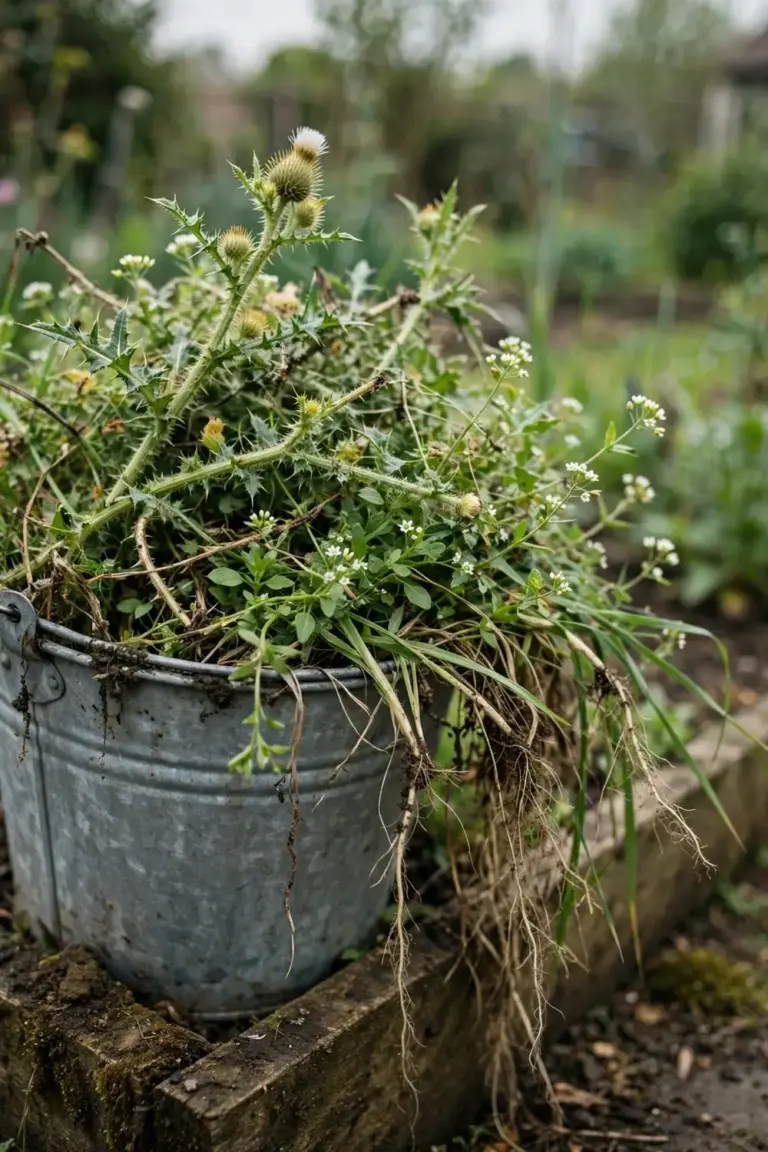
Grip low and hold the stem at the soil line, not halfway up, then pull straight up with a slow steady draw. Twist a taprooted weed a quarter turn as it comes free, which breaks the soil grip without snapping the root. Drop each weed into a bucket, not onto the path. A pulled weed left on bare soil can reroot after rain, and a pulled sowthistle with buds can finish seeding where it fell.
Taproots and fibrous roots need different hands. A taproot, like a dandelion or a sowthistle, is one thick root going straight down. It snaps if you yank sideways. Pull it straight up, slow, with the twist. A fibrous root, like chickweed or a grass runner, is a mat of thin roots. It lifts as a mat. Slide a hand fork under the crown and lever the whole mat out in one piece. The fork does the work. Your fingers do the finishing.
Three tools carry the job. A hand fork lifts taproots and bulb clumps. A bucket holds every pulled weed so none reroots on the path. A stirrup hoe cuts seedlings between rows without turning the soil. Keep the tools in the bucket. Carry the bucket to the bed. When the bucket fills, empty it into the green-lid bin and keep going.
Oversized weeds come out in two pieces. A sowthistle taller than your knee gets cut at knee height first, with the top dropped straight in the bucket, then the root forked out. The cut keeps seed heads off the soil while you work. Bag the top at once if buds show. The root comes out easier once the top is gone, because you can see the crown and grip it low.
The numbers explain why early pulls matter so much. University of Illinois Extension warns never to let weeds go to flower: one dandelion plant can produce 15,000 seeds, and one Canada thistle stem can produce 680 seeds that stay viable for 10 to 20 years. A single missed flower head writes years of weeding into the bed. The pull you skip in August becomes the flush you fight in October.
I have learned that the weed I pull before it flowers never gets to add its seeds to the soil. That one habit does more for the spring bed than any tool in the shed.
Perennial weeds need a different grip, because couch runners, kikuyu runners, oxalis bulbs, and nutgrass tubers all regrow from underground parts. Pull the top and the underground part sends up a new shoot. For these, pull, then watch the same spot, and pull again when the regrowth reaches finger height. Each pull drains the stored energy a little further. The third pull is visibly weaker than the first, the fifth pull often finds nothing, and patience beats force with perennials as long as you keep pulling before they flower.
3. Pull These 6 Weeds First
Pull the seeders first. A weed about to flower outranks a weed still growing leaves. Work down this table in order. Finish one row before starting the next.
| Weed | Pull Now | Why |
|---|---|---|
| Annual sowthistle | Yes, before buds open | One plant seeds fast and the buds keep ripening after cutting |
| Chickweed | Yes, while low and soft | Drops seed for weeks straight onto the soil below |
| Hairy bittercress | Yes, before pods pop | Seed pods burst at a touch and scatter seed across the bed |
| Onion weed | Yes, while soil is soft | Bulbs lift whole from moist soil and snap off in dry soil |
| Oxalis | Yes, young plants first | Bulblets multiply underground while the top looks small |
| Couch and kikuyu runners | Yes, edge runners first | Runners creep in from the lawn and root at every node |
Annual sowthistle sits at the top for a reason. Its flower buds keep ripening even after the stem is cut. The University of California notes show a cut sowthistle bud maturing and producing seed over 6 days with no water or nutrients from the soil. A sowthistle stem tossed on the compost pile can still finish seeding. Bag budding sowthistle. Bin it. Do not compost it. The bucket-to-bin path is the only safe path for a budding sowthistle.
Chickweed and hairy bittercress are the quiet seeders. Chickweed drops seed for weeks onto the soil directly below it, while hairy bittercress pods burst at a touch and throw seed across the bed. Both are shallow-rooted and pull cleanly from moist soil. A hand fork under the crown lifts the whole mat, so shake the soil off the roots and drop the weed in the bucket. Work these two on a calm day if you can, since wind carries bittercress seed further than your arm can reach.
Onion weed and oxalis are bulb weeds, and the top growth is the small part. The bulbs sit underground and multiply. Moist soil is the only time a hand pull gets the bulbs out with the leaves, so work a fork under the clump and lift. Sift the soil with your fingers for the small bulblets. One bulb left behind becomes a clump by spring. Mark the spot with a stick and check it next week, because the second pull catches the bulbs you missed.
Couch and kikuyu runners are edge weeds. They creep in from the lawn and root at every node. Pull the runner back toward the lawn edge, lifting each rooted node as you go. A runner pulled in August is a thin green thread. A runner left until October is a mat that needs a fork and a full afternoon. Edge work is the highest-value weeding in the garden. A clean edge keeps the middle clean longer than any other single move.
Disposal order matters. Bag the seeded weeds first, while your hands are clean and the bucket is empty. Then pull the young weeds. Seeded weeds in the bucket contaminate every weed added after them if the bucket tips. Two buckets solve it: one for seeded weeds, one for young weeds. Both go to the green-lid bin at the end of the session.
Short on time? Do one row only. The sowthistle row matters most, because its buds ripen after cutting and its seed lands fast. Fifteen minutes on sowthistle beats an hour on couch runners that are not yet seeding. The table order is a priority order. Row one first, every time.
Check under last year’s mulch before you pull, since old mulch hides seedlings that sprouted in the dark. Rake the mulch aside, pull the seedlings, then spread the mulch back. A seedling under mulch pulls clean because the soil beneath stays moist. The mulch did half the work for you.
4. Leave These 4 Things Alone for Now
Do not clear everything. Four things stay put in late winter, and pulling them now costs more than it saves.
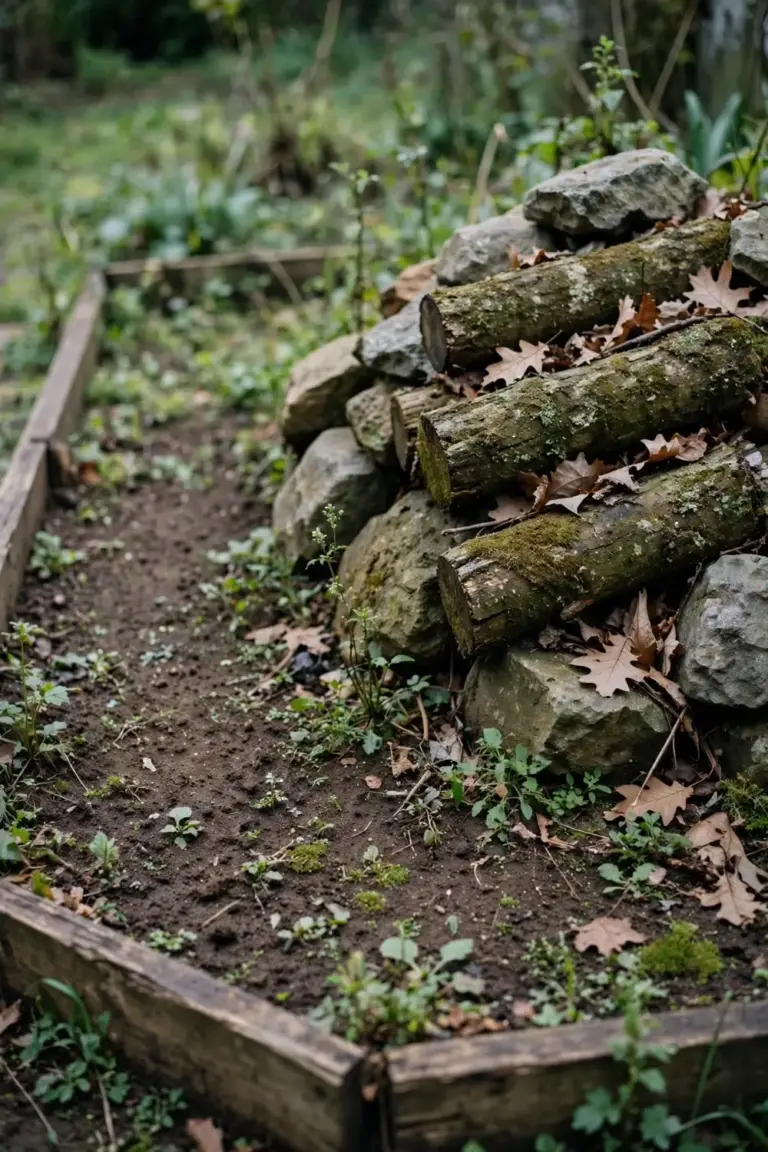
Leave the habitat pile. A log pile, a rock pile, or a dense shrub corner shelters lizards, frogs, and beneficial insects through winter. Clear it in late winter and the shelter animals lose their cover before spring food arrives. Weed around the pile. Leave the pile itself until spring warmth returns. The pile is not a weed problem. It is a home. Weeding around it takes five minutes and keeps the shelter intact.
Leave waterlogged soil alone. Soil that squelches underfoot compacts when you walk on it and work it. Footprints in wet soil crush the air spaces that roots need. Wait until the top 5 cm dries enough to crumble in your hand. The weeds wait too. A compacted bed grows weeds better than a loose one. The soil health guide explains how structure, air, and biology work together in a bed that drains and breathes. Weeding a waterlogged bed trades one problem for a worse one.
Leave dormant perennials uncut. A perennial that still looks dead may only be dormant. Cutting it back in late winter removes the growth that would have fed spring shoots. Weed around the crown. Mark the spot with a stick if you need to remember it. Cut back only after new growth shows. The stick costs nothing. The cut costs a season.
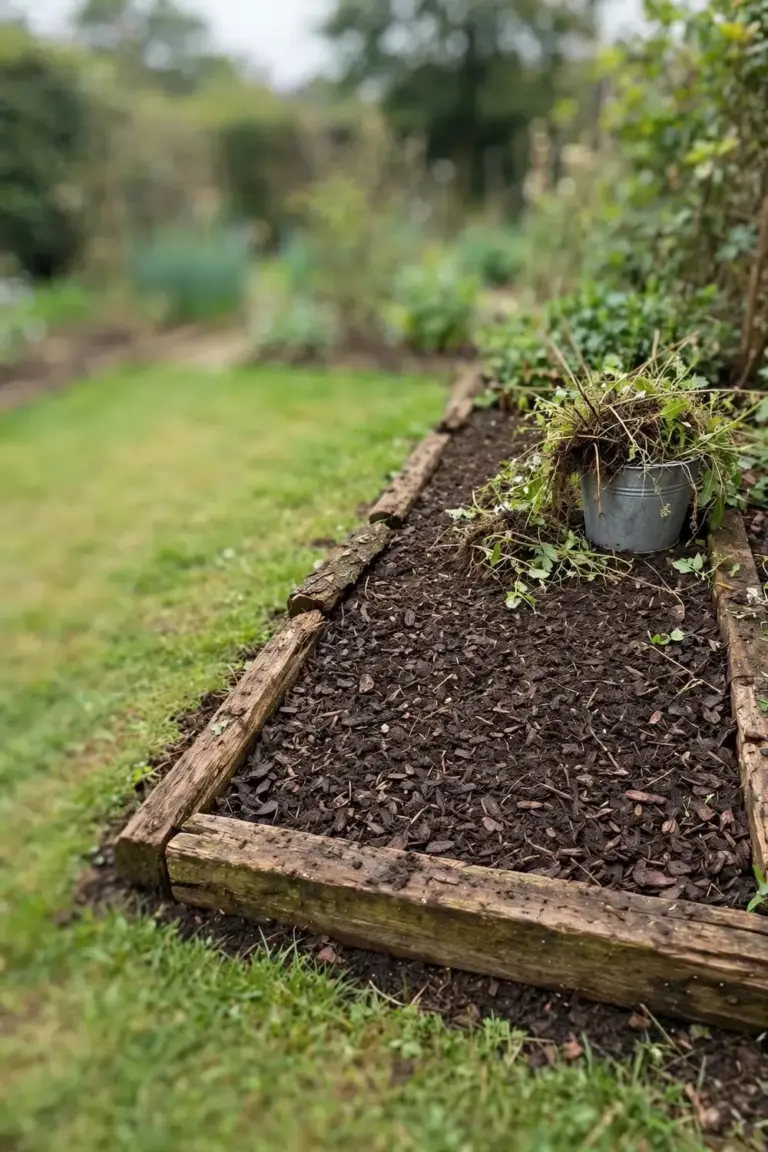
Leave the mulch until the weeds are out. Mulch laid over live weeds hides them and feeds them, and the weeds push through a fresh mulch layer within weeks. Then you pull them through the mulch instead of from clean soil. Pull first. Mulch second. The order is the whole method. A bed mulched over live weeds needs weeding twice, while a bed weeded then mulched needs weeding once, so the mulch goes on last, always.
Leave the self-sown keepers. A parsley seedling, a calendula seedling, or a tomato that sprouted from last year’s fruit may be a weed by position and a keeper by value. If you did not plant it and you do not know it, leave it until it shows its leaves clearly. A week of patience costs nothing. Pulling a keeper costs a plant.
5. Run a 15-Minute Weekly Weeding Routine After Rain
Weeding is a routine, not a rescue, and fifteen minutes once a week beats three hours once a season. The routine has four beats: walk, pull, bin, check.
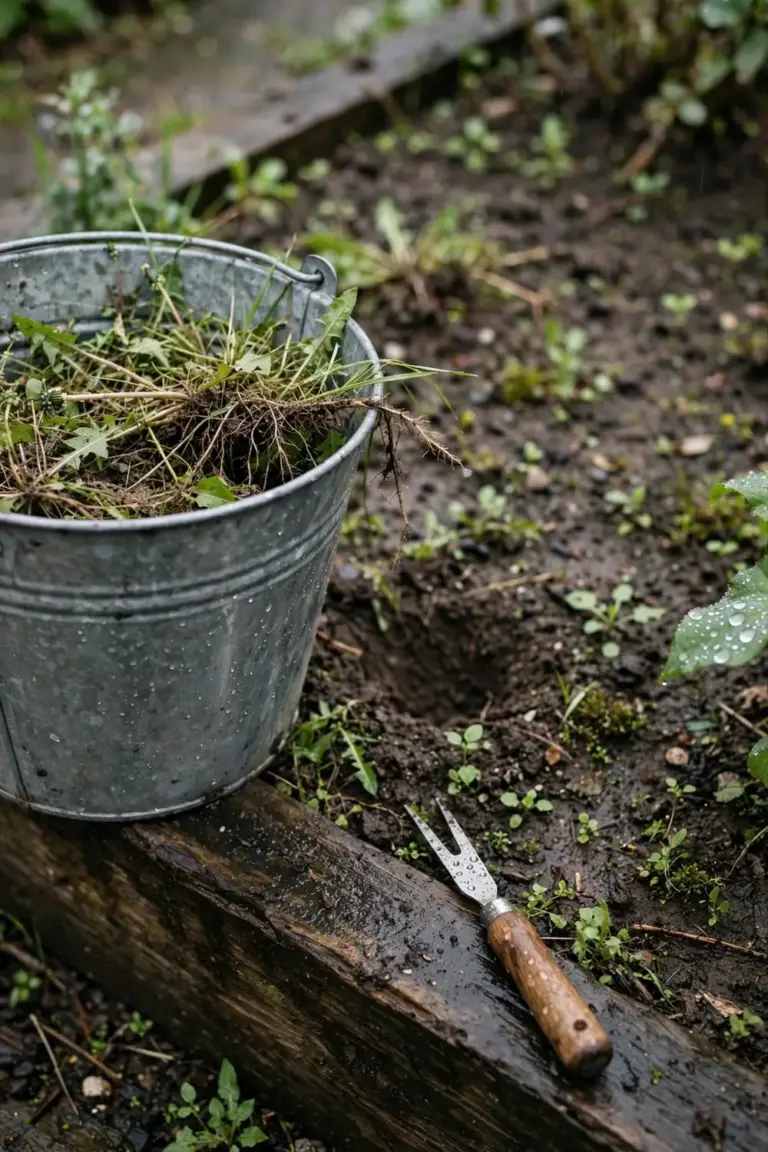
Walk the beds after rain. Rain softens the soil and wakes the next flush of seedlings. Seedlings pull easiest in their first week, when the root is one thin thread. A seedling left for a month grows a root that needs a fork. The walk takes two minutes. It tells you which bed needs the fifteen minutes this week.
Pull what you see. Grip low. Pull slow. Drop weeds in the bucket. Work the edges first, where runners creep in, then the open bed. Edges seed the middle. A clean edge keeps the middle clean longer. When the bucket fills, empty it and keep going. Stop at fifteen minutes. An unfinished bed with a clean edge is still a win.
Bin the seeded weeds. Weeds without seed heads can go in the green-lid bin. Weeds with seed heads go in the green-lid bin too. Home compost piles seldom reach temperatures high enough to kill weed seeds, and the seeds survive to grow again. Iowa State Extension’s weed-control notes advise bagging seeded weeds and diseased debris for municipal or commercial composting, where higher temperatures destroy the seeds. Your home pile is for kitchen scraps and clean prunings, not for seeding weeds.
Check the same spots every week. The same corner reseeds first. The same edge creeps first. A weekly check catches the second flush while it is still a seedling. Miss two weeks and the second flush becomes a second weeding job. The routine works because it never lets a weed reach flowering size. Flowering is the line. Everything before the line is easy. Everything after it is seed.
Keep a one-page log with one line per week for each bed you weed. The log shows which bed reseeds fastest and which weed keeps coming back. A bed that reseeds every week has a seed bank problem, not a weeding problem. The log turns a chore into a record, and three lines a week is enough to tell you where to spend the fifteen minutes next week.
Expect the biggest flush in September. Warming soil wakes the seeds that winter rain could not reach. The September flush looks like failure. It is not. It is the seed bank spending itself. Pull the flush while it is small and the October flush is smaller. Pull October’s flush and November’s is smaller still. The routine compounds.
Missed a week? Go anyway. Pull the biggest seeders first, then the rest. A late pull still stops seed if the flowers have not opened. A missed week is not a failed season. Two missed weeks in a row is where the damage starts. The routine forgives one miss. It does not forgive three.
The seed bank sets the stakes for the routine. University of Nevada, Reno Extension reports that weed seed can remain viable in soil for at least two years, and for some species 20 years or longer. A weed that seeds once writes itself into the bed for years. A weed pulled before it seeds writes nothing. The weekly routine is how you keep the seed bank from growing. Every clean week is a week the seed bank shrinks.
6. Skip These 3 Weeding Mistakes
Three mistakes undo good weeding. All three look like work. All three make the weed problem worse.
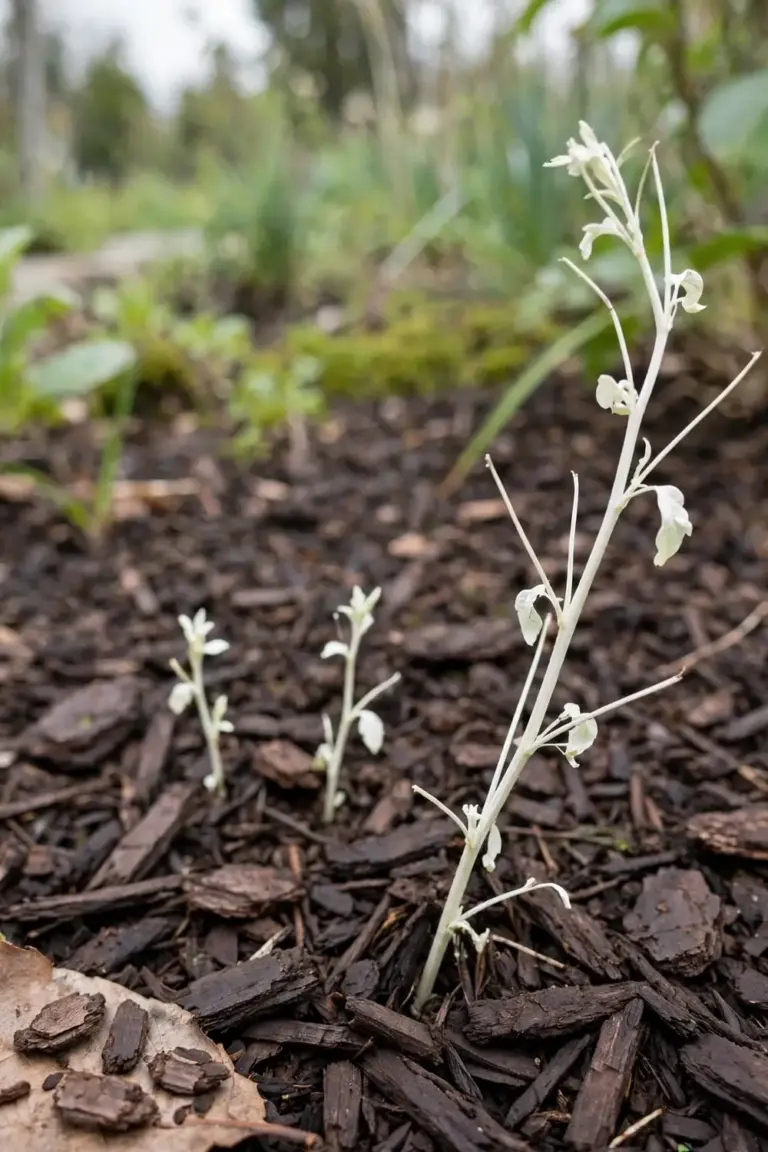
Skip deep digging in wet soil. A fork turned deep in waterlogged soil smears the soil structure and buries fresh weed seed at a depth where it waits for years. Shallow work wins. A hand fork 5 cm deep lifts seedlings without churning the seed bank. Deep digging belongs in dry soil, for bed building, not for weeding. The fork is a lifting tool in August, not a turning tool.
Digging also wakes buried seed. Soil holds a bank of dormant seed below the surface. A deep fork turn lifts that seed into the light and warmth where it germinates. Shallow work leaves the buried bank buried. The seed bank shrinks only when nothing new joins it and nothing old wakes up.
Skip mulching over live weeds. Mulch blocks light. Live weeds under mulch grow pale and leggy, then push through the mulch layer and seed above it. The mulch then traps the seeds it was meant to block. Pull first. Mulch second. Iowa State Extension recommends a mulch layer 2 to 4 inches thick, or 5.1 to 10.2 cm, to suppress weed growth. That depth only works on a clean bed. On a weedy bed it is a blanket over a fire. The mulch goes on after the last weed comes out, never before.
Skip leaving pulled weeds on the path. A pulled weed on bare soil reroots after rain, a pulled sowthistle with buds finishes seeding on the path, and a pulled runner reroots at its nodes. Every pulled weed goes in the bucket, and the bucket goes to the green-lid bin. The bed stays clean because the weeds left the bed entirely. The path is not a compost heap. It is the place weeds go to come back.
No spray belongs in this routine. Hand pulling and mulch carry the whole job. A bed weeded weekly and mulched after the pull stays ahead of its weeds without anything else. The routine is the method. The organic weed control guide covers the wider set of non-chemical weed controls for beds that need more than a routine. This page stays on timing: pull early, pull weekly, mulch after.
Frequently Asked Questions
No. Spring weeding still pays, but the job gets harder. Weeds in spring are bigger, deeper-rooted, and closer to flowering than weeds in late winter. Pull them before they flower and you still stop the seed drop. Pull after they flower and you are weeding next year’s crop too. Start the weekly routine the week you read this. The best week was August. The second best week is this one.
Weed first, then mulch. Mulch over live weeds hides them and lets them push through within weeks. A clean bed takes mulch well. The mulching guide explains how mulch holds moisture and blocks light once the bed is clean. Lay 5.1 to 10.2 cm after the pull. Keep mulch 5 cm clear of stems and trunks. Top it up when it thins below 5 cm.
Bag them. Do not compost seeded weeds at home, since home piles seldom get hot enough to kill the seed. Bin seeded weeds in the green-lid bin. Then start the weekly routine so the seed that already dropped never gets to flower. The seed bank shrinks a little every year you pull before flowering. One seeded season writes years of weeding. One clean season erases part of that debt.
Compost young weeds without seed heads. Keep seeded weeds and diseased weeds out of the home pile. Home compost seldom reaches the temperatures that kill weed seeds and pathogens. Municipal composting runs hotter and destroys them. When in doubt, bin the weed. A clean compost pile grows good soil. A weedy compost pile grows next year’s weeds.
Weed once a week through spring, walking every bed after rain, and pull seedlings while their roots are one thin thread. Check the edges first, where runners creep in from the lawn. A weekly pass keeps the seed bank from growing, and skipping two weeks means the second flush needs a fork instead of fingers. Fifteen minutes a week beats three hours a season, every season.
Start This Weekend With One Bed
Pick the bed that seeds first and pull it clean after rain. Bin the seeded weeds. Mulch it 5.1 to 10.2 cm deep. Then walk it once a week. The bed that gets weeded in August stays ahead all spring, while the bed that waits until October fights flowering weeds with deep roots and seed heads forming. Start this weekend. One bed. Fifteen minutes. The rest of spring thanks you for it.
Check the beds again in September. The September flush is the biggest of the season, and the weekly routine catches it while it is small. A bed that holds clean through September holds clean through spring. The work you do in August pays out in September, October, and November.