
Septoria speckled leaf blotch is a rare barley leaf disease caused by the fungus Zymoseptoria passerinii. It last appeared in North American crops in the early 2000s, and it survives today mainly in wild barley. A home gardener growing a small barley patch will likely never see it.
I have learned to check the pathogen name before trusting the common name, since one shared name covers two different diseases here.
The rest of this page names the fungus, shows the leaf signs, untangles the shared name, and lists the short honest response for a home barley patch.
What Septoria Speckled Leaf Blotch on Barley Is
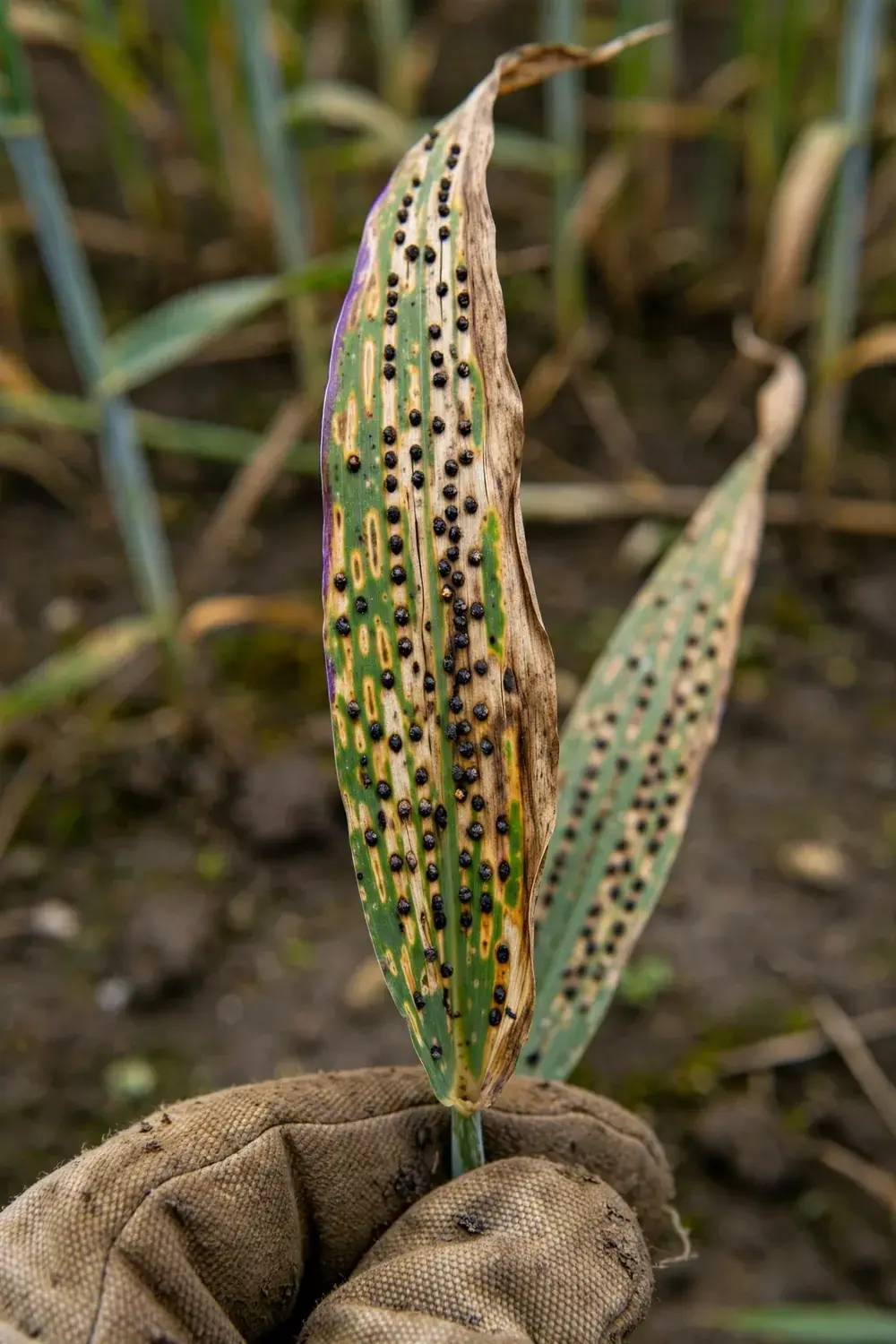
Septoria speckled leaf blotch on barley is a fungal leaf disease. The fungus Zymoseptoria passerinii causes it.
Older references call the same fungus Septoria passerinii, and current literature uses Zymoseptoria passerinii after a genus revision that left the disease itself unchanged.
A New Phytologist study reports that the disease last appeared in North America in the early 2000s. Although rare in crops, field sampling found it persisting in wild barley in the Middle East.
Septoria speckled leaf blotch attacks barley. Barley carries the Latin name Hordeum vulgare.
The disease is rare, sporadic, and tied to field barley. That context decides the rest of this page. A home patch needs recognition and basic hygiene, and it needs no treatment program.
How to Recognize Septoria Speckled Leaf Blotch on Barley Leaves
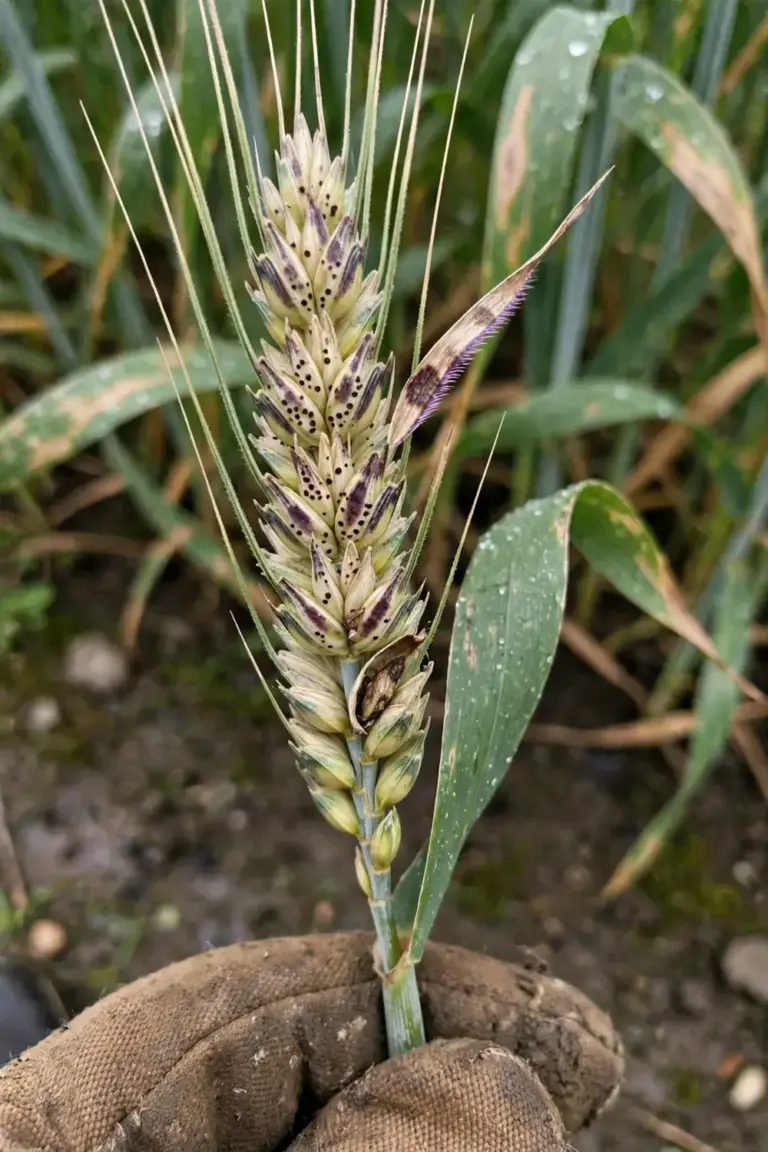
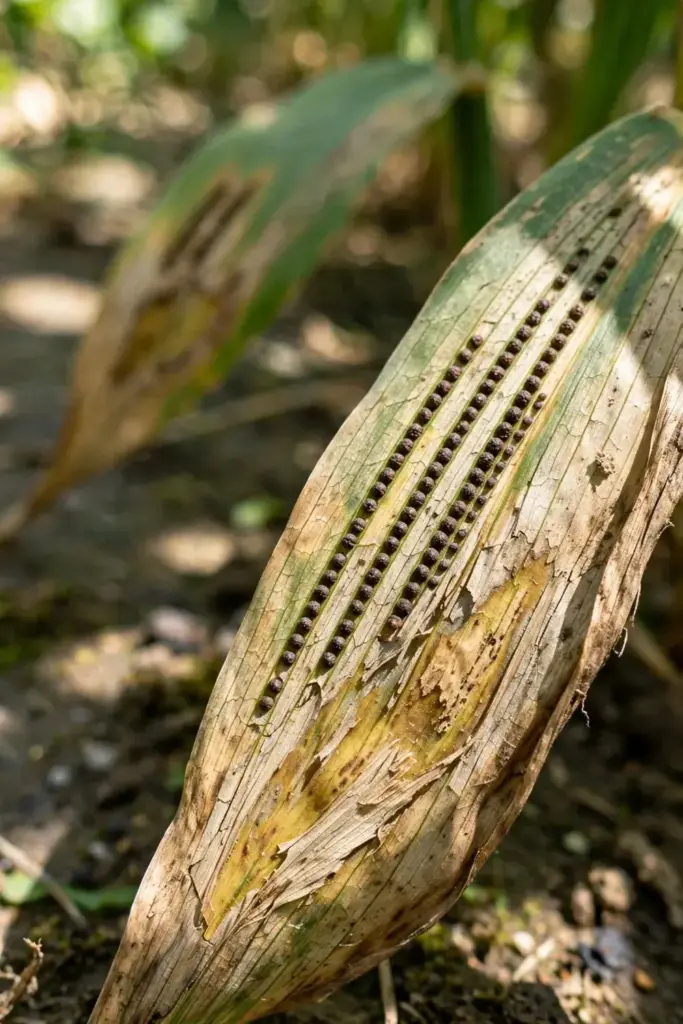
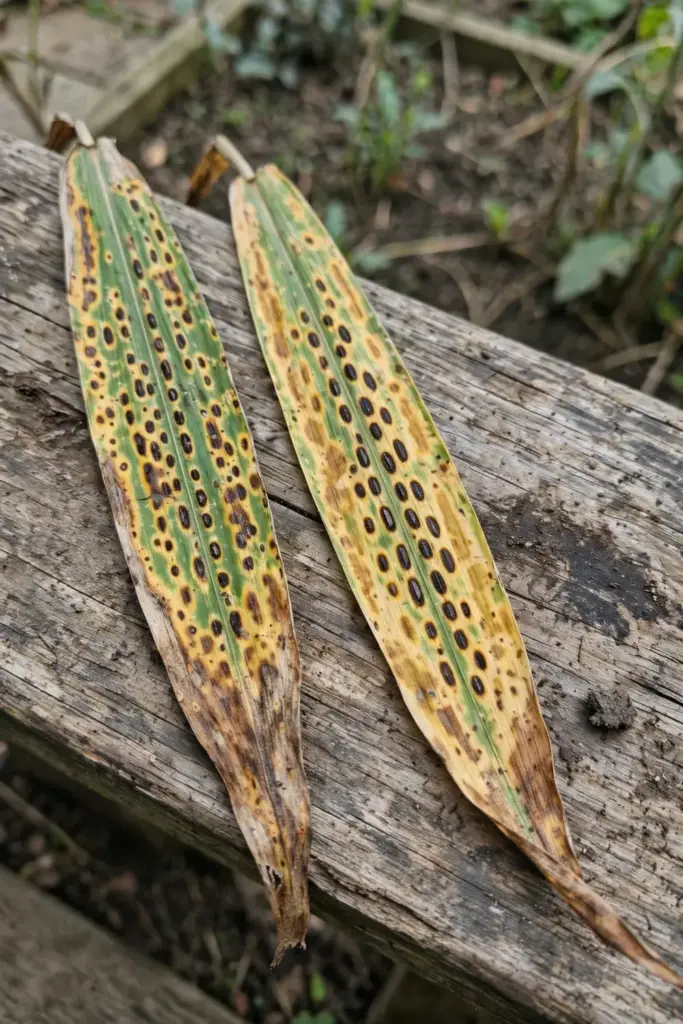
Look for elongated yellowish-brown leaf spots with blurred edges. Dark brown fruiting bodies line up in rows between the veins inside the dead tissue.
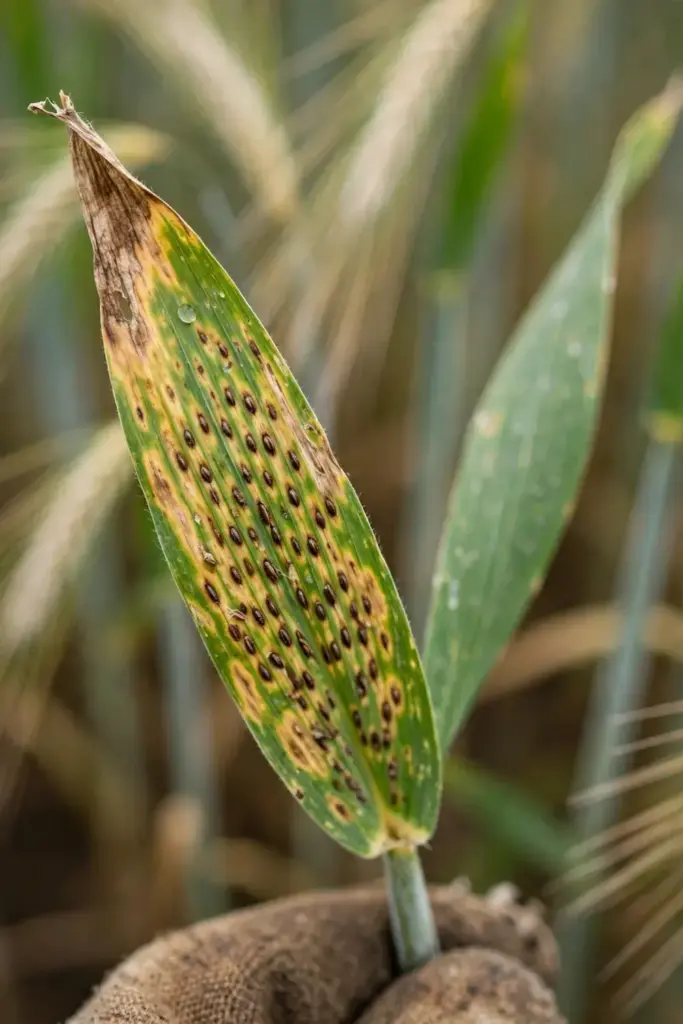
Spots merge as the disease advances. Merged spots cover large areas of leaf tissue.
Field identification sorts suspects. It never settles the case. Net blotch draws a netted pattern across the leaf, and spot blotch and scald blur the picture further.
Photograph the leaf before you cut anything. Shoot the full leaf, the lesion close up, and the whole plant. A lab test names the agent when the pattern stays unclear, so the photos preserve the case for Extension.
Why One Shared Name Covers Two Different Diseases
The name speckled leaf blotch points at two diseases. Barley speckled leaf blotch and wheat Septoria tritici blotch share the nickname, and they are different pathogens on different hosts.
| Common name you may see | Disease | Fungus | Host |
|---|---|---|---|
| Septoria speckled leaf blotch | Septoria speckled leaf blotch (SSLB) | Zymoseptoria passerinii | Barley |
| Speckled leaf blotch | Septoria tritici blotch (STB) | Zymoseptoria tritici | Wheat |
The shared nickname comes from the speckled look. The University of Tennessee guide states that Septoria tritici blotch is also known as speckled leaf blotch, and it names rows of dark reproductive structures as the key diagnostic feature.
Check the botanical name before following any advice. Advice written for wheat STB does not transfer to barley SSLB, and advice written for barley SSLB does not transfer to wheat STB.
One name on a seed packet or a forum post proves nothing. The Latin name settles which disease the advice covers.
What a Home Barley Patch Can Actually Do
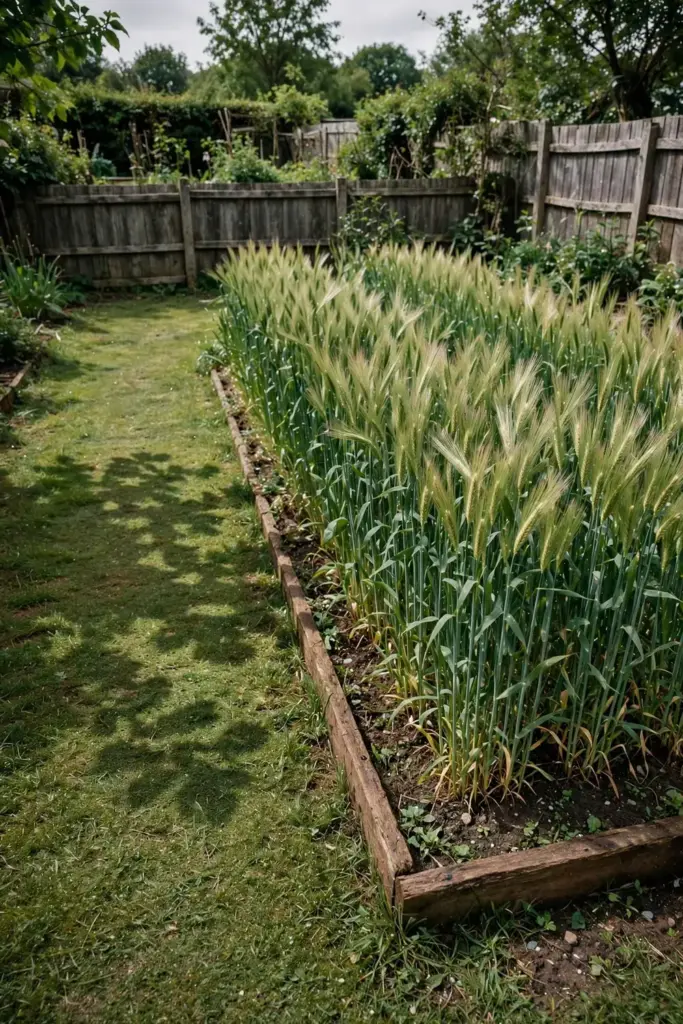
The home response runs three moves. Rotate the patch away from barley for a season, clear the stubble after harvest, and keep the canopy dry with open rows.
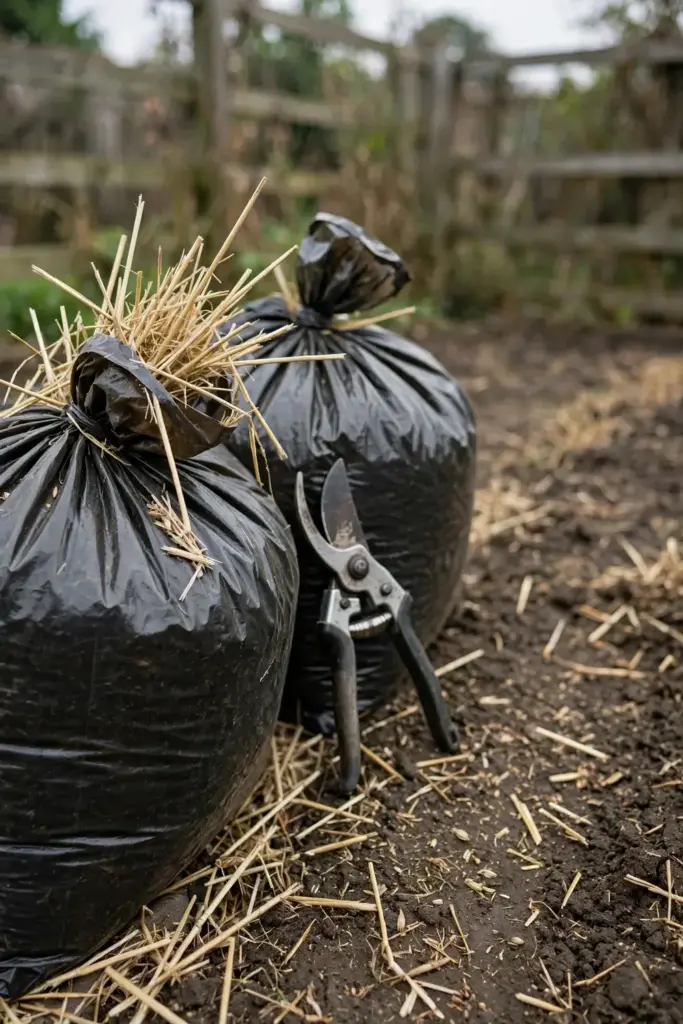
Rotate barley out of the bed for a season. Montana State University Extension lists crop rotation away from stubble of the same species among the best cultural controls for cereal Septoria leaf spot. The site’s crop rotation guide covers the planning side for a small bed. A cover crop of clover or vetch in the gap year feeds the soil while barley stays out of the bed.
Clear stubble and residue after harvest. The same guide notes that these fungi overwinter as spores on cereal stubble, and stubble left in place holds the spores for the next sowing.
Space rows for airflow and water at the soil line. The same guide puts the infection window at 6 to 24 hours of leaf moisture, with symptoms developing fastest from 15.6 to 26.7 degrees Celsius. Dense stands hold moisture inside the canopy, and a wet canopy is the infection window. A soaker hose keeps leaves dry, and open rows dry faster after rain.
No spray schedule follows. Field fungicide programs are preventive, timed before infection, and judged on field acreage. They do not scale down to a backyard patch, and this page gives no spray schedule for one.
Send a sample when the pattern stays unclear. Contact the local Extension office before you cut it, and ask how they want it packed.
Frequently Asked Questions
No. Septoria speckled leaf blotch is a barley disease caused by Zymoseptoria passerinii. Septoria tritici blotch is a wheat disease caused by Zymoseptoria tritici. The two share the nickname speckled leaf blotch because both show dark fruiting bodies inside the lesions. Shared nickname, different pathogens, different hosts. Check the Latin name before following any advice written for either one.
Eye-level clues narrow the field, and they never settle the case. Elongated yellowish-brown spots with dark fruiting bodies in rows between the veins point toward this disease. Net blotch, spot blotch, and scald all blur the picture. Photograph the full leaf, the lesion close up, and the whole plant before you cut anything. A lab test names the agent when the pattern stays unclear.
No. A spray cannot reverse lesions that already show on the leaf, and it cannot restore tissue the fungus already killed. Field spray programs work by prevention, timed before infection across field acreage, and they do not scale down to a backyard patch. The home response is cultural: rotation, stubble cleanup, and a dry canopy. Those three moves protect the next season, which is the season you can still win.
Almost certainly not. The disease last appeared in North American crops in the early 2000s, and it survives today mainly in wild barley. A backyard patch faces far likelier leaf problems, from net blotch to nutrient stress. Learn the spot pattern, keep the rotation and cleanup habits, and spend your worry on problems that actually show up.
Where to Go From Here
Septoria speckled leaf blotch is a rare barley disease with a confusing shared name. Name the fungus. Check the leaf pattern. Check the Latin name on any advice you read. Then run the short response: rotate, clear stubble, and keep the canopy dry.
The Plant Care archive collects the site’s disease coverage for the next problem. Start there when a new blotch shows up, and start with rotation when the blotch sits on barley.