

A tree or shrub that suddenly declines, loses limbs, or fails to leaf out in spring often gets blamed on drought, winter injury, or old age. Sometimes the real cause is underground and has been there for years: Clitocybe root rot, a fungal disease that quietly destroys roots long before any warning shows up above ground.
The fungus behind it has gone through several name changes in the scientific literature, first Clitocybe tabescens, then Armillaria tabescens, and more recently Desarmillaria tabescens, but the older name Clitocybe root rot is still the common name used in a lot of extension literature, especially around peach, citrus, and oak plantings in the southeastern United States. This page covers how to recognize it, how it differs from its close relative Armillaria root rot, and what realistically can be done once a plant is infected.
What Clitocybe Root Rot Actually Is
Clitocybe root rot is a mushroom root rot, a disease caused by a fungus that lives in the soil and infects roots directly, eventually rotting them and cutting off the plant’s ability to take up water and nutrients. Oklahoma State University Extension’s guide to stone fruit diseases describes it as one of two mushroom root rots affecting stone fruit trees, alongside Armillaria root rot caused by Armillaria mellea, and notes that Clitocybe root rot has caused extensive losses in peach-growing areas of the southeastern states.
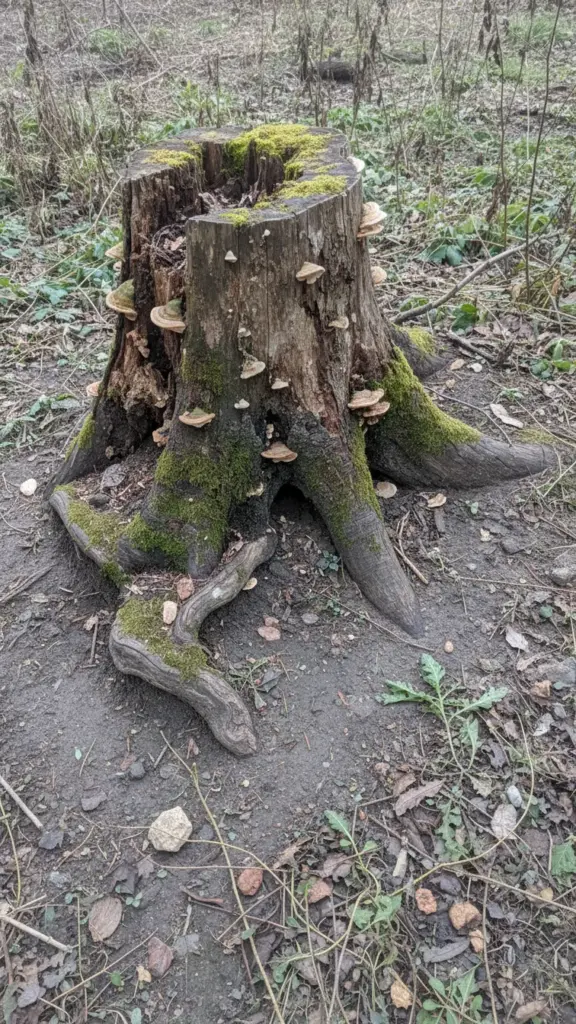
The fungus survives for years in old roots and stumps left in the soil, then spreads to living roots when they grow into contact with infected wood. This is why the disease often shows up on land where trees, especially oaks, were previously cleared, and why replanting the same spot without addressing old root material can set a new planting up to fail the same way.
How to Identify Clitocybe Root Rot Symptoms
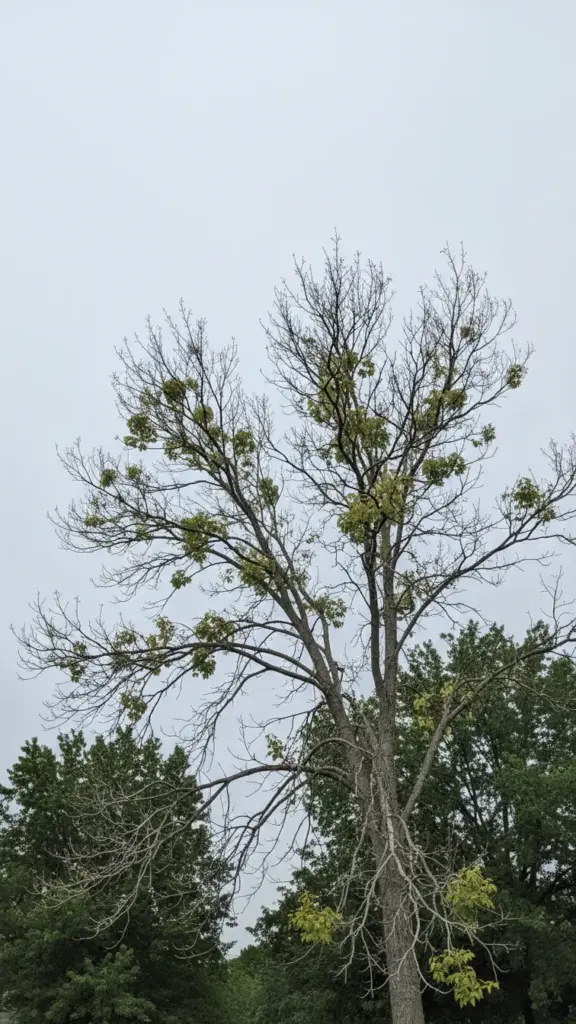
Because Clitocybe root rot and Armillaria root rot are caused by closely related fungi, their above-ground symptoms are essentially the same. Oklahoma State Extension notes plainly that symptoms of the two root rots are identical and may be confused with winter injury or waterlogging. Expect to see:
- Slow decline over one or more seasons, or in some cases a surprisingly fast collapse
- Weak, sparse growth and undersized leaves
- Dieback starting at branch tips and working inward
- Failure to leaf out in spring on part or all of the canopy
- Loss of limbs on an otherwise established, mature tree
Because these symptoms overlap so heavily with ordinary stress, drought, and winter damage, the best confirmation is what shows up at the base of the plant, not the canopy.
The Mushrooms That Give Clitocybe Root Rot Away
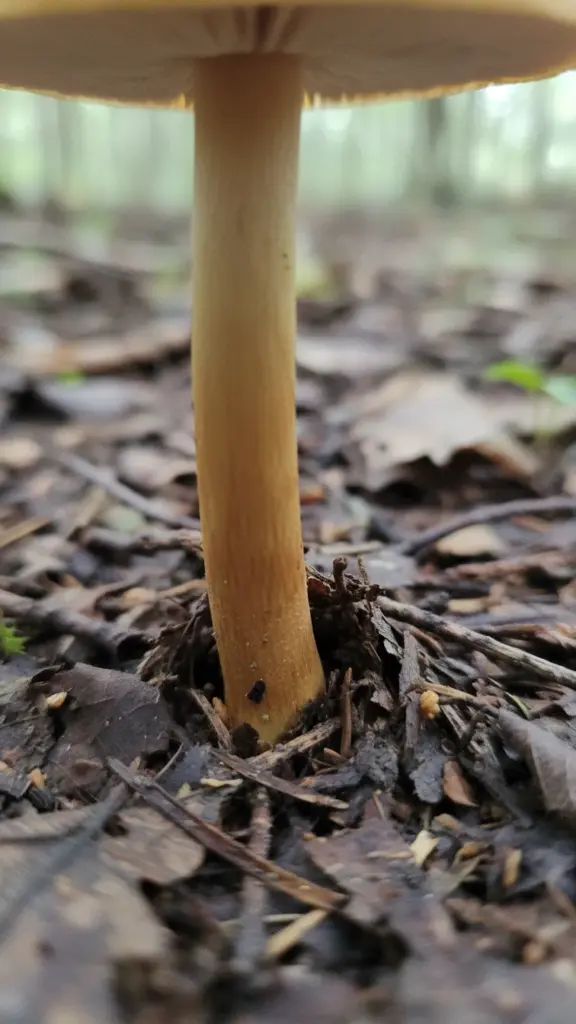
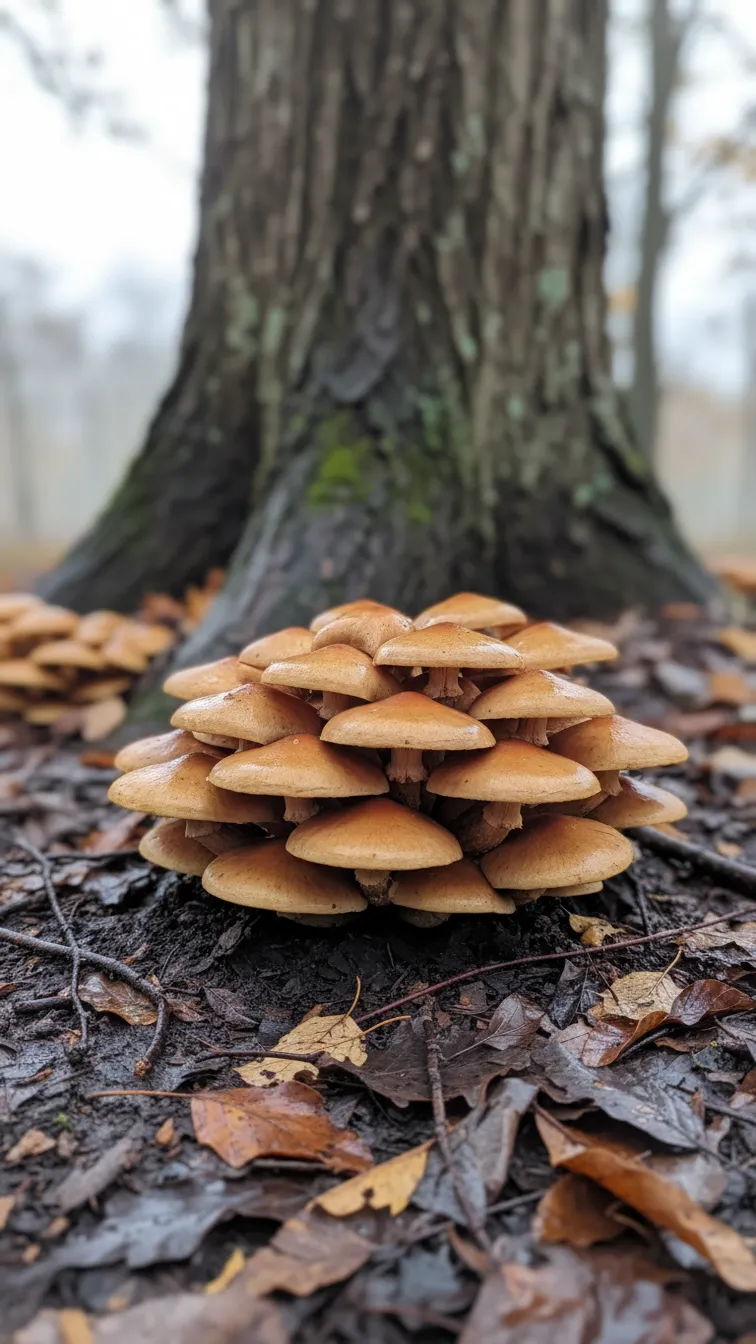
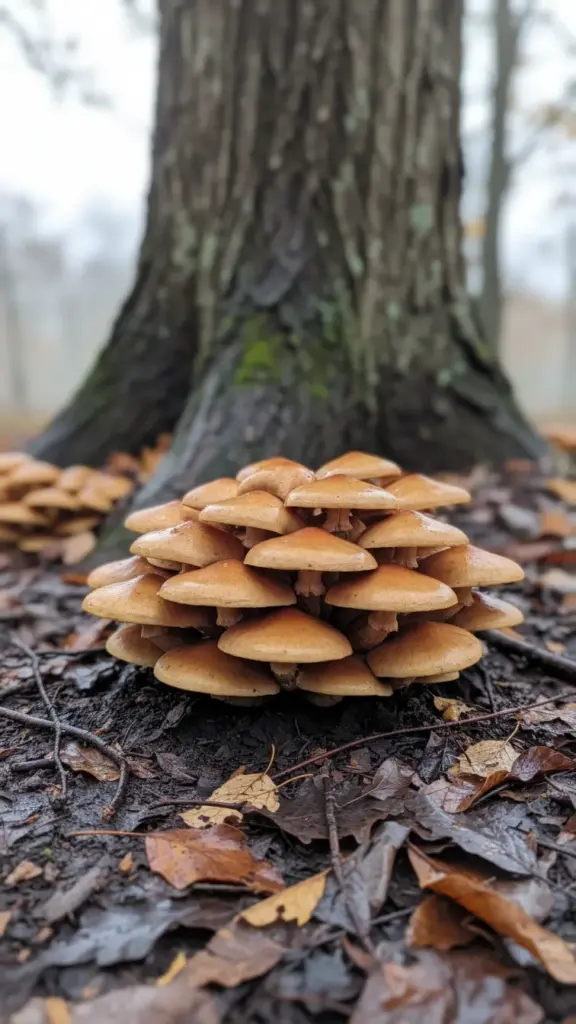
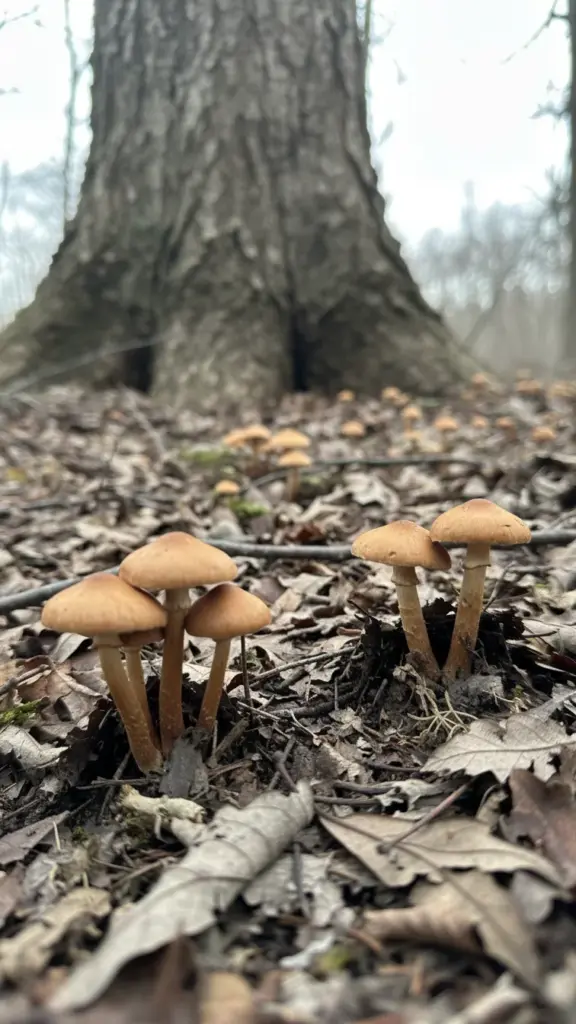
The most reliable field sign is the mushroom itself. Clusters of honey-colored mushrooms growing directly from the roots or the base of the trunk are the classic identifying feature of this group of root rots, according to the Missouri Botanical Garden’s overview of Armillaria root rot, which describes honey-colored mushrooms and mycelial mats forming under the bark near the base of infected plants.
These mushrooms tend to appear seasonally, often after rain, and then disappear again, so their absence on any given day does not rule out infection. A cluster growing from an old stump or a declining tree’s root flare is worth treating as a strong warning sign even if the rest of the plant still looks reasonably healthy.
Which Plants Are Vulnerable to Clitocybe Root Rot
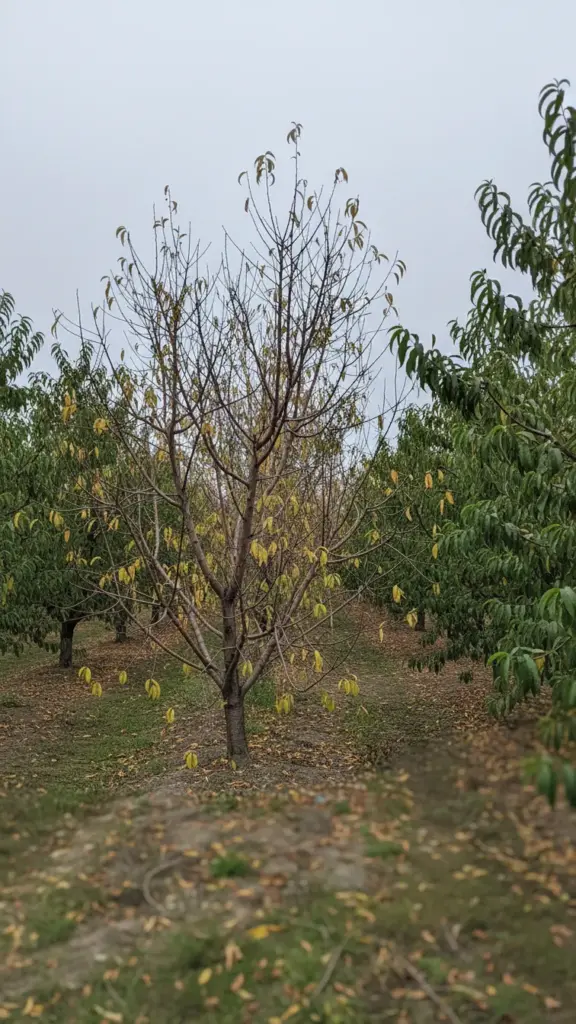
The host list for this fungus is broad. It has been documented causing root rot in stone fruit trees such as peach, in citrus in Florida, in oaks, in guava, and even in Casuarina equisetifolia plantings on well-drained upland sites. Extension records from Georgia and South Carolina describe it as widespread and destructive in those states. In practice, this means almost any established woody tree or shrub in a warm, humid region with a history of oak or forest cover nearby should be considered a potential host.
Clitocybe Root Rot vs Armillaria Root Rot
| Feature | Clitocybe Root Rot | Armillaria Root Rot |
| Causal fungus | Clitocybe tabescens, now classified as Desarmillaria tabescens | Armillaria mellea |
| Mushroom stalk | No ring around the stalk (ringless) | Usually has a ring around the stalk |
| Rhizomorphs | Generally does not produce the dark, shoestring-like rhizomorphs typical of true Armillaria | Often produces black, root-like rhizomorphs under bark and in soil |
| Regional pattern | Especially destructive in Florida, Georgia, and South Carolina peach and citrus areas | Occurs more broadly across many US regions and plant types |
| Above-ground symptoms | Identical to Armillaria root rot | Identical to Clitocybe root rot |
Telling the two apart usually matters more to a plant pathologist than to a home gardener, since the management response is the same either way. If you want a definite identification, a county extension office can examine a mushroom sample or a piece of infected root.
Why This Disease Is a Bigger Problem in Some Regions
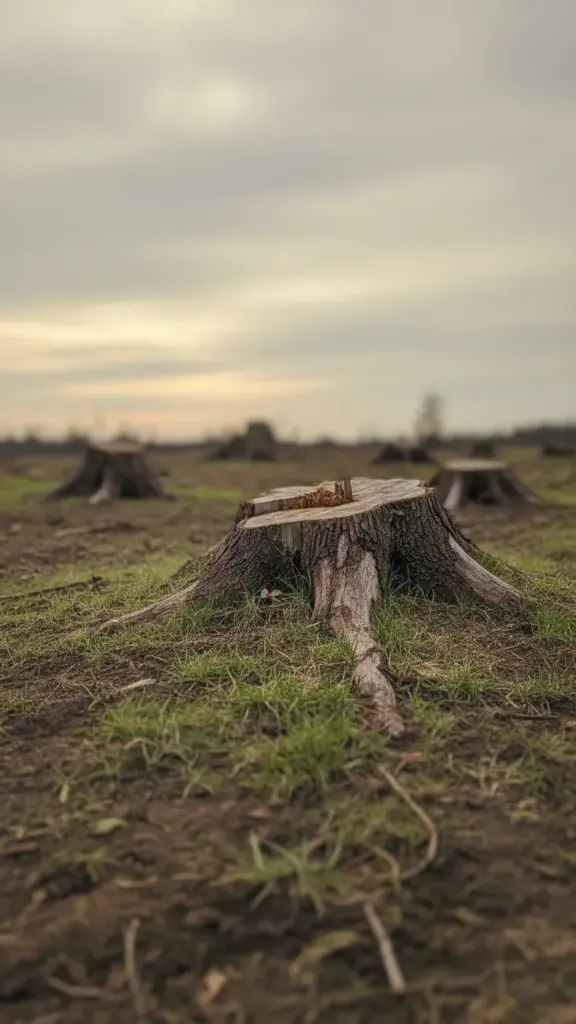
Clitocybe root rot shows up most often, and does the most damage, in warm, humid climates with a history of oak forest, which lines up with the extension reports describing it as widespread in Florida, Georgia, and South Carolina. Land that was recently cleared of oaks or other hardwoods carries a heavy load of old root material in the soil, giving the fungus a long-term food source and an easy route into newly planted trees.
What Makes a Tree More Susceptible
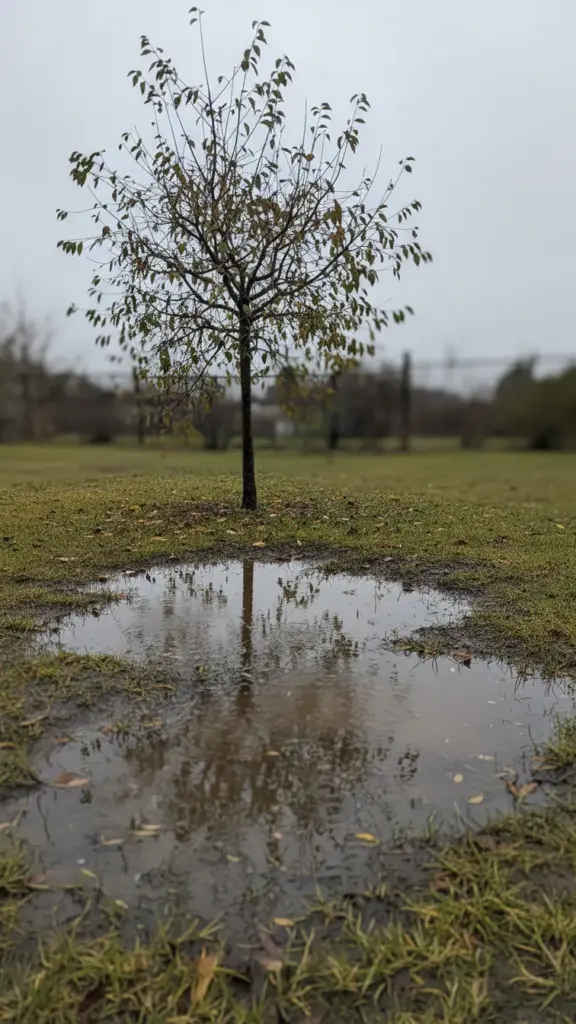
Much like its Armillaria relative, Clitocybe root rot tends to take hold in plants that are already under stress. UF/IFAS Gardening Solutions describes Armillaria-type root rot as usually a secondary condition affecting a shrub or tree that has been weakened by drought, flooding, disease, pests, or improper pruning or fertilization. An older tree, a recently transplanted one, or one growing in poorly drained soil is at higher risk than a young, vigorous, well-sited planting.
Can a Plant Recover From Clitocybe Root Rot
Realistically, no, not once the disease is advanced. UF/IFAS Gardening Solutions notes that because symptoms of this type of root rot generally do not appear until the plant has already been infected for one to three years, it is usually too late to save it by the time anything visible shows up above ground. The honest goal at that point shifts from saving the plant to protecting everything planted around it.
Step 1: Confirm the Diagnosis
Look for the combination of canopy decline and honey-colored, ringless mushroom clusters at the base or on nearby roots. If you are not confident in the identification, a local extension office can confirm it from a mushroom sample or a piece of root showing white fungal growth under the bark.
Step 2: Remove the Infected Plant and Roots
Once a plant is confirmed infected and clearly declining, remove it along with as much of the root system as practical. Leaving large roots or a stump behind gives the fungus a long-term food source that can infect whatever gets planted nearby next.
Step 3: Improve Conditions Before Replanting
Before putting anything new in the same spot, dig out as much old root material as you reasonably can, especially from any previous oak or forest cover. Improve drainage if the site tends to stay wet, since stressed, waterlogged roots are more vulnerable to infection.
Step 4: Choose Resistant Species for Replanting
Some species tolerate this group of root rots better than others. Where the disease has already claimed one planting, favor species known to be more tolerant of root rot pressure in your region, and avoid repeating the same susceptible species in the same spot. A local extension office can usually recommend better-suited replacements for a site with a known root rot history.
Common Questions
Are the Mushrooms From Clitocybe Root Rot Dangerous to Touch
Handling the mushrooms themselves is not typically dangerous, but they should never be eaten, and children or pets should be kept from putting them in their mouths, since correctly identifying wild mushroom species is difficult even for experienced foragers.
Can Clitocybe Root Rot Spread to Other Plants in My Yard
Yes, through direct root-to-root contact with infected wood in the soil, which is why removing infected roots rather than leaving them in place matters so much for protecting nearby plants.
Is Clitocybe Root Rot the Same as Armillaria Root Rot
They are caused by closely related but distinct fungi and produce nearly identical symptoms. The clearest field difference is that Clitocybe tabescens mushrooms lack the ring around the stalk that true Armillaria mushrooms usually have.
Will a Fungicide Cure an Infected Tree
No fungicide reliably cures an established infection in the roots. Management is focused on removing infected material and reducing stress on nearby plants rather than treating the fungus directly.
How Long Can Clitocybe Root Rot Go Unnoticed
It can take one to three years or more after infection before any decline is visible above ground, which is part of why the disease is often already advanced by the time a gardener notices anything wrong.
Where to Go From Here
If a mature tree or shrub is declining for no obvious reason, check the base and surrounding roots for clusters of honey-colored mushrooms before assuming drought or winter damage. Once Clitocybe root rot is confirmed, removing the infected plant and its roots protects everything planted nearby far better than trying to treat the existing plant. For a broader look at related root diseases, see how Armillaria root rot is identified and managed, how black root rot differs in its symptoms, and how annosum root rot shows up in conifers.








