
Leather rot on strawberries is the rot that lies. A ripe berry can look healthy and taste bitter, and one bitter berry can spoil a whole batch of jam. The 9 strategies below tell you how to spot the rot at every fruit stage, separate it from gray mold with the texture test, and keep it off your berries with a straw-mulch barrier, raised beds, drainage, and sanitation, because infected fruit cannot be cured, only removed.
The pathogen is an oomycete, a water mold, not a fungus. That classification matters for management: gray-mold fungicides do not work on leather rot. A gardener who treats leather rot as gray mold wastes the spray and still loses the fruit. The classification is the trap, and the differential is the way out.
The rest of this page walks the identification, the hosts, the compiled gray-mold differential, the mechanism, the risk factors, and the 9 strategies. The disease name leads. The pathogen, Phytophthora cactorum, stays in the background after this introduction.
What Leather Rot on Strawberries Actually Is
Leather rot on strawberries is a fruit rot caused by the oomycete Phytophthora cactorum. An oomycete is a water mold, not a fungus. The distinction is not academic: it decides which fungicides work and which do not. This article tags the disease as an oomycete throughout and never calls it a fungus.
The any-stage susceptibility is why the whole fruiting window needs protection. A berry infected at flowering can rot before it ripens, a berry infected at ripeness can look healthy and taste bitter, and the any-stage rule is why the protection runs the whole fruiting window.
Infected fruit cannot be cured. A berry with leather rot stays rotted. The management removes infected fruit and protects the remaining crop. The cure does not exist. The protection is the whole article.
Pick-your-own operations suffer a special cost: undetected diseased fruit mixed with healthy fruit may result in bitter-tasting jams and jellies, which is why the bitter berry matters beyond the single berry. Phytophthora cactorum also causes Phytophthora crown rot of strawberry, but the leather-rot form appears to be different from the same fungus that causes crown rot, and the two diseases do not necessarily occur together. Crown rot gets a fence here, never a merge. Crown-rot management evidence is not leather-rot evidence.
How to Identify Leather Rot on Your Strawberries
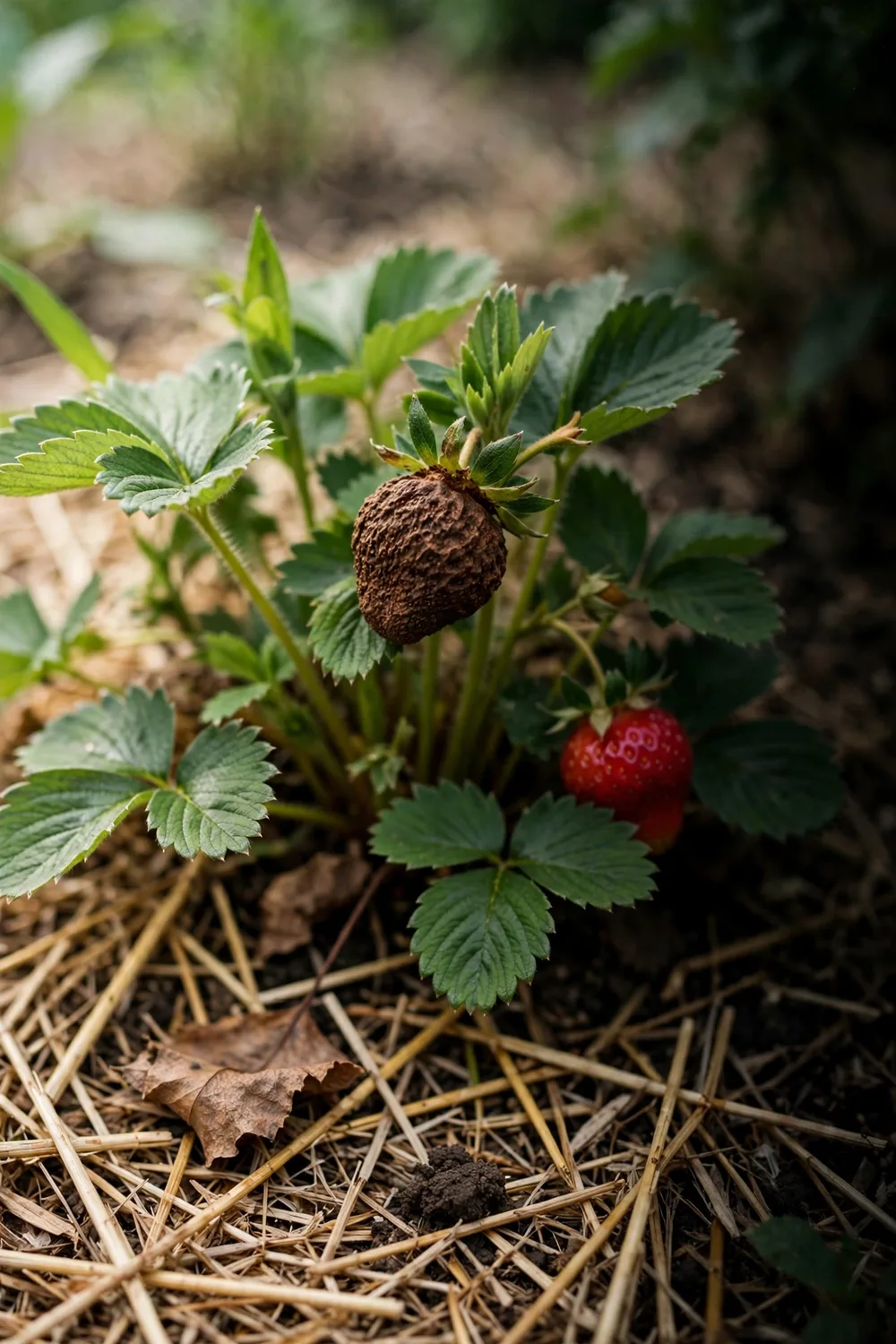
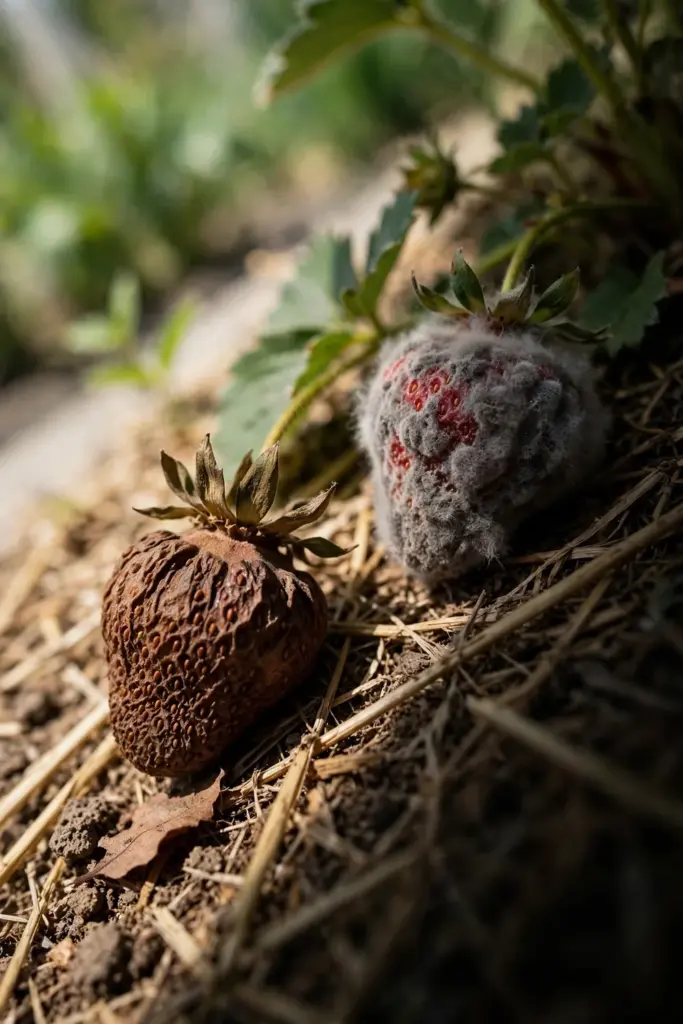
Check green fruit for dark-brown areas. On green fruit, dark-brown areas spread until the whole berry turns brown, rough, tough, and leathery. The green color may remain with brown margins around infected areas at first, then the whole fruit browns. The brown leathery green berry is the classic form.
Check ripe fruit for the bitter trap. Ripe fruit may turn brown to dark-purple, or may show no distinct color change at all, but always carries a bitter, unpleasant taste and odor, even when the berry looks healthy. The bitter taste is diagnostic. A ripe berry that looks fine and tastes bitter is a leather rot berry. Taste one suspect berry, and spit it out.
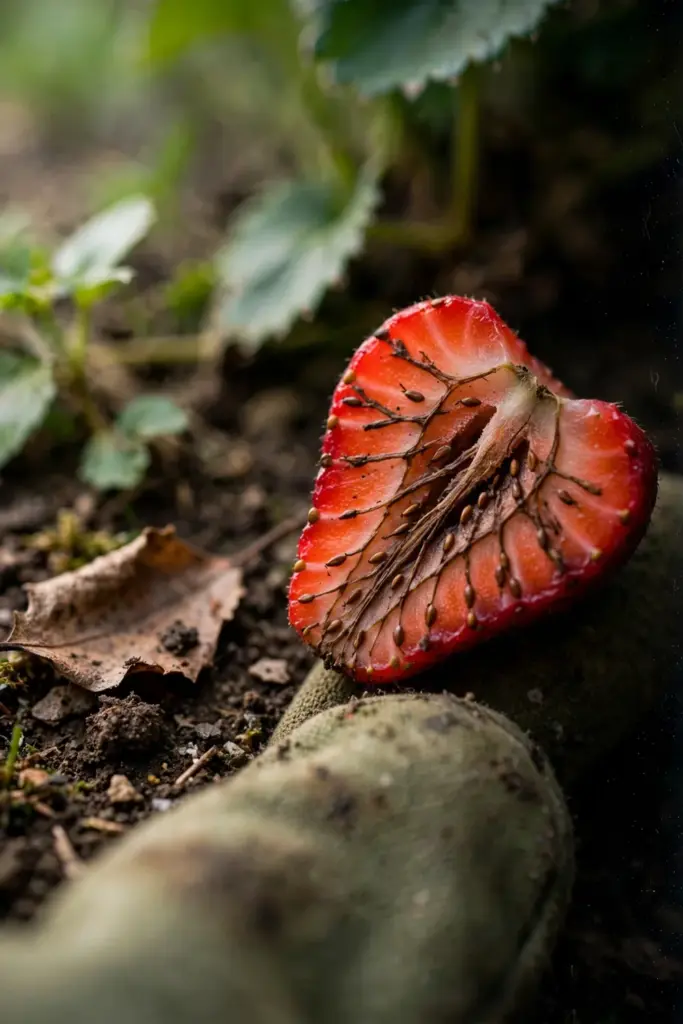
Cut the berry open. When sectioned, the vascular tissue to each seed is darkened. The darkened seed veins are the internal mark. A berry with darkened vascular tissue to each seed is a leather rot berry, whatever its outside looks like.
Look for white mycelia in high humidity. White mycelia may grow on the fruit surface in high humidity, and the central hollow of a hollow berry may contain white mycelium. The white mycelia are the pathogen’s growth, and they mark an active infection. A berry with white mycelia in humidity is a berry to remove at once.
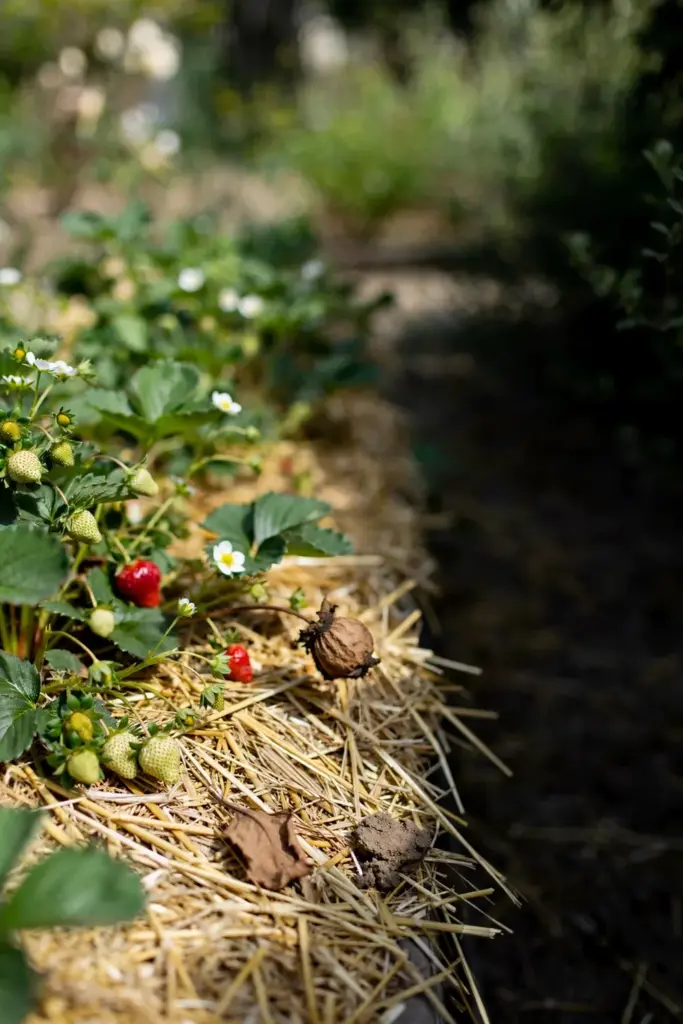
Follow the mummy. All infected fruit dry down to hard mummies. The mummy is the end stage, and it holds the oospores that survive in mummified fruit and soil for years. A mummy left in the bed is next season’s inoculum. The mummy goes in the bag.
Which Strawberries Get Hit Hardest
All strawberries are susceptible. Every strawberry cultivar can catch leather rot. No cultivar is immune. A bed of any variety in wet conditions with soil contact is a bed at risk. The susceptibility is the species, not the cultivar.
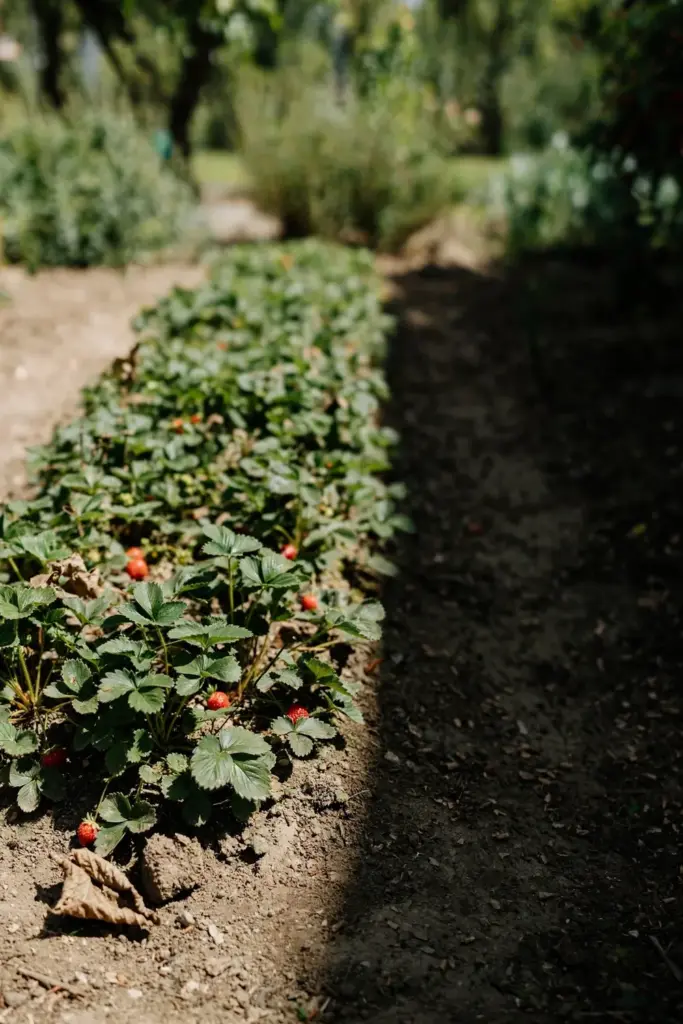
Matted-row systems suffer more. Leather rot is more likely in matted-row systems than in plasticulture. The matted row holds fruit against the soil, and the soil holds the spores. A matted-row bed needs the straw barrier most.
Plasticulture is not safe either. Plastic mulch may puddle and actually make leather rot worse. Standing water on plastic carries swimming zoospores to the fruit. A plasticulture bed with puddles is a leather-rot bed. The mulch choice matters, and the plastic warning is counterintuitive.
Berries in soil contact suffer most. Berries touching bare soil sit in the splash zone. Berries held above the soil on straw sit above the splash zone. The fruit’s position decides its risk. The straw barrier lifts the fruit out of the splash zone.
Leather Rot vs Gray Mold on Strawberries
The texture test settles it. Leathery and tough with no fuzz means leather rot. Soft with gray fuzzy growth means gray mold. The texture test is the field check, and it works in seconds.
| Clue | Leather Rot (Phytophthora cactorum, oomycete) | Gray Mold (Botrytis cinerea, true fungus) |
|---|---|---|
| Texture | Leathery, tough, hard; fruit dries to a hard mummy | Soft rot; fruit collapses and turns mushy |
| Surface growth | No fuzzy growth; white mycelia possible in high humidity | Gray fuzzy growth covering the fruit |
| Color | Brown to dark-purple, or NO color change on ripe fruit | Brown to gray, then covered in gray fuzz |
| Taste | Bitter, unpleasant taste and odor, diagnostic | No bitter taste |
| Weather | Warm and wet; optimum infection 62–77 °F | Cool and wet |
| Entry | Splash-borne from soil; zoospores swim in standing water; fruit in soil contact | Flower-borne; most fruit infections through the flower |
| Spread | Splash + swimming zoospores; new spores in 5 days under warm wet conditions | Fruit-to-fruit by contact (“nesting”) |
| Fungicides | Gray-mold fungicides do NOT work; oomycete actives only | Gray-mold fungicides work |
No published home-gardener head-to-head comparison article exists. This table compiles the distinction from parallel sources: the University of Delaware fruit-rots roundup, NC State Extension, UC IPM, the Pacific Northwest Handbook, and Cornell gray-mold guidance. The gray-mold-fungicide trap is the differential’s most valuable row: gray-mold fungicides such as Captan and Topsin-M are not highly effective against leather rot, and treating leather rot as gray mold wastes the spray and still loses the fruit.
Rule out the lookalikes in one pass. Anthracnose fruit rot shows circular sunken lesions with pink-orange spores in wet weather. Sunscald shows tan damage on the exposed side only, toward the sun or sitting on black plastic, with no mycelia on incubation. Spotted-wing drosophila leaves larvae inside with soft decay. Rhizoctonia brown rot is a historical hard dry leathery decay from a different pathogen. Each lookalike gets one line, never a second table.
How Leather Rot Spreads
Oospores survive for years. Oospores form in mummified fruit and survive long periods in the soil. A mummy left in the bed is a spore bank for years. The mummy is the long-term reservoir, and the cleanup removes it.
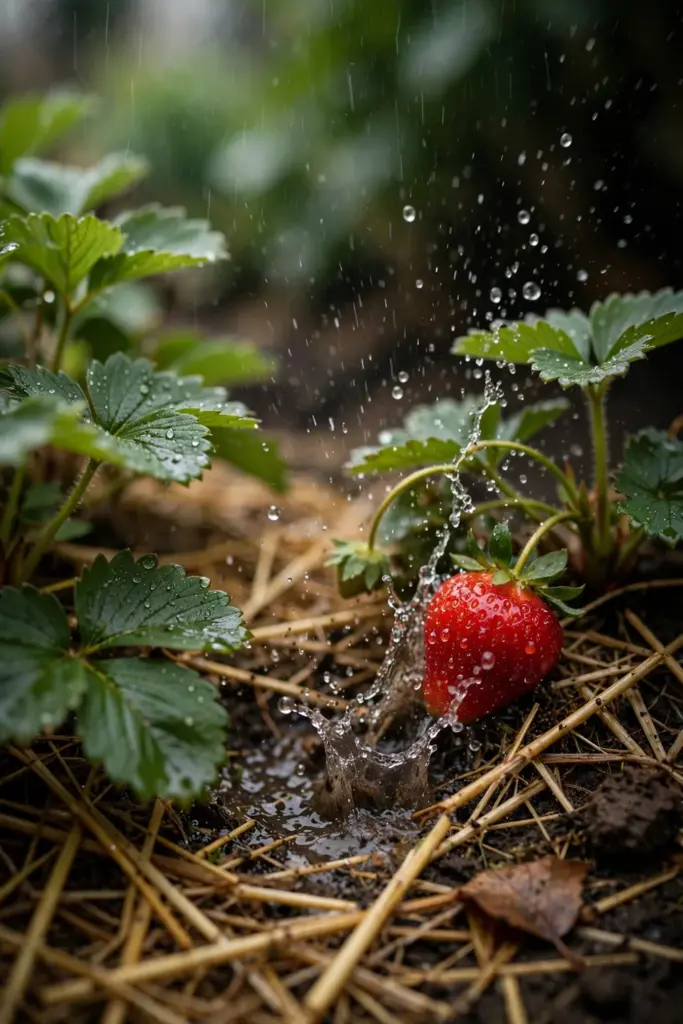
Zoospores swim. In the spring under saturated wet conditions, new spores are transferred to fruit by rain splash, overhead irrigation, or free-swimming zoospores. Zoospores have tiny flagella and swim in a film of water. Standing water is a swimming pool for zoospores. The drainage is the defense against the swim.
Splash carries spores to fruit. The leather rot pathogen requires splashing rain to transport the zoospores to the fruit. A raindrop that hits bare soil bounces spores onto the berry. A straw barrier between soil and fruit blocks the bounce. The splash is the short-range spread.
New spores appear in 5 days. New spores are produced in as little as 5 days after infection under warm, wet conditions, per the Pacific Northwest Handbook. The 5-day cycle compounds fast: one infected berry becomes a spore source for the next picking within a week. The fast cycle is why prompt removal matters.
What Raises the Risk of Leather Rot
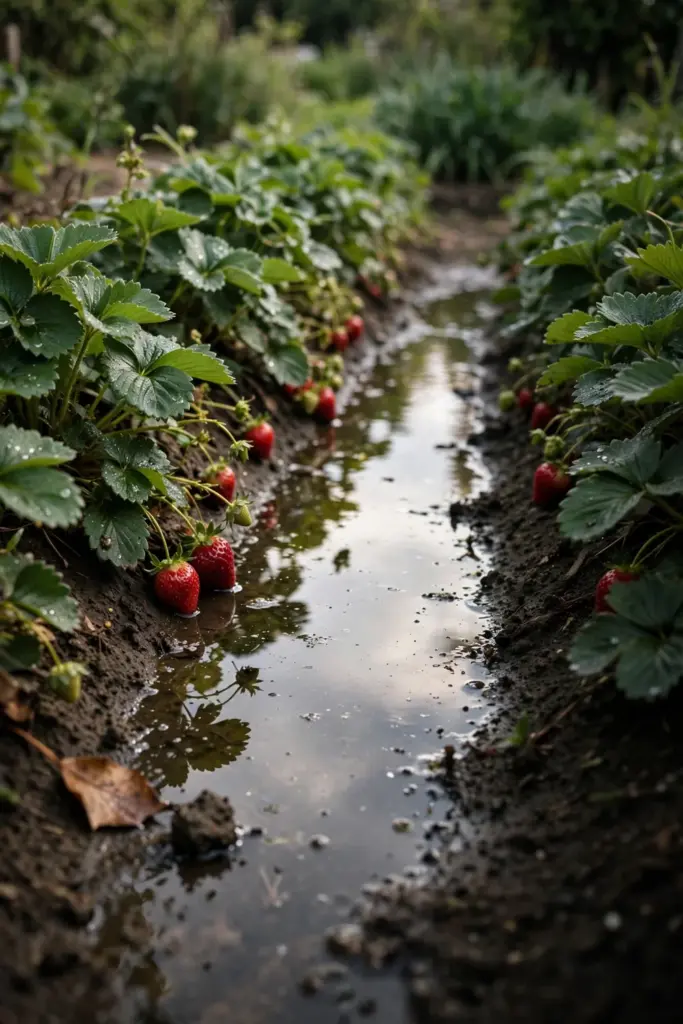
Standing water raises the risk most. Leather rot is observed most commonly in poorly drained areas where there is or has been free standing water, or on berries in direct contact with the soil. A bed that puddles after rain is a leather-rot bed. The puddle is the risk.
Overhead irrigation raises the risk. Overhead irrigation splashes spores and wets the fruit. A sprinkler that wets the berries every evening moves spores from soil to fruit, night after night. The sprinkler is the splash machine.
Bare soil under fruit raises the risk. Fruit in contact with bare soil sits in the splash zone. Fruit on straw sits above it. Fruit on puddled plastic sits in standing water. The surface under the fruit decides the risk.
Warm wet weather raises the risk. The optimum temperatures for infection are between 62 and 77 degrees, and a wetness period of 1 hour is sufficient for infection. A warm wet week with an hour of fruit wetness is a leather-rot week. The weather window explains the sudden outbreaks.
Strategy 1: Confirm the ID at Every Fruit Stage
Check green fruit. Dark-brown areas that spread until the whole berry turns brown, rough, tough, and leathery mark the green-fruit form. The green berry that browns and toughens is a leather rot berry. The green check catches the rot before ripeness.
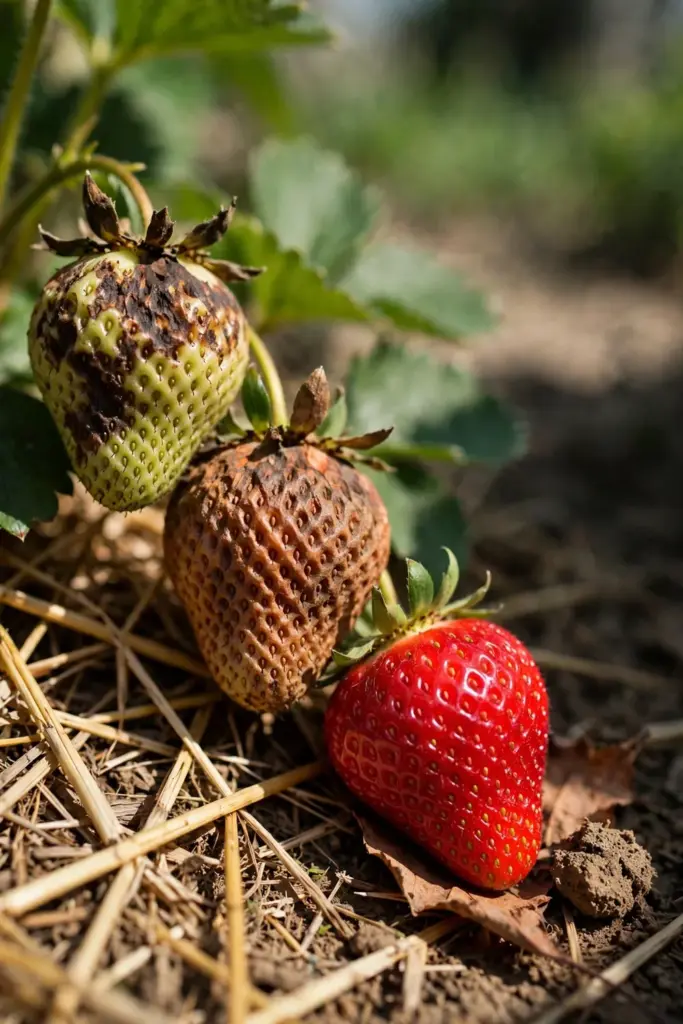
Check ripe fruit with the taste test. A ripe berry with no color change but a bitter, unpleasant taste is a leather rot berry. Taste one suspect berry and spit it out. The bitter taste is diagnostic, and the taste test catches the trap that the eye misses.
Cut the berry open. Darkened vascular tissue to each seed confirms the identification. The internal mark settles cases where the outside looks healthy. The cut berry is the evidence.
Photograph the bed for the record. A dated photo of the rotted berries, the worst row, and the bed layout gives next season a baseline. The photo shows whether the straw barrier worked. The photo is free, and it keeps the memory honest across seasons.
Strategy 2: Tell It From Gray Mold With the Texture Test
Feel the berry. Leathery and tough with no fuzz means leather rot. Soft with gray fuzzy growth means gray mold. The feel test takes seconds and beats any photo comparison. A gardener who feels the berry knows the disease; a gardener who guesses from color alone often treats the wrong one.
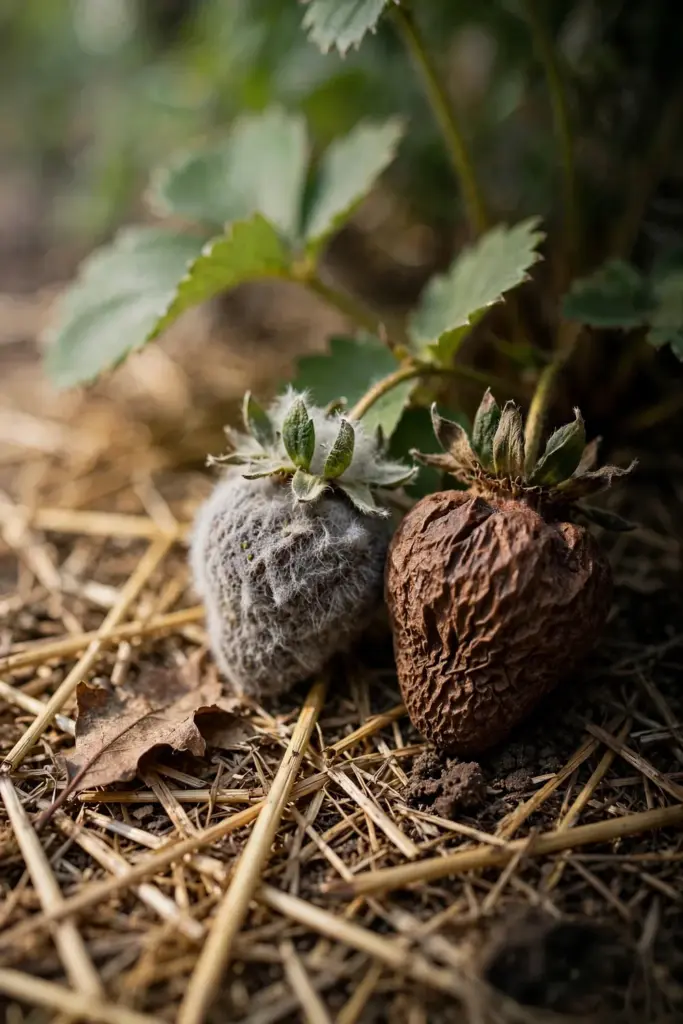
Check the surface. Leather rot shows no fuzzy growth, though white mycelia may appear in high humidity. Gray mold covers the fruit in gray fuzz. The surface check confirms the feel test. A berry with gray fuzz is gray mold, whatever its color.
Check the taste. Leather rot tastes bitter and unpleasant. Gray mold does not. The taste test separates the two where the surface is ambiguous. The bitter berry is the leather rot berry.
Know the trap. Gray-mold fungicides such as Captan and Topsin-M are not highly effective against leather rot. Treating leather rot as gray mold wastes the spray and still loses the fruit. The trap is the most expensive mistake in the strawberry bed, because it costs the spray and the crop.
Strategy 3: Rule Out the Lookalikes in One Pass
Check for anthracnose. Anthracnose fruit rot shows circular sunken lesions with pink-orange spores in wet weather. A berry with sunken circles and pink-orange spore masses is anthracnose, not leather rot. The anthracnose fence stays one line, never a second table.
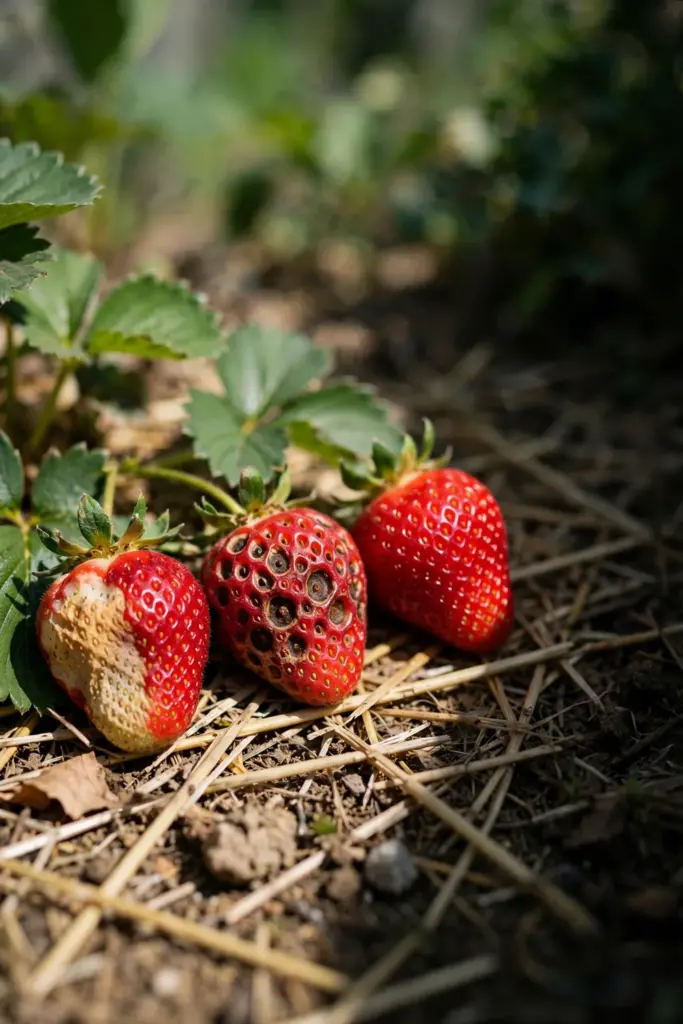
Check for sunscald. Sunscald shows tan damage on the exposed side only, toward the sun or sitting on black plastic, with no mycelia on incubation. A berry with tan one-sided damage and no mycelia is sunscald. The sunscald fence saves the spray.
Check for spotted-wing drosophila. Spotted-wing drosophila leaves larvae inside with soft decay. A berry with larvae inside is an insect problem, not a rot problem. The SWD fence keeps an insect problem out of a fungus article.
Check for Rhizoctonia brown rot. Rhizoctonia brown rot is a historical hard dry leathery decay from a different pathogen. A berry with hard dry decay that matches no other description deserves a fresh identification, not a guess. The Rhizoctonia fence keeps the history honest.
Strategy 4: Straw Mulch Barrier, the Lead Action
Lay clean straw mulch under plants and between rows. Clean straw mulch keeps fruit from contacting fungus-contaminated soil and blocks splash dispersal. The straw barrier is the lead action, because it attacks the splash mechanism directly. The straw is the shield between soil and berry.
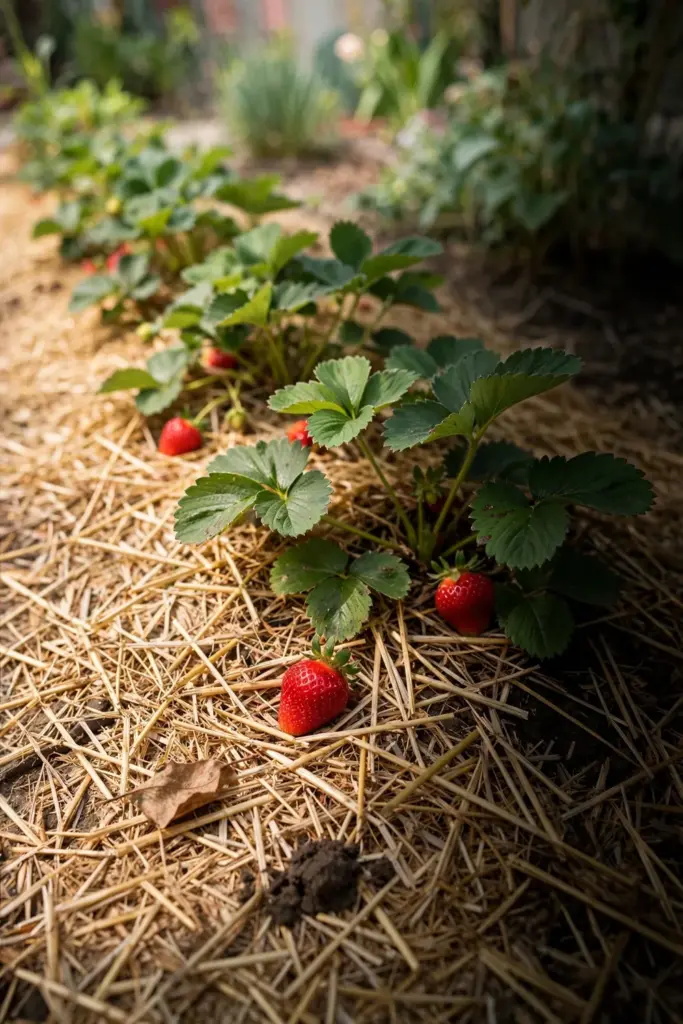
Keep mulch off the crown. Mulch piled against the crown holds moisture and invites crown problems. Keep the straw under the fruit, not against the crown. The crown gap keeps the crown dry while the fruit stays shielded.
Use clean straw, not dirty hay. Dirty hay carries weed seeds and may carry other problems. Clean straw is the barrier. The straw quality matters as much as the straw placement.
Know the trial context, not the promise. In an Ohio commercial trial under deliberately high disease pressure, straw mulch alone matched or beat fungicide performance. The figure is trial context, not a home promise. What translates to home gardens is the mechanism: a straw-mulch barrier between soil and fruit blocks splash dispersal. The mechanism is the takeaway. The figure is the context.
Strategy 5: Raised Beds and Drainage
Raise the bed. Plant on beds raised 8 to 10 inches to improve drainage, per the Pacific Northwest Handbook. In home gardens or small plantings, raise the bed 15 inches. The raised bed lifts the fruit out of the puddle zone and drains the soil faster. The height is the drainage.
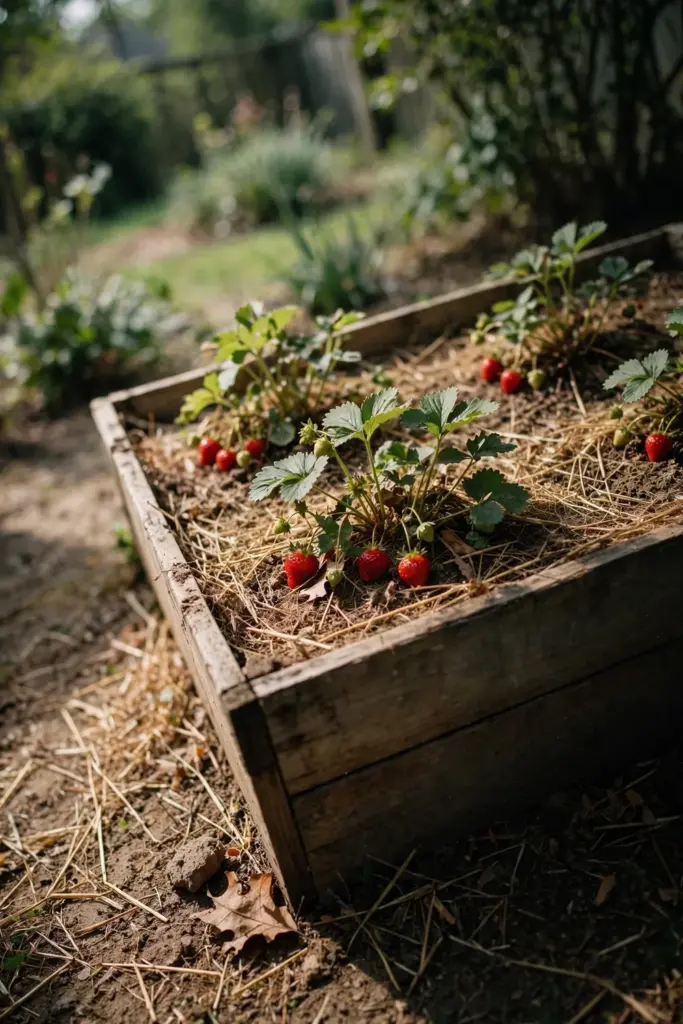
Eliminate standing water. Improve drainage of soil before planting so there is no standing water. A bed that holds a puddle after rain is a bed that grows zoospores. The puddle is the enemy. The drain is the defense.
Avoid low areas. Do not plant strawberries in draws or swales where surface water flows after heavy rains. The low area collects the water that carries the zoospores. The high ground is the safe ground.
Solarize before planting where the bed has a history. Preplant soil solarization with clear plastic on irrigated, drained ground, edges buried, for 4 to 6 weeks in the hottest part of summer, helps reduce soilborne pathogens. The solarization is a preplant reset, not a mid-season fix.
Strategy 6: Water Discipline, Keep Fruit Dry
Use drip or soaker irrigation. Drip and soaker lines water the soil without wetting the fruit. The dry fruit is the safe fruit. The drip line is the leather-rot irrigation.
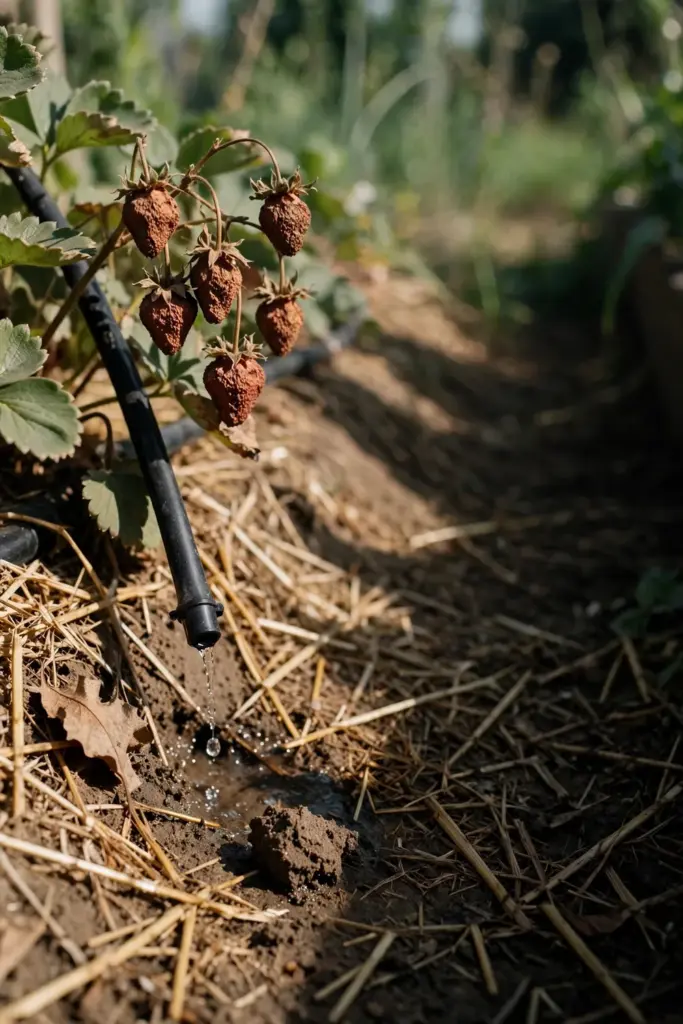
Water at the base where drip is unavailable. A watering can aimed at the soil keeps the fruit dry, and the base watering is the hand-watering version of drip, keeping the fruit dry either way.
Water in the morning. Morning watering gives the fruit the day to dry. Evening watering leaves the fruit wet overnight, which extends the infection window. A wetness period of 1 hour is sufficient for infection, so the overnight wetness is an infection invitation.
Never use overhead irrigation on fruiting plants. Overhead irrigation splashes spores and wets the fruit. The sprinkler is the splash machine. The sprinkler stays off once the fruit sets.
Strategy 7: Sanitation, Remove Infected Fruit Promptly
Pick off infected fruit at once. Infected fruit cannot be cured, and it becomes a spore source within 5 days under warm wet conditions, so the prompt removal cuts the cycle and the picking is the sanitation.
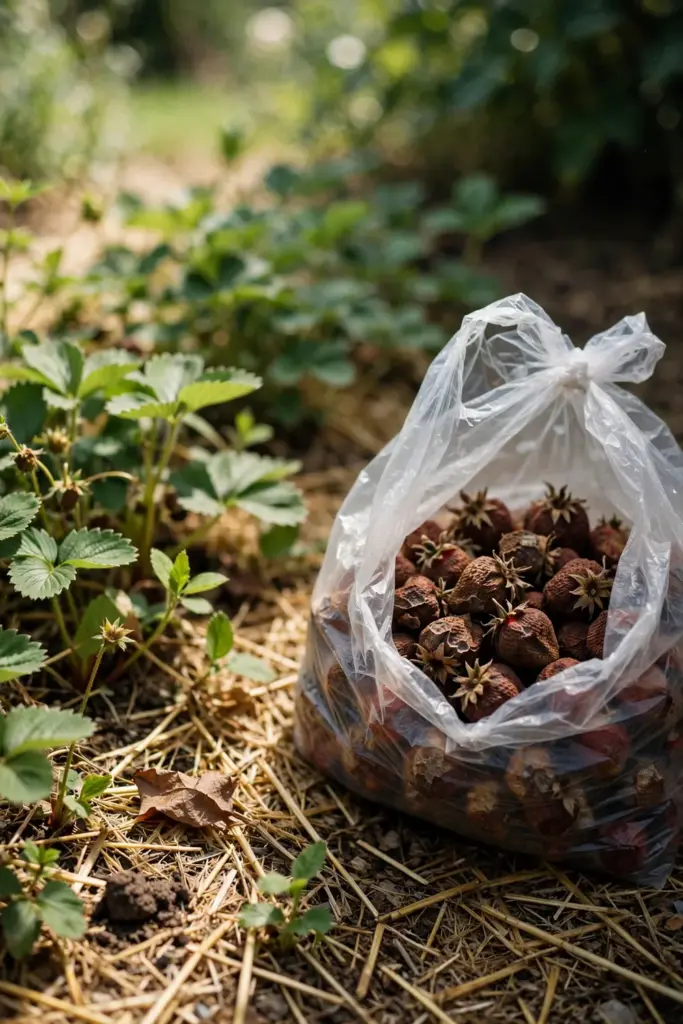
Do not compost diseased fruit. Oospores survive in mummified fruit and soil for years, and compost spreads them. Bag diseased fruit and put it in municipal waste. The bag is the disposal route. The compost pile is a distribution route.
Clean up mummies at season’s end. End-of-season cleanup of mummified fruit and debris removes the long-term reservoir. The mummy left in the bed is next season’s inoculum. The clean bed starts spring with no reservoir.
Harvest promptly and pick on dry days. Prompt harvest takes ripe fruit out of the wet window, and dry-day picking keeps the harvest dry, so the dry pick is the safe pick.
Strategy 8: Mind the Mulch Trap
Prefer straw mulch for leather-rot-prone beds. Straw mulch blocks splash without puddling. The straw barrier is the safe mulch for a leather-rot bed. The straw is the default.
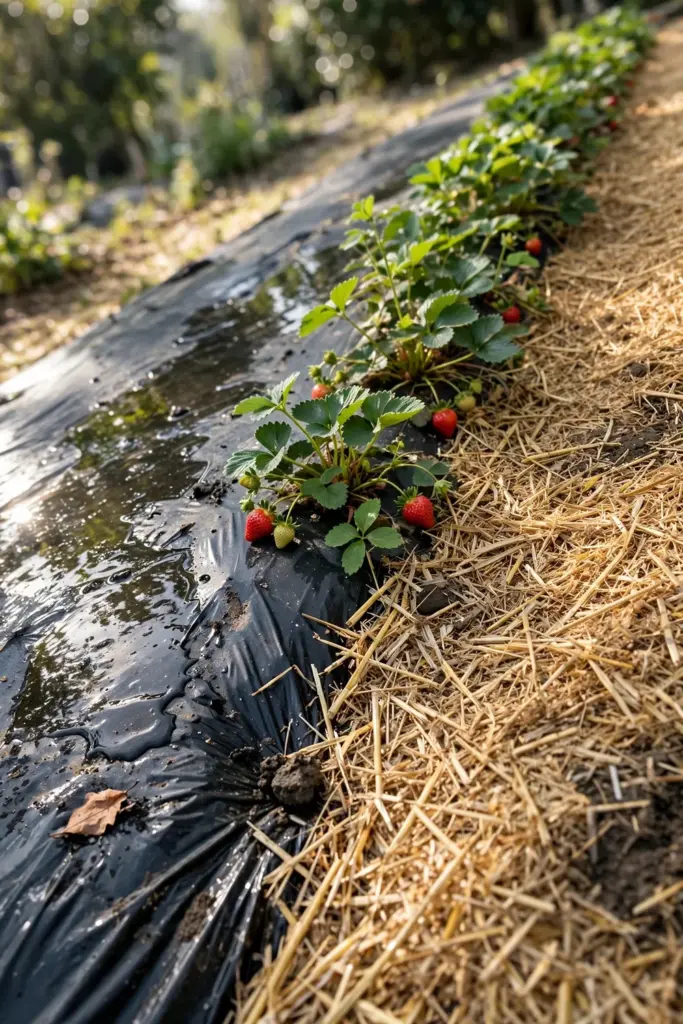
Watch plastic mulch for puddling. Plastic mulch may puddle and actually make leather rot worse. Standing water on plastic carries swimming zoospores to the fruit. A plasticulture bed with puddles is a leather-rot bed. The puddle check is the plastic check.
Keep fruit off bare soil either way. Bare soil is the splash source, fruit on bare soil sits in the splash zone, fruit on straw sits above it, and fruit on puddled plastic sits in standing water, so the surface under the fruit decides the risk, whatever the mulch.
Drain the puddles. Where plastic puddles, drain the water and lift the fruit. The drained bed is the safe bed. The puddle is the enemy, whatever the mulch.
Strategy 9: Fungicides Last Resort, Oomycete-Specific Only
Use fungicides only where cultural controls fail. Straw mulch, raised beds, drainage, water discipline, and sanitation come first. Fungicides are the last resort, for beds with a history of leather rot despite good culture. A fungicide without the cultural controls is a fungicide wasted.
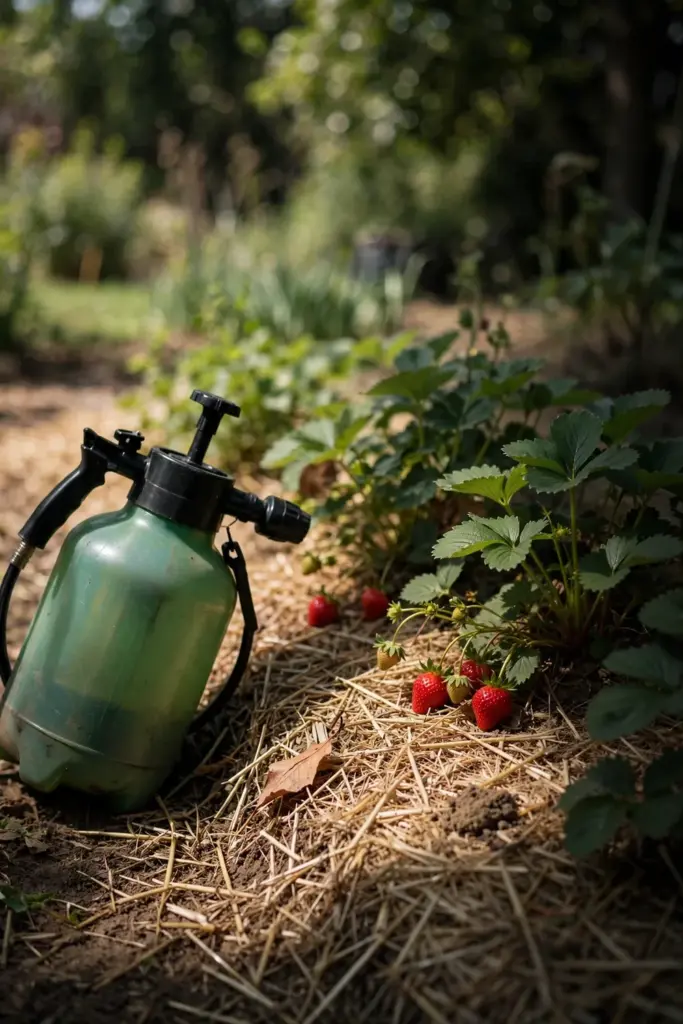
Use oomycete actives only, never gray-mold fungicides. Gray-mold fungicides such as Captan and Topsin-M are not highly effective against leather rot. Oomycete actives, phosphite and mefenoxam, are the classes that work on water molds. The class matters: the wrong class wastes the spray.
Use preventive timing, never curative. Fungicides protect healthy fruit; they do not cure infected fruit. The spray goes on before infection, not after. The timing is preventive, and the label governs.
Know the resistance. Mefenoxam resistance has been reported in South Carolina, and QoI resistance in Phytophthora cactorum has been reported in Florida. Resistance means the spray may fail where it once worked. Verify any fungicide active against current labels and local Extension guidance before buying. The label governs, and the local Extension knows the resistance picture.
Living With Leather Rot on Strawberries You Already Grow
A bed with leather rot is a bed to manage, not a bed to abandon. Keep the straw barrier in place, keep the beds raised and drained, keep the water at the base, keep picking off infected fruit promptly, and keep the end-of-season cleanup complete, since the rot will still appear, but it will appear late, light, and contained to the soil-contact berries.
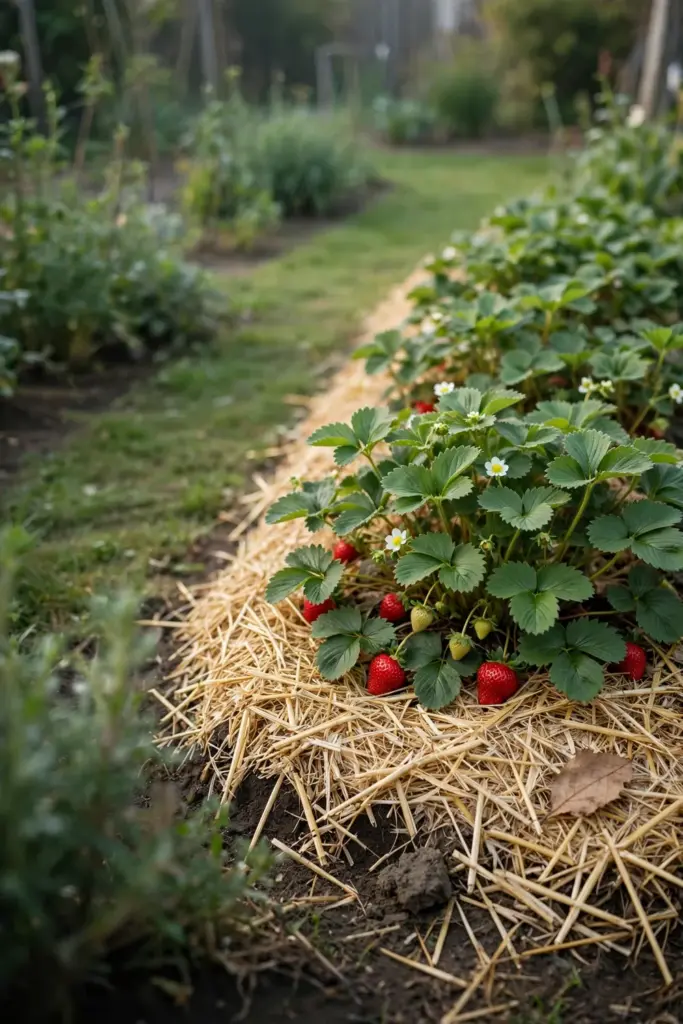
Stop three habits. Do not leave infected fruit on the plant. Do not water overhead. Do not compost diseased fruit. Keep those three lines unbroken and the rot stays cosmetic. The Plant Care archive collects the site’s disease coverage for the next problem the bed throws up.
Frequently Asked Questions
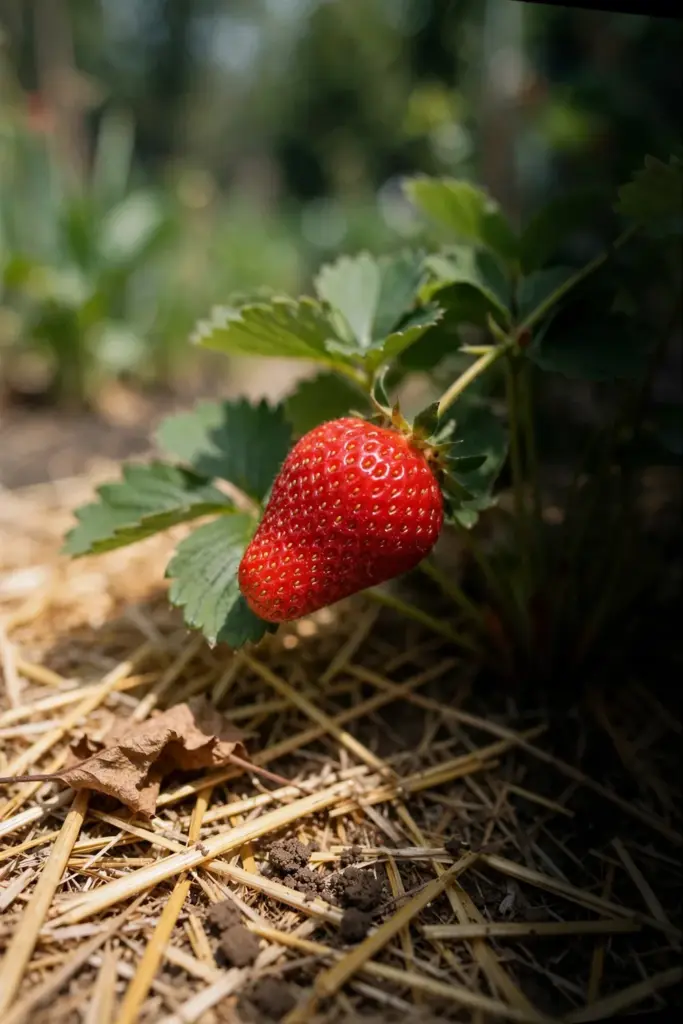
No. A berry with leather rot tastes bitter and unpleasant, and the bitterness is diagnostic. A berry that looks healthy but tastes bitter is a leather rot berry, and it goes in the bag, not the mouth. One bitter berry can spoil a whole batch of jam. Taste one suspect berry and spit it out. The taste test is a diagnostic, not a meal.
Yes, one berry can. Infected fruit develops off-odour flavour and may contaminate strawberry jam, and the amount of infected tissue needed to spoil jam is not known. A single bitter berry in the batch can spoil the batch. Sort ruthlessly before cooking. Taste-test suspect berries and discard them. The sorting saves the jam.
No. Leather rot is caused by Phytophthora cactorum, an oomycete, and gray mold by Botrytis cinerea, a true fungus. The texture test separates them: leathery and tough with no fuzz means leather rot, while soft with gray fuzzy growth means gray mold. Leather rot tastes bitter; gray mold does not. Gray-mold fungicides do not work on leather rot. The identification sets the playbook.
No. Straw mulch, raised beds, drainage, water discipline, and sanitation come first, and fungicides are the last resort for beds with a history of leather rot despite good culture. Fungicides protect healthy fruit and do not cure infected fruit. Where a spray is warranted, use oomycete actives only, never gray-mold fungicides, and follow the label. A spray without the cultural controls is a spray wasted.
No. Oospores survive in mummified fruit and soil for years, and compost spreads them. Bag diseased fruit and put it in municipal waste. Home compost does not reliably kill the oospores, and community compost spreads them to every garden that uses the compost. The bag is the disposal route. The compost pile is a distribution route for this disease.
Where to Go From Here
Leather rot rewards the gardener who mulches with straw, raises the bed, drains the puddles, and removes infected fruit promptly. Confirm the ID at every fruit stage, tell it from gray mold with the texture test, and rule out the lookalikes, then lay the straw mulch barrier, raise the beds and drain, keep the fruit dry, sanitize promptly, mind the mulch trap, and spray last, oomycete-specific only, and by the label.
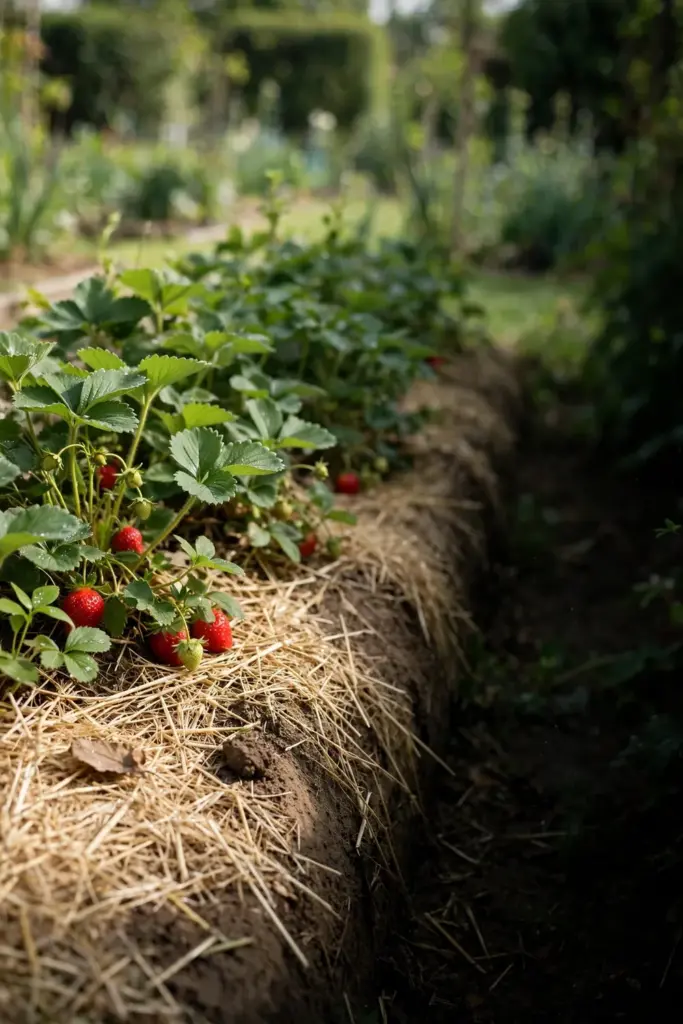
Next season, start clean. A bed with a straw barrier, raised drained soil, dry fruit, and no mummies will hold leather rot to the soil-contact berries. The NC State Extension page on leather rot of strawberry is a useful companion for the full Extension picture, since it sets the home-garden response here against the university evidence behind it, and the Plant Care archive collects the site’s other disease guides.