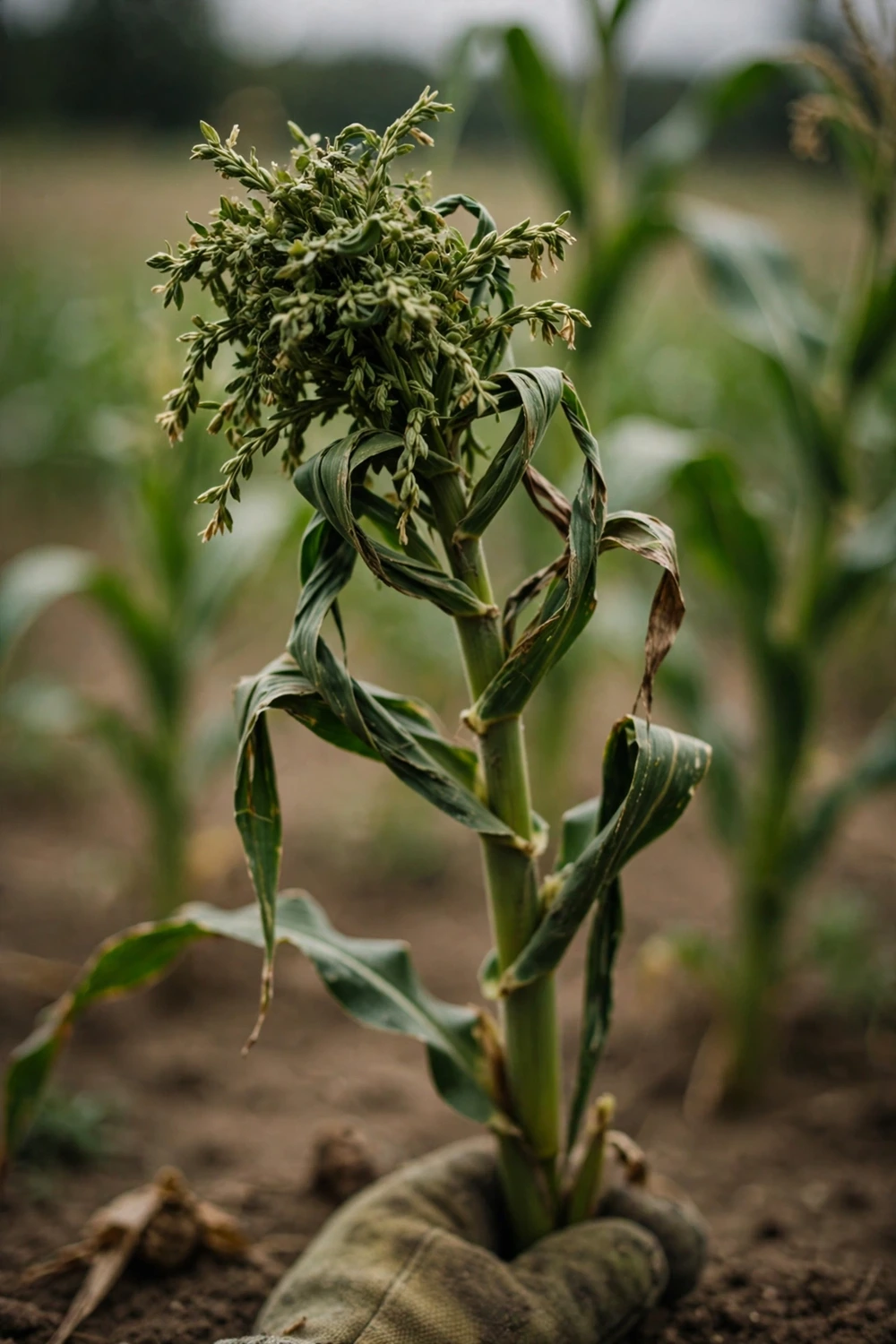

Crazy top downy mildew on sweet corn has no cure. A seedling that sits in flooded soil for a day or two can grow into a plant with a tassel made of leaves, no pollen, and no ear. The 6 ways below prevent that outcome in a home garden, and they work because this disease infects only in one narrow window: young seedlings in standing water.
The first fact to hold is the scale. Crazy top is minor, sporadic, and usually not consequential. FarmProgress calls it more of a novelty than a real threat to yield, and Purdue Extension calls it usually not of economic consequence. It appears in small portions of fields where flooding occurs, not across whole plantings. I have learned that a gardener who treats crazy top as a drainage problem, not a spray problem, already has the right response.
The rest of this page walks the trigger window, the identification, the one confusion that matters, and the 6 prevention moves. The disease name leads. The pathogen, Sclerophthora macrospora, stays in the background after this introduction.
What Crazy Top Downy Mildew on Sweet Corn Actually Is
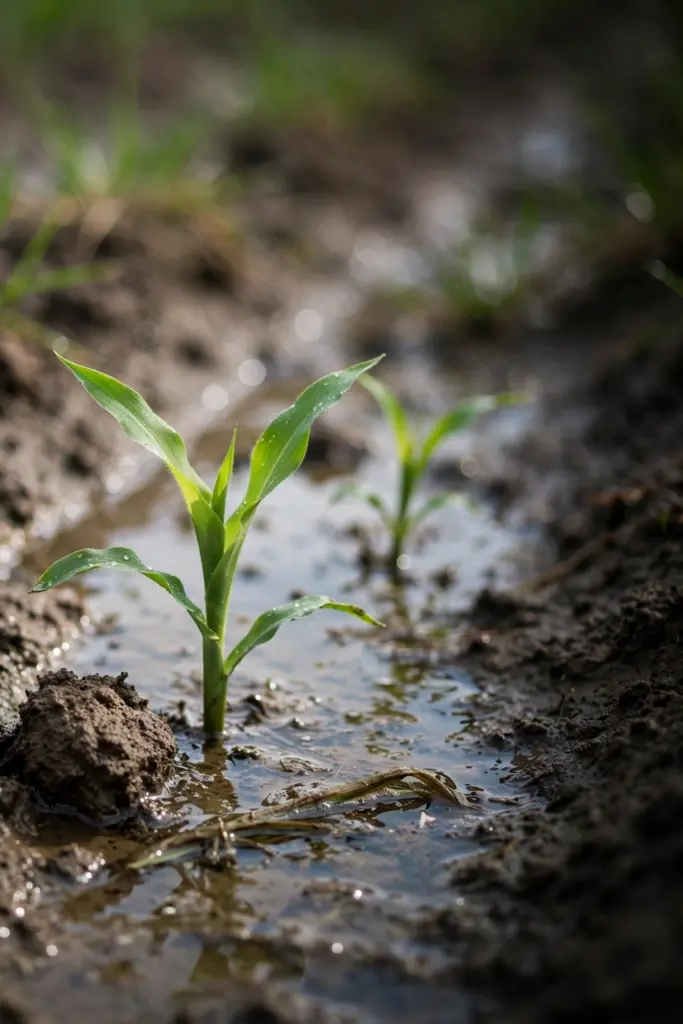
Crazy top downy mildew is an oomycete disease of corn. The pathogen is Sclerophthora macrospora, with the synonym Sclerospora macrospora. Oomycetes are water molds, not true fungi, and the distinction matters: the pathogen swims. It survives in soil as thick-walled oospores, and when soil floods, the oospores germinate and release zoospores that swim in water to infect young corn seedlings.
The infection is systemic. Zoospores that reach the whorl or growing tissues infect the seedling, and the pathogen grows toward the meristems through the life of the plant. The tassel and sometimes the ear shoot develop into masses of leaf tissue instead of flowers. Infected plants usually produce no ear, and the tassels produce no pollen.
The host range is wide among grasses. The pathogen infects more than 140 species of wild and cultivated grasses, including oats, wheat, sorghum, millet, rice, foxtail, and turf grass. Wild grasses at field edges are the usual inoculum source, which is why crazy top appears on corn near field edges and low spots. Control grassy weeds around the patch and the local source shrinks.
One naming fence stays firm. Sclerophthora rayssiae var. zeae causes brown stripe downy mildew, a different disease with leaf lesions only, no tassel malformation, and no systemic spread. No brown stripe evidence belongs here. Systemic Peronosclerospora sorghi infection, sorghum downy mildew, can produce the same bushy-top symptom in maize, so field identification is presumptive and the lab confirms.
How to Spot Crazy Top on Sweet Corn
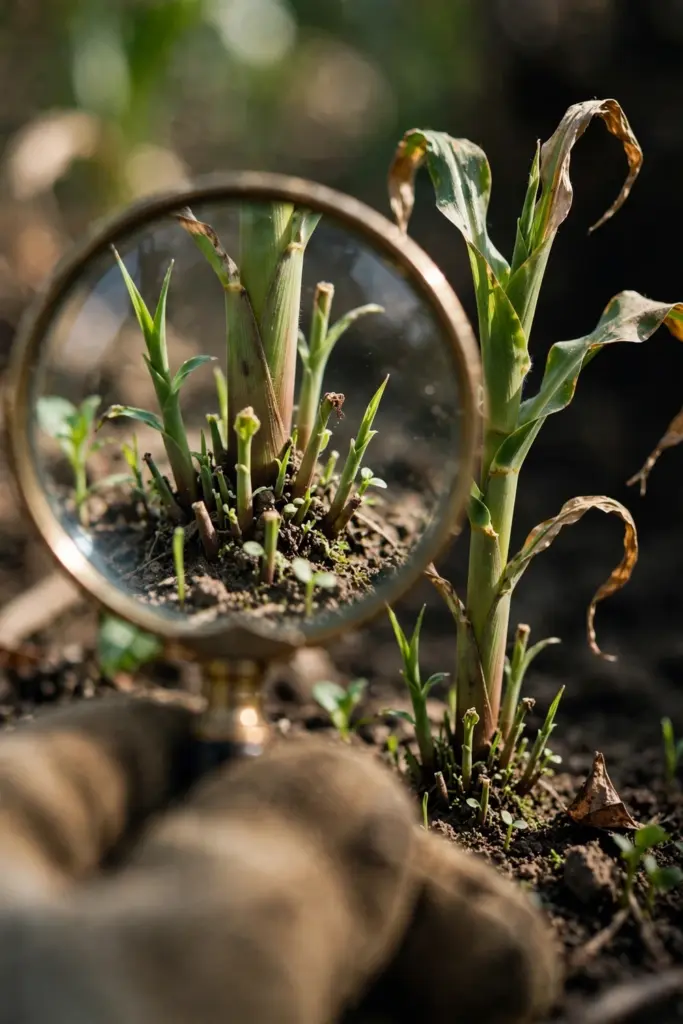
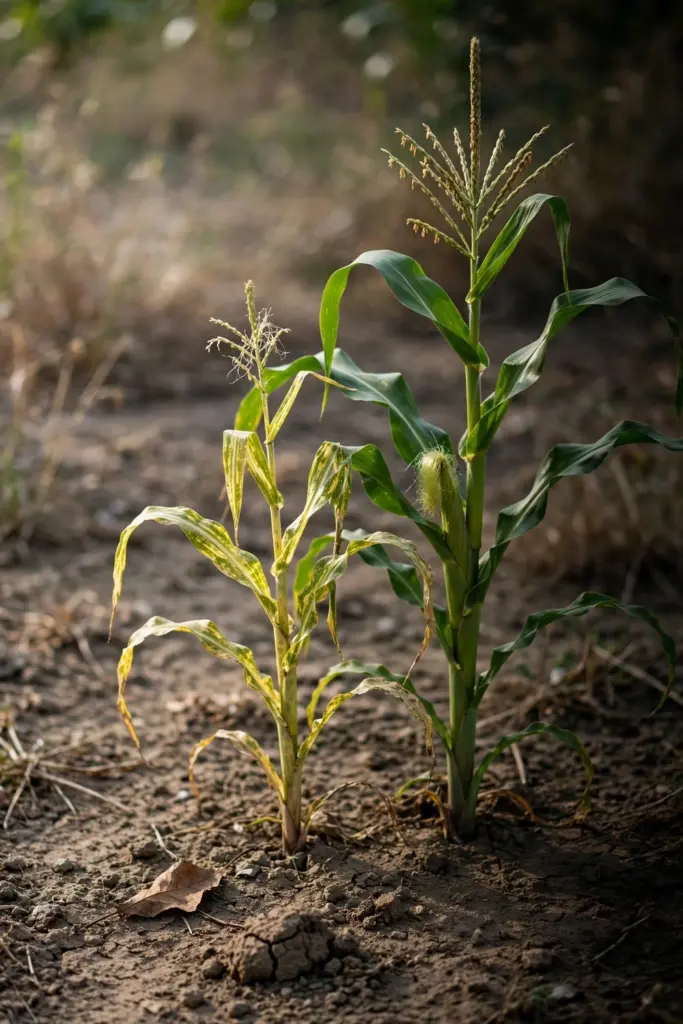
Crazy top shows first as excessive tillering. The infected plant pushes out many tillers, far more than a healthy plant. Upper leaves roll and twist. The plant stunts. Leaves run narrow and leathery, shortened, with chlorotic stripes. A young plant that tillers heavily, twists its top leaves, and stalls is a plant to watch.
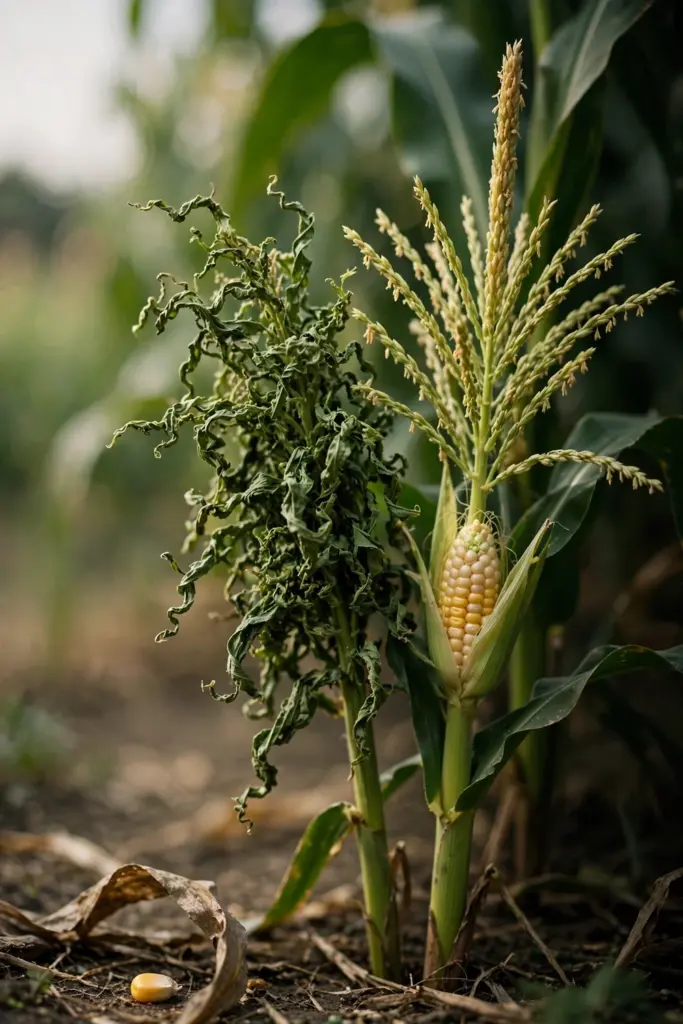
The tassel gives the disease its name. The tassel proliferates into a bundle of leafy structures, a mass of small leaves where pollen flowers should be. The tassel may proliferate in part or completely. Leafy bracts can develop on the ears. The tassels of infected plants do not produce pollen.
Infected plants usually produce no ear. The ear shoot either fails or turns leafy itself, and a plant with a leafy tassel and no ear at harvest is a plant that was infected months earlier, in the seedling window.
Check the patch after spring floods and heavy rain. Infection happens when seedlings to the 4 to 5 leaf stage sit in flooded or saturated soil for 24 to 48 hours, or when water pools in the whorl. Iowa State Extension puts the window plainly: saturation for 24 to 48 hours is sufficient for infection. A patch that flooded in May shows crazy top in July. The calendar gap is the trap.
Crazy Top vs Tassel-Ears
The field check is the structure. Crazy top replaces the tassel with a mass of leaf tissue, plus systemic signs across the plant. Tassel-ears grow an ear on the tassel, kernels exposed without a husk, with no systemic symptoms. Leafy mass plus a sick plant points one way. An ear on the tassel of an otherwise healthy plant points the other.
| Clue | Crazy Top | Tassel-Ears |
|---|---|---|
| Cause | Oomycete infection, Sclerophthora macrospora | Physiological, hormonally driven, NOT a disease |
| Tassel | Replaced by a mass of small leaves, a leafy bushy tassel | Tassel plus ear in one structure, kernels exposed without husk |
| Whole plant | Systemic signs: excessive tillering, rolled and twisted upper leaves, narrow leathery striped leaves, stunting | No systemic symptoms, plant otherwise healthy |
| Where found | Low spots and field edges where water pooled | Mostly on tillers or suckers at field edges or thin stands |
| Ear | Usually no ear, infected plants barren | Ear present on the tassel, kernels exposed to weather and birds |
| Trigger | Seedlings flooded or saturated for 24 to 48 hours | Environmental trigger unknown, not infection |
| Action needed | Prevent next season by fixing drainage, pull infected plants | No disease action needed |
No published head-to-head comparison exists for this pair. This table compiles the crazy top side from Extension descriptions and the tassel-ear side from Purdue agronomy guidance on tassel ears. Purdue states the key fence directly: the two odd tassel symptoms are not related and look totally different. If the plant shows tassel-ears, no disease action is needed.
One secondary lookalike gets one line. Herbicide injury can suggest the same phyllody, the leafy-flower symptom, in corn. Cornell Extension notes the resemblance. Herbicide history settles that question, not a spray.
Way 1: Know the Trigger Window and Check After Floods
Watch the seedling window. Infection happens only from germination to the 4 to 5 leaf stage, when seedlings sit in flooded or saturated soil. A seedling past that stage, standing in water, does not catch crazy top. The window is short, and it is the whole disease.
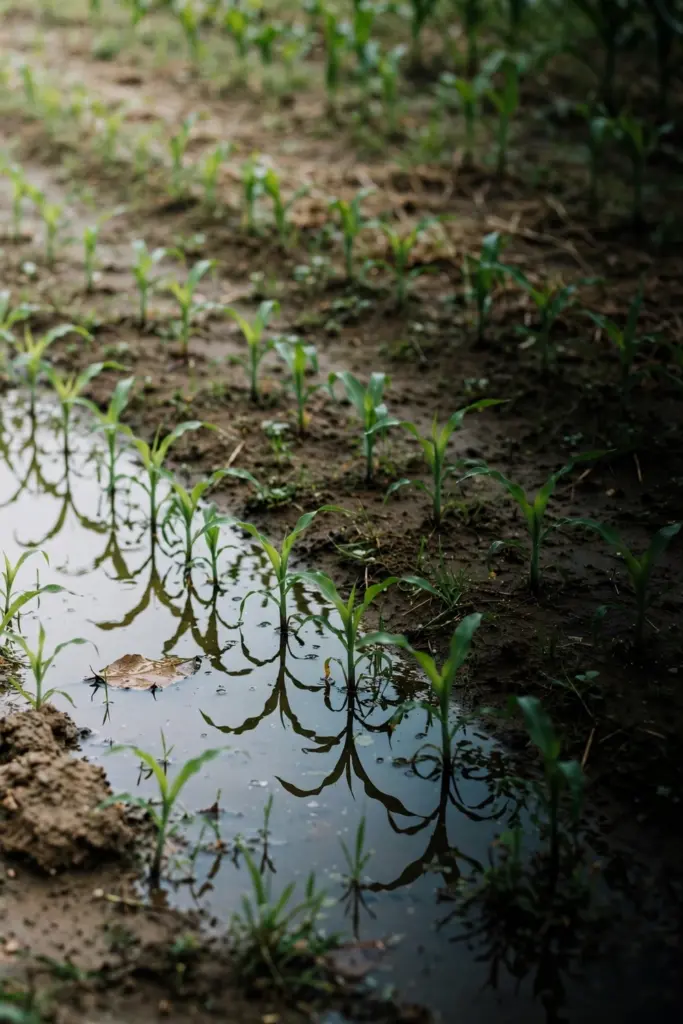
Measure the flooding in hours, not days. Saturation for 24 to 48 hours is sufficient for infection, so a puddle that drains in an afternoon is not the trigger, while a low spot that holds water for two days is.
Check the patch after spring floods and heavy rain. Walk the low spots and the field edges a week after the water clears. Early signs are tillering and twisted top leaves, not the leafy tassel, which appears months later. A check in May predicts the tassels of July.
Way 2: Spot the Leafy Tassel and the Systemic Signs
Read the tassel first. A tassel replaced by a mass of small leaves is the signature. The tassel may proliferate in part or completely, and the mass looks like a tight bunch of leaves where pollen flowers should be. No pollen, no normal tassel structure, no doubt once the mass is seen.
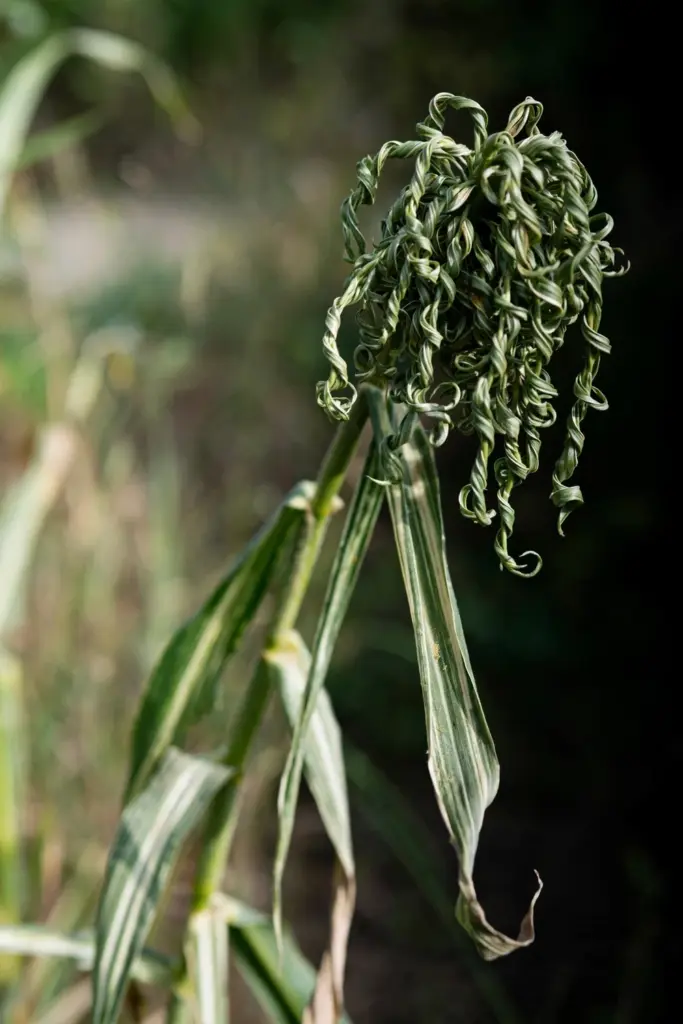
Read the whole plant second. Excessive tillering, rolled and twisted upper leaves, narrow leathery leaves with chlorotic stripes, and stunting all support the identification. A leafy tassel on a plant with no other symptom deserves a second look, because a bushy tassel alone does not diagnose the pathogen.
Expect barren plants. Infected plants usually produce no ear. A plant with a leafy tassel and no ear at harvest is a plant that was infected in the seedling window. The barrenness is not a second problem. It is the same disease, grown to its end.
Way 3: Tell It From Tassel-Ears Before Doing Anything
Compare the structure. Crazy top turns the tassel into a leafy mass. Tassel-ears grow an ear on the tassel, with kernels exposed and no husk. The two look totally different once both are known. The comparison table above carries the full check.
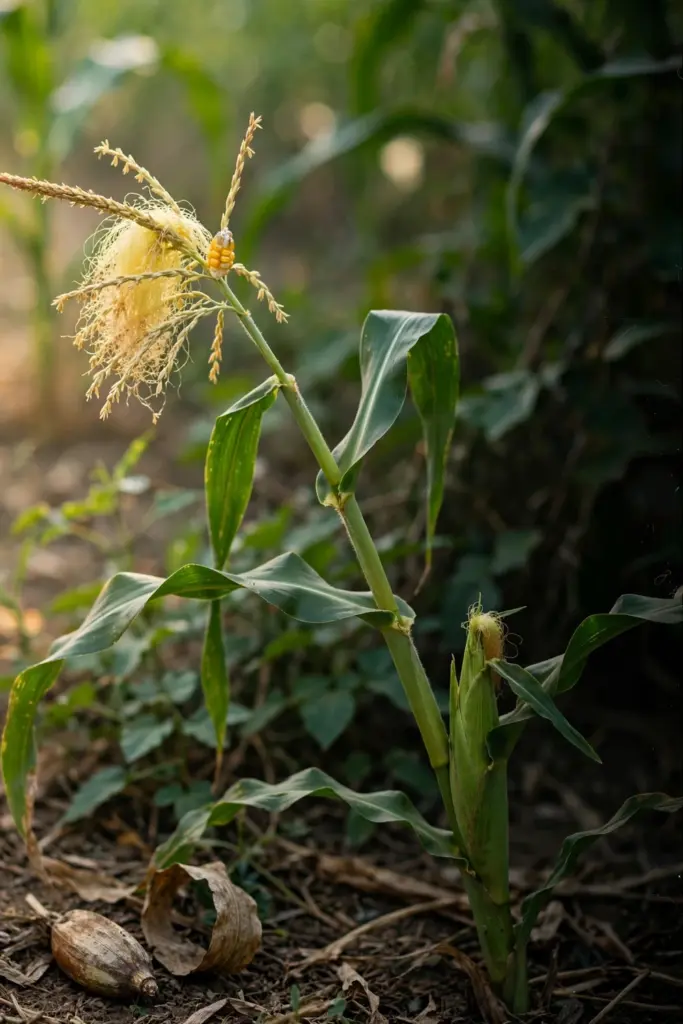
Compare the plant. Crazy top sickens the whole plant: tillering, twisting, striping, stunting. Tassel-ears leave the plant healthy apart from the odd tassel. A healthy plant with an ear on its tassel has a curiosity, not a disease.
Do nothing for tassel-ears. Tassel-ears need no disease action, no pulling, no spray. The kernels will weather and the birds will take them. The plant keeps growing. Treating tassel-ears as crazy top wastes effort and misreads the garden.
Way 4: Fix the Wet Spot So Seedlings Never Sit in Water
Improve drainage in the corn patch. Illinois Extension names soil drainage as the management for crazy top, with avoiding wet low areas as the second step. A patch that drains in hours never gives the zoospores their 24 to 48 hour window. Drainage is the prevention.
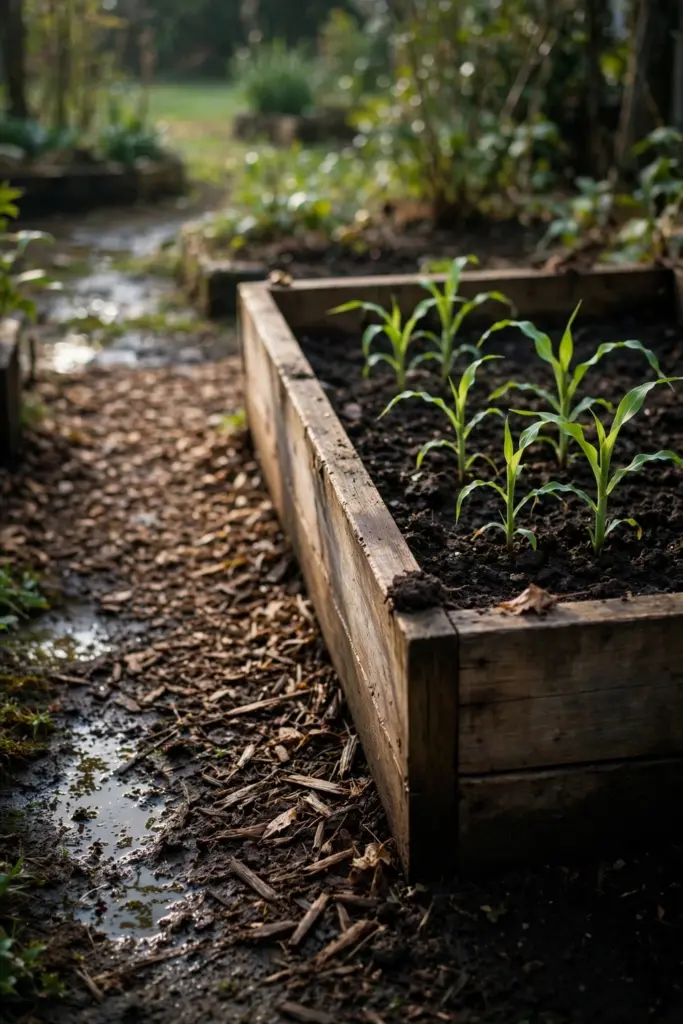
Never plant corn where water pools. Low spots, field edges that collect runoff, and ground that ponds after every rain are crazy top ground. Plant the corn on the higher ground and give the low spot to a crop that tolerates wet feet. Site choice is the cheapest prevention in the garden.
Use raised beds where soil stays wet. Raised beds lift the seedlings above the pooling water and drain faster than flat ground. A raised bed in a wet garden is the home-scale version of field drainage work. Do not overwater seedlings: the hose can create the same saturated window as a storm.
Way 5: Pull Infected Plants and Clean Up Debris
Pull infected plants when found. There is no cure, and infected plants are usually barren, so pulling loses nothing. Removing infected plants can reduce inoculum for the next year, per Alabama Extension guidance on a home-garden sweet corn sample. Pull the whole plant, roots and all, and bag it.
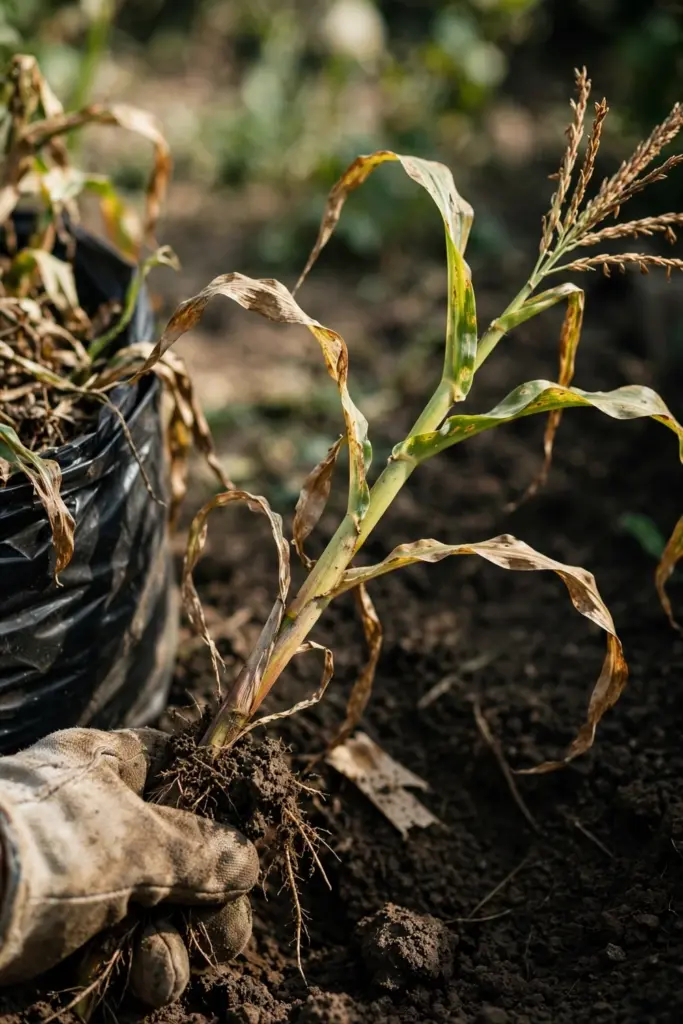
Destroy debris at season end. The pathogen survives in soil and infected plant tissue, so spent plants left in the bed carry oospores into the next season. Clear the bed, bag the debris, and put it in municipal waste. A clean bed starts the next season with a smaller reservoir.
Control grassy weeds around the patch. Wild grasses host the pathogen and supply spores at the field edge. A weedy edge beside the corn patch is a spore source all season. Keep the edges mowed and the patch border clean, and the local source shrinks.
Way 6: Rotate, Weigh Resistance Honestly, and Never Spray for a Cure
Rotate the corn patch. Rotation helps only slightly, per Cornell Extension, because the pathogen survives in soil and on grasses. Still, rotation with a non-host crop, kept free of grassy weeds, trims the reservoir. Treat rotation as a small lever, not a fix.
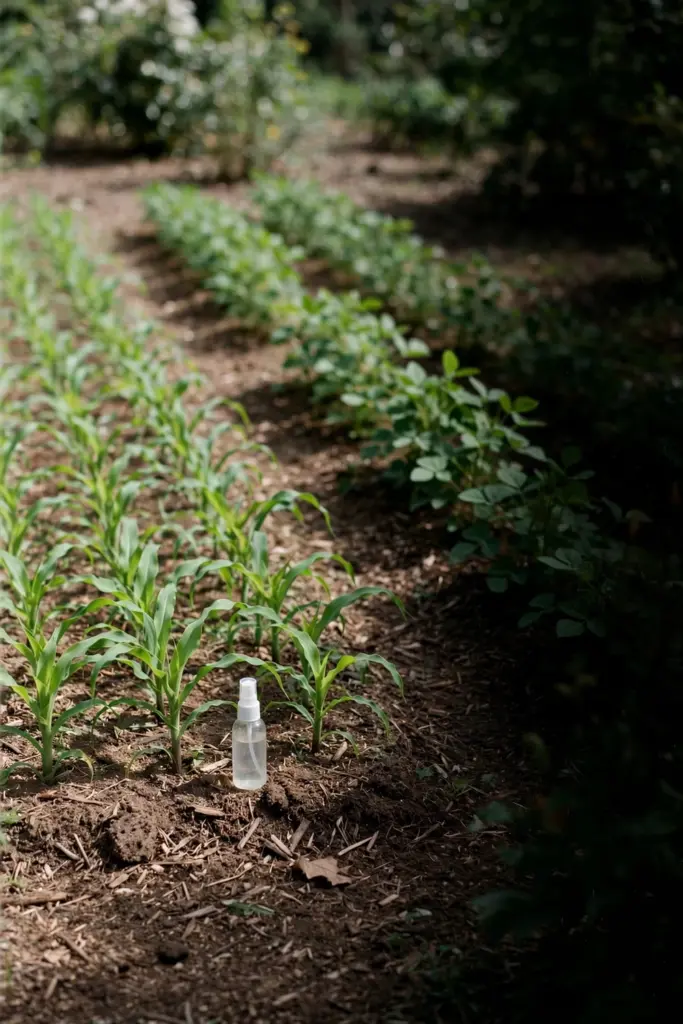
Weigh resistance claims with care, because the sources conflict. Some Extension and garden sources advise using resistant varieties. Ohio State states that very little is known about the relative resistance of corn lines and hybrids to this disease. This article carries the conflict rather than smoothing it over: do not buy a variety on a resistance promise that the research does not support.
Never spray for a cure. Fungicides once the disease is present are usually not effective, and seed-applied fungicides will not control crazy top, per Ohio State. A spray applied after symptoms appear protects nothing, because the infection happened months earlier in the seedling window. The money stays in the pocket and the patch stays unsprayed.
Living With Crazy Top in a Sweet Corn Patch You Already Grow
A patch with crazy top is a patch with a wet spot, not a patch with a spray problem. Keep the drainage working. Keep pulling infected plants. Keep the grassy edges clean. The disease will return in a wet spring and fade in a dry one, and the patch will keep cropping on its healthy plants.
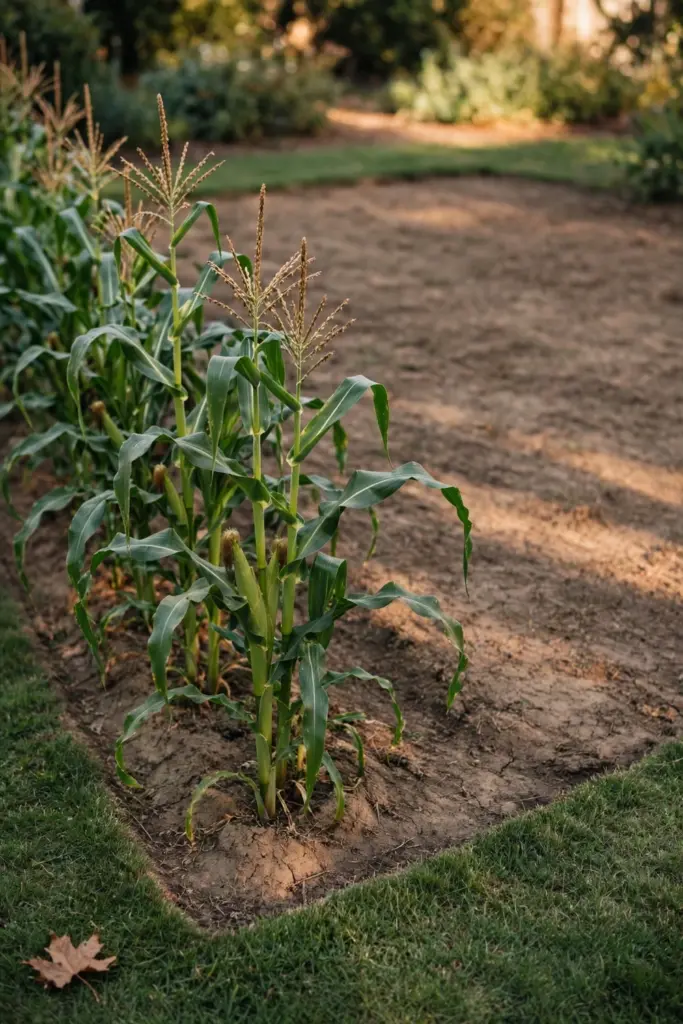
Stop three habits. Do not plant corn where water pools. Do not leave infected plants standing. Do not spray after symptoms appear. Keep those three lines unbroken and the disease stays a novelty, not a problem.
The Plant Care archive collects the site’s disease coverage, and the vegetable growing archive covers the corn crop as a whole. Neither replaces the drainage routine here. Dry seedlings carry the season.
Frequently Asked Questions
No. No spray cures crazy top once symptoms appear, and fungicides applied after infection are usually not effective. The infection happened months earlier, when seedlings sat in flooded soil. Pull infected plants, since they are usually barren anyway, and fix the drainage so next season’s seedlings never sit in water. Prevention is the only control.
Almost never. Crazy top is minor, sporadic, and usually not consequential. It appears in small portions of plantings where flooding occurs, not across whole patches. Infected plants go barren, but healthy plants around them crop normally. A patch with one wet corner loses that corner, not the crop. Fix the wet corner and the loss stops.
No. Fungicides once the disease is present are usually not effective, and seed-applied fungicides will not control crazy top. The infection window closes months before symptoms appear, so a spray at tasseling protects nothing. Spend the effort on drainage, raised beds, and pulling infected plants. The spray bottle stays on the shelf for this disease.
Yes, from healthy plants. Crazy top is a plant disease, not a human one. Infected plants usually produce no ear at all, so there is nothing to pick from them. Ears from healthy plants in the same patch are safe to eat after washing. Discard pulled plants. The loss is a few barren plants, not your health.
Compare the tassel and the plant. Crazy top replaces the tassel with a mass of leaves, plus tillering, twisting, striping, and stunting across the plant. Tassel-ears grow an ear on the tassel with exposed kernels, on an otherwise healthy plant, mostly on tillers. Tassel-ears need no disease action. A leafy tassel on a sick plant needs drainage work next season.
Where to Go From Here
Crazy top rewards the gardener who drains the wet spot and then relaxes. Know the 24 to 48 hour seedling window. Spot the leafy tassel and the systemic signs. Separate it from tassel-ears. Fix the drainage, pull infected plants, rotate, and never spray for a cure.
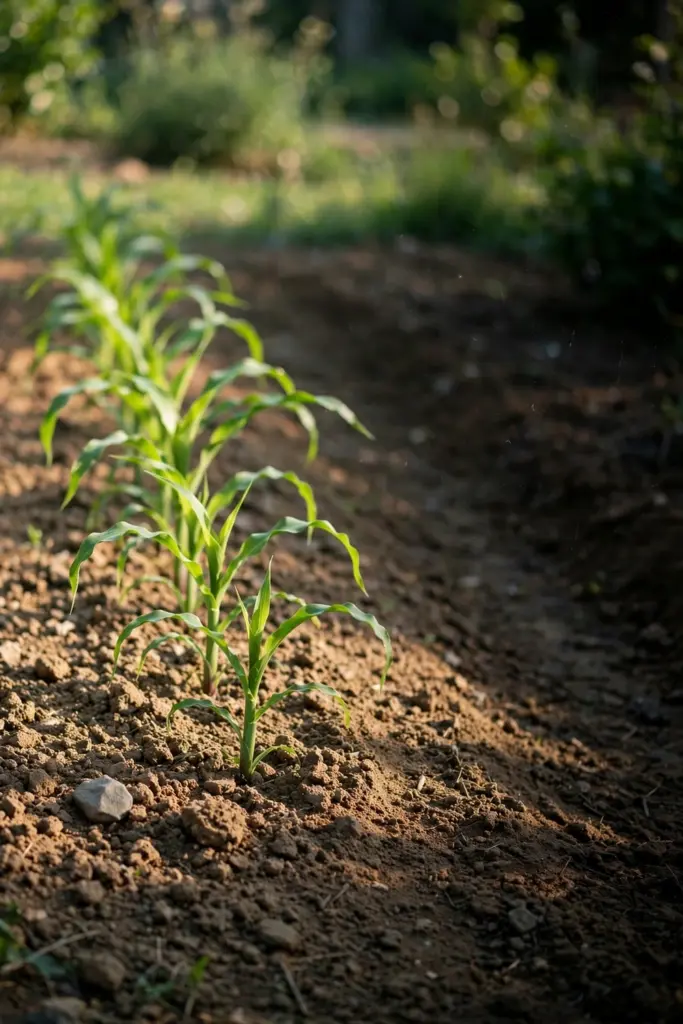
Next season, start dry. Corn on higher ground, raised beds where soil stays wet, and a clean patch border will do more than any product. The Iowa State Extension crazy top guide is a useful companion for the full symptom picture, since it sets the home-garden response here against the field evidence behind it.