
Early leaf spot on home-grown peanuts cannot be sprayed away once it takes hold, but it can be kept off the leaves for most of the season. The 7 ways below prevent it in a backyard bed or a container, and they work because this fungus spreads in water on the leaf surface and survives in crop remains from last season.
The first fact to hold is the scale. Home peanut growing is a small, fun crop: a backyard row or a few containers, harvested for fresh eating. The disease that hits it is a field-crop disease written about for commercial growers, and this article does not carry their calendar spray programs. I have learned that a home grower who keeps leaves dry, starts clean, and cleans up at season’s end already has most of the prevention this disease needs.
The rest of this page walks the identification, the 7 prevention moves, and the honest limits of home control. The disease name leads. The pathogen, Cercospora arachidicola, stays in the background after this introduction.
What Early Leaf Spot on Home-Grown Peanuts Actually Is
Early leaf spot is a fungal disease of peanut. The pathogen is Cercospora arachidicola, with the synonym Passalora arachidicola and the teleomorph Mycosphaerella arachidis. The fungus spreads by spores that germinate in water on the leaf surface, infect, and produce more spots and spores. The life cycle takes 10 to 14 days in warm, wet weather. The fungi survive in crop remains.
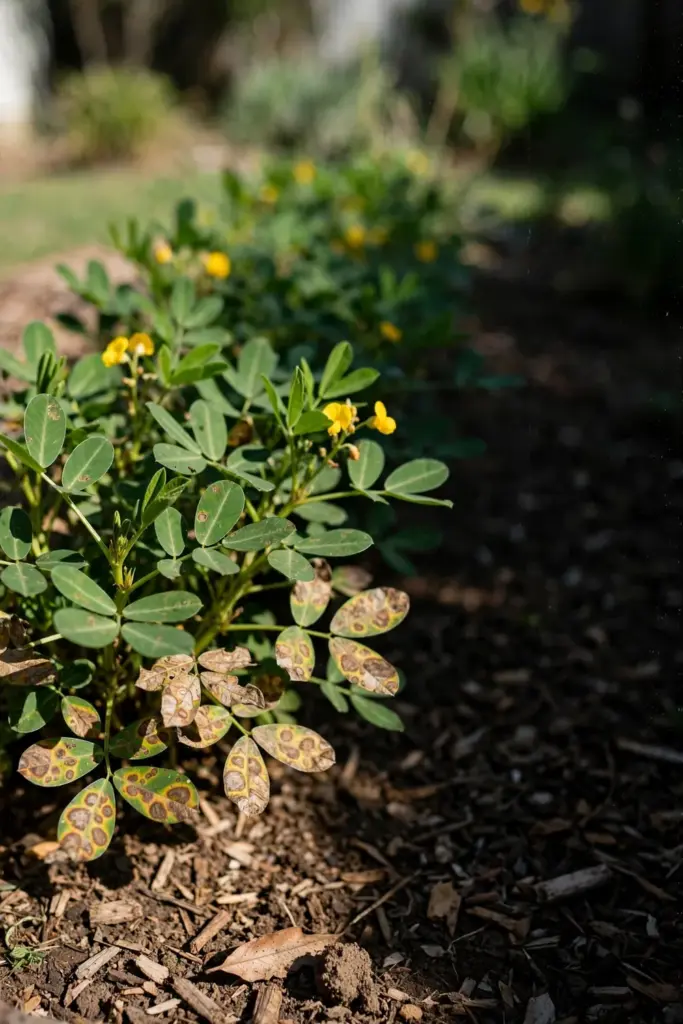
The disease hits the leaves first, then the whole plant. Lesions appear on the lower leaves first, 30 to 50 days after planting, then spread to leaves of all ages, petioles, stems, and pegs. Unchecked, premature defoliation weakens the plant. Lesions on pegs weaken the pegs, and weak pegs break during pulling at harvest. The leaf loss is the yield loss.
Two naming traps stay out of this article. A 2024/2025 Frontiers paper calls early leaf spot Passalora personata, which is wrong: personata is the pathogen of the second, closely related peanut leaf spot. An Indian agri-app attributes early leaf spot to Phoma arachidicola, which is also wrong: Phoma arachidicola is web blotch, a different peanut disease. This article uses the Clemson name, Cercospora arachidicola, first, and the Passalora synonym once.
The scope stays narrow: peanuts, Arachis hypogaea, home-grown in backyard beds and containers. No soybean evidence, no other peanut disease, and no commercial field program belongs here. Late leaf spot is a second, closely related peanut leaf spot; the two need a microscope to separate, the prevention is the same, and it is covered in its own article.
How to Spot Early Leaf Spot on Peanut Leaves
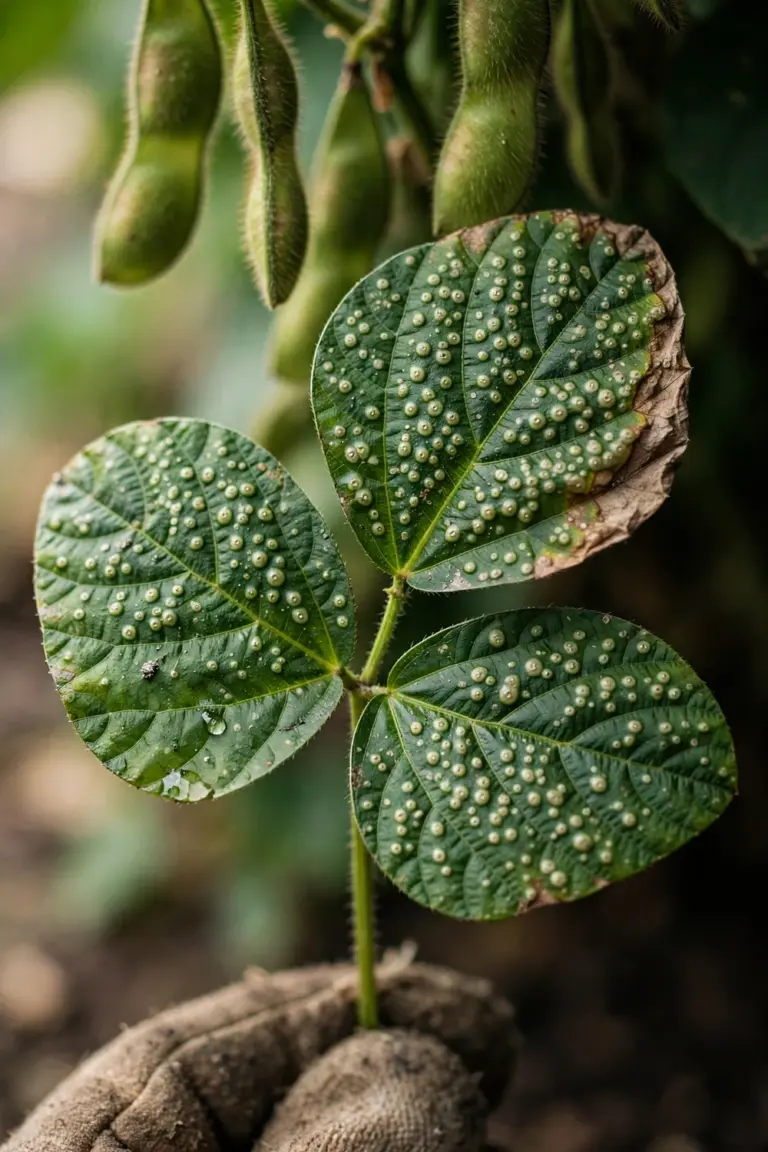
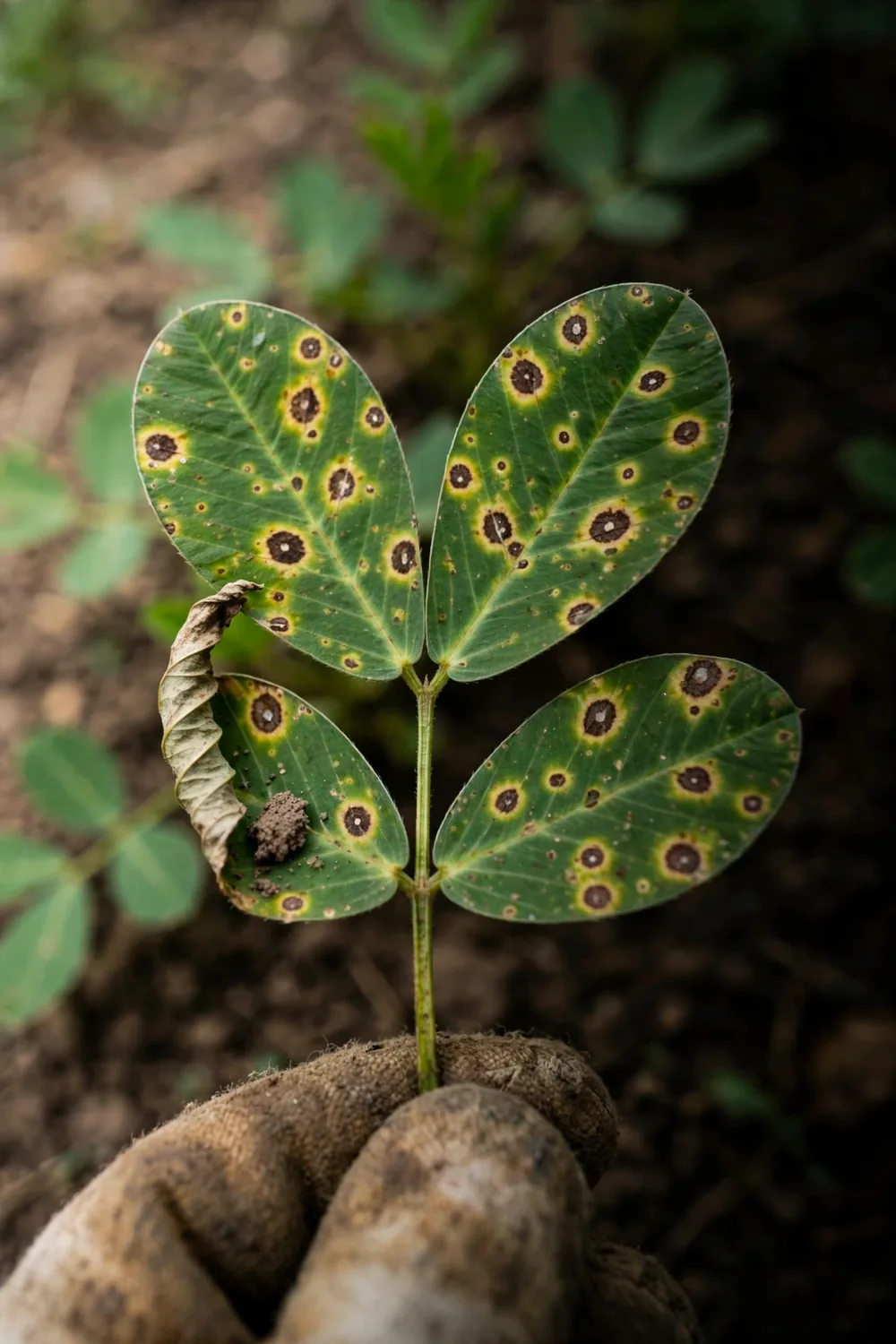
Early leaf spot shows as brown lesions with a yellow halo. The lesions are roughly circular, smaller than 10 mm across in most cases, often with a yellow margin. The spots are darker on the underside of the leaf. A brown spot with a yellow ring on a peanut leaflet is the first sign to learn.
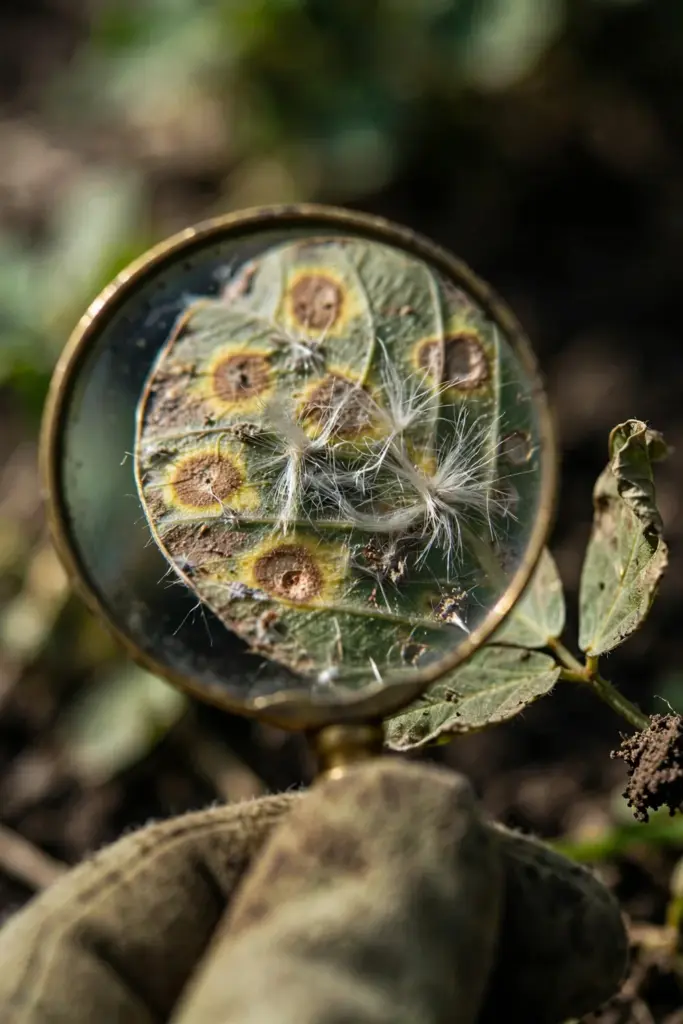
Check the upper leaf surface for silvery tufts. In humid weather, early leaf spot produces silvery, hair-like spore tufts on the upper surface of the leaf. The tufts can be seen with a good magnifying glass, and sometimes without one. Oklahoma State Extension puts the field check plainly: gray tufts on the upper surface mean early leaf spot, while tufts on the lower surface point the other way. A hand lens settles the surface question.
Watch the defoliation pattern. Defoliation usually occurs first on the lower leaves, then progresses upward. A plant that loses its lower leaves while the top still looks green is a plant where leaf spot is building. Leaves turn pale green to yellow, wither, and fall. A plant that drops most of its leaves before harvest has lost the season, whatever the cause.
Check petioles, stems, and pegs when disease is severe. Lesions appear there as dark brown to black, oval-shaped blotches. Peg lesions matter most at harvest, because weak pegs break and leave pods in the ground. A plant with spotted pegs needs the harvest handled gently, and the remains cleaned up after.
Way 1: Know What You Are Looking At Before You Act
Learn the three signs together. Brown lesions, yellow halos, and silvery tufts on the upper surface, in that order. A single brown spot is not a diagnosis. The three signs together, on lower leaves, about a month after planting, are. A gardener who learns the three signs does not chase every brown spot in the bed.
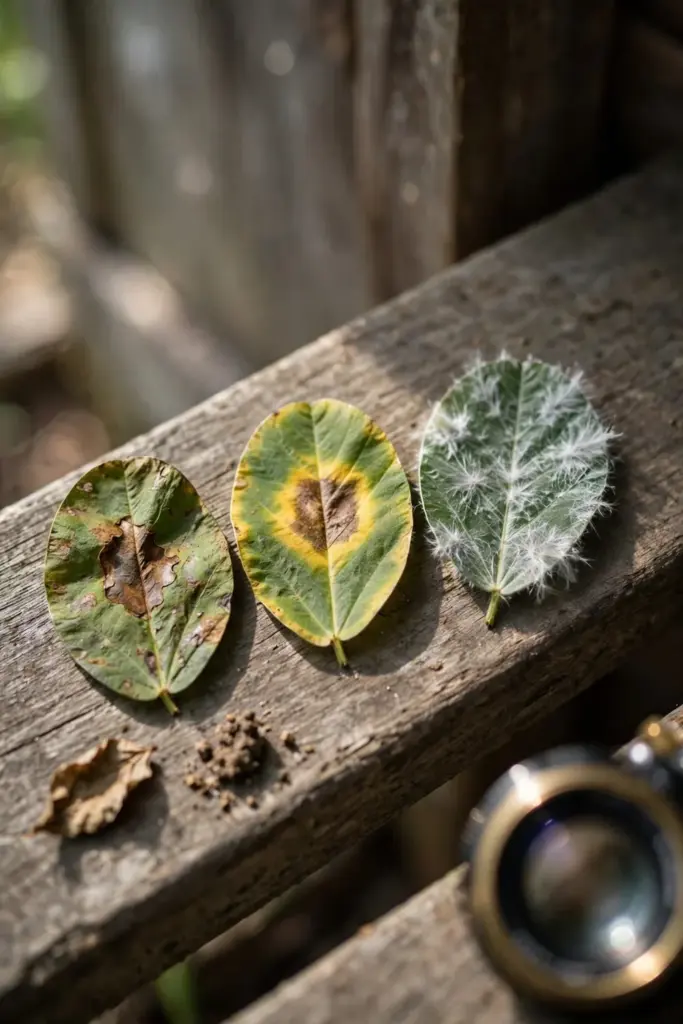
Time the first check to the planting date. First lesions often appear 30 to 50 days after planting, so mark the calendar at planting and start weekly leaf checks at day 30: a check that starts at day 30 catches the first lesions, while a check that starts at harvest catches nothing.
Separate leaf spot from other brown spots. Nutrient problems, sun scorch, and insect damage all brown peanut leaves. Leaf spot lesions are circular, haloed, and tufted; nutrient problems are patterned between veins; scorch is edge-first. The hand lens and the halo settle most cases. A microscope settles the rest, and the prevention below works either way.
Way 2: Start Clean With Certified Seed and Fresh Mix
Buy certified disease-free seed. Seed from a spotted plant carries the problem into the next season. Certified seed starts clean. A packet of certified seed costs little and removes the first source of spores. Never save seed from plants that showed leaf spot.
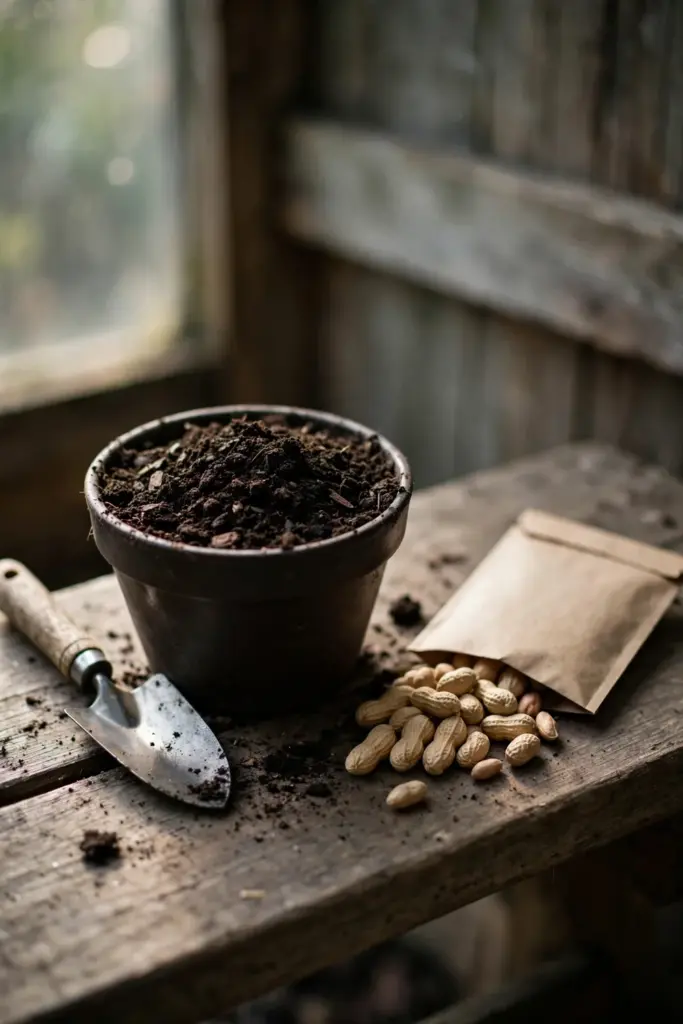
Use fresh potting mix in containers. The fungus survives in crop remains and old mix, so last season’s container soil is a reservoir. Fresh mix each year breaks the carryover. A container that held spotted peanuts last year holds spores this year unless the mix is replaced.
Keep tools and hands clean between plants. Spores move on hands, tools, and clothing. A quick wash after handling spotted plants keeps the spread down. The habit costs nothing and stops the gardener from becoming the vector.
Way 3: Rotate, Even in a Small Garden
Give peanuts at least one year out of the same soil. Lucid Central’s cultural control for peanut leaf spots starts with rotation: at least one year out of peanuts in the same ground, plus distance from old crops. A small garden rotates by moving the peanut row to a fresh bed each year. The rotation starves the soil reservoir.
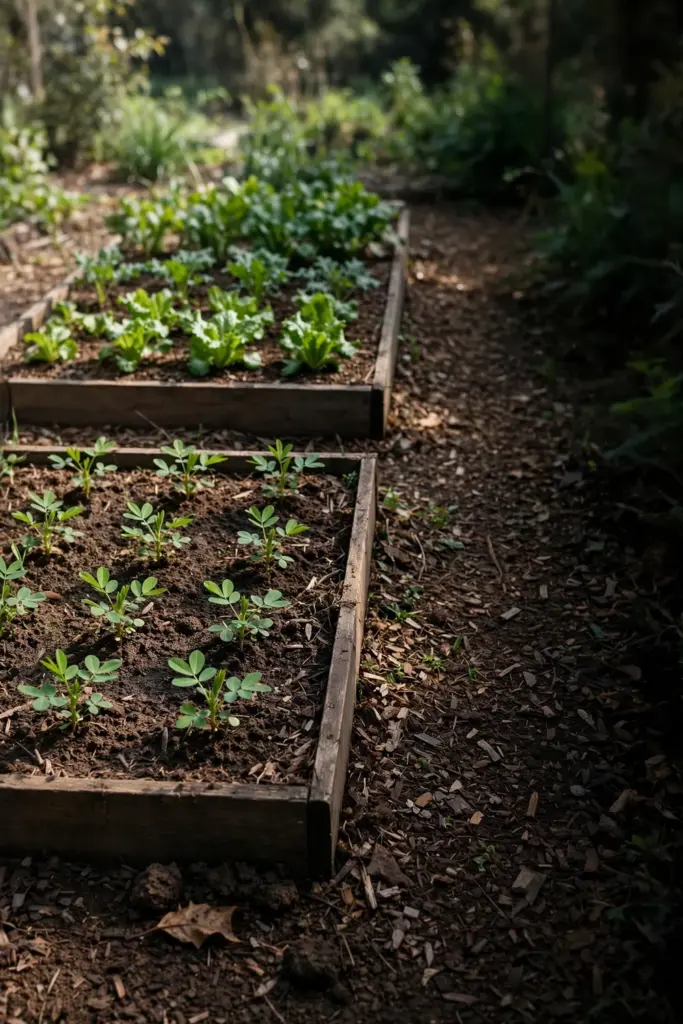
Rotate containers too. A container that held peanuts last year gets a different crop this year, with fresh mix. The container rotation is the same principle in a smaller space. A container that holds peanuts every year holds leaf spot every year.
Pull volunteer peanut plants. Volunteers from last season’s dropped pods carry the fungus into the new season. Pull them when they appear. A volunteer is a weed with a disease reservoir attached.
Way 4: Keep Leaves Dry From the First Week
Water at the base, never overhead. Spores germinate in water on the leaf surface, so wet leaves are infected leaves. Drip lines, soaker hoses, and a watering can at the soil line all keep leaves dry. Overhead sprinklers wet the leaves and invite the disease.
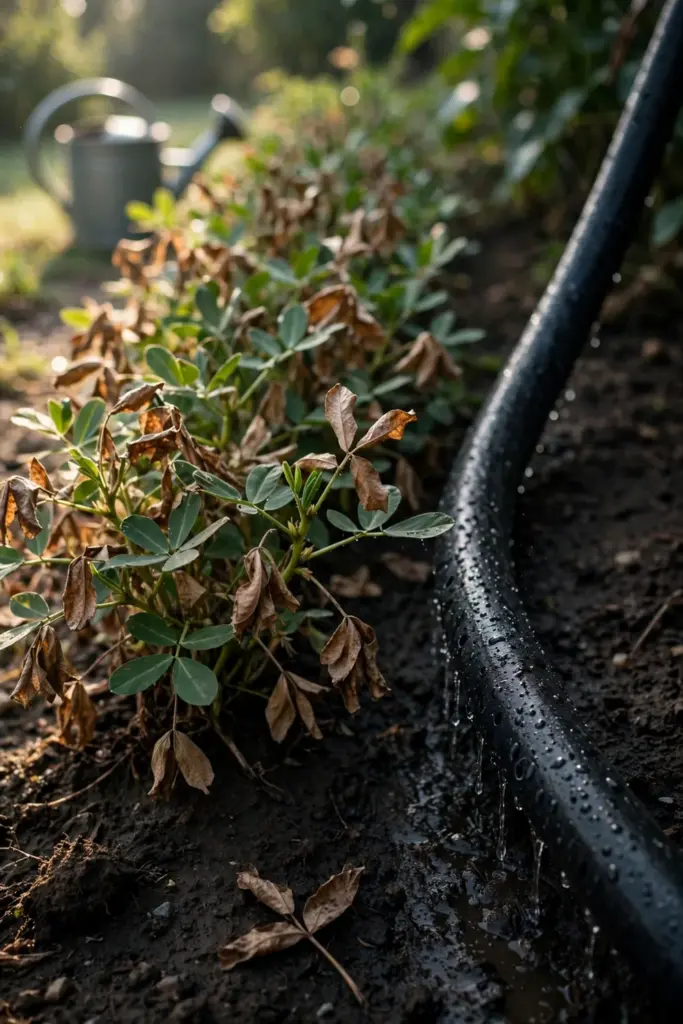
Water in the morning. Morning water dries fastest, and leaves that dry by midday give spores the shortest germination window. Evening water leaves leaves wet all night. The same amount of water, given in the morning, carries less disease risk.
Space for airflow. Tight spacing holds humidity in the canopy, and humidity feeds sporulation. Give peanut plants room to breathe, and thin where the canopy closes too early. A bed with moving air dries faster after rain. Rain cannot be scheduled, but airflow can be.
Way 5: Inspect Weekly and Remove Spotted Leaves Promptly
Inspect weekly from day 30. A weekly leaf check catches the first lesions while they are few. Turn leaves over, check the upper surface with a hand lens, and look for the silvery tufts. A weekly habit beats a monthly rescue.
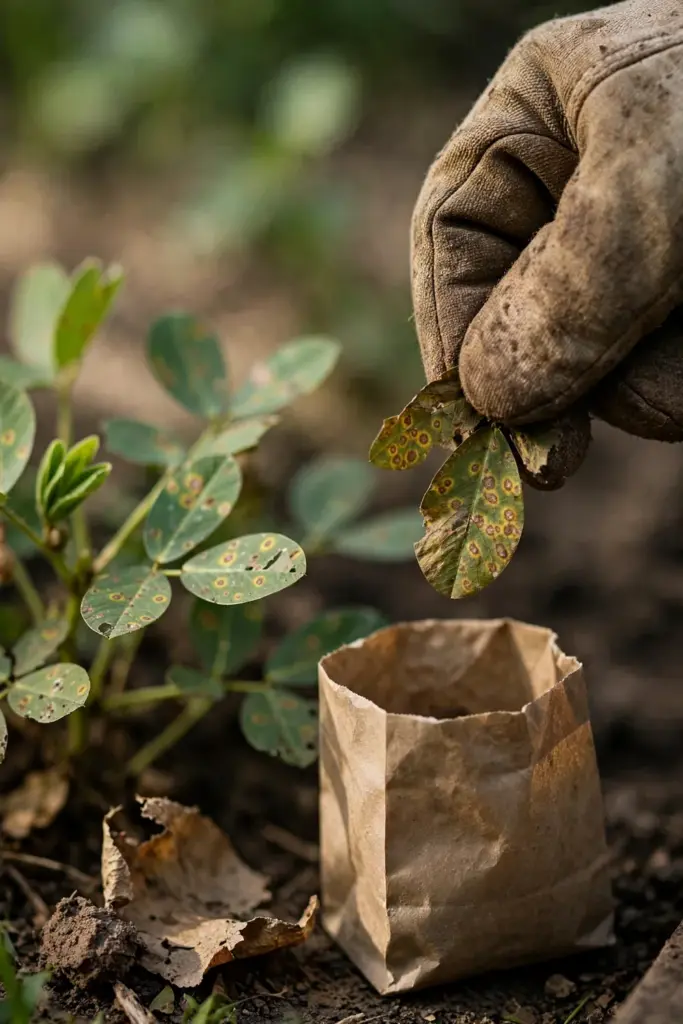
Remove spotted leaves at once. Pick the spotted leaflets, bag them, and put them in municipal waste. Do not compost spotted material: home compost does not reliably kill the fungus, and the pile returns spores to the garden. Burn only where local rules allow it, and default to bag and trash.
Wash up after the inspection. Spores on hands and tools move to the next plant. A quick wash after handling spotted leaves closes the loop. The inspection, the removal, and the wash are one habit, not three.
Way 6: Choose Tolerant Varieties and Plant Early Where Possible
Choose tolerant varieties when they are available. University of Georgia organic-production research found that resistant varieties, such as Georgia-12Y, did well without synthetic fungicides when combined with rotation and early planting. Availability varies by region and year, so check local seed sources. This article does not promise any variety.
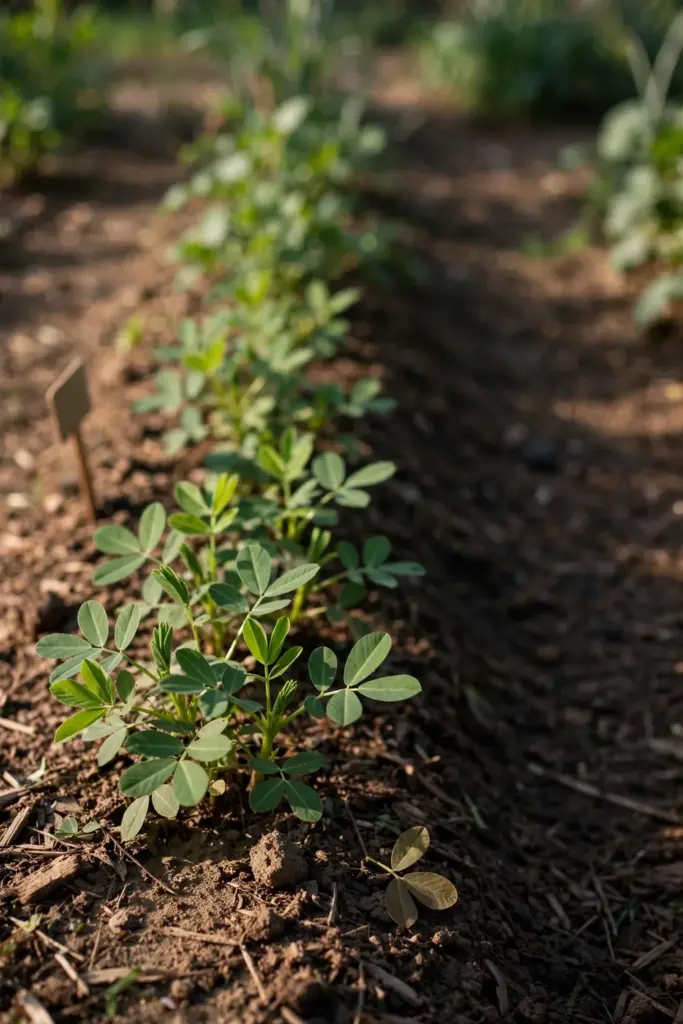
Plant early where the season allows. Early planting dodges the late-season epidemic, because the disease builds through the season. A crop that is well grown before the wettest weeks faces less pressure. Early planting is a small lever, not a guarantee.
Treat variety choice as one lever among seven. No variety is immune. A tolerant variety in a wet, crowded, unrotated bed still gets leaf spot. A susceptible variety in a dry, rotated, well-spaced bed may stay clean. The seven ways work together, and no single one carries the season.
Way 7: Clean Up at Season’s End So Next Year Starts Clean
Collect and remove all crop remains. The fungi survive in crop remains, so the end-of-season cleanup is the start of next season’s prevention. Pull the plants, pick up fallen leaves, and bag the lot. A bed left with peanut debris is a bed seeded with spores.
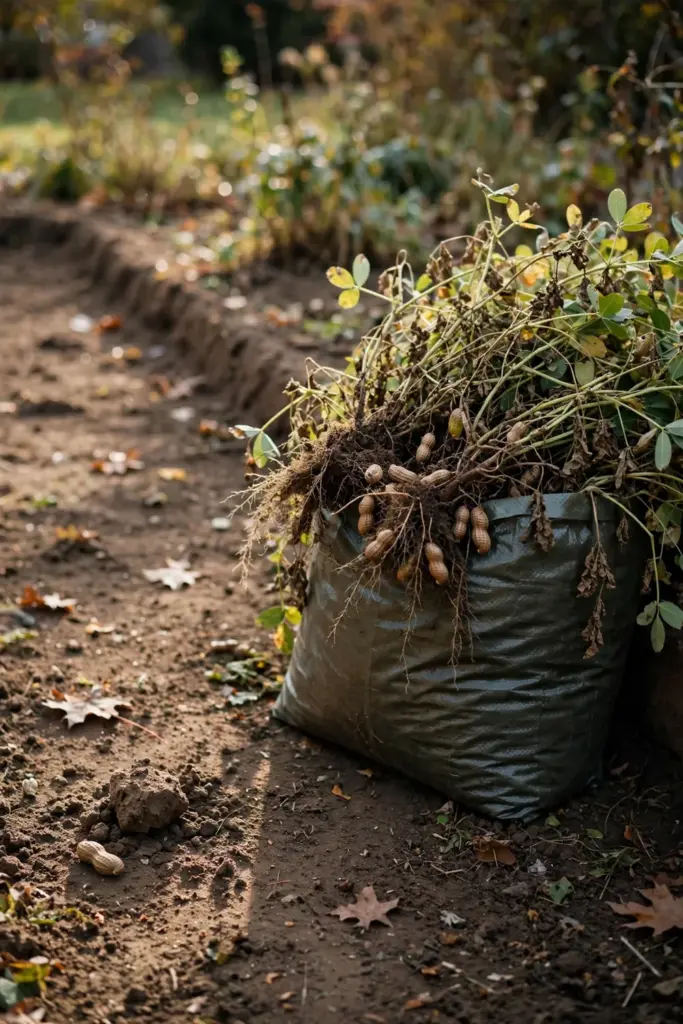
Pull volunteer peanut plants after harvest. Dropped pods sprout volunteers, and volunteers carry the fungus. Pull them through the off season. A volunteer left standing is a bridge between seasons.
Fungicides are the last resort, never the first step. If a home gardener wants a fungicide option, the label governs, and the LSU AgCenter home guide names chlorothalonil and thiophanate methyl, but never run a calendar spray program, never use field rates, and never spray on a schedule, because cultural prevention carries the home garden and the spray bottle stays on the shelf unless the season forces it off.
Living With Early Leaf Spot in a Peanut Patch You Already Grow
A patch with early leaf spot is a patch to manage, not a patch to abandon. Keep inspecting weekly. Keep removing spotted leaves. Keep leaves dry. The disease will still appear in a wet season, but it will appear slowly, and the plants will keep setting pods.
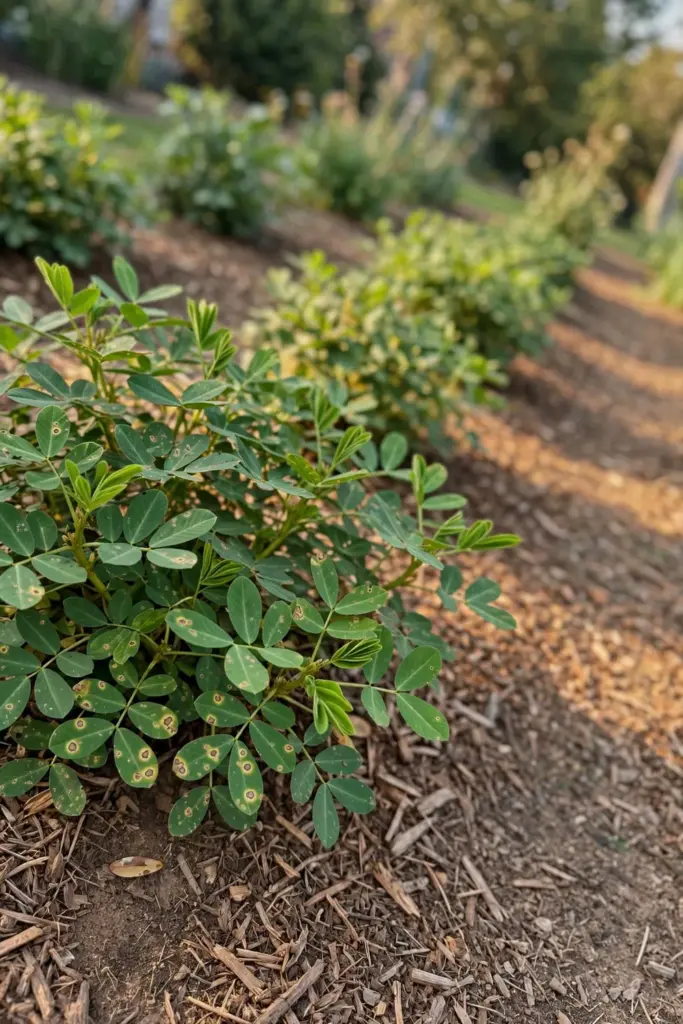
Stop three habits. Do not save seed from spotted plants. Do not compost spotted material. Do not leave peanut debris in the bed over winter. Keep those three lines unbroken and the disease starts each season from a smaller reservoir.
The Plant Care archive collects the site’s disease coverage, and the vegetable growing archive covers the peanut crop as a whole. Neither replaces the seven ways here. Dry leaves, clean seed, and a clean bed carry the season.
Frequently Asked Questions
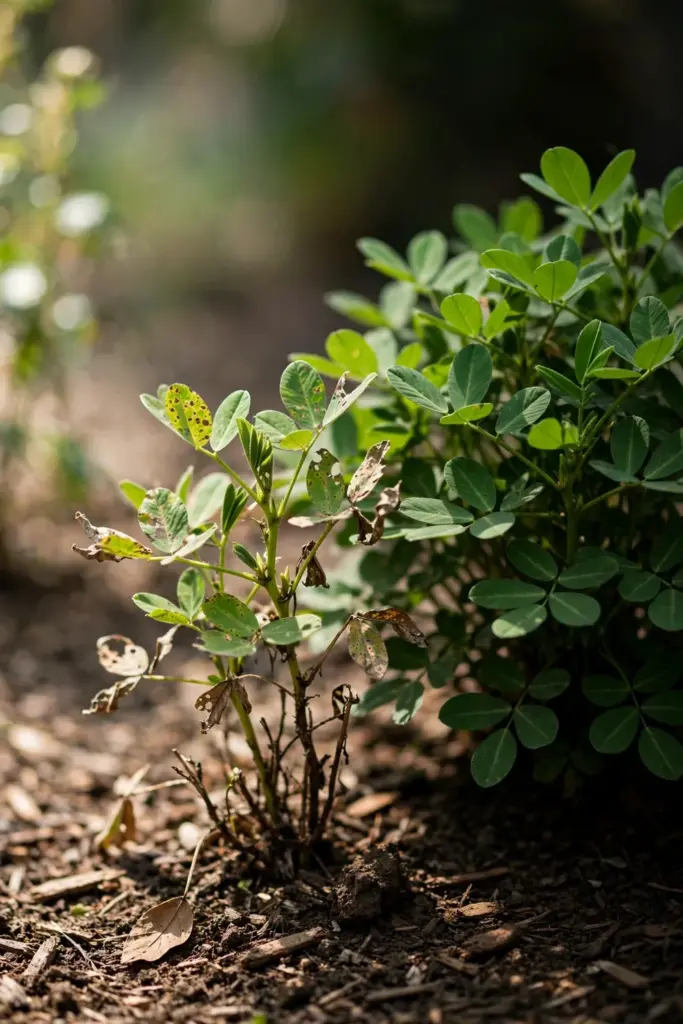
No, not on leaves that already show spots. A spotted leaf stays spotted, and fungicides do not heal it. Control means stopping new infections: remove spotted leaves, keep the rest dry, and clean up at season’s end. The season is saved by prevention, not by cure. A plant that keeps most of its leaves keeps setting pods.
Rarely outright, but it weakens them. Unchecked defoliation strips the plant’s food factory, and weak pegs break at harvest, leaving pods in the ground. A plant that loses most of its leaves before harvest yields little. A plant that keeps most of its leaves, through weekly inspection and removal, yields normally. The difference is the gardener’s response.
Not as a first step. Cultural prevention carries the home garden: clean seed, rotation, dry leaves, weekly removal, and season-end cleanup. If the season forces a fungicide, the label governs, and the choice is a home-garden product, never a field calendar program. Never spray on a schedule. Never use field rates. The spray bottle stays on the shelf unless the season forces it off.
Yes. Early leaf spot is a plant disease, not a human one. Pods from infected plants are safe to eat after washing and normal preparation. The loss is the yield, not your health. Handle the harvest gently where pegs are spotted, since weak pegs break. Discard spotted leaves. The pods are the crop, and the crop stays edible.
Use the three signs together. Early leaf spot gives circular brown lesions with yellow halos and silvery tufts on the upper leaf surface, starting on lower leaves, while nutrient problems pattern between veins, sun scorch starts at edges, and insect damage shows feeding marks. A hand lens settles the tuft question, a microscope settles the rest, and the prevention here works either way.
Where to Go From Here
Early leaf spot rewards the gardener who keeps leaves dry and cleans up. Know the three signs. Start clean, rotate, keep leaves dry, inspect weekly, choose tolerant varieties, and clean up at season’s end.
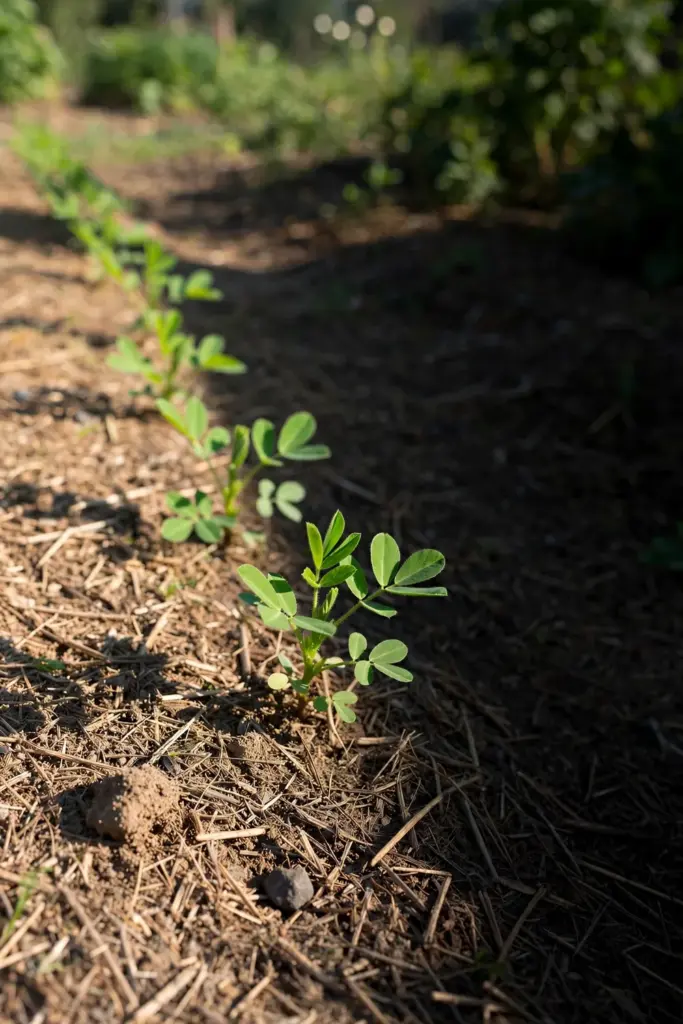
Next season, start clean. Certified seed, fresh mix, a rotated bed, and a weekly leaf check will do more than any product. The Arkansas Extension peanut disease guide is a useful companion for the full disease picture, since it sets the home-garden response here against the Extension evidence behind it.