
Fusicoccum canker has no cure once it enters a blueberry cane. The 9 strategies below save the bush around the infection, starting with the triage call that tells you whether cutting is worth it at all.
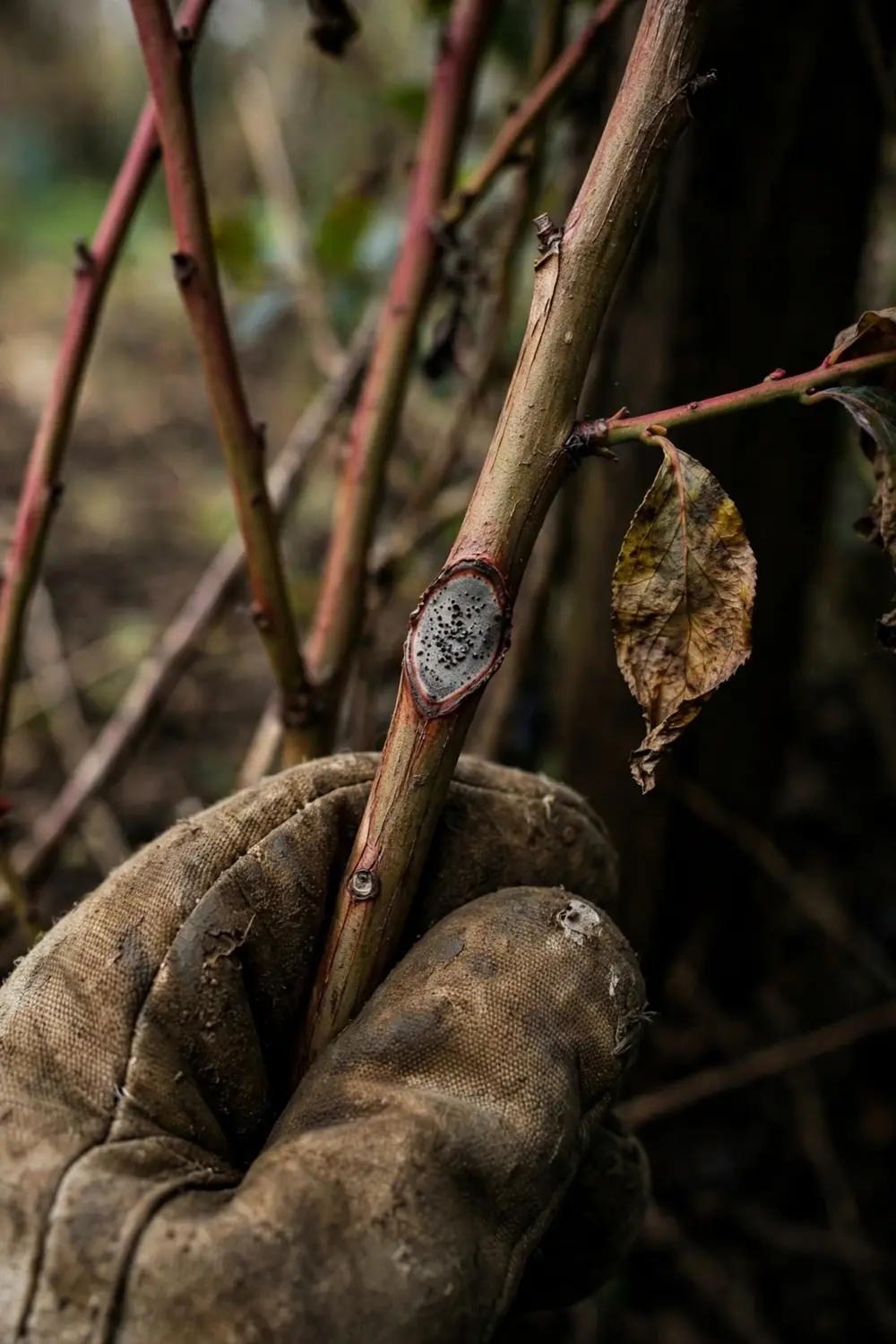
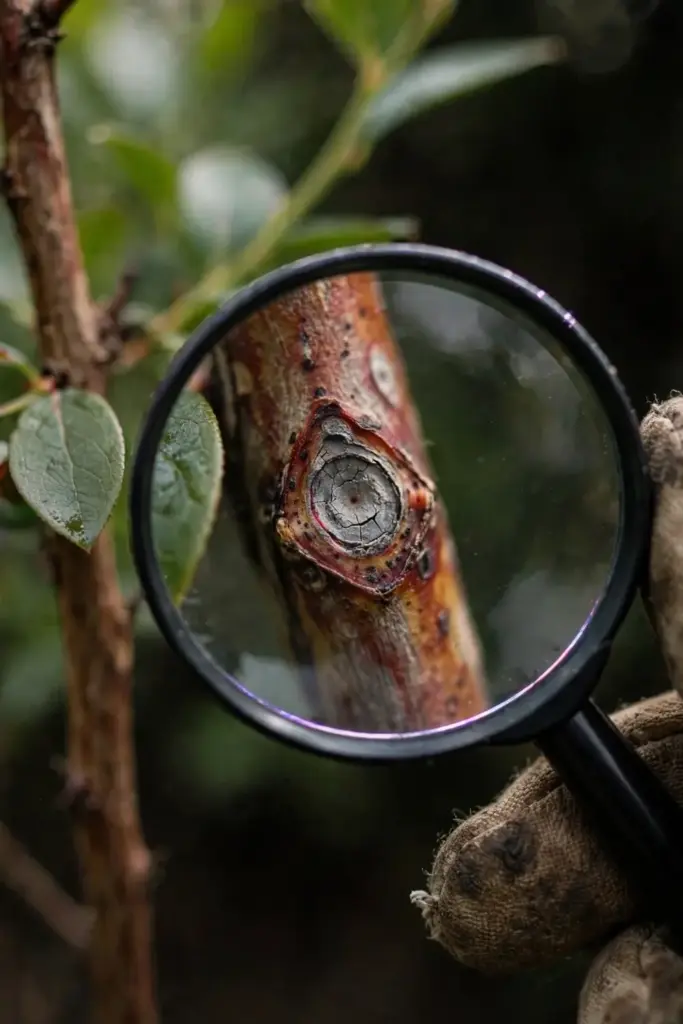
The signature is a bull’s-eye canker on a lower cane. A gray center sits inside a reddish-brown margin, and the cane beyond the canker flags, wilts, and dies with reddish-brown leaves still attached. I have learned that sanitation carries this disease, since no spray cures wood that is already infected.
The rest of this page runs the order a gardener should follow. Identify the disease first, then decide whether the bush is worth treating, then work the 9 steps from the first cut to next-season scouting.
What Fusicoccum Canker Actually Is
Fusicoccum canker is a fungal canker disease of highbush blueberry. One fungus carries two names. Godronia cassandrae is the sexual stage, and Fusicoccum putrefaciens is the asexual stage. The asexual stage drives the disease, and the sexual stage plays little part in spreading it. Growers meet the disease under both names, as Godronia canker and as bull’s-eye canker.
The Pacific Northwest handbook calls fusicoccum canker the most serious canker disease of blueberry in British Columbia. New plantings suffer worst. Established fields stay less serious because only young wood takes infection, though incidence has risen in older fields since the late 1980s.
The name Fusicoccum also turns up on oak, madrone, horse chestnut, pear, peach, and almond. Those cankers come from different Fusicoccum species. This page covers the blueberry disease only.
How to Identify Fusicoccum Canker on Canes and Buds
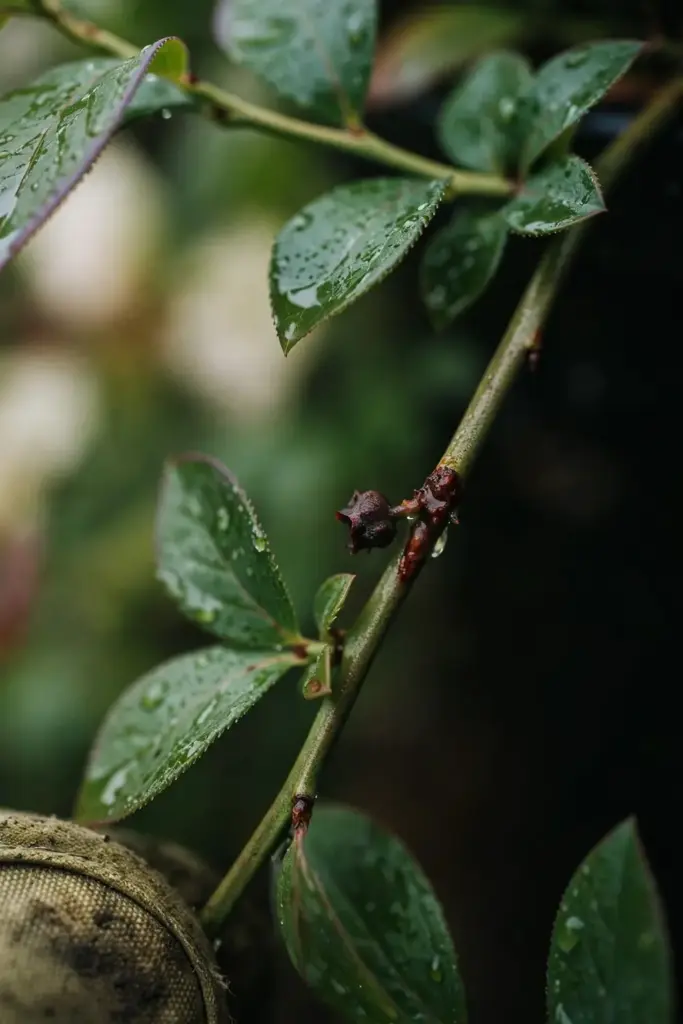
Look for a small watersoaked reddish-brown lesion at a leaf scar, a bud site, or a wound on a young cane in spring. That lesion is the first sign of fusicoccum canker.
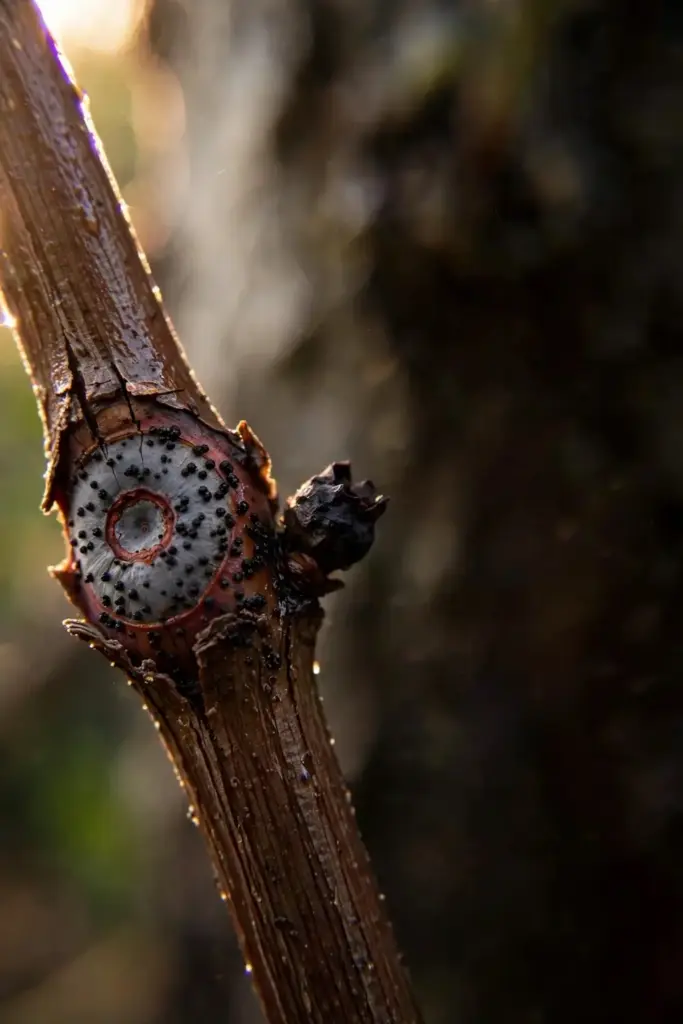
The British Columbia bulletin on Godronia canker of blueberry describes cankers expanding to 1 to 10 cm in length, with gray centers and reddish-brown margins that give a target-like look, and young cankers girdling stems within 8 to 10 weeks. Infected buds turn blighted, brown to dark brown, and dark brown to black fruiting bodies called pycnidia appear on them.
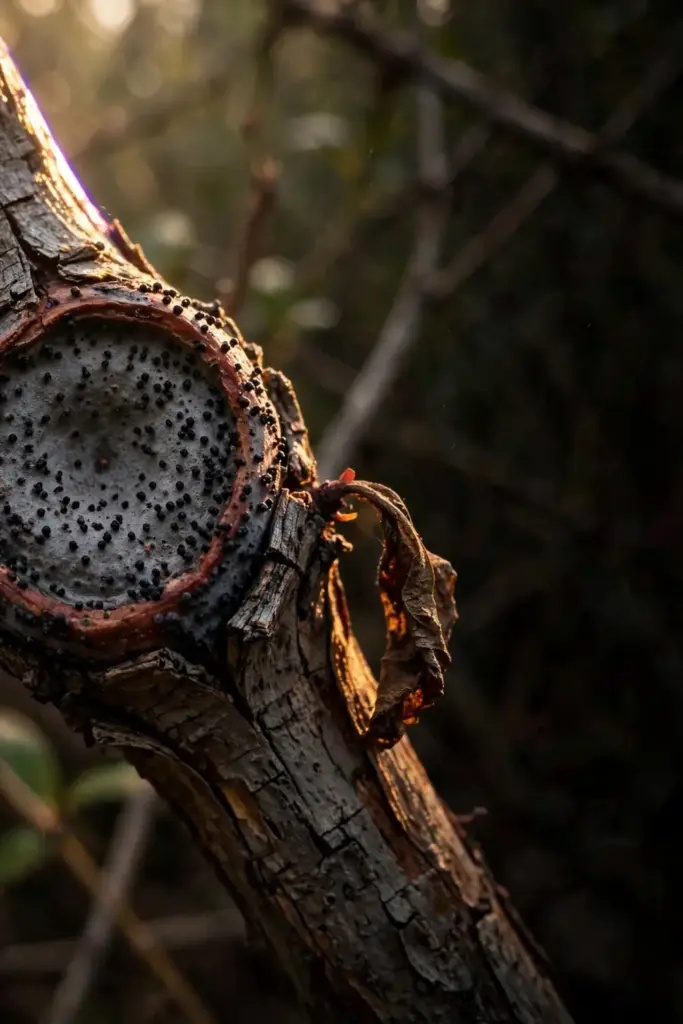
Cankers sit mostly on lower stems near soil level, though cankers also develop on stems well above soil level. Mature cankers carry dark brown to black pinhead-size pycnidia from spring to fall. The Cornell diagnostic tool notes brown interior wood in older canes, and a cane with brown wood inside has an active canker.
Scout for the first lesions in early spring, when buds swell and fresh leaf scars open. Walk the row after rain, since wet bark shows the watersoaked lesions more clearly than dry bark. Check the base of every young cane first, then work up the cane. A lesion found in spring is a cane that can still be cut before the fungus girdles it.
How to Spot Flagging and Dieback on Leaves and Fruit
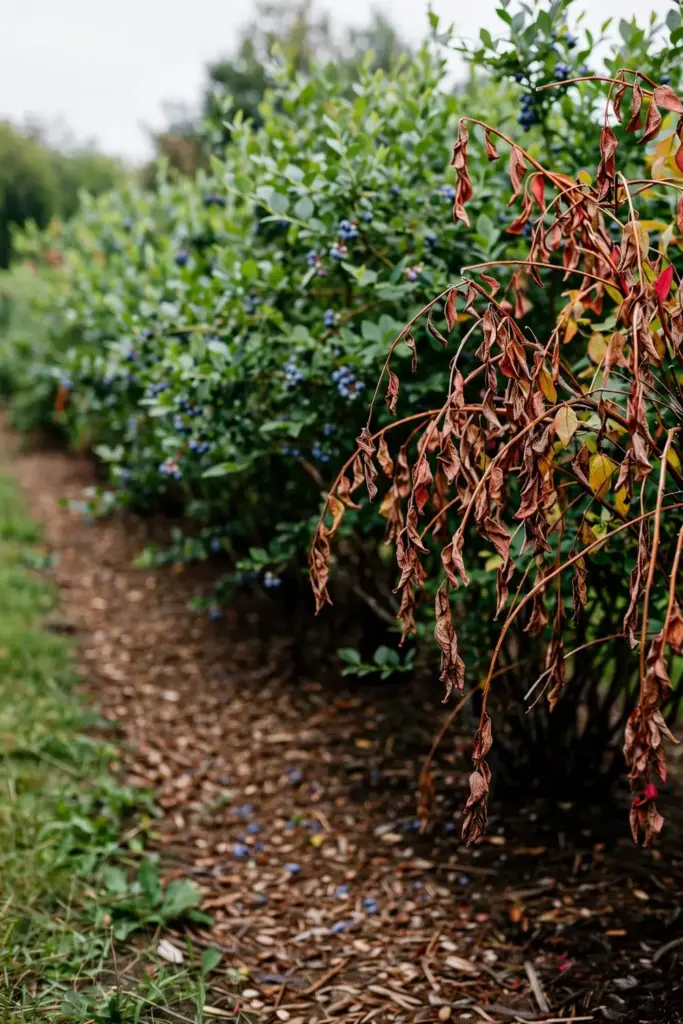
Flagging is the field sign. A cane wilts, its leaves turn reddish-brown, and the leaves stay attached while neighboring canes look healthy.
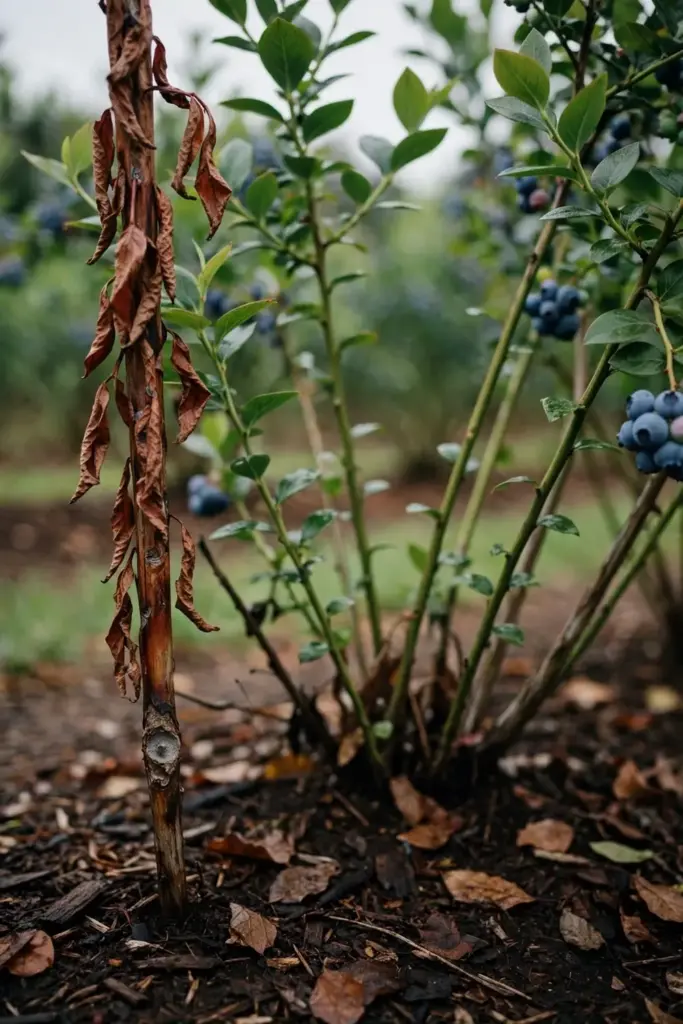
UMass Extension notes that infected leaves turn reddish-chocolate in color and often hang on late into the fall. On warm dry days, shoots wilt suddenly and die because the girdling canker has cut the water supply. The cane beyond the canker dies while the rest of the bush keeps growing.
The fungus infects canes, and Extension descriptions list no fruit infection for this disease. Berries on a girdled cane shrivel from water loss, and yield drops as canes die. Wash berries as usual before eating them. In severe cases the bush weakens year after year, and the plant eventually dies.
Which Blueberry Varieties Get Hit Hardest
Most highbush blueberry varieties take infection. Duke and Liberty take it worst.
The British Columbia bulletin reports that most varieties grown in the Fraser Valley show susceptibility, including Duke, Bluecrop, Draper, and Liberty. Susceptibility varies by variety. Duke and Liberty seem more susceptible than the others. No home test separates a tolerant bush from a susceptible one before planting. Variety choice starts at the nursery.
Treat resistance as a sliding scale, with sanitation doing the work on every variety. A tolerant variety still needs sanitation. Spores land on every bush in wet weather. Ask the nursery supplier about canker-tolerant varieties before buying. Inspect every new plant for cankers before it goes in the ground.
Fusicoccum Canker vs Phomopsis Canker vs Botryosphaeria Stem Canker
Check the entry point first. Fusicoccum canker enters low on the cane with a bull’s-eye lesion. Phomopsis canker enters at the cane tip through winter-injured wood and grows down the cane.
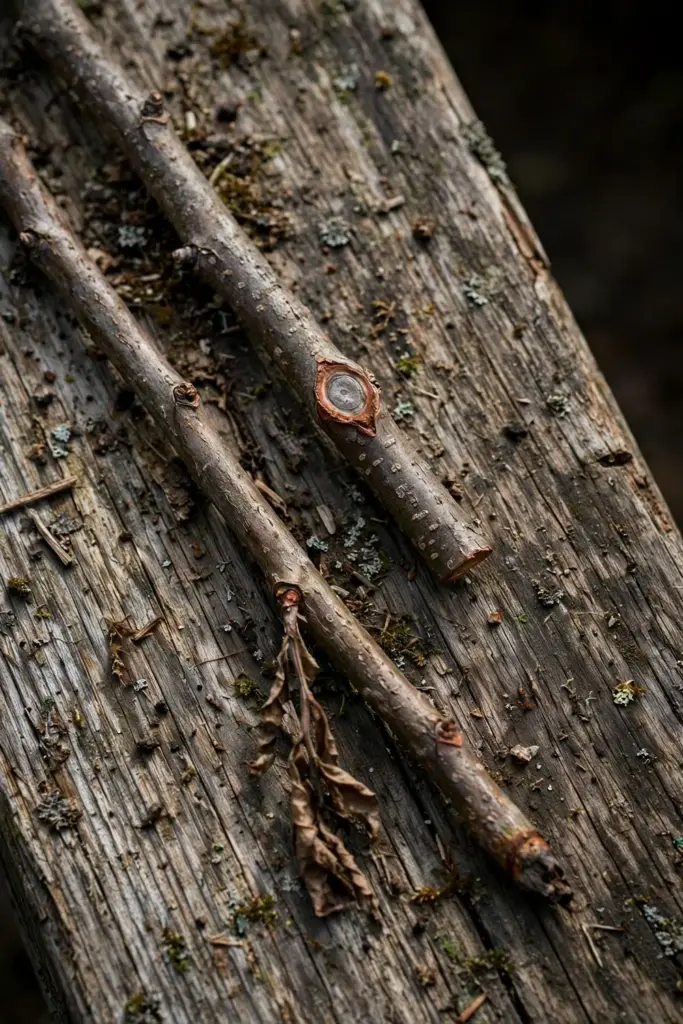
The Cornell Berry Diagnostic Tool page on wilting blueberry canes draws the same contrast. Fusicoccum canker infects the lower portion of canes, with bull’s-eye lesions on young canes. Phomopsis canker infects through winter-injured wood, usually at cane tips, and the canker grows down the cane. Cut into green wood below the dead portion. Brown pith means the canker is still active.
| Sign | Fusicoccum Canker | Phomopsis Canker | Botryosphaeria Stem Canker |
|---|---|---|---|
| Entry point | Lower cane, at leaf scars, bud sites, or wounds | Cane tips, through winter-injured wood | Current-year canes, in summer and fall |
| Canker look | Gray center with a reddish-brown margin, a bull’s-eye | Brown necrotic lesion around a blighted bud, sunken, spreading down the cane | Reddish conical swellings, fissured in the second year, rough and blistered |
| Fruiting bodies | Dark pinhead pycnidia in mature cankers | Small black pycnidia on canker margins | Not the field mark. The swelling shape carries the diagnosis |
| Pathogen | Fungus. Godronia cassandrae, asexual stage Fusicoccum putrefaciens | Fungus. Phomopsis vaccinii | Fungus. Botryosphaeria corticis |
| First move | Prune out infected canes in dry weather. Disinfect tools. Destroy cuttings | Prune out infected twigs. Protect buds at bud break. Reduce overhead water | Prune out and destroy infected branches |
Oregon State Extension describes the Botryosphaeria signs in the table. Reddish conical swellings appear in summer and fall on current-year canes, and the lesions enlarge and turn fissured in the second year, giving the cane a rough, blistered look. The first move is the same. Prune out and destroy infected branches.
The comparison above stays at disease level. Botryosphaeria stem canker on blueberry comes from Botryosphaeria corticis, a different fungus from the one behind fusicoccum canker. Phomopsis canker and Botryosphaeria canker are companion diseases. Each gets its own page. Macrophoma belongs to the same fungal complex, and it gets its own page.
Bacterial cankers behave differently from these three fungal cankers, and they need a different response. The guide to bacterial canker in fruit trees separates bacterial cankers from fungal ones. Mummy berry is a different disease. It starts with blighted shoots from mummies on the ground and ends with shriveled fruit. It gets its own page.
Why Leaf Scars Decide Whether Fusicoccum Canker Takes Hold
Leaf scars are the main door. Spores land on fresh leaf scars and grow into the cane.
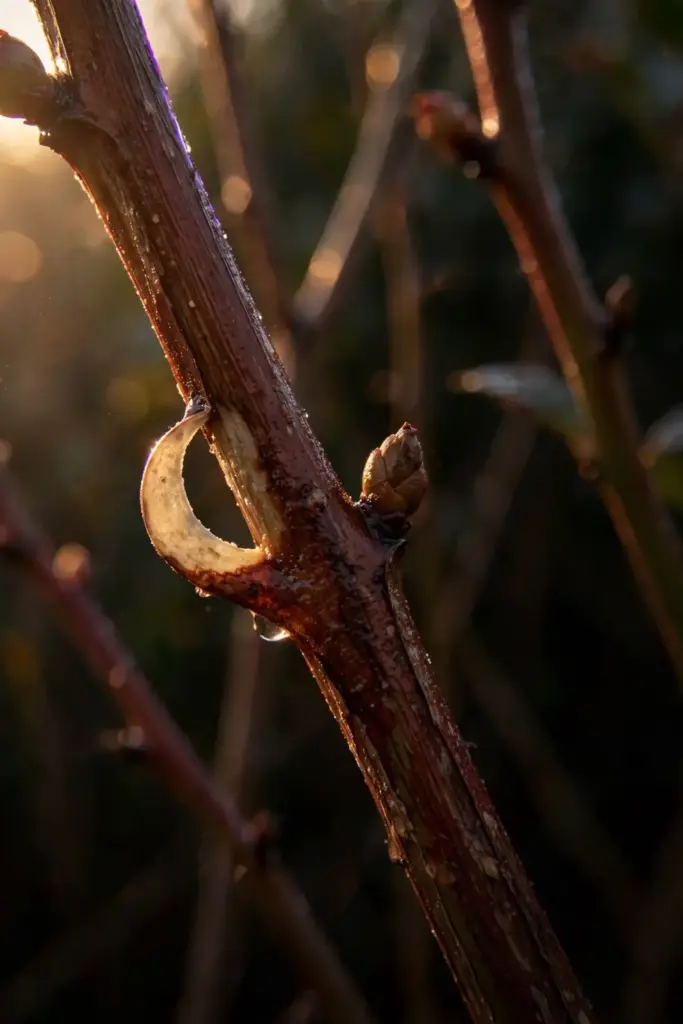
The Pacific Northwest handbook page on fusicoccum canker of blueberry states that conidia infect stems mainly at leaf scars from March through June, with natural openings in bark as secondary sites, and that long cool wet periods are required for infection. Conidia account for nearly all infections and disease spread.
The fungus overwinters in cankers on stems and crowns of infected plants. Conidia release from pycnidia in wet weather and disperse by splashing rain. Spores release from budswell in spring through leaf drop in the fall, and most infections land in spring and fall, when rain showers meet cooler temperatures. The same bulletin puts the active range at 8 to 22 degrees Celsius, with optimum activity around 16 degrees Celsius. Under controlled conditions, conidia need 48 to 54 hours in water to germinate, though host surface factors can shorten the process in the field.
Michigan State Extension notes that wounding is not required for infection. A leaf scar is an opening the plant makes on its own, and the fungus uses it. Cankers enlarge each year until they girdle the stem, and only young wood takes new infection, which is why the disease tracks the newest canes on the bush.
What Makes Fusicoccum Canker Worse in a Home Garden
Cool wet weather makes fusicoccum canker worse. Long wet periods top the list.
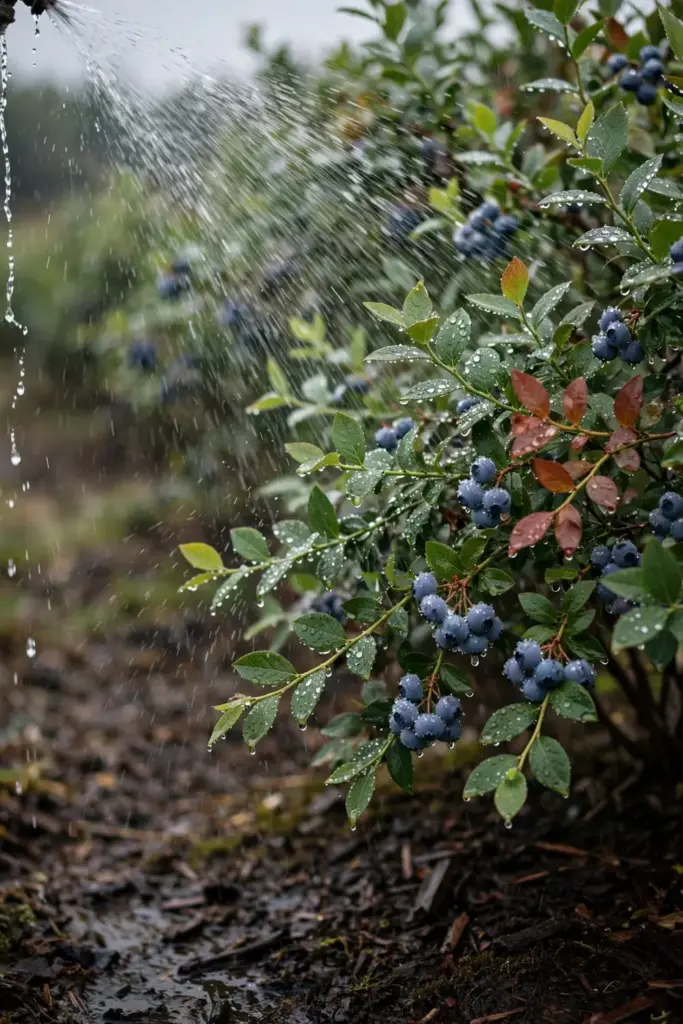
Overhead irrigation splashes spores from canker to cane, and a dense canopy holds moisture on bark and slows drying after rain. A bush that stays wet stays open to infection through every leaf scar. Winter injury adds more entry points, since canker fungi colonize winter-injured wood, and a late frost after a warm spell cracks bark across the bush.
New plantings sit at the top of the risk list. Young bushes carry mostly young wood, and young wood is the wood the fungus infects. A susceptible variety in a wet site collects cankers every year. Dead canes left in the bush hold the fungus through the season and seed the next wound. Infected prunings left on the ground do the same work from below.
Fall leaf drop opens a second infection window. Each fallen leaf leaves a fresh scar, and fall rain showers meet cooler temperatures that suit the fungus. The same bulletin that lists the spring window lists fall as the second peak. A bush that escapes spring infection can still take infection at leaf drop, which is why fall sanitation matters as much as spring sanitation.
The wrong bush in the wrong spot suffers most. A Duke or Liberty bush in a low hollow that holds morning fog collects more wet hours than the same bush on a breezy slope. Site choice is disease control, and it costs nothing after planting day.
Step 1: Decide Whether Treatment Is Worth It
Cut cane cankers. Remove a bush with a girdled crown.
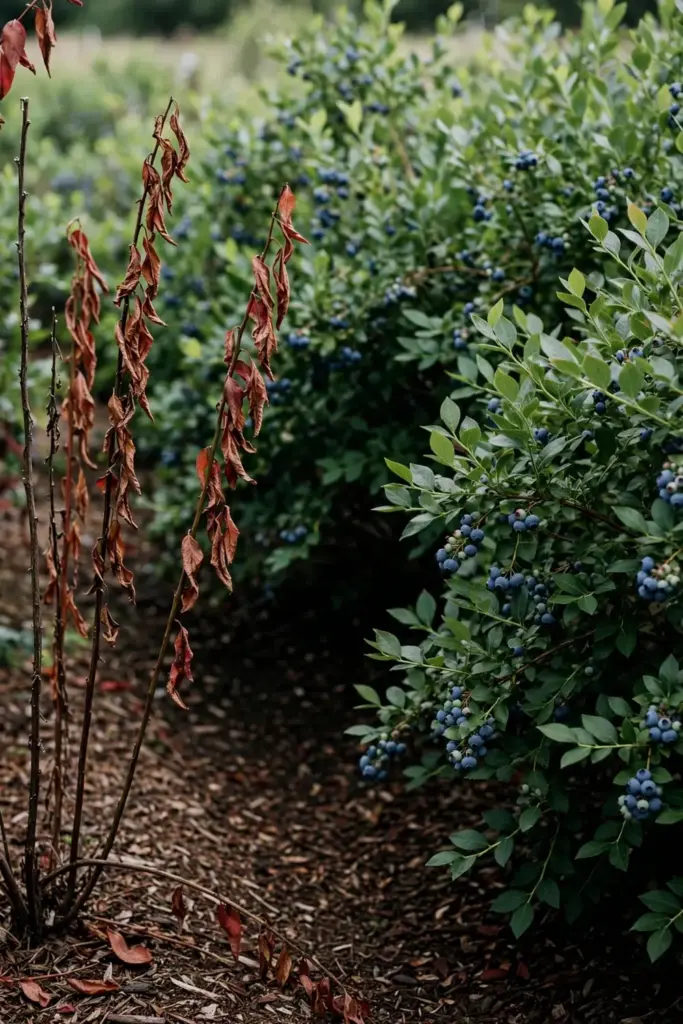
Start with the triage call, before any cut or spray. A cane canker on a vigorous bush is worth treating. Pruning removes the fungus and the cane regrows from the crown. Several cankered canes on one bush are still a prune case, since the crown can push new canes to replace them.
A bush with a girdled crown is a removal case. The fungus has already cut the water supply at the base, and no spray or cut restores it. A weak bush with cankers on most canes is also a removal case. Repeated pruning on a weak bush costs more effort than the bush returns, and the infected wood keeps seeding the rest of the planting. Removal ends the inoculum in one move.
There is no cure for fusicoccum canker, and no spray restores infected wood. Every hour goes to removing fungus and protecting healthy wood. Make the triage call first, then spend the effort where it pays. Scout neighboring bushes with extra care, since the same wet weather hits every bush in the row.
A bush that loses two canes still fruits on the rest. A bush that loses half its canes fruits lightly for a season while the crown rebuilds. The triage call is a yield call as much as a disease call, and a bush with a healthy crown earns another season.
Step 2: Prune Out Infected Canes in Dry Weather
Cut infected canes at ground level on a dry day. Canes grow back from the crown.
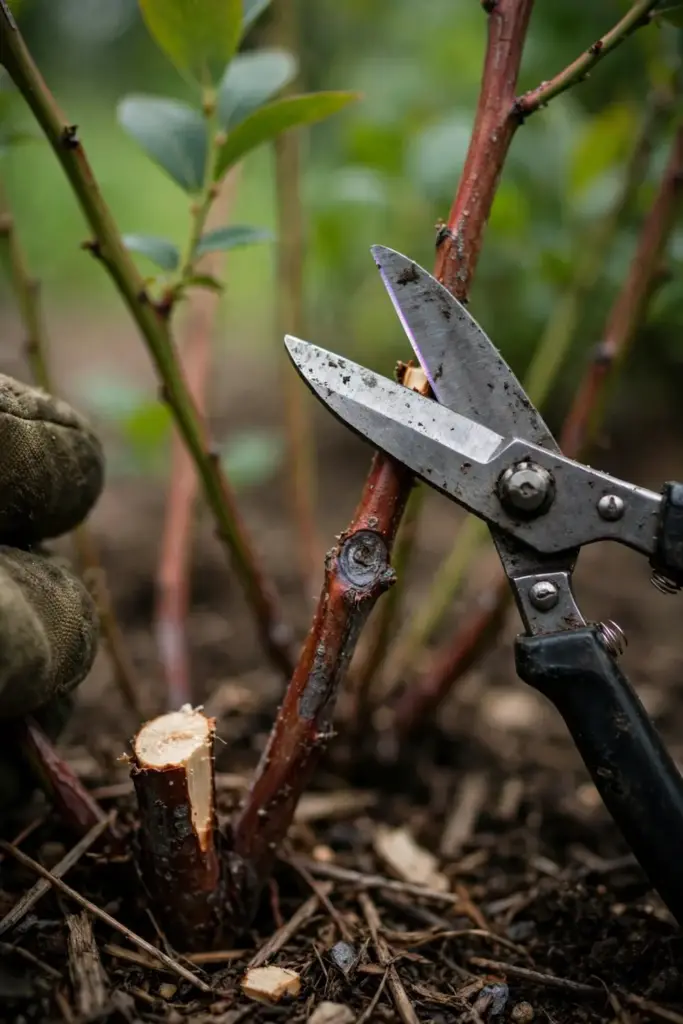
Cut the whole cane, since the fungus often runs ahead of the visible lesion. A short stub above a canker leaves infected wood behind, and the canker keeps advancing from the stub. Cut at ground level, where the cane meets the crown, and carry the cutting out of the planting as you go.
Check the cut face. Cream-colored wood with green cambium means a clean cut. Brown pith means the canker is still active below the cut. On a cane canker, a brown cut face means cutting lower, and on a crown canker it means the bush is a removal case. Work from the healthiest bush toward the sickest bush, so the blade carries less fungus to the next cut.
Step 3: Disinfect Tools Between Every Cut
Disinfect the blade between every cut. A dirty blade carries spores to the next cane.
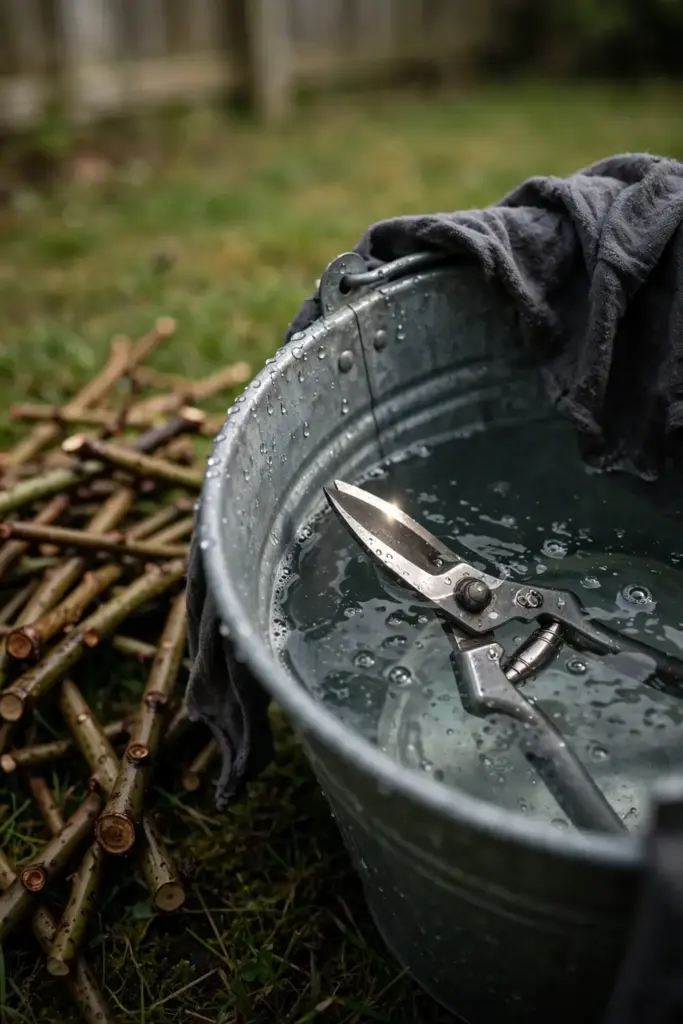
Spray or wipe the blade with disinfectant after each cut, and let it sit briefly before the next cut. Scrub sap and resin off the blade first, since disinfectant cannot reach spores under a layer of sap. Carry two tools when the job is large. One tool soaks in disinfectant while the other cuts.
Bleach corrodes steel, so rinse and oil tools after a pruning session when bleach is the disinfectant. Alcohol leaves no residue and needs no rinse. A spray bottle of alcohol works for quick disinfection between cuts.
A dirty blade undoes a clean cut. One unsterilized cut can carry the fungus from an infected cane to a healthy cane on the same bush. The short soak is the cheapest insurance in the whole routine.
Step 4: Destroy Every Cutting and Fallen Cane
Bag or bin every cutting the day you prune. Dead wood left in the bush keeps the fungus alive.
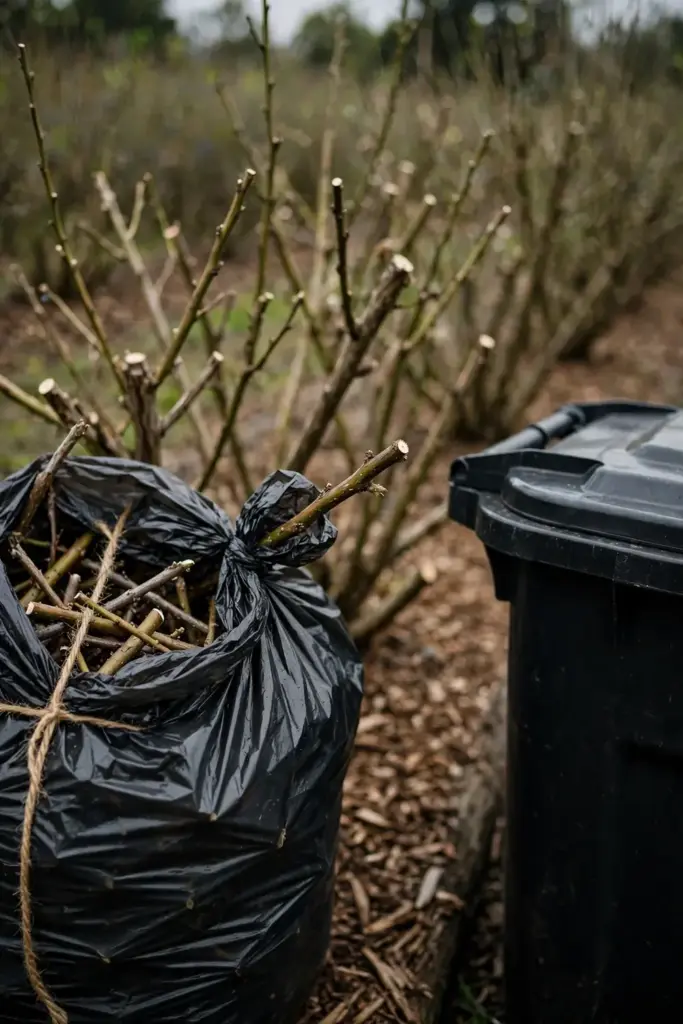
The fungus overwinters in cankers, so a pile of infected prunings under the bush feeds new spores all season. Bag the cuttings and send them out with household trash. Burn them where burning is legal and safe. Do not compost infected wood, and do not chip it into mulch for the same garden.
Pick up fallen canes from under infected bushes. Rake the ground clean under the canopy after a heavy prune. Dead canes still standing in the bush come down in the same session. A clean bush holds less fungus, and a clean floor gives spores nowhere to wait.
Clean tools at the end of the session. Wash blades, disinfect once more, dry, and oil. Store tools dry so the next cut starts clean.
Step 5: Time Pruning to Dry Weather and the Right Season
Prune in dry weather. The dormant season carries the main pruning session.
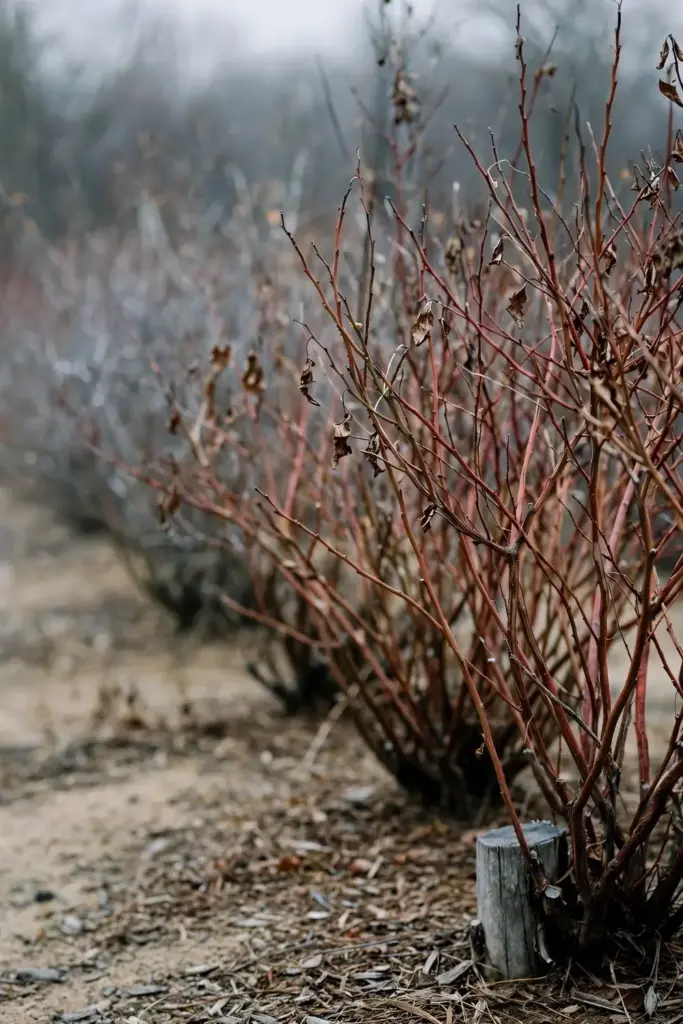
Cut infected canes as soon as you find them in dry weather, since waiting lets the fungus advance and seed new wounds. Save renewal pruning for the dormant season, when leaf scars are old and the bush shows its cane ages clearly. Wait for a stretch of dry days before any pruning session, and stop when rain starts.
The guide to spring pruning techniques covers clean cuts for healthy bushes, and the same cut discipline applies to infected wood. Cut to the crown, never leave a stub, and keep the blade clean between cuts.
Avoid wounding bushes that are growing poorly. A weak bush heals slowly and walls off fungus slowly. Postpone shaping on a weak bush until the bush regains vigor. Every wound you avoid is one infection that never starts, and the count adds up across a season.
Step 6: Water at the Base and Open the Canopy for Fast Drying
Water at the base. Overhead water splashes spores from canker to cane.
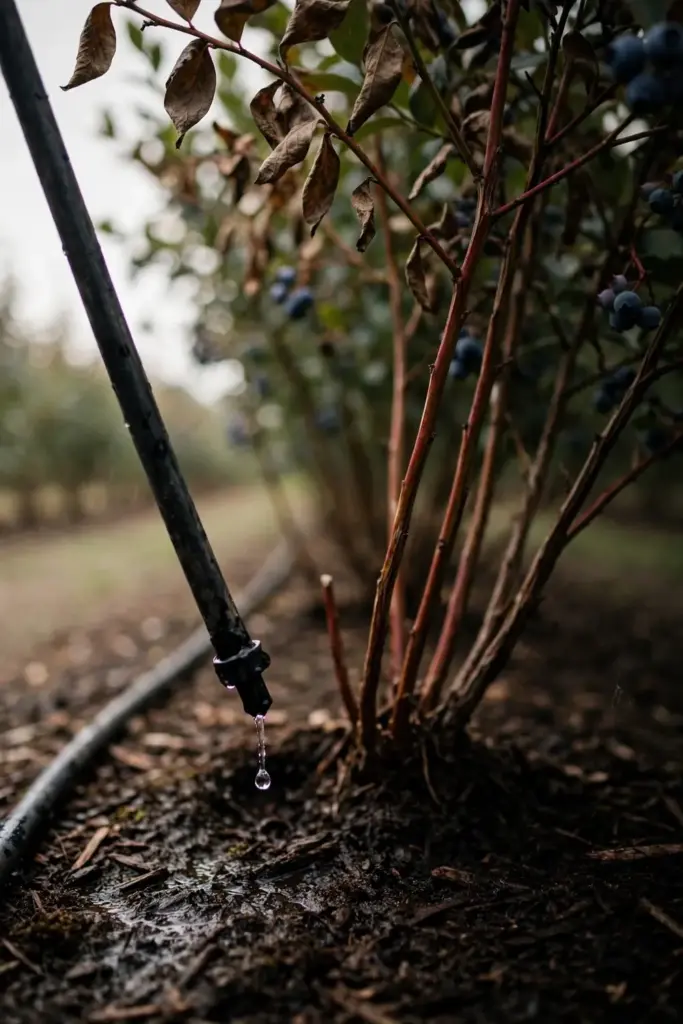
Drip lines and soaker hoses put water on the root zone without wetting the canes. When overhead water is the only option, water early in the morning so foliage dries fast. Evening overhead watering leaves canes wet overnight, and wet canes stay open to infection through the night.
Thin crowded canes. Air moves through an open bush, and foliage dries fast after rain. Remove crossing canes, low canes that drag on mulch, and weak shoots that shade the center. An open bush dries in hours. A dense bush stays damp past noon.
Space new bushes for airflow at planting time. A row that dries fast after rain needs fewer cuts later, and a tight row holds moisture on every cane. Leave room to walk the row with shears, since a row you cannot walk is a row you cannot scout.
Keep mulch under the bush but off the crown. Mulch holds moisture in the root zone and keeps soil off low canes. Mulch piled against the crown holds moisture on bark and rots it.
Step 7: Feed for Vigor Without Forcing Soft Growth
A vigorous bush walls off canker faster than a starved bush. Feed for vigor, and stop short of forcing soft growth.
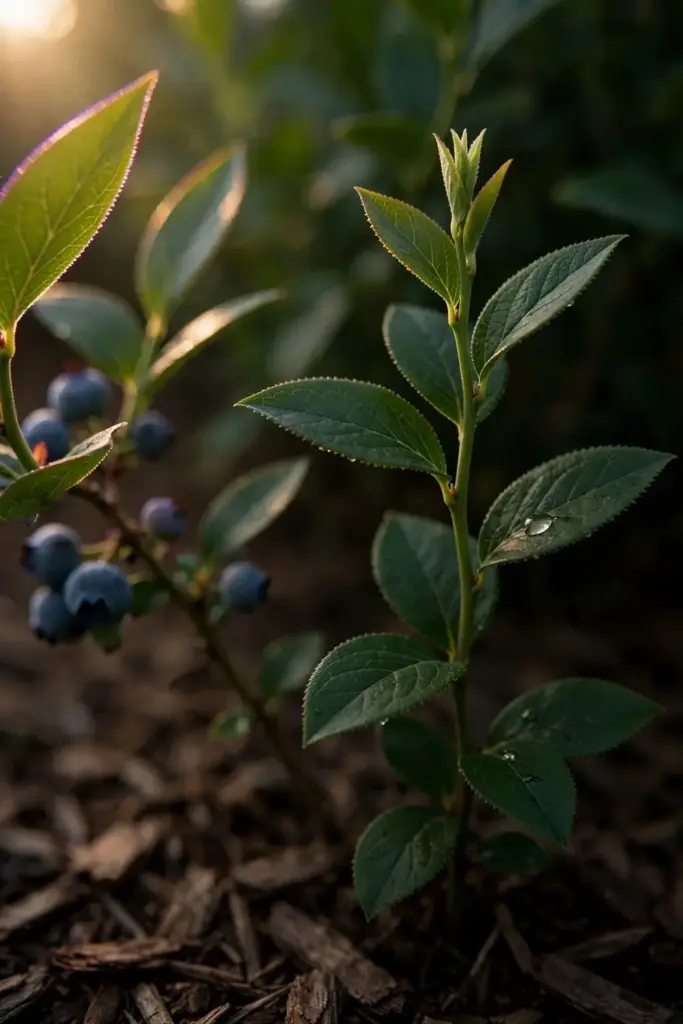
Blueberries need acid soil, and the UConn pruning guide puts the target at pH 4.5 to 5.0. Test the soil before feeding, since a bush in soil outside that band cannot take up nutrients well no matter how much fertilizer goes down. The notes on building soil health cover the soil basics that grow vigor without forcing soft growth.
Feed a bush that shows pale leaves and short shoots. Skip fertilizer on a bush that already grows well, since extra nitrogen pushes soft growth that wounds easily. Soft growth carries thin bark, and thin bark takes infection more readily than hardened wood.
Vigor is not a cure, and it never replaces pruning. Vigor buys time, and time lets the bush push new canes from the crown. Pruning removes the fungus. Vigor closes the door behind it.
Step 8: Use Protective Sprays Only Where They Fit
No spray cures fusicoccum canker. Sprays only protect healthy wood from new infection.
The British Columbia bulletin states that no fungicide is currently registered for controlling fusicoccum canker. The same bulletin notes that fungicides used for mummy berry, phomopsis, botrytis, and anthracnose may protect from early-season infection. Oregon State Extension notes that spring management of other blueberry diseases may indirectly control this disease.
Read the label and follow it. Spray only on the schedule the label allows, and never spray a canopy you cannot reach safely from the ground. Commercial per-acre spray programs sit outside the home garden, and no home routine needs one.
The home routine is pruning and sanitation. A spray program aimed at other blueberry diseases may pull double duty in spring. A spray program aimed at fusicoccum canker alone wastes money, since no registered product targets this disease.
Step 9: Scout Again, Renew Old Canes, and Replant With Tolerant Varieties
Scout the bush again next season. New cankers mean the fungus survived.
The UConn Extension blueberry pruning guide sets the renewal frame. A mature bush carries around 18 canes, with no cane older than 6 years, and the yearly routine removes the 3 oldest canes and keeps 3 new vigorous canes to replace them. Renewal pruning on an overgrown bush removes at least one-third of the canes, and up to all of them, with soil pH held at 4.5 to 5.0.
Mark treated canes with flagging tape, so next-year scouting compares the same canes. Check old canker sites for clean wood, and check the whole bush for fresh lesions in spring. When cankers return on the same cane, cut further back or remove the cane. A canker that returns twice on one cane means the fungus runs deeper than the first cut reached.
Replant with certified healthy planting material, and do not use plants with injured branches. Choose tolerant varieties for new plantings, and keep Duke and Liberty out of wet sites where the disease already struck. Good stock costs more than a bargain bush, and it carries no canker into the row.
Living With Fusicoccum Canker Damage You Cannot Prune Out
A crown canker is a live-with-it case. Monitor the bush and manage the loss.
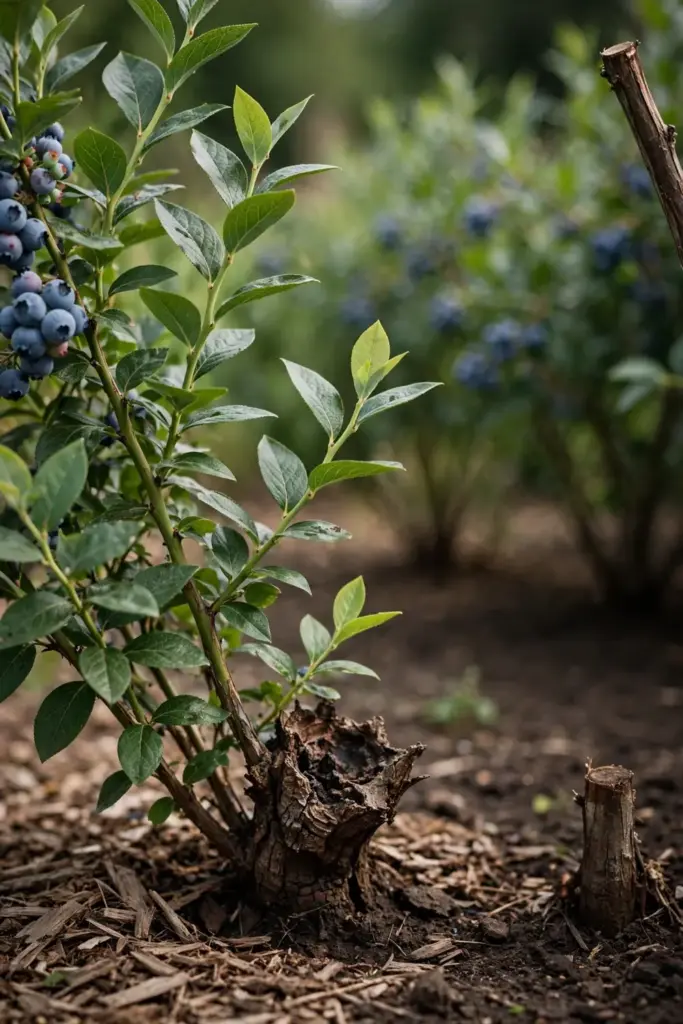
A bush with a few cankered canes keeps fruiting on healthy canes. Remove dead canes each dormant season, water at the base, and let the crown push replacements. Yield drops while the bush rebuilds, and the bush recovers over two or three seasons when the crown stays healthy.
Remove the bush when the crown is girdled, most canes are dead, or the bush stops sending up new canes. Do not take cuttings from an infected bush, since propagation from infected wood spreads the fungus to new plants. Removal is a decision, and it is a sound one.
Frequently Asked Questions
Branch cankers rarely kill an established bush. The bush pushes new canes from the crown and keeps fruiting. A crown canker kills the bush when the canker girdles the crown and cuts the water supply to every cane. Young bushes suffer worst, since a crown canker girdles a small crown fast. Treat cane cankers early and monitor crown cankers every year.
Check the entry point first. Fusicoccum canker enters low on the cane with a bull’s-eye lesion, a gray center inside a reddish-brown margin. Phomopsis canker enters at the cane tip through winter-injured wood and grows down the cane. Cut into green wood below the dead portion. Brown pith means the canker is still active. When the signs stay unclear, send a sample to a diagnostic clinic before cutting.
No spray cures fusicoccum canker. Fungicides only protect healthy wood from new infection. No fungicide is currently registered for controlling this disease. Fungicides used for mummy berry, phomopsis, botrytis, and anthracnose may protect from early-season infection. Pruning and sanitation carry the real control, and a spray program aimed at this disease alone wastes money.
Yes, with normal washing. Fusicoccum canker infects canes, and Extension descriptions list no fruit infection for this disease. Berries on a girdled cane shrivel from water loss, so pick from healthy canes where possible. Wash berries as usual before eating them. Discard shriveled fruit. Do not store it beside sound fruit, since storage rot spreads in the bin.
Cut the whole cane at ground level. Fusicoccum canker runs ahead of the visible lesion, so a short stub above a canker leaves infected wood behind. Check the cut face for clean cream-colored wood. Brown pith means the canker is still active below the cut. On a cane canker, cut lower. On a crown canker, the bush is a removal case.
No variety is fully immune. Duke and Liberty show the highest susceptibility. Most highbush varieties show some susceptibility, and the degree varies from variety to variety. Choose tolerant varieties for new plantings, and ask the nursery supplier about canker-tolerant stock. A tolerant variety still needs sanitation, since spores land on every bush in wet weather.
Where to Go From Here
Start with one walk around the bush. Mark every canker, then cut on the next dry day.
Identify first, then decide, then cut. Prune infected canes in dry weather, disinfect tools between cuts, and destroy every cutting the day you prune. Water at the base, renew old canes each year, and scout the bush again next season.
The bush that survives fusicoccum canker is the bush with fewer wounds and faster drying. Give it both. One clean pruning session on a dry day does more than any spray, and next-year scouting catches what the first session missed.