
Blackberry rosette cannot be cured. A patch that shows doubled-looking blossoms and broom-like shoots will not produce berries on those canes, and no spray reverses that. The 6 ways below keep the disease out of a backyard patch and keep its spread down, and they work because this fungus travels in wild brambles, in infected buds, and on wind-blown spores from infected flowers.
The first fact to hold is the name. Rosette disease is also called double blossom disease, and this article uses both names together. The bare phrase double blossom on its own means something else to most gardeners: double-flowered blooms on cherry, hibiscus, impatiens, and tulips. This article is about the blackberry disease only, never about double flowers. I have learned that a gardener who names the disease right, blackberry rosette, avoids the most common confusion about it from the start.
The rest of this page walks the identification, the 6 prevention moves, and the lookalikes that are not this disease. The disease name leads. The pathogen, Cercosporella rubi, stays in the background after this introduction.
What Blackberry Rosette (Double Blossom) Actually Is
Blackberry rosette is a fungal disease of blackberry and dewberry. The pathogen is Cercosporella rubi, with the synonyms Fusisporium rubi and Ramularia rubi. The fungus runs a biennial cycle that matches the blackberry growth pattern. It attacks primocanes in spring, overwinters in dormant buds, and the infected canes develop symptoms the following year on the floricanes.
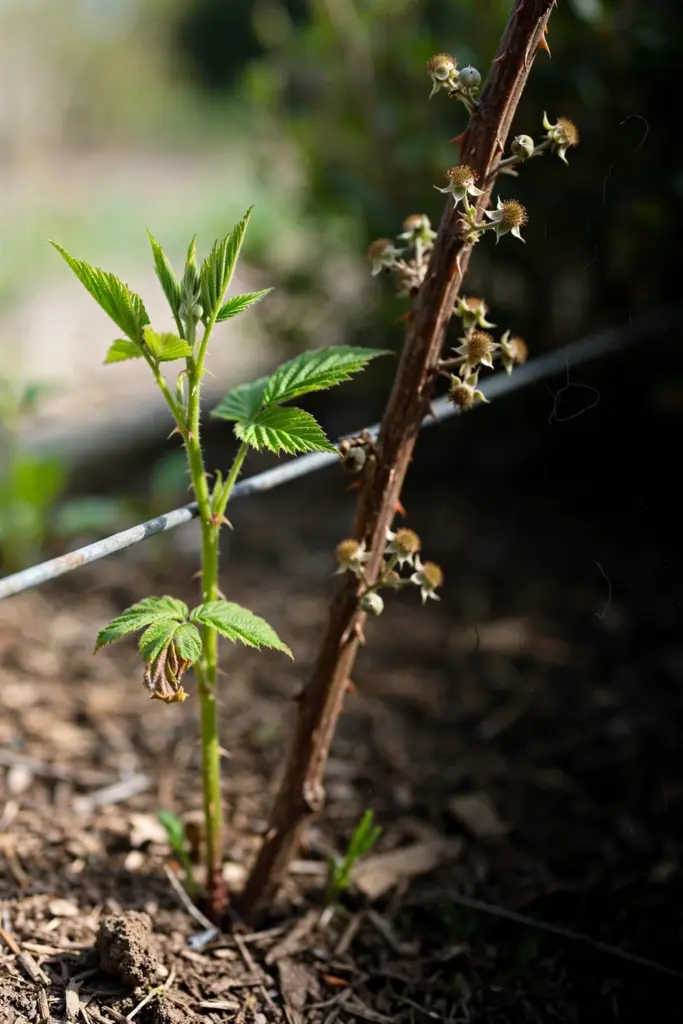
The fungus is not systemic. It lives in the infected buds and the side stems they produce, not throughout the whole plant. That single fact shapes the whole response: only the symptomatic side stems need removal, and clean root cuttings or bare-root stock stay clean because the fungus is not known to live in roots.
The disease is not curable. Arkansas Extension states it plainly, and the USDA Agricultural Research Service adds the timing: fungicides prevent primocane infection but will not stop symptom development on current-year fruiting canes, with about a 9-month delay before any evidence of control. A patch with rosette is managed, never cured.
Geography sets the risk. Blackberry rosette is a southeastern United States disease, from New Jersey to Illinois to Texas and southward. A blackberry patch outside that range faces a different disease list. The hosts stay narrow: blackberry and dewberry. The LSU AgCenter states that in the United States the disease has not been reported on raspberry, boysenberry, or tayberry. This article scopes to blackberry and dewberry only.
How to Spot Blackberry Rosette in a Backyard Patch
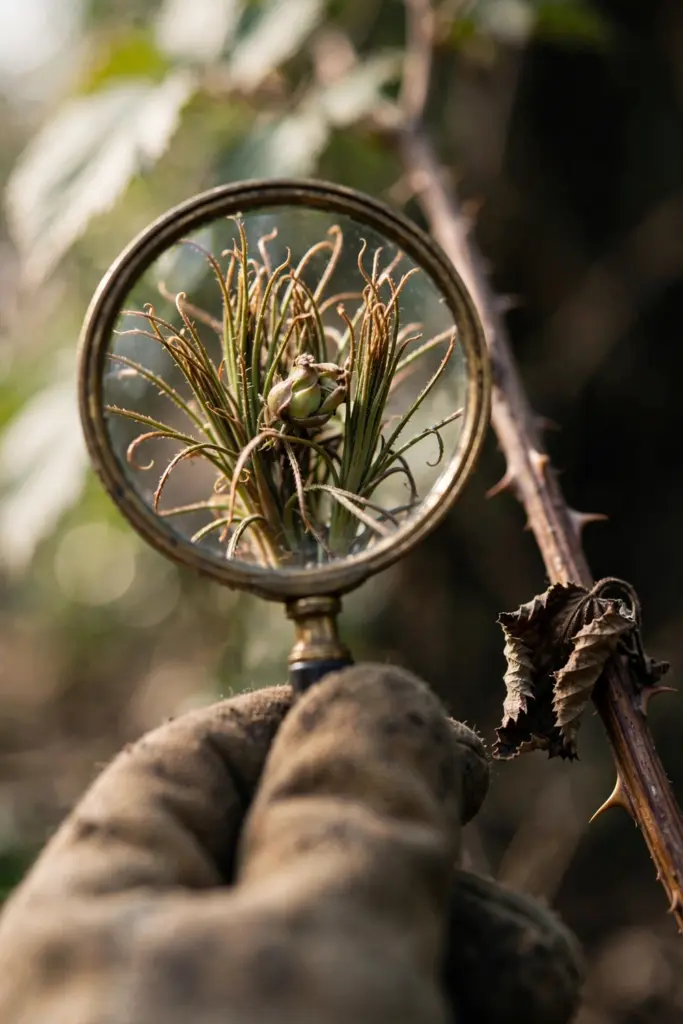
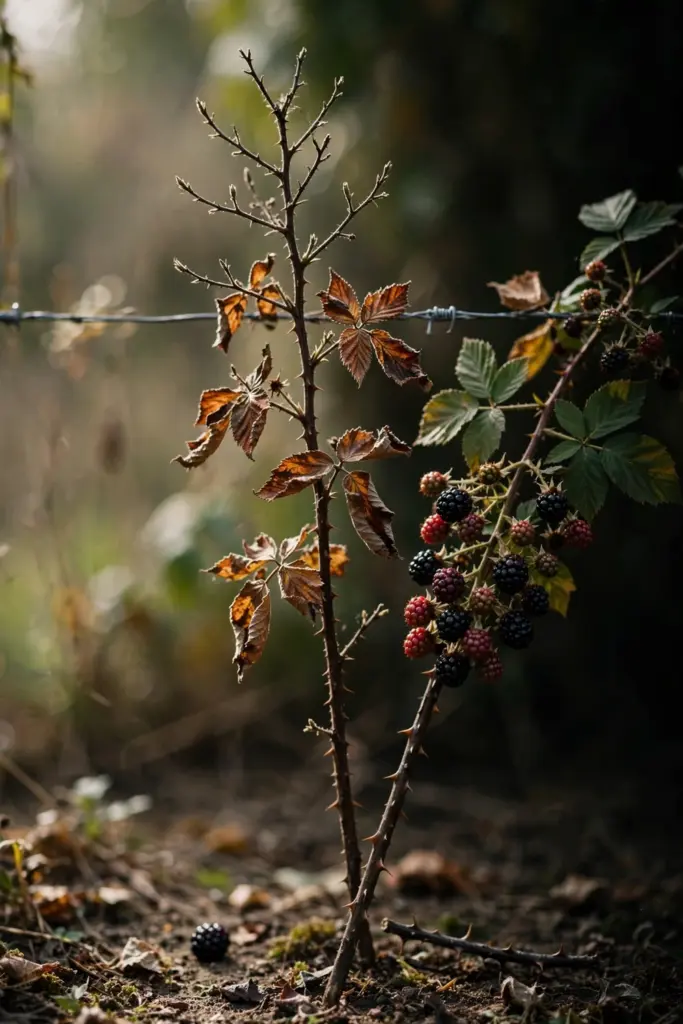
Rosette shows first as witches’-broom shoot proliferation. Infected buds give rise to a cluster of small shoots instead of one fruiting lateral. The shoots run short, light green to bronze, with undeveloped string-like leaves. A cane tip that looks like a broom instead of a branch is the first warning.
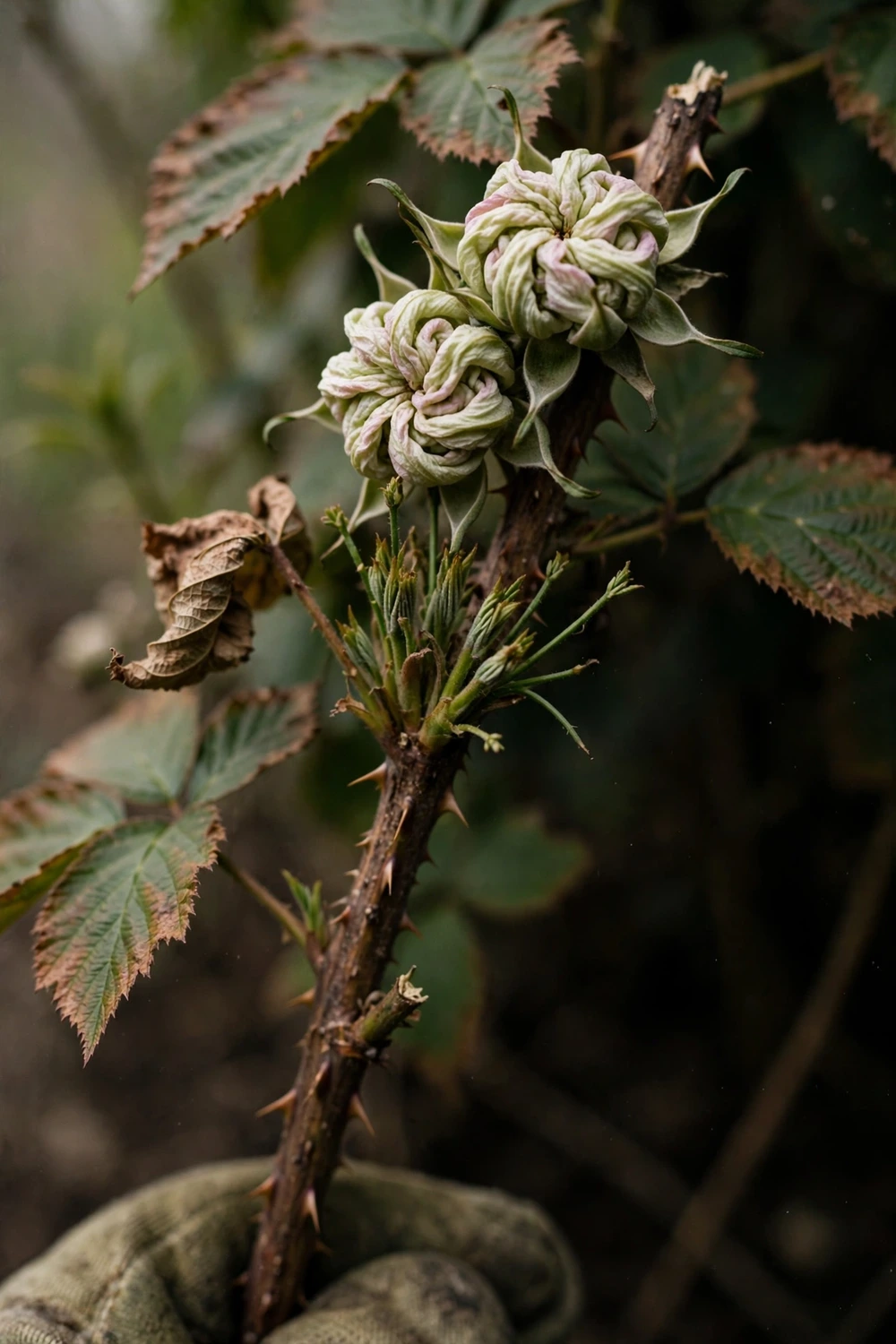
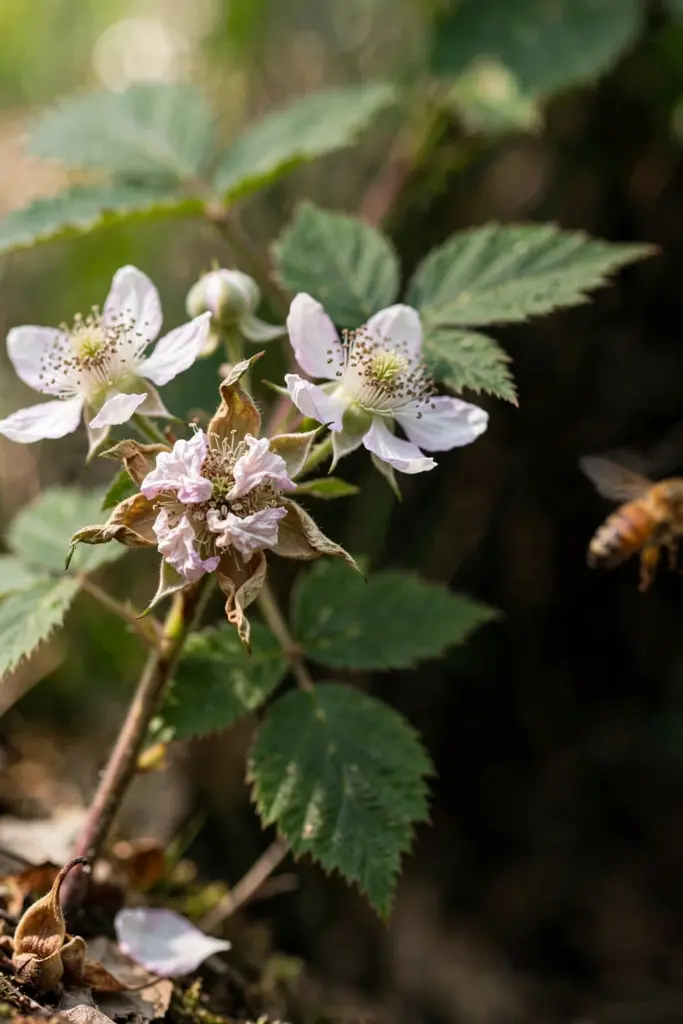
The blossoms give the disease its second name. Infected flower buds produce distorted, doubled-looking blossoms with wrinkled and twisted petals, enlarged sepals, and brown pistils. The flowers look doubled because the sepals swell and the petals deform. Fruit does not develop from these blossoms. A cane full of doubled blossoms and no berries is a cane with rosette.
Leaves bronze and canes go barren. Young leaves start light green and turn yellowish-brown, giving a bronzed look. Diseased canes produce no berries, and berry production on noninfected canes runs small and poor. Excessive thorniness can accompany the infection. A patch that yields nothing on some canes while others crop normally deserves a close look at the barren canes.
Symptoms often go unnoticed until about year four, when a large share of plants suddenly shows infection. The USDA Agricultural Research Service records that pattern: bud infections stay symptomless until buds break dormancy the following spring, and a new planting can look clean for years before the disease appears across it at once. A patch that was clean last year is not proof against rosette this year.
Way 1: Know the Signs Early, Before the Patch Fills With Brooms
Walk the patch at bloom and look at the flowers, not the leaves. Doubled-looking blossoms with twisted petals and enlarged sepals are the clearest early sign, and a flower that looks doubled is a flower that will not fruit. Mark the cane, and check the rest of the patch the same day.
Check shoot tips for brooming. A bud that pushes out a cluster of short shoots instead of one lateral is a broom, and brooms are the disease’s other signature. Early brooms are small and easy to miss among healthy growth. The bloom walk catches them because the eye is already on the flowers.
Record what you find. Note the date, the cane, and the number of brooms. A patch with one broom this spring and five next spring is a patch where the disease is building. The record turns a vague worry into a count, and the count tells you whether the patch needs the harder steps below.
Way 2: Plant Resistant Varieties From the Start
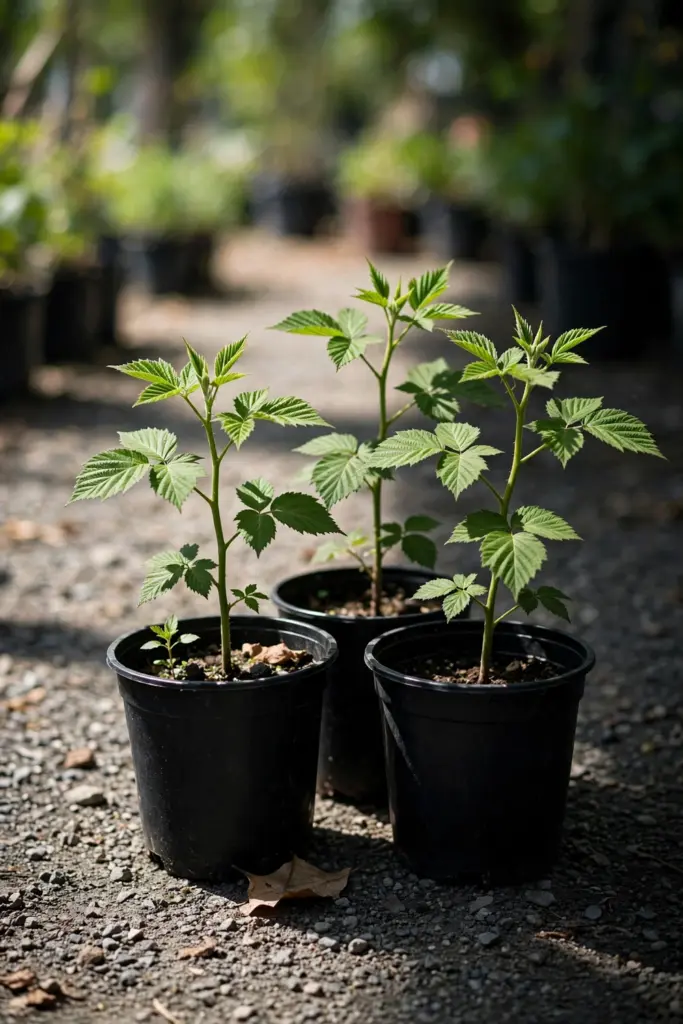
Choose thornless Arapaho, Apache, Navaho, or Ouachita when planting. The LSU AgCenter rates those thornless varieties moderately resistant to resistant to rosette. Resistant varieties are the highest-value move in this whole article, because they cut the disease before it starts.
Avoid most thorny erect varieties where rosette pressure runs high. The LSU AgCenter calls most thorny erect varieties very susceptible, needing far more management. A susceptible variety in the Southeast is a variety that will need constant watching. The thornless resistant list exists precisely to dodge that burden.
Treat retailer resistance claims with care. A product page that calls a variety highly resistant is selling something. The Extension list governs. Sweetie Pie carries a retailer claim of high resistance backed by a Mississippi trial, and it may prove useful, but this article rests on the LSU list. Buy from the Extension list first.
Way 3: Start With Clean Stock and Never Propagate From Diseased Plants
Inspect nursery plants before buying. Look for broomed shoot tips, distorted buds, and bronzed leaves on the bench. A plant that shows rosette symptoms at the nursery carries the disease home on day one. Reject it and buy a clean plant instead.
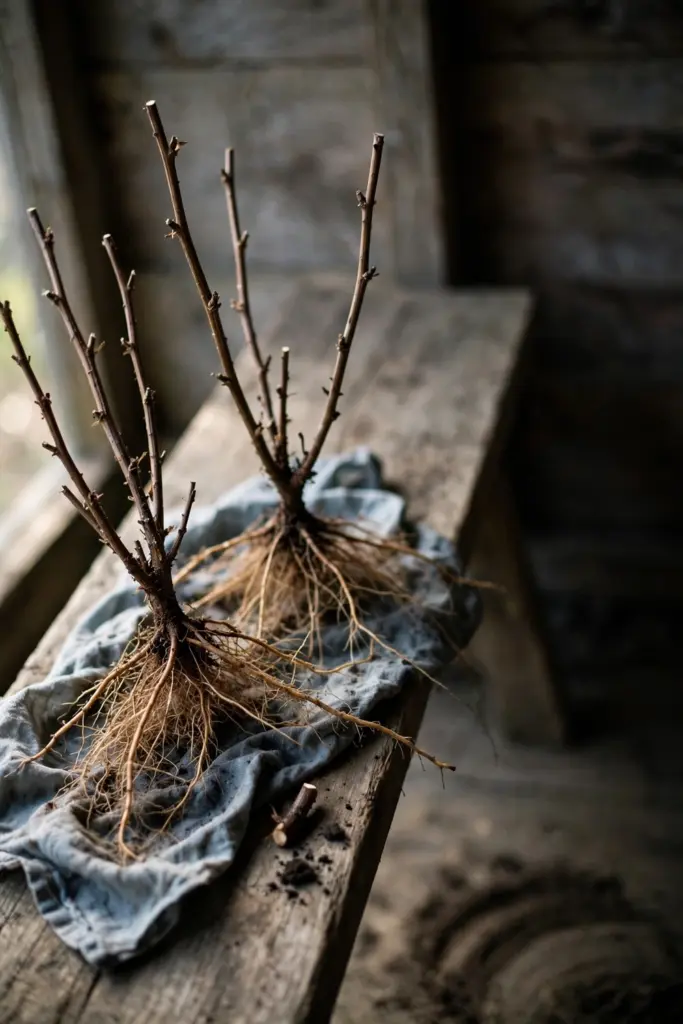
Prefer bare-root stock or root cuttings. The fungus is not systemic and is not known to be present in roots, so root material from a clean mother plant starts clean. Cane cuttings from a patch with any rosette history are a gamble. Root material removes the gamble.
Never propagate from diseased plants. Tip layering, cane cuttings, and divisions from a patch with rosette move infected buds into the next planting. A diseased plant is a plant to manage, not a plant to multiply. Buy clean stock instead of cloning the problem.
Way 4: Clear Wild Brambles Near the Patch
Wild blackberries and dewberries are the main inoculum reservoir. The LSU AgCenter commercial table names wild blackberries and dewberries as the fungus reservoir, with wind-dispersed spores. Most wild plants in the Southeast carry infection. A backyard patch beside a wild thicket sits downwind of a spore factory.
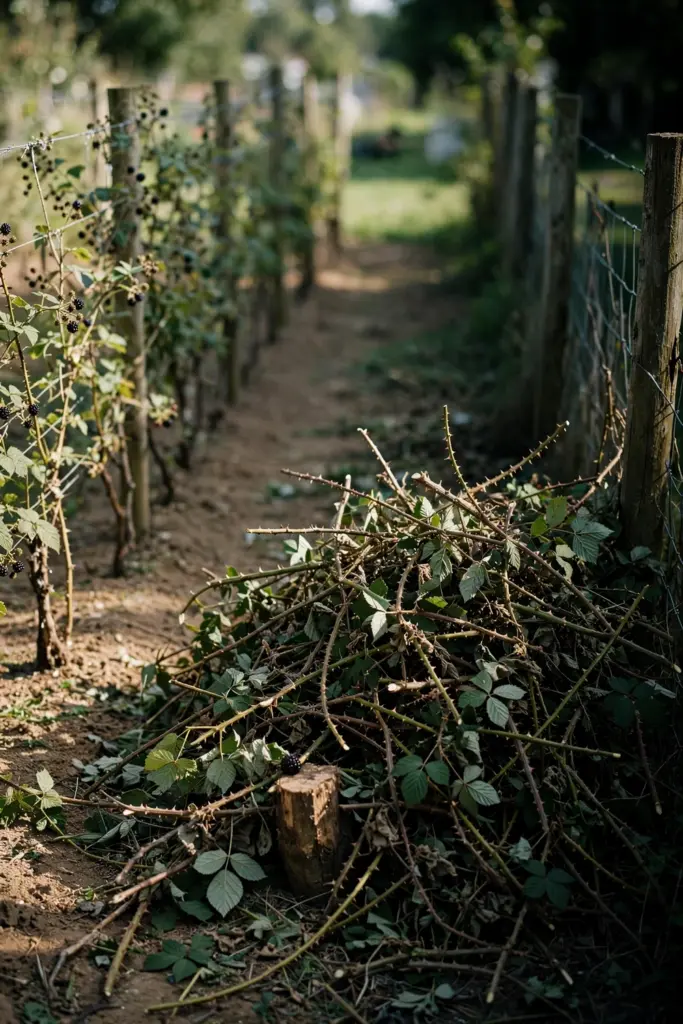
Clear wild brambles from the vicinity before planting and around the patch each season. Remove the plants, roots and all, so they do not regrow from the crown. A cleared fencerow stays clear for a season with a single follow-up pass. A neglected fencerow re-seeds the patch every spring.
Coordinate with neighbors where the thicket crosses a property line. A wild thicket on the neighbor’s side still showers spores onto the patch. A conversation and a shared clearing afternoon protect both properties. The fungus does not respect fences, so the clearing cannot stop at them either.
Way 5: Prune Out Rosettes in Early Spring, Before Infected Buds Open
Prune symptomatic side stems in early spring, before infected buds open. The fungus is not systemic, so only the symptomatic side stems need removal. Cut the broomed shoots and the distorted blossom clusters, and leave the rest of the cane. The cut is surgical, not wholesale.
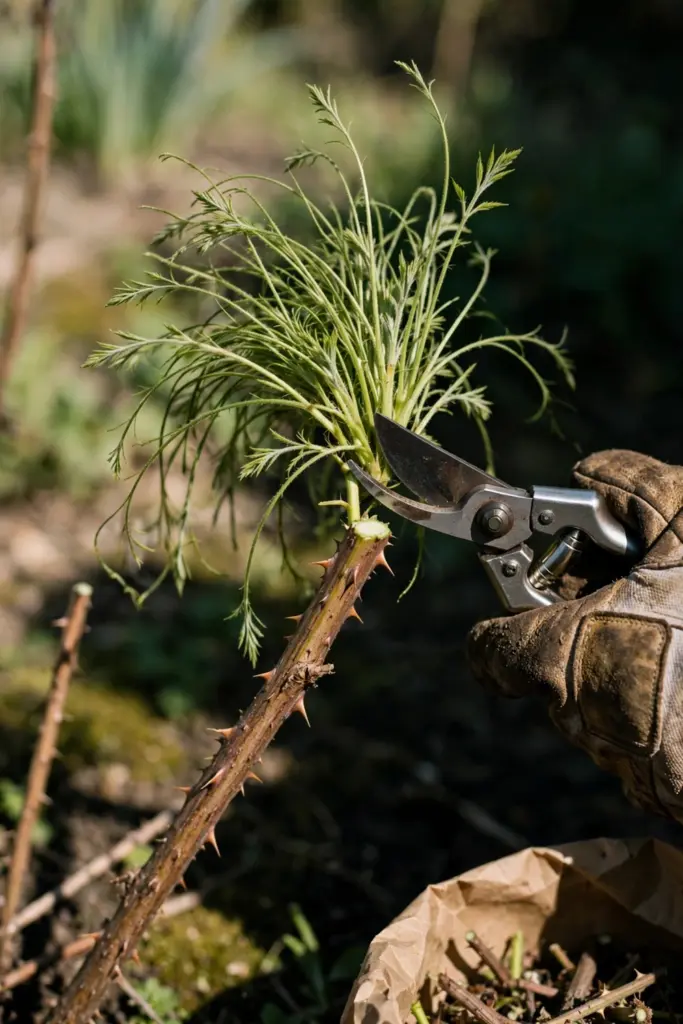
Destroy the removed material at once. Bag the prunings and put them in municipal waste. Open burning is not the home default: check local burn rules first, and default to bag and trash where burning is restricted. A pile of prunings left beside the patch still sheds spores onto the next bud break.
In low-pressure areas, this step alone may be the only control needed. A patch with one broom, clean neighbors, and resistant varieties can hold the disease with pruning alone, while a patch with many brooms, wild thickets nearby, and susceptible varieties needs every step here.
Way 6: After Harvest, Cut Back Hard and Accept the Yield Cost
Remove spent floricanes promptly after harvest. Floricanes that fruited are done, and rosetted floricanes hold spores that infect the next primocanes. Cut them out, bag them, and carry them away. The post-harvest cut is the second pruning of the season, and it matters as much as the spring one.
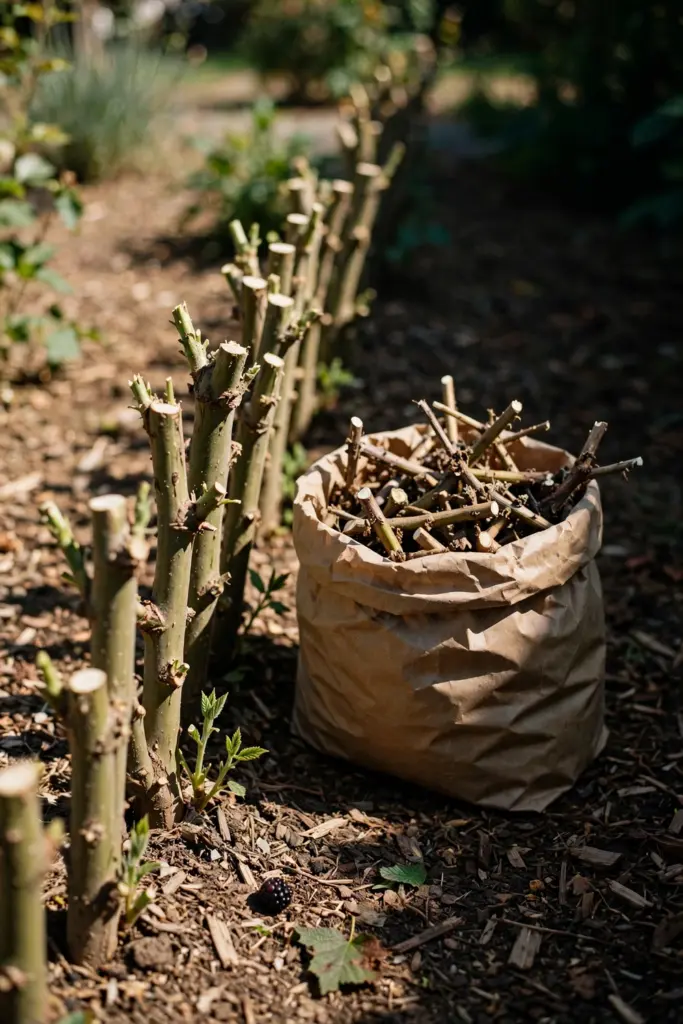
Mow heavily diseased plants to 12 inches right after harvest. The hard cut removes the infected canopy in one pass, and the cost is honest: yield from mowed plants drops the following year. A plant cut to 12 inches spends the next season regrowing canopy instead of fruiting. Take the cost knowingly, on plants where the disease already took the crop anyway.
Fungicides are not part of the home default. Preventive fungicides exist in commercial programs, but they run on a 12-step schedule with rotation limits and a 9-month delay before any evidence of control. Home control is cultural: resistant varieties, clean stock, wild bramble clearing, pruning, and the post-harvest cut. A home gardener who wants fungicide options should consult local Extension for current recommendations, never copy a commercial schedule.
Not This: Three Lookalikes That Are Not Blackberry Rosette
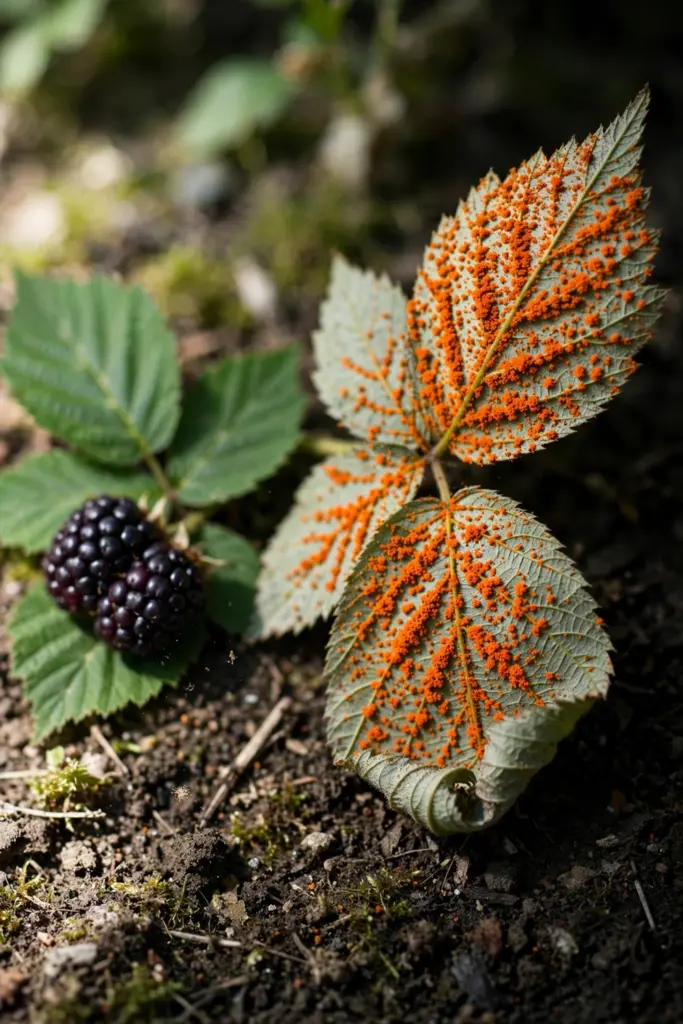
Witches’ broom is the same disease, not a lookalike. The broomed shoots are rosette itself, under its other name. Orange rust is different: bright orange spores that rub off the leaf undersides, a systemic rust with no effective fungicides. Double berry is different again: two fused berries from one flower, a heat and cultivar disorder, not a disease. Blueberry witches’ broom is a different rust on a different host, a name collision only. None of these four gets a differential table, because no head-to-head comparison exists for any of them.
Living With Blackberry Rosette in a Patch You Already Own
A patch with rosette is a managed patch, not a dead patch. Keep pruning brooms in early spring. Keep cutting floricanes after harvest. Keep wild brambles cleared. Keep buying clean stock. The disease will still appear in wet years, but it will appear slowly, and the patch will keep cropping on its healthy canes.
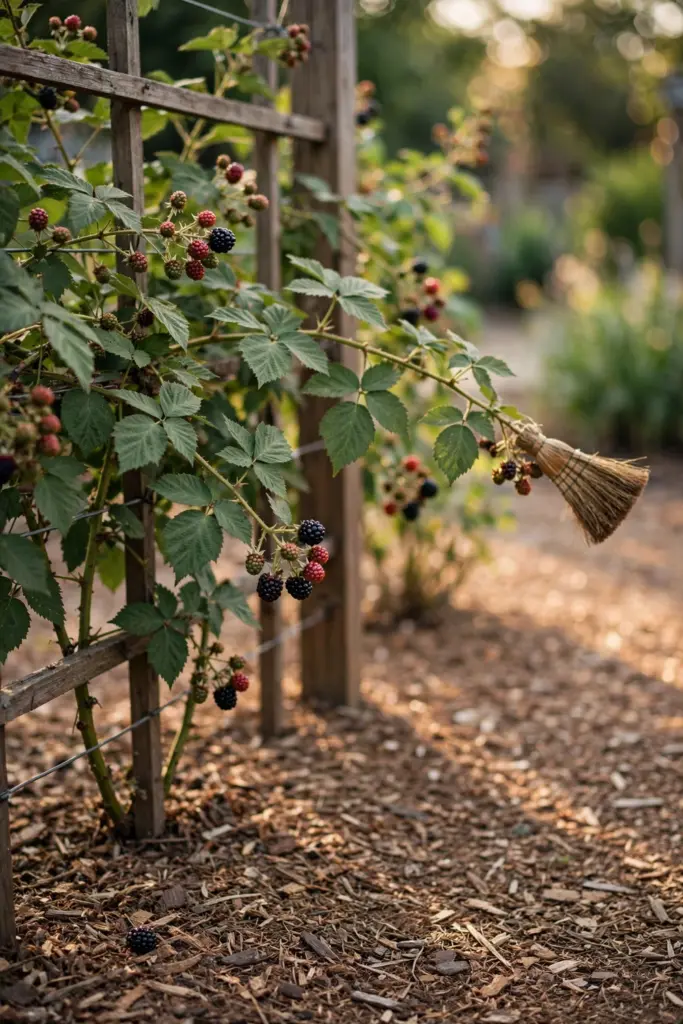
Stop three habits. Do not propagate from diseased plants. Do not leave prunings beside the patch. Do not ignore a broom until it becomes ten brooms. Keep those three lines unbroken and the disease stays contained to the canes that already carry it.
The blackberry growing guide covers planting and care for the patch as a whole, and the Plant Care archive collects the site’s disease coverage. Neither replaces the rosette routine here. Resistant varieties, clean stock, and two prunings a year carry the patch.
Frequently Asked Questions
No. Blackberry rosette is not curable. Fungicides prevent primocane infection but will not stop symptom development on current-year fruiting canes, with about a 9-month delay before any evidence of control. Management means keeping the disease out and its spread down: resistant varieties, clean stock, wild bramble clearing, and pruning. A cane with rosette stays infected.
Slowly, yes, if left unmanaged. Diseased canes produce no berries, and the disease kills plants slowly over seasons as more buds infect. A managed patch keeps cropping on healthy canes for years. An unmanaged patch thins and weakens as infection spreads. Pruning, resistant varieties, and wild bramble clearing decide which outcome the patch gets.
Not at once. Prune out the symptomatic side stems first, since the fungus is not systemic and only those stems need removal. If a plant shows brooms across most of its canes season after season, remove the whole plant and replace it with a resistant variety. Whole-plant removal is the last step, not the first. Pruning carries most patches.
Yes, from healthy canes. Rosette is a plant disease, not a human one. Berries from noninfected canes are safe to eat, though production on those canes runs small and poor. Diseased canes produce no berries at all, so there is nothing to pick from them. Discard pruned material. The loss is the harvest, not your health.
No, not as a home gardener. The home default is cultural: resistant varieties, clean stock, wild bramble clearing, spring pruning, and the post-harvest cut. Commercial fungicide programs run on schedules with rotation limits that do not translate to a backyard patch. A home gardener who wants fungicide options should consult local Extension for current recommendations, never copy a commercial schedule.
Where to Go From Here
Blackberry rosette rewards the gardener who prunes early and plants resistant. Know the signs at bloom. Plant Arapaho, Apache, Navaho, or Ouachita. Start clean, clear the wild brambles, prune brooms before buds open, and cut back hard after harvest.
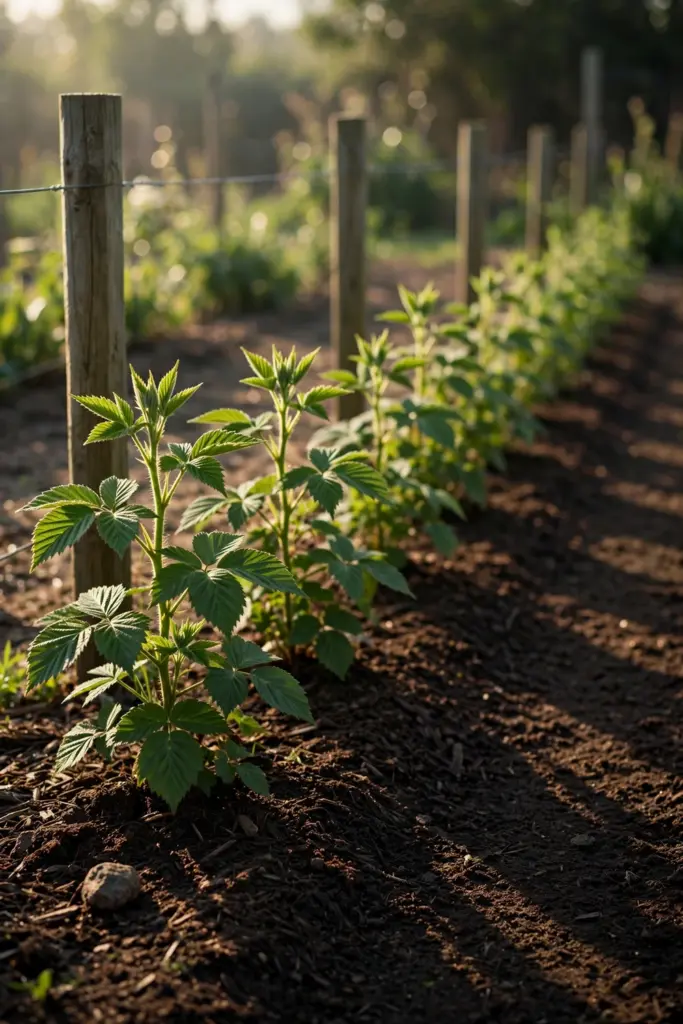
Next season, start clean. A patch with resistant varieties, no wild thicket beside it, and two prunings a year will hold rosette to a broom or two. The USDA ARS rosette fact sheet is a useful companion for the full disease cycle, since it sets the backyard routine here against the commercial research behind it.