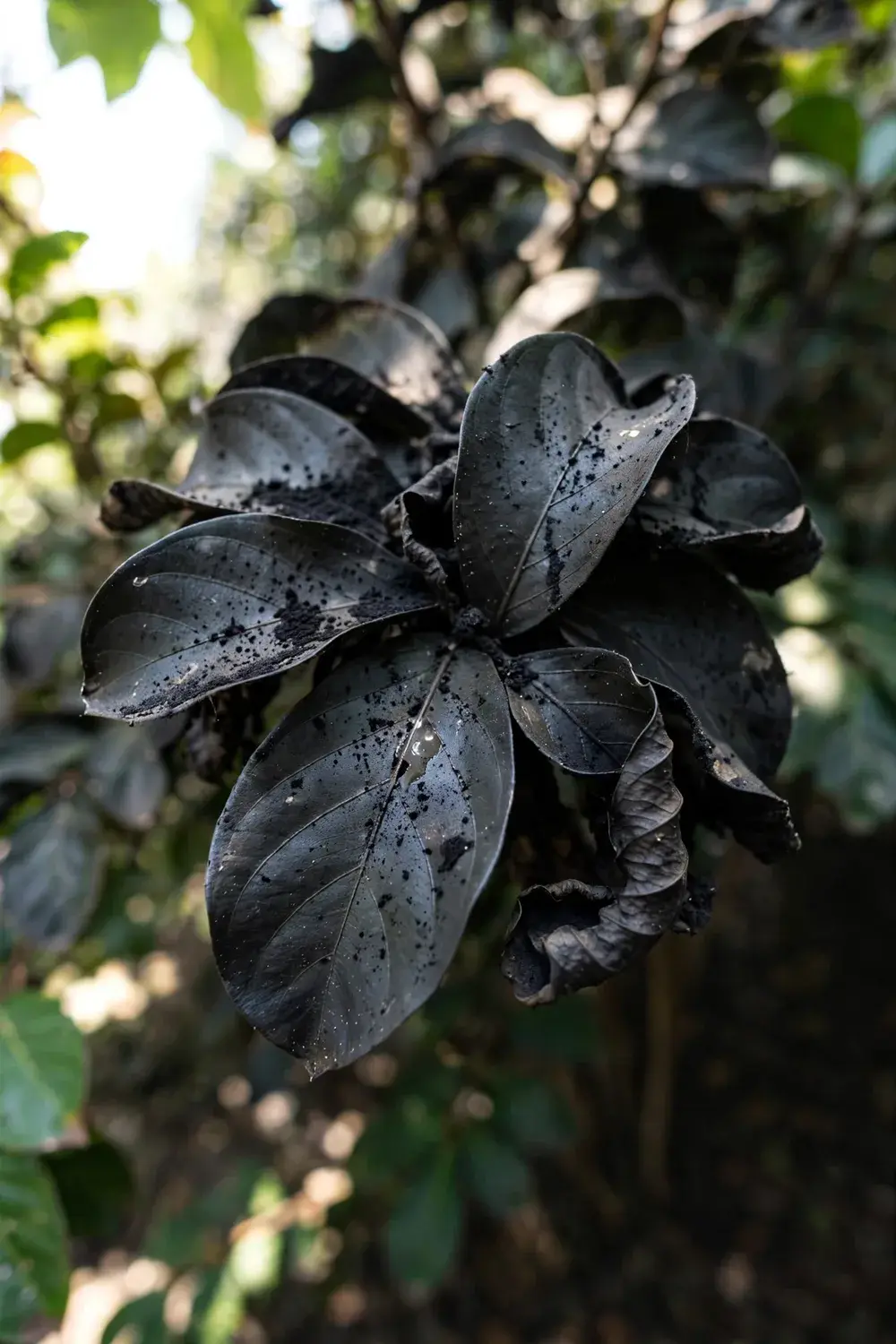

Spend 15 minutes soaking one black-coated branch in soapy water, rinsing it hard, and checking the leaf undersides above it. That black coating is sooty mold on plants, a thin surface fungus that grows on honeydew from sap-feeding insects. The rest of this page is 9 strategies, from the wipe test to the last-resort systemic, plus the lookalikes that steal a season when you treat the wrong one.
Sooty mold on plants does not feed on leaf tissue. It feeds on honeydew, the sticky sugary waste that aphids, scale insects, whiteflies, and mealybugs drip onto the leaves below. I have learned to look up first when I see black leaves, because the colony dripping honeydew usually sits on the growth above the soot. Find that colony and the whole job changes shape.
Fungicide misses the target here. The fungus is a symptom. Kill the honeydew insects, wash the coating off, and new growth comes in clean. Leave the insects alone, and the black film comes back no matter how hard you scrub.
1. What Sooty Mold on Plants Actually Is
Sooty mold on plants is a saprophytic fungus that grows on honeydew, the sugary waste of sap-feeding insects. It is a surface tenant, not a plant disease. The fungi sit on top of leaves, fruit, twigs, and stems and never push into living tissue.
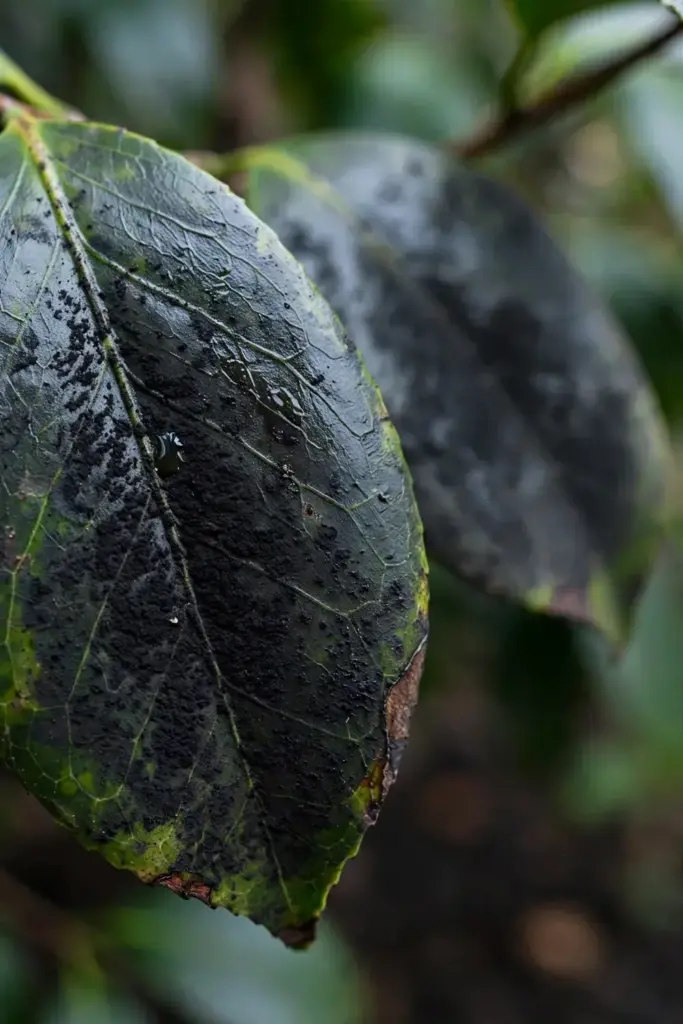
The usual culprits are Capnodium species and Fumago species, according to the LSU AgCenter fact sheet on sooty molds, which describes them as non-plant-pathogenic fungi growing as a thin black layer. The same fact sheet lists the insects behind the honeydew: aphids, leafhoppers, mealybugs, psyllids, scale insects, and whiteflies.
Sap-feeding insects pierce plant tissue with needle mouthparts and drink sap. Sap carries more sugar water than the insect can use, so the insect excretes the surplus as honeydew. Honeydew lands on leaves below, and airborne sooty mold spores settle in it and grow. One colony overhead can coat a whole shrub while it feeds.
A light coating is cosmetic. A heavy coating blocks sunlight, slows photosynthesis, and saps vigor. Under heavy insect pressure, growth stalls and fruit stays small and poorly colored. The damage comes from the shade plus the insects, not from the fungus eating the plant.
2. How to Identify Sooty Mold on Leaves, Fruit, Twigs, and Stems
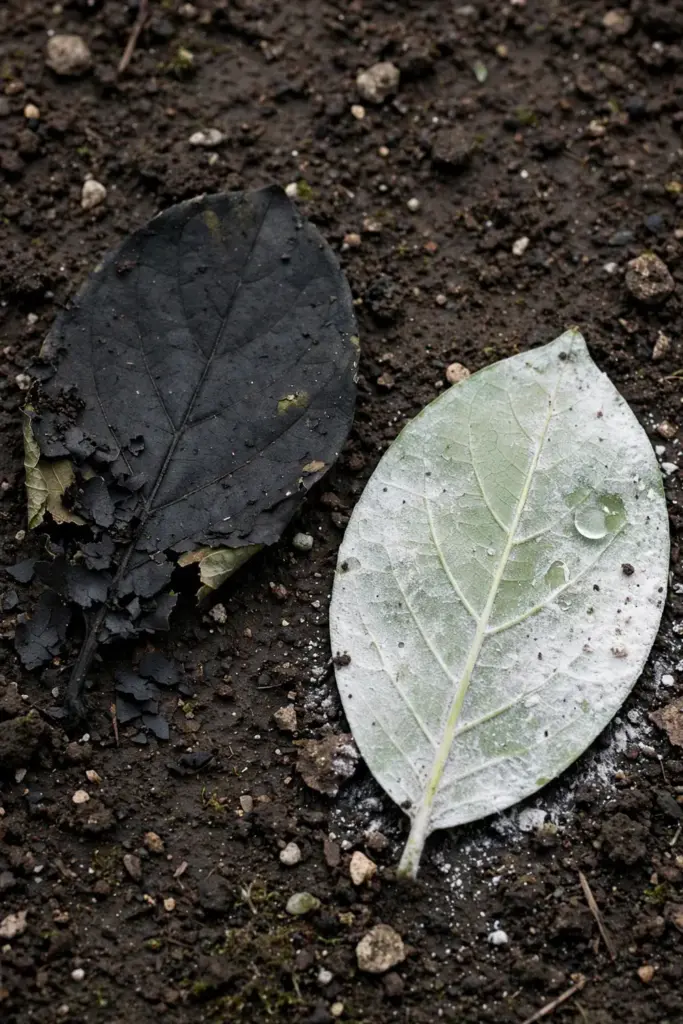
Sooty mold shows as a black coating that sits on the surface and lifts off with a damp cloth. Color is the first clue. Black, soot-like film on the upper leaf surface, often with a sticky shine under it, points to sooty mold. White or gray powder points somewhere else.
On Leaves
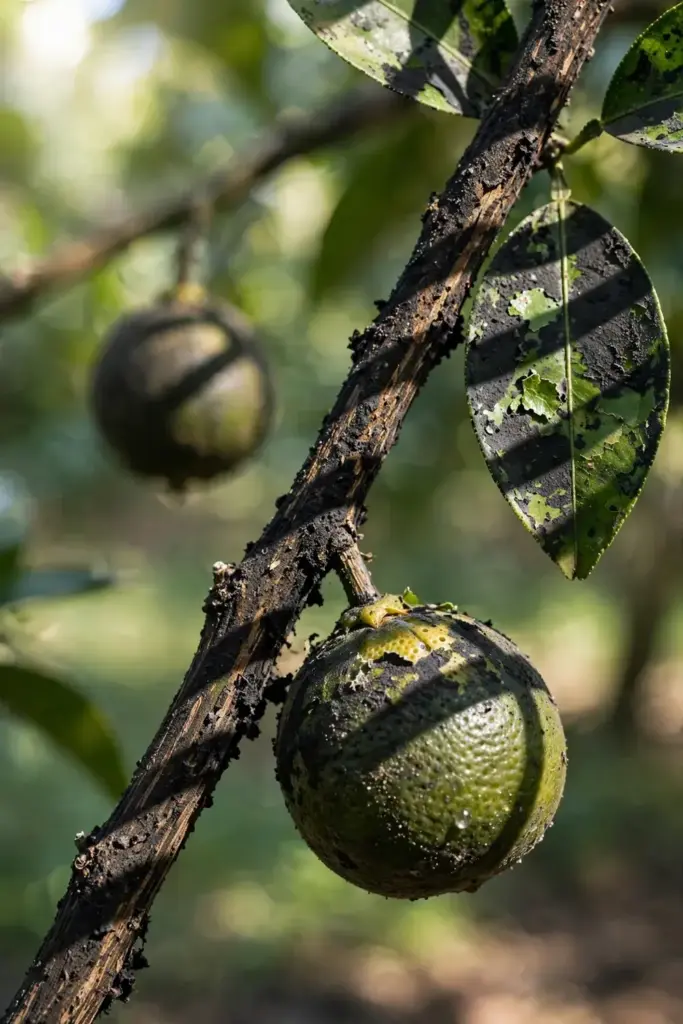
Leaves carry the classic sign: a black powdery coat across the upper surface, sometimes hard and tight, sometimes loose enough to flake. During spring rains the black layer may peel away in patches and leave healthy green showing through. Leaves under a colony turn black first. Leaves on the far side of the same shrub may stay clean.
On Fruit
Fruit under a colony wears the same black film. Coated fruit stays smaller and colors poorly, because the film shades the rind. The coating sits on the skin. It does not rot the flesh beneath it.
On Twigs, Stems, and Surfaces Below
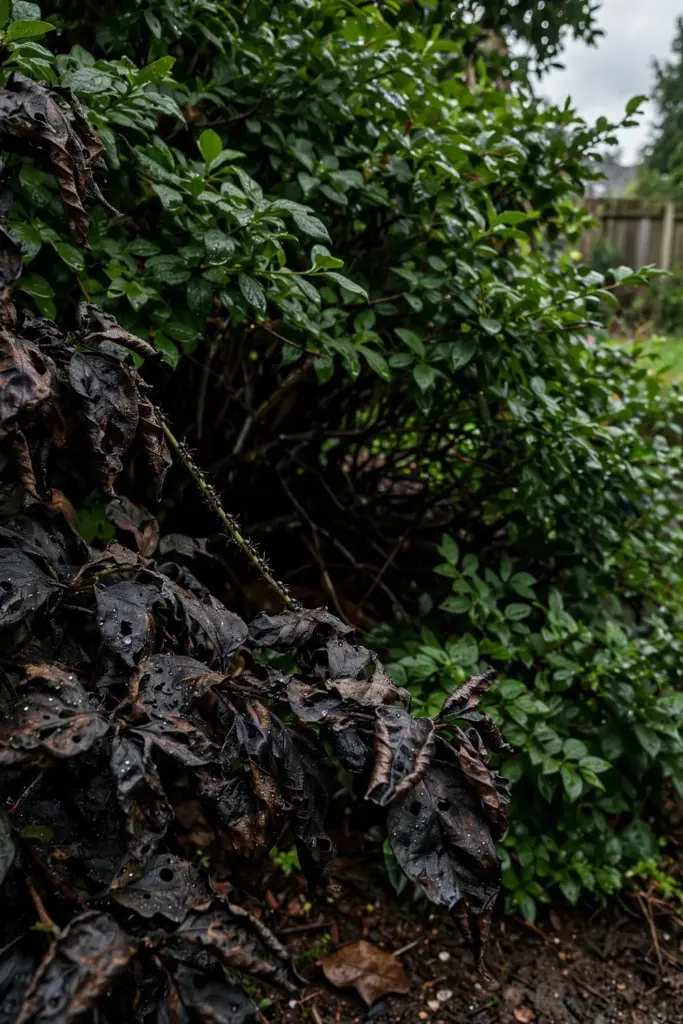
Twigs and stems carry a thin black layer where honeydew lands. Honeydew also drips past the plant entirely. Mulch, sidewalks, fences, patio furniture, and cars parked under an infested tree can all wear the black film. Black on the mulch under a clean shrub means the colony is overhead, in the tree above it.
Before the black arrives, the shine arrives. Leaves under a feeding colony look wet on a dry day and feel tacky when you touch them. That shine is honeydew, and it is the earliest warning you will get. A leaf that shines today wears black soon after if the colony keeps feeding, so treat the shine as the alarm, not the color.
3. Which Plants Get Hit Hardest by Sooty Mold
Any plant that hosts sap-feeding insects can host sooty mold. The coating follows the insects, not the plant family. Where aphids, scale, whiteflies, or mealybugs feed, sooty mold follows.
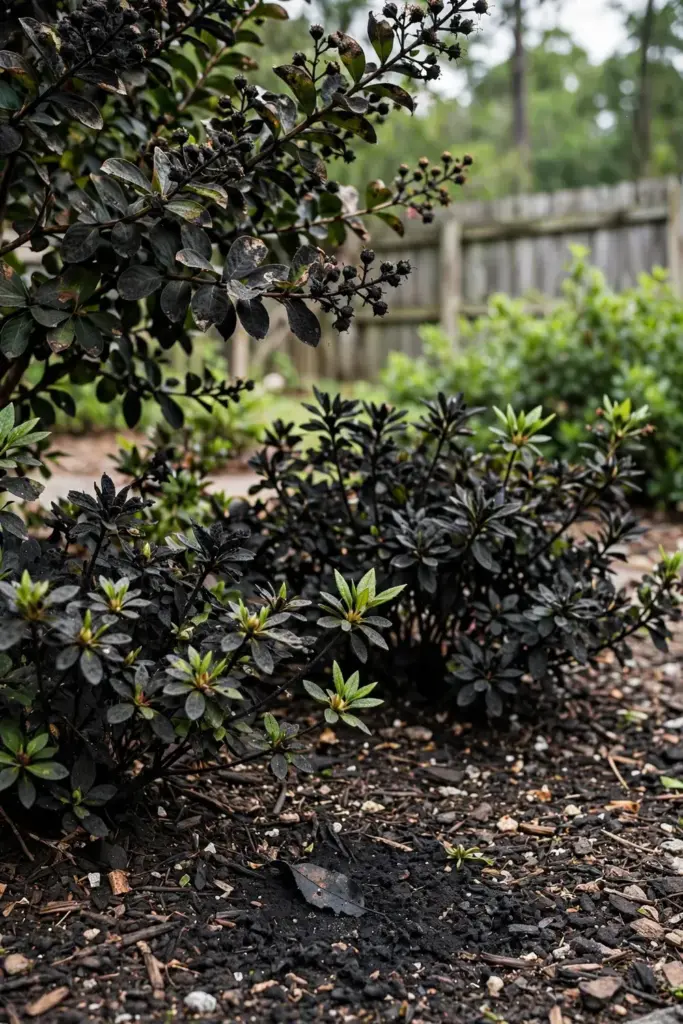
The LSU AgCenter names azalea, camellia, citrus, crape myrtle, magnolia, oleander, pear, pine, roses, sago palm, and viburnum among the landscape plants hit hardest, with boxwood, Indian hawthorn, and ground covers blackening when they grow under infested trees. Gardenias, laurels, Chinese elms, hollies, silver maples, and sugarberries show the same coating.
Crape myrtle and citrus are frequent hosts, because their common pests are heavy honeydew producers. Evergreen shrubs such as gardenia, azalea, and camellia show the coating longest, because their leaves stay on the plant for months. Deciduous trees shed the evidence with their leaves and start clean each spring.
Check the understory first when the black leaves sit low. A clean shrub under a black-dripping tree is a victim of gravity, not a patient of its own. Look up before you treat anything.
4. Sooty Mold vs Powdery Mildew vs Sooty Blotch
Three black-or-white coatings confuse gardeners, and each one wants a different fix. Sooty mold wants insect control. Powdery mildew wants the fungus itself treated. Sooty blotch wants fruit-surface cleanup. The table below sorts them by the traits you can see in the garden.
| Trait | Sooty Mold | Powdery Mildew | Sooty Blotch |
|---|---|---|---|
| Color | Black, soot-like film | White to gray flour-like patches | Olive-green to black smudges |
| Where it grows | Leaf, fruit, twig, and stem surfaces, plus anything below a colony | Leaf, shoot, bud, and fruit surfaces | Apple fruit surface only |
| Honeydew link | Always: the fungus grows on insect honeydew | None: no insect involved | None: no insect involved |
| Wipe test | Lifts with a damp cloth and shows green leaf beneath | Wipes off as dust, then returns in the same spots | Rubs off with vigorous rubbing |
| Fix | Control the honeydew insects, then wash the coating | Treat the fungus and open the airflow | Prune for drying air, wash or rub the fruit |
| Host pattern | Any plant under a honeydew insect colony | Species-specific fungi that stay on one host group | Apples, in humid late-season weather |
Powdery mildew is a true fungal disease that feeds on living tissue. It shows as white, flour-like patches on leaves, flowers, fruit, and shoot tips, and warm humid weather from 15.6 to 26.7 degrees Celsius favors it, according to the West Virginia University Extension page on powdery mildew. The fungus is species-specific, so mildew on a rose will not jump to a squash. That trait alone separates it from sooty mold, which follows insects across plant families.
Black mildew is the closest lookalike in color. It is a true parasite that grips leaf tissue and will not wipe off. The black mildew guide lays out that comparison in full, with the firmly attached growth that separates it from sooty mold.
Sooty blotch shares a name shape with sooty mold and nothing else. It is a complex of fruit-surface fungi that blemishes apples, with no honeydew and no insect behind it. If the black marks sit on apple fruit alone, with clean leaves and no sticky shine anywhere, suspect sooty blotch, not sooty mold.
5. Why Honeydew Feeds Sooty Mold and Why Fungicide Misses the Target
Honeydew is the whole story. Sap-feeding insects drink far more sap than they can digest, pull out the nutrients they need, and excrete the leftover sugar water. That sticky waste coats the leaves below. Sooty mold spores land in it and grow. Stop the honeydew and the mold starves.
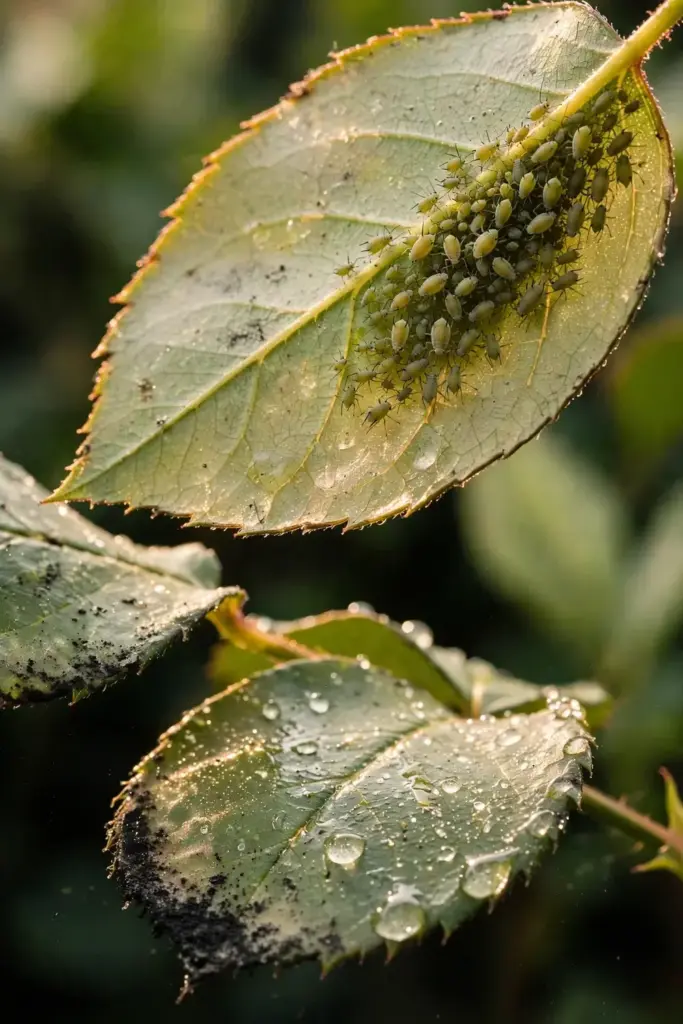
Fungicide sprayed on the mold kills fungus and leaves the cause untouched. The insects keep feeding. Honeydew keeps dripping. Fresh spores land and the black film rebuilds. Spraying the mold treats the symptom while the cause keeps working.
The fix runs in the other direction. Control the insects that make the honeydew. Wash the coating off. New leaves come in clean because no fresh honeydew lands on them. Old leaves either wash clean or flake clean over the winter. That sequence is the spine of all 9 strategies below.
6. What Makes Sooty Mold Worse in a Home Garden
Sooty mold gets worse wherever honeydew insects thrive undisturbed. The coating thickens through the warm months while colonies feed, and fair to hot weather pushes the problem hard. Dry spells make it worse: with no rain to rinse the leaves, honeydew sits and bakes onto the surface instead of washing away.
Soft new growth draws the insects. Colonies cluster on tender shoot tips, young leaves, and buds, where sap runs sweet and the tissue is easy to pierce. A plant pushing flush after flush of soft growth feeds a colony for months, and each flush gets coated in turn.
Ants make it worse. Ants tend aphids and scale, guard them from predators, and move them to fresh growth. A shrub with a steady ant trail is a shrub whose colony has bodyguards. Break the ant partnership and the predators get back in.
Still air and crowding help the fungi. Dense canopies hold humidity, shade the interior, and shelter colonies from predators and from your spray. A plant under an infested tree inherits the drip. Understory shrubs, hedges, and ground covers blacken even when they carry no insects of their own.
7. Strategy 1: Look Up and Find the Honeydew Insect Colony
The first move is detective work, not spraying. Walk to the black leaves, then look up. The colony sits on the growth above the soot, usually on young tender shoots, leaf undersides, or stem joints. Honeydew drips down, so the blackest leaves sit below the insects, not on them.
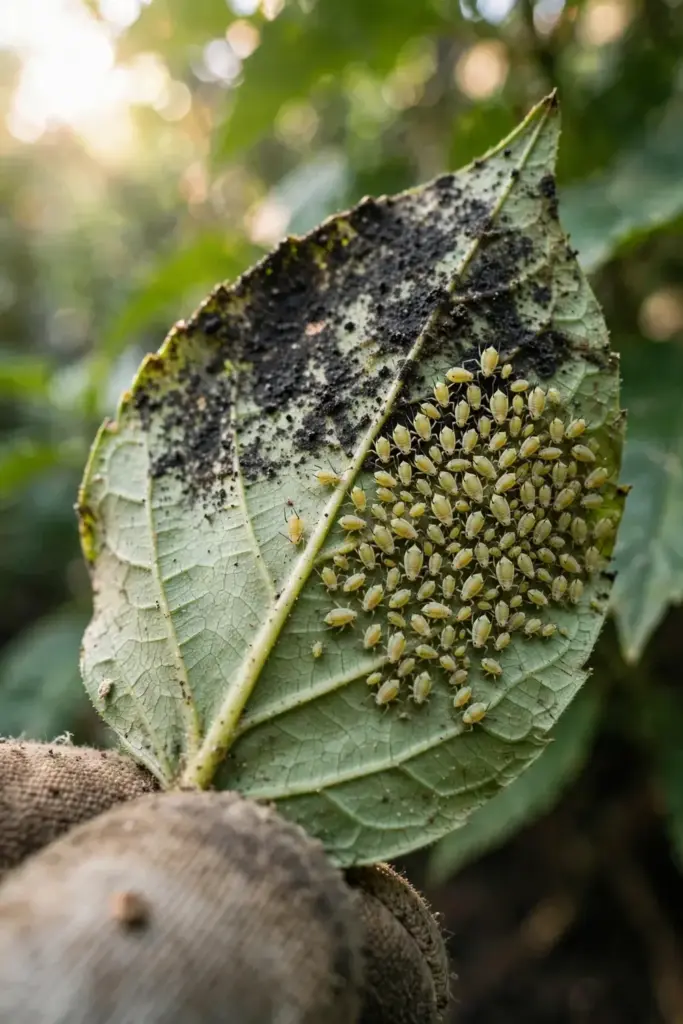
Check leaf undersides first. Aphids cluster there in dense groups. Whiteflies lift in a small white cloud when you brush the leaf. Mealybugs hide in joints and look like bits of white wax. Scale insects look like bumps, dots, or dashes on stems and leaf veins, and they do not move when you poke them. The citrus scale guide shows the bump-and-dash shapes to look for on citrus.
Name the insect before you reach for any product. Soap, oil, predators, and systemics all work on different insects at different life stages. A misidentified colony eats a wasted spray. Ant trails point the way: follow the line of ants and it usually ends at the colony they are tending.
8. Strategy 2: Run the Damp Cloth Wipe Test
Take a damp white cloth and wipe one small patch of black leaf. Sooty mold lifts off and shows green leaf beneath it. The cloth comes away black, and the leaf underneath looks healthy. That result confirms sooty mold and rules out the lookalikes that grip tissue.
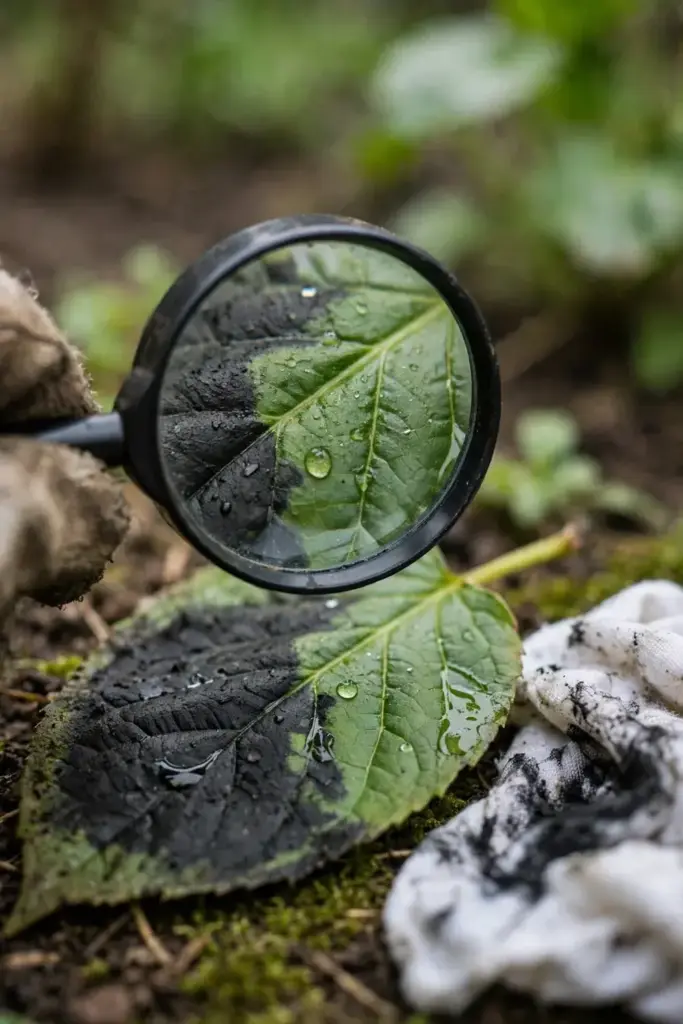
A white powder that wipes away and comes back in the same spots points to powdery mildew instead. A black coating that will not lift at all points to black mildew, the true parasite. The wipe test costs one minute and one cloth, and it keeps you from spraying the wrong problem.
Wipe a small patch first, not the whole plant. If the leaf beneath is yellow or dead, the insects have fed hard on that spot, and washing alone will not green it again. The plant replaces that leaf. Your job is the colony above it.
9. Strategy 3: Wash the Coating Off With a Soap Soak and a Strong Rinse
Washing removes the coating that is already there. The Mississippi State Extension method is a soak: mix 1 tablespoon of household liquid detergent per 3.8 liters (1 gallon) of water, spray it on the coated plants, wait 15 minutes, then rinse it off with a strong stream of water, according to the Mississippi State Extension Plant Doctor page on sooty mold. Repeat the treatment several times over a few weeks.
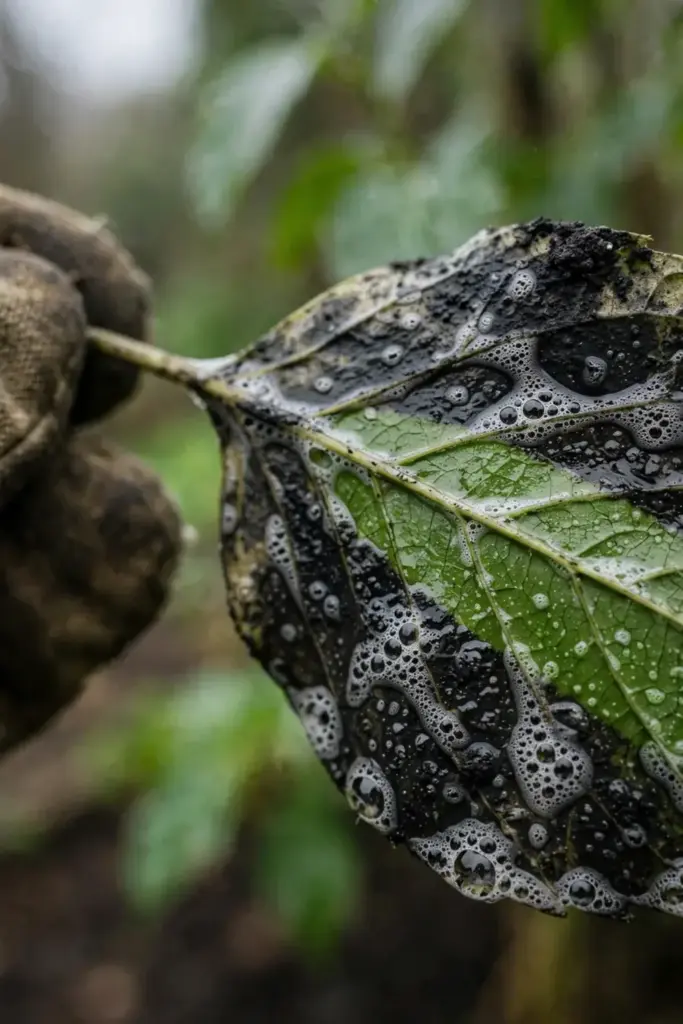
Prefer insecticidal soap or castile soap for the wash when you have it. Household detergent works, and strong soaps can burn tender leaves, so test one small branch first and rinse well. The LSU Get It Growing column on sooty mold gives the same ratio for castile soap: 1 tablespoon of natural castile soap per 3.8 liters (1 gallon) of water.
Wash in the cool part of the day and rinse until the water runs clear. Soap left on leaves in hot sun burns. Rinse the undersides too, since honeydew and mold sit there as well. The plant looks worse for an hour while it dries, then better than it has in weeks.
10. Strategy 4: Knock Soft Colonies Off With a Strong Water Blast
A strong stream of water does two jobs at once. It knocks soft colonies off the plant, and it rinses honeydew and loose mold off the leaves. Aim the stream at the leaf undersides, where aphids and whiteflies feed. Work from the top of the plant down so the rinse carries debris to the ground.
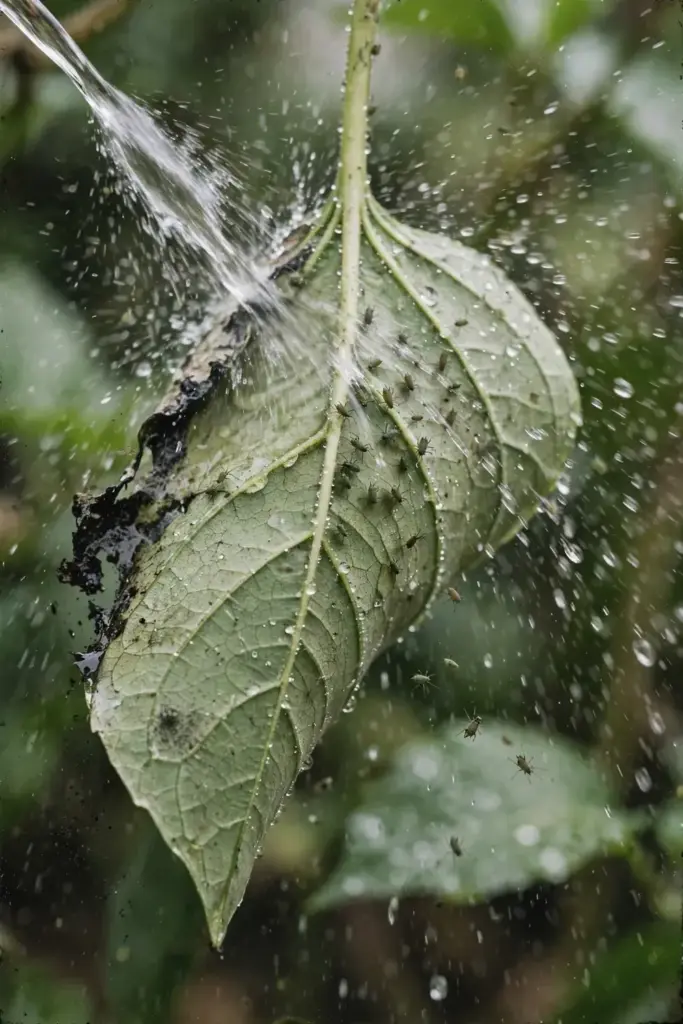
The same column that gives the castile soap ratio also recommends a strong blast of water to dislodge insects. Use a firm jet, not a pressure washer. Pressurized water can damage tender growth, so keep the nozzle back and test the pressure on one branch first.
Blast early, before colonies harden into scale covers. Aphids and whiteflies wash off. Armored scale does not. If the blast leaves bumps behind on the stems, those are scale, and they need the soap or oil treatment in Strategy 5.
11. Strategy 5: Treat the Insects With Insecticidal Soap or Horticultural Oil
Soap and oil kill the insects that make the honeydew. Insecticidal soaps and horticultural oils are the standard first sprays, and the same LSU fact sheet from the opening section lists them alongside insecticides for sooty mold control. Both work on contact. The spray must reach the insect to kill it, so coat the leaf undersides and stem joints, not just the black tops.
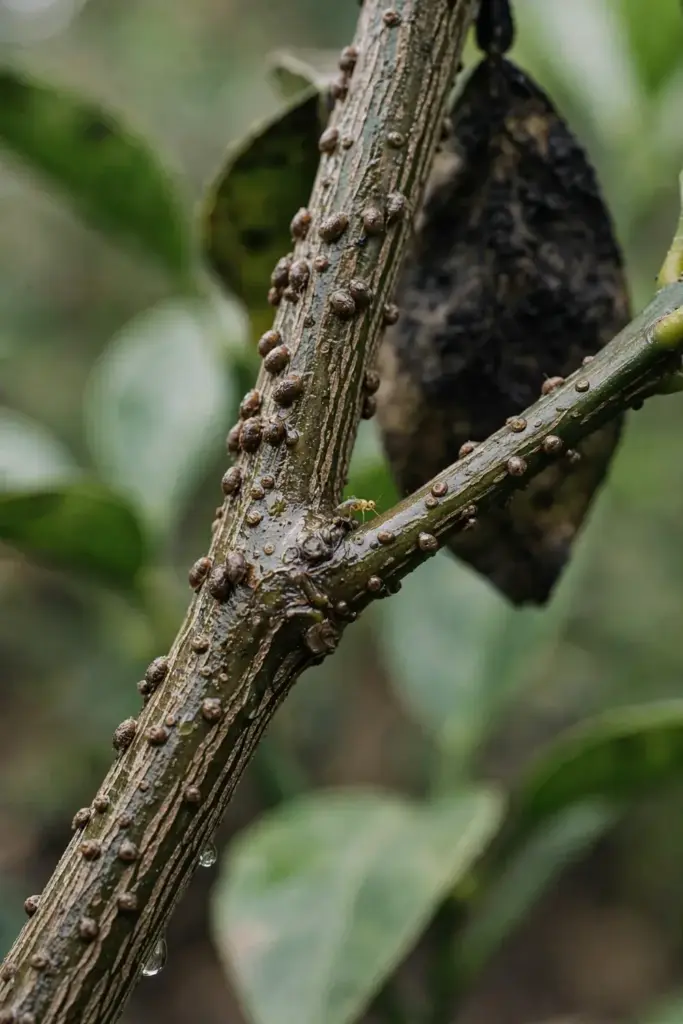
Identify the insect first, then match the spray to it. The citrus mealybug guide walks through mealybug control on citrus, where the white wax coating repels a careless spray. Scale insects hide under a waxy cover, so soap reaches them best when the young crawlers are moving. A dormant oil spray in the leafless season smothers overwintering scale on woody plants.
Spray in the cool part of the day, never on a plant in hot sun or drought stress. Repeat the spray to catch the next hatch, since soap and oil leave no lasting residue. Read the label for the insect and the plant in front of you, and stop when the colony is gone. The goal is zero honeydew, not a sterile plant.
12. Strategy 6: Bring In Beneficial Insects and Leave Them Room to Work
Predators eat honeydew insects for free. Lady beetles, lacewing larvae, hoverfly larvae, and parasitic wasps all feed on aphids and soft scale. A garden with predators keeps small colonies from becoming black-leaf disasters. Your job is to give the predators a reason to stay.
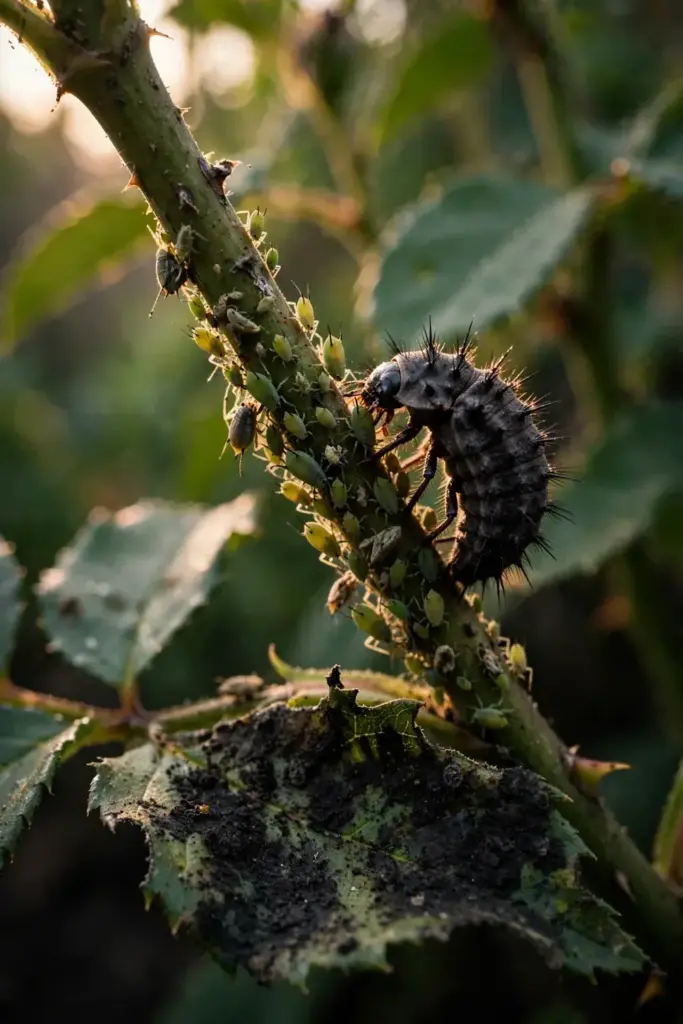
Skip broad-spectrum sprays while predators are active. A broad spray kills the aphids and the beetles that eat them, and the aphids breed back faster. Spot-treat the worst colony with soap and leave the rest to the predators. The guide to attracting beneficial insects lists the nectar plants and shelter that hold predators in the garden.
Patience is part of the method. Predators arrive after the prey does, so a small aphid colony with lady beetle larvae on it is a working system, not a failure. Watch it for a few days before you spray. If the colony shrinks, the predators are winning.
13. Strategy 7: Cut Off the Ants That Farm the Honeydew Insects
Ants farm honeydew insects. They guard aphids and scale from predators, move them to fresh growth, and harvest the honeydew. A colony with ant bodyguards outlasts soap sprays, because the ants protect the survivors and the colony rebuilds. The same LSU column from the wash section notes that ants will farm or tend the scales or aphids.
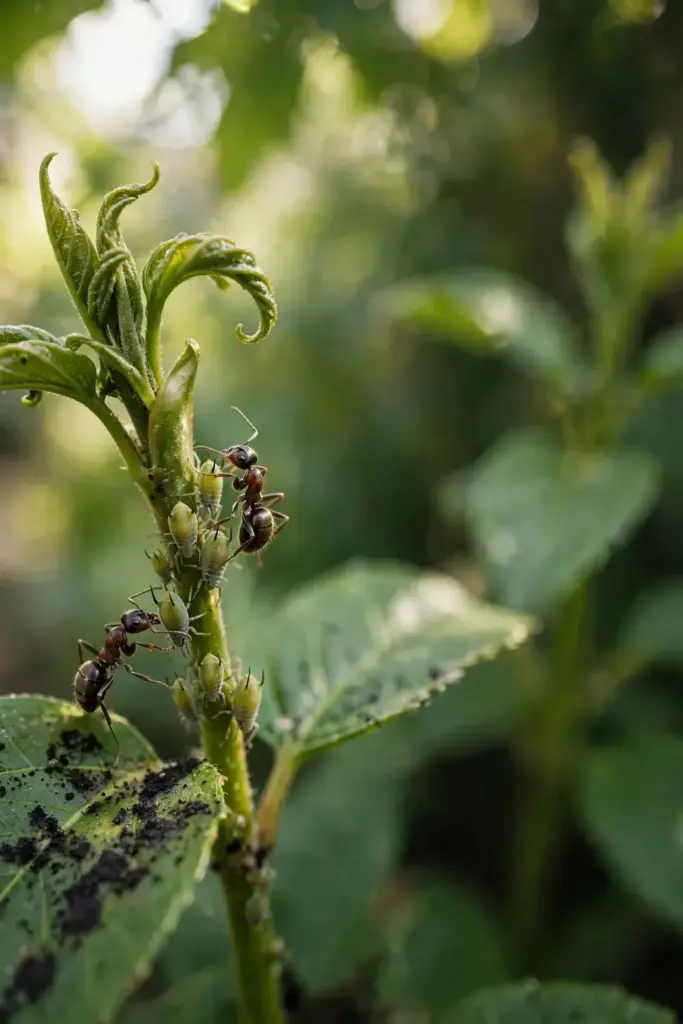
Break the partnership. Sticky bands around trunks stop ants from climbing into the canopy. Baits labeled for garden ants cut the colony at the nest. Clear the mulch and debris that shelter ant nests near the plant, and keep fallen fruit off the ground.
Watch the ant trail after treatment. If the trail goes quiet and the predators move in, the colony usually collapses within days. If ants keep coming, the nest is still active, and the insect colony will rebuild with it.
14. Strategy 8: Prune for Airflow and Let Light Into the Canopy
Open canopies dry faster, and dry leaves grow less mold. Thin the crossing branches, lift the low growth that traps damp air, and open the center so light reaches the interior. Airflow also exposes colonies to predators and lets your spray reach the leaf undersides.
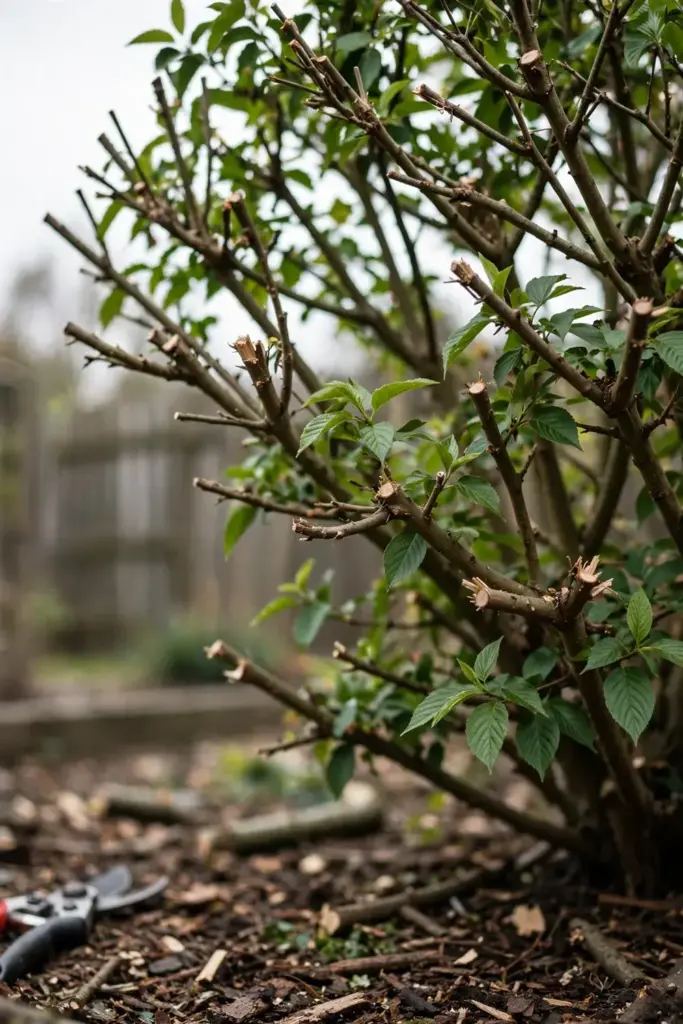
Prune at the right season for the plant in front of you. A spring-flowering shrub pruned in fall loses its bloom. A fruit tree pruned in the dormant season heals cleanly. Cut with clean tools, remove the prunings from the bed, and wash the tools after. Prunings left under the plant hold spores and honeydew.
Do not strip the plant bare. A hard cutback stresses the plant and pushes the soft growth that honeydew insects love. Take out the crossing wood, the dead wood, and the worst congestion, then stop. The goal is moving air, not a skeleton.
Spacing new plantings with airflow in mind pays off for years. A shrub crammed against a fence or jammed into a hedge row traps damp air around every leaf and hides colonies from your eyes and your spray. Give each plant room to breathe, keep the bed floor clear of fallen leaves and fruit, and the canopy dries faster after every rain.
15. Strategy 9: Save Systemic Insecticide for Last and Mind the Blooms
Systemic insecticide is the last resort, not the opener. It travels inside the plant and reaches sap-feeders that contact sprays miss, including scale tucked under waxy covers. Use it only after soap, oil, predators, and ant control have failed, and only when the colony still drips honeydew.
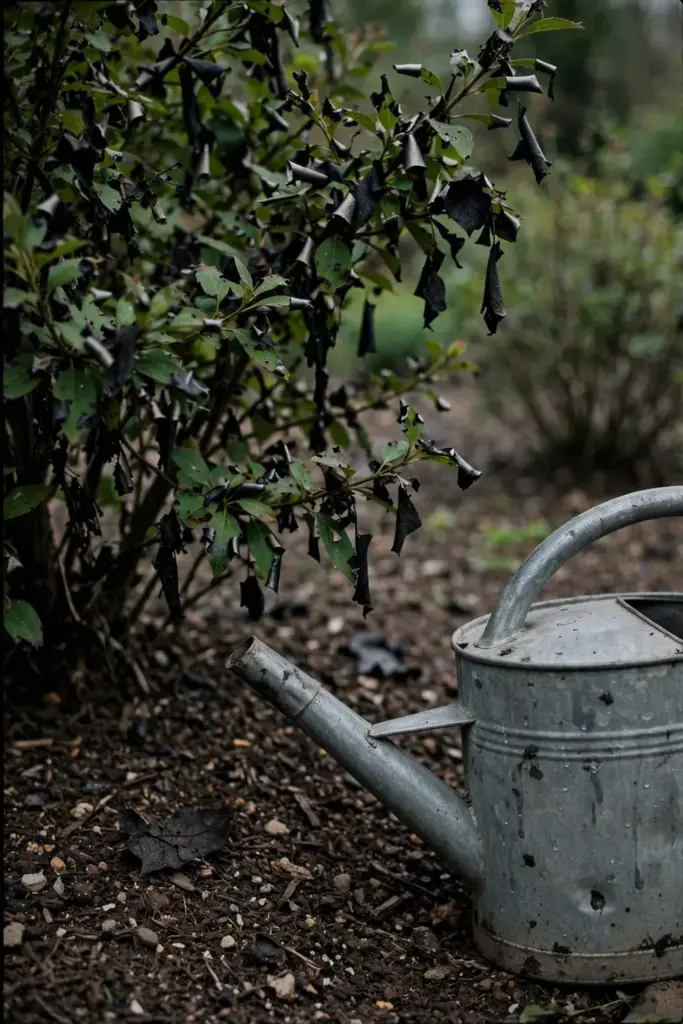
Mind the blooms. The same LSU column advises using systemic products only when flowers and blooms are not present, to protect pollinators. A systemic applied during bloom can reach pollen and nectar. Wait until the bloom is over, or treat a plant that is not in flower. Read the label for the insect, the plant, and the waiting period, and follow it exactly.
One well-timed systemic beats three careless sprays. Apply it to the roots or soil per the label, water it in, and give it time to move through the plant. Then watch the honeydew. When the drip stops, the mold stops with it.
16. Living With Sooty Mold Damage That Is Already There
Old coating does not need a rescue. Once the insects are under control, the mold dries and flakes off on its own. The same Mississippi State page from the wash section says most of it flakes off during the early spring. Wash what you can reach, and let time take the rest.
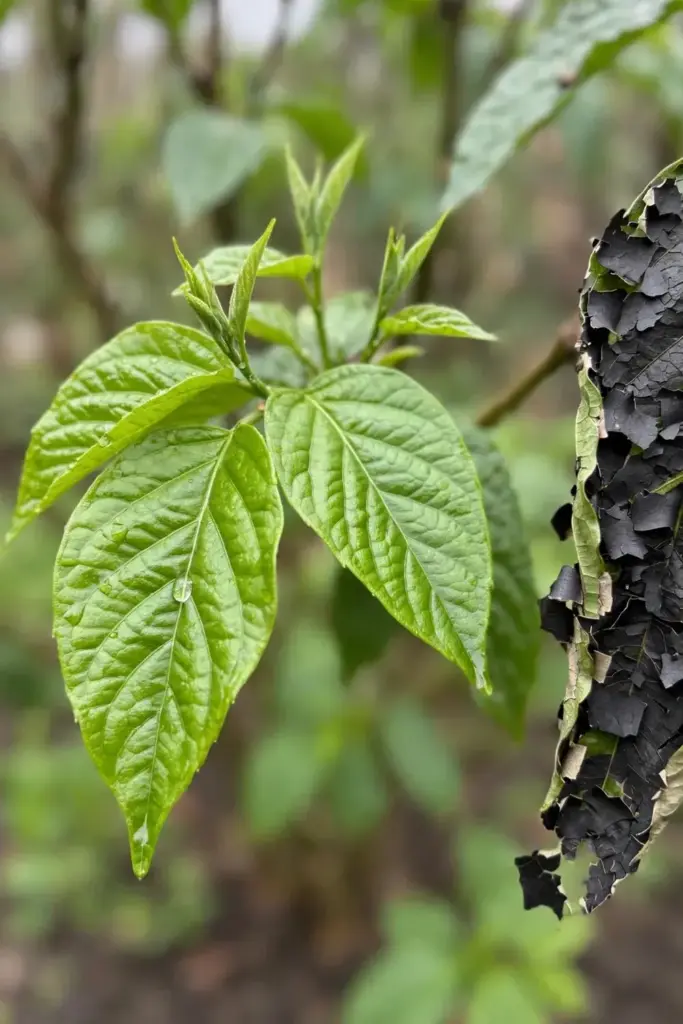
Leaves that washed clean stay on the plant and keep working. Leaves that stay black and stiff are shaded and tired, and the plant replaces them with new growth. Do not strip coated leaves by hand. Stripping takes the plant’s food factory with the cosmetic problem.
Fruit with a black film washes clean at harvest. Wash it, peel it if the film clings, and use it. Fruit that is small, shriveled, or rotting has insect damage behind the film, and it belongs in the trash, not on the table. Judge the fruit by the flesh, not by the film.
Check the plant each time you water. Flip a few leaves and look for fresh shine. Fresh honeydew means the colony is back, and an early soap spray beats a late rescue. A plant that stays clean through one full flush of new growth has beaten the problem.
17. Frequently Asked Questions
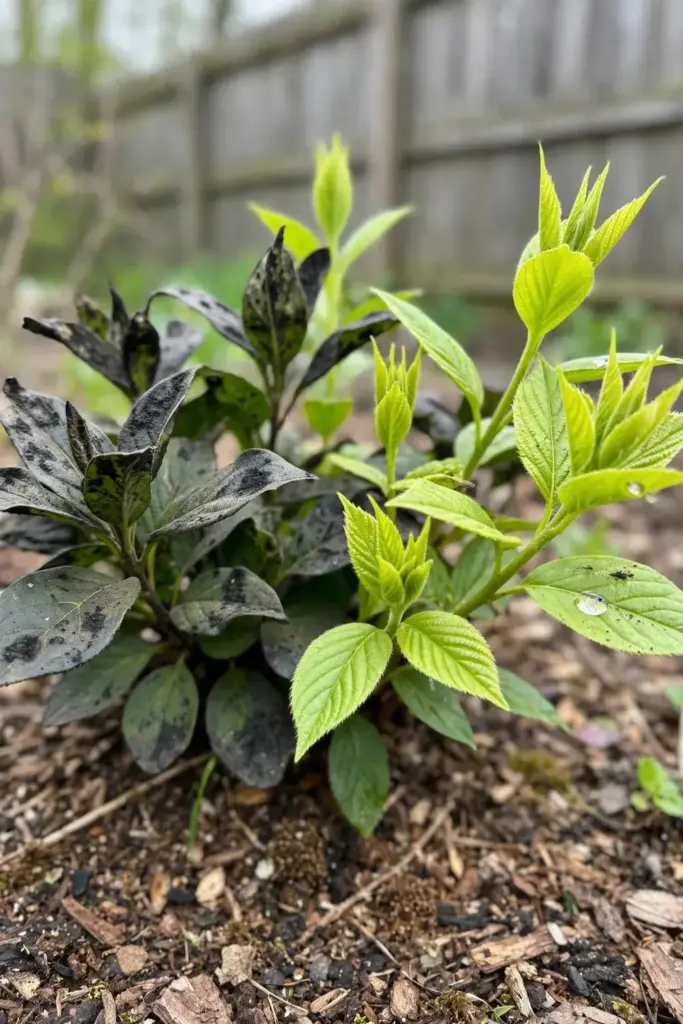
Sooty mold on plants is mostly cosmetic. The fungi sit on the leaf surface and never invade living tissue, so they do not poison the plant. A heavy coating blocks sunlight, slows photosynthesis, and saps vigor, and under heavy insect pressure growth stalls. The real damage comes from the insects behind the mold. Control the insects and the coating stops spreading.
Sooty mold on plants dries and flakes off once the honeydew insects are gone, and most of it clears by early spring. It will not vanish while the colony still feeds, because fresh honeydew keeps landing and fresh spores keep growing. Wash the coating off and stop the insects, and the mold fades. Skip the insects and the film rebuilds no matter how hard you scrub.
Yes, with a wash. Sooty mold sits on the fruit surface and does not rot the flesh beneath it, so wash the fruit and peel it if the film clings. Discard fruit that is small, shriveled, or rotting, since that damage comes from the insects behind the film. Judge the fruit by the flesh, not by the coating.
Sooty mold spreads through spores carried by water splash and air, and any leaf with fresh honeydew can grow a new coating. It does not jump from a clean plant to a clean plant on its own, because it needs honeydew to grow. The practical rule is to treat the insect colony, not the mold. Stop the honeydew and the spread stops with it.
Sooty mold comes back because the insects are still feeding overhead. Washing removes the coating, and fresh honeydew lands the next day, so fresh spores grow a fresh film. The wash treats the symptom. Find the colony and stop the insects, and the coating stays gone. Check the leaf undersides above the soot for the colony you missed.
18. Where to Go From Here
Sooty mold on plants is a messenger, not a killer. The black film says honeydew insects are feeding above it. Wash the film off, find the colony, treat the insects, and mind the ants. Save the systemic for last, and mind the blooms when you use it.
Start with the wipe test today. One damp cloth tells you whether you face sooty mold or a lookalike, and the answer sets the whole job. Then look up, find the colony, and work the 9 strategies in order. New growth comes in clean when the honeydew stops.
If the coating will not lift at all, or the leaf beneath is black and dead, get a second opinion on the identification before you spray anything, since the wrong diagnosis wastes a season.