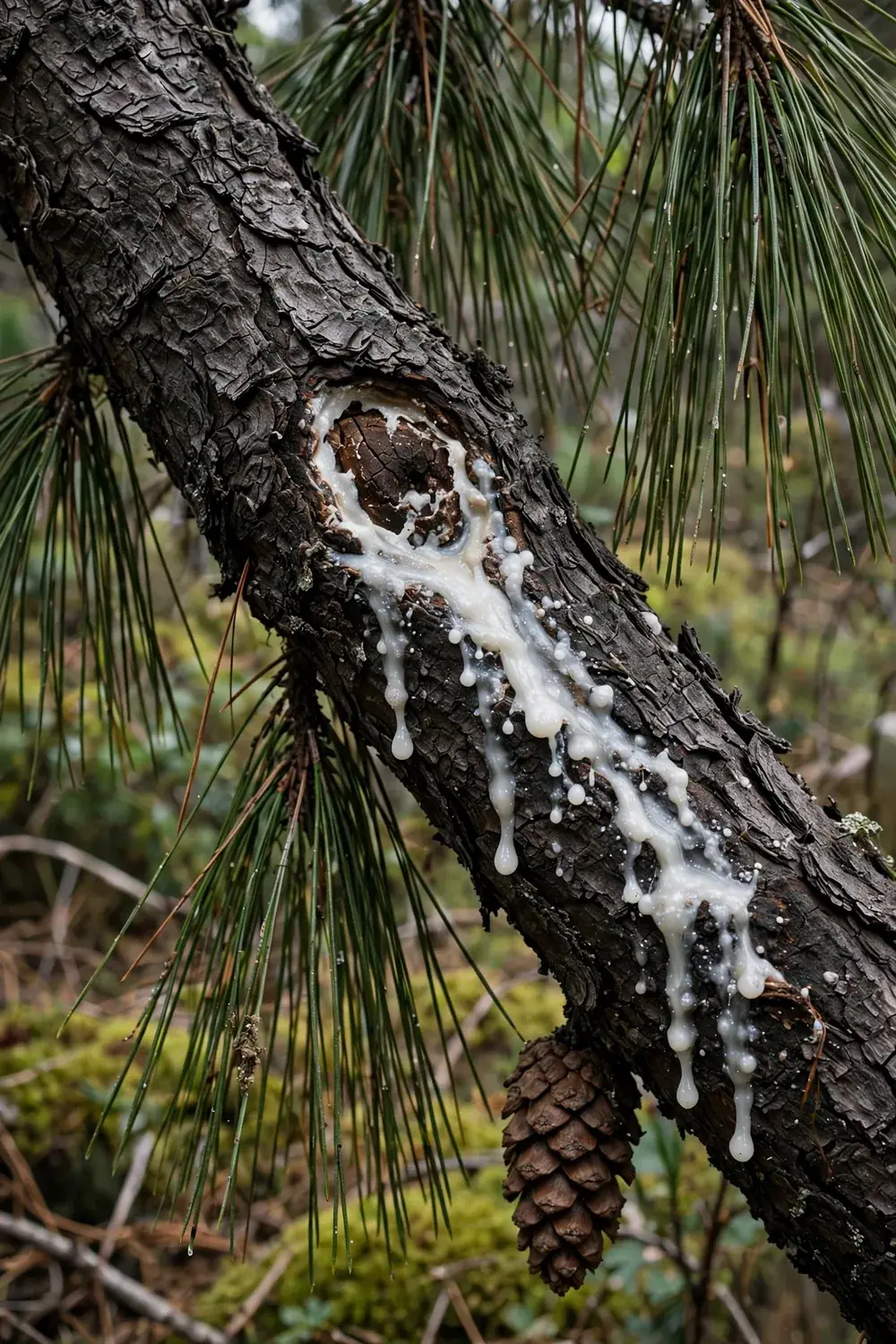

Look at the resin before you look at the needles. A pine branch that bleeds thick white pitch from a sunken canker, then loses its needles from the tip inward, points at pitch canker, and 8 strategies below carry the response. Pitch canker is a fungal disease of pines caused by Fusarium circinatum. No spray cures it once the fungus is inside the tree.
I have learned to trust the pitch flow over the needle color, because yellow needles alone can mean many problems while a resin-soaked canker points at one. Fusarium circinatum is the current name for the pathogen. Older names include Fusarium subglutinans f. sp. pini, and the sexual morph carries the name Gibberella circinata. Pitch canker attacks pines. Douglas-fir is the one secondary host, and on Douglas-fir the symptoms usually stay limited to tip dieback.
Diplodia tip blight is a different pine disease, and it is the one most often mistaken for pitch canker. This article stays on pitch canker. It covers the pitch flow sign, the Diplodia comparison, and the steps that protect your other pines.
Eight strategies carry this article. Spot the pitch flow, read the flagging on the branch tips, and check shoots, needles, and cones for the canker at the base of the dead tip. Know which pines suffer most, then run the Diplodia comparison before you cut anything. Weigh saving against removal. Prune, disinfect, and stop moving pine material off the property. Call an arborist or report the find.
1. What Pitch Canker Actually Is
Pitch canker is a canker disease of pines. The fungus Fusarium circinatum kills bark and cambium in patches, and the tree answers with a heavy flow of resin. Pitch canker reached California in 1986 and now occurs in 18 coastal counties, according to the UC IPM pitch canker notes. The disease also occurs in the southeastern United States and in Mexico, Chile, Japan, South Korea, Italy, France, Spain, Portugal, and South Africa.
Each canker is a separate infection. The fungus is not known to move within the tree, so one branch can carry a canker while the next branch stays clean. That fact shapes the whole response. You treat the infected branch, and you watch the rest of the tree, because a new infection can start at any fresh wound.
Pitch canker also kills seedlings. Seedlings can die fast after emergence, before they show any symptom distinct enough to name the cause. On older seedlings, resin gathers on the stem near the soil line, and honey-colored lesions sit beneath the bark. A home gardener rarely sees this stage, since it belongs to nurseries and seed beds, yet it explains why infected planting stock matters. A seedling with no visible symptom can still carry the fungus.
2. How to Identify Pitch Canker on Branches and Trunks
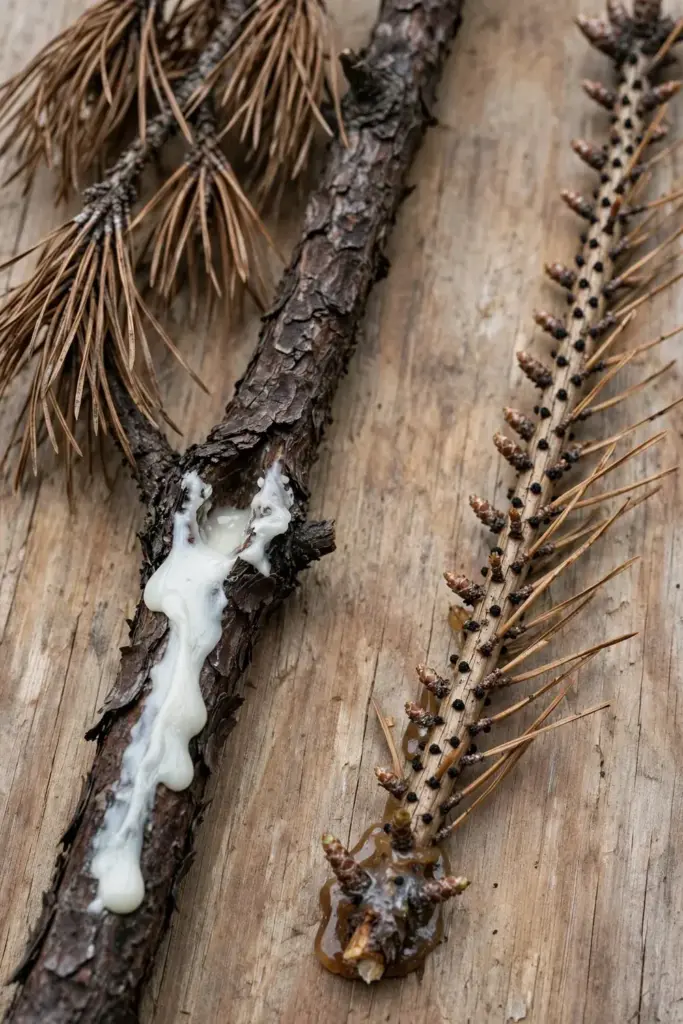
Look for a flattened or slightly sunken canker that bleeds thick white resin. That pitch flow is the signature. Peel back the bark at the canker edge and you find honey-colored wood soaked with resin. The resin can coat the bark well below the infection site, sometimes running down the trunk in a pale sheet.
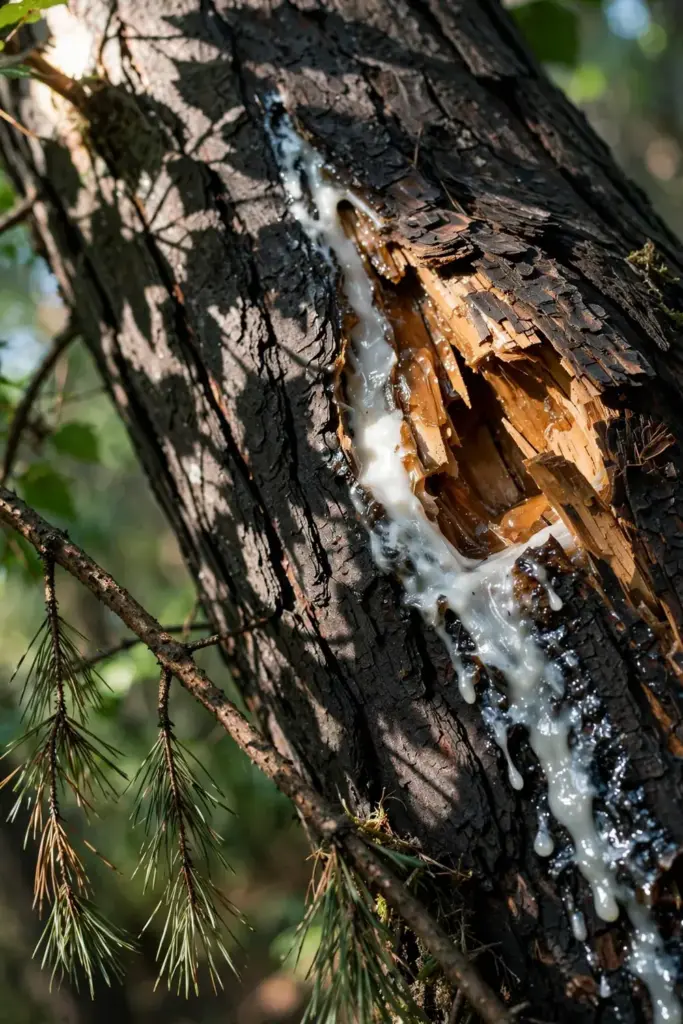
A canker that rings the branch kills everything above it. Water stops moving past the girdle. The needles beyond it wilt, color, and die. Main-stem cankers usually appear after the tree already carries many branch infections, so a trunk canker means the disease has been at work for a while. In advanced cases the damaged trunk wood weakens, and the trunk can deform or break at the canker.
Check the branch first and the trunk second. A single bleeding branch canker with a clean trunk is a different situation from a trunk coated in resin. The first calls for pruning. The second calls for the removal decision in Step 1. Write down what you see before you cut anything. A short note on which branches bleed and whether the trunk shows cankers keeps the later steps honest.
Work around the whole tree, not just the side you see from the path. Cankers hide on the shaded side and low on the trunk behind shrubs. Run a gloved hand lightly along the bark and feel for sunken patches and sticky resin, then look at the branch above each patch. A sunken patch with dead needles above it is a canker until proven otherwise. Fresh resin that still runs when you touch it marks an active infection, while old dry resin marks a canker that may have stalled.
3. How to Identify Pitch Canker on Shoots, Needles, and Cones
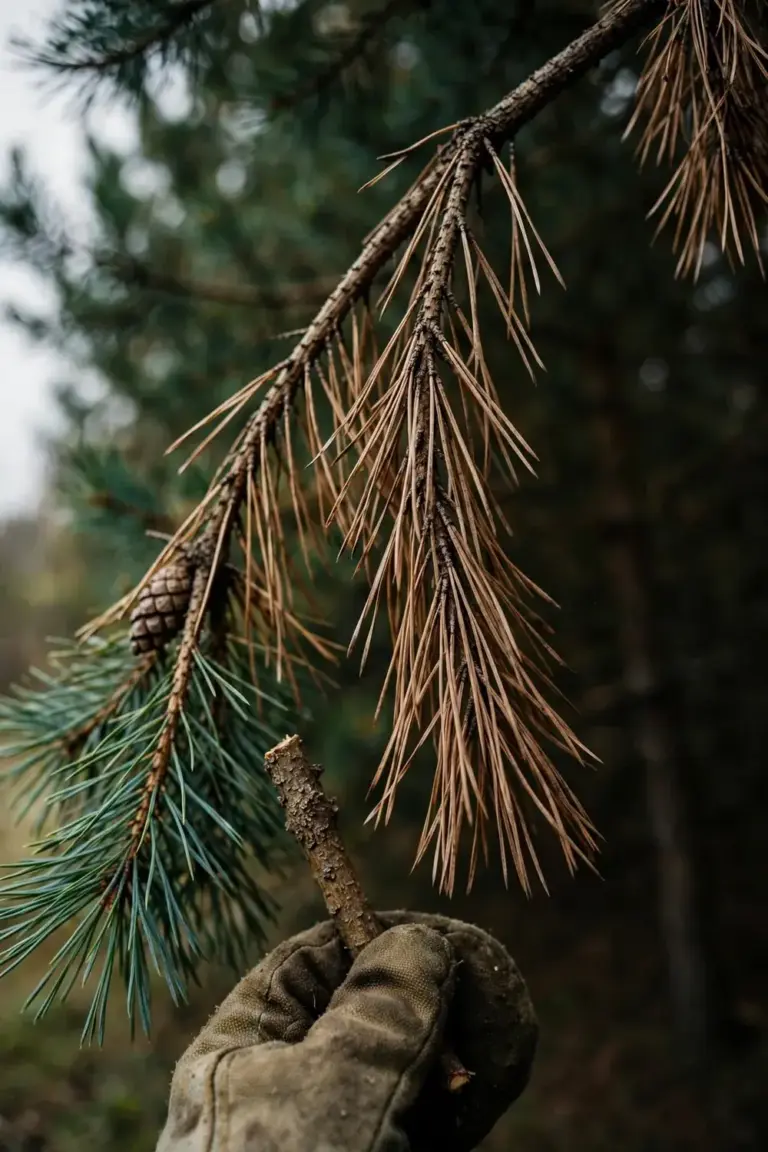
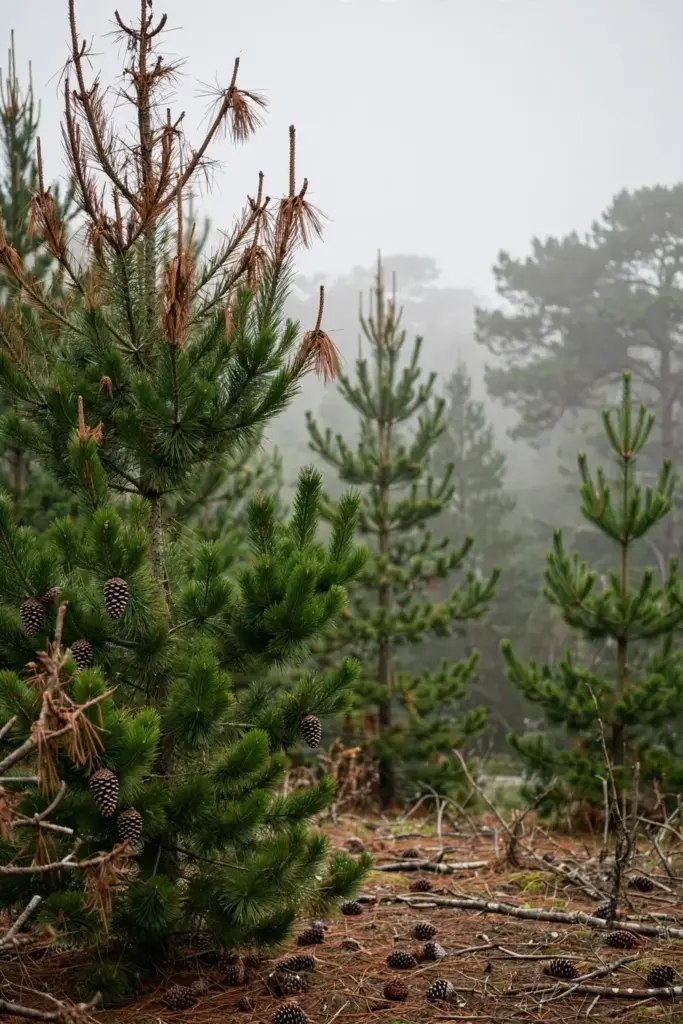
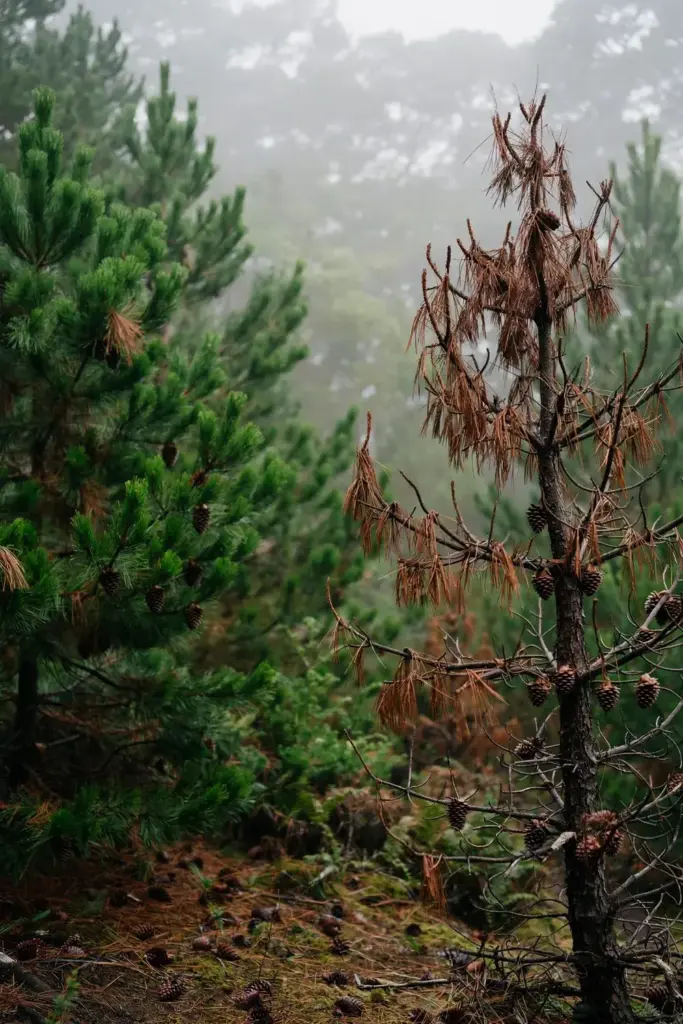
Watch the branch tips. Needles beyond a girdling canker turn yellow, then brown, and the tip dies while the dead needles stay attached. This flagging is often the first sign a gardener notices from the ground. The needle clusters eventually fall, leaving bare branch ends. Many branch infections together thin the crown, and heavy crown dieback can kill the tree.
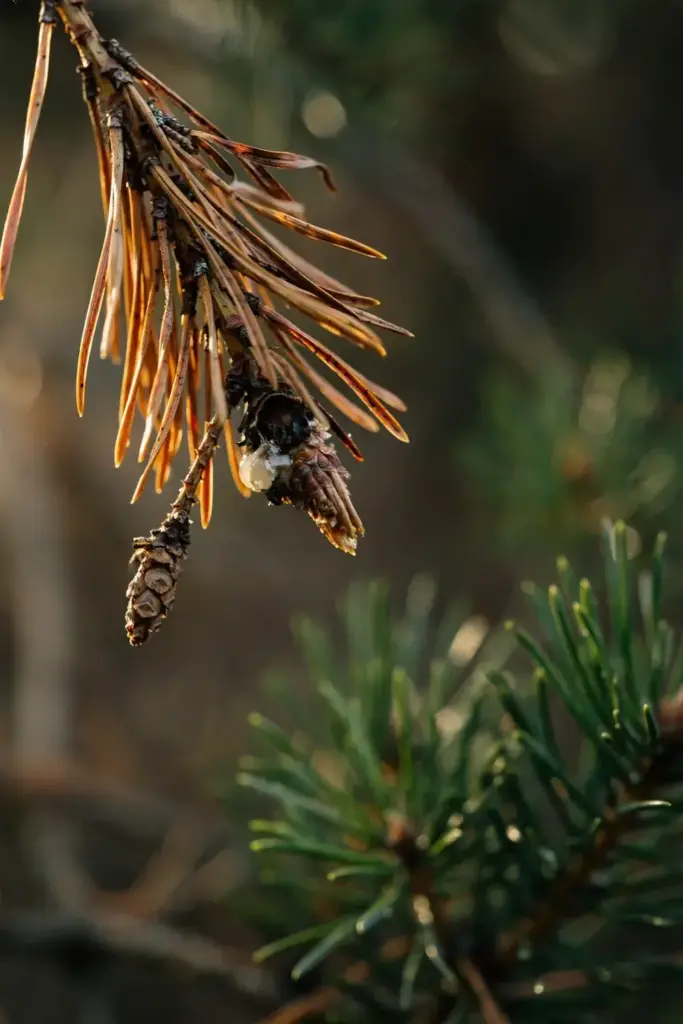
Cones tell the same story. Cones and conelets on infected branches abort before they reach full size. A pine that drops its young cones while its branch tips flag deserves a close look at the bark. The canker sits where the branch meets the dead tip, and the resin marks it.
Defects in the crown can look alike, so confirm the canker before you act. A wilted tip alone proves little. A wilted tip with a resin-soaked canker at its base proves much more. A definitive identification still needs a laboratory culture of diseased tissue. That caution matters, and the Diplodia comparison shows why.
4. Which Pines Get Hit Hardest by Pitch Canker
Monterey pine takes the worst of pitch canker. Forest Research lists more than 45 pine species as hosts and records the disease in 12 southeastern states of the United States, in its pitch canker of pine profile. Monterey pine, Pinus radiata, is the most widely affected host in California, and bishop pine suffered the most recent severe outbreak in native stands at Point Reyes National Seashore.
| Pine | Field Susceptibility | What That Means for Your Yard |
|---|---|---|
| Monterey pine | High | Expect the worst damage where this species grows near the coast |
| Bishop pine | High | Native stands have suffered severe outbreaks |
| Knobcone pine | High | Infections occur in native forest and plantings |
| Shore pine | High | Field infections are well documented |
| Ponderosa pine | Lower | Some infected trees seen, far fewer than on Monterey pine |
| Canary Island pine | Resistant | Field observations show few or no natural infections |
| Italian stone pine | Resistant | Field observations show few or no natural infections |
Susceptibility varies between individual trees as well as between species. Some Monterey pines stand green beside heavily infected neighbors. That variation matters at replanting time. For ground outside the Monterey pine native range, a resistant pine or a nonsusceptible tree is the safer replacement.
5. Pitch Canker vs Diplodia Tip Blight
Pitch canker and Diplodia tip blight share the same first impression: dead branch tips on a pine. The table below separates them by the signs that hold up in the yard.
| Sign | Pitch Canker | Diplodia Tip Blight |
|---|---|---|
| Pitch flow | Copious, usually present | Some, occasional |
| Wilted tip needles | Yes | Yes |
| Dead tips and needle drop | Yes | Yes |
| Cones or conelets abort | Yes | Some |
| New growth | Shoots wilt after the canker girdles the branch | New growth stunted, short, brown, and glued to the twig by resin |
| Black fruiting bodies at needle bases | No | Yes, small black pycnidia |
| Canker site | Branch, trunk, or exposed root | Often on wounded tissue |
| Lab test | Culture of diseased tissue settles it | Culture of diseased tissue settles it |
The overlap is real. Both diseases show wilted tips and dead tips, and Diplodia also leaks some pitch. That overlap is why a field call stays presumptive. Two signs break the tie. Copious pitch flow from a sunken canker favors pitch canker. Small black pycnidia at the needle bases, plus new shoots that emerge stunted and glued by resin, favor Diplodia. The University of Minnesota notes those pycnidia as the positive identification mark for Diplodia, and adds that fungicides can protect new growth but will not prevent cankers, in its Diplodia tip blight sheet. The same sheet advises against fertilizing infected trees.
Other cankers behave differently again. Bacterial canker comes from bacteria, not a fungus, and it follows its own pattern on fruit trees. Do not borrow a bacterial canker treatment for a pine with pitch canker. The pathogen differs, so the response differs.
6. Why Insect Wounds Drive Pitch Canker Spread
Pitch canker starts at wounds. Insects make the wounds and carry the spores. Engraver beetles, twig beetles, cone beetles, and deathwatch beetles can all vector the fungus during exploratory feeding on bark. Spittlebug nymphs do not carry the fungus, yet the wounds they create can become infected when spores already sit on the branch surface.
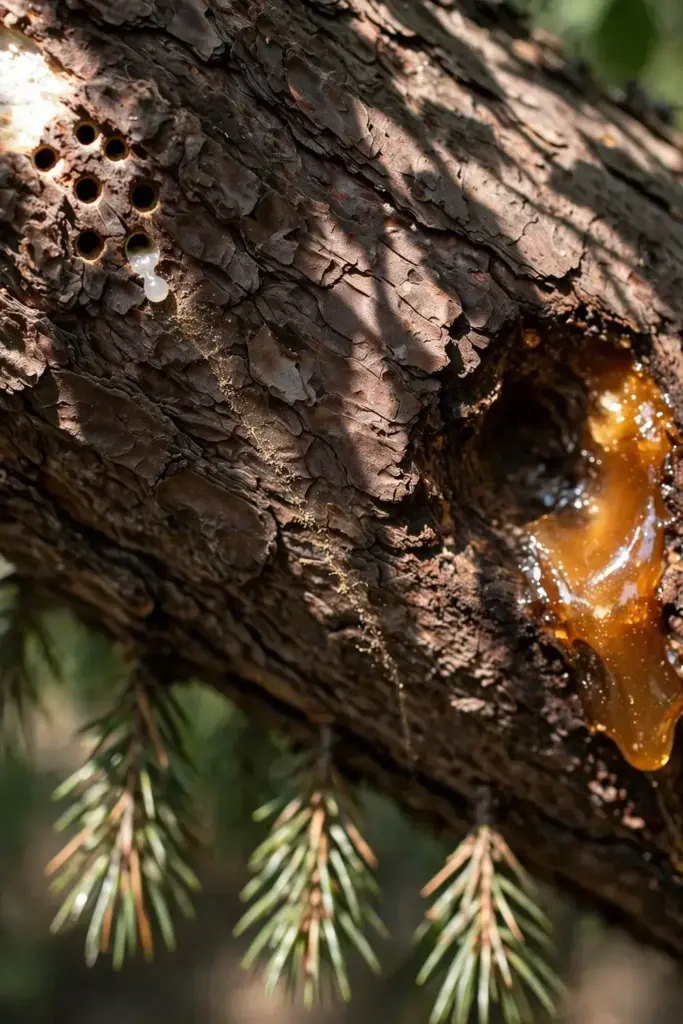
Spores also travel on wind and rain, and they need moisture to infect the shallow wounds insects leave. Fog supplies that moisture on the California coast. Trees in plots beside the coast showed more disease than trees a few miles inland, and disease increased faster near the coast. That coastal pattern is one more reason Monterey pine plantings near the fog belt suffer most.
Wounds come from more than insects. A pruning cut, a storm-torn branch, a mower nick, and a string-trimmer scar all open the same door. The fungus does not care what made the wound. It needs bare wood, moisture, and spores arriving together. That is why the calendar matters. A cut made in dry weather closes before spores find it. A cut made in wet, foggy weather stays wet and exposed through the exact window the spores need.
Infected trees attract more insects. Engraver beetles often attack trees already carrying pitch canker, and their feeding can kill additional branches, treetops, or the whole tree. The fungus also survives in wood cut from infected trees, and it can survive in soil or seed. A tree that looks healthy can carry the fungus without symptoms, and Douglas-fir does this often. The practical lesson is blunt. Every wound is a door, and every piece of pine material leaving the property can carry the fungus through it.
7. What Makes Pitch Canker Worse in a Home Garden
Wounds, drought stress, over-fertilization, and coastal fog raise the risk. Infections typically start in late summer or fall, though they can begin at any time of year, and host trees suffer most when wounded, drought-stressed, or over-fertilized, according to the Davey pitch canker guide. The same guide states the hard limit on general tree care. Fertilization, watering, mulching, and pruning that maintain vigor and improve defense against disease and insect activity in general cannot be relied upon to reduce this disease. Pitch canker attacks healthy trees as well as stressed trees.
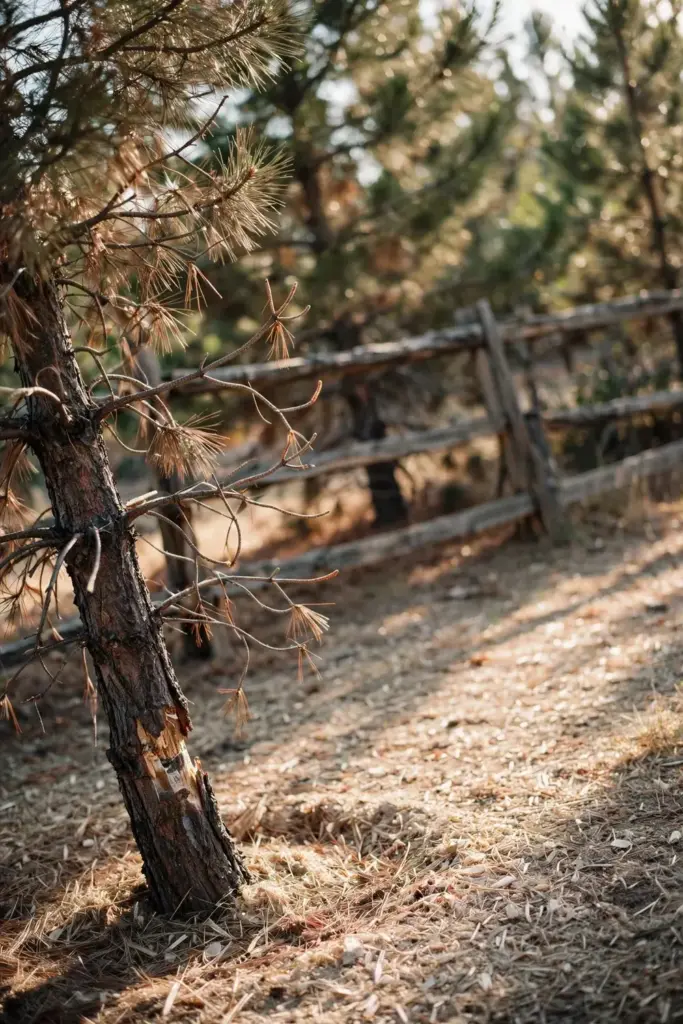
Trees in planted yards and small open spaces showed more disease than trees in larger, less disturbed forests. A yard pine sits exposed. It takes mower nicks, string-trimmer bark wounds, pruning cuts, and drought between waterings. Each wound is a fresh infection court, and the open canopy lets wind carry spores from branch to branch.
Over-fertilization deserves its own warning. A heavy nitrogen push grows soft tissue that insects wound with ease, and the tree gains no real defense against pitch canker in return. Feed a pine to correct a diagnosed deficiency. Do not feed it as a shield against this disease.
8. Step 1: Decide Whether the Tree Is Worth Saving
Save the tree when infections are few and the trunk is clean, and remove it when the trunk is girdled or the crown is mostly dead. That call comes before any saw work.
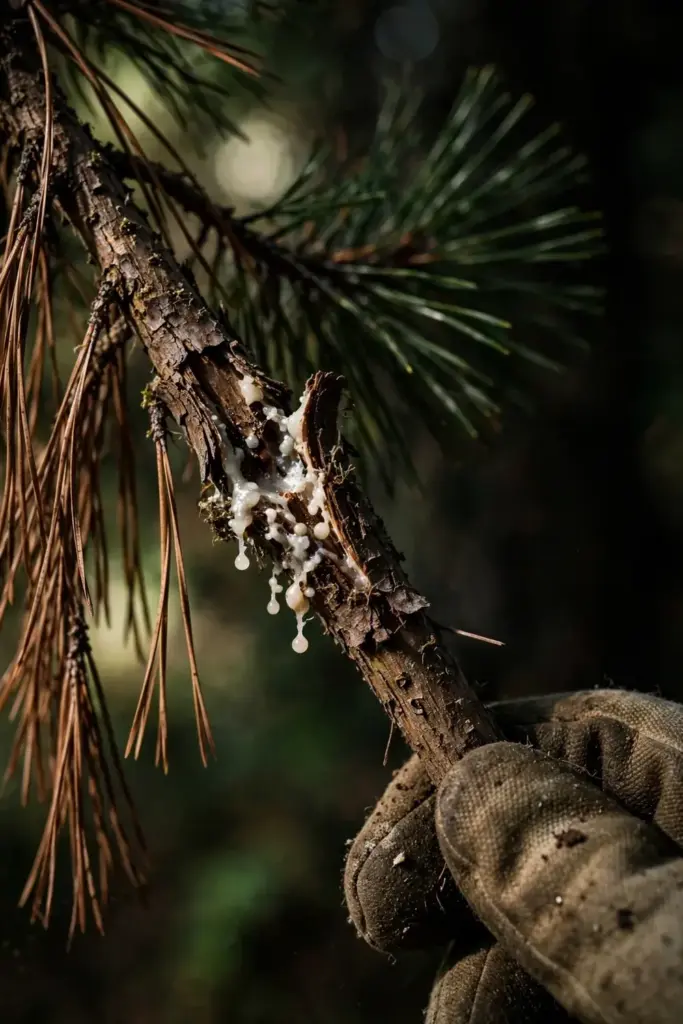
Some infected trees recover. Some gain resistance over time after repeated exposure, and field studies show trees in areas where the disease has been present for years tend to resist it better than trees where it arrived recently. A conservative approach to removal fits that evidence. A tree with a few bleeding branch cankers and a clean trunk earns patience. A tree with a resin-coated trunk, a thinning crown, and fresh cankers on many branches earns a removal plan.
Pruning does not slow the disease where it is well established. It can still improve the look of a tree and delay removal, and that delay has real value for shade and screening. Weigh the tree against its neighbors. A lightly infected pine far from other pines is a different risk from a heavily infected pine standing over a row of young Monterey pines. The second tree threatens the first rule of this article. Protect the healthy pines first.
9. Step 2: Prune Infected Branches and Disinfect Every Cut
Cut infected branches back to healthy wood and sanitize tools between cuts. Work in dry conditions. Wet bark spreads spores, and a wet cut stays wet long enough for spores to settle. Cut below the visible canker, into clean wood with no resin soaking and no discoloration.
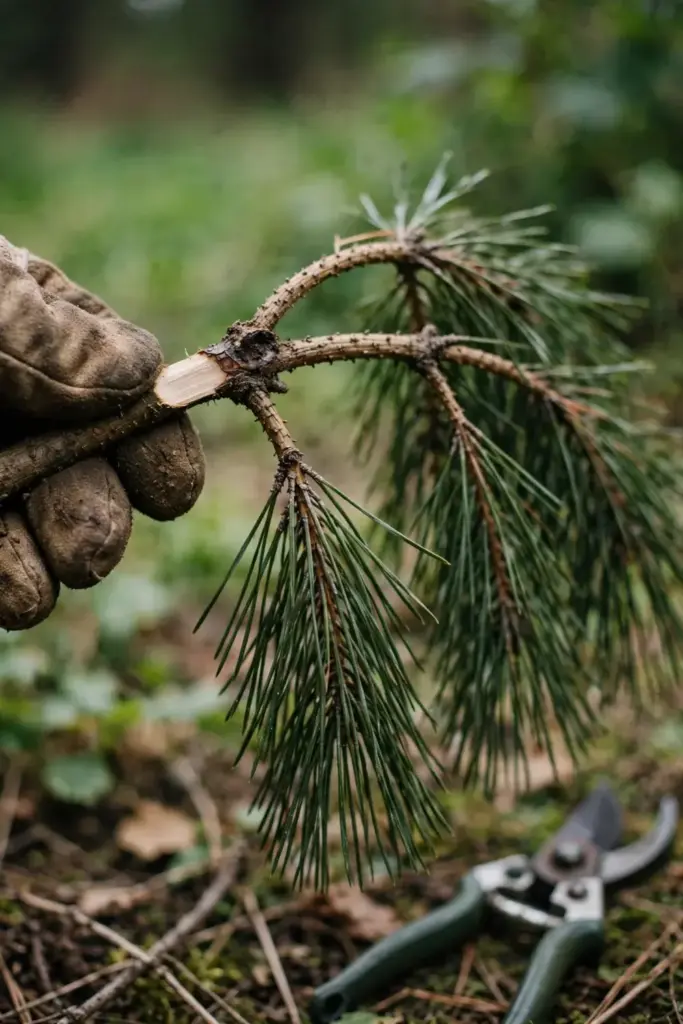
Removing symptomatic branches can eliminate the disease where infections are limited. That result holds only for limited infections. Where the disease is well established, pruning will not slow its development across the stand. Prune anyway for appearance and for safety, and prune with the removal decision from Step 1 already made.
Sanitize the saw between cuts. Spores ride on blades from one branch to the next, and a single uncleaned cut can plant the fungus in healthy wood. Clean the blade, cut, clean again. Bag the cut material and dispose of it locally. Do not pile infected branches beside healthy pines while you finish the job. Do not seal the cuts with tree paint. The sources used here give tree paint no role in pitch canker control. A clean cut in dry weather heals on its own schedule.
Pruning technique matters as much as the cut list. Spring pruning techniques cover the clean-cut habits that keep any pruning job from becoming a wound problem: sharp tools, cuts at the branch collar, and no tearing bark.
10. Step 3: Stop Moving Pine Material Off Your Property
Do not carry firewood, logs, chips, cones, or soil from an infected pine to another area. The fungus survives in wood cut from infected trees, and it can survive in soil and seed as well. A load of firewood looks harmless. It is a shipment of fungus.
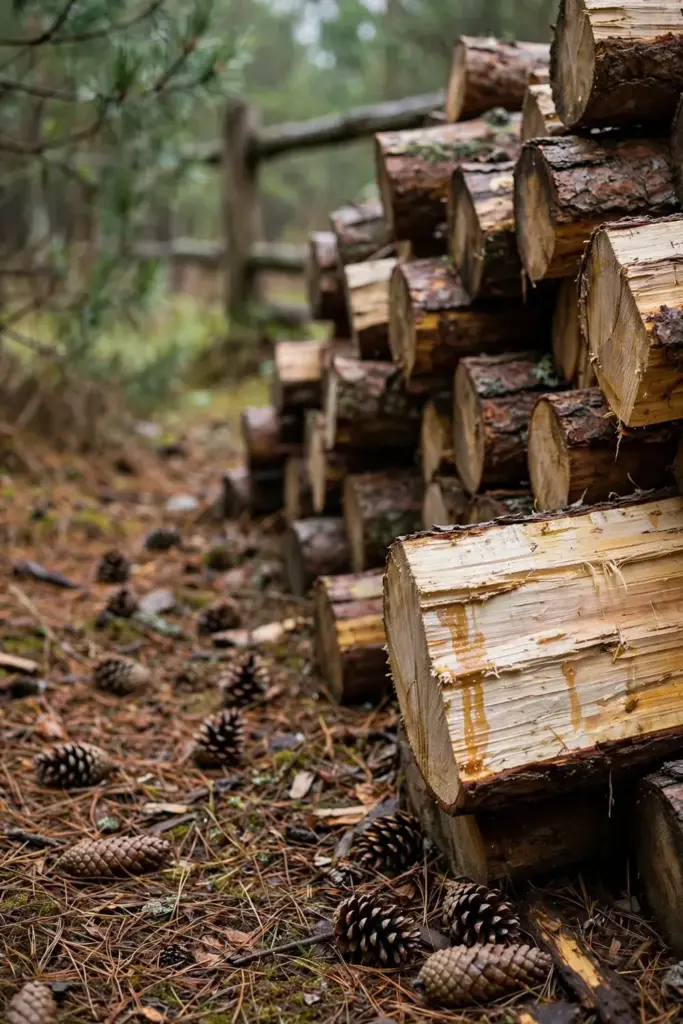
Use or dispose of infected material locally. Chip it and use the chips on the same property, or haul it to a local disposal site that accepts infected green waste. Ask your county agricultural commissioner whether your area sits inside a zone of infestation and what local rules apply to moving pine material. Local regulations may restrict movement of potentially infested material out of the zone.
The same rule covers planting stock. Do not move seedlings, cuttings, or nursery plants from an infected area into a clean one. Infected seedlings and cuttings can show no symptoms and still carry the pathogen. Buy pine stock from a clean source, and inspect every new plant for resin bleeding before it goes into the ground near your healthy pines.
11. Step 4: Protect Your Other Pines From Wounds and Vectors
Give neighboring pines fewer wounds and less stress, and accept that this lowers risk without guaranteeing safety. No yard practice makes a pine immune to pitch canker. The goal is fewer doors for the fungus.
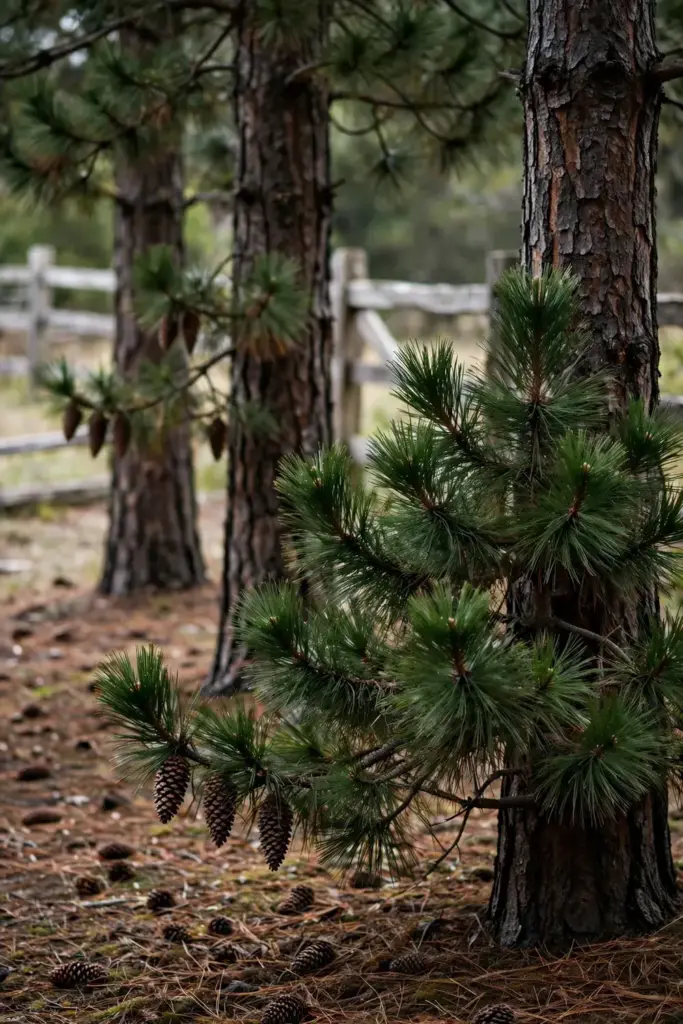
Avoid pruning in wet weather. Avoid wounding bark with mowers and string trimmers. Keep mulch off the trunk and keep the root zone free of mechanical damage. Water through drought so the tree does not enter the high-risk season already stressed. Correct a diagnosed nutrient deficiency and stop there. Extra fertilizer does not buy protection.
Insecticides do not offer a practical way to control pitch canker, even though insects start most infections. The vector insects are many, mobile, and active across a long season. Fungicides with activity against the pathogen exist, yet no effective technique for using them to control the disease has been demonstrated. That pair of facts closes the spray route. The protection that remains is physical: fewer wounds, local disposal, and early removal of heavily infected trees before they shed spores onto their neighbors.
12. Step 5: Know When to Call an Arborist or Report It
Call an arborist when the tree is large, near a structure, or the trunk shows cankers. Climbing work, canopy removal, and trunk decisions belong to a professional with the right gear. An arborist can also judge whether a tree with a trunk canker is structurally safe to keep, and can plan a removal that does not scatter infected material across the yard.
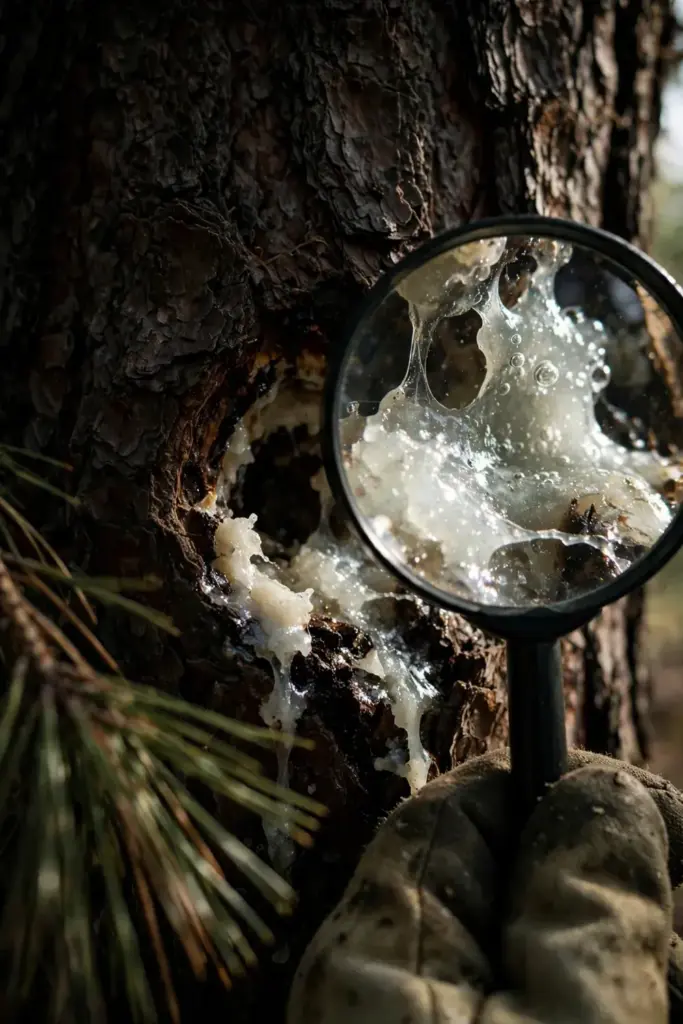
Report the find when your region treats pitch canker as a quarantine pest. Pitch canker is not present in the United Kingdom and is notifiable there, so suspected sightings go through TreeAlert, according to Forest Research. In the United States, check with your county agricultural commissioner or state extension service for the local status and any reporting rules. The rules differ by region, and a California yard faces a different situation from a British one.
Report early even when the tree looks stable. A single report can trigger a survey that finds the next infection before it spreads. A quiet infection that nobody reports keeps shedding spores.
13. Living With Pitch Canker Damage You Cannot Undo
Dead branch tips stay dead. The goal shifts to keeping the rest of the tree and the neighboring pines. Prune the dead tips for appearance and for safety, and keep watching for fresh cankers. A tree that stops producing new cankers after a light infection may be one of the trees that recovers. Leave it standing and keep it under watch.
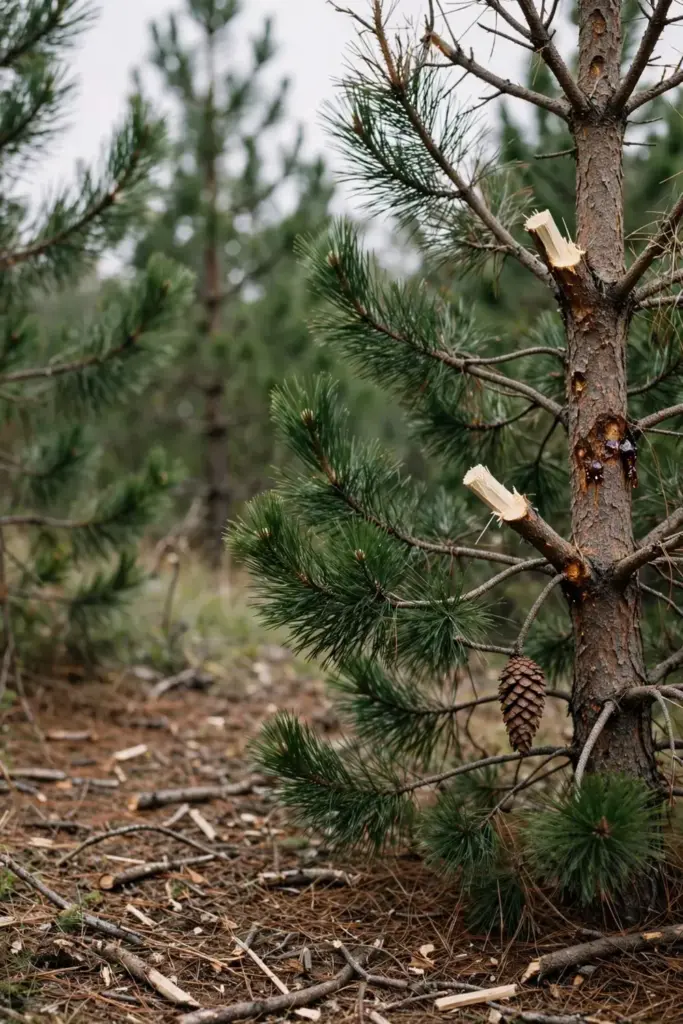
Replanting is the long move. For ground outside the Monterey pine native range, choose a resistant pine or a nonsusceptible tree for the replacement. Canary Island pine and Italian stone pine show field resistance, and a nonsusceptible species removes the host entirely. Do not replant a Monterey pine in the same spot beside an infected stump and expect a different result. The inoculum is already there.
Keep general care steady. Water through drought, mulch the root zone without piling mulch against the trunk, and correct diagnosed deficiencies. None of that cures pitch canker. All of it keeps the tree strong enough to live with the damage it already carries. A damaged pine that keeps its crown, keeps its water, and gains no new cankers is a tree worth keeping.
Set a monitoring habit and keep it. Walk the tree once a month through the growing season and look at the branch tips and the trunk. Mark any new canker with a dated tag or a photo, and compare it at the next walk. A canker that stops growing and dries out is a tree holding its ground. A canker that spreads, or a fresh canker on a new branch, means the disease is still moving, and the removal decision from Step 1 comes back to the table.
14. Frequently Asked Questions About Pitch Canker
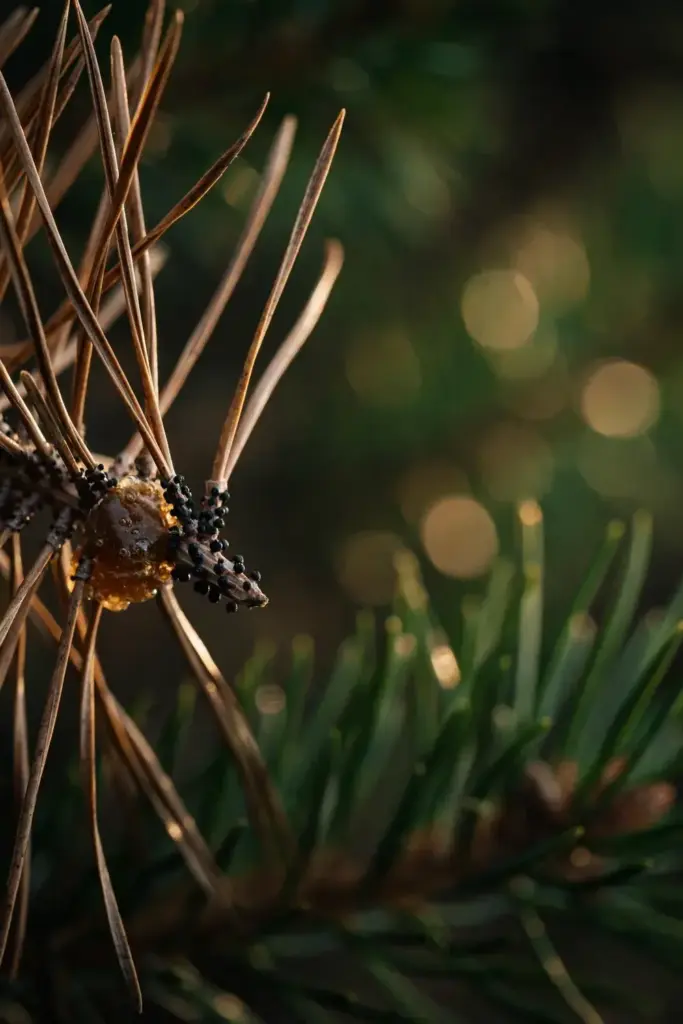
Yes. Spores travel on wind and rain, insects carry them from tree to tree, and the fungus survives in cut wood, soil, and seed. A heavily infected pine sheds spores onto its neighbors all season. Remove heavily infected trees, prune lightly infected branches, and stop moving pine material off the property. Those three moves cut the spread more than any spray.
No. Fungicides with activity against the pathogen exist, yet no effective technique for using them to control the disease has been demonstrated. Sprays do not reach the fungus inside bark and wood, and they do not rescue tissue the fungus has already killed. Spend the spray budget on pruning, sanitation, and an arborist visit instead.
Keep it on the property or dispose of it locally. The fungus survives in cut wood, so a load of firewood moved to another area carries the disease with it. Chip it for use on the same property, or haul it to a local disposal site that accepts infected green waste. Check local rules before moving any pine material out of the area.
Start with the pitch flow. Copious thick white resin from a sunken canker favors pitch canker. Small black pycnidia at the needle bases, plus new shoots that emerge stunted and glued by resin, favor Diplodia. Both diseases show wilted tips and dead tips, so the field call stays presumptive. A laboratory culture of diseased tissue gives the definitive answer.
Sometimes. Some infected trees recover, and trees in areas where the disease has been present for years tend to resist it better than trees where it arrived recently. A tree with a few branch cankers and a clean trunk earns patience and watchful pruning. A tree with a resin-coated trunk and a thinning crown rarely turns around, and removal protects the healthy pines nearby.
15. Where to Go From Here
Pitch canker rewards early eyes and steady habits. Walk your pines this week and check every branch tip for pitch flow. Cut the infected branches, clean the saw between cuts, and keep every piece of pine material on the property. Those moves will not cure a tree that is already heavily infected, yet they give the healthy pines beside it the best chance of staying healthy.
Other canker diseases follow different rules. Botryosphaeria canker attacks stressed trees across many hosts, and Botryodiplodia leaf spot shows a different symptom pattern on foliage. Pine wilt comes from a nematode, so its management differs from any fungal canker. Cypress canker hits cypress, not pines. Nectria canker, Cytospora canker, Seiridium canker, and Hypoxylon canker each attack different hosts. Pine needle rust and pine-oak gall rust are rusts, not cankers, and they need their own identification.
The next action is a walk, not a purchase. Take a saw, a cleaning rag, and a bag. Check the branch tips, look for resin, and act on what you find.