
Hypoxylon canker has no cure once it turns active on an oak. The 9 strategies below catch the disease early, save the trees that still stand a chance, and protect the oaks around them.
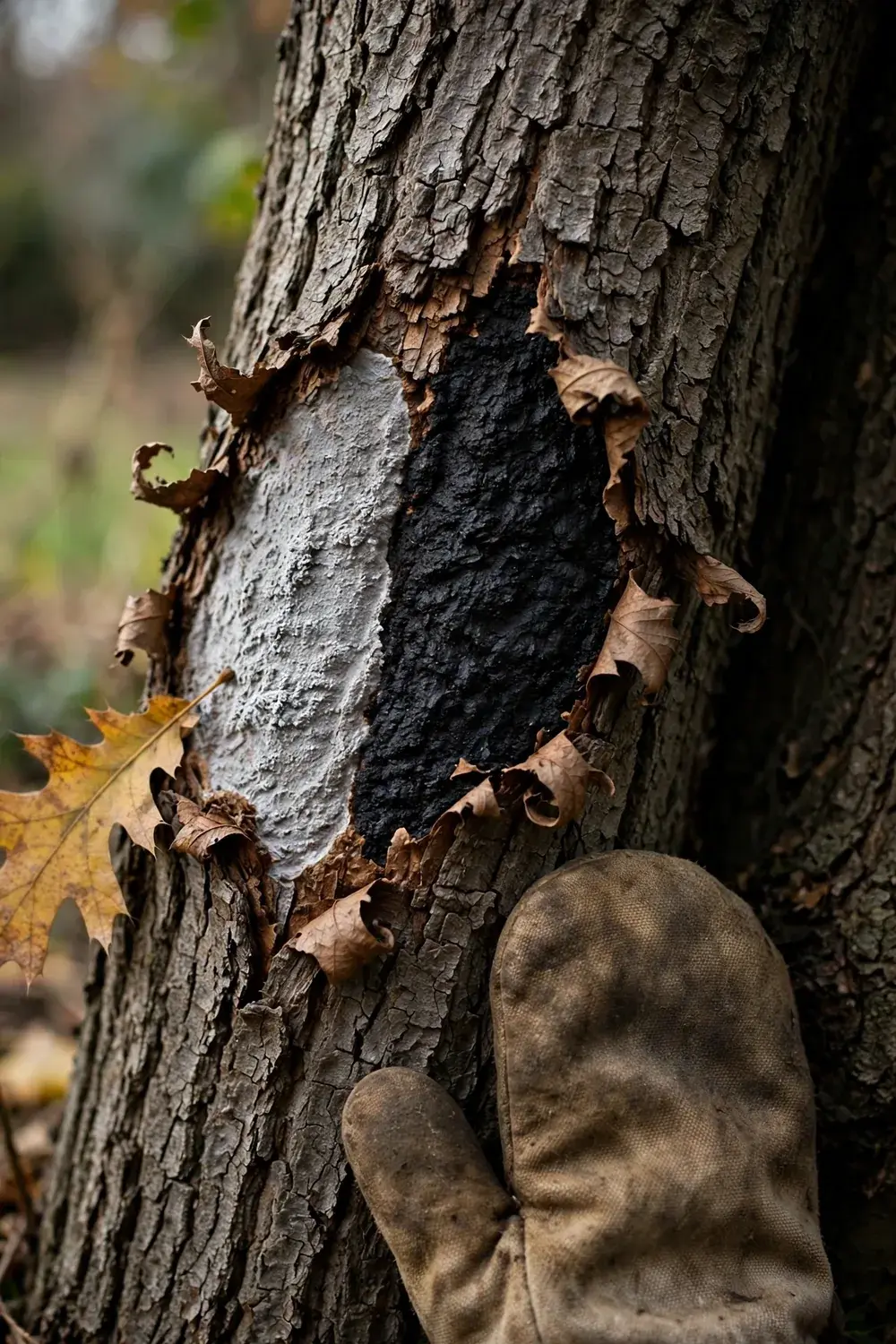
The signature is bark that peels away to reveal a powdery fungal mat. The mat runs tan or reddish brown, hardens to tar black, and fades at last to silver gray. A tree with those mats on the trunk is already in serious trouble.
The rest of this page runs the order a homeowner should follow. Identify the disease first, then decide whether the tree is worth treating, then work the 9 steps from the first cut to next-season protection. I have learned that a stressed oak declines fast once the mats show, so the early signs deserve a walk around every oak after a drought.
What Hypoxylon Canker Actually Is
Hypoxylon canker is a fungal canker disease of oaks and other hardwoods. Two fungi cause the disease that homeowners meet under this one name.
Biscogniauxia atropunctata causes most oak cases in the South. Biscogniauxia mediterranea causes the rest. Older sources call these fungi Hypoxylon atropunctatum and Hypoxylon mediterranea, and the old names describe the same fungi. The common name Hypoxylon canker leads below because homeowners still search for it and still hear it from tree services. The current genus is Biscogniauxia, and that name appears wherever the pathogen itself is named.
The fungus lives inside many healthy oaks without causing symptoms. The NC State Extension page on Biscogniauxia (Hypoxylon) canker reports that researchers found Biscogniauxia atropunctata inside the branches and trunks of healthy oaks in Arkansas forests. The fungus stayed quiet in those trees. Girdling stress switched it on, and even trees that researchers never inoculated developed the disease once girdled. The fungus is latent in many trees.
Hypoxylon canker of aspens is a separate disease. It comes from a separate fungal pathogen, and it attacks aspen and poplar in northern forests. Keep the two apart when reading advice, since the hosts and the regions differ.
How to Identify Hypoxylon Canker on the Trunk and Branches
Look for bark that peels away to reveal a fungal mat. A trunk or branch with that mat has Hypoxylon canker.
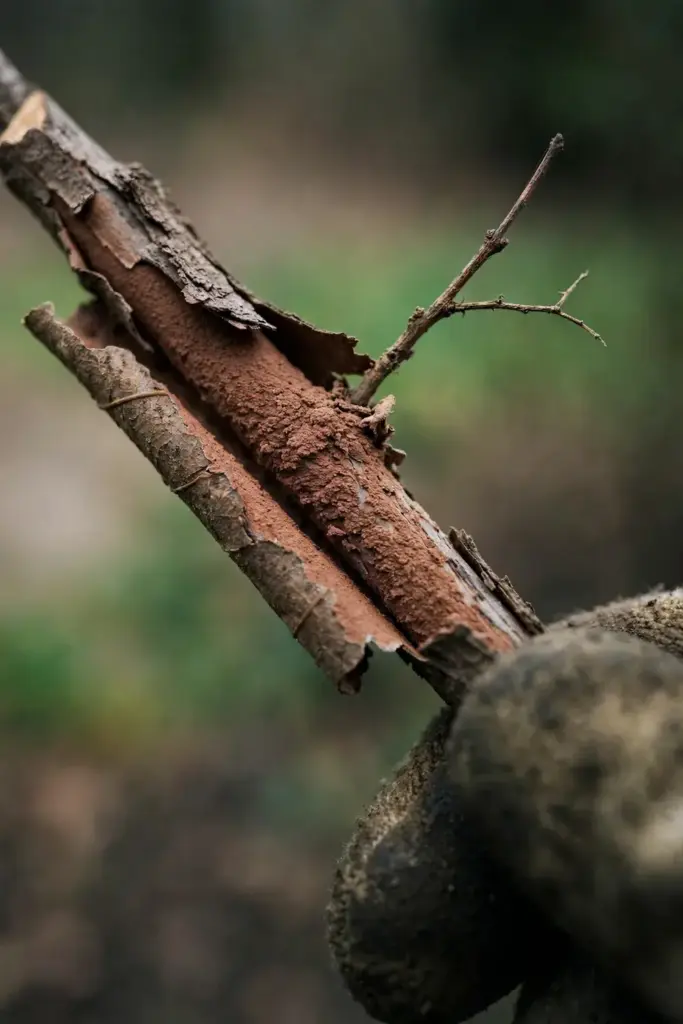
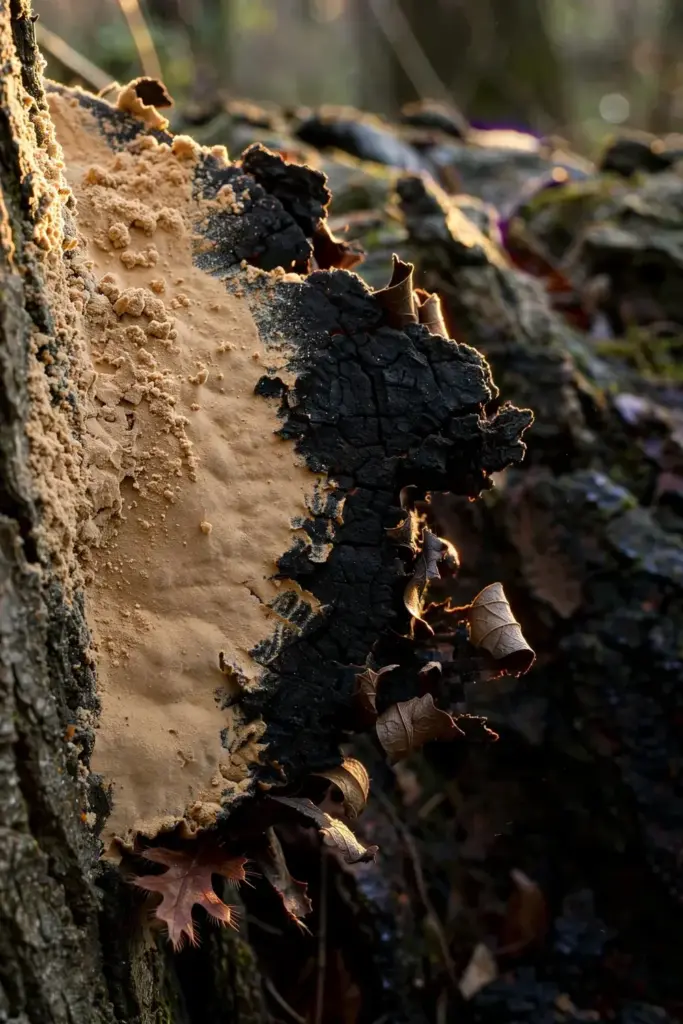
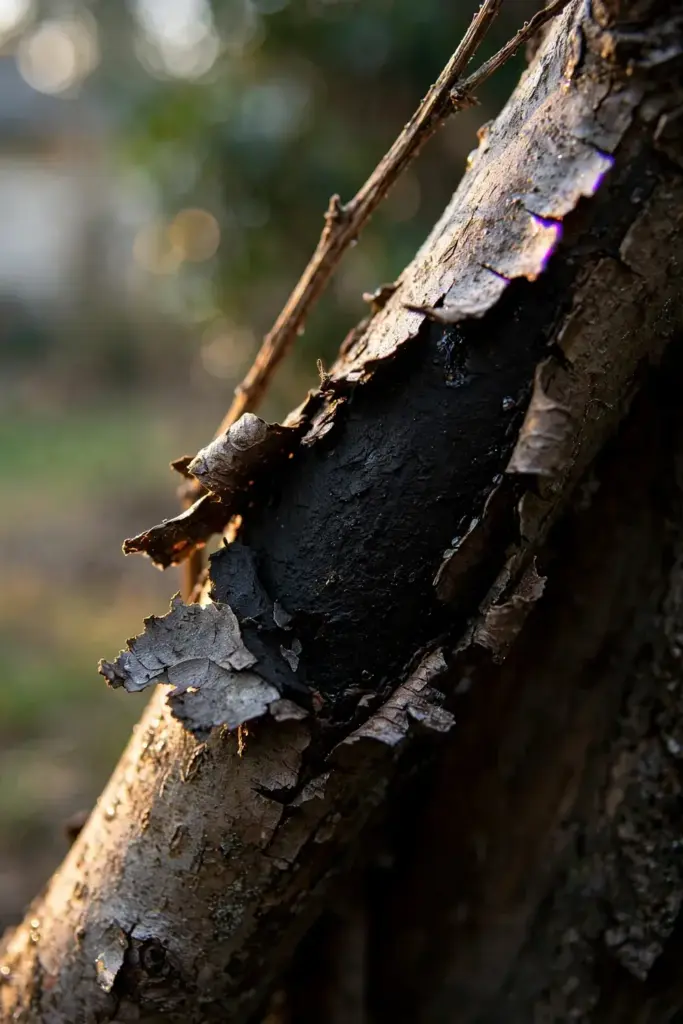
The mat is the stroma, the spore-bearing structure of the fungus, and stromata form beneath the bark and push the bark off as they grow. The same NC State page describes the color sequence. Fresh stromata look reddish brown or tan with powdery spores. The mat then hardens and turns black, with a look like tar. After the spores release, the mat turns gray, and a silver gray patch that looks like thick paint on the trunk marks a late-stage stroma.
The Texas A&M Forest Service fact sheet on Hypoxylon canker of oaks adds the timing. The gray surface flakes off after 6 to 12 months to reveal a dark brown to black crusty layer. The crust gives the tree a burnt look. Small patches a few inches long merge into long strips along the trunk and the main limbs. Bark pops or falls off over those strips and exposes the fungal mat where the cambium should sit.
Check the wood under a peeled patch. Invasion of the sapwood leaves discoloration and decay lines in the wood. Cut wood from a cankered area shows white, stringy, decayed sapwood. A branch or trunk with that white rot under a peeled mat leaves little room for doubt.
How to Spot Hypoxylon Canker in the Canopy Before Bark Peels
Watch the canopy first. Crown thinning and branch dieback show up before the bark peels.
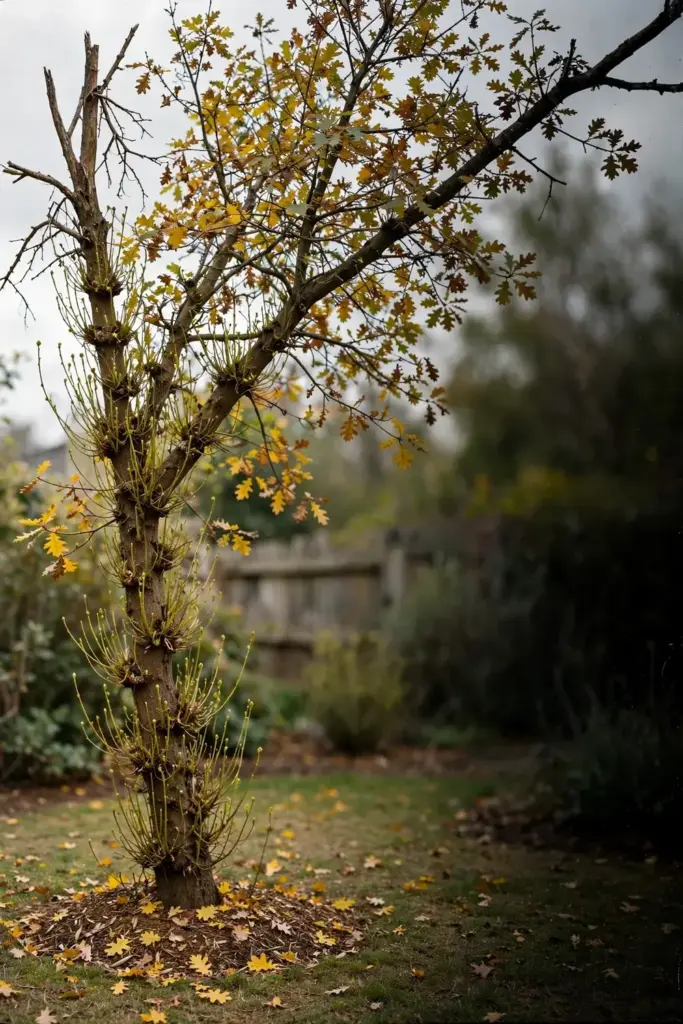
Early symptoms run quiet. The same NC State page lists thinning of the crown and branch dieback among the first signs. Undersized, wilted, or scorched leaves follow. Bud break runs late. A branch that leafs out two weeks behind its neighbors deserves a close look at the bark below it.
Water sprouts add a second early clue. Stressed oaks push clusters of thin, fast-growing shoots from the trunk, from large limbs, or from the root flare. Gardeners call these shoots water sprouts. One cluster after a drought year means stress. Several clusters across the trunk mean the tree is fighting hard.
Dead twigs and branches pile up as the disease advances. A healthy oak drops a few twigs each year, while an infected oak sheds twigs across the whole canopy and keeps dead branches attached through the season. Walk the drip line after a storm and count the fresh deadwood on the ground. A sudden jump points at a tree in decline.
Which Oaks Get Hit Hardest by Hypoxylon Canker
Red oaks take the worst of it. White oaks hold up better, and the difference comes down to drought tolerance.
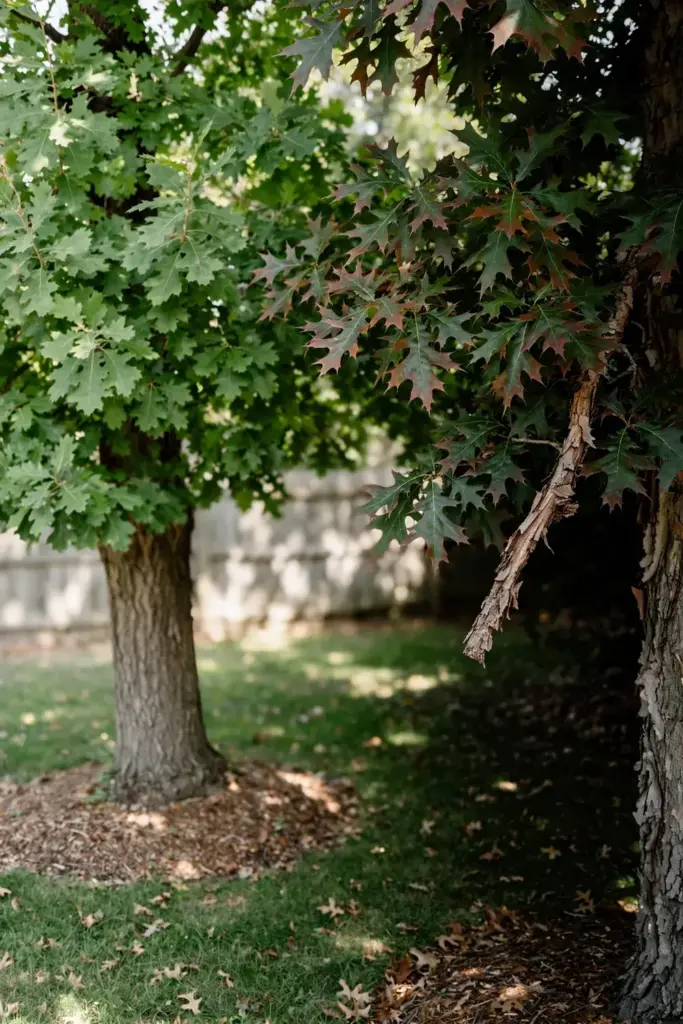
The same NC State page reports that red oaks run more susceptible than white oaks, likely because white oaks withstand drought better. Drought sits at the center of this disease, so the oak group that handles drought best resists the fungus longest. Blackjack oak sits in the high-risk group with the other red oaks. Post oak and live oak also appear on regional host lists for this disease.
Other hardwoods carry the disease too. The same NC State page names maple, sycamore, beech, elm, and hickory as hosts that may also carry infection. Texas tree-care lists add pecan. Oaks still own the headline risk. An oak in a stressed yard faces a sharper threat than a maple on the same street.
Age and vigor decide the outcome on every host. A young oak with a full canopy and deep roots resists longer than an old oak with a compacted root zone. A tree that already lost roots to construction or fill dirt sits at the top of the risk list. Site history matters as much as species.
Hypoxylon Canker vs Nectria Canker vs Oak Wilt
Check the bark first. A powdery fungal mat means Hypoxylon canker. Coral-pink cushions mean Nectria canker. Leaves with darkened veins and sudden leaf drop mean oak wilt.
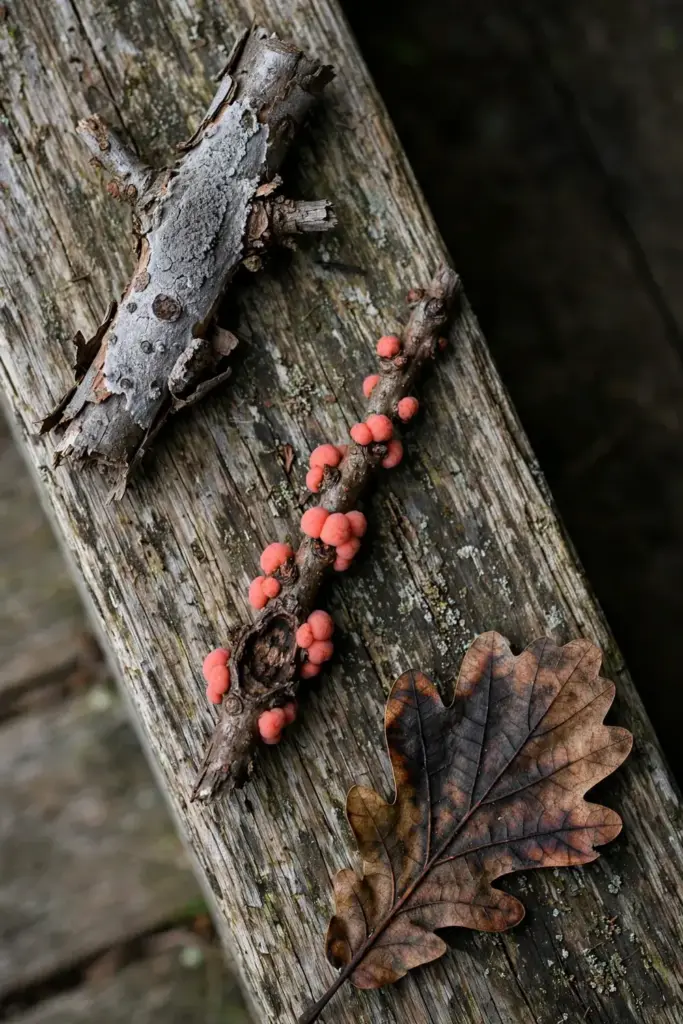
The table below lines up the three oak diseases that confuse homeowners most. Read the bark row first, then the speed row, then the spread row. The three diseases need different responses, so the split matters.
| Sign | Hypoxylon Canker | Nectria Canker | Oak Wilt |
|---|---|---|---|
| Bark and fruiting bodies | Bark peels to reveal a powdery mat. The mat runs tan or reddish brown, hardens to tar black, then turns silver gray | Sunken canker with coral, cream, orange, or red fruiting bodies. Cankers grow target-shaped or elongated | No fungal mat on the bark. Leaves carry the visible signs |
| Leaves | Undersized, wilted, or scorched leaves. Crown thins. Bud break runs late | Twigs beyond a girdling canker fail to leaf out. Leaves past the canker wilt and die | Veins darken to yellow or brown. Leaves drop fast. Red oaks turn red or brown in summer |
| Speed | Tree death follows within weeks after stromata show. Branch-only infections move slower | Cankers expand slowly, often while the host is dormant. Vigorous trees wall off the fungus with callus | Red oaks can die within about one month of infection. Live oaks move the disease through root grafts |
| Who gets hit | Stressed oaks. The fungus lives latent in healthy trees and turns active after drought, injury, or root damage | Stressed or wounded trees and shrubs. Fresh wounds open the door | Healthy oaks. The fungus infects vigorous trees through fresh wounds and root grafts |
| Pathogen | Fungus. Biscogniauxia atropunctata or Biscogniauxia mediterranea | Fungus. Nectria cinnabarina or Nectria galligena | Fungus. Bretziella fagacearum |
| First move | Prune branch-only cankers. Get an arborist for trunk cankers. Remove hazard trees | Prune out infected wood in dry weather. Disinfect tools | Avoid pruning oaks from February through June. Paint fresh wounds. Trench to break root grafts |
The UW-Madison Plant Disease Diagnostics Clinic fact sheet on Nectria canker supplies the Nectria column: sunken cankers that grow target-shaped or elongated, fruiting bodies in cream, coral, orange, or red that darken with age, and cankers that expand slowly while the host is dormant or stressed. Vigorous trees answer with wound-closing callus tissue around the infected area. Nectria canker kills branches. It rarely kills a whole established tree.
Oak wilt spreads above ground on sap-feeding beetles that carry spores to fresh wounds, and below ground through connected root systems at an average of 75 feet per year, according to the Texas A&M Forest Service pruning guidance on oak wilt. Red oaks play the central role in starting new disease centers. All oaks can move oak wilt through root grafts, with live oaks most at risk from the underground route.
Keep the focus on Hypoxylon canker. Nectria canker is a different fungal disease with a slower pace and a prunable fix. Oak wilt is a different fungal disease with a healthy-tree target and a root-graft highway. Bacterial canker also makes cankers on fruit trees, and it needs a different response. The guide to bacterial canker in fruit trees separates bacterial cankers from fungal ones.
Why Stress Decides Whether Hypoxylon Canker Takes Hold
Stress switches Hypoxylon canker on. No stress means no disease, even with the fungus already inside the tree.
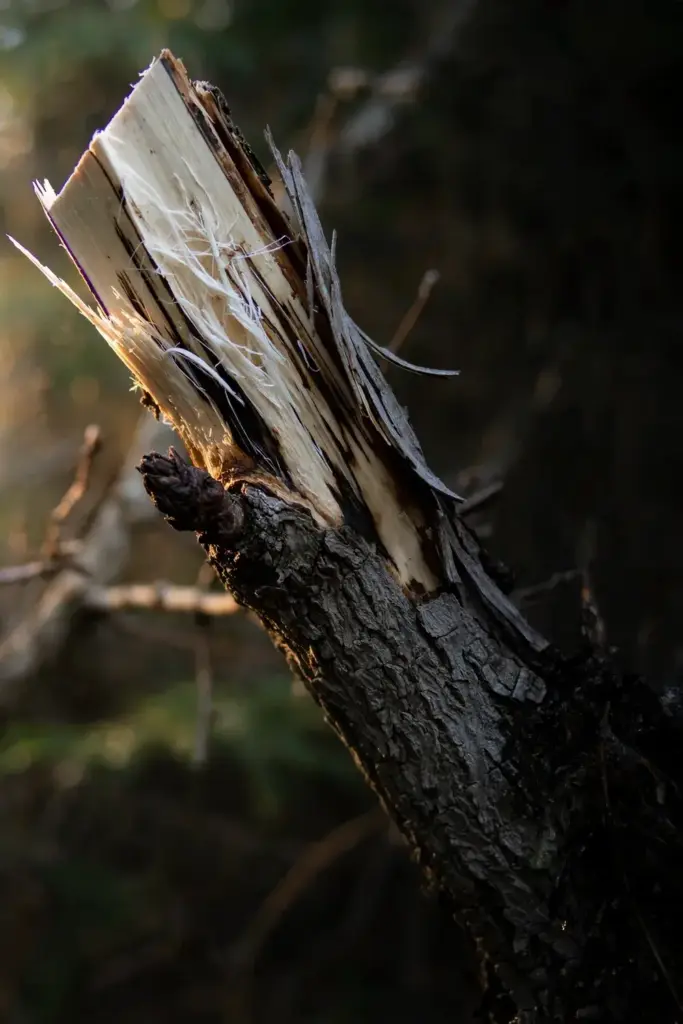
The fungus lives latent in the inner bark of many healthy oaks. It grows with the tree and stays out of the sapwood. Drought, defoliation, construction damage, or root loss stresses the tree, and the stressed tree loses its grip on the fungus. The fungus then invades the sapwood and starts the rapid decay that kills the tree.
Sapwood carries water from roots to canopy. The fungus destroys that pipeline from the inside. The same NC State page traces the chain: stress lets Biscogniauxia invade the sapwood, the invasion brings rapid decay, stromata form, bark falls off, and tree death follows fast once stromata show. A survey of oak death after drought in South Carolina found that trees did not survive for more than a few weeks after Biscogniauxia stromata turned visible. The fungus does not nibble at the edges. It cuts the water supply.
This mechanism explains the whole management approach. Prevention protects the pipeline. Pruning removes infected branches before the fungus reaches the trunk. Removal ends the hazard once the trunk pipeline fails. No spray restores a pipeline that the fungus already destroyed, which is why no fungicide carries this disease.
The vascular story runs through every tree. The guide to how trees add a new ring of wood each year explains the sapwood layer that Hypoxylon canker destroys. A tree that loses its sapwood loses its water supply, and no canopy spray reaches that layer.
What Makes Hypoxylon Canker Worse in a Home Garden
Drought tops the list. Construction damage, root compaction, and fresh wounds follow close behind.
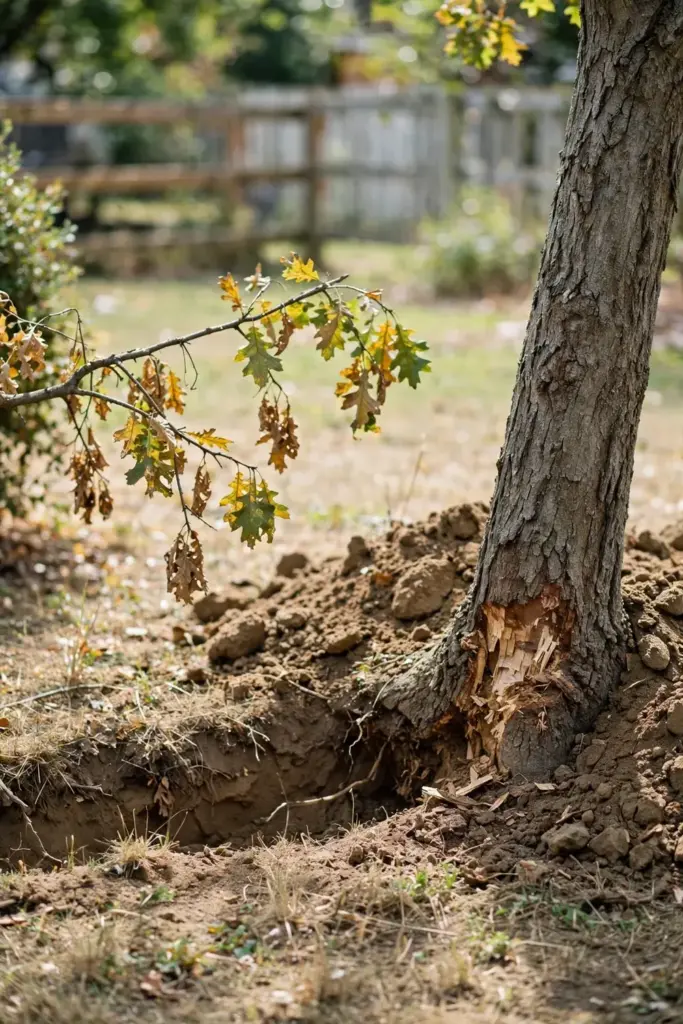
Drought stress opens the door widest. A dry summer leaves the tree short of water, and the fungus uses that weakness. The Texas A&M Forest Service fact sheet names drought, heat, nutrient deficiencies, and competition among the stressors that weaken a tree. Saturated soil and fill dirt join the same list. A tree that stands in wet soil after a storm, then bakes in a dry month, takes two hits in one season.
Construction damage wounds roots out of sight. Trenching, excavation in the root zone, removal of topsoil under the tree, and soil compaction all cut the root system. The canopy looks fine for months while the roots shrink. The fungus moves in during that quiet gap. Fill dirt over the root zone suffocates roots the same way, and the damage shows up a season later as crown thinning.
Mower and string trimmer wounds open fresh doors at ground level. A nicked trunk base heals slowly on a stressed tree. Each nick gives spores a fresh entry point, and weekly mowing repeats the wound all season. Herbicide injury adds chemical stress on top of the physical wound. Defoliation by insects or leaf fungi strips the canopy and starves the roots. One stressor alone rarely kills a tree. Two or three in one season hand the fungus its opening.
Step 1: Decide Whether the Tree Is Worth Saving
Cut branch cankers. Leave trunk cankers to an arborist. Remove a tree that is girdled at the trunk.
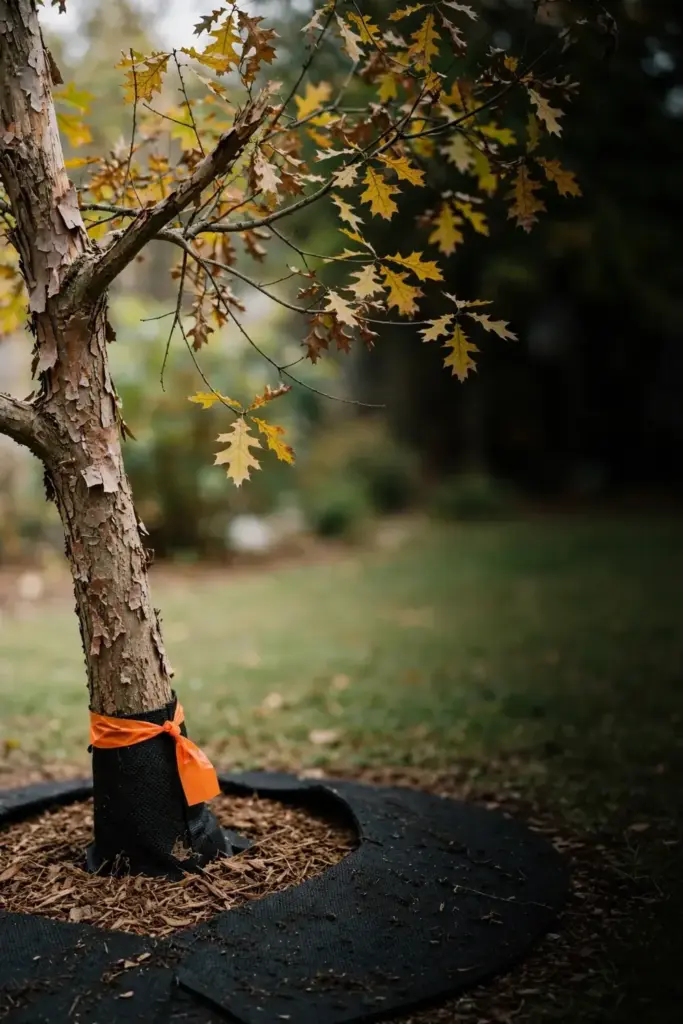
Start with the triage call, before any cut or spray. A branch-only infection on a vigorous tree is worth treating, since pruning removes the fungus and the branch heals. A trunk infection on any tree is a removal case in most yards. The fungus already owns the pipeline, and no cut restores it.
The Missouri Department of Conservation page on Hypoxylon canker states the hard line plainly. There is no treatment for Hypoxylon canker. Once a tree shows symptoms of the disease, the tree will die. That sentence sets the budget for the whole job. Every hour and every dollar goes to saving the trees that can still be saved, and to removing the hazard that a dying tree becomes.
The Texas A&M Forest Service fact sheet adds a working threshold. When 15 percent or less of the canopy shows infection, remedial pruning can still help. When more than 15 percent of the canopy shows infection, consider cutting the tree down. Walk the canopy and estimate the dead share before deciding. A canopy near the threshold with branch-only damage is a pruning job. A canopy far past it is a removal job.
Step 2: Prune Branch-Only Cankers 8 to 12 Inches Below the Canker
Cut infected branches in dry weather. Cut 8 to 12 inches (20 to 31 cm) below the visible canker into clean wood.
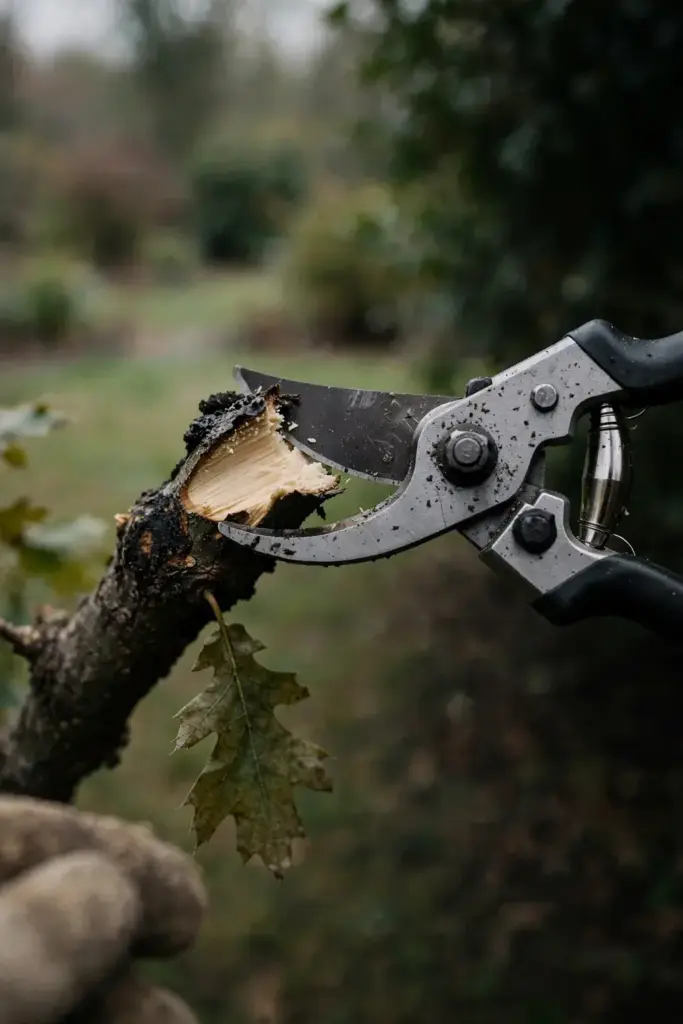
The Texas A&M Forest Service fact sheet sets the clearance. The fungus runs ahead of the visible damage, so the cut must land well below the canker edge. A cut right at the canker edge leaves fungus behind. A cut 8 to 12 inches below the canker clears the hidden margin on most branches. On a long branch, take more. On a short twig, take the whole twig.
Cut to a lateral branch or to the branch collar. Never leave a stub, since a stub dies back and opens a fresh wound. Never cut flush with the trunk, since a flush cut wounds the collar that closes the cut. A clean cut at the collar closes fastest. Work from the healthiest tree toward the sickest tree, so the blade carries less fungus to the next cut.
Prune only in dry weather. Wet bark spreads spores, and rain washes spores into fresh cuts. Wait for a stretch of dry days before any pruning session, and stop when rain starts. The guide to spring pruning techniques covers clean cuts for healthy trees, and the same cut discipline applies to infected wood. Postpone shaping cuts on neighboring trees until the disease is under control.
Step 3: Disinfect Tools Between Every Cut
Disinfect tools after every cut. Bleach solution kills spores on the blade.
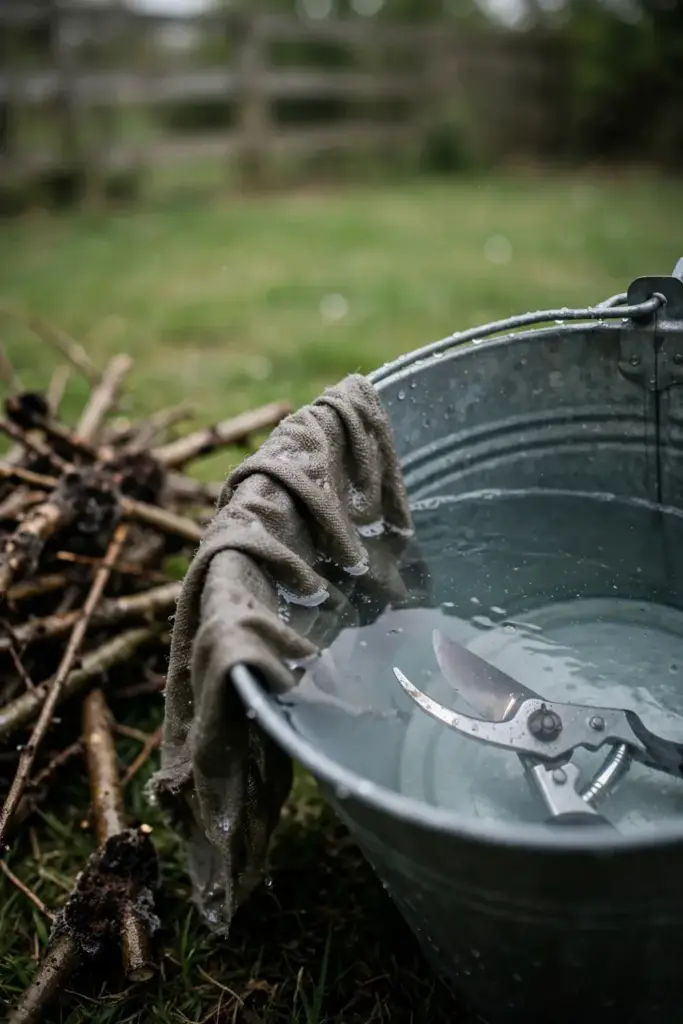
The Texas A&M Forest Service fact sheet calls for sanitizing the pruning tool before each cut with a 10 percent solution of bleach, mixed as one part bleach to nine parts water. Bleach corrodes steel, so rinse and oil tools after the job. Carry two tools when the job is large. One tool soaks in disinfectant while the other cuts. A spray bottle of disinfectant also works for quick sanitation between cuts. Scrub sap and resin off the blade first, since disinfectant cannot reach spores under a layer of sap.
A dirty blade undoes a clean cut. One unsterilized cut can carry the fungus from an infected branch to a healthy branch on the same tree. The soak costs seconds. The skipped soak costs a branch.
Step 4: Burn Infected Wood and Keep Firewood Local
Bag or burn every cutting the day you prune. Dead wood left in the yard keeps the fungus alive.
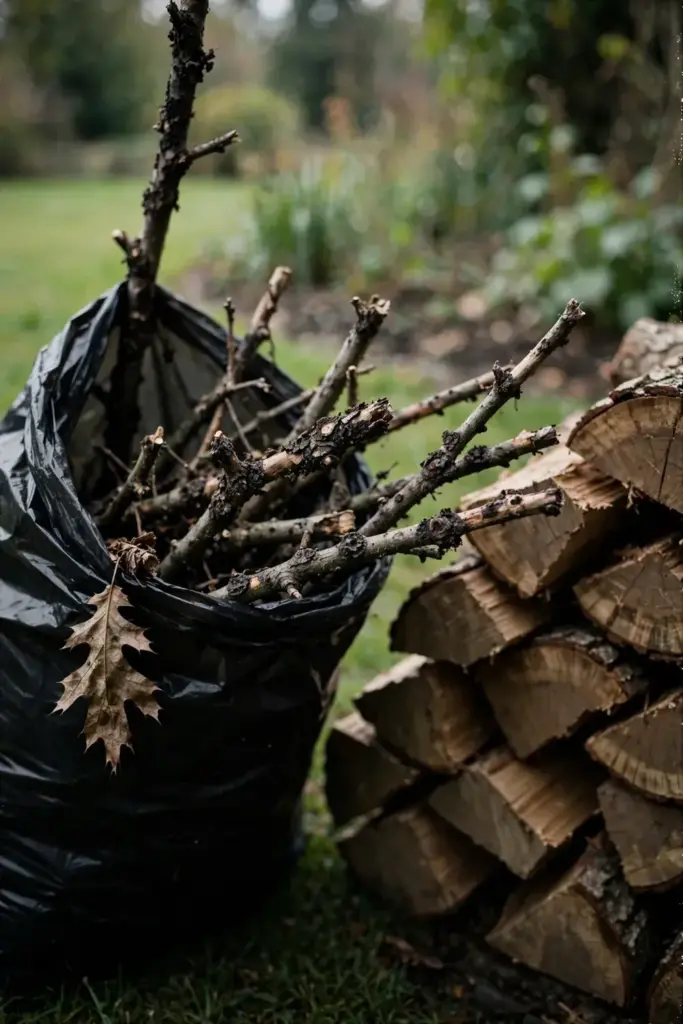
The Texas A&M Forest Service fact sheet calls for destroying diseased branches by burning them. Infected prunings piled under the tree feed new spores all season. Bag the cuttings and send them out with household trash where burning is not allowed. Do not compost infected wood, and do not chip it into mulch for the same yard. A chipper spreads the fungus across every bed the mulch touches.
Firewood from an infected tree follows a narrower rule. The Missouri Department of Conservation states that firewood from trees infected with Hypoxylon canker is safe to burn. Firewood movement should stay local only, to prevent the spread of invasive forest pests. Burn infected firewood on the same property or nearby. Never haul it to another county or another state. The firewood rule protects other forests, and it costs nothing to follow.
Step 5: Water Deeply Through Drought
Water deeply during dry spells. A watered oak holds the fungus in check longer than a thirsty oak.
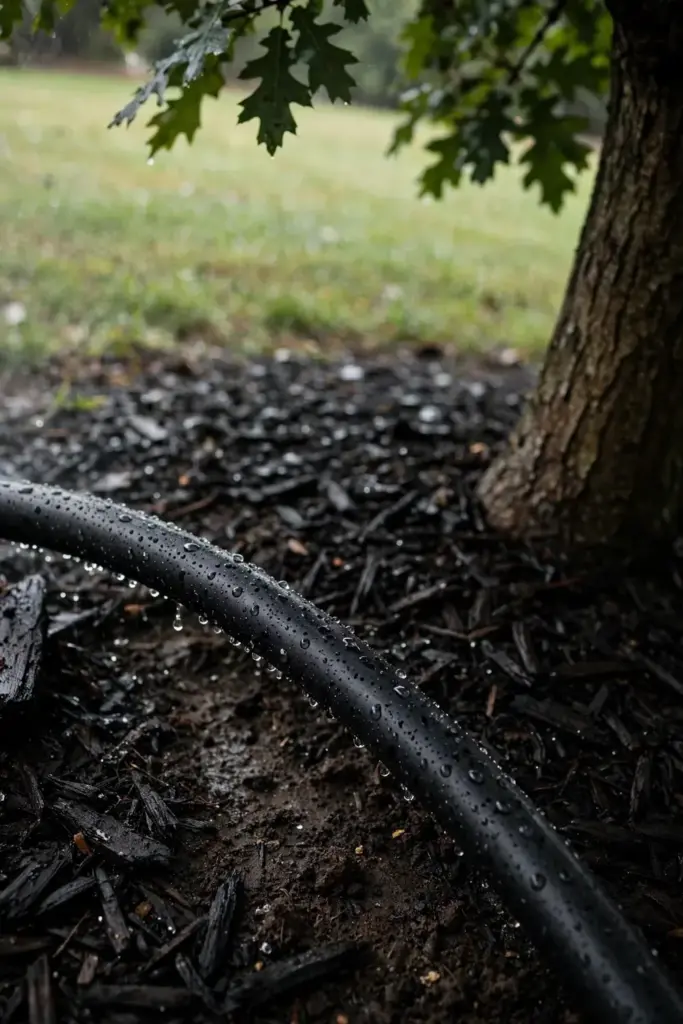
The same NC State page names adequate water during drought as part of the only effective management tactic. Deep watering soaks the root zone. Shallow watering wets the surface and leaves deep roots dry. A soaker hose laid at the drip line delivers water slowly, straight to the roots, with no spray on the bark. Run the hose until the soil is moist well below the surface, then let the soil dry between sessions.
A tree that wilts in summer heals wounds slowly. Slow healing leaves wounds open longer, and open wounds invite the fungus. Water buys time, and time lets the tree close its wounds. Water never cures an active trunk infection. It protects the trees that still stand healthy, and it slows the decline of a tree with branch-only infection.
Skip fertilizer on a tree that already grows well. Extra nitrogen pushes soft growth that wounds at a touch and stresses fast in a dry month. Feed only a tree that shows pale leaves and short shoots, and feed it with a balanced, slow-release product at the label rate.
Step 6: Mulch the Root Zone and Keep Wounds Away
Clear grass from around the trunk. Mulch the root zone, and keep mowers and trimmers away from the bark.
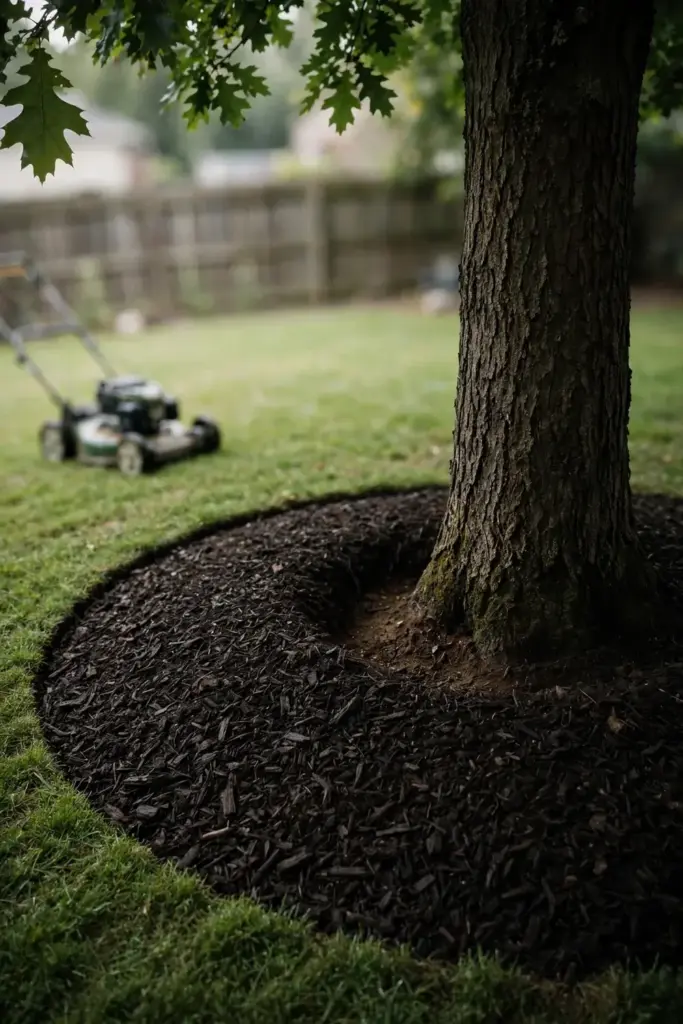
Grass around the trunk competes for water and invites mower wounds. Clear the grass and mulch the ring. Mulch holds moisture, cools roots, and keeps the mower at a distance. Keep mulch off the trunk itself. Mulch piled against bark holds moisture on bark and rots it. A mulch volcano looks tidy and kills trees.
Mower and trimmer wounds are prime entry points, and they recur every week through the season. A mulched ring removes the reason to mow close to the trunk. One season without mower wounds closes a whole class of entry points. Fence the root zone before any construction job. Trenching, excavation, and soil compaction inside the drip line cut roots the canopy cannot spare. Mark the drip line with stakes and keep machines outside it.
Check the mulch ring each spring. Top up mulch that has thinned, pull mulch back from the trunk, and clear weeds by hand near the bark. A clean ring is quiet work, and it pays every year.
Step 7: Call a Certified Arborist for Trunk Cankers and Hazard Trees
Call a certified arborist when the canker sits on the trunk. Trunk cases need a professional read.
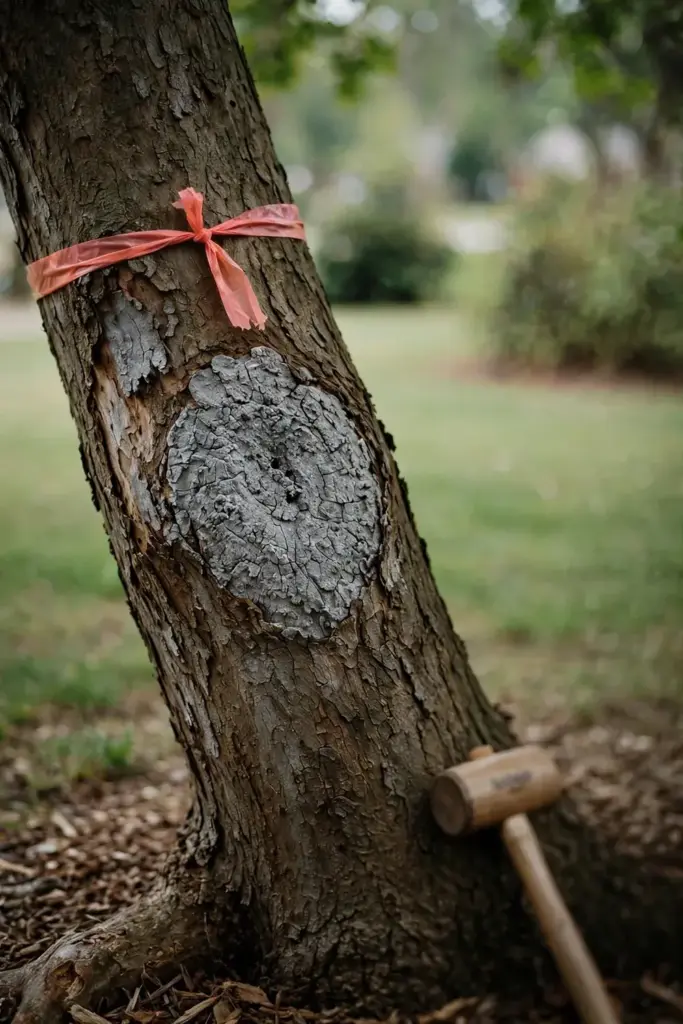
An arborist tells branch infection from trunk infection, and a hazard tree from a tree that can stand another season. The call covers three questions. How far has the fungus run into the sapwood. How much of the canopy still functions. How likely is the tree to drop limbs on a target. A homeowner can answer none of these three with confidence from the ground.
Hire the arborist for the hazard evaluation, not for a cure. No arborist carries a treatment that reverses trunk infection. The arborist brings a resistograph or a sounding mallet, a climbing inspection, and a written risk rating. That rating decides whether the tree stays with monitoring or comes down. Get the rating in writing, and keep it with the property records.
Call early, before the tree turns into an emergency. An arborist visit in the inspection season costs less than an emergency removal after a storm. A dying oak over a roof, a driveway, or a play area is an emergency waiting for wind.
Step 8: Remove a Trunk-Infected Tree Before It Becomes a Hazard
Remove a trunk-infected tree promptly in high-traffic areas. Decaying sapwood drops limbs without warning.
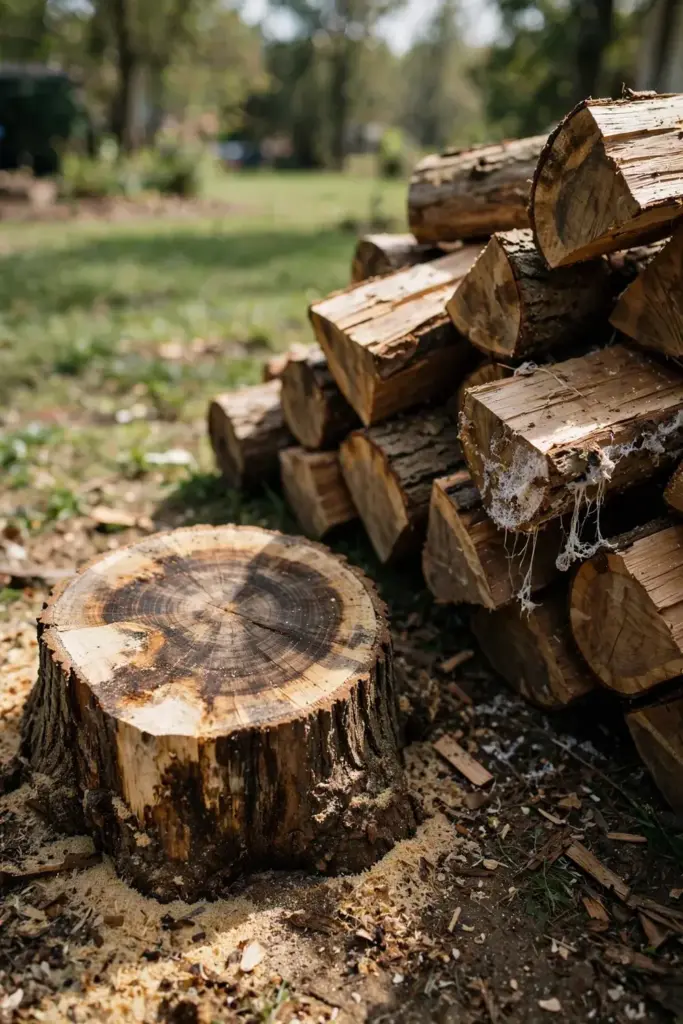
The same Missouri guidance sets the removal rule. In high-traffic and residential areas, remove infected trees as soon as possible to avoid damage from falling limbs. The Texas A&M Forest Service fact sheet notes that Biscogniauxia causes a white rot of the wood, and trees killed by it turn hazardous fast. A dead oak with decayed sapwood sheds branches in ordinary wind, and the trunk itself can fail at the base. The hazard window opens early and stays open.
Hire a professional for the removal. A dying oak with decayed wood behaves unpredictably under a saw. A professional crew rigs limbs down in sections and keeps the drop zone clear. Homeowners cut hazard trees with a chainsaw at their own risk, and the risk runs high on decayed wood. Get two quotes, confirm insurance, and ask how the crew will handle infected wood.
Removal serves hazard control. Removal does not protect nearby trees. The Missouri Department of Conservation notes that healthy trees are often already colonized by the fungus, so removing infected trees may not protect nearby trees. The same NC State page agrees: removing symptomatic trees is often not effective in preventing the disease in other trees. Cut the hazard tree because it threatens people and property. Protect the remaining trees with the steps that follow.
Step 9: Protect Your Remaining Oaks With Vigor and Diversity
Protect the neighbors with vigor and diversity. Vigor is the only medicine this disease answers to.
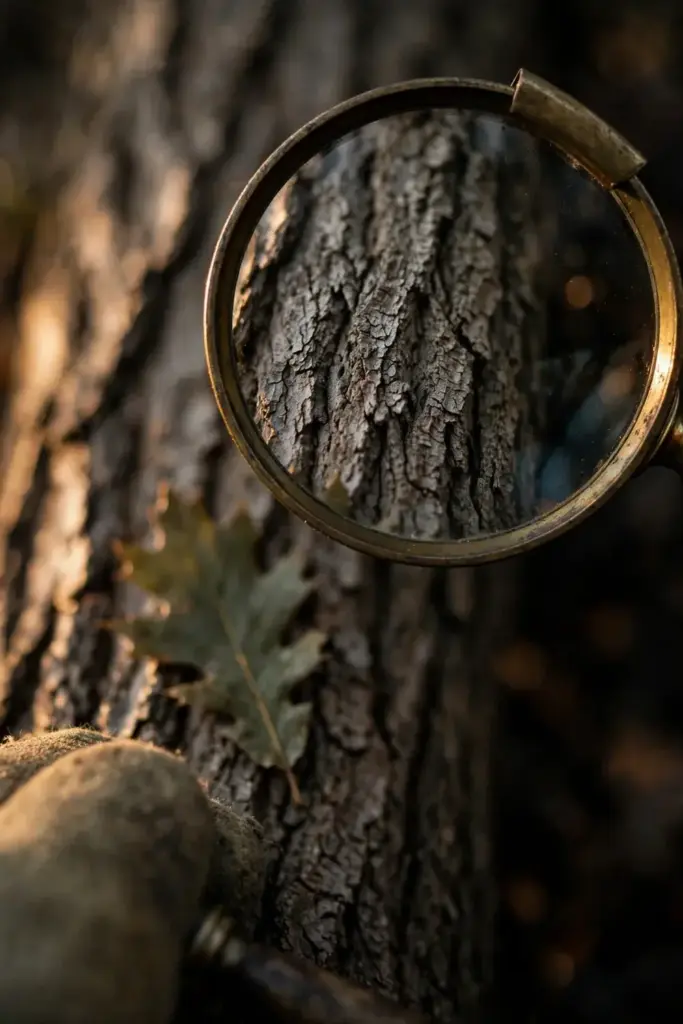
The same NC State page states the rule in one line: maintaining tree vigor to prevent the disease is the only effective management tactic. Water through drought, avoid root damage, and keep wounds closed. A vigorous oak holds latent fungus in check for years. A stressed oak hands the fungus its opening in one bad season.
Plant diversity next. A yard with oaks only gives the fungus one host type across the whole lot. Mix in non-host species and resistant trees, and no single disease can sweep the yard. Space new trees wide enough for full root zones, and never plant an oak where construction will cut its roots in five years. The notes on building soil health cover the soil basics that grow vigor without forcing soft growth.
Scout the remaining oaks twice a year. Walk every oak in spring after bud break, and again in late summer after the dry season. Look for crown thinning, water sprouts, and bark that peels. Mark suspect trees with flagging tape, and check the marks on the next walk. Early detection buys the pruning window. Late detection buys a removal quote.
Living With Hypoxylon Canker Damage You Cannot Prune Out
A trunk canker is a live-with-it case only when no target sits below it. Monitor the tree and manage the hazard.
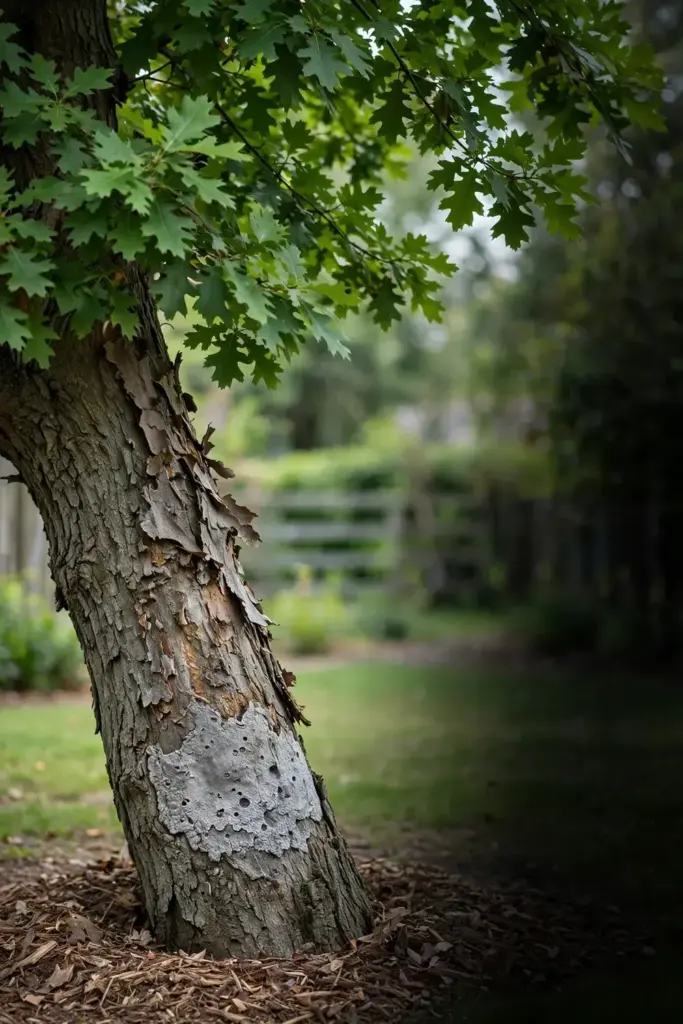
A trunk canker on a tree far from paths, roofs, and play areas can stand with monitoring. Let the tree run its course, and inspect it after every storm. Shorten a long limb that hangs over a path to cut wind load. A shorter limb carries less weight and catches less wind. Call an arborist when a limb moves from watch to worry.
Cankered limbs break sooner than sound limbs under the same load, so inspect the tree after storms and keep people and parked cars out from under a suspect canopy until the arborist clears it. A rope fence and a warning sign cost little. They hold the line until removal day. Move the swing set, the picnic table, and the firewood stack out from under a dying oak. The yard still works with the tree fenced off.
Remove the tree when the canopy passes the 15 percent threshold, when the trunk shows long stroma strips, or when the hazard exceeds what monitoring can manage. Removal is a decision, and it is a sound one. A yard without the hazard tree is a yard the family can use again.
Frequently Asked Questions
Yes. Hypoxylon canker kills oaks, and it kills fast once the fungal mats show. The same NC State page cites a survey of oak death after drought in South Carolina, where trees did not survive for more than a few weeks after Biscogniauxia stromata turned visible. Branch-only infection moves slower and answers to pruning. Trunk infection cuts the water supply and ends the tree.
No. Trunk infection means the fungus already owns the sapwood, and no cut or spray restores that pipeline. The Missouri Department of Conservation states that there is no treatment for Hypoxylon canker, and that a tree showing symptoms will die. Hire an arborist for a hazard rating, monitor the tree if no target sits below it, and remove it promptly when the hazard grows.
No fungicide cures Hypoxylon canker. Extension sources agree that no fungicide kills the pathogen once it turns active. Some tree-care vendors advertise preventive fungicide treatments, and that claim conflicts with Extension guidance. Follow the Extension line. Spend the budget on pruning, watering, and hazard removal, which are the moves with evidence behind them.
Removal does not protect nearby trees. The Missouri Department of Conservation notes that healthy trees are often already colonized by the fungus, so removing infected trees may not protect nearby trees. The same NC State page agrees that removing symptomatic trees is often not effective in preventing the disease in other trees. Remove a tree for hazard control. Protect the neighbors with vigor.
Check the bark first, then the leaves. Hypoxylon canker peels bark to reveal a powdery fungal mat, and it strikes trees already stressed by drought or root damage. Oak wilt darkens leaf veins, drops leaves fast, and strikes healthy oaks through fresh wounds and root grafts. The Texas A&M Forest Service advises avoiding oak pruning from February through June, since fresh wounds invite oak wilt beetles.
Yes, with one limit. The Missouri Department of Conservation states that firewood from trees infected with Hypoxylon canker is safe to burn. Firewood movement should stay local only, to prevent the spread of invasive forest pests. Burn infected firewood on the same property or nearby. Never haul it to another county or state, and never compost infected wood.
Where to Go From Here
Start with one walk around every oak. Mark every peeling patch, then cut on the next dry day.
Identify first, then decide, then cut. Prune branch-only cankers in dry weather, disinfect tools between cuts, and burn or bag every cutting the day you prune. Water through drought, mulch the root zone, and call an arborist for any trunk canker. Scout the remaining oaks twice a year.
The oak that survives Hypoxylon canker is the oak with fewer wounds and deeper roots. Give it both. One clean pruning session on a dry day does more than any spray, and next-season scouting catches what the first session missed.