
Spend 60 minutes on prevention before you sow, because net blotch has no cure once it lands on a barley plant. Net blotch is a fungal leaf disease of barley that starts as small spots and spreads into a dark netted pattern across the leaf. The fungus survives winter in infected straw and stubble, then releases spores that reach new leaves on wind and rain splash.
I have learned to treat prevention as the whole job with net blotch, because infected plants cannot be cured. The pathogen is Pyrenophora teres. Older garden writing calls it Helminthosporium teres. The two names describe one fungus. Home-grown barley covers grain patches, homebrew barley, and barley grown as a cover crop.
The rest of this page is 7 steps, from clean seed to end-of-season cleanup, plus what to do when spots already show. Barley grown as a cover crop needs the same prevention as barley grown for grain. A patch you plan to cut down still carries spores into next season when you leave the straw standing.
1. What Net Blotch Actually Is
Net blotch is a fungal disease of barley leaves caused by Pyrenophora teres. The fungus attacks leaves first and, in bad cases, reaches stems, leaf sheaths, and heads. It spreads leaf to leaf while the canopy stays wet.
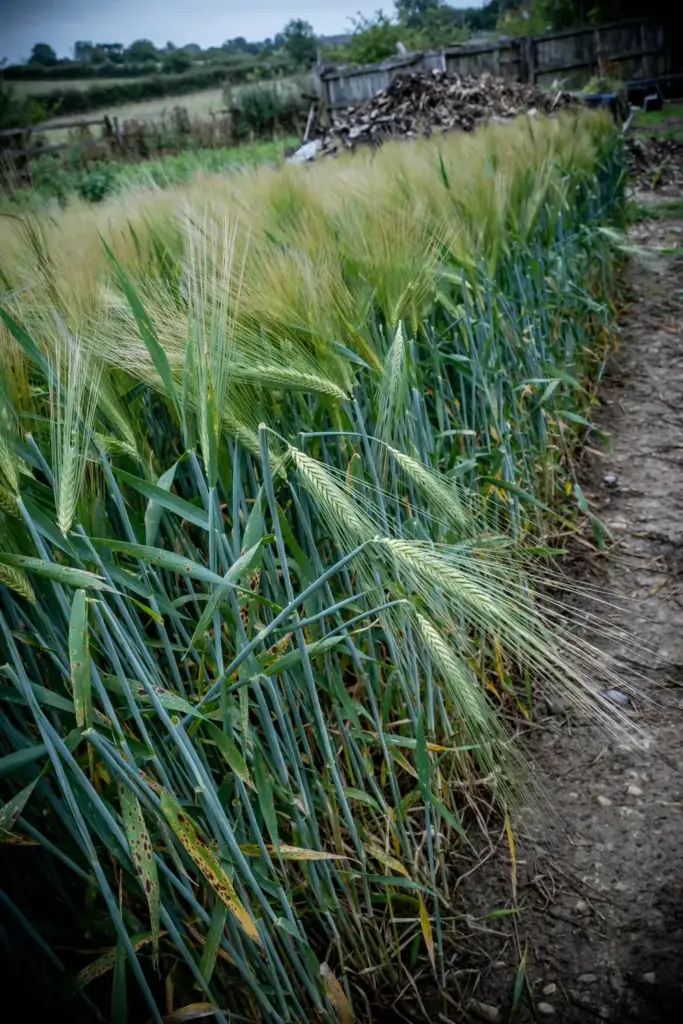
Pyrenophora teres is the current scientific name, and the asexual stage carries the name Drechslera teres. Older books and some garden pages still print Helminthosporium teres. All three names point at one fungus.
Net blotch comes in two forms. The net form draws a dark network across the leaf. The spot form makes round or oval spots that stay separate. Both forms belong to one species. The two forms carry the names Pyrenophora teres f. teres and Pyrenophora teres f. maculata.
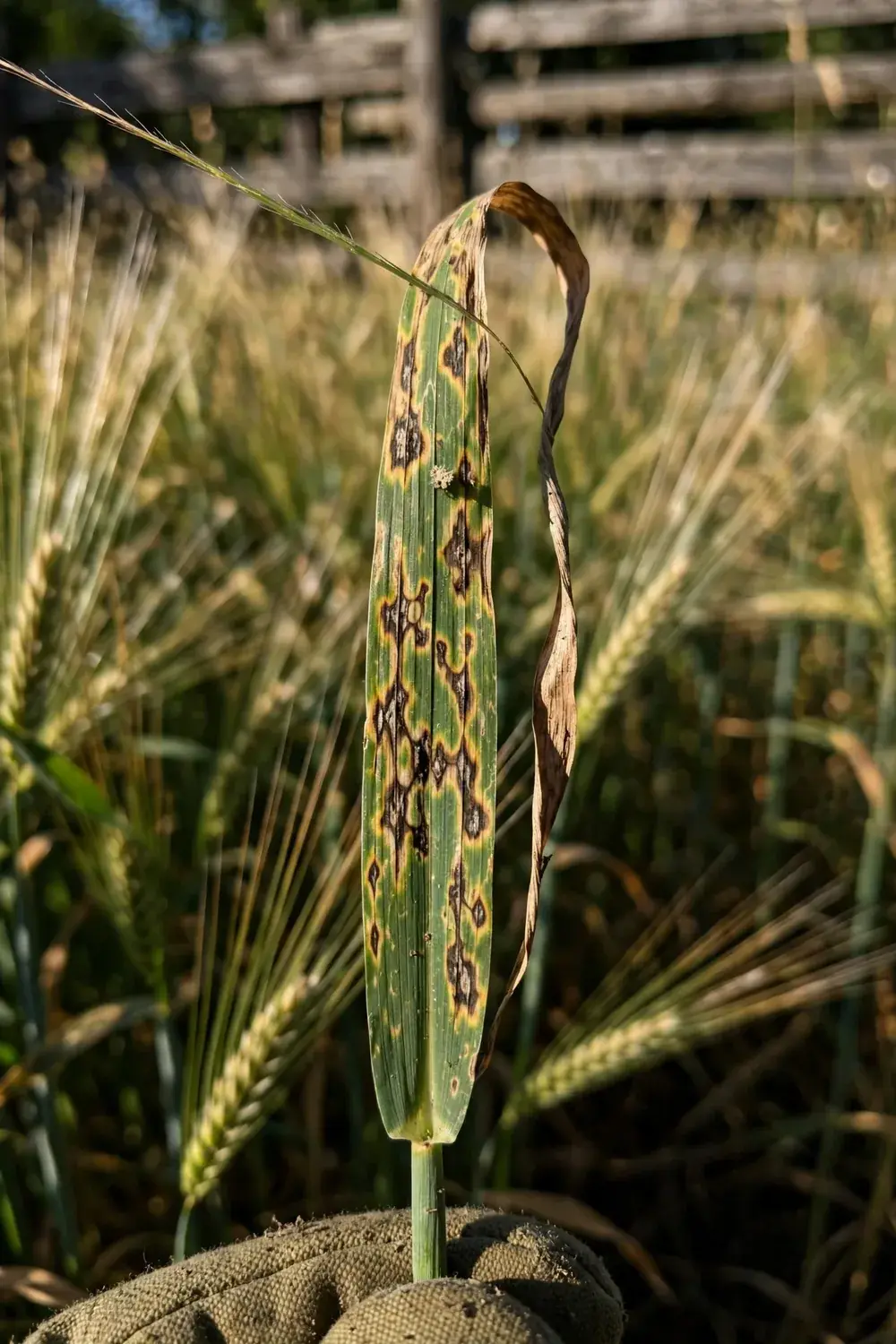
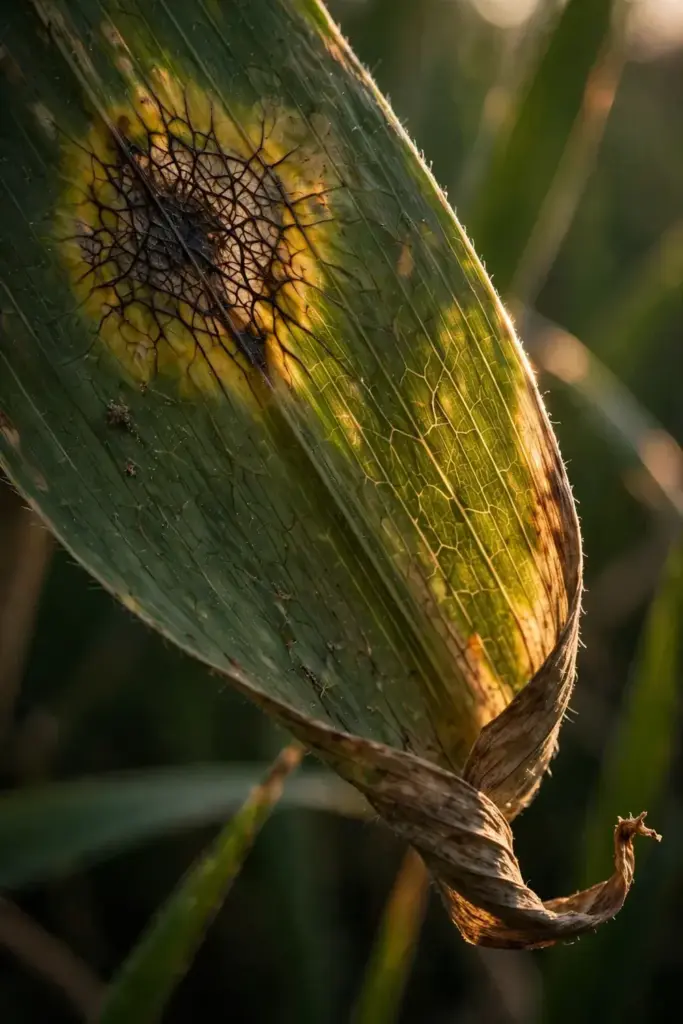
The name describes the symptom. Look at a net-form lesion up close and the dark lines cross like a net. That pattern gave the disease its common name, and it still guides identification today. Gardeners in past decades learned the disease by that pattern alone, long before lab tests existed. The pattern still works as a first check, even though lookalikes force a second look.
This page covers home-grown barley. Small grain patches, homebrew plots, and cover-crop barley all sit inside that scope. Field-scale barley programs follow different rules, and this page does not cover them.
Net blotch is not a soil disease in the root-rot sense. It rides on residue and seed, not on soil water. That is why the whole management plan aims at residue, seed, and leaf wetness, and why drenches and soil treatments miss the point.
Home barley shows up in more places than a grain patch. A homebrew plot of 2-row barley, a strip of barley sown to hold a slope, and a cover-crop bed all host the same fungus. The prevention steps below fit all three, because the fungus does not care what you planned to do with the grain.
2. How to Identify Net Blotch on Leaves
Look for small spots that stretch into dark streaks with a netted pattern. That netting is the mark that separates net blotch from most other barley leaf spots.
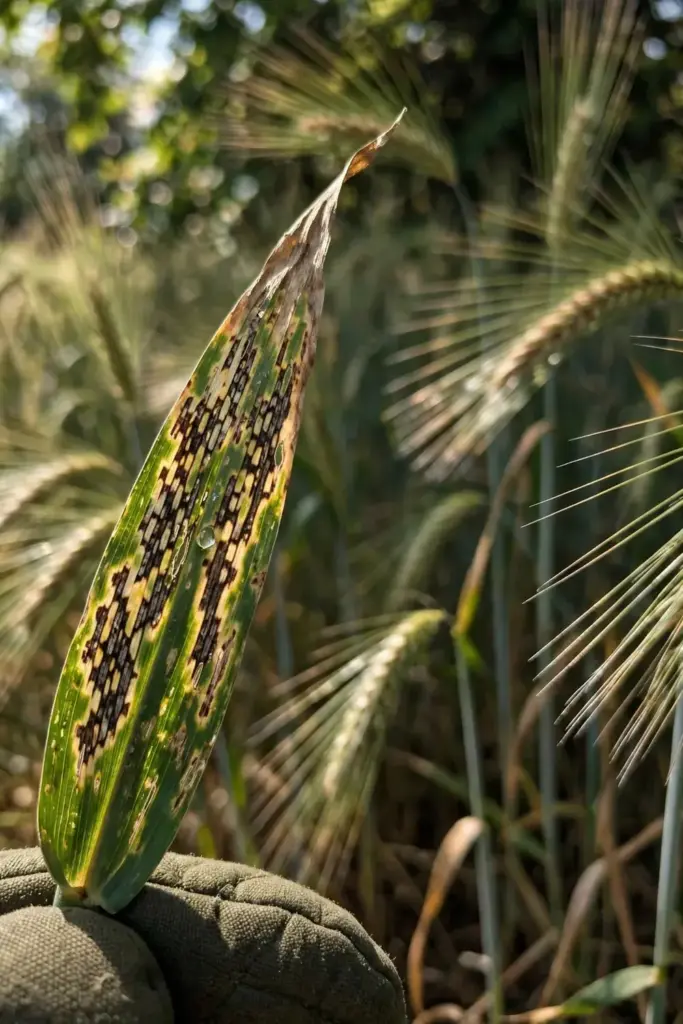
Early spots look plain. AHDB’s net blotch guide notes that early spots can pass for ramularia leaf spot, then stretch into brown stripes or blotches with a random netting of darker lines along and across the leaf. Yellow tissue often rings each lesion as the disease moves on. The spot form stays round or oval instead of stretching, and its lesions grow to 3 to 6 mm across with a pale halo around each one, according to the same guide.
Spot blotch looks close. Its lesions stay round to oval with a pale margin and never draw the netted lines. The pathogen is a different fungus, Cochliobolus sativus, also filed under the name Bipolaris sorokiniana. The site’s Bipolaris leaf spot guide covers the same genus on turf.
Home identification stays presumptive. Spot-form net blotch, spot blotch, and ramularia can look alike on a single leaf. A local Extension clinic confirms the pathogen where the answer matters, such as a seed-saving decision.
Check several leaves before you decide anything. One leaf can mislead. Ten leaves across the patch show whether the pattern runs through the stand or sits on one stressed plant. Look at lower leaves first, since spores from residue reach them earliest, then work up toward the flag leaf.
When you find spots, mark the plant with a twist tie or a stick. The mark lets you find the same plant next week and see whether the lesions spread, stalled, or stayed put. A patch where spots stall after a dry week is a patch where the weather, not the fungus, set the pace.
3. How to Identify Net Blotch on Seedlings, Stems, and Heads
Net blotch starts on leaves, then moves to stems, leaf sheaths, and heads when pressure runs high. Seedlings show a different pattern from older plants.
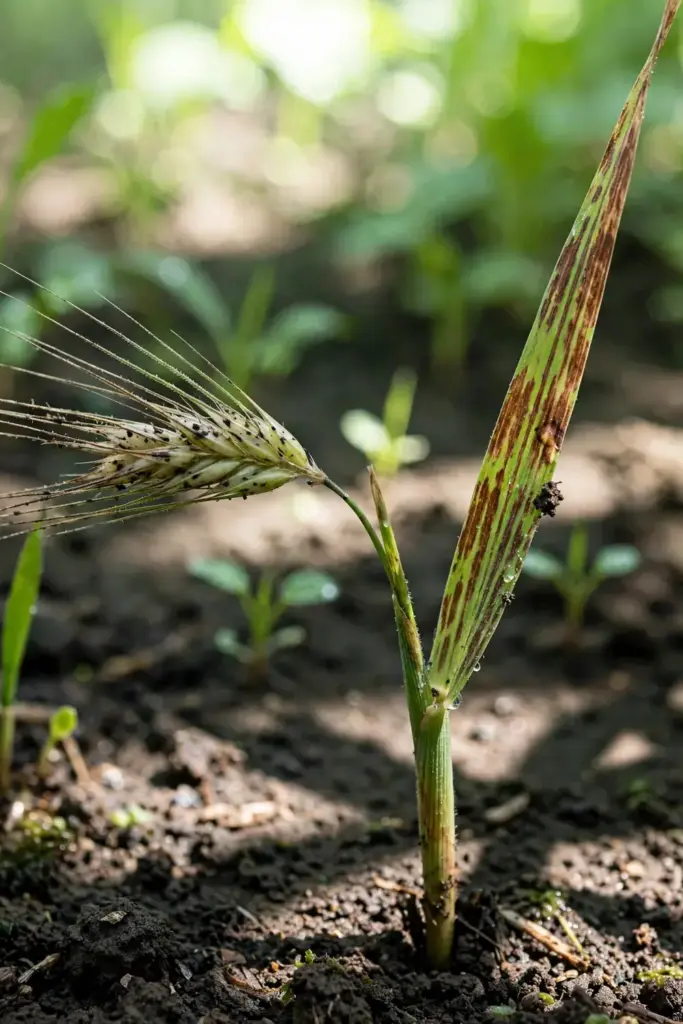
Seed infection sends brown stripes up from the base of seedling leaves. That stripe pattern can pass for leaf stripe, another barley disease. AHDB describes the same seedling stripes in its net blotch guide.
Later attacks fleck the glumes and awns with dark brown marks and striping. Heads on badly hit plants fill poorly. Syngenta Canada describes shriveled seed and lighter grain on badly hit plants.
Scald is the third barley leaf disease in the Montana State University Extension guide, and it looks different enough to rule out. Its lesions stay gray or water-soaked with brown margins, often with a distinct dark brown ring around a tan center. Net blotch lesions turn dark brown and either net or spot. When a lesion looks wet and gray rather than dark and netted, suspect scald.
| Plant Part | What to Look For | What It Tells You |
|---|---|---|
| Seedling leaves | Brown stripes rising from the leaf base | Seed-borne infection is possible |
| Older leaves | Netted streaks, or round spots with a pale halo | Airborne or splash-borne spores reached the leaf |
| Stems and sheaths | Dark flecks and striping | The disease is moving up the plant |
| Heads | Flecked glumes and awns, poor fill | Late-season attack on grain quality |
4. Which Barley Gets Hit Hardest
Any barley can catch net blotch. Winter barley and dense, humid patches carry the heaviest pressure. AHDB treats winter barley as the crop where net blotch matters most.
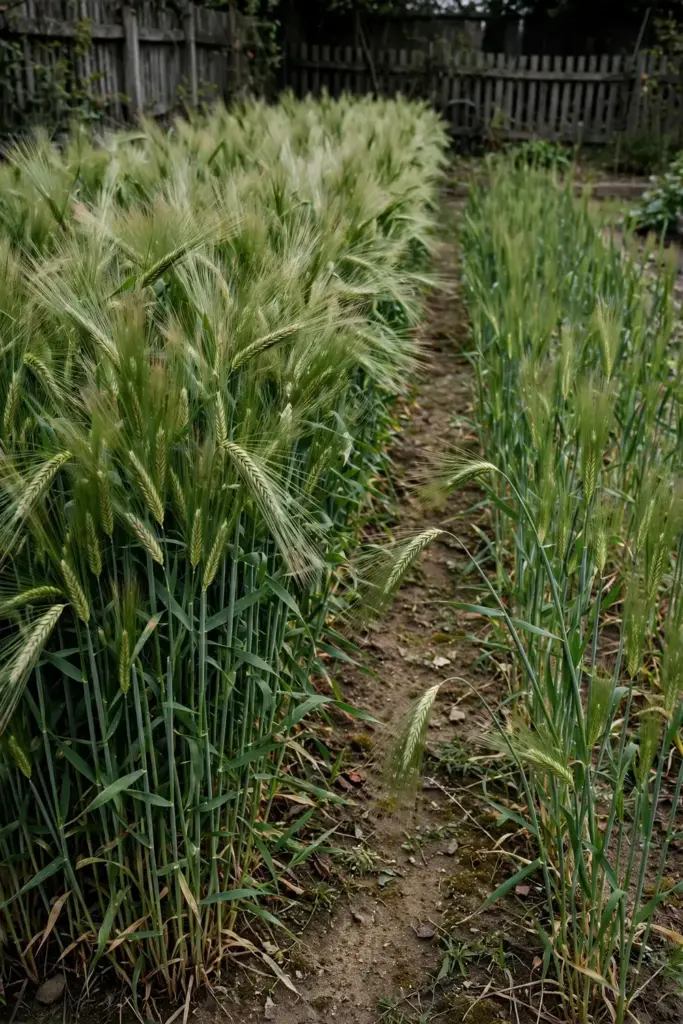
Variety choice shifts the odds. Syngenta Canada’s net blotch page states that six-row barley is usually more resistant than two-row barley. Treat that as a tendency, not a promise. Check the current seed catalog before you buy.
Young, soft growth in a crowded patch stays wet longer and invites spores to settle. Thin stands that dry fast after rain hold up better. Air movement through the stand matters as much as the variety you plant.
Cover-crop barley is not exempt. A thick cover-crop stand holds humidity at leaf level the same way a grain patch does. Cut it or turn it under before the canopy closes tight and stays damp for days.
Ask the seed supplier which varieties held up locally last season. Catalog ratings describe trials in other regions. A variety that stayed clean two counties over may still catch the disease in your garden, and a variety that struggled elsewhere may hold up fine at your site. Local reports beat national ratings for a home patch.
5. Why Infected Residue Drives the Whole Disease
Old straw and stubble carry net blotch from one season to the next. Clear the residue and you cut the main source of new spores.
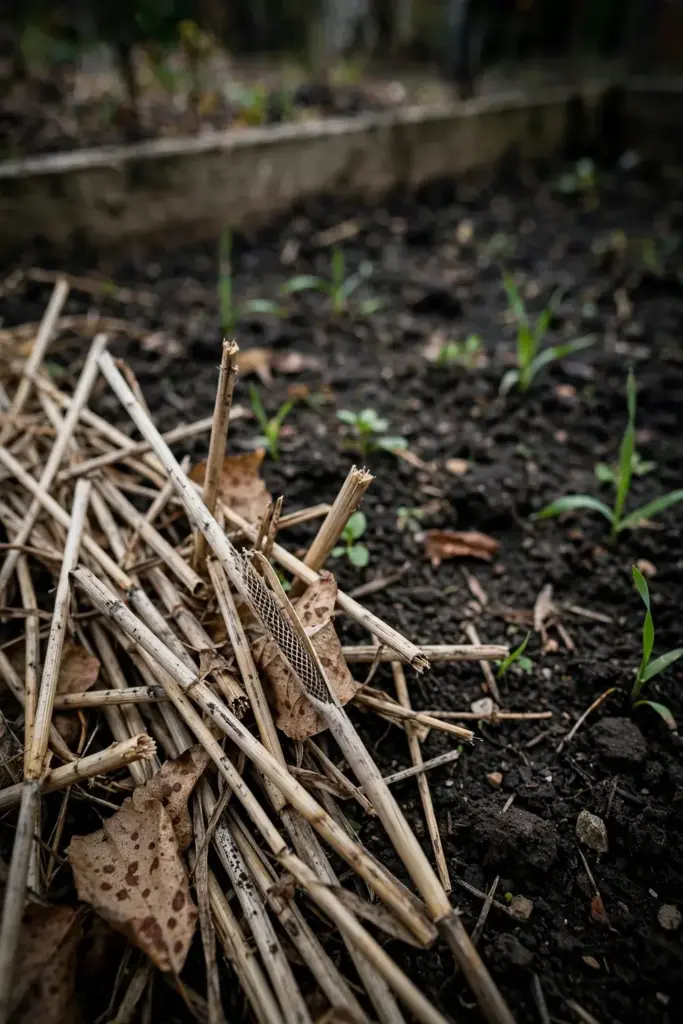
Montana State University Extension describes net blotch, spot blotch, and scald as residue-borne pathogens that thrive where barley follows barley and where residue stays on the surface. Its guide to barley leaf diseases lists the same control base for all three: crop rotation, variety selection, irrigation management that keeps the canopy drier, and light tillage that reduces residue.
The fungus rests in residue through winter. Spring air and rain splash move spores onto young leaves. Early infections make fresh spores, and the cycle repeats while leaves stay wet. Each wet week adds another round.
Volunteer barley plants bridge the gap. A few plants that sprout from spilled grain hold the fungus alive between crops. Pull them when you see them.
Light tillage helps on this front. Montana State University Extension lists light tillage that reduces residue among its core controls. Shallow turning buries straw enough to cut spore release. Deep plowing is not needed in a home bed, and it wrecks soil structure for little extra gain.
6. What Makes Net Blotch Worse in a Home Garden
Wet leaves, still air, and barley after barley make net blotch worse. Each one gives spores more time on wet leaf surfaces.
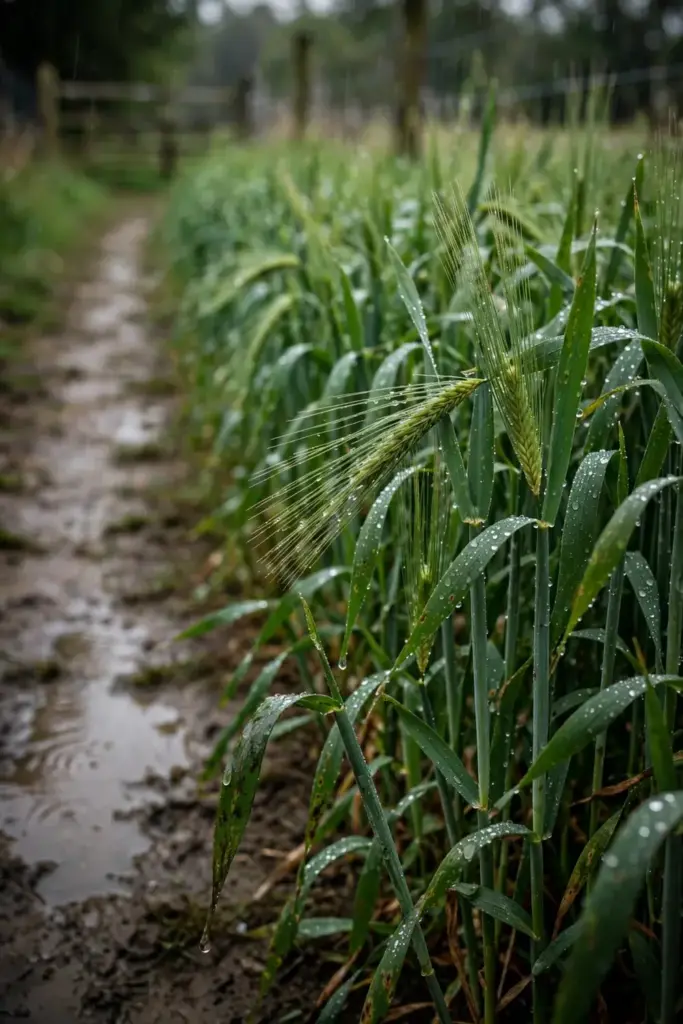
Overhead watering wets the whole canopy and keeps leaves damp into the evening. Water at the base and water in the morning so leaves dry fast. Tight spacing blocks airflow. Thin the stand or widen the rows so wind moves through. Barley after barley in the same bed is the biggest risk. The residue load builds year after year.
Seed saved from a diseased patch starts the next season infected. Gardening Know How advises against saving seed from diseased plants. A clean seed lot breaks that chain before it starts.
Weather sets the pace. AHDB notes that wet, mild weather favors the disease, and the worst symptoms land on upper leaves in warm, humid spells. Dew alone can wet leaves long enough to start an infection. A week of still, damp mornings does more damage than one rainy day followed by wind.
Sowing density sets the airflow for the whole season. A thick broadcast sowing looks good in week three and stays damp in week eight. A thinner sowing with clear rows dries faster after every rain and every watering. Sow at the rate on the packet, not above it.
Other barley problems need their own guides. Barley yellow dwarf and flag smut are separate barley problems, and each needs its own guide. This page stays on net blotch.
7. Step 1: Decide Whether Prevention Is Worth Your Effort
Prevention is worth the effort when you plan to grow barley in the same garden again. One season of cleanup protects every barley patch you plant after it.
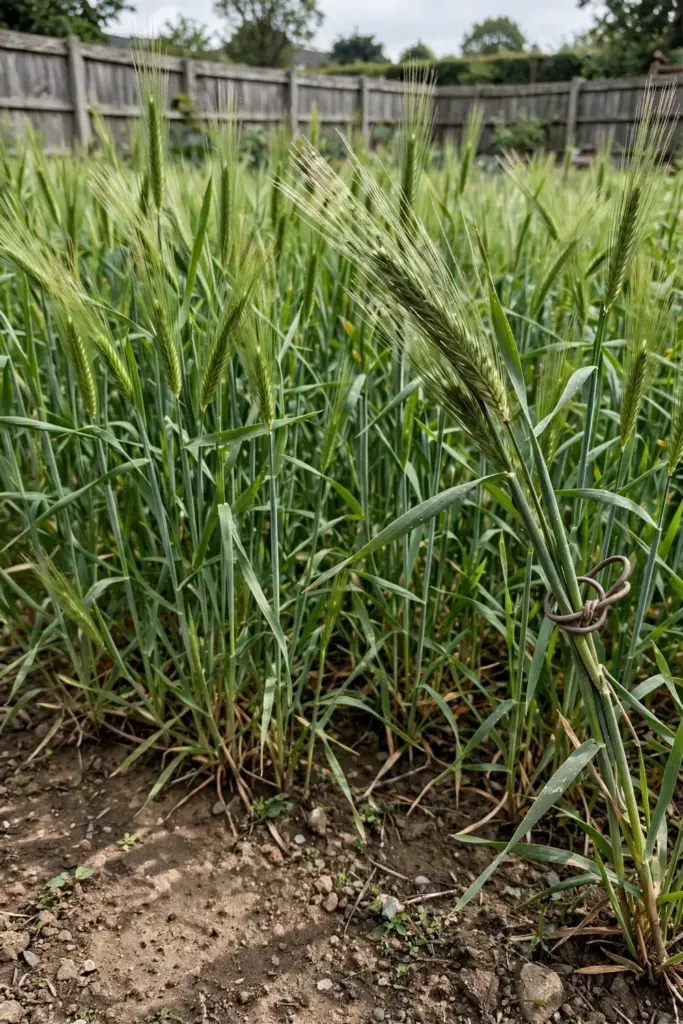
The work costs an hour or two across the season. Clean seed costs little more than ordinary seed. Rotation costs nothing but planning. The payoff is a patch that keeps its leaves into grain fill.
Skip barley for a season when the patch already shows heavy spots and you have a small garden. Grow a non-host crop there and return to barley after the break. The fungus needs barley residue to carry over, so a year away from barley starves it.
Prevention has a limit worth naming. Wind-blown spores from a nearby barley patch can reach a clean bed no matter how tidy your cleanup was. That outside pressure is real, and it is why prevention lowers the odds instead of guaranteeing a spotless crop. The steps still pay, because a clean bed with fresh seed and dry leaves holds off far more disease than a dirty one.
| Strategy | Time It Takes | What It Protects |
|---|---|---|
| Clean, certified seed | Minutes at ordering | Seedlings start free of seed-borne infection |
| Rotate the patch | Minutes of planning | The residue cycle breaks |
| Clear debris and volunteers | One cleanup session | Next season starts with less inoculum |
| Resistant variety | Minutes at ordering | Pressure drops across the whole season |
| Plant timing | One calendar choice | The crop dodges peak infection windows |
| Dry leaves | A daily habit | Spores find fewer wet hours to start |
| Early scouting | Minutes each week | Problems surface while you can still act |
8. Step 2: Start With Clean, Certified Seed
Buy certified, disease-free seed from a seed supplier. Certified seed starts the patch without the seed-borne infection that stripes seedling leaves.
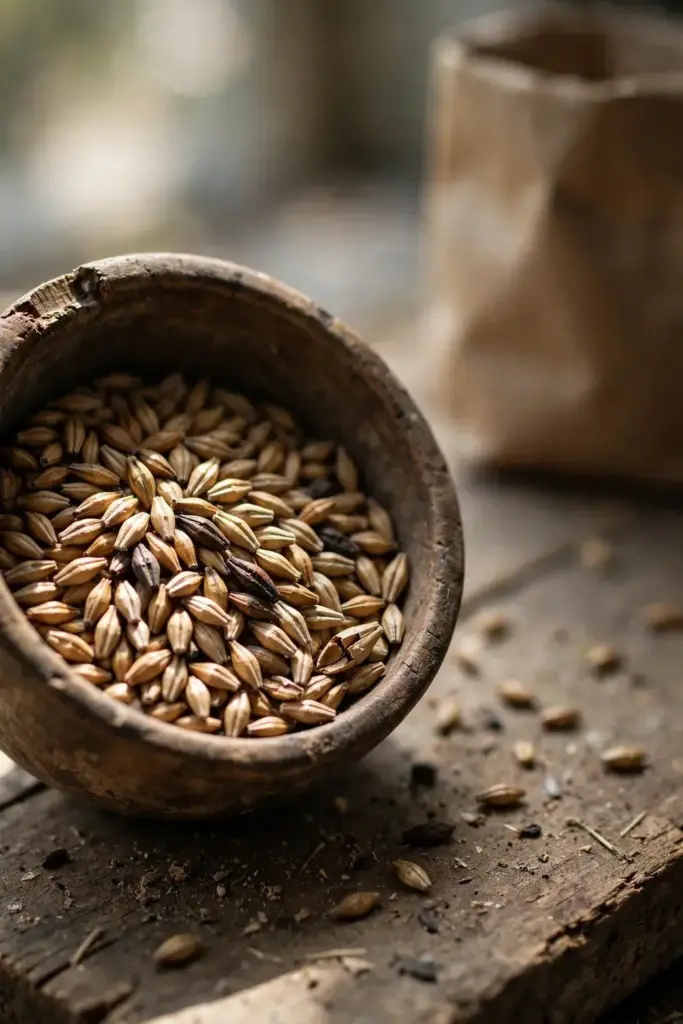
Never save seed from a diseased patch. Infected seed carries the fungus into the next sowing, and the seedlings show stripes from the base of the leaf. Gardening Know How advises against saving seed from diseased plants.
Sow at the depth on the packet and give seedlings air from day one. Clean seed starting steps keep early leaf wetness down while the stand gets going.
Inspect the seed lot before sowing. Shriveled or discolored grain goes in the trash, not in the soil.
Look for the word certified on the bag or the supplier listing. Ask the supplier whether the lot was tested for seed-borne disease. A supplier who can answer that question sells a different product from one who cannot.
Store leftover seed dry and cool. A sealed jar in a cool cupboard keeps seed viable until the next sowing. Damp storage grows mold on the seed coat and ruins the lot. Label the jar with the variety and the year, so next spring’s sowing starts from a known lot.
9. Step 3: Rotate Barley Out of the Same Spot
Do not plant barley after barley in the same bed. Rotation breaks the residue cycle that carries net blotch forward.
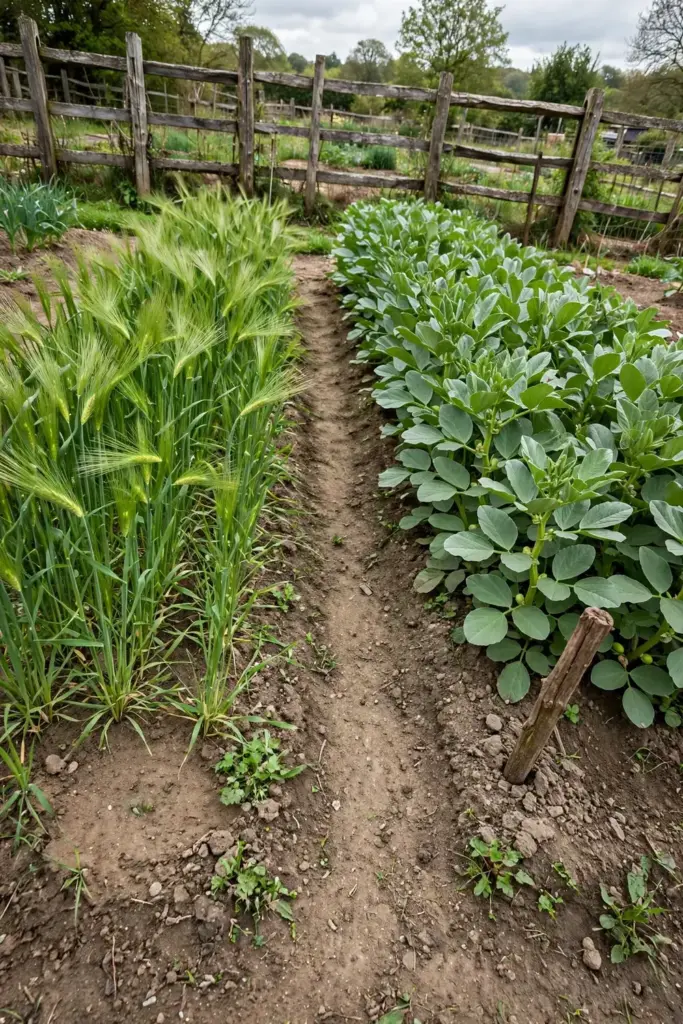
Syngenta Canada advises allowing several years between barley crops in the same spot. A home garden can meet that advice by moving barley to a fresh bed each year and filling the old bed with a non-host crop.
A crop rotation plan does more than fight disease. It spreads nutrient demand and breaks pest cycles too.
Keep a simple map of where barley grew. A notebook line or a sketch on paper stops guesswork next spring.
Any crop that is not barley breaks the cycle. Beans, peas, brassicas, and root crops all work in the rotation bed. What matters is the gap: no barley, no barley residue, no volunteer barley in that bed until the break has run its course.
10. Step 4: Remove and Destroy Infected Debris and Volunteer Barley
Clear every barley stem, leaf, and head at season end. Spores rest in that residue, so the pile you leave behind is next season’s infection.
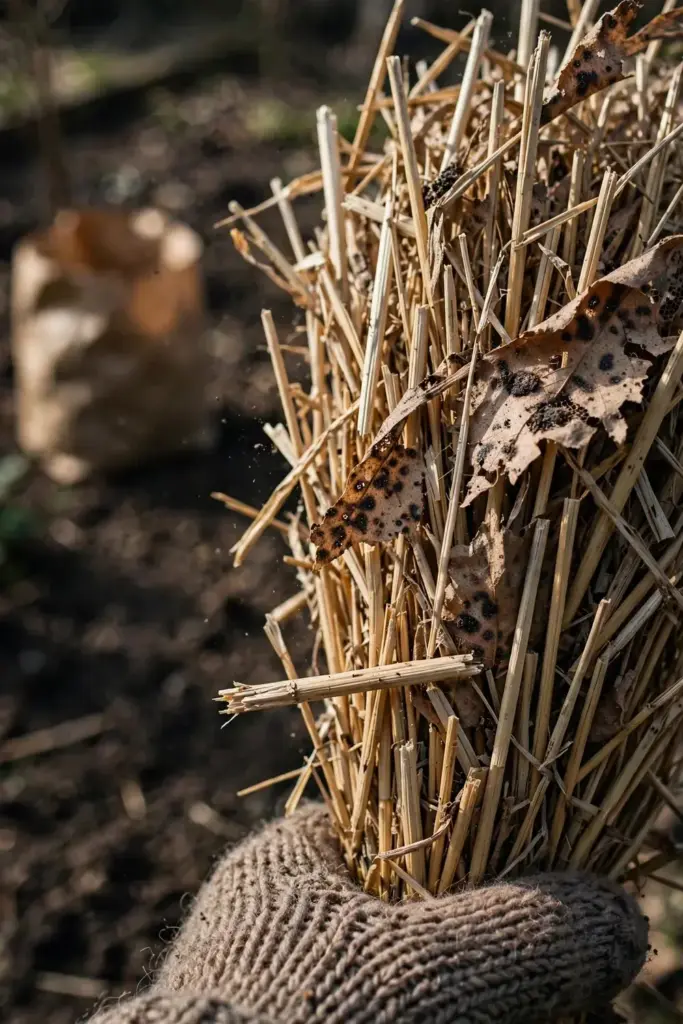
Gardening Know How lists debris removal and volunteer cleanup as essential, because the spores overwinter in plant residue. That cleanup is the single most effective job in this whole plan.
Bag diseased straw and trash it. Keep spotted material out of the home compost pile. Pull volunteers the moment you spot them.
Walk the bed again two weeks later and pull any volunteer barley that sprouts from spilled grain, since each volunteer is a living bridge for the fungus.
Knock soil off boots and tools before you move to a clean bed. Spores travel on muddy soles and dirty blades. A quick brush-off takes seconds and keeps one bed’s problem from becoming the whole garden’s problem.
11. Step 5: Choose a More Resistant Barley Variety
Pick a variety with net blotch resistance on its catalog description. Resistance does not grant immunity, and it still cuts pressure across the season.
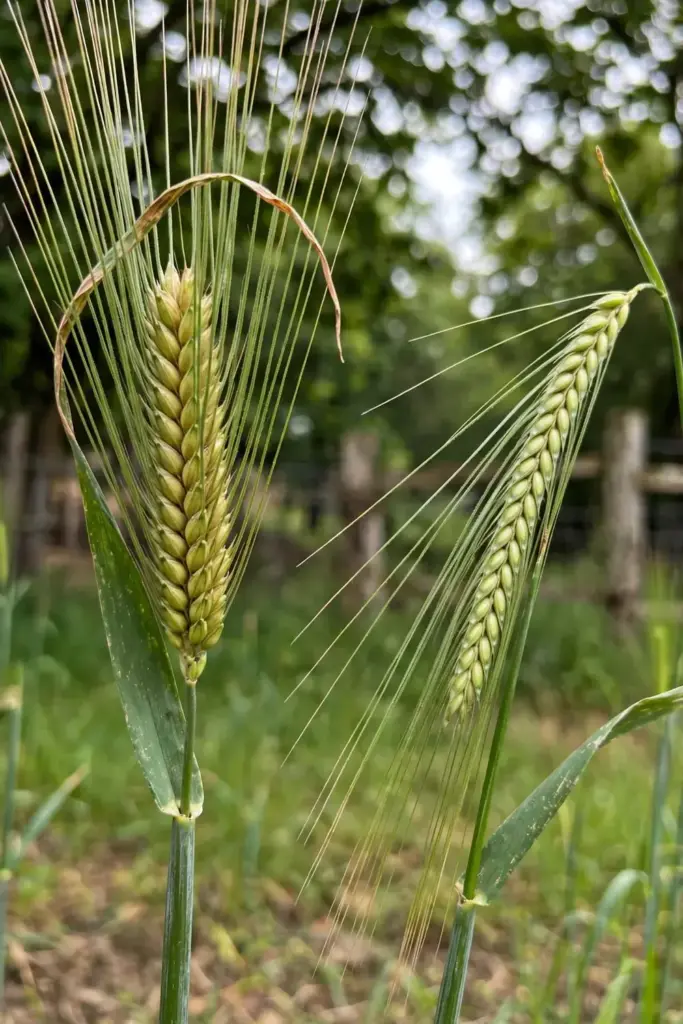
Syngenta Canada notes that six-row barley is usually more resistant than two-row barley. Use that tendency as a tiebreaker between two varieties you already like, and do not pick a variety on this one trait alone.
Read the catalog fresh each year. Resistance ratings shift as new varieties arrive and older ones leave the list. A variety that topped the list three years ago may not hold the same standing now.
Match the variety to your use. Homebrew barley, grain barley, and cover-crop barley want different traits. Resistance is one line on that list, next to maturity date and straw strength.
Your local Extension office publishes variety trial results for your state. Those trials rank the same varieties under your weather, not under trial-farm weather two time zones away. Check them before you order, and weigh them next to the catalog rating.
12. Step 6: Time Planting and Watering to Keep Leaves Drier
Plant and water so leaves spend fewer hours wet. Dry leaves deny spores the moisture they need to start an infection.
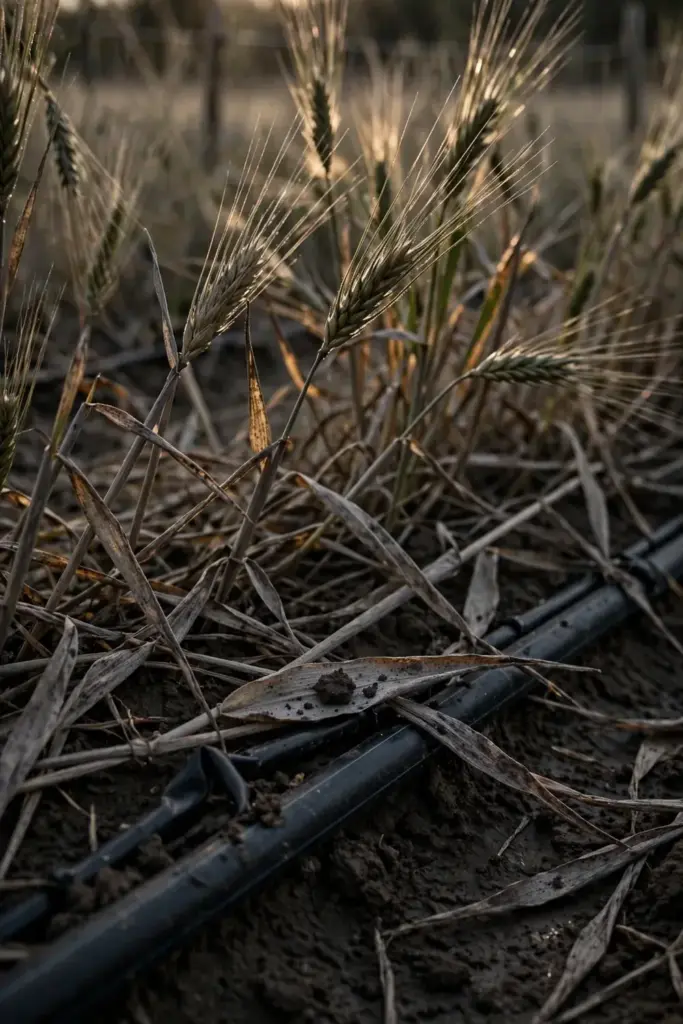
Late planting can dodge the fall and spring infection windows, according to Gardening Know How’s net blotch guide. Treat that lever as one option, not a settled rule. Planting windows shift by region, so check your local Extension calendar before moving a sowing date.
Water at the base. Soaker hoses and drip lines wet the soil while leaves stay dry. Skip overhead sprinklers on barley once the canopy closes.
Space rows so air moves through the stand. Montana State University Extension lists irrigation management that reduces canopy humidity among its core controls for barley leaf diseases.
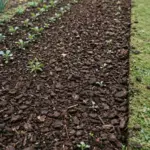
A mulch layer helps on the water side. Mulch holds soil moisture steady without wetting leaves, so you water less often and the canopy stays drier between waterings. Keep mulch pulled back a finger width from the stems so the crowns stay dry.
13. Step 7: Scout Early and Accept That Infected Plants Cannot Be Cured
Scout the lower leaves every week from tillering on. Early spots on lower leaves warn you before the disease climbs to the flag leaf.
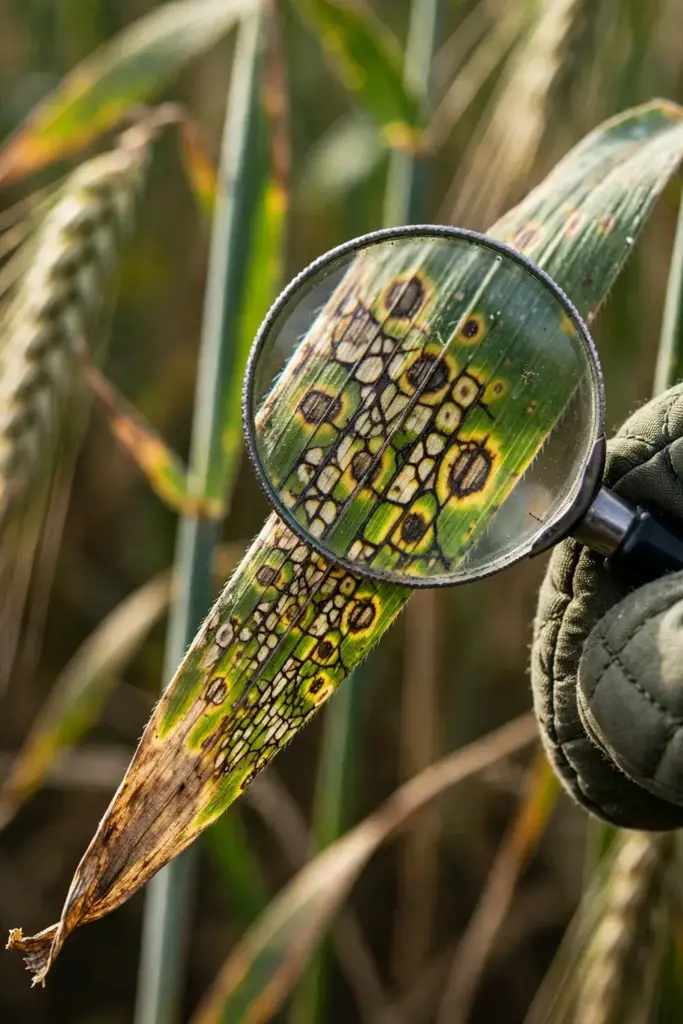
Gardening Know How states plainly that it is too late to treat plants already infected with net blotch. Prevention is the only method that works. Once lesions show, the work shifts to limiting spread and planning a cleaner next season.
Scouting still pays. Early spots tell you to tighten the rest of the plan: clear debris sooner, widen spacing at the next sowing, and pick a more resistant variety next year.
Skip commercial spray programs. They are built for field-scale barley, not for a home patch. The seven steps above carry the whole plan.
Write down the first-spot date, the bed, and the variety when spots appear. That note turns a vague memory into a record. Next spring you will know which bed needs the longest break and which variety to drop.
14. Living With Net Blotch Damage You Already Have
Leaves with netted lesions will not heal. The plant keeps growing, and the goal shifts from cure to limiting the damage.
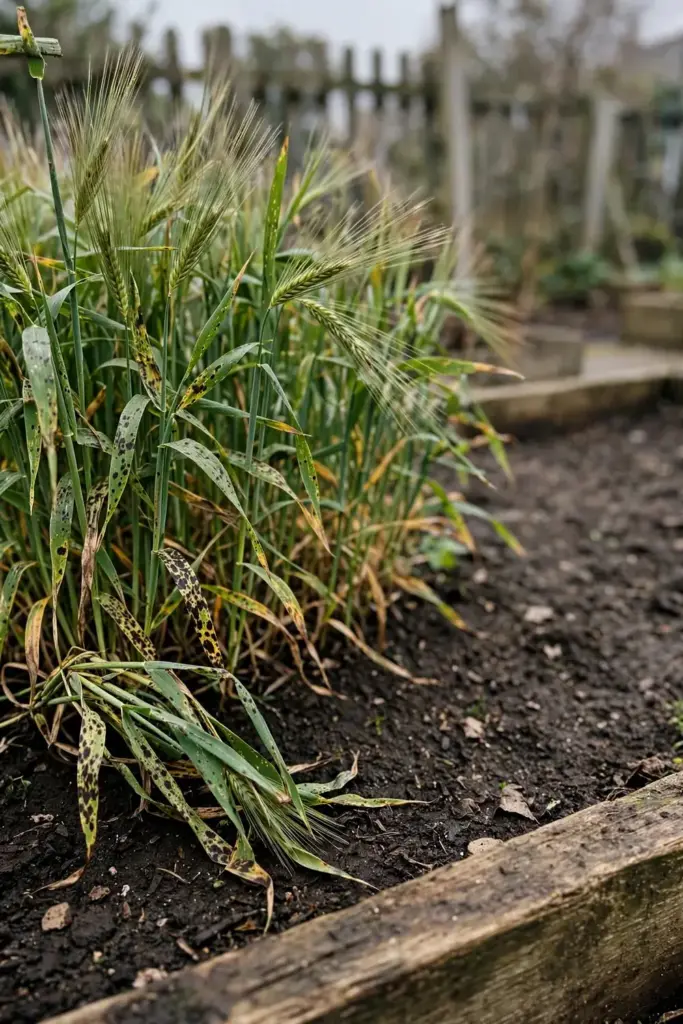
Leave mildly spotted plants standing when the heads still fill. Montana State University Extension notes that yield and quality loss track the leaf area hit, and the flag leaf matters most. A plant with spots on lower leaves only still has grain to finish.
Pull plants that collapse early or show spots across the whole canopy. Bag the material and trash it. Do not leave it on the bed and do not compost it.
Plan the next sowing from what you saw. Note which bed held the disease, which variety showed spots first, and where volunteers came up. That note becomes next season’s rotation plan.
Grain from a lightly hit patch still threshes and winnows normally. Keep it for eating or brewing, and keep it out of the seed bin. The split matters: grain for the table, fresh certified seed for the soil. Mixing the two jobs is how a diseased patch repeats itself.
After harvest, cut the stubble short and bag it, or turn it shallowly into the soil so it breaks down before the next sowing. Syngenta Canada notes that burying residue may reduce the disease. Either way, do not leave standing stubble to winter in place.
15. Frequently Asked Questions
Net blotch hits barley. Other cereals carry their own leaf diseases, and vegetables and fruit do not host net blotch. Keep barley residue out of shared beds anyway, because rotation still helps the whole garden. Do not assume a spot on a tomato or a rose is net blotch. Identify each crop’s spots on their own terms.
Grain from a lightly spotted plant is still grain. Clean it, winnow it, and use it as you normally would, but discard grain from badly shriveled heads as poor quality. Do not save grain from a diseased patch for seed. Eating and sowing are different decisions, and only the second one spreads the disease.
It comes back when infected residue stays in the bed. Remove debris, pull volunteers, and rotate the patch, and the cycle breaks. It can also arrive on wind-blown spores from nearby barley. A clean bed still faces that outside pressure. Prevention lowers the odds each season, though it never promises a spotless patch.
No. This page gives no spray program, and a home patch does not need one. Commercial schedules are built for field-scale barley and do not scale down to a garden bed. Cultural steps carry the plan: clean seed, rotation, debris cleanup, resistant varieties, and dry leaves. When a patch is badly hit, pull it and rotate. Spraying a small patch buys little.
You often cannot, and that is the honest answer. Spot-form net blotch and spot blotch look alike on a single leaf. Net-form net blotch draws the netted lines that give the disease its name. Look for those lines across several leaves. Where the answer matters, a local Extension clinic confirms the pathogen. Treat the patch the same either way: prevention, cleanup, rotation.
16. Where to Go From Here
Start with the seed order. Certified seed, a fresh bed, and a rotation note are the three moves that matter most before sowing.
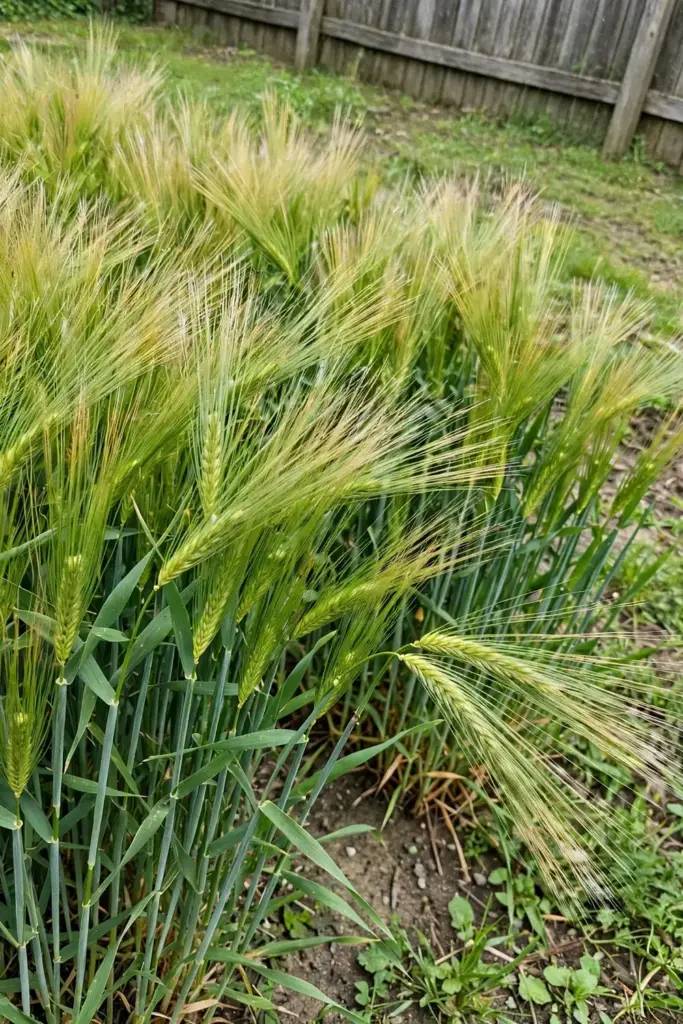
Walk the patch each week once barley is up. Catch spots on lower leaves early, clear debris at season end, and let prevention do the work a spray never will for a home patch.
When spots show up anyway, leave mildly hit plants standing, pull the worst ones, and log the bed for next year’s rotation. Net blotch rewards the gardener who plans ahead. A clean start beats a rescue every time.