
Yellow patch on a home lawn is usually not yellow patch. The 7 strategies below tell it from other yellow patches and keep it cosmetic, starting with the triage that separates a real case from the far more common causes.
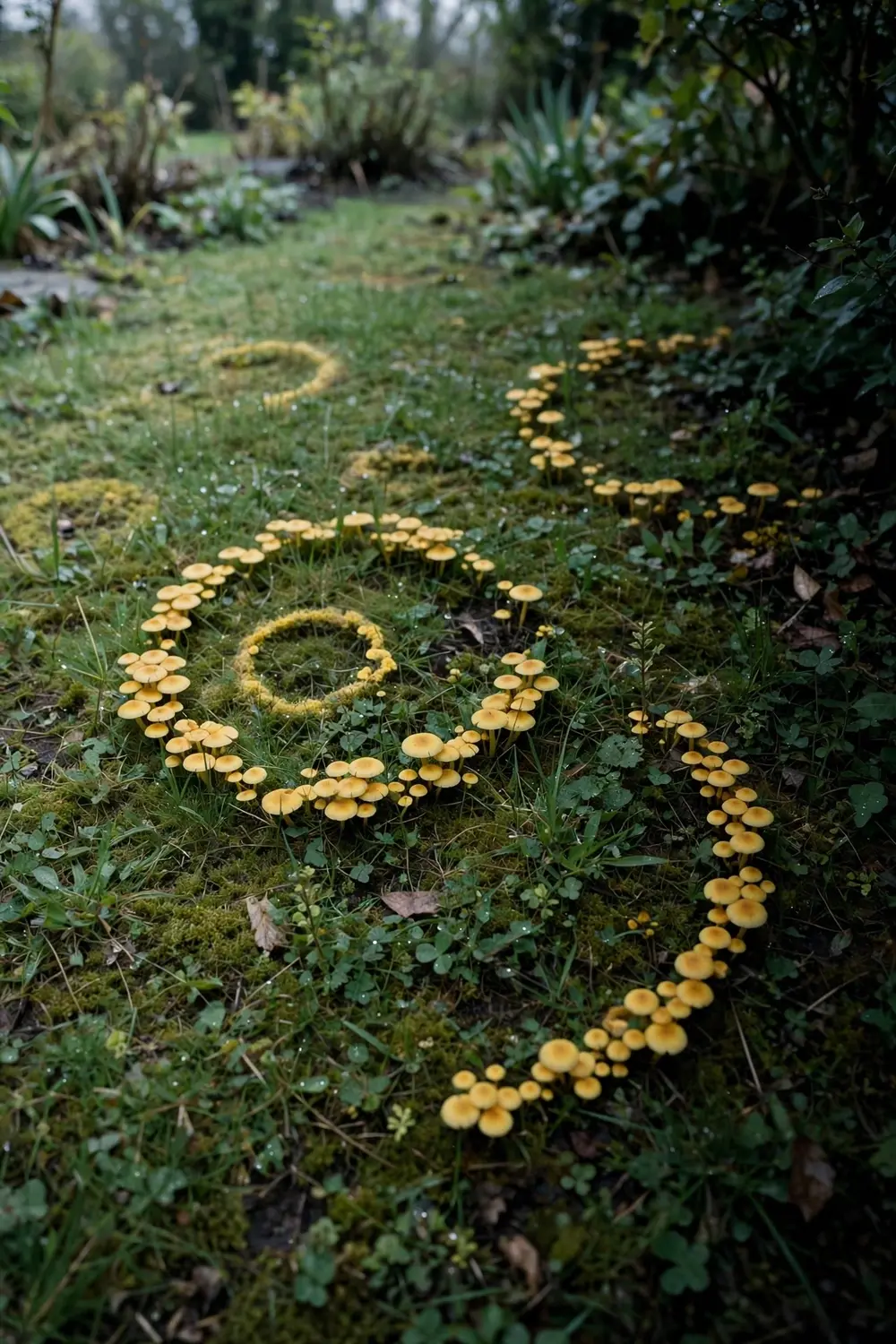
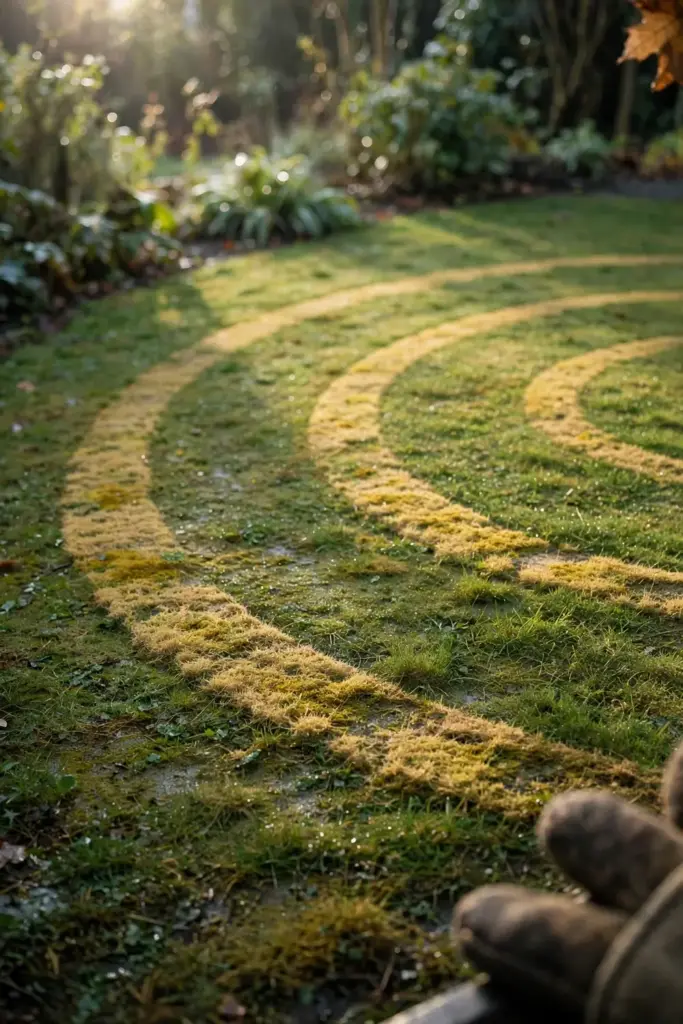
The signature is yellow rings or arcs, 6 to 12 inches across or larger coalescing patches, in cool, wet spring or fall weather, on closely mowed turf. The disease is primarily a putting-green problem. On a home lawn it is cosmetic, short-lived, and best left alone.
The rest of this page runs the order a gardener should follow. Understand the fungus first, triage the patch, separate it from brown patch and large patch in the differential table, then work the 7 strategies from waiting to overseeding. I have learned that the yellow patch I leave alone in spring is the lawn that greens up on its own by June.
What Yellow Patch on Your Lawn Actually Is
Yellow patch is a fungal disease of cool-season turfgrass. The fungus Rhizoctonia cerealis causes yellow patch.
The honesty spine comes first. Yellow patch is primarily a putting-green and closely mowed turf disease. Purdue University Extension states that symptoms are limited to putting greens and collars. Kansas State University Extension agrees: the disease primarily occurs on golf course putting greens and collars. Illinois Extension and Cornell’s home-grounds sheet read broader, covering all northern turf species and all common Long Island turf species. This article presents both readings, and it defaults to the Purdue and Kansas State scope. A home lawn with yellow patches is far more likely to hold grubs, dog urine, nitrogen or iron deficiency, drought, compaction, or another patch disease than yellow patch.
The fungus is Rhizoctonia cerealis. It is a close relative of Rhizoctonia solani, which causes brown patch and large patch. The three diseases share the genus and the patch habit. The temperature separates them. Yellow patch runs cool, at 50 to 65 degrees Fahrenheit, in fall and spring. Brown patch runs warm, at 70 to 90 degrees Fahrenheit, in summer. Large patch runs on warm-season grasses in fall and spring. The differential table in the next section lays out the contrast in full.
On a home lawn, yellow patch is cosmetic-only. The patches yellow, then green up again when warm, dry weather arrives. Purdue University Extension notes that symptoms disappeared after a week of warm spring weather without fungicide. The Purdue Extension bulletin on yellow patch carries the core guidance, and its lessons transfer directly to home lawns. The disease does not kill a home lawn. The disease does not need a spray. The disease needs a week of warm weather.
Illinois Extension gives the blunt control statement: yellow patch has not been controlled with any degree of success through cultural or chemical practices. That sentence is the second honesty anchor. Prevention reduces pressure. Prevention does not guarantee control. A lawn that follows the whole routine can still show yellow patch in a cool, wet spring. The routine keeps it cosmetic. The routine does not promise a yellow-patch-free lawn.
One source notes that yellow patch can kill grass after prolonged damp, cool weather on turf in poor health. That note is the rare exception, not the rule. A home lawn in poor health, waterlogged through a cool, wet spring, can lose grass to yellow patch. A home lawn in good health loses color, not grass. The exception is the reason the article covers vigor and drainage. The rule is the reason the article leads with waiting.
The scope stays on cool-season home lawns: Kentucky bluegrass, perennial ryegrass, tall fescue, and bentgrass. Putting-green programs stay out. This article is a triage and care guide, not a fungicide guide.
How to Triage a Yellow Patch Before Acting
Triage first. Season, pattern, and the common causes separate a possible yellow patch from the far more common yellow lawn.
Check the season. Yellow patch runs cool and wet, in spring and fall, at 50 to 65 degrees Fahrenheit. A yellow patch in summer heat is not yellow patch. A yellow patch in summer heat is brown patch, drought, grubs, or dog urine. The season is the first triage question. A cool, wet spring with yellow rings fits. A hot, dry July with yellow patches does not.
Check the pattern. Yellow patch shows rings or arcs, 6 to 12 inches across, or larger patches that coalesce. The rings are the mark. A yellow patch with a ring or arc shape, in cool weather, is a possible yellow patch. A yellow patch with no ring, in a dog’s favorite corner, is a dog spot. A yellow patch in a dry, sunny strip is drought. The pattern is the second triage question.
Check the common causes first. Most home yellow patches are not yellow patch. Grub damage pulls up like a carpet. Dog urine burns in small, round spots. Nitrogen deficiency yellows the whole lawn. Iron deficiency yellows between the veins. Drought yellows in dry strips. Compaction yellows along paths. Each of these is more common on a home lawn than yellow patch. Rule them out before blaming the fungus.
Check for leaf lesions. Yellow patch often shows no leaf lesions. Brown patch shows leaf lesions. A yellow patch with leaf lesions points away from yellow patch. A yellow patch with no leaf lesions, in cool weather, with rings, points toward yellow patch. The leaf check is the third triage question.
Field identification is presumptive. The rings, the season, and the absence of leaf lesions suggest yellow patch. They do not confirm it. A lab sample confirms it. A home lawn does not need a lab sample for a cosmetic disease. The triage is enough to start the routine: wait, cut nitrogen, aerate, dethatch, water in the morning, clean the mower, and overseed. The routine helps whatever patch disease is present. The lab names the fungus where it matters.
Yellow Patch vs Brown Patch vs Large Patch: The Field Differential
Yellow patch runs cool and shows rings with often no leaf lesions. Brown patch runs warm and shows olive-brown patches with a smoke ring. Large patch runs on warm-season grasses in fall and spring with donut rings. The table below lays out the contrast.
| Feature | Yellow Patch | Brown Patch | Large Patch |
|---|---|---|---|
| Pathogen | Rhizoctonia cerealis | Rhizoctonia solani | Rhizoctonia solani (warm-season strains) |
| Temperature | Cool, 50 to 65 degrees Fahrenheit | Warm, 70 to 90 degrees Fahrenheit | Cool to warm, fall and spring |
| Season | Fall and spring | Summer | Fall and spring |
| Grasses | Cool-season turf, mostly putting greens | Cool-season turf | Warm-season grasses |
| Patch shape | Rings or arcs, 6 to 12 inches or larger coalescing patches | Olive-green to brown patches, often with a smoke ring | Donut rings, often large |
| Leaf lesions | Often none | Present | Present |
| Severity on home lawns | Cosmetic, vanishes in about a week of warm dry weather | Can thin and damage the lawn | Can thin and damage the lawn |
| Fungicide for home lawns | Normally not recommended | Labeled protectant as last resort | Labeled protectant as last resort |
Read the table with the season in hand. A yellow ring in cool, wet spring weather, with no leaf lesions, is yellow patch. An olive-brown patch in summer heat, with a smoke ring and leaf lesions, is brown patch. A donut ring on a warm-season grass in fall or spring is large patch. The temperature bands come from Cornell’s home-grounds sheet, Purdue, Illinois, and a golf-course IPM sheet. The bands corroborate each other. The table is the triage tool.
Do not carry a home-blog three-way table as settled. One home-blog table lists three-way numbers that contradict its own pages. This article uses the Extension temperature bands, not the blog numbers. The Extension bands are the standard. The blog numbers are not.
Do not treat the table as a laboratory diagnosis. The table separates the three diseases at the level a homeowner can use. A lab sample settles the identity where it matters. The table’s job is to get the homeowner to act correctly on the spot: wait for yellow patch in cool weather, act for brown patch in summer heat, and check the grass type for large patch.
Strategy 1: Wait It Out First and Do Nothing
Wait it out first. Do nothing. Warm, dry weather clears yellow patch symptoms in about a week.
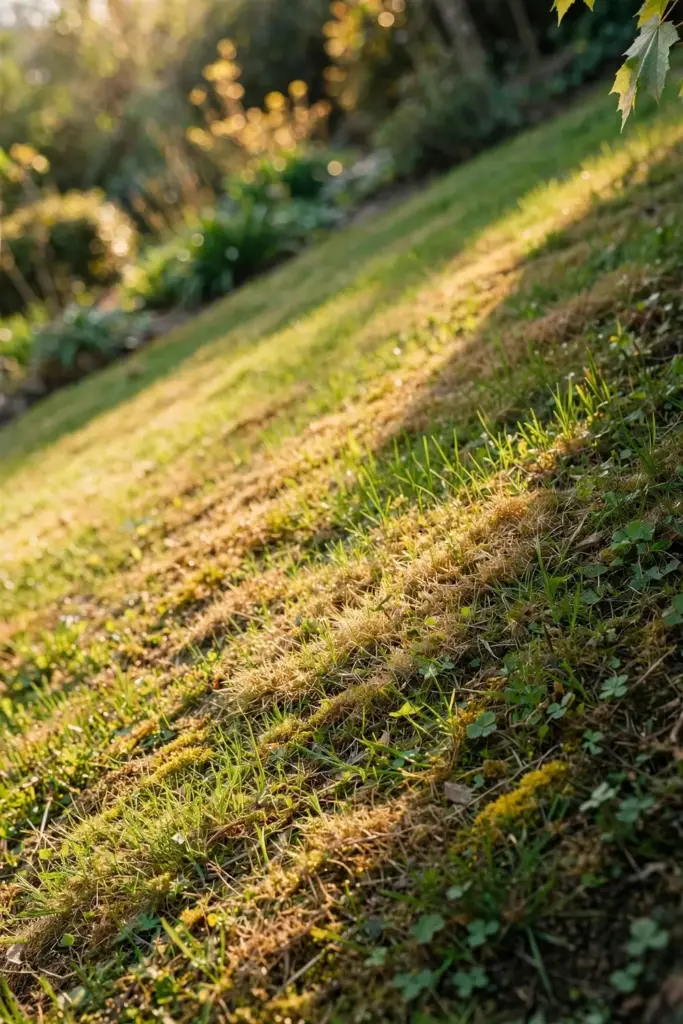
Purdue University Extension gives the waiting rule: symptoms disappeared after a week of warm spring weather without fungicide. The waiting is not neglect. The waiting is the treatment. Yellow patch is a cool-weather disease. Warm weather ends it. A homeowner who waits a week watches the patches green up. A homeowner who sprays on day one wastes money on a disease that warm weather would have ended.
Do not reseed on day one. A reseeded patch in cool, wet weather faces the same fungus. A reseeded patch after the warm weather arrives grows clean. Wait for the warm weather. Watch the patches. Reseed only the spots that stay thin after the disease passes. The waiting saves the seed. The waiting saves the work.
Do not spray on day one. Purdue University Extension states that fungicides are normally not recommended for yellow patch. Kansas State University Extension agrees. Illinois Extension states that the disease has not been controlled with any degree of success through cultural or chemical practices. A spray on day one buys nothing. A spray on day one risks the soil and the wallet. Wait. The warm weather is the spray.
Do not panic. Yellow patch on a home lawn is cosmetic. The lawn greens up. The patches fade. The lawn recovers. A homeowner who panics mows short, waters more, and fertilizes hard, and each of those makes the fungus happier. A homeowner who waits does nothing, and nothing is the right thing. Wait a week. Watch the lawn. The lawn answers.
Strategy 2: Cut Nitrogen Spikes in Spring and Fall
Cut nitrogen spikes in spring and fall. No heavy fast-release nitrogen when the fungus is active. Slow-release nitrogen only, at soil-test rates.
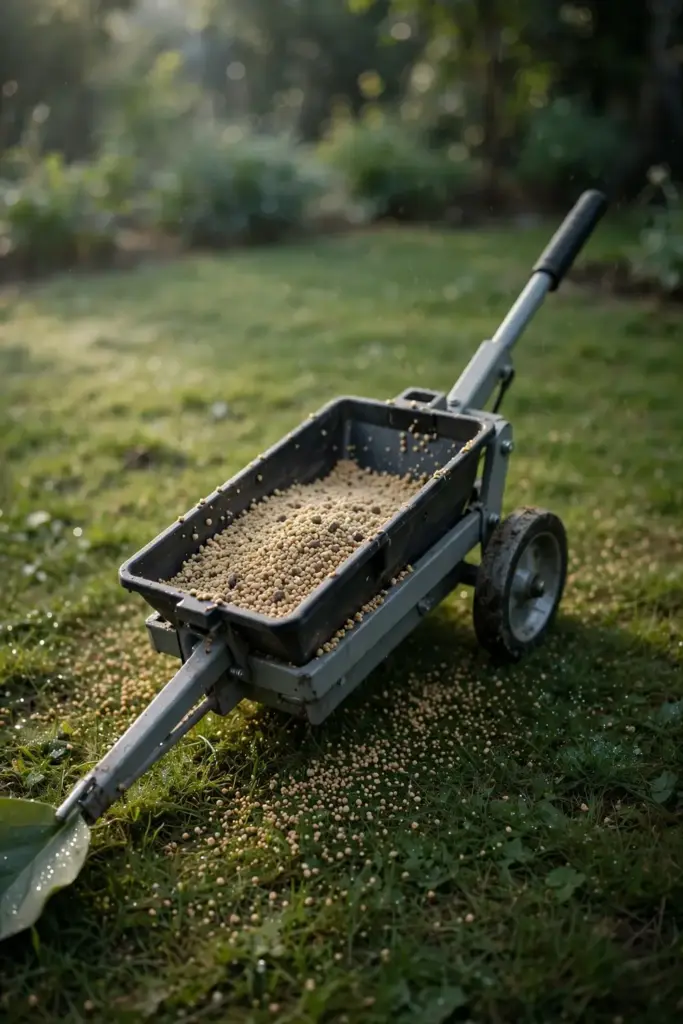
Illinois Extension gives the nitrogen rule: reduce nitrogen in spring and fall, or use slow-release nitrogen. Excess soluble nitrogen grows succulent, soft leaf tissue. Soft tissue catches the fungus. Soft tissue stays wet. Soft tissue feeds the fungus. A lawn fed heavily with fast-release nitrogen in spring grows a flush of soft leaves into the exact weather yellow patch wants. A lawn fed with slow-release nitrogen at soil-test rates grows steady tissue that resists the fungus.
Feed to a soil test, not to a guess. A soil test tells the homeowner what the lawn actually needs. A lawn fed to its test result grows steady tissue with moderate vigor. A lawn fed by guesswork gets either starved or pushed. Both extremes open the door. Test the soil, feed to the result, and stop when the result says stop.
Avoid heavy nitrogen in the fungus’s active seasons. Spring and fall are the yellow patch seasons. Spring and fall are the seasons to hold the nitrogen back. Summer is the brown patch season, and the same restraint applies. The nitrogen calendar follows the fungus calendar. Feed lightly when the fungus is active. Feed to the test when the fungus is dormant.
Do not fertilize a yellow patch to green it up. Fertilizer grows soft tissue into the fungus’s weather. Fertilizer greens the patch for a week and feeds the fungus for a month. A yellow patch fed heavily stays yellow longer. A yellow patch left unfed greens up on its own when the warm weather arrives. Hold the fertilizer. Wait for the warm weather.
Strategy 3: Aerate and Fix Drainage
Aerate the lawn and fix the drainage. Compaction and standing water grow the fungus.

Aerate compacted soil. A lawn with compacted soil holds water on the surface and starves the roots of air. Compacted soil grows weak grass and wet thatch. Weak grass catches the fungus. Wet thatch shelters the fungus. Aeration punches holes through the compaction, lets air into the roots, and lets water drain. A lawn aerated in fall grows stronger grass in spring. A lawn left compacted grows weaker grass and more fungus.
Fill low spots where water ponds. A low spot that ponds after rain holds the fungus’s favorite conditions for days. A low spot filled and graded drains in hours. Fill the low spot with topsoil. Grade the soil away from the house and toward the drain. A lawn that drains in hours faces a lighter fungus load than a lawn that ponds for days.
Grade for drainage. A lawn that slopes gently away from the house drains. A lawn that bowls toward the house ponds. The grading is a one-time fix with a long payoff. A lawn graded for drainage dries fast after rain. A lawn graded into a bowl stays wet. The drainage is the disease prevention. The bowl is the disease invitation.
Fix downspouts that dump water beside the lawn. A downspout that dumps roof water onto one corner of the lawn keeps that corner wet for days. A downspout extended to a drain or to a dry well keeps the lawn dry. The downspout fix costs little. The wet corner costs a lawn.
Strategy 4: Dethatch to Under Half an Inch
Dethatch to keep thatch under half an inch. Thick thatch shelters the fungus.
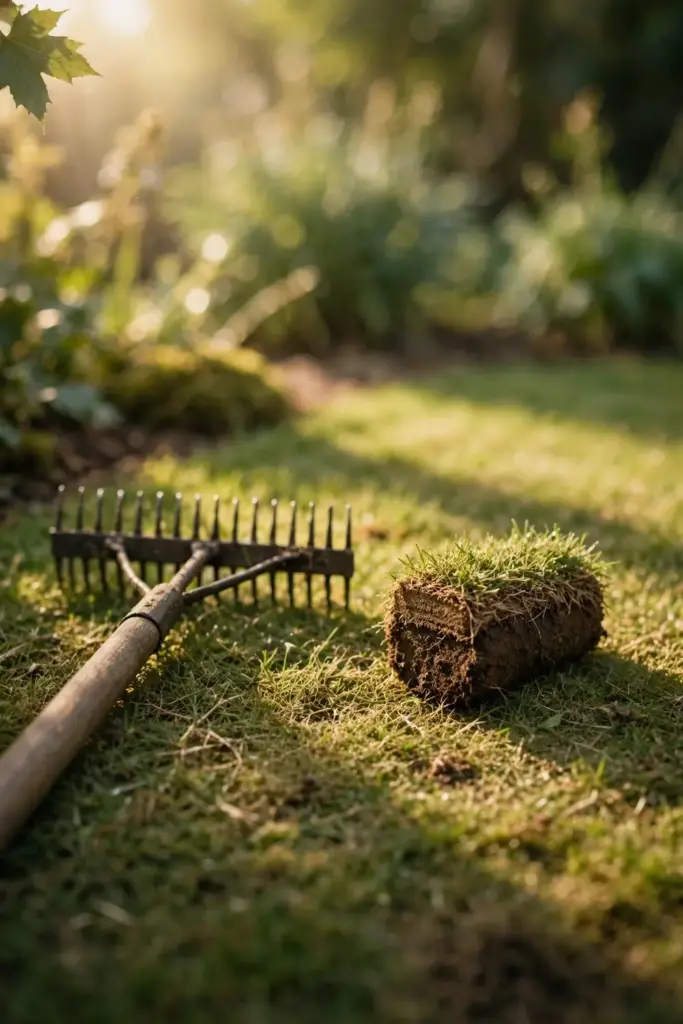
Illinois Extension gives the thatch rule: keep thatch under half an inch, and notes that the worst cases appear in sod with about 1 inch of thatch. Thatch is the layer of dead and living organic matter between the soil and the green leaves. A thin thatch layer insulates the soil and holds moisture. A thick thatch layer holds water, shelters the fungus, and starves the roots. The half-inch line is the boundary. Below it, the lawn is healthy. Above it, the lawn is a fungus bed.
Measure the thatch. Cut a small plug of lawn, and measure the brown layer between the soil and the green leaves. A plug with a thatch layer under half an inch is a lawn that needs no dethatching. A plug with a thatch layer over half an inch is a lawn that needs dethatching. The plug is the measurement. The measurement is the decision.
Dethatch in early fall for cool-season lawns. A dethatching rake or a power dethatcher pulls the excess thatch out of the lawn. The lawn looks rough for a week. The lawn recovers stronger. A fall dethatching prepares the lawn for winter and for the next spring’s yellow patch season. A spring dethatching also works, but it stresses the lawn just as the fungus season opens. Fall is the safer window.
Do not dethatch a lawn that does not need it. A lawn with thin thatch gains nothing from dethatching. Dethatching a thin-thatch lawn stresses the grass for no benefit. Measure first. Dethatch only when the measurement says so. The measurement is the gate.
Strategy 5: Light, Air, and Morning Water
Give the lawn light and air, and water in the morning. Light and air dry the leaves. Morning water lets the blades dry before night.
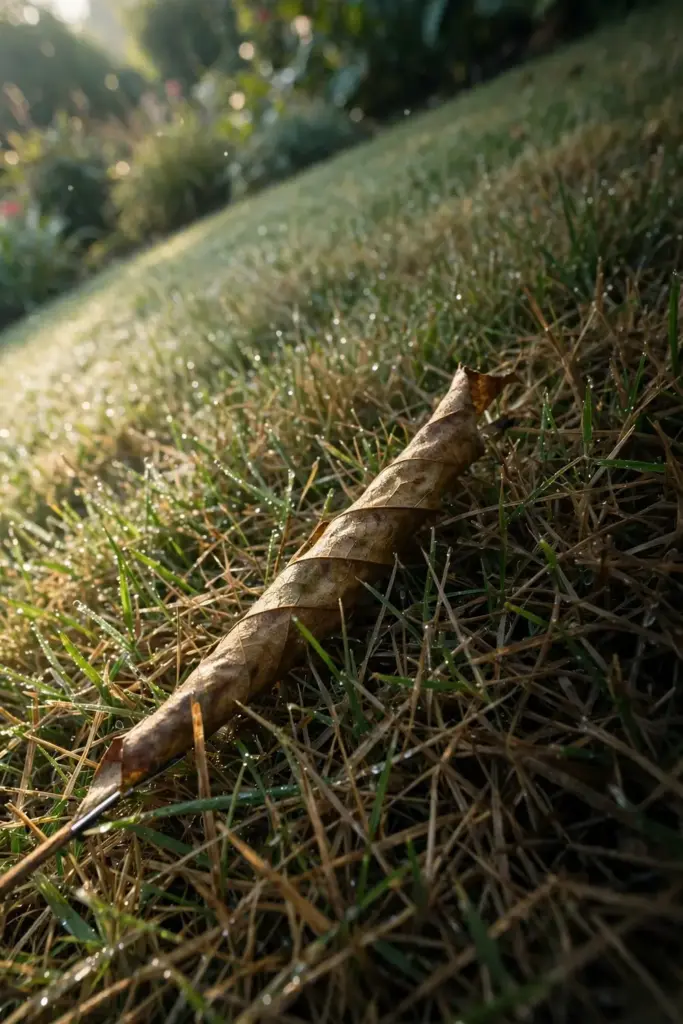
Prune and thin trees and shrubs that shade the lawn. A lawn in shade stays wet longer after rain and after dew. A lawn in sun dries fast. A shaded lawn catches yellow patch sooner and harder than the same lawn in sun. Prune the low branches that shade the lawn. Thin the shrubs that block the breeze. The light and air are free. The shade is costly.
Water deeply but infrequently, early in the day, so blades dry before night. Illinois Extension gives the watering rule: water deeply and infrequently, early in the day. Deep watering grows deep roots. Infrequent watering lets the soil surface dry between waterings. Morning watering lets the blades dry before night. A lawn watered in the morning dries by noon. A lawn watered in the evening stays wet all night. The evening watering feeds the fungus. The morning watering starves it.
Avoid watering in the evening. Evening watering soaks the blades and holds them wet all night. Night-wet blades are the fungus’s favorite condition. A lawn watered in the evening faces a full night of wet leaves. A lawn watered in the morning faces a full day of drying leaves. The timing is the treatment. Morning is the time. Evening is the mistake.
Mow at the right height. A lawn mowed too short stresses the grass and opens the soil to the fungus. A lawn mowed at the recommended height for its species shades the soil, holds moisture in the roots, and resists the fungus. Mow high in summer. Mow to the species height in spring and fall. The height is the health. The scalping is the stress.
Strategy 6: Clean the Mower Before Moving to Clean Areas
Clean the mower before moving into disease-free areas. Mowers spread foliar diseases from lawn to lawn.
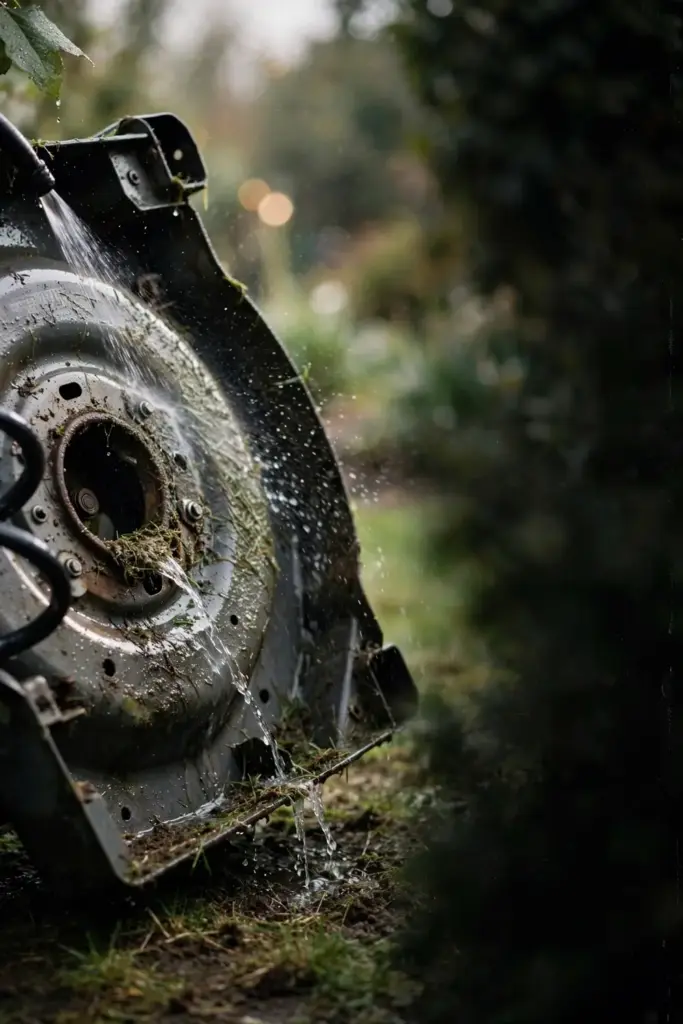
Clean the mower deck, the blades, and the wheels before moving from a diseased area to a clean area. Grass clippings stuck to the deck carry the fungus. Soil on the wheels carries the fungus. A mower that cuts a yellow patch and then cuts a clean lawn carries the fungus to the clean lawn. A mower cleaned between areas does not. The cleaning takes minutes. The minutes save the clean lawn.
Remove clippings from the mower after cutting a diseased area. Bag the clippings. Trash them. Do not leave them on the clean lawn. Clippings from a diseased area carry the fungus onto the clean lawn. Clippings from a clean area are safe to leave. The clipping habit follows the mower habit: clean the mower, bag the diseased clippings, and move on.
Clean the mower after the last cut of the day. Hose the deck. Wipe the blades. Let the mower dry. A mower left dirty holds the fungus overnight. A mower cleaned and dried starts the next cut clean. The end-of-day cleaning is the habit. The habit is the prevention.
Do not share a mower between a diseased lawn and a clean lawn without cleaning. A neighbor’s mower borrowed for one cut carries the neighbor’s fungus. A mower lent to a neighbor carries the gardener’s fungus. Clean before lending. Clean after borrowing. The cleaning is the courtesy. The cleaning is the prevention.
Strategy 7: Overseed Thinned Spots After the Disease Passes
Overseed thinned spots after the disease passes. Overseeding fills the gaps that the fungus opened.
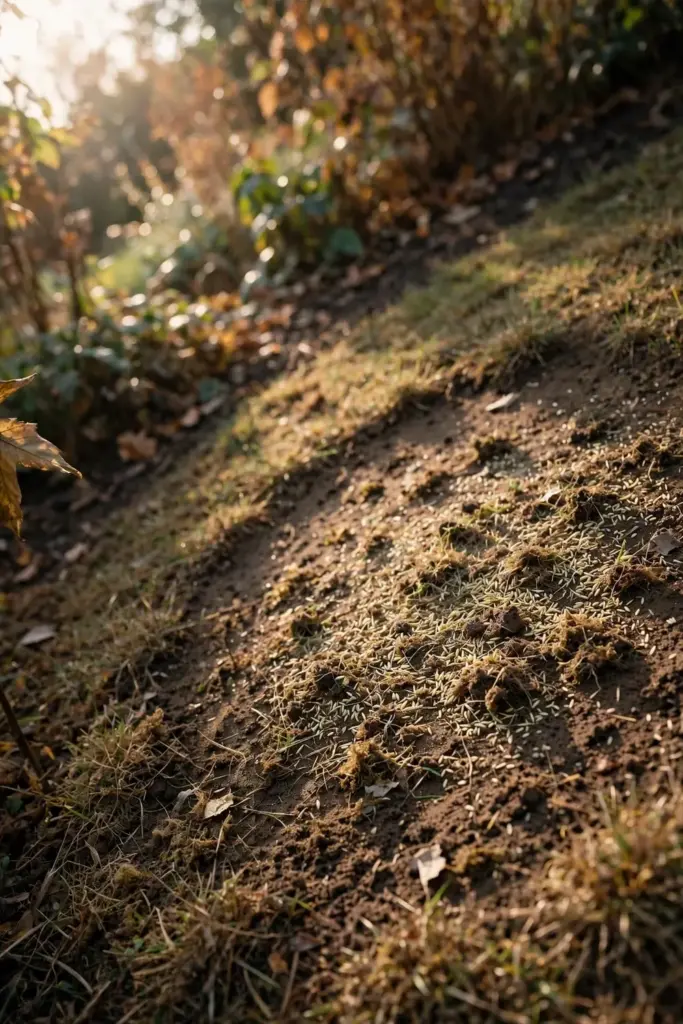
Wait until the disease passes before overseeding. A seed sown into a cool, wet, fungus-active lawn faces the same fungus. A seed sown after the warm weather arrives grows clean. Wait for the warm weather. Watch the patches green up. Overseed only the spots that stay thin after the disease passes. The waiting saves the seed. The waiting saves the work.
Overseed with the right species for the lawn. A Kentucky bluegrass lawn gets Kentucky bluegrass seed. A tall fescue lawn gets tall fescue seed. A perennial ryegrass lawn gets perennial ryegrass seed. The species match matters. A lawn overseeded with the wrong species grows a patchwork. A lawn overseeded with the right species grows uniform. Match the species. The match is the lawn.
Prepare the spot before seeding. Rake the thin spot to bare soil. Spread the seed. Press the seed into the soil. Water lightly and often until the seed germinates. A seed sown on thatch sits on thatch and dries. A seed sown on bare soil contacts the soil and grows. The preparation is the seeding. The seeding without preparation is scattering.
Do not present a cultivar list as settled. One home-blog source names ‘Adelphi’ and ‘Cheri’ Kentucky bluegrass as resistant. That claim is a single home-blog source, and this article does not carry it as guidance. The seed catalog knows which cultivars carry resistance in the region. Ask the catalog. Trust the catalog. The catalog is the source. The blog is not.
Living With Yellow Patch Damage You Cannot Undo
Some damage stays. A patch thinned by yellow patch stays thin until overseeding fills it.
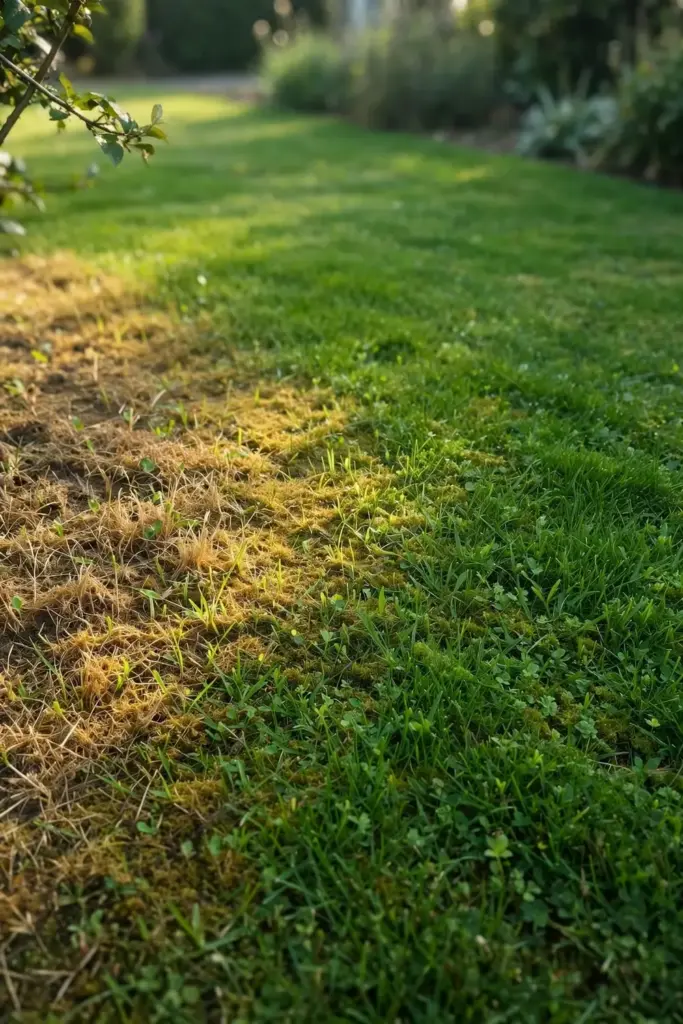
Overseed the thin spots and let the lawn fill in. A lawn overseeds in fall and fills by spring. The new grass needs the same routine: wait, cut nitrogen, aerate, dethatch, water in the morning, clean the mower. A lawn that keeps its new grass clean earns its place. A lawn that yellows every spring needs a harder look at drainage, thatch, and nitrogen.
The guide to brown patch SOS covers the warm-weather patch disease that most often confuses lawn owners, with its own summer routine. Yellow patch is the cool-weather partner. The differential table above separates them. The brown patch guide carries the summer response. This article carries the cool-weather response.
The guide to best time to fertilize lawn in spring covers spring feeding timing for lawns. The feeding guide carries the nitrogen calendar. This article carries the nitrogen restraint. The two guides work together. A lawn fed to the test result, at the right time, grows the steady tissue that resists both patch diseases.
Do not re-sod a yellow patch and expect a different result. The fungus stays. The wet soil stays. The shade stays. A new sod in the same spot faces the same spring with the same disadvantage. Fix the site first: aerate, drain, dethatch, open the light, and give the new sod sun and air flow from the day it goes in.
Frequently Asked Questions
Yellow patch is uncommon on home lawns. Purdue University Extension states that symptoms are limited to putting greens and collars. Kansas State University Extension agrees: the disease primarily occurs on golf course putting greens and collars. Most home yellow patches are grubs, dog urine, nitrogen or iron deficiency, drought, compaction, or another patch disease. Rule out the common causes before blaming the fungus. The triage comes first. The fungus comes last.
Do not spray fungicide on yellow patch. Purdue University Extension states that fungicides are normally not recommended. Kansas State University Extension agrees. Illinois Extension states that yellow patch has not been controlled with any degree of success through cultural or chemical practices. Warm, dry weather clears the symptoms in about a week. A spray buys nothing. Wait. The warm weather is the spray.
Yellow patch runs cool, at 50 to 65 degrees Fahrenheit, in fall and spring, with rings or arcs and often no leaf lesions. Brown patch runs warm, at 70 to 90 degrees Fahrenheit, in summer, with olive-green to brown patches, often with a smoke ring and leaf lesions. The season separates them. The temperature separates them. The leaf lesions separate them. The differential table above lays out the contrast in full. The lab confirms where it matters.
Yellow patch rarely kills a home lawn. Purdue University Extension notes that symptoms disappeared after a week of warm spring weather without fungicide. The disease is cosmetic on a home lawn. One source notes that yellow patch can kill grass after prolonged damp, cool weather on turf in poor health. That note is the rare exception, not the rule. A home lawn in good health loses color, not grass. Keep the lawn vigorous. Fix the drainage. The lawn recovers.
Do not reseed a yellow patch right away. Wait for the warm weather. Watch the patches green up. Reseed only the spots that stay thin after the disease passes. A seed sown into a cool, wet, fungus-active lawn faces the same fungus. A seed sown after the warm weather arrives grows clean. The waiting saves the seed. The waiting saves the work. Overseed in fall for the best fill.
Yellow patch spreads on mowers like most foliar diseases. Grass clippings stuck to the deck carry the fungus. Soil on the wheels carries the fungus. A mower that cuts a yellow patch and then cuts a clean lawn carries the fungus to the clean lawn. Clean the mower before moving into disease-free areas. Bag the clippings from diseased areas. The cleaning takes minutes. The minutes save the clean lawn.
Where to Go From Here
Start with the triage. Check the season, the pattern, and the common causes before acting.
The order is wait, cut nitrogen, aerate, dethatch, light and morning water, clean the mower, and overseed. One next action beats ten good intentions. Wait a week. Watch the lawn. The lawn greens up because the gardener waited.