
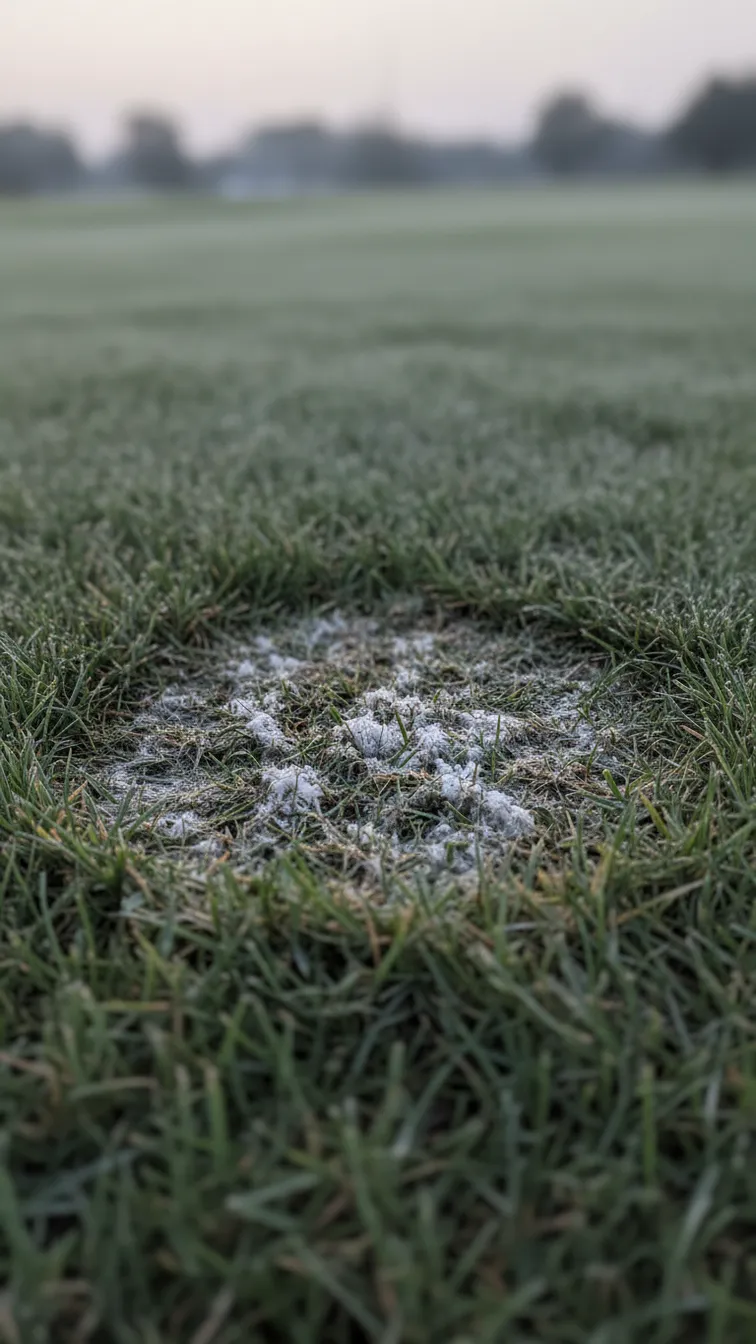

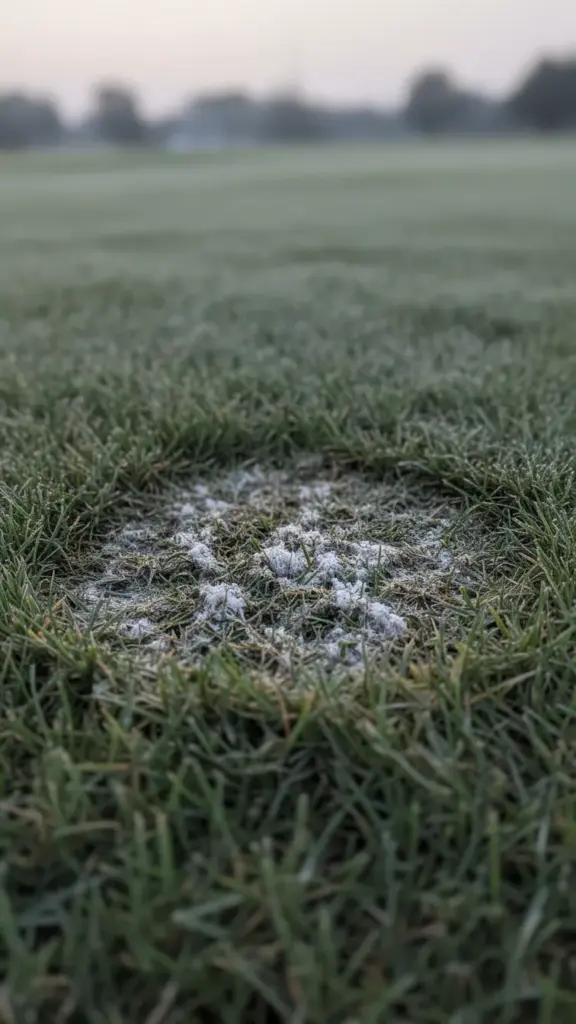
Cottony blight is the common name for Pythium blight, a fast-moving fungal disease that can turn a healthy lawn into a greasy, matted mess within a day or two of hot, humid weather. If you have noticed circular patches of collapsed, slimy-looking grass appearing almost overnight, this guide covers what causes it and how to bring it under control. For general lawn upkeep that helps prevent outbreaks like this, see our spring lawn care guide.
What Cottony Blight Is
Cottony blight, also known as Pythium blight or grease spot, is caused by several species of the water mold Pythium, including Pythium aphanidermatum and Pythium graminicola. It is considered one of the most destructive turfgrass diseases because it can spread rapidly and kill large areas of established turf in as little as one to two days during hot, very humid summer conditions, according to the Connecticut Agricultural Experiment Station.
Most cool-season turfgrasses are susceptible, including Kentucky bluegrass, tall fescue, perennial ryegrass, and creeping bentgrass, and the disease also affects overseeded warm-season lawns and bermudagrass putting greens.
How to Identify Cottony Blight
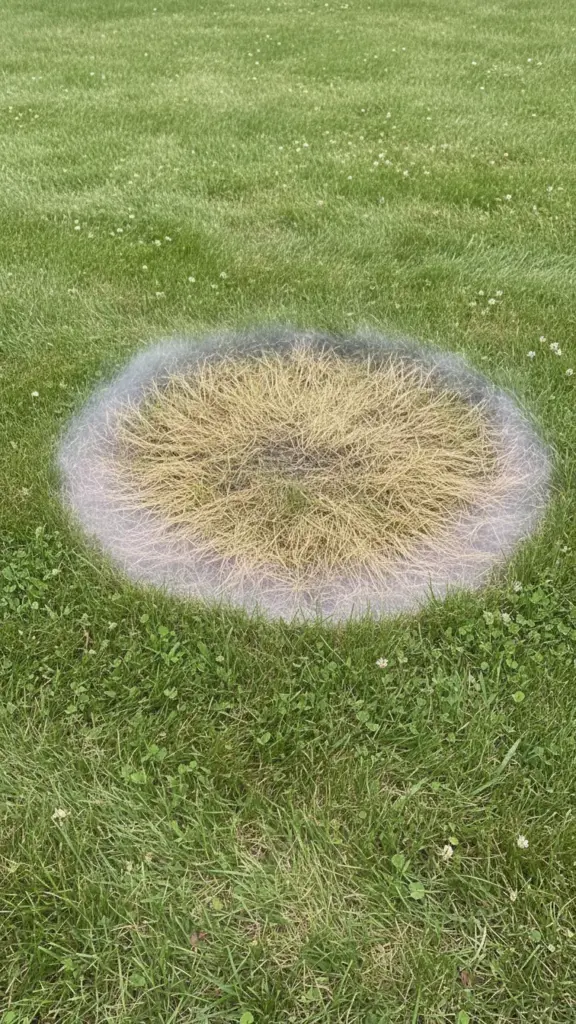
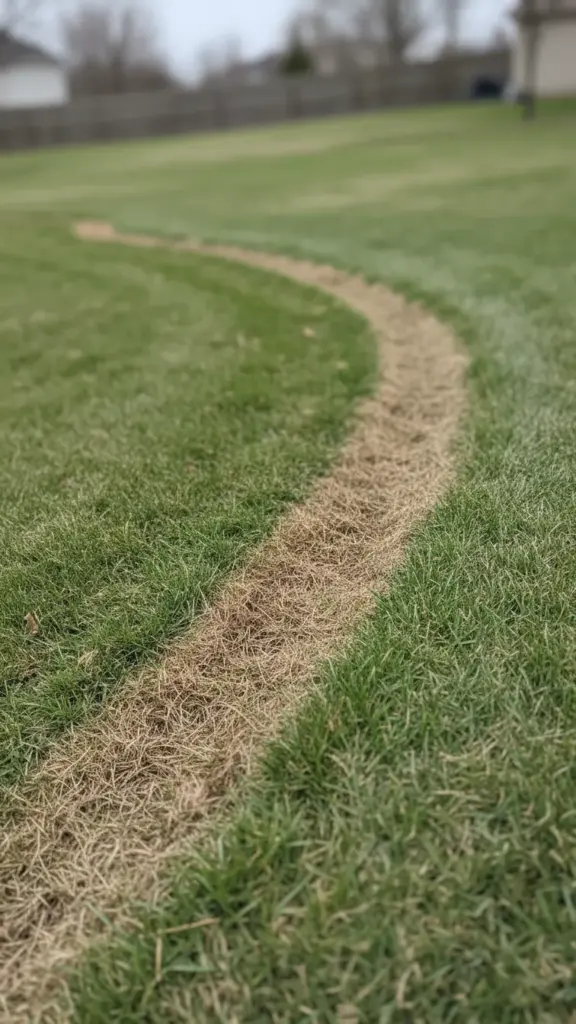
The first sign is usually small, circular, water-soaked or reddish brown spots, roughly 2 to 6 inches across, that appear suddenly and can run together into larger irregular blighted areas. Affected grass blades turn dark, blacken rapidly, then wither, and they tend to lie flat, stick together, and take on a greasy or slimy sheen.
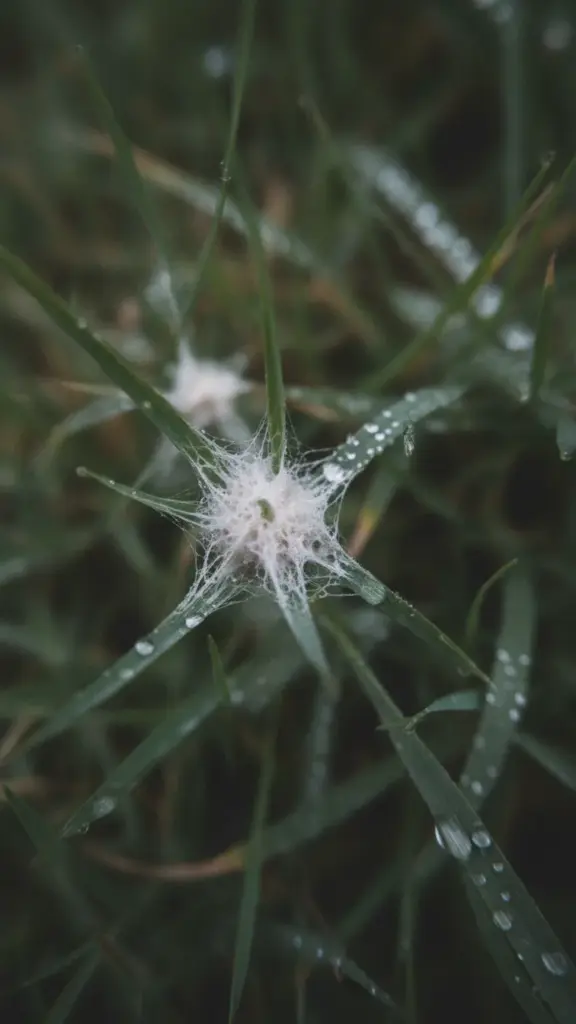
The most distinctive symptom, and the one that gives the disease its common name, is a white, cottony fungal growth visible on the grass blades early in the morning when dew or humidity is high, according to the UC Statewide IPM Program. Diseased patches often show an orange to purplish border, sometimes called a smoke ring, and the pattern of damage frequently follows drainage paths or the route of mowing equipment, since the pathogen spreads readily through water movement.
Conditions That Favor Cottony Blight
Cottony blight develops under a fairly specific combination of heat and moisture. In cool-season turf, outbreaks are most likely when nighttime temperatures stay above 65 degrees Fahrenheit and grass blades remain wet continuously for 12 to 14 hours across several consecutive nights, according to NC State Extension. Daytime temperatures above 85 degrees add further stress that encourages disease development.
Beyond temperature and leaf wetness, a few site conditions consistently make outbreaks worse.
- Excessive soil moisture or standing water in low spots
- Lush, succulent growth from high nitrogen fertilization
- Dense turf with little air movement or shade that slows drying
- Poor drainage that keeps water pooling after rain or irrigation
These conditions frequently arrive together after a summer thunderstorm followed by a hot, still morning, which is why many severe outbreaks are first noticed the day after a late-afternoon storm.
Does Cottony Blight Cause Lasting Damage
Yes, and the speed of the damage is what makes this disease especially concerning. Because cottony blight can kill turf within one to two days under favorable conditions, an unattended lawn can lose substantial coverage before a treatment plan is even in place. Once the damage is extensive, turf seldom responds well to fungicide treatment, and recovery instead depends on regrowth from surviving crowns and roots, according to the Texas A&M Plant Disease Handbook.
The good news is that Pythium blight primarily attacks leaves and crowns rather than destroying the root system outright in most cases, so lawns with reasonably intact roots typically recover over several weeks once hot, humid weather breaks and growing conditions improve.
Step 1: Improve Drainage and Eliminate Standing Water
Identify any low spots where water puddles after rain or irrigation, and fill or regrade them so water moves through rather than sitting on the surface. Standing water and excess soil moisture are two of the most consistent triggers for outbreaks, so improving surface and subsurface drainage removes one of the disease’s core requirements.
Aerating compacted soil in problem areas also helps water infiltrate more evenly instead of collecting in isolated wet patches.
Step 2: Reduce Nitrogen During Hot, Humid Stretches
Hold off on nitrogen fertilizer applications during extended periods of heat and humidity, since high nitrogen levels promote the lush, succulent growth that makes turf more vulnerable to infection. Keeping nitrogen at low to moderate levels through the riskiest weeks of summer is a straightforward way to reduce disease pressure without any special equipment.
Resume a normal feeding schedule once temperatures moderate and the highest-risk window has passed.
Step 3: Change Your Watering and Mowing Timing
Water earlier in the day rather than in the late afternoon or evening, so grass blades have time to dry before nightfall, and avoid mowing when the grass is still wet.
| Practice | Why It Matters |
| Water early morning, not late day | Reduces the long overnight leaf-wetness period the fungus needs |
| Irrigate deeply but infrequently | Avoids the chronic surface moisture that favors outbreaks |
| Mow only when grass is dry | Wet mowing spreads spores and can track the disease into new areas |
| Avoid removing more than one third of blade height | Reduces stress that makes turf more susceptible |
Because the pathogen spreads through water movement and equipment, small timing adjustments to your normal watering and mowing routine can meaningfully cut down on new infections without changing your overall lawn care program.
Step 4: Increase Air Movement Across the Turf
Reduce shading and improve airflow over chronically damp areas by selectively pruning nearby trees and shrubs, or by aiming a fan at persistently wet turf in enclosed spaces such as a small backyard bordered by dense hedges. Faster drying after dew or rain shortens the window of leaf wetness that the fungus depends on to infect new tissue.
This step pairs naturally with drainage improvements, since both address the same underlying problem of turf that stays wet too long.
Step 5: Apply a Preventive Fungicide During High-Risk Periods
During extended stretches of warm, humid weather, especially when night temperatures consistently exceed 65 degrees, a preventive fungicide program is advised for high-value or previously affected turf. Rotate fungicides with different modes of action, since resistance risk varies by product, and fungicide control tends to be far more reliable when applied preventively rather than after visible blighting has already set in.
Homeowners managing a small residential lawn can often rely on the cultural steps above alone, while anyone managing high-traffic turf or a lawn with a history of severe outbreaks should weigh a fungicide program for the riskiest weeks of summer.
Common Questions
What Is the Difference Between Cottony Blight and Pythium Blight
There is no difference. Cottony blight, Pythium blight, and grease spot are all common names for the same turfgrass disease caused by Pythium species.
How Fast Does Cottony Blight Spread
Under hot, very humid conditions, cottony blight can kill large areas of established turf within one to two days, making it one of the fastest-moving common lawn diseases.
Will Cottony Blight Go Away on Its Own
Symptoms typically halt once temperatures drop or humidity lowers, and turf with intact roots and crowns often recovers on its own once favorable growing conditions return, though severely damaged areas may need reseeding.
Can I Prevent Cottony Blight Without Fungicides
Yes, in many home lawns. Improving drainage, watering earlier in the day, avoiding excess nitrogen during hot spells, and increasing air movement address the core conditions the disease needs and can meaningfully reduce outbreaks without any chemical treatment.
Does Mowing Wet Grass Spread Cottony Blight
Yes. The pathogen spreads readily through water movement, and mowing wet, infected turf can track spores into previously unaffected areas of the lawn.
Where to Go From Here
Cottony blight moves fast, but the conditions it needs are predictable: prolonged leaf wetness, heat, and lush growth. Addressing drainage, watering timing, and nitrogen levels ahead of the hottest, most humid stretches of summer prevents most outbreaks before they start. For the everyday maintenance that keeps turf resilient year-round, our lawnmower maintenance tips and lawn care services overview cover the basics that support healthy, disease-resistant turf.








