
Take-all root rot kills lawns from the roots up. The fungus infects turf in the cool months of fall and spring, then the damage shows in late spring and summer when heat and drought stress the weakened roots. The 10 strategies below start with a 30-second tug test, then work the one lever that matters most: soil pH.
Bare patches that spread across a lawn in summer usually trace back to roots that died months earlier. A healthy lawn holds fast when you pull it. An infected lawn lifts away with almost no resistance, and the roots left behind are short, dark, and brittle. That tug test separates take-all from the leaf diseases it gets mistaken for, and it costs nothing. I have learned that the pH test matters more than any fungicide bought after symptoms show.
The rest of this page runs the order a lawn owner should follow. Identify the disease first, then decide whether the lawn is worth treating, then work the 10 steps from the soil test to fall prevention and long-term recovery.
What Take-All Actually Is
Take-all is a soilborne fungal disease of turfgrass roots, stolons, and rhizomes. The fungus Gaeumannomyces graminis causes take-all.
Two varieties of the fungus cause the two syndromes homeowners meet. Gaeumannomyces graminis var. graminis, shortened to Ggg, causes take-all root rot on warm-season lawns. Gaeumannomyces graminis var. avenae, shortened to Gga, causes take-all patch on cool-season bentgrass. The two varieties attack different grasses, and the lawn owner’s response differs by grass type, so the variety matters.
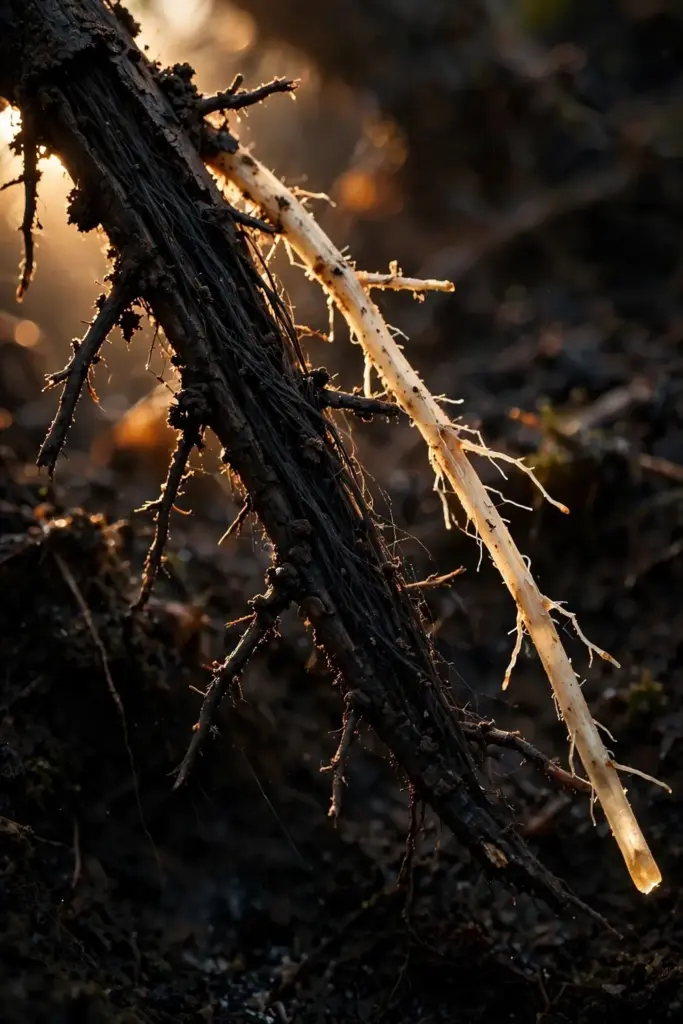
The fungus lives on the outside of underground plant parts. Mississippi State University Extension describes take-all fungi as ectotrophic root-infecting fungi that form thick dark thread-like strands along roots, stolons, and rhizomes. The fungus anchors to the surface with lobed structures called hyphopodia, then penetrates and rots the tissue from the outside in.
The fungus does not survive well in soil without a host or plant debris. Texas A&M AgriLife Extension notes that the fungus does not survive well in soil without a host plant or plant debris such as thatch. Thatch carries the fungus between seasons, which is why thatch management sits inside the treatment plan rather than beside it.
Take-all of wheat and cereals is a different problem. Wheat take-all comes from Gaeumannomyces graminis var. tritici, a grain-crop variety, and it belongs in commercial grain fields. This article covers turfgrass take-all only.
How to Identify Take-All Root Rot on Warm-Season Lawns
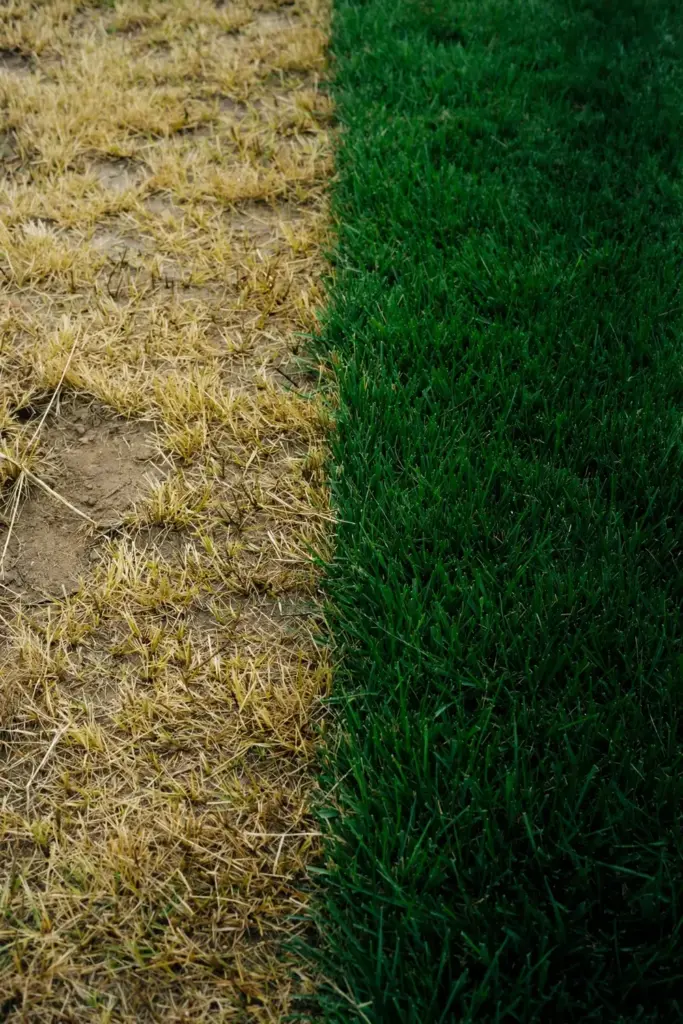
Take-all root rot starts as yellowing, then thinning, then bare ground. The first aboveground sign is an irregular yellow patch that looks drought-stressed even after rain.
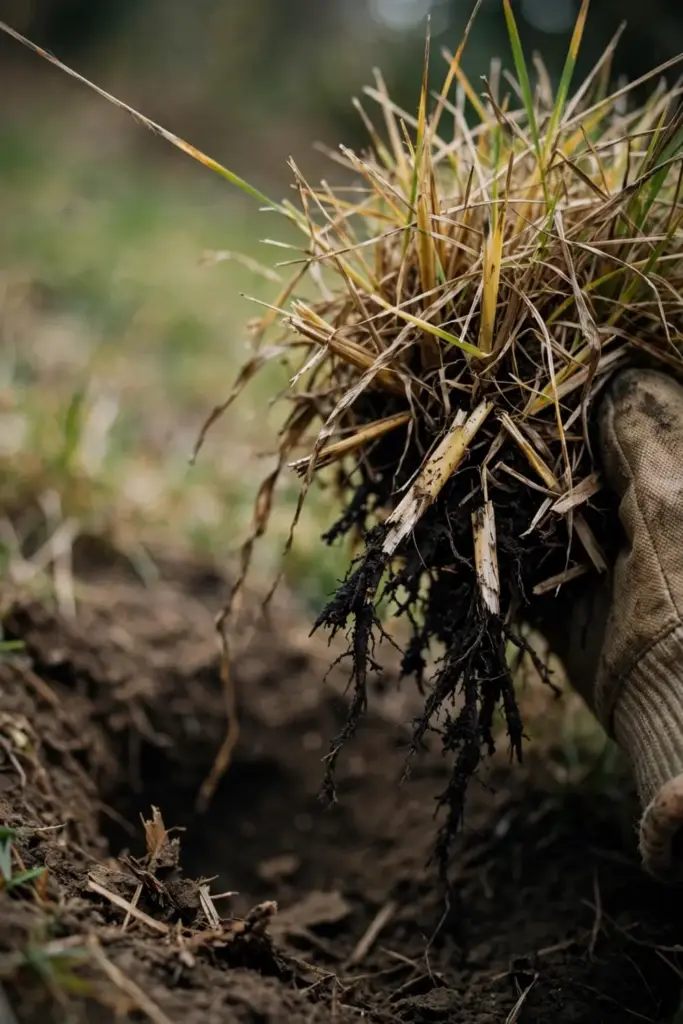
The University of Georgia guide to take-all root rot of warm-season grasses describes the sequence: irregular yellow chlorotic areas up to 2 feet in diameter appear first, lower leaves die first, and upper leaves turn yellow as the disease progresses. By the time foliage shows symptoms, the roots, stolons, and rhizomes are already discolored, dark brown, and rotted. Severe cases merge into large dead areas.
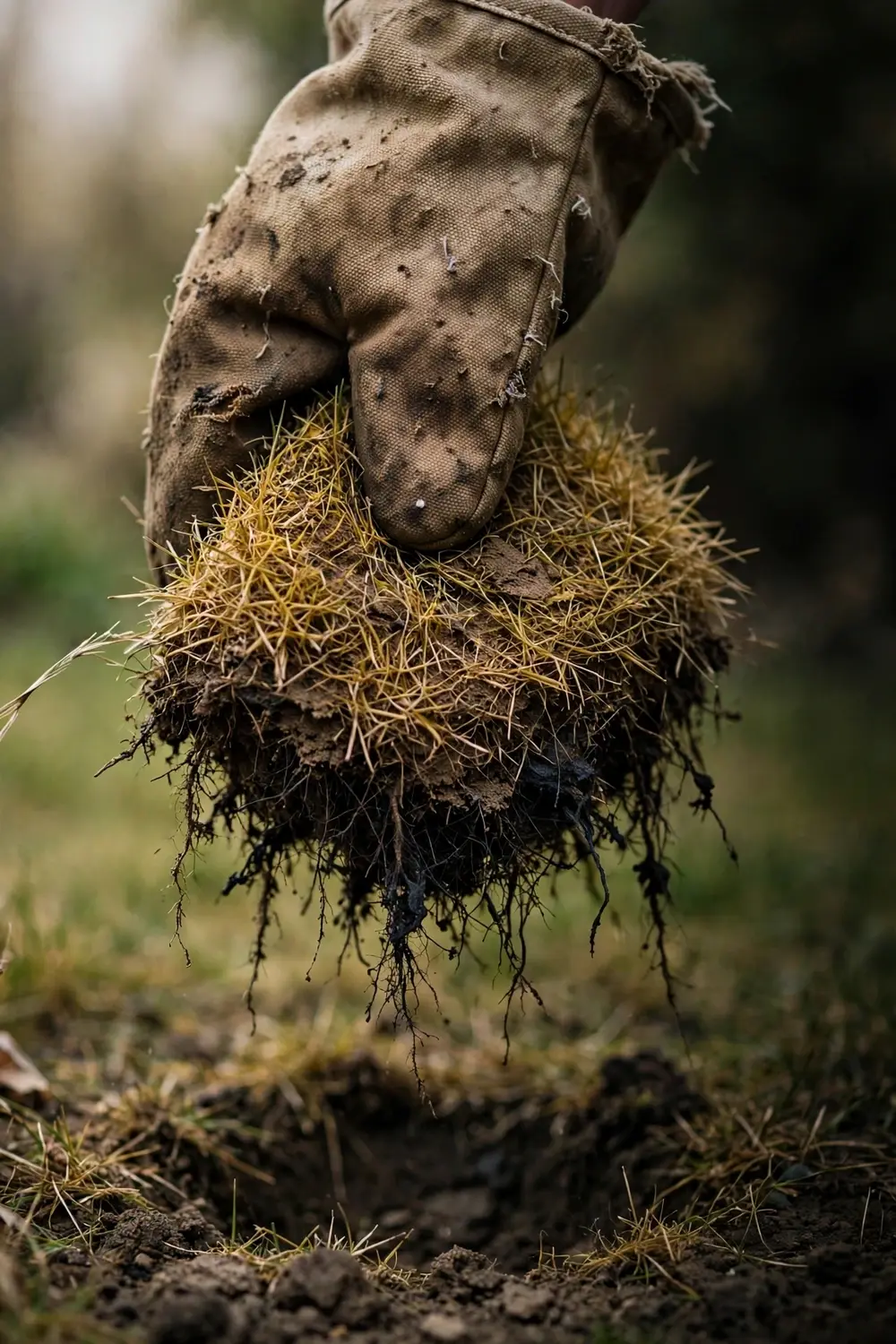
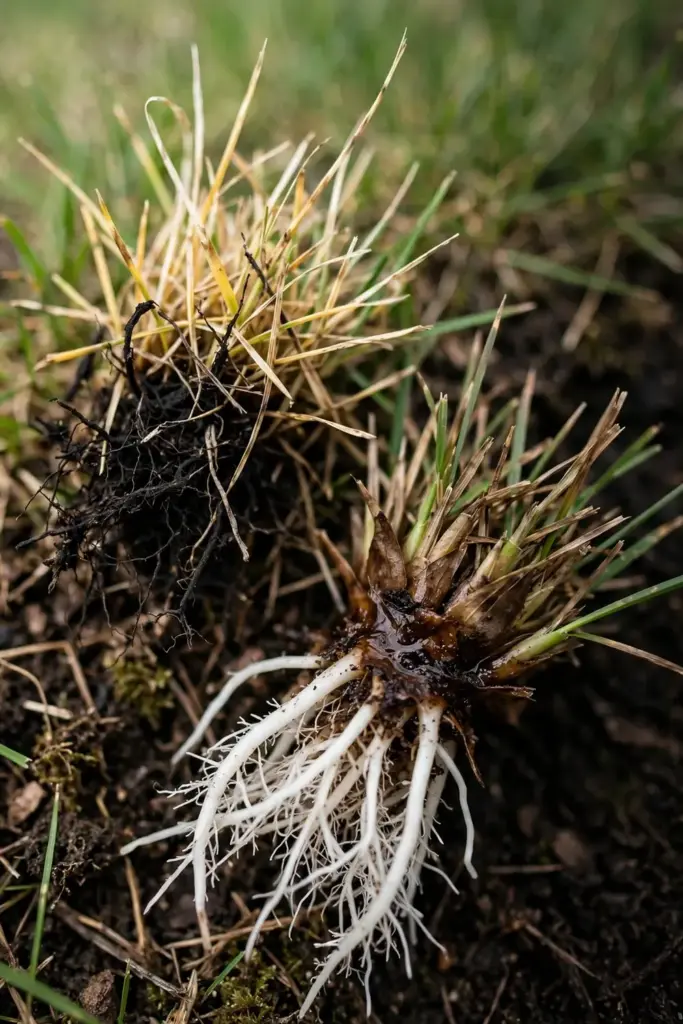
Run the tug test on the edge of a yellow patch. Grip a handful of grass and pull upward with steady force. Healthy turf resists. Infected turf lifts away with almost no resistance, and the stolons break off in the soil, leaving you holding leaves with short dead roots. Mississippi State University Extension gives the same field check: pull upward on the aboveground parts, and stolons or rhizomes break off in the soil, leaving nodes with leaves and dead roots in your hand.
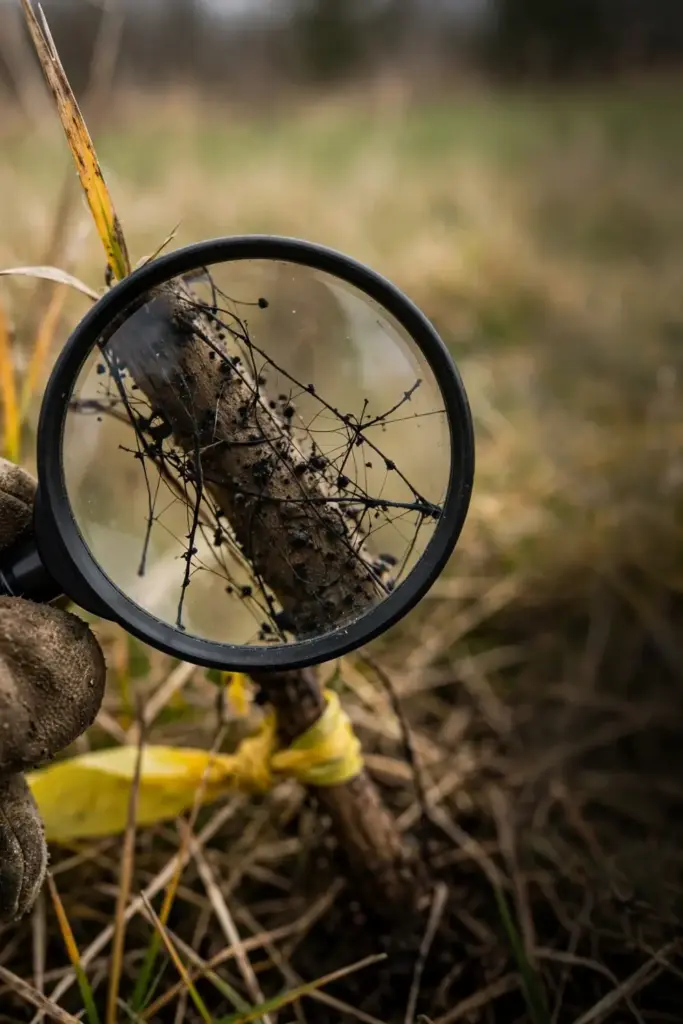
Check the stolons with a hand lens. Black fungal strands run along the surface of stolons and leaf sheath bases, mostly parallel to the axis of the stolon. The LSU AgCenter guide to take-all root rot gives that check: careful examination of stolons and leaf sheath bases with a good hand lens may reveal black strands of fungal mycelium on their surfaces. Dark strands plus roots that are short, dark, and brittle point at take-all.
Patches on warm-season lawns run 1 foot to more than 20 feet in diameter, according to Texas A&M AgriLife Extension. Small yellow patches that merge into one large dead area across a season fit the pattern. A single round patch that stays small and shows leaf lesions instead of root rot points elsewhere, and the differential table below sorts those cases.
How to Identify Take-All Patch on Cool-Season Lawns
Take-all patch hits bentgrass hardest, and it hits young stands hardest. The cool-season syndrome shows on creeping bentgrass putting greens, tees, and fairways, and on home lawns with bentgrass.
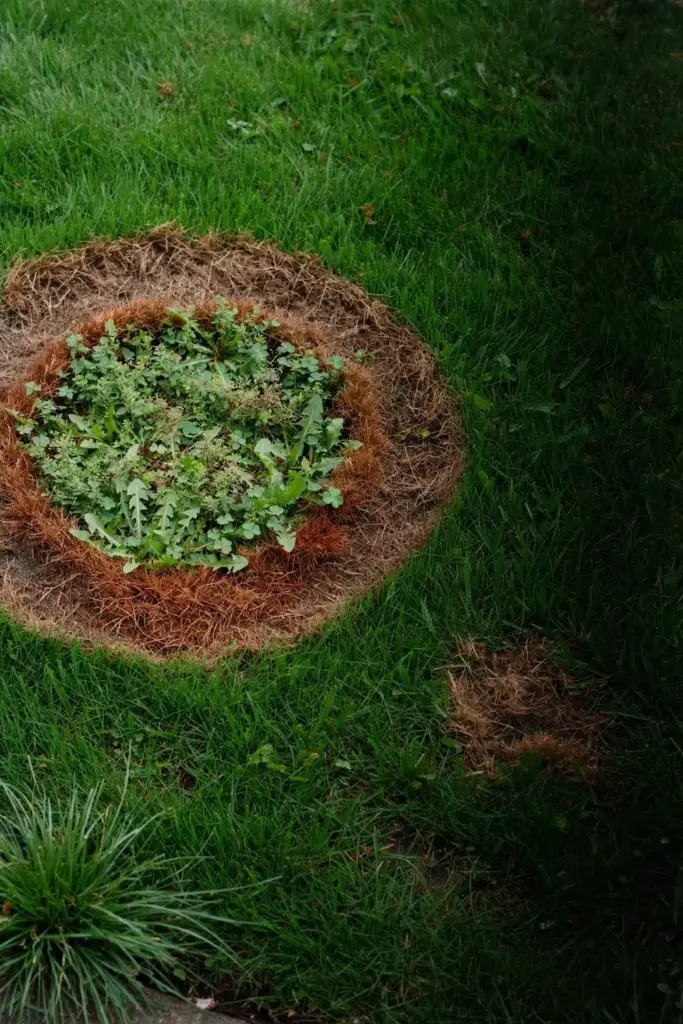
The Penn State Extension guide to take-all patch describes take-all patch as a root and crown disease of bentgrass that appears most often on relatively young stands 1 to 5 years old, though it can damage older stands. Infected plants die because the disease destroys roots and crowns, and turf recovers slowly. Patches of dead turf get colonized by resistant species such as annual bluegrass, fine fescues, and broadleaf weeds.
Patches start small. The Royal Horticultural Society describes take-all patch spots that begin 1 to 2 centimeters across and can expand past 1 meter. Stressed grass turns bronze to reddish brown, then fades to dull brown. Centers of old patches often refill with annual bluegrass or weeds, which leaves a ring shape called a doughnut ring.
Roots tell the same story as the warm-season syndrome. Stolons, rhizomes, roots, and shoot bases turn dark brown to black before the plant dies. Less severely infected tissue carries dark mycelium strands running parallel to the root axis. A bentgrass patch that peels back like a rug, with blackened roots underneath, fits take-all patch.
Bluegrass and fescue rarely carry take-all. The University of Georgia notes that bluegrass and fescues are rarely affected in Georgia. A mixed lawn where bentgrass dies in patches while bluegrass and fescue survive around it fits the pattern. A lawn of pure bluegrass with round patches points at a different disease.
Which Grasses Get Hit Hardest by Take-All
St. Augustinegrass takes the worst of take-all root rot. The University of Georgia calls take-all root rot most common and severe in St. Augustinegrass, Stenotaphrum secundatum, across the central, south, and coastal areas of Georgia. The UGA turf clinic recorded take-all root rot as its most frequent homeowner lawn diagnosis in 2007.
Bermudagrass runs second. When the fungus hits bermudagrass, the disease is often called bermudagrass decline. The name dates to 1984, when the first turf disease from this fungus group was identified and named bermudagrass decline, according to Mississippi State University Extension. The pathogen behind that decline was identified as Gaeumannomyces graminis var. graminis in 1991.
Centipedegrass and zoysiagrass both host the disease. The LSU AgCenter lists St. Augustinegrass, bermudagrass, centipedegrass, and zoysiagrass as hosts of take-all root rot. Centipedegrass on high-pH soil is a classic case, since centipede prefers acidic soil and suffers fast when pH climbs.
Bentgrass carries the cool-season syndrome. Creeping bentgrass, Agrostis stolonifera, is the main host of Gaeumannomyces graminis var. avenae. Colonial bentgrass shows the same patch pattern on fairways. Washington State University Extension notes that take-all patch hits young bentgrass plantings 1 to 4 years old hardest, especially on sandy soils and less fertile soils.
No warm-season grass carries a resistant cultivar. The University of Georgia states plainly that no resistant cultivars of any warm-season grass are available. The genetic option is species replacement, not a resistant variety of the same grass. A St. Augustinegrass lawn that keeps failing can be replaced with zoysiagrass, and the University of Georgia cites St. Augustinegrass areas in Brunswick, Georgia, replaced with zoysiagrass as the working example.
Take-All vs Large Patch vs Brown Patch
Check the roots first, then the leaves, then the season. Take-all rots roots. Large patch and brown patch rot leaf sheaths. That one difference sorts most cases.
| Sign | Take-All | Large Patch | Brown Patch |
|---|---|---|---|
| Pathogen | Fungus. Gaeumannomyces graminis var. graminis or var. avenae | Fungus. Rhizoctonia solani | Fungus. Rhizoctonia solani |
| Grasses hit hardest | Warm-season: St. Augustinegrass, bermudagrass, centipedegrass, zoysiagrass. Cool-season: bentgrass | Warm-season: St. Augustinegrass, bermudagrass, centipedegrass, zoysiagrass | Cool-season: bentgrass, bluegrass, fescue, ryegrass |
| Season | Infection in fall and spring. Symptoms in late spring and summer heat | Spring and fall, as warm-season grasses enter and exit dormancy | Cool wet weather, mainly fall and spring on cool-season turf |
| Tug test | Leaves and stolons lift together with almost no resistance. Roots short, dark, brittle | Leaf pulls off with a brown rotted base. Roots stay in the soil | Leaf pulls off with a brown rotted base. Roots stay in the soil |
| Leaf signs | No leaf lesions. Lower leaves yellow first, then whole plant thins | Orange blades on the outer patch margin. Leaf dieback from tip toward base | Tan leaf lesions with dark borders on the patch edge |
| Patch shape | Irregular yellow patches 1 foot to more than 20 feet across, merging into bare ground | Round patches under 3 feet to 25 feet across, often perennial in the same spot | Rings or patches a few inches to several feet across |
| Soil pH | Worse above pH 6.5 | No strong pH link | No strong pH link |
| Spread | Infected grass, thatch, and soil movement. Mowers and foot traffic do not spread it | Equipment, mowing, and flooding can move it | Equipment, mowing, and flooding can move it |
| First move | Soil pH test, then peat moss and acidifying nitrogen | Improve drainage, hold nitrogen, fungicide in fall as a preventive | Improve drainage, hold nitrogen, fungicide as a preventive |
Mississippi State University Extension gives the three-way tug test in plain form: leaves plus stolons coming up together point at take-all, a leaf pulling off with a brown base points at large patch, and a plant plus roots coming up without stolons points at anthracnose. Texas A&M AgriLife Extension adds the brown patch contrast: brown patch leaves separate easily from the stolon with a gentle tug and often show a slimy wet rot at the base of the leaf sheath, brown patch does not cause root rotting, and brown patch turf recovers quickly as temperatures warm in spring.
Large patch and brown patch share one pathogen. Rhizoctonia solani causes both, and the names mark the grass type and season rather than two different fungi. Large patch is the warm-season name, brown patch the cool-season name. The guide to brown patch on lawns covers Rhizoctonia patch diseases in full. The disease needs a different response, since it lives in roots and answers to pH first.
Two more lookalikes deserve a short check. Spring dead spot also rots roots, rhizomes, and stolons, and it leaves bleached dead circles on bermudagrass and zoysiagrass. Spring dead spot is a separate disease with its own management, and it stays a companion problem, never merged into take-all. Chinch bug damage mimics the yellowing and thinning, and the LSU AgCenter notes that take-all symptoms can resemble chinch bug damage. Chinch bugs are insects, not a disease. The soap-flush test in Step 1 separates them.
Why Soil pH Drives Take-All
Soil pH is the lever that decides how bad take-all gets. The fungus grows stronger as pH climbs, and the grass grows weaker as nutrients lock up.
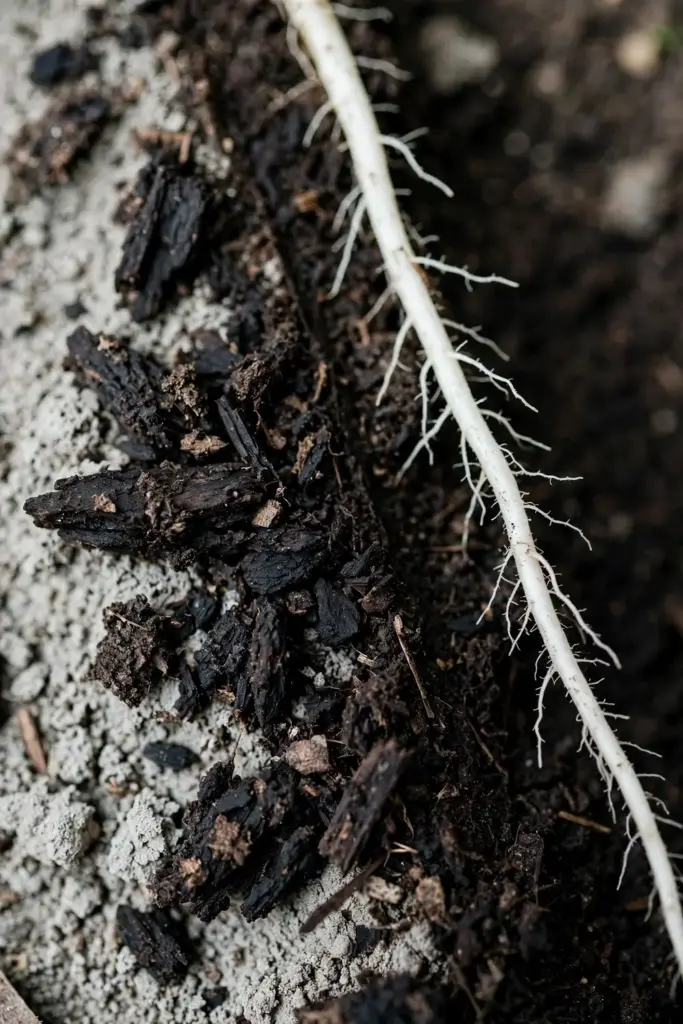
The University of Georgia ties take-all infection to soil pH above 6.5, measured to a depth of 4 inches. As soil pH rises, availability of manganese, iron, copper, and zinc falls, and nutrient deficiencies follow. The fungus thrives in that same high-pH soil, so the grass faces two pressures at once: a stronger pathogen and fewer nutrients to fight it with.
Manganese carries special weight. The University of Georgia notes that turf grown in soils with low available manganese shows higher susceptibility to Gaeumannomyces graminis, and manganese grows less available as pH rises above 6.6. A soil or leaf tissue test that shows low manganese calls for a granular fertilizer containing manganese sulfate. UGA field reports mention manganese at 2 pounds per acre in fall or spring, and a Rutgers study found the lowest tested manganese rate usually worked as well as higher rates.
The target band is 5.5 to 6.0. The LSU AgCenter sets that band for lawns with take-all: maintain soil pH between 5.5 and 6.0, and do not apply lime to affected lawns. Texas A&M AgriLife Extension gives a slightly higher band, pH 6.0 to 6.8, described as slightly acidic. The two bands agree on the direction. Move pH down from alkaline toward mildly acidic, and hold it there across seasons.
Lime is the mistake that feeds the fungus. A lawn limed to raise pH hands the fungus its best conditions. The University of Georgia states it as a rule: do not apply lime to turfgrass areas diagnosed with take-all. Washington State University Extension gives the same warning for bentgrass: avoid recently limed alkaline soils. A bag of lime applied to fix yellowing can turn a mild take-all case into a bare lawn.
What Makes Take-All Worse in a Home Lawn
Stress opens the door, and take-all walks through it. Every factor below either weakens roots or feeds the fungus, and most lawns carry more than one at once.
High soil pH leads the list. Soil above pH 6.5 favors the fungus and starves the grass of manganese, iron, copper, and zinc. A lawn limed every year without a soil test is a lawn drifting toward the conditions the fungus favors. Sandy soils and soils low in organic matter worsen the case, since the University of Georgia notes the disease runs more severe on light textured soils with low organic matter.
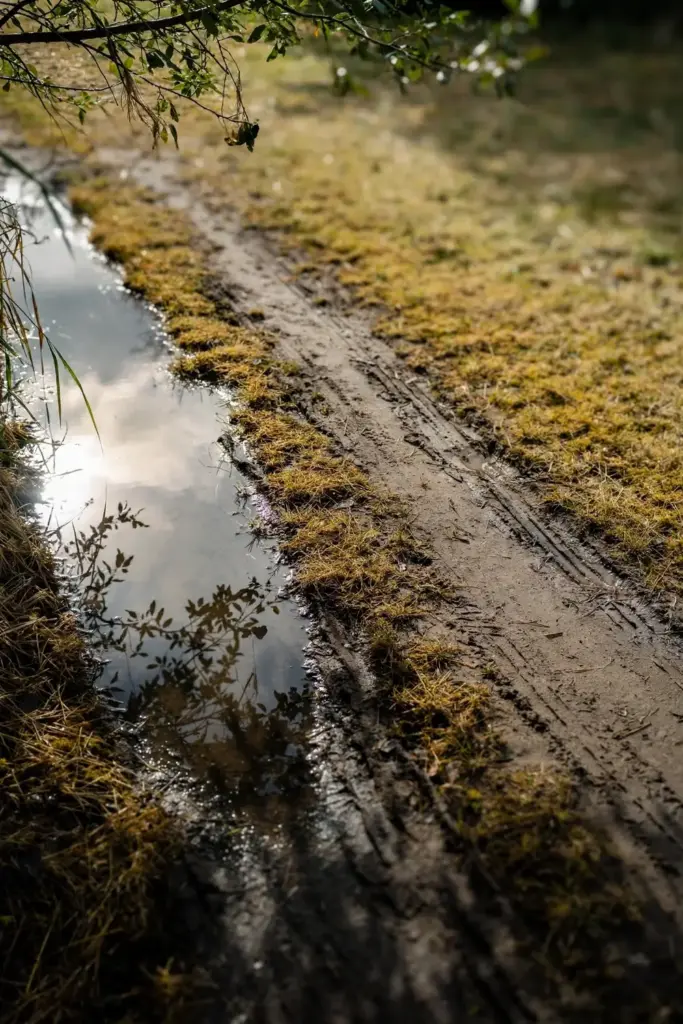
Compaction and poor drainage suffocate roots. Compacted soil holds water at the surface and starves roots of air. Poorly drained soil keeps the root zone wet, and the University of Georgia lists warm to hot temperatures of 77 to 90 degrees Fahrenheit with poorly drained soils as the conditions that favor growth and spread of the fungus. Foot traffic, parked cars, and heavy clay all compact the root zone.
Thatch carries the fungus between seasons. Thatch is the layer of roots, stolons, and decaying matter at the soil surface, and Gaeumannomyces graminis survives in it. Thatch thicker than 1 inch needs removal, according to the University of Georgia. Thatch also holds water at the crown and blocks air from the root zone.
Excess nitrogen grows soft top growth on weak roots. Heavy nitrogen pushes leaf growth the root system cannot support, and fall nitrogen feeds the fungus into its infection season. The University of Georgia warns against nitrogen applications in the fall on infected lawns. Texas A&M AgriLife Extension caps nitrogen at 1 pound per 1,000 square feet per application, and 4 pounds per 1,000 square feet per year for St. Augustinegrass, with 5 pounds per 1,000 square feet per year for bermudagrass.
Herbicides stress St. Augustinegrass. The University of Georgia notes that even correctly applied herbicides stress St. Augustinegrass, since the grass is especially sensitive to some herbicides. Root-inhibiting herbicides do the most damage on a lawn already fighting root rot. The LSU AgCenter advises avoiding root-inhibiting herbicides on lawns with take-all.
Shade, drought, and low mowing add up. Shade thins turf and keeps soil wet. Drought stress shows the damage first, since rotted roots cannot pull water. Mowing below the grass height starves roots, since short leaves feed short roots. A lawn carrying three or four of these stresses at once is a lawn where the fungus turns a few yellow patches into bare ground.
Step 1: Decide Whether Treatment Is Worth It
Count the damage before you spend money. A lawn with scattered yellow patches earns the pH program. A lawn that is mostly bare ground earns replanting.
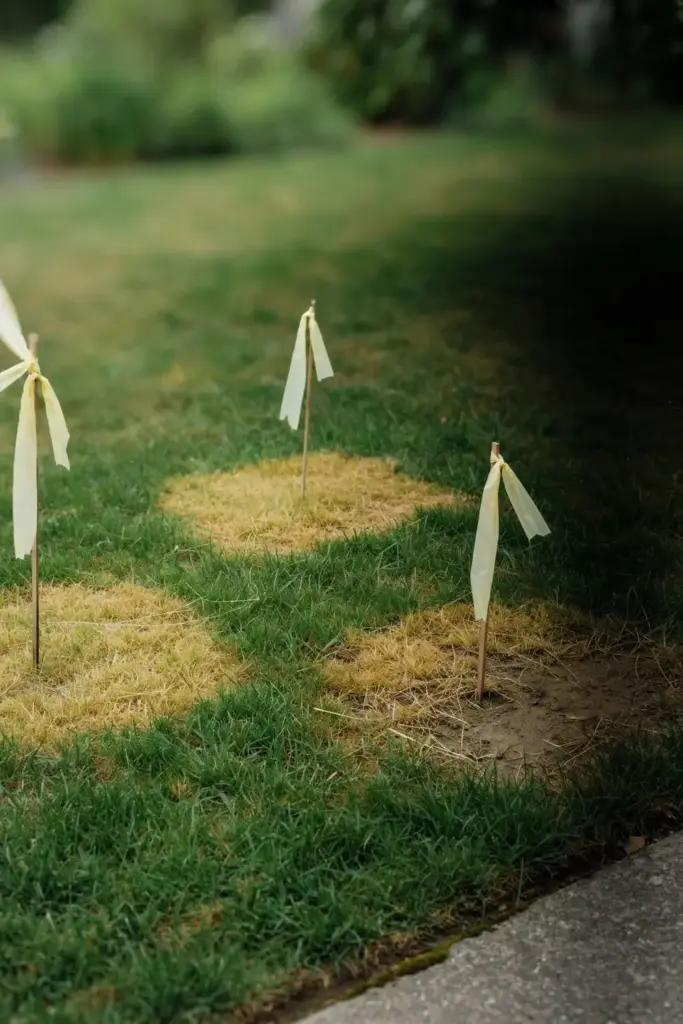
Walk the lawn and run the tug test in five spots. Mark each spot with a flag. If most spots hold firm and only one or two lift away, the lawn keeps enough healthy turf to recover with cultural steps. If most spots lift away and the roots under them are black and brittle, the root system is too far gone for a quick rescue, and the honest move is replanting the worst areas or replacing the grass species.
Rule out chinch bugs before you treat for a fungus. Mix 2 tablespoons of liquid dishwashing detergent in a gallon of water, pour it evenly over a 1 square yard area of affected turf, and watch for a few minutes. Chinch bug adults scurry to the surface. Adults are black, about 3/16 inch long, with distinctive white wings, and nymphs are smaller and reddish with a whitish band across the back, according to Texas A&M AgriLife Extension. Chinch bug damage runs in hot dry summer in full sun only. A lawn with no insects after the flush test points back at the fungus.
Send a sample to a diagnostic lab when the call is close. The LSU AgCenter and Texas A&M both direct homeowners to submit samples to a plant diagnostic center for confirmation. A lab result settles the take-all versus large patch question before you spend money on fungicide or peat moss. The lab also confirms the pH story, since a soil test rides along with most submissions.
Set the budget honestly. Cultural steps cost a soil test, peat moss, and fertilizer. Fungicides cost more and work best as prevention, not rescue. A lawn that returns bare patches every year despite two seasons of pH work tells you the answer. Replace the grass with a better-adapted species in the worst areas instead of funding a third year of rescue.
Step 2: Test Soil pH and Stop Liming
Test the soil before you change it. A soil test tells you the pH at root depth, the nutrient levels, and whether manganese is low.
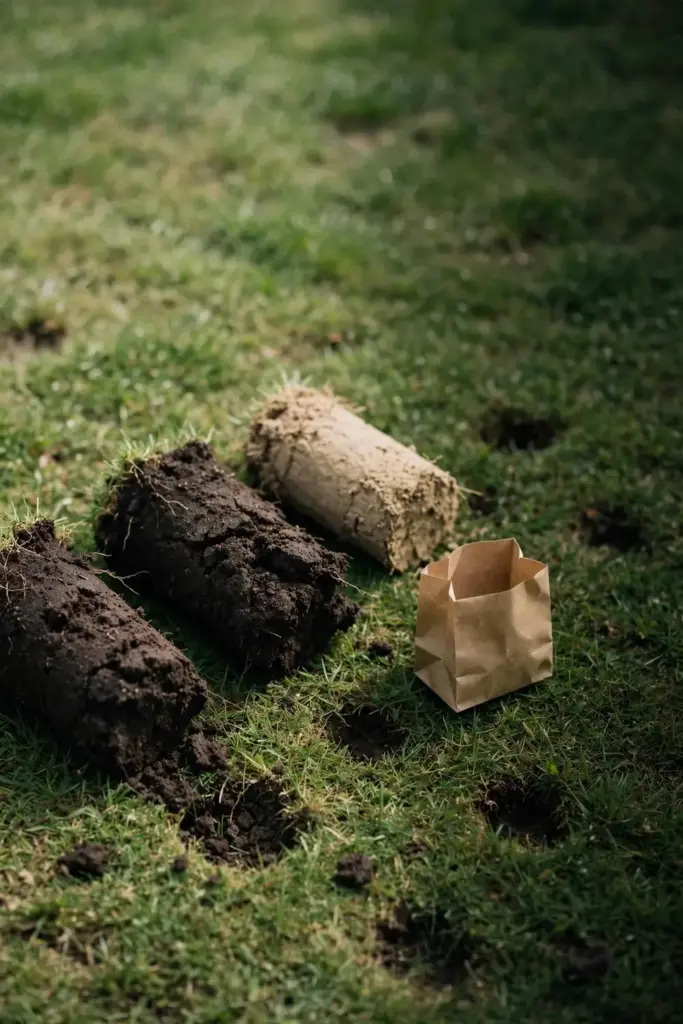
Order a soil test through the local Extension office or a lab, and sample to a depth of 4 inches, since the University of Georgia ties take-all infection to pH measured at that depth. Take samples from the worst patches and from healthy turf, and label them separately. Two samples show whether the patch sits on a high-pH pocket or the whole lawn runs alkaline.
Stop liming the day the diagnosis is confirmed. Do not apply lime to turfgrass areas diagnosed with take-all, per the University of Georgia. Lime raises pH, and pH above 6.5 is the condition the fungus favors. A lawn that gets lime every spring on habit needs that habit broken first.
Read the test before buying anything. A pH above 6.5 calls for the acidifying program in Steps 3 and 4. A pH inside 5.5 to 6.0 means pH is not the driver, and the fix sits in drainage, thatch, or watering instead. A test that shows low manganese calls for manganese sulfate, per the University of Georgia. A test that shows low potassium calls for potassium, since the LSU AgCenter advises adequate potassium and magnesium fertility while regrowing roots.
Retest every year until pH holds in the target band. Soil pH moves slowly, and one season of treatment rarely finishes the job. A yearly test shows whether the program is working or the soil keeps drifting back up. A test costs less than one bag of fungicide, and it answers the question fungicide cannot.
Step 3: Topdress With Sphagnum Peat Moss
Sphagnum peat moss is the fastest pH tool a homeowner can apply. Peat moss carries a pH of 4.4, and a topdressing lays an acidic layer right in the root zone.
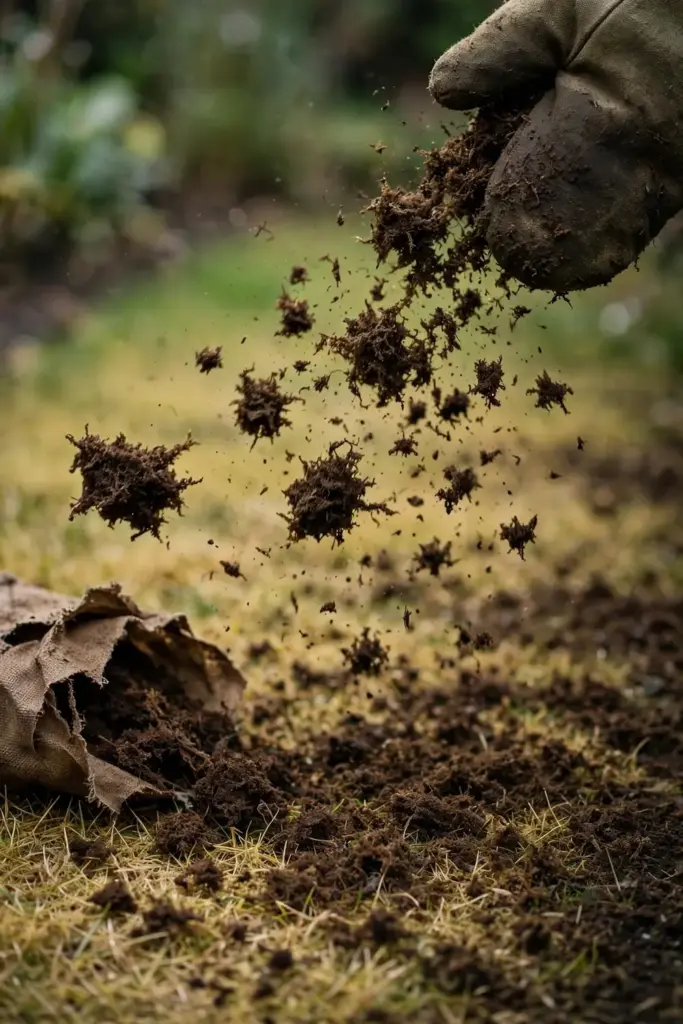
The University of Georgia guide gives the rate: if soils have a pH higher than 6.5, topdress with 1 bale of sphagnum peat moss at 3.8 cubic feet for every 1,000 square feet. That rate comes from a Texas study by Colbaugh and colleagues, published in the International Turfgrass Society Research Journal, which tested sphagnum peat moss topdressing against take-all root rot on St. Augustinegrass.
Apply peat moss to affected areas, not to the whole lawn, when only patches show. Rake out loose dead stolons first, so the peat moss reaches the soil surface instead of sitting on dead thatch. Spread the peat moss evenly, then water it in. A 1,000 square foot patch needs one full bale at the University of Georgia rate.
Expect suppression, not eradication. Peat moss lowers pH and slows the fungus, and it does not sterilize the soil. Texas A&M AgriLife Extension notes that older peat moss recommendations were cumbersome and expensive and only suppressed the disease rather than killing the fungus. Peat moss works as one season of a multi-season pH program, paired with acidifying fertilizer in Step 4.
Repeat only on a soil test result. A second application goes down when the retest still shows pH above 6.5. A lawn that already sits at pH 5.5 to 6.0 needs no more peat moss. More peat moss on an already acidic lawn pushes pH too low and trades one nutrient problem for another.
Step 4: Switch Nitrogen to Ammonium Sulfate
Ammonium sulfate acidifies the soil while it feeds the grass. That double duty makes it the nitrogen source of choice on lawns with take-all.
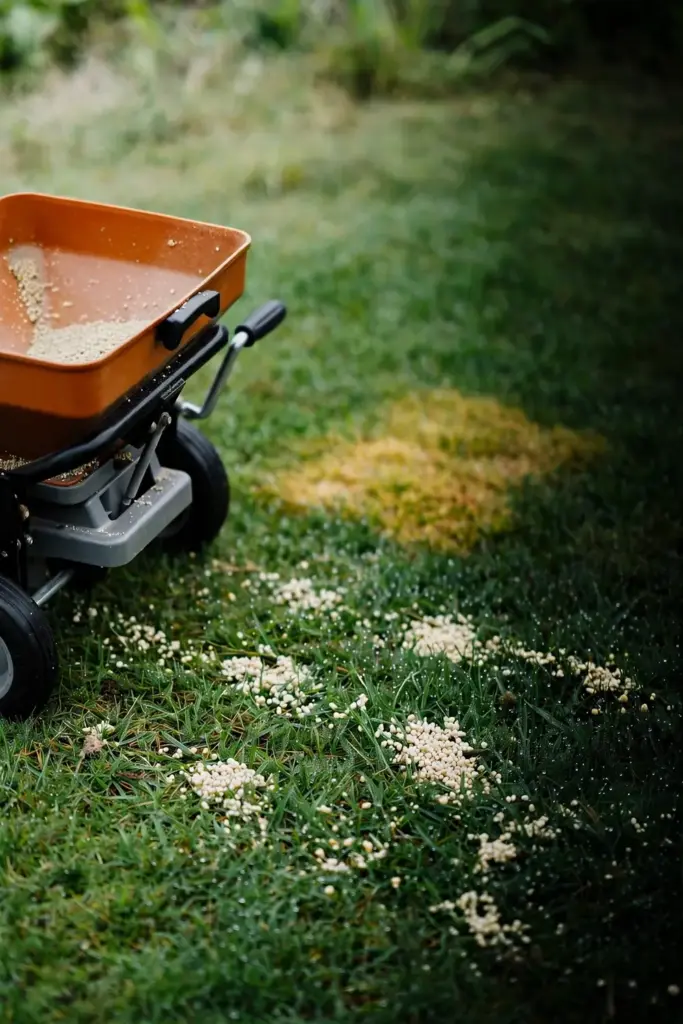
Texas A&M AgriLife Extension reports that continued use of ammonium sulfate over a 2-year period can sometimes help reduce take-all root rot. The effect builds slowly, season over season, as the fertilizer nudges root-zone pH downward. One application does not fix pH. Two years of ammonium sulfate as the nitrogen source moves the needle.
Use slow-release acidifying forms of nitrogen. The LSU AgCenter advises slow-release acidifying nitrogen on lawns with take-all. Slow-release fertilizer feeds steady growth without the soft flush that heavy fast nitrogen pushes. Steady growth feeds roots. Fast growth feeds leaves the roots cannot support.
Hold the rate caps. Texas A&M AgriLife Extension caps nitrogen at 1 pound per 1,000 square feet per application. The yearly cap is 4 pounds per 1,000 square feet for St. Augustinegrass and 5 pounds per 1,000 square feet for bermudagrass. Ammonium sulfate may need more frequent applications at lower rates than a standard fertilizer schedule, per Texas A&M. The spring lawn fertilizer timing guide covers seasonal feeding windows for a healthy lawn in full.
Skip fall nitrogen entirely. The University of Georgia warns against nitrogen applications in the fall on infected lawns. Fall nitrogen feeds the fungus into its infection season and pushes soft growth into winter. Feed in spring and early summer, then stop.
Step 5: Fix Drainage, Thatch, and Compaction
Drainage, thatch, and compaction decide how wet the root zone stays, and wet roots feed the fungus. Fix the water path before you fix anything else.
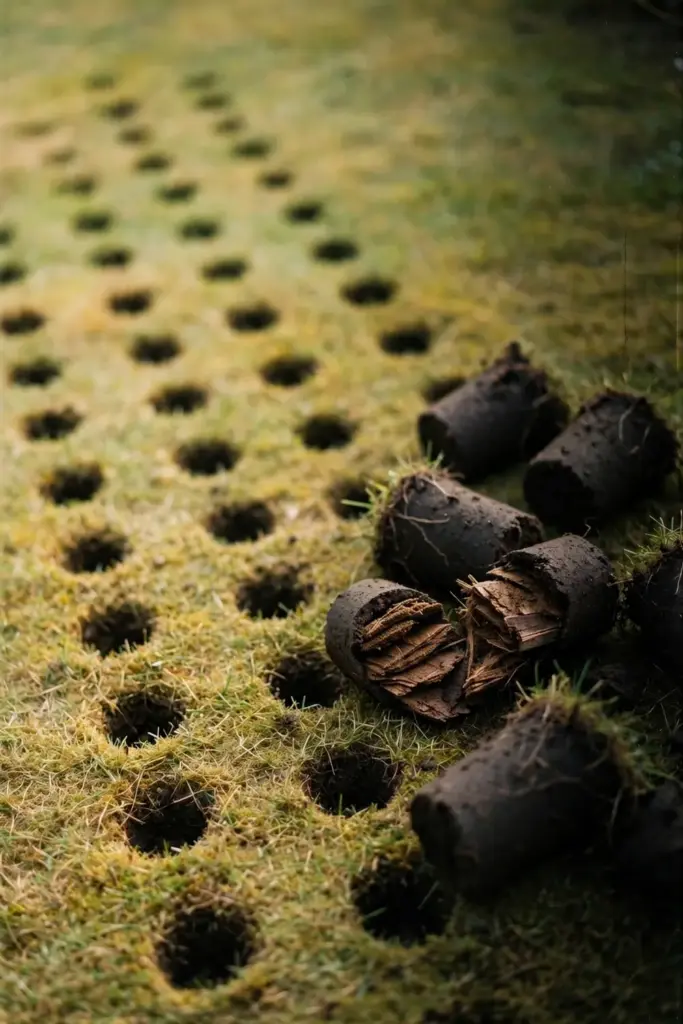
Core-aerate the lawn. Core aeration pulls plugs of soil from the root zone, opens air channels, and relieves compaction. The University of Georgia lists core aeration as a core take-all control, since it reduces thatch and relieves soil compaction. Aerate when the grass is growing actively, so the lawn fills the holes fast. Aerate the worst patches first, then the whole lawn.
Remove thatch thicker than 1 inch. The University of Georgia sets 1 inch as the removal line. Vertical mowing breaks up thatch best, and topdressing with sand or soil helps less but still improves thatch removal. Rake out loose dead stolons from affected patches by hand before vertical mowing, since dead stolons carry the fungus and the rake removes inoculum with them.
Fix standing water at the source. A low spot that holds water after rain needs regrading or a drain, not more fungicide. A downspout that dumps onto the lawn needs an extension. A lawn that stays wet for days after rain grows take-all no matter how careful the fertilizer program is. Surface drainage fixes beat chemical fixes on wet lawns every time.
Do not move infected thatch and soil to healthy turf. The University of Georgia notes that Gaeumannomyces graminis spreads greater distances by movement of infected plant parts during coring, vertical mowing, or transporting turfgrass. Mowing and foot traffic do not spread the fungus, unless roots or stolons ride along. Clean the aerator and vertical mower after working infected patches, and haul the removed thatch away instead of spreading it.
Step 6: Water Deep, Infrequent, and Early
Watering sets the moisture the fungus lives in. Deep infrequent watering grows deep roots. Shallow frequent watering grows shallow roots in a wet crown.
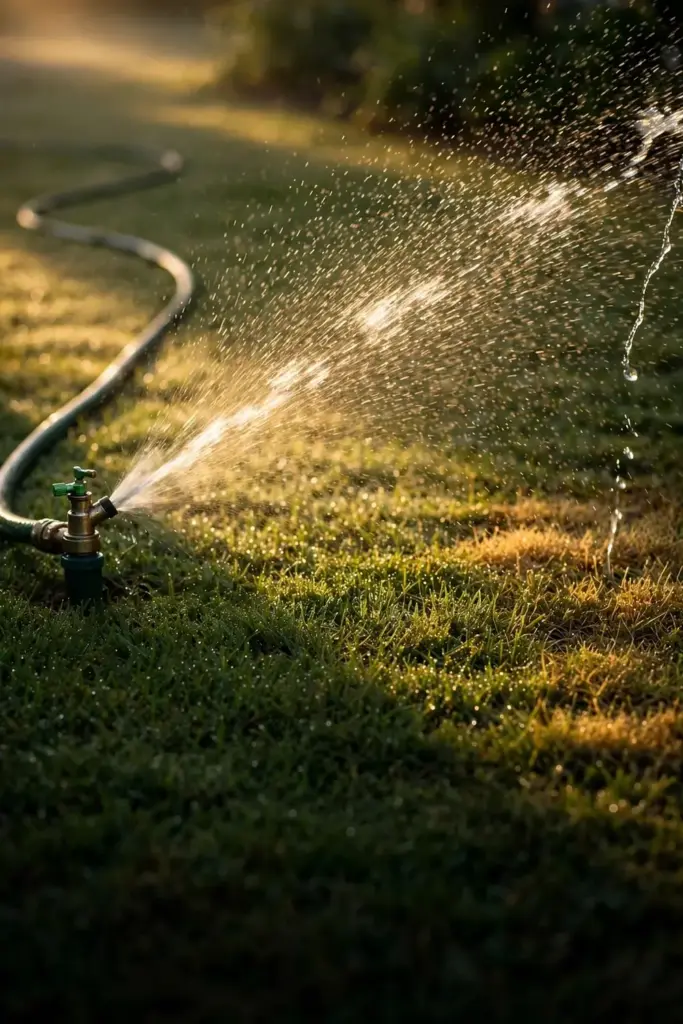
Water infrequently and deeply. The University of Georgia gives the rule: if rainfall is inadequate, irrigate by watering infrequently but deeply, since excess moisture in soil and on leaves promotes take-all infection. Texas A&M AgriLife Extension sets the depth: water 6 to 8 inches deep rather than giving frequent shallow waterings. Deep water pulls roots down. Shallow water keeps roots at the surface, where the fungus lives.
Water in the morning. The LSU AgCenter advises irrigating as early as possible in the morning while taking rainfall into account, and watering deeply and as infrequently as possible without causing drought stress. Morning water dries off the leaves by midday. Evening water keeps leaves wet all night, and the University of Georgia warns against irrigating in late afternoon or evening, since it prolongs leaf wetness.
Skip watering when rain already did the job. A rain gauge beats a calendar. A lawn that got an inch of rain needs no irrigation that week. A lawn under drought stress still needs water, since drought shows the damage first. The balance is simple: water when the soil dries, stop when the soil is wet, and never water on a fixed schedule through a rainy month.
Check the irrigation system for coverage. A head that soaks one corner and misses another leaves one wet patch and one drought patch, and both grow take-all symptoms for different reasons. Run the system, flag dry spots and puddles, and adjust heads until coverage is even. Even water grows even roots.
Step 7: Raise the Mowing Height and Feed Potassium
Taller grass grows deeper roots, and deeper roots survive the disease better. Mowing height is a root decision, not a looks decision.
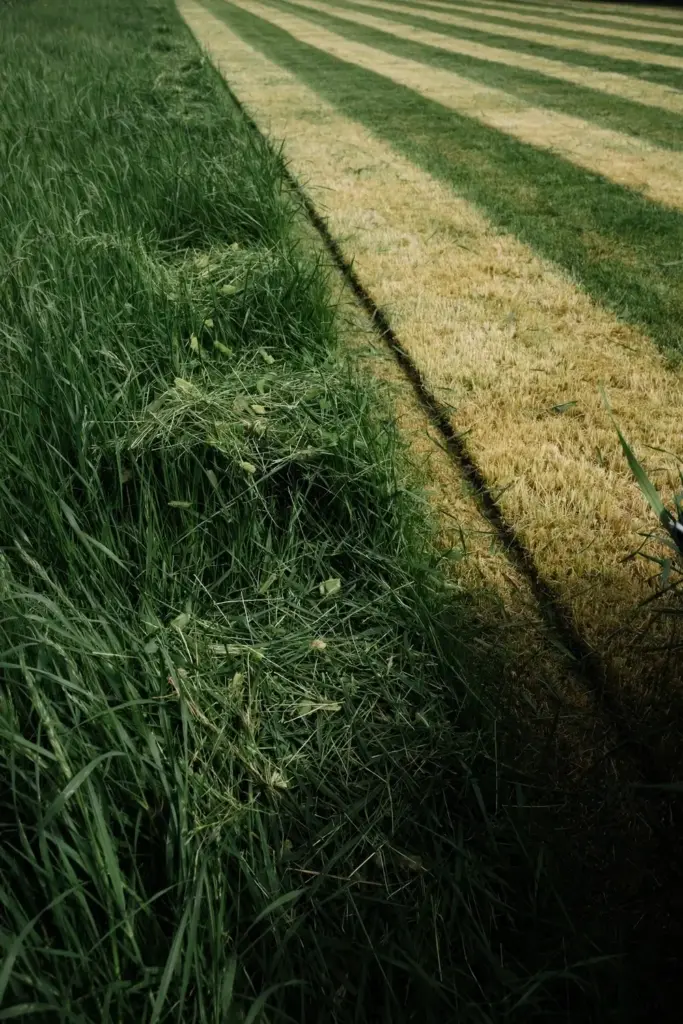
Raise the mowing height on damaged lawns. The LSU AgCenter advises that raising mowing height helps the grass recover and increases root growth. Mississippi State University Extension reports that raising mowing height can greatly reduce take-all symptoms. Taller leaves feed more energy to roots, and roots regrow faster on a tall lawn than on a scalped one.
Follow the one-third rule. The University of Georgia sets it: mow at the correct height for the grass species and remove only one-third of the leaf blade per mowing. Cutting off half the blade at once shocks the plant and stalls root growth. A lawn mowed weekly at the right height keeps roots steady. A lawn mowed monthly to the same height scalps the grass and starves the roots.
Use the species heights as the floor. Texas A&M AgriLife Extension gives 2 to 3 inches for St. Augustinegrass and 1 to 1.5 inches for bermudagrass. Mow St. Augustinegrass at 3 inches while it recovers, not 2. Mow bermudagrass at the top of its range while it recovers. Never scalp a diseased lawn to “let it breathe.” Scalping removes the leaves that feed root regrowth.
Feed potassium while roots regrow. The LSU AgCenter advises adequate potassium and magnesium fertility while actively regrowing roots. Potassium supports root growth and stress tolerance. Balance nitrogen and potassium rather than pushing nitrogen alone, since the LSU AgCenter advises equal nitrogen and potassium on lawns with take-all. A soil test sets the potassium rate. A lawn low in potassium and high in nitrogen grows leaves it cannot support.
Step 8: Time Fungicides for Fall Prevention
Fungicides help most before infection, and least after symptoms show. That timing rule decides whether a fungicide purchase is money well spent.
Fall application beats spring application. The University of Georgia states that fungicides are more effective when applied preventively rather than after symptoms are evident. The LSU AgCenter adds the homeowner warning: homeowner fungicides are not particularly effective by themselves once the disease is established. A fall fungicide applied before dormancy protects roots during the infection season. A spring fungicide applied after yellow patches show chases damage that already happened.
Texas A&M AgriLife Extension gives the seasonal window: fall and spring are the best times for fungicide treatment of take-all root rot. Treat diseased areas in spring after raking out the easily removed infected stolons. Two applications 3 to 4 weeks apart may be required. Fall treatment remains the higher-value application, since fall is when infection happens.
Use a labeled active ingredient, and water it into the root zone. The LSU AgCenter lists azoxystrobin, myclobutanil, propiconazole, thiophanate-methyl, and triadimefon as fungicide active ingredients for take-all root rot. The University of Georgia adds pyraclostrobin and tebuconazole for professional use, and notes that fungicide materials should be applied with at least 3 gallons of water per 1,000 square feet or watered in after application, so the active ingredient reaches the root zone. A fungicide left drying on leaves never reaches the roots it needs to protect.
Buy homeowner products for home lawns. Homeowner fungicides carry residential lawn labels, and commercial products may not. The University of Georgia notes that few effective fungicides are available for homeowners to manage take-all, so cultural control carries the main weight. A homeowner who sprays without the pH and cultural program buys a weak tool and skips the strong ones. Follow the product label for rate, timing, and reapplication. The label is the legal instruction for that product on that lawn.
Step 9: Reseed, Plug, or Replace the Grass
Dead turf does not come back from seed left in the soil. Bare ground needs new grass, planted into soil that no longer favors the fungus.
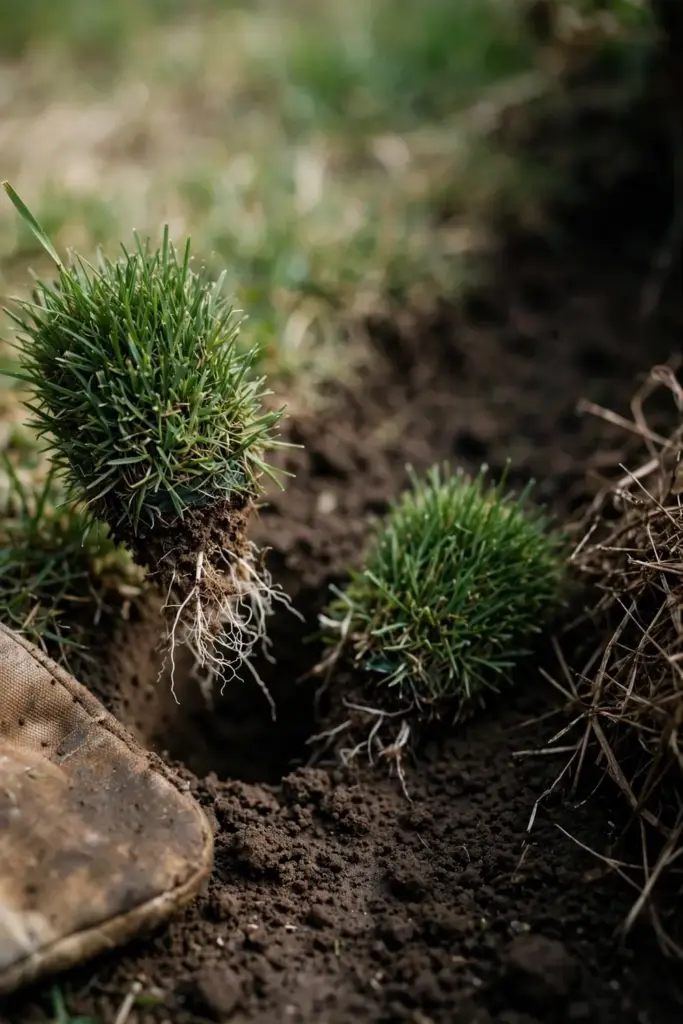
Rake out dead stolons before replanting. Texas A&M AgriLife Extension advises treating diseased areas in spring after the easily removed infected stolons are raked out or lifted away. Raking removes the fungal inoculum sitting in dead thatch. A patch replanted over dead stolons starts life on top of the fungus.
Plug bare areas on St. Augustinegrass lawns. St. Augustinegrass does not grow from seed sold to homeowners, so plugs or sod fill bare patches. Set plugs into soil that has been aerated and topdressed, water them daily until they root, then shift to deep infrequent watering. Plugs planted into high-pH soil without a pH fix die the same way the old lawn died.
Seed or sod bentgrass patches with clean seed, and expect slow recovery. Take-all patch kills roots and crowns, and Penn State Extension notes that infected bentgrass turf is slow to recover. A bentgrass patch that keeps failing on the same soil may need a different grass in that spot. Annual bluegrass and fine fescue already colonize old take-all patch centers, which tells you which grasses tolerate that soil.
Replace the species when the lawn keeps failing. The University of Georgia gives the strongest genetic option: replacing St. Augustinegrass with other warm-season grasses avoids the disease, and St. Augustinegrass areas in Brunswick, Georgia, were replaced with zoysiagrass. A lawn that has failed twice under a full pH program earns replacement rather than a third rescue. Match the new grass to the site: zoysiagrass tolerates more stress than St. Augustinegrass on the same soil, and a species suited to the site beats a species fighting it.
Step 10: Scout, Sample, and Track Take-All Decline
Take-all fades over time as soil biology builds against it. That fade has a name: take-all decline. Tracking it turns a multi-year problem into a visible trend.
Take-all decline is real. Utah State University Extension describes the process: over time, the natural buildup of microorganisms that suppress the take-all fungus reduces disease incidence and severity. Disturbed soil with low microbial diversity suffers worst, which is why new sod on graded soil shows take-all first. The lawn recovers as the soil community rebuilds, and the cultural program in Steps 2 through 7 speeds that rebuild by feeding steady growth and cutting stress.
Scout every month through the growing season. Walk the lawn, flag yellow patches, and run the tug test on each flag. Photograph each patch from the same spot each month. Photographs show a shrinking patch that memory misses. A patch that shrinks across two seasons is a lawn winning. A patch that grows across two seasons is a lawn that needs Step 9.
Sample again when the call is close. A second lab sample confirms whether the fungus is still active or the patches are old damage still healing. A soil test each year shows whether pH holds in the 5.5 to 6.0 band. Two tests a year apart, both in band, mean the pH program is holding. One test that drifts back above 6.5 means lime or alkaline irrigation water is pushing pH back up.
Keep a short log. Write the date, the pH result, the patch count, and the treatment applied. A log shows which patches return every year and which ones healed for good. The log decides the Step 1 triage call next season. A lawn with falling patch counts across two seasons earns patience. A lawn with rising patch counts earns replacement.
Living With Take-All Damage You Cannot Undo
Some damage stays. A lawn with thin patches still functions. A lawn that is mostly bare ground does not.
Bare patches fill slowly, and weeds fill them first. Annual bluegrass, fine fescue, and broadleaf weeds colonize dead take-all patch centers, per Penn State Extension. Mow the weeds with the lawn rather than chasing them with herbicide on stressed turf. Herbicides stress St. Augustinegrass, and a stressed lawn heals slower. Hand-pull the worst weeds in small patches, and let the grass close the gap as roots regrow.
Keep watering and mowing for recovery, not for looks. A recovering lawn needs deep infrequent morning water, a tall mowing height, and no fall nitrogen. A recovering lawn does not need a show lawn schedule. The grass that survives the first season after treatment builds the root system that carries the second season.
Do not expect a fungicide to erase old patches. Fungicides protect roots from new infection. Fungicides do not regrow roots that already rotted. A patch that is already bare needs plugs or seed, per Step 9, and the pH program, per Steps 3 and 4, to keep the new grass alive. A patch sprayed without replanting stays bare.
Watch for other turf diseases while the lawn recovers. A thin lawn invites leaf spot and crown rot problems that a thick lawn shrugs off. The guide to bipolaris leaf spot on lawns covers the leaf spot complex that follows thin turf, and the guide to bipolaris crown rot in lawns covers the crown rot side of the same disease family. Take-all stays a root disease. Leaf spots on a recovering lawn are a second problem, not a take-all symptom.
Frequently Asked Questions
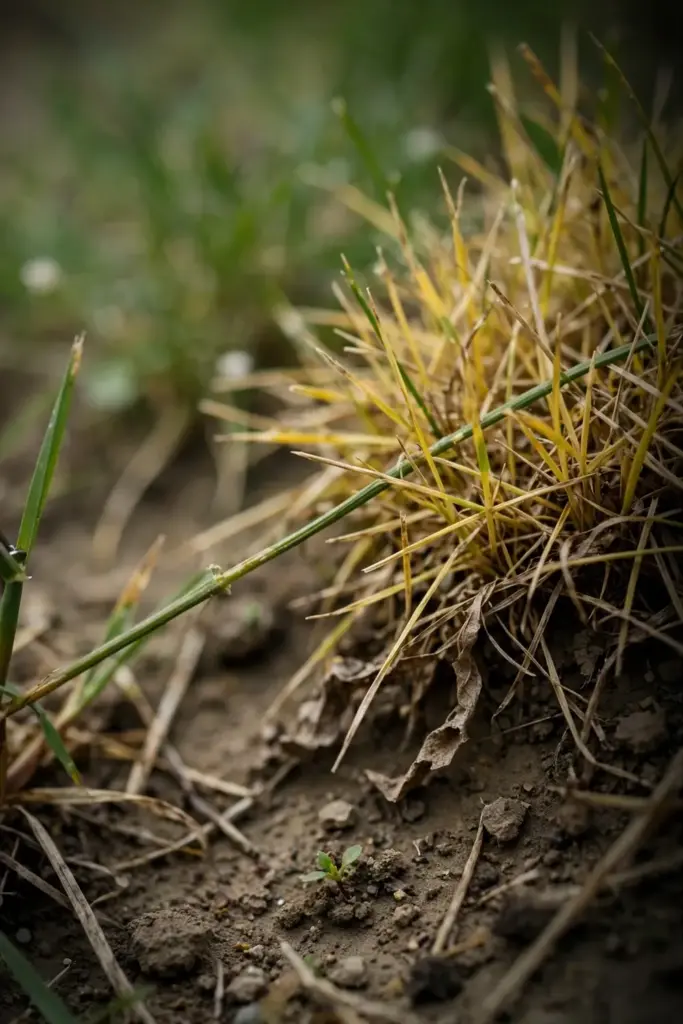
Yes. Take-all rots roots, stolons, and rhizomes, and a lawn with most of its root system rotted cannot pull water or nutrients. Patches merge into large dead areas across a season. Lawns with scattered yellow patches usually recover with the pH program. Lawns that are mostly bare ground need replanting or species replacement, since dead turf does not regrow from the soil.
Run the tug test. Take-all turf lifts away with leaves and stolons together and almost no resistance, and the roots left behind are short, dark, and brittle. Large patch turf holds its roots, and the leaf pulls off with a brown rotted base. Large patch also shows orange blades on the patch margin and hits in spring and fall. Take-all shows no leaf lesions and follows high soil pH above 6.5.
No. Peat moss suppresses take-all by lowering soil pH, and it does not kill the fungus outright. The University of Georgia rate is 1 bale of sphagnum peat moss at 3.8 cubic feet per 1,000 square feet when soil pH runs above 6.5. Peat moss works as one season of a multi-season program with acidifying fertilizer, drainage fixes, and thatch removal. A lawn treated once with peat moss and left alone drifts back.
Fall is the best time for prevention, since the fungus infects turf in fall and spring while symptoms show later in summer heat. Fall fungicide applications protect roots during the infection season. Fall is also the season to skip nitrogen and to check soil pH. Spring treatment helps after raking out dead stolons, with two applications 3 to 4 weeks apart when fungicide is used. Summer treatment chases damage that already happened.
Yes, with soil work before planting. Test soil pH and hold it in the 5.5 to 6.0 band, and never lime without a test result. Choose a grass species suited to the site, since no warm-season grass carries a resistant cultivar. Build soil organic matter, fix drainage before sod goes down, and keep thatch under 1 inch. A new lawn planted on tested, drained, mildly acidic soil starts ahead of take-all.
Sometimes, through take-all decline. Soil microorganisms that suppress the fungus build up over time, and disease pressure falls as the soil community rebuilds. A lawn with light damage and good soil biology may recover with basic care. A lawn with heavy damage, high pH, and compacted soil rarely recovers without the pH program and thatch work. Waiting without testing pH is the slowest option available.
Where to Go From Here
Start with the soil test. Pull samples from the worst patches and from healthy turf, and send them to the lab.
The order is test, stop liming, topdress peat moss, switch nitrogen to ammonium sulfate, fix drainage and thatch, water deep and early, raise the mower, time fungicide for fall, replant bare ground, and track decline. One next action beats ten good intentions. Test the soil today. Run the tug test on the worst patch. Lower the pH before the next infection season arrives.