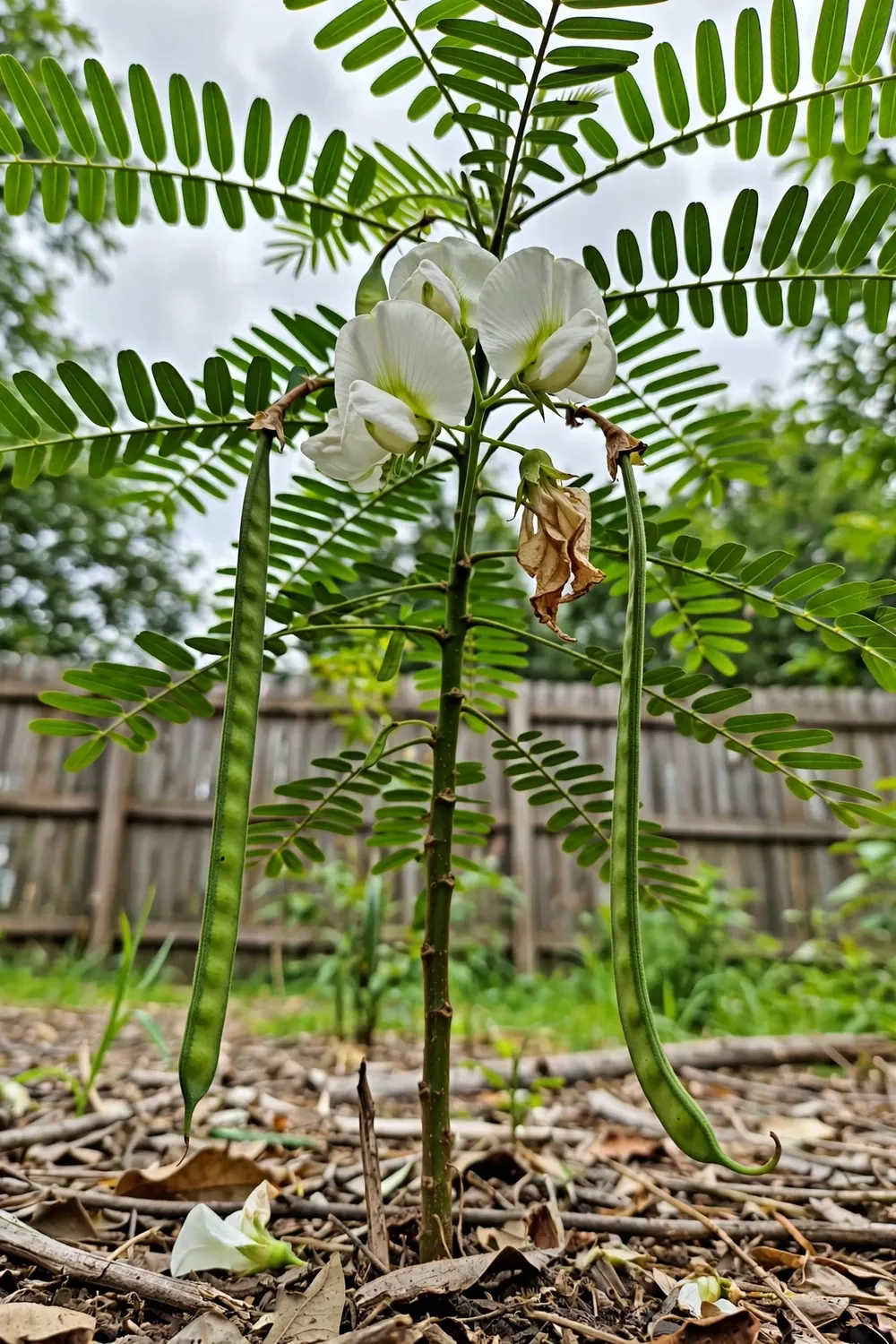

Learn how to grow Sesbania grandiflora from seed: soak the hard seed for 24 hours, sow it 6 mm deep in warm soil, and expect sprouts in 7 to 21 days at 20 to 35 degrees. In warm climates the young tree reaches 1.8 m in 50 days and can flower in its first year. It grows outdoors year-round only where frost never arrives.
I have learned that the seed soak decides whether this tree shows up at all. Turi is the Indonesian name for Sesbania grandiflora, a fast-growing legume tree with large pea-like flowers that cooks across Southeast Asia pick for the table. Kew lists Jawa, Malaya, New Guinea, and the Philippines as its native range, and Indonesian gardens have grown it so long that the name turi feels like it always belonged there.
The steps below give 21 moves, from telling the species apart from its look-alikes to saving seed for next season. Two honest warnings run through them. The tree is extremely frost-sensitive, and Florida regulators rate it a high invasion risk, so the container and annual options matter as much as the in-ground ones.
| Spec | Detail |
|---|---|
| Botanical name | Sesbania grandiflora (Fabaceae) |
| Indonesian name | Turi |
| Other names | Vegetable hummingbird, hummingbird tree, agati, agathi, West Indian pea |
| Plant type | Fast-growing, short-lived legume tree |
| Height | To 12 m in the ground. Pot size and pruning set container height |
| Spread | To 10 m in the ground |
| Flowers | White, pink, or red, pea-like, corolla to 8 cm, in racemes of 2 to 4 |
| Pods | Slender pods 20 to 55 cm long, 15 to 50 seeds per pod |
| Leaves | Pinnate, leaf rachis 15 to 30 cm, 20 to 50 narrow leaflets |
| Main propagation | Seed |
| Cold floor | Frost kills it. Treat it as a Zone 9 to 11 plant |
| Kitchen uses | Flowers, young leaves, and young pods, cooked |
| Native range | Jawa, Malaya, New Guinea, Philippines |
1. Confirm the Species Before You Plant Sesbania Grandiflora, Not Its Look-Alikes
Check the botanical name before you buy seed or follow any growing advice. Sesbania grandiflora is one species in a genus where several cousins share the common name sesbania, and the cousins differ in size, flower color, and behavior. A packet labeled only “sesbania” tells you almost nothing.
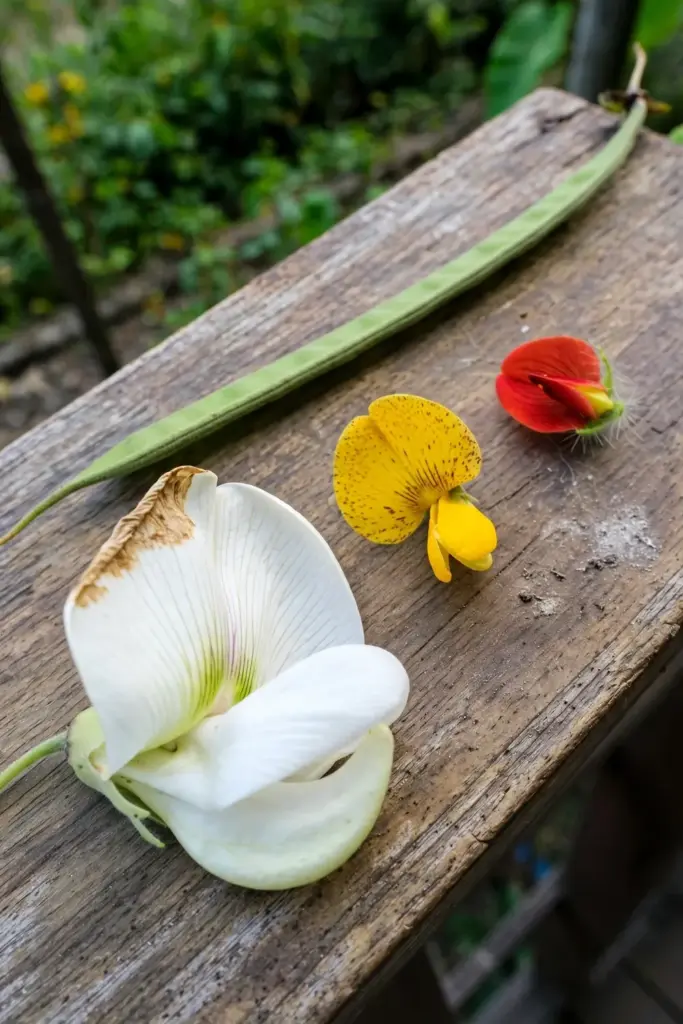
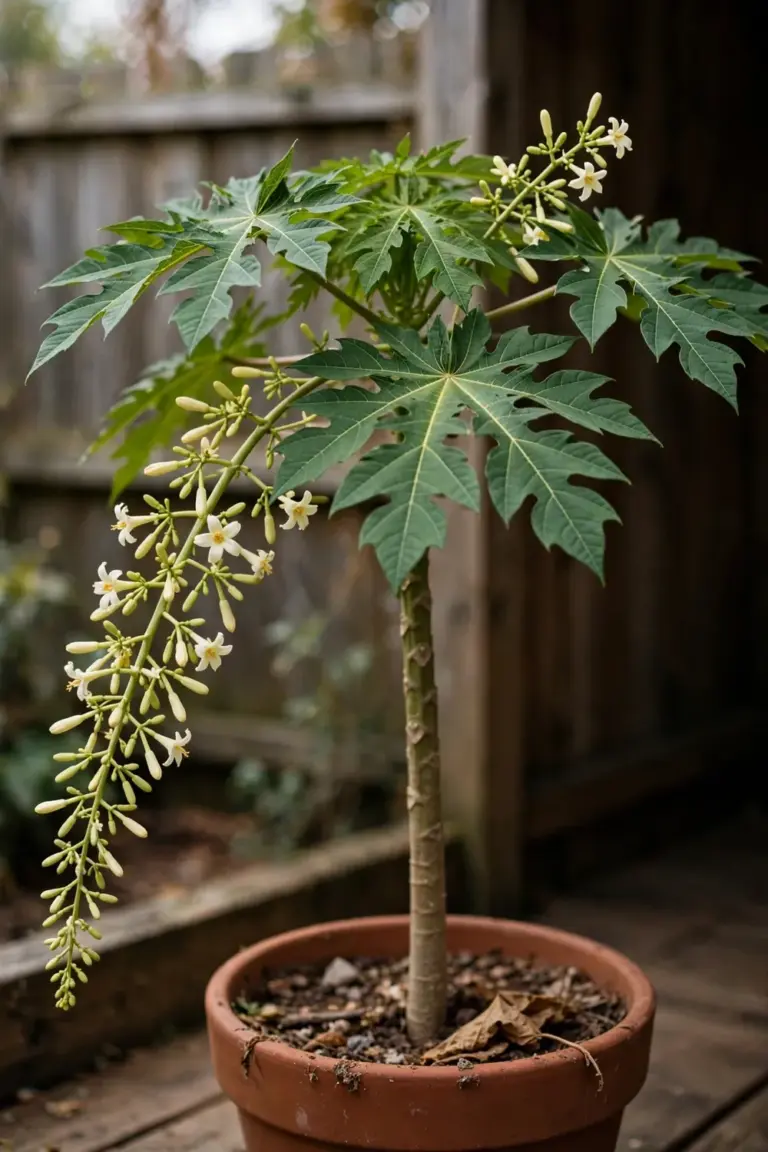
Sesbania grandiflora carries large white, pink, or red pea-like flowers with a corolla to 8 cm long, in racemes of 2 to 4, and slender pods 20 to 55 cm long, according to the Kew Plants of the World Online account for Sesbania grandiflora. The leaves are pinnate with a rachis 15 to 30 cm long and 20 to 50 narrow leaflets. Those four traits together separate it from the rest of the genus.
| Name | What sets it apart | Why it matters |
|---|---|---|
| Sesbania grandiflora | Large white, pink, or red flowers to 8 cm; pods 20 to 55 cm | Edible flowers, young leaves, young pods |
| Sesbania punicea | Rattlebox. A different species with its own record | Judge it separately. Never transfer one species record to another |
| Sesbania sesban | Egyptian riverhemp. Yellow flowers, shrub habit | A different plant, often sold under the bare name sesbania |
| Sesbania bispinosa | Dhaincha. Grown as a green manure crop | Farm crop, not the edible-flower tree |
Buy seed sold under the full botanical name. A seller who prints Sesbania grandiflora on the packet has done the first check for you. A seller who prints only “sesbania” or “hummingbird seeds” has not, and the seedlings could grow into any cousin in the table.
2. Match Sesbania Grandiflora to Your Climate Before You Sow
Grow Sesbania grandiflora outdoors year-round only where frost never arrives. Sellers and plant databases place it in Zones 9 to 11, and the Plants For A Future database rates it hardy to UK zone 9. The tree is extremely frost-sensitive, so one hard freeze can end a young tree outright.
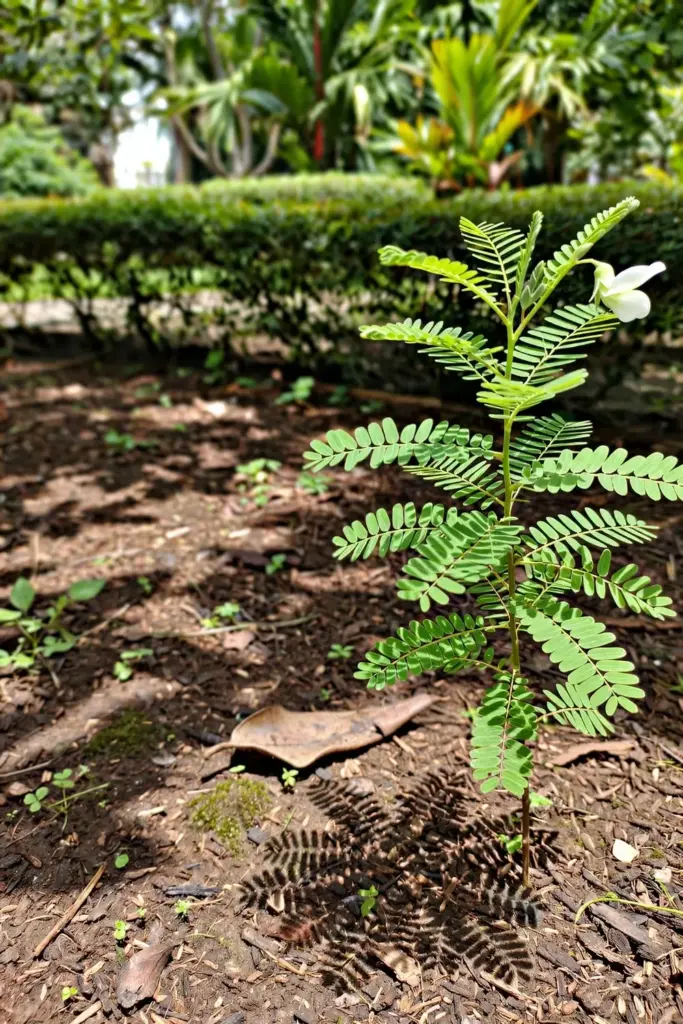
Heat suits it. The tree thrives in hot, humid conditions with full sun, and it prefers moist or wet soil while tolerating dry spells once established, per the same Plants For A Future account. A long warm season gives it the growth it needs to flower in its first year. A short cool summer gives you a stunted tree that never earns its space.
Temperate gardeners still have three honest options. Grow it in a large pot and move it indoors for winter. Grow it as an annual, sown after the last frost and composted before the first. Or grow it in a greenhouse or polytunnel where night temperatures stay above freezing. Pick one before you sow, because each option changes the pot, the pruning, and the harvest plan.
3. Choose a Sunny Spot With Room for a 12-Meter Tree
Give Sesbania grandiflora full sun and room to become a tree. A tree in open ground grows to 12 m tall by 10 m across, per the same Plants For A Future account. A seedling looks harmless in a nursery pot. The same plant in open ground can shade a vegetable bed within two seasons.
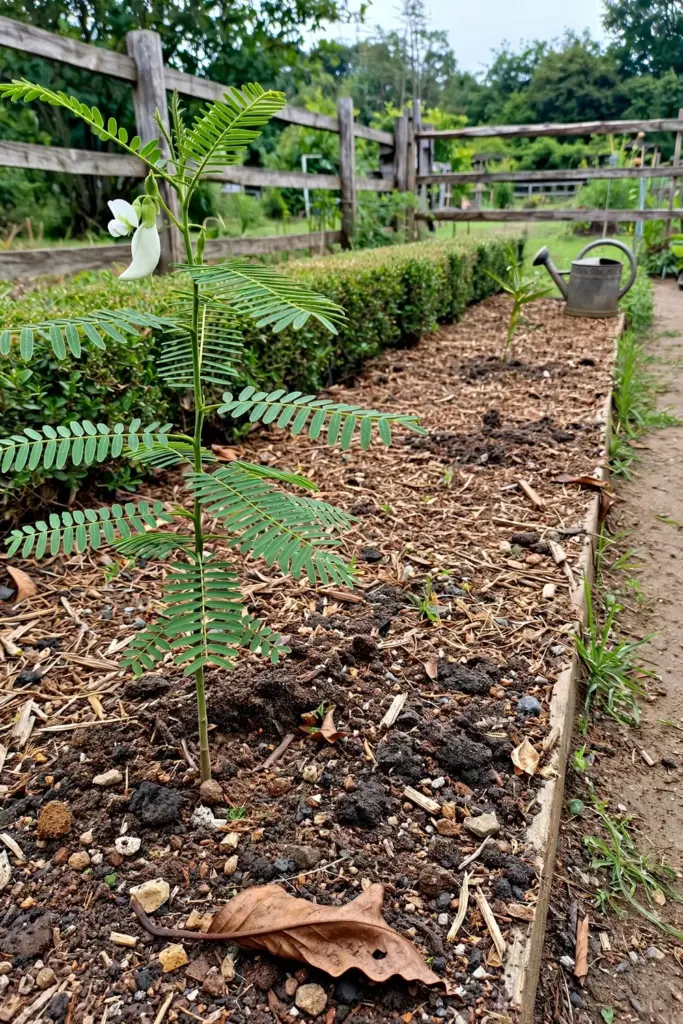
Full sun drives flowering. The tree cannot grow in shade, and a shaded tree stretches tall with few flowers. Pick the sunniest open patch you have, and keep it clear of paths and power lines so the canopy never becomes a dispute.
Shelter from strong wind helps. The same Plants For A Future account notes the plant is not wind tolerant, and its soft wood breaks in gusts. A fence, a hedge, or a building on the windward side gives the young tree the calm it needs. Stake a new transplant for its first season, and remove the stake once the trunk stands firm.
4. Start Sesbania Grandiflora from Seed With a 24-Hour Soak
Soak the seed before you sow it. Sesbania grandiflora carries a hard seed coat that blocks water, and untreated seed germinates slowly and unevenly. The soak is the step that turns a packet of hard brown seed into a row of seedlings.
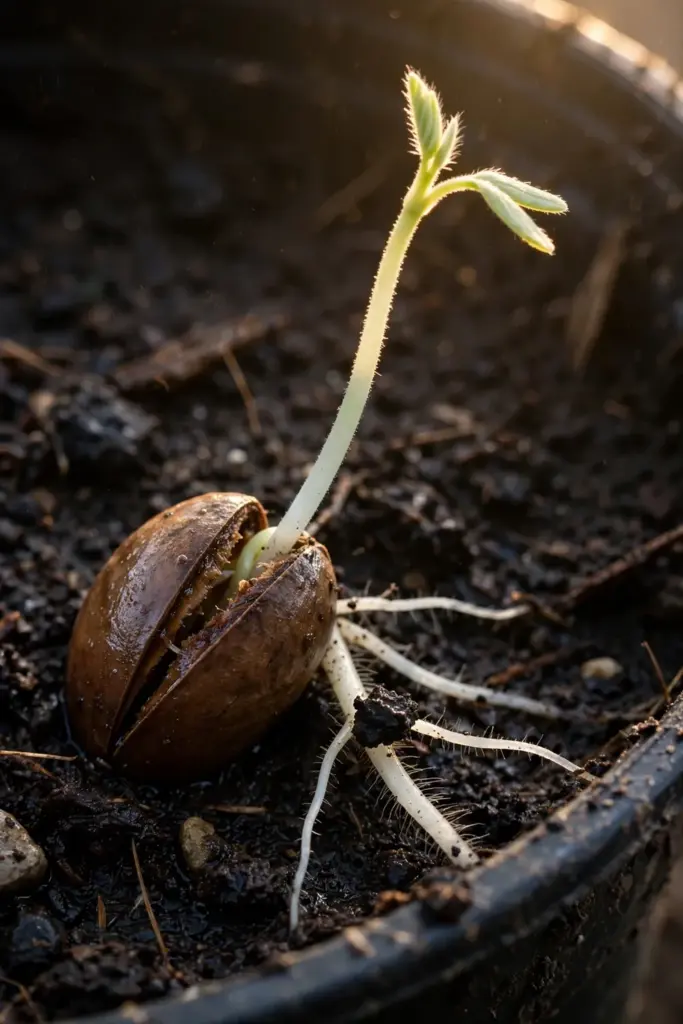
This guide explains how to grow Sesbania grandiflora from seed in five moves. Drop the seed into hot tap water and let it stand for 24 hours. Discard any seed that still floats hard and dry, then nick its coat with a clean nail clipper and soak it again. Sow each swollen seed 6 mm deep in premoistened seed mix. Keep the mix moist and warm at 20 to 35 degrees, and expect sprouts in 7 to 21 days. Move each seedling to full sun once its first true leaves open.
Damp seed mix kills more seedlings than dry mix. Free-draining mix, a pot with drainage holes, and watering only when the top of the mix dries keep the stem base firm. A seedling that collapses at the soil line sat too wet. Sow a few extra seed so one loss never ruins the season.
5. Transplant Seedlings 1.5 to 2 Meters Apart
Set transplants 1.5 to 2 m apart in open ground. The spacing looks generous for seedlings in small pots. It gives each tree the air and light it needs once the canopies meet, and it keeps pruning light for the first years.
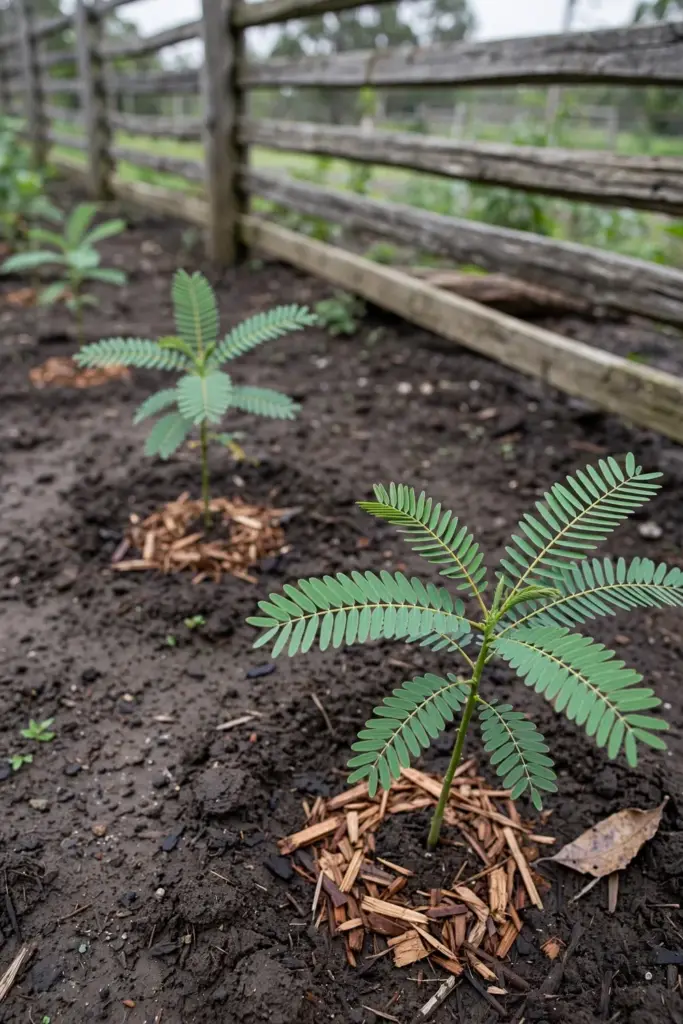
Harden seedlings off before they move outdoors. Set the pots outside in shade for a few hours on the first day, then lengthen the stay and the sun each day for a week. A seedling that goes straight from a windowsill to full sun wilts, and a wilted seedling stalls for weeks.
Plant at the same depth the seedling grew in its pot. Burying the stem invites rot, and planting shallow leaves roots exposed. Firm the soil around the root ball, water it in, and mulch around the base without piling mulch against the stem. The seed starting steps in the growit.wiki/ seed starting guide cover the same hardening-off rhythm for any seedling you move outdoors.
6. Water Young Trees Weekly Until Roots Take Hold
Water a young tree weekly through its first season. The same Plants For A Future account notes the tree prefers moist or wet soil and tolerates drought once established. Weekly water bridges the gap between those two states.
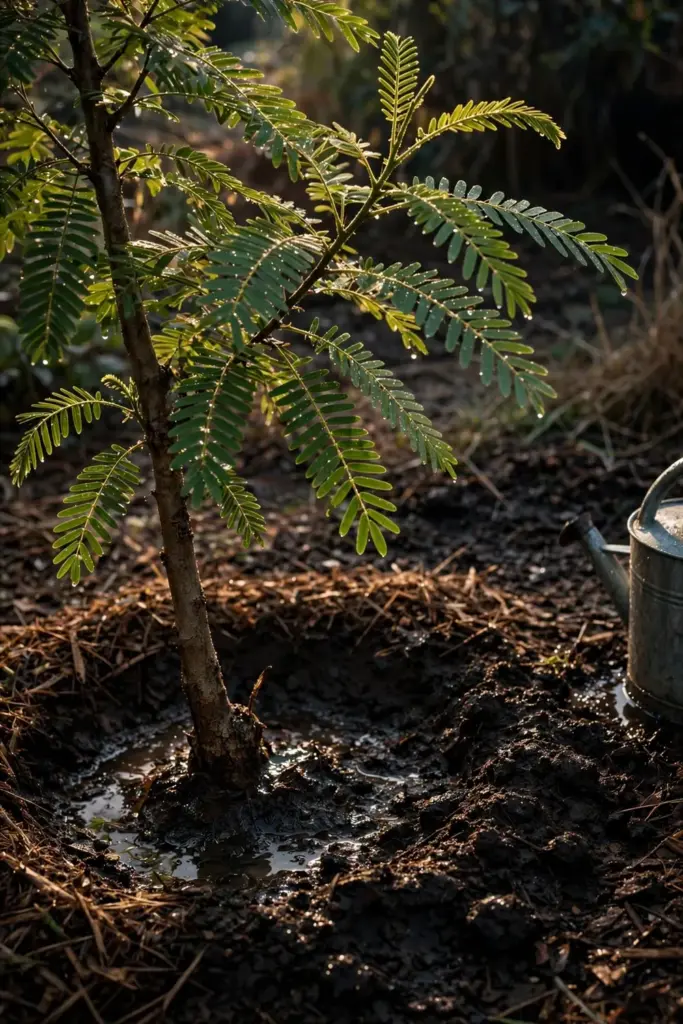
Check the soil before you water. Push a finger 5 cm into the soil at the root zone. Water when the top layer feels dry, and skip the session when it still feels damp. Young roots need both water and air, and a tree that stands in wet soil grows weak roots that fail in the first dry spell.
Cut back once the tree shows steady new growth and holds its leaves through a dry week. An established tree handles dry spells on its own, and overwatering a mature tree buys nothing but soft growth. In a pot the rule flips back. A potted tree dries faster than a tree in the ground, so check pot soil twice a week in hot weather.
7. Feed Lightly and Let Nitrogen Fixation Do the Work
Skip heavy feeding. Sesbania grandiflora fixes atmospheric nitrogen through its legume roots, and the same Plants For A Future account confirms the tree fixes nitrogen. That built-in supply covers most of its needs in decent soil.
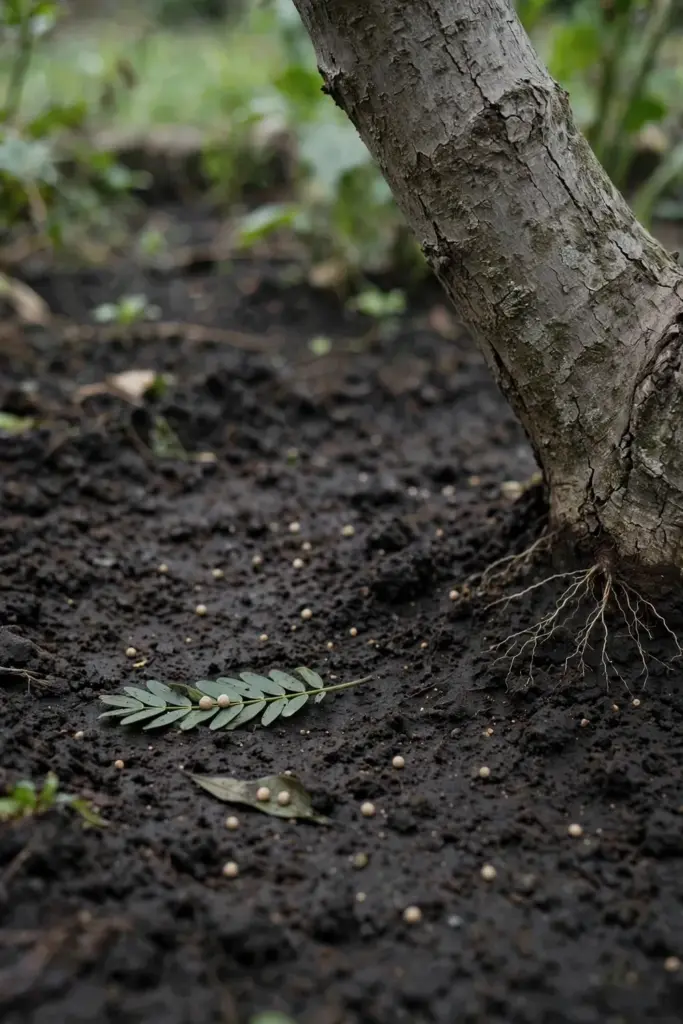
Rich feeding pushes soft leafy growth at the cost of flowers. A tree that gets regular strong fertilizer grows tall, leafy, and shy of bloom. A tree that gets almost nothing flowers freely. Let the nitrogen fixation work, and feed only a tree that shows pale leaves and slow growth despite water and sun.
A light dose of balanced fertilizer at the label rate, once early in the growing season, is enough for a struggling tree. Scatter it away from the trunk, water it in, and stop there. Compost as mulch feeds the soil slowly and suits this tree better than repeated liquid feeds.
8. Mulch the Root Zone and Keep the Trunk Clear
Spread mulch around the root zone and leave a clear ring at the trunk. Mulch holds soil moisture, cools the roots in hot weather, and keeps weeds down while the tree establishes. A clear ring stops the mulch from holding dampness against the bark, where rot starts.
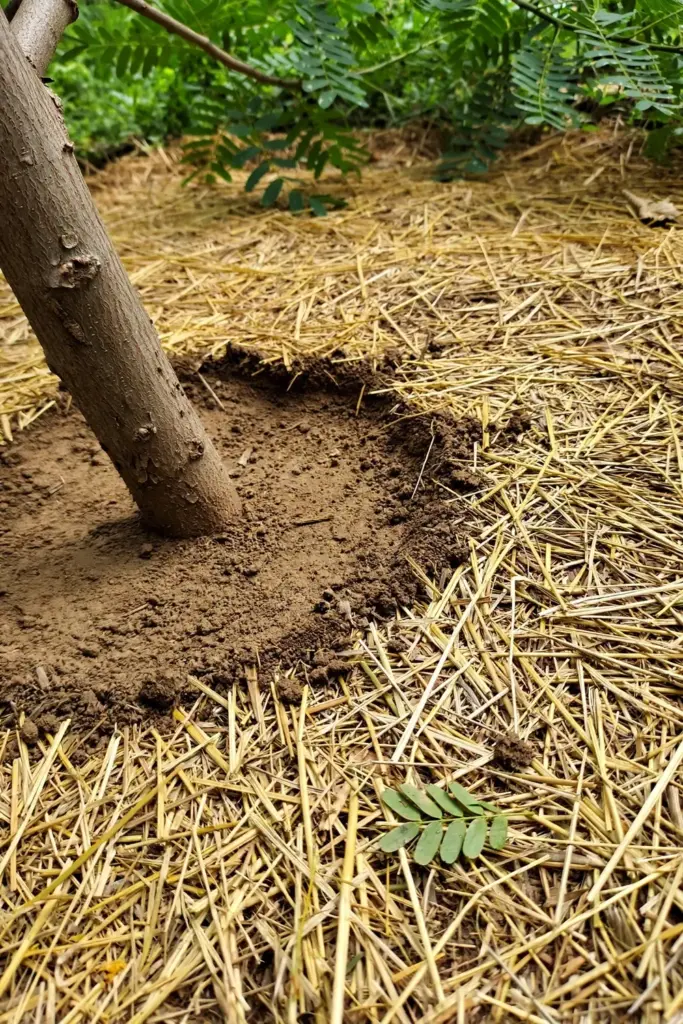
Use whatever organic mulch you have: straw, shredded leaves, or wood chips. Lay it in an even layer across the root zone, out to the drip line as the canopy grows. Top it up when it thins, and pull back any mulch that drifts against the trunk after rain.
Mulch never replaces water. A thick mulch layer over bone-dry soil keeps rain out instead of holding moisture in. Water first, then mulch, and check the soil under the mulch before each watering session so you water the roots instead of the mulch.
9. Prune Once a Year After the Flower Flush
Prune Sesbania grandiflora once a year, after a flower flush, to keep the canopy open and the height manageable. The tree grows fast and branches loosely, and a tree left unpruned turns into a tall sparse frame with flowers only at the tips.
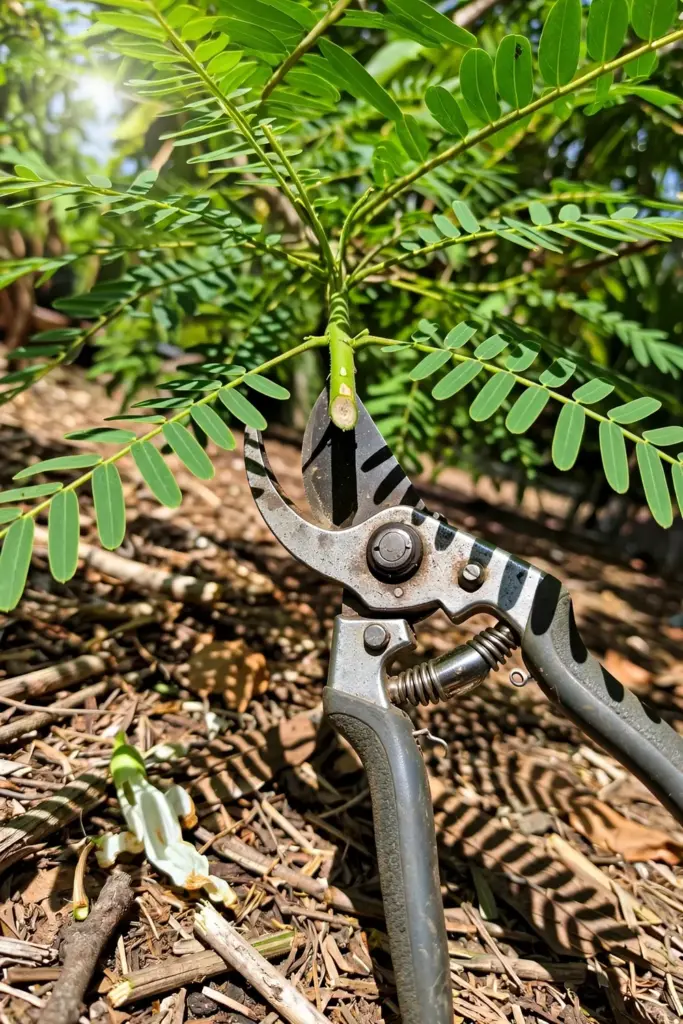
Remove dead wood first. Cut out crossing branches next, then shorten any branch that grows toward a path, a roof, or a power line. Each cut goes just above an outward-facing bud or branch junction, so new growth opens outward instead of crowding the center.
Prune lightly. Hard cutting back into old bare wood on a soft-wooded tree leaves wounds that heal slowly. Annual light pruning beats a once-in-five-years massacre. Wear gloves and eye protection, and clean the blade between trees so one cut never carries disease to the next plant.
10. Grow Sesbania Grandiflora in a Big Pot When Frost Threatens
Grow Sesbania grandiflora in a pot when frost threatens your garden. The pot is the whole temperate-climate strategy in one container: the tree lives outdoors through summer, then moves under cover before the first frost. It also keeps the tree contained where regulators warn about spread.
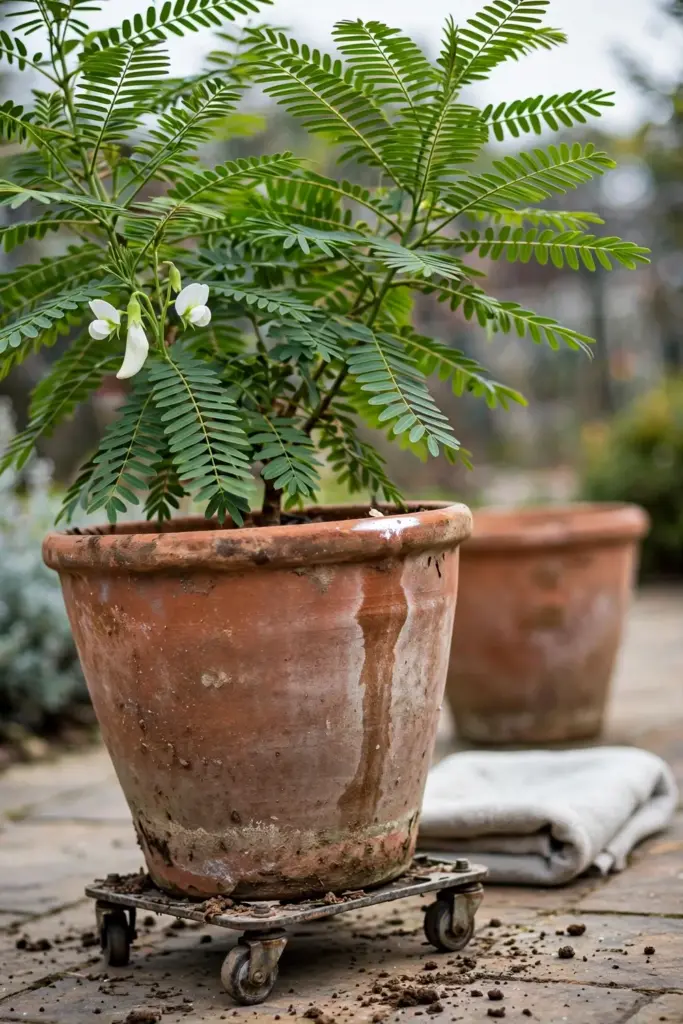
Pick the largest pot you can still move. A deep pot with drainage holes gives the taproot room, and a pot trolley or a second pair of hands makes the autumn move safe. Fill it with free-draining mix, not garden soil, because garden soil compacts in a pot and starves the roots of air.
Expect a smaller tree in a pot. Pot size sets the canopy, and pruning sets it again. A potted tree still flowers, still feeds the table, and still fixes nitrogen in its own small patch of soil. Repot into fresh mix when water runs straight through without wetting the root ball.
11. Move Potted Trees Indoors Before the First Frost
Move a potted tree indoors before the first frost arrives. Frost kills Sesbania grandiflora, and one cold night can undo a whole season of growth. The move belongs on the calendar before the forecast turns, not after it.
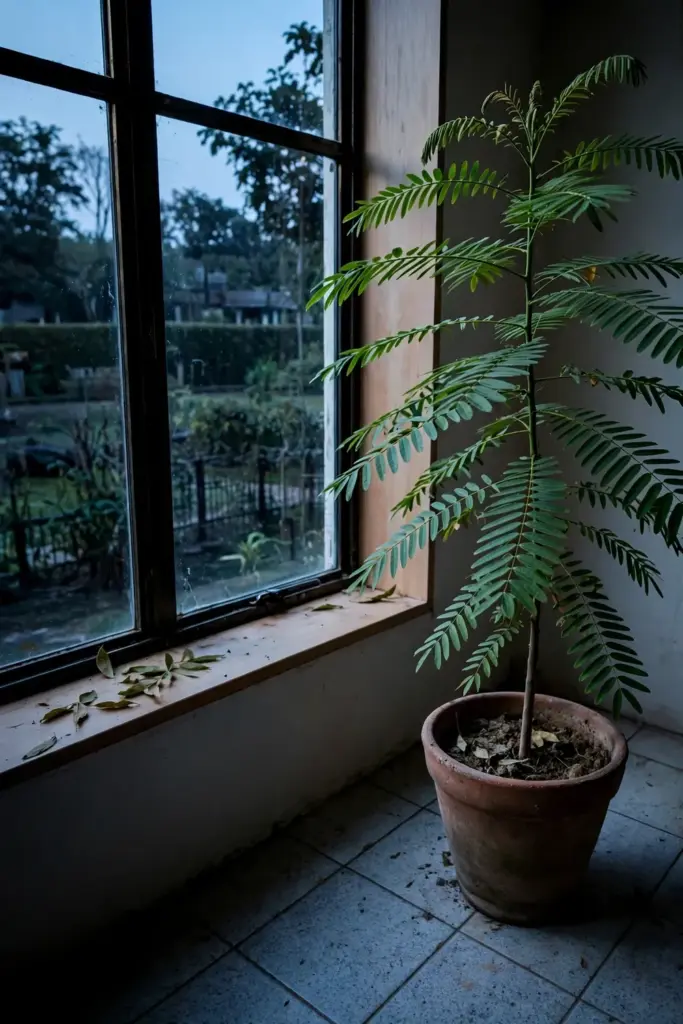
Choose a bright spot indoors: a sunny windowsill, a greenhouse bench, or a polytunnel that stays above freezing. Cut back water once the tree moves inside, because indoor soil dries slowly and wet indoor soil rots roots. The tree may drop leaves indoors. Leaf drop is stress, not death, and new leaves return with spring light.
Move the tree back outside only after nights stay reliably above freezing. Harden it off again, a few hours of shade on the first day and more sun each day, exactly as you did for the seedling. The guide to protecting plants from late frost covers the same timing for any tender plant you overwinter indoors.
12. Harvest Edible Flowers at Dawn for the Mildest Flavor
Pick Sesbania grandiflora flowers at dawn, on the day you plan to cook them. The flowers open fresh in the morning, and the morning pick gives the mildest flavor and the firmest texture. Flowers picked at noon wilt fast, and flowers left a day on the counter turn limp and bitter.
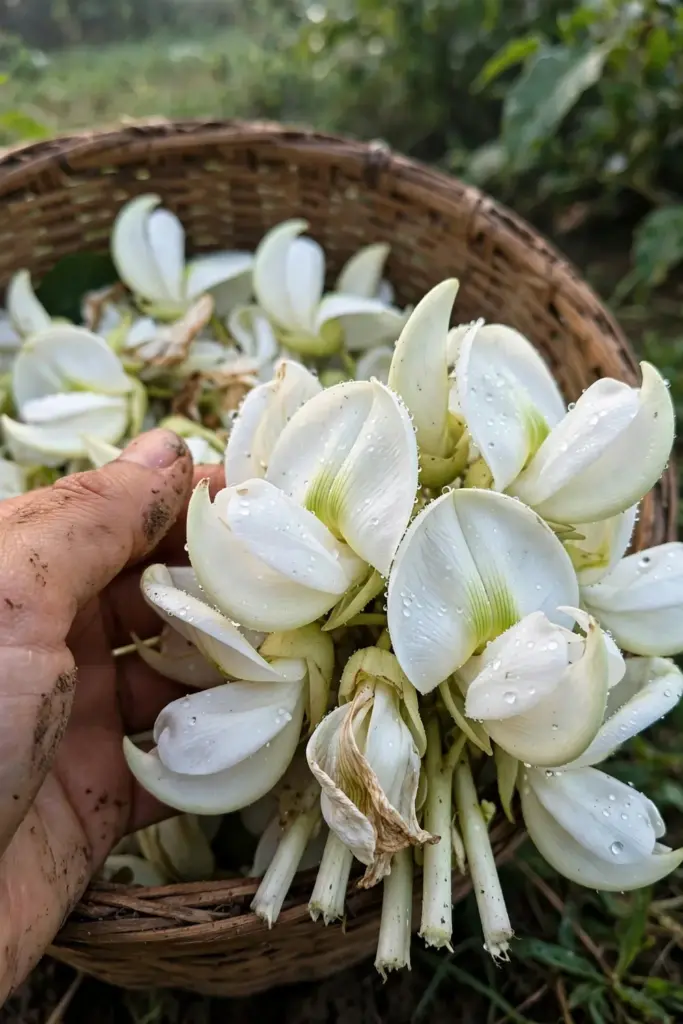
Pick both open flowers and firm buds. The buds cook tender and mild, and the open flowers carry the show in a stir-fry or curry. Twist each flower gently off its stalk, and drop it into a basket or a bowl lined with a damp cloth. Keep the basket in shade while you finish picking.
Many cooks pull out the stamens and the pistil before cooking to cut bitterness. The step takes seconds per flower, and it suits cooks who find the whole flower too sharp. Taste one flower raw first. Your own palate sets the rule for your kitchen, and a cook who likes the bite can skip the trimming entirely.
13. Cook Young Pods and Leaves the Same Day You Pick Them
Cook young pods and leaves the same day you pick them. Young pods cook like green beans, and young leaves cook like any soft leafy green. Older pods turn fibrous, and older leaves turn tough, so the harvest window is young and quick.
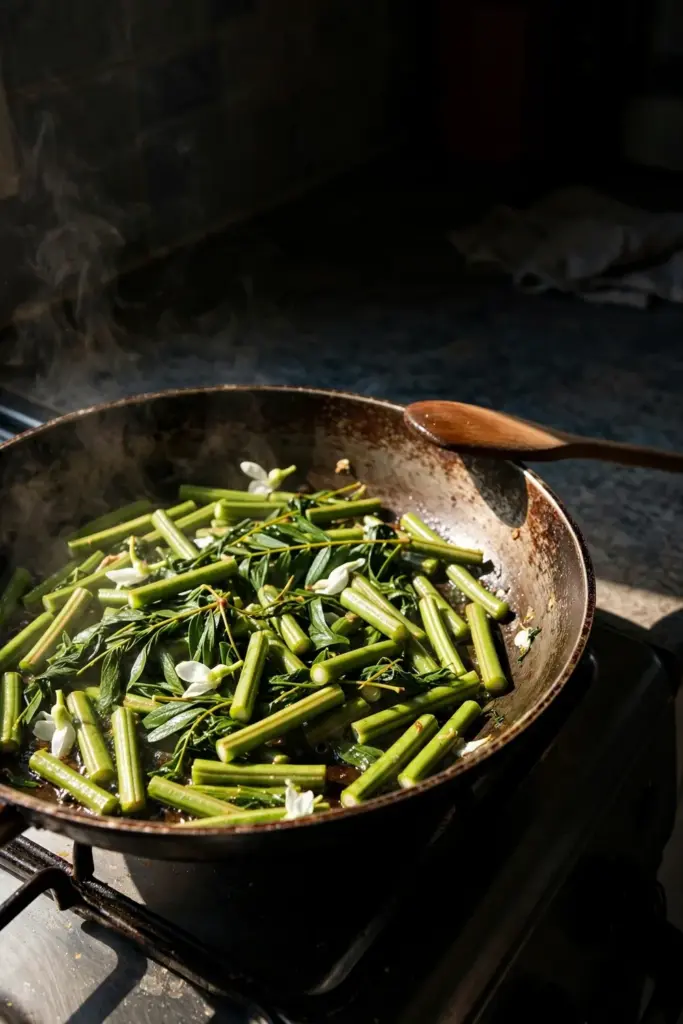
The ECHO plant information sheet for Sesbania grandiflora records that the flowers are eaten both cooked and raw, and that young leaves and green pods can also be cooked and eaten. That matches kitchen practice across Southeast Asia, where the flowers go into curries, soups, and stir-fries, and the pods join the bean dishes.
Keep the kitchen routine simple. Wash the harvest, trim the pods, strip the leaflets from their stalks, and cook them the same day. A quick stir-fry with garlic, a coconut curry, or a clear soup all suit the mild flavor. If you already grow Indonesian kitchen plants, growing lemongrass from seed sits well beside turi, and the two meet naturally in the same pot.
14. Save Seed from Dry Pods for Next Season
Save seed from pods that dry on the tree. A pod that turns brown, hard, and rattling holds mature seed. A pod picked green holds seed that never ripens, so patience at this step pays for next season.
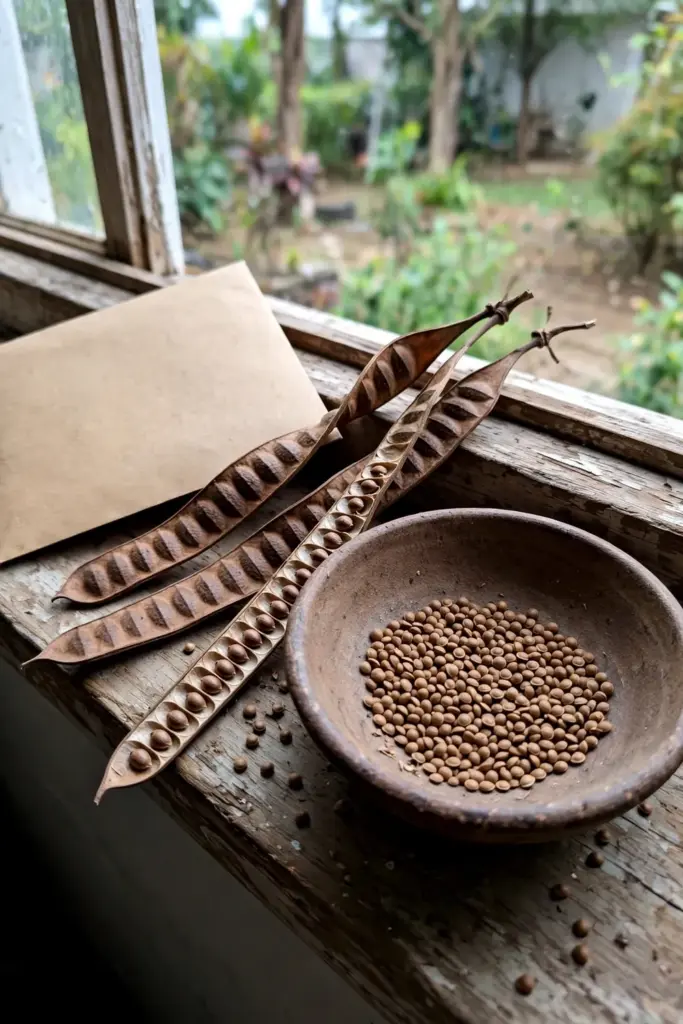
Pick the dry pods on a dry day. Shell them over a bowl, and spread the seed in a single layer to dry fully. Store the dry seed in a labeled paper envelope or a small jar in a cool, dry place, with the species name and the harvest date on the label. A labeled envelope in a drawer beats a mystery jar every time.
Test stored seed before you sow the whole batch. Soak a few seed for 24 hours and watch for swelling. Swollen seed is alive and ready. Seed that stays hard and dry wants a nick in the coat and a second soak, exactly as the sowing section describes.
15. Use Sesbania Grandiflora as Green Manure Without Letting It Escape
Cut Sesbania grandiflora for green manure before it sets seed. The tree grows fast enough to matter as a soil builder. The same ECHO sheet reports that it covers the ground in less than four weeks and grows to a height of 1.8 m in 50 days. Cut growth at that pace feeds the soil with nitrogen-rich leaves and stems.
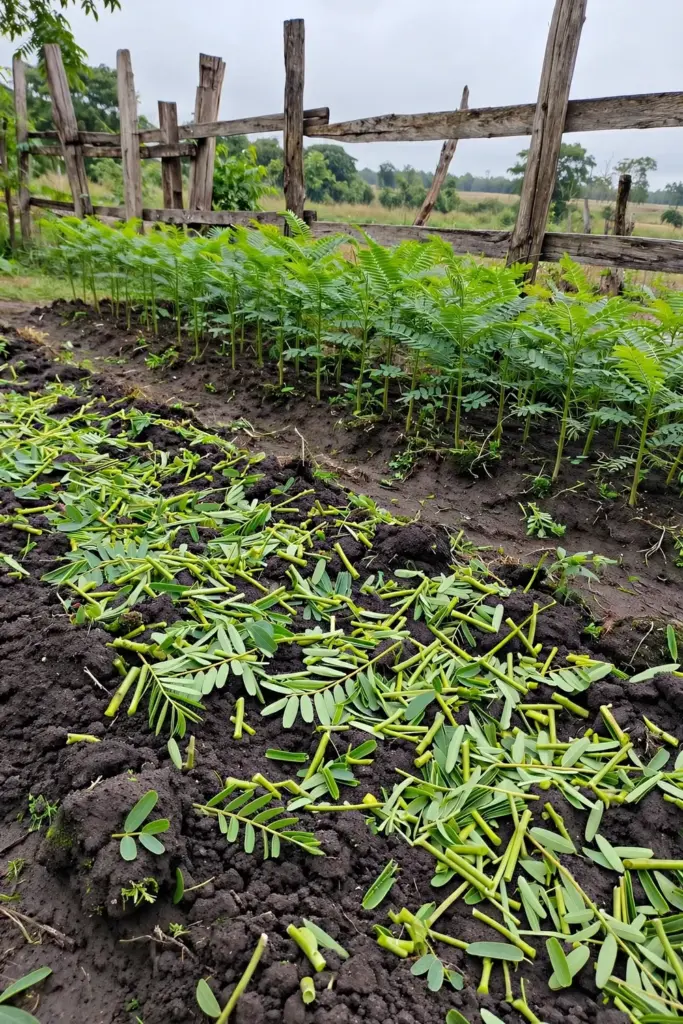
Chop the cut growth and dig it into the top soil, or lay it as mulch and let it break down where it falls. The legume leaves carry the nitrogen the roots fixed, and the soil gains organic matter with each round. Two or three rounds in a warm season can lift a tired bed visibly.
Never let a green manure planting set seed outside the tree’s native range. Seed is the escape route. Cut before pods form, compost any pods you miss, and keep the planting inside the bed you control. The cover crops for fall planting guide covers the same cut-before-seed rule for every living fertilizer in the garden.
16. Check the Florida Invasion Warning Before You Plant Outdoors
Check the invasion record before you plant Sesbania grandiflora outdoors. The University of Florida IFAS Assessment rates this species High Invasion Risk in Florida, with a predictive tool score of 10, and concludes that it is predicted to be invasive and not recommended by IFAS. That rating applies to Sesbania grandiflora itself, not to a cousin, and it deserves more weight than any seed packet claim.
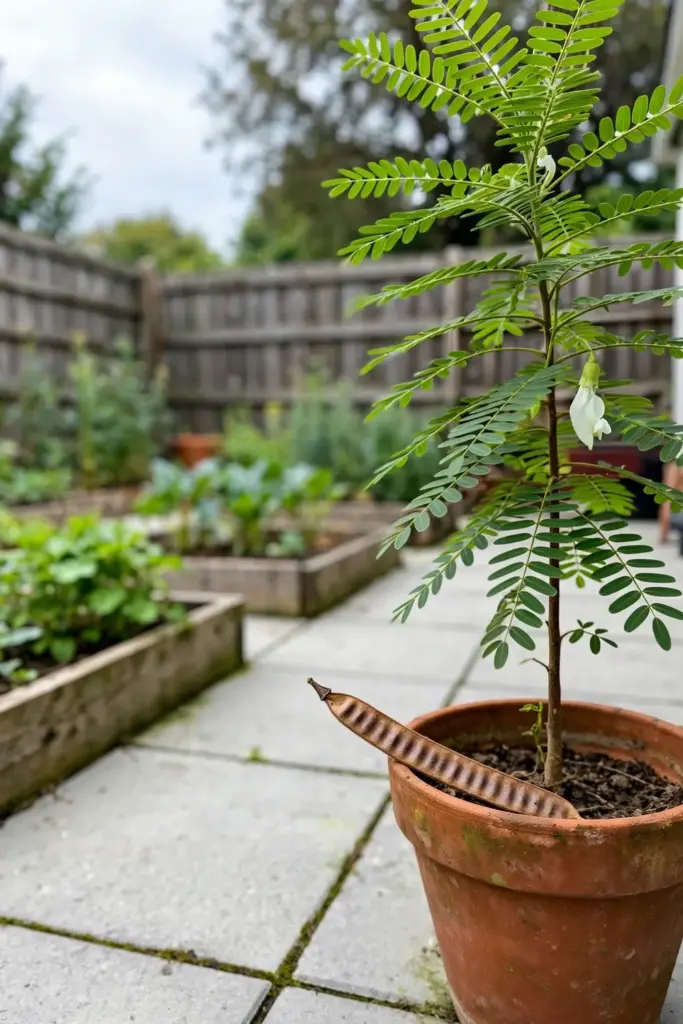
Florida gardeners should follow that rating and keep the tree in a pot or skip it entirely. Gardeners elsewhere should check their own local lists before planting outdoors, because a plant that behaves in one region can run in another. A quick check with a local extension office or invasive plant list costs minutes and prevents years of cleanup.
The container option is the honest middle path. A potted tree cannot seed into a ditch, a wetland, or a neighbor’s field. Pick up fallen flowers and pods, compost them, and never dump prunings or pods into green waste that leaves the garden uncontrolled.
17. Keep Sesbania Grandiflora Away from Chickens and Limit Livestock Feed
Keep Sesbania grandiflora away from chickens. The ECHO plant information sheet for Sesbania grandiflora notes antinutritive substances in the plant, records over 30 percent crude protein in the foliage, advises against feeding it to chickens or other nonruminants, and recommends limiting ruminant intake to 30 percent of the diet.
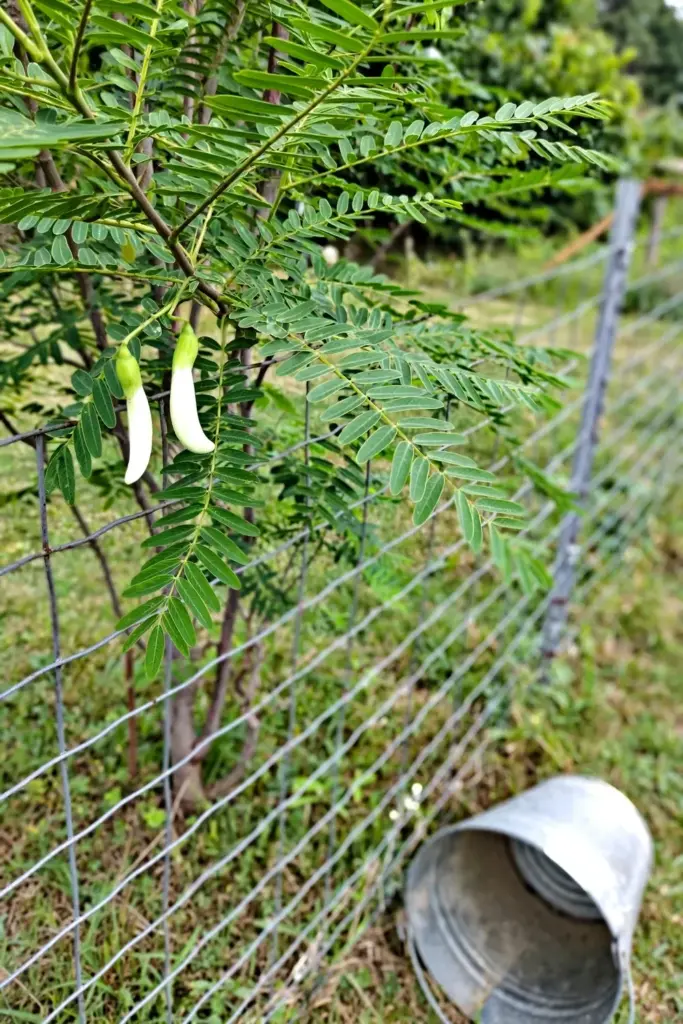
Treat the kitchen and the feed bucket as two separate rules. Cooked flowers, young leaves, and young pods belong to the kitchen, where cooks across Southeast Asia have eaten them for generations. Raw seed stays out of the kitchen and out of chicken feed. No verified report in the sources checked establishes Sesbania grandiflora seed poisoning in people. That is as far as the checked sources go.
Grow the tree for flowers and leaves, not for seed feed. A gardener who wants livestock fodder has safer legume options with longer feeding records. Ask a local extension office before feeding any part of this tree to animals.
18. Fix the 4 Problems That Actually Bother This Tree
Fix four problems, and Sesbania grandiflora mostly looks after itself. The tree carries few pest troubles, and most failures trace to water, wind, or seed handling rather than to insects.
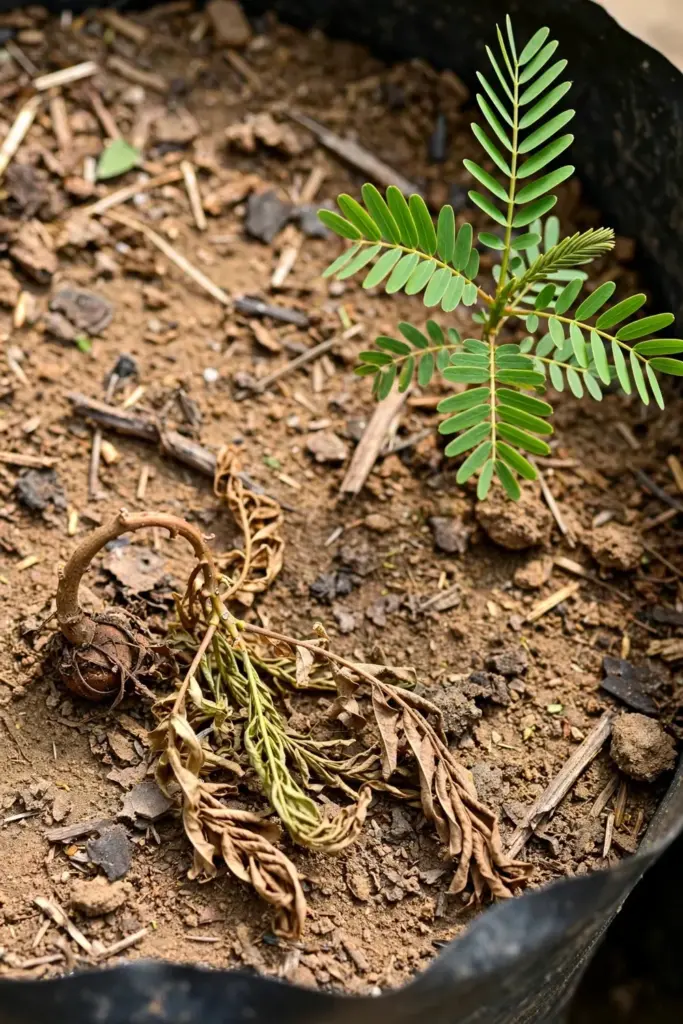
Damping-off collapses seedlings at the soil line. The fix is prevention: free-draining mix, pots with drainage holes, and watering only when the top of the mix dries. A collapsed seedling cannot recover, so sow a few extra seed and start again in fresh mix.
Pod borers damage seed crops by boring into developing pods. The fix is timing. Harvest pods young for the kitchen, and pick dry pods promptly for seed instead of leaving them on the tree for weeks. A pod left hanging becomes a borer hotel.
Weak soft wood breaks in strong wind. The fix is shelter and light pruning, as the site and pruning sections describe. Stake a young tree, and cut out weak crossing branches before a storm does it for you.
Short life ends every tree. The tree is short-lived, so a tree that slows down after several seasons is following its nature, not failing your care. Sow a replacement each year, and the next tree is already growing when the old one fades.
19. Plan Succession Planting for a Short-Lived Tree
Sow a replacement Sesbania grandiflora every year. The same Plants For A Future database calls it a short-lived and fast-growing plant, and a short-lived tree rewards the gardener who plans for the next one instead of mourning the last one.
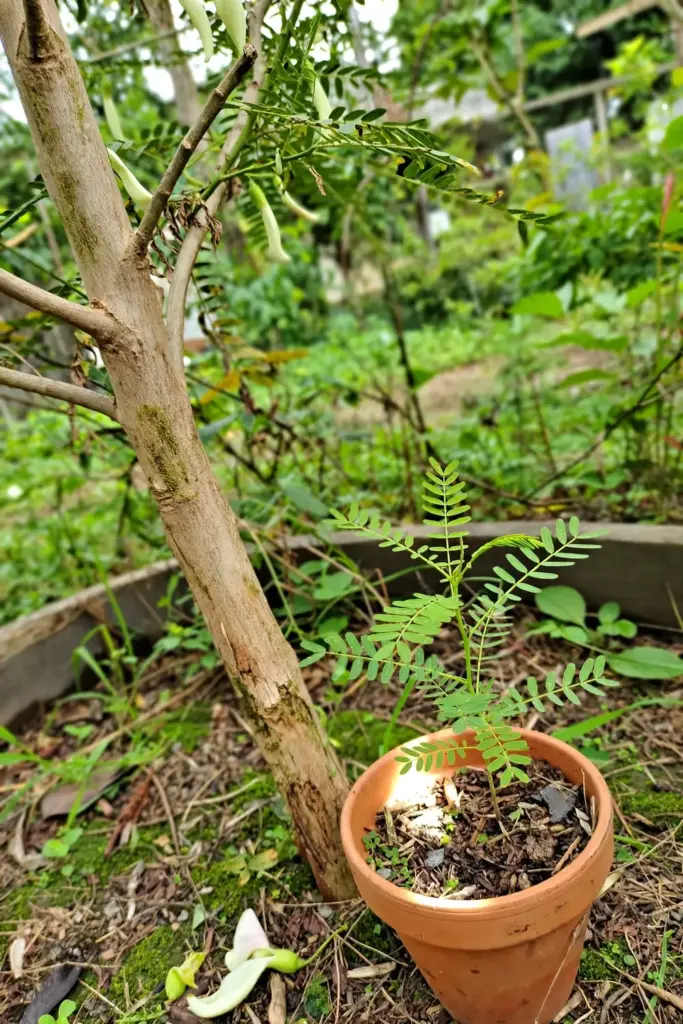
Succession planting keeps flowers coming without a gap. Sow a few seed each spring, even while the old tree still flowers. The young tree grows in a pot or a spare corner, and it steps into the sunny spot when the old tree fades. Two trees in different years beat one tree left to age alone.
Keep your own seed line going. Save seed from your best tree, the one with the flower color and vigor you want, and label it with the year. Your own saved seed adapts to your garden season by season, and it costs nothing but a paper envelope.
20. Grow Sesbania Grandiflora as an Annual in Temperate Gardens
Grow Sesbania grandiflora as an annual where winters freeze. This is how to grow Sesbania grandiflora in a temperate garden without a greenhouse: sow after the last frost, grow hard through summer, harvest flowers until the first cold nights, then compost the tree before frost kills it.
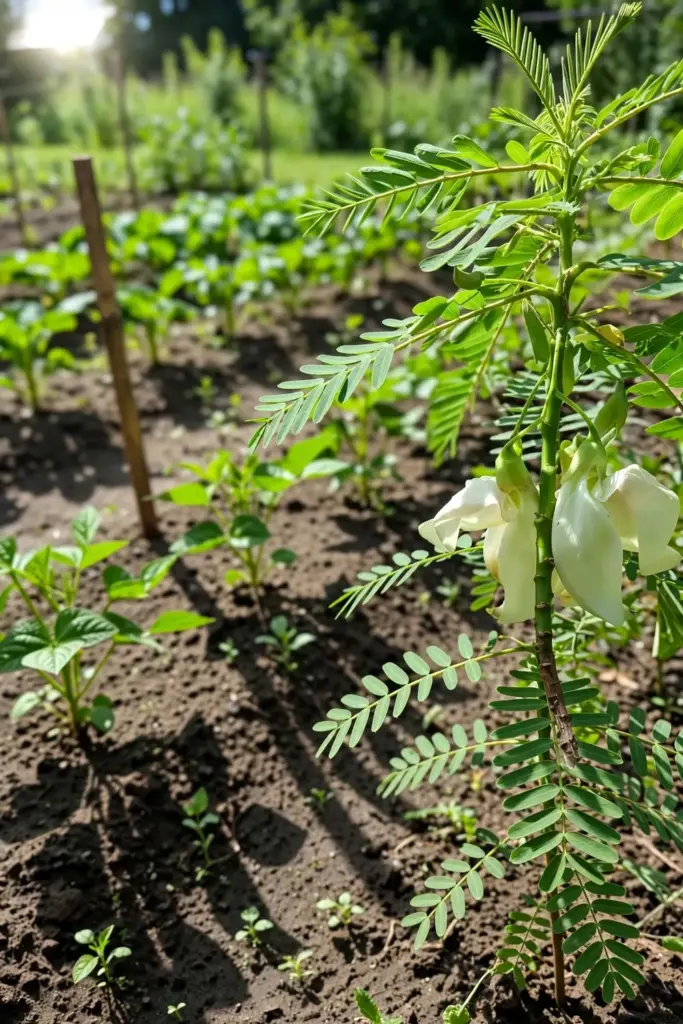
The annual plan works because the tree flowers in its first year. A seed sown in late spring in warm soil can flower by late summer, and the harvest window runs until the cold returns. The tree never reaches its full 12 m in one season, so a smaller garden can host it without fear.
Sow a second batch two weeks after the first. The staggered pair spreads the harvest and covers a loss. Keep the annual bed in full sun, water through dry spells, and cut the trees down before the first frost so the bed is clear for the next crop.
21. Run a Simple Yearly Routine for Sesbania Grandiflora
Run one yearly routine, and Sesbania grandiflora stays productive with little fuss. Spring starts the cycle: sow seed, harden seedlings, and set them out after the last frost. Summer carries the growth: water through dry spells, harvest flowers at dawn, and cut green manure before it seeds.
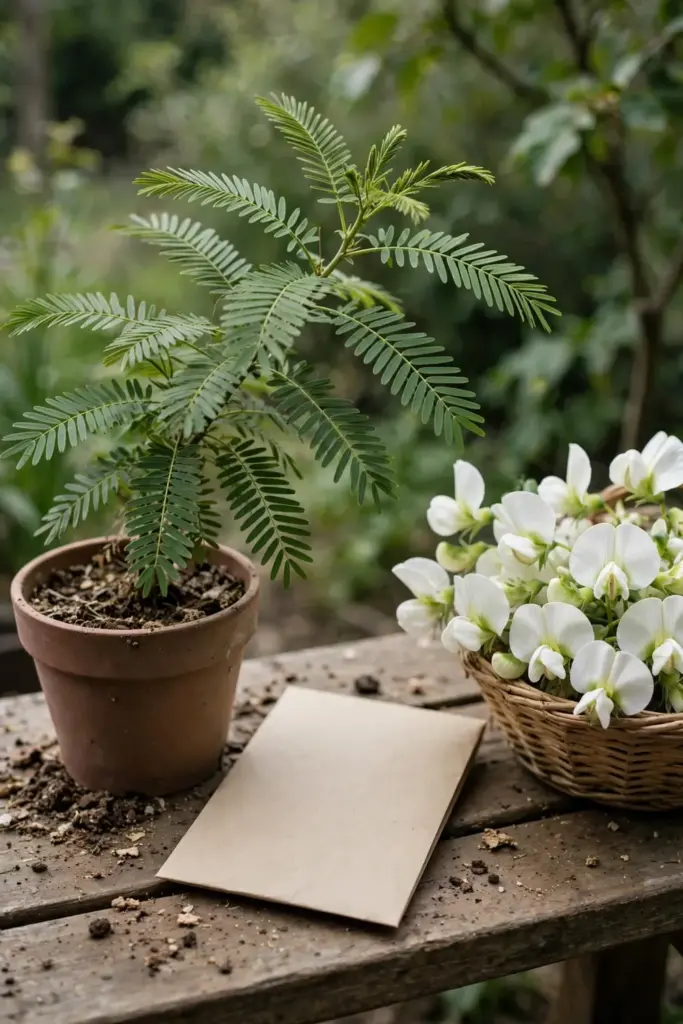
Autumn closes the outdoor season: save seed from dry pods, move potted trees indoors, and compost annual trees before frost. Winter is rest. Water potted trees sparingly, and leave in-ground trees in warm climates to their own rhythm. A tree that drops leaves in a cool indoor winter is resting, not dying.
Write the routine on one card and keep it with the seed envelopes. Sow, water, harvest, save seed, move indoors. Five moves carry the whole year, and the card means next spring starts without a fresh round of guessing.
Frequently Asked Questions
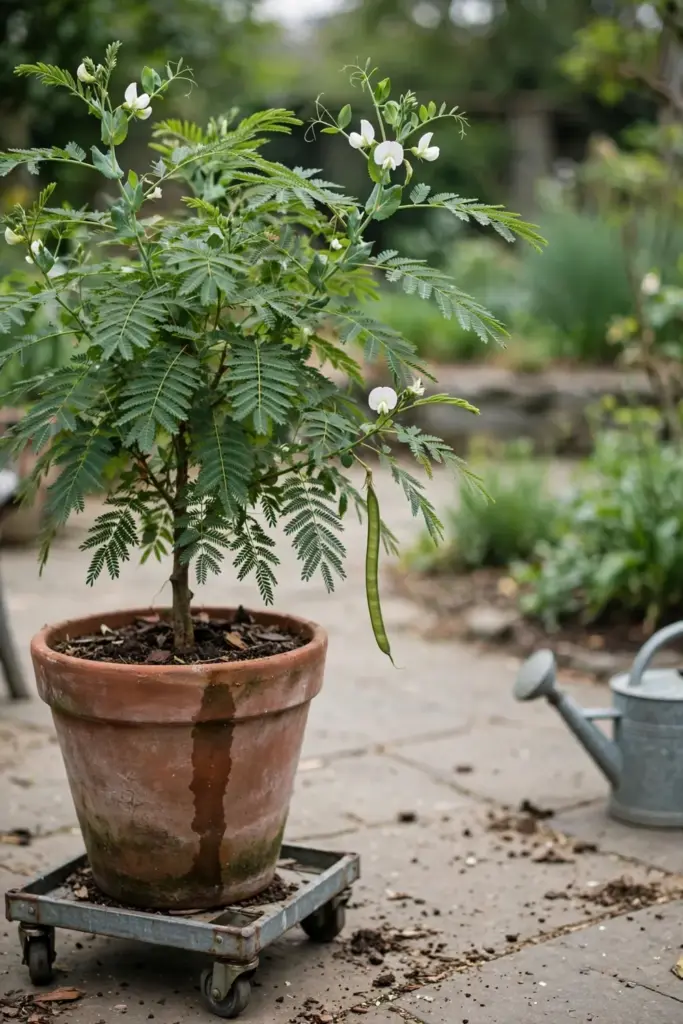
Yes. A large pot with drainage holes and free-draining mix grows a smaller tree that still flowers. Prune once a year to hold the canopy, water more often than in-ground trees, and move the pot indoors before the first frost. The pot also contains the tree where regulators warn about spread, so it suits Florida gardeners and temperate gardeners alike.
Cooked flowers, young leaves, and young pods are eaten across Southeast Asia, and the ECHO plant information sheet records all three as food. Pick them young and cook them the same day. Keep raw seed out of the kitchen, and keep the plant away from chickens. Treat it as food, not as medicine, and take any medical question to a clinician.
The University of Florida IFAS Assessment rates it High Invasion Risk in Florida, with a predictive tool score of 10, and does not recommend it there. That rating is Florida-specific. Gardeners elsewhere should check local invasive plant lists before planting outdoors, and gardeners anywhere can grow it in a pot to stop seed from escaping into the wider landscape.
Plants For A Future describes a tree to 12 m tall by 10 m across. In practice, a tree in warm open ground reaches several meters in its first years, and ECHO reports 1.8 m in 50 days. Pot size and pruning set the height of a container tree, and a temperate annual stays far smaller than a tropical tree.
Seedlings usually collapse from damping-off, a rot at the soil line caused by wet mix. Free-draining mix, pots with drainage holes, and watering only when the top of the mix dries prevent it. A collapsed seedling cannot recover, so start again in fresh mix. Sow a few extra seed each time, and check the soak step, because hard unsoaked seed germinates slowly and unevenly.
Seed is the reliable path. Cuttings are not the standard propagation method for this tree, and no verified cutting timetable appears in the sources checked. Sow seed after a 24-hour soak instead. Seed-grown trees flower in their first year in warm climates, so the fast route is also the dependable one.
Plant Turi for Flowers, Not for Forever
Plant turi for flowers, not for forever. This is how to grow Sesbania grandiflora as a working garden plant: a fast tree, a cooked flower, a green manure that earns its bed, and a short life that asks for a replacement each spring. The species check comes first, the frost plan comes second, and the harvest comes all summer.
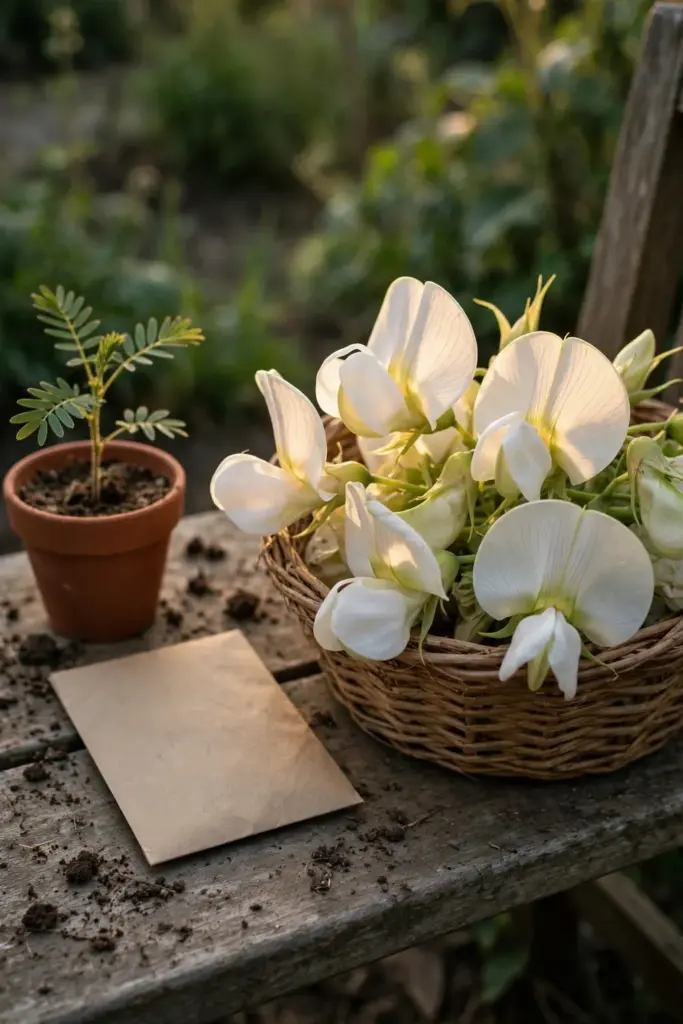
Start with one packet of correctly named seed, one soak, and one sunny spot. The tree does the fast part on its own. Your job is the container or the frost date, the dawn harvest, and the envelope of saved seed that starts next year.