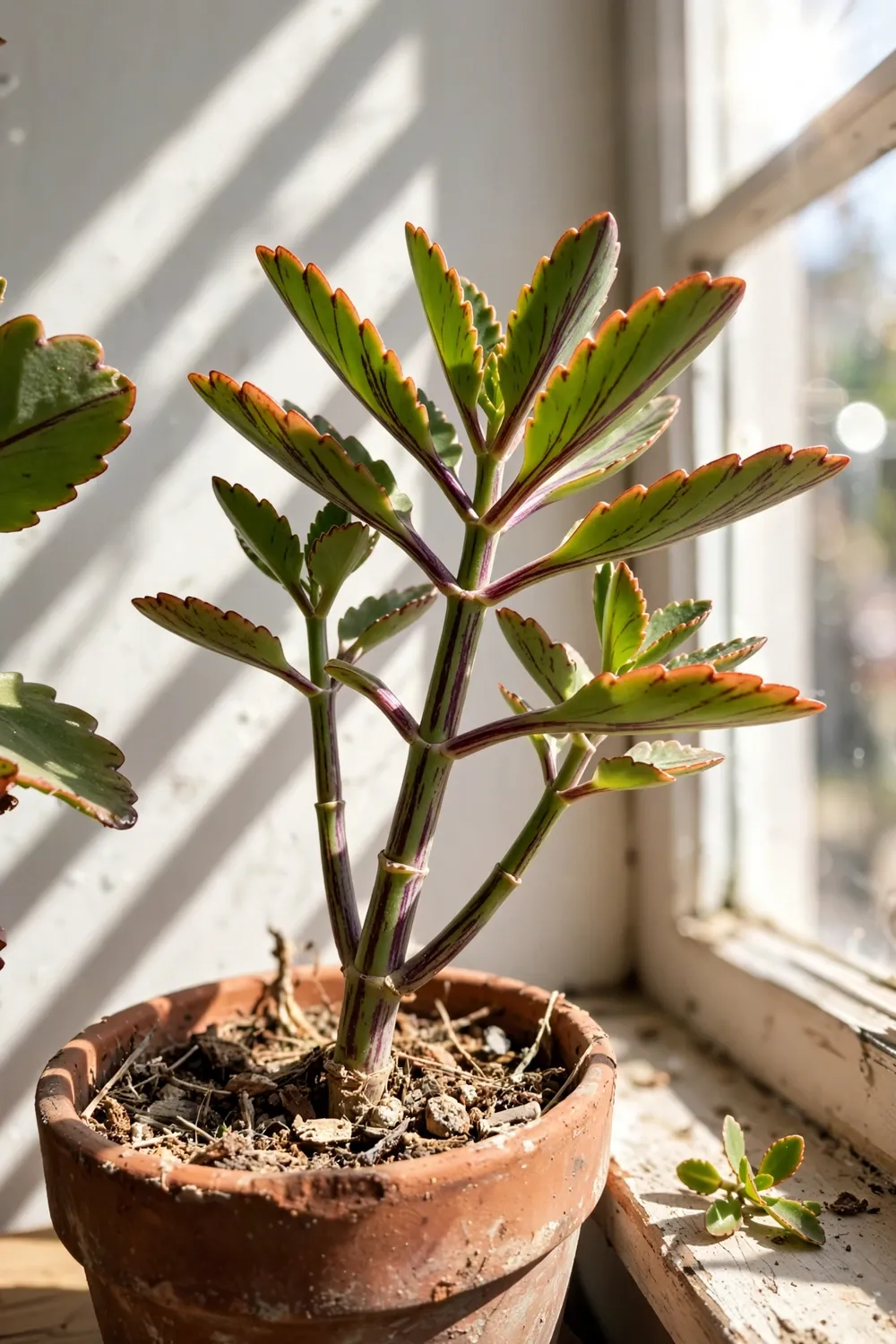

Lay one leaf on damp mix and plantlets root along its edge. That is how to grow Bryophyllum pinnatum, the succulent Indonesians call sosor bebek, and one leaf can start a whole shelf of pots. Give it bright light, a fast-draining mix, and nights above 10 degrees, and the plant handles the rest.
Start with one leaf or one potted plant. A leaf laid flat on mix grows plantlets at each notch. A potted plant grows upright stems and drops plantlets into the same pot. Both routes end with new plants, and neither needs special gear.
Botanists call the plant Kalanchoe pinnata. Bryophyllum pinnatum is the older name on many labels, and nurseries still sell it under both. Sosor bebek is the Indonesian name. English names include life plant, cathedral bells, miracle leaf, and air plant.
| Spec | Detail |
|---|---|
| Botanical name | Kalanchoe pinnata (Lam.) Pers., family Crassulaceae |
| Synonym | Bryophyllum pinnatum, also Bryophyllum calycinum |
| Indonesian name | Sosor bebek |
| English names | Life plant, cathedral bells, miracle leaf, air plant |
| Plant type | Succulent perennial, grown in a pot in temperate climates |
| Stems | Stout, erect, hollow, to 2 m when flowering |
| Leaves | Opposite, simple when young, then 3 to 5 leaflets, leaflets to 20 cm long and 12 cm wide, scalloped margins |
| Flowers | Hanging bells in large panicles, winter and spring, corolla to 5 cm |
| Cold floor | Damage below 10 degrees |
| Outdoors | USDA zones 10a to 11b only |
| Main propagation | Leaf-edge plantlets, also stem cuttings and offsets |
| Safety | Toxic to dogs and cats, keep away from pets and children |
1. Confirm the Name on the Label Before You Buy One
Buy Kalanchoe pinnata, not a name that sounds close. The botanical name is the only label that settles which plant you take home.
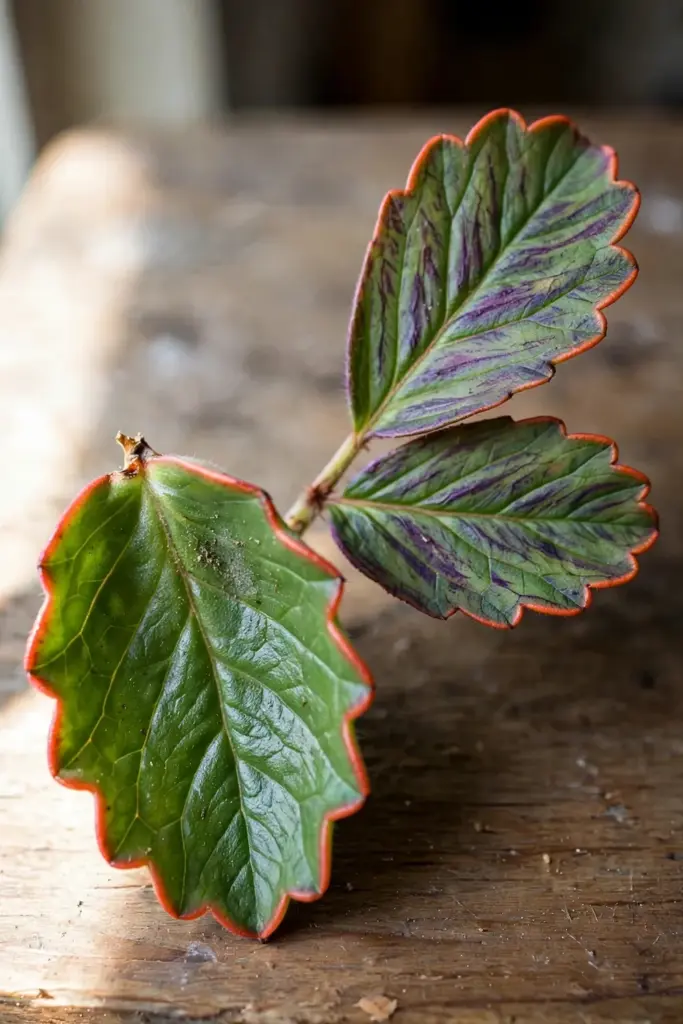
Kew lists Kalanchoe pinnata as the accepted name, with Bryophyllum pinnatum as its homotypic synonym and Bryophyllum calycinum as a further synonym, in the Kew Plants of the World Online page for Kalanchoe pinnata. Kalanchoe pinnata carries Bryophyllum pinnatum as a synonym. That single fact explains why one plant arrives under two Latin names. The same Kew page records the plant as native to Madagascar and introduced across tropical and subtropical regions, including Jawa, Sumatera, Sulawesi, Maluku, Florida, Hawaii, India, and the Philippines.
The plant looks unlike most succulents. Stems grow stout, erect, and hollow, and reach 2 m when the plant flowers, according to the World of Succulents page on Kalanchoe pinnata. Leaves sit opposite on the stem. Young leaves stay simple. Older leaves turn pinnately compound with 3 to 5 leaflets. Leaflets run oblong to elliptic, reach 20 cm long and 12 cm wide, and carry scalloped margins edged with orange-red. Plantlets form on those margins. Flowers hang in large panicles in winter and spring, with a green-to-pale-yellow calyx striped red-to-violet and a cylindrical greenish-white corolla that reaches 5 cm.
Sosor bebek is the Indonesian name for this same plant. Gardeners in other countries call it life plant, cathedral bells, miracle leaf, or air plant. Air plant also names an unrelated group of soil-free bromeliads, so the nickname alone never settles an identification. The botanical name does.
2. Give the Pot Bright Light Indoors, Full Sun Outdoors
Bright light keeps the stems short and the leaves thick. Dim light stretches the plant toward the window and thins the leaves.
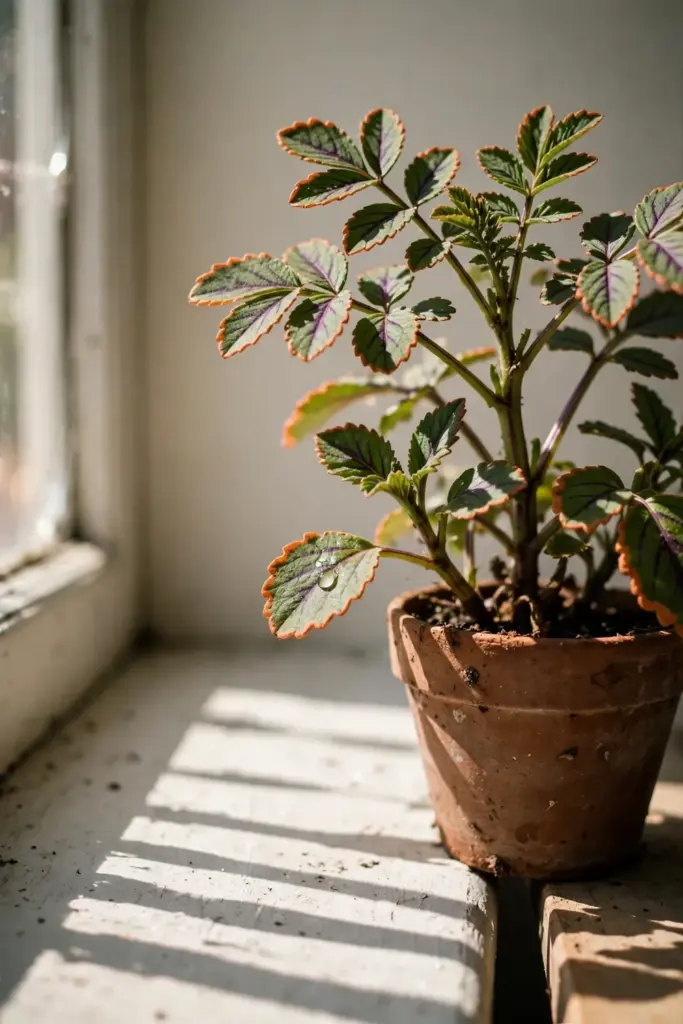
Outdoors, the plant grows best in full sun and appreciates partial shade on hot summer days. Indoors, set the pot near a window with indirect sunlight. A plant that stretches, pales, or drops lower leaves wants more light. Move it closer to the brightest window and turn the pot every few days so the stems grow straight. The same World of Succulents page gives this light guidance, and it matches the plant’s open, sunny native habit.
Direct afternoon sun through glass can scorch leaves in a hot climate. A sheer curtain, or a step back from the glass, softens the blow without starving the plant. Watch the leaf color. Leaves that hold a green base with a faint purple streak and an orange-red edge get enough light. Leaves that turn flat green and soft want more.
A dark winter room starves the plant even at a window. A small grow light lifts a dim corner, but no bulb replaces a bright window entirely. Start with the window. Add light only when the plant stretches despite the brightest spot.
3. Mix a Fast-Draining Succulent Mix for the Pot
The mix must drain fast and dry between waterings. Wet mix rots the stem base, and rot kills faster than drought.
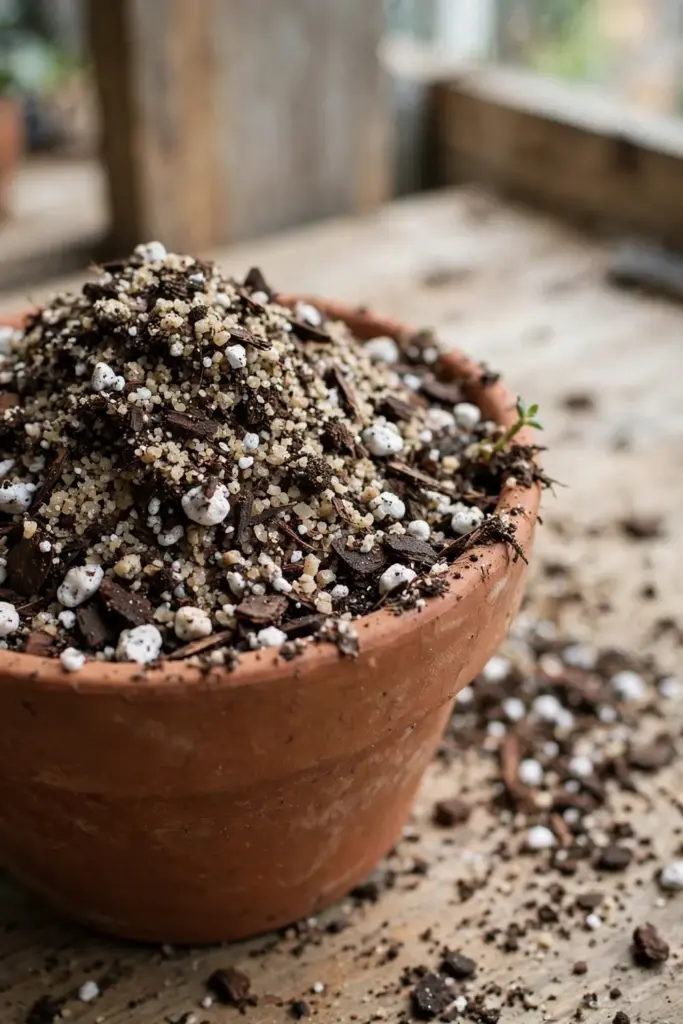
Use a commercial potting mix made for succulents. The same World of Succulents page recommends exactly that mix and warns that the plant dislikes wet feet. A mix that looks peaty and stays soggy needs help. Stir in a handful of perlite or coarse sand until water runs through fast and the surface dries within a day or two.
Every pot needs a drainage hole. A saucer under the pot catches runoff, and the saucer must empty after watering. A pot that sits in water soaks the mix from below and rots roots out of sight. Terracotta dries faster than plastic, so it suits a heavy-handed waterer. Plastic holds moisture longer, so it suits a dry home. Either works when the mix drains and the saucer stays empty.
4. Keep the Pot Above 10 Degrees All Year
Life plant lives outdoors all year only in USDA zones 10a to 11b, where winters stay mild. Everywhere else, grow it in a pot. That pot moves inside before cold nights.
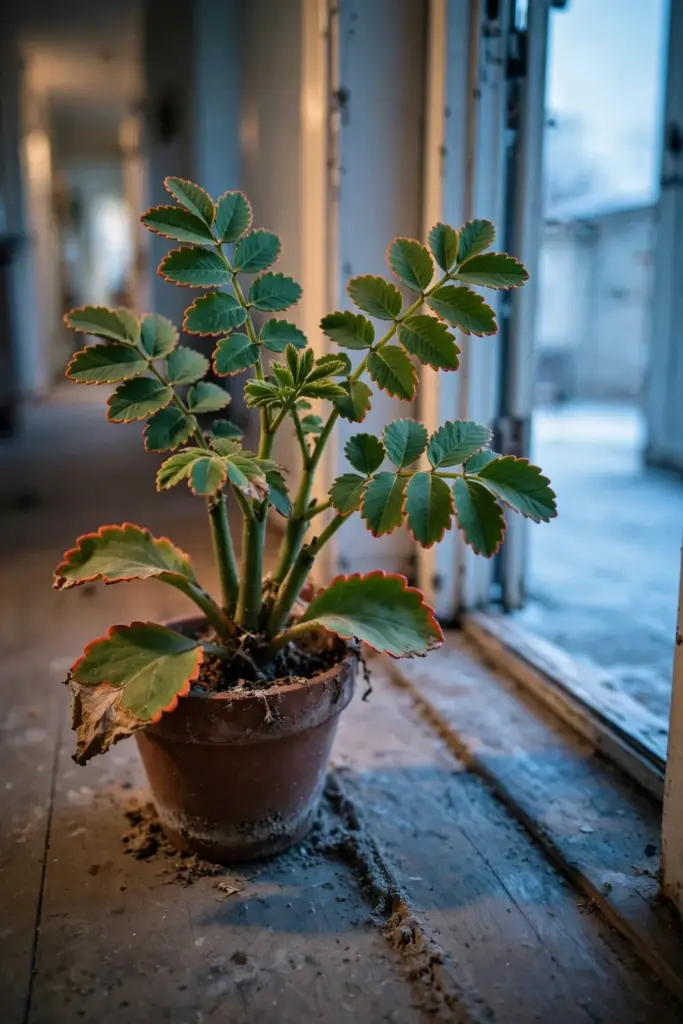
The plant thrives in heat and humidity and cannot handle frost. Its outdoor zones run 10a to 11b, with average minimum winter temperatures from 30 to 50 degrees Fahrenheit, according to the World of Succulents page on Kalanchoe pinnata. One frost can blacken leaves and collapse stems. A temperate gardener grows it outside through the warm months and brings it inside before nights fall toward 10 degrees.
Indoor winter care stays simple. Give the pot the brightest window. Cut watering back while growth slows. Hold fertilizer until spring. A plant that winters indoors still earns its place. The site’s 10 benefits of indoor plants lists what a windowsill plant gives back through the cold months.
5. Water Only After the Mix Dries Out
Water deeply, then wait until the mix dries. That single rhythm prevents most failures with this plant.
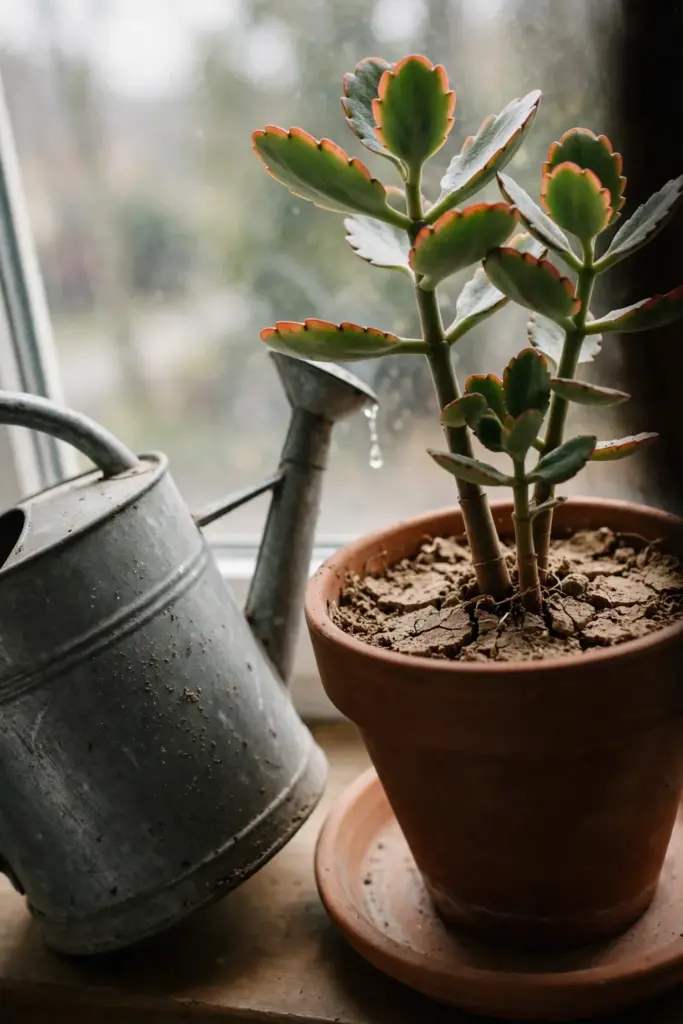
From spring to fall, water the plant thoroughly and let the soil dry between waterings, as the same World of Succulents page directs. Overwatering causes stem rot. A stem that turns soft and dark at the base sat too wet. In winter, reduce watering and give only enough to keep the leaves from shriveling. A plant that dries out recovers with one drink. A plant that rots rarely recovers at all.
Check the mix with a finger before every watering. Water when the top few centimeters feel dry, and skip the drink when the mix still feels damp. Pour slowly until water leaves the drainage hole, then empty the saucer. Aloe vera follows the same soak-and-dry rhythm. The site’s aloe vera guide covers the same watering habit for a second succulent.
6. Feed at Half Strength Every 2 Weeks in the Growing Season
Feed little and feed only while the plant grows. Heavy feeding burns roots and grows soft stems.
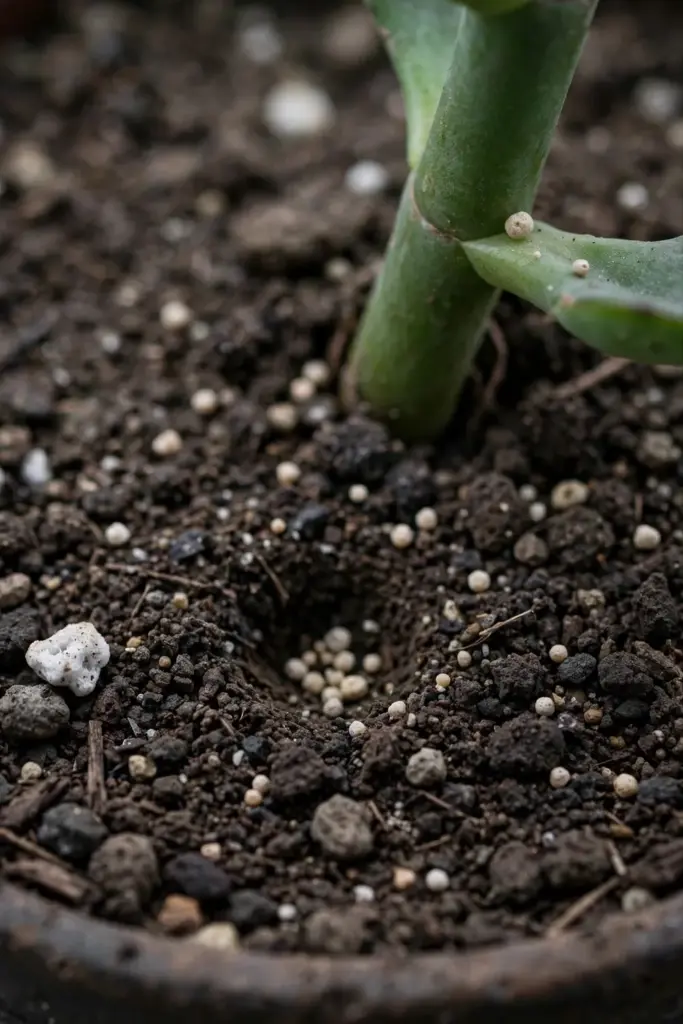
Use a balanced fertilizer diluted to half or quarter strength, applied every 2 weeks during the growing season, as the same World of Succulents page directs. A plant in fresh mix needs little extra food. A plant that grows in old mix for a second year appreciates the steady, weak feeds. Stop feeding in fall and winter. Growth slows, and unused fertilizer salts sit in the mix.
Skip feeding a stressed plant. A plant with soft stems, yellow leaves, or fresh repotting shock wants water and light first. Feed resumes when new leaves open firm and green. Weak and often beats strong and rare with this plant.
7. Grow New Plants from the Leaf-Edge Plantlets
A leaf grows its own babies. Each notch on a leaf margin holds a plantlet, and each plantlet can become a full plant.
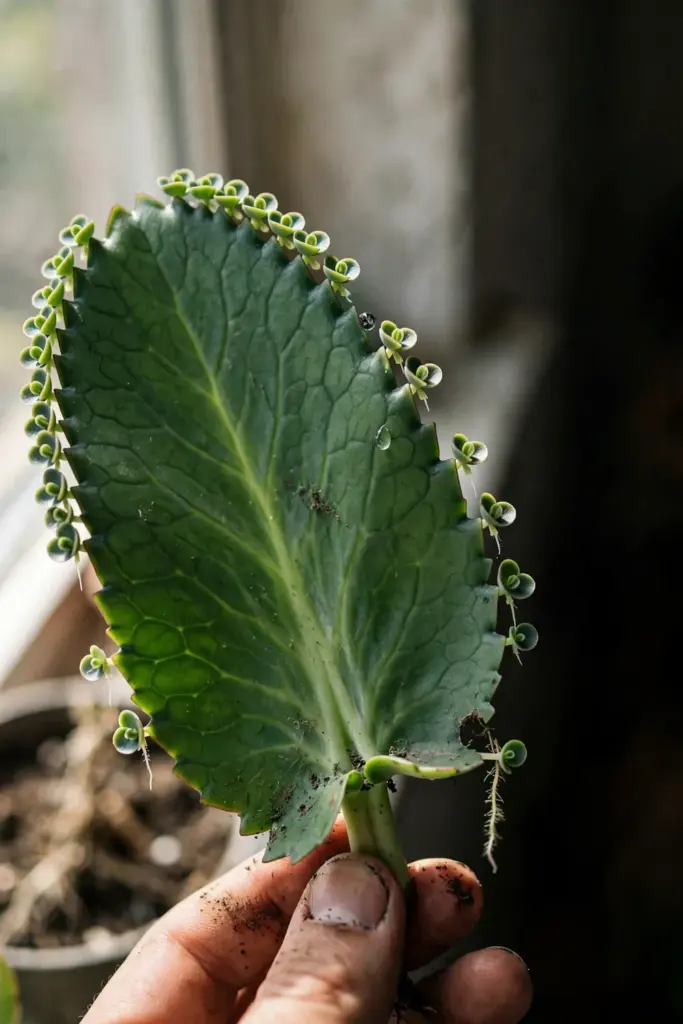
Plantlets form at the notches between the teeth of the leaf margin. Each plantlet grows its own tiny leaves and roots while still attached to the mother leaf. The plantlet drops when ready, or it lifts off with a light touch. I have learned to wait until a plantlet shows its own tiny roots before I lift it from the leaf. A plantlet without roots stays on the leaf until it grows them.
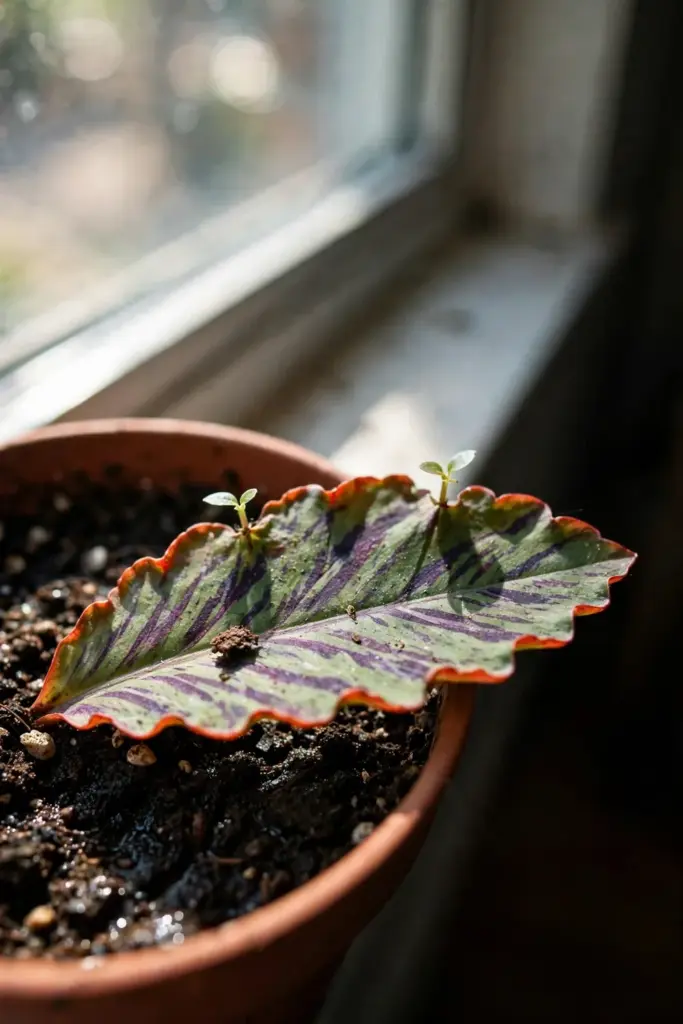
Lay a healthy leaf flat on damp mix and press it down lightly so the margin touches the surface. Keep the mix lightly moist and give bright indirect light. Check weekly. Plantlets with roots pot up into their own small pots. Plantlets without roots stay put. One leaf can fill a tray, so start with one leaf and learn the rhythm before you scale up.
Pot rooted plantlets into succulent mix at the same depth they sat on the leaf. Water lightly and keep the pot out of direct sun for the first week. New leaves that open firm mean the plantlet settled. A plantlet that wilts wants shade and a little more moisture, not more fertilizer. That is how to grow Bryophyllum pinnatum from a single leaf.
8. Root Stem Cuttings and Offsets in Spring
Stem cuttings and offsets root fast in spring. Use them when you want a bigger plant sooner than a plantlet gives you.
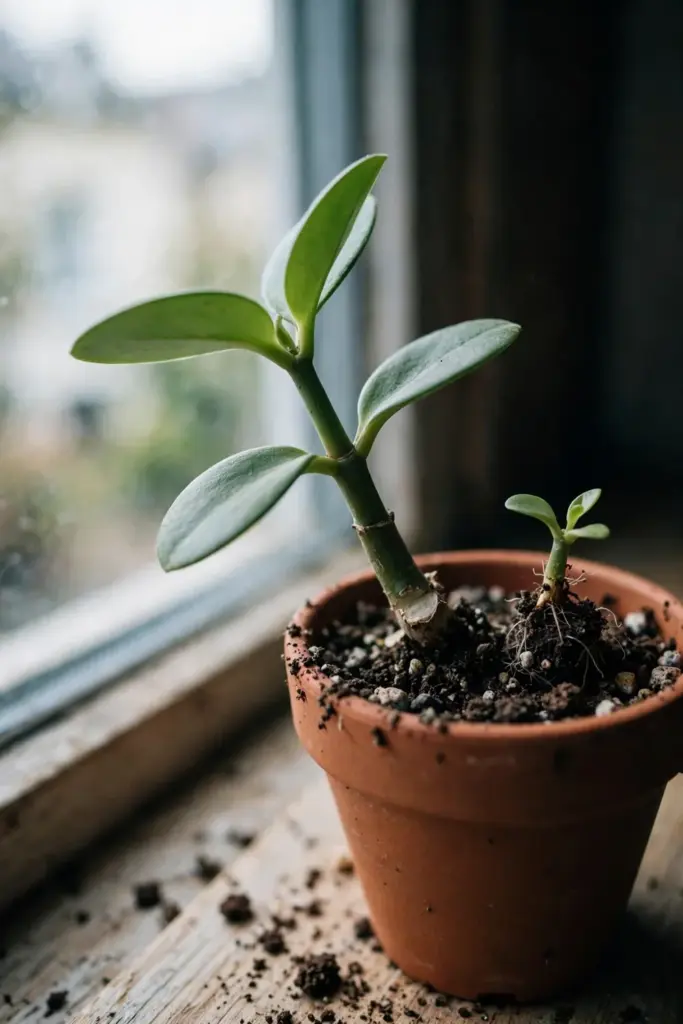
Cut a healthy stem with a clean knife or shears. Set the cutting in dry succulent mix and wait for roots before watering hard. An offset already carries roots, so it settles fastest of all. Pull it from the mother plant with its roots attached and pot it straight into mix. The same World of Succulents page lists spring as the best time to take cuttings and separate offsets, and spring and summer as the right window for sowing seed.
Seeds exist, and they run slowest of the three routes. Sow seed in spring or summer in well-drained mix and keep the mix lightly moist until sprouts show. No published day count for life plant seed germination was available, so this article gives no day count for sprouting. The site’s succulent seed guide covers seed starting in depth for gardeners who want the seed route.
9. Root Plantlets in Water, Then Pot Them
Water rooting works and shows the roots. Move the plantlet to mix as soon as the roots look strong enough to hold the plantlet upright.
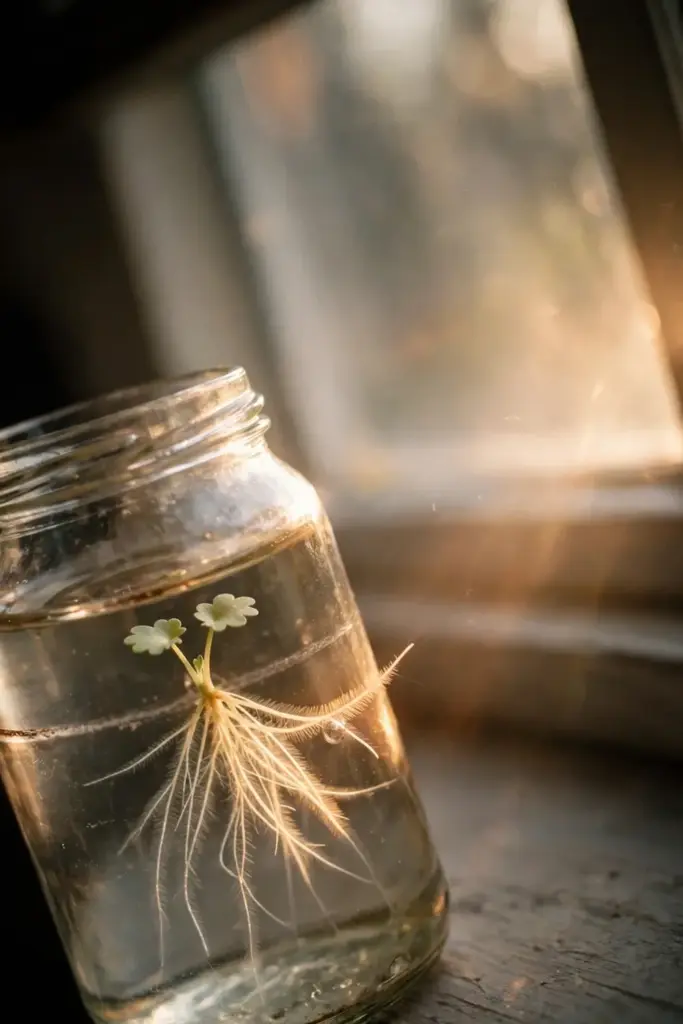
Pick a plantlet that already shows tiny roots, or a leaf that carries several plantlets. Rest the plantlet on the rim of a small jar so only the root tips touch the water. Change the water when it clouds. Roots lengthen in the jar where you can watch them. Pot the plantlet into succulent mix once the roots look strong.
Keep the fresh mix lightly moist for the first week, then switch to the normal soak-and-dry rhythm. A plantlet that flops after potting wants shade and steady moisture for a few more days. A plantlet that holds upright and opens new leaves settled. Water rooting suits a kitchen windowsill project, and it shows exactly how a leaf becomes a plant.
10. Repot One Pot Size Up Every 2 Years in Spring
Repot every 2 years in spring and go up one pot size. Fresh mix and a little more room keep growth steady.
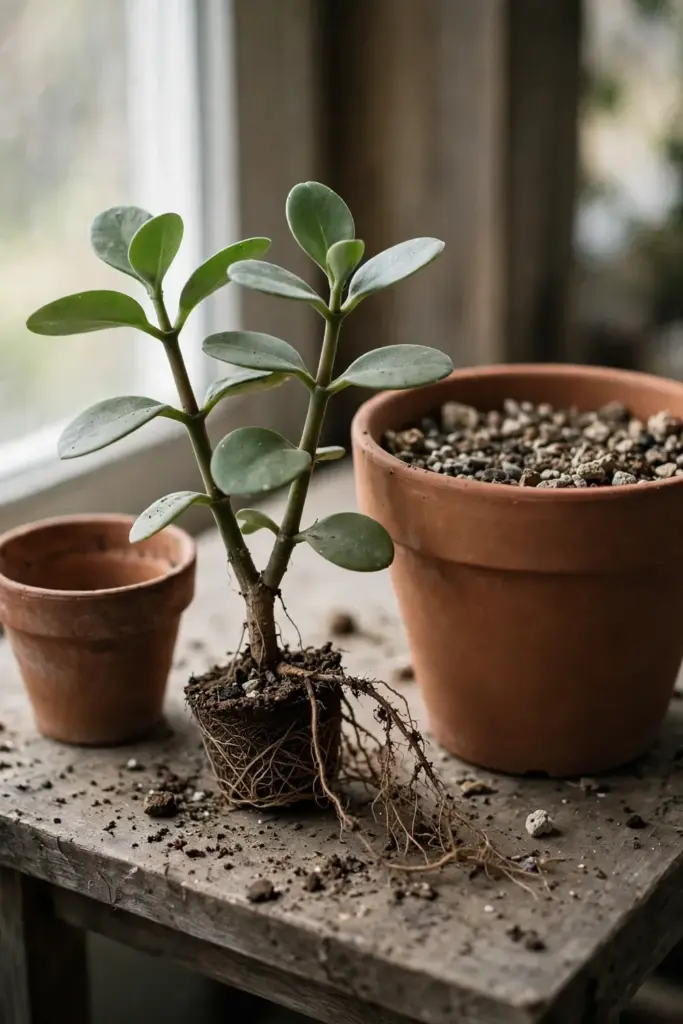
The same World of Succulents page gives this repotting rhythm, and it fits the plant’s slow, steady growth. A plant that dries out within a day, or pushes roots through the drainage hole, wants a bigger pot. A plant that still holds moisture for days stays put. Choose a pot one size larger, no more. A pot far too large holds wet mix around small roots and invites rot.
Tip the plant out and shake off loose old mix. Set it at the same depth in fresh succulent mix. Firm the mix gently and hold water for a few days while disturbed roots settle. Resume the normal soak-and-dry rhythm after that pause. Repotting in spring gives the plant a full growing season to fill the new pot.
11. Prune the Tall Flower Stalk After Blooming Ends
Cut the flower stalk at the base once the bells fade. The plant then puts energy back into leaves and new stems.
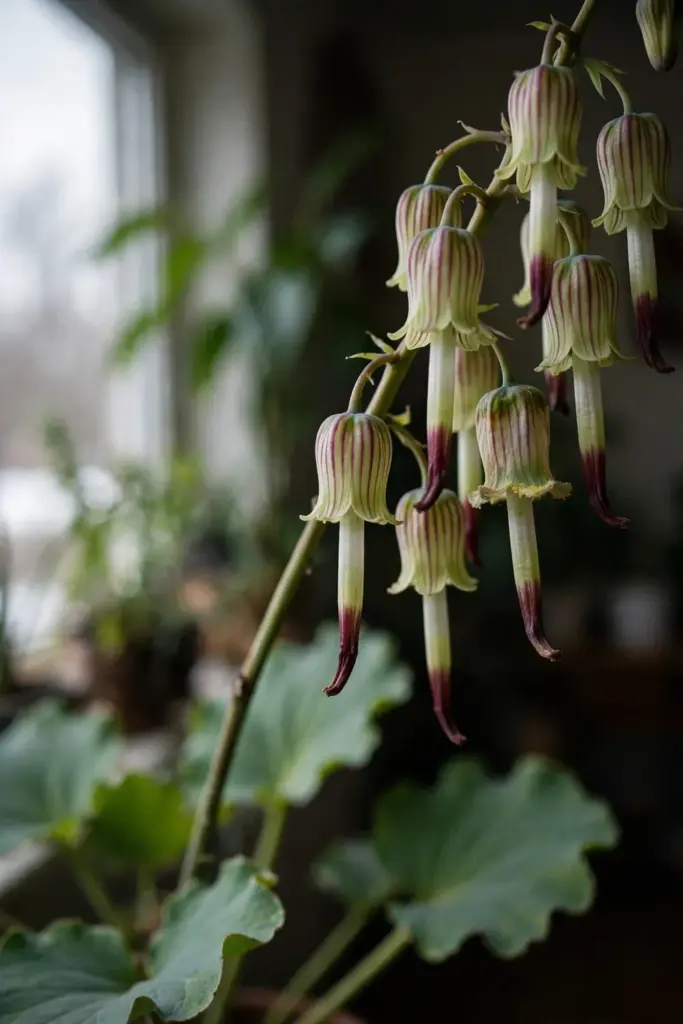
Flowers arrive in winter and spring on a tall stalk that can lift the plant to 2 m, according to the same World of Succulents page. The bells hang in a large panicle, with a green-to-pale-yellow calyx striped red-to-violet and a cylindrical greenish-white corolla with a maroon exserted portion. A plant that never flowers usually wants more light. Move it to the brightest window and wait a season before you judge it.
Cut the spent stalk with clean shears. Cut leggy stems back to a leaf pair in spring, and the plant branches from the cut. A plant that grows one bare stem with a tuft at the top wants stronger light and a harder prune. Keep the prunings in a bag for the bin, never in the compost heap, since each leaf can carry plantlets.
12. Inspect for Mealybugs and Scale Once a Month
Check leaf joints and stem bases once a month. Mealybugs and scale settle there first, and early wiping stops a spread.
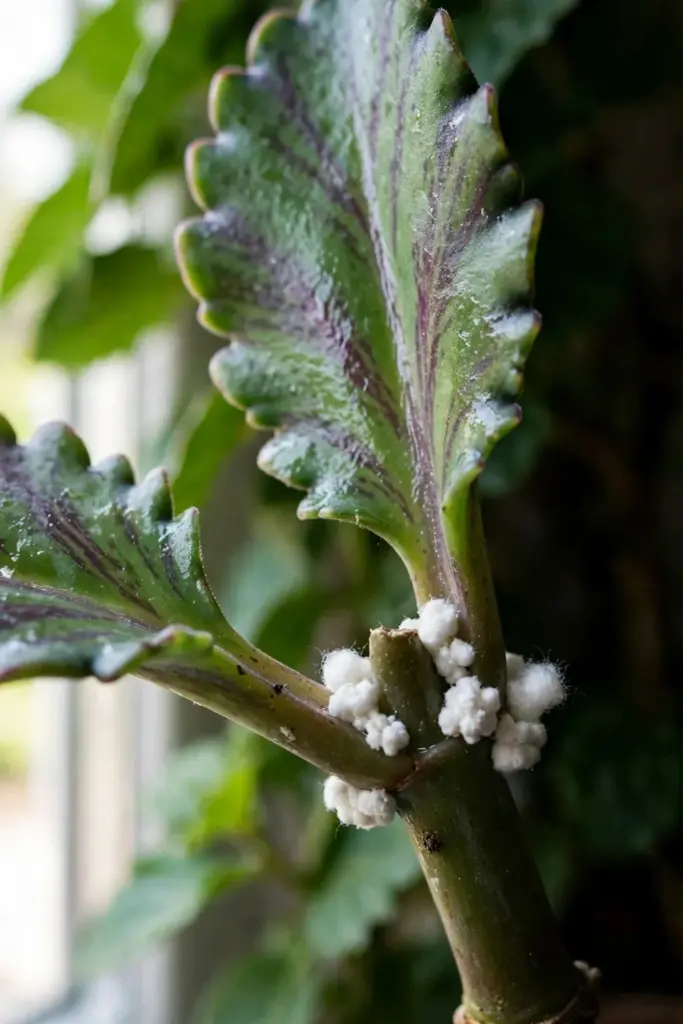
Mealybugs look like small white cottony clusters tucked into leaf joints. Scale looks like small brown bumps fixed to stems and leaf undersides. Wipe off what you see with a damp cloth, then repeat weekly until the joints stay clean. Move an infested pot away from other plants until the pests stop coming back.
Prevention beats wiping. Space pots so leaves dry fast after watering. Keep a new plant apart from the old ones for a while and check it before it joins the shelf. A plant that arrives with pests never joins the shelf at all.
A soft black stem base means rot, not pests. Cut above the rot into firm green tissue, let the cut end dry for a few days, and set the healthy top in fresh dry mix. A plant that keeps rotting after two tries sat too wet. Fix the watering rhythm before you try a third cutting.
13. Keep the Plant Away from Pets and Children
Keep life plant out of reach of pets and children. Every part carries bufadienolides, the compounds behind the toxicity.
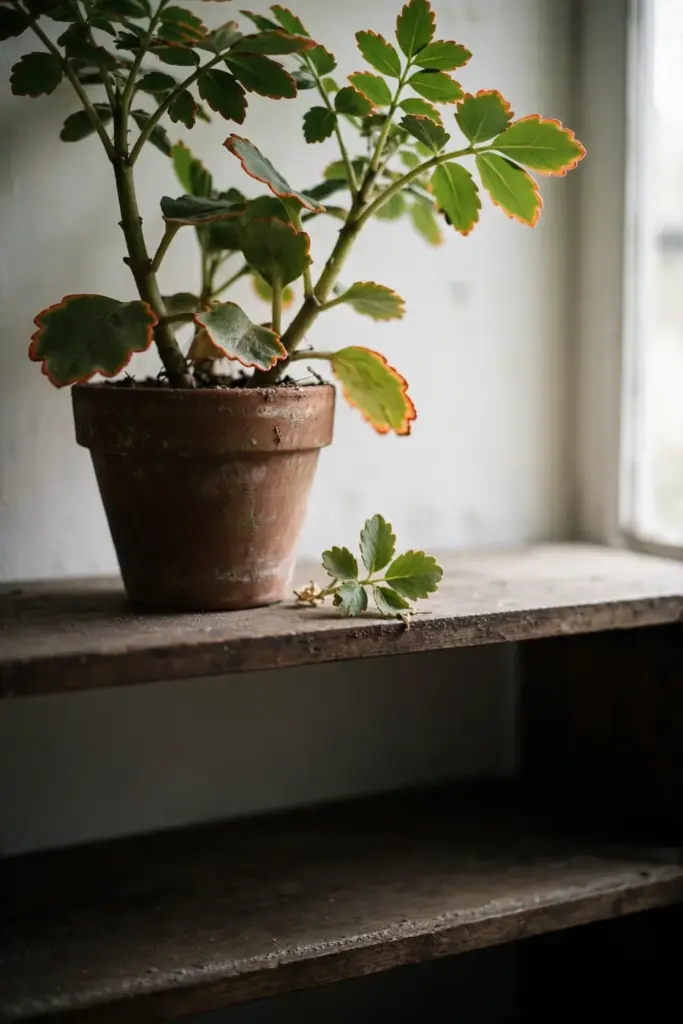
The ASPCA lists Kalanchoe as toxic to dogs and cats, with bufodienolides named as the toxic principle and vomiting, diarrhea, and abnormal heart rhythm as the clinical signs, in the ASPCA page on Kalanchoe toxicity. Bufadienolides disrupt heart rhythm in dogs and cats. A pet that chews any part of the plant needs a veterinarian fast. The ASPCA lists its Poison Control line at (888) 426-4435 for suspected ingestions.
Practical steps keep the risk low. Set the pot on a high shelf or in a room pets never enter. Pick up fallen leaves and plantlets the day they drop. Keep cuttings and prunings in a closed bag until bin day. Do not eat any part of this plant. Traditional uses exist in several countries, and the same World of Succulents page notes folk-medicine use, but this article treats life plant as an ornamental and gives no preparation and no dose. Health questions belong to a clinician, not to a gardening page.
14. Keep Fallen Plantlets Out of the Garden
Never toss plantlets or prunings into the garden or compost heap. Each one can root and start a patch you did not plan.
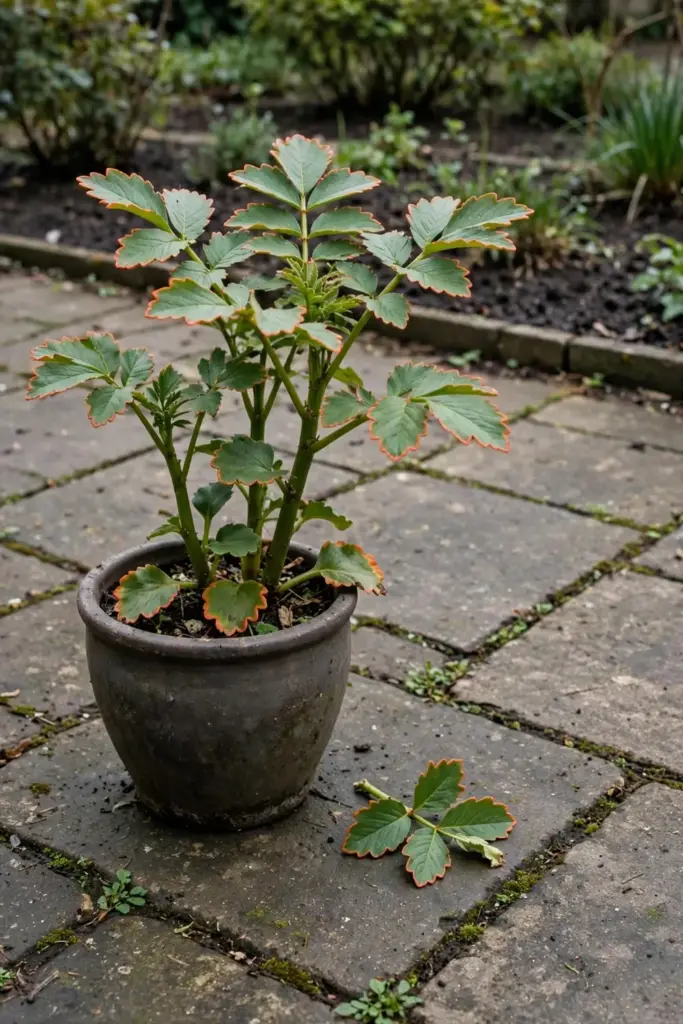
The University of Florida IFAS assessment for this species concludes with two warnings, “Caution, manage to prevent escape” and “Invasive and not recommended by IFAS faculty,” in the UF IFAS status assessment for Kalanchoe pinnata. Kew records the plant as introduced in Florida, Hawaii, and across tropical Asia, including Jawa and Sumatera. A plant that spreads by falling plantlets needs containment, not open soil.
Keep the pot on a paved surface or a stand, never on open soil. Pick up fallen plantlets from the pot surface and the floor. Bag prunings and bin them. In zones 10a to 11b, keep the plant in a pot even outdoors, and keep the pot off bare earth. A gardener who follows those four habits grows the plant without feeding an escape.
15. Tell Life Plant Apart from Mother of Thousands
Three different plants share this plant’s nicknames. Check the botanical name before you buy, and check the leaves before you believe a label.
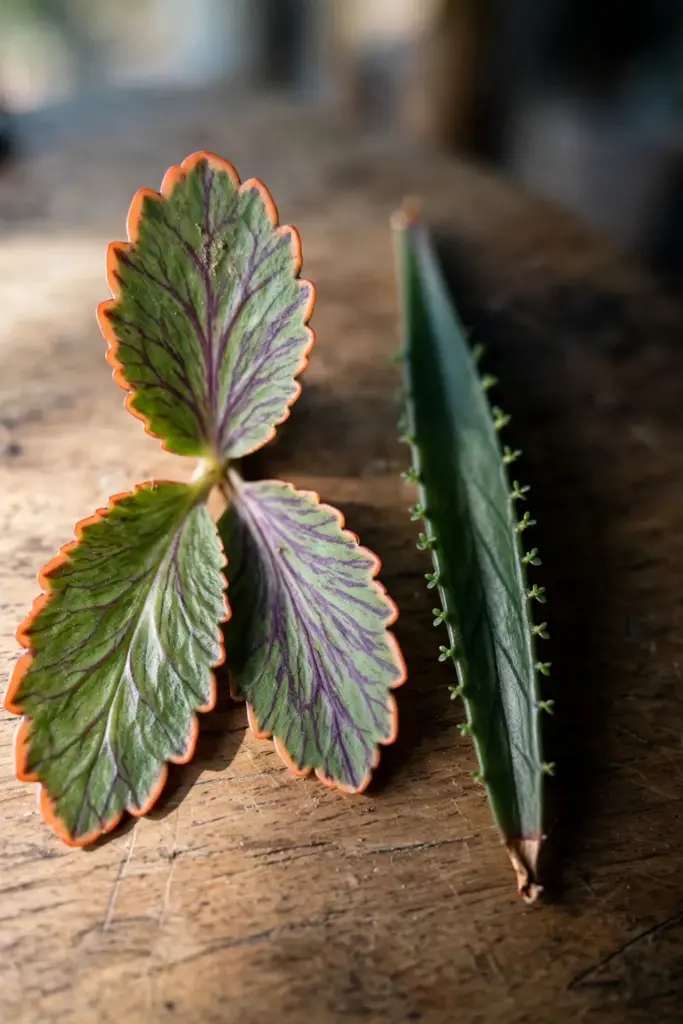
| Plant | Leaves | Flowers and growth | Name trap |
|---|---|---|---|
| Life plant, Kalanchoe pinnata | Broad leaves, simple when young, then 3 to 5 leaflets, scalloped margins, plantlets at the notches | Tall panicle of hanging bell flowers in winter and spring, stems to 2 m | Sold as air plant, which also names Tillandsia |
| Mother of thousands, Kalanchoe daigremontiana | Narrow leaves that stay single, plantlets along the whole margin | Tall stalk with bell flowers | Both plants get called mother of thousands |
| Florist kalanchoe, Kalanchoe blossfeldiana | Thick oval leaves, no leaf plantlets | Dense clusters of small flowers | Sold as kalanchoe, same genus, different bloom |
| Air plant, Tillandsia species | Narrow strappy leaves, no succulent leaves, no plantlets | Small flowers from the rosette center, grows without soil | Air plant is a nickname, not a species |
Life plant and mother of thousands both drop plantlets, and both get called mother of thousands at garden centers. The leaves separate them. Life plant leaves broaden and split into leaflets as the plant matures. Mother of thousands keeps narrow single leaves with plantlets along the whole edge. Florist kalanchoe carries no leaf plantlets at all and sells for its flower clusters. Tillandsia grows without soil and shares only the nickname. A label that shows only a nickname proves nothing. A label that shows the botanical name settles the purchase.
16. Fix Yellow Leaves, Stretch, and Rot in 3 Checks
Three checks solve most problems. Check water first, light second, and the stem base third.
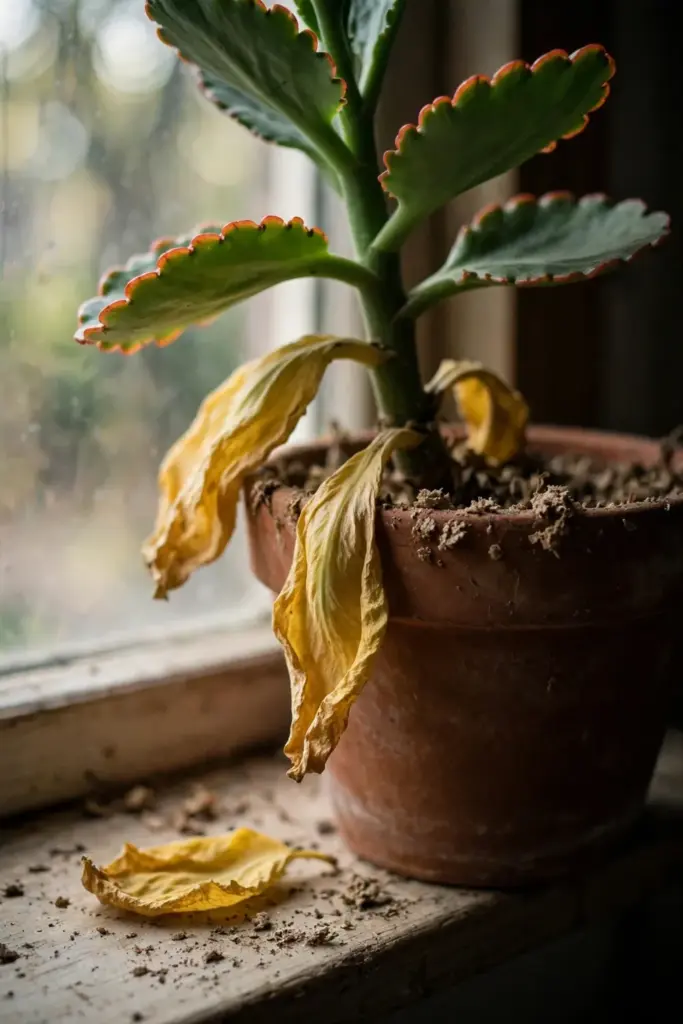
Yellow lower leaves with wet mix mean overwatering. Let the pot dry, check the drainage holes, and repot into fresh mix when the base feels soft. Yellow leaves with dry mix point to hunger. Feed once at half strength and watch the new growth. New leaves that open green mean the plant recovered.
Stretch means low light. Move the pot to the brightest window and turn it every few days. A soft black stem base means rot. Cut above the rot, let the cutting dry, and root it in fresh dry mix. Dropped plantlets are normal, not a problem. Sweep them up so they do not root where they fall.
Frequently Asked Questions
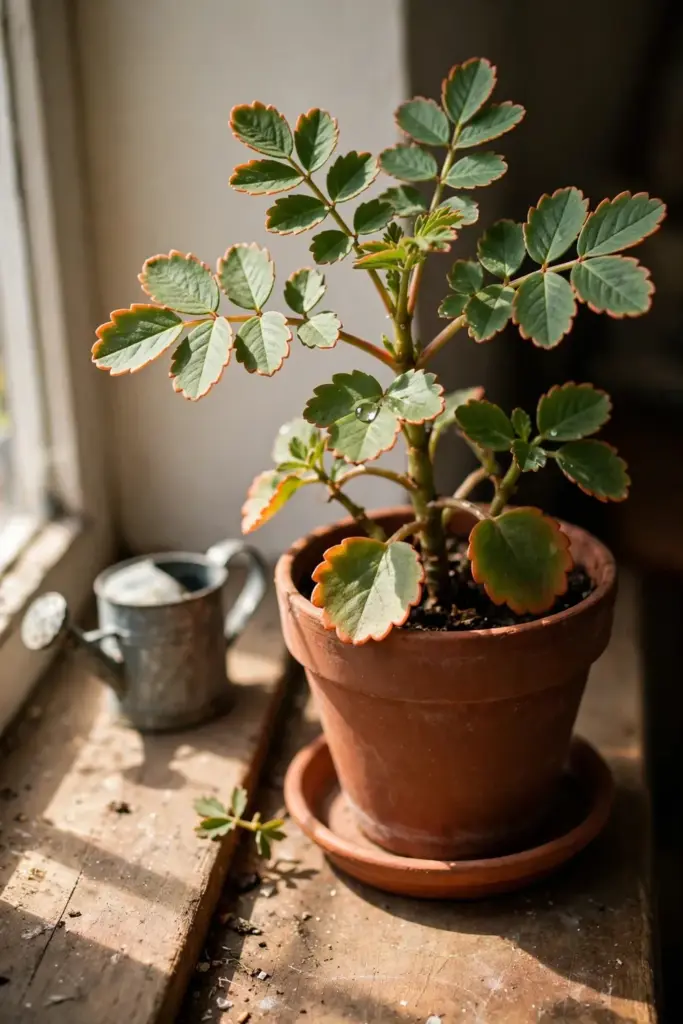
Lay a healthy leaf flat on damp succulent mix and press the margin onto the surface. Keep the mix lightly moist and give bright indirect light. Plantlets form at the notches along the leaf margin, grow their own roots, and pot up into small pots. One leaf can fill a tray. Check weekly and move rooted plantlets into their own pots as they show roots.
Yes. The ASPCA lists Kalanchoe as toxic to dogs and cats, with bufodienolides as the toxic principle and vomiting, diarrhea, and abnormal heart rhythm as the clinical signs. Keep the pot on a high shelf or in a room pets never enter. Pick up fallen leaves the day they drop. A pet that chews any part needs a veterinarian fast.
Only in USDA zones 10a to 11b, where winter minimums stay between 30 and 50 degrees Fahrenheit. Everywhere else, the plant lives in a pot that moves inside before nights fall toward 10 degrees. Frost blackens leaves and collapses stems. A bright window and sparing water carry the plant through winter indoors.
Low light is the usual cause. Flowers arrive in winter and spring on a tall stalk, and a plant in dim light skips blooming. Move the pot to the brightest window and wait a season. Young plants also skip flowering until they mature. Cut the spent stalk at the base after blooming ends so the plant puts energy back into leaves.
No. Both plants drop leaf plantlets, and both get called mother of thousands at garden centers, but they are different species. Life plant is Kalanchoe pinnata, with broad leaves that split into 3 to 5 leaflets. Mother of thousands is Kalanchoe daigremontiana, with narrow single leaves. Check the botanical name on the label before you buy.
No. Do not eat any part of this plant. Traditional uses exist in several countries, but this article treats life plant as an ornamental and gives no preparation and no dose. The same compounds behind the pet toxicity rule out casual eating. Grow the plant for its leaves and flowers, not for the table. Health questions belong to a clinician.
Start One Leaf on the Windowsill This Week
That is how to grow Bryophyllum pinnatum at its simplest: one leaf, one pot, bright light. Give it a fast-draining mix and nights above 10 degrees, and the leaf does the work. Keep the pot away from pets, keep fallen plantlets out of the garden, and the plant stays a pleasure for years.
Pair life plant with a second Indonesian herb on the same sill. The site’s lemongrass guide covers a tropical herb that grows in a pot and flavors the kitchen. Life plant gives the show. Lemongrass gives the scent. The two pots sit well together.