
Growing Indonesian bay leaf starts with one non-negotiable fact: the seed must come from fresh, ripe fruit and go into soil within 4 to 6 weeks of harvest, because after that window it hardly germinates at all. Sow it on the surface of loose soil under shade, never buried, and first sprouts break through in 1 to 3 weeks. Daun salam is Syzygium polyanthum, an evergreen Myrtaceae tree native to Indonesia, Indochina, and Malaysia, and one pruned tree in a large pot supplies aromatic leaves for years.
Learning how to grow Indonesian bay leaf rewards the patient gardener. The tree asks for warmth, shelter from hard frost, and almost nothing else: a New Zealand nursery growing guide rates it easy to grow, low maintenance, and suited to subtropical regions, with a moderate growth rate that fills out 3 to 6 metres in the ground. I have learned to treat this seed like fresh produce, never like a seed packet that keeps.
The catch is the name. Three different plants answer to “bay leaf” in English, and buying the wrong one is the most common failure before a single seed is sown. Sort that out first, and the rest is a straightforward tropical tree.
Indonesian Bay Leaf Quick Specs
| Spec | Value |
|---|---|
| Botanical name | Syzygium polyanthum (syn. Eugenia polyantha) |
| Family | Myrtaceae, the myrtle family |
| Common names | Daun salam, salam, Indonesian bay leaf |
| Tree size | 3 to 6 m tall, 2 to 4 m wide in cultivation; to 30 m wild |
| Light | Full sun to partial shade |
| Soil | Fertile, well drained, rich in organic matter |
| Water | Regular during establishment and dry periods |
| Fertilizer | Balanced garden fertilizer each spring |
| Propagation | Fresh seed, cuttings, or air layering |
| Seed viability | 4 to 6 weeks from harvest |
| Germination | 1 to 3 weeks to sprouts, 5 to 12 weeks complete |
| First flowering | 3 years |
| Cold rule | Warm sheltered spot; pots move indoors before frost |
1. Confirm the Leaf: Three Plants Share the Name “Bay Leaf”
Check the botanical name before you pay. Daun salam is Syzygium polyanthum, a Myrtaceae tree native to Indonesia, Indochina, and Malaysia, per the Indonesian bay leaf botanical profile. Two other plants share the English name bay leaf, and both belong to a different family, the Lauraceae.
| Plant | Botanical name | Family | Leaf | Aroma and use |
|---|---|---|---|---|
| Indonesian bay leaf (daun salam) | Syzygium polyanthum | Myrtaceae | Opposite, elliptic to lanceolate, 5 to 16 cm long, with close-looped secondary veins | Slightly bitter and astringent; crushed leaves smell of jambu; Indonesian and Malaysian cooking |
| Mediterranean bay (bay laurel) | Laurus nobilis | Lauraceae | Evergreen, shorter and stiffer | Piney, sharp; European soups and stews |
| Indian bay (tejpat) | Cinnamomum tamala | Lauraceae | Longer, olive-green, three-veined | Warm, cinnamon-like; Indian curries and rice |
The confusion is real at the checkout. One New Zealand nursery sells Syzygium polyanthum under the heading “Indian Bay Leaf” and lists its other names as Indonesian Bay Leaf and Daun Salam, yet “Indian bay leaf” usually means Cinnamomum tamala. Read the Latin on the tag. A companion guide to Indian bay leaf (tejpat, Cinnamomum tamala) is scheduled in our India lane; it covers the Lauraceae side of this naming trio, and the two guides will link once both are live. Daun salam’s Myrtaceae family also includes guava and clove, so anyone who has raised a guava seedling will find this tree’s habits familiar.
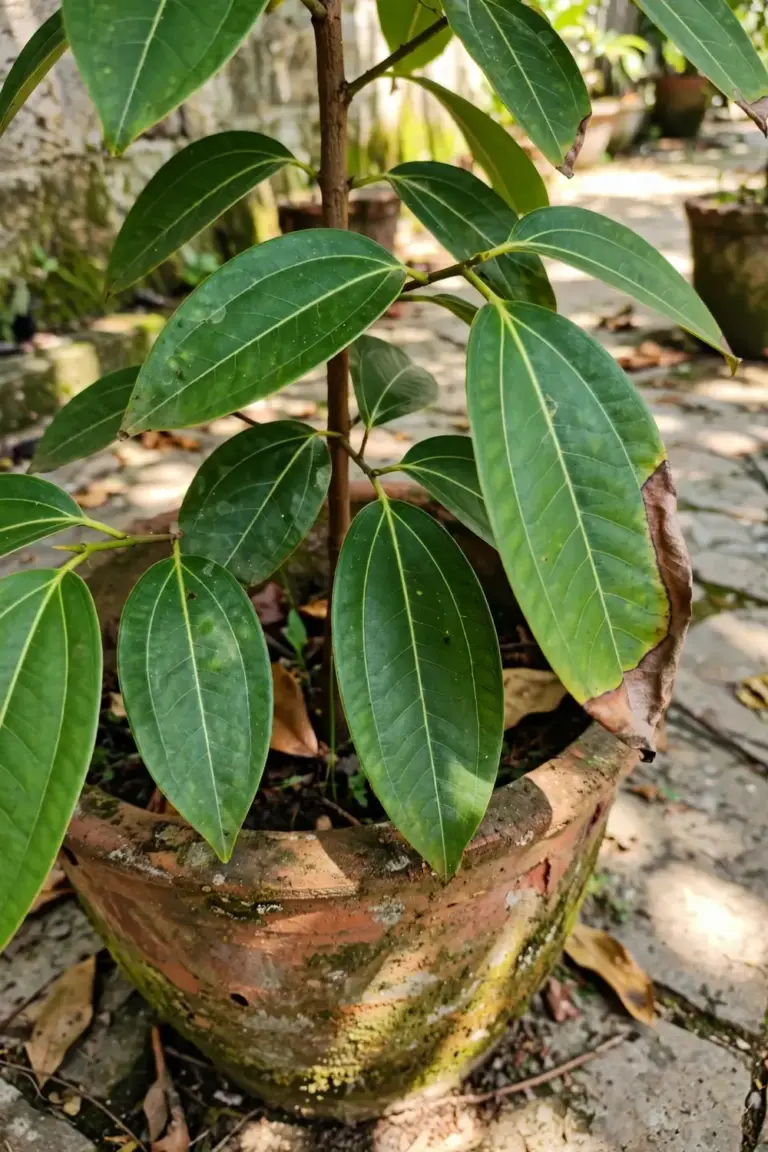
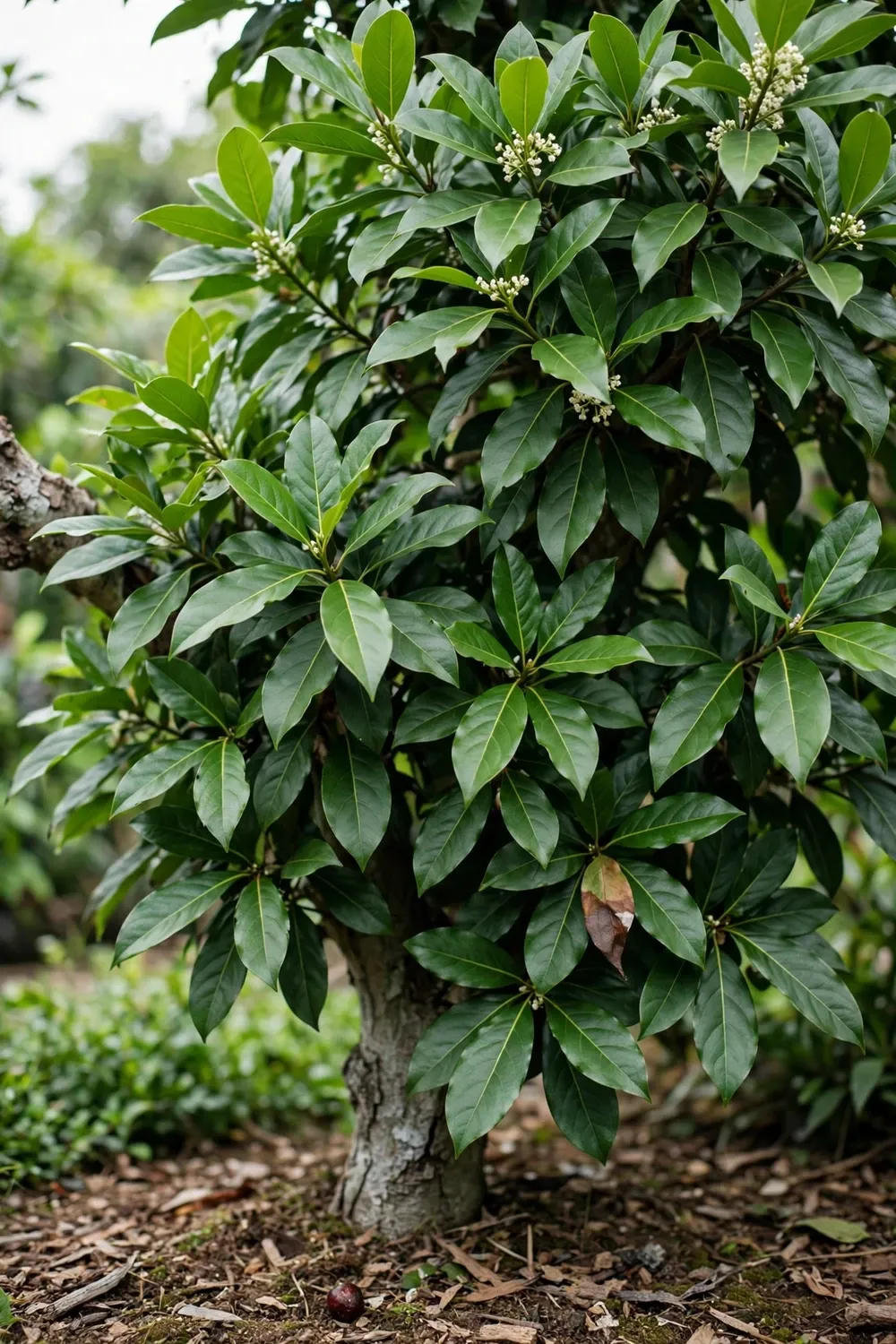
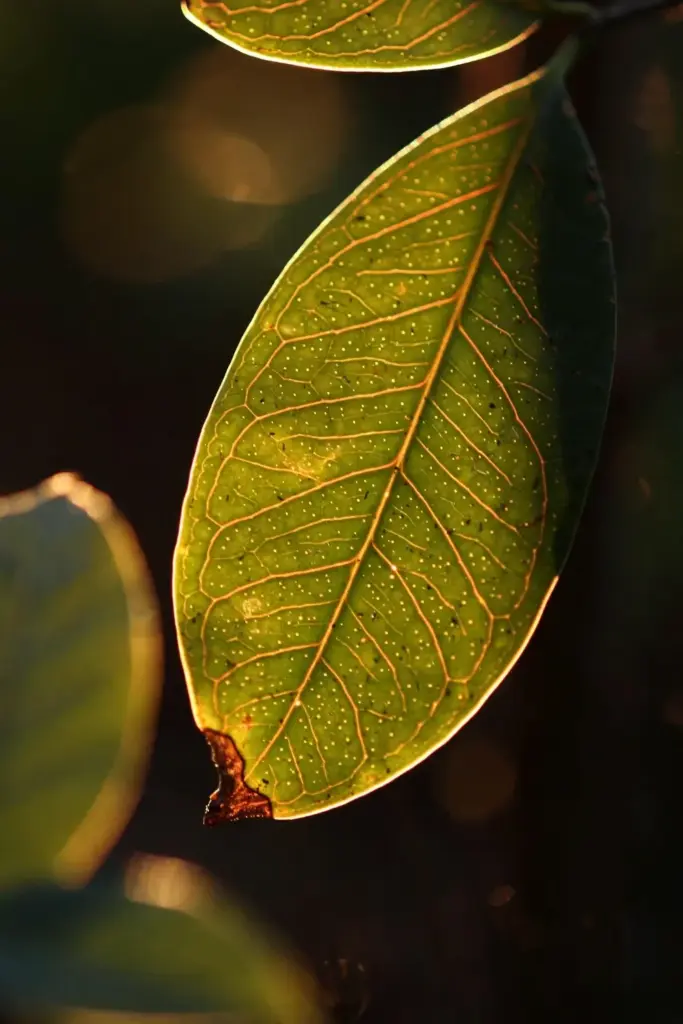
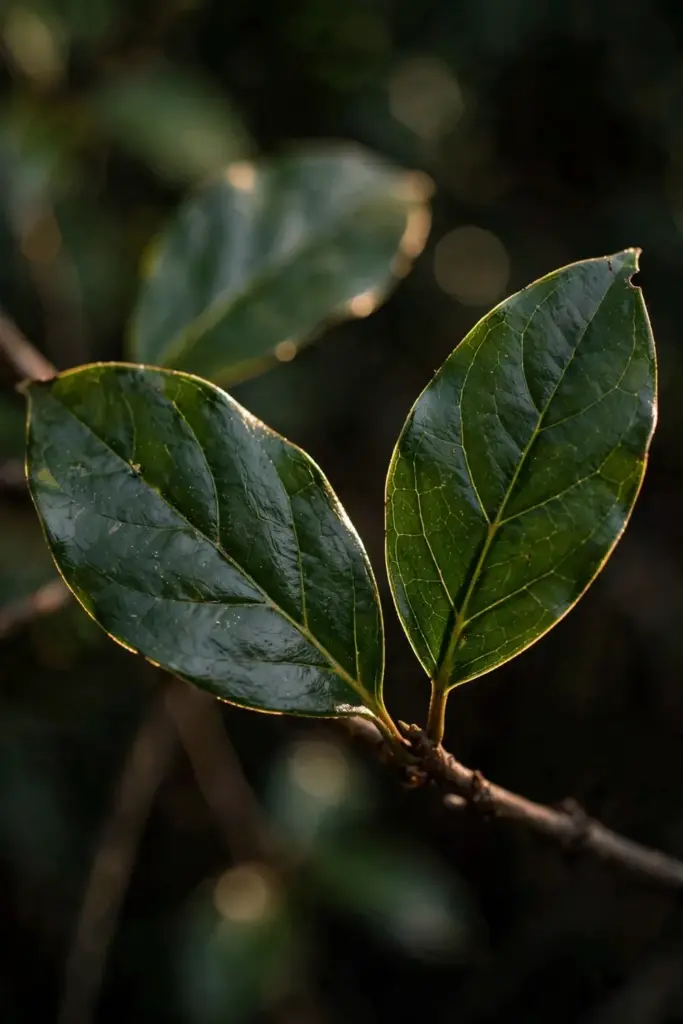
Botanists describe the salam leaf as opposite, simple, and glabrous, with a petiole up to 12 mm and a blade 5 to 16 cm long by 2.5 to 7 cm wide, carrying 6 to 11 pairs of secondary veins and a distinct intramarginal vein. Singapore’s tree records add the field marks: greyish cracking bark, leaves arranged oppositely with close-looped veins, and a distinctive jambu smell when a leaf is crushed. Small white fragrant flowers open in panicles 2 to 8 cm long, and the fruit is a 1-seeded berry up to 12 mm across that ripens dark red to purplish-black. Those details matter because the wrong plant travels under this name in nurseries and catalogues. Trust the veins and the Latin. The taste test backs it up too: the leaf gives a slightly bitter taste with an astringent effect, quite different from laurel’s piney sharpness or tejpat’s cinnamon warmth. A cook who has used all three can tell them apart blind, but a gardener buying a plant cannot, which is why the botanical name on the tag is the only identification that counts.
2. Match Your Climate: Warm, Sheltered, and Frost-Free
Grow it warm, sheltered, and out of hard frost. The nursery growing guide gives the formula: full sun to partial shade, fertile, well-drained soil rich in organic matter, and a warm, sheltered position protected from cold winds and heavy frost.
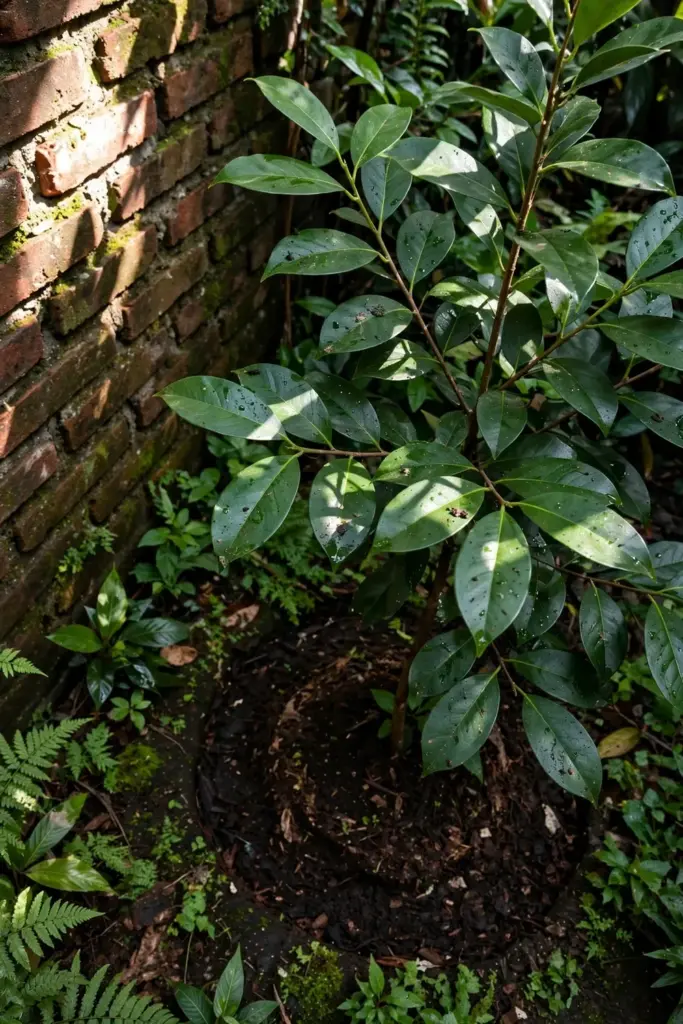
In the wild, Syzygium polyanthum grows in Java lowland forest, the PROSEA ecology notes) recording it at 1000 m in Java, 1200 m in Sabah, and 1300 m in Thailand, so it tolerates elevation but not cold. Branches break off in strong winds, which makes a sheltered courtyard or a wall-backed bed do double duty: frost protection and wind protection in one. Give a young tree that corner and it settles fast.
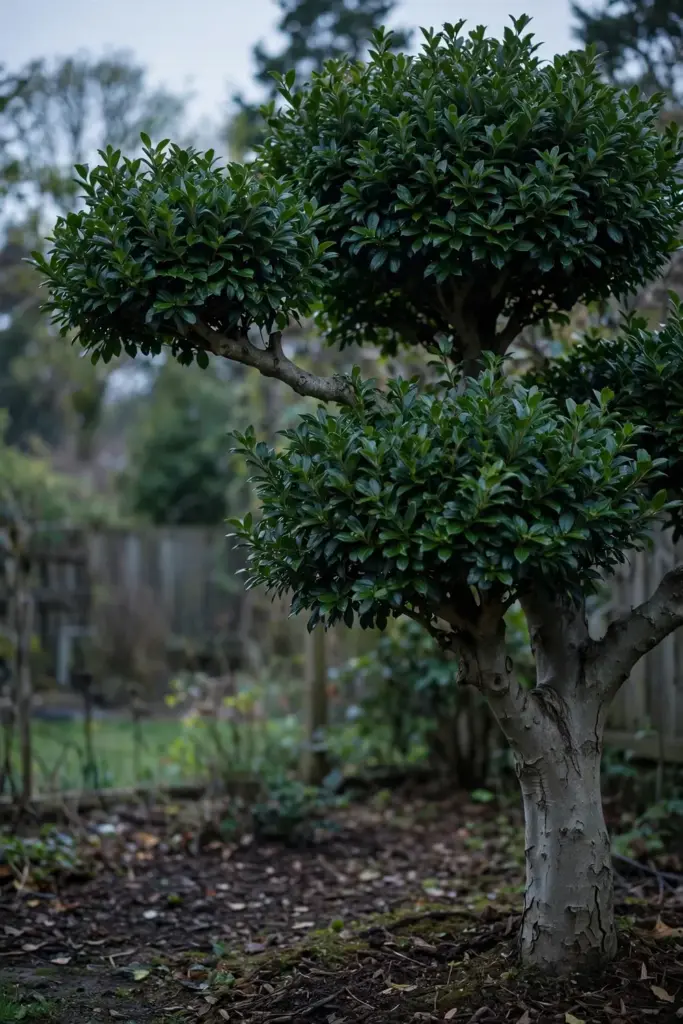
Temperate gardeners get the greenhouse-and-patio lane. The tree grows fine in a large container, pruned to size, and moves indoors before frost. Treat the first forecast frost as the hard stop for an outdoor pot. In subtropical ground it becomes a dense evergreen shrub or small tree, 3 to 6 metres (10 to 20 feet) tall and 2 to 4 metres (7 to 13 feet) wide at the nursery’s stated moderate to fast growth rate.
3. Source Fresh Seeds From Ripe Fruit, Not Mystery Packets
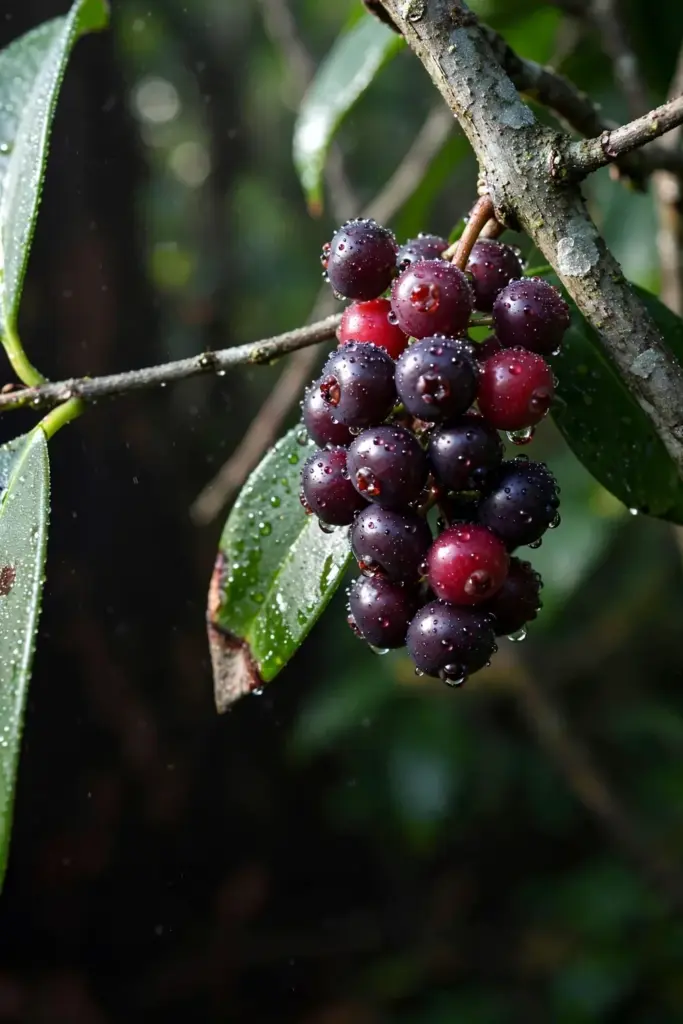
Start with seed pulled from a ripe berry, dark red to purplish-black, about 12 mm across. Dried bay leaves from a spice jar contain no seed at all; the dried leaf is the finished spice, and it will never sprout. The PROSEA botanical reference) describes the fruit as a 1-seeded berry up to 12 mm in diameter.
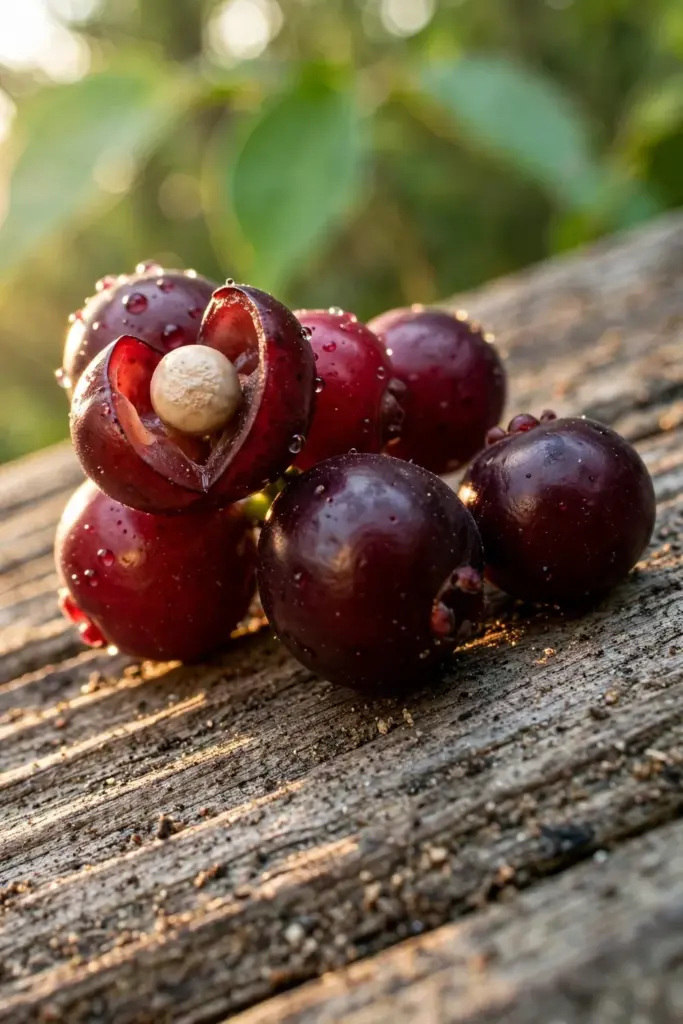
The fresh-fruit rule is the whole game with this species. Syzygium polyanthum berries hold a single seed each, and that seed begins dying the moment the fruit leaves the tree. Buy fruit from an Indonesian market vendor, ask a grower with a fruiting tree, or order fresh berries from a tropical seed supplier who ships the week of harvest. Young leaves are sold on almost all Indonesian local markets, which tells you the plant is common; the fruit is what you need.
If fresh fruit is out of reach, buy a nursery sapling instead of gambling on a dry seed packet. A sapling skips the viability lottery entirely.
4. Obey the 4-to-6-Week Seed Viability Rule
Sow within 4 to 6 weeks of picking the fruit. After that window the seed hardly germinates at all.
This is the fastest seed clock in the herb garden, and it punishes procrastination. Fresh seed germinates quickly; old seed does not. The PROSEA reference) is blunt: seed loses viability rapidly, and after 4 to 6 weeks it hardly germinates. Mark the harvest date on the packet the day the fruit arrives, because every day of delay is germination percentage lost.
5. Surface-Sow Seeds, Never Bury Them
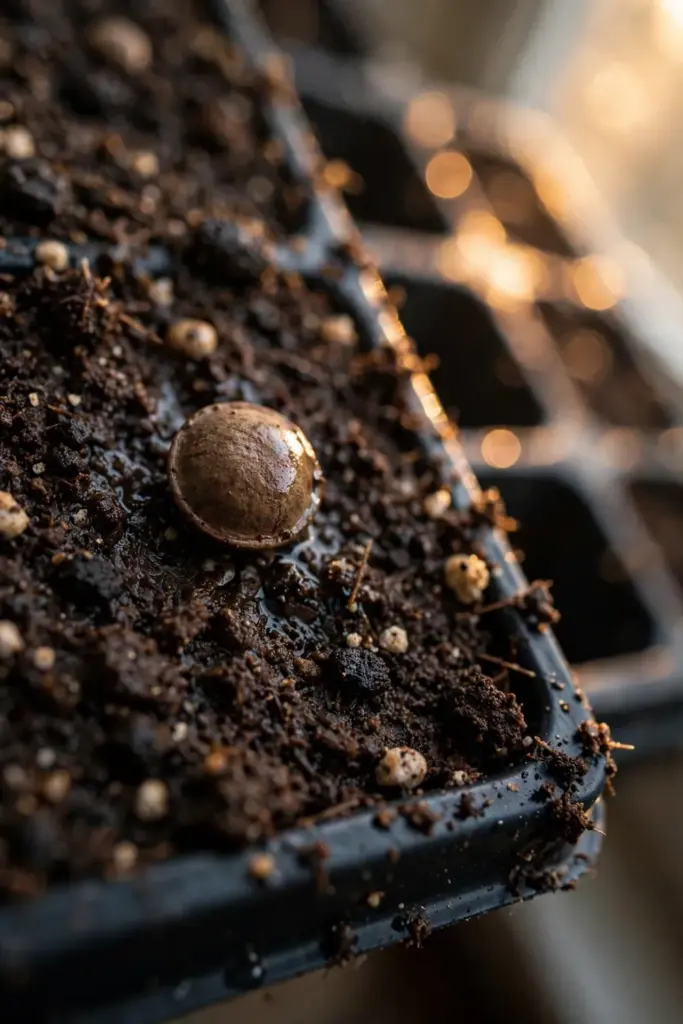
Press the seed onto the surface of loose soil and leave it uncovered, under shade. The PROSEA propagation notes) warn that burial seriously reduces the germination percentage, so the seed sits on top where light and air reach it.
| Step | Action | Time |
|---|---|---|
| Extract | Pull the seed from ripe fruit and sow the same week | Within 4 to 6 weeks of harvest |
| Sow | Press onto the surface of loose mix, uncovered, under shade | Day 0 |
| First sprouts | Watch for the first seedlings | 1 to 3 weeks after sowing |
| Full germination | Expect the last stragglers | 5 to 12 weeks after sowing |
Use a loose, well-drained seed mix in a shallow tray or small pots. Water gently so the seed stays on the surface, and keep the tray in shade, not sun. The basic seed starting steps apply here with one change: skip the covering layer of mix entirely.
6. Germinate in Warm Shade: 1 to 3 Weeks to First Sprouts
Expect the first sprouts 1 to 3 weeks after sowing, with germination complete by 5 to 12 weeks, per the PROSEA germination data). Warmth plus shade drives the whole process.
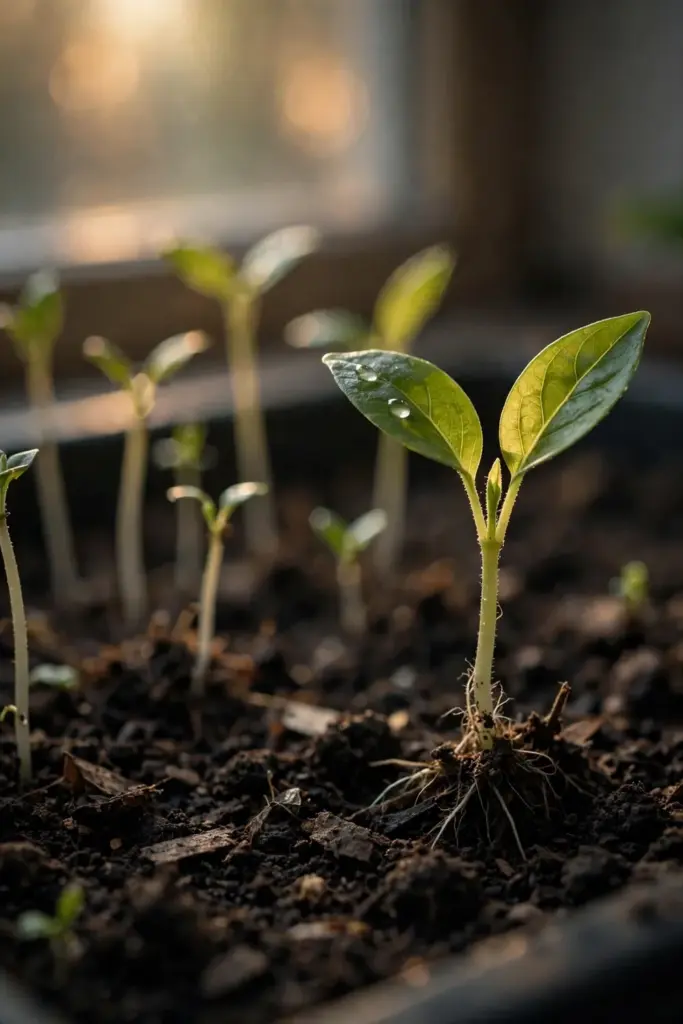
The shade requirement runs through the species’ whole early life. In the wild, seedlings survive under shade for several years, so a shaded bench or the north side of the house suits them better than a sunny windowsill. Keep the mix evenly moist but never soggy. A covered tray holds humidity, but vent it daily so still air does not invite mould.
Count sprouts, not days, once the first ones appear. The 5-to-12-week window means late seeds can still surprise you after you have stopped watching.
7. Raise Seedlings Under Shade for Their First Months
Grow young seedlings in shade and harden them off gradually before any move outdoors. Shade-grown seedlings survive for years under a canopy in nature, so there is no prize for rushing them into sun.
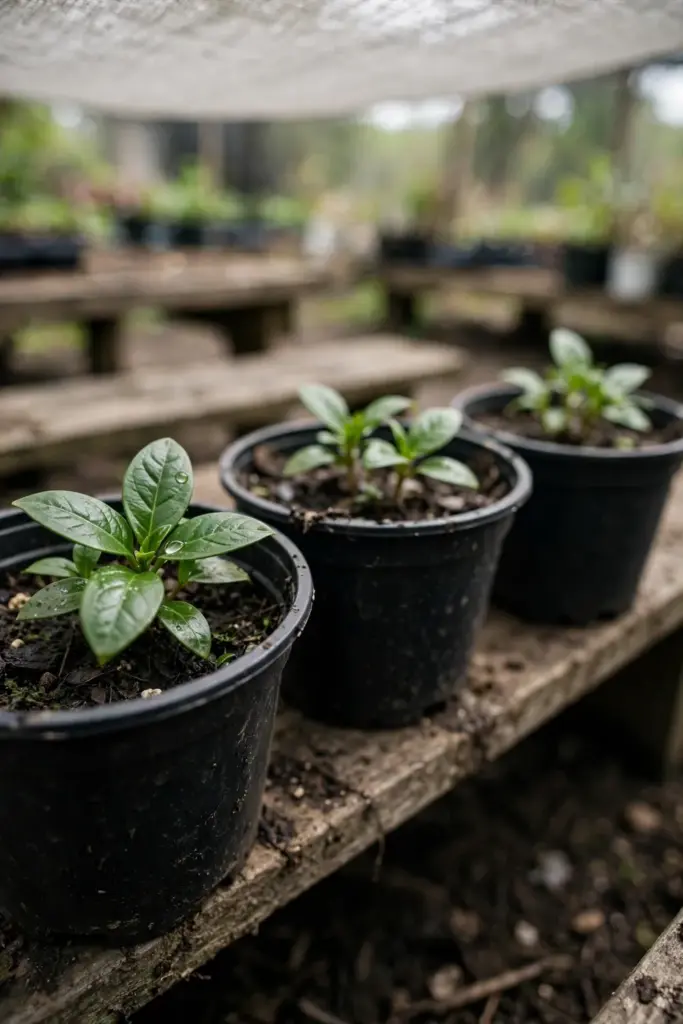
Pot seedlings up as they outgrow the tray, handling the root ball gently. Wildlings collected from under adult trees go through a nursery hardening stage before field planting, per the PROSEA nursery notes), and your tray seedlings deserve the same patience: a week or two of lengthening outdoor time before they face full exposure. Seedlings that sulk after a move usually needed more hardening, not more fertilizer.
Feed lightly once true leaves are established. A weak balanced liquid feed every few weeks keeps them green without pushing soft growth. Move seedlings to individual 4-inch pots when roots show through the tray’s drainage holes; a seedling left too long in a shallow cell stalls, and a stalled seedling rarely catches up. When the young plants stand about 6 inches tall with several pairs of true leaves, start the hardening routine: a few hours of morning sun and light breeze, lengthening daily, for 10 to 14 days before any permanent move.
8. Compare Seed vs Cuttings vs Air Layering for Your Start
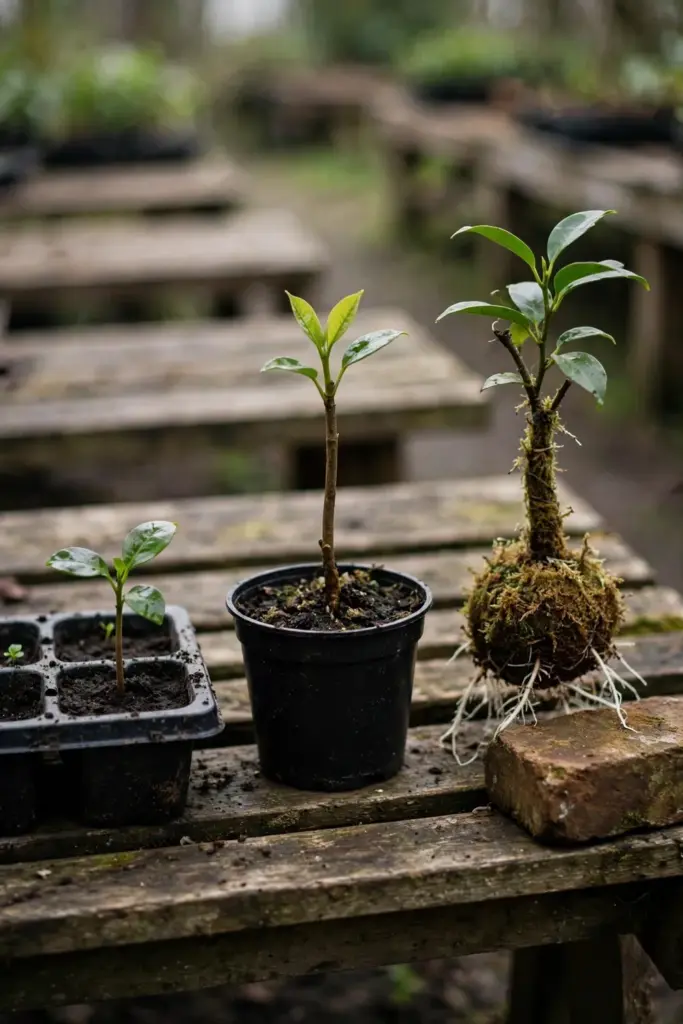
Pick the start that fits your timeline and your access to plant material. Seed is the cheapest route and needs nothing but fresh fruit. Cuttings and air layering copy a proven mother tree exactly, which matters if you tasted leaves you loved.
| Option | Years to leaf harvest | Cost and effort | Why it fits |
|---|---|---|---|
| Fresh seed | 3+ years | Lowest; needs fresh fruit | Cheapest start; the tree can flower at 3 years, the marker of a harvestable plant |
| Stem cuttings | Sooner than seed is not documented; starts larger than a seedling | Low; needs a mother tree and rooting care | Copies the mother tree’s leaf quality exactly |
| Air layering | Sooner than seed is not documented; roots a branch while still on the tree | Moderate; needs a mother tree | Best success rate for a single prized branch |
The PROSEA botanical reference) lists all three methods: seed, cuttings, and air layering, plus wildlings collected from under adult trees. No breeding programmes or named cultivars exist, so a cutting is a true copy of the mother tree. Seed stays the most common start because fruit is easy to ship fresh while cuttings are not.
For cuttings, take semi-hardwood shoots, keep them humid and shaded, and expect roots before new leaves. For air layering, wound a pencil-thick branch, wrap it in moist moss, and wait for roots to fill the wrap before cutting the branch free. Both methods skip the 4-to-6-week seed clock entirely.
9. Transplant Once, Then Mulch the Base
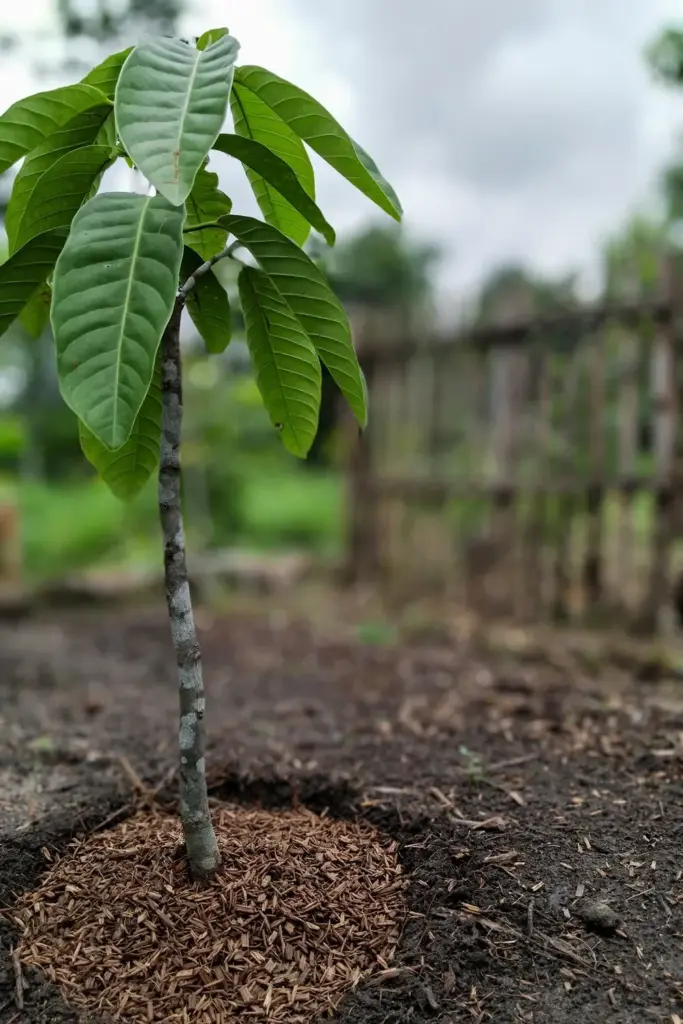
Set the tree in its final spot and mulch the base well. Dig the hole no deeper than the root ball, mix compost into the backfill to improve moisture retention and soil structure, and water the tree in deeply.
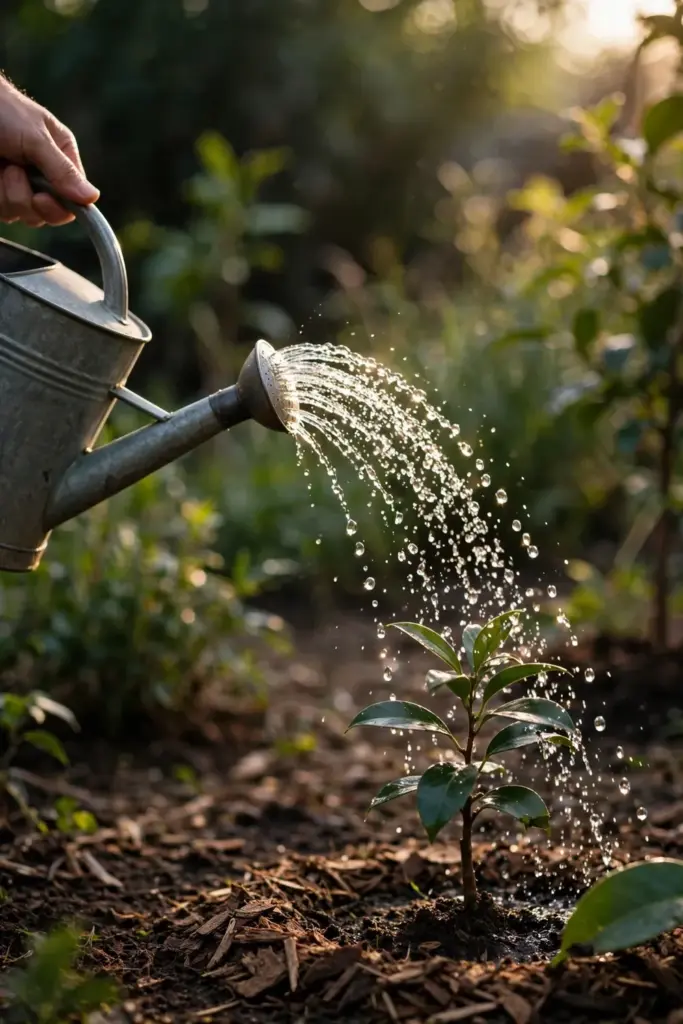
Fertile, well-drained soil rich in organic matter is the target, and building soil health before planting pays off for a tree that lives decades. Spread mulch around the base to conserve moisture and suppress weeds through the year, following the nursery planting advice, but keep the mulch ring a few inches off the trunk. A tree planted at 6-metre spacing in a field becomes timber; your garden tree gets one spot and a lifetime of pruned harvests instead.
Stake a young tree in windy sites for its first year. Branches snap in strong winds, so a stake plus a sheltered position beats repairs later.
10. Water Deep and Feed Once Each Spring
Water regularly during establishment and through dry periods, then back off when the rains do the work. The nursery care tips tie consistent watering to healthy, productive foliage: drought stress shows first as dull, slow-growing leaves.
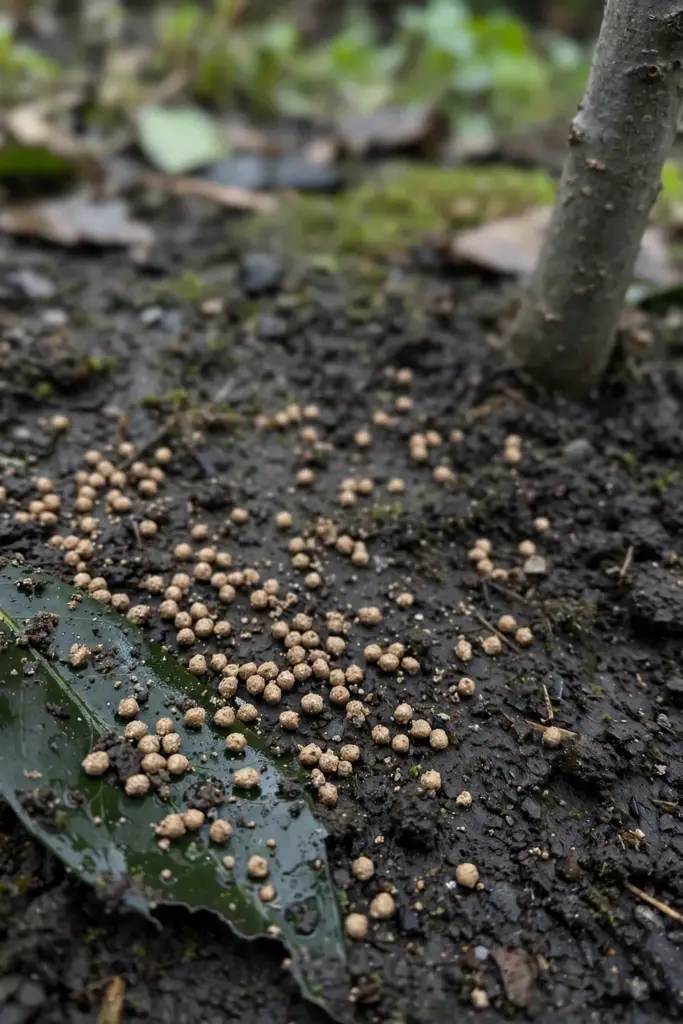
Feed with a balanced garden fertilizer during spring to encourage vigorous growth and fresh leaf production, the nursery’s feeding rhythm. One spring feeding is the documented rhythm, and it suits a tree whose harvest is leaves, not fruit: steady green growth, not a fruiting push. Container trees dry out faster than ground trees, so check pot soil with a finger and water when the top inch is dry.
Deep, infrequent watering builds deeper roots than daily sprinkles. Mulch stretches the interval between waterings in summer. In a pot, the cycle runs faster: a container tree in full sun can need water daily in a heatwave, and saucers left full of standing water invite root rot. Empty the saucer an hour after watering so the roots breathe.
11. Prune in the Growing Season to Keep a Harvestable Size
Prune through the growing season to hold the tree at a size you can harvest. The nursery pruning notes say salam responds well to regular pruning and shaping, and light pruning during the growing season keeps it tidy and compact, especially as a hedge or container plant.
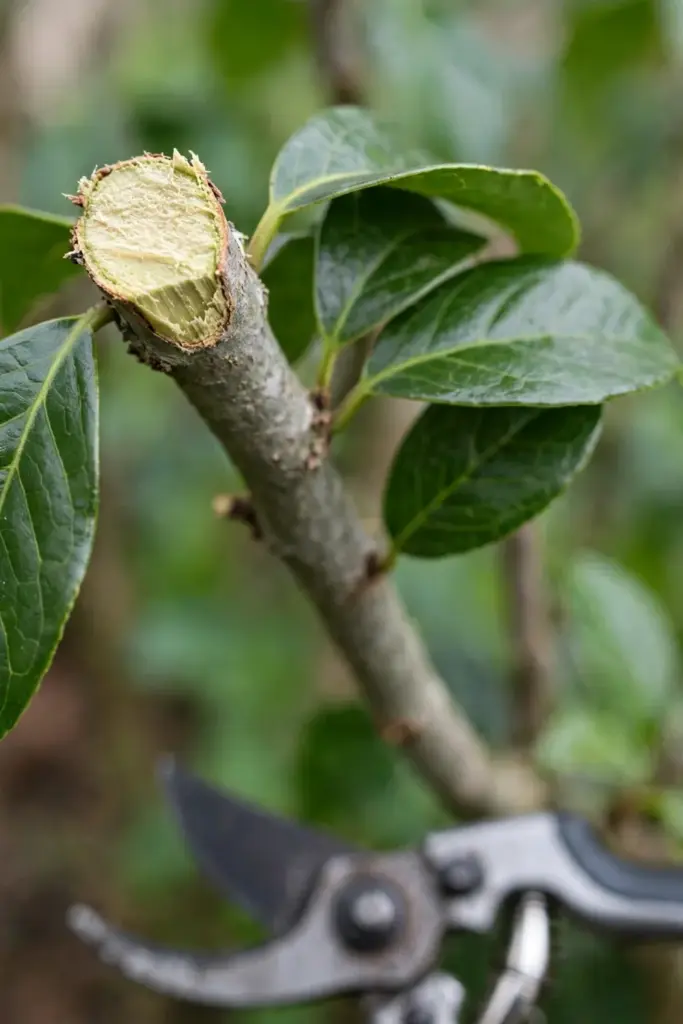
This is the harvestable-size lane. A 30-metre wild tree gives leaves nobody can reach; a 2-metre pruned tree gives leaves at arm’s length. Cut twig tips for the kitchen and the tree answers with bushy regrowth. Remove damaged or weak growth as needed to keep the plant healthy and attractive, and follow the same clean-cut basics as spring pruning techniques for any woody plant.
Prune for shape in the warm months and stop before cold weather. Fresh cuts heal fastest while the tree is actively growing.
12. Pot Your Indonesian Bay Leaf and Winter It Indoors Below Freezing
Keep the tree in the largest pot you can still move, and bring it indoors before the first frost. The nursery guide lists container planting as an established use for this tree, and a pruned tree stays a manageable size for years.
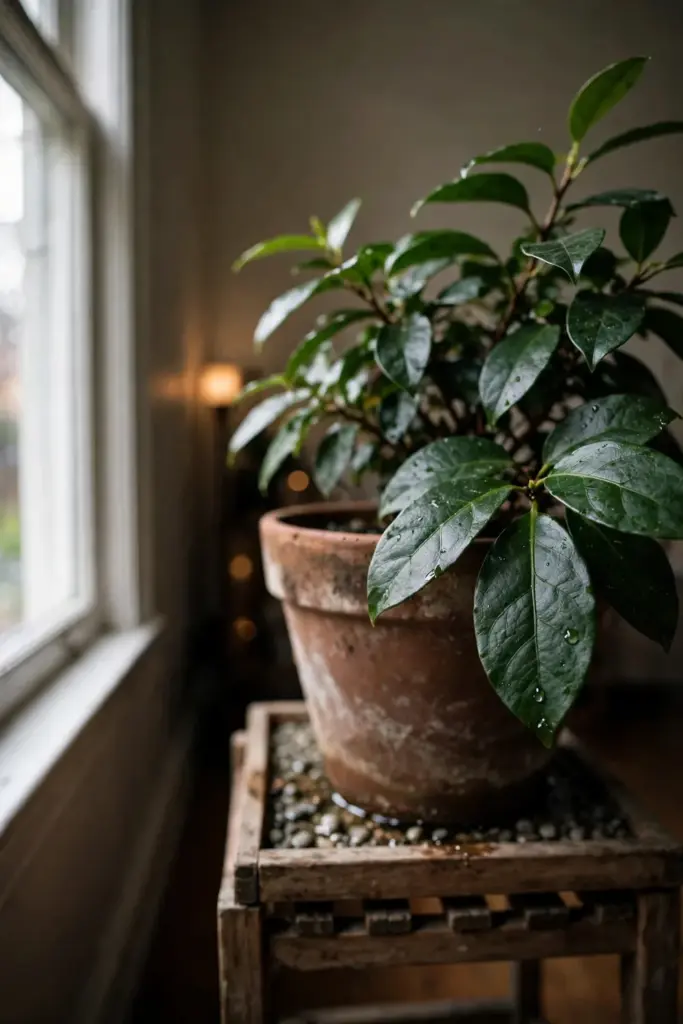
Use a large pot with drainage holes, the biggest you can still carry, filled with a fertile, well-drained mix rich in organic matter. Set it in full sun to partial shade through the warm months. When nights threaten frost, move it to a bright indoor spot and cut watering back; the tree grows slowly through winter and hates wet, cold roots. Like other tender aromatic plants in the fall herbs to plant lineup, it would rather be cramped and dry indoors than frozen outside.
Repot in spring when roots fill the pot, stepping up one pot size. Root-prune lightly if the tree has outgrown the largest pot you can lift. Indoors for winter, stand the pot on a tray of pebbles over water to lift humidity around the leaves, and keep it away from heating vents, which dry the air and crisp the leaf edges. A cool bright room suits the tree better than a hot one.
13. Stop Tip-Boring Caterpillars and Scale Insects Early
Watch the shoot tips for the tip-boring caterpillar Argyroploce mormopa, the one pest the PROSEA pest notes) document on salam. Bored tips wilt and die back; prune the damaged shoot below the injury and destroy it.
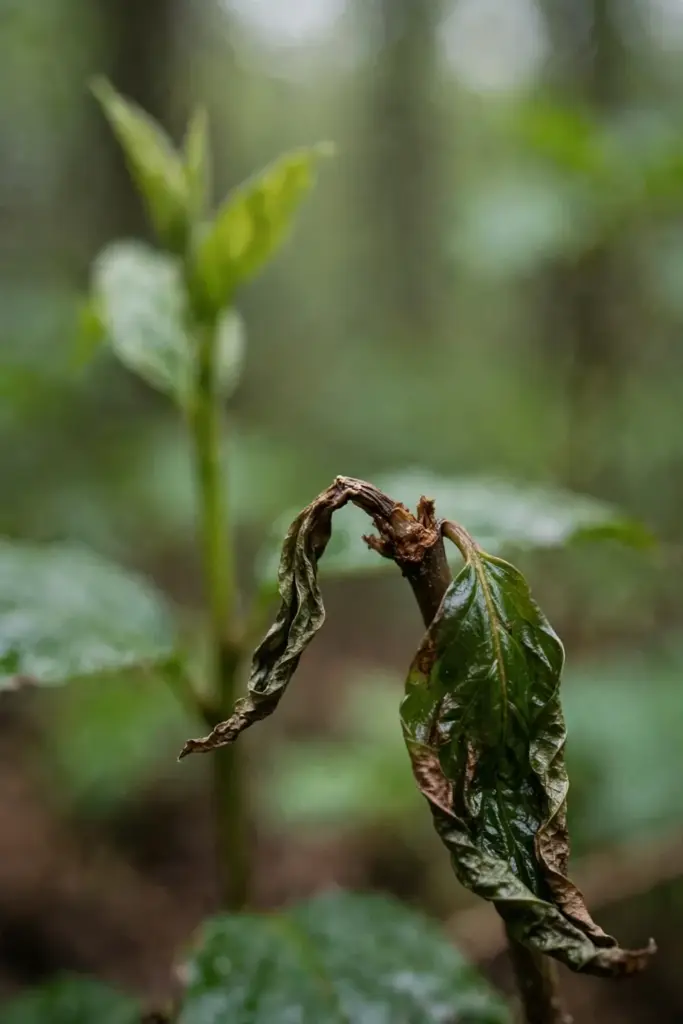
Beyond that single documented pest, specific pest data for this tree is thin, so routine inspection does the work. Check leaf undersides and young shoots monthly for sucking insects, and treat early clusters with horticultural oil or insecticidal soap. Good airflow, full sun on the canopy, and prompt pruning of damaged wood prevent most secondary problems. Avoid overhead watering late in the day, which keeps foliage wet overnight.
Quarantine new nursery stock for two weeks before it joins your other plants. One infested newcomer undoes a year of clean growing. If you spot a cluster of small soft-bodied insects on a young shoot, a strong jet of water dislodges most of them; follow up with insecticidal soap on the survivors, coating the leaf undersides where pests hide. Repeat the treatment after 7 days to catch the next hatch. Sticky honeydew on the leaves below a feeding site is your early warning sign, so check the undersides as well as the tops during every monthly walk-through.
14. Harvest Leaves by Pruning the Twigs at 3 Years
Take leaves by pruning the tree or cutting off twig tips once the tree is a few years old, the PROSEA harvesting notes). Flowering can start at 3 years, and that first flowering marks the shift from a baby tree to a producing one.
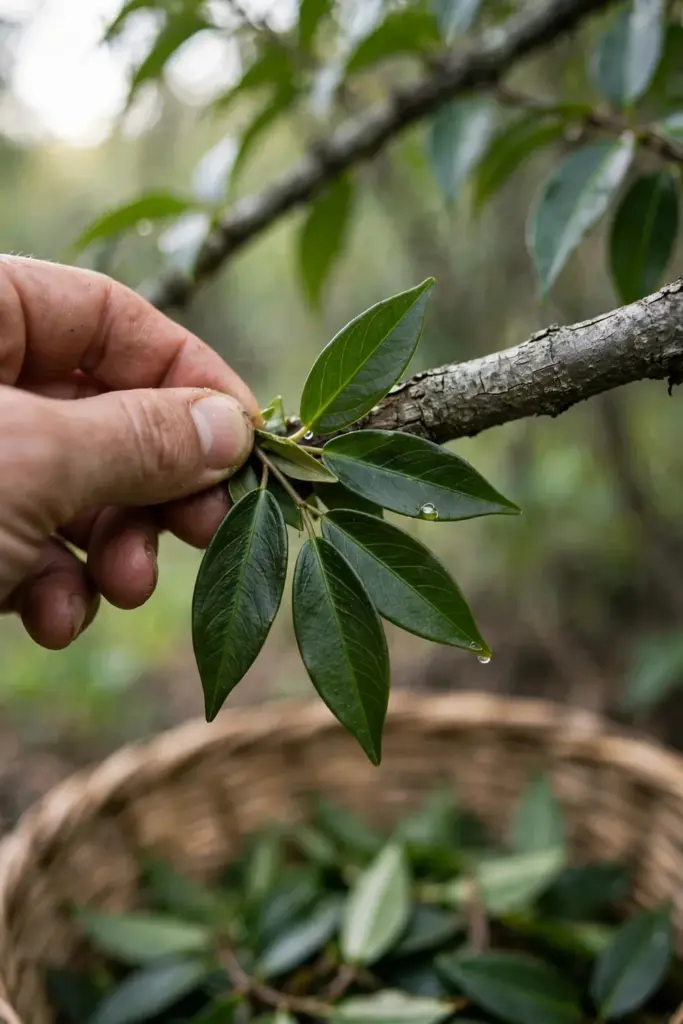
Harvest in the morning after the dew dries, choosing mature, fully expanded leaves. Tip-pruning for the kitchen doubles as shaping, so every harvest keeps the tree compact. Never strip a young tree bare; take a third of the new growth at most and let it recover before the next cut.
Dry the leaves properly before storage, per the PROSEA handling notes). Spread harvested leaves in a single layer on a rack in a shaded, airy spot for several days, turning them once, until they feel papery and brittle. Leaves dried in direct sun bleach and lose aroma, so shade does the work. Fresh leaves work straight into the pot, added early and left to cook with the dish, since the flavour develops only gradually. Dried leaves keep their aroma for months in a sealed jar away from light. Dried salam leaves carry about 0.17% essential oil, with eugenol and methyl chavicol as important components, per the PROSEA properties data), which is why a single leaf perfumes a whole pot of rice.
15. Fix 6 Failures That Stall Young Trees
Run this list before you blame the tree. Most dead salam seedlings die of the same six mistakes.
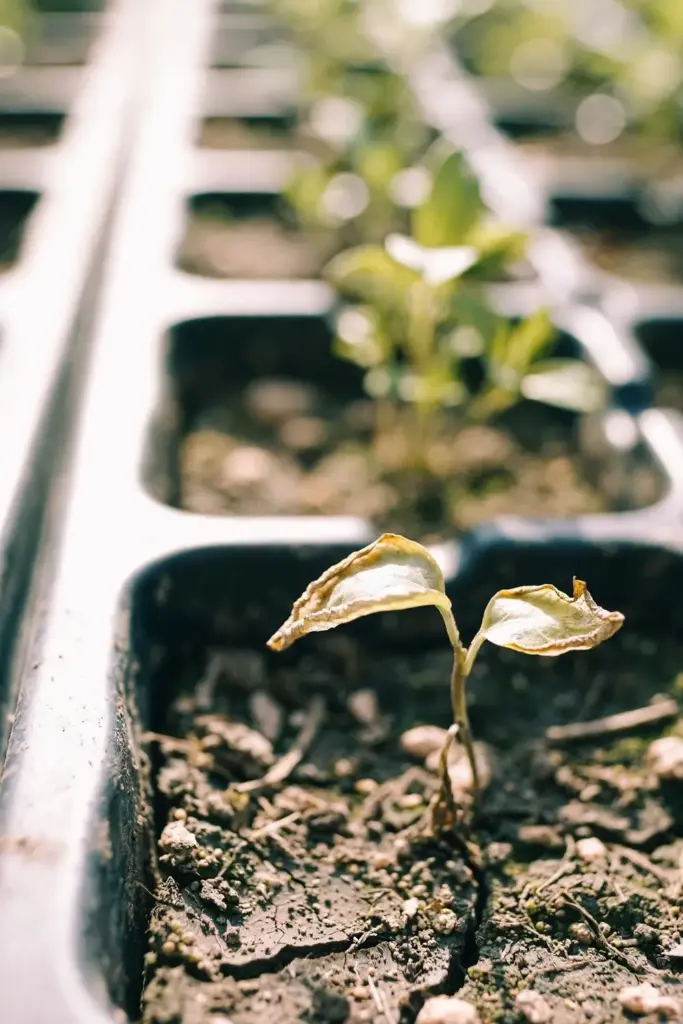
Dead seed. The 4-to-6-week viability window closed before sowing. Mark the fruit harvest date and sow within the window next time.
Buried seed. The seed went under the soil, lost its light cue, and never woke up. The fix is simple: press it onto the surface and leave it uncovered.
Sun-scorched seedlings. The tray sat in full sun and the seedlings cooked. Grow them under shade for their first months, as the wild seedlings do.
Wind-snapped branches. An exposed young tree lost limbs in a storm because branches break in strong winds. Prevention beats repair: stake it and move the pot or plant to a sheltered spot.
Waterlogged soil. The roots sat in soggy mix. Switch to fertile, well-drained soil and let the surface dry between waterings.
Wrong plant bought. The tag said “Indian bay leaf” and the tree is something else. Verify Syzygium polyanthum on the label before buying; the name trap is documented at real nurseries.
Frequently Asked Questions
No. Dried bay leaves are the finished spice and contain no seed at all, so nothing will sprout from them. Real propagation starts with seed pulled from a ripe, dark-red to purplish-black berry, and that seed must be sown within 4 to 6 weeks of harvest. If fresh fruit is unavailable where you live, buy a nursery sapling instead of a dry seed packet.
No. Daun salam is Syzygium polyanthum, a Myrtaceae tree from Indonesia and Malaysia. Indian bay leaf is usually Cinnamomum tamala, a Lauraceae tree, and Mediterranean bay is Laurus nobilis, also Lauraceae. The names tangle at nurseries: one New Zealand nursery sells Syzygium polyanthum itself under the heading “Indian Bay Leaf.” Check the botanical name on the tag before you buy.
Only where frosts stay light and brief. The tree needs a warm, sheltered position protected from cold winds and heavy frost. In temperate zones, grow it in a large container and move it indoors before the first frost, then bring it back out after the last one. Indoors, give it the brightest spot available and water sparingly through winter.
At a moderate to fast rate in warm conditions. In cultivation it typically reaches 3 to 6 metres tall and 2 to 4 metres wide, and it responds well to regular pruning and shaping. Regular pruning keeps it a compact, harvestable size, which is why it works as a hedge, a screen, or a container tree. Expect first flowering around 3 years from seed.
Both work. Fresh leaves go straight into the pot, added early and left to cook with the dish, because the flavour develops only gradually. For storage, the leaves must be properly dried first, then kept in a sealed jar away from light. Young leaves are sold fresh on almost all Indonesian local markets, which tells you how central the fresh leaf is to the cuisine.
Your Daun Salam Tree Starts With One Fresh Seed
How to grow Indonesian bay leaf comes down to three moves: buy the right species, sow fresh seed on the surface within 6 weeks, and keep the young tree warm, sheltered, and pruned. Anyone learning how to grow Indonesian bay leaf will meet the name confusion first and the seed clock second; clear both and the tree does the rest. A pruned tree in a big pot gives aromatic leaves for decades, and every tip you cut for the kitchen keeps it at harvest height.