
Ambrette seed (Abelmoschus moschatus) runs a 5-month season in India: sow in March, watch hibiscus-like flowers open in September, and harvest musk-scented seed from capsules that burst open between November and January. The plant is an okra relative grown in India for a seed whose sweet, flowery aroma once stood in for animal musk in fine perfumery.
Learning how to grow ambrette seed from India starts with the calendar. This is a pre-kharif annual that wants the hot dry weeks before the monsoon for establishment and the rainy season for growth. Sow it like a summer vegetable, give it full sun and free-draining soil, and the plants take care of most of the rest. The part that needs your attention is the seed itself: fresh seed, the right harvest timing, and a fertilizer strategy that protects the oil instead of just pushing growth.
Ambrette is its own crop, separate from both okra and the European musk mallow. The names overlap and seed sellers mix them up. This guide names the real plant, shows you how to tell the impostors apart, and walks you through the full season from sowing to cured seed.
1. What Ambrette Seed Actually Is
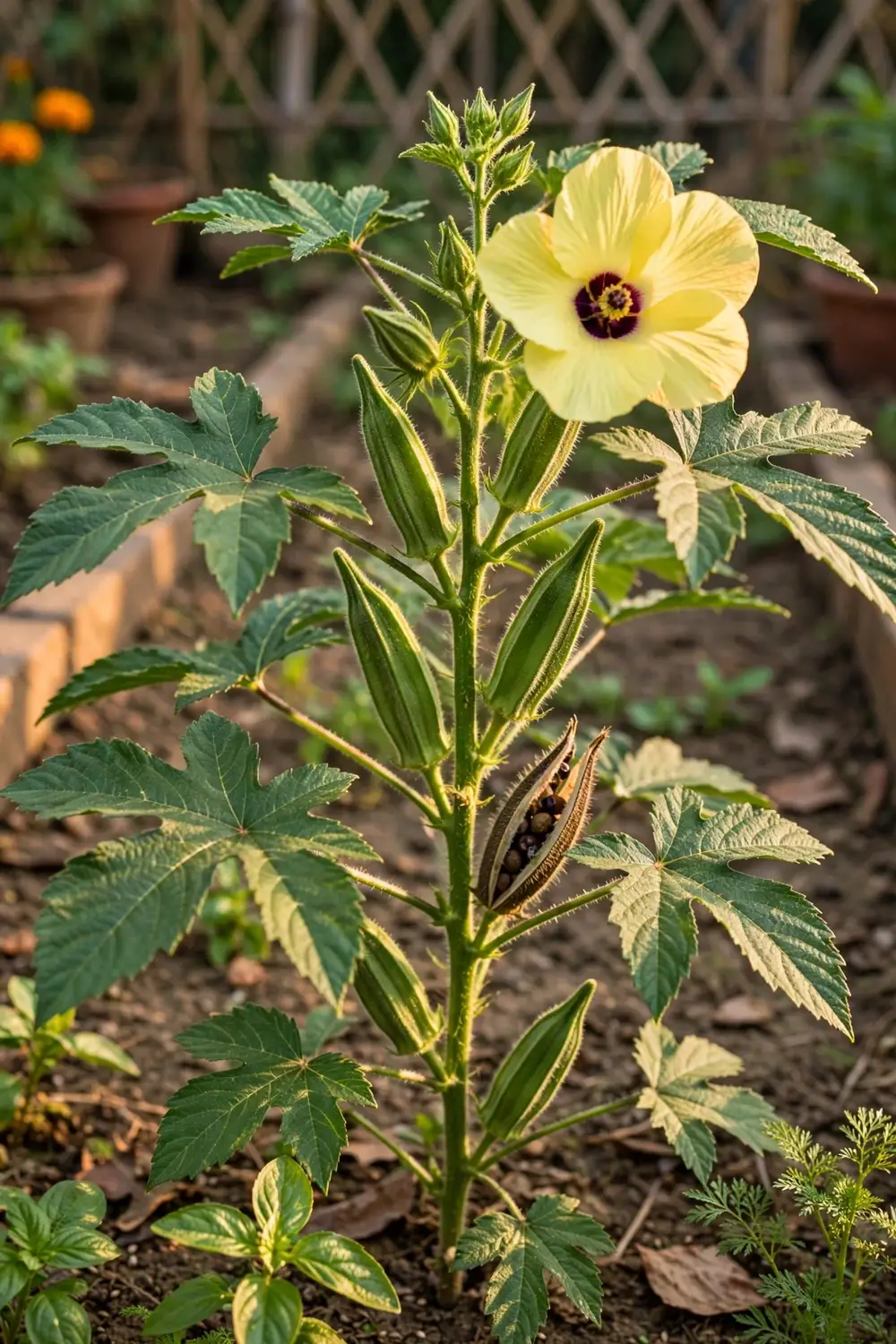
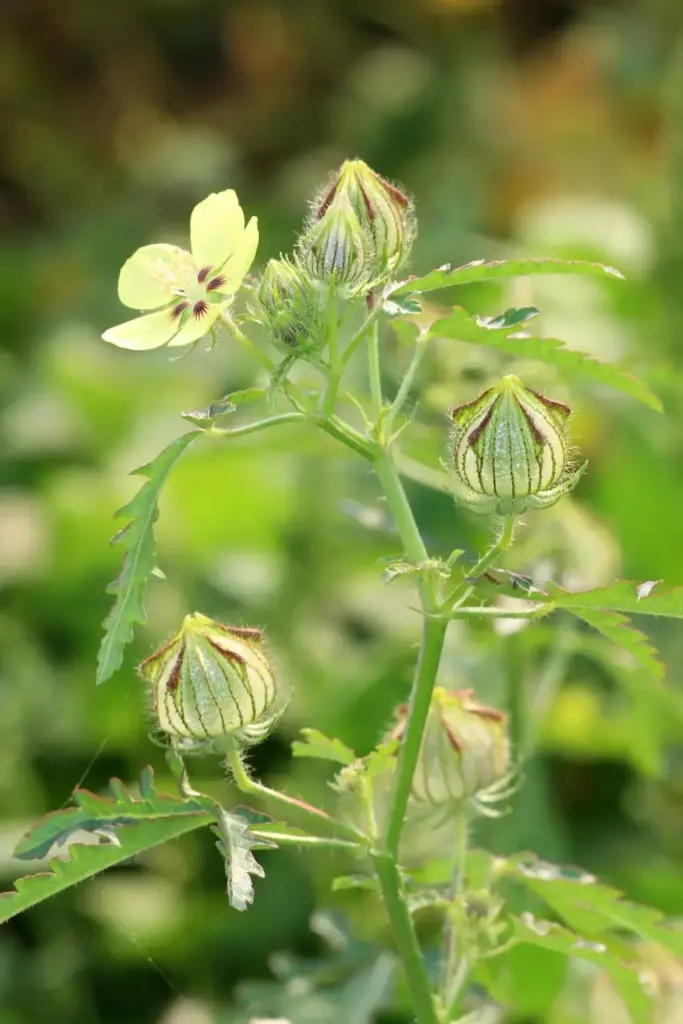
Ambrette seed is the dried seed of Abelmoschus moschatus Medik., a tropical plant in the mallow family grown in India under the names muskadana and latakasturi. The plant grows as an annual undershrub, usually 1 to 1.5 meters tall, with hairy stems, large lobed leaves, and hibiscus-like flowers with yellow petals and purple centres. After flowering it sets five-ridged capsules that look like short, wide okra pods. Inside are many small, kidney-shaped seeds that smell faintly of musk once crushed.
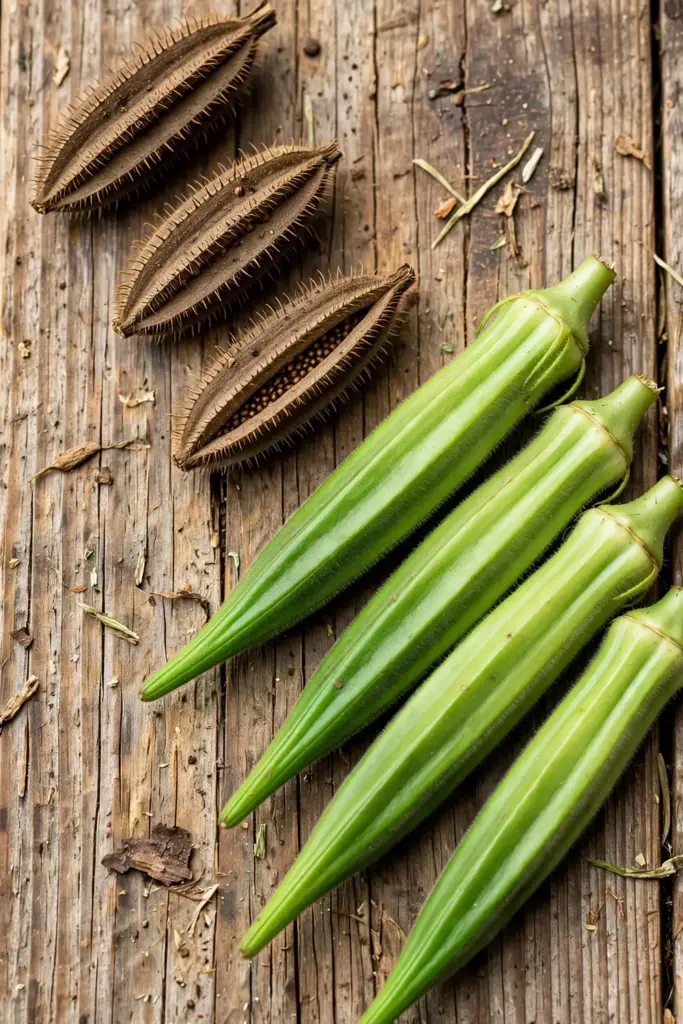
The seed carries a sweet, flowery, heavy fragrance similar to musk, which is exactly where the species name comes from. For much of the 20th century this seed was the plant-based musk substitute used in perfumery, before synthetic musks replaced it on cost. Today the oil still appears in fine fragrances and natural perfumery, extracted by steam distillation of crushed seed or increasingly by supercritical carbon dioxide extraction.
Because the common names overlap, home growers regularly buy the wrong seed. The table below keeps the three lookalikes straight.
| Name You See | Real Identity | Relationship to Ambrette |
|---|---|---|
| Ambrette / muskdana / latakasturi | Abelmoschus moschatus | The actual plant-musk seed crop |
| Okra / bhindi | Abelmoschus esculentus | Same genus, different species; grown for edible pods, not musk seed |
| Musk mallow (European) | Malva moschata | Unrelated genus; shares the common name only, check the Latin name before buying seed |
When you order seed, look for Abelmoschus moschatus on the packet. If the packet only says “musk mallow” with no Latin name, ask the seller or pick another seller.
2. Climate and Zone Reality: Where Ambrette Grows Best
Ambrette is a warm-season annual that thrives where summers are long, sunny, and humid. The agroforestry literature places it in regions with highs of 23 to 35 degrees Celsius and rainfall of 800 to 2,500 millimeters, sown at the start of the rainy season. In India that means southern and coastal regions do particularly well, along with the central plains where the monsoon is reliable.
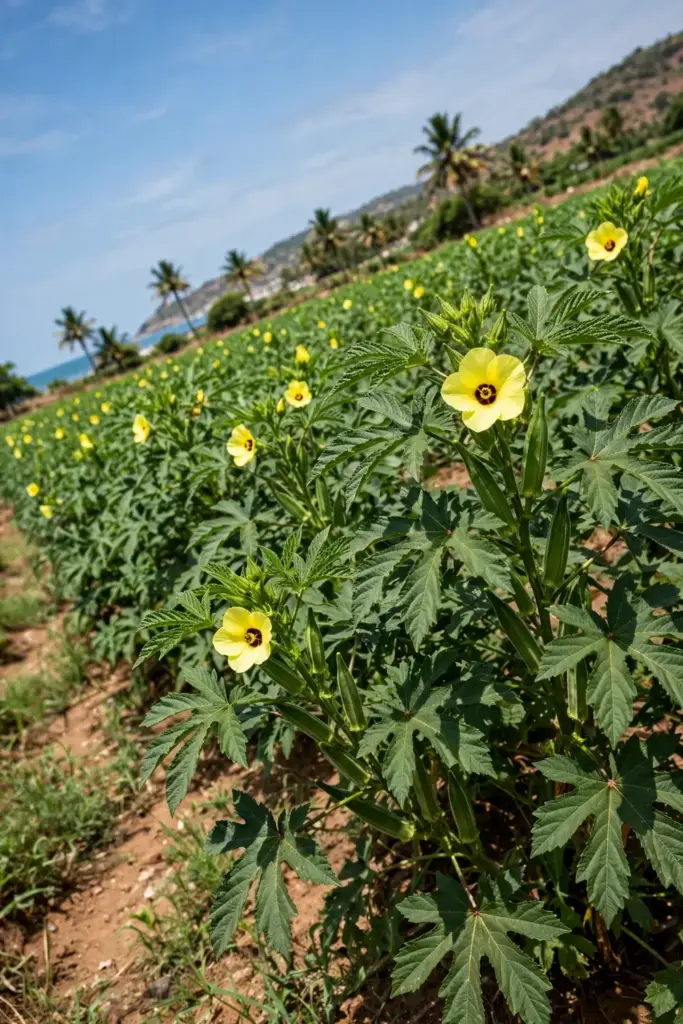
The crop tolerates heat that shuts down most cool-season vegetables. Temperatures in the low 30s are productive growing weather, not stress weather. What it does not tolerate is waterlogged ground or a long cold season at the start. Cool, soggy soil slows germination and invites root rot, so in North India wait until night temperatures settle before sowing.
If you garden in the hills or the far north, treat ambrette as a true monsoon crop and start seed indoors or under cover to make up for the shorter warm window. In frost-free coastal gardens you can sow directly and let the plant follow its natural rhythm. The rule of thumb is simple: plant it when the soil is warm enough for okra, and it will behave.
3. The Pre-Kharif Calendar: Sow Early, Harvest in Winter
Commercial growers in India treat ambrette as a pre-kharif crop. Sowing runs from March through April, and can stretch as late as the first week of July in Central India, with April-sown crops starting to flower in September and fruits ripening from November through January. Flowers appear roughly four to five months after sowing, so everything hinges on getting seed into warm ground on time.
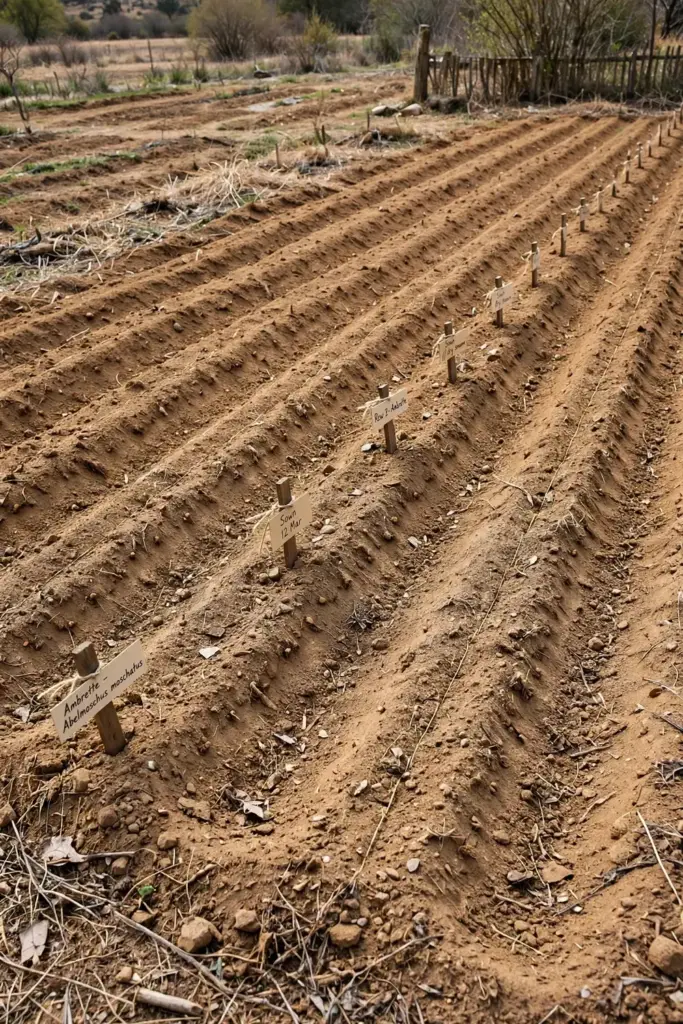
For home growers, the table below maps the season. Timings are for the Indian plains and shift a few weeks earlier on the coast and later in the north.
| Phase | Timing | What You Do |
|---|---|---|
| Sowing | March to April | Sow into warm soil; May is acceptable, June and July cut yields |
| Vegetative growth | May to August | Thin, water, weed, and feed through the monsoon |
| Flowering | September onward | Watch for hibiscus-like blooms; stop heavy feeding |
| Pod filling | October to November | Let capsules fill and mature on the plant |
| Harvest | November to January | Pick mature capsules before they split and drop seed |
Mark your calendar backwards from the monsoon. A late sowing still grows, but the flowering window shortens and total seed falls, so the March to April slot is the one to defend. Master this calendar and you have mastered how to grow ambrette seed from India; everything else is care and timing.
4. Seed Is the Product, Not the Pod
With most vegetables you harvest the fruit. With ambrette you grow the whole plant for what is inside the fruit. The musk scent lives in the seed, and the seed is worthless until the plant has finished its entire season. That changes how you think about care: early leaf damage from a pest storm matters less than steady pod filling late in the season.
Commercial operations average 900 kilograms of seed per hectare per season, with oil content of 0.2 to 0.6 percent, which works out to 1.8 to 5.4 kilograms of oil per hectare. A home garden will never see those numbers, but the proportions matter: tiny differences in seed quality and harvest timing change what your seed is worth to you as a fragrance material.
The practical takeaway is to let the plant finish. Ambrette is an annual that dies at the end of the season, so there is no reason to hold back. Water and feed it through flowering, let the pods mature fully, and harvest when the capsules are ripe. Every week of pod maturity you lose by harvesting early is scent you never get back.
5. Buying Good Seed: Freshness Rules
Ambrette seed quality decides your season before it starts. Old seed germinates slowly and unevenly, which gives you a straggly stand where some plants flower weeks behind the others. Buy from a seller who moves seed quickly and stores it dry, and prefer packets dated for the current year.
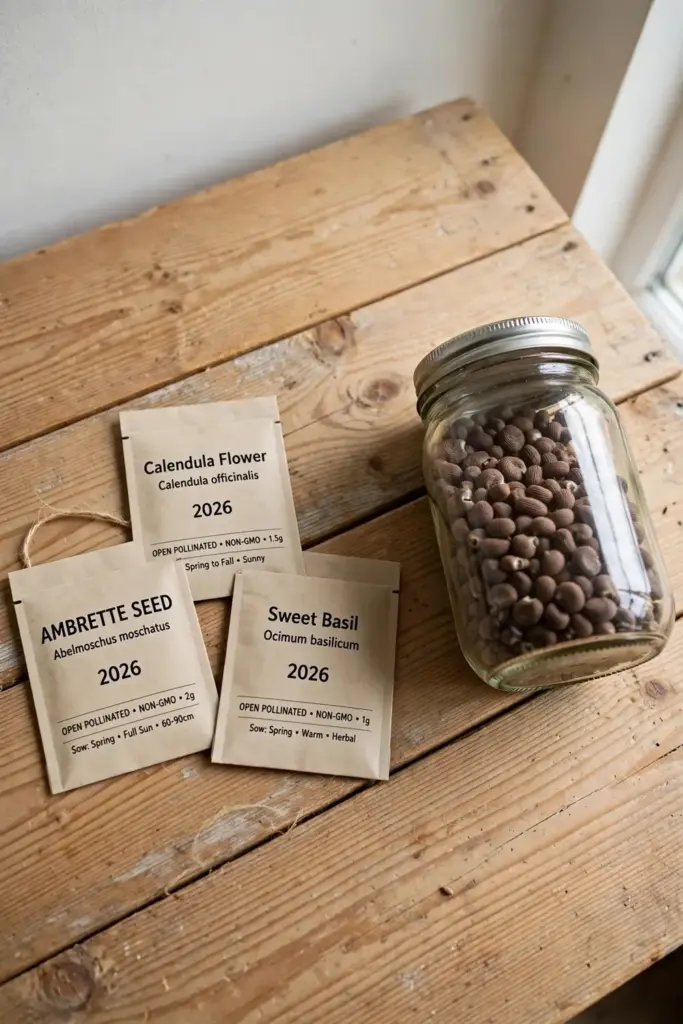
There is no reliable home test for musk content in dry seed, because the raw seed barely smells at all. The fragrance develops when the seed is crushed and processed, so buy for viability, not for aroma. Look for plump, uniform seed with no dust or broken pieces, and store what you do not sow in a sealed jar in a cool, dry place.
Buy slightly more seed than you need. At home-garden scale a single packet is cheap, and a second sowing fills gaps where germination failed. Ambrette germinates best in warm soil, so seed saved from your own harvest should be dried thoroughly and kept airtight to stay viable for the following March.
6. Direct Sow vs Nursery Beds: Which Wins
For most home growers, direct sowing wins. Ambrette develops a long slender taproot, and plants that never get transplanted grow straighter roots and sturdier stems. Sow where the plant will finish, thin to final spacing, and skip the pots entirely. Direct sowing also keeps the calendar honest: seed goes in when the soil is warm, and growth tracks the season.
Nursery beds earn their place in two cases. If your spring is still cool or erratic, starting seed under cover buys you two to three weeks and lets you set out transplants into properly warm soil. Nurseries also help when seed is expensive or limited, since you can coddle a small tray instead of gambling on a whole bed.
If you go the nursery route, use deep cells or small bags so the taproot does not hit the bottom and fork. Transplant early, while seedlings are young and the root is still a single clean spike. Handle by the leaves, never the stem, and water the bed before lifting so the root ball holds together. For a full rundown of starting seed the right way, see our seed starting guide for the tray setup and hardening routine.
7. Sowing, Step by Step
Sow when the soil is warm and the night temperatures have settled. In most of India that means late March through April, with the pre-kharif window opening as soon as the dry heat stabilizes. The steps below cover a direct-sown home bed.
| Step | Action | Time |
|---|---|---|
| 1 | Prepare a sunny bed with free-draining soil, raked level and free of clods | 1 day before sowing |
| 2 | Water the bed deeply so moisture sits below the surface | Evening before sowing |
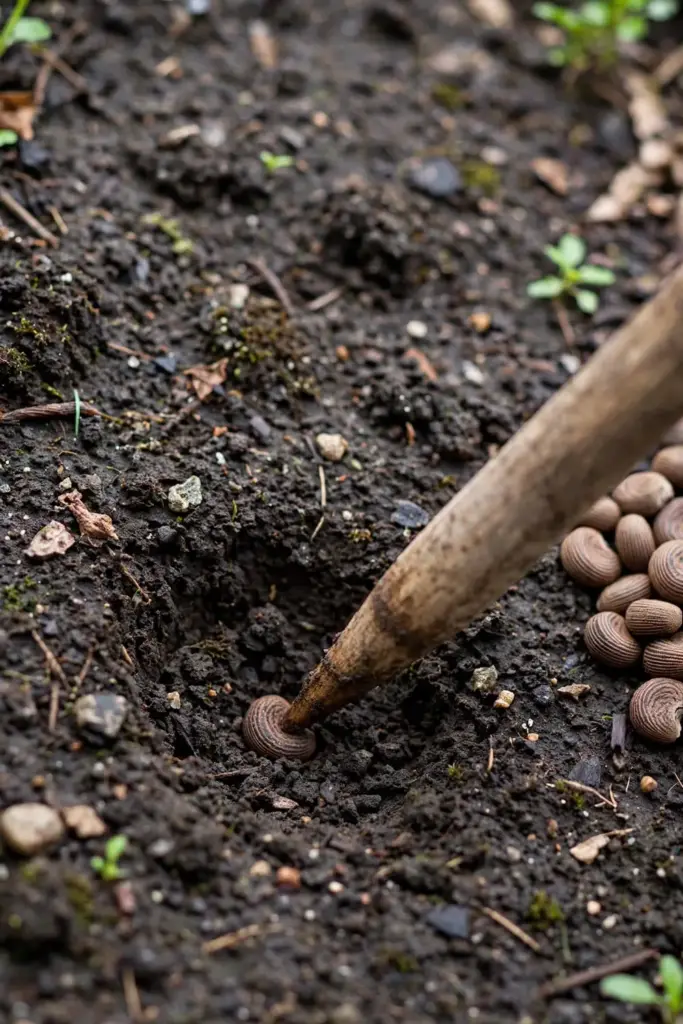
| 3 | Sow seed 1 to 2 centimeters deep, 2 seeds per station | Morning of sowing day |
| 4 | Cover lightly with fine soil and press gently for seed contact | Immediately after sowing |
| 5 | Water gently to settle the seed without washing it out | Same morning |
| 6 | Keep the surface moist until emergence | 7 to 14 days |
| 7 | Thin to one seedling per station at the 3 to 4 leaf stage | 2 to 3 weeks after sowing |
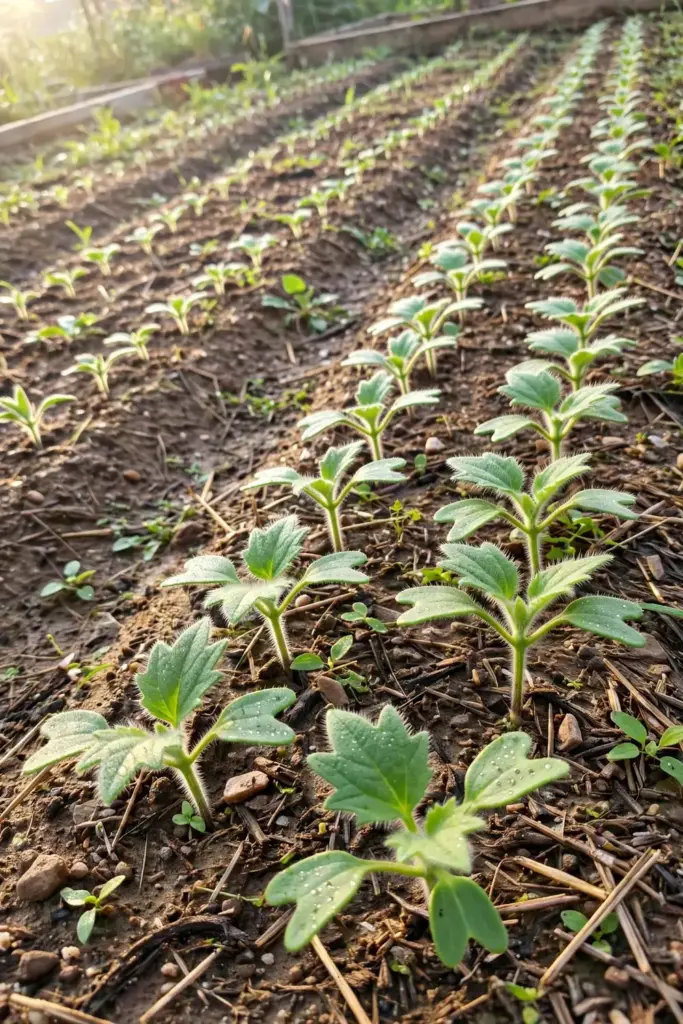
Signs it worked: seedlings emerge evenly within two weeks, the first true leaves are broad and hairy, and the young plants stand upright without flopping. Patchy emergence usually means the bed dried out between watering or the seed was old.
8. Spacing: Give Each Plant Its Square Meter of Sky
Ambrette needs room. Field trials in India have tested several layouts, and the productive pattern for home gardens comes from the Hyderabad work: 50 by 30 centimeters with balanced NPK gave the best growth, while Annamalai University trials favored 60 by 60 centimeters for July to December sowings. For a home bed, plant at 45 to 50 centimeters between rows and 30 centimeters between plants.
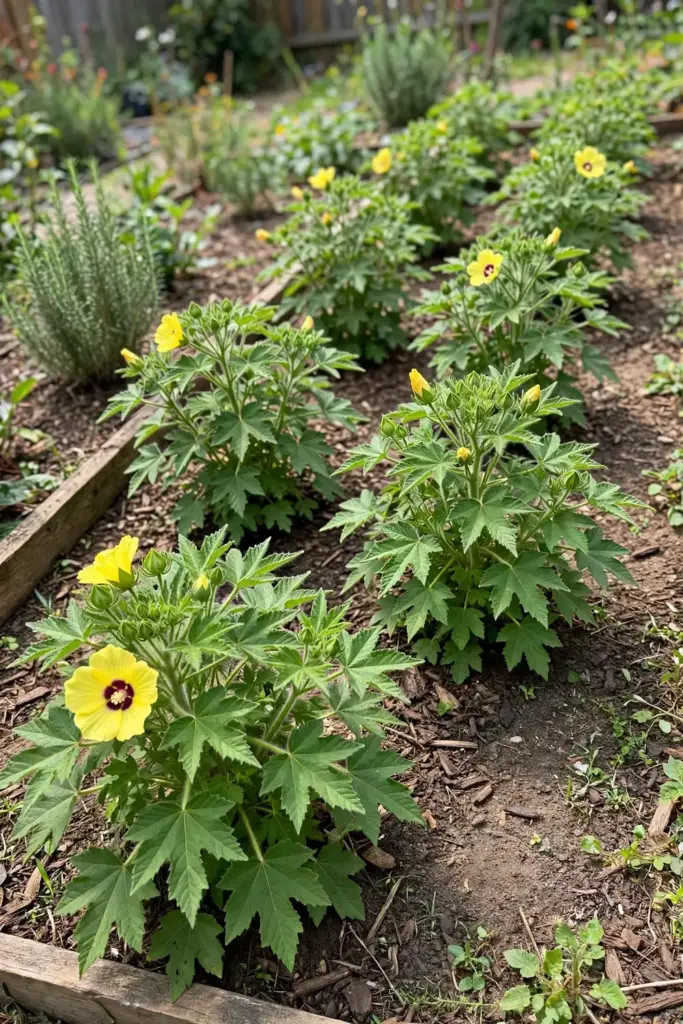
Crowding is the most common home-grower mistake with this crop. Plants squeezed together shade each other, stay soft and leggy, and set fewer pods per plant. The total seed from ten well-spaced plants beats the total from twenty cramped ones, because each plant in the open carries more flowering branches.
If you intercrop, keep companions low and shallow-rooted, and keep the ambrette rows clear of tall competition. Ridge sowing, with rows raised slightly above the furrows, helps drainage in heavy monsoon rain and is worth the extra shaping in clay soils.
9. Growing Ambrette in Containers
Ambrette fits a container if the pot is big enough for the taproot. Use a pot at least 12 inches deep and wide, one plant per pot, filled with a free-draining potting mix. A 14 to 16 inch pot is better and needs watering less often in peak heat. The plant reaches a meter or more, so place the pot where a tall, bushy annual will not shade out its neighbors.
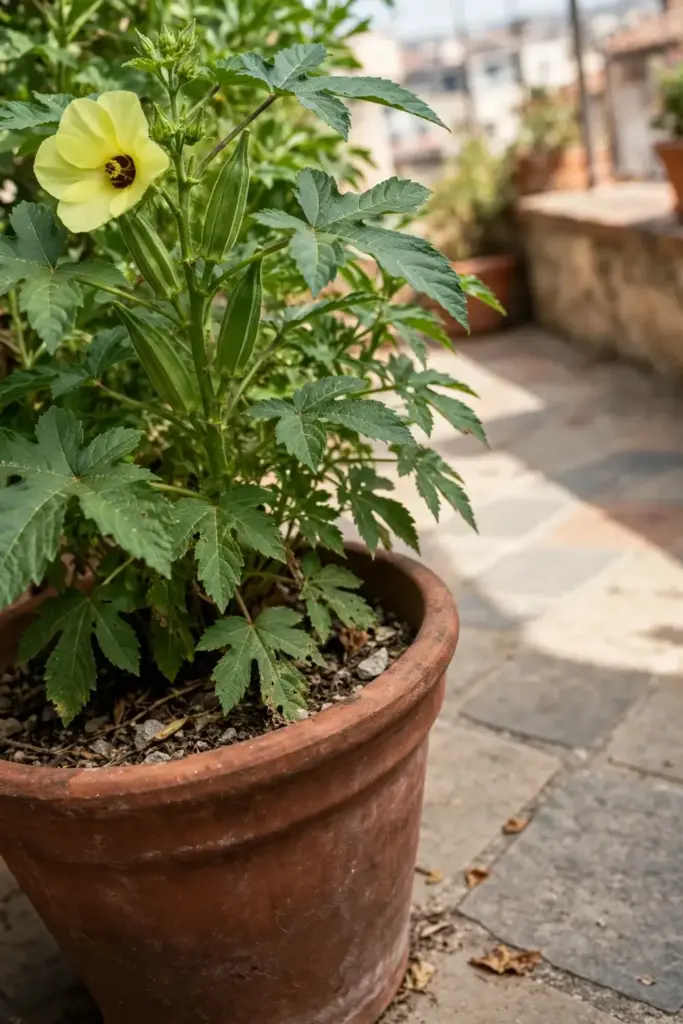
Container plants need more water than bed plants, especially once flowering starts. Check the top inch of mix daily in hot weather and water deeply when it dries. Feed lightly every three to four weeks with a balanced fertilizer, and stop feeding once pods start filling so the plant finishes instead of pushing new leaves.
The honest limit of pots is seed volume. One container plant gives you a handful of pods, which is plenty for a home perfumery experiment or a tincture jar, but not for serious seed saving. If you want a real harvest, grow at least six to eight plants in the ground. Container fundamentals such as drainage, mix choice, and indoor light apply here too, so the indoor herb guide is a useful companion if you garden without outdoor space.
10. Soil: Free-Draining Loam at pH 6.0 to 7.5
Ambrette wants a free-draining loam, sandy loam, or loamy sand with a pH between 6.0 and 7.5. It tolerates several soil textures as long as water moves through, because standing water is the fastest way to lose the crop to root rot. Heavy clay needs the most work: raise the bed, add coarse organic matter, and consider ridge sowing.
Before sowing, work 3 to 5 kilograms of well-rotted farmyard manure per square meter into the bed. This is the organic foundation the plant feeds from through the long season. Fresh manure burns young roots, so use only material that is fully composted and crumbly.
Check drainage with a simple test after a heavy watering: the surface should drain within a few hours with no puddles by evening. If water stands, reshape the bed higher before sowing. Getting this right at the start saves you from rescuing drowned plants in July, and healthy soil biology pays off all season, which is why our soil health guide is worth reading before you plant.
11. Watering Through the Season
Water ambrette like a monsoon vegetable: generous during establishment and active growth, steadier through flowering, and tapering as pods mature. In the hot weeks after sowing, keep the soil evenly moist so seedlings never stall. Once the monsoon arrives, rainfall usually does the work, and your job becomes drainage rather than irrigation.
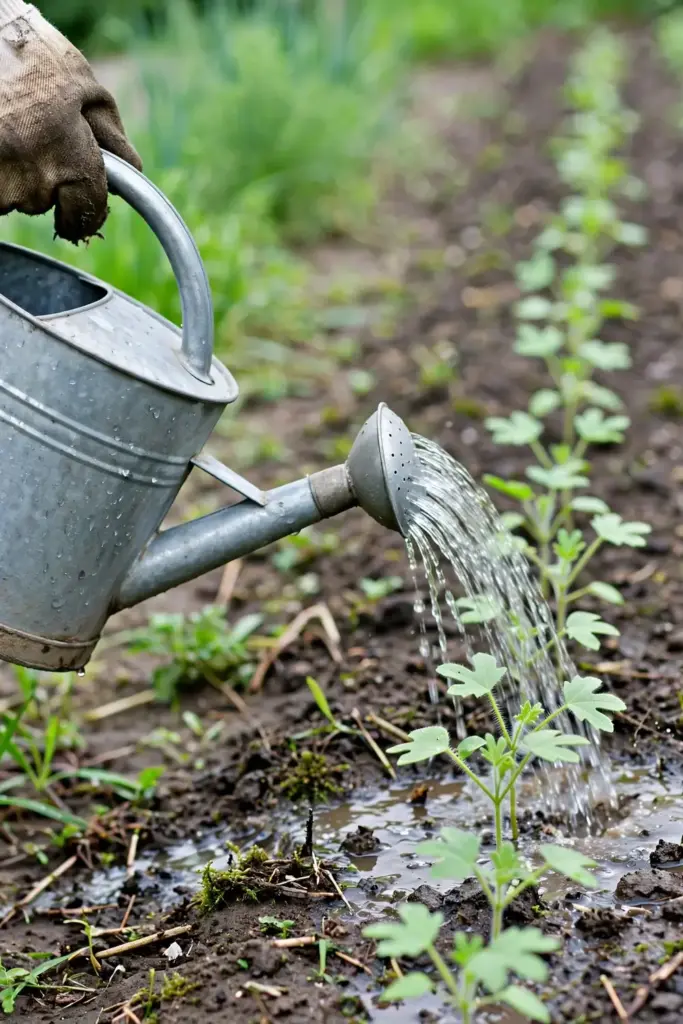
During flowering and pod fill, avoid letting the bed swing between soaked and bone dry. Even moisture supports pod filling and keeps flowers from dropping. Drip lines or a soaker hose beat overhead sprinklers here, because wet foliage in humid weather invites powdery mildew.
In the final month, as capsules start to mature, ease off. Slightly drier conditions help pods ripen and reduce the risk of fungal problems on mature seed. The plant is finishing its life; let it finish dry rather than dragging it through extra irrigation.
12. Feeding: Why Chemical Fertilizer Hurts the Oil
Here is the trade-off that separates ambrette from ordinary vegetables. Fertilizer application improves plant growth and seed yield, but research trials indicate chemical inputs can have a negative impact on oil content and quality. If you grow ambrette for the musk-scented seed rather than for bulk, feeding for maximum growth works against your real goal.
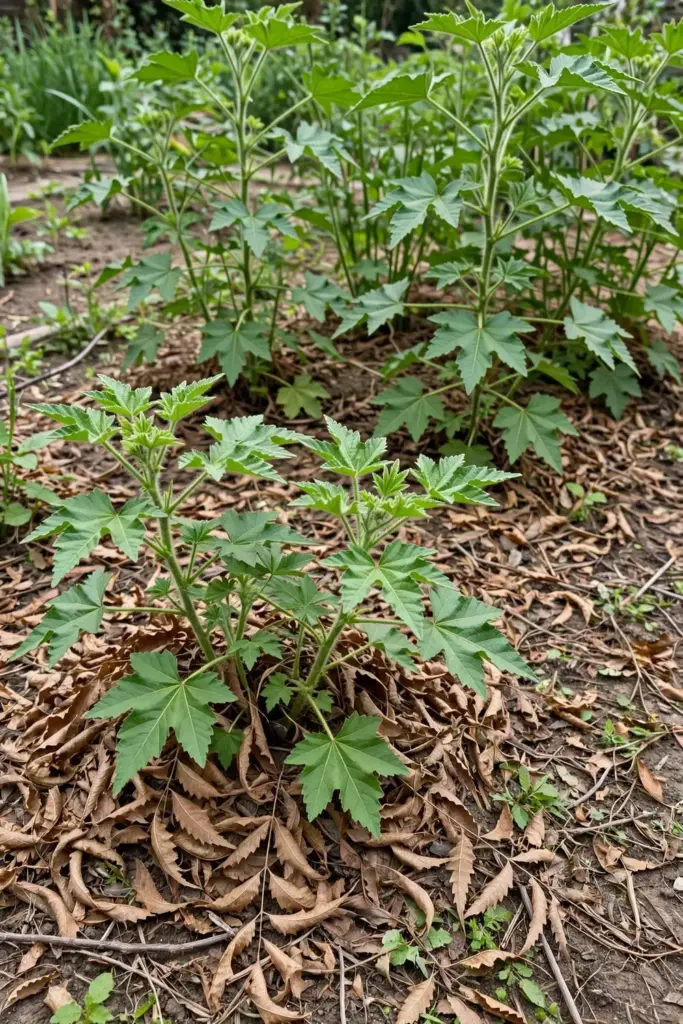
The organic alternative comes from the same research: applying dried neem leaves at 500 kilograms per hectare at the last ploughing increased both oil content and oil quality. For a home bed, that translates to a thick layer of dried neem leaf worked into the soil before sowing, alongside your compost. Neem is easy to source in India and the bed also benefits from its pest-repellent properties.
Practically, feed the base: compost or farmyard manure at planting, a light top-dressing of compost at the start of the monsoon, and then restraint. Skip heavy urea or high-nitrogen synthetics once the plant is established. You will get slightly smaller plants and measurably better seed, which is the right trade for a fragrance crop.
13. Thinning: The Step Everyone Skips
Thinning feels wasteful, which is why almost everyone skips it and almost everyone regrets it. Two seedlings per station protects against germination gaps, but two plants sharing one station never equals one strong plant. At the three to four leaf stage, choose the sturdier seedling and cut the other at soil level. Do not pull, since pulling disturbs the survivor’s taproot.
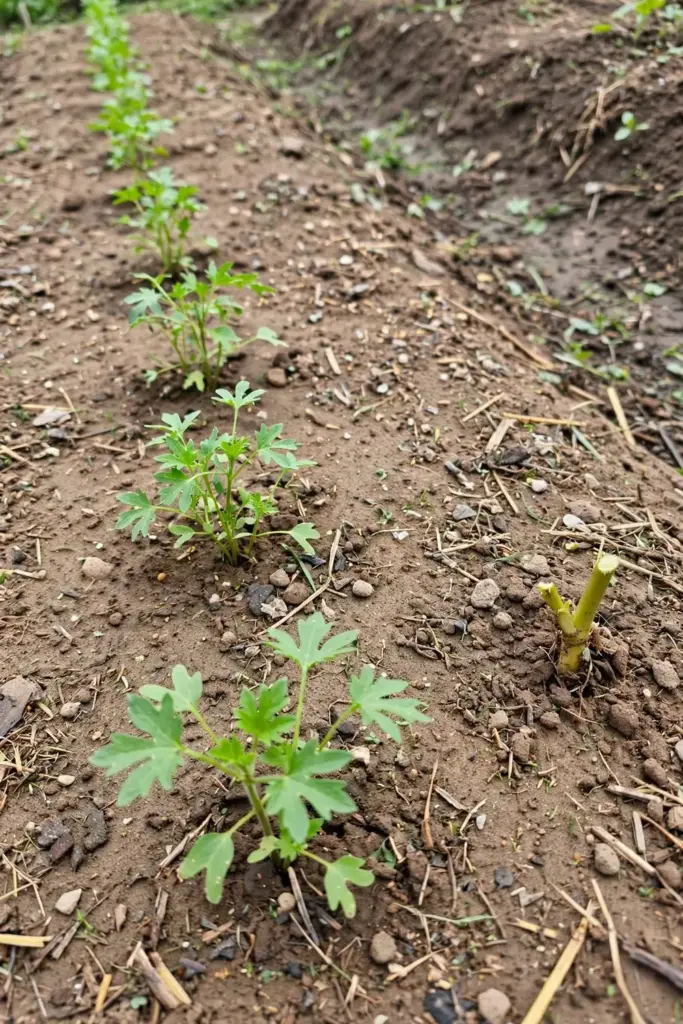
Thin again if the rows close too fast. Ambrette branches generously when it has light, and an open canopy dries faster after rain, which matters for mildew pressure. Walk the bed at the start of the monsoon and remove any runts that are clearly losing the race.
Keep the thinnings out of the compost only if they show disease. Healthy thinnings are fine to compost or feed to livestock. The goal is a bed where every remaining plant has its full share of light, water, and nutrients from July onward.
14. Pests and Diseases: Powdery Mildew, Spider Mites, Root Rot
Ambrette has no serious insect or disease problems reported in the literature, which is one of its quiet advantages. The issues you will actually meet are the familiar monsoon trio: powdery mildew, spider mites, and root rot in poorly drained soil, plus occasional slugs and whiteflies.
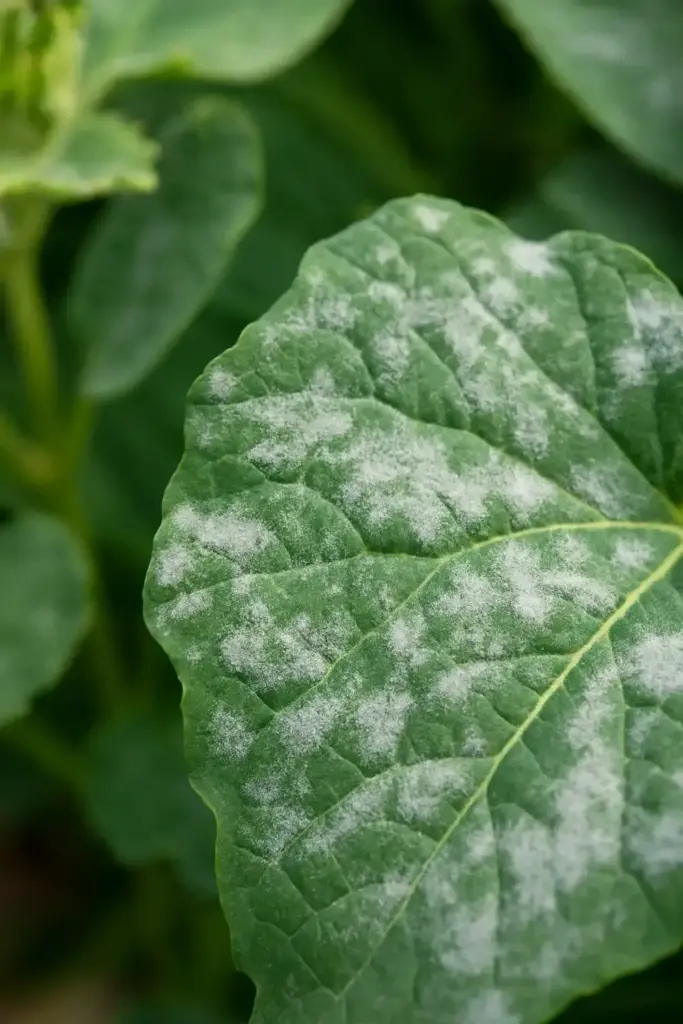
Powdery mildew shows as a white dusting on leaves in humid weather. Give plants space, water at the base, and remove badly affected lower leaves to improve airflow. Spider mites thrive in hot, dusty conditions and show as stippled, bronzed leaves; a strong jet of water on leaf undersides knocks populations back, and neem-based sprays help in bad years.
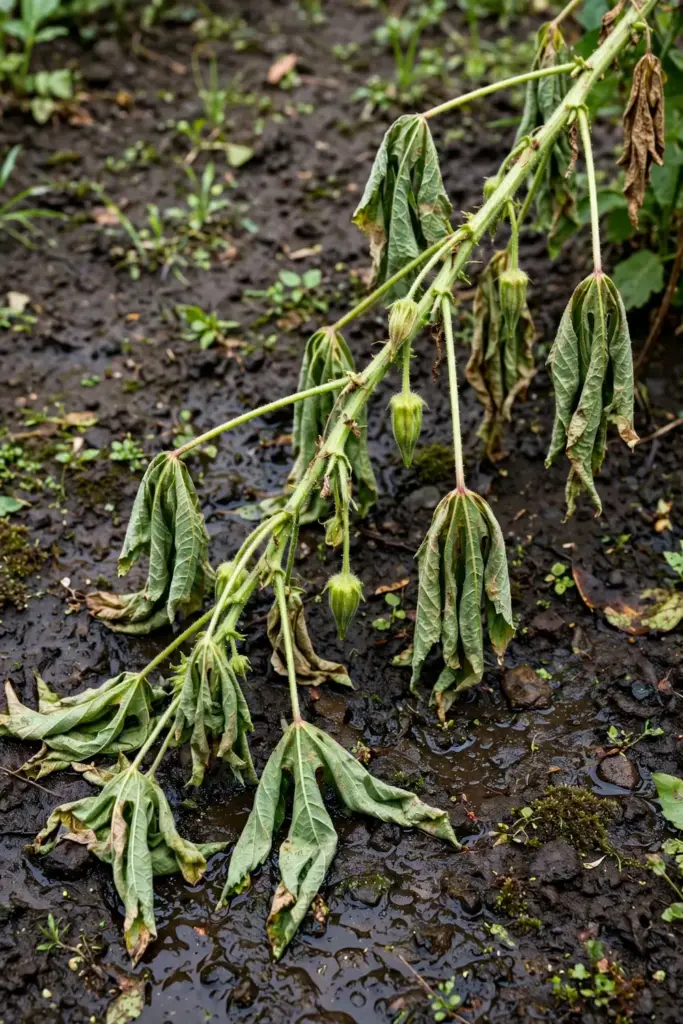
Root rot is the one that kills plants outright, and it is almost always a drainage problem rather than a bad-luck problem. If a plant wilts in wet soil, check the base: soft, darkened stems mean the roots have rotted. There is no rescue at that stage, so prevention through bed shape and soil structure is everything. Slugs and whiteflies are minor; hand-pick slugs after rain and ignore the occasional whitefly unless populations explode.
15. September Blooms: What Flowering Tells You
When the first hibiscus-like flowers open, usually from September in April-sown crops, the plant is telling you the vegetative phase is over. The yellow petals with dark purple centres are unmistakable, and each flower lasts a single day before the pod starts swelling behind it. This is the most ornamental the plant ever looks, and the most useful diagnostic moment of the season.
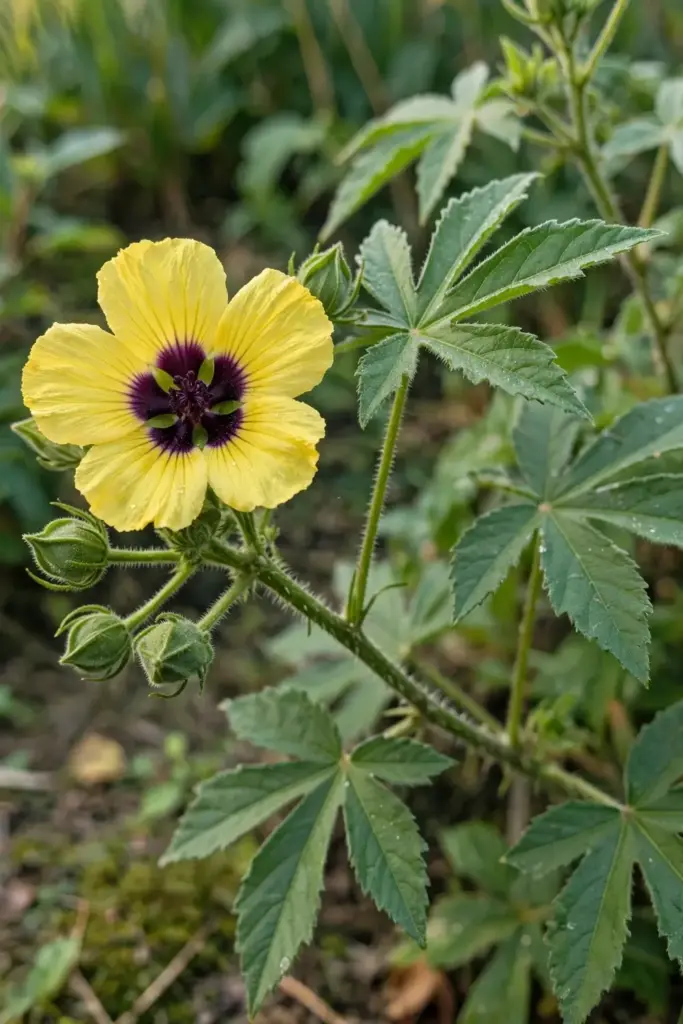
A plant that flowers on schedule with plenty of buds is a plant that will set a full pod load. A plant that flowers late or sparsely is telling you something went wrong earlier: late sowing, crowding, poor nutrition, or a dry spell during bud formation. You cannot fix the past, but you can note the cause for next year’s calendar.
At flowering, stop pushing nitrogen. The plant needs steady water and potassium-rich nutrition for pod fill, not new leaves. A light compost mulch around the base keeps roots cool and moisture even through the critical weeks when pods are forming.
16. Harvesting Pods Before They Burst
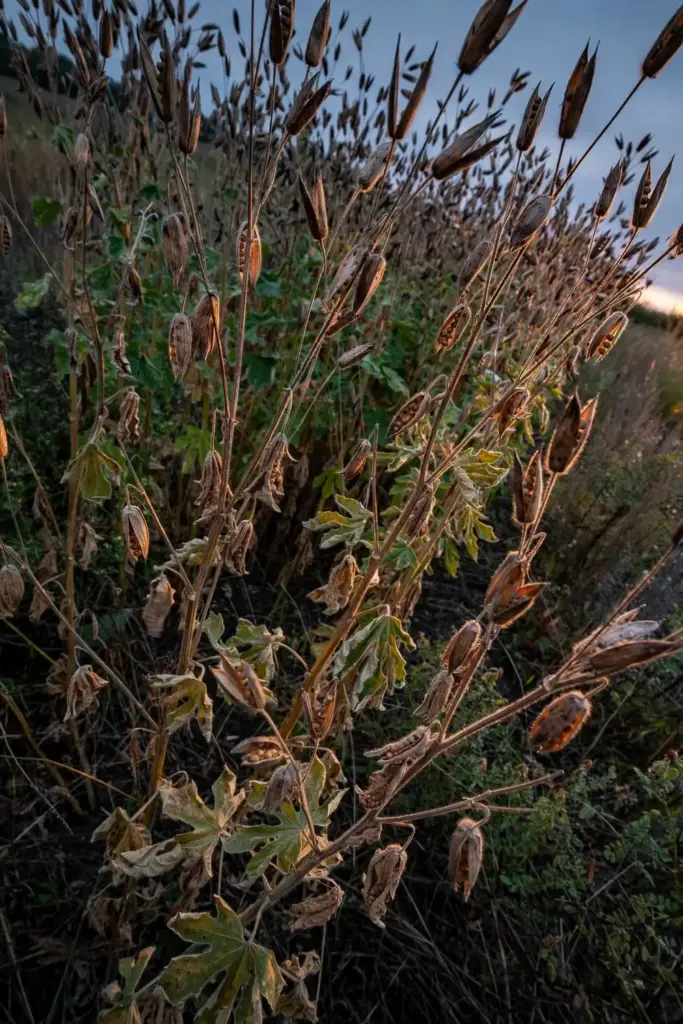
Harvest ambrette capsules when they are fully mature but before they split open. Ripe capsules turn dry and papery, and the seeds inside loosen; overripe capsules burst and scatter seed on the ground, which is how you lose half a harvest in a week. Check the bed every two to three days once the first capsules start coloring.
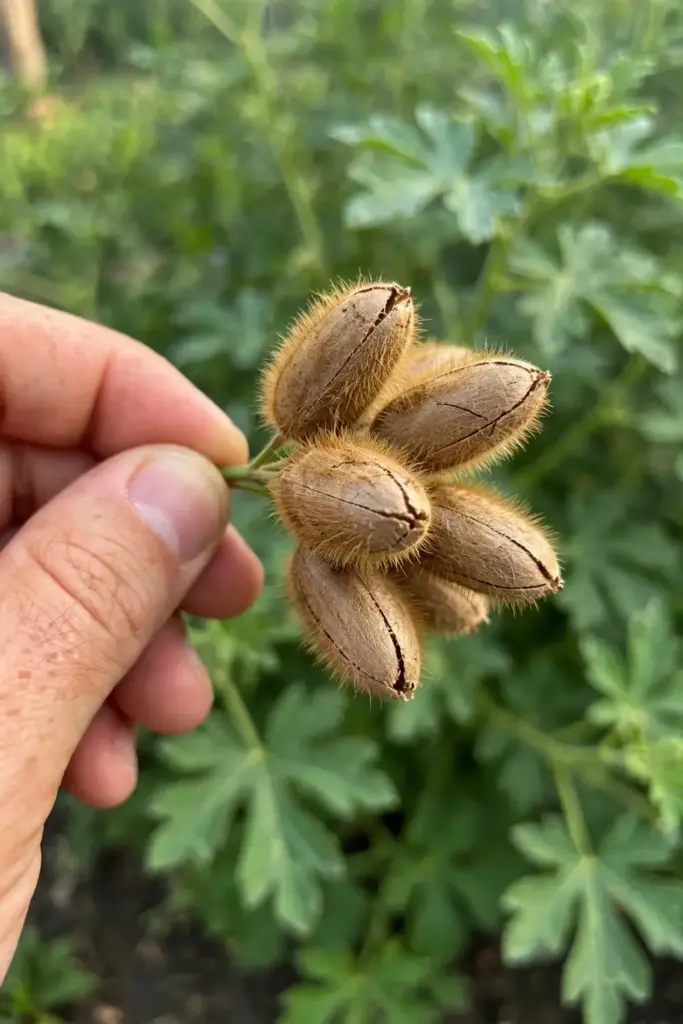
Pick capsules by hand into a basket or cloth bag, working in the morning when the air is dry. Handle them gently, since cracked capsules leak seed. If a few have already split, gather the fallen seed from clean ground or a sheet laid under the plants the evening before.
Do not harvest green capsules. Immature seed has poor germination and weak scent, and no amount of drying fixes it. The pods need to finish on the plant; patience at this stage is the difference between fragrant seed and disappointment.
17. Drying and Curing Seed for the Musk Scent
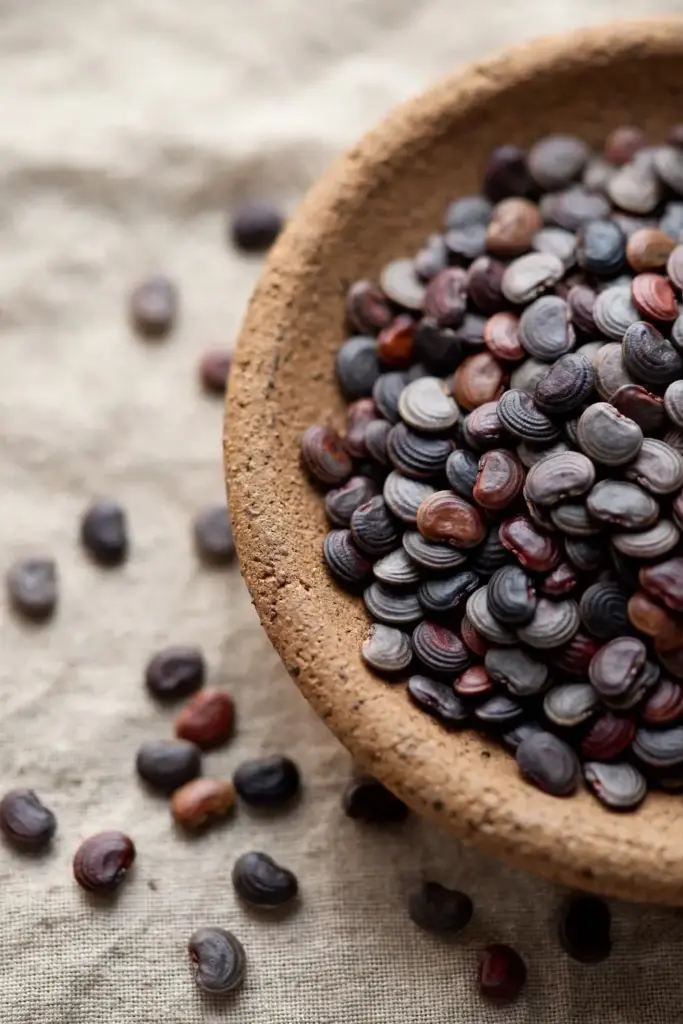
Sun-dry the harvested capsules in a thin layer on a clean sheet or tray, turning them daily, until they are fully dry and brittle. As they dry, the capsules open on their own and release the seed, a process called dehiscence. This is the moment the raw material of your harvest appears: small, hard, kidney-shaped seeds, greyish-red to dark.
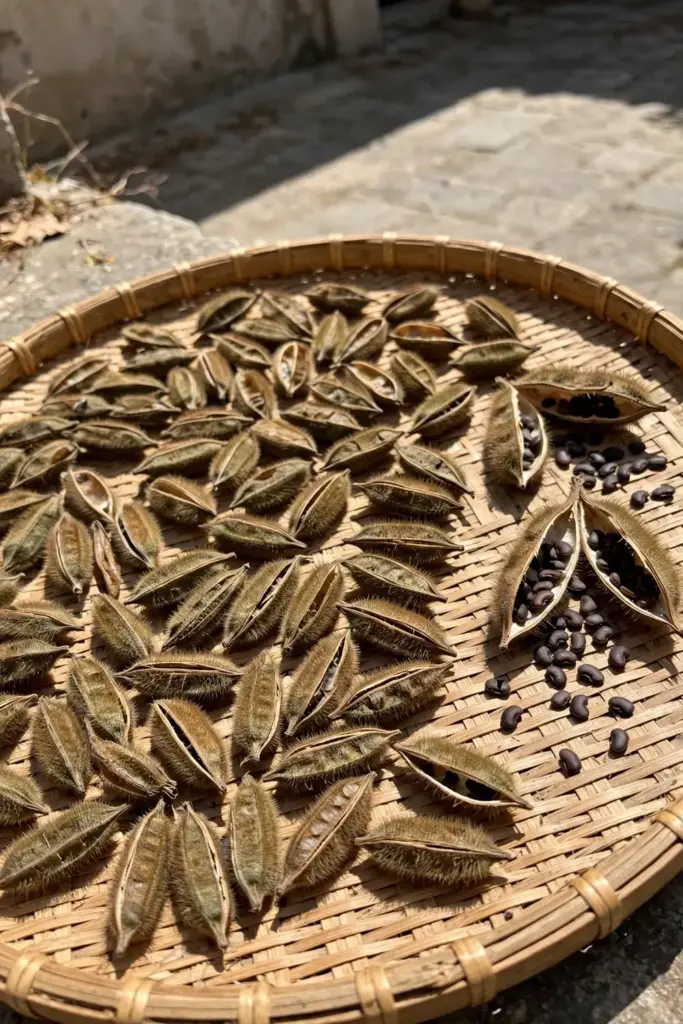
Rub the dried capsules gently to free every seed, then winnow away the papery chaff. A breeze and two trays are enough at home scale: pour the seed from one tray to the other in front of a fan and the light chaff blows away. Clean seed stores better and smells cleaner.
Cure the cleaned seed in a breathable cloth bag in a cool, dry place for two to three weeks before sealing it in jars. Here is the counterintuitive part: raw ambrette seed barely smells. The musk character develops when the seed is crushed and processed, so do not judge your harvest by sniffing whole seed. Judge it by weight, cleanliness, and full maturity.
18. What Ambrette Seed Becomes: The Plant-Musk Story
For much of the last century, ambrette seed was the plant kingdom’s answer to animal musk. Perfumers steam-distilled crushed seed into an oil with a floral-musky, wine-like character, and it appeared in fine fragrances including L’Egoiste by Chanel and Heaven by Chopard. Synthetic musks have since replaced it in most commercial perfumery on cost, but natural perfumers still prize the real oil, and carbon dioxide extraction now captures the aroma at lower temperatures with less damage than steam distillation.
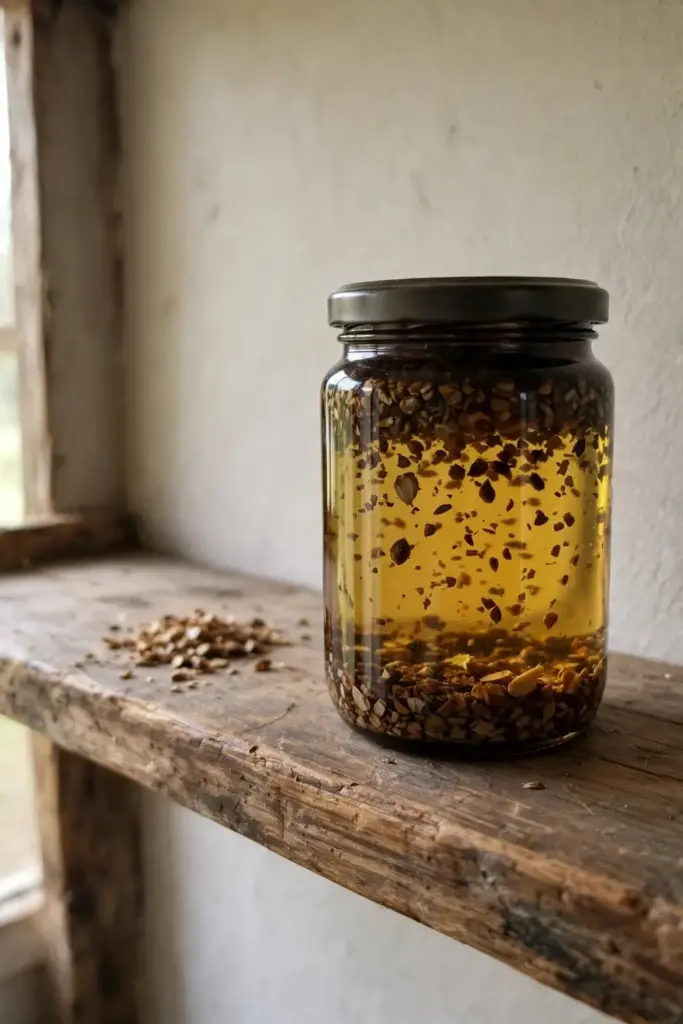
Home growers can explore the craft side honestly. A classic tincture uses 40 grams of crushed seed in 100 milliliters of high-proof alcohol, infused in a dark bottle for at least a month with regular shaking. The result is a musky base note for homemade perfume blends, though the scent of the raw tincture is subtle and the real character emerges in blending.
Keep the economics in perspective. Trade listings put dried muskadana around 715 rupees per kilogram in Indian wholesale markets, and the oil yield per hectare is measured in single-digit kilograms. Your home harvest is a craft material, not a cash crop, and that is exactly what makes it fun: you are growing a piece of perfume history in a garden bed.
19. Safety: Handle Seed With Care
Ambrette deserves the same respect as any potent plant material. The plant can cause phytophotodermatitis, a skin reaction triggered when plant compounds meet sunlight, so wear gloves when handling large quantities of crushed seed or working among the plants on bright days, and wash exposed skin afterward.
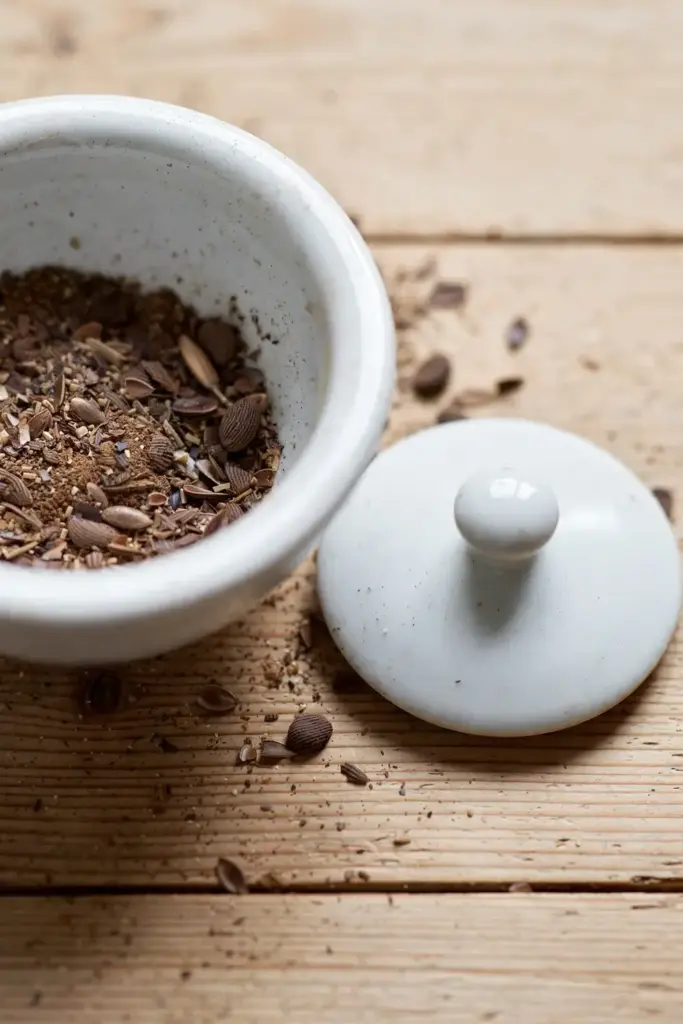
The seed is not proven safe in pregnancy or lactation, and traditional medicinal uses described in old texts are not dosing advice. This guide covers growing, not medicine. If you plan to use ambrette seed or its oil on skin, dilute properly, patch test first, and treat essential oil with the caution any concentrated plant extract deserves.
These cautions do not make ambrette dangerous to grow. They make it a plant to handle knowledgeably, like chillies or rue. Gloves, common sense, and no internal use without professional guidance cover everything.
20. Mistakes That Cost You Seed
Sowing into cold soil is the first and most common error. Ambrette seed sown too early sits in cool ground, germinates patchily, and the late plants never catch up. Wait for settled warm weather; a May sowing beats an impatient March sowing into cold soil.
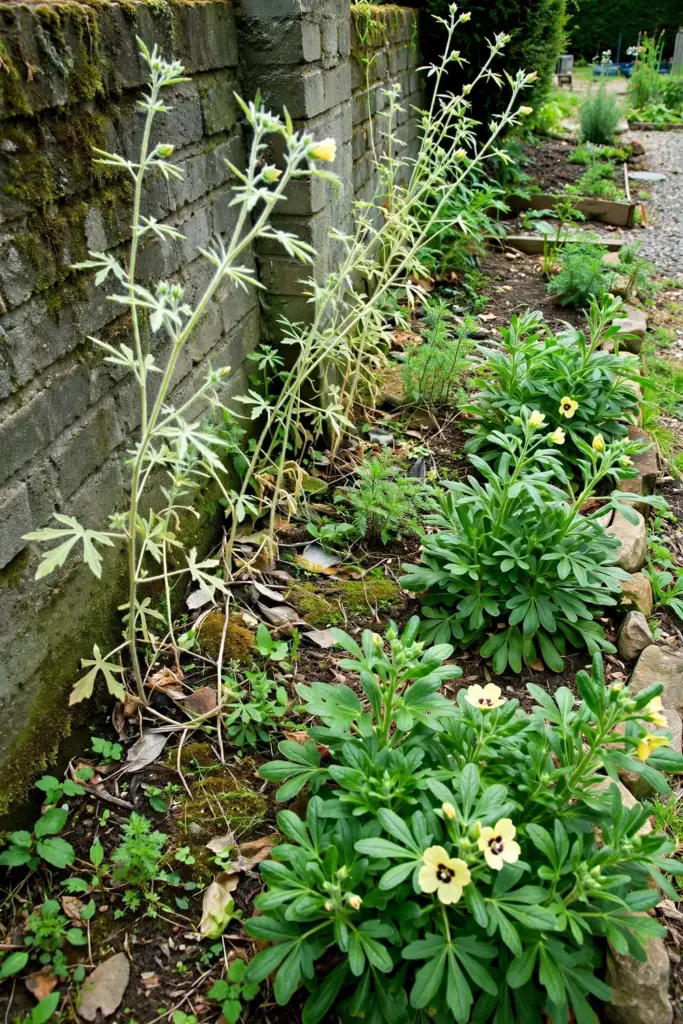
Overfeeding with chemical nitrogen is the second. The plants look spectacular and the seed disappoints, because the oil content drops as growth surges. Feed the base with compost and neem leaf, then restrain yourself through the season.
Harvesting too early or too late is the third. Green pods give immature seed, and pods left on the plant burst and scatter. Check the bed every few days through November and December and harvest in the dry morning hours.
Planting in a shady corner is the fourth. Ambrette is a full-sun crop, and shaded plants stretch, flower poorly, and invite mildew. Give it the sunniest bed you have, and keep the rows open to the air.
Finally, confusing the species is the fifth. Seed sold as “musk mallow” without a Latin name may be Malva moschata, which grows fine but never gives you ambrette seed. Verify Abelmoschus moschatus before you sow a single seed.
21. Troubleshooting: Quick Fixes for Common Problems
Seedlings emerge patchily: the bed dried out or the seed was old. Keep the surface consistently moist for the first two weeks, buy fresh dated seed, and sow a few extra stations as insurance.
Plants are tall and floppy: crowding or shade. Thin to final spacing and make sure the bed gets full sun. Staking is rarely needed for well-spaced plants with sturdy stems.
Leaves show white powdery coating: powdery mildew in humid weather. Improve airflow, water at the base, and remove the worst leaves. The plant usually outgrows mild cases.
Plant wilts in wet soil: root rot from poor drainage. There is no cure for an affected plant; pull it, improve the bed shape, and replant only into ground that drains within hours.
Few flowers or pods: late sowing, crowding, or a dry spell at bud stage. Note the cause, adjust next year’s calendar, and keep the current plants watered evenly through pod fill.
Capsules burst before harvest: you checked too rarely. Harvest every two to three days once pods start maturing, and lay a sheet under the plants to catch fallen seed.
Frequently Asked Questions
No. Ambrette is Abelmoschus moschatus and okra is Abelmoschus esculentus. They share a genus, so the plants look related, but okra is grown for its edible pods while ambrette is grown for musk-scented seed. Seed sold for one will not substitute for the other.
About seven to nine months. Sow in March or April, expect flowers from September, and harvest mature capsules between November and January. The exact timing shifts with your sowing date and region, so treat the calendar as a guide rather than a deadline.
Yes, one plant per large pot at least 12 inches deep and wide, in free-draining mix with full sun. Expect a modest harvest: enough seed for a home tincture experiment, but not a serious crop. For real volume, grow six to eight plants in a garden bed.
Raw whole seed has almost no aroma. The musk character is released when the seed is crushed and processed into oil or tincture, so judge your harvest by seed weight, cleanliness, and full maturity rather than by sniffing whole seed. Store cured seed in sealed jars in a cool, dry place.
Generally yes, with care. The plant can cause phytophotodermatitis, so wear gloves when handling crushed seed in quantity and wash skin afterward. It is not proven safe in pregnancy or lactation, and this guide does not give medicinal dosing advice.
The name “musk mallow” is used for two different plants: Abelmoschus moschatus (ambrette, the musk-seed crop) and Malva moschata (a European ornamental). Always check the Latin name on the packet before buying, since only Abelmoschus moschatus produces true ambrette seed.
Where to Go From Here
You now have the full season mapped: warm soil and a March to April sowing, honest spacing, restrained feeding that protects the oil, and a harvest timed to the bursting capsule. Ambrette asks less of you than most crops and repays attention at exactly three moments: sowing day, thinning day, and harvest week.
If this is your first fragrance crop, start with a small bed of six to eight plants and make one tincture from your first harvest. The process teaches you more about the seed than any description can. And when you crush that first spoonful of cured seed and the musk rises out of it, you will understand why perfumers chased this plant for a century.
For growers ready to expand, the same pre-kharif discipline applies to other Indian seed crops. The season map above works as a template: sow with the heat, feed the soil more than the plant, and harvest at full maturity. If you want to learn how to grow ambrette seed from India at field scale, the agroforestry and university trial literature cited here is the next place to read.