Cut 3 plantlets from one spider plant and hang them in a basket by the window. That is a budget indoor garden idea that fits a small room, and it works because the plant matches the light already in the room. Budget indoor garden ideas fail when the plant fights the room, so this page starts with light and ends with the setup that fits it.
Start with the darkest corner. Match the plant to the light there. Add water only when the top mix dries. A plant that fits its spot costs less than a plant that fights it.
Ideas that need a balcony or a yard sit outside this page. Every idea here lives inside four walls, in rooms you already use. A north-facing hallway gets a plant that tolerates shade, and a sunny sill gets a plant that wants sun.
| Group | What It Covers | Best For |
|---|---|---|
| Low-Light Corners | ZZ plant, peace lily | Hallways, north-facing rooms |
| Bright Sills | African violet, jade plant, aloe vera | South and west windows |
| Trailing and Hanging | Spider plant, philodendron Brasil | Bare walls, shelf edges |
| Edible and Fast | Radish tray | Kitchen windows |
| Small-Room Systems | Grow light shelf, wall pockets, terrarium | Windowless rooms, narrow walls, desks |
Spider Plant in a Hanging Basket for a Bare Corner
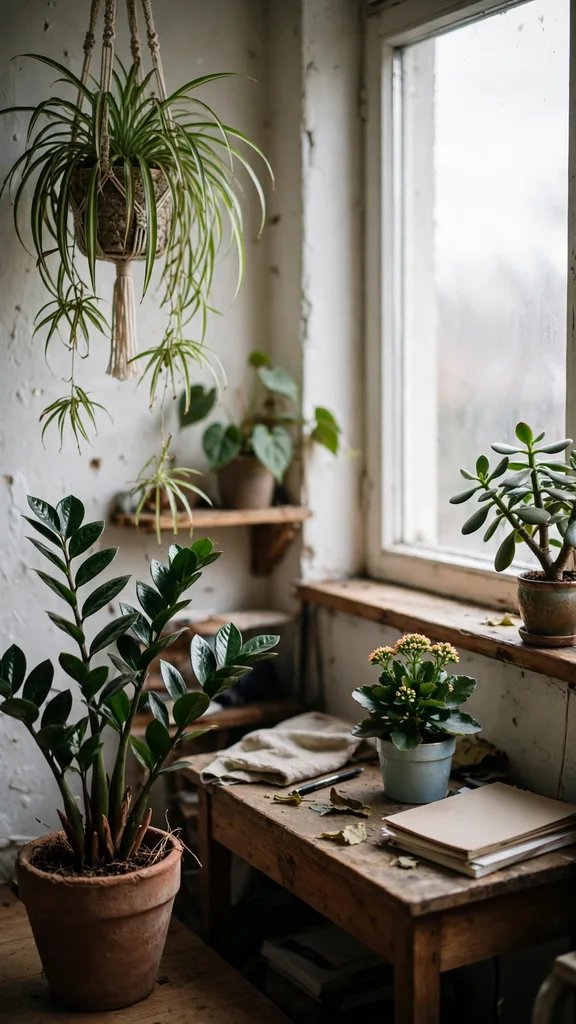
Hang a spider plant in a basket from one ceiling hook and the corner fills itself. The plant sends out long stems with small plantlets at the ends, and each plantlet dangles below the basket like a second plant waiting for a pot. Hang the basket near the window glass so the leaves stay green and the stems stay short, and turn the basket a quarter turn each week so one side never stretches toward the light.
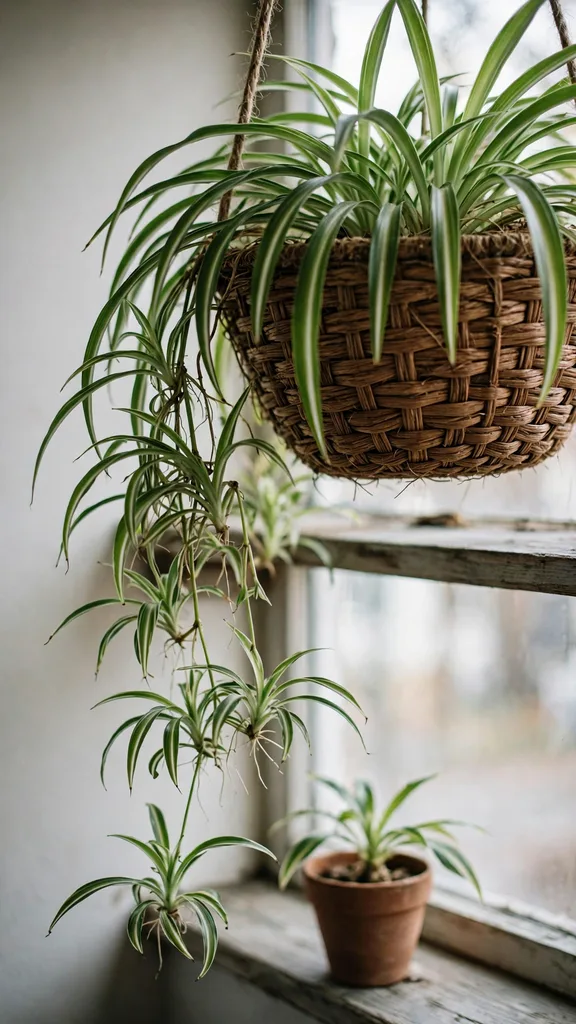
Snip one plantlet with 5.1 cm of stem and set it in a small pot of damp mix, and it roots in 2 to 3 weeks. The propagation guide names the methods that fit a hanging basket and a shelf pot alike. A basket with no drainage hole holds water at the roots, and the first sign is brown leaf tips that never green up again. Drill a hole or move the plant to a pot that drains, and the next leaves come through clean.
ZZ Plant for a Dark Hallway Corner
Set a ZZ plant in the darkest corner of the hallway and leave it there. Its thick stems store water, and its waxy leaves hold up in dry indoor air that kills softer plants. Low light runs 50 to 250 foot-candles, and a low-light plant suits a north window or a fairly dark corner, according to the University of Minnesota Extension lighting guide for indoor plants. That band is the whole reason a ZZ plant survives where a flowering plant stalls.
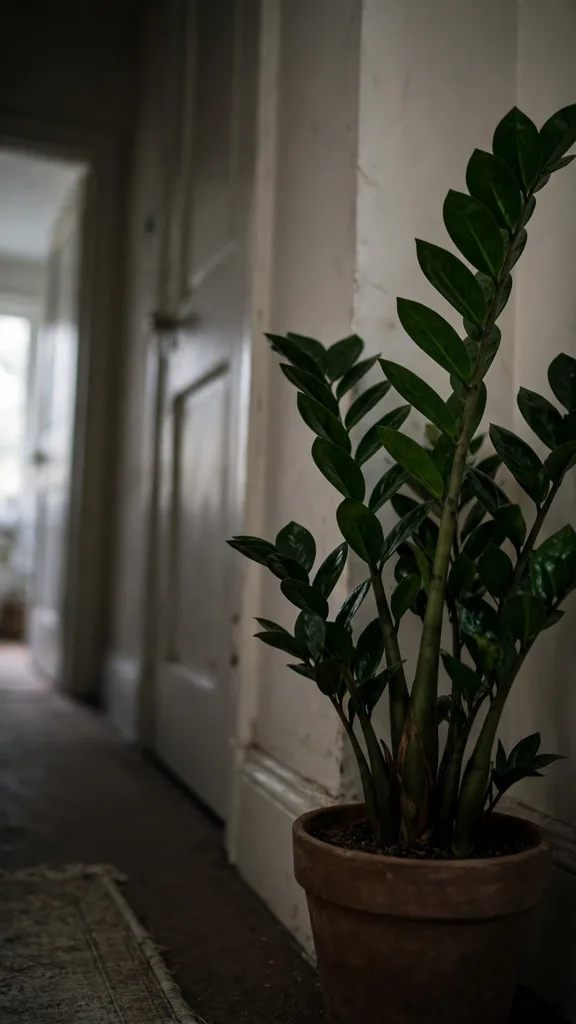
Water a ZZ plant only when the mix dries through, and a pot that stays wet for weeks rots the rhizome from the base. Lift the pot before watering. A light pot needs water, and a heavy pot waits. Yellow stems that pull loose at the base mean the rhizome already rotted, and no fertilizer brings it back. One plant in a plain clay pot costs less than three replacements, and the clay dries faster than plastic in a dim room.
African Violet for a Bright Windowsill
Set an African violet on a bright windowsill and it flowers for months on a small budget. The plant stays compact, so one 10.2 cm pot holds a full rosette, and a single plant fills a sill that fits nothing bigger. Water from the base by setting the pot in a saucer of water for 20 minutes, then empty the saucer. Wet leaves spot and rot, and a spotted crown stops flowering until new leaves grow through.
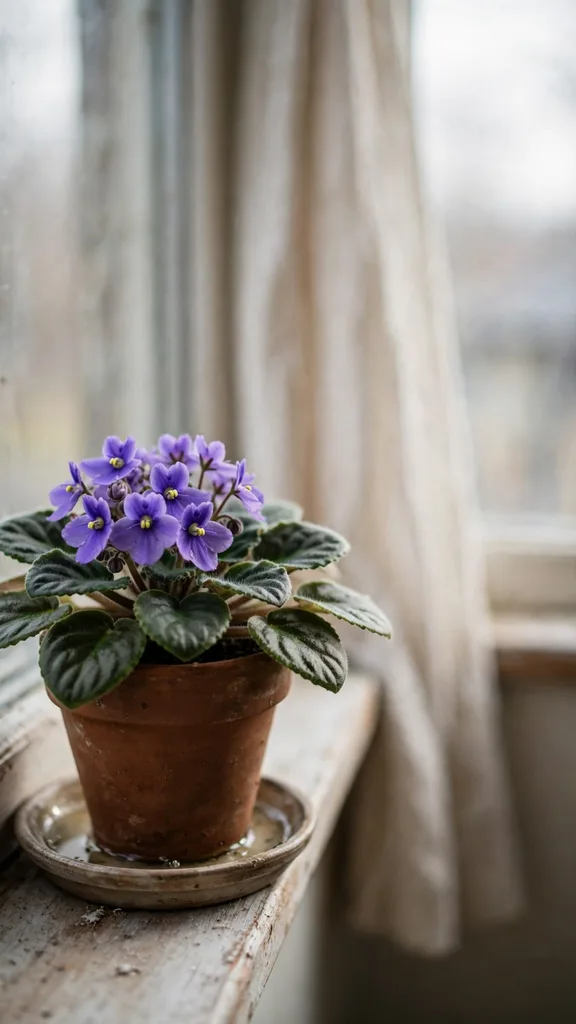
Feed an African violet with half-strength liquid fertilizer every 2 weeks while it blooms, and stop feeding when the flowers fade. A plant that never flowers usually sits too far from the window, so move it 30.5 cm closer and wait 3 weeks for buds. Cold glass in winter chills the leaves, so pull the pot 5.1 cm off the pane on frosty nights. A violet that drops its buds overnight sat in a draft, and the fix is a warmer spot, not a new plant.
Philodendron Brasil Trailing From a Shelf Edge
Set a philodendron Brasil on a high shelf and let its stems trail down the edge. The heart-shaped leaves carry a yellow stripe down the center, so one plant reads as two colors from across the room. Cut a stem just below a node and set the cutting in a jar of water, and roots show in 2 weeks. Pot the cutting in damp mix once the roots reach 5.1 cm, and the shelf gains a second plant for the price of one pot.
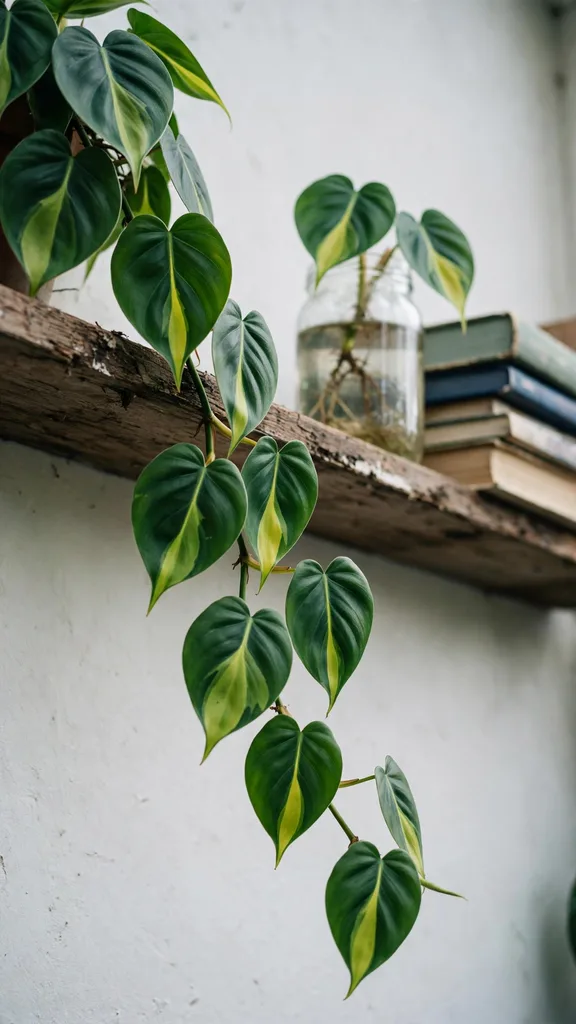
A philodendron that stretches with long bare stems wants more light, so move the shelf 30.5 cm closer to the window or swap the plant to a brighter shelf. Brown leaf edges mean the air dried the tips, and a tray of pebbles with water under the pot raises the humidity around the leaves. A stem that trails to the floor tangles in feet and snaps, so trim the ends back to a node and root the cuttings instead of letting them drag.
Peace Lily for a Shaded Bathroom Corner
Set a peace lily in a shaded bathroom corner and it flowers where most plants sulk. The plant likes the steam from a shower, and its white spathes open in light too weak for a flowering plant on a dry sill. Water when the top 2.5 cm of mix feels dry, and water slowly until it runs from the drainage holes. A peace lily droops hard when it dries out, then stands back up within hours of watering, so a droop is a signal, not a death sentence.
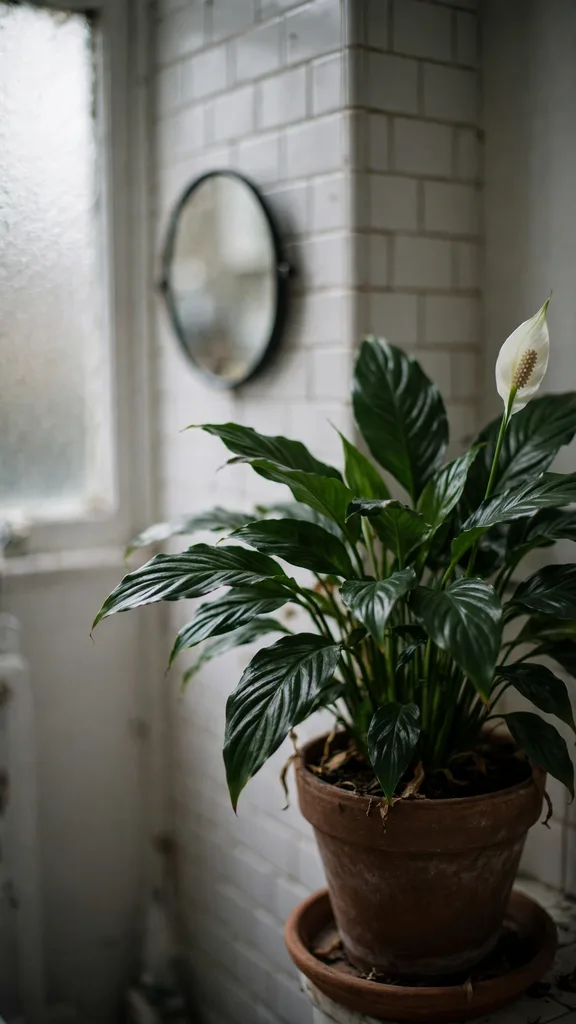
Soggy mix invites root rot, and the Pythium root rot in houseplants guide walks through the rescue steps for a plant that stopped drinking. Empty the saucer after every watering so the roots never sit in standing water. Brown leaf tips mean the mix stayed wet or the water carried salts, and flushing the pot with clean water until it drains clears both causes. A peace lily in a bathroom needs no mister and no pebble tray, and the steam does the work for free.
Jade Plant on a Sunny Sill
Set a jade plant on a sunny sill and it grows into a small tree on neglect. The thick leaves store water for weeks, so the plant forgives a missed watering and punishes only a wet pot. Use a gritty mix of one part potting mix to one part coarse sand or perlite, and pick a pot with a drainage hole. The soil health guide explains why loose, living mix matters more than any fertilizer, and a jade plant is the proof. Garden soil packs down in a pot and holds water against the roots until they rot.
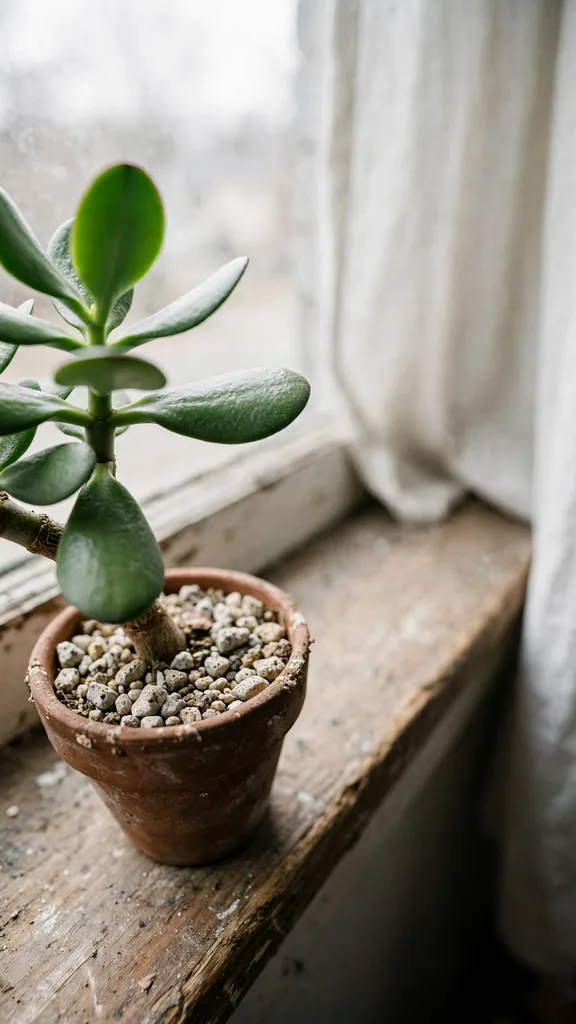
Water a jade plant only when the mix dries through, and water less in winter when growth slows. A jade plant that drops plump green leaves got too much water, and a jade plant that drops shriveled leaves went too long without it. The leaves tell the story before the stem does. Turn the pot a quarter turn each week so the plant grows straight instead of leaning hard toward the glass.
Kalanchoe for a Sunny Desk
Set a kalanchoe on a sunny desk and it flowers in clusters for 6 weeks or more. The plant stays under 30.5 cm tall, so it fits a desk corner without crowding the keyboard, and one plant in a 10.2 cm pot costs less than a bunch of cut flowers that lasts a week. Give it a south or west window, and keep the pot out of the draft from an air vent. A kalanchoe that stretches tall with few flowers wants more sun, not more fertilizer.
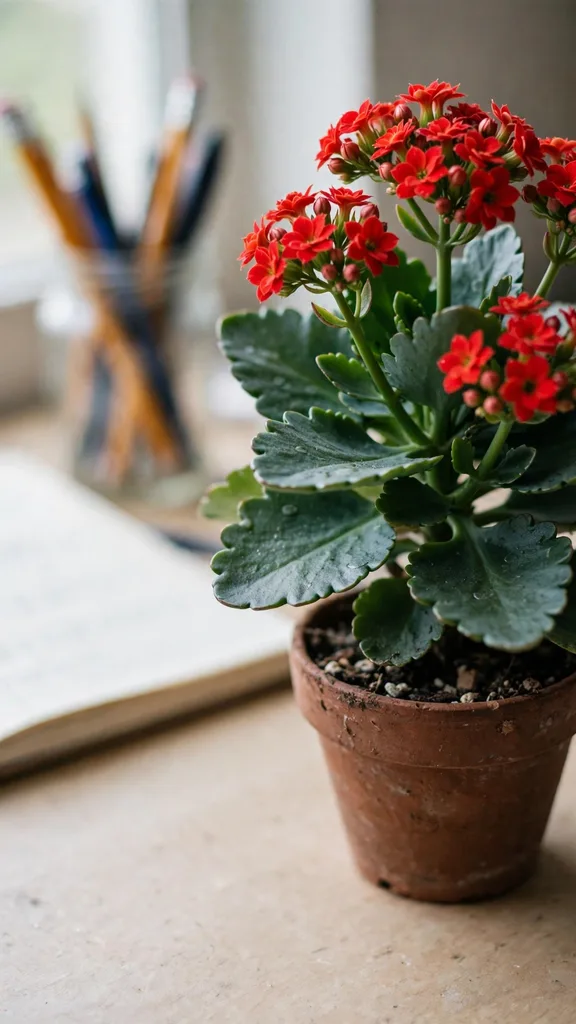
Water a kalanchoe when the top 2.5 cm of mix feels dry, and empty the saucer so the roots never sit in water. Deadhead the spent flower clusters by snipping the stem back to the first set of leaves, and new buds form below the cut. A kalanchoe that refuses to reflower usually got light after dark from a desk lamp, so move it to a room that goes dark at night for 6 weeks. The dark nights trigger the buds, and the plant flowers again without a new purchase.
Aloe Vera in a Small Pot by the Window
Set an aloe vera in a small pot by the window and it earns its sill twice over. The thick leaves hold a gel that soothes minor burns, and the plant itself asks for almost nothing. Use a gritty mix and a pot with a drainage hole, and water only when the mix dries through. Aloe vera rots faster than any plant on this page when the pot stays wet, and a rotted base turns to mush that no drying saves.
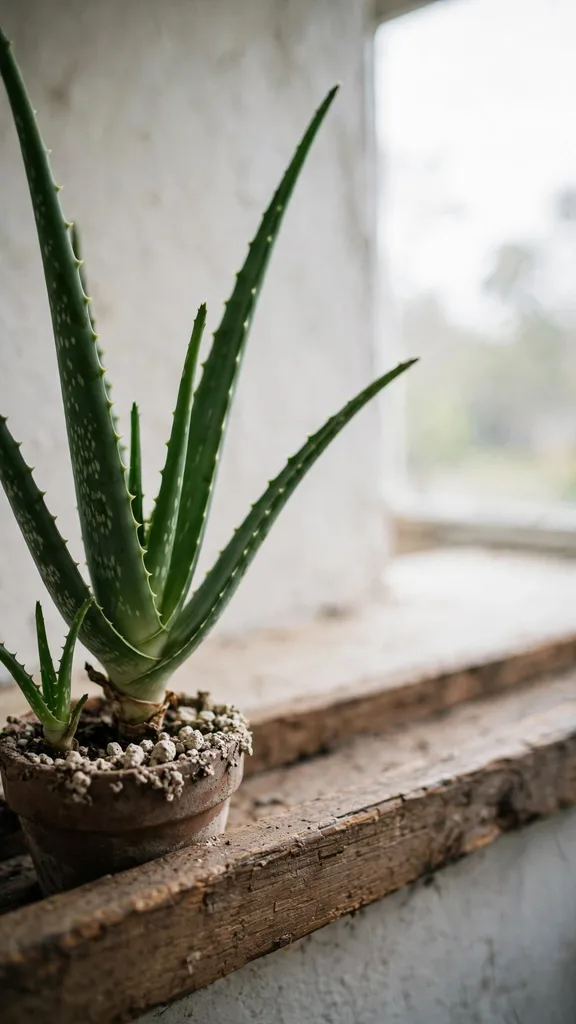
Pick a pot 2.5 cm wider than the root ball, and repot only when the roots crowd the drainage hole. A pot too big holds wet mix around small roots, and the plant drowns in a pot meant to help it grow. Aloe vera pups grow at the base of a mature plant, and each pup with its own roots lifts out into a new pot for free. One mother plant fills a whole windowsill in a year, and every pup is a plant you never bought.
Radish in a Shallow Tray by the Window
Sow radish seed in a shallow tray by the window and pull crisp roots in weeks, not months. Fill a tray 10.2 cm deep with damp potting mix, sow the seed 0.6 to 1.3 cm deep, and thin the seedlings to 5.1 cm apart so the roots swell instead of crowding. Harvest garden radishes 3 to 5 weeks after planting, according to the University of Minnesota Extension radish growing guide. A tray sown every 2 weeks keeps roots coming all season from one packet of seed.
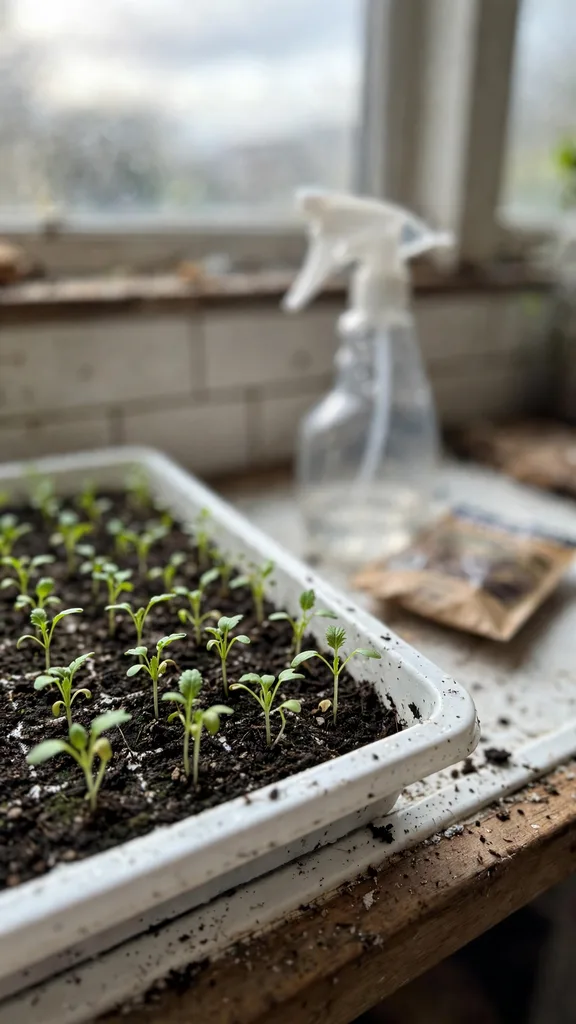
Water the tray lightly every day so the mix never dries out, because a dry day turns a radish pithy and hot. The seed starting guide covers indoor sowing in trays, and the same steps fit a radish tray on a kitchen sill. Leafy crops share the same tray, and the lettuce growing guide covers the cut-and-come-again leaves that fill the gaps between radish rows. Pull a radish when the shoulder shows at the soil line and measures 2.5 cm across, because a root left in the tray turns woody within days.
Grow Light Shelf for a Windowless Room
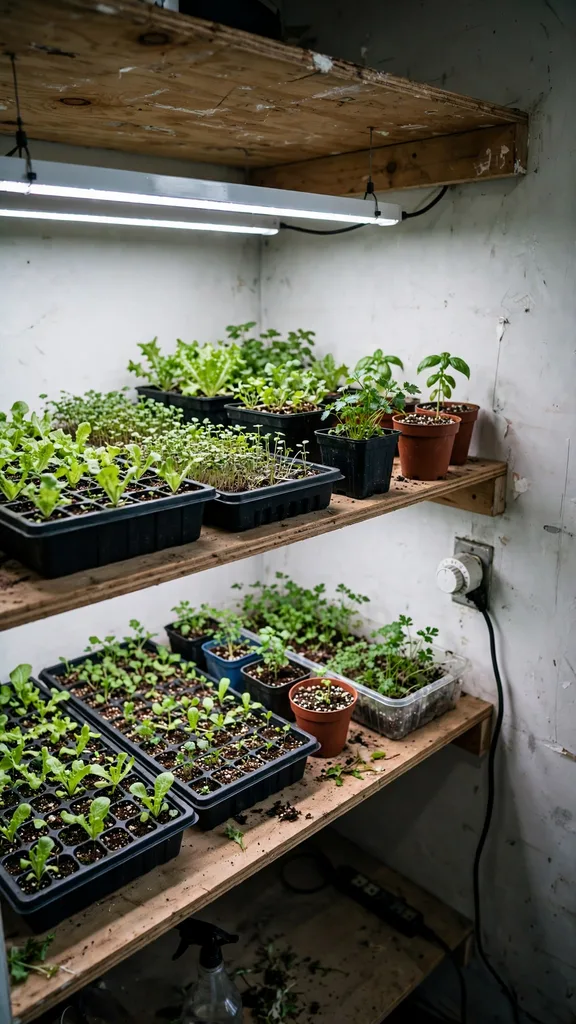
Build a grow light shelf in a windowless room and the room stops being a dead zone for plants. Bolt one LED bar under each shelf, hang it 30.5 to 61 cm above the leaves, and plug it into a timer. Foliage houseplants take 12 to 14 hours of total light a day, and flowering houseplants take 14 to 16 hours, so set the timer once and let it run. A shelf with its own light grows lettuce and herbs through winter, and the indoor herb garden guide covers the herbs that grow best under a lamp in a kitchen.
| Plant Type | Hours of Light per Day | Lamp Distance |
|---|---|---|
| Foliage houseplants | 12 to 14 | 30.5 to 61 cm above the leaves |
| Flowering houseplants | 14 to 16 | 15.2 to 30.5 cm above the leaves |
| Seedlings | 16 to 18 | 10.2 to 15.2 cm above the leaves |
Buy one LED bar per shelf and skip the purple grow bulbs, because a white bar lights the room and the plants at once. A lamp hung too high grows leggy stems, and a lamp hung too low scorches the top leaves, so raise the bar as the plants grow. A shelf that runs on a timer costs less than replacing sun-starved plants every few months, and the timer is the cheapest tool on the shelf.
Wall Pocket Planters for a Narrow Room
Hang wall pocket planters on a narrow wall and the room gains a garden without losing floor space. A row of felt or canvas pockets holds small pots of pothos, philodendron, and spider plant, and the wall stays dry because each pocket drains into the one below it. Hang the pockets at eye level so watering takes a jug and a minute, and hang a tray at the bottom to catch the last drips. A pocket hung above head height drips on shoulders and gets forgotten, so keep the row where you see it every day.
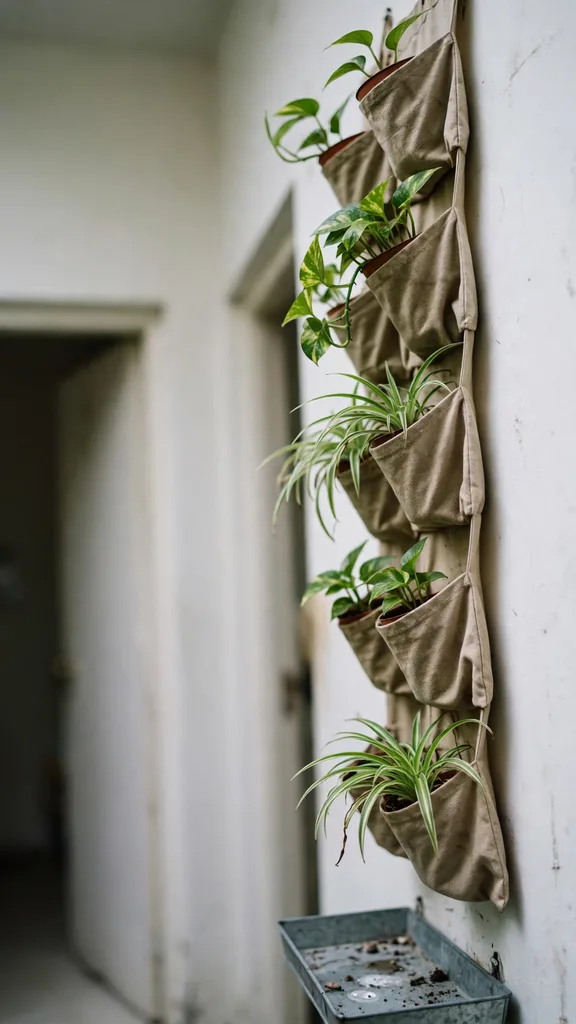
Water each pocket slowly until the mix darkens through, and stop before water runs down the wall. A pocket that stays wet grows mold on the fabric, and a pocket that dries out sheds leaves onto the floor. Line the back of the row with a sheet of plastic if the wall is painted plaster, because damp felt marks paint in a month. A narrow room with a pocket wall feels larger than the same room with pots on the floor, and the plants use wall space that held nothing.
Glass Jar Terrarium for a Desk
Build a glass jar terrarium for a desk and the desk gains a garden that waters itself. Layer 2.5 cm of pebbles, a spoon of charcoal, and 5.1 cm of potting mix in a wide jar, then plant a small fern or a moss clump in the mix. Mist the inside once, set the lid on, and watch the glass fog and clear with the day. A closed jar recycles its own water, so it needs a misting only when the glass stays dry for days.
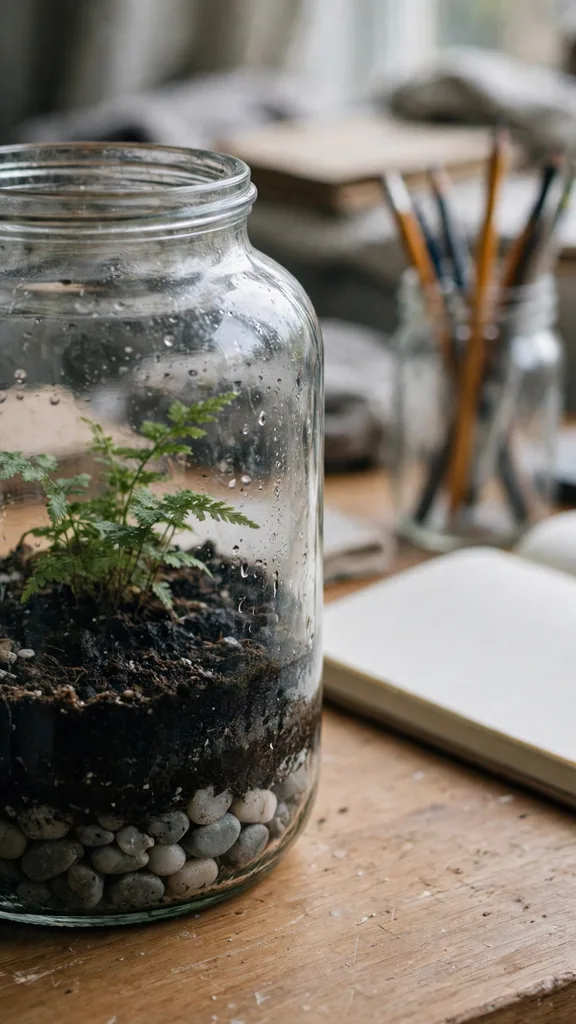
Pick plants that stay small, because a fern that outgrows the jar presses against the glass and rots where it touches. Trim the fern back to the soil line when it crowds the lid, and it regrows from the base. A terrarium in direct sun cooks the plants inside the glass, so keep the jar in bright indirect light and never on a sunny sill. A jar that fogs all day holds too much water, so leave the lid off for a day and let the mix dry before closing it again.
5 Mistakes That Drain an Indoor Garden Budget
- Buying a plant before measuring the light. A plant that needs 8 hours of direct sun dies on a north-facing sill, and the replacement costs twice the first plant. Hold a hand over the spot at noon. A sharp shadow means strong light, and a faint shadow means shade.
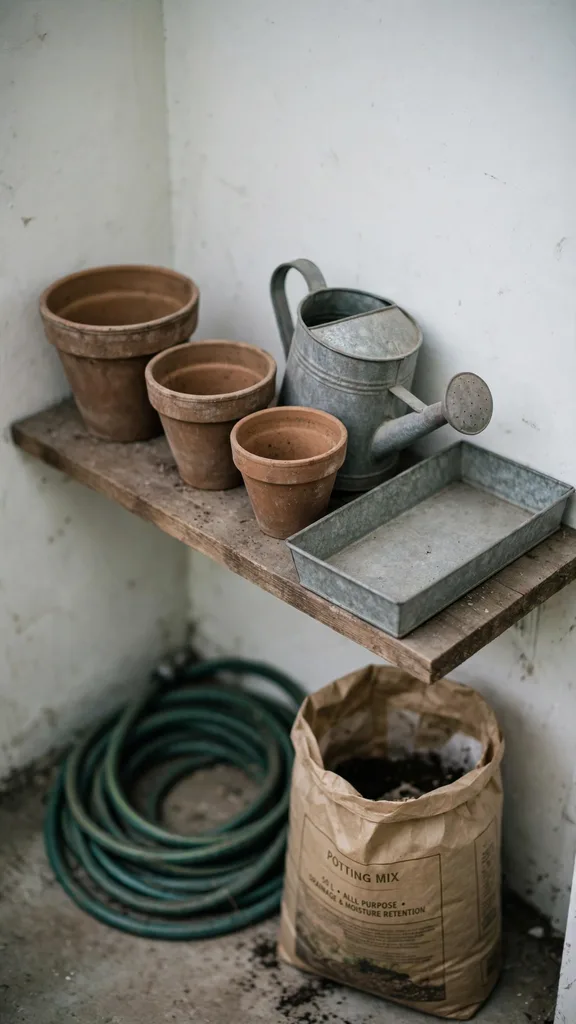
- Potting in garden soil instead of potting mix. Garden soil packs down in a pot, holds water, and suffocates roots. Potting mix drains, and a bag of it costs less than one dead plant.
- Watering on a calendar instead of checking the mix. Herbs rot in wet mix and leafy crops wilt in dry mix, and neither failure follows a schedule. Push a finger 2.5 cm into the mix. Water only when it feels dry.
- Skipping drainage holes. A pot with no hole holds water at the base, and the first sign is yellow lower leaves that never recover. Drill a hole or pot into a plastic liner with holes, then set the liner in the pretty pot.
- Buying every tool at once. Scissors, a watering jug, and a tray cover the first season, and the rest waits until a plant proves it needs it. A shelf of unused tools costs more than the plants on it.
Budget Indoor Garden Ideas FAQ
Low-light plants such as ZZ plant and peace lily grow in 50 to 250 foot-candles, which fits a north window or a dark corner. Medium-light plants such as spider plant and jade plant want an east window or a spot near a west window. High-light plants such as kalanchoe want a south or west window. Match the plant to the window you own, and the garden costs less than forcing the wrong plant to survive.
A spider plant is the cheapest start because one plant makes its own plantlets, and each plantlet roots in a small pot of damp mix. A ZZ plant costs more at first and lives for years on little water in a dark corner. Aloe vera pups fill a sill for free once the mother plant matures. Buy one plant that multiplies, and the room fills without a second trip to the store.
Leafy crops grow in a bright south-facing window without a lamp for much of the year. Radish in a shallow tray pulls roots in 3 to 5 weeks on a sunny sill, and loose-leaf lettuce fills the gaps between rows. Fruiting plants such as dwarf tomatoes need stronger light and usually need a lamp in winter. Start with radish and lettuce, and add a lamp only when the window proves too weak.
Water when the top 2.5 cm of mix feels dry, not on a fixed day. ZZ plant and jade plant want the mix to dry through, while peace lily and radish want steady dampness. Pots with drainage holes and saucers let extra water escape, and empty the saucer so roots never sit in standing water. A finger in the mix beats a calendar every time, and a light pot needs water while a heavy pot waits.
ZZ plant, snake plant, and peace lily survive a dark room. They grow as understory plants in their native habitats, so they grow slowly in low light and use little water. A wet pot rots them faster than shade ever will. African violet and kalanchoe fail in the same spot because flowering plants need high light to set buds. Pick foliage for dark rooms. Save the flowering plants for the brightest sill.