Spend 90 minutes setting up 5 pots with soil you mix yourself. That is budget container gardening. Pots, soil, water, and sun decide the harvest, and each one costs less than a new planter from a garden center.
Start in spring after the last frost. Set pots where sun hits hardest. Pick crops you eat weekly.
A list of cheap container garden ideas is a different job. This page stays on the system: 7 steps from pots to sun, then the first 5 crops to grow in them.
| Spec | Detail |
|---|---|
| Time to set up | 90 minutes for 5 pots |
| Difficulty | Beginner |
| Season | Spring after the last frost |
| Steps | 7 steps, from pots to sun |
| First crops | 5 crops: lettuce, herbs, beans, radish, dwarf tomato |
| Pots | Reused buckets, tubs, and grow bags |
Gather Tools and Materials Before Step One
Gather a drill, 5 reused buckets or tubs, a bag of potting mix, a bag of compost, a bag of perlite, saucers cut from old lids, a watering can, scissors, and plant labels cut from yogurt tubs. A trowel moves mix faster than a cup, and a permanent marker labels each pot before seedlings look alike. The essential garden tools for beginners list covers the same kit for beds, and every tool on it works in pots.
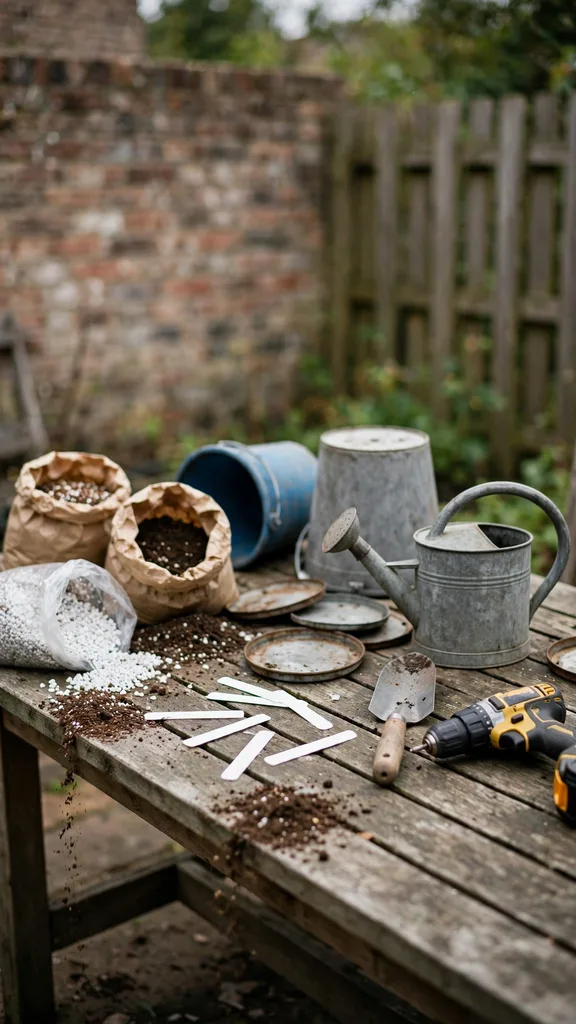
Wash reused buckets with hot soapy water and rinse them before planting, because old paint, oil, or soap residue sits in the plastic and leaches into wet mix. Food buckets from bakeries and delis work well, and builders buckets work after a wash. Check the base for cracks in the sun, because a cracked bucket splits under wet mix in July and drops the plant on the patio.
Skip new saucers, new labels, and new decorative pots. Cut lids serve as saucers. Yogurt tub strips serve as labels. Spend the saved money on potting mix, which no secondhand find replaces. A pot with no label grows a mystery crop by July.
Pick Pots That Drain Well and Cost Little
Step 1 starts at the pot. The Texas A&M AgriLife Extension container vegetable guide lists 18.9-litre pots (5 gallons) as the most suitable size for tomato, pepper, and eggplant, and 3.8-litre pots (1 gallon) for leaf lettuce with 2 plants per pot. Match the pot to the crop before you buy seed, because a tomato in a 3.8-litre pot runs dry by noon in summer.
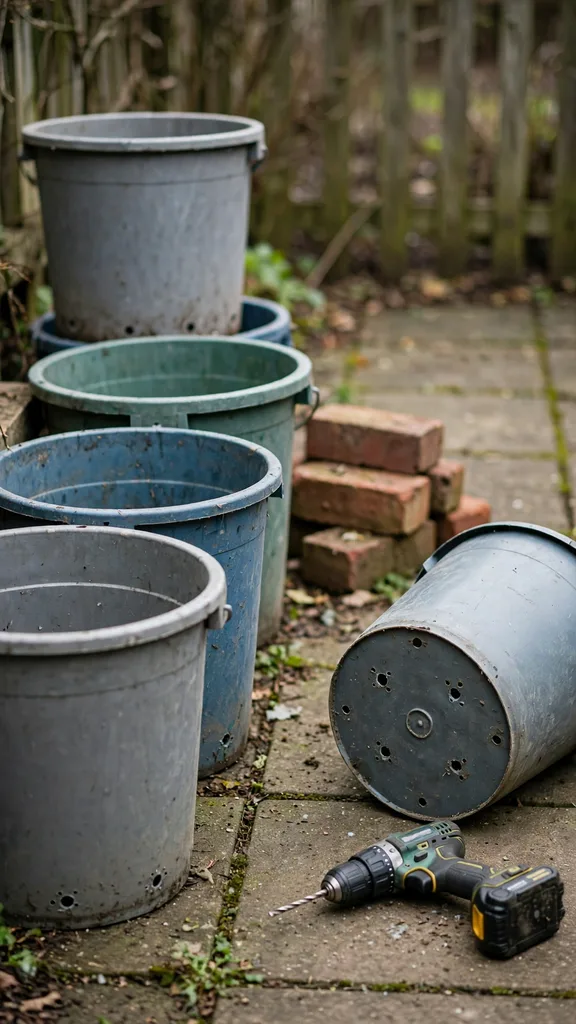
Drill 4 holes in the base of each reused bucket, or drill along the side 0.6 to 1.3 cm from the bottom when the pot sits flat on concrete. Plastic holds water longer than clay, so clay pots need water first on hot days. Buckets, tubs, and grow bags all work when holes let water out. Set each pot on feet or bricks so water leaves the base and air moves under it.
Move empty pots to their final spot before filling, because a large pot of wet mix weighs too much to drag across a patio. Put the sun lovers where sun hits first in the morning, and leave a gap between pots so air moves and leaves dry after rain. A pot jammed against a wall stays damp on one side and grows mold on the mix.
A pot with no drainage hole drowns roots in the first wet week. Drill first. Plant second.
Mix Cheap Potting Soil That Holds Water
Step 2 mixes the soil. The North Carolina State Extension container gardening notes give a cheap mix: one part compost, one part perlite or vermiculite, and one part potting soil. Buy one bag of potting soil and stretch it with compost and perlite. The mix stays light, drains fast, and holds water long enough for roots to drink.
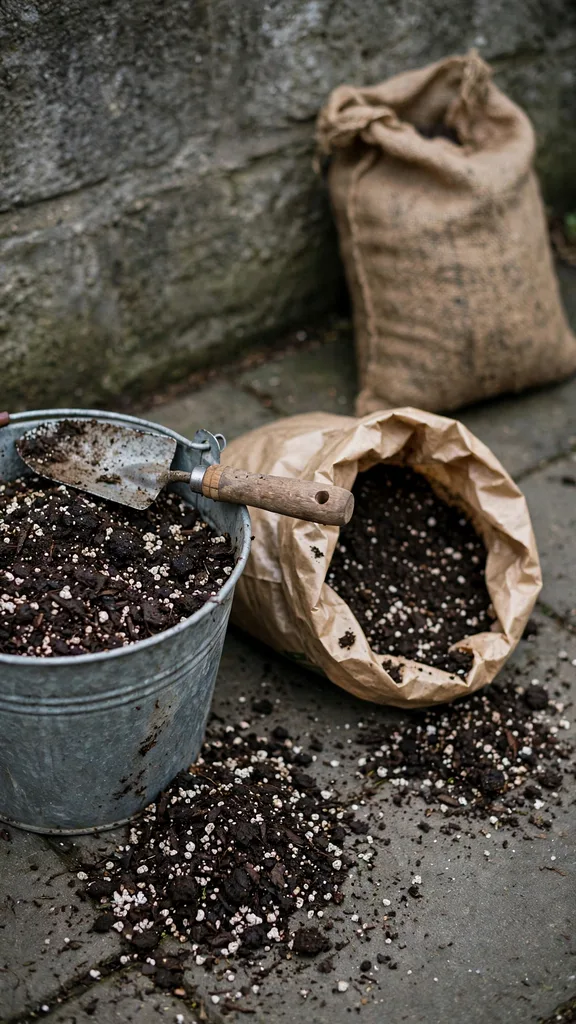
Garden soil stays out of pots. It packs down, drains poorly, and carries weed seed and disease into a small space. The soil health guide explains how compost and living soil feed plants in beds, and the same compost feeds pots when mixed into potting soil. Wet the mix in a bucket before filling pots, because dry peat repels water and floats on the first watering.
Perlite loosens the mix and drains fast. Vermiculite holds more water and suits lettuce and herbs in a hot spot. Pick perlite for tomatoes and beans that hate wet feet, and vermiculite for leafy crops that wilt by noon. Home compost works in the mix when it smells earthy and crumbles in the hand. Council compost works too, and a bag of it costs less than a second bag of potting mix.
Dry mix in a pot sheds water down the sides. Wet mix holds it. Moisten first.
Fill Pots Without Wasting Soil
Step 3 fills the pot. Fill each pot to 2.5 cm below the rim with pre-moistened mix, then press it down lightly with your palm and top it up to the same line. The gap below the rim holds water at watering time and stops mix washing over the edge. Water the filled pot once and let it settle before sowing, because fresh mix sinks 1 to 2 cm in the first watering.
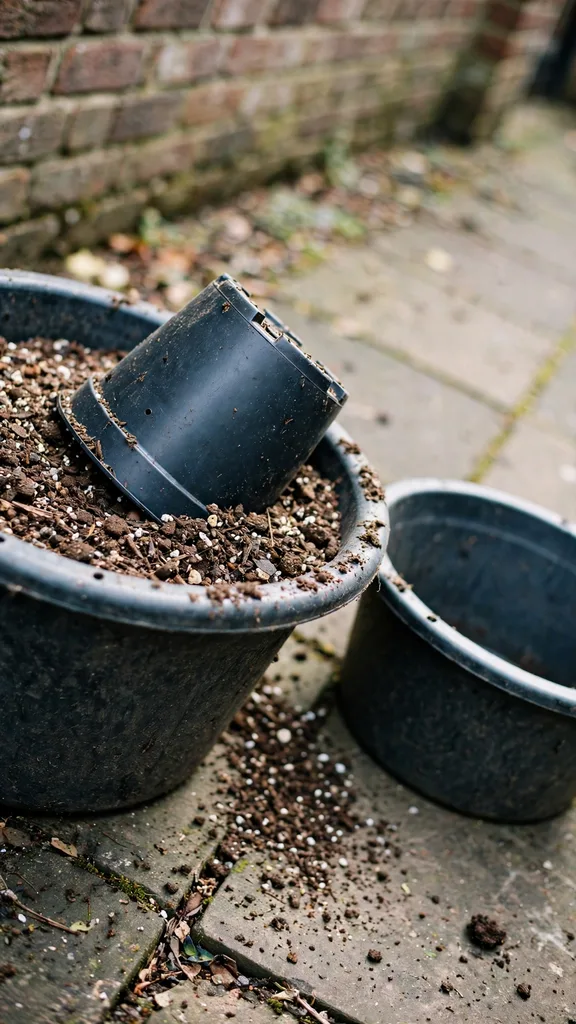
Deep pots waste mix below root depth. Set an upside-down nursery pot in the base of a deep tub, then fill mix above it to the depth the crop needs. Lettuce roots use the top 15 cm. A tomato uses the full depth. Fill to the crop, and the saved mix fills a second pot.
A pot filled to the brim spills mix at the first watering. Leave the gap.
Sow Seeds and Set Seedlings at the Right Depth
Step 4 sows and sets plants. Cover most vegetable seed with 0.6 to 1.3 cm of mix, and start seed 4 to 8 weeks before you plan to move plants into their final pots, following the same guide. Move seedlings into pots when they show their first 2 to 3 true leaves. Set each seedling at the same depth it grew in its tray, firm the mix around the roots, and water at the base.
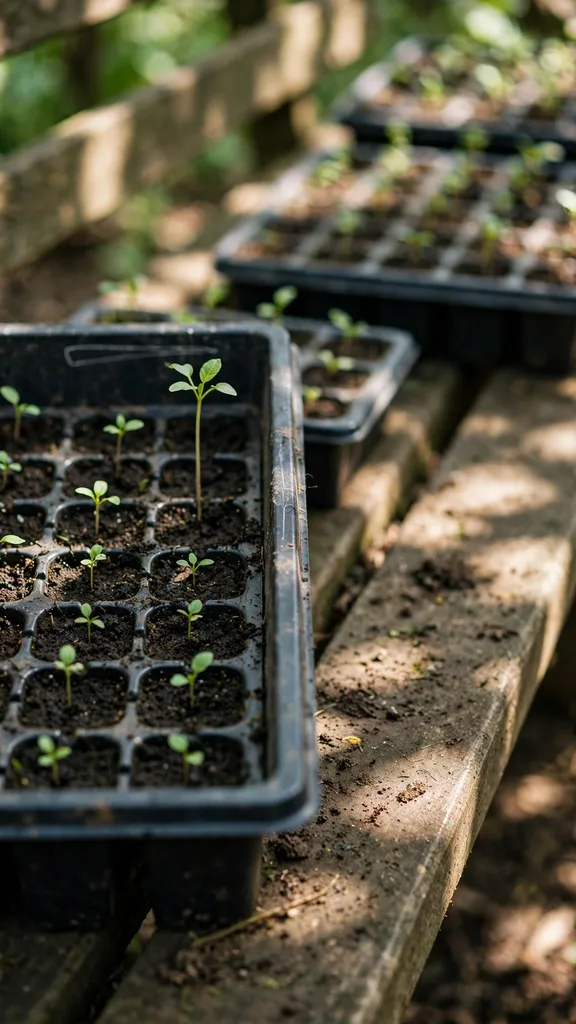
Thin seedlings early. Two lettuce plants share a 3.8-litre pot. Three radishes share one. Crowded seedlings stretch tall, flop over, and crop nothing. Pull the weakest seedling and leave the strongest one standing. The seed starting guide walks through trays, light, and hardening off for plants you start indoors.
Harden seedlings off before they move outside for good. Set trays outside in shade for a few hours on day one, add an hour of sun each day, and bring them in at night for a week. A seedling moved straight from a windowsill to full sun wilts by noon and loses leaves. Seedlings that spent a week outside stand upright in wind and sun from day one in the pot.
Seed sown 5 cm deep never breaks the surface. Sow shallow. Thin early.
Water Pots From the Bottom on Hot Days
Step 5 waters the pots. Check the mix each morning in summer by pushing a finger 2.5 cm into it. Water when the top feels dry. Water slowly at the base until it runs from the drainage holes, then stop. On hot days, set the pot in a saucer of water for 20 minutes and let the mix drink from below. Bottom watering wets the roots and leaves the leaves dry.
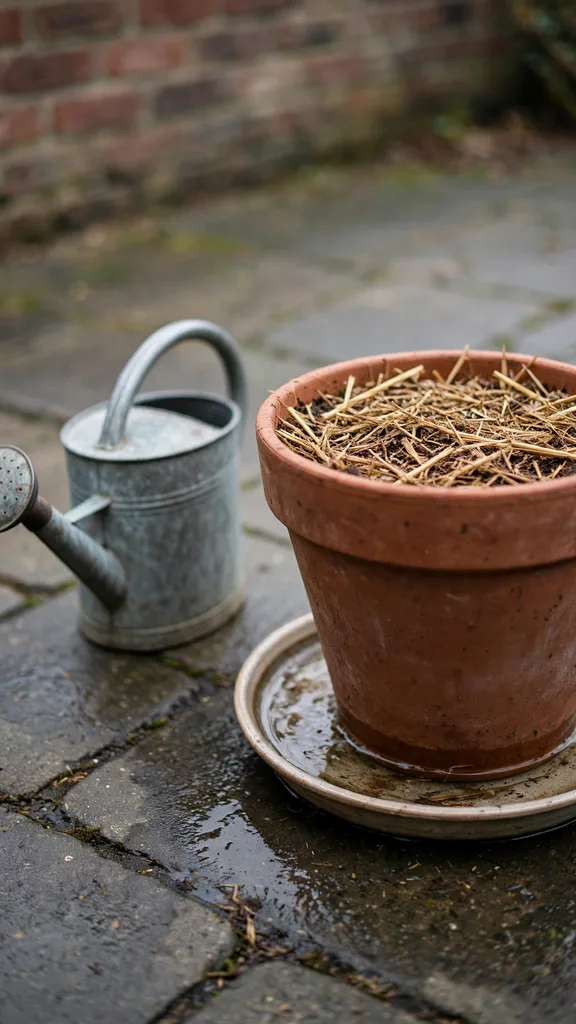
Cover the mix with 2.5 cm of straw mulch to slow drying. Small pots dry first, clay pots dry next, and large plastic pots hold water longest. Water the small pots first each morning. A pot that stays wet for days needs fewer waterings and better drainage, so lift it onto feet and skip a day.
Rain fills saucers and drowns roots when pots sit flat. Empty saucers after heavy rain, and tip out any pot that sat in water overnight. Rainwater suits pots, and a bucket under a downpipe catches it free. Tap water works too, and a can left standing overnight loses its chill before morning watering.
Daily light sprinkles wet the top 1 cm and leave roots dry. Water deep. Water at the base.
Feed Pots Little and Often
Step 6 feeds the pots. Bagged mix carries feed for the first weeks, then pots run low because every watering washes nutrients out of the drainage holes. Feed at half the label rate every 2 weeks with a liquid feed, and feed fruiting vegetables a little more than herbs. A complete fertilizer such as 10-10-10 suits fruiting vegetables, and the same notes say herbs prefer less fertilizer.
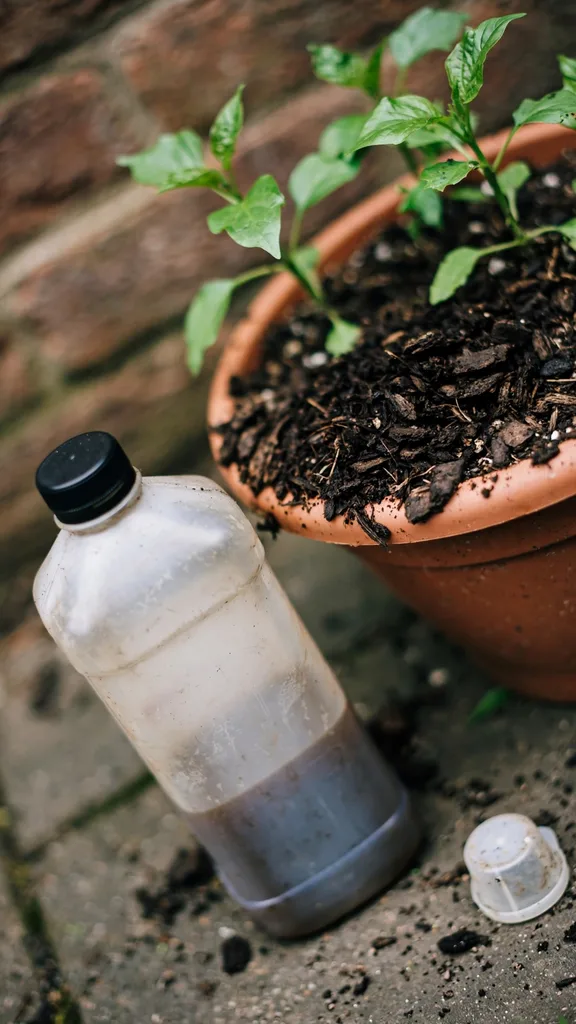
Mix a handful of compost into the top 5 cm of mix each month as a slow top-up, because compost feeds soil life and holds water at the same time. Liquid feed acts fast and washes out fast, so use it little and often and let compost carry the slow feed. A pot fed this way grows steady green leaves without a sudden soft flush that slugs love.
Full-strength feed burns leaf edges brown. Feed little. Feed often.
Move Pots to Chase the Sun
Step 7 moves the pots. The same notes put warm-season vegetables at 6 to 8 hours of direct sun a day, and herbs and cool-season vegetables at 3 to 5 hours. Put tomatoes, peppers, and beans in the sunniest spot. Put lettuce and herbs where sun hits for half the day. A pot on wheels or a plant trolley moves with the season, and a pot on a sunny wall catches reflected heat in spring.
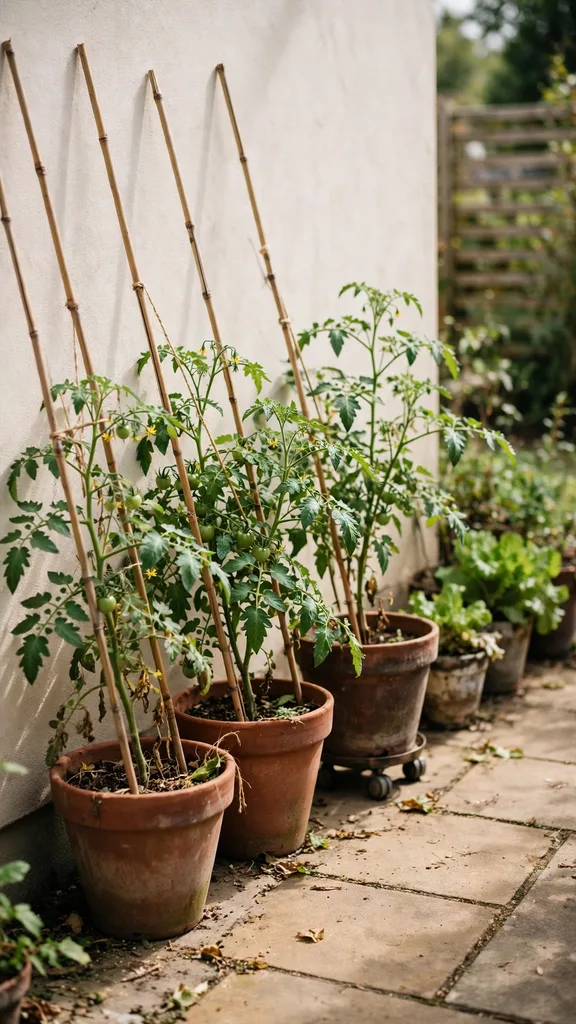
Turn each pot a quarter turn every week so stems grow straight. Watch which pots dry first, because the first pot to dry sits in the hottest spot. Move lettuce into partial shade in the hottest weeks, and move tomatoes into full sun. Pots move. Beds do not.
Wind dries pots faster than sun on a high balcony or an open patio. Set a low windbreak of canes and cloth on the windy side, and group pots together so they shelter each other. A lone pot in wind needs water twice as often as the same pot in a sheltered corner, and its leaves shred at the edges.
A tomato in 3 hours of sun grows leaves and no fruit. Move the pot.
Grow These 5 Crops First in Budget Pots
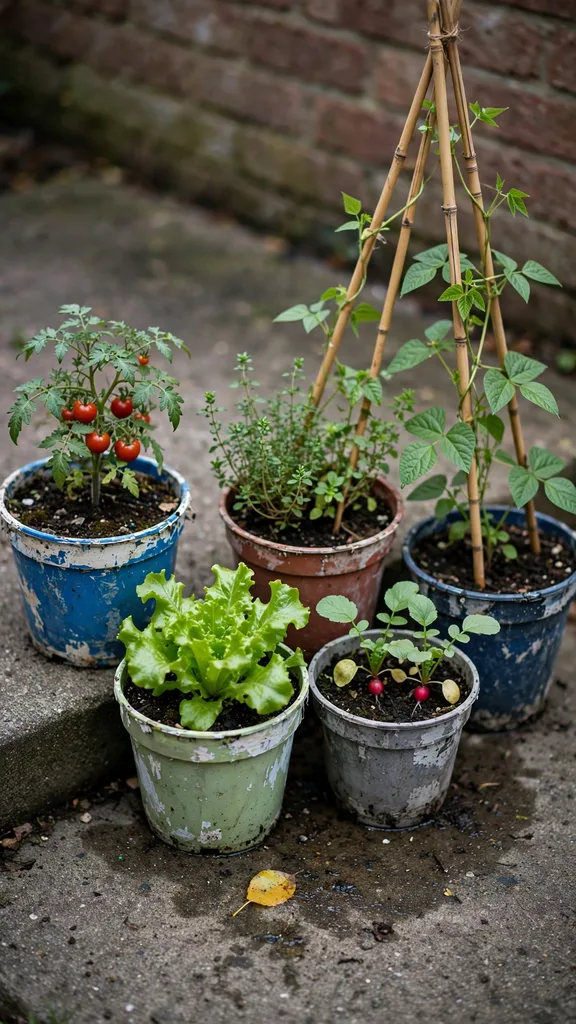
Grow these 5 crops first because they crop fast, forgive rough handling, and land on the table weekly. Lettuce cuts again after each harvest. Radish crops in weeks. Beans climb a cane in a deep pot. Herbs cut all season from one pot. A dwarf tomato fruits in one large pot on a sunny step.
| Crop | Pot Size | Plants per Pot |
|---|---|---|
| Leaf lettuce | 3.8 litres | 2 |
| Radish | 3.8 litres | 3 |
| Green onion | 3.8 litres | 3 to 5 |
| Green bean | 7.6 litres minimum | Space plants 7.6 cm apart |
| Dwarf tomato | 18.9 litres | 1 |
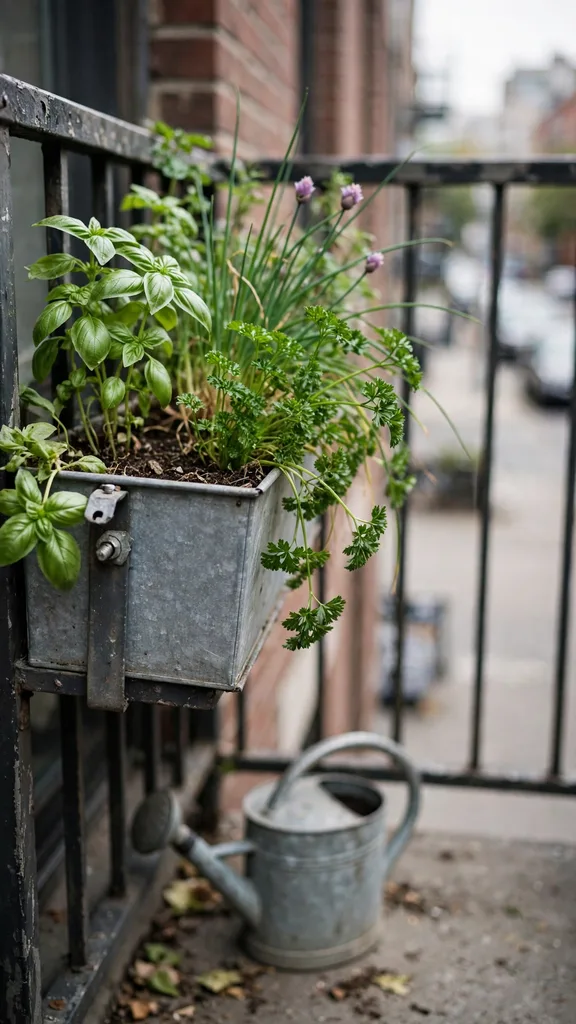
Sow lettuce and radish first, because they crop while the tomato still grows. The lettuce growing guide covers cut-and-come-again leaves in detail, and the indoor herb gardens guide covers basil, parsley, and chives in small pots. Pick leaves in the morning when they hold water, and pick beans young before seeds swell inside the pod.
Sow a small row of lettuce every 2 weeks for a steady supply, because one sowing crops all at once and then leaves a gap. A pot sown in May, another in June, and a third in July keeps salad on the table from spring into autumn. Mark each pot with the sowing date, and sow the next pot when the first shows its first true leaves.
One tomato and one pepper in a 3.8-litre pot starve each other. Give fruiting crops their own large pot.
Stretch the Season With Cheap Covers and Shade
Stretch the season with a fleece cloth on cold nights and a shade cloth on hot afternoons. Drape fleece over canes on nights when frost threatens, and lift it in the morning so leaves dry. A white sheet works for one cold night. A shade cloth over lettuce in July stops leaves turning bitter in the heat.
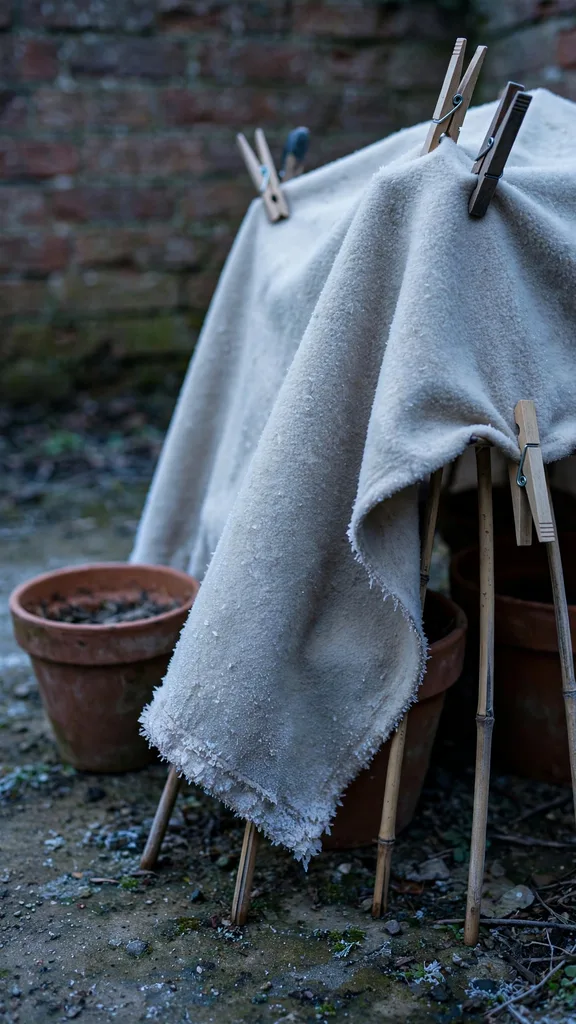
Move tender pots against a warm wall in autumn, and move them under cover before the first hard frost. The fall planter ideas list shows which plantings carry a garden into cold months, and the same pots that grew tomatoes in summer hold leafy greens in autumn. Sow a second round of lettuce and radish in late summer for autumn picking.
Mint, chives, and parsley survive winter in a pot against a wall, and they sprout again in spring without new seed. Tip the pot on its side in a hard freeze so rain runs off the mix, and stand it up again when the thaw comes. A pot left full of wet mix in a freeze cracks, and the plant inside it dies with the pot.
An uncovered pot in the first frost loses the crop overnight. Cover it.
6 Mistakes That Drain a Container Garden Budget
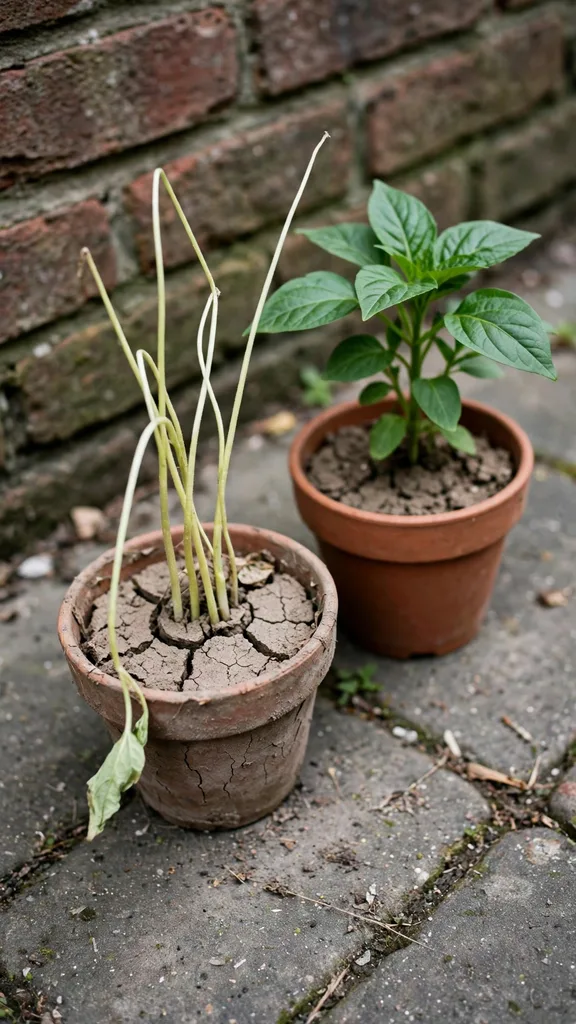
- Buying new pots first. Reused buckets, tubs, and crates grow the same crop. Spend on mix.
- Filling pots with garden soil. Garden soil packs down and drains poorly in a pot. Mix potting soil with compost and perlite.
- Skipping drainage holes. Water with no exit drowns roots. Drill holes before planting.
- Crowding 3 plants in a small pot. Crowded plants stretch, flop, and crop nothing. Thin to the spacing the crop needs.
- Watering leaves in the evening. Wet leaves in cool night air invite disease. Water the mix at the base in the morning.
- Feeding full strength every week. Full-strength feed burns roots and leaf edges. Feed at half rate every 2 weeks.
Each mistake costs a pot of plants. Fix the pot before you buy more seed.
Troubleshoot Container Problems Before They Spread
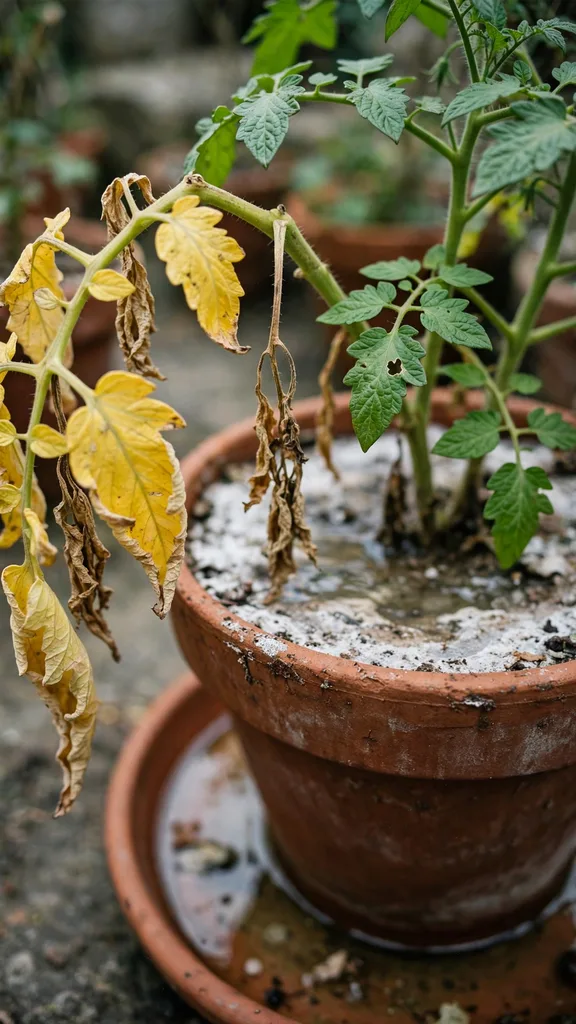
Check pots each morning and act on the first sign. A yellow leaf, a wilted stem, or a dry pot tells you the cause before the whole plant fails. Pull the worst leaf, fix the water or the feed, and watch the new growth. New growth tells you the fix worked.
Look under leaves as well as over them, because aphids and whitefly gather on the underside where rain never reaches. A strong jet of water from the can knocks them off, and a second check the next morning shows whether they came back. A pot checked daily loses one leaf to pests. A pot checked weekly loses the plant.
| Symptom | Likely cause | Fix |
|---|---|---|
| Yellow lower leaves | Feed washed out of the pot | Feed at half rate and top up with compost |
| Wilting in wet mix | No drainage, roots sitting in water | Lift the pot onto feet, clear the holes, skip a day of water |
| Tall leggy stems | Too little sun | Move the pot to 6 to 8 hours of direct sun |
| White crust on the mix | Salt build-up from feed | Flush the pot with plain water until it runs clear |
| Tomato flowers with no fruit | Heat or still air at flowering | Shake the stem gently each morning and move the pot into sun |
| Holes in leaves | Slugs hiding under the pot | Lift the pot, clear slugs, and set it on feet |
A plant that wilts in wet mix drowns. A plant that wilts in dry mix thirsts. Check the mix before you water.
Budget Container Gardening FAQ
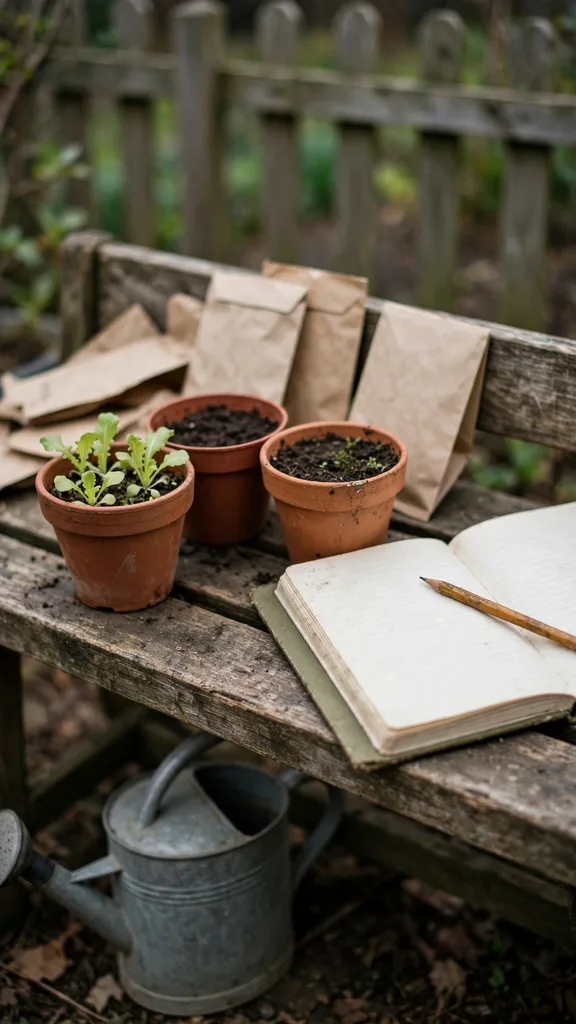
Start with 5 reused pots and one bag of potting mix, one bag of compost, and one bag of perlite. Reused buckets, tubs, and crates cost nothing when they come from home, and seed costs less than seedlings. Spend the money on mix, because no secondhand find replaces it. A garden built this way crops in the first season without a new planter.
A tomato needs an 18.9-litre pot (5 gallons) with one plant per pot. Smaller pots dry out by noon in summer and starve the roots. A dwarf tomato fits the same pot on a sunny step, and a full-size tomato needs the same volume with a cane for support. Give the plant the full pot from the start, because moving a fruiting tomato into a larger pot breaks roots.
Garden soil does not belong in pots. It packs down, drains poorly, and carries weed seed and disease into a small space. Mix one part compost, one part perlite or vermiculite, and one part potting soil for a light mix that drains fast and holds water. Bagged potting mix costs money, and compost and perlite stretch one bag across more pots.
Check the mix each morning in summer and water when the top 2.5 cm feels dry. Water slowly at the base until it runs from the drainage holes, then stop. Small pots on a sunny step dry faster than large pots, so they need water first. In cool weather the same pots need water every second or third day, and a pot that stays wet for days needs fewer waterings.
Radish and lettuce grow fastest in a budget container. Radish crops in weeks from seed, and lettuce cuts again after each harvest. Green onions regrow from the base after cutting, and herbs cut all season from one pot. Sow radish and lettuce first, because they crop while beans climb and tomatoes still grow toward fruit.
Where to Go From Here
Start this weekend with 2 pots: one lettuce pot and one herb pot. Mix the soil, drill the holes, sow the seed, and water at the base each morning. Watch which pot dries first, because the first week tells you more about your sun and wind than any shopping list. Add the tomato pot only when the first two pots grow well.
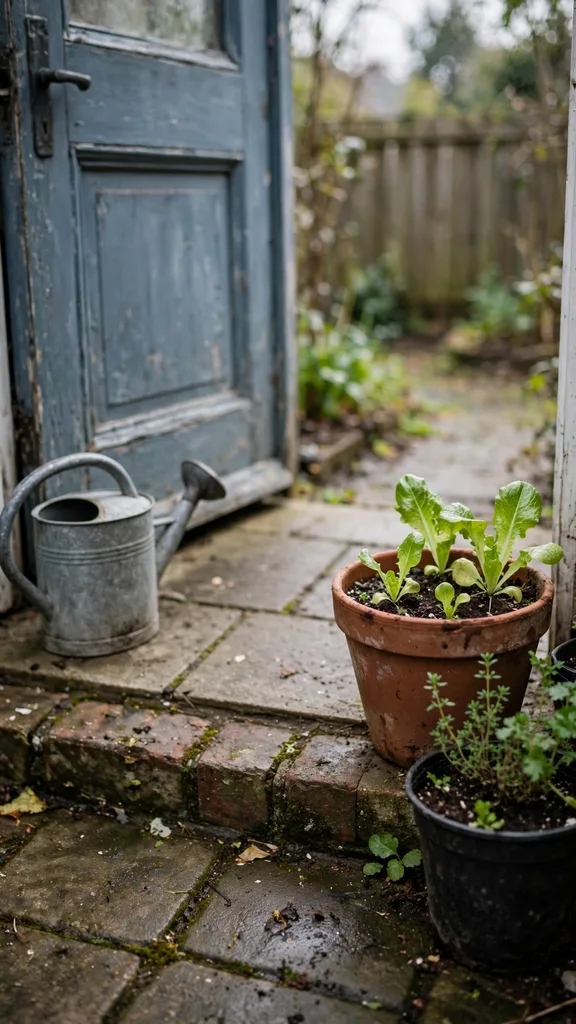
A pot with no drainage hole drowns the plant in the first wet week. Drill first. Plant second. Harvest all season.