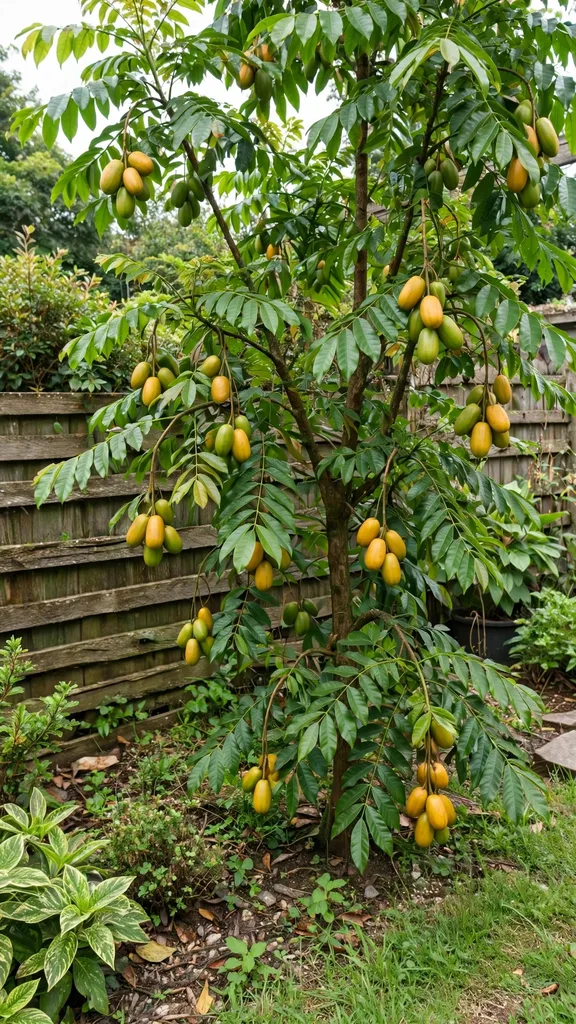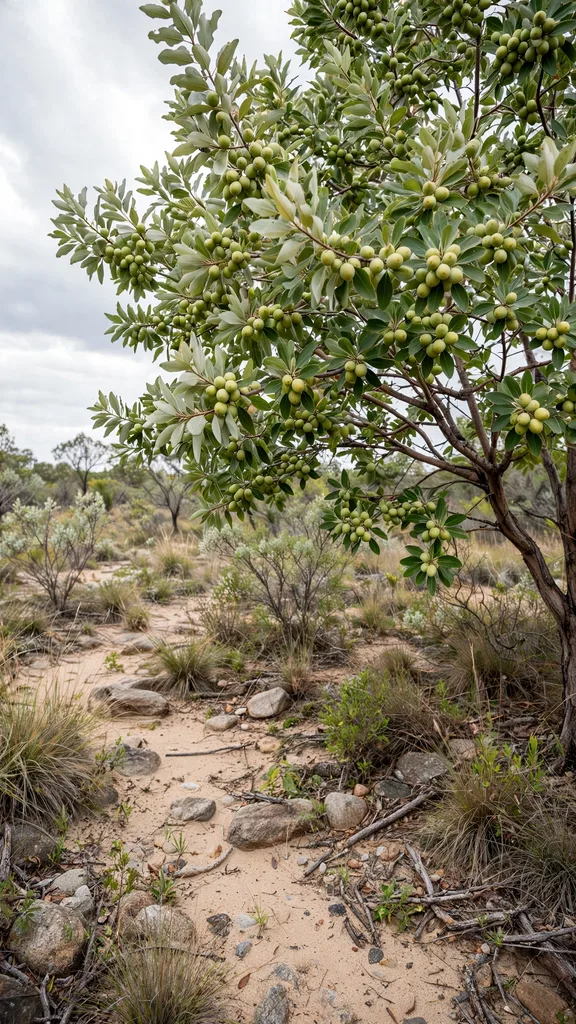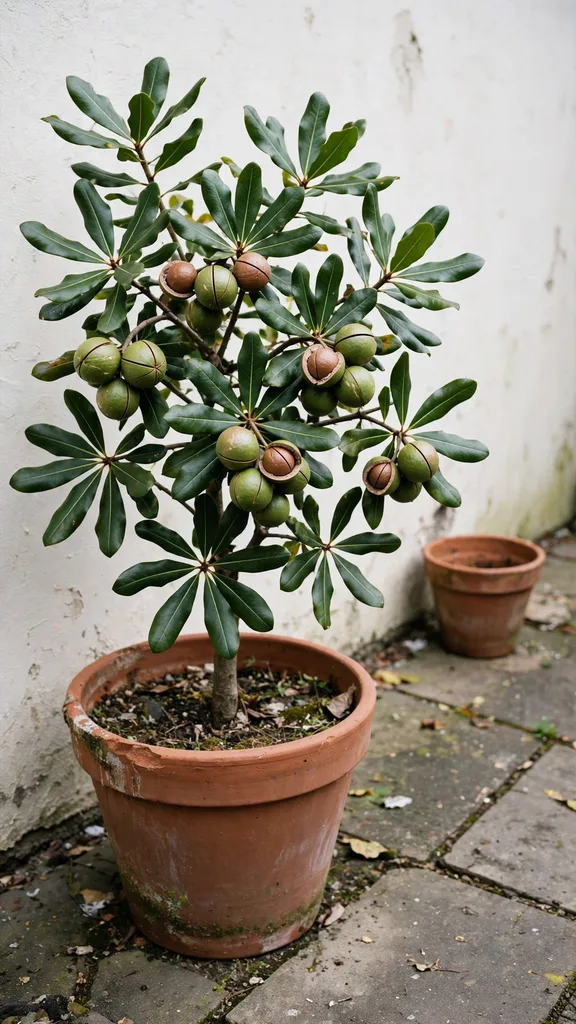
Move 1 grafted macadamia into a 20 cm pot this spring, and plan the pot ladder before the tree plans it for you. Learning how to grow macadamia in pots means the container does the work the orchard floor does in Queensland: fast drainage, an acid mix, measured feed, and a winter move you can finish in one trip through a doorway. A potted macadamia, Macadamia integrifolia, stands in full sun through the warm months, rides out frost under cover, and can carry real nuts in a pot once its roots stay fed and its canopy stays pruned to carrying size. Skip the winter move and frost takes the flower spikes first.
Buy a grafted, named cultivar for the pot. Seed grown macadamias vary, fruit late, and fill a container with years of leaves before any crop decision arrives. A grafted tree on a compact habit fits the pot life: full sun on a patio or balcony from spring to autumn, a frost free corner from late autumn to spring, and pruning that holds the canopy within reach of the ground. The tree lives for decades in that rhythm. The pot changes size around it.
A potted olive is a different job. That tree lives on the site’s guide to olive trees in pots. This page stays on the macadamia: a protea family tree with a taproot, a low phosphorus appetite, and nuts that ripen inside a green husk on the branch.
| Attribute | Detail |
|---|---|
| Botanical name | Macadamia integrifolia, Macadamia tetraphylla, and their hybrids |
| Plant type | Evergreen subtropical nut tree, Proteaceae family, grown here in a container only |
| Starting pot | 20 cm wide for a grafted nursery tree, 15 cm deep pot for a seedling |
| Final pot | 100 litres or wider, on a trolley or in its permanent sunny corner |
| Container mix | Premium potting mix cut with composted pine bark and perlite, no garden soil |
| Soil pH | 5.0 to 6.5 in the mix, tested once a year |
| Drainage | Several holes in the base, pot raised on feet, saucer emptied after watering |
| Sun | Full sun outdoors through the growing season, sheltered from hard wind |
| Watering season | Deep watering from spring to autumn, barely moist in winter quarters |
| Feeding | Low phosphorus fertilizer, little and often, spring to early autumn |
| Frost tolerance | Flowers and young growth burn in frost; a hard freeze can kill a young tree |
| First nuts | Grafted trees carry a small crop around year 5; seedlings take far longer |
| Pruning window | After harvest, before the spring flush |
| Harvest sign | The green husk splits on the tree and ripe nuts drop |
Choose a Compact Grafted Variety for the Pot
Pick a named, grafted cultivar at the nursery and read the label for habit before price. Grafted trees carry the fruiting wood of a known cultivar on a grown root system. The University of Hawai’i CTAHR summary of the crop records that Hawaiian orchards plant grafted trees, which start bearing a small crop in the fifth year and reach full production in 12 to 15 years. A seedling carries no such promise. Seed from a named variety does not come true to type, so a pot filled from a saved nut is a long experiment with an unknown crop at the end.
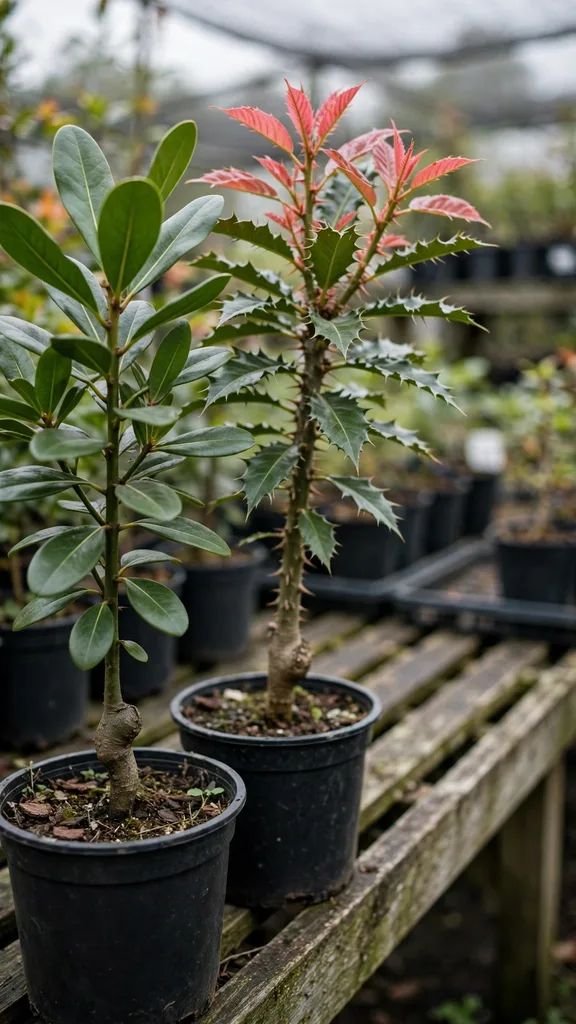
Read the habit line next. The same CTAHR summary names narrow profile cultivars such as Kau and Pahala, which resist wind better than spreading types. A narrow or compact tree suits a pot because the winter move sets the size limit: one person, or two, carries the filled pot through a doorway each autumn. A vigorous spreading cultivar outgrows its winter quarters in three seasons and then gets pruned in anger, which costs flowers.
Choose the species line with your winters in mind. Smooth shell Macadamia integrifolia carries glossy, smooth edged leaves in whorls of three and suits warm districts. Rough shell Macadamia tetraphylla and its hybrids carry spiny edged leaves, pink new growth, and a little more cold tolerance. Most nursery trees sold for home gardens are hybrids of the two. Any of them grows in a pot. The label that matters is the grafted cultivar name, and the habit that matters is compact.
Plan for a second tree if the patio allows it. Macadamia flowers open over a long season and bees work the spikes, and a different cultivar flowering nearby lifts nut set on both trees. One tree still crops. Two crop better. The second tree can stay the smaller of the pair and live one pot size down the ladder.
Start a Seedling From a Fresh Nut
Sow seed only as a side project. A seedling macadamia takes far longer to nut than a grafted tree, varies in kernel quality, and still eats the same pot ladder for a decade. Grow one because the germinating nut is worth watching. Never grow one as the main plan for nuts.
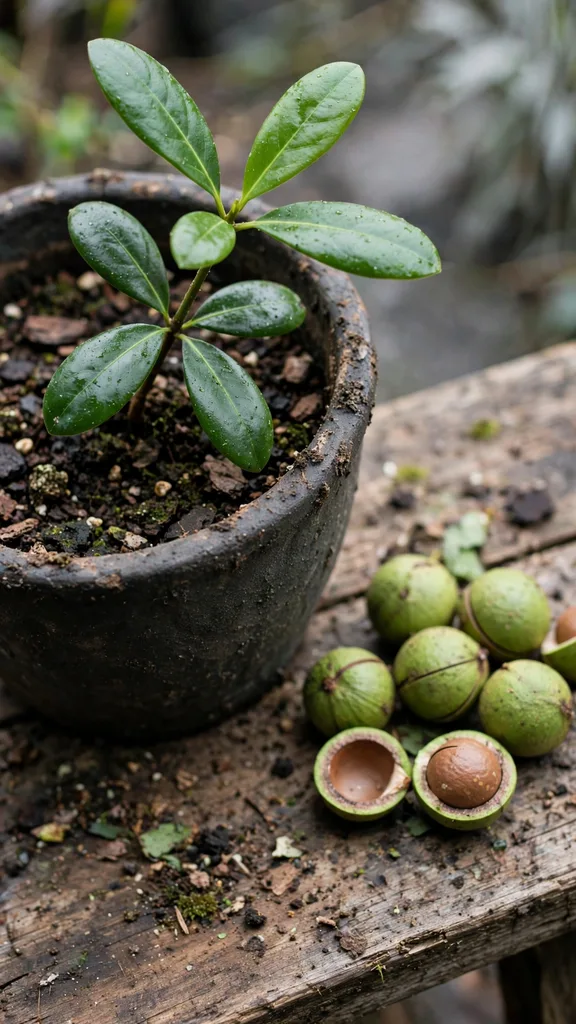
Start with fresh nuts in the husk, picked or bought within weeks of harvest. Macadamia seed loses viability fast once it dries, and the hard shell hides the decline. A nut from a supermarket snack packet is roasted or long dead. A nut from a health food shelf is raw and old. Both fail. Fresh nuts from a grower, a farmers market stall, or your own tree are the seed stock.
Run the float test in a bucket of water. Sound nuts sink. Nuts that float carry a shrivelled kernel or an air gap and rarely sprout. Strip the green husk off the sinkers, rinse the shells, and sow within days.
Sow each nut 2.5 cm deep in a deep 15 cm pot of the same acid mix used for the tree, with the seam line facing sideways. The young macadamia sends a taproot straight down before it sends much up, and a shallow tray bends that root in its first month. Water the pot through, stand it in bright shade, and keep the mix evenly moist. Fresh nuts sprout in weeks in warm weather. Old nuts sit. Give a pot one warm season before you tip it out and call the seed dead.
Move the seedling into sun in stages once the first whorl of leaves hardens. Seed grown trees scorch faster than grafted nursery stock because they have never stood in full light. Feed at quarter strength only after the second whorl opens. Pot the seedling up the same ladder as a grafted tree, one size at a time, and expect leaves for years: the grafted tree across the patio will crop long before the seedling flowers.
Climb the Pot Size Ladder One Size at a Time
Start a grafted nursery tree in a 20 cm pot, a seedling in its deep 15 cm pot, and climb in steps: 20 cm, 30 cm, 40 cm, then 50 to 75 litre tubs, then a final 100 litre pot or half wine barrel size container. Each step up adds roughly a hand span of width. A jump from a nursery pot straight into the final tub leaves a ring of wet, rootless mix around the root ball, and that ring stays sour and cold. Roots rot in it. Climb one size at a time.
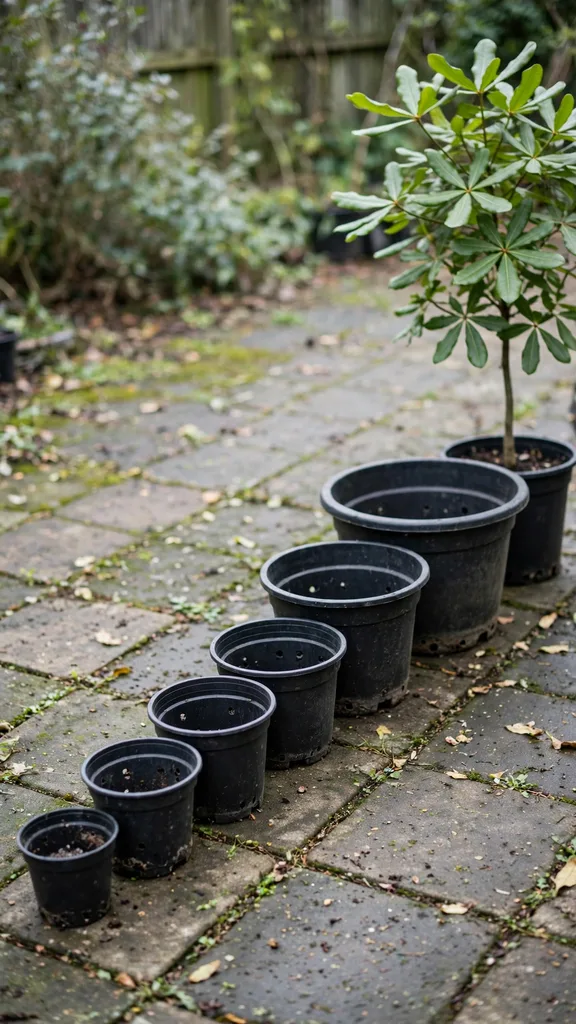
Repot in spring, as growth restarts, every 1 to 2 years for a young tree. Read the signs at the drainage holes: roots circling out of the holes, water running straight through the pot in seconds, the mix surface rising as the root ball swells. Any one sign means the next size is due this spring. A mature tree in its final pot stops climbing and gets root pruning instead, covered in the pruning section below.
Pick a pot material for the winter move, not for the photograph. Terracotta breathes and steadies a tall tree, and it weighs the most when wet. Thick plastic weighs the least and dries fastest in summer wind. Glazed ceramic sits between the two and cracks in hard frost if the mix inside freezes wet. Whatever the material, the base needs several real drainage holes. A pot with one small hole and a glued saucer is a bucket. Drill it or skip it.
The Ground Comparison, in One Paragraph
In the ground, none of this ladder applies. A ground tree gets one planting hole, grows past 10 m unpruned, spreads roots beyond the drip line, and shrugs off a dry month once established. It also stays where you planted it when frost comes, and it fruits on the orchard timeline whether the site suits it or not. The pot trades that freedom for control: the mix, the water, the feed, and the winter address are all yours to set. That control is the whole reason the container tree crops in districts where a ground tree would lose its flowers every second winter.
Mix a Free Draining, Slightly Acid Potting Blend
Build the mix around drainage first and fertility second. Macadamia roots come from rainforest margins with heavy rain and stony, free draining soil, and a pot that holds water against those roots in winter invites root rot. The CTAHR crop summary puts the tree on deep, well drained soils with a pH of 5.0 to 6.5. Hold the pot mix inside that same acid band.
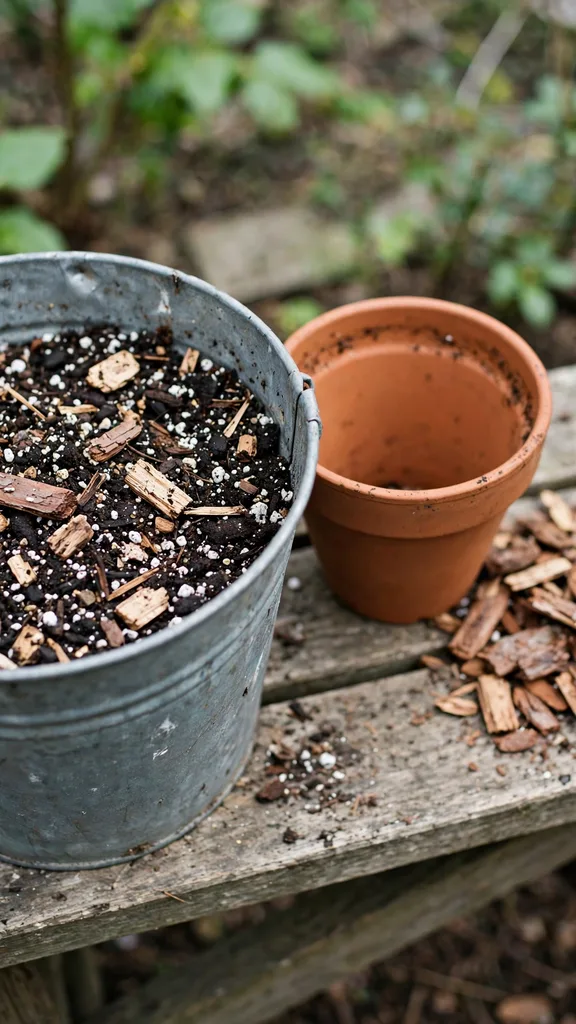
| Component | Purpose | Proportion |
|---|---|---|
| Premium potting mix, peat free | The base that holds moisture and feed between waterings | 50 percent |
| Composted pine bark, 10 to 20 mm grade | Opens air channels and keeps the mix acid as it breaks down | 30 percent |
| Perlite or coarse pumice | Permanent drainage that never rots or compacts | 20 percent |
Skip garden soil entirely. Soil in a pot compacts into a slab, drains in channels, and carries root rot spores from the bed. Skip the water storing crystals too. A macadamia pot needs water to pass through, not to sit in a gel. A handful of coarse sand per pot does nothing for drainage at this scale. The bark and perlite do the work.
Test the finished mix before the tree goes in. Fill the pot, water it through twice, and watch the base: water should run from the holes within seconds and the surface should look evenly damp, not pooled. Then squeeze a handful. It should hold together loosely and crumble when poked. A mix that stays in a wet ball needs more bark. A mix that falls apart dry needs more base.
Set the acid level once a year with a cheap soil pH meter pushed into the damp mix. Municipal water supplies push potting mixes alkaline over time, and a macadamia above pH 6.5 starts to yellow between the leaf veins. The NSW Department of Primary Industries macadamia grower’s guide builds its soil program on correcting pH and fixing drainage before anything else, then monitoring both. The pot version of that program is one pH reading each spring and a repot with fresh acid mix when the reading climbs.
Pot the Tree and Set It in Full Sun
Pot up in spring, on a mild day, with the new pot one size up and the mix already blended. Water the tree deeply the day before so the root ball holds together. Tip the old pot on its side, slide the root ball out whole, and tease the circling roots at the base loose with your fingers. Cut any root that has formed a tight spiral at the bottom. Leave the rest of the ball intact.
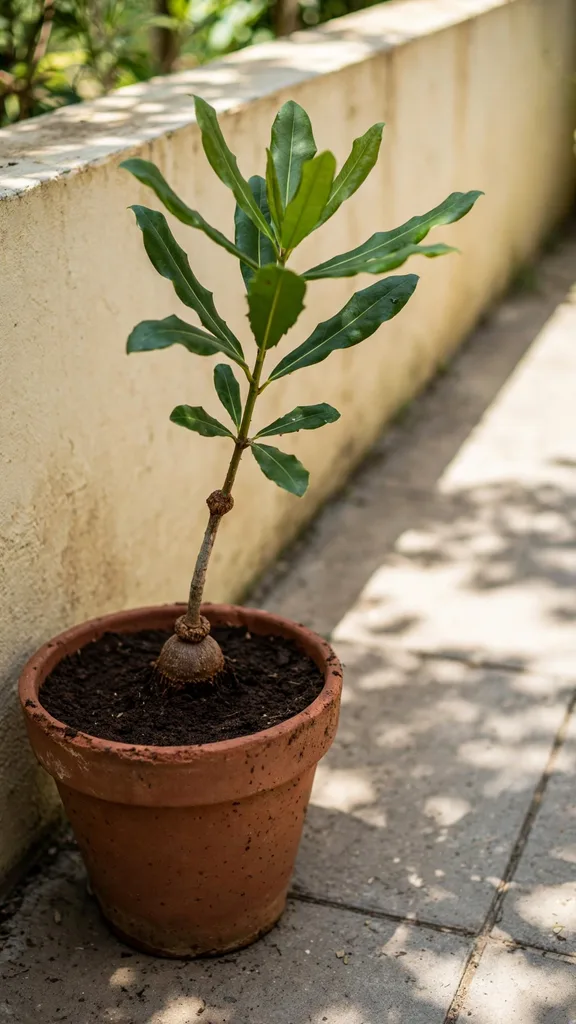
Set the tree at the same depth it grew before. The graft union, the swollen kink low on the trunk, stays above the mix line, always. A graft union buried under mix and mulch can rot, and a tree planted deeper than it grew sulks for a season. Fill around the ball in stages, firming with a dibber or your fingers so no air pocket survives against the roots. Leave a 2.5 cm watering rim below the pot lip.
Water the pot through until water runs freely from the base, then water it again. The first soak settles the mix into the gaps the firming missed. Stand the pot on feet or bricks so the holes stay clear of the paving, and empty the saucer after every watering. A macadamia standing in its own runoff overnight is a root rot case on a timer.
Place the pot in the sunniest sheltered corner you own. The tree wants full sun through the growing season and shelter from hard, drying wind, which shreds the long leaves and rocks a top heavy pot. Against a sun facing wall is the classic spot: reflected heat, blocked wind, and a short carry to winter quarters. Turn the pot a quarter turn each month so the canopy grows evenly and the shaded side does not go bare.
Water Deeply, Then Let the Top Dry
Water the pot the way rain falls on the tree’s home coast. The CTAHR summary grows the crop on 152.4 to 304.8 cm of rain a year, spread through the seasons. No pot holds that. The container version is a deep soak that wets the whole root ball, then a pause while the top 5 cm of mix dries, then another soak. In summer heat that cycle can run every 2 to 3 days on a mid size pot. In spring and autumn it stretches to once a week or less.
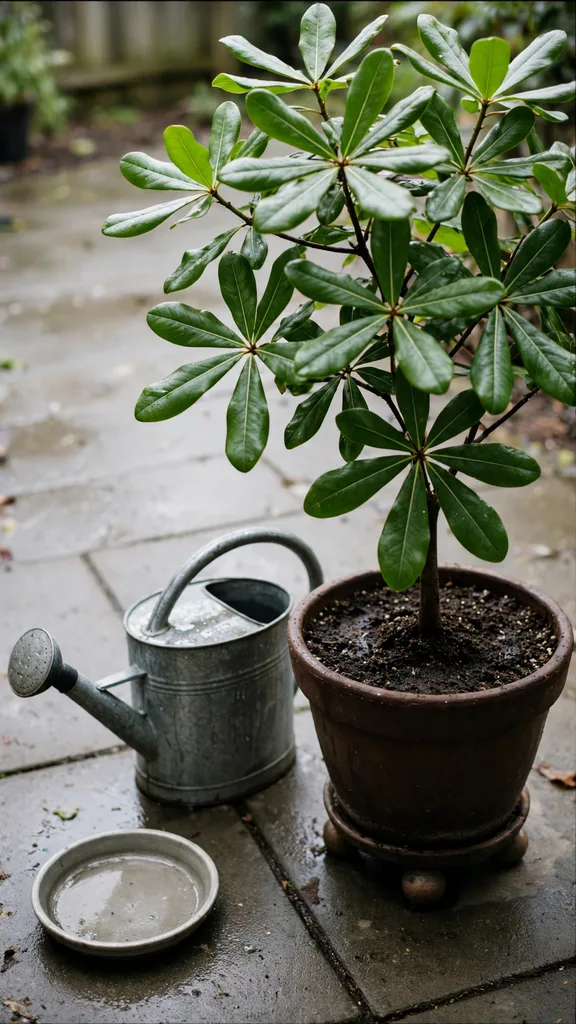
Read the pot, not the calendar. Push a finger 5 cm into the mix. Dry and dusty at that depth means water today. Cool and damp means wait. A pot that feels light when lifted a few centimetres off its feet is a dry pot, whatever the surface says. Surface color lies in both directions: sun bleaches a wet mix pale, and algae greens a dry one.
Water in the morning, at the base, until water runs from the holes. Evening watering leaves the canopy and the mix surface wet through the night, and the flower spikes and young nuts carry fungal spots for it. Never use the little and often sprinkle pattern on this tree. A daily splash wets the top centimetre, trains roots to the surface, and leaves the bottom of the pot dry and salty.
Cut back hard in winter quarters. A cold tree in low light drinks slowly, and a wet pot in a cold porch is the root rot setup again. Water just enough to stop the mix drying to dust: a small drink every few weeks, with the pot raised so it never sits in the saucer. Resume the deep soak cycle when the tree goes back outside and the first spring flush shows.
Feed Little and Often With a Low Phosphorus Fertilizer
Feed this tree like the protea relative it is. Macadamias sit in the Proteaceae, the family of proteas and banksias, and their roots take up phosphorus so efficiently that a standard high phosphorus fertilizer can poison them. The leaf sign is yellowing with green veins, then scorched margins, on a tree that was fed generously the month before. Choose a fertilizer labelled for Australian native plants, or any low phosphorus formula, and treat the packet rate as a ceiling.
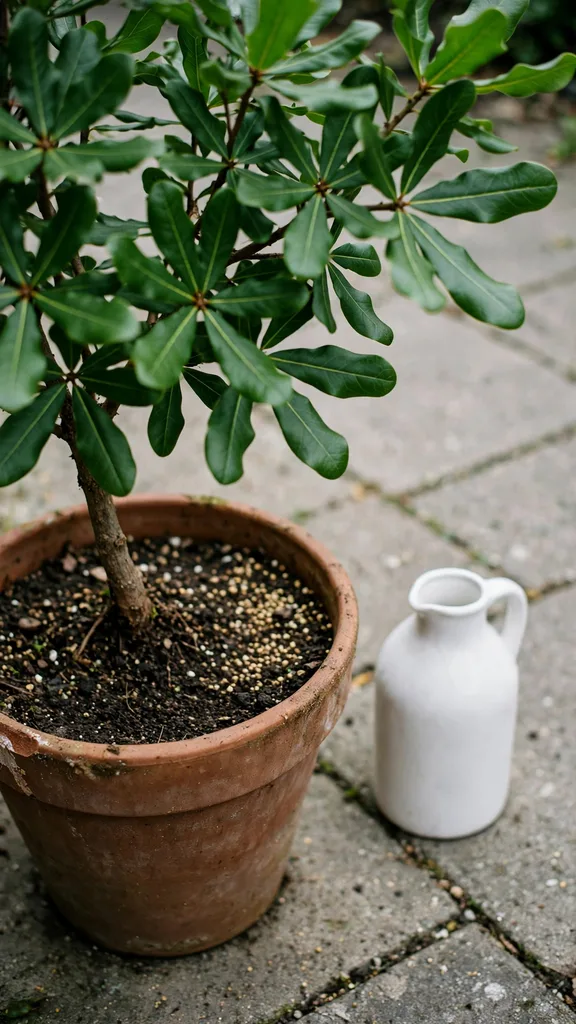
Work on little and often. Give a quarter to a half of the packet rate every 4 to 6 weeks from spring to early autumn, watered in well. A slow release native plant fertilizer scattered on the surface in spring covers the base load; a liquid feed at quarter strength fills the gaps during flowering and nut fill. Stop feeding by early autumn. Soft late growth going into winter burns in the first frost and opens the bark to dieback.
Contrast the vine on the next trellis. A passion fruit vine in full growth eats like a weed and forgives heavy feeding. The macadamia does not forgive it. The same handful of general fertilizer that pushes the vine can set the potted macadamia back a full season, and the damage shows in the leaves weeks after the cause is forgotten.
Watch the leaves for the feed report. Even green leaves with a hard gloss mean the program is right. Pale new growth with green veins points to iron lockup from a mix gone alkaline, fixed by the pH correction in the mix section, not by more fertilizer. Scorched leaf margins after feeding point to phosphorus or salt load: flush the pot with three volumes of clean water, then halve the rate. The NSW DPI grower’s guide refines orchard feeding from soil and leaf monitoring rather than fixed heavy doses. On a patio, the leaves are the lab. Read them monthly.
Prune Every Year to Hold the Tree at Carrying Size
Prune once a year, after harvest and before the spring flush, and prune for the doorway as much as for the tree. The finished size is set by two numbers: the height one or two people can carry through a door, and the width that fits the winter corner. A potted macadamia left unpruned reaches for its ground tree height in a few seasons, and then every winter move becomes a fight with a ladder and a saw.
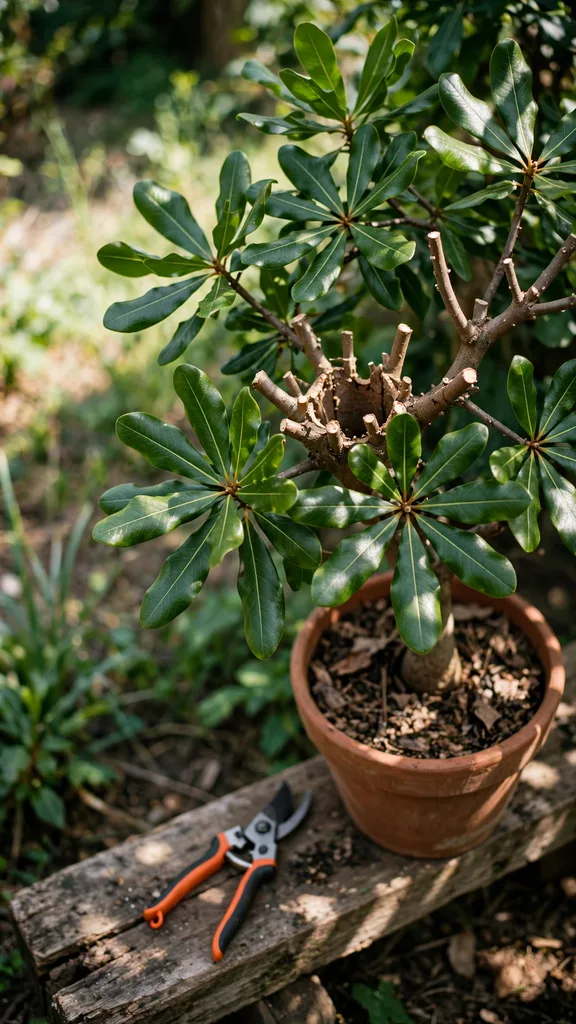
Start with the structure cuts. Take out dead wood, crossing branches, and any shoot growing straight up through the center of the canopy. Macadamia flowers hang below the branch line on long spikes, and a crowded center shades those spikes and rots the air around them. Open the middle. Then shorten the longest leaders back to a side branch, keeping the natural layered shape of the tree. Cut no more than a fifth of the canopy in one year. A harder cut answers with a thicket of soft upright regrowth that carries no flowers the following spring.
Train a young tree to one trunk with a clear 60 cm of stem before the first branch. Competing leaders on a young macadamia split under nut weight later, and a split leader on a potted tree usually means the tree comes out of the pot in two pieces. Rub off low shoots as they appear through the season rather than sawing them out in winter.
Root prune at the same session every second or third year, once the tree sits in its final pot. Slide the root ball out in spring, shave 2.5 cm of root and old mix off the sides and base with a serrated knife, and reset the tree in the same pot with fresh mix packed into the gap. Root pruning is what lets a tree live in one container for decades. Skip it for five years and the pot becomes a solid root ball that sheds water off its surface and starves in the middle of plenty.
Watch for Husk Spot, Nut Borer and Root Rot
Three problems account for nearly every sick potted macadamia, and all three announce themselves early.
Root rot comes first because the pot creates it. Phytophthora fungi work in wet, airless mix, and the signs are a tree that wilts in damp mix, leaves that dull and drop from the lower canopy up, and roots that come out of the pot brown and soft instead of pale and firm. The fix is drainage and rhythm, not chemistry: repot into fresh bark heavy mix, cut the black roots back to firm tissue, and water on the dry cycle. A tree repotted at the first dull leaves recovers. A tree left a season in the wet pot does not.
Husk spot works on the crop. The fungus stains the green husk with dark, sunken patches while the nut is still filling, and badly spotted husks can drop early. The CTAHR crop pages list husk spot among the standing disease problems of the crop in Hawai’i. Pick up fallen nuts and husks weekly, keep the canopy open for air, and never compost spotted husks beside the pot. Cleanliness carries most of the control on a single patio tree.
Nut borer works inside the shell. The moth lays eggs on the husk, the larva tunnels through the shell into the kernel, and the only surface sign is a pin hole and a nut that feels light at harvest. Shake the tree gently over a sheet at harvest and crack a sample of nuts first: bored kernels are webbed and dark. Remove and destroy infested nuts as they drop rather than leaving them under the pot, where the next moth generation waits.
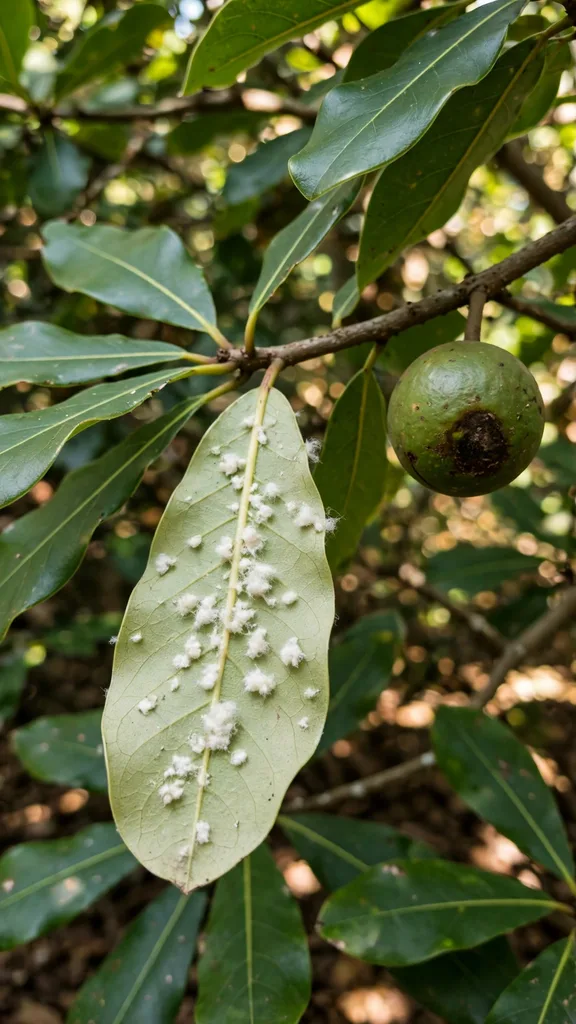
Two smaller visitors fill the rest of the list. Felted coccid, a flat scale insect, crusts the undersides of leaves and the bark in white felted patches and rains honeydew on the paving; scrub small colonies off with a stiff brush and soapy water. Flower blight greys whole flower spikes in wet spring weather; cut blighted spikes out and bin them, and water at the base only while the tree flowers. Neither needs a spray program on one tree. Both need a weekly look at the leaf undersides, which is where every pot pest starts.
Move the Pot Before the First Hard Frost
Move on the forecast, not on the calendar. Macadamia flowers and young growth burn at frost, a hard freeze can kill a young tree outright, and the roots in a pot chill far faster than roots in the ground. The first night forecast below freezing is the deadline. The tree goes under cover before that night, every year, even in districts where the frost turns out light.
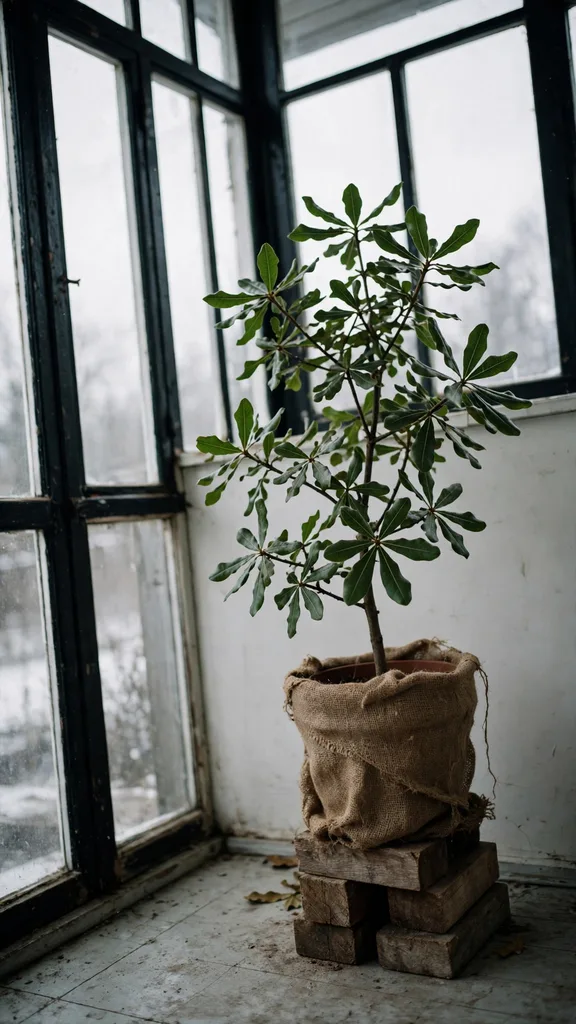
Choose winter quarters for cold bright air, not warmth. An unheated porch, a cold greenhouse, or a bright garage with a window beats a heated living room on every count: the tree rests instead of growing, the light holds the leaves, and the pests stay slow. A tree wintered in a warm dim room pushes pale soft growth all winter and drops leaves when it goes back into spring sun. Cold and bright is the target. Warm and dark is the failure.
Wrap the pot, not the canopy. Lag the container with hessian, bubble wrap, or an old blanket before the coldest weeks, because the root ball is the part that freezes. Leave the foliage open to the light and air. Stand the pot on timber blocks off a concrete floor, which wicks cold into the base all night.
Stage the spring exit the way the pineapple growers do. A pineapple plant moved from winter cover back to full sun in stages hardens instead of scorching, and the macadamia follows the same rule: a shaded wall for the first days, morning sun added across the week, then the full summer corner once nights stay mild. A tree carried straight from a dim porch into a full spring day bleaches its leaves white in a weekend. The leaves recover. The season’s first flower spikes, if they formed indoors, often do not.
Harvest When the Husk Splits on the Tree
Read the husk, not the date. A ripe macadamia announces itself on the branch: the leathery green husk, about 2.5 cm across and split into two valves at maturity, cracks open along its seam and shows the hard brown shell inside. Nuts at that stage drop within days. On a potted tree the crop ripens in waves across late summer and autumn, a few nuts at a time, and the harvest is a weekly round rather than a single picking day.
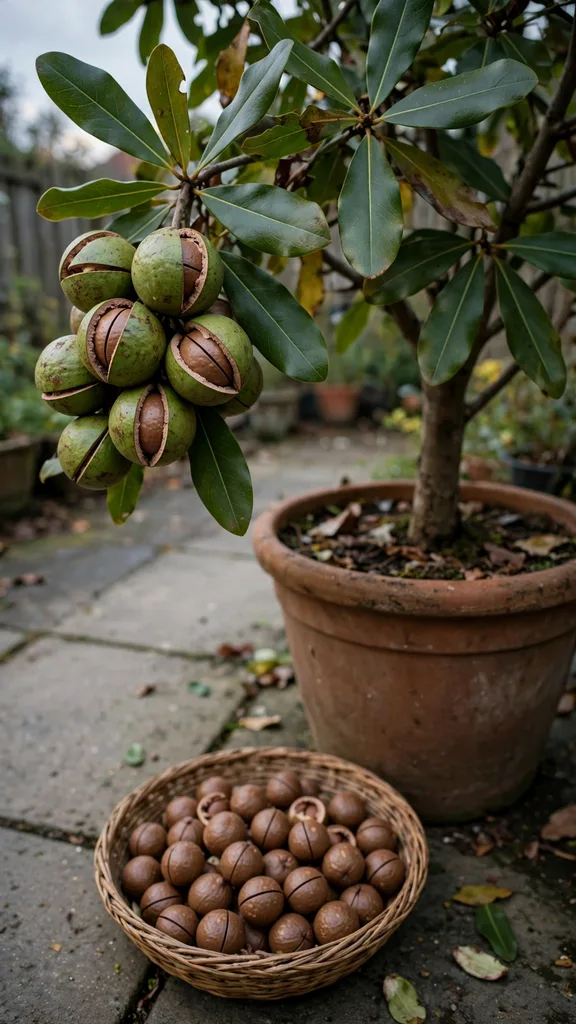
Gather fallen nuts every few days. A nut lying on wet paving or damp mix starts to mould at the husk split, and the kernel quality falls with every wet day it sits. Shake the branches gently over a sheet to bring down the ripe ones whose husks have split. Leave the closed husks alone. A nut picked green and hard never ripens off the tree, and its kernel stays shrivelled and bitter.
Dehusk the gathered nuts the day you pick them up. The husk comes off in two halves once it has split; a screwdriver tip in the seam starts a stubborn one. Spread the nuts in shell on a mesh tray in a dry, airy room for 2 to 3 weeks. The kernel shrinks slightly inside the shell as it dries, and a dried nut rattles faintly when shaken. Crack with a proper macadamia cracker or a bench vice, never with a hammer on a board: the shell is among the hardest of any nut, and a hammer blow that opens it usually flattens the kernel too.
Judge the crop honestly in the early years. A young grafted tree gives a bowl of nuts. A mature potted tree in its final container gives a bucket in a good year. That is the real yield of a patio macadamia, and it is worth having: the flavour of a fresh cracked kernel, dried at home and roasted minutes before eating, is a different food from the packet version.
Troubleshoot a Potted Macadamia That Will Not Nut
Work the causes in order. Age explains most empty trees, and it is the cause nobody wants to hear.
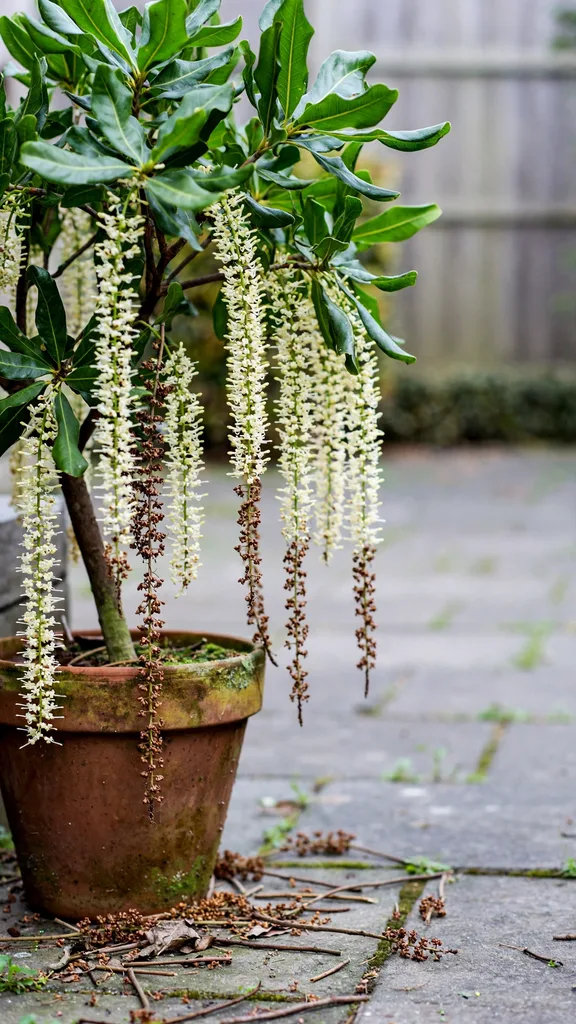
| Tree | First flower spikes | First nuts worth picking |
|---|---|---|
| Grafted named cultivar in a pot | Year 3 to 4 | Around year 5, a small crop |
| Seedling grown from a fresh nut | Year 7 to 10 | Year 8 to 12, quality unknown |
| Root bound tree of any age | Flowers form, then drop | Delayed until repotted |
A tree inside those windows is not broken. It is young. The CTAHR orchard record gives grafted trees a small crop in the fifth year and full production only at 12 to 15 years, and a pot slows the back half of that timeline, not the front. Feed it, pot it up, and wait.
A tree past its window with flowers that drop has a shorter list. Frost on the spikes is the first suspect in cool districts: one cold night during flowering empties a tree without marking the leaves. The second suspect is a root bound pot, where the tree aborts nuts it cannot fill. The third is water stress at nut set, a dry fortnight just after flowering that sheds the whole set. The fourth is feed: a nitrogen heavy program grows leaves at the expense of flowers, and a phosphorus burnt tree drops everything. Each cause has a season attached to it. Match the season before you change the care.
A tree that never flowers at all is usually short of light or short of years. A patio corner that reads as sunny from a chair can give a pot only 4 hours of direct sun, and macadamia wants the full day. Move the pot 2 m before you blame the tree. Seedlings and hard pruned trees also skip flowering: a tree cut back by a third answers with vegetative regrowth for a full season. Prune a fifth or less, after harvest, and the flower wood survives.
Yellow leaves get misread as hunger more often than any other sign on this tree. Yellow between green veins on the older leaves, on a tree in old mix, is the alkaline lockup from the mix section: test the pH before you open the fertilizer. Yellow leaf margins with scorch after a feed is the phosphorus burn from the feeding section: flush the pot and halve the rate. Yellow leaves on a tree standing in a full saucer is drowning: empty the saucer and let the top dry. Three causes, three fixes, and only one of them involves feeding the tree at all.
Frequently Asked Questions
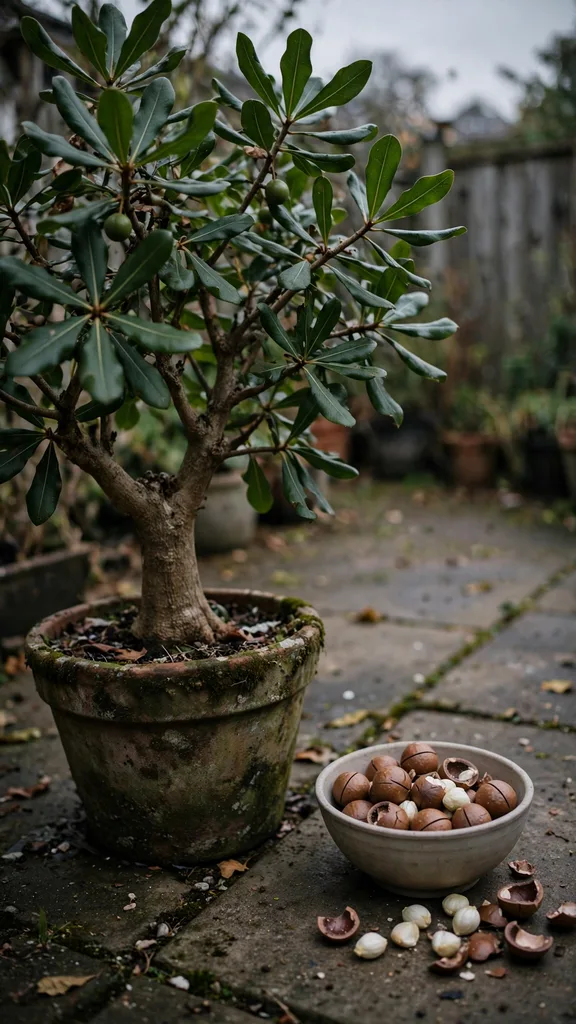
No. A macadamia needs full sun, moving air, and a cool bright rest in winter, and a heated room gives it none of the three. Trees kept indoors stretch pale, drop leaves, and never flower. Grow the tree outdoors from spring to autumn and use the indoor space only as frost shelter: an unheated porch or bright garage for the coldest weeks, then back outside.
Plan on 100 litres, roughly a half wine barrel, for a mature tree you still intend to move. That volume carries a pruned canopy of about 2 m and a root system you can hold with root pruning every second or third year. A larger pot grows a larger tree and a heavier winter move. A smaller final pot works only with harder annual pruning.
One grafted tree crops on its own, and a lone patio tree is a normal setup. A second tree of a different cultivar, flowering at the same season within bee range, lifts nut set on both trees and steadies the crop in poor flowering weather. If the patio holds one pot only, plant the one tree and accept the lighter set in hard years.
Almost never. Snack nuts are roasted, and raw nuts from a health food shelf are months old with dead seed inside the shell. Macadamia seed loses viability within weeks of harvest. Sow fresh nuts in the husk from a grower or a farmers market instead, run the float test, and grow the seedling as a side project beside a grafted tree.
A tree sheds nuts it cannot fill. The usual causes are a dry spell just after flowering, a root bound pot, or a phosphorus burnt root system that cannot supply the crop. Check the watering rhythm first, then the drainage holes for circling roots, then your fertilizer label. A small natural drop of undersized nuts in early summer is normal thinning and needs no fix.
Move it out in spring, in stages, once nights stay reliably above freezing. Start against a shaded wall, add morning sun across the first week, then shift the pot into its full summer corner. A tree carried straight from a dim porch into a full day of spring sun bleaches leaves white, and soft growth pushed in warm indoor air burns in the first cold night.