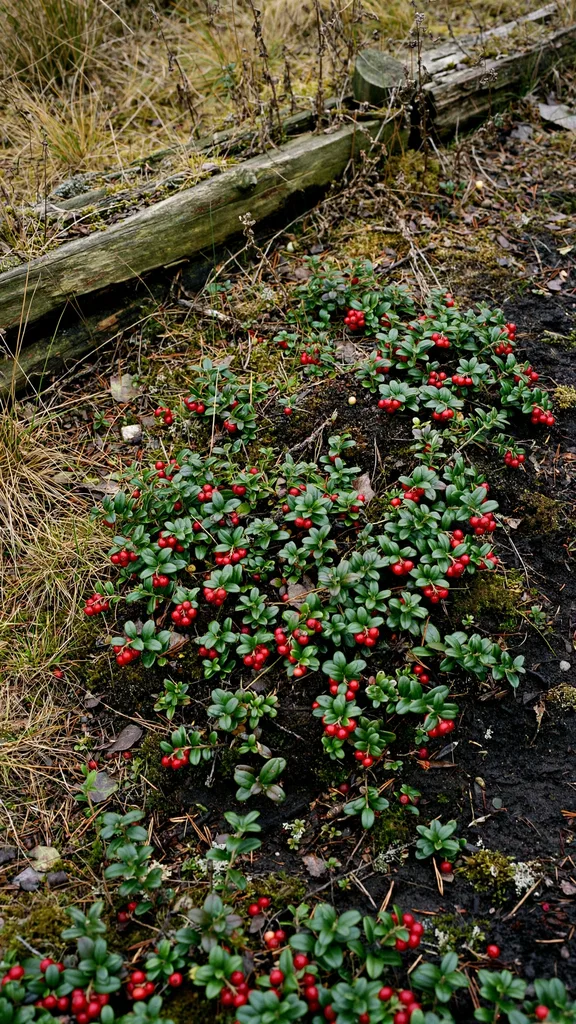
Set 12 potted lingonberry plants 30.48 cm apart in a bed acidified the fall before, and the patch closes into an evergreen mat that fruits twice a year. Learning how to grow lingonberry means holding three numbers from the first day: soil pH 4.2 to 5.5, a winter bank of 300 to 800 chill hours, and roots that live in the top layer of soil and rot in standing water. Get the acid and the drainage right and Vaccinium vitis-idaea asks for little else.
Lingonberry is a perennial, woody, evergreen shrub in a genus of 450 Vaccinium species that also holds blueberry and cranberry. The plant spreads by rhizomes, underground stems that push up new shoots away from the parent crown, so one plant becomes a patch and a patch becomes a groundcover. Gardeners in cold districts plant it for the tart red fruit. Gardeners on dry banks plant it because the mat holds soil, stays green through winter, and asks for no staking, no trellis, and no spray program in an ordinary year.
Two types reach the nursery shelf. The wild North American type, variety minus, stays low and blooms once, in spring. The European type grows taller, carries larger leaves and flowers, and blooms twice each year, the type nurseries sell most often. This page grows the European type. Every spacing, feeding, and harvest figure below fits that plant, and the wild type takes the same soil and care at a smaller scale.
| Attribute | Detail |
|---|---|
| Botanical name | Vaccinium vitis-idaea |
| Other names | Cowberry, foxberry, tyttebær |
| Plant type | Evergreen groundcover shrub, spreads by rhizomes |
| Height | 5.08 to 40.64 cm for cultivated types, wild type under 17.78 cm |
| Soil pH | 4.2 to 5.5 |
| Chill requirement | 300 to 800 hours below 7.22 degrees Celsius |
| Sun | Full sun, light afternoon shade in hot districts |
| Spacing in the row | 20.32 to 45.72 cm |
| First fruit | Year 2 to 3 from potted plants |
| Crops per year | 2 on European types, summer and fall |
| Productive life | 20 years or more |
Meet the Lingonberry, Vaccinium Vitis-Idaea
The cultivated plant stands 5.08 to 40.64 cm tall, with white or light pink bell shaped flowers and five to nine glossy evergreen leaves per branch. Leaves run 1 to 2.54 cm long, oval, leathery, dark green on top and pale green underneath, with a small notch at the tip on many leaves. The branches themselves stay short, 2.54 to 5.08 cm of new growth in a season, and the whole plant reads as a dense green cushion rather than a bush. A patch in flower shows pink buds opening white across the mat in a single flush.
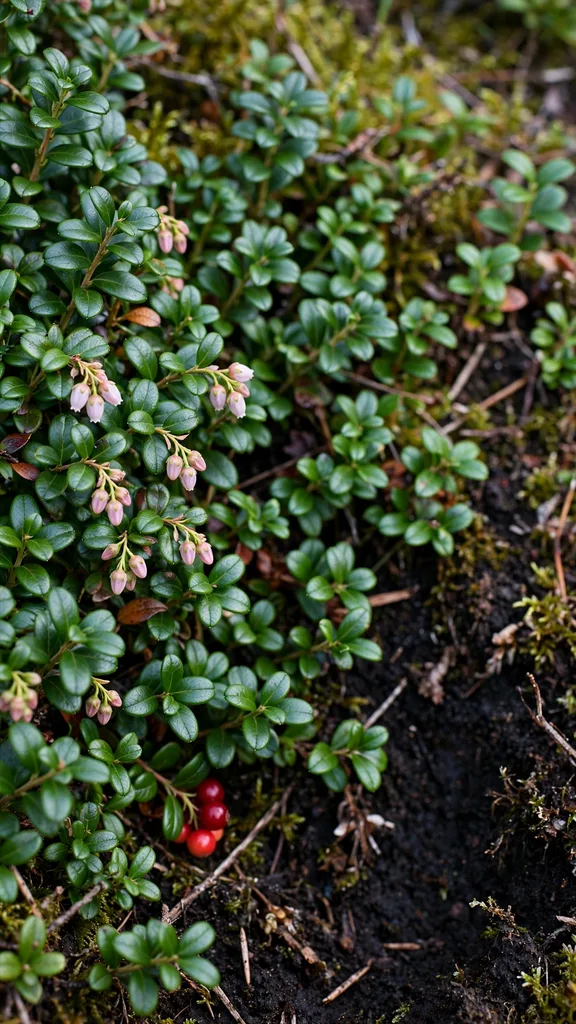
Fruit follows at the branch tips. Berries weigh 0.17 to 0.45 gram each and measure 0.7 to 1.1 cm across, bright red to dark red at picking. The flavor runs strong and tart, closer to a cranberry than to a raspberry, and the fruit carries high vitamin C and a natural benzoic acid load that gives picked berries a long cold life. A single berry fools nobody at the table. Cooked into sauce or jam, the same acid turns into the point of the crop.
The wild type earns one paragraph because gardeners meet it in northern woods and in seed catalogs. Variety minus stands under 17.78 cm, blooms once in spring, and fruits once, in late summer. It spreads the same way, by rhizome, and takes the same acid soil. Plant it where a very low native mat is the goal and a single crop is enough. Plant the European type where the kitchen wants two crops and the bed wants taller cover. Mixing the two types in one bed gives a patch that fruits in patches. The fall crop lands on the European rows only, and the harvest map gets confusing by the second year.
Lingonberry Versus Cranberry: Two Vaccinium Plants, Two Gardens
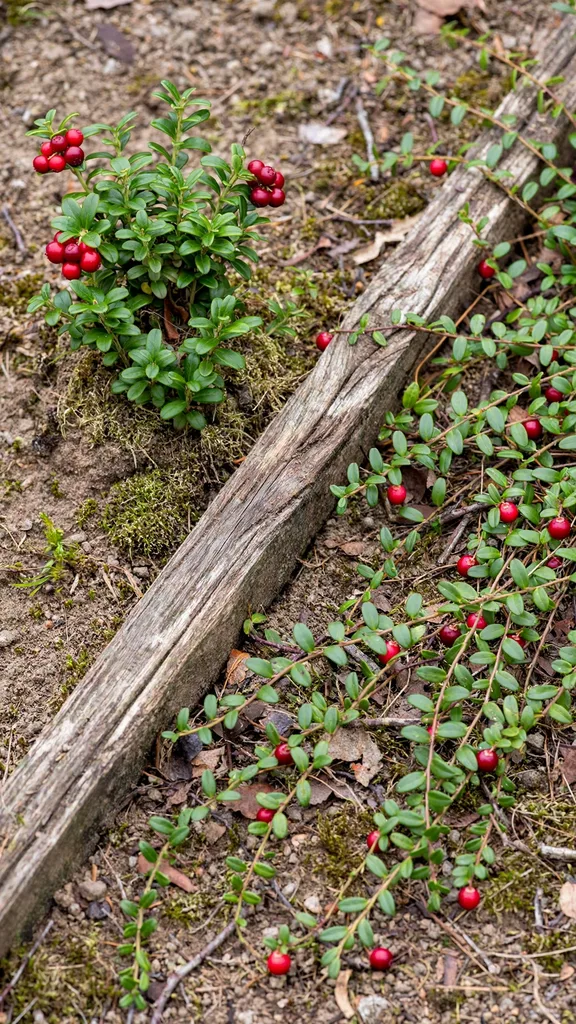
The confusion starts at the fruit bowl. Both plants sit in Vaccinium, both ripen red, and both cook into a tart sauce that cuts rich food. The plants part company at the ground. Lingonberry is Vaccinium vitis-idaea, an upright evergreen shrub of dry northern forest floors and sandy banks. Cranberry is Vaccinium macrocarpon, a trailing vine with long runners and small leaves spaced along wiry stems. One grows as a cushion. The other grows as a mat of vines.
| Trait | Lingonberry | Cranberry |
|---|---|---|
| Botanical name | Vaccinium vitis-idaea | Vaccinium macrocarpon |
| Growth habit | Upright evergreen shrub, spreads by rhizomes | Trailing vine, spreads by long runners |
| Height | 5.08 to 40.64 cm | Stays under 20.32 cm, vines run flat |
| Leaves | 1 to 2.54 cm, oval, notched tip on many leaves | Smaller, oblong, spaced along the runner |
| Soil water | Moist soil that drains between waterings | Soil held saturated through the season |
| Fruit size | 0.7 to 1.1 cm across | 0.8 to 1.2 cm across |
| Crops per year | 2 on European types | 1 |
| Garden job | Groundcover bed, dry bank, container | Its own dedicated wet bed |
Cranberry culture is a different job, and that work lives on How to Grow Big, Juicy Cranberries. This page stays on lingonberry: dry land, acid soil, and a shrub that fruits standing up. A gardener who plants lingonberry with cranberry habits drowns the roots by midsummer. A gardener who plants cranberry with lingonberry habits watches the vines dry out at the edges. The table above is the whole fence. Read the botanical name on the nursery tag, then water for the plant in the pot.
Fruit size overlaps, so size alone never settles an identification. Leaf and stem settle it. Lingonberry leaves crowd near the branch tips on short upright stems, and the berries hang in clusters at those tips. Cranberry leaves space out along a runner that lies flat, and the berries rise on thin upright stalks above the vine mat. Check the stem before the fruit. A red berry on a cushion shrub is a lingonberry. A red berry over a flat vine mat is a cranberry.
Does Your Winter Deliver 300 to 800 Chill Hours?
Count the hours below 7.22 degrees Celsius across one winter before ordering plants: a site banking 300 to 800 of those hours sits inside the band this berry counts on. Chill hours are the cold currency of northern fruit. The plant sets flower buds in summer, holds them through winter, and opens them in spring only after the cold account reads full. A winter that pays short leaves a green, healthy, flowerless patch. The failure looks like a feeding problem and feeds on fertilizer money for years.
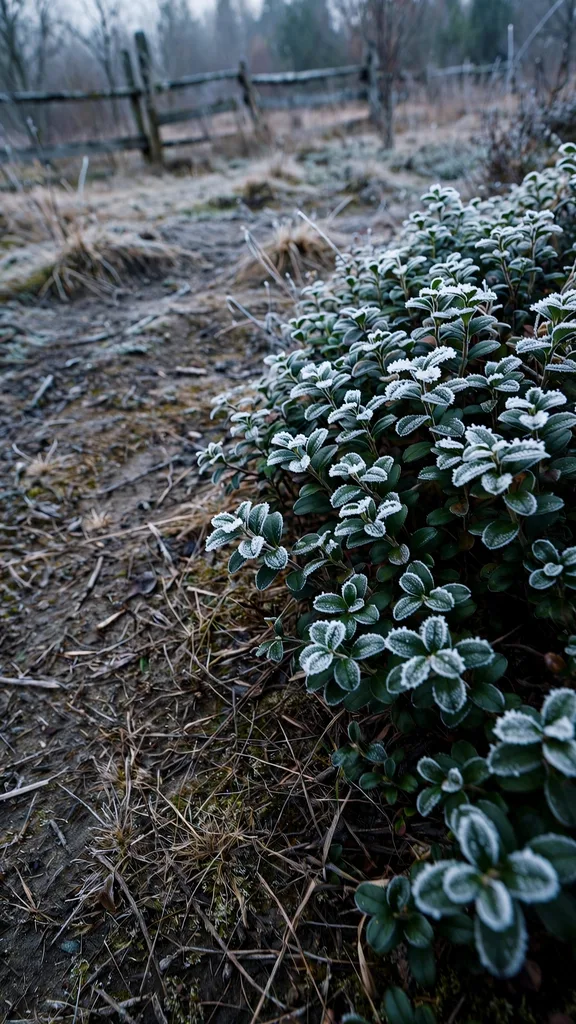
Cold itself rarely kills the plant. Lingonberries in Oregon and Washington have survived temperatures as low as minus 16.67 degrees Celsius, and ripe fruit on the plant has held through minus 2.22 degrees Celsius in Europe. The tender moment is bloom. Frost during flowering or fruiting can cut the crop by 50 percent, with damage starting at minus 2.22 degrees Celsius on open flowers. Snow cover insulates the low mat through deep cold snaps. Bare ground under a hard freeze is the risky setup, and a straw mulch layer or a floating row cover closes that gap on the coldest nights.
Warm winters fail this plant more often than cold ones. A district that banks under 300 chill hours in most years grows lingonberry as foliage. The patch spreads, stays green, and fruits in a thin scatter or not at all. Gardeners at the warm edge gain a little by planting on a north facing slope or against a wall that sheds summer heat, where soil stays cool and winter cold pools at ground level. The gain is small. A site short on chill by half stays short.
Cold-climate berry neighbours share this accounting. The seaberry row in How to Grow Sea Buckthorn banks its own cold as 90 days of seed stratification, and the lingonberry patch banks cold as standing chill hours on a living plant. Both crops punish a mild winter and reward a hard one. Gardeners choosing between cold-climate berries should count their winter first and shop second. A plant bought against the local chill count is a green ornament with a fruit label.
Test the Soil and Hold the Acid Band
Test the soil before the plants arrive, and test it in fall for a spring planting. Lingonberries are most productive in soil holding 2 to 6 percent organic matter in the top 7.62 to 15.24 cm, at a pH of 4.3 to 5.5. The brief for this crop widens the working band slightly, to pH 4.2 to 5.5, and the bed work below holds that band. Above it, iron locks out of reach, leaves yellow between the veins, and growth stalls on a plant standing in ground that tests rich. Below it, roots sulk. The band is the crop.
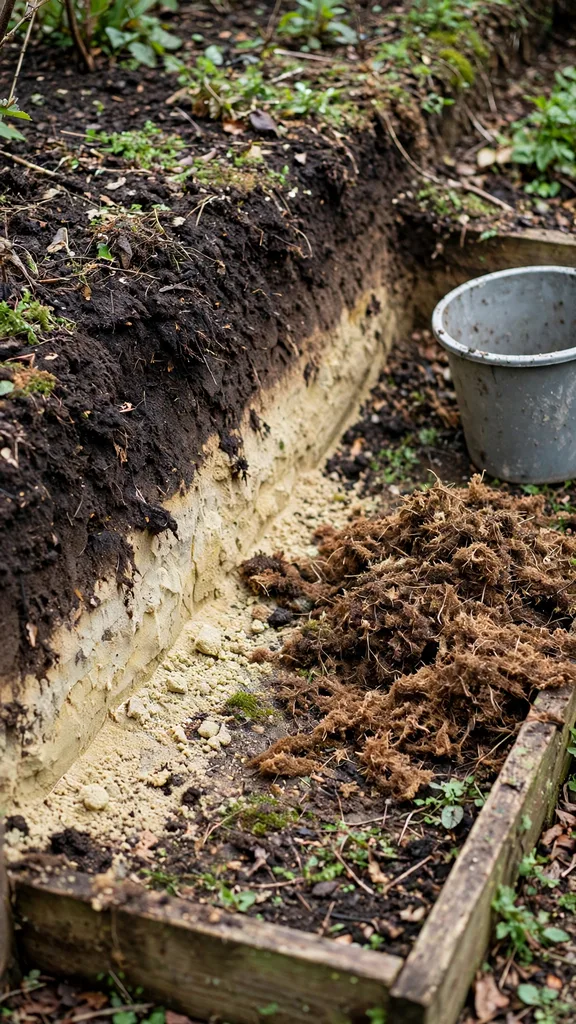
Lower a high pH with elemental sulfur, worked into the bed the fall before planting so soil bacteria convert it to acid by spring. The Massachusetts fact sheet gives the companion move: incorporate 3.175 to 4.535 kg of peat moss per 9.29 square m and lower the pH toward 5.0 with elemental sulfur. Peat alone does half the job. Sulfur does the lasting half. A bed acidified only with peat drifts back up within two seasons and the yellowing returns on schedule.
Skip lime in every form near this bed. Wood ash, concrete rubble fill, and limestone gravel paths all leak alkalinity into the root zone of a shallow rooted plant. Keep the lingonberry bed away from fresh concrete and masonry, which shed lime for years. Gardeners on naturally alkaline ground take the container route in the container section below and stop fighting the whole soil profile. A bed that needs sulfur every single year to hold pH 5.0 is telling you the same thing in installments.
Salt is the second soil enemy. Lingonberries are very sensitive to high salt concentrations, especially sodium and chloride, and high calcium levels can turn toxic on this plant. Road salt splash, salty irrigation water, and chloride based fertilizers all land on the same weakness. Site the bed away from salted paths, test well water that tastes brackish, and read fertilizer labels for chloride before buying. Salt burn shows as brown leaf edges on a plant that tests wet enough. More water spreads the salt wider. The fix is clean water and time, and the prevention is a label read at the shop.
Pick a Full Sun Site on Dry, Well Drained Land
Plant lingonberry in the sunniest open ground the garden has. The Massachusetts fact sheet puts it plainly: lingonberries belong in a sunny location, with partial shade acceptable and less desirable. Full sun colors the fruit, dries the foliage after rain, and keeps the mat dense. A patch in half shade grows open and leggy, flowers thinly, and hands the ground to weeds it should have shaded out itself. Afternoon shade earns its place only in hot districts, where summer heat stresses this northern plant and a few hours off the late sun keeps the leaves working.
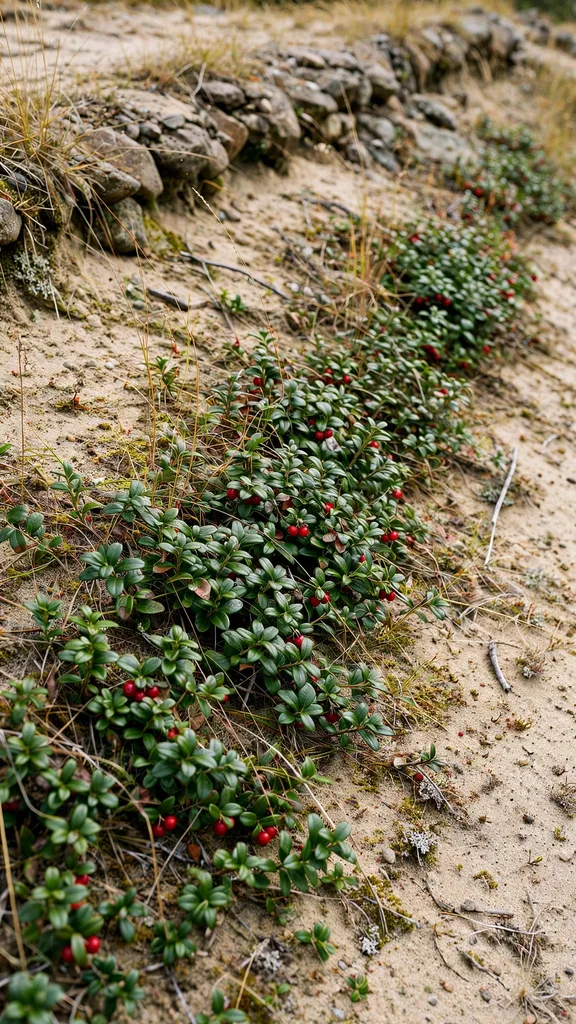
Drainage decides survival. Lingonberries prefer a light, well drained soil such as sandy loam, well drained loam, or silty loam. Roots sit near the surface and rot fast in ground that holds water. Oregon and Washington growers plant on raised beds 10.16 to 20.32 cm high to improve drainage and cut the root rot risk. Run the same move at garden scale: mound the bed, plant on the mound, and let winter rain leave. A lingonberry bed dug as a basin in clay is a sump with plants in it.
Wet sites carry the disease bill. The Massachusetts sheet names Phytophthora as a major disease on wet sites and gives the fix as avoiding wet ground or choosing less susceptible varieties. No spray program rescues roots sitting in water. Dig a test hole where the bed will go, fill it, and watch it drain. Water gone within the hour means the site passes. Water standing at dusk means a raised bed or a different corner of the garden.
Give the patch its own ground. The rhizomes travel under mulch and pop up through neighbouring plantings, and a lingonberry mat inside a perennial border becomes a weeding argument by year three. Edge the bed with a mown strip, a path, or a sunken barrier strip, and the rhizomes stop at the line you cut. Plant the mat where its spread is the point: a bank, a front border, the ground under a high canopy tree that leafs out late. Ground planted as an afterthought gets treated as a weed. Ground planted as a groundcover gets kept.
Choose Named Cultivars and Plant a Pollinizer
Buy named European cultivars for a fruit bed. The Oregon trials list 16 cultivars in Pacific Northwest plantings, 14 high yielding producers and 2 pollinizers, plus 5 numbered Swedish selections. Height alone splits the list into two garden tools. Tall selections such as Erntedank at 35.56 to 40.64 cm and Koralle at 30.48 to 35.56 cm fill a border fast and pick easily. Low selections such as Ida at 12.7 to 17.78 cm and Regal at 5.08 to 10.16 cm hug the ground on a bank or at a path edge. Match the cultivar height to the job before matching the berry size to the kitchen.
Berry size runs with the cultivar, and the trial numbers give the spread. Erntesegen carries very large berries at 0.41 gram on plants 30.48 to 38.1 cm tall, while Ida tops the list at 0.45 gram on a plant a third of that height. Erntekrone, a German selection from 1981, yields well in both summer and fall. Koralle spreads slowly and picks easily because the fruit sits high on an upright plant. Read the trial figures as a ranking tool, then buy the top of the list your nursery actually stocks. A perfect cultivar on a catalog page plants nothing.
Pollination decides berry size. Lingonberries are self pollinating, and the Massachusetts sheet notes larger fruit that ripens earlier when more than one variety grows in the planting. The Oregon guide sharpens the rule for yield: plant 10 percent of the planting with pollinizer cultivars such as Red Pearl and Sussi to reach the best pollination and the highest yield. At garden scale, 10 percent means one pollinizer plant in every ten, woven into the patch rather than parked at the end. A single cultivar bed fruits. A mixed bed fruits bigger, earlier, and heavier.
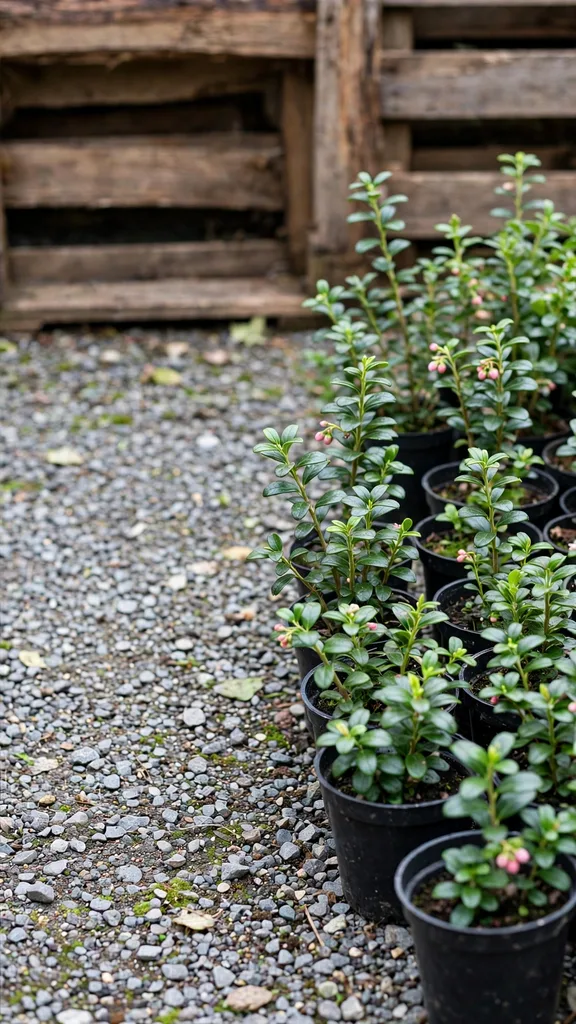
Buy potted plants. The Massachusetts sheet advises potted stock because the survival rate runs much higher than bare root or field dug plants. Check each pot for three things: the cultivar name, the botanical name Vaccinium vitis-idaea, and roots that fill the pot without circling into a hard mat. A pot labeled only lingonberry, with no cultivar, hides its height, its berry size, and its bloom pattern. That pot is a foliage gamble priced as a fruit plant.
Plant Potted Stock Shallow in Spring or Fall
Plant in spring as soon as the soil works without compacting, or in fall while the ground still holds warmth. Spring planting suits cold districts, where a fall planted crown faces winter before its roots grip. Fall planting suits mild districts and gives roots a head start on the spring flush. Either way, plant on a still day into soil you acidified the fall before, and water the row in the same hour.
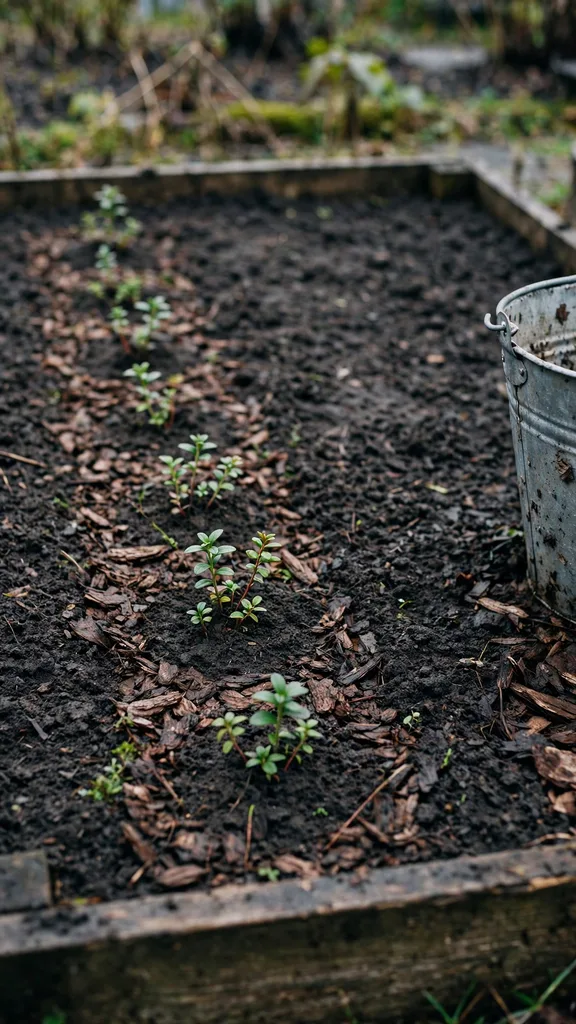
Set the roots shallow. The Oregon guide sets planting depth at 5.08 to 7.62 cm for roots, with seedling root systems placed just below the soil surface. A lingonberry crown buried deep rots at the center while the edges spread, and the patch opens into a ring with a dead middle. Set each plant at the depth it grew in the pot, firm the soil with a flat palm of pressure through the boot sole, and leave the crown at the surface where the rhizomes can run.
Space for the mat you want in year four. Oregon beds run a single row down the center of the bed, plants 20.32 to 45.72 cm apart in the row and bed centers 60.96 to 91.44 cm apart. The Massachusetts sheet lands in the same band for home rows: plants spaced 30.48 cm apart in rows 0.91 to 1.22 m apart. Tight spacing at 20.32 cm closes a groundcover bed a full year sooner. Wide spacing at 45.72 cm suits a picking row you walk between. Rhizome growth covers the bed by the fourth or fifth year at commercial spacing, and a home bed at 30.48 cm closes sooner.
Mulch at planting and keep the mulch coming. Spread 5.08 cm of peat moss, partially decomposed sawdust, or bark mulch around and between the plants, and renew the layer every spring, since mulch holds weeds down, keeps the soil acid, and shelters the shallow roots. Skip mulch treated with preservative. The Oregon within-row figure runs deeper, 10.16 to 20.32 cm of mulch to hold weeds back in field rows, and a home bed lands between the two numbers: deep enough to shade the soil, shallow enough to leave the crowns breathing. Mulch piled over the crowns rots them. Mulch kept at the shoulders of each plant does the whole job.
Propagate From Cuttings, Rhizome Divisions, and Seed
Take cuttings and divisions for plants that match the parent. The Oregon guide lists stem cuttings and rhizome divisions rooted in spring or late summer and transplanted the following spring or fall. Cut a 10.16 cm stem piece with leaves stripped from the lower half, set it in a gritty acid mix, and keep the mix damp under a clear cover until roots show at the drainage hole. Lift a rhizome section in early spring with a spade, keeping a rooted shoot and a length of underground stem on each piece, and replant the pieces at once at the spacing above. Divisions fruit on the parent schedule. A division lifted from a bearing patch can carry flowers the same season.
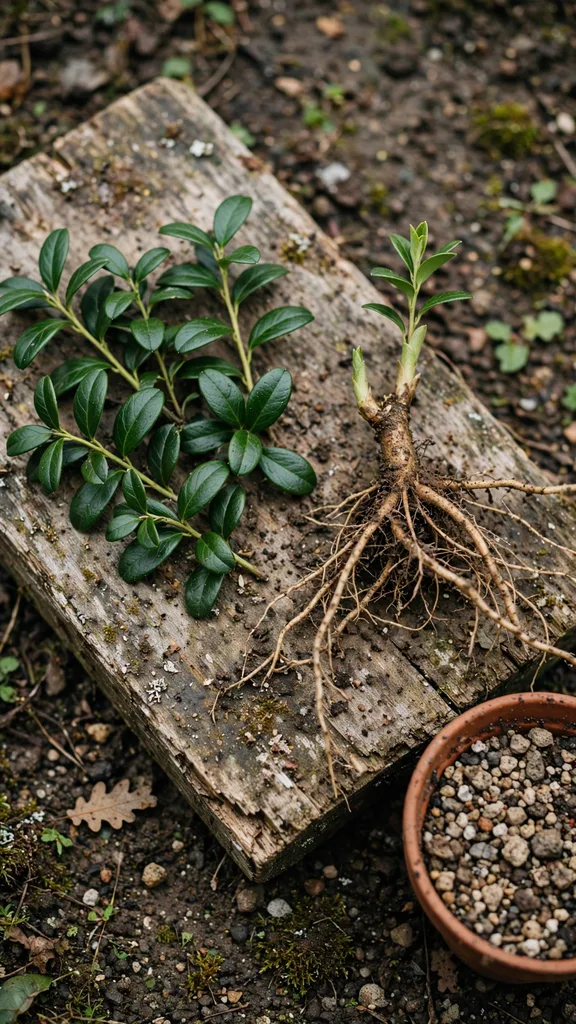
Each route carries a cost, and the Oregon guide names them in plain terms: cutting grown plants may develop weak rhizome growth and limited spread, divisions can carry pathogens from the parent patch, and seedlings may not come true to the parent stock. Divide only from a clean, vigorous patch. A division lifted from a patch with twig dieback plants the disease in a new bed with fresh soil to eat. Cuttings trade spread for health: the plant fruits true and clean, and the patch closes a season slower.
Grow seed as a breeding bench, and count the wait honestly. Store cleaned seed in damp sand in a refrigerator through a full winter cold period, then sow shallow in a gritty acid mix in a greenhouse or on a bright sill. The Oregon guide notes seedlings transplanted to the field at 1 or 2 years old, in spring or fall. Seed from a named cultivar gives seedlings that vary in height, berry size, and bloom pattern. Keep the best, compost the runts, and treat any seedling that outfruits its parent as a found cultivar for your own garden. Gardeners who want a known crop in year two buy potted cultivars. Seed is for gardeners who want a surprise in year four.
Water the Shallow Roots and Mulch 10 to 20 cm Deep
Water through the first summer without a gap. The Oregon guide directs growers to irrigate through the first summer to improve establishment and cut sunburn, at 1.27 to 1.905 cm of water every week. Drip lines buried in the raised bed deliver that water to the root zone and keep the foliage dry. Overhead watering works at home scale when it runs in the morning and the leaves dry by noon. A patch that dries out fully between waterings concentrates salts in the soil water, and this plant reads salt fast. Even moisture is the rule. A weekly soak beats a daily sprinkle that wets only the mulch.
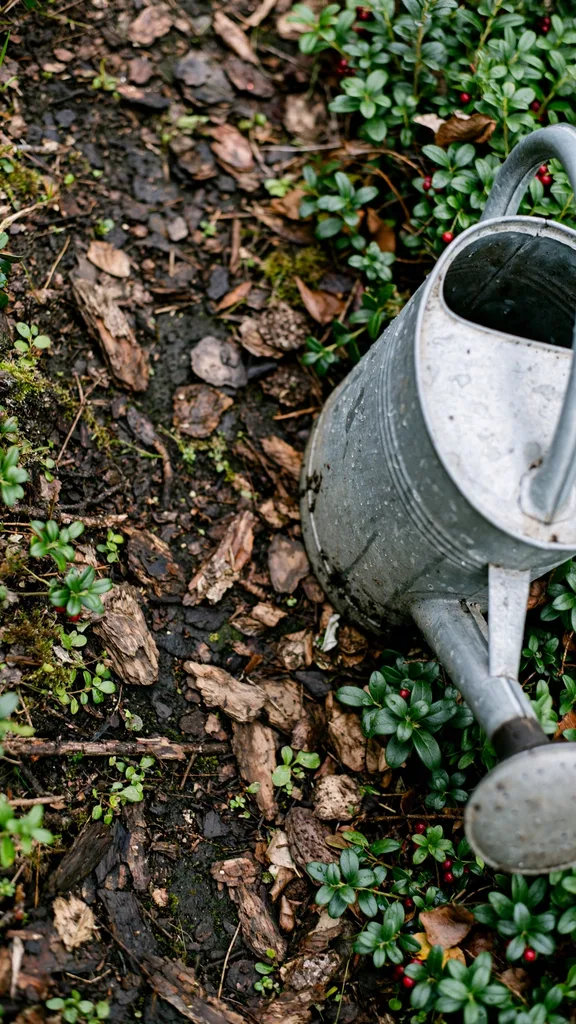
Established patches drink less and forgive more, and dry weeks still show first at the leaf edges. The Massachusetts sheet gives the standing order in one line: water the plants during dry periods. Check the soil under the mulch with a finger before watering. Soil damp at 5.08 cm down means wait. Soil dry at that depth means soak the bed until the top 15.24 cm reads moist, then stop. Heavy soil punishes generosity: overwatering heavy ground raises the root rot risk, and the cultivar Koralle showed moderate to severe dieback from root rot in heavy, heavily irrigated Oregon fields. The same plant died in other fields from too little water in its first 2 years. The band between those two failures is the watering skill of this crop, and a finger in the soil finds it faster than a calendar.
Weed control decides the first three years. The Oregon guide calls weed control critical during the first 3 years of establishment, with roots so near the surface that deep cultivation tears them. Hand pull weeds while they are small, keep the mulch layer renewed, and mow the grass strip between beds before the grass seeds. A hoe worked deep beside a lingonberry row lifts roots with the weeds. The plant helps where it can: lingonberry tissue carries a compound that reduces germination of annual weeds inside the row. A closed mat weeds itself. An open, weedy first year stays open, because the weeds shade the young crowns and steal the surface water the roots live on.
Feed Lightly and Keep Chloride Off the Bed
Feed this plant like a guest who eats little and leaves early when the plate overflows. The Oregon guide warns that overapplying fertilizer reduces yield and can cause plant dieback, with brown and black leaves that mimic fungal root rot. Use nitrogen in the ammonium form: ammonium sulfate feeds and acidifies in the same pass, and urea feeds with less acid effect. High nitrogen rates push soft leafy growth at the cost of flowers. A patch fed hard greens up beautifully and fruits like a hedge.
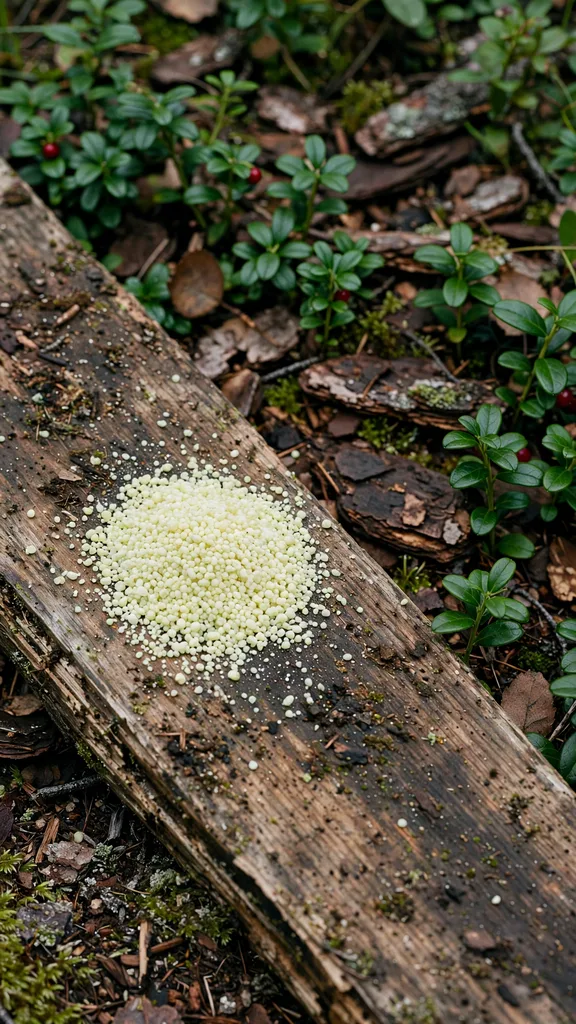
Chloride is banned at this bed. The Oregon guide states the rule without a hedge: use only chloride free fertilizers, because chloride salts severely damage lingonberry plants. Potassium chloride, the cheap potash in many general garden blends, is the usual accident. Read the label for the words muriate of potash and put that bag back. Salt based ice melt, water softener discharge, and manure from salt fed livestock land on the same weakness. The bed fence is a label habit, not a product.
Time the small feed you do give. The Massachusetts sheet advises a liquid fertilizer 2 to 3 weeks after planting, then a small amount of complete fertilizer around each plant at bloom and again 1 month later in later years. Ammonium sulfate is the sheet’s preferred nitrogen source because its sulfur holds the pH down. Fresh sawdust or bark mulch steals nitrogen as it rots, so a first year patch on fresh mulch may need extra liquid nitrogen to keep leaves green. Yellow leaves on a fed patch point back at pH first. Feed a plant standing at pH 6.5 and the iron stays locked no matter how much fertilizer lands. Test, acidify, then feed.
Renew Old Growth by Mowing After Year 5
Leave the patch alone for its first years. The Oregon guide recommends no pruning in the first 4 or 5 years after field planting. Young plants spend those years building the rhizome network that carries every later crop, and a pruned young patch rebuilds stems instead of spreading. The Massachusetts sheet agrees at home scale: little or no pruning in the early years while the plants fill their space. Hand pull the weeds, renew the mulch, and let the mat close.
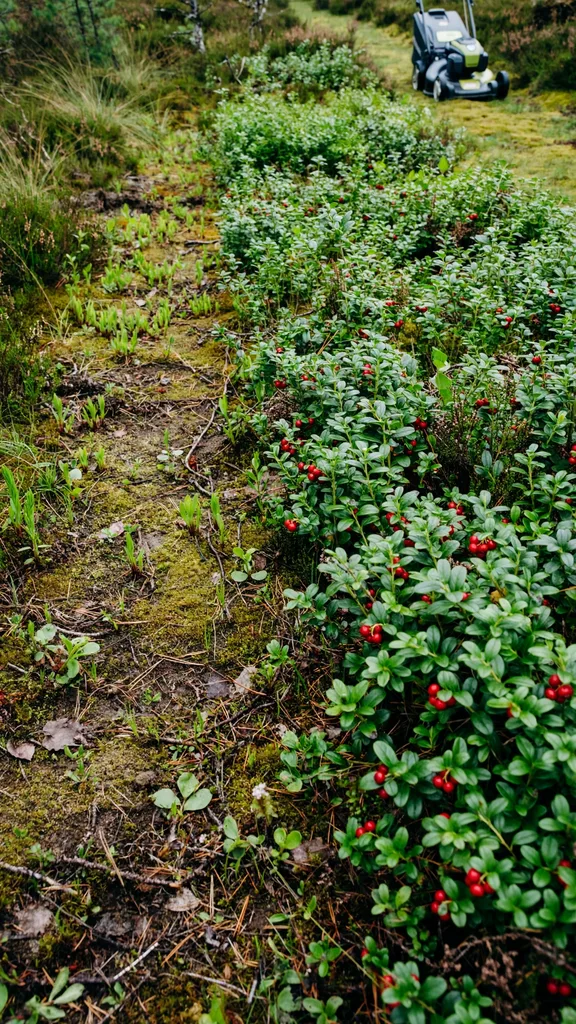
Renew a filled patch by mowing it in strips. After year five, mow alternate rows to 5.08 cm every 3 to 6 years to raise shoot density and push vigorous unbranched 1 year old growth, which raises the count of fruiting stems. Flowers form on 1 year old wood at the branch tips, so a mown strip fruits the season after its regrowth year. Mow half the bed one spring and the other half three years later, and the patch never gives up a whole crop year. The Massachusetts version of the same cut takes a filled planting down to 5.08 to 7.62 cm above the mulch in very early spring to stimulate growth and improve fruit size and production.
Cut before the buds move. A patch mown in very early spring regrows through the whole season and sets its flower buds by fall. A patch mown after leaf out loses that season and sulks into summer. Hand work suits the edges: clip out dead twigs, twig blight strikes, and any stem that browns from the tip, cutting back into clean wood and binning the prunings away from the bed. Twig blight prunings composted beside the bed return the fungus to the roots by rain splash. Burn them or bin them. The mower handles the middle of the patch. The secateurs handle the evidence.
Grow Lingonberry in a Container of Acid Mix
Take the container route when the garden soil runs alkaline, when the only sunny ground is a patio, or when the patch needs to stay small and named. Fill a pot at least 30.48 cm across with an acid mix: peat moss and pine bark fines in equal parts, with coarse grit worked through for drainage. Set the crown at the surface, exactly as in the ground, and stand the pot on feet so the drainage holes clear the paving. A pot standing in its own runoff through winter rots its roots by spring, the same failure as a basin bed in clay.
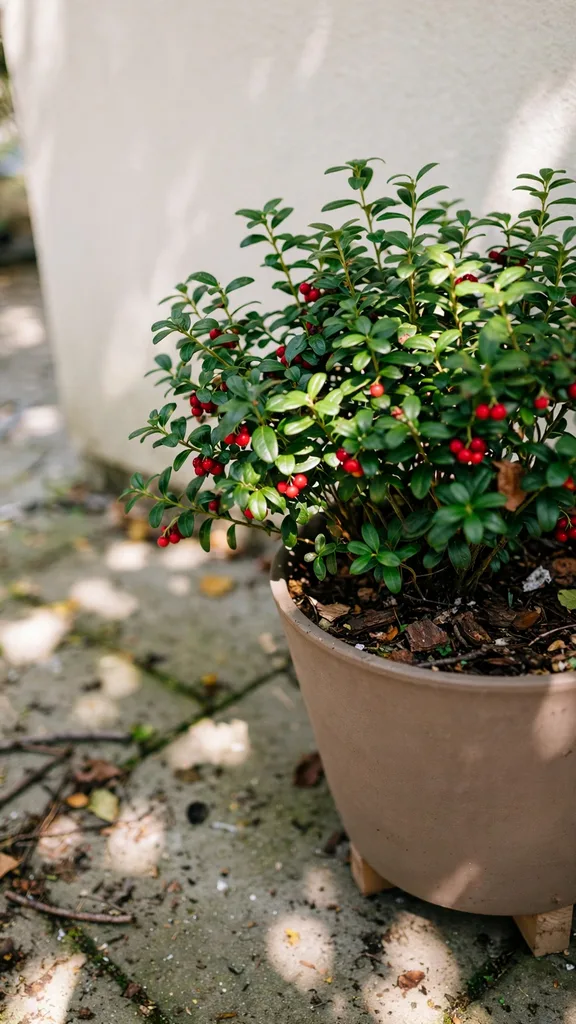
Container plants drink on your schedule. The shallow roots that make ground watering forgiving make pot watering strict: a small pot in summer sun dries to the bottom in a day. Water when the top 2.54 cm of mix reads dry, soak until the pot drains, and empty the saucer after every watering. Feed at half the ground rate with an ammonium based feed, and flush the pot with clean water twice a season to wash out salts that ground beds shed by drainage. Salt crust on the mix surface is the warning. Brown leaf edges follow it within weeks.
Winter asks for one move. Roots in a pot freeze harder than roots in the ground, and this plant wants its chill without a frozen root ball cycling through thaw and refreeze. Sink the pot into a vacant bed for winter, or group pots against a sheltered wall and wrap them in fleece during a hard freeze week. The top growth takes deep cold standing open. Bring the pot back into full sun in spring, top the mix with fresh bark, and the container plant fruits on the same two crop calendar as the bed. A container patch also solves the pollinizer geometry: one pollinizer pot standing inside a group of fruiting pots covers the whole group.
Pick Two Crops a Year, in August and in October
European lingonberries bloom twice, and the calendar runs off those two blooms. The Oregon guide sets two bloom periods, March to April and July to August, with fruit ripening in mid August and mid October. The Massachusetts sheet reads the same plant on a home clock: the May bloom ripens fruit in July, and the second crop ripens in October, generally larger and of higher quality because it ripens in cooler weather. The spring bloom is frost tender, so the summer crop runs small in frosty districts. The fall crop is the main event. Plan the kitchen around October and treat August as a bonus.
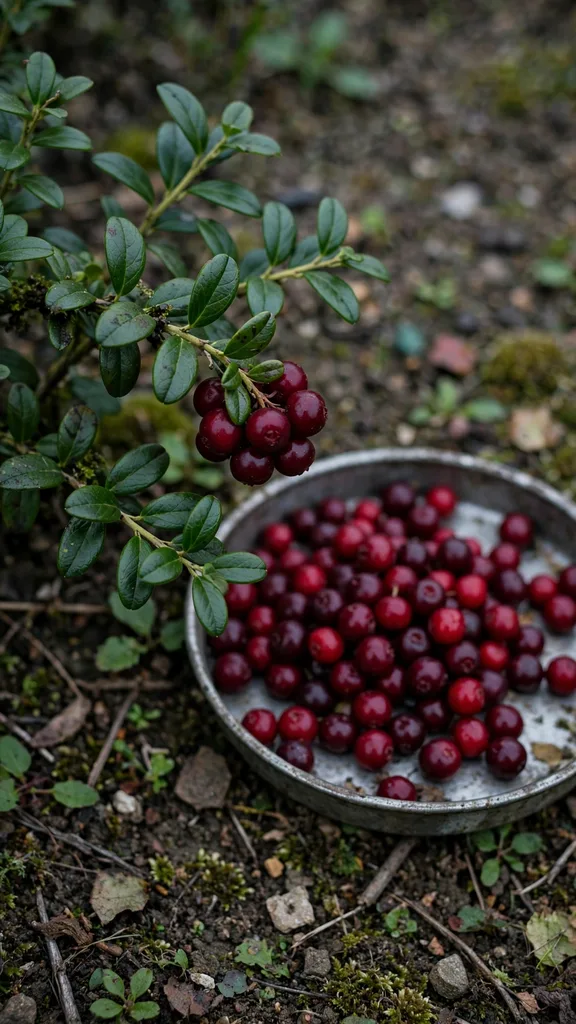
Pick by color and by patience. Berries harvest light red to dark red, and fruit picked green and early tastes bitter. Summer crop berries left on the plant fall or overripen by the fall harvest, so pick the summer crop as it colors and leave nothing for later. The fall crop holds better on the plant and picks cleaner. Work along the row with a shallow container under the branch tips and strip the clusters downward with a forked hand motion, or run a berry rake through the mat the way lowbush growers do. Birds take a larger share of the fall crop than the summer one, because fall offers fewer rival fruits. Net the patch when the October berries start to color if robins and finches work your garden.
Expect the wait before the first real pick. Growth runs slow in year one while the root system establishes, and plants start to produce fruit in 2 to 3 years. A healthy planting then stays productive for 20 years or more. Tart red fruit rewards the same cooking as its astringent neighbours: the chokeberry harvest in How to Grow Chokeberry goes to sauce and jelly for the same reason, acid that cooks into flavor. Lingonberry sauce, jam, and syrup carry the crop through winter, and the fresh berries hold in cold storage on their own benzoic acid.
Store the fall crop cold and it keeps. Picked and cleaned berries for the fresh market hold 3 to 5 weeks under refrigeration at 0 to 7.22 degrees Celsius. Freeze the surplus in a single layer on trays, then bag the frozen fruit for sauce through winter. A patch that fruits twice and stands unpicked is the quiet failure of this crop. The birds close that account by November, and they send no thank you note.
Frequently Asked Questions
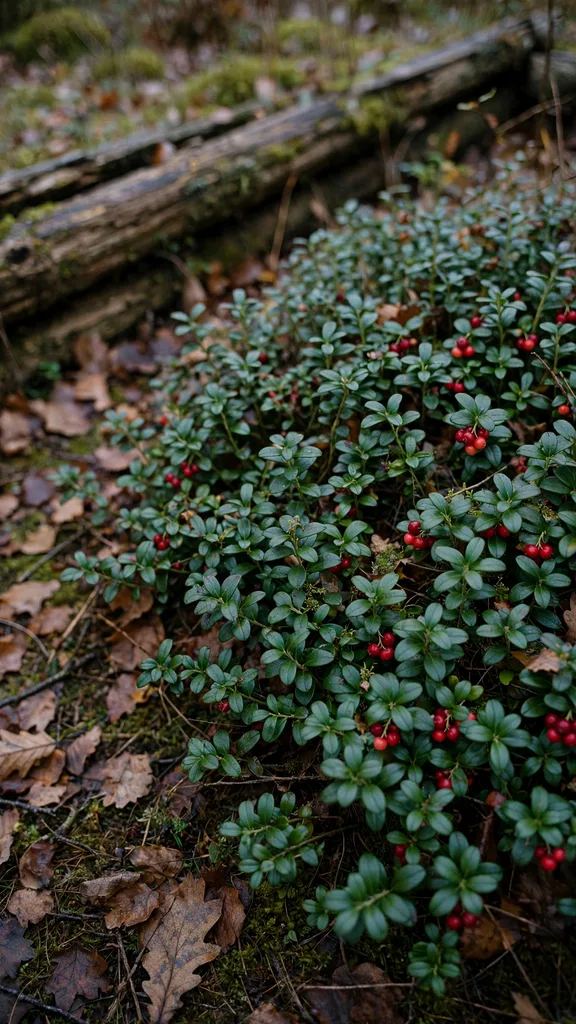
A healthy planting stays productive for 20 years or more on the Oregon figures, and the patch renews itself as rhizomes push fresh shoots into ground the old crowns vacate. Individual crowns tire and thin with age. The mat persists. Mow strips on the renewal cycle, hold the pH band, and a bed planted once fruits for a gardening lifetime without replanting.
No. The plants self pollinate and a single cultivar bed sets fruit on its own. Size and timing improve with company: the Massachusetts sheet records larger fruit ripening earlier when more than one variety grows in the planting, and the Oregon guide plants 10 percent pollinizers for the heaviest set. One pollinizer in ten plants is cheap insurance.
Foliage yes, fruit rarely. The plant counts 300 to 800 chill hours each winter and opens a full set of flower buds only after the count lands. A mild winter district grows a green, spreading mat that flowers in a scatter and fruits in a handful. Plant on the coldest ground you have, a north slope or a frost pocket edge, and accept the thin crop as the price of the postcode.
Test the soil first. Leaves yellow between the veins when the pH climbs above the acid band and iron locks away from the roots, and whole plants brown from the base when roots sit in wet ground. The Massachusetts sheet names Phytophthora as a major disease on wet sites. Sulfur fixes the first failure over a season. Drainage fixes the second. Fertilizer fixes neither.
Potted plants fruit in year 2 to 3. Growth runs slow in the first year while roots establish, and plants start to produce fruit in 2 to 3 years. The first crop is light. Full crops land once the mat closes.
Vaccinium vitis-idaea rewards the gardener who tests the soil in fall and counts the winter honestly. Hold the pH low, keep roots out of standing water, and the red crops arrive twice a year.