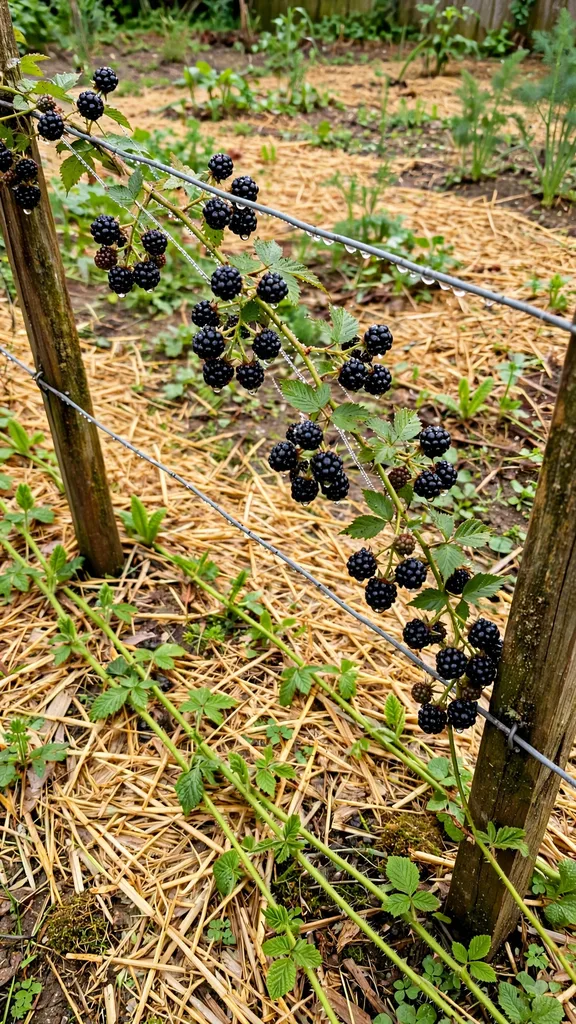
Tie 6 canes per plant to a low trellis in the first spring and a dewberry patch starts paying you back a full season ahead of the blackberry row. Learning how to grow dewberry means working with a trailing plant: canes that run along the ground, root at their tips, and fruit on second year wood. Treat it like an upright blackberry and the patch turns into a mat of shaded, sour fruit. Train it low, prune it hard after harvest, and it crops clean for years.
Dewberry is its own group inside the genus Rubus. The southern species, Rubus trivialis, and the northern species, Rubus flagellaris, share one habit: long, flexible canes that trail instead of standing. The roots live for many years. Each cane lives for two. A first year cane, the primocane, grows leaves and length. A second year cane, the floricane, flowers, fruits, and dies. Every job on the patch hangs off that two year cycle.
| Attribute | Detail |
|---|---|
| Botanical names | Rubus trivialis (southern dewberry), Rubus flagellaris (northern dewberry) |
| Plant type | Perennial trailing bramble, biennial canes |
| Cane habit | Trailing, 0.91 to 3.66 m long, rooting at the tips |
| Hardiness | USDA zones 5 to 9, species and cultivar decide the cold edge |
| Sun | Full sun for the heaviest crop |
| Soil | Well drained sandy, loamy, or clay soil, pH 5.5 to 6.5 |
| Spacing | 0.91 to 1.22 m between plants on the trellis row |
| First fruit | Second spring after planting, on floricanes |
| Ripening | 2 to 4 weeks ahead of upright blackberries |
| Fruit size | About 2.54 cm long on southern dewberry |
Meet the Dewberry, a Trailing Rubus With Its Own Name
Dewberry grows wild across the southern and central United States in open fields, along fence lines, and on road banks where the soil stays poor and the grass grows thin. The North Carolina Extension Gardener Plant Toolbox describes southern dewberry as a native, evergreen perennial trailing shrub that grows in sandy, loamy, or clay soils and prefers well drained moist ground. Wild patches fruit with no care at all. A garden patch, trained and pruned, fruits far heavier.
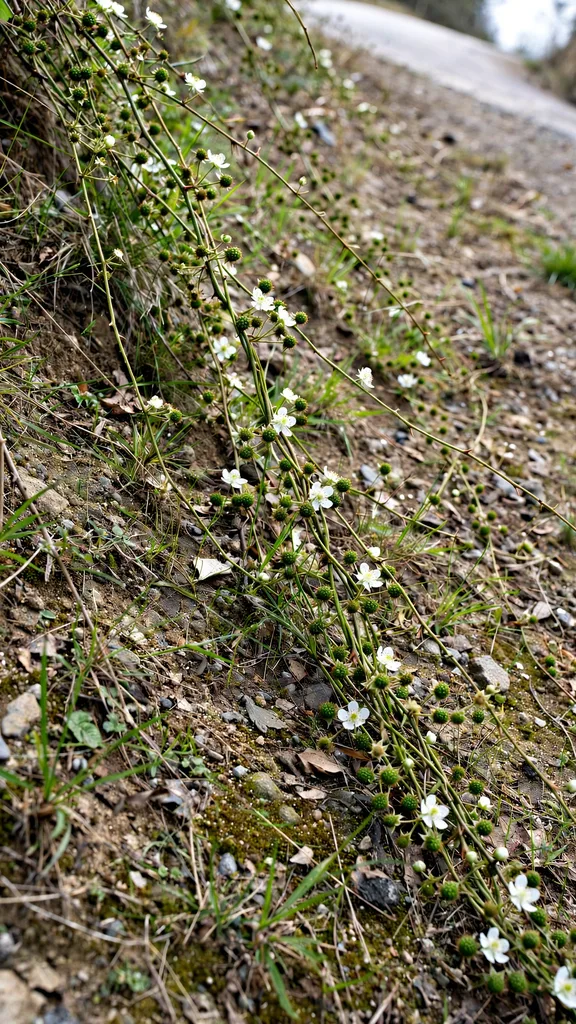
The plant spreads by rooting at its cane tips. A primocane runs along the soil, the tip touches damp ground in late summer, and roots form at that contact point within weeks. One plant becomes a colony in two seasons if the canes lie untrained. That single habit explains the trellis, the spacing, and half the pruning work ahead. Dewberry expands sideways. Blackberry expands upward and outward from the crown by suckers.
Growing blackberries from seed is a different job. That lives on How to Grow Juicy Blackberries from Seed. This page stays on dewberry: trailing canes, a low trellis, tip layering, and a crop that lands weeks before any blackberry in the same garden turns black.
Expect a long lived patch. The crown and roots persist while individual canes rotate through their two year cycle, so a planted row renews itself every season. The failure mode is neglect, and neglect has a shape: a ground level mat where fruit rots against wet soil and picking means kneeling in prickles. Twenty minutes of tying in spring prevents all of it.
Dewberry vs Blackberry: Read the Canes, Not the Label
Nurseries sell both plants under loose language, and one wild dewberry patch gets called a blackberry patch in half the gardens it colonizes. The label on the pot settles nothing. The canes settle everything. Dewberry canes trail along the ground and root at the tips. Blackberry canes arch upright from the crown and spread by root suckers. Walk the row in winter and the habit names the plant before a single leaf opens.
| Trait | Dewberry | Blackberry |
|---|---|---|
| Botanical group | Rubus trivialis, Rubus flagellaris and kin | Rubus fruticosus aggregate and hybrids |
| Cane habit | Trailing, runs along the ground | Upright to arching, self supporting on most types |
| Support | Low trellis, wires at 45.7 cm and 91.4 cm | Tall trellis or none on erect types |
| Spread | Roots at the cane tips | Spreads by root suckers from the crown |
| Fruit timing | Ripens 2 to 4 weeks earlier | Ripens after dewberry finishes |
| Fruit cluster | Small, open clusters, often one flower per branch | Larger, denser clusters |
| Cane posture in winter | Lies flat, easy to mulch over in cold districts | Stands in the wind, exposed to winter burn |
| Pruning core job | Cut fruited floricanes out, tie new primocanes up | Tip primocanes in summer, cut fruited floricanes out |
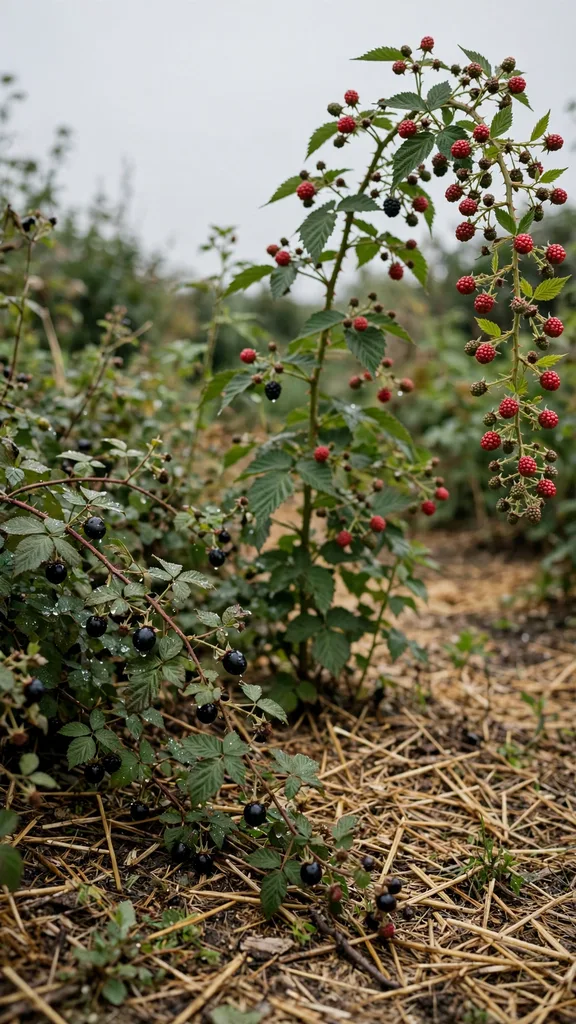
Fruit timing seals the identification in spring. A trailing patch ripening glossy black fruit while the upright row nearby still shows red and green berries is a dewberry patch, whatever the plant tag said. The early crop is the commercial point of the plant and the home garden point too: dewberry fills the gap between the last strawberries and the first blackberries.
Flavor follows the habit. Dewberry fruit runs softer and sweeter than blackberry fruit from the same district, and it bruises faster in the picking bucket. Pick into shallow containers. A deep bucket crushes the bottom layer into juice before you reach the kitchen.
Pick a Sunny Site and Test the Soil First
Plant dewberry in full sun on the freest draining ground in the garden. Shade cuts the crop and holds dew on the fruit into the afternoon, and wet fruit rots on the cane. Clemson Extension sets the soil target for brambles at full sun and a well drained, fertile soil with a pH between 5.5 and 6.5. Test the soil in autumn before a spring planting. Lime raises a low pH over the winter. Elemental sulfur lowers a high pH on the same slow clock. A test taken the week of planting leaves no time for either amendment to work.
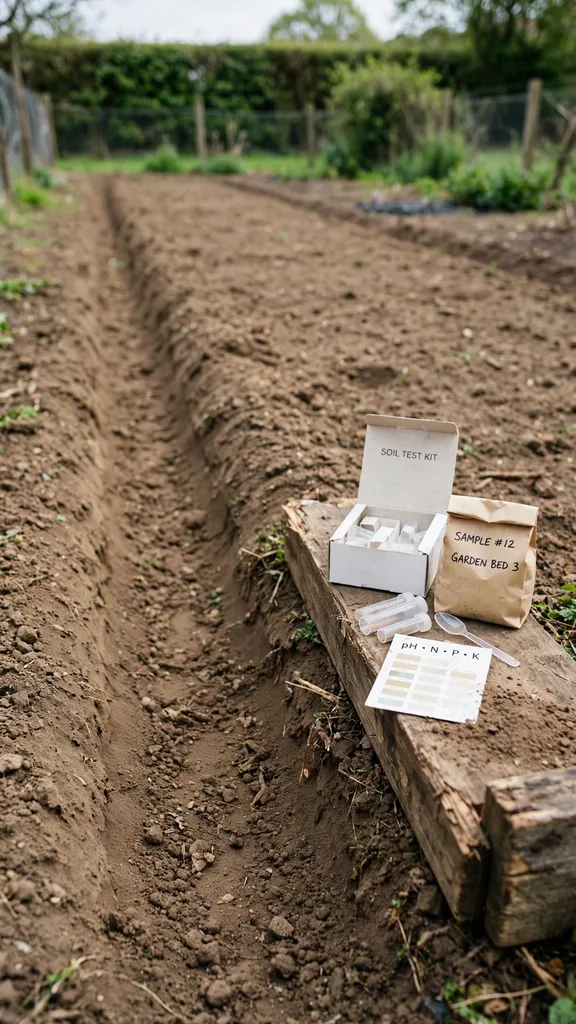
Drainage matters more than richness. Wild dewberry thrives on coarse sand and thin roadside soil, and garden plants sulk in rich, wet clay. A clay site needs a raised row: mound the planting line 20.3 cm high and 91.4 cm wide, work compost into the mound, and plant into the crest. Water then drains away from the crown after heavy rain instead of pooling against it.
Keep the patch away from old bramble ground. Soil that grew blackberries, raspberries, or wild dewberry in the last 4 years carries root diseases and virus infected roots that a new planting inherits on day one. A fresh site, or a site that grew vegetables and cover crops, starts the patch clean. Wind shelter helps at the cold edge of the range: a fence line or hedge on the windward side cuts winter cane burn without shading the row.
Measure the row before you order plants. A trailing plant covers serious ground. One healthy plant works 1.83 m of trellis once its canes fan out, and a family patch of fresh fruit and jam needs 4 to 6 plants. Order for the row you measured. Surplus bramble plants have nowhere polite to go.
Which Dewberry Species Fits Your Garden?
Southern dewberry, Rubus trivialis, owns the warm half of the map. It holds its leaves through mild winters, fruits early, and shrugs off heat and humidity that stall northern species. Gardeners from Texas to Florida and north into the Carolinas plant this species or its named forms. The ‘Austin’ dewberry, a Texas selection, carries large, sweet fruit on trailing canes and ripens ahead of the blackberries bred in the same state.
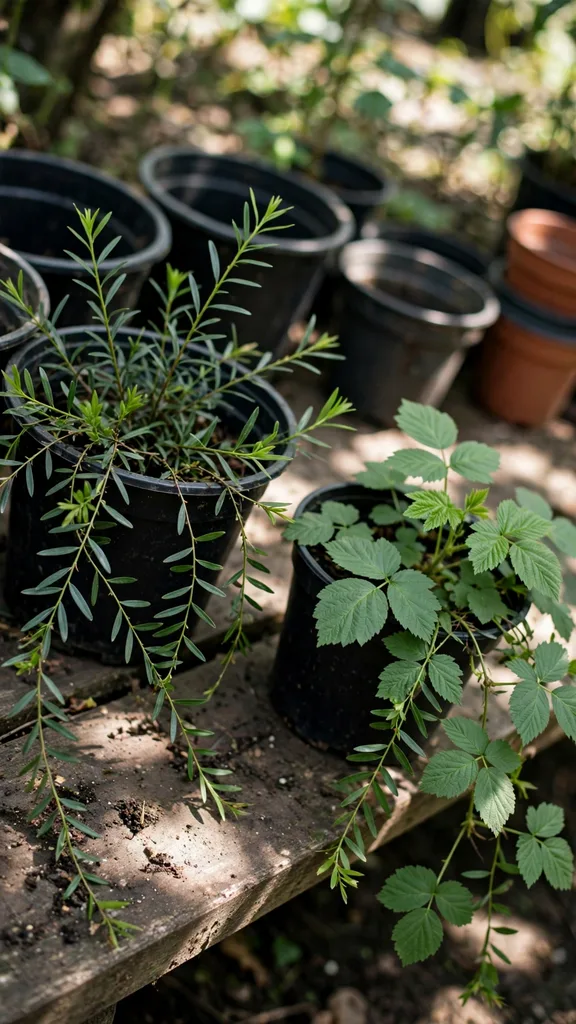
Northern dewberry, Rubus flagellaris, owns the cold half. It grows wild from the Great Lakes to New England and down the Appalachian chain, and it takes winter cold that kills southern canes to the ground. The historic cultivar ‘Lucretia’ came out of this northern group and stayed the standard cultivated dewberry for decades: large fruit, heavy crops, and canes that lie flat enough to mulch over for winter in cold districts.
Named cultivars beat wild transplants on fruit size and yield. A dug wild plant fruits the way the roadside plant fruited, which usually means small berries on a thorny tangle. A nursery cultivar costs a few dollars more and returns bigger fruit on a plant selected for garden behavior. Transplanting a wild plant also moves whatever virus load the wild patch carries. Start clean.
Thorns are part of the species. Most dewberries carry slender prickles along the canes, denser on southern plants, and a thornless true dewberry is rare in the trade. Thornless plants sold as dewberries are usually trailing blackberry hybrids. They grow well and fruit well, and they are fine plants, but their fruit lands later and their canes run thicker. Read the botanical name on the tag. Rubus trivialis or Rubus flagellaris means a true dewberry.
Build a Low Trellis Before the Canes Run
Build the trellis before planting day, because retrofitting wires under a season of trailing canes means lifting prickly growth off wet ground and breaking half the tips you touch. A dewberry trellis stands low. Set posts 1.22 m tall above the soil, spaced 3.05 m apart along the row, and run two wires: the first at 45.7 cm, the second at 91.4 cm. Galvanized 12 gauge wire holds a full row of fruiting canes without sagging between posts.
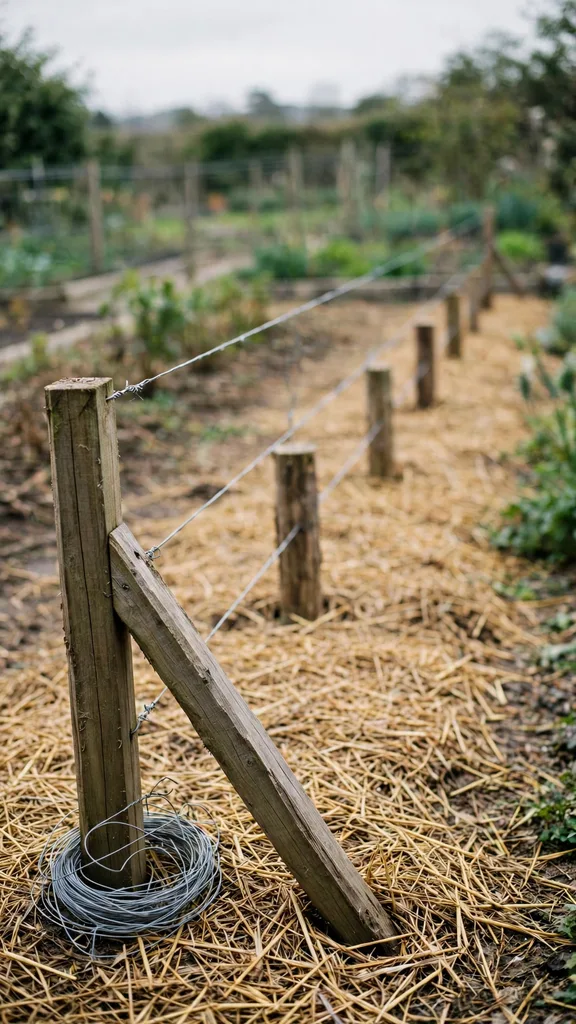
End posts carry the load. Brace each end post with an angled strut or sink it 61 cm deep in tamped gravel. A fruiting row in June pulls hard sideways, and a leaning end post slackens both wires for the whole row. Tighten the wires at the end of the first season. New wire stretches.
A fence works as a trellis where a fence already stands. Chain link, welded wire, and split rail with one added wire all hold dewberry canes off the ground. Plant 45.7 cm out from the fence line so air moves behind the canes. Canes tied flat against a solid board fence cook in reflected heat in southern gardens and mildew in northern ones. Air behind the foliage is the point of the gap.
Ground cover under the row decides how the patch ages. Mulch the row 7.6 cm deep with straw or shredded bark and keep a mown strip on both sides. Bare soil under trailing canes splashes mud onto low fruit in every rain. Living ground cover competes with the shallow roots. Mulch wins on both counts, and it marks the boundary the mower respects.
Plant Bare-Root Crowns in Early Spring
Plant bare-root dewberry as soon as the soil works in spring, while the crowns still sleep. Clemson Extension spaces bramble plants 3 to 4 feet apart, which converts to 0.91 to 1.22 m, and trailing dewberry takes the wide end of that range: set plants 1.22 m apart on the row and leave 2.44 m between rows. Crowding a trailing plant buys disease, because wet foliage in a closed canopy dries slowly after rain.
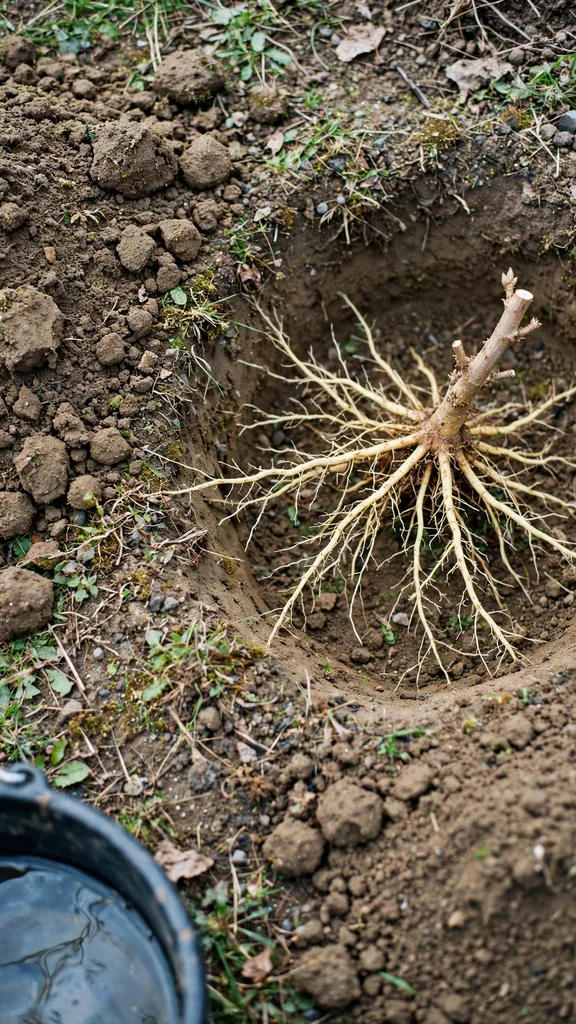
Soak bare roots in a bucket of water for 2 hours before planting. Trim any root that arrives broken or blackened back to pale, healthy tissue. Dig the hole wide enough for the roots to spread flat, set the crown at the depth it grew in the nursery, and firm the soil around it with your boot. A crown buried deep rots in wet spring soil. A crown sitting proud dries and dies back to the roots.
Water each plant in with a full bucket at planting, even in a wet week. The water settles soil against the roots and closes the air pockets that dry fine roots out. Then mulch the row. A potted plant goes in the same way, with one extra step: tease the root ball open at the base so circling roots turn outward into the row soil.
Cut the planted cane back to 15.2 cm at planting. The stub looks brutal and it is the correct cut. A new plant spends its first season building roots and pushing primocanes, and a long transplanted cane drains the crown trying to leaf out along its whole length. Short stub, strong roots, long new canes by autumn. That trade pays for itself in the second spring crop.
Start New Plants From Tip Layers, Root Cuttings, and Seed
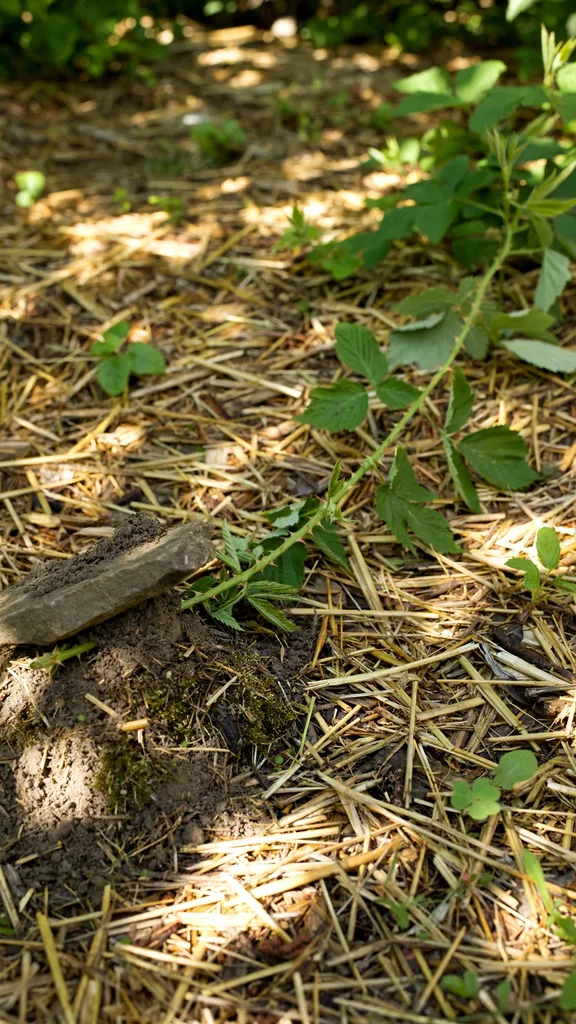
Tip layering is the dewberry plant’s own method, and it beats every other propagation route for speed and certainty. The same buried tip method trains and multiplies tayberry canes, covered in Do Tayberries Need a Trellis?. In late summer, pick a vigorous primocane, bend the tip to the soil, and bury the last 7.6 cm of tip under 5.1 cm of soil with a stone or a wire pin holding it down. The buried tip roots where it touches. By the following spring the layered tip stands as an independent plant. Cut the connecting cane 30.5 cm back from the new plant and dig the layer with its root ball intact.
Root cuttings fill a row in winter. Dig pencil thick roots from a dormant plant in late winter, cut them into 10.2 cm lengths, and lay them flat in a tray of gritty mix under 2.5 cm of cover. Kept cool and moist, the cuttings push shoots from buds along the root within weeks. Pot each shoot once it carries its own roots. Root cuttings clone the parent exactly, thorns, fruit size, and all.
Seed is the slow route and the variable one. Dewberry seed carries a hard coat and an internal dormancy, so seed sown fresh in spring sits through a full cycle of warm and cold before it wakes. Sow seed in autumn in an outdoor tray and let winter do the cold work, or hold seed in damp sand in a refrigerator through winter and sow in spring. Seedlings vary. A seedling patch fruits in its third year at the earliest, and half the seedlings fruit worse than the parent. Grow seed for the experiment and for rootstock. Grow layers and cuttings for the fruit row.
Divide an old crown only when the patch needs moving. A dormant crown dug in late winter splits into sections, each with roots and at least 2 buds, and each section replants like a new bare-root plant. Division moves the plant’s age with it, so a divided section fruits the following spring. Layers and cuttings restart the clock.
Train Canes Up in Spring and Tie Them Loose
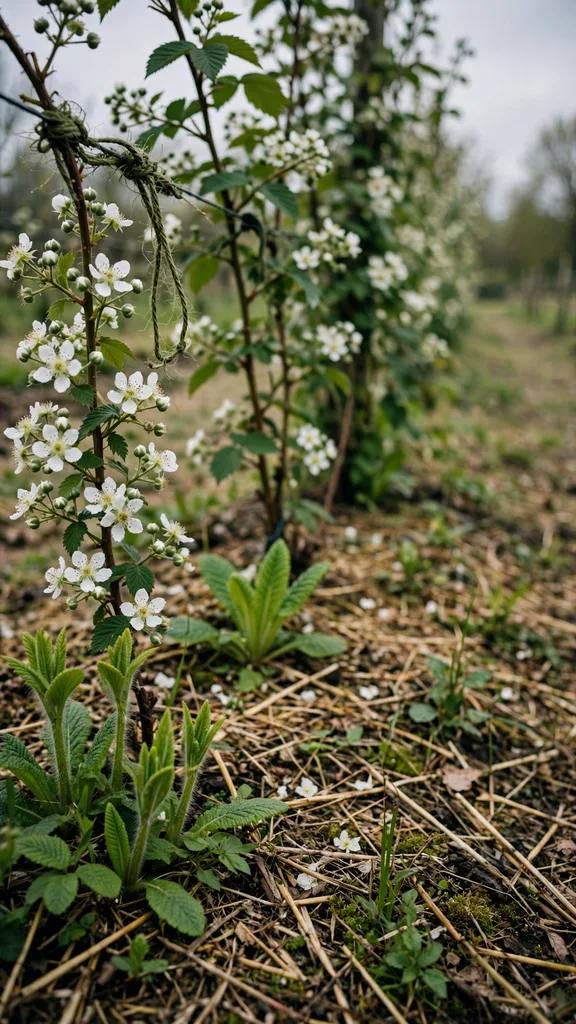
Training starts the spring after planting, when the overwintered primocanes wake as floricanes. Lift each cane off the ground before the buds swell and fan the canes across the two wires, spacing them so light reaches every leaf. Tie each cane to the wire with soft twine or a strip of cloth at 2 or 3 points along its length. Tie loose. A tight tie girdles the cane as it thickens, and a girdled cane dies past the tie in midsummer.
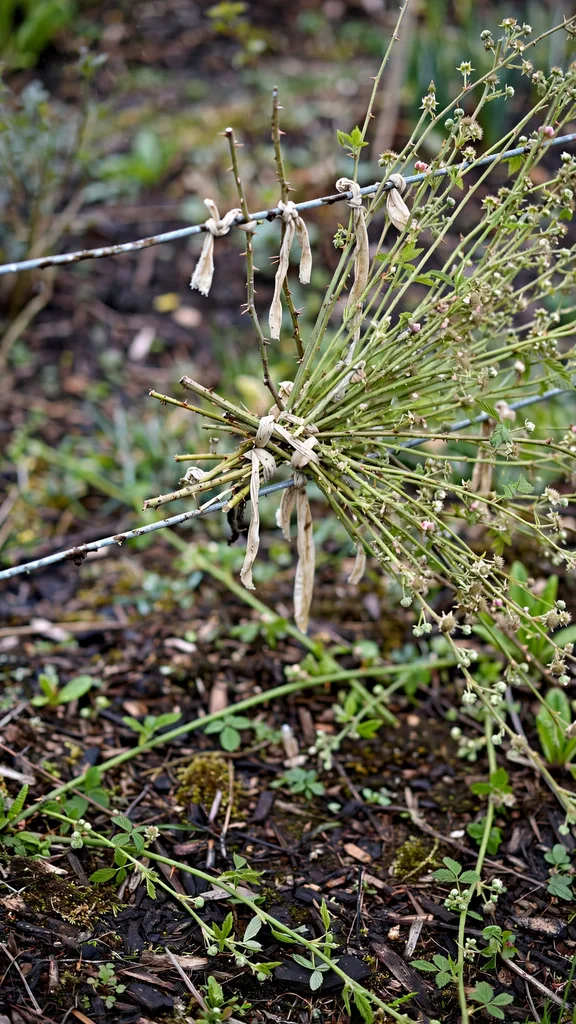
Keep 6 to 8 strong canes per plant on the wires. Cut the rest at the base. A plant carrying 14 canes fruits small and ripens unevenly, because the leaves feeding each cluster sit in each other’s shade. Six canes in full sun outcrop fourteen in a thicket. The surplus canes make tip layers in late summer if you want more plants. Otherwise they make compost.
New primocanes grow along the ground through the fruiting season, out of the way of the picking. Let them run under the trellis. Their tips root where they touch soil, so lift the tips onto the mulch every few weeks or pin them where you want a layer. A primocane left lying on bare wet soil all summer roots at 6 nodes and turns one plant into a thicket by autumn. Mulch blocks most of that rooting. Check the tips anyway.
After harvest, the training resets. The fruited floricanes come out, and the season’s primocanes take their place on the wires the following spring. That annual swap is the whole system: ground canes grow, wire canes fruit, fruited canes leave. A patch run on that rhythm stays pickable from a standing position on both sides of the row.
Water Deep in Dry Weeks and Feed Once in Spring
Water dewberry deep and rarely. A trailing patch with roots down 61 cm or deeper rides out ordinary dry spells, and the crop needs steady moisture only from flowering until the last fruit colors. In a rainless stretch during that window, soak the row once a week with the hose at the base of the plants. Water on the foliage and fruit invites rot. Water at the base feeds roots and keeps berries dry.
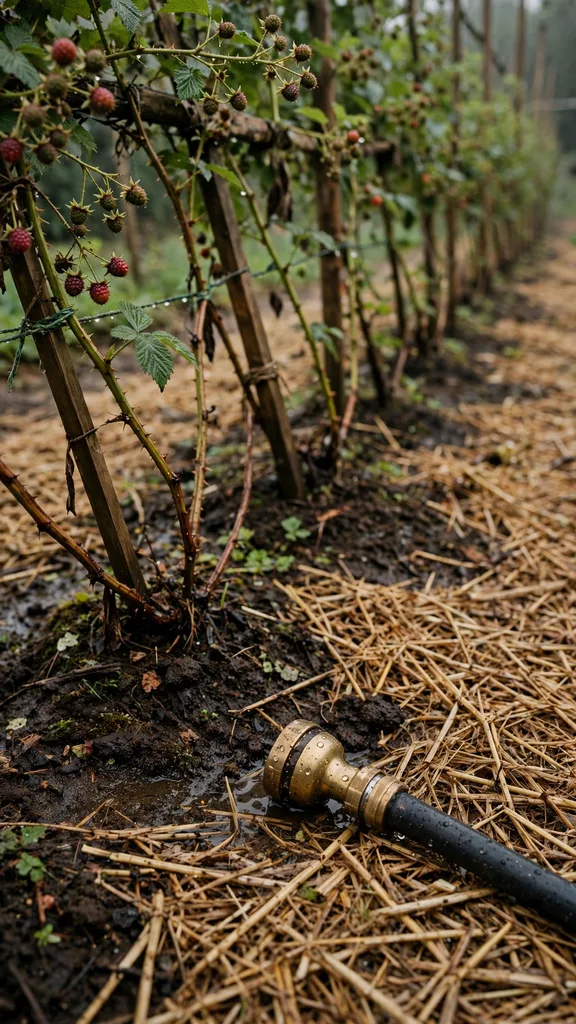
Mulch does half the watering job. The 7.6 cm mulch layer over the row cuts evaporation and keeps the soil temperature even, and it keeps the low canes and their rooting tips off bare soil. Renew the mulch each spring as you tie the canes up. Old mulch that has thinned to a crust sheds rain instead of absorbing it.
Feed once, in early spring, as the buds swell. Spread a balanced fertilizer along the row or top dress with 5.1 cm of compost and let the spring rains carry it down. Brambles fruit on wood grown the previous season, so spring feed funds the primocanes that carry next year’s crop. Heavy nitrogen late in summer pushes soft growth that winter kills at the cold edge of the range. One spring feed, then stop.
Pale leaves with green veins point at the soil, not the fertilizer bag. That pattern is iron chlorosis, and it shows on brambles planted in soil above the target pH band. The fix is sulfur worked in over a season to pull the pH down, plus a foliar iron spray for the current leaves. Feeding more nitrogen at a chlorotic plant grows pale leaves faster.
Pick Glossy Black Fruit Before the Birds Find It
Pick dewberry when the fruit turns glossy black and slips off the cane with a gentle pull. The North Carolina Extension Gardener Plant Toolbox records southern dewberry fruit at about 1 inch long, which is 2.54 cm, and very juicy and sweet at full ripeness. A berry that needs a tug is a berry picked a day early, and dewberry picked red-black and sour never sweetens on the counter. Bramble fruit ripens on the cane or not at all.
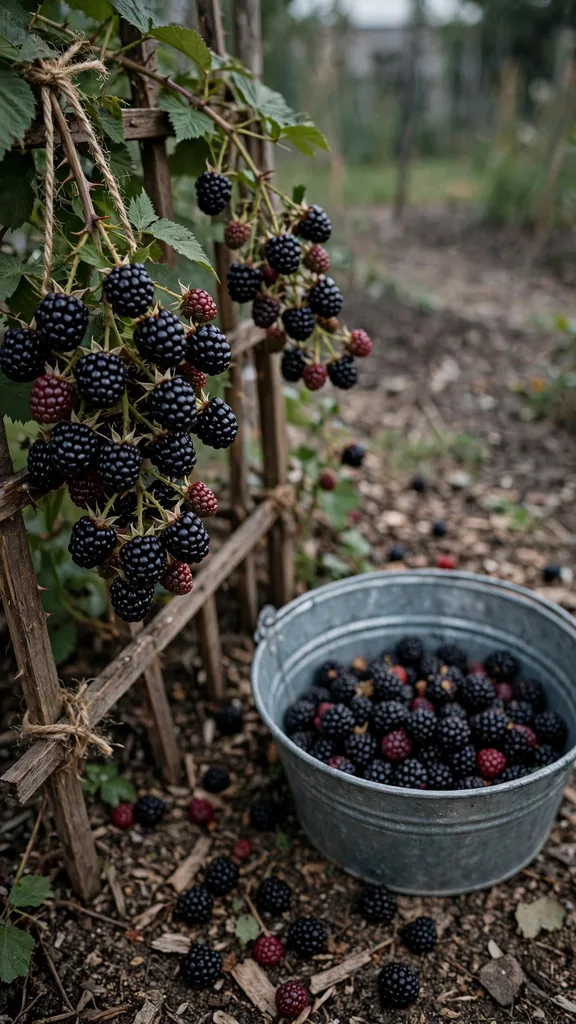
Pick every 2 days through the season. The crop ripens in waves over 3 to 4 weeks, and fruit left hanging past its day ferments on the cane and draws fruit flies into the whole row. Morning picking, after the dew dries and before the heat builds, gives the firmest fruit and the longest counter life. Afternoon fruit picked in heat starts soft and weeps in the container by evening.
Wear the prickles respectfully. Dewberry canes carry slender thorns that find forearms through thin sleeves, and the ripest clusters hang in the middle of the fan where reaching them means leaning across two tied canes. Long sleeves, a glove on the cane hand, and a shallow bucket in the free hand is the working kit. Pick with one hand and hold the cane with the gloved one. Two handed picking in a dewberry row ends with a bucket of fruit on the ground.
Expect the first real crop in the second spring. A plant set this spring fruits lightly or not at all in its first year, then carries a full floricane crop the following spring and every spring after. Freeze fresh fruit on a tray in a single layer before bagging it, and the berries hold their shape for winter baking. Fruit left in a deep pile in the freezer fuses into one block.
Cut Out Every Floricane the Week the Crop Ends
Cut every fruited floricane at ground level within a week of the last picking. Clemson Extension states the cycle plainly: floricanes produce fruit for one year and die after fruiting, so blackberries and their dewberry kin always need pruning after harvest. A dead floricane left standing shades the new primocanes, harbors cane diseases through winter, and tangles next spring’s tying into slow, thorny work. Out it comes, the week the crop ends, while you still know exactly which canes fruited.
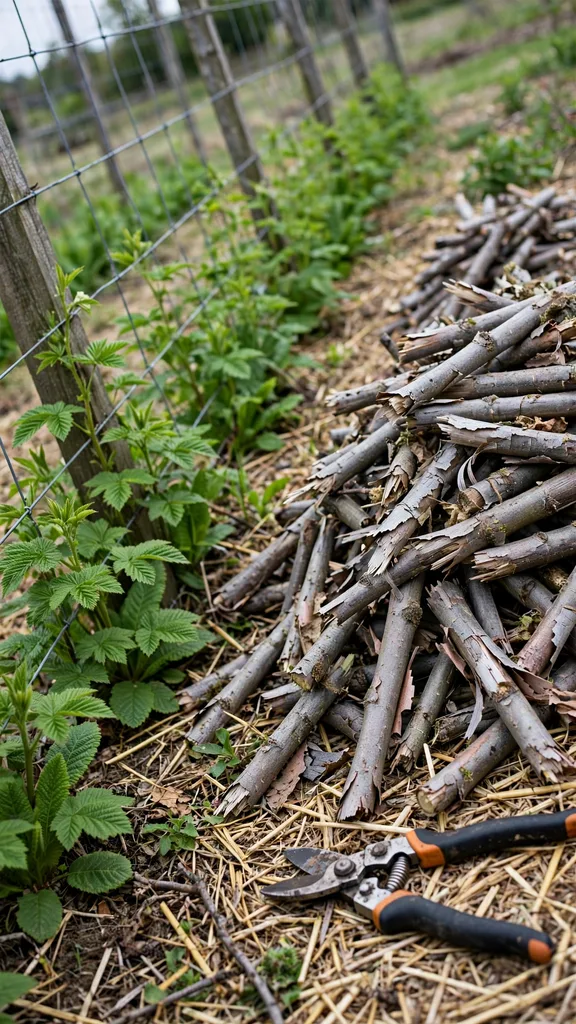
Work cane by cane with loppers at the base. Fruited canes show peeling bark, gray wood, and the stubs of the fruit clusters. Live primocanes show green to red bark and full leaves. Cut the gray, keep the green, and carry the cut canes out of the row the same day. Cane blight and anthracnose overwinter in dead wood left lying under the trellis.
Thin the primocanes at the same pass. Keep the 6 to 8 thickest, best placed canes per plant and cut the thin, the damaged, and the badly placed at the base. Primocanes that crossed under the row and rooted at the tip get dug or cut free, unless you flagged that tip for a layer. One pruning pass after harvest does the year’s structural work. Winter pruning on dewberry is a light tidy at most: shorten any cane that outgrew the trellis end, and leave the rest alone.
Burn or bin the prunings where cane disease showed during the season. Healthy prunings compost fine once they dry and the thorns soften, which takes a full season in the pile. Diseased wood never goes in the compost. The spores ride the finished compost straight back to the row.
Fix the Failures: Tangled Mats, Pale Leaves, and Winter-Killed Tips
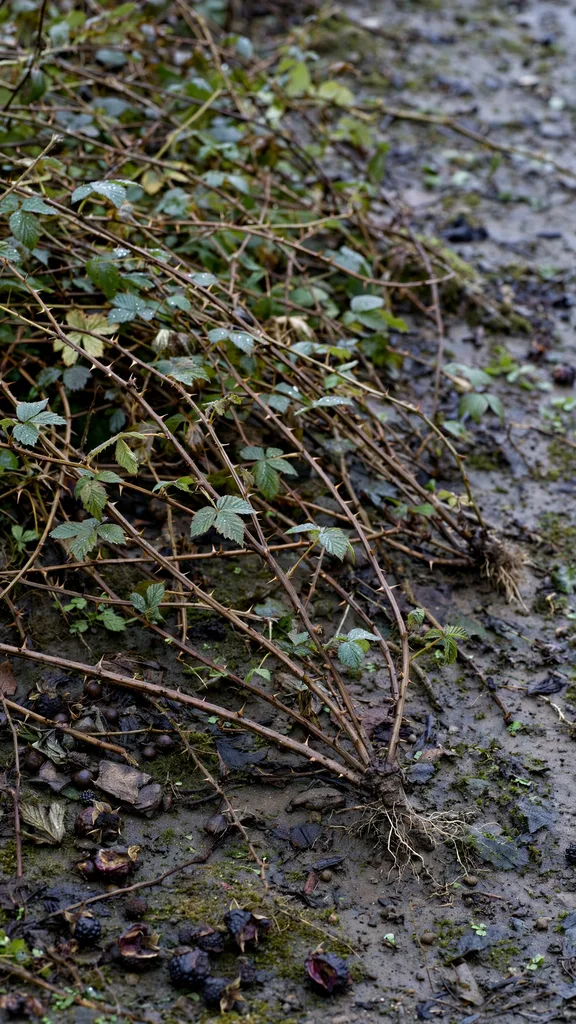
A tangled ground mat is the default failure, and it starts the first season the tying gets skipped. Fruit rots against wet soil, the middle of the patch goes unpicked, and primocane tips root at every node until the patch is one plant with no edges. The fix runs one hard spring: cut every cane back to the crown, let fresh primocanes run, and tie them onto a new low trellis as they grow. One lost crop buys back a pickable patch.
Sour fruit on ripe looking berries means shade or impatience. Berries that colored in deep shade inside a thicket never loaded sugar, and berries picked at first black are a day short. Thin the canes to the 6 to 8 per plant rule, tie the fan open so sun hits the clusters, and taste before you strip a cane. A ripe dewberry gives to a gentle squeeze and comes away clean.
White drupelets scattered through otherwise black fruit point at sunscald or mite feeding during a hot, dry spell. A few pale drupelets per cluster are cosmetic. Whole clusters blistering white in a heatwave call for the weekly deep watering the row should have had from flowering. Shade cloth over the row during extreme heat saves the late crop in southern gardens.
Winter killed tips show in spring as dead, gray cane ends above live green wood. Cut each cane back to a live bud, which you find by scratching the bark: green under the scratch means live wood. At the cold edge of the range, lay the canes down in late autumn and cover them with 15.2 cm of straw or soil. Trailing canes lie flat by nature, which makes dewberry the easiest bramble to winter protect and the wrong plant to leave standing in a zone 5 wind.
Birds take the first ripe fruit every year. Net the row when the first berries color, draping the net over the trellis wires and pinning the edges to the ground. Netting thrown loose over canes tangles birds and pickers alike. A net stretched on the trellis frame lifts off one side at a time for picking and goes back in seconds.
Frequently Asked Questions
A dewberry plant fruits in its second spring. Canes grow as leafy primocanes in year one, overwinter on or under the trellis, then flower and fruit as floricanes in year two before dying. A plant bought in spring and tied up through its first season carries its first full crop the following spring, 2 to 4 weeks ahead of upright blackberries in the same garden.
Grow dewberry in a pot only as a short holding step. A trailing plant with canes running 0.91 to 3.66 m crams into a container badly, roots circle within one season, and the crop shrinks to a handful of berries. A large pot of 37.9 L or more holds a young plant for a season before planting out. The row and the low trellis are the plant’s real home.
Dewberries fruit without a trellis, and wild patches prove it every spring. A garden patch on the ground rots fruit against wet soil, roots new plants at every cane tip, and turns picking into kneeling work inside a prickly mat. A low two wire trellis at 45.7 cm and 91.4 cm lifts the fruit into the air and the sun. The trellis is optional. Clean fruit is the reason to build it.
Sour dewberries were picked early or ripened in shade. The fruit sweetens in its last days on the cane, and a berry picked at first black carries the acid of an unripe berry that never fades in the kitchen. Inside a thicket, shaded clusters color without loading sugar. Thin to 6 to 8 canes per plant, tie the fan open to the sun, and pick only berries that slip off with a gentle pull.
Store fresh dewberries dry, unwashed, and cold. Spread the picking in a shallow lined container, refrigerate it the same morning, and wash each portion only as you serve it. Dewberry fruit is softer than blackberry fruit and bruises under its own weight, so a deep container crushes the bottom layer within a day. Frozen on a tray in a single layer, the berries keep for winter baking.