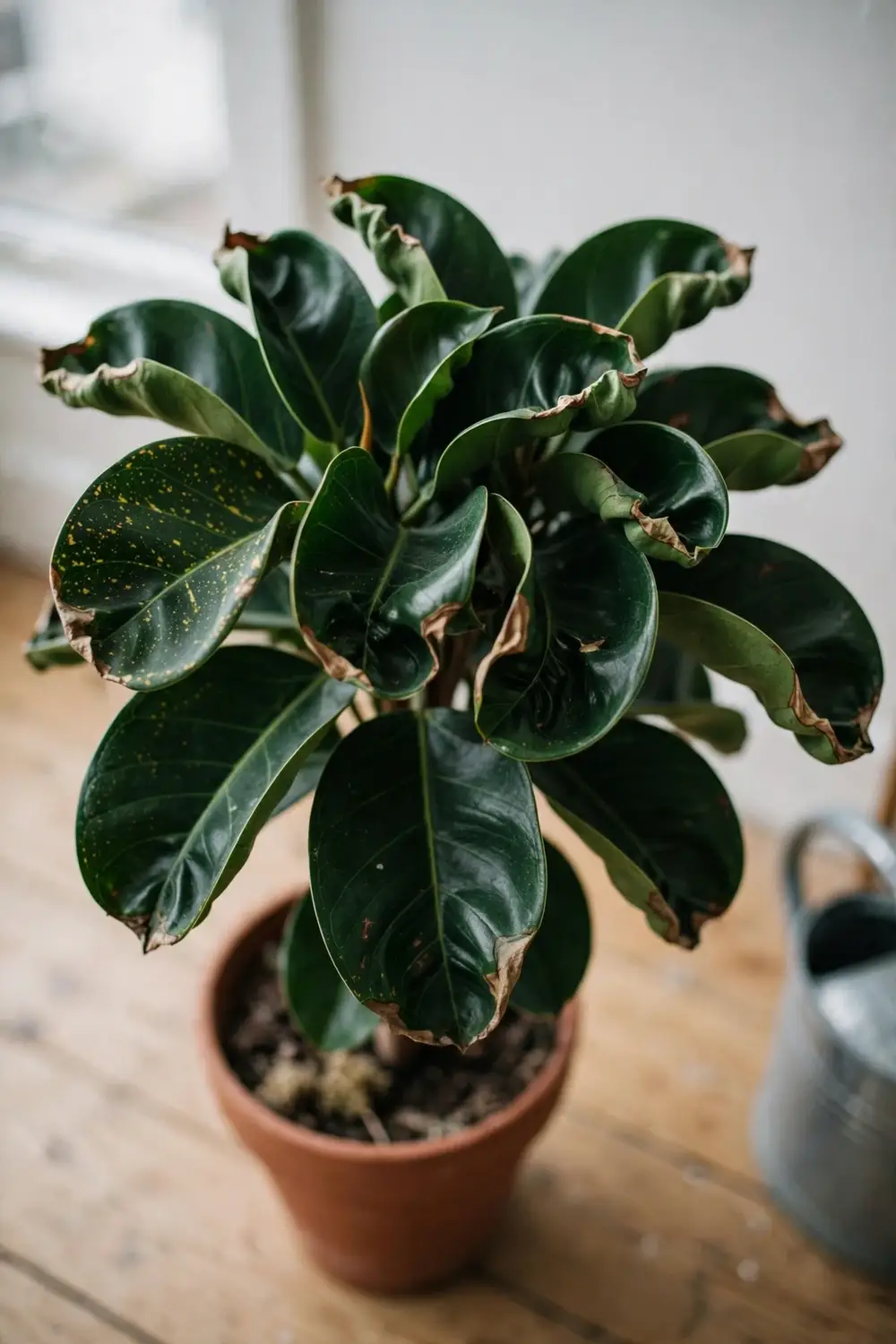

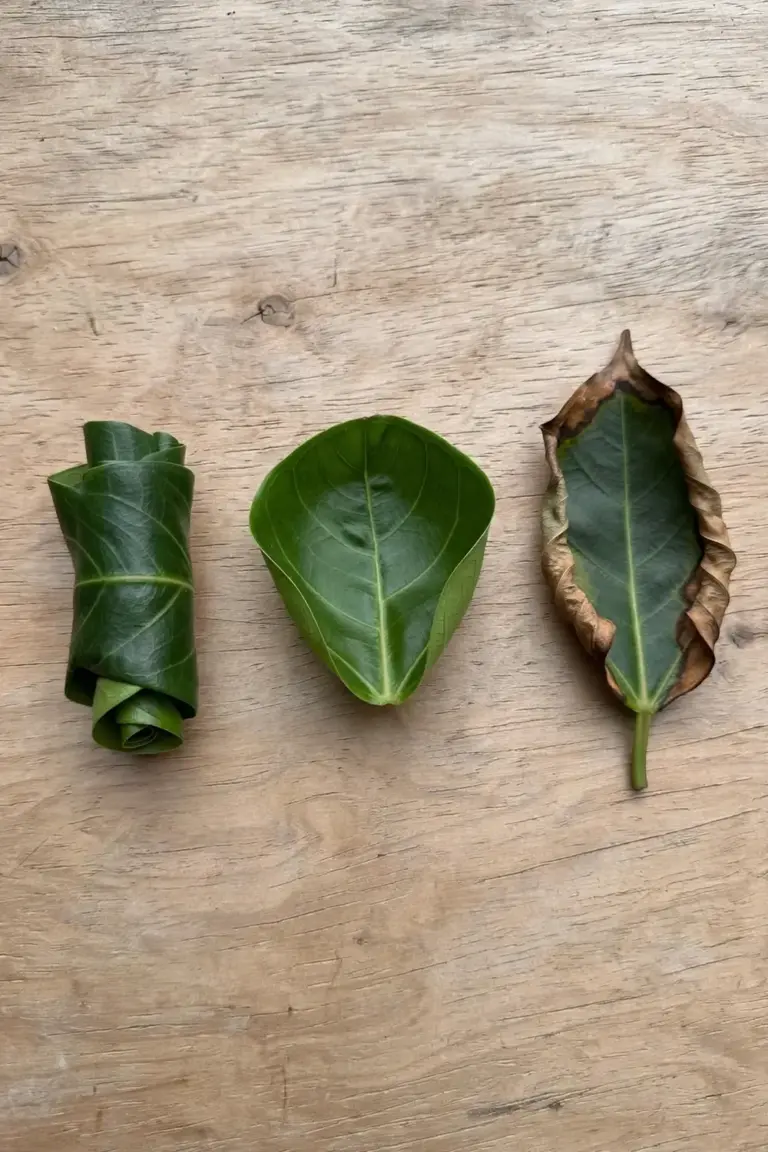
Ficus leaves curl when the plant loses more water through its leaves than its roots can replace, or when something damages the leaf tissue directly. These 9 causes cover nearly every case: uneven watering, overwatering, low humidity, too much sun, too little light, spider mites, scale and mealybugs, cold drafts, and fertilizer salt buildup. Work through the tests in order below, from most common to least, and most curls stop spreading within days of the right fix.
Ficus here means the indoor figs: Ficus elastica (rubber plant), Ficus benjamina (weeping fig), Ficus lyrata (fiddle-leaf fig), and Ficus benghalensis ‘Audrey’. Curling means the leaf edges roll inward or upward, or the whole blade twists along its midrib. The fixes below work for all four because the causes are the same across the genus. A rubber plant and a fiddle-leaf fig may look nothing alike, but their leaves curl for the same nine reasons. This article covers diagnosis only.
1. Water Evenly to Stop the Curl
Uneven watering is the single most common cause of curling ficus leaves worldwide. The soil swings between saturated and bone dry, and the leaves curl inward to slow moisture loss. The curl usually starts on the oldest leaves and moves upward as the stress continues.
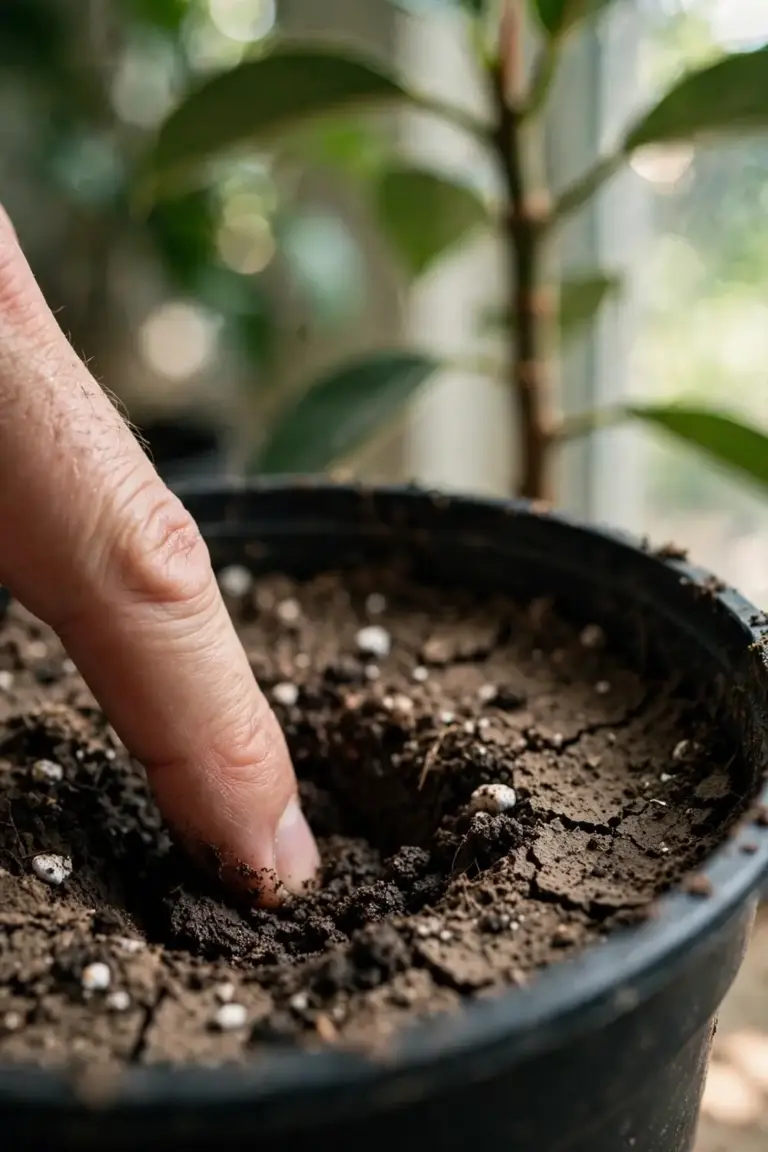
Check the soil correctly before you water. Push your finger several inches into the potting mix, near the edge of the root ball, not the center where the stem keeps the surface deceptively moist. The North Carolina Extension Plant Toolbox advises watering regularly but avoiding overwatering, and the New York Botanical Garden’s plant information service recommends allowing the top half of the soil to dry out between waterings. If the soil feels dry at that depth, water thoroughly until it drains from the bottom. If it feels damp, wait, even if the calendar says it is watering day. A wooden chopstick works as a backup gauge: push it two inches deep, wait ten seconds, and read the moisture on the wood.
Watering on a fixed schedule causes the problem. A plant in a warm, bright room dries out in days, while the same plant in a cool, dim corner stays wet for weeks. The calendar cannot tell which room your ficus sits in, but the finger test can. Pick a rhythm the soil sets, not the clock. When you do water, soak the whole root ball until water flows freely from the drainage holes, then empty the saucer so the pot never sits in water. A thorough soak followed by a real dry-down beats frequent sips every time, because sips wet only the top layer and leave the deep roots thirsty while the surface looks cared for.
2. Let the Soil Dry to Save the Roots
Overwatering curls leaves by drowning the roots. Roots sitting in waterlogged soil cannot take up water, so the leaves curl from thirst even though the pot is wet. Yellowing often arrives before the curl, and the soil may smell sour or musty.
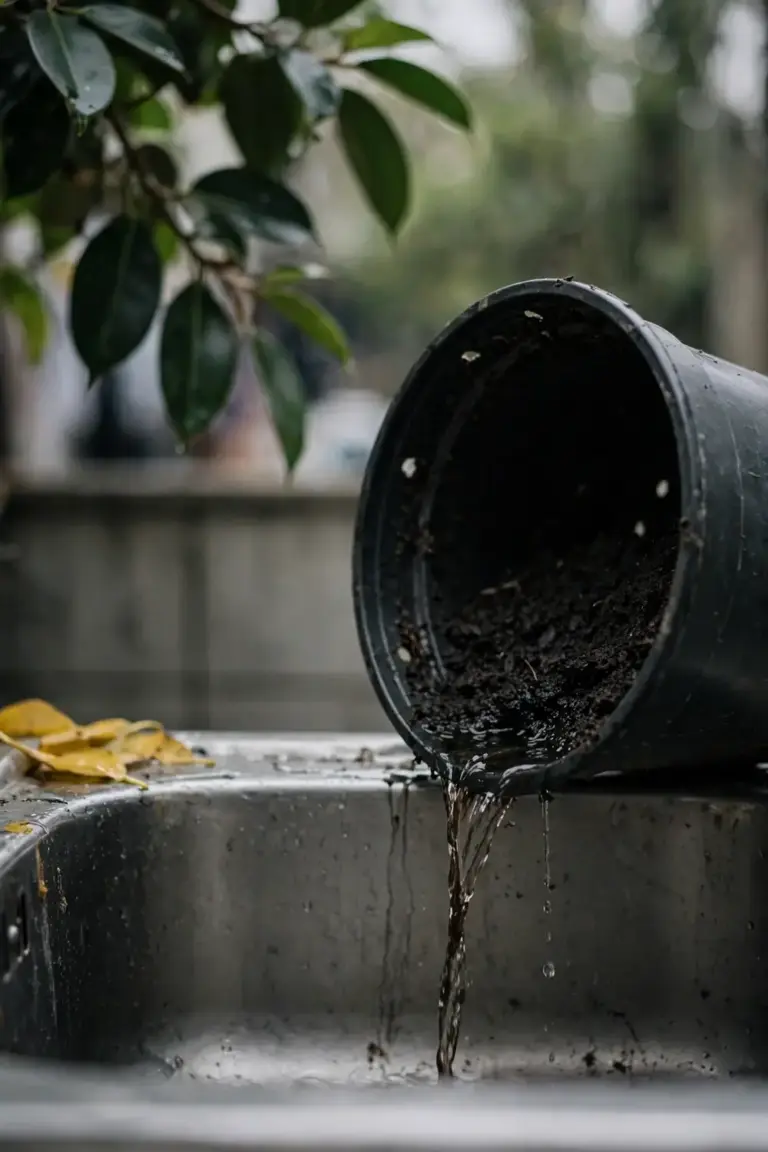
Lift the pot. A waterlogged pot feels heavy, and the difference between a wet pot and a dry one is obvious once you have lifted both. A dry pot feels light. If the pot is heavy and the top inch is dry, the bottom is holding water that the roots cannot use. Tip the pot and check the drainage holes. If water runs out, the mix is saturated. Let it drain completely and do not water again until the top half of the mix is dry. While you wait, improve air circulation around the pot so the mix dries from the sides as well as the top.
Root rot follows chronic overwatering. The UC IPM houseplant diagnosis table lists poor root health from overwatering as a cause of leaf drop and sudden wilting, and brown, soft, rotted roots confirm it. If you unpot the plant and the roots are brown and mushy instead of white and firm, trim the dead roots, repot in fresh mix, and water less. Prevention beats surgery. Use a pot with drainage holes and a mix that drains freely, and keep building soil health in every repot so the mix stays open and airy instead of compacting into a wet brick.
3. Raise Humidity Around the Leaves
Dry indoor air pulls moisture from leaves faster than roots can replace it. The leaves curl inward or upward to shrink their exposed surface, the same way you would roll up a sleeve in dry heat. Crispy brown tips and edges often appear alongside the curl, and the plant’s water needs rise noticeably because every leaf is losing moisture faster than normal. Large-leaved ficus like lyrata show it first, since their broad blades have more surface to lose water from.
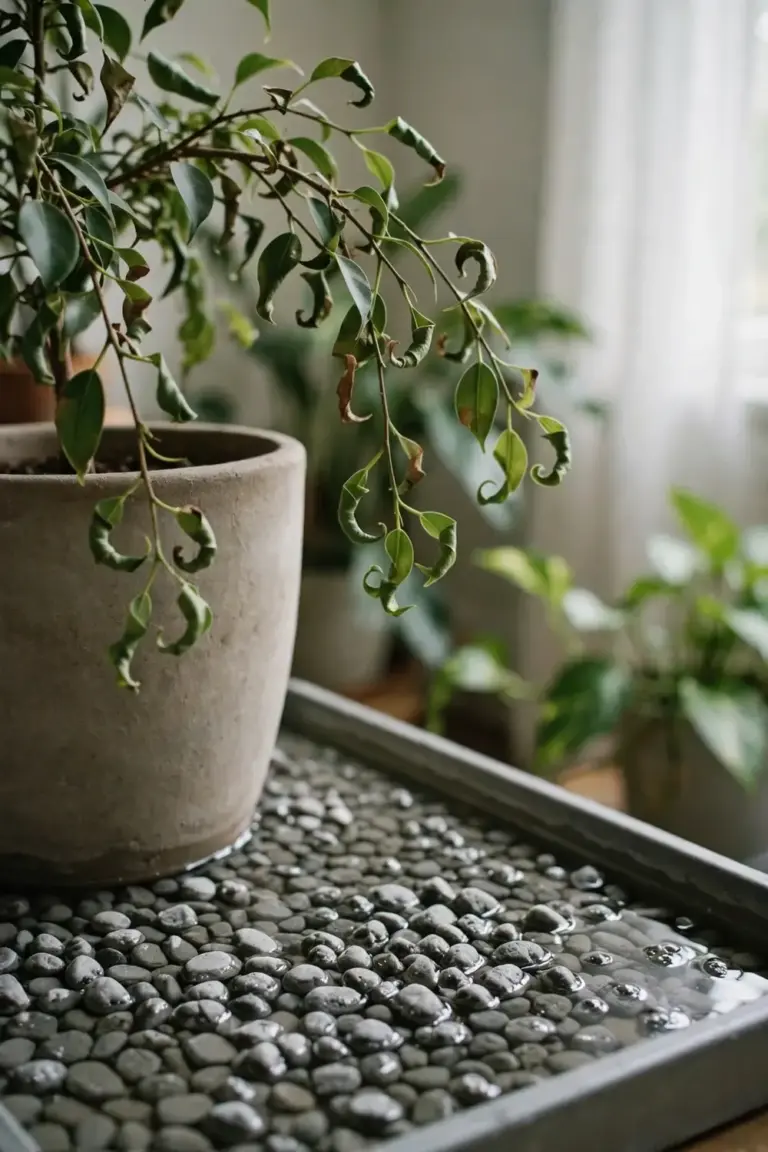
Ficus elastica tolerates average household humidity but prefers more, and the NYBG notes that misting the leaves occasionally can help in warm months. The NCSU Toolbox places the plant in medium relative humidity. When indoor heating runs in winter, relative humidity can fall well below what the plant prefers. The curl is the plant’s response to that deficit.
Raise humidity three ways. Group the ficus with other plants so their transpiration humidifies the shared air. Set the pot on a pebble tray with water kept below the pot’s base, refilling the tray as it evaporates. Run a humidifier in the room during the heating season, aiming it near the plant but not directly at the leaves. Misting helps briefly but the effect fades within the hour, so treat it as a supplement, not the fix. Watch the new growth after you raise humidity. Flat, glossy new leaves confirm the air was the problem. If the curl continues on new leaves despite humid air, move down the list to light and pests.
4. Pull the Plant Out of Direct Sun
Too much direct sun scorches ficus leaves and the damaged tissue curls. The burn shows as pale or brown patches on the parts of the leaf that faced the glass directly, and the curl follows the damage as the scorched tissue dries and contracts. This hits hardest when a plant moves suddenly from a dim spot to a sunny window, because leaves grown in low light have thinner cuticles and burn faster than sun-hardened ones.
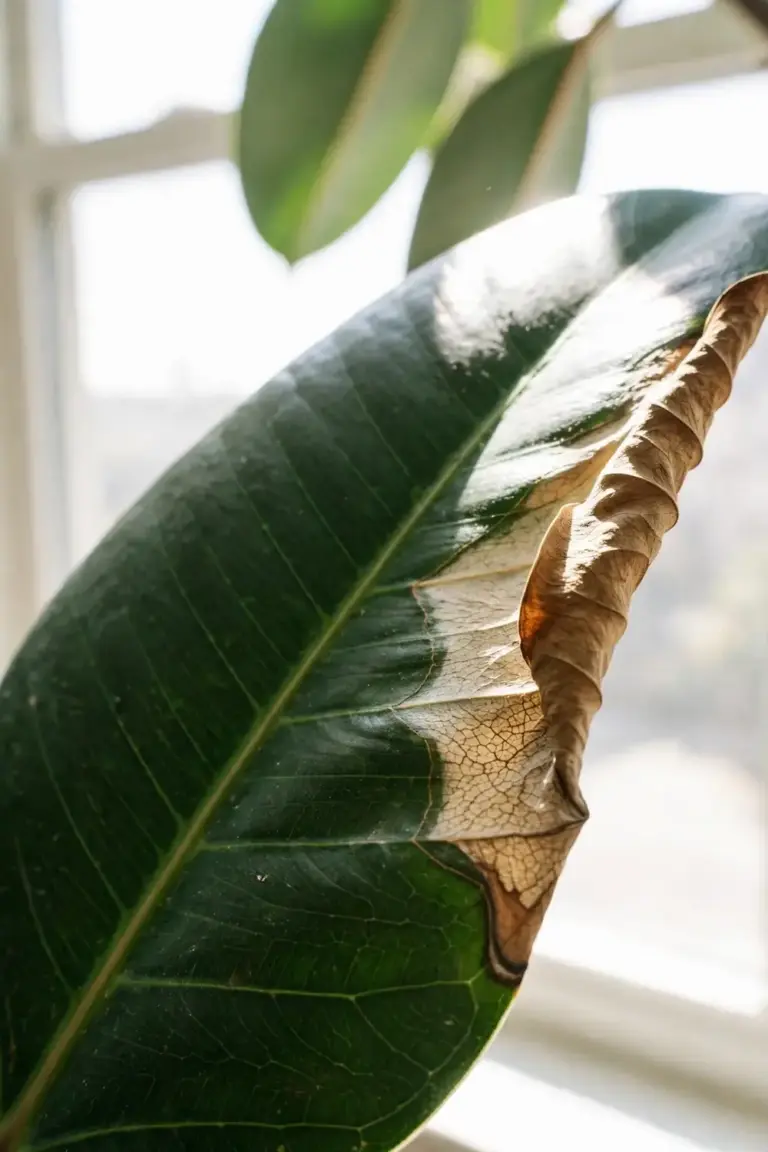
Ficus elastica does best in partial shade or low light, and the NCSU Toolbox recommends protection from the afternoon sun. The UC IPM table lists excess light, or sunburn, associated with a recent move as a cause of leaf spots and blemishes. Bright indirect light is the target. A few feet back from a sunny window, or behind a sheer curtain, gives the plant the light it wants without the burn.
Move the plant in stages if it needs more light. Shift it a foot or two every few days so the leaves adjust to the stronger exposure. A plant yanked from a dark corner into full sun will scorch within a day, and the scorched leaves never recover. Patience during the move prevents the curl you are trying to fix. Once the plant sits in its new spot, leave it there. Ficus hates being moved repeatedly, and each relocation triggers a fresh round of stress that can curl the newest leaves all over again.
5. Move the Plant Toward the Light
Too little light curls leaves the other way. The plant cannot photosynthesize enough to sustain its canopy, so growth stalls and the leaves curl and eventually drop, starting with the oldest and lowest on the plant. The curl from low light usually comes with leggy stems stretching toward the nearest window and pale new growth that never firms up. Variegated forms suffer first, because their white or cream sections carry no chlorophyll and the plant needs more light to feed itself.
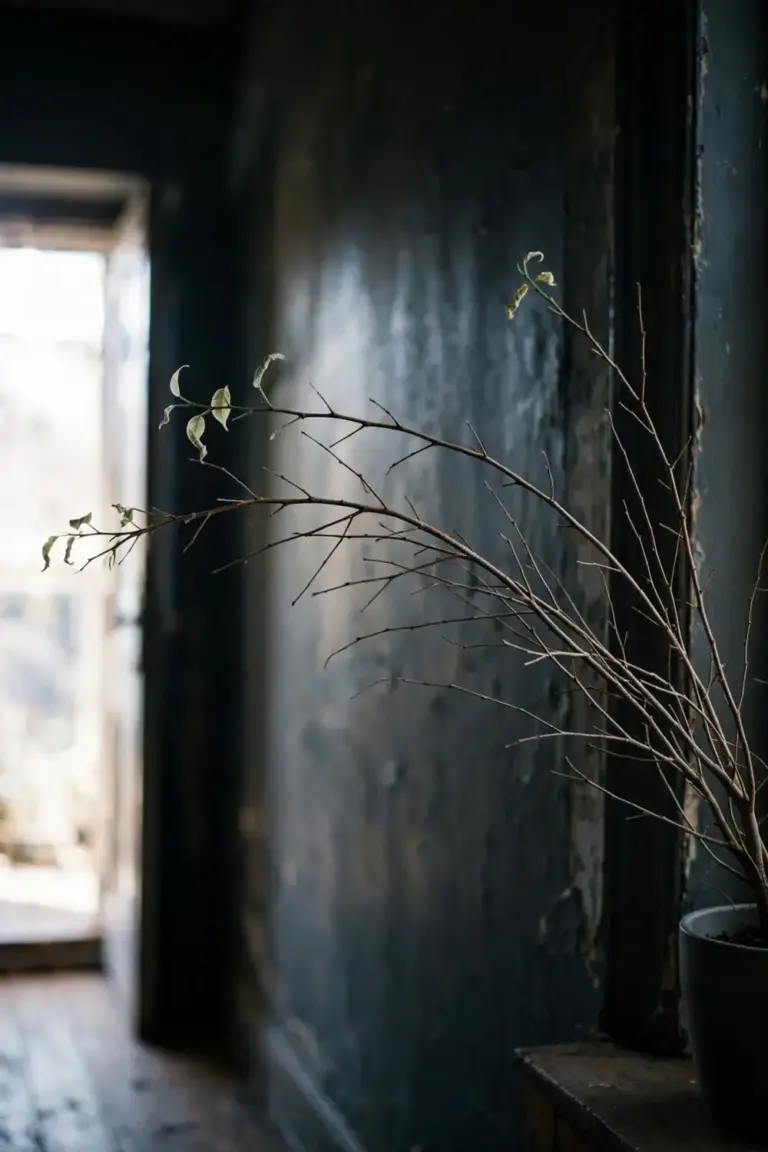
Ficus needs bright indirect light to hold its leaves flat. The NYBG places the rubber plant in medium light and notes variegated forms tolerate a couple of hours of indoor sun. The UC IPM table lists insufficient light as a cause of yellow-green foliage and poor root health. A ficus parked in a dark hallway is slowly starving.
Find the brightest indirect spot you have. Near an east or west window works, giving strong morning or afternoon light without the harsh midday blast. If the only available spot is dim, add a grow light for 10 to 12 hours a day, positioned a foot or two above the canopy. Rotate the plant a quarter turn each week so all sides get equal light and the growth stays even. New leaves should emerge flat within a few weeks of the move. If new growth still curls after a month in better light, the light was not the limiting factor, and the cause sits elsewhere on this list.
6. Hunt for Spider Mites on the Undersides
Spider mites are the pest most likely to curl ficus leaves. These tiny sap-suckers feed on the undersides, piercing individual cells and draining them one by one, and the damage shows as yellow stippling that later bronzes across the whole leaf. Fine webbing near the growing points confirms them. The leaves curl as the feeding damage spreads and the leaf tissue collapses around the feeding sites.
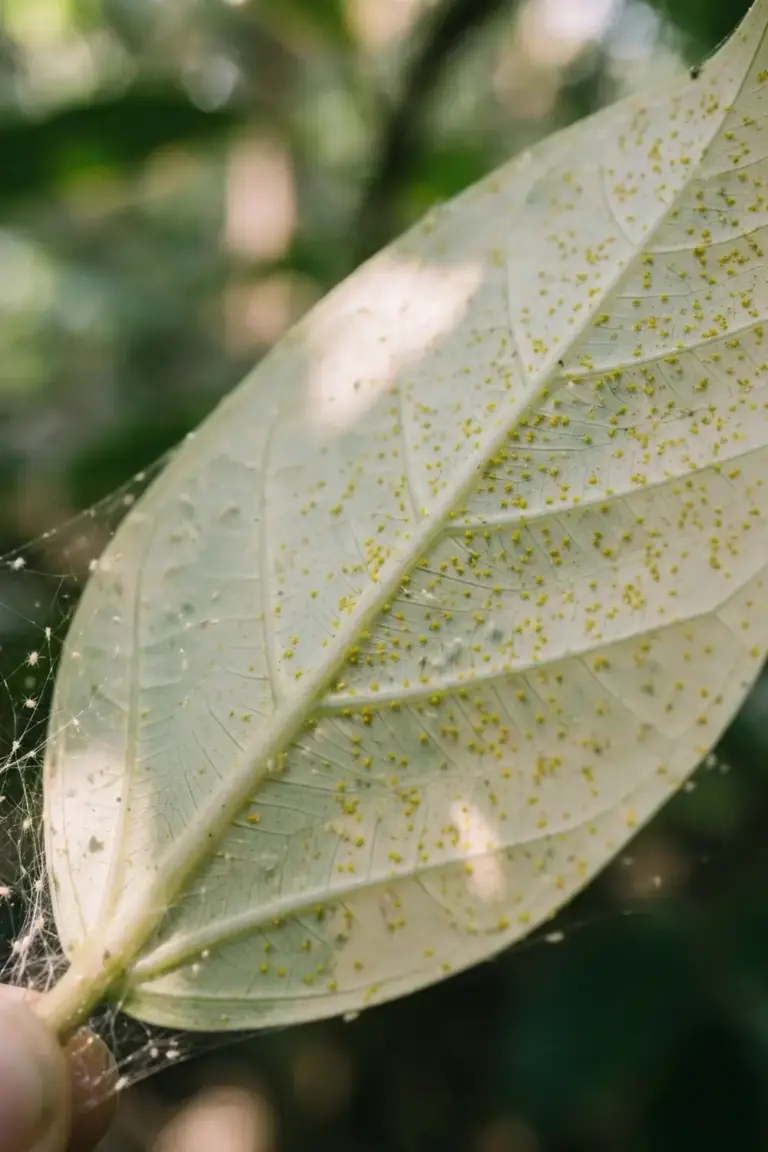
I check the leaf undersides before I blame the watering, because mites and scale hide where a glance never reaches. Hold a white sheet of paper under a leaf and tap the leaf sharply. If tiny specks fall and crawl, you have mites. A magnifying glass reveals them: reddish or pale dots moving slowly among the webbing.
Treat mites by washing first. Take the plant to the shower and blast the undersides with a strong jet of water, working leaf by leaf so no surface escapes the spray. Pay special attention to the growing tips, where mites congregate and webbing collects. Follow with insecticidal soap or horticultural oil, coating the undersides thoroughly until they glisten. Repeat the treatment every 7 to 10 days for three rounds to catch newly hatched mites, because the eggs survive the first spray. Raise humidity around the plant afterward, because mites thrive in dry air and the UC IPM table links spider mite infestation to dry, stressed foliage. Isolate the plant until the mites are gone so they do not spread to neighboring pots.
7. Swab the Stems to Remove Scale
Scale insects, mealybugs, and aphids feed on ficus sap and the feeding distorts new growth badly. The signs are sticky honeydew coating the leaves, sooty mold growing black on that honeydew, and small brown, white, or greenish bumps on stems and leaf joints. Leaves curl or twist where the feeding is heaviest, and new leaves may emerge deformed before they even unfurl. Heavy infestations slow the whole plant, because every feeding insect is a tiny tap draining the sap the leaves need.
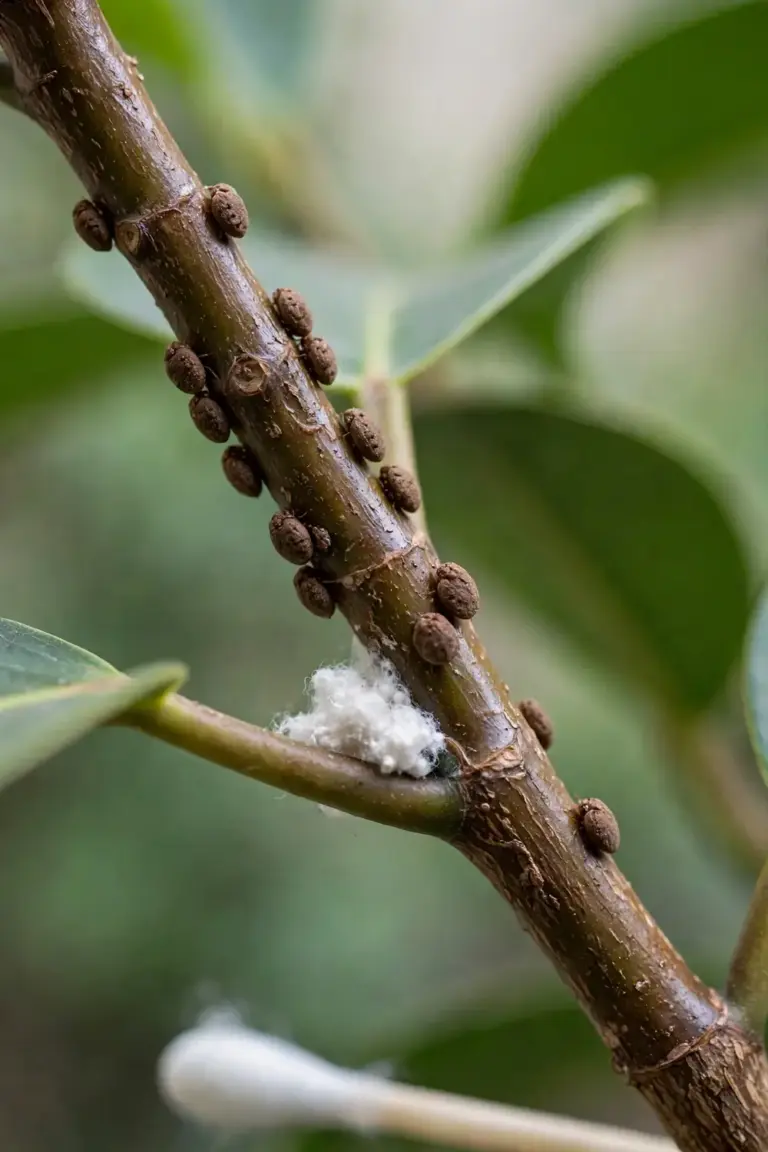
Find them by touch. Run your finger along the stems and the undersides of leaves. Scale feels like tiny hard bumps that do not wipe off easily. Mealybugs look like small cottony masses in the leaf axils. Aphids cluster on soft new growth. Ants on the plant are a giveaway, because ants farm these sap-suckers for their honeydew.
Remove scale by hand first. Dab each bump with a cotton swab dipped in rubbing alcohol, which dissolves the waxy shell that protects the insect underneath. Work methodically down every stem, because missing a few means the colony rebuilds within weeks. Wash mealybugs off with a strong water jet, then swab the survivors hiding in the axils. Treat the whole plant with insecticidal soap or horticultural oil after the manual removal, covering stems and both leaf surfaces. Check again in a week. These pests hide in crevices and under bark flakes, so one treatment rarely finishes the job, and a second pass catches the ones the first missed.
8. Keep the Plant Above 55 Degrees
Cold air curls ficus leaves fast. A draft from a window, a door, or an air-conditioning vent can curl new growth within a day or two, because the sudden temperature drop shocks tissue that was growing in warmth. The leaves may feel stiff or brittle to the touch, and the damage often hits the side of the plant facing the draft first, leaving the sheltered side untouched. That one-sided pattern is the signature of a draft.
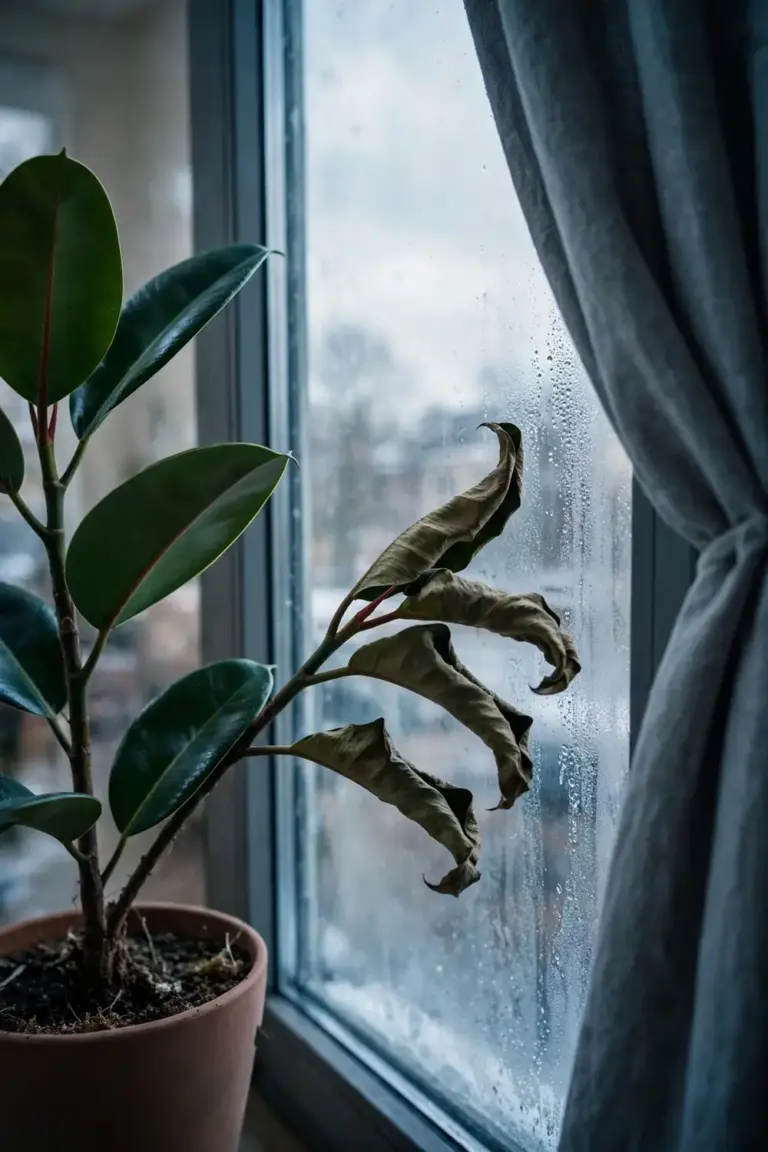
Ficus elastica wants temperatures above 55 degrees Fahrenheit, and the NCSU Toolbox warns that the plant does not do well with drafts or cold temperatures. The UC IPM table lists chilling injury below 50 degrees as a cause of leaf spots and blisters. Sudden changes in temperature or humidity cause leaf drop and wilting even when the absolute temperature stays above the danger line.
Move the plant away from the draft source. Keep it clear of exterior doors, leaky windows, and AC vents, and watch where the cold air actually travels through the room. In winter, check the temperature at the windowsill overnight with your hand. Glass gets colder than the room air, and a ficus pressed against cold glass suffers even when the thermostat reads fine. A few inches of clearance makes the difference. If the plant must stay near a window, pull it back at night when the glass is coldest and return it in the morning.
9. Flush the Soil to Clear Salt Buildup
Fertilizer salts accumulate in potting mix and burn the roots, and the leaves curl as the root damage spreads upward through the plant. The signs are brown leaf tips and edges, a white crust on the soil surface, and curling that appears gradually over weeks rather than days. Over-fertilizing causes it, and so does watering with hard tap water for years without ever flushing the pot, because every watering leaves a little more mineral behind. The damage is slow and easy to miss until the curl is widespread.
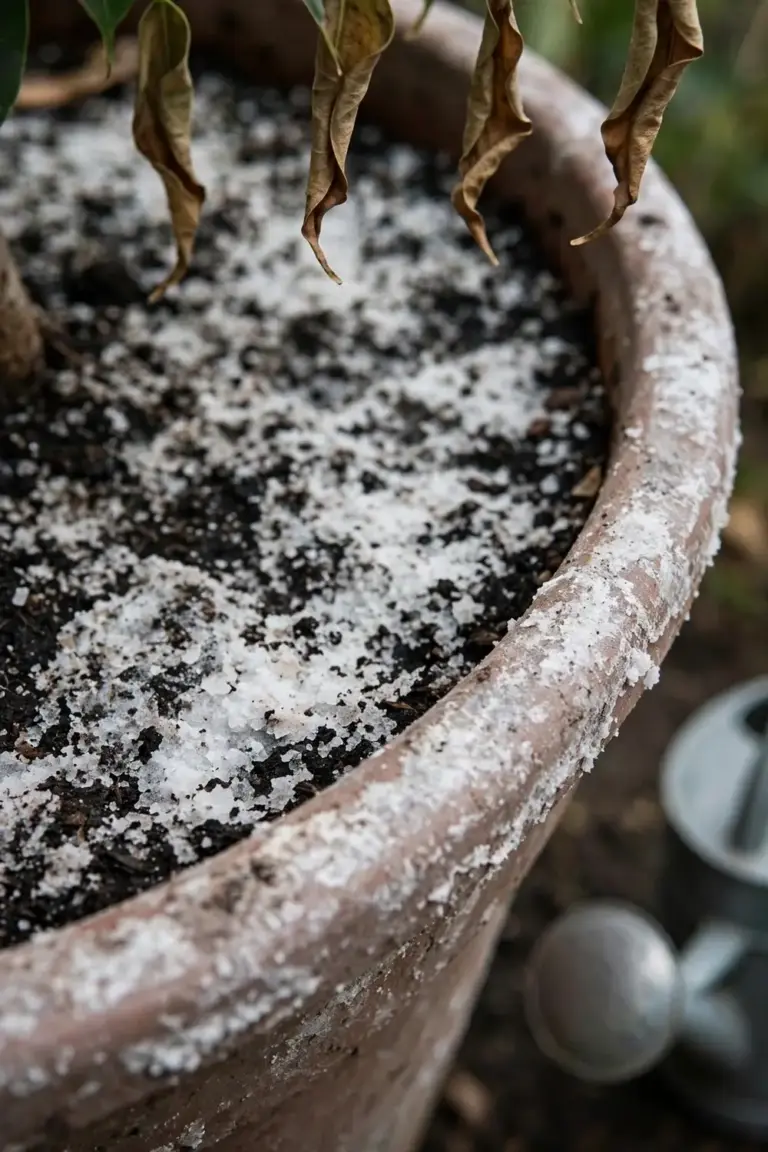
The UC IPM table lists excessive fertilizer or other soluble salts as a cause of brown or scorched leaf tips, and specific nutrient toxicities including fluoride, copper, or boron as a separate entry. Feed ficus only during active growth, in spring and summer, with a balanced liquid fertilizer at half the label rate. Skip feeding entirely in fall and winter when growth slows.
Flush the pot to reset the soil. Take the plant to the sink or shower and run room-temperature water through the pot for several minutes, letting it drain freely out the bottom. The goal is to dissolve the accumulated salts and carry them away, so use enough water that the drainage runs clear. Repeat the flush monthly if your tap water is hard, because hard water deposits its own minerals with every watering. After flushing, hold off on fertilizer for a month and let the plant recover on plain water. New growth should emerge flat once the salts are gone. If the white crust returns quickly, the water itself is the problem, and switching to rainwater or filtered water for a season breaks the cycle.
Stop the Next Curl Before It Starts
Once the current curl is diagnosed and fixed, lock in the habits that prevent the next round. Most repeat curling comes from the same three lapses: watering by calendar, ignoring humidity in winter, and never inspecting the leaf undersides.
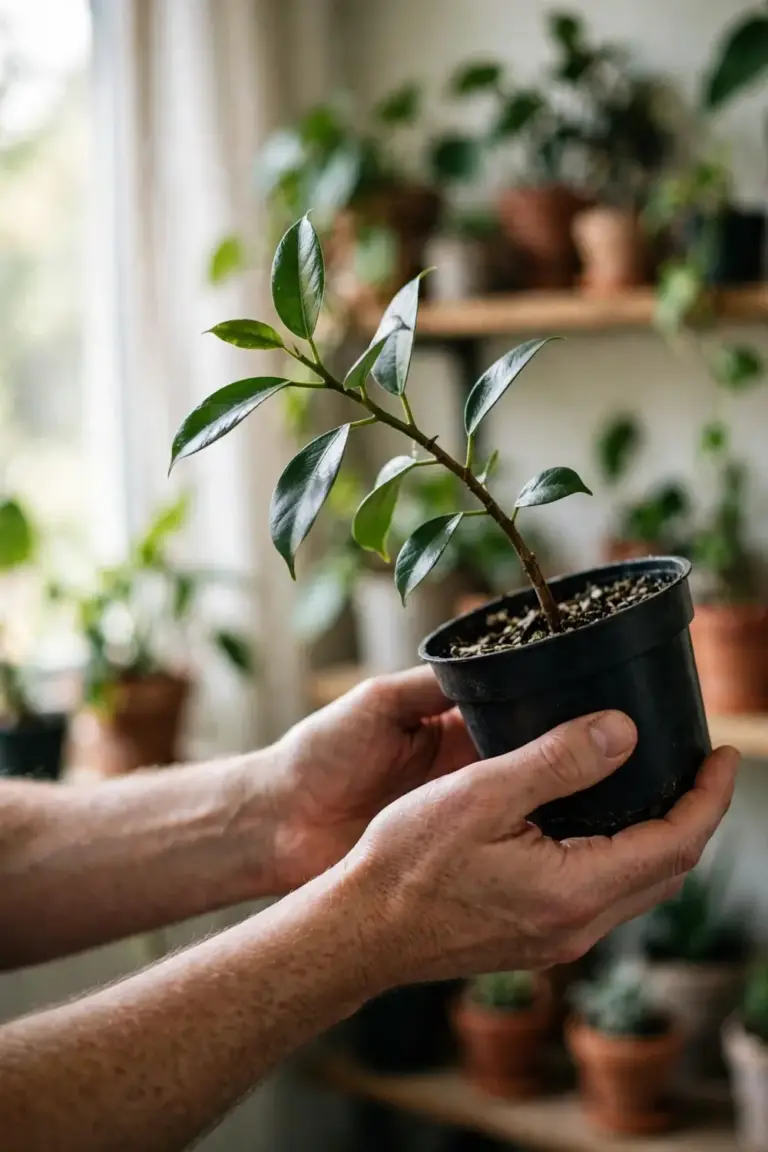
Build a weekly check that takes two minutes. Lift the pot to judge its weight, push a finger into the mix, and flip three leaves to inspect the undersides. Glance at the newest growth for early curl while you are there. This routine catches underwatering before the leaves respond, spots mites before they web, and notices salt crust before the tips brown. Two minutes a week beats an hour of treatment, and the habit pays for itself the first time it catches a problem early.
Repot on a schedule, not in a crisis. Ficus in the same mix for more than two years sits in compacted, salt-loaded soil that holds water unevenly and starves the roots of air. Fresh mix every 18 to 24 months keeps drainage open and resets the salt clock to zero. Choose a pot only one size up, because too much empty mix stays wet around the edges while the root ball dries in the middle. When you repot, shake off the old mix gently, trim any circling roots with clean shears, and settle the plant at the same depth it grew before so the stem never sits buried.
Quarantine every new plant for two weeks before it joins the collection. New ficus from the nursery can carry spider mites or scale invisible to a quick look, because eggs and crawlers hide where the eye does not go. Keep the newcomer in a separate room, inspect the undersides twice during the quarantine, and treat anything you find before the plants meet. This single habit prevents more pest outbreaks than any spray, and it costs nothing but a little patience.
Match the Curl to the Cause
Use this table to narrow the nine causes to one. Start with the curl direction and the company it keeps. Read across the row: the pattern tells you where to look, the accompanying signs confirm or rule out, and the last column sends you to the full fix. Most ficus owners land on their cause within two rows.
| Curl pattern | Accompanying signs | Most likely cause |
|---|---|---|
| Edges roll inward, oldest leaves first | Dry soil, light pot | Uneven watering (H2 1) |
| Whole leaf cups, plant wilts | Heavy pot, sour soil smell, yellow leaves | Overwatering (H2 2) |
| Edges roll up, tips turn brown and crispy | Dry air, heating season | Low humidity (H2 3) |
| Pale or brown patches on sun-facing side | Recent move to sunny spot | Too much sun (H2 4) |
| Curl plus leggy stems and pale growth | Dark corner, no direct light | Too little light (H2 5) |
| Stippling, bronzing, fine webbing | Undersides affected first | Spider mites (H2 6) |
| Sticky leaves, sooty mold, bumps on stems | Ants present | Scale, mealybugs, aphids (H2 7) |
| Stiff, brittle curl on one side | Near window, door, or vent | Cold draft (H2 8) |
| Brown tips, white crust on soil | Gradual onset over weeks | Salt buildup (H2 9) |
When two patterns fit, fix the watering first. Water stress amplifies every other cause, and a plant with correct moisture often stops curling even when a secondary stress is present. Run the table again after a week of correct watering. If the curl pattern changes, the water was masking the real cause, and the new pattern points straight to it.
Frequently Asked Questions
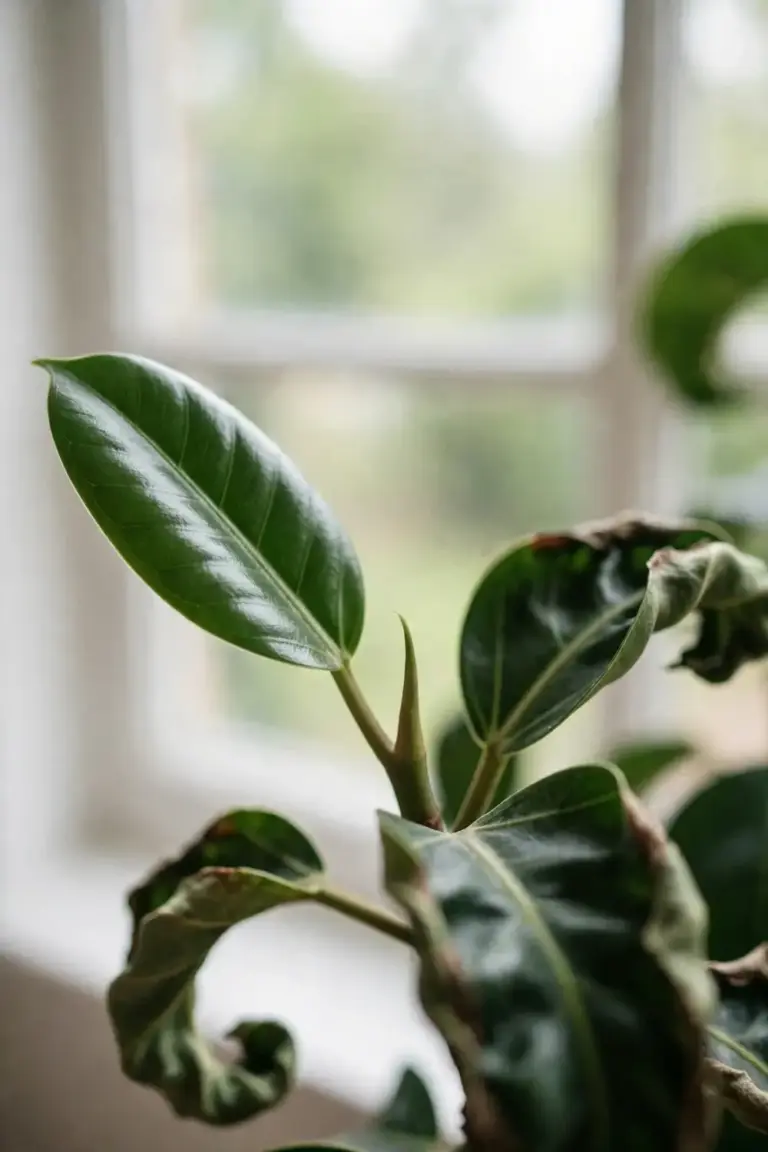
Inward curling is the leaf shrinking its exposed surface to slow moisture loss. The most common trigger is uneven watering, followed by low humidity. Check the soil with the finger test first: push your finger several inches deep, and if the top half is dry, water thoroughly until it drains. If the soil is fine, raise humidity with a pebble tray or humidifier. The curl should stop spreading within days, though curled leaves rarely flatten.
Yes. The top inch can dry while the bottom stays saturated, especially in dense mix or pots without drainage holes. Lift the pot: a heavy pot with dry topsoil means water is trapped below, drowning the roots. The roots stop taking up water, and the leaves curl from thirst. Tip the pot, let it drain completely, and wait until the top half is dry before watering again.
Not always. Early infestations show only yellow stippling, and webbing appears later near the growing points. Tap a suspect leaf over white paper to check for moving specks. If you find mites, wash the plant with a strong water jet aimed at the undersides, treat with insecticidal soap, and repeat every 7 to 10 days for three rounds. Raise humidity afterward to discourage reinfestation.
Usually not. A curled leaf keeps its shape even after the cause is fixed. Judge recovery by the new growth: flat emerging leaves mean the fix worked. Prune the worst-curled leaves only if they are brown and dead. Keep damaged but green leaves, because they still photosynthesize and feed the plant while it recovers.
Scale forms hard, immobile bumps on stems and leaf joints that resist wiping. Mealybugs form soft, white, cottony masses in leaf axils. Both excrete sticky honeydew that grows sooty mold. Dab scale with rubbing alcohol on a cotton swab to dissolve the shell. Wash mealybugs off with water, then swab the survivors. Follow with insecticidal soap and recheck in a week.
Walk the Plant Before You Blame the Pot
Ficus leaf curl is a symptom with nine common causes, and the fix follows the diagnosis. Test the soil, read the air, check the light, hunt the undersides, feel for drafts, and look at the leaf tips for salt. The plant tells you what is wrong if you work through the list in order instead of guessing. Start with water, because water stress sits underneath nearly every other cause, and a plant with correct moisture gives you a clean read on everything else.
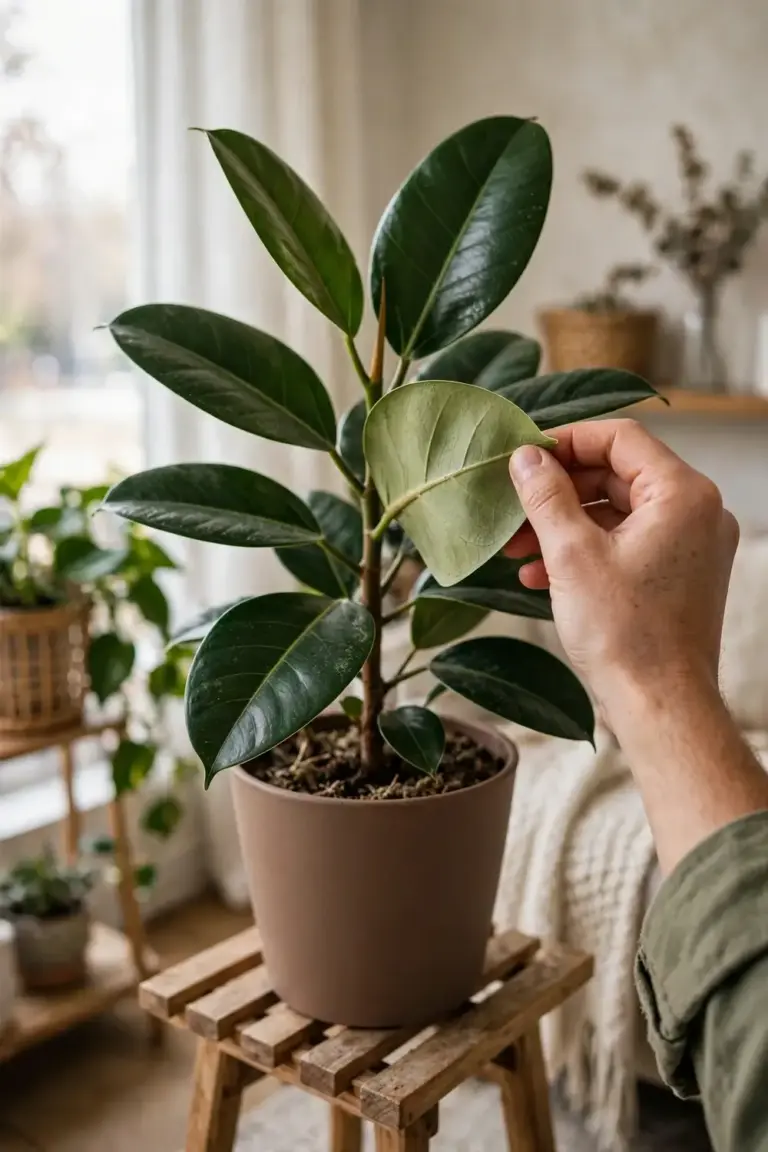
Keep this article bookmarked for the next curl. The causes do not change, and the order of the tests does not change either. When a new leaf curls six months from now, you will know exactly where to start, and the fix will take minutes instead of weeks. The whole skill is knowing which test to run first.