
Name an agave in Australia from 3 marks: spine, leaf edge, and rosette size. Those 3 marks separate the 9 garden species below from each other and from aloe, yucca, and Furcraea. This agave identification in Australia key covers the species nurseries actually sell here, plus the one that escapes into roadsides and old habitations.
Work through the fork in section 1 first. It splits the genus into two groups in under a minute. Then match the plant against one species section. I check the leaf edge with a fingertip first, because one spine test splits the genus faster than any photo.
1. Check Spines First: The Agave Identification Fork That Splits the Genus
Agave identification starts with one question: does the leaf end in a hard spine? A hard terminal spine plus teeth along the leaf edge puts the plant in the spined group, which holds most garden agaves. No spine and no teeth puts the plant in the spineless group, which holds one common species.
The spineless group is easy. Agave attenuata carries soft, pliable, pale green leaves with no terminal spine and no marginal teeth. Every other common garden agave carries a terminal spine, marginal teeth, or both. If the plant has no spine anywhere, the answer is attenuata, and the rest of the key is confirmation.
The spined group needs more marks. Measure rosette width, note leaf color, and run a finger along the leaf edge. The table below sorts the 9 garden species by the marks that separate them. The species list follows the Australian seller guide that names filifera, potatorum, attenuata, victoria-reginae, Blue Glow, geminiflora, and americana among the types sold in Australia, according to SucculentsOnline’s agave types guide.
| Species | Spine | Leaf Edge | Rosette Size | Leaf Color |
|---|---|---|---|---|
| Agave americana | Hard spine 3 to 5 cm | Coarse teeth to 1 cm | 1 to 2 m high, 2 to 4 m wide | Blue gray to light green |
| Agave attenuata | None | Smooth, no teeth | Rosettes to 1.2 m wide | Pale green, pliable |
| Agave victoria-reginae | Short spine | Smooth, white margins | About 15.2 cm tall | Dark green, stiff |
| Agave potatorum | Short spine | Small teeth, red or purple rim | Small, cupped rosette | Green, blue, or gray |
| Agave filifera | Short spine | Fine white threads | Small clumping rosette | Green |
| Agave salmiana | Hard spine | Toothed | Large, upright | Green |
| Agave stricta | Sharp tip | Fine, needle leaves | Small neat ball | Green |
| Agave geminiflora | Short spine | Smooth, tapering leaves | Dense globe | Green |
| Blue Glow | Short spine | Smooth, red or yellow rim | Small, compact | Powdery blue green |
Agave is a genus of rosette succulents in the Asparagaceae family. All agave species flower once in their life and then die, according to the NurseriesOnline species guide. That single flowering habit separates agave from aloe and yucca, which flower repeatedly. The dying rosette leaves offsets behind, so a clump outlives its parent.
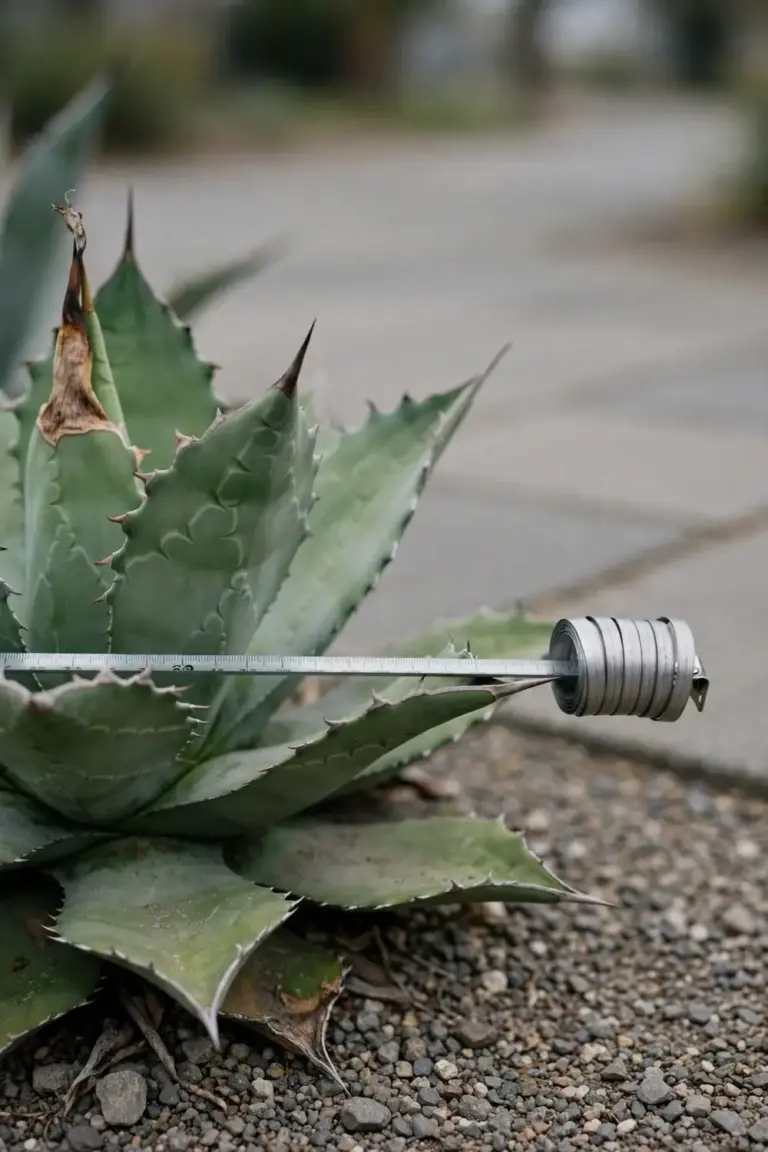
Measure before you guess. Carry a tape measure and a pair of thick gloves. Measure rosette width across the widest leaves, then measure one leaf from base to tip. Note the leaf color in daylight, because indoor light shifts blue gray toward green. Press a fingertip lightly against the leaf edge to feel for teeth, then press the leaf tip to feel for a spine. Write the 3 numbers down: rosette width, leaf length, and spine length. Those 3 numbers carry the identification further than any photo alone.
2. Name the Giant First: Agave Americana, the Naturalised Century Plant
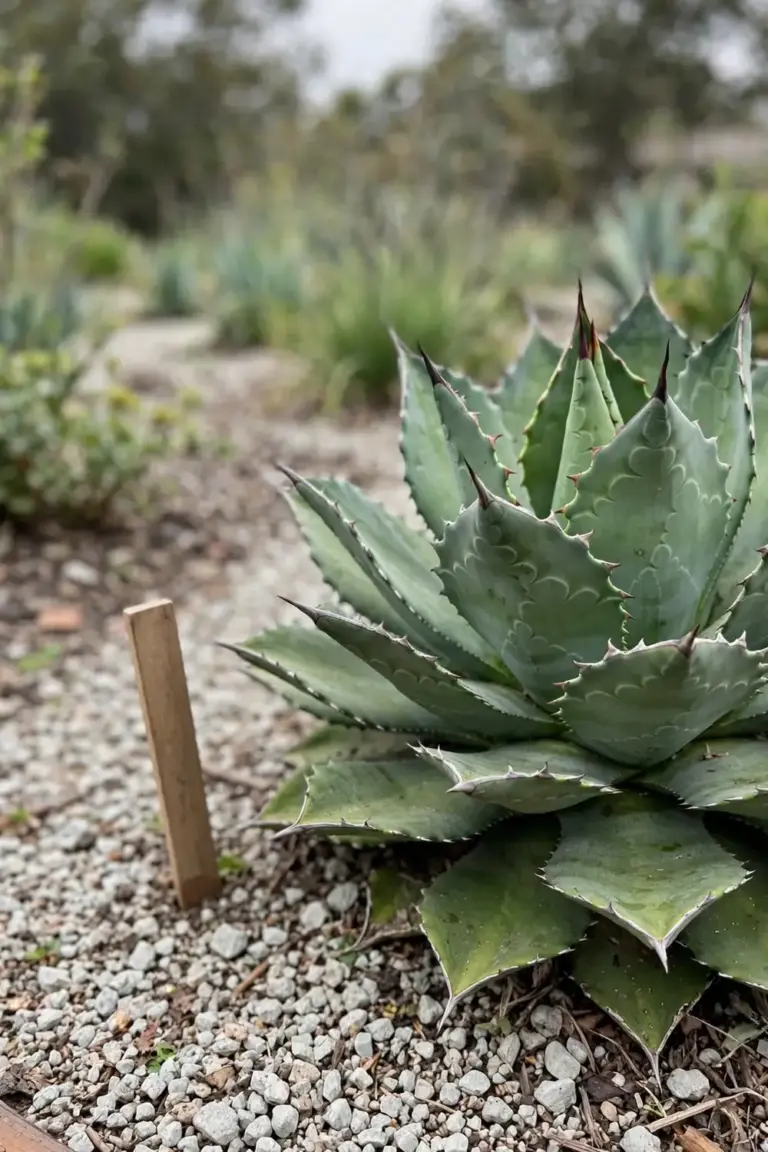
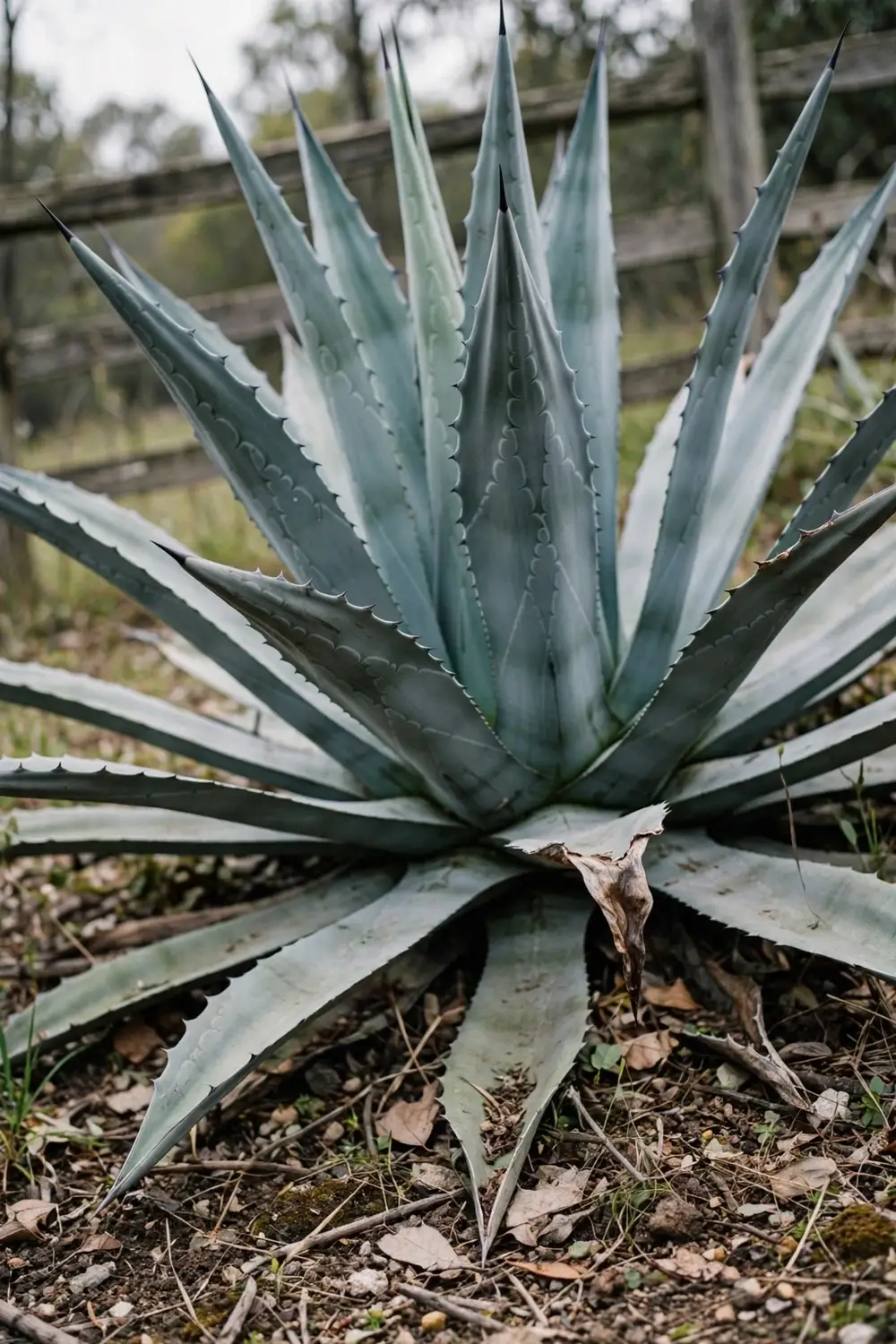
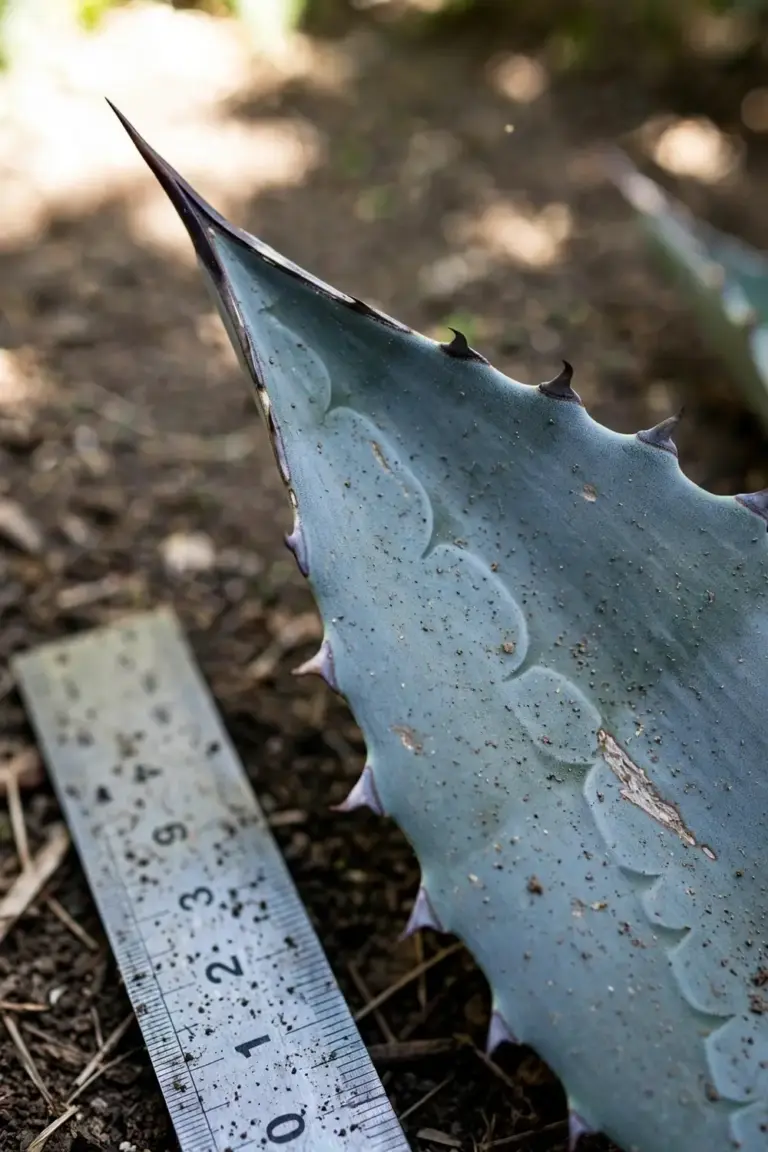
Agave americana is the giant. The rosette stands 1 to 2 m high and 2 to 4 m across, with leaves 1 to 2 m long and 15 to 25 cm wide, according to PlantNET’s flora entry for Agave americana. The leaf ends in a terminal spine 3 to 5 cm long, and the margins carry coarse teeth to 1 cm long. The leaf blade is succulent, blue gray to light green, and often suckers freely to form a large clump.
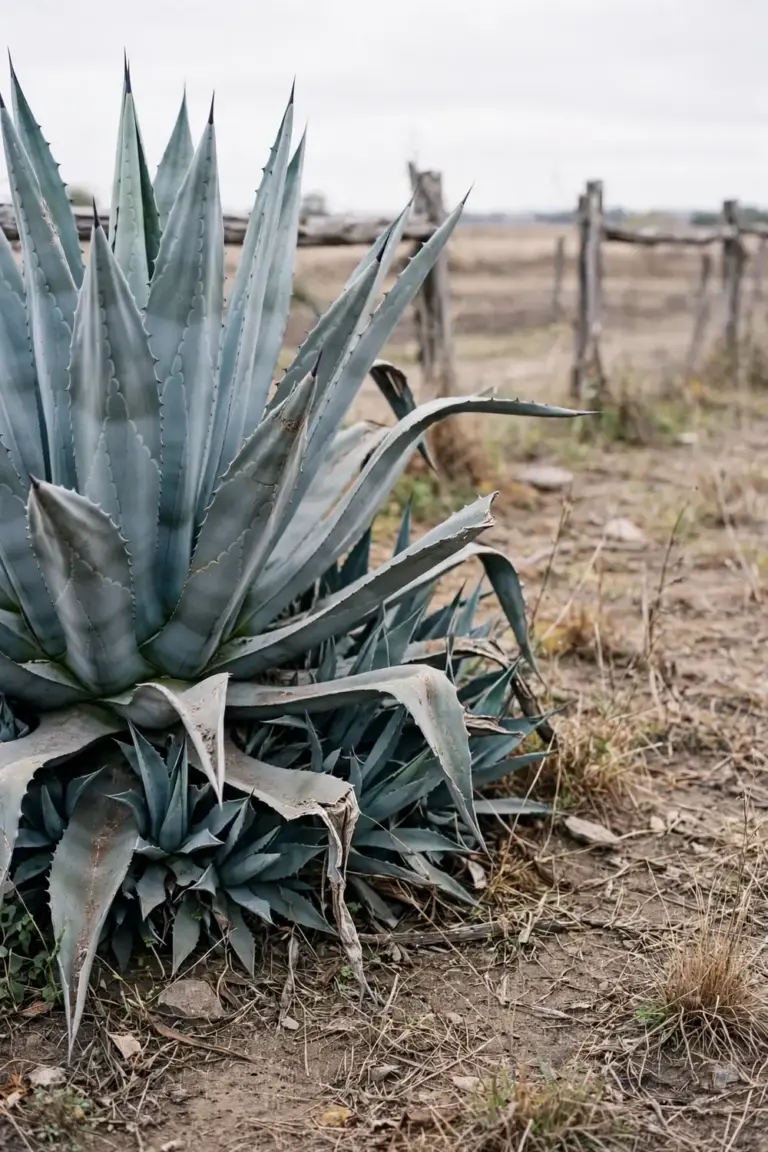
The south-eastern NSW key gives the same marks with tighter ranges. Leaf margins carry spiny teeth 5 to 10 mm long, leaf tips carry a sharp spine 3 to 5 cm long, and leaves run 100 to 200 cm long and 150 to 250 mm wide, according to the LucidCentral key for plants of south-eastern NSW. Flowers run 70 to 105 mm long, tubular, yellow or greenish yellow, in a much branched cluster. A plant matching those ranges in NSW bushland, pasture, or a roadside is americana.
Americana is the naturalised species. PlantNET records it as cultivated and occasionally naturalised around old habitations and along roadsides, north from Mudgee and west from the Murrurundi district. The LucidCentral weeds fact sheet places its life at 10 to 30 years, with a flowering stem 6 to 12 m tall. A massive spiny agave on a roadside or an old habitation is almost always this species. The common names tell the same story: century plant and American aloe. American aloe is a naming trap. Americana is not an aloe. Century plant is a second trap. The plant flowers once after 10 to 30 years, not after 100.
3. Name the Spineless One: Agave Attenuata, the Foxtail
Agave attenuata is the only common garden agave with no spine and no teeth. The wide pale green pliable leaves emerge from a tight central spear and arch back, looking like a large open green flower, according to San Marcos Growers’ attenuata entry. Individual rosettes reach 1.2 m wide atop a stout curving smooth gray stem that rises to 1.2 m tall. The plant masses 1.2 to 1.5 m tall and twice as wide.
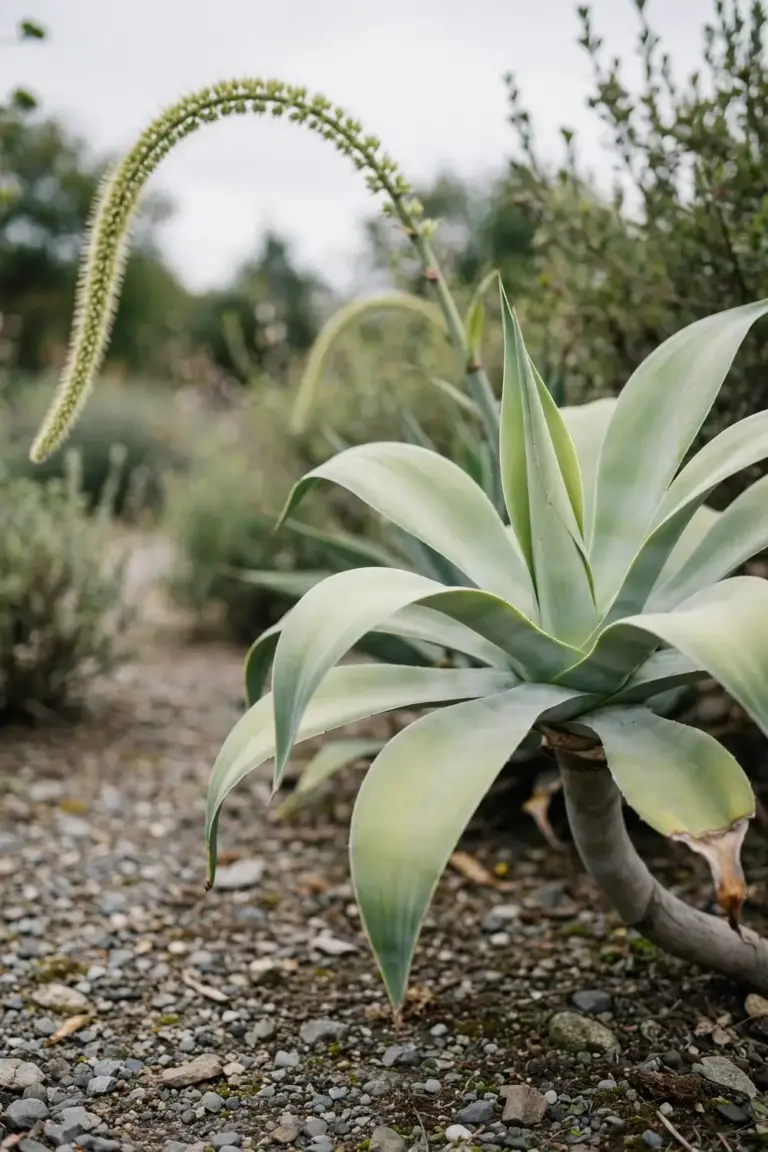
The flower stalk confirms it. Mature plants send up a 1.5 to 3 m vertical stalk that reflexes back toward the ground before arching upward again, giving the plant the common name foxtail agave. The flowers are pale greenish yellow, followed by seed pods and many new plantlets. No other common agave carries that curving stalk on a spineless plant.
Attenuata also carries a trunk. Older plants show a smooth gray stem under the rosette, which no other common garden agave shows so plainly. The leaves feel soft and bend without resistance. If the leaf bends and the edge is smooth, the name is attenuata. NurseriesOnline lists its height at 1.5 to 2 m, its spread at 1.5 m, its flowers as creamy white, and its age at maturity at 10 to 20 years. The variegated forms keep the same spineless leaves with white margins.
4. Name the Small White-Edged One: Agave Victoria-Reginae, the Queen Victoria
Agave victoria-reginae is the small one with white edges. The plant grows low, to only about 15.2 cm tall, with stiff dark green foliage whose margins carry bold white markings, according to SucculentsOnline’s agave types guide. The rosette forms a tight round ball. The leaves are short, thick, rigid, and triangular, each ending in a short terminal spine.
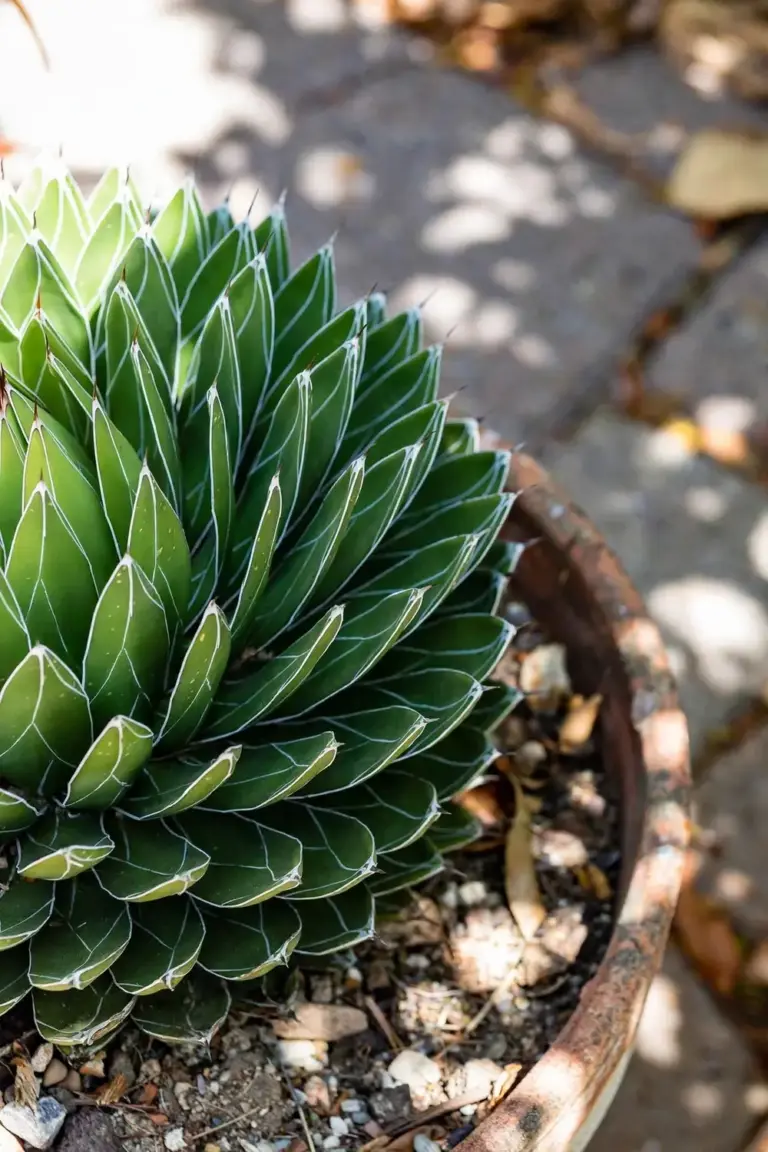
The white markings are the deciding mark. No other common agave carries white margins this bold on a rosette this small. The leaf surface shows white lines where neighboring leaves pressed against it as buds. That imprint pattern is called bud imprinting, and it is strongest on this species. A small dark green ball with white edges and a short spine is victoria-reginae.
Size separates it from young americana. A young americana rosette at 15 cm across already shows blue gray color and coarse teeth. Victoria-reginae at the same size shows dark green color, white margins, and almost no teeth. The spine is short and the leaf is stiff. When the plant stays small after years, the name holds.
The bud imprint repays a close look. Each leaf carries pale lines where the leaf above it pressed down while the bud was closed. The lines run lengthwise and form a white pattern across the dark green face. Americana shows no such pattern. A pot plant with white lines pressed into every leaf face is victoria-reginae, even before the white margins show.
5. Name the Cupped Butterfly: Agave Potatorum
Agave potatorum is the cupped butterfly. The plant is small, with green, blue, or gray leaves that are marginally ridged with red or purple, according to SucculentsOnline’s agave types guide. The leaves cup inward, giving the rosette the look of a butterfly with folded wings. The teeth are small, and the terminal spine is short.
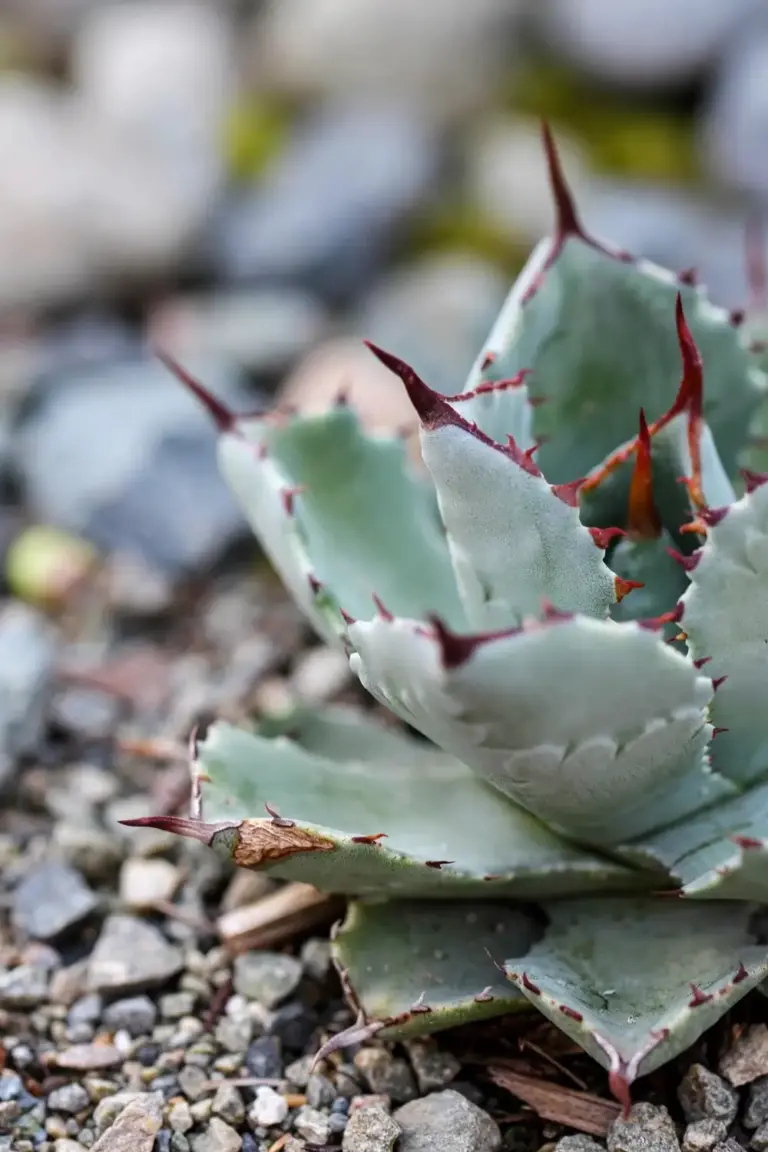
The red or purple rim is the deciding mark. Run a finger along the leaf edge and look for the colored rim where the teeth sit. No other common small agave combines cupped leaves with a colored rim. Americana has a blue gray leaf but a flat, spreading rosette and coarse teeth. Victoria-reginae has white margins, not a red rim.
Potatorum stays small. The rosette stays compact where americana keeps growing. A small cupped rosette with a red or purple edge and small teeth is potatorum. The common name butterfly agave refers to the cupped leaf shape, not to any butterfly the plant attracts.
Feel the teeth to confirm. Potatorum teeth are small and sit close together along the rim, where americana teeth are coarse and spaced apart. Press a fingertip along the edge and count the teeth under one finger width. A row of small teeth with a colored rim fits potatorum. A row of coarse teeth with gaps between them points back to americana.
6. Name the Threaded One: Agave Filifera, the Thread Agave
Agave filifera is the threaded one. Fine thin lines of fiber peel from the leaf margins and hang like white threads, according to SucculentsOnline’s agave types guide. The leaves are narrow, green, and clump forming. The threads are the deciding mark. No other common agave carries loose white threads along the leaf edge.
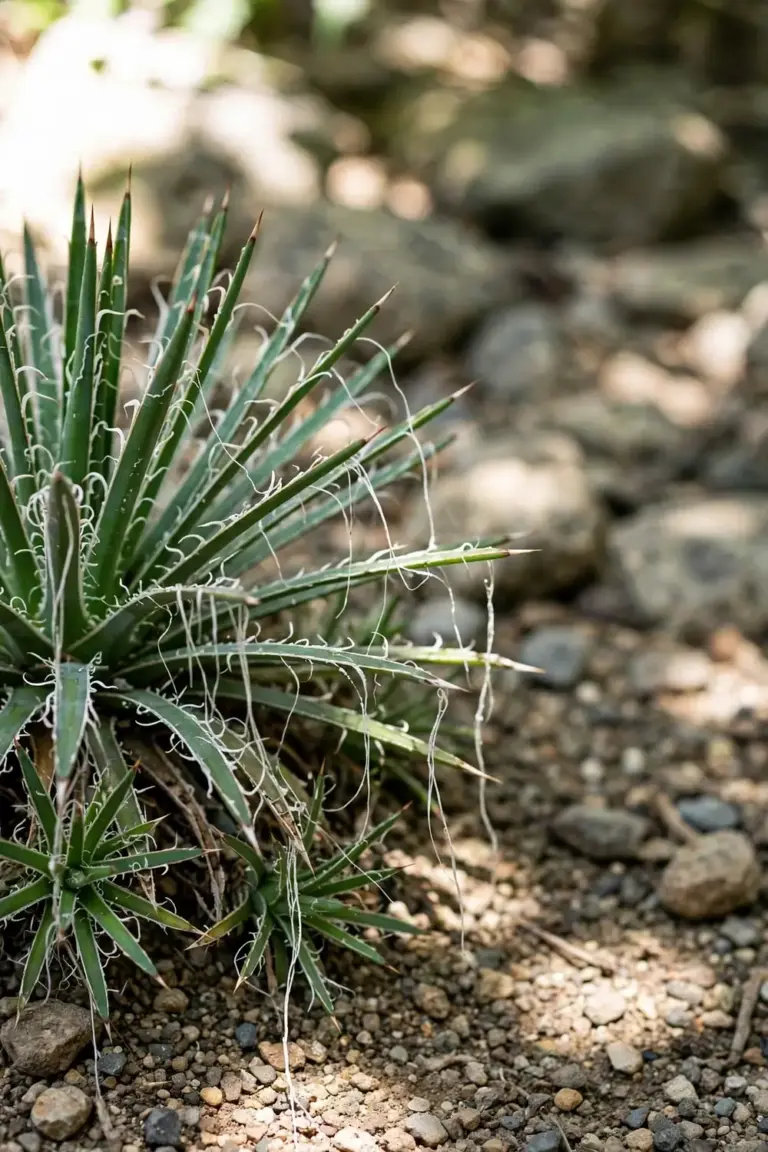
Check the threads against the leaf. The threads peel away from the margin as the leaf grows, so older leaves carry longer threads. Young leaves show short threads near the tip. The rosette stays small and clumps by offsets. A small green rosette with white threads peeling from the leaf edges is filifera.
One close relative shares the threads. Agave schidigera is sold in Australia and also carries curly white threads on the leaf margins. Separating filifera from schidigera in a garden plant needs a specialist key, so that distinction is data not available here. If the plant shows threads, the genus is agave and the thread group is certain. The exact thread species needs the seller label or a flora key.
7. Name the Upright Giant: Agave Salmiana
Agave salmiana is the second giant. NurseriesOnline lists it among the garden species sold in Australia, alongside attenuata, potatorum, victoria-reginae, stricta, and americana. The plant is large and upright, with broad green leaves that stand more vertically than americana’s spreading rosette.
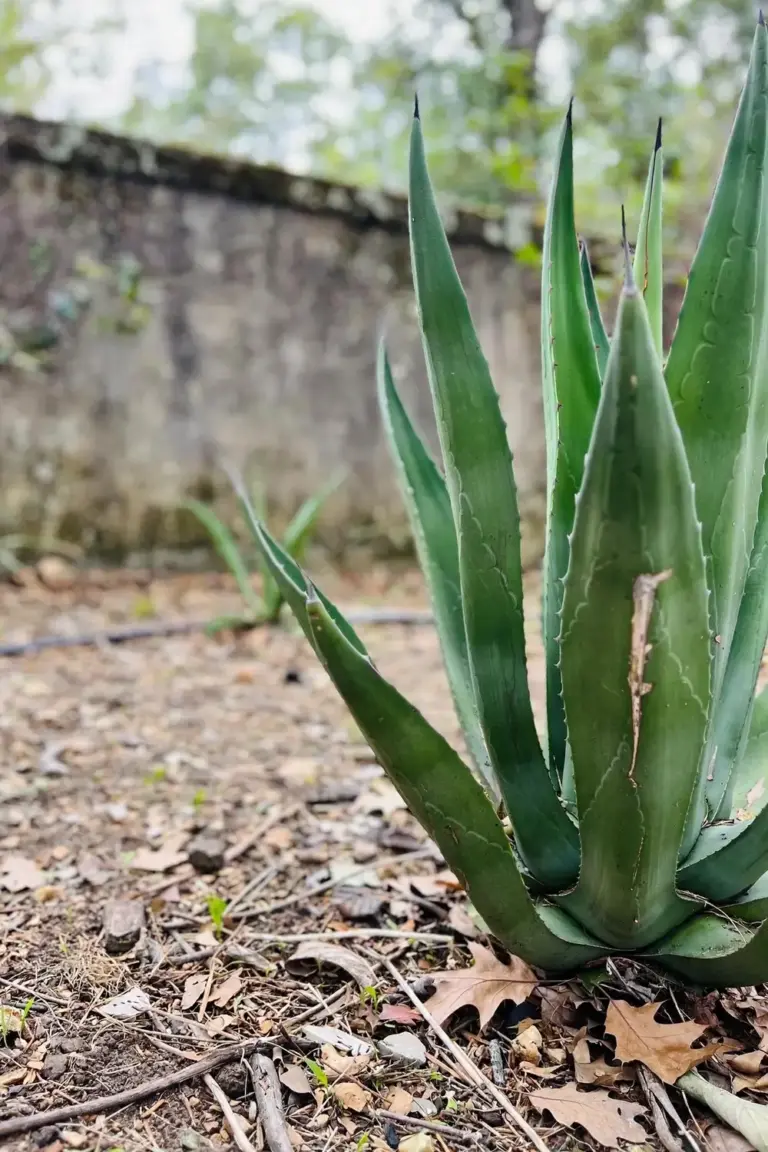
Separating salmiana from americana in a garden plant is the hardest call in this key. Both are large, spined, and toothed. The seller label is the most reliable mark. Nursery stock sold as salmiana carries that name on the tag, and a plant bought as salmiana keeps that name unless the tag was wrong. Field separation of the two species by leaf marks alone is data not available here. Do not guess between them from a photo.
Size helps only at the extremes. A rosette wider than 2 m with a strongly spreading habit leans americana. A rosette that stays upright and narrow for its height leans salmiana. Between those extremes, the label and the purchase record decide. Record the seller name and the tag name when the plant arrives, because that record is worth more than any later guess from leaf shape.
A lost label leaves two honest options. The first option is to wait for the flower stalk, which separates the species by height and branching, though the wait runs to years. The second option is to keep the plant named as an americana-group agave until a flora key settles it. Both options beat a guess, because a wrong name on a tag travels with every offset the plant produces.
8. Name the Ball of Fine Needles: Agave Stricta
Agave stricta is the ball of fine needles. The plant is smaller growing with fine foliage and tends to form a neat ball shape, according to the NurseriesOnline species guide. The leaves are narrow, stiff, and numerous, packed into a dense round rosette. Each leaf ends in a sharp tip.
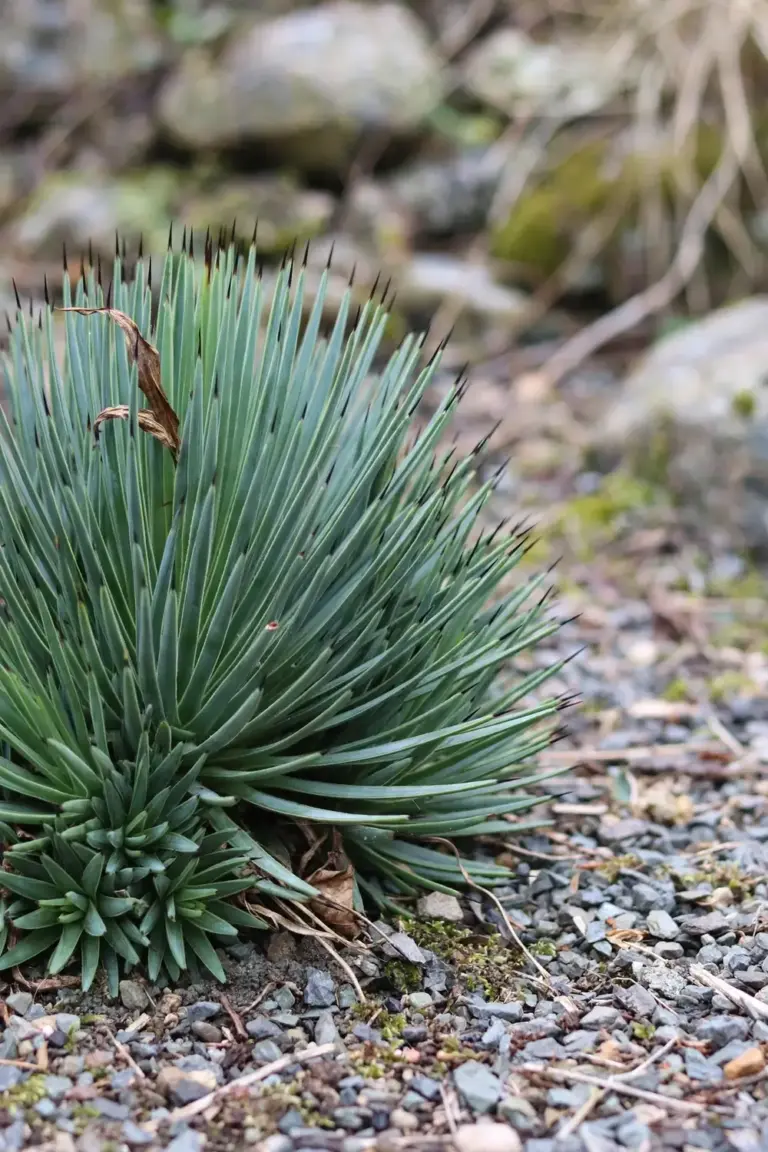
The needle leaves are the deciding mark. No other common agave packs this many narrow leaves into a ball this tight. Americana leaves are broad, 15 to 25 cm wide. Stricta leaves are narrow straps. The rosette reads as a spiny ball from a distance, not as a star of broad leaves.
Stricta clumps by offsets. A clump of several balls at the base is normal. The plant stays small where americana grows large. A dense ball of narrow stiff leaves with sharp tips is stricta. The leaf count is high and the leaf width is low. That combination names it.
The flower stalk confirms the genus when it appears. Stricta flowers once, like every agave, on a tall stalk that rises above the ball. After flowering, the parent rosette dies and the offsets carry the clump forward. A ball that never flowers stays a ball for years, which is normal for a slow species. Measure one leaf across its widest point to confirm the narrow strap shape. A leaf wider than a finger points away from stricta.
9. Name the Dense Globe: Agave Geminiflora
Agave geminiflora is the dense globe. The plant grows as a globe of dense tapering leaves, according to SucculentsOnline’s agave types guide. The leaves are narrow, numerous, and taper to a point. The rosette reads as a round green globe, tighter than stricta’s ball and smoother in outline.
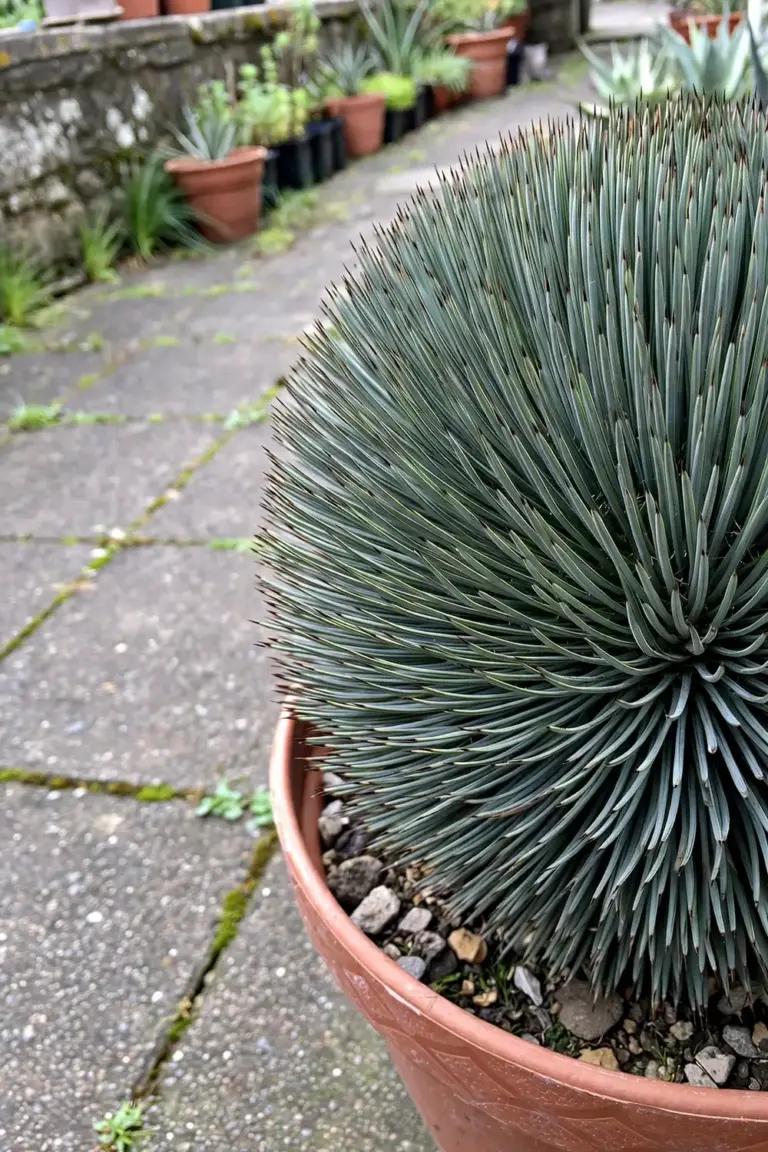
The globe shape is the deciding mark. Stricta shows a spiky ball of separate needles. Geminiflora shows a smooth globe where the leaves lie close together. The leaf tips are short spines, and the margins are smooth, so a round globe of dense tapering leaves with a smooth outline is geminiflora.
Geminiflora suits rockeries and containers, which is where most Australian buyers meet it. The plant stays compact. A globe in a pot or a rockery with dense tapering leaves is geminiflora until a closer key says otherwise.
The pot context helps. A geminiflora in a pot shows the full globe from above, with leaves radiating evenly in every direction. A stricta in the same pot shows separate needles with gaps between them. The difference is density: geminiflora packs leaves tight, stricta spaces them apart. Hold a ruler across the globe and count the leaves crossing the line. A high count with no gaps fits geminiflora.
10. Name the Blue-Red Hybrid: Blue Glow
Blue Glow is the blue-red hybrid. The plant carries powdery blue green leaves with margins in red or yellow, according to SucculentsOnline’s agave types guide. The rosette is small and compact. The powdery blue coating is called glaucous bloom, and it rubs off where fingers touch the leaf.
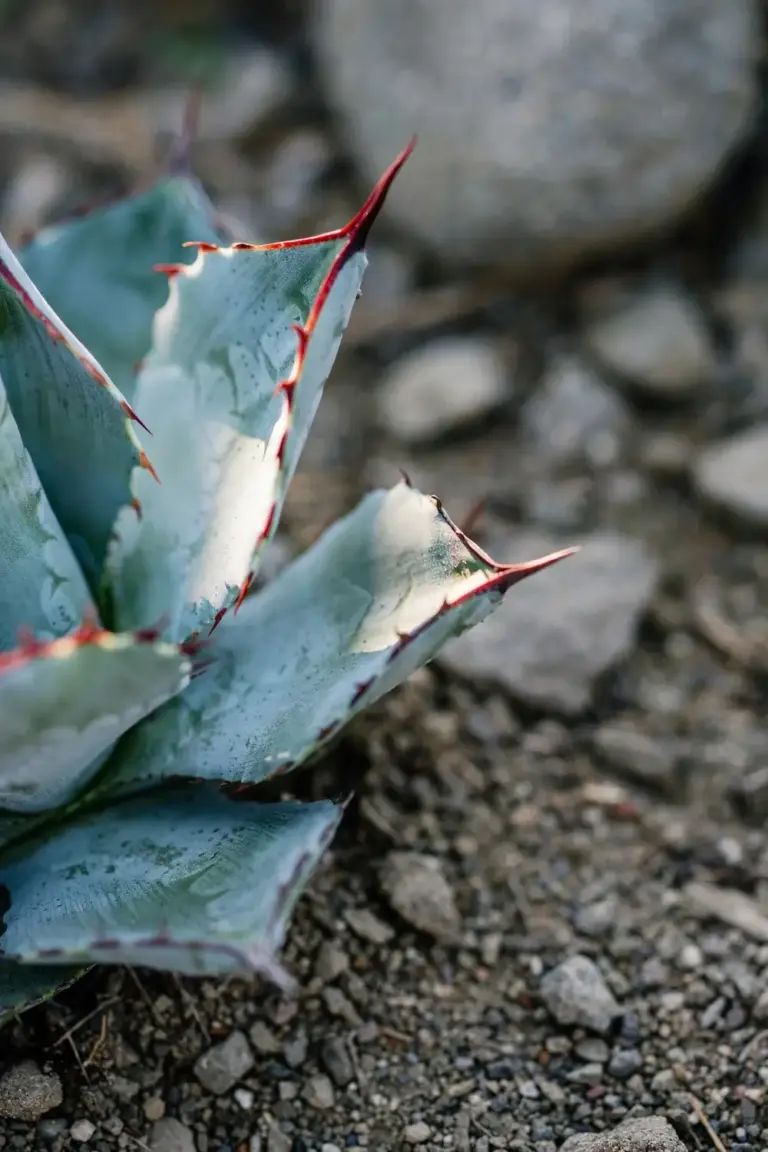
The color combination is the deciding mark. No species agave combines powdery blue green leaves with a red or yellow rim on a compact rosette. Americana is blue gray but large and coarsely toothed. Potatorum carries a red rim but a cupped green leaf. Blue Glow carries both the blue coating and the colored rim.
Blue Glow is a hybrid, not a species, and the name covers a cultivated cross sold under one trade name. Seedlings grown from its seed do not repeat the parent. The label name Blue Glow is the identification. A compact rosette with powdery blue green leaves and a red or yellow rim is Blue Glow.
Do not rub the leaf to test the coating. The powdery bloom wipes off where fingers touch, leaving a green patch that confuses the next check. Photograph the rosette in daylight instead, with the rim color visible along one leaf edge. The rim color runs along the margin, not across the leaf face. A rim that shows only on one side of the leaf is still Blue Glow, because sun exposure deepens the rim on the sun side.
11. Rule Out the Lookalikes: Aloe, Yucca, and Furcraea
Three plants get mistaken for agave: aloe, yucca, and Furcraea. Each fails one agave mark. Check the failing mark before naming the plant.
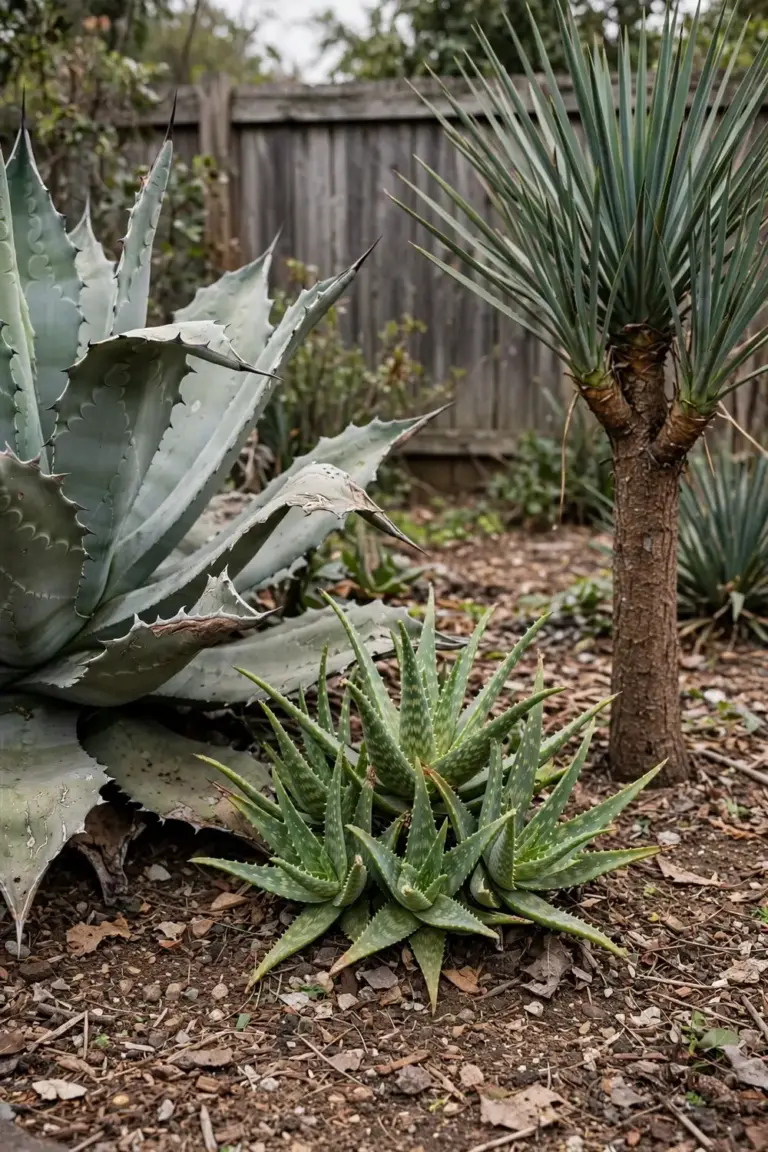
Aloe fails the fiber test. Cut a small piece from a leaf tip. Aloe leaf shows clear gel inside, while agave leaf shows fibrous strands and no gel. Aloe also flowers repeatedly through its life, while agave flowers once and dies. Aloe leaves often show soft teeth and spots, and the rosette stays smaller than an americana rosette. The site’s aloe vera growing guide shows the aloe leaf shape for comparison.
Yucca fails the leaf test. Yucca leaves are narrower than agave leaves, often with peeling fibers along the edge, and the plant commonly grows a woody trunk. Yucca flowers are bell shaped and white, carried on a tall stalk, and the plant flowers repeatedly. Agave leaves are broad and succulent, and the plant flowers once. A trunk plus narrow leaves plus repeated white bell flowers is yucca. The trunk is the fastest mark: agave shows no trunk, while a mature yucca shows a woody stem that thickens with age.
Furcraea fails the bulbil test. Furcraea produces bulbils, small plantlets, on the flower stalk, and grows a trunk. Agave produces no bulbils and grows no trunk, according to the New Zealand Plant Conservation Network. A tall stalk carrying small plantlets is Furcraea, not agave. A stalk carrying seed pods and no plantlets fits agave. The bulbils root where they fall, so a Furcraea stalk drops a ring of young plants around the parent.
12. Decide Wild or Planted: Naturalised Versus Cultivated
The last step is not a species name. It is a determination: is this plant wild or planted? The answer changes what the plant means. A planted agave is a garden specimen. A wild agave is a naturalised weed that spreads by suckers and seed.
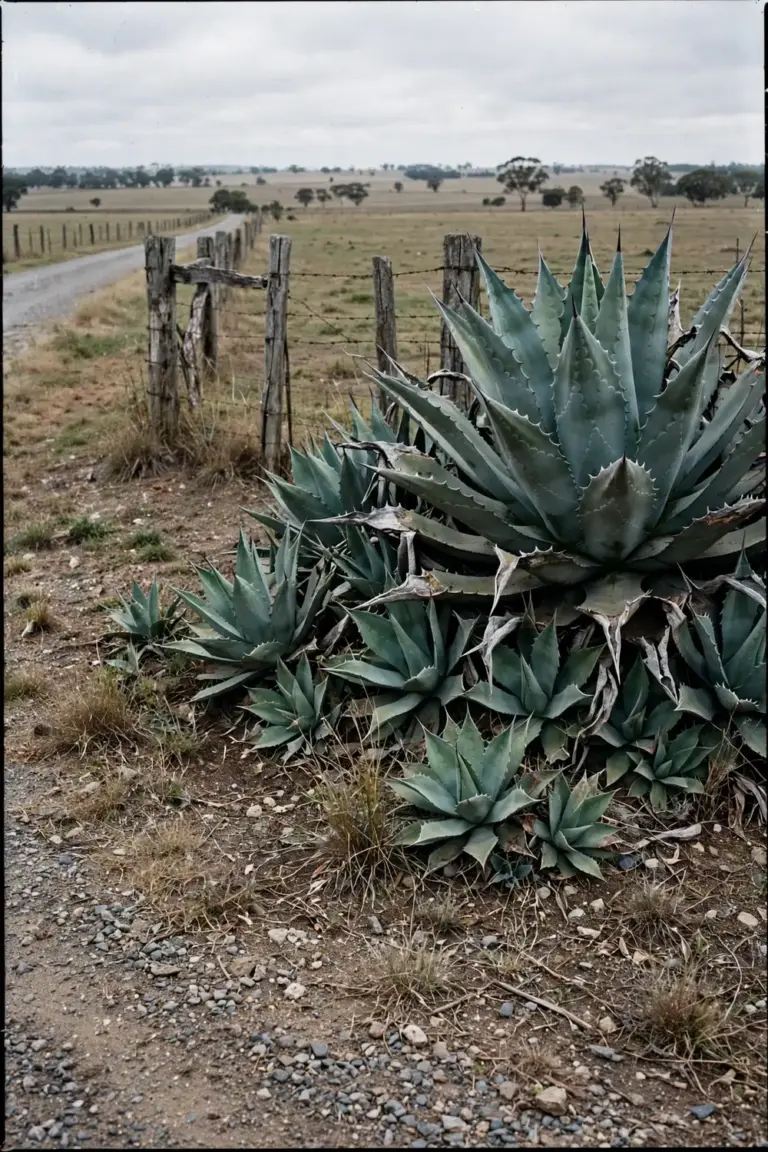
Place decides most cases. A large spiny agave on a roadside, an old habitation, a pasture edge, or a stream bank is naturalised americana in NSW and Queensland. PlantNET records americana as occasionally naturalised around old habitations and along roadsides. A clump of suckers around a parent plant fits americana’s suckering habit. Seedlings near a dead flowering stalk fit its seeding habit. PlantNET lists its NSW occurrence from Mudgee north and the Murrurundi district west, with other records in Queensland and South Australia. The LucidCentral key places it in woodland, pastures, grasslands, old habitations, roadsides, and along streams, and calls it widespread in the Sydney district.
Garden placement decides the rest. A single rosette in a pot, a rockery, or a mulched bed is cultivated. A row of matching rosettes along a fence is planted. A lone agave far from any house, with suckers spreading into pasture, is wild. The Atlas of Living Australia census lists 4 agave species for Australia: americana, attenuata, sisalana, and vivipara. Sisalana and vivipara are census species rarely sold as garden plants, and garden-level traits that separate them are data not available here. If the plant matches none of the 9 garden species above and grows far from houses, treat it as a census species and check a flora key.
Do not remove a wild agave with bare hands. Agave sap irritates skin, and the spines pierce deeply. The RHS notes the sap as a skin irritant and advises gloves. A wild clump also spreads by suckers, so a broken piece left on the ground can root.
Frequently Asked Questions
Cut a small piece from a leaf tip. Aloe leaf shows clear gel inside, while agave leaf shows fibrous strands and no gel. Aloe flowers repeatedly through its life. Agave flowers once and dies. Aloe rosettes stay smaller than an americana rosette, so the gel test plus the flowering habit names the genus in under a minute.
Agave attenuata has no terminal spine and no marginal teeth. The leaves are soft, pliable, and pale green. The plant grows a smooth gray stem and a curving foxtail flower stalk. No other common garden agave is spineless. If the leaf bends and the edge is smooth, the name is attenuata.
A large spiny agave on a roadside, old habitation, pasture edge, or stream bank in NSW or Queensland is naturalised americana in most cases. PlantNET records americana as occasionally naturalised around old habitations and along roadsides. Suckers spreading around a parent plant confirm the suckering habit. A single rosette in a pot or a mulched bed is cultivated.
Both are large, spined, and toothed. The seller label is the most reliable mark. A plant bought as salmiana keeps that name unless the tag was wrong. Field separation of the two species by leaf marks alone is data not available here. Do not guess between them from a photo. Record the seller name and the tag name when the plant arrives.
No. Century plant is Agave americana. The LucidCentral weeds fact sheet places its life at 10 to 30 years. The plant flowers once and dies. The name century plant is a naming trap. The plant lives 10 to 30 years, not 100.
Write the Name Down and Check It Again
Name the plant from 3 marks: spine, leaf edge, and rosette size. Write the name on the tag and the date beside it, then photograph the rosette, the leaf edge, and the flower stalk when it appears. Those 3 photos carry the marks a later key needs. A name written down beats a name remembered, and a dated tag beats both. This agave identification in Australia key ends where growing begins. Once the plant is named, growing it from seed is a separate job. The site’s succulent seed growing guide covers that step.