
Caterpillars eat seedlings at night, and a healthy row can collapse by morning. Net at transplant, collar every stem, and spray Bt on a 5 to 7 day cycle. Those three moves stop most losses, and the nine ways below show how to stop caterpillars eating seedlings without synthetic sprays.
A caterpillar is the larva of a butterfly or moth. A seedling is a young plant with soft stems and small leaves. Organic means non-synthetic controls here. Nothing here uses a synthetic insecticide.
Seedlings are vulnerable because their stems are soft and their leaves are few, so one caterpillar that eats a small share of a mature plant eats the whole seedling. Seedlings you start indoors face the same risk after transplant. The seed starting guide covers the indoor phase; this guide covers the outdoor phase, from transplant to established plant.
Act the night you transplant. Moths lay eggs on leaves after dark. Cutworms feed after dark. A seedling left unprotected for one night can lose its stem before sunrise. The nine ways below work as a set. Netting and collars block access. Handpicking and egg checks remove the caterpillars already inside. Bt and pyrethrum handle the ones that slip through. Predators and clean beds cut the next generation.
Identify the Culprit First: Leaf Holes, Cut Stems, or Frass
The damage tells you the culprit, and naming it is the first step in how to stop caterpillars eating seedlings. Read the damage before you reach for any control, because three signs separate the main seedling caterpillars: leaf holes mean a leaf feeder, a cut stem means a cutworm, and frass means a caterpillar is feeding right now.
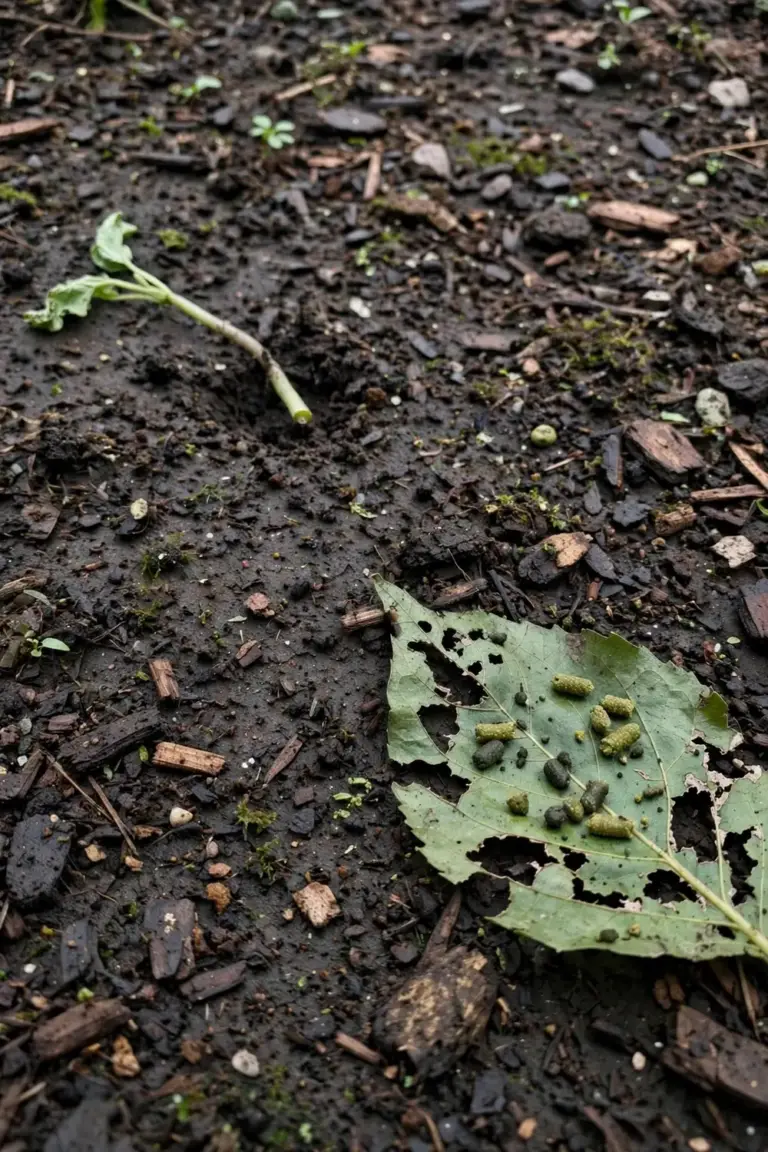
Frass is caterpillar droppings. Fresh frass looks like small green or black pellets on leaves or on the soil. Fresh frass sits near the feeding site. Old frass dries and scatters. Find fresh frass, then look directly above it. The caterpillar is usually on the underside of the nearest leaf.
A cutworm cuts the stem near or just below the soil line, the seedling topples, and the cut looks clean. The caterpillar hides in the soil nearby. Cutworms are dull brown caterpillars that curl into a C shape when disturbed, according to the University of California IPM cutworm page. Fully grown cutworms measure 1 to 2 inches long. That converts to 2.5 to 5.1 cm. Cutworms feed at night and hide in the soil by day. They attack most garden crops.
Leaf holes point to a leaf feeder. Cabbage white butterfly caterpillars chew ragged holes in brassica leaves. Loopers chew holes and move with a looping gait. Native budworm caterpillars chew buds, flowers, and fruit, and each leaf feeder needs a different control. A collar stops a cutworm. A collar does nothing against a caterpillar that lands on a leaf as an egg.
Check the plant in this order. Look at the stem base first. Look at the leaf undersides second. Look for frass third. Dig gently in the top 5 cm of soil around a cut stem. A cutworm often sits within a hand span of the stem it cut. Check leaf undersides with a torch after dark. Many caterpillars feed at night and rest on the underside by day.
| Damage you see | Likely culprit | Check this |
|---|---|---|
| Stem cut clean at the soil line, seedling toppled overnight | Cutworm | Dig the top 5 cm of soil near the stem at night with a torch |
| Ragged holes in leaves, green caterpillar on the leaf, green frass | Cabbage white butterfly caterpillar or looper | Leaf undersides, for caterpillars and eggs |
| Holes in buds, flowers, or young fruit | Native budworm (Helicoverpa) | Buds and growing tips, for small caterpillars |
| Leaves skeletonised, thin window left | Looper | Leaf undersides, for a caterpillar that arches its back as it moves |
Once you name the culprit, pick the ways that match it. Cutworms need collars and night handpicking. Leaf feeders need netting, egg checks, and Bt. Budworms need egg checks, Bt while larvae are small, and predator support. Every way below names the culprit it suits.
1. Cover Seedlings With Pest Exclusion Netting at Transplant
Pest exclusion netting stops butterflies and moths from laying eggs on seedlings. The net is a physical barrier. No eggs on the leaf means no caterpillars on the leaf. Netting works best when it goes on at transplant, before any moth finds the bed.
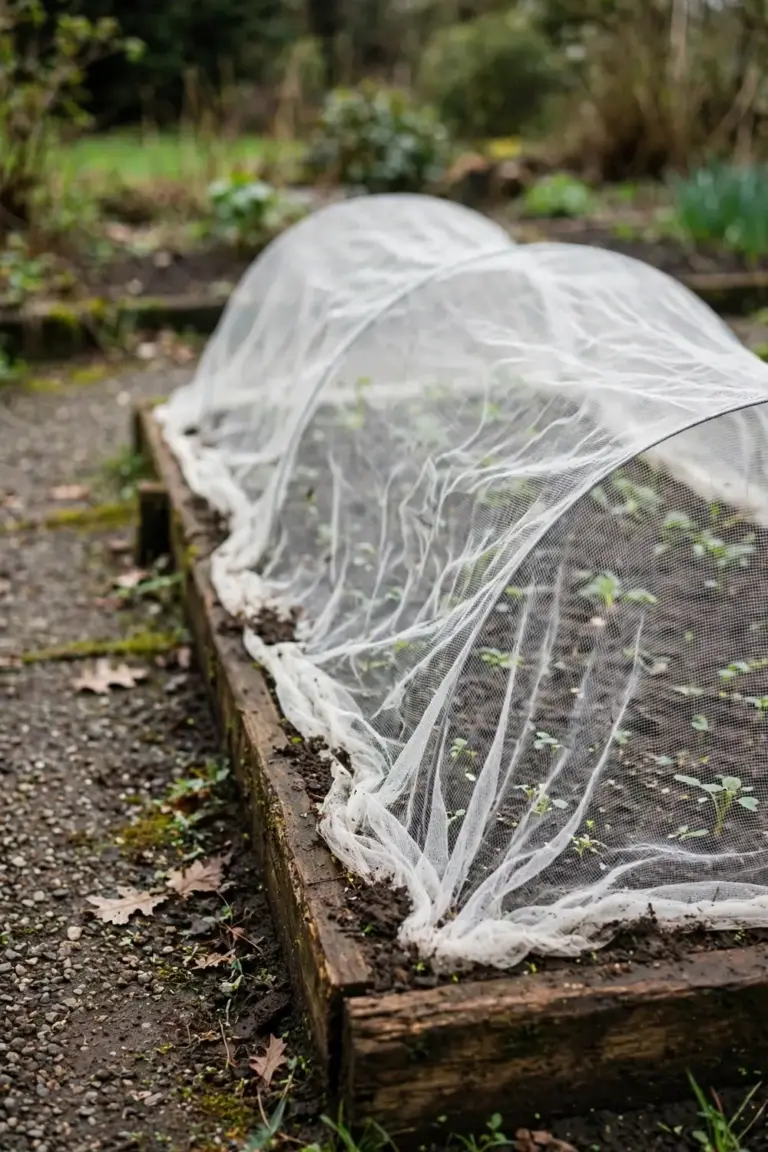
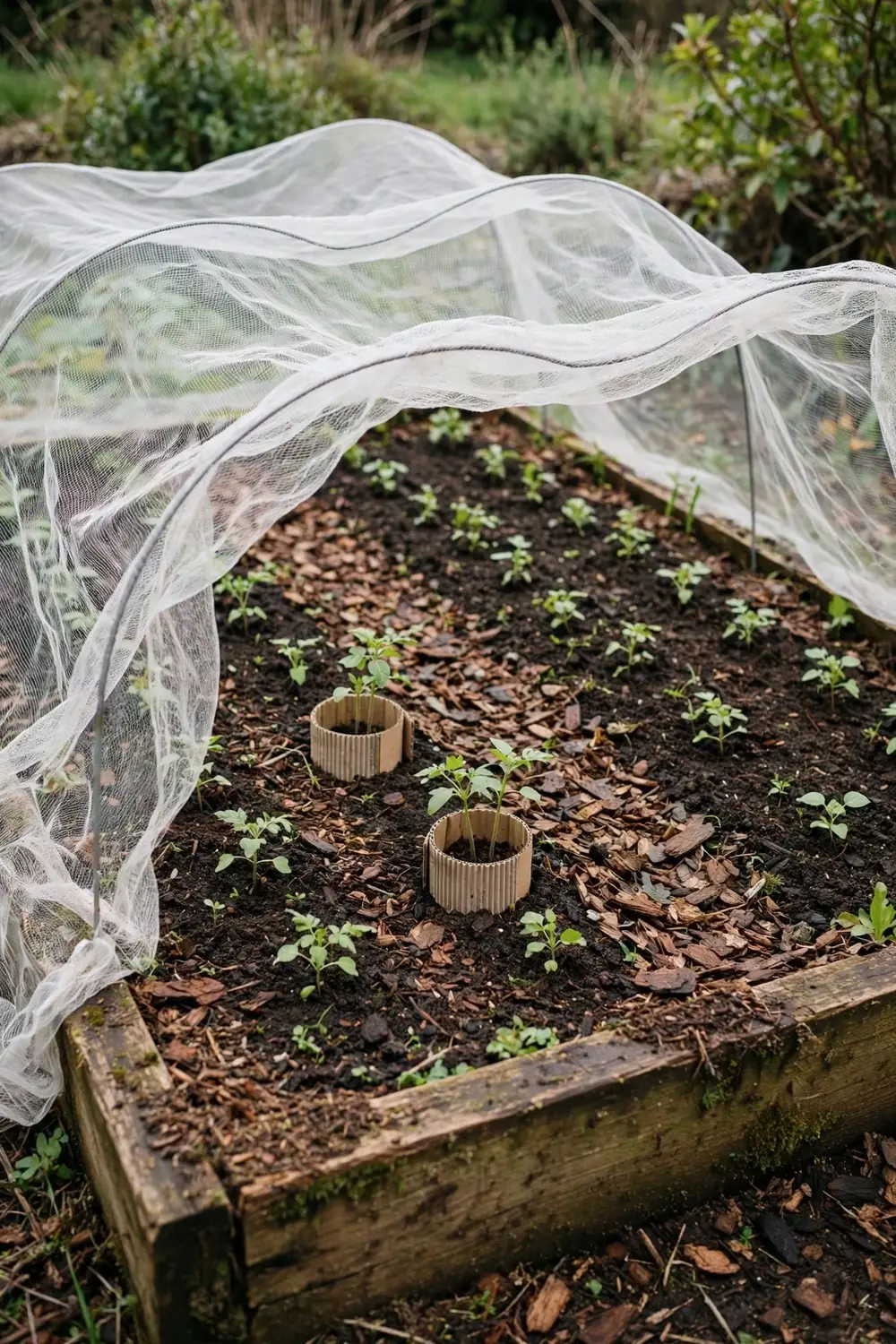
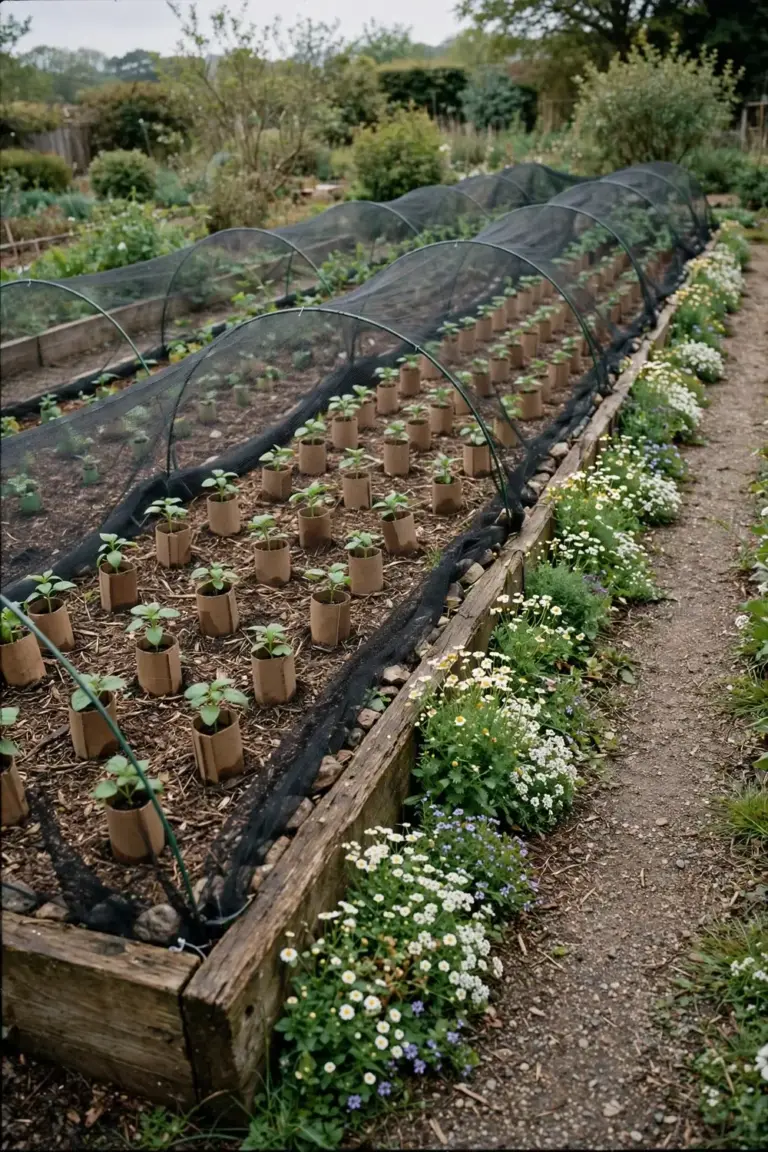
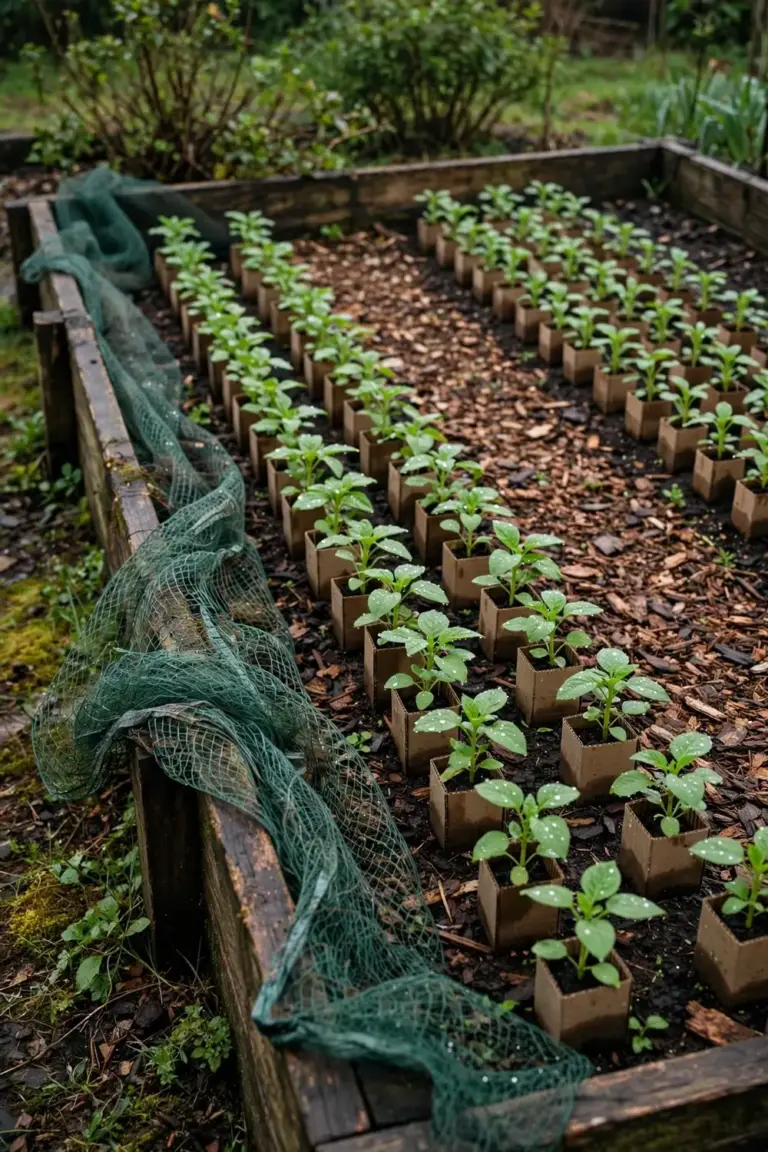
Cover the bed the same day the seedlings go in. Drape the net over the bed and seal the edges with soil or boards. A gap at the edge lets moths in and traps them inside. A sealed net keeps moths out. Check the seal after wind and after watering. A lifted corner is an open door.
Use fine netting sold as pest exclusion netting. Ordinary bird netting has holes large enough for small moths to pass through. Pest exclusion netting has a fine mesh that blocks butterflies and moths while letting light and rain through. The net is light enough to sit on the plants without damage, according to ABC Gardening Australia. A simple frame lifts the net off the leaves. PVC electrical conduit makes a workable frame.
Netting suits leaf feeders. It blocks cabbage white butterflies, loopers, and budworm moths. It does not stop cutworms already in the soil, because cutworms live in the soil and feed from below. Pair netting with collars when cutworms are active. The net handles the air, and the collar handles the soil.
Netting also suits seedlings that brassicas attract. Cabbage white butterflies lay eggs on cabbage, broccoli, cauliflower, pak choy, and kale. The plants are open to attack at any stage, even as seedlings, according to ABC Gardening Australia. A few bites can wipe out a seedling overnight. Netting from day one removes that risk.
Leave the net on until the seedlings grow tough stems and broad leaves. Check under the net twice a week. Look for caterpillars that hatched from eggs laid before the net went on. Remove any caterpillar you find. Lift the net to water and weed, then seal it again. A net left loose is worse than no net, because it traps moths inside with the plants.
2. Fit a Cardboard Collar Around Every Vulnerable Stem
A cardboard collar stops a cutworm from reaching the stem. The collar wraps the stem at the soil line. The cutworm meets cardboard and turns away. Collars are cheap, fast to fit, and they work the night you fit them.
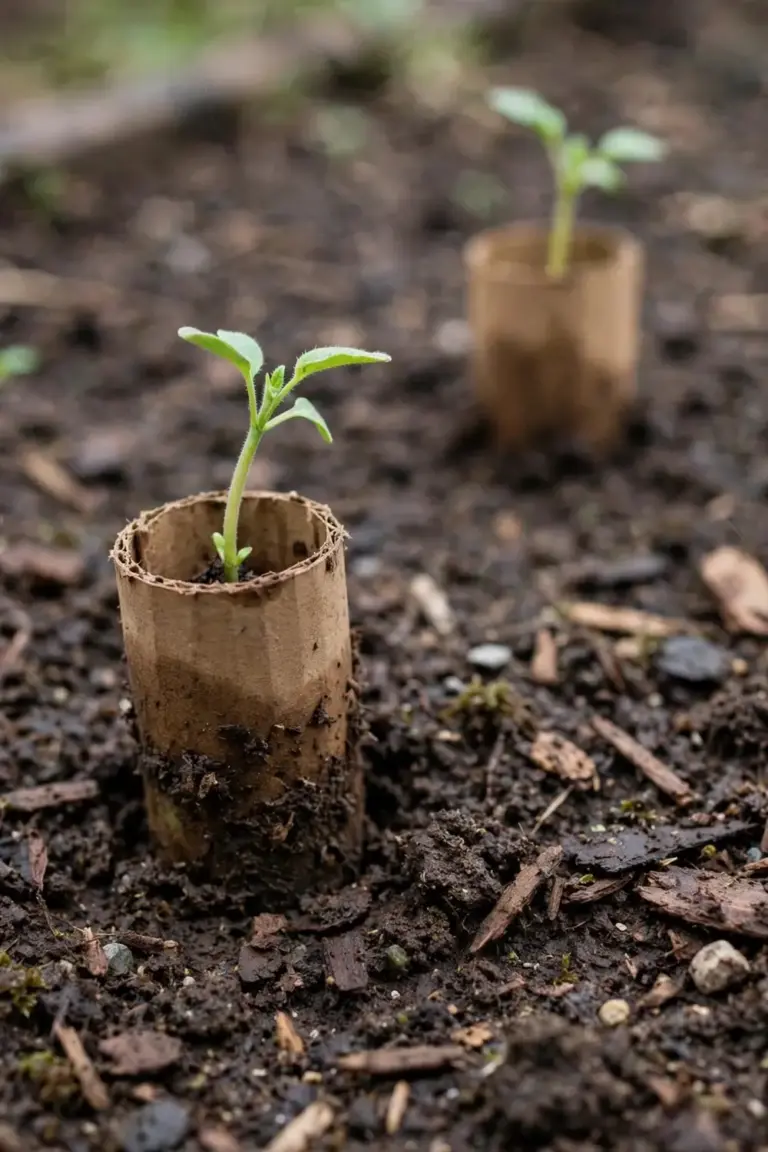
Cut a strip of stiff cardboard 10 cm tall. Wrap it around the stem so it forms a tube. Push the tube 5 cm into the soil. Leave 5 cm above the soil. The buried half blocks cutworms that travel under the surface. The above-ground half blocks cutworms that travel across the surface. The University of Saskatchewan cutworm guide gives the same depth: insert collars 5 cm into the soil. Cardboard toilet paper rolls, paper cups, milk cartons, and tin cans all serve as collars. Remove both ends of any container so the collar is an open tube.
Fit the collar at transplant. Push it in firm. Leave no gap between the collar and the soil. A gap lets a cutworm slip under. Check the collar after rain. Wet cardboard softens and slumps. Replace a slumped collar the same day, because a collar that leans leaves one side of the stem open.
Collars suit cutworms. They do not suit leaf feeders. A butterfly lays eggs on the leaf above the collar. A looper chews the leaf above the collar. Pair collars with netting when both culprits are active. The collar guards the stem. The net guards the leaves.
Collars also suit transplants in beds that were lawn or pasture. Cutworms are common in newly cultivated gardens that were formerly lawn or pasture, according to the University of Saskatchewan. Grasses feed some cutworm species. A bed dug out of lawn carries a higher cutworm load in its first season. Collar every seedling in a first-year bed. Skip none. One uncollared seedling becomes the cutworms first meal.
3. Handpick Caterpillars at Night With a Torch
Handpicking removes caterpillars one by one. It is slow and it works. It works because caterpillars feed at night and sit on the plant while they feed. A torch after dark finds them on leaves and stems.
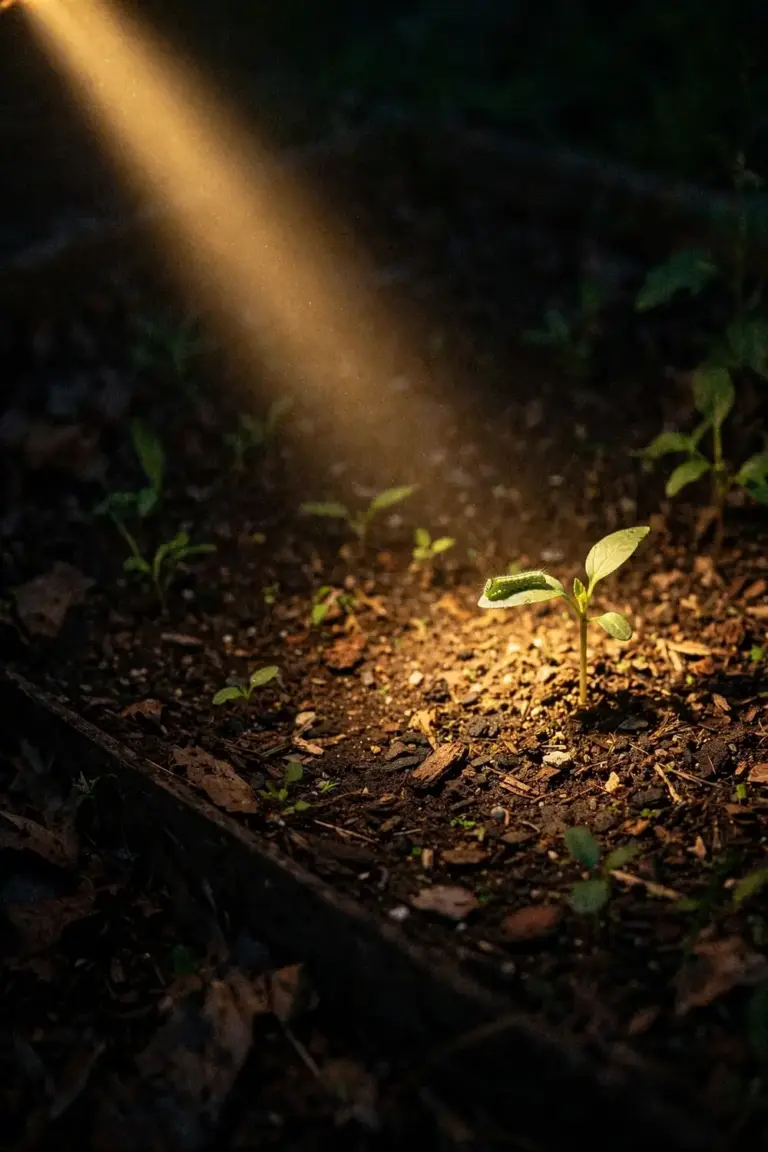
Go out after dark with a torch and a bucket. Check the seedlings leaf by leaf. Look at the undersides. Look at the stem base. Look at the soil surface. Pick each caterpillar off and drop it in the bucket. Handpicking at night with a flashlight is very effective, according to the University of California IPM cutworm page. Repeat every few nights until you find none for three nights in a row.
Search the soil as well as the plant. Cutworm larvae feed at night and hide in the soil under plants during the day, according to the University of Saskatchewan. In the daytime, lightly rake the top inch or two of soil around plants to find them. One inch converts to 2.5 cm. Two inches convert to 5.1 cm. Rake gently. Seedling roots sit shallow. A hard rake tears them.
Handpicking suits small beds. A bed of 20 seedlings takes 10 minutes a night. A bed of 200 seedlings needs netting and Bt as the main controls, with handpicking as backup. Handpicking suits every culprit. It removes cutworms, cabbage white caterpillars, loopers, and budworms with equal ease. It removes the caterpillar before it eats another leaf.
Wear a worn garden mitt if the caterpillars have spines or hairs. Most seedling caterpillars are smooth and harmless to handle. A mitt keeps the work quick, and dropping the catch into a bucket of soapy water finishes the job. The soap breaks the surface tension. The caterpillars sink. Empty the bucket away from the bed the next morning.
4. Check Leaf Undersides and Crush Every Egg Cluster
Egg checks stop caterpillars before they hatch. A butterfly lays eggs on the leaf underside. A moth lays eggs on buds and growing tips. Each egg removed is one caterpillar that never eats a leaf, which makes egg checks the cheapest control here.
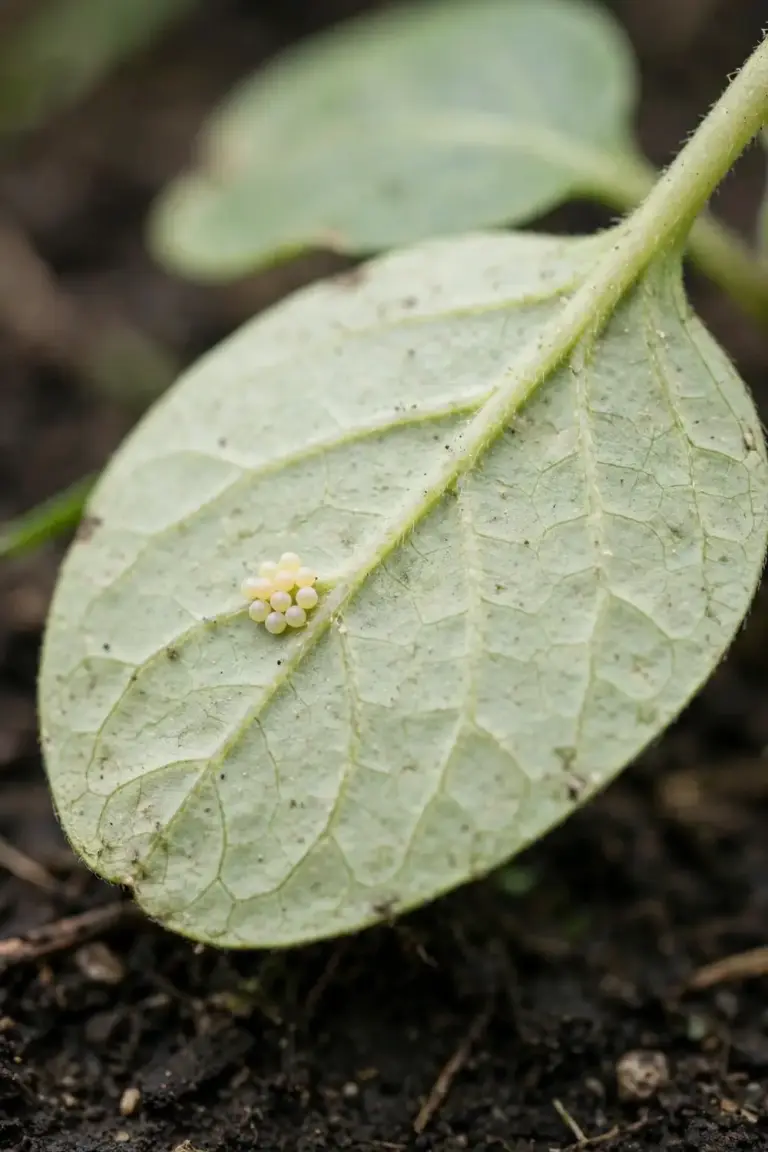
Check leaf undersides twice a week from transplant. Turn each leaf over. Look for tiny pale single eggs or small clusters. Cabbage white butterflies lay eggs on the underside of leaves, and each egg removed is one less caterpillar making a meal of the plant, according to ABC Gardening Australia. Crush each egg with a thumb. Wipe the leaf clean. Move to the next leaf.
Check buds and growing tips for budworm eggs. Native budworm lays eggs singly on growing tips and buds, and the eggs start white and change color as they hatch. Budworm larvae do their worst damage while small. Cesar Australia advises that budworm larvae are best controlled while smaller than 7 mm in length. An egg check that catches the egg beats a spray that chases a 20 mm caterpillar.
I check leaf undersides at dusk, because the egg I crush tonight is one caterpillar I never have to spray.
Egg checks suit leaf feeders and budworms. They do not suit cutworms. Cutworm moths lay eggs in the soil and on plant litter, not on seedling leaves. Pair egg checks with collars when cutworms are active. The egg check guards the leaves. The collar guards the stem.
Make egg checks part of watering. You already walk the bed with a hose or can. Turn a leaf as you pass. Crush what you find. A twice-weekly check catches most eggs before they hatch. A monthly check catches none in time. Frequency decides the result.
5. Spray Bt When Caterpillars Are Small and Feeding
Bt is a bacterium that kills caterpillars from the inside. Bt stands for Bacillus thuringiensis, and the full strain name is Bacillus thuringiensis var. kurstaki. A caterpillar eats treated foliage. The bacterial protein paralyzes the gut, so the caterpillar stops eating. The caterpillar dies within 3 to 4 days and drops from the leaf, according to Yates. Bt targets caterpillars only. It is safe for bees, ladybirds, birds, fish, mammals, and pets, according to the same Yates page.
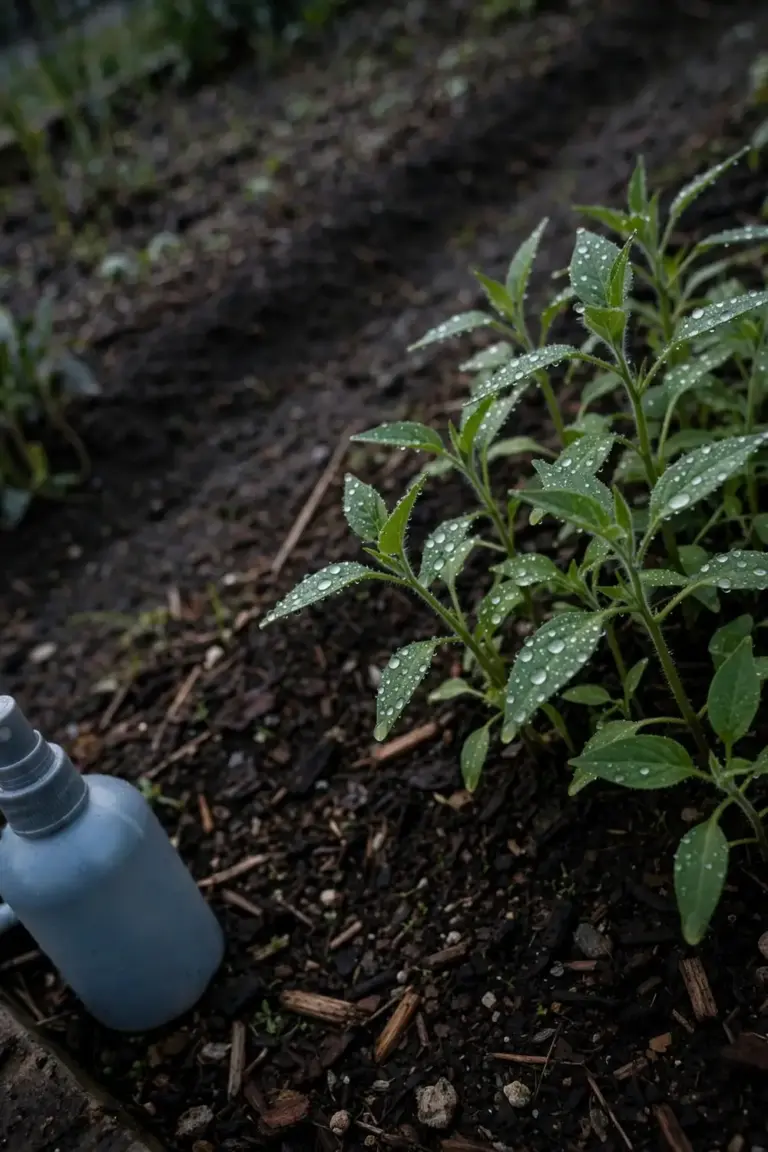
Mix one 10 g sachet per 10 L of water, or 5 g per 5 L of water. Those rates come from the Yates label, and you spray when caterpillars or their damage first appear. Spray both sides of all foliage. Caterpillars feed on the underside as often as the top. A leaf sprayed on the top only still feeds the caterpillar on the underside. Respray at 5 to 7 day intervals as more caterpillars hatch or after rain, because rain washes Bt off the leaf.
Spray in the late afternoon. Bt breaks down in sunlight. A late-afternoon spray sits on the leaf through the night, when caterpillars feed. Yates advises against spraying when conditions are hot or when plants suffer moisture stress. A stressed seedling absorbs spray poorly. Water the bed first. Spray after the leaves dry.
Buy any Bt kurstaki product and follow its label. Yates notes its own Dipel line has been discontinued and replaced with OCP eco-caterpillar killer. The active ingredient is the same. The rates above come from the Yates label. Another brand may carry a different rate. The label on the packet you buy governs the mix. Bt is certified for use in organic gardens by Australian Certified Organic, according to Yates.
Bt suits leaf feeders and budworms. It suits cutworms only when they climb and feed on foliage, because a cutworm that stays in the soil never eats treated foliage. Pair Bt with collars when cutworms are active. Bt handles the leaves. Collars handle the stems.
Bt needs the caterpillar to eat it, because Bt is a stomach poison, not a contact spray. A caterpillar that never eats treated foliage never dies. Spray the foliage the caterpillars are eating, and spray again after new leaves open. New growth carries no Bt, so a caterpillar that moves to new growth eats clean leaf.
6. Plant Nasturtiums as a Decoy Away From Seedlings
Nasturtiums pull cabbage white butterflies away from seedlings. The butterflies prefer nasturtiums. They lay eggs on the nasturtium instead of the brassica. The decoy takes the eggs. The seedlings keep their leaves.
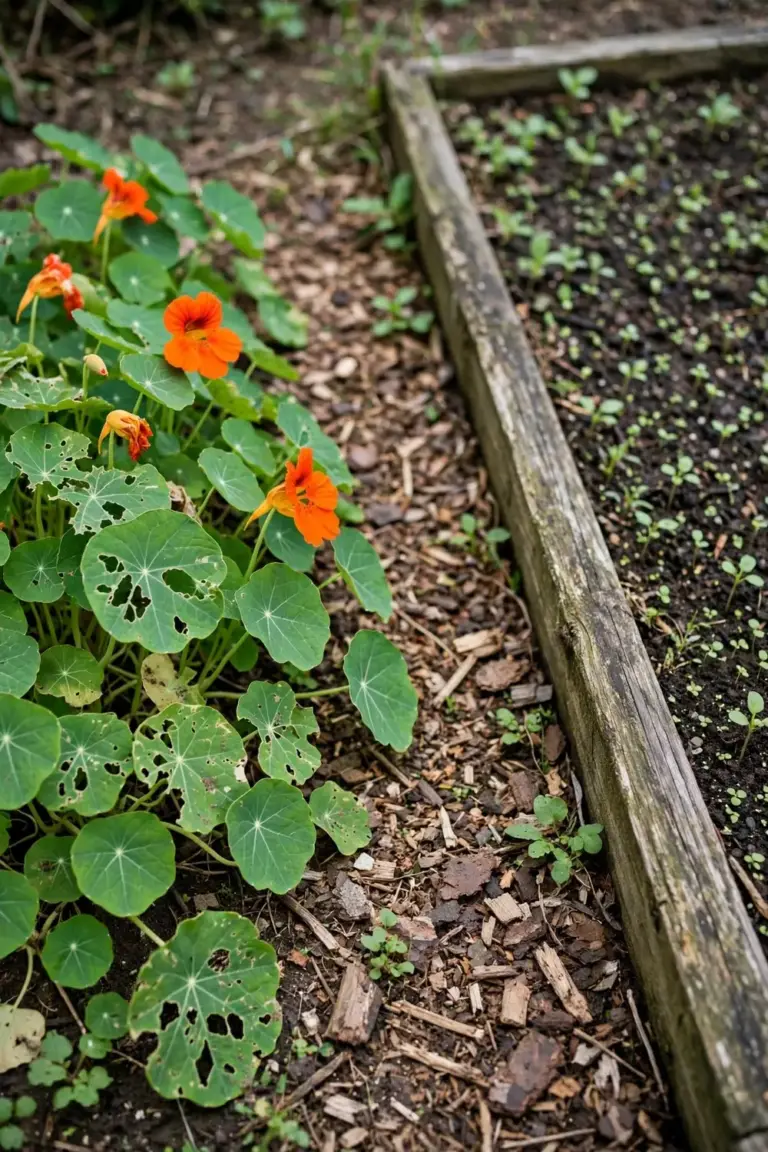
Plant nasturtiums at the edge of the bed, away from the seedlings. A gap of 1 m between the decoy and the seedlings keeps the hatching caterpillars off the crop. The caterpillars hatch on the nasturtium and feed on the nasturtium. They do not walk 1 m to a seedling when food sits under them. Cabbage white butterflies love nasturtiums and often seek these plants out to lay their eggs on, instead of the brassicas, according to the Diggers Club. The decoy works because the butterfly chooses it.
Sow nasturtium seed direct in the bed edge two weeks before transplant. Nasturtium seed germinates fast in warm soil. The decoy must be leafy before the seedlings arrive. A bare decoy attracts nothing. A leafy decoy attracts butterflies. Sow a second round three weeks later. The second round replaces the first round once caterpillars strip it.
Check the decoy twice a week. The decoy is a trap, not a sacrifice you ignore. A decoy thick with caterpillars breeds the next wave. Crush the caterpillars on the decoy. Or pull the whole plant, caterpillars and all, and bin it. A decoy left to breed feeds the bed it was meant to guard.
Nasturtiums suit cabbage white butterflies. They do not suit cutworms or budworms. A cutworm never sees the decoy. A budworm moth lays on buds, not on nasturtium leaves. Pair nasturtiums with collars and Bt when those culprits are active. The decoy handles one butterfly. The other ways handle the rest.
7. Keep the Bed Weed-Free and Clear Debris Before Planting
Weeds feed the moths that lay caterpillar eggs. Weedy beds breed caterpillars. Clean beds starve them. A weed-free bed is a slow control that pays across the whole season.
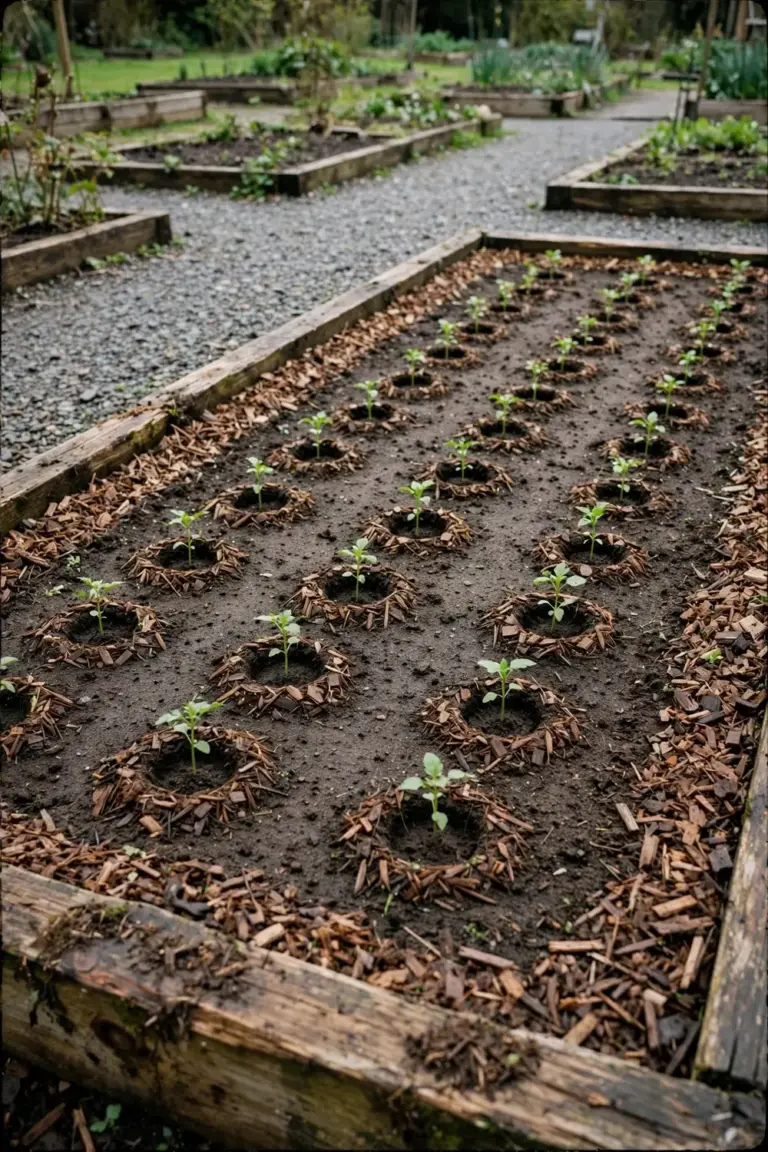
Clear weeds before transplant. Keep the bed weed-free through the seedling stage. Destroy crop residues at the end of each crop. Keep the garden weed-free in winter, according to the University of California IPM cutworm page. Moths lay eggs on plant litter. Cutworm moths lay eggs on plant litter in late summer, according to the University of Saskatchewan. Remove and dispose of plant debris after harvest. Do not compost caterpillar-infested debris in an open pile. Bin it.
Shallow-till the bed before planting when cutworms were a problem last season. Till to a maximum depth of 8 cm. That converts to 3 inches. Shallow tilling exposes eggs and larvae to cold and to predators such as birds. The University of Saskatchewan gives the same 8 cm limit. Till only when the infestation is severe. Tilling is hard on soil. The soil health guide covers why soil structure matters. A bed with a mild cutworm history needs collars, not tilling.
Mulch helps with weeds. A mulch layer blocks light and keeps weed seed from germinating. The mulching guide covers materials and depth. Keep mulch a hand span from seedling stems. Mulch piled against a stem holds moisture and shelters cutworms. A clear ring around each stem keeps the collar visible and the stem dry.
Weed control suits every culprit. Fewer weeds mean fewer egg sites. Fewer weeds mean fewer hiding places. Fewer weeds mean the caterpillars you hunt have nowhere to hide. Weed control is slow. It shows results across weeks, not nights. Pair it with netting and collars for fast protection while the clean bed takes effect.
8. Invite Predators and Parasites to Do the Night Shift
Predators eat caterpillars while you sleep. Birds, ground beetles, parasitoid wasps, ants, rove beetles, and stiletto fly larvae all hunt cutworms, according to the University of Saskatchewan. A garden rich in predators needs fewer sprays. A garden stripped of predators needs more.
Stop spraying broad insecticides. Insecticides kill cutworms and the insects that hunt them. The University of Saskatchewan advises against insecticides for cutworms, because they also kill beneficial insects. A bed sprayed clean of predators breeds caterpillars faster. The caterpillars return. The hunters do not.
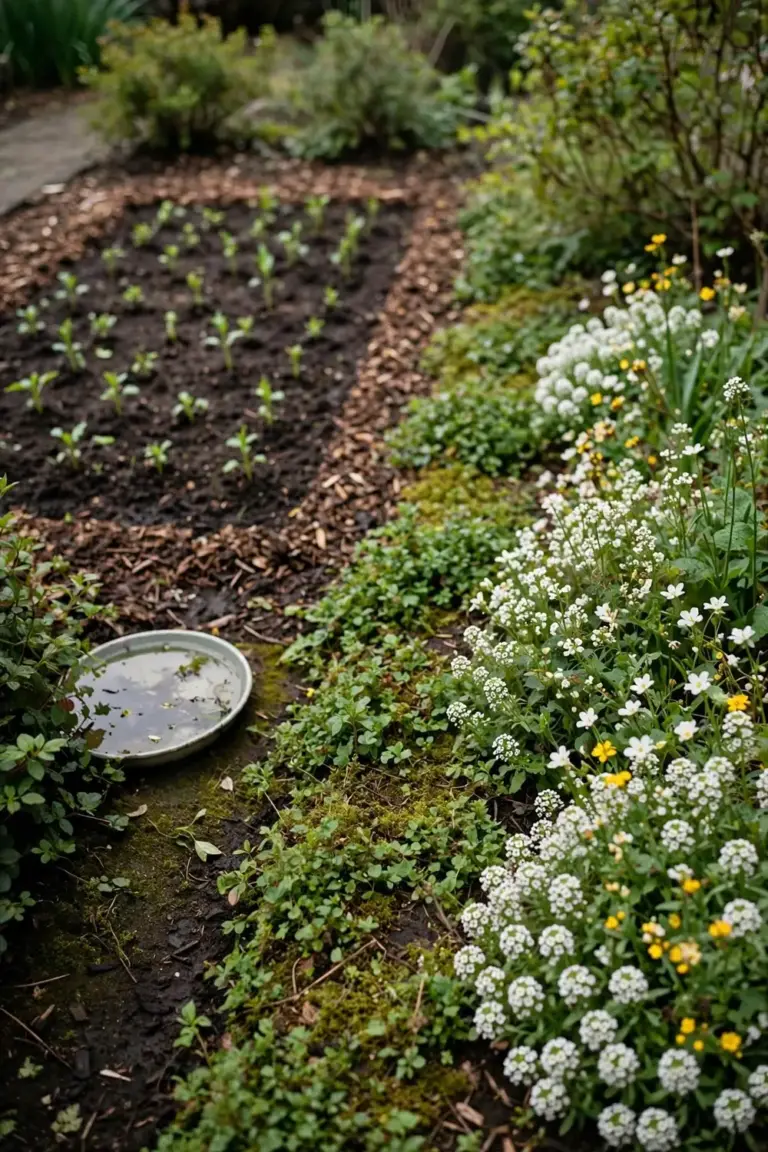
Give predators shelter. Leave a patch of dense ground cover near the bed. Keep a shallow dish of water in the shade. Plant flowers that feed adult parasitoid wasps. The beneficial insects guide covers plants that attract them. Parasitoid wasps lay eggs inside caterpillars, and the wasp larvae eat the caterpillar from within. A caterpillar carrying wasp eggs stops feeding and dies.
Let birds work the bed, because birds eat cutworms exposed by raking and tilling. A bird bath near the bed brings birds in. A cat-free morning lets birds feed on the soil surface. Do not net the whole garden against birds. Net the seedling bed against moths and leave the paths and borders open for birds.
Predators suit every culprit. They eat cutworms, cabbage white caterpillars, loopers, and budworms. They work slowly. A predator population takes weeks to build. Pair predators with netting and collars for fast protection while the predator population grows. The fast ways guard this week. The predators guard the season.
9. Use Natural Pyrethrum Only as a Last Resort
Natural pyrethrum knocks caterpillars down on contact. It is the strongest organic option here, and also the least selective. Use it when seedlings are being eaten faster than the other eight ways can stop. Keep it in reserve until then.
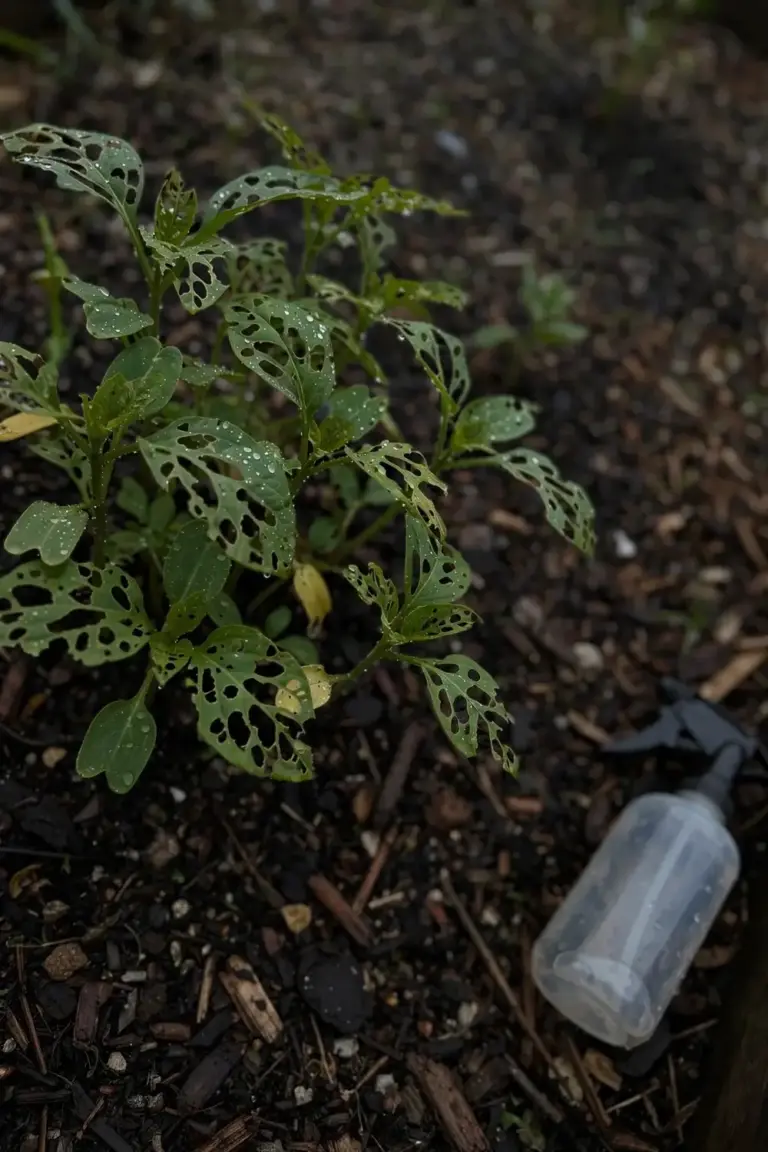
Spray pyrethrum when brassicas are being hammered by hungry caterpillars. That is the trigger ABC Gardening Australia gives: natural pyrethrum for an instant knockdown when the plants are already being hammered. A bed losing a seedling a night has passed the Bt and handpicking stage. A bed with a few holes has not. Wait for the trigger.
Spray late in the day, on the chewed plants only. Spray the foliage the caterpillars are eating. Spray both sides of the leaf. Stop once the caterpillars stop feeding. Pyrethrum breaks down fast, so a single spray rarely ends the problem. A second spray three days later catches caterpillars that hatched after the first.
Pyrethrum suits leaf feeders and budworms in a crisis. It does not suit cutworms in the soil, because a cutworm underground never meets the spray. Pair pyrethrum with collars when cutworms are active. The spray handles the leaves, and the collar handles the stems.
Keep pyrethrum away from flowers. Bees visit flowers in daylight. A late-day spray on leaves, not on open flowers, keeps bees out of the spray. Keep pyrethrum away from the predator patch. The predators you invited in Way 8 die from pyrethrum as surely as the caterpillars do. Spray the chewed bed. Leave the flower border alone.
Frequently Asked Questions
Yes. Cutworms feed at night and hide in the soil by day, according to the University of California IPM program. Leaf feeders also feed after dark in warm weather. Check seedlings with a torch after dark to catch caterpillars in the act. A morning check finds only the damage. A night check finds the caterpillar.
No, when the net is fine pest exclusion netting with air flow. The net is light enough to sit on plants without damage, according to ABC Gardening Australia. A frame lifts the net off the leaves and keeps air moving. Check under the net twice a week. Remove any caterpillar that hatched from eggs laid before the net went on.
Respray at 5 to 7 day intervals as more caterpillars hatch or after rain, according to the Yates label. ABC Gardening Australia suggests reapplying every 10 days to maintain protection. The label on the packet you buy governs the mix, so follow its rate rather than a remembered number. Spray late in the afternoon. Spray both sides of the foliage. New growth carries no Bt.
Wash the produce first, because Bt is a stomach poison for caterpillars, not a contact poison for people. It breaks down in sunlight and washes off with water. Follow the withholding period on the label of the product you buy. Do not eat seedlings dusted with frass or crawling with caterpillars; pick the caterpillars off and wash the leaves.
A cut seedling rarely recovers. The stem carries water and food from roots to leaves. A severed stem starves the top. Pull the dead seedling. Collar the replacement the same day. Dig the top 5 cm of soil around the cut stem and remove any cutworm you find. One cutworm left in the bed cuts the next seedling.
Start Tonight: Net, Collar, and Check
Start with three moves tonight: cover the bed with netting, fit a collar around every stem, and check leaf undersides with a torch. Those three moves stop most losses before they start. They are the core of how to stop caterpillars eating seedlings without synthetic sprays.
Add the rest across the week: crush the eggs you find, spray Bt on the chewed leaves, sow nasturtiums at the bed edge, clear the weeds, invite the predators, and keep pyrethrum in reserve. A seedling guarded from its first night grows into a plant that can spare a leaf.