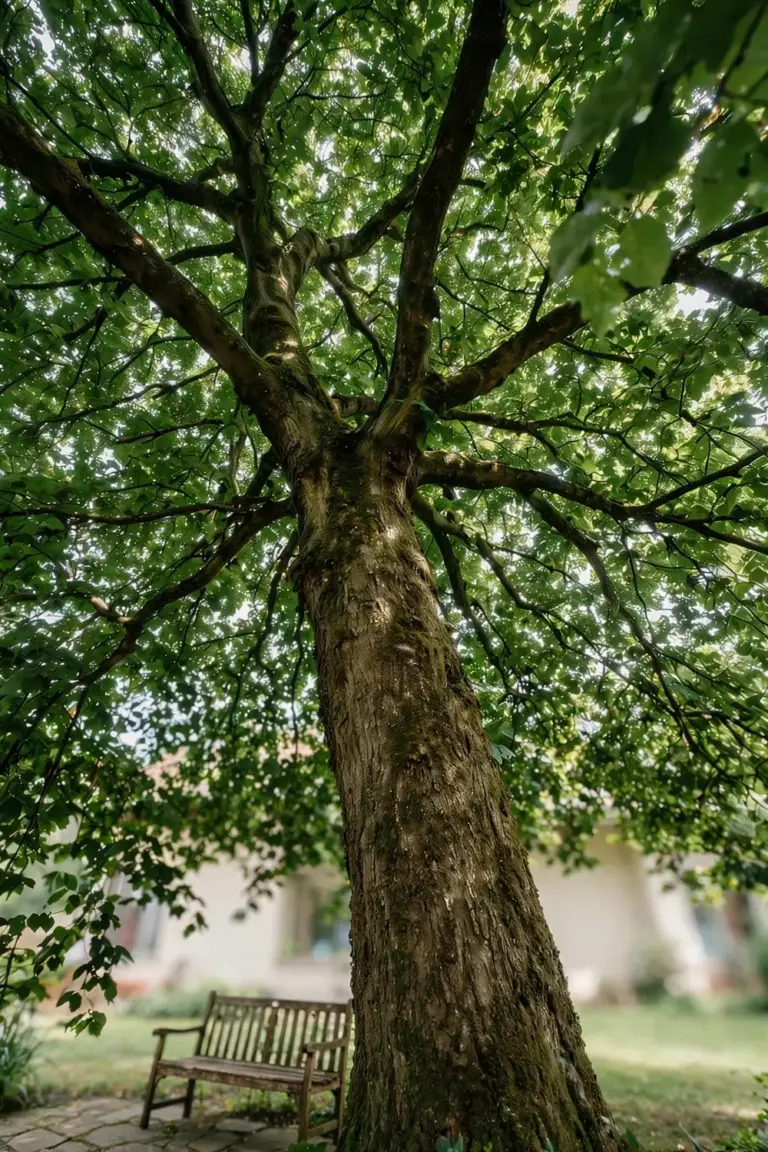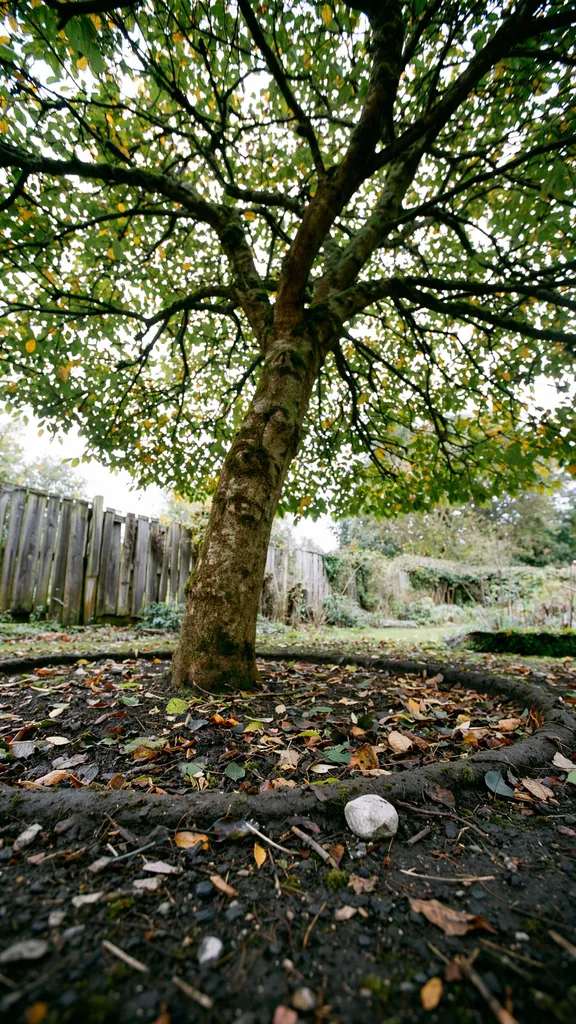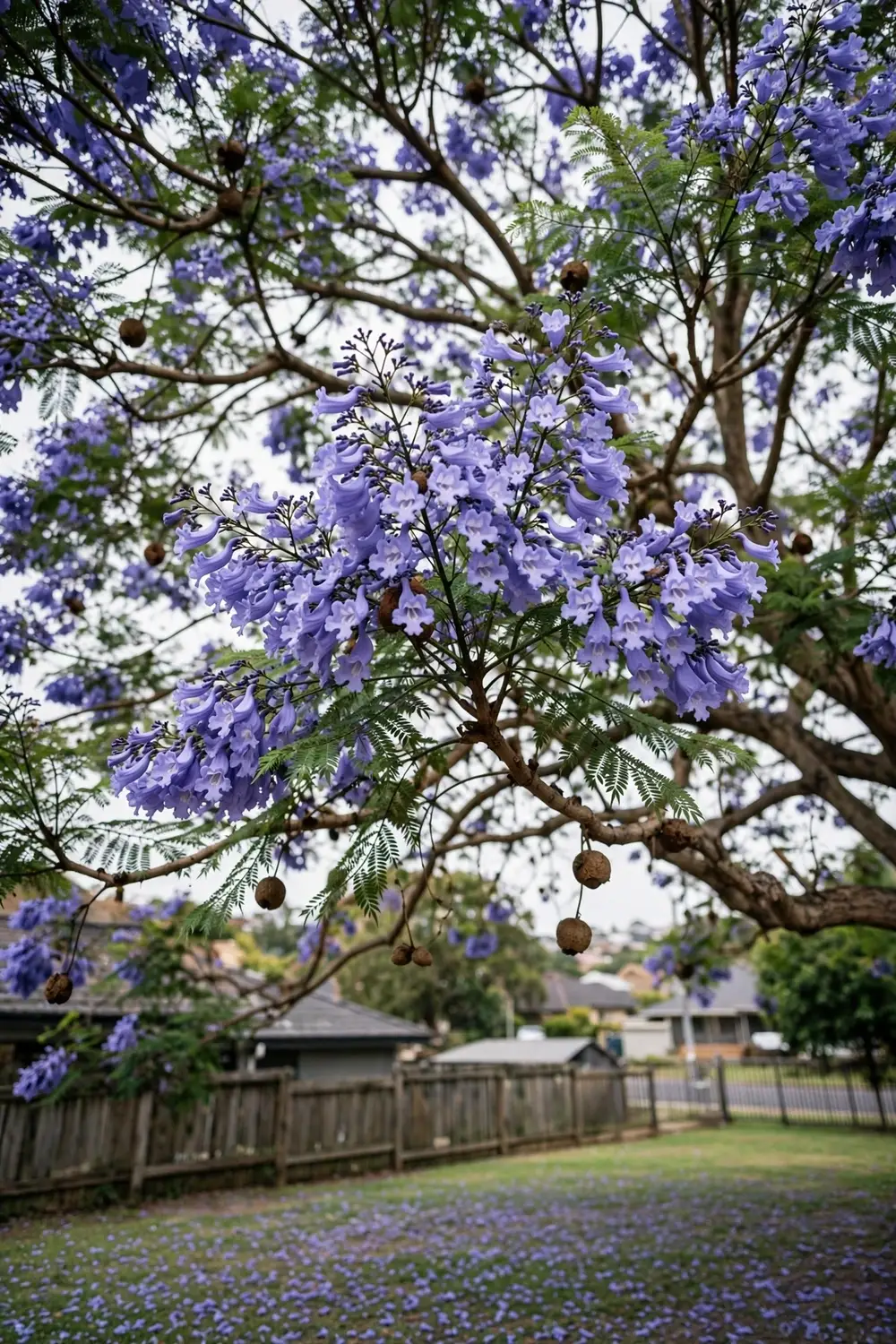

Plant a jacaranda in Australia in spring, after the last frost, in full sun, with 6 to 8 m of clear space around the trunk. Dig the hole twice as wide as the pot and the same depth. Water deeply twice weekly through the first 12 months.
That is how to plant jacaranda in Australia. Jacaranda is Jacaranda mimosifolia, the purple-flowering street tree that lines streets from Brisbane to Perth. The rest of this page walks through timing, site, soil, planting steps, staking, watering, first-year care, and pests, from the first site check to the first flower season.
Jacaranda is not native to Australia. It comes from southern and central South America, according to the UF/IFAS species profile. It earns its place here anyway, with fernlike leaves and lavender-blue trumpet flowers that cover the canopy in late spring. I have learned that the jacaranda I water deep in year one outgrows the jacaranda I sprinkle all summer.
1. Plant Jacaranda in Australia in Spring, After the Last Frost
Plant in spring, once frost risk has passed in your area. Spring planting gives the tree a full warm season to grow roots before its first winter. Autumn planting also works in frost-free subtropical areas, where soil stays warm through winter.
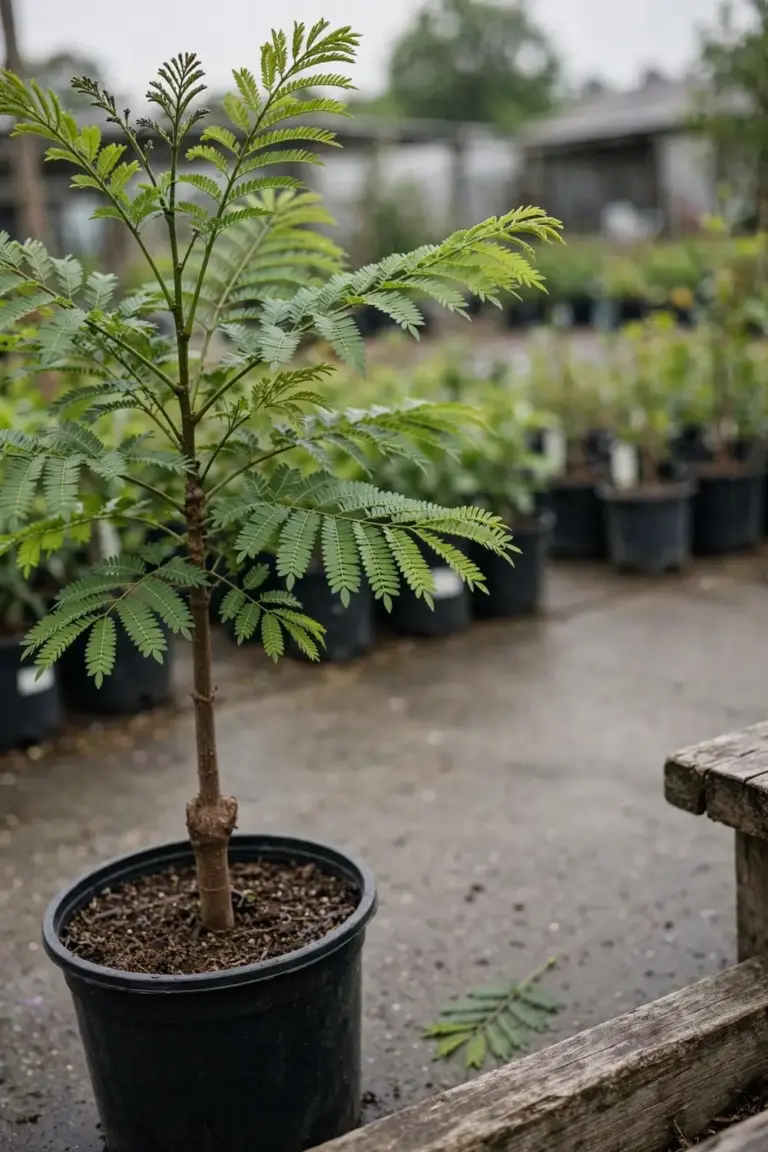
Young jacarandas need shelter from frost. Mature trees handle light frost, but a young tree hit by frost in its first winter loses growth it cannot win back that season. Check your local last-frost timing before you buy, and hold the tree in its pot if a late cold snap is forecast. The site’s guide to how to protect plants from late frost covers covers and placement for tender young trees.
Buy grafted stock if you want flowers sooner. Seedlings take a number of years to bloom, while grafted trees or rooted cuttings flower earlier, according to the UF/IFAS jacaranda guide. A grafted tree costs more at the nursery. It pays that back in earlier flowers.
Pick a healthy tree at the nursery. Look for a straight trunk, one central leader, and leaves with even green color. Lift the pot and check the drainage holes. Roots bursting through the holes mean the tree sat too long in a small pot. Pass on trees with circling roots matted at the surface, cracked pots, or a trunk that wobbles in loose mix. A healthy nursery tree establishes in weeks. A stressed one spends its first season recovering.
Size the tree to the job. A 1 m nursery tree in a 20 liter pot plants easily and catches up fast. A 2 m advanced tree gives instant presence and costs far more to buy and move. Either size follows the same planting steps. The smaller tree usually wins on value, since jacaranda grows fast once its roots settle.
2. Pick a Site With 6 to 8 m of Clear Space
Pick a site with 6 to 8 m of clearance from buildings, pools, driveways, and septic systems. That clearance comes from the Evergreen Trees jacaranda care guide. The canopy spreads wide, and the roots run near the surface.
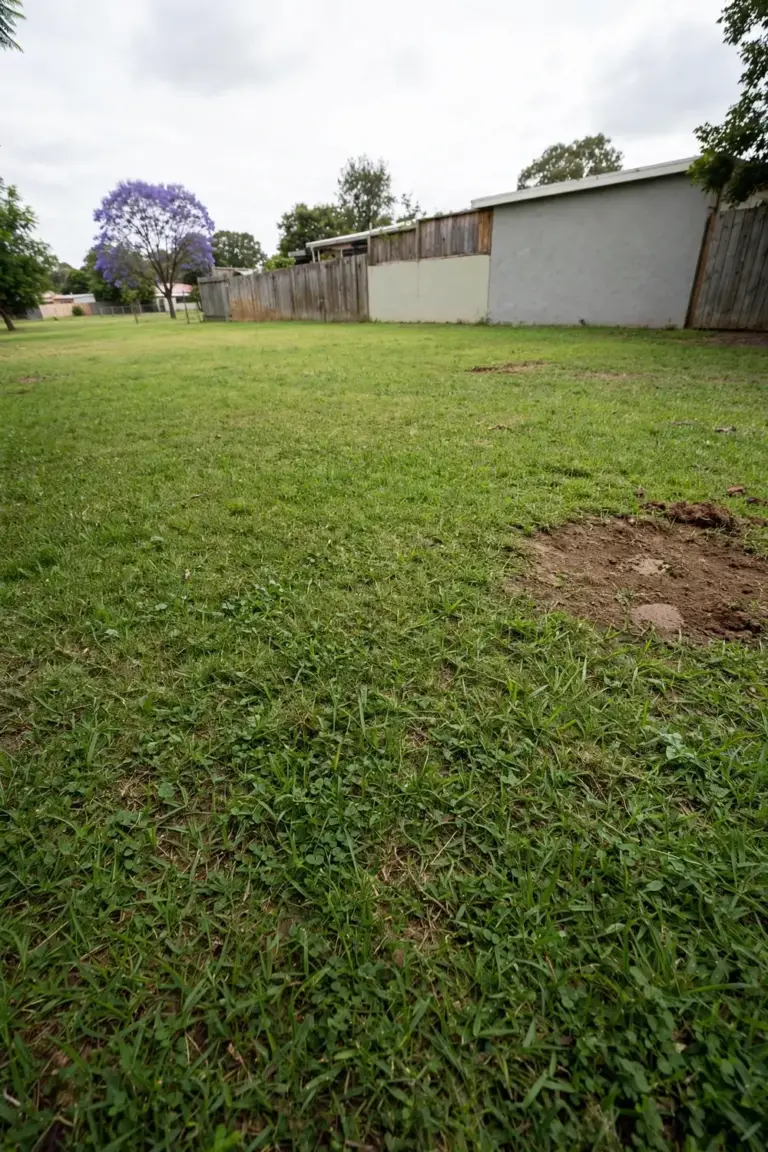
Sun decides flowering. Jacarandas flower in proportion to the sunlight they get, and a position with at least six hours of direct sun produces the strongest blooms, according to the same Evergreen Trees care guide. A tree in part shade grows leaves and drops few flowers. Full sun is the whole point of planting one.
Keep the tree away from pools and paved areas you need to keep clean. Jacaranda drops leaves and flowers each year, and the petal carpet stains paving and clogs pool filters. The UF/IFAS jacaranda guide calls jacaranda a poor choice for poolside planting for exactly that reason. Put the tree where the flower fall lands on lawn or mulch, not on concrete.
Do not plant a jacaranda under power lines. The mature tree reaches 10 to 15 m tall, according to the Evergreen Trees care guide. Power-line clearance pruning wrecks the open vase shape. Pick a spot where the tree can reach full height without meeting wires.
Factor in wind. A jacaranda in a wind tunnel between two houses loses leaves and snaps young branches. A site with a fence or hedge on the windward side gives the young tree shelter while it builds wood. Wind also dries the soil faster, so a windy site needs more frequent watering in year one. Shelter cuts both problems at once.
Think about the neighbor’s yard. Flower litter falls on both sides of a fence, and a canopy over the boundary drops petals into a neighbor’s pool or onto their washing line. Plant the tree so the mature canopy stays inside your boundary. A tree that respects the fence line never becomes a dispute.
| Form at the nursery | Flowers | Notes |
|---|---|---|
| Standard Jacaranda mimosifolia | Lavender-blue trumpet clusters | The common street tree form |
| Jacaranda mimosifolia Alba | White trumpet clusters, sparser | Harder to find, same planting rules |
Check the verge rules before you plant near the street. In Brisbane, residents cannot plant trees on the verge or nature strip, and must submit a street tree planting request to council, according to the Brisbane City Council verge gardens page. Other councils set their own rules. Call your council before you dig on any land past your front boundary.
3. Check Your Drainage Before You Dig
Check drainage before you dig. Jacaranda needs free-draining soil. Heavy clay that holds water after rain rots the roots, and the UF/IFAS jacaranda guide warns that jacaranda in wet soil is prone to root rot.
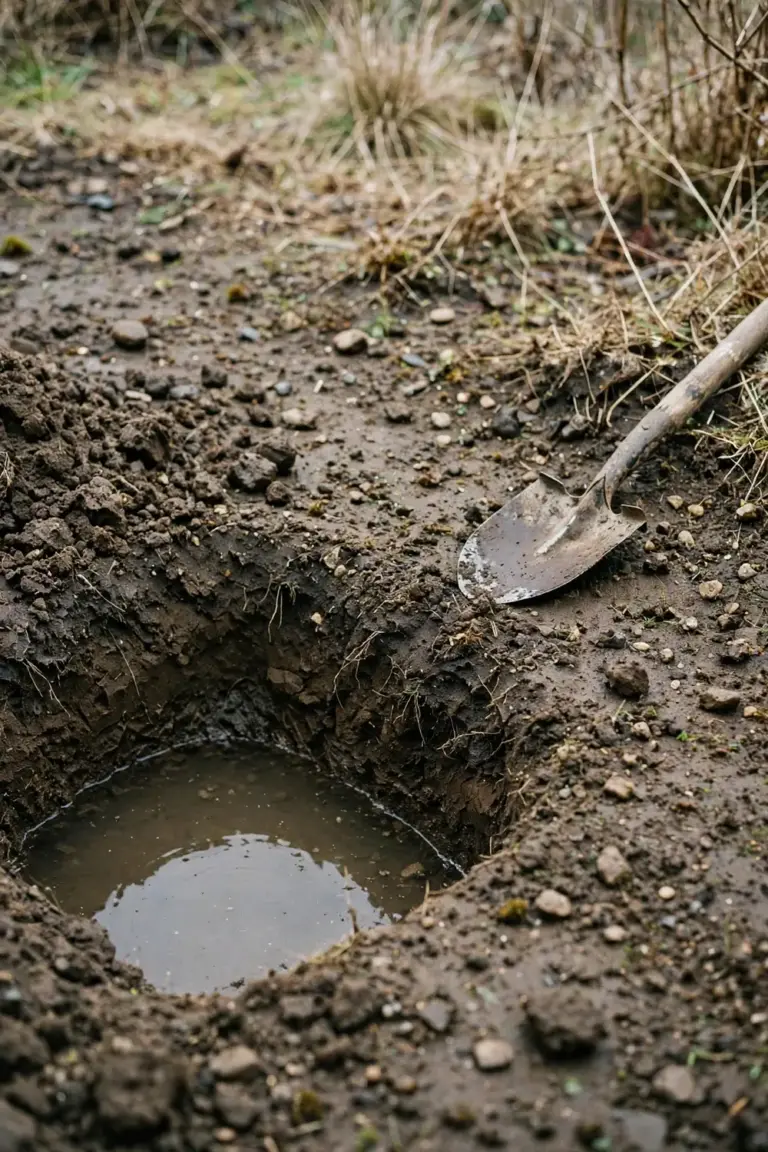
Run a simple hole test. Dig a 30 cm hole, fill it with water, and watch it drain. Water that clears within an hour means drainage suits jacaranda. Water still standing after four hours means the site needs work. Mound the planting area 20 to 30 cm above grade, or pick a higher spot in the yard.
Clay soil benefits from gypsum and compost worked through the planting area, and sandy soil benefits from added organic matter that holds moisture, according to the Evergreen Trees care guide. Work amendments through the whole bed, not only the hole. A rich hole in poor soil trains roots to circle inside it instead of spreading outward.
Soil pH matters less than drainage. Jacaranda tolerates sand, loam, and clay, plus slightly alkaline and acidic soils, as long as the soil drains, according to the UF/IFAS species profile. Skip the pH test if drainage is good. Fix drainage first. The site’s guide to soil health covers organic matter and structure for beds that need a longer rebuild.
Build a mound on heavy clay. Shape a low mound 20 to 30 cm high and 1.5 m across, using a mix of native soil and compost. Plant into the top of the mound. The extra height lifts the root ball above the wettest soil and drains water away from the trunk. Mounding is the simplest fix for clay that fails the hole test.
A soil test still earns its keep on a new block. Builders strip topsoil and leave compacted subsoil behind. A basic test shows pH, phosphorus, and organic matter. Low organic matter means compost worked through the whole bed before planting, while high phosphorus means skip fertilizer in year one. Test once, then plant with facts instead of guesses.
4. Dig a Hole Twice as Wide as the Pot
Dig a hole twice as wide as the root ball and the same depth. That ratio comes from the Evergreen Trees care guide. A wide hole gives roots loose soil to grow into on every side. A deep hole buries the trunk and suffocates the roots.
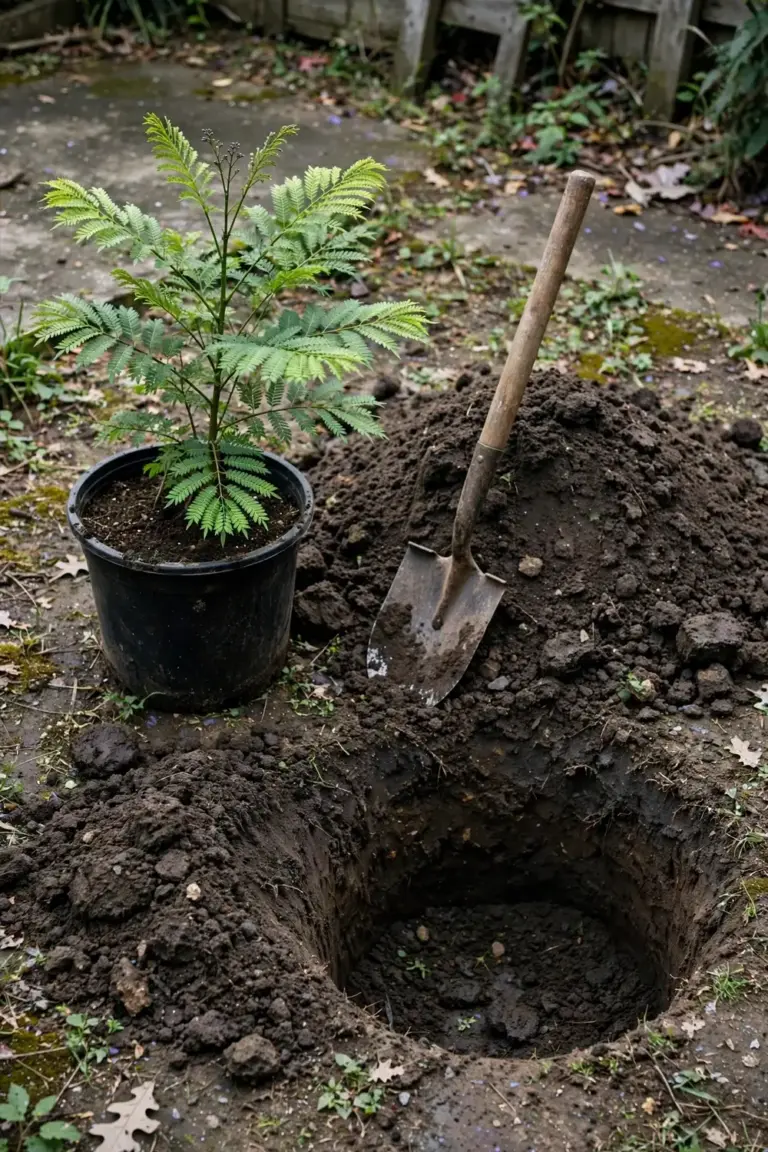
Call Dial Before You Dig on 1100 before you dig. The service marks underground pipes and cables for free. A jacaranda hole is deep enough to hit a service line, and a severed line costs far more than the phone call.
Clear grass and weeds from a circle at least 1 m across. Grass steals water from a new tree, and a mower scalps the trunk. Keep that circle clear through the first year, then let the mulch do the work.
Water the potted tree a few hours before planting. A wet root ball slides out of the pot without crumbling. A dry root ball falls apart and tears fine roots.
5. Set the Tree Level and Backfill With Native Soil
Set the tree so the top of the root ball sits level with the surrounding soil. Planting deeper buries the trunk flare and invites rot. Planting higher leaves roots exposed to drying wind.
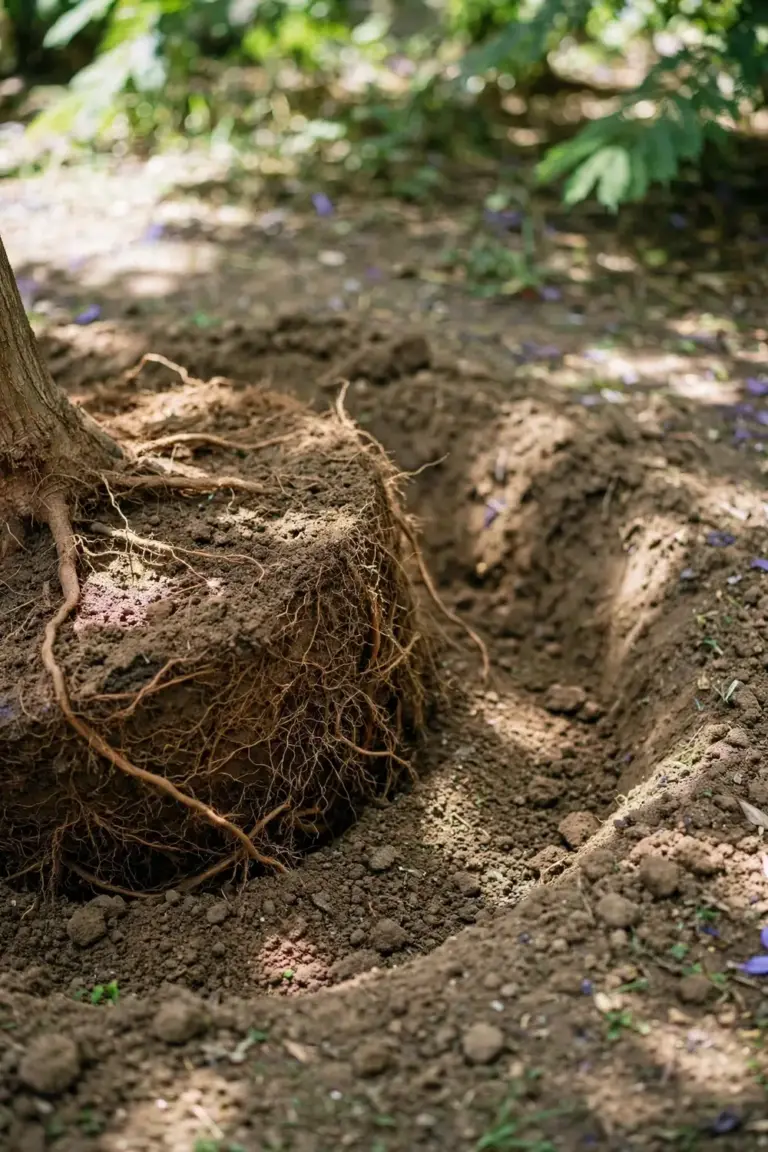
Tease out circling roots before you set the tree in the hole. Roots that circle the pot keep circling in the ground and strangle the trunk as they thicken. Pull them outward with your fingers, or cut the worst offenders with clean secateurs. One cut now saves a girdled trunk later.
Backfill with the native soil you dug out. Do not fill the hole with potting mix. A pocket of rich mix inside native soil holds water like a bucket and discourages roots from spreading. Native backfill forces roots outward into the real soil from day one.
Firm the backfill gently as you go. Push soil in around the root ball and press it down with your hands, not your boots. Firm soil removes air pockets. Compacted soil starves roots of oxygen.
Water deeply right after planting. Soak the root zone until water pools and drains slowly. That first watering settles soil against the roots and closes the last air pockets. Check the level again after watering. Soil settles, and a tree that sank needs lifting before the mulch goes on.
Check the trunk from every side before you walk away. A tree that looks vertical from the front can lean 10 degrees from the side. Step back 3 m and check all four sides. Straighten now, while the soil is loose. A lean set in wet soil stays leaned for the life of the tree.
Leave a shallow watering basin around the trunk. Shape a low ring of soil 60 cm out from the trunk, 5 cm high. The basin holds the first waterings over the root ball instead of letting them run off. Rake the ring flat at the end of the first growing season, so roots spread outward instead of circling inside it.
6. Stake Loosely for the First Year
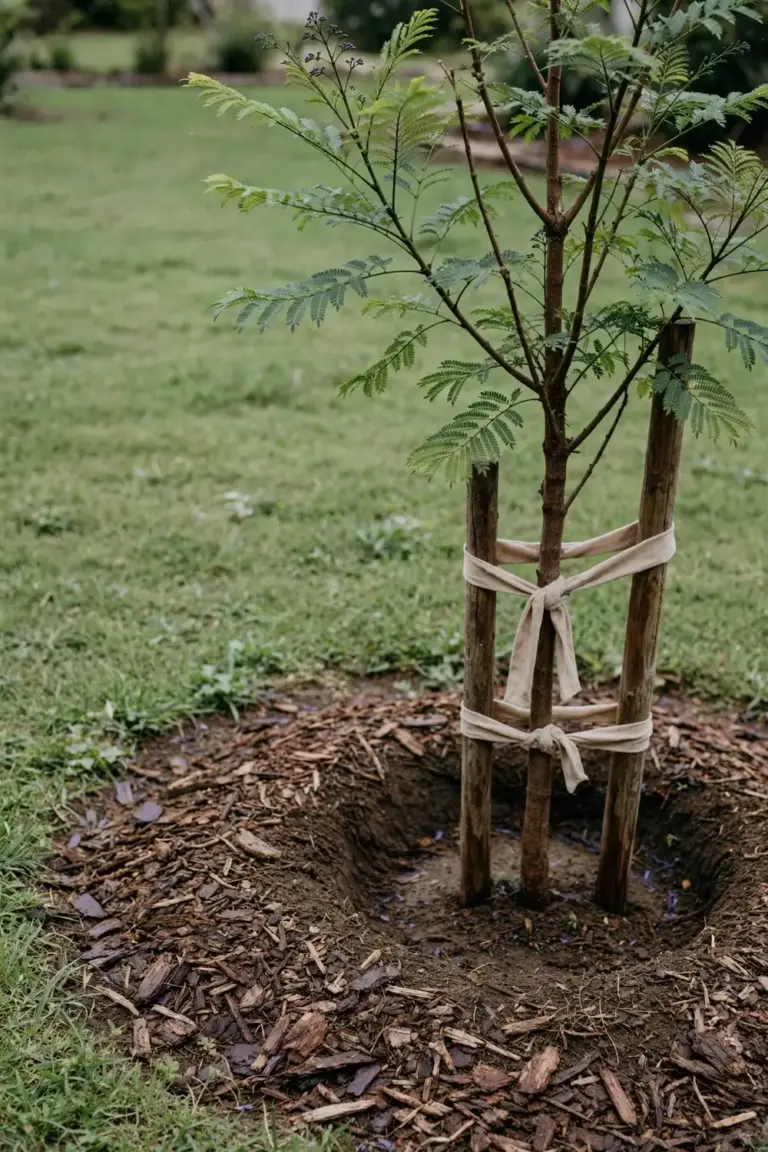
Stake a young jacaranda loosely for its first year. Two stakes, driven outside the root ball, with soft ties looped in a figure eight around the trunk, hold the tree upright in wind without strangling it. Remove the stakes after one growing season.
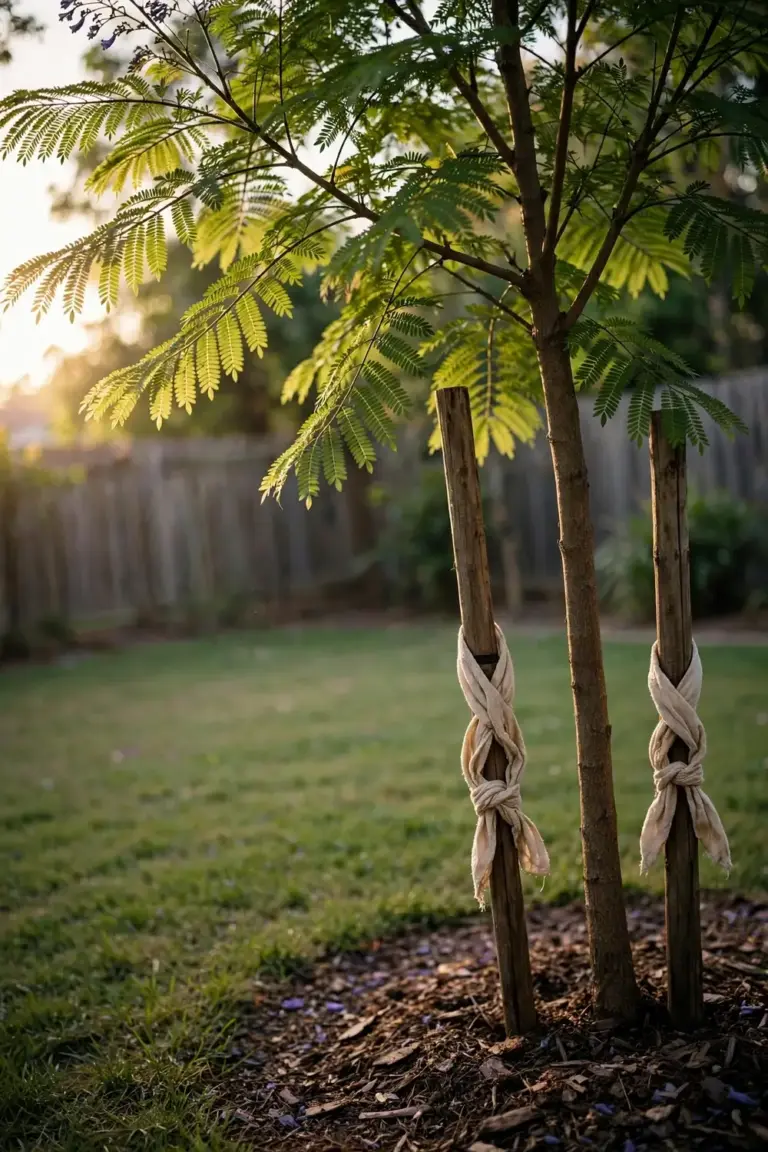
Ties must allow movement. A tree that cannot sway grows a weak trunk. The sway itself tells the trunk to thicken. Check ties every month through the first year. A tie that bites the bark girdles the trunk as it grows.
Use soft tie material. Wide cloth tape, old bicycle inner tube, or rubber tree ties all work. Wire, rope, and plastic twine cut into bark as the trunk grows. Loop the tie in a figure eight, with one loop around the trunk and one around the stake, so the trunk never rubs the stake. Replace any tie that tightens.
Remove stakes after one growing season. A tree staked for two years leans on the stakes instead of building its own wood. Pull the stakes on a calm day and watch the tree through the next windy week. A tree that stands firm is done with stakes. A tree that leans hard needs the stakes back for one more season.
Skip staking on a sheltered site with a small tree. A 1 m nursery tree in a fenced courtyard stands on its own. Staking helps in open, windy sites and for taller nursery stock. Match the support to the exposure.
Wind protection matters more than staking in the first weeks. A temporary shade-cloth screen on the windward side cuts drying wind while roots establish. Remove the screen once the tree holds its own leaves through a hot week.
7. Water Deeply Twice Weekly Through Year One
Water deeply twice weekly through the first 12 months. That schedule comes from the Evergreen Trees care guide. Deep watering pushes roots down. Shallow sprinkling keeps roots at the surface, where heat and drought kill them.
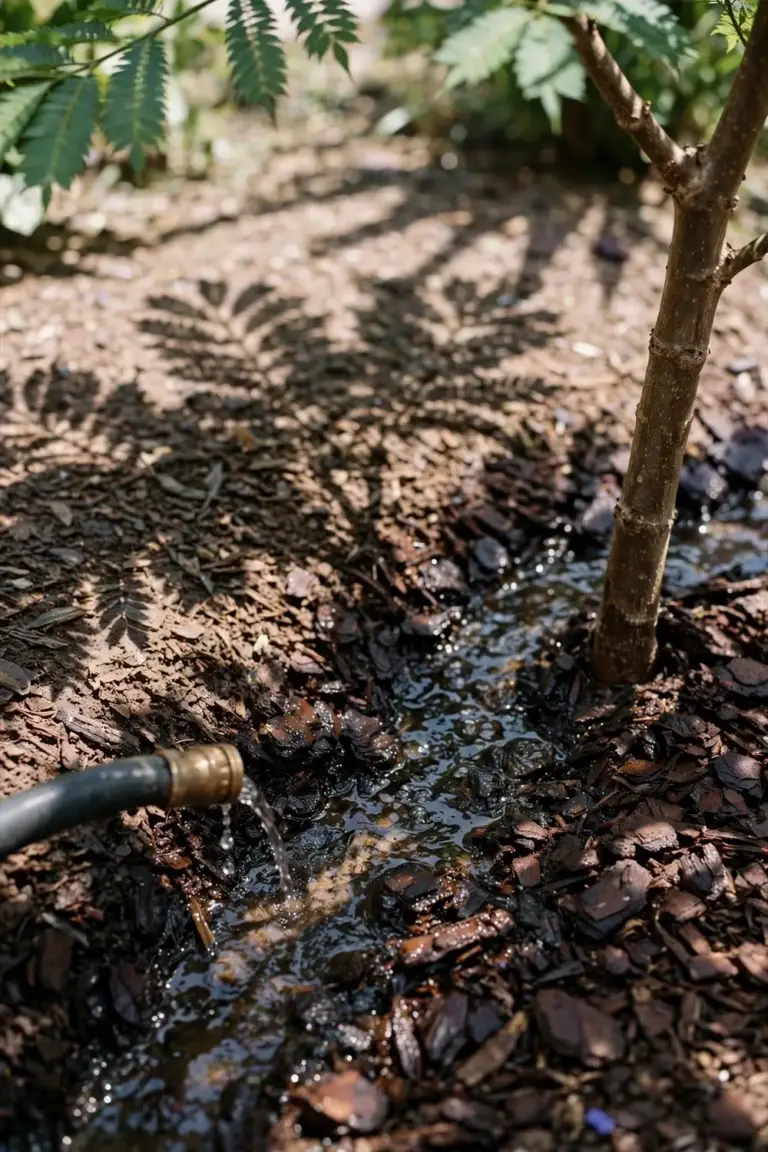
Soak the root zone, not the leaves. Run a hose at a trickle for 30 to 60 minutes, or leave a bucket with a small hole to drain slowly beside the trunk. The soil should feel damp 20 cm down after watering. Dry soil at that depth means the watering was too light.
Cut back once the tree is established. After the first year, water once weekly in dry periods, according to the same Evergreen Trees care guide. Established jacarandas handle drought well. The UF/IFAS species profile rates drought tolerance as high. Overwatering an established tree causes more harm than a dry month.
Watch the leaves for the water signal. Wilting leaves in summer heat mean water now. Yellow leaves on wet soil mean the roots are drowning, so stop watering and check drainage. The leaves tell you which problem you have.
Sandy soil dries faster than clay. A tree in sand may need three waterings a week through a hot summer, while a tree in loam holds to the twice-weekly schedule. Check soil moisture with a finger 10 cm down before each watering. Dry at that depth means water. Damp at that depth means wait a day.
Heatwaves call for extra water. A week above 35 degrees dries the root zone fast, even with mulch. Give the tree one extra deep soaking during a heatwave, early in the morning. Morning watering loses less to evaporation and gives the tree a full day of moisture ahead of the afternoon heat.
8. Mulch 5 to 7 cm, Clear of the Trunk
Spread a 5 to 7 cm layer of organic mulch over the root zone, keeping it 5 cm clear of the trunk. Those numbers come from the Evergreen Trees care guide. Mulch holds moisture, cools the soil, and starves weeds.
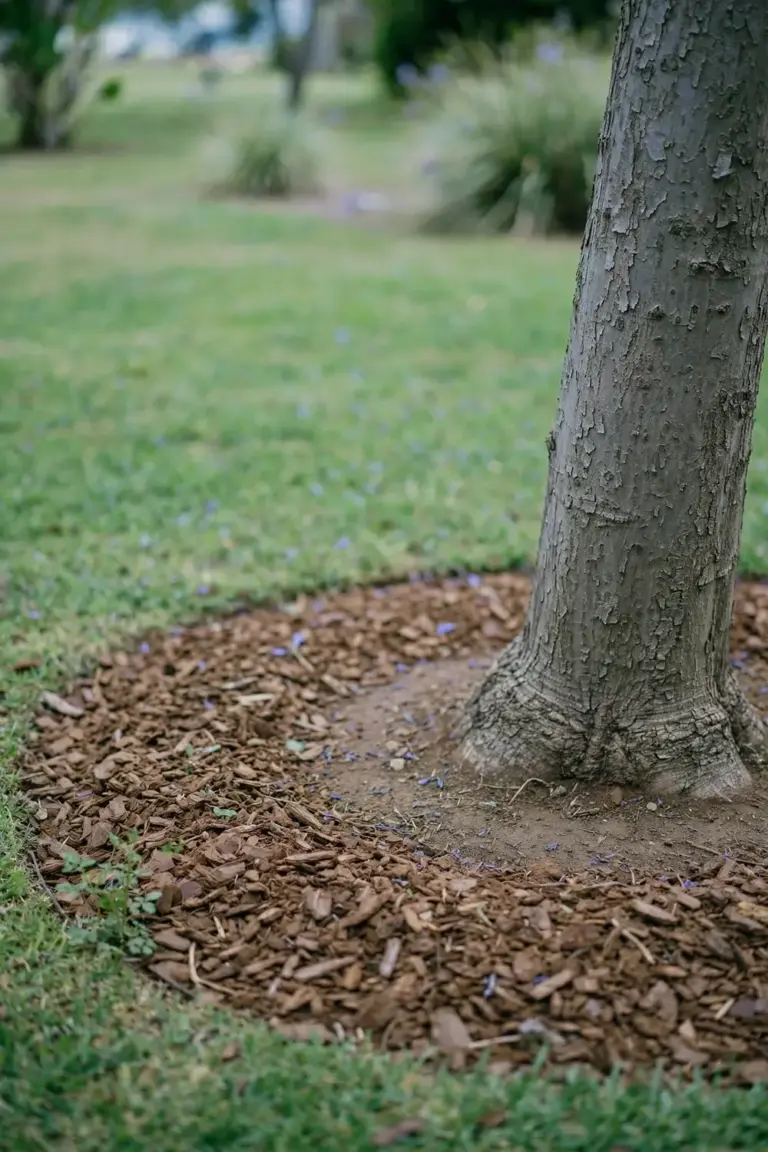
Keep mulch off the trunk. Mulch piled against bark holds moisture on the bark and invites rot and borers. Leave a bare ring 5 cm wide around the trunk. The gap costs nothing and prevents the most common planting mistake.
Refresh the mulch as it breaks down. A 5 cm layer thins to 2 cm within a year in warm climates. Top it up each spring. Do not let the layer creep past 7 cm. Thick mulch holds too much water and suffocates surface roots.
Wood chip, bark, or straw all work. Use what your area sells cheap. The site’s guide to what is mulching covers mulch types and the moisture logic behind them.
9. Train One Leader and Space the Limbs
Train the tree to a single trunk with major limbs spaced apart. That structure keeps a jacaranda standing for decades. Trees with poor structure split at the crotches, according to the UF/IFAS jacaranda guide.
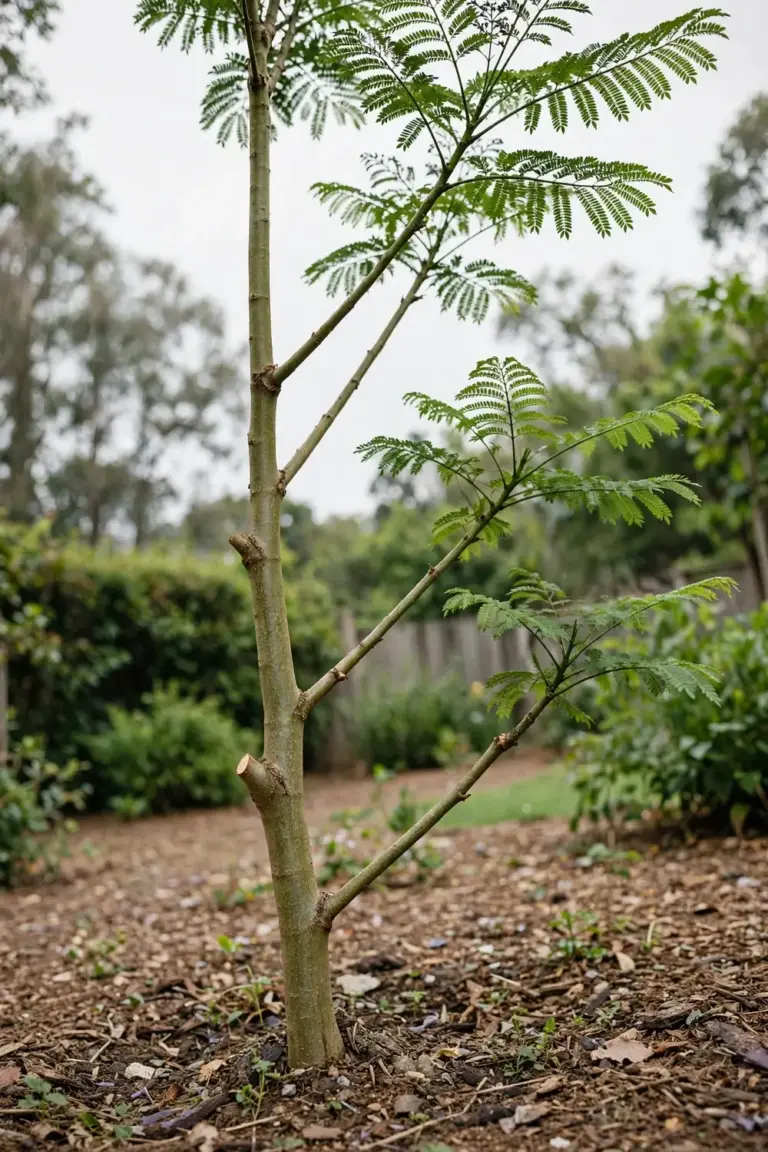
Prune off any branch that competes with the leader, the central highest branch, every three years until the tree is 15 to 20 years old. That schedule comes from the same UF/IFAS guide. Each cut is small. The tree heals fast and keeps one strong trunk.
Keep branches less than half the diameter of the trunk. A branch that grows as thick as the trunk forms a weak joint that splits under wind or flower weight. Cut a competing branch back to its collar while it is still smaller than the trunk.
Skip heavy pruning. Jacaranda reacts to hard cuts by throwing long vertical shoots that wreck the open umbrella shape. Light tip pruning in late winter keeps the shape tidy, according to the Evergreen Trees care guide. Remove dead wood any time you see it. Leave the rest alone. The site’s guide to spring pruning techniques covers clean cuts and tool hygiene for young trees.
Feed lightly. Apply a slow-release general-purpose fertilizer in early spring and again in autumn, according to the Evergreen Trees care guide. Jacaranda may flower best in poor soil, according to the UF/IFAS species profile. Heavy feeding grows leaves at the cost of flowers. A light hand wins here.
Formative pruning starts in year two. The first year belongs to roots. In the second spring, look for competing leaders and remove the weaker one. Keep one central trunk and three to five well-spaced side branches. Small cuts in year two prevent big cuts in year ten.
Never top a jacaranda. Cutting the top off a young tree triggers a broom of vertical shoots that ruin the shape and weaken every joint. Topping also invites decay into the cut wood. If the tree outgrows its space, the honest fix is removal and a smaller species, not a chainsaw haircut.
10. Watch for Root Rot, Scale, and Litter Problems
Watch for root rot first. Wet soil is the main killer. Leaves yellow, growth stalls, and the tree drops leaves out of season. The fix is drainage, not fertilizer. Stop watering, clear mulch back from the trunk, and let the soil dry between waterings.
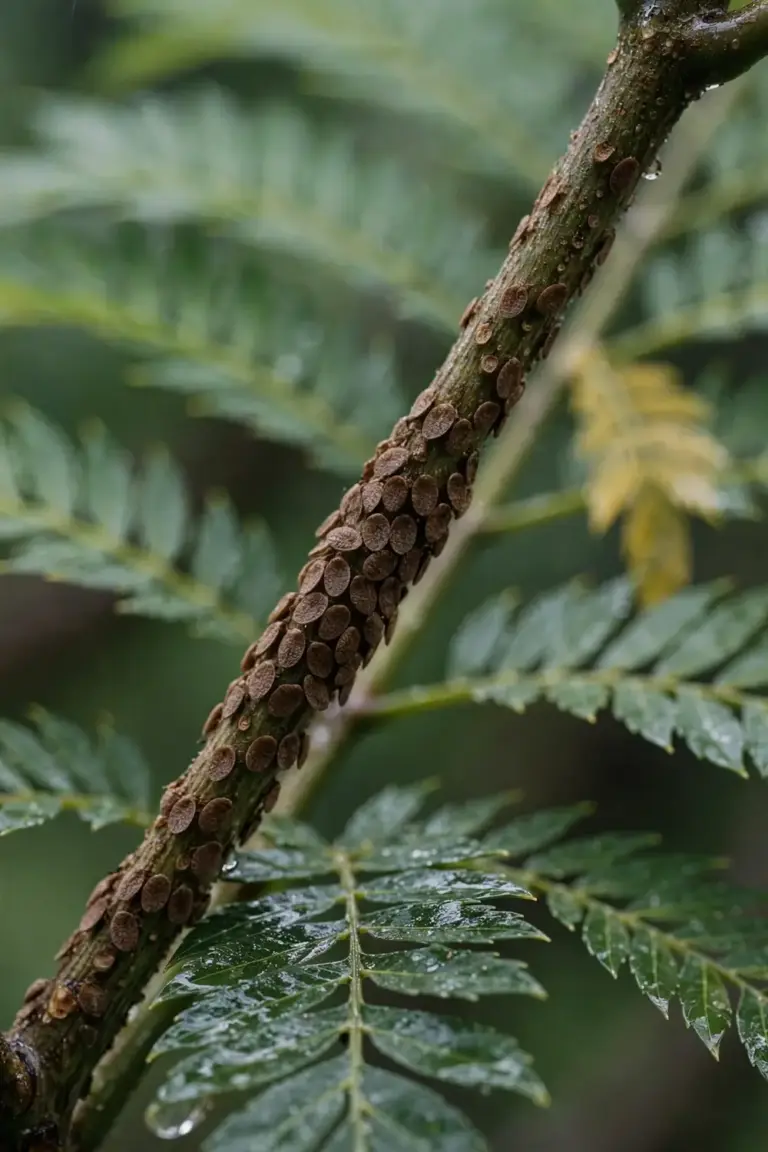
Scale insects show up on stressed trees. Look for small bumps along stems and sticky honeydew on leaves below. A strong jet of water knocks light infestations off. Heavy infestations need horticultural oil applied to the label directions. A healthy, well-watered tree resists scale better than a stressed one.
Caterpillars chew leaves in warm humid weather. A few chewed leaves on a large tree mean nothing. Whole branches stripped bare mean the tree needs a closer look. Hand-pick caterpillars off a young tree. Leave a large tree alone unless defoliation repeats two seasons in a row.
Jacaranda suffers from no major pests in Florida, according to the UF/IFAS jacaranda guide. Australian trees share that easy record. The UF/IFAS species profile rates pest resistance as resistant to pests and diseases. Most problems trace back to wet soil or poor structure, not to a pest.
Clean up flower and leaf litter. The petal carpet looks lovely on lawn and turns slippery on paths. Rake petals off paving after the bloom peak. The litter makes good compost once it dries.
Sooty mold follows scale. Sticky honeydew from scale grows a black mold film on leaves below. The mold itself harms nothing, but it blocks light and weakens the tree. Control the scale and the mold fades. Wash heavy mold off with a hose jet while you treat the insects.
Borers attack stressed trees. Look for sawdust piles at the trunk base and small holes in the bark. A healthy tree pitches borers out with sap flow. A drought-stressed tree cannot. Water correctly, keep mulch off the trunk, and borers stay a rare problem rather than a yearly one.
11. Wait for Flowers, and Check the Verge Rules First
Wait for flowers. A jacaranda planted this spring flowers in its own time, and grafted stock flowers sooner than seedlings. Flowering runs October to early December in Australia, according to the Evergreen Trees care guide. The first bloom may be sparse. A full canopy of flowers takes several seasons.
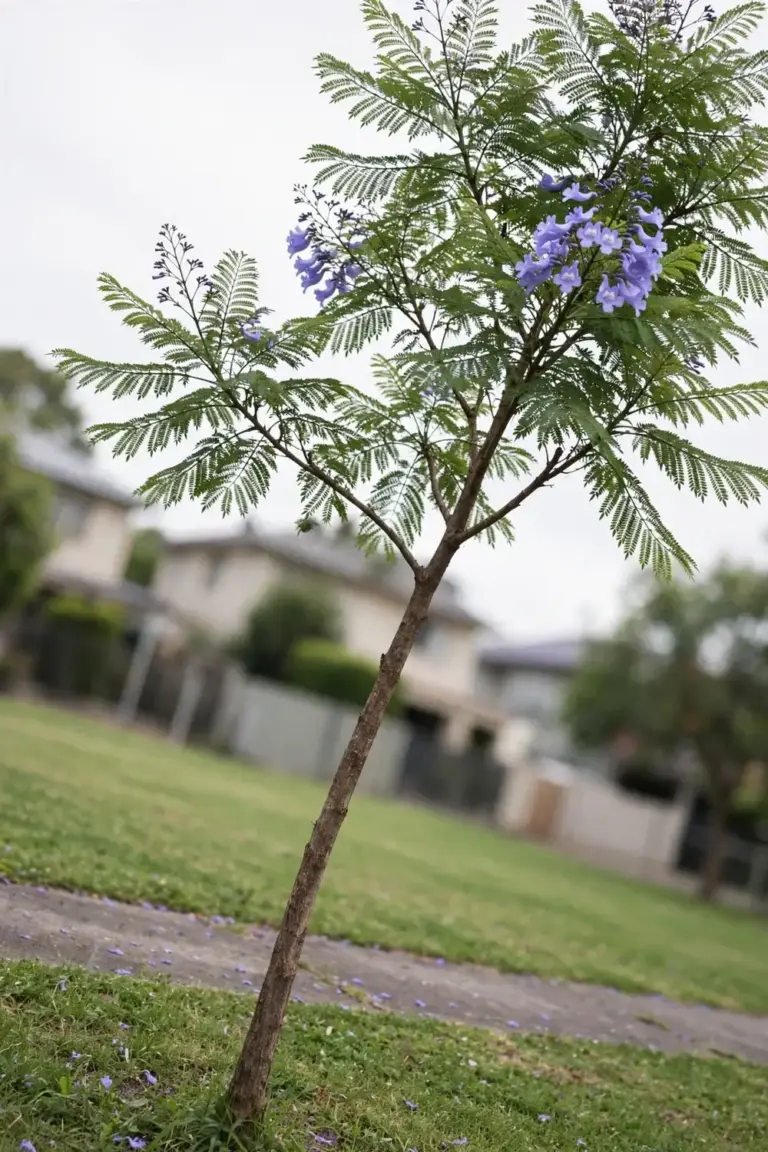
Flowering follows a cold winter. Flowering is reportedly best following a winter with several nights near 3 to 4 degrees Celsius, according to the UF/IFAS species profile. Warm winters with no cool nights produce fewer flowers. That pattern explains why Brisbane and Grafton flower heavily while warm coastal pockets flower thinly.
Plan for the mature size before you plant, not after. The tree reaches 10 to 15 m tall with a spread of 8 to 12 m, according to the Evergreen Trees care guide. The UF/IFAS species profile records spreads up to 18.3 m in Florida conditions. Allow the wider figure if your block is large. A jacaranda planted 3 m from a fence becomes a dispute with the neighbor. A jacaranda planted with room becomes a landmark.
Check council rules for street planting. Jacaranda is a popular street tree, but planting one on the verge without permission risks removal. Brisbane City Council does not permit residents to plant trees on council land, and unlawful plantings get removed. Other councils run street tree programs that plant for you. Ask first. Plant second.
Set honest expectations for the timeline. Year one builds roots. Year two builds wood. Flowers arrive when the tree has the structure to carry them. A tree that flowers lightly in year three is on track. A tree that drops every flower bud in year two is usually short of sun or water, not broken.
Keep a planting record. Note the planting date, the nursery, the stock type, and the first watering schedule. The record settles the grafted-versus-seedling question years later, when you wonder why flowers are late. It also helps the next owner of the house care for the tree you planted.
Frequently Asked Questions
Grafted trees flower sooner than seedlings. Seedlings take a number of years to bloom, according to UF/IFAS. The first bloom on a young tree is often sparse, and a full canopy takes several seasons. Buy grafted stock if early flowers matter. Give the tree full sun, light feeding, and a cold winter, and the flowers follow.
A jacaranda grows in a large pot for a few years, then outgrows it. A pot suits a young tree on a patio while you wait for a garden spot. Use a pot of at least 100 liters, free-draining mix, and water often, since pots dry fast. Move the tree into the ground before the roots circle the pot.
Allow 6 to 8 m of clearance from buildings, pools, driveways, and septic systems. That figure comes from the Evergreen Trees care guide. Surface roots lift paving and crack pipes when the tree grows too close. The canopy also drops flowers and leaves onto roofs and gutters. Measure the clearance before you dig.
Yes. Jacaranda is deciduous and drops its leaves in winter, then flowers on bare branches or as new leaves open. The bare period is brief in warm climates. Leaf drop is normal, not a sign of disease. New leaves follow the flower peak, and the canopy fills in through summer.
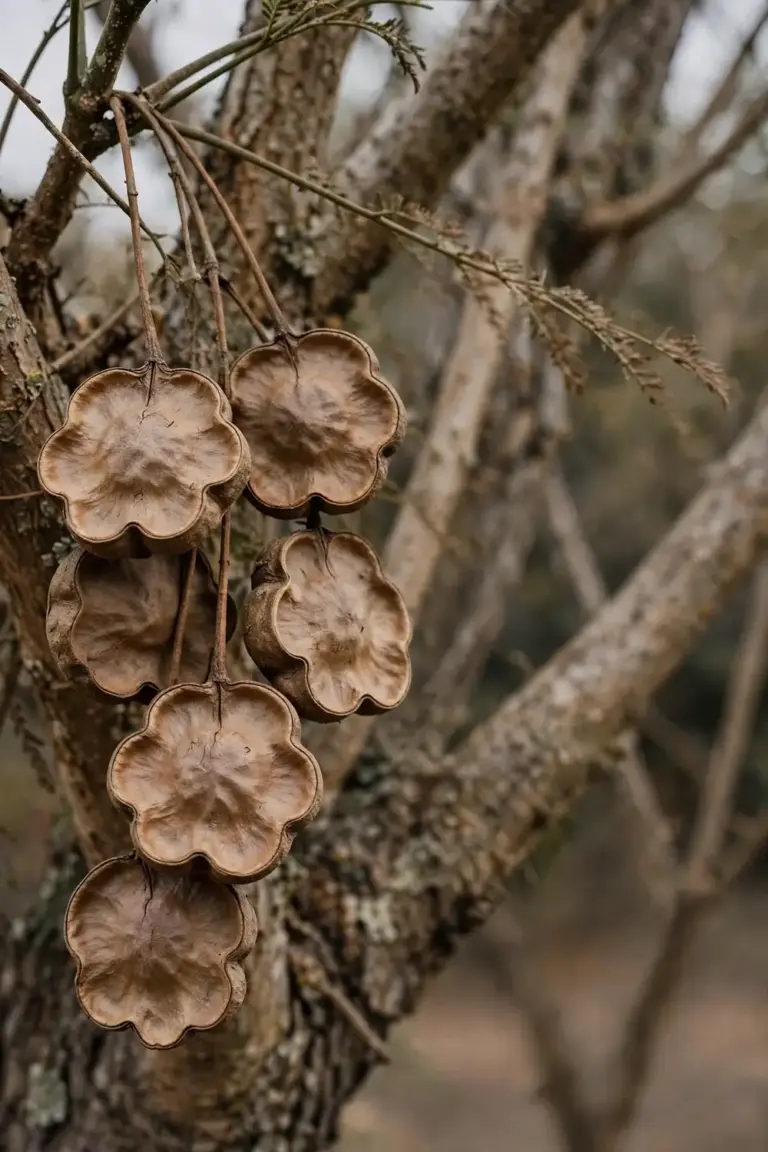
Jacaranda is not listed as toxic to pets, according to UF/IFAS. Dogs and cats can sit under the tree without risk from fallen flowers or leaves. The seed pods are woody and unpalatable, and pets leave them alone. Keep the planting hole free of fertilizer granules, which pets may eat.
Start With the Site Check This Weekend
Start with the site check this weekend. Walk the yard at midday and find the spot with six hours of sun, 6 to 8 m of clearance, and soil that drains within an hour. Dig the test hole. Call Dial Before You Dig on 1100. Then buy a grafted tree and plant it in spring, level, in a hole twice as wide as the pot. Water it deeply twice weekly through year one. The flowers will come.