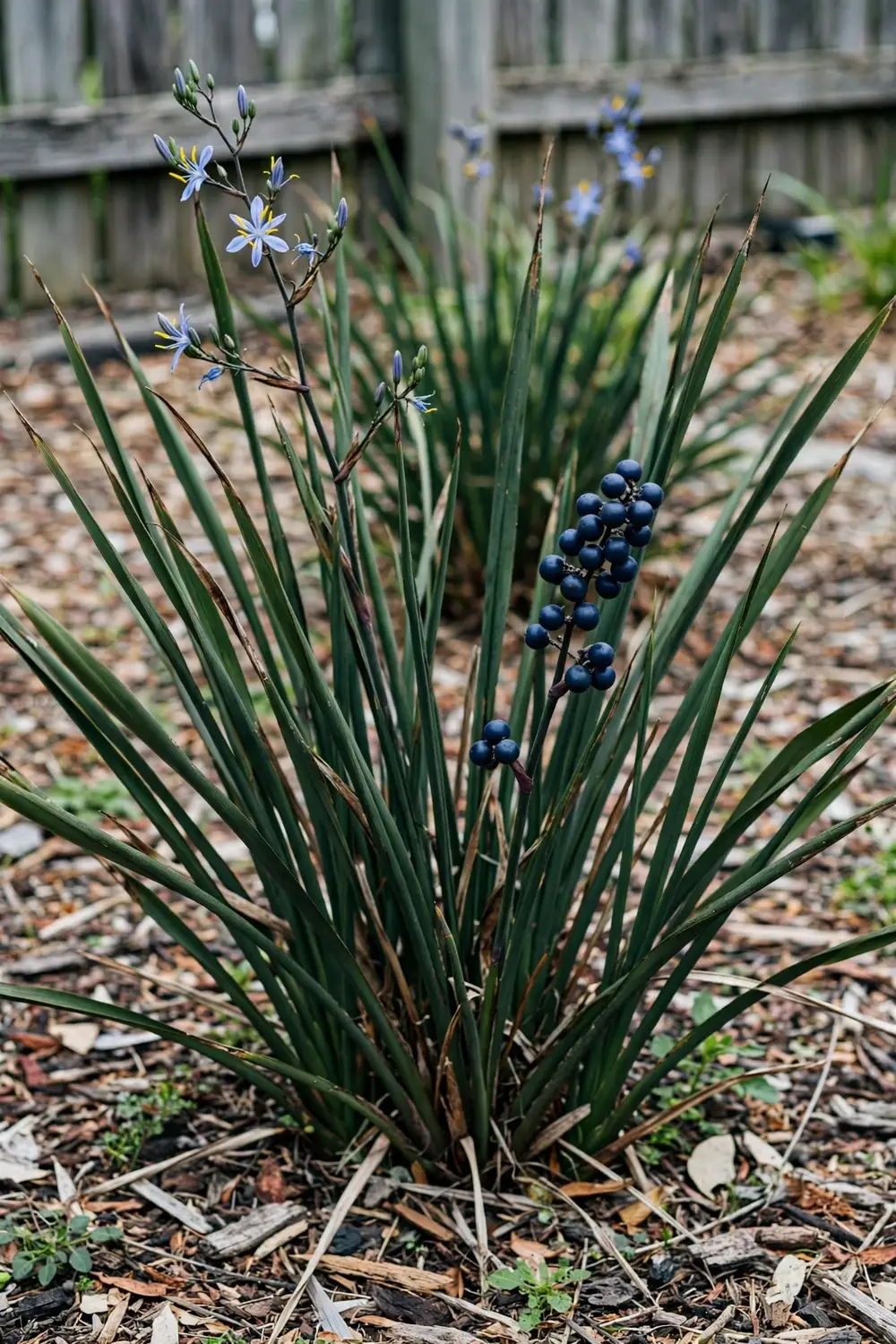

Growing dianella in Australia starts with one choice among 3 species. Pick Dianella revoluta for the toughest all-rounder, Dianella caerulea for hot sun, and Dianella tasmanica for cool shade. The berries split the same way: caerulea and revoluta carry edible berries, while tasmanica berries stay ornamental. That is the whole decision, and the rest of this page compares the three species, then settles the berry question, then names the buying trap.
I have learned that the dianella I plant for its shade outlives the dianella I plant for its berries.
Dianella is a genus of Australian native perennials in the family Asphodelaceae. Flax lily is the common name. True flax is Linum, a different plant grown for fiber and seed. Dianella leaves served a different job. Nursery guides record that Aboriginal people twisted the leaves into cord and string, and ate the berries of some species fresh.
1. Dianella Caerulea: The Sun-Loving Blue Flax Lily
Caerulea is the sun lover of the three. It takes hot sun, coastal wind, and frost once established, and it stays compact enough for a small bed.
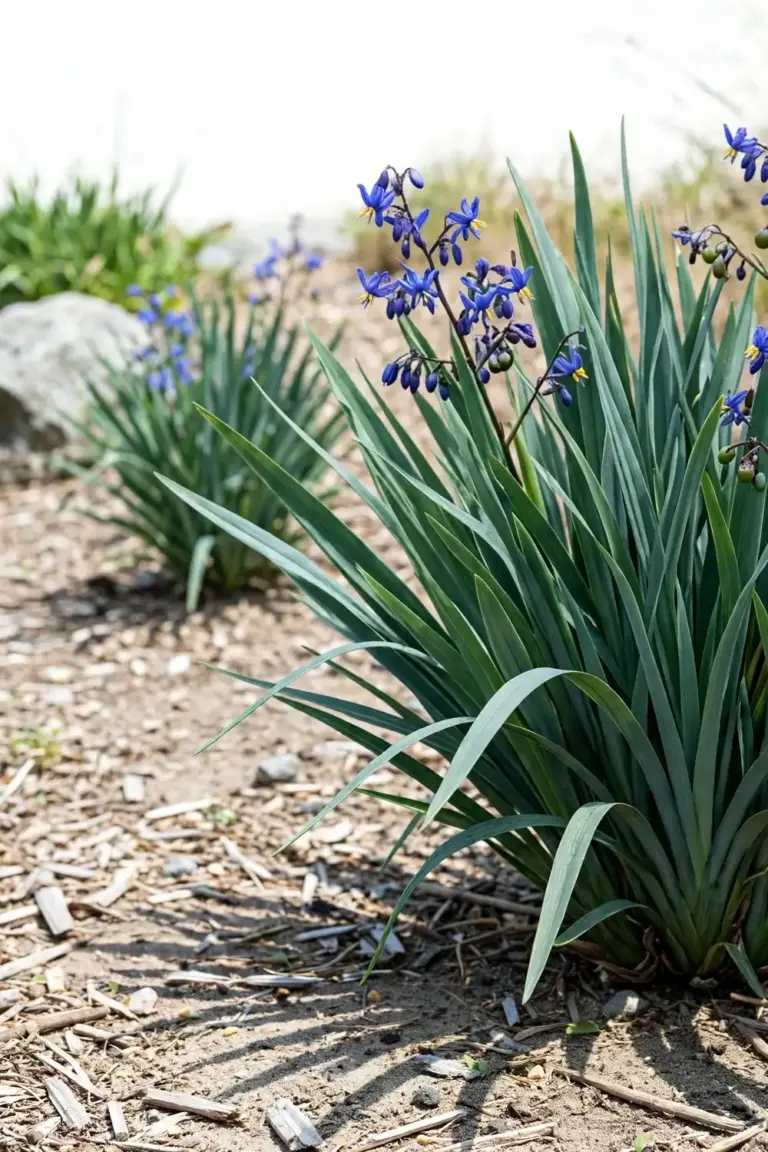
The Landcare NSW fact sheet on blue flax lily describes Dianella caerulea as a herbaceous strappy perennial to a metre high, found across the eastern states of Australia and Tasmania, with dark green blade-like leaves. Blue flowers open in spring and summer, followed by indigo-colored edible berries. The species takes many forms, so check the label for the form you buy.
The same Landcare notes call caerulea very hardy, snow and frost hardy, and long-lived once established. It tolerates damp conditions and prefers moist well-drained soil. It attracts butterflies, including the Large dingy skipper and the Yellow banded dart, and birds, including Lewin’s Honeyeater. The berries are edible, and the roots were pounded, cooked, and eaten.
Caerulea also handles the coast. The Landcare notes place it in coastal heathland and even sand dunes. That range makes it the pick for a sunny coastal bank, a rockery, or a narrow bed beside a path.
Caerulea varies more than the other two species. Flora descriptions record seven varieties, including a taller form to 1.8 m from the New South Wales coast into Queensland, and a pale-gray leaved form to 0.8 m from inland of the Sydney basin. A compact form fits a small bed. A tall form suits a bank. The label matters more than the species name alone, because two caerulea plants can finish at very different heights.
Plant caerulea at its mature width, not its pot size. Water until it establishes, then back off. A new plant wants steady moisture for its first season. An established plant handles dry spells. Mulch holds moisture through the first summer, and a free-draining mix stops the crown from sitting wet.
In a garden design, caerulea earns its place as edging, mass planting, or rockery filler. A row of compact caerulea along a path gives a clean strappy line that holds through winter, and a drift on a sunny bank covers ground and blocks weeds once it knits together. Mix it with kangaroo paw or grevillea for a native bed that flowers in turns. Keep it out of deep shade. Flowering drops there, and the clump thins. Sun is the fuel for this species, and a shaded caerulea never pays back the space it takes. Plant a tall form in a small bed and it crowds the path. Check mature height on the label before you dig.
2. Dianella Tasmanica: The Shade-Loving Tasman Flax Lily
Tasmanica is the shade pick. It grows in shady spots in wet forests in the wild, and it holds that preference in gardens.
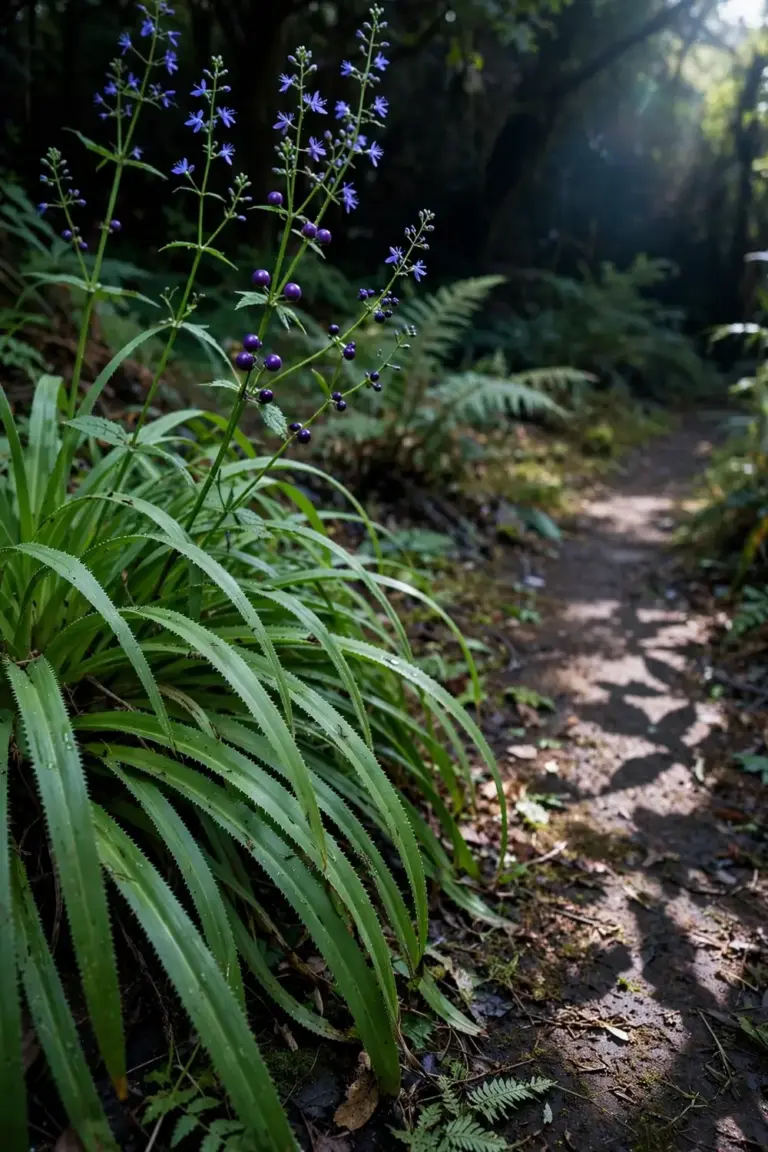
The Royal Horticultural Society profile of Dianella tasmanica describes an evergreen perennial to 1.2 m tall, with tough grass-like leaves and branched panicles of violet-blue flowers 2 cm wide, followed by glossy violet-blue berries. The same profile states plainly that the fruit are ornamental, not to be eaten. That one line separates tasmanica from the other two species on this page.
Flora descriptions place tasmanica south from Dorrigo in New South Wales, into Victoria and Tasmania, growing singly or in clumps in shady spots in wet forests. In a garden, that history means cool shade and steady moisture. In a hot district, give tasmanica afternoon shade. In a cool district, it takes more sun. Give tasmanica hot afternoon sun in a dry district and the leaf edges brown. Shade is the fix, not extra water.
The same RHS profile gives the cultivation notes: moderately fertile, humus-rich, well-drained, neutral to acid soil, in a sheltered site in full sun or partial shade. Propagate by seed in containers at 13 to 16 degrees C in spring, or divide the rhizomes in mid-spring. The profile lists the species as generally pest-free and generally disease-free. Tasmanica asks for shade, moisture, and little else.
Tasmanica also carries the broadest leaves of the three. Flora descriptions give leaves to 80 cm long and flower stems to 1.5 m, with finely toothed margins along the leaf edges. That size makes tasmanica the pick when you want a bold strap-leaf screen in shade, rather than a fine grass-like tuft. The leaves stay green through winter, so the plant holds its shape all year.
The best-known tasmanica cultivar is Tasred, sold as Dianella tasmanica Tasred. Nursery descriptions list it as a compact form near half a metre high, with wide strappy stiff green leaves that take on a reddish-pink tint at the base in cooler temperatures. It flowers in summer with star-shaped blue-purple flowers on delicate stems, followed by deep blue berries. The berries stay ornamental, like the species. Buy Tasred for the leaf color and the compact size, not for the fruit.
Water tasmanica steadily through its first season, then keep the soil from drying out in long hot spells. Shade cuts water demand, but shade does not remove it. A dry shade corner still needs a hose in a heatwave. Mulch helps.
In a garden design, tasmanica fills the spots other plants refuse. Plant it under trees, along a shaded side path, or in a courtyard that never sees midday sun. Its broad leaves give a dense look in shade where grasses go thin. Pair it with ferns, native violets, or a groundcover that likes the same damp shade. Tasmanica also suits a large pot on a shaded patio, where its leaves arch over the rim. Give the pot drainage holes and a free-draining mix, and water it more often than a plant in the ground. Give tasmanica hot afternoon sun in a dry district and the leaf edges brown. Shade is the fix, not extra water.
3. Dianella Revoluta: The Toughest Flax Lily for Most Gardens
Revoluta is the all-rounder. It grows across most of Australia in extremely variable conditions, and it forgives the widest range of mistakes.
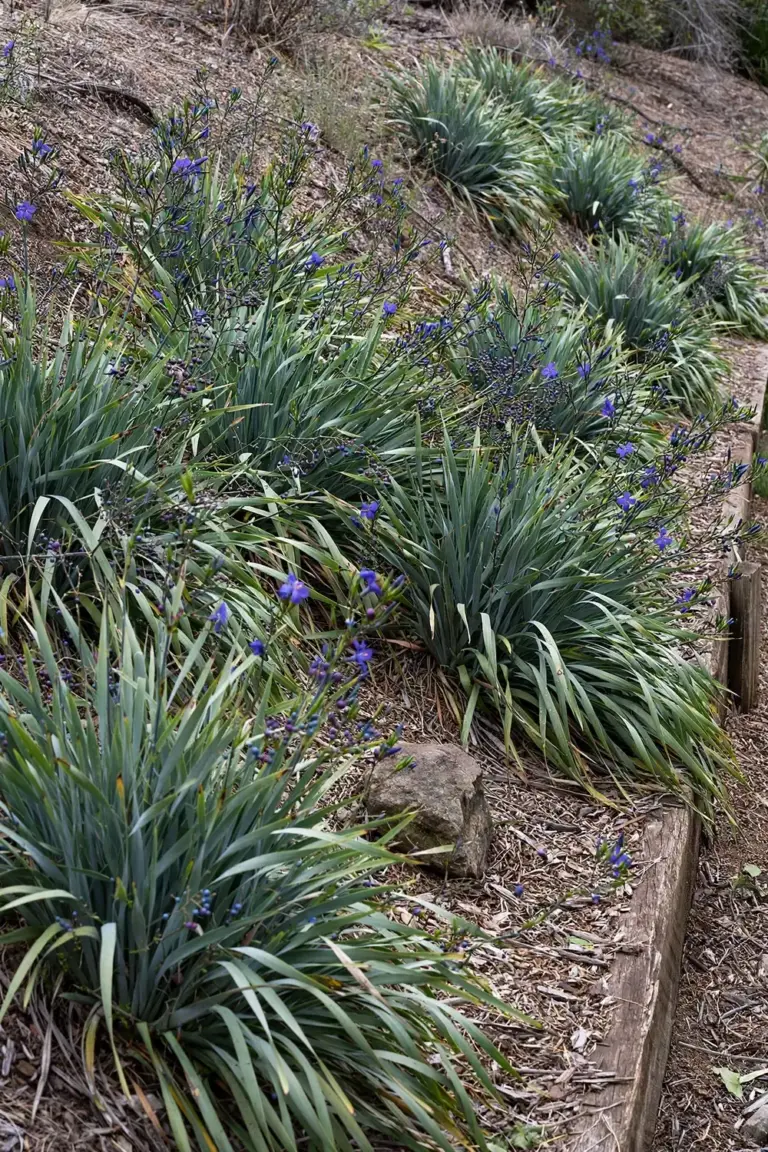
The Australian National Botanic Gardens page on Dianella revoluta describes a widely distributed species growing predominantly in sclerophyll, woodland, and mallee forests. It is an erect, hairless, perennial herb that forms clumps and grows from rhizomes underground, reaching about 1 m in height with a diameter of up to 1.5 m. Flowers open from spring to summer in deep blue to purple inflorescences.
The same ANBG page gives the fruit: blue to purple berries that persist for many months after the flowers, usually round, measuring from 4 to 10 mm in diameter and containing 3 to 4 seeds. The berries are edible, and they hang on the plant long after flowering ends, which makes revoluta useful as a bird plant through the cooler months.
Look closely at a revoluta flower and the family traits show. The ANBG notes describe six tepals, reflexed, measuring 7 to 12 mm in length, and six stamens projected in a ring around the ovary, with long thick yellow filaments and anthers brown to black in color. The flower stalks rise on wiry stems from the foliage, often exceeding it in height, with terminal panicles branching into open sprays. One flower a day opens, which stretches flowering over a long period.
Revoluta also carries a coastal form. State Flora South Australia describes Dianella brevicaulis as the coastal form of revoluta, a clumping plant spreading by underground rhizomes that reaches half a metre in height and 1 to 2 m wide depending on soil fertility and rainfall. Its blue flowers appear from late winter through early summer, followed by fleshy blue to purple berries. The same notes record plants growing on the seaside foreshore in salt spray, and surviving on 325 mm of rainfall a year at the State Flora Nursery at Murray Bridge. Buy the coastal form for a foreshore strip. Buy the inland form for a dry bank.
Revoluta spreads by rhizomes and can form large spreading colonies. That habit suits a mass planting, a bank, or an erosion-prone slope. It fights a small bed. Give revoluta room, or edge the bed with a solid barrier. A colony left alone fills its space within a few seasons.
In a garden design, revoluta is the workhorse. Councils plant it along roadsides and in median strips because it survives neglect, heat, and poor soil. A home gardener can use the same toughness on a nature strip, a steep bank, or a dry corner behind a shed. Mass-plant it in drifts of five or more for a strappy groundcover that holds soil and blocks weeds. Leave the berries for the birds, and the birds repay the favor by visiting all winter. Revoluta asks for almost nothing once established, which is why it appears in so many Australian streetscapes.
4. Match the Species to Your Spot
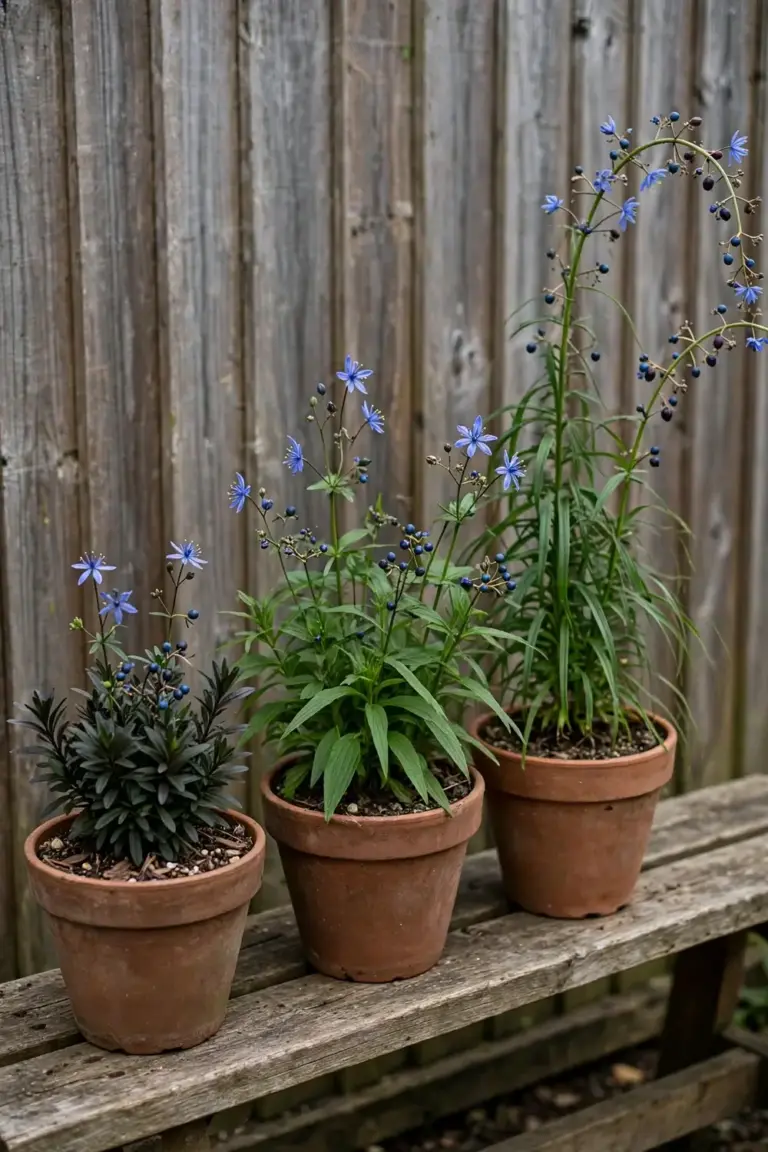
Match light first, then space. Sun and coast go to caerulea. Cool shade goes to tasmanica. Everything else goes to revoluta.
| Species | Mature Height | Light | Berries | Best Job |
|---|---|---|---|---|
| Dianella caerulea | 1 m | Full sun to part shade | Edible | Hot sun, coastal banks, small beds in compact forms |
| Dianella tasmanica | 1.2 m | Part shade to shade | Ornamental only, do not eat | Cool shade, wet-forest feel, big-leaf screening |
| Dianella revoluta | 1 m high, 1.5 m wide | Full sun to shade | Edible | Tough all-rounder, mass planting, erosion banks |
Read the table with your own garden in mind. A sunny coastal bank wants caerulea. A shaded side path under a fence wants tasmanica. A wide dry bank that you never want to water again wants revoluta. A small courtyard wants a compact caerulea form, not a spreading revoluta colony.
All three want soil that drains. Dianella rots in soil that stays wet through winter. Building soil health before you plant pays off for years, because a flax lily clump stays in place for a long time. Space plants by mature width, not by pot size. Water until established, then back off. Plant tasmanica in hot sun and it sulks. Move it to shade.
Frost splits the three in a useful way. Caerulea is snow and frost hardy once established, per the Landcare notes. Tasmanica carries an RHS hardiness rating of H3, which means it handles light frost in a sheltered spot but not a hard freeze. Revoluta handles frost once established, per nursery guides. In a frost pocket, caerulea or revoluta beats tasmanica. In a frost-free coastal garden, all three grow.
Soil pH splits them too, though gently. Tasmanica wants neutral to acid soil, per the RHS profile, while caerulea and revoluta tolerate a wider range that includes poor soils and coastal sand. Strongly alkaline soil makes tasmanica the risk. Test first. A simple pH test from a garden center gives the answer in minutes and costs less than one dead plant, so test before you plant a row of it.
Pots suit compact forms. A compact caerulea form or a dwarf cultivar grows well in a large pot with drainage holes and a free-draining mix. Water pots more often than plants in the ground. A spreading revoluta colony fights a pot within a season, and tasmanica wants a big pot to hold its broad leaves. Match the pot to the plant, not the other way around.
Watering follows one rule: steady in year one, spare after that. A new plant wants a deep drink each week through its first summer. An established clump handles dry spells and only needs water in a long heatwave. Overwatering kills more dianella than drought, because wet crowns rot. Check the soil with a finger before you water. Dry at 5 cm down means water, and damp at 5 cm means wait, so check before you reach for the hose.
Planting follows the same steps for all three. Dig a hole twice the width of the pot and the same depth. Set the plant at the same depth it sat in the pot, with the crown at soil level, never buried. Backfill with the soil you dug out, firm it gently, and water deeply. Mulch around the plant, keeping the mulch clear of the crown. Water weekly through the first season, then taper off as the roots settle. A plant set too deep rots at the crown. A plant set too high dries out at the roots.
5. Check the Berries Before You Taste Them
Two species carry edible berries. One does not. Caerulea and revoluta berries are edible. Tasmanica berries are toxic.
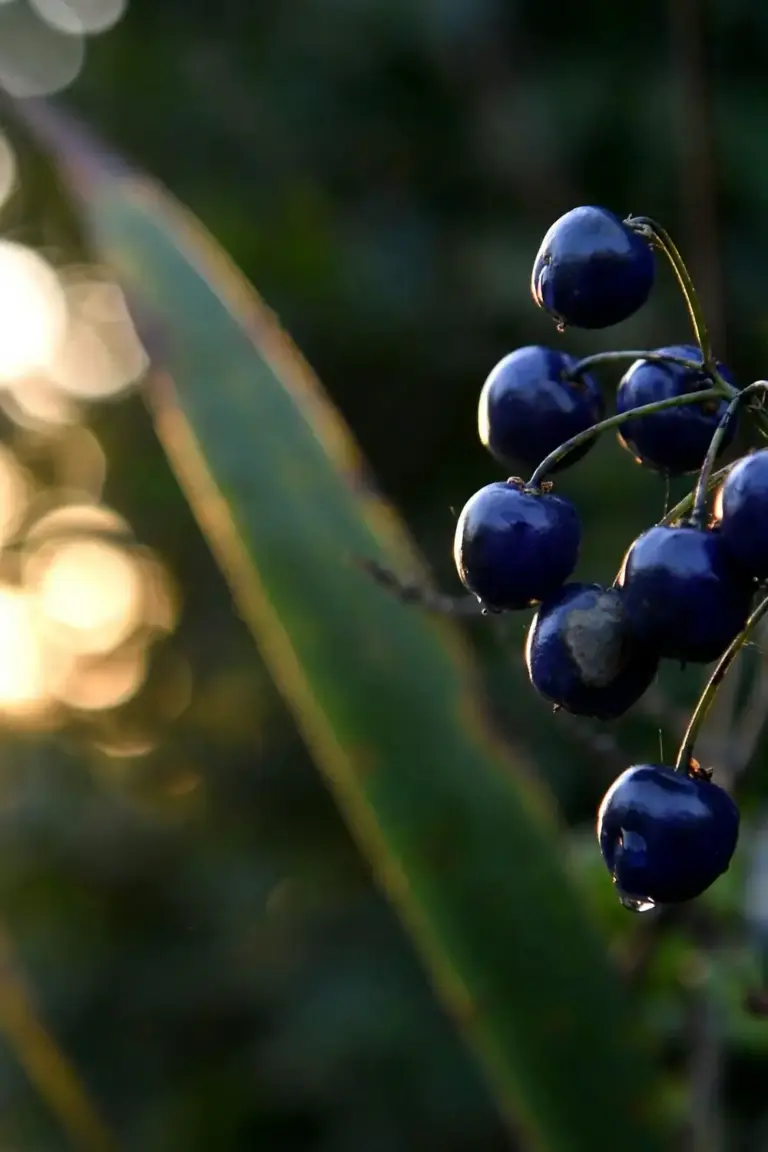
The Sustainable Play guide to edible Australian native plants lists caerulea, revoluta, and prunina berries as edible sweet blue berries with tiny nutty seeds, and names tasmanica and intermedia as toxic and not to be consumed. That split is the whole berry rule for this genus. If you cannot name the species, do not eat the berry. The two kinds look alike on the plant.
Eat only fully ripe berries, and only in small quantities. Bushfood guides give that rule for every edible dianella, and the botanist Tim Low cautions against eating too many at one time. A ripe berry is glossy, plump, and unbroken, in deep blue or indigo. Skip any berry that still shows green, looks shriveled, or carries damage. No published source gives an exact safe quantity, so data not available on a daily limit. Treat dianella berries as a taste, not a harvest.
Birds eat the berries either way. Landcare names Lewin’s Honeyeater among the birds drawn to caerulea. State Flora notes record rosellas and wattle birds feasting on flax lily berries. If birds strip your berries before you taste them, that is normal, and the berries feed wildlife either way, so the plant still earns its place.
Tell the berries apart by size when the label is lost. Revoluta berries run 4 to 10 mm across, per the ANBG notes, while flora descriptions give caerulea berries at about 0.7 to 1.2 cm across and tasmanica berries at about 1.2 cm across. Size alone never settles the species, because the ranges overlap, so use size with leaf width, flower color, and the label together. No label, no taste.
Keep tasmanica berries away from toddlers and dogs. The RHS profile lists the fruit as ornamental, not to be eaten, and advises gloves and protective equipment when handling. A child who eats a berry needs the national poisons hotline, not a wait-and-see. Plant tasmanica where children do not forage, or pick the berries off before they ripen. An edible species in a play area still invites a taste test, so teach children the rule: berries from a named plant only.
If you ate a berry and your mouth tingles, spit it out and rinse. The tingling fades. If nausea follows, call the national poisons hotline. Do not force vomiting. Note the plant and, if you can, photograph the leaves and berries for identification.
A ripe edible dianella berry tastes sweet and fragrant, with a soft spongy texture that pops in the mouth. Bushfood writers describe the black seeds inside as adding a nutty crunch, though some compare them to chewing sand. Old berries that look shriveled or damaged carry a lingering bitterness, which is the sensation reported in the irritating berries of tasmanica. That bitterness is your warning. Spit the berry out, rinse your mouth, and check the species. A good berry never tastes bitter.
6. Buy the Right Plant, Not the Wrong Name
Buy by botanical name. A tag that says only Dianella tells you nothing about species or berry safety.
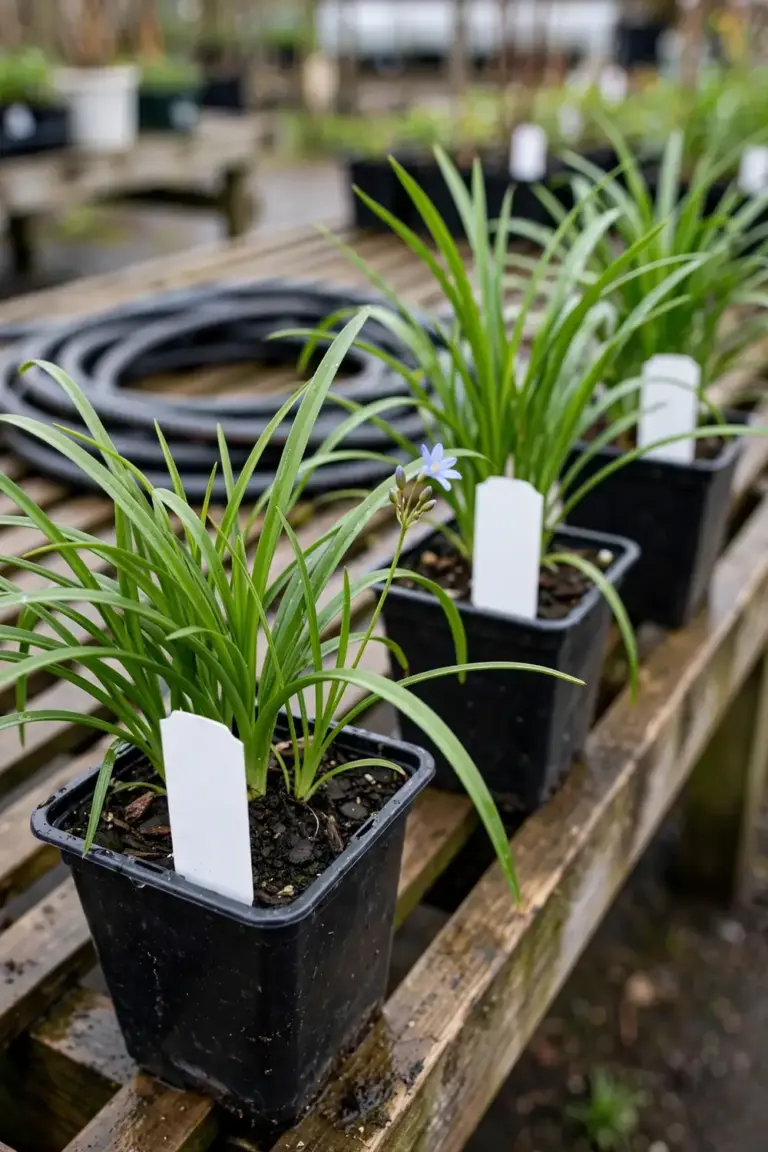
Cultivar names dominate the buying conversation. Little Jess is a caerulea cultivar, and Tasred is a tasmanica cultivar. Breeze and King Alfred are named selections too. A cultivar is a named selection, not a species. Little Jess carries caerulea traits, while Tasred carries tasmanica traits, including toxic berries. Check the full label for genus, species, and cultivar in single quotes before you pay.
Flax lily is a common name. True flax is Linum. The two share a name and nothing else. Nurseries sometimes sell one dianella species as another, and a mislabeled plant fruits the wrong berry. Check leaf width, flower color, and berry color before you buy. A wrong-name plant costs a season. The label check takes seconds.
A good label shows four things: genus, species, cultivar in single quotes, and mature height. It may also note berry safety. A tag that shows only Dianella and a pretty picture fails the test. Ask the nursery for the full name. A native nursery answers fast. A generic garden center may not know, and that gap is your warning.
If you already planted a mislabeled dianella, do not panic. Treat its berries as ornamental until you confirm the species. Watch the flowers: caerulea and revoluta flowers run blue to purple, while tasmanica flowers run violet-blue with a distinct look. Compare leaf width and plant height against the species descriptions on this page. If the plant still reads as a guess, keep the berries uneaten and enjoy the foliage. A dianella grown for looks needs no berry test at all.
Division keeps a cultivar true. Seed does not. A seedling grown from Little Jess seed is a caerulea seedling, not Little Jess. It may grow taller, looser, or a different shade of green. If you want the exact plant, buy a division or a tissue-cultured pot with the cultivar name on the label. If you want cheap plants for a bank, seed suits the job. Division suits an established clump. Dig it, split the rhizome, and replant the divisions at the same depth.
Dianella grows from seed or division. The same RHS profile gives seed at 13 to 16 degrees C in spring, or rhizome division in mid-spring, for tasmanica. For seed basics, seed starting steps cover trays, moisture, and timing. Division suits an established clump. Dig it, split the rhizome, and replant the divisions at the same depth.
Frequently Asked Questions
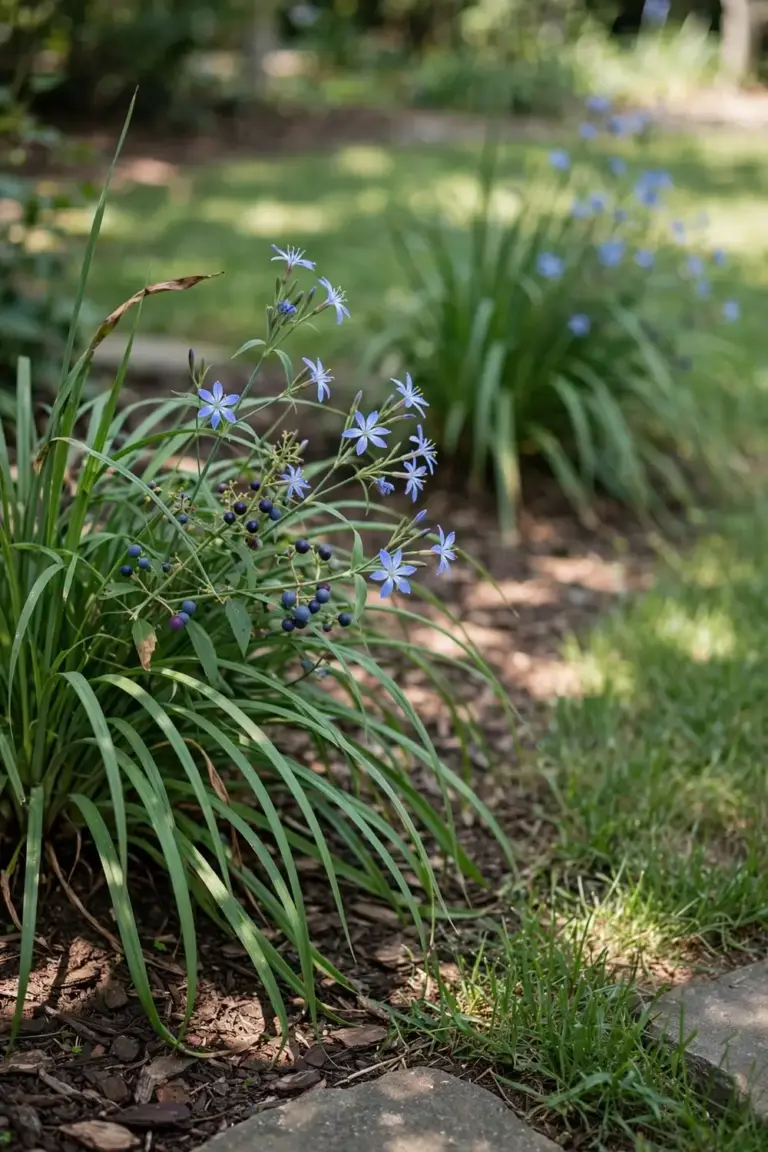
It depends on the species. Caerulea and revoluta berries are edible when fully ripe, eaten in small quantities. Tasmanica berries are toxic and must not be eaten. If you cannot name the species from its label, do not eat the berry. Birds eat the berries safely, but that tells you nothing about people. Treat dianella berries as a taste, not a harvest.
Tasmanica is the shade species. It grows in shady spots in wet forests in the wild and holds that preference in gardens. Give it cool shade and steady moisture. Caerulea and revoluta take part shade, but they flower best with sun. In a hot district, tasmanica in shade outlasts any dianella planted in full sun.
Caerulea reaches about 1 m. Tasmanica reaches about 1.2 m. Revoluta reaches about 1 m high and spreads to 1.5 m wide. Dwarf cultivars stay smaller than the species. Check the mature height on the label before you plant. A tall form in a small bed crowds the path within two seasons.
Yes, with drainage. Use a pot with drainage holes and a free-draining mix. Water pots more often than plants in the ground, because pots dry fast. Compact forms suit pots best. A spreading revoluta colony fights a pot within a season. Choose caerulea or a dwarf cultivar for containers.
Dianella needs no formal pruning. The RHS profile lists tasmanica as needing no pruning. Remove spent flower stems and dead leaves when they look tired, then cut back tired foliage in late winter before spring growth starts, using sharp secateurs for a clean cut. That tidy-up keeps the clump dense and lets new leaves take over.
Start Growing Dianella in Australia This Weekend
Start with one plant matched to your hardest spot. Sun goes to caerulea. Shade goes to tasmanica. The rest goes to revoluta. Buy by botanical name, and check the label for species and cultivar before you pay. One plant in the right spot beats three plants in the wrong spots.
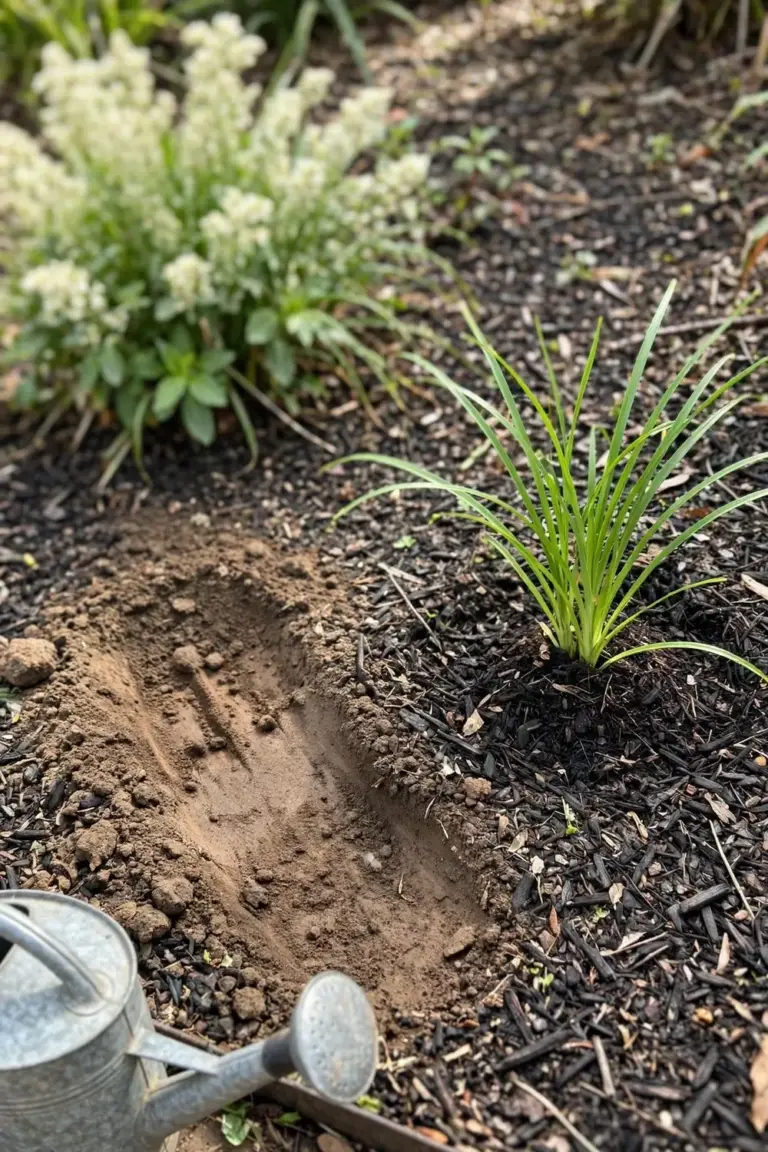
What is mulching covers how a mulch layer holds moisture, blocks weeds, and keeps roots cool through summer. Mulch the new plant, keep the mulch clear of the crown, and water until it establishes. Fall garden bed prep covers the bed work that sets a new planting up for its first year. Plant it, water it in, mulch it. Watch the first flowers, then the berries. Check the berries against the species before you taste. A dianella planted in the right spot needs little from you after its first season, and it pays you back with flowers, berries, and birds for years.