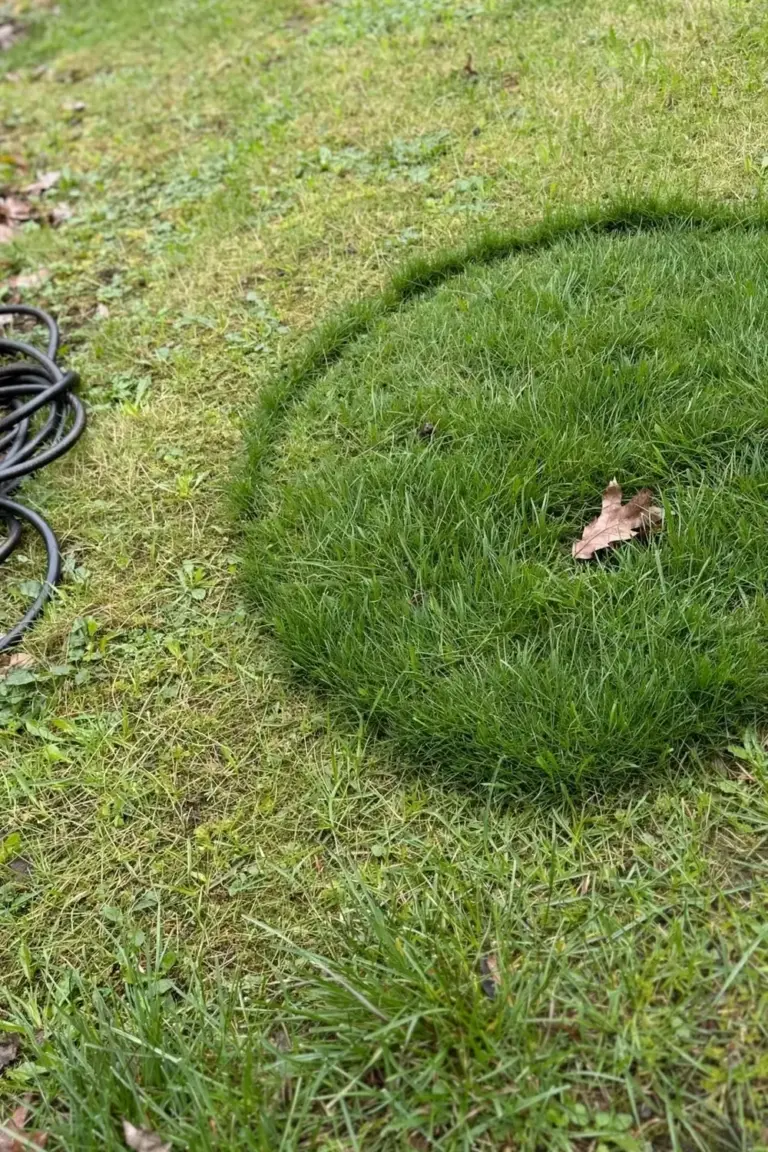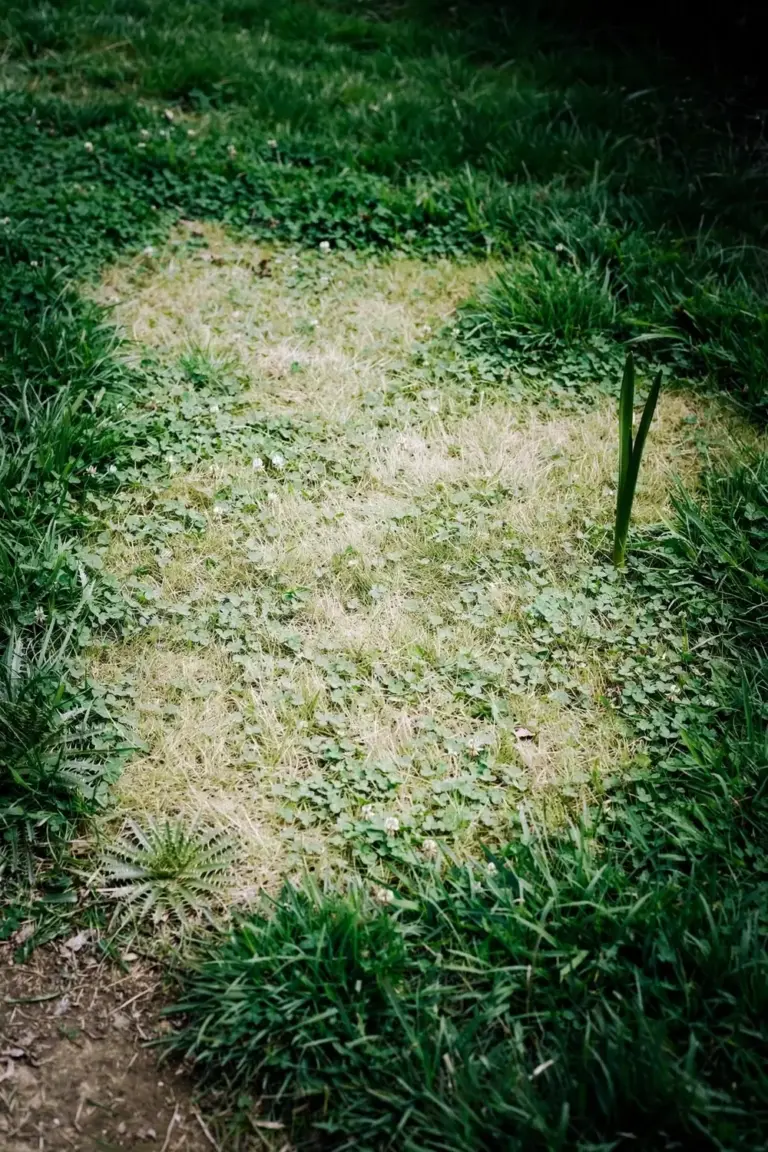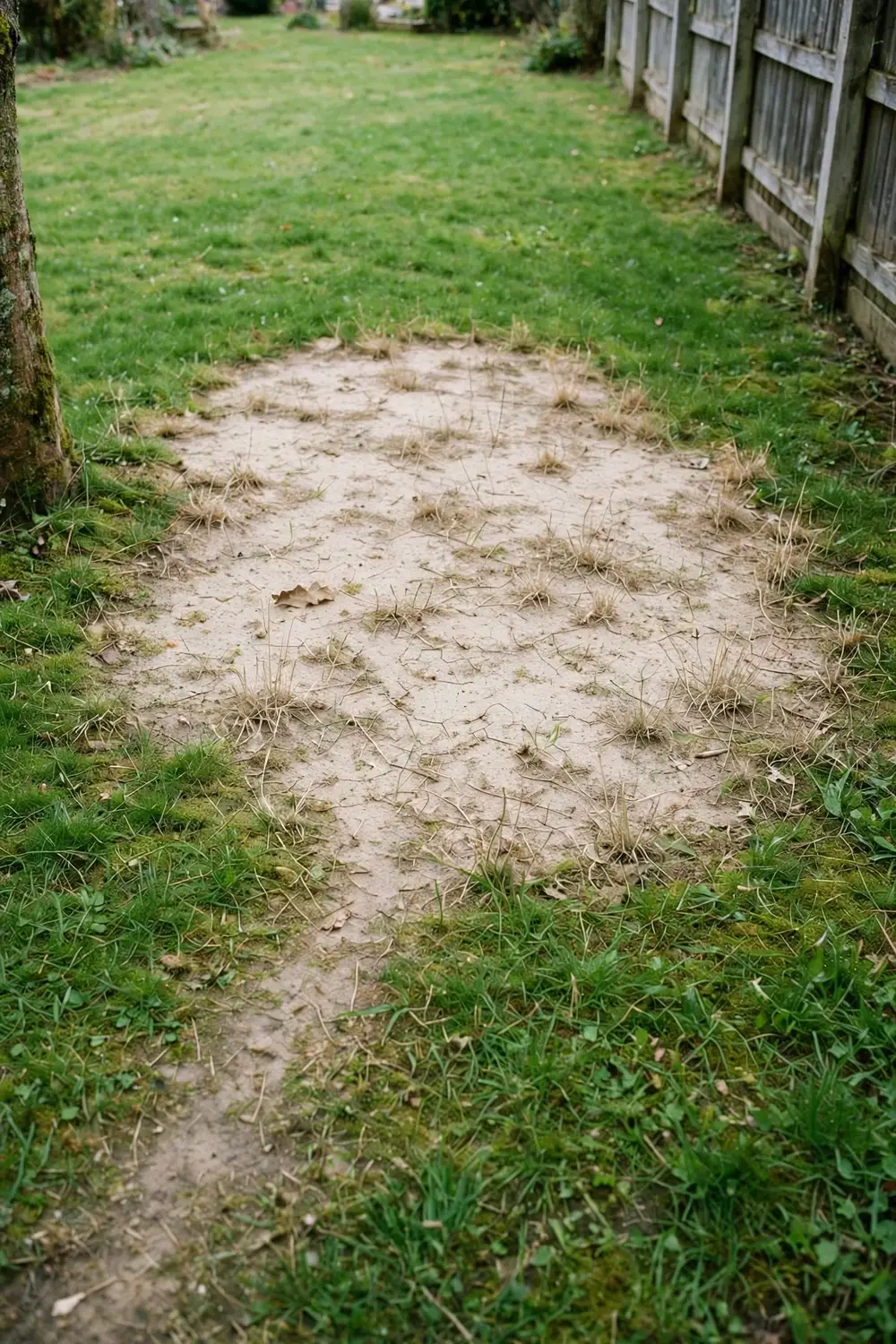

Why your bare patch won’t grow back comes down to one fact: the cause is still in the soil. The fix starts with 4 field tests that take 10 minutes and name the cause in most yards. Test the patch first, fix the cause, then fill it by turf type. That order is why this repair holds when the last two did not.
A bare patch means grass is missing from a spot. The reason sits underneath it. I have learned that the patch I test before I fill stays filled, while the patch I reseed on a guess opens up again. Work from the top if the patch is bare right now, and run the 4 field tests before you match the result to the cause table, fix the cause, and fill the patch in the growing season.
1. Diagnose the Patch Before You Repair It Again
Diagnosis comes before seed, sod, or plugs. The 4 field tests take 10 minutes and name the cause in most yards. Run all four. One test alone can mislead you. A patch can hold two causes at once. Compaction and shade often arrive together on a worn path under a tree. Grubs and drought can overlap in a dry summer. The tests separate them. Run the full set even when the first test gives a clear answer, because the second cause is the one that kills the repair.
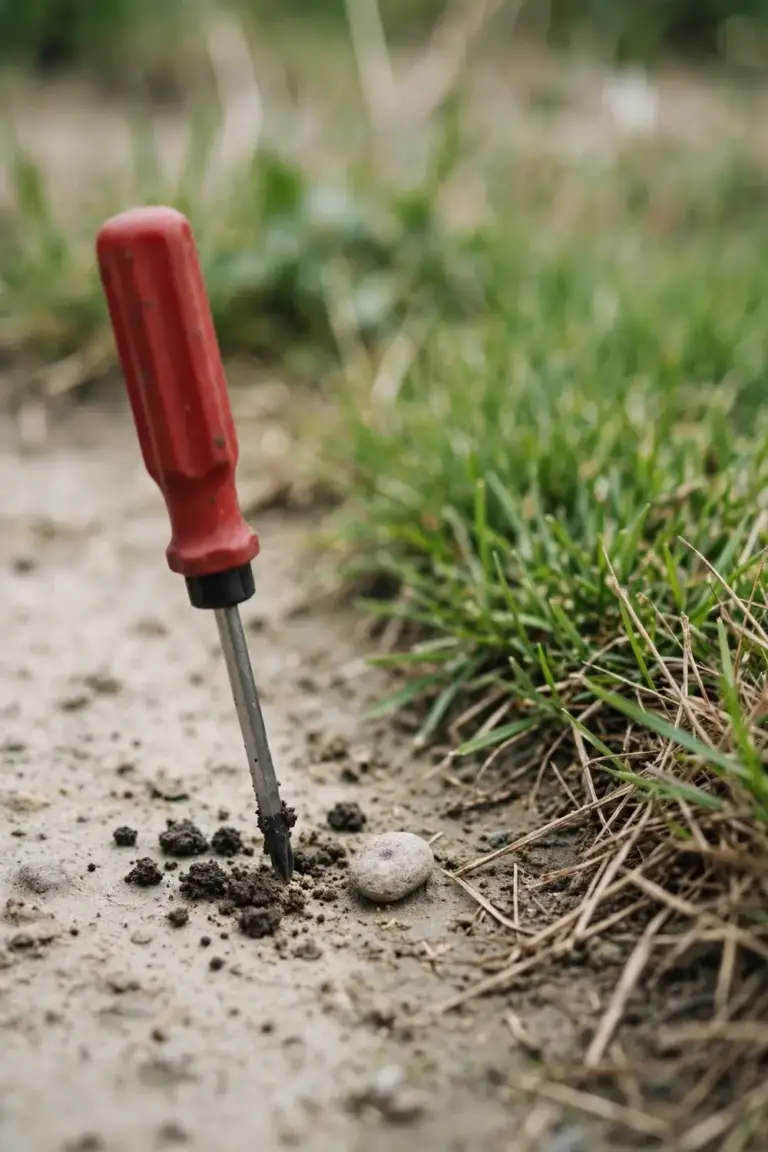
Push a screwdriver into damp soil in the patch and in a healthy spot nearby. The screwdriver test reads compaction. If the blade slides in easily in the healthy spot and stops in the top few centimeters in the patch, the patch is compacted. Compaction lines up with worn paths, gate entries, clothesline routes, and places where cars or trailers stood. Compare both spots, because soil varies across one yard. Test when the soil is damp, a day or two after rain or irrigation. Dry soil resists the screwdriver even when it is not compacted, so a test on bone-dry ground reads compaction where none exists. Test three spots in the patch and three in healthy lawn nearby. A patch that reads compacted in all three spots is compacted. A patch that reads compacted in one spot and free in the next has a local hard spot, not lawn-wide compaction.
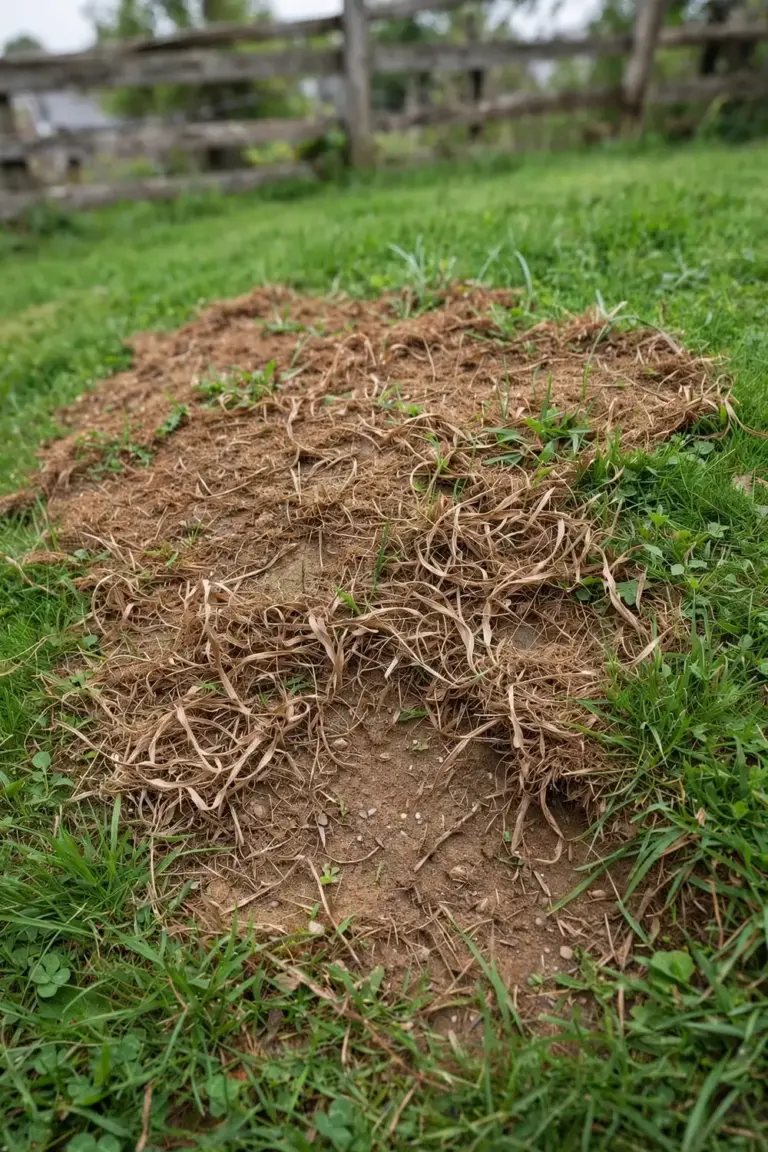
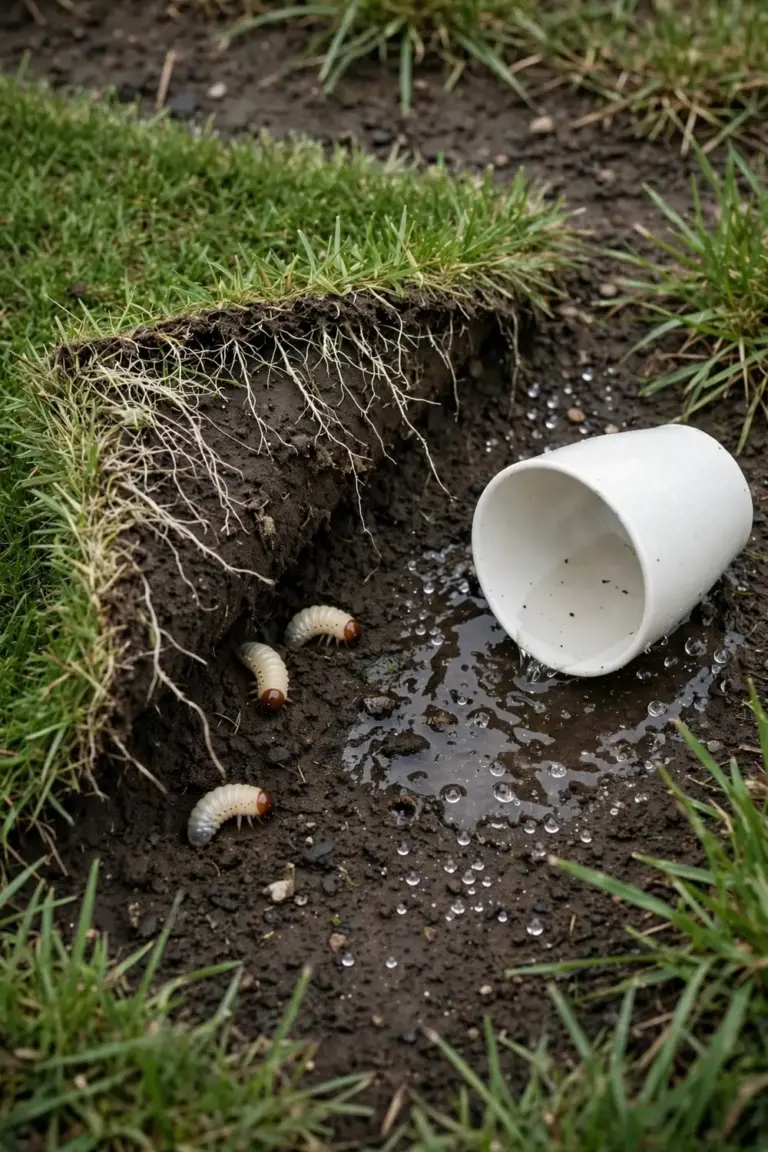
Peel the turf back at the patch edge. The peel test reads grubs. Grub-damaged turf lifts like a loose rug, because grubs eat the roots from underneath. Cut a 30 cm square sample 7.6 cm deep at the patch edge, fold it back, and count white grubs in the soil. Alabama Cooperative Extension notes that turf can roll up like a carpet when grubs are at fault, and that treatment is recommended when an average of 3 to 5 grubs shows in each square-foot sample. Replace the sod after counting. If the turf holds firm and roots look intact, grubs are not the cause. Count in late summer, when grubs feed near the surface. Grubs sit deeper in cold soil, so a winter count can miss them. If birds or bandicoots dig the patch at night, treat that digging as a second clue. Both hunt grubs. A patch with peel-away turf and night digging has grubs until a sample proves otherwise.
Count the direct sun the patch receives. The shade count reads light. Stand in the patch at mid-morning, midday, and mid-afternoon on a clear day and note whether the sun hits it directly. A patch under a tree, beside a tall fence, or on the south side of a house can sit in shade all day while the rest of the lawn thrives. Shade kills grass slowly, so the patch thins first and then goes bare. Check the patch in winter and summer. A patch shaded by a deciduous tree gets sun in winter and shade in summer, which changes the fix. A patch shaded by a house or fence gets the same shade all year. Note the season when the patch first thinned. A patch that thinned under summer leaf cover points to shade. A patch that thinned in open sun points elsewhere.
Pour a cup of water on the bare soil and watch it. The water test reads dry patch. Healthy soil drinks the water in. Hydrophobic soil beads the water on the surface or lets it run off. Water repellency comes from a waxy coating on sand grains, and it is common in sandy soils. A patch that stays dry after rain or irrigation cannot grow grass, no matter how much seed you scatter. Dig a small hole 10 cm deep beside the patch after watering. If the top 2 cm are wet and the soil below is dry and dusty, the water never reached the roots. That split profile is the signature of hydrophobic soil. If the whole profile is wet, the soil drinks fine and the cause sits elsewhere.
2. Match the Cause to the Field Test and the Fix
The table below turns each test result into a fix. Read the row that matches your test, then read the detail in the next section. Do not skip to the fill step. The fill step fails when the cause stays.
| Cause | Field Test | Fix |
|---|---|---|
| Compaction | Screwdriver stops in the top few centimeters | Core aerate the patch, keep traffic off wet soil, then fill |
| Grubs | Turf peels like a loose rug, 3 to 5 grubs per sample | Treat per label, wait for roots to re-anchor, then fill |
| Disease | Circles or rings, lesions on blades, mycelium at dawn | Confirm the disease, treat the cause, then fill |
| Shade | Under 3 hours of direct sun for buffalo, under 5 for couch | Prune canopy, raise mowing height, or replace grass with a shade bed |
| Traffic | Worn path, hard soil, patch lines up with a route | Move the route, add stepping stones, rest the patch |
| Drought and dry patch | Water beads on the surface, soil dry below | Wetting agent, deep watering, mulch the edge, then fill |
| Dog urine | Dead center with a dark green ring | Flush with water, rake out dead grass, topdress, fill, train the dog to one spot |
Each row carries one fix. The fix comes before the fill. A patch filled over an untreated cause dies again, and the second repair costs the same time as the first. Two rows can match one patch. A shaded patch on compacted soil needs both the canopy pruned and the soil aerated. Fix both causes before filling. A patch with grubs and compaction needs the grubs treated and the soil opened. One fix alone leaves the second cause to kill the fill. When two rows match, fix the harder cause first, then the easier one, then fill.
3. Work Through the 5 Causes That Make Patches Fail Again
Five causes drive most repeat failures. Work through them in order. The first one that matches your tests is the one to fix.
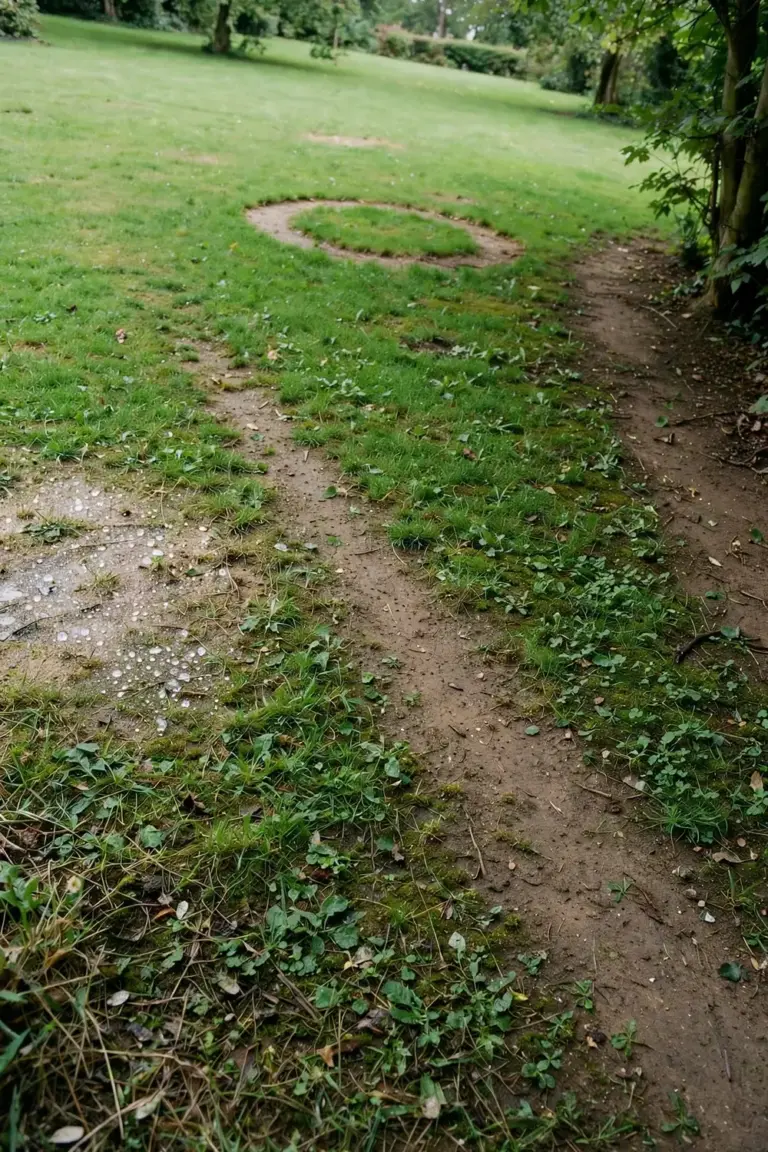
Compaction squeezes air and water out of the soil. Roots cannot spread in compacted soil, so grass thins and then disappears. The screwdriver test names it. Core aeration opens the soil by pulling out small plugs, which lets air, water, and roots move again. Leave the plugs on the lawn to break down. Hire a core aerator for a large patch, or drive a garden fork 10 cm deep every 10 cm across a small one. Water the patch the day before aerating so the tines enter damp soil. Building soil health improves slowly, so pair aeration with a thin topdressing of compost to feed the microbes that keep soil open. Keep traffic off the patch while it recovers, and keep traffic off wet soil everywhere, because wet soil compacts under far less weight than dry soil. A patch on a path needs the path moved, not just aeration. Lay stepping stones or shift the route, or the patch compacts again within a season.
Shade starves grass of light. Grass makes its food from sunlight, and a patch in deep shade cannot make enough food to hold density. West Turf notes that buffalo varieties perform in shade with a minimum of 3 hours of sun per day, while couch needs a minimum of 5 to 6 hours of direct sun. A patch that receives less light than its grass needs will thin no matter how much you feed or water it. Prune the canopy above the patch to let light through, and raise the mowing height in shaded areas so each blade carries more leaf to catch light. Mow shaded grass higher than the rest of the lawn. Longer blades catch more light and shade the soil, which slows drying. Never scalp a shaded patch. A scalped patch loses the leaf it needs to make food, and it thins faster than an unmowed one. If the patch still receives under 3 hours of direct sun after pruning, stop fighting for grass there. Replace the patch with a shade-tolerant groundcover or a mulch bed, and let the lawn end at the shade line.
Traffic wears grass down and compacts the soil under it. A patch on a shortcut, a gate entry, or a clothesline route fails because feet keep hitting the same ground. The grass never gets a rest long enough to spread back. Move the route first. Lay stepping stones or a short path through the worn line, and rest the patch until new growth holds when tugged. Rest the patch for a full growing season after moving the route. Grass spreads back slowly over compacted ground, and feet undo a month of spread in one afternoon. If the route cannot move, such as a gate that must stay, lay pavers or stepping stones through it and let the lawn end at the hard edge. A patch that carries daily traffic needs a hard surface, not more seed. Seed cannot outgrow feet.
Drought and dry patch leave the soil dry below a surface that looks watered. Hydrophobic soil repels water, so irrigation runs off or pools while the root zone stays dusty. The water test names it. A wetting agent breaks the waxy coating on sand grains and lets water soak in again. Apply it per the label, then water deeply so moisture reaches the root zone. Water deeply after the wetting agent, so moisture reaches 10 cm down. Shallow watering wets the surface and leaves the root zone dry, which trains roots to sit at the surface where they dry first. Check with a finger before watering again. Water only when the top few centimeters feel dry. Mulch the edge of the bed beside the patch to slow drying. Water Corporation notes that sandy soils in Western Australia are known to be water repellent, and that a wetting agent is the simplest way to improve absorption and spread water more evenly through the soil. A patch that beads water needs the soil fixed, not more seed.
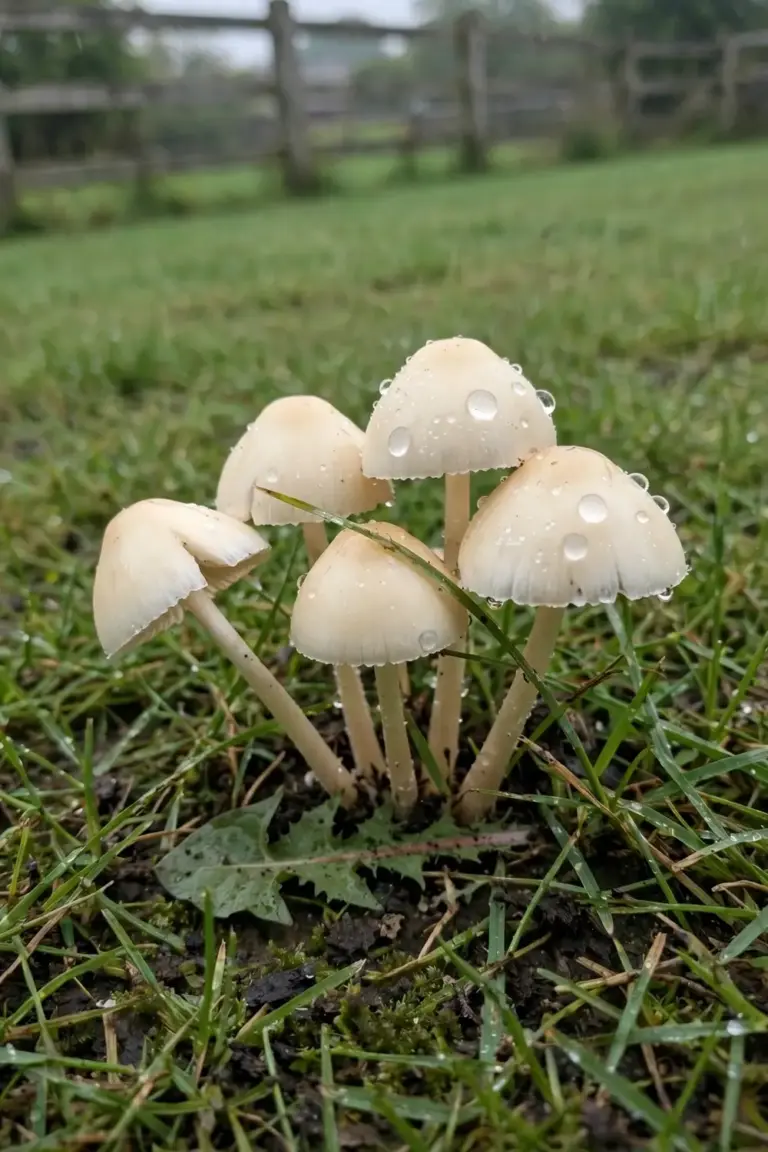
Disease kills grass in patterns. Circles, rings, and spreading edges point to fungus rather than to wear or shade. Dollar spot shows small straw-colored spots with hourglass lesions on individual blades, and a fine cobwebby mycelium may show at dawn when dew is heavy. Ohio State University Extension notes that dollar spot favors temperatures between 15 and 29 degrees Celsius with long periods of leaf wetness, and that spots reach 5.1 to 7.6 cm across before merging into larger straw-colored areas. Confirm the pattern before treating. Water in the morning so leaves dry by midday. Night watering keeps leaves wet overnight, which favors fungus. Avoid watering late in the day on a lawn with a disease history. If the patch shows rings, lesions, or dawn mycelium, treat the disease first and fill after the grass around the patch stops declining. If the patch shows no disease signs, skip treatment entirely. Spraying a healthy patch wastes money and does not grow grass. If the patch shows leaf spots with dark edges, compare it against Bipolaris leaf spot, one of the common lawn leaf diseases. A match there changes the treatment, so identify first and spray second.
4. Repair by Turf Type: Buffalo, Couch, Kikuyu, and Cool-Season Grasses
The repair method follows the turf type. Warm-season grasses spread by runners. Cool-season grasses do not. That one difference decides whether seed works at all.
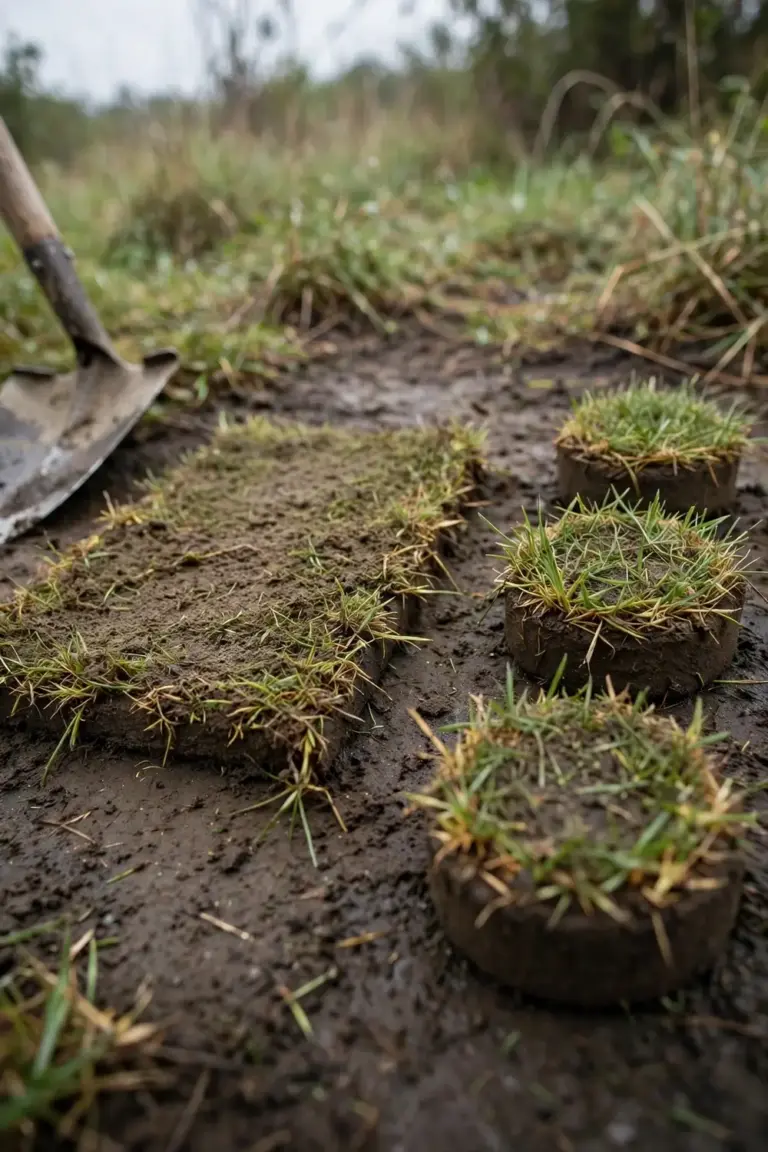
Buffalo has no seed. Bunnings notes that there is no buffalo lawn seed, and that buffalo can only be repaired by using plugs or purchasing new rolls of turf. Any packet labeled buffalo seed is the wrong product. Fill a buffalo patch with plugs cut from a healthy part of the same lawn, with runners pegged into the bare soil, or with a piece of sod cut to fit. Buffalo spreads from above-ground runners, so plugs knit outward once the cause is fixed. Space plugs close enough that runners meet within one growing season, and water them until they root. Cut plugs with a spade or a bulb planter, each plug 10 cm across with roots attached, then set each plug level with the surrounding lawn, firm the soil around it, and water it in. Peg runners into the bare soil with wire pins where runners reach across the patch. Runners root at each node when they touch damp soil.
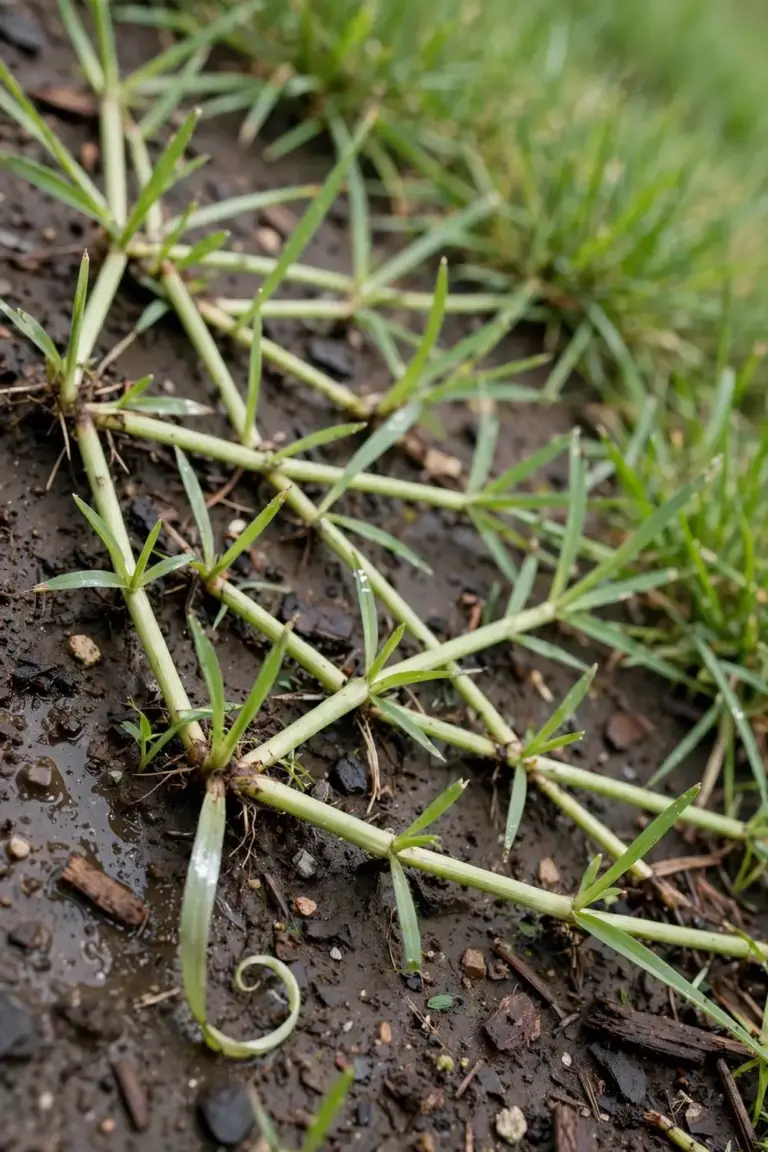
Couch and kikuyu spread fast from runners above and below ground. Small patches often fill on their own once the cause is fixed, because runners from the healthy edge creep across the bare soil. Feed and water the edge, and give it time. Encourage self-repair by feeding the edge lightly and watering deeply. Runners creep fastest across bare, damp soil, so keep the patch surface moist and free of dead grass. Mow the surrounding lawn at normal height so the edge keeps feeding the runners. Large patches take plugs, runners, or sod, and seed also works for couch and kikuyu where seed is sold. Couch tolerates close mowing and heavy traffic, so it recovers faster than buffalo after repair. Kikuyu spreads the fastest of the three, which also means it invades beds, so edge the patch after filling.
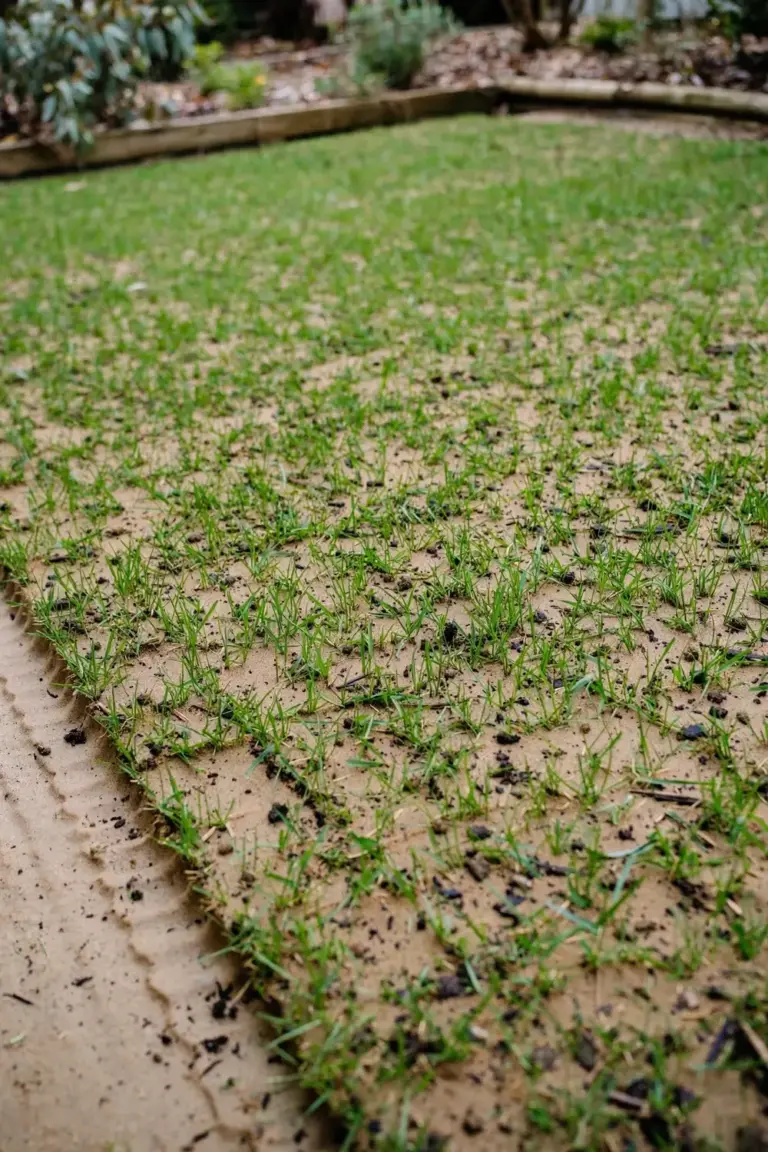
Cool-season grasses need seed. Perennial ryegrass and tall fescue have no runners, so they cannot spread into a bare patch on their own. Bunnings notes that cool-season grasses like perennial ryegrass and tall fescue will not spread into surrounding bare patches, and that you will need to sow lawn seed to thicken those areas. Rake the patch, scatter seed at the packet rate, rake lightly to cover, and keep the soil moist until germination. Keep the seedbed damp until germination. Seed that dries out after swelling dies. Water lightly twice a day in hot weather, once a day in mild weather, and ease back once seedlings reach 5 cm. Mow when the new grass reaches 5 to 7 cm tall, and remove only the top 2 cm at the first cut.
Zoysia repairs slowly. Zoysia spreads by runners like couch, but it grows far more slowly, so a zoysia patch needs plugs or sod rather than patience. Set plugs tight, water them in, and keep traffic off for the full season. A zoysia patch filled in spring may not close until autumn. Patience beats a second fill. A zoysia patch filled with seed from another grass type grows a visible scar of the wrong grass, so match the fill to the lawn.
Match the fill to the lawn. A couch plug in a buffalo lawn grows a visible scar of the wrong grass. A fescue patch in a kikuyu lawn dies in the first hot summer. Take plugs from the same lawn, not from a neighbour’s lawn, so the fill matches the grass around it. If the lawn type is unknown, check the runners. Buffalo runners run above ground and feel coarse. Couch runners run above and below ground with fine blades. Kikuyu runners run thick and fast.
5. Repair in the Growing Season, Not in Winter Dormancy
Timing decides whether the fill takes. Warm-season grasses grow from late spring through early autumn, while cool-season grasses grow through autumn and early spring. A patch filled in the growing season knits within weeks. A patch filled in winter dormancy sits bare for months, and seed can rot or wash away before it germinates.
Warm-season lawns repair best from late spring to early autumn, when soil is warm and runners grow. Buffalo, couch, and kikuyu all spread fastest in warm soil. Fill the patch after the last cold nights, once the surrounding lawn is growing again. A patch filled in midwinter stays bare until spring, and the bare soil invites weeds in the meantime. Weeds move into bare soil faster than grass does. A patch left bare through winter fills with winter weeds, and the spring repair starts with weeding. Fill in the growing season to deny weeds the open ground.
Cool-season lawns repair best in autumn, with early spring as the second window. Ryegrass and fescue germinate in cool soil and establish before summer heat. An autumn repair gives the new grass months of mild weather to root deeply. A spring repair also works, but the new grass faces summer heat sooner, so it needs steadier water.
Water the fill daily until it roots. Plugs, runners, sod, and seed all need steady moisture in the first two weeks. Keep the soil damp, not soggy. Lift a corner of sod gently to check rooting. When the sod resists the lift, roots have reached the soil below, and you can ease back to deeper, less frequent watering. Keep feet, dogs, and mowers off the patch until the fill holds when tugged. A patch walked on in week one reopens in week three. Mow the fill at the same height as the surrounding lawn once it reaches mowing height. Never cut more than a third of the blade at one mow. A fresh fill cut too short loses the leaf it needs to root.
6. Know When the Patch Means a Full Renovation
Some patches are symptoms of a lawn-wide failure. A single patch means a local cause. A lawn covered in patches means the whole lawn needs a reset. This article’s decision rule is simple. If bare patches cover more than half the lawn, treat the lawn as a renovation job, not a patch job. If the same cause affects the whole lawn, such as compaction across the entire area or shade over most of it, patching one spot at a time wastes the season.
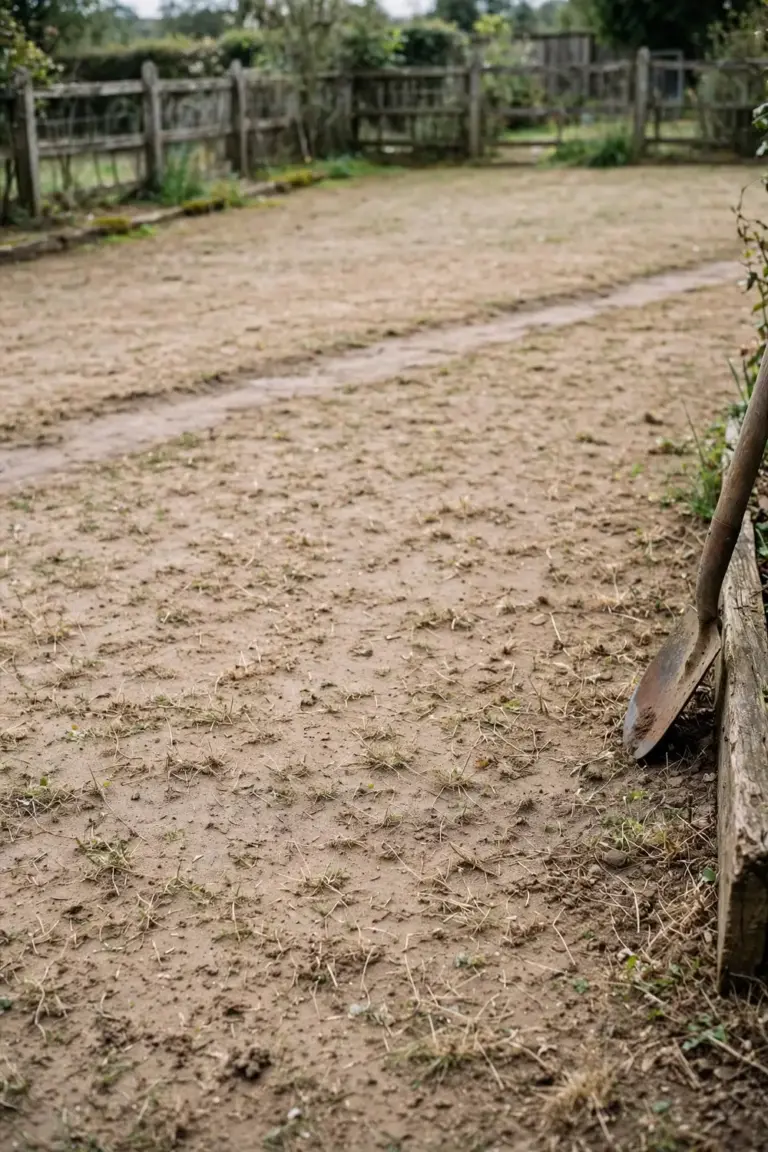
A renovation resets the lawn. It means removing the failed turf, fixing the soil across the whole area, and laying new turf or seed in one pass. That is a different job from patch repair, with its own timing and cost. Do not start it until you have diagnosed the lawn-wide cause. A renovation laid over untreated compaction, untreated grubs, or unpruned shade fails the same way the patches did. Renovation costs more time and money than patch repair, because it rebuilds the whole surface. Price it before deciding. Compare the cost of new turf across the whole lawn against the cost of plugs and a season of patience on a few patches. A lawn under half bare rarely justifies the full rebuild.
Check the soil before deciding. Dig a spade of soil from the middle of the lawn and look at its structure. Soil that crumbles holds grass. Soil that comes up in hard slabs needs aeration and organic matter across the whole lawn, not just the patches. A soil test answers the nutrient question. Do not feed a lawn on a guess.
If patches cover under half the lawn and the causes are local, stay with patch repair. Fix each cause, fill each patch, and watch the edges. A lawn that holds its patches through one full growing season has turned the corner. A lawn that opens new patches in the same spots needs the renovation decision revisited.
Frequently Asked Questions About Bare Patches
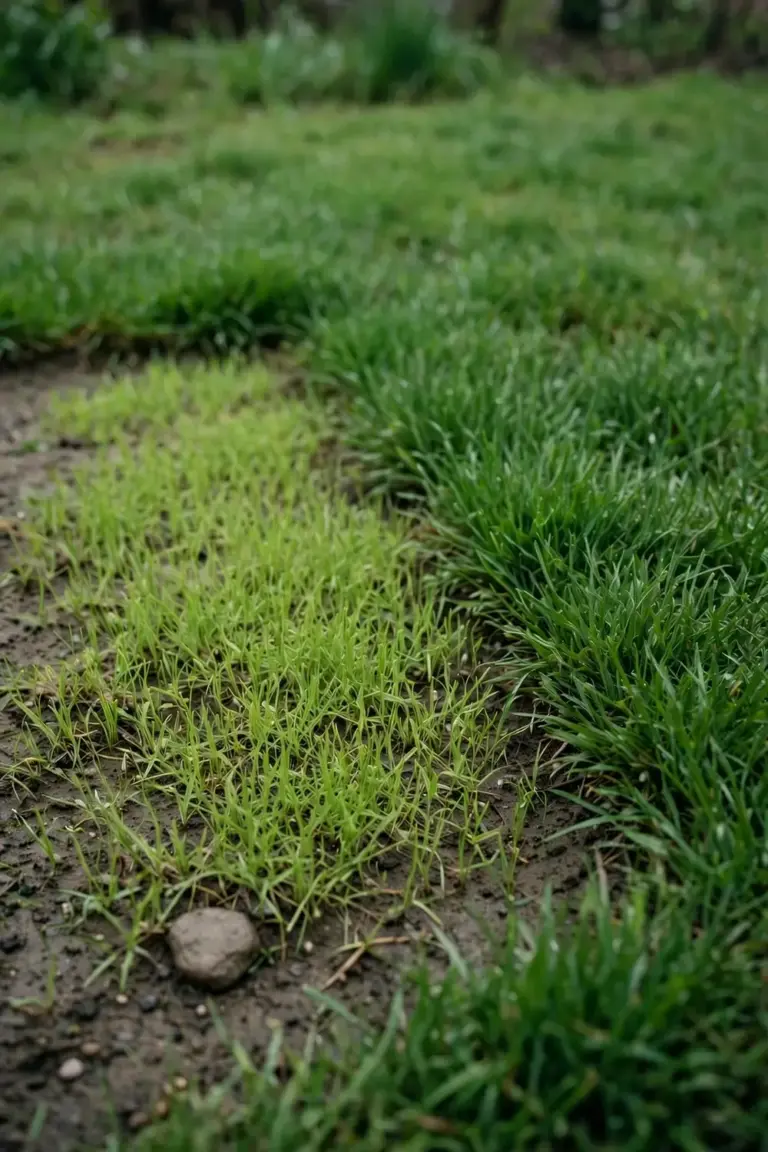
No. Buffalo has no seed, so a packet labeled buffalo seed will not grow buffalo. Fill a buffalo patch with plugs, runners, or sod cut from the same lawn. Buffalo spreads from above-ground runners, so plugs knit outward once the cause is fixed and the soil stays moist.
Plugs and sod knit within one growing season when the cause is fixed and water stays steady. Seed in cool-season lawns germinates in weeks and thickens over months. A patch that shows no spread after a full growing season still has an untreated cause, so test it again before filling it a second time.
Yes. Rake out dead grass and loose thatch so the fill touches soil. Seed on top of dead grass dries out, and plugs set on thatch root into air. Level the patch with topsoil where the surface sits low, then set the fill into the soil, not on top of the old mat.
Summer death points to drought, dry patch, or heat stress rather than to bad seed. Hydrophobic soil beads water away from the root zone, so the patch dries first in hot weather. Test the water, apply a wetting agent per the label, and water deeply. A patch that dies every summer has a soil problem, not a seed problem.
No. Fertilizer feeds grass that is already growing. It does not fix compaction, grubs, shade, dry patch, or disease. Feeding a stressed patch can push weak growth that dies faster. Fix the cause first, fill the patch, and feed only once the new grass is rooted and growing. Fertilising a lawn in spring sets the timing for the first feed after repair.
Fix the Cause First, Then Fill the Patch
Why your bare patch won’t grow back has one answer in most yards: the cause was still in the soil. A bare patch that keeps failing is a diagnosis problem, not a seed problem. Test the patch with a screwdriver, a peel, a shade count, and a cup of water. Match the result to the cause table. Fix the cause, then fill by turf type in the growing season. That order turns a patch that failed twice into a patch that holds. The next patch that opens gets the same treatment. Test it before you fill it. A lawn kept this way holds its patches, because every fill lands on soil that can grow grass.