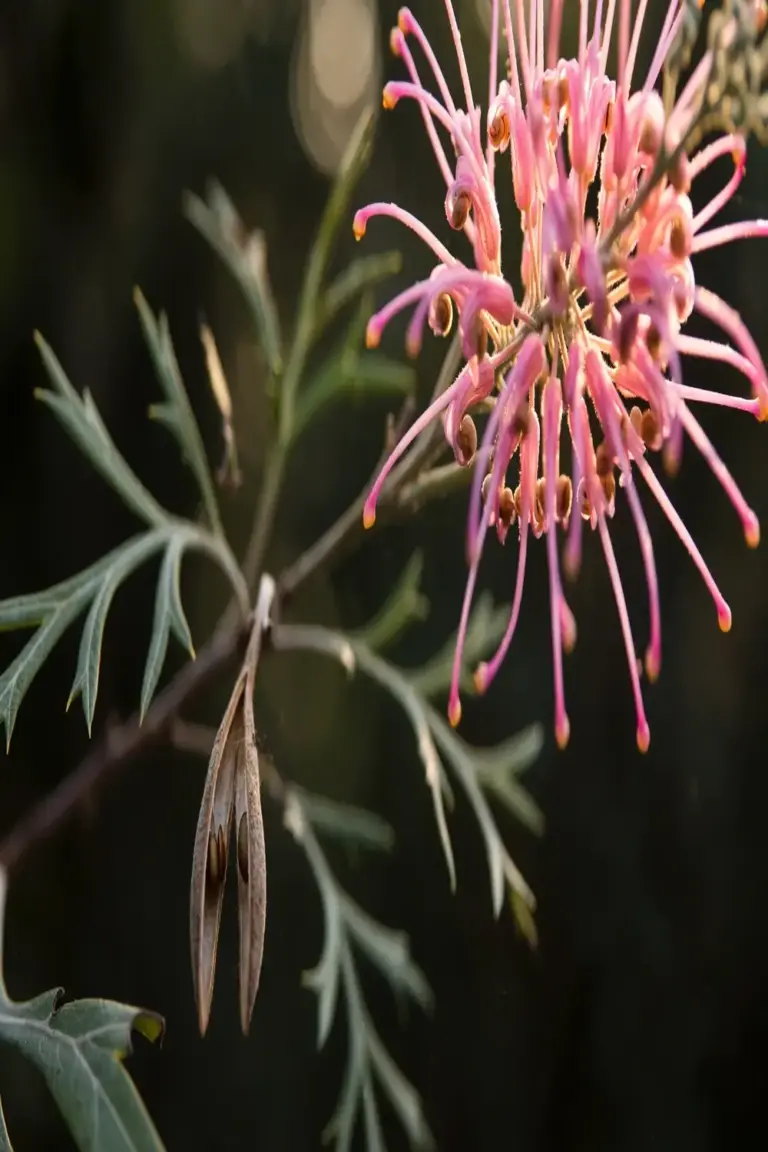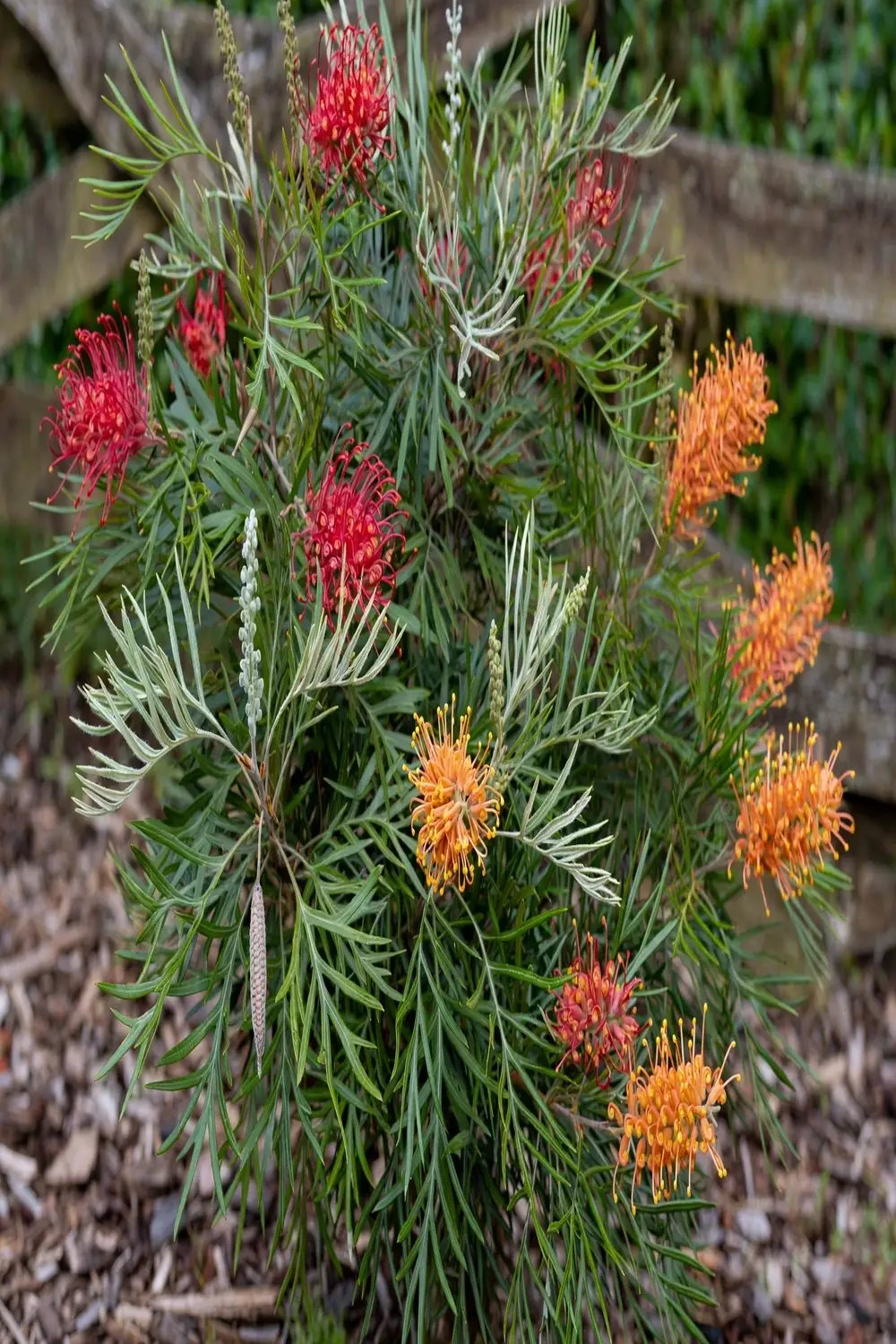

Check four clues before you name any grevillea: leaf, flower, habit, and fruit. Those four clues separate a grevillea from a hakea, a banksia, and a bottlebrush, and they narrow a genus of 362 species to one plant. That is grevillea identification in Australia in one pass, and the rest of this page walks the key from the genus test to the common species and cultivars.
I have learned that checking the fruit first saves me from naming a hakea as a grevillea.
Grevillea is a large Australian genus. The Australian National Botanic Gardens counts 362 species, with 357 in Australia and 355 endemic to the continent. No home gardener can memorize 362 species. The key below does not ask you to. It teaches the genus test, the flower-arrangement split, and the common plants you actually meet in gardens, in pots, and on bush walks. Species-level certainty often needs a key or a herbarium check, and the key at the end shows how to confirm one.
1. Run the 4-Clue Grevillea Identification Key: Leaf, Flower, Habit, Fruit
Run four clues in order, and never trust one alone. Leaf tells you the shape group. Flower tells you the arrangement group. Habit tells you the size group. Fruit confirms the genus. A plant that passes all four is a grevillea. A plant that fails the fruit test is something else, even when the flower looks right.
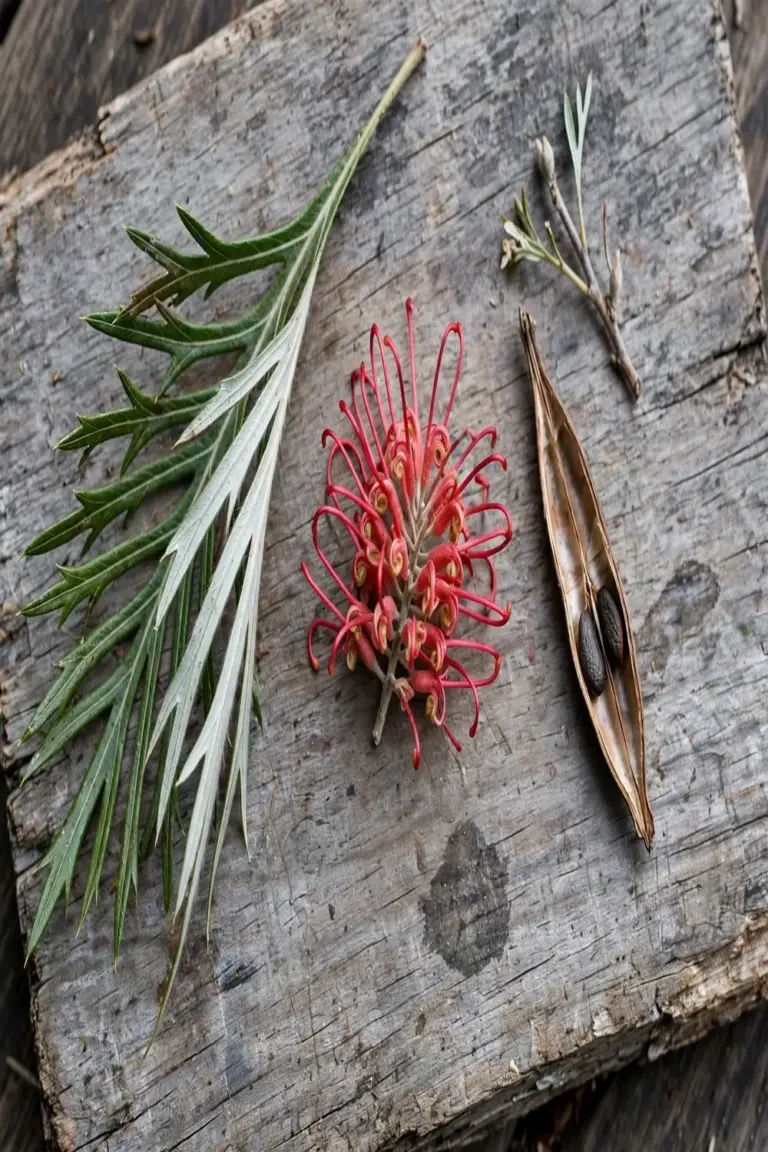
Start with the leaf. Grevillea leaves vary more than almost any other Australian genus. Some are simple and oval. Some are deeply lobed. Some are pinnate and fern-like. Some are needle-thin. Turn the leaf over, because the underside often carries silky hairs, and that silky underside is a strong grevillea hint. Leaf alone never keys a grevillea, because the genus covers every leaf shape. Leaf narrows the field. Flower and fruit close it.
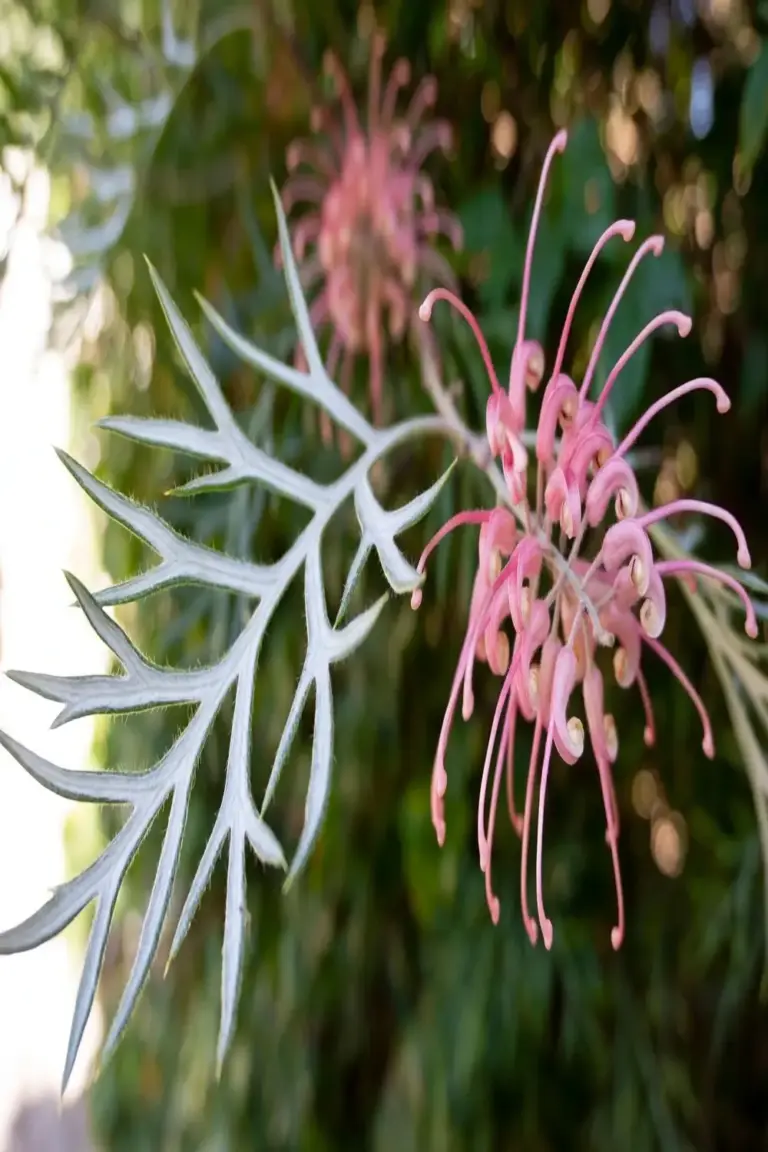
Next, read the flower arrangement. Grevillea flowers cluster in four arrangements: toothbrush (one-sided), spider (open, with long styles), brush or cylindrical, and clusters. Each flower carries four tepals and one long style with a pollen presenter at the tip. The style is the part you notice. Spider flowers show long, curving styles that stick out past the tepals. Toothbrush flowers line up on one side of the stem. Learn the four arrangements and half the genus falls into place.
Then read the habit. Grevilleas grow as trees, shrubs, and groundcovers. Habit alone never names a plant, because one species can grow tall in good soil and short in poor soil. Habit still helps. A 20 m tree with fern-like leaves is not a groundcover grevillea. A flat plant hugging the ground is not a silky oak. Record habit with the other three clues.
Finish with the fruit. Grevillea fruit is a thin-walled follicle. It splits down one side only and releases one or two seeds. The follicle is the genus giveaway. Hakea fruit is hard and woody and stays on the plant. Banksia fruit sits inside a woody cone. Bottlebrush fruit is a small woody capsule on a Myrtaceae stem. When you find a thin-walled follicle that splits down one side, you hold a grevillea. When you find a woody fruit that stays put, you hold something else.
2. Read the Quick Key Table Before You Name Anything
Use this table as the fast path. Match leaf plus flower plus habit, then confirm with fruit. The last column names the trap for each row.
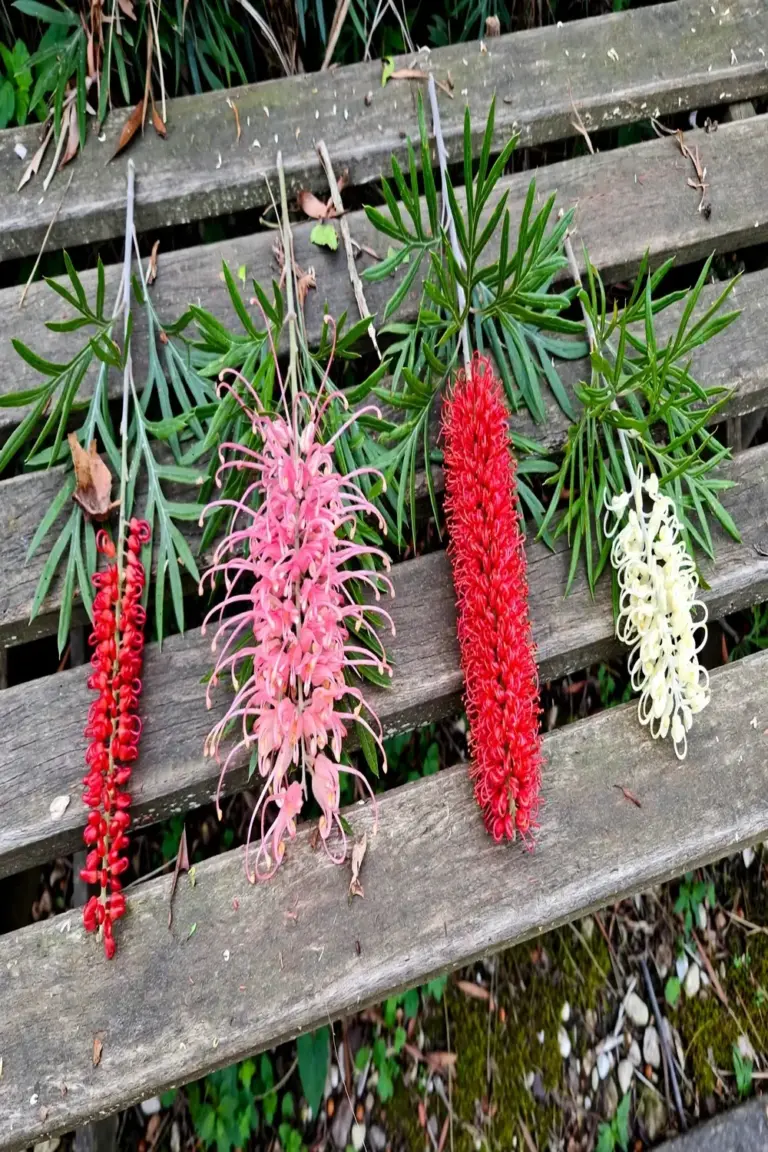
| Grevillea | Leaf | Flower | Habit | Confused With |
|---|---|---|---|---|
| Silky oak (Grevillea robusta) | Fern-like, deeply divided, silky underside | Toothbrush, orange-yellow | Tree, 8 to 40 m | Oak (not related) |
| Banksii group and red hybrids | Divided, fern-like | Cylindrical, red | Shrub | Other red grevilleas |
| Juniper grevillea (Grevillea juniperina) | Needle-like, prickly, juniper-like | Spider, pink to red | Low shrub | Rosemary grevillea |
| Woolly grevillea (Grevillea lanigera) | Small, woolly underside | Spider, pink to red | Low to prostrate shrub | Juniper grevillea |
| Rosemary grevillea (Grevillea rosmarinifolia) | Narrow, rosemary-like, pointed | Spider, pink and white | Compact shrub | Juniper grevillea |
| Toothbrush grevilleas (Grevillea longifolia type) | Long, sawtooth, silky underside | Toothbrush, red | Large shrub | Other toothbrush species |
| Groundcover grevilleas | Small to divided | Spider or toothbrush | Flat, spreading | Prostrate hakea |
| Spider-flower grevilleas | Simple to divided | Spider, long styles | Shrub | Toothbrush group |
Two plants can share a row. The table sorts them into groups. The H2s below split each group further. Work the table in order: leaf first, then flower, then habit, then fruit. When two rows still fit, the fruit decides. When the fruit is gone, the leaf underside plus the flower arrangement usually settles it, and the photo checklist at the end shows what to record for a later key check.
3. Name the Big Tree First: Silky Oak (Grevillea robusta)
A tall tree with fern-like leaves and orange-yellow toothbrush flowers is a silky oak. Silky oak is the largest grevillea, and it is the one most people meet first. Start here when the plant is a tree, because no other common grevillea reaches tree size in a garden.
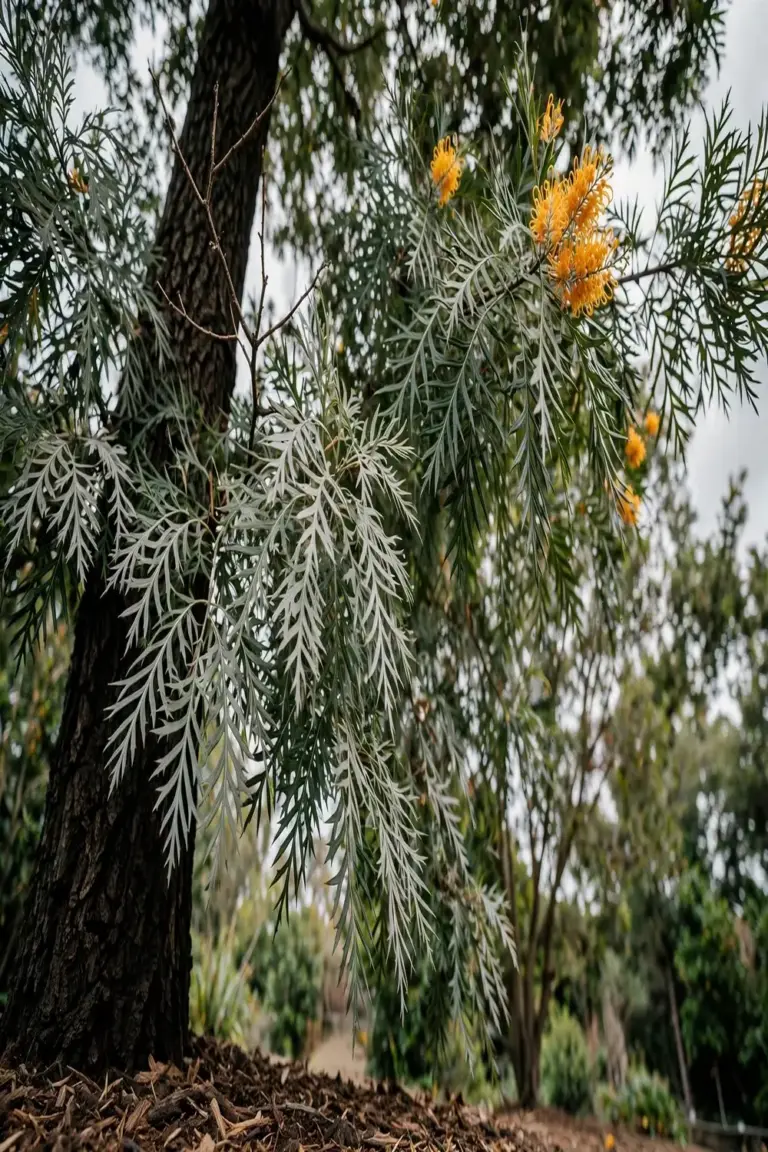
Silky oak grows as a tree 8 to 40 m tall, with leaves 10 to 34 cm long and divided into 11 to 31 pinnae, and it flowers from September to November, according to the PlantNET Flora of New South Wales description. The leaves look like fern fronds. The underside is pale and silky. The flowers line up on one side of the stem in a toothbrush arrangement, orange-yellow, sometimes with red blotches. The fruit is a smooth follicle. Silky oak drops many of its leaves just before flowering, so a flowering tree can look half bare. That bare look is normal for this species.
The name is a trap. Silky oak is Grevillea robusta, a Proteaceae tree. It is not an oak. True oaks belong to Quercus, a different family on the other side of the plant kingdom. Nurseries and timber yards still sell it as silky oak, silver oak, or Australian silver oak. Read the botanical name on the tag. When the tag says Grevillea robusta, you hold a grevillea. When the tag says Quercus, you hold an oak.
In the wild, silky oak grows in subtropical to dry rainforest and wet sclerophyll forest, on the coast and inland ranges north of the Coffs Harbour district, with cultivated trees naturalizing well beyond that range, according to the same PlantNET description. That range note helps in the field. A tall fern-leaved tree flowering orange-yellow in September in northern New South Wales or southern Queensland fits robusta. The same tree in a Melbourne street is a planted specimen, not a wild one. Range never names a plant alone, but range plus leaf plus flower plus fruit leaves little doubt.
4. Split the Red-Flowered Shrubs: Species or Hybrid?
Red-flowered shrubs cause the most confusion, because the popular garden plants are hybrids, not species. A species is a wild plant with a botanical name. A hybrid is a cross between two species, and it carries a cultivar name in single quotes. Never call a hybrid a species. The tag gives the truth away. Grevillea banksii is a species. Grevillea ‘Robyn Gordon’ is a cultivar, a cross.
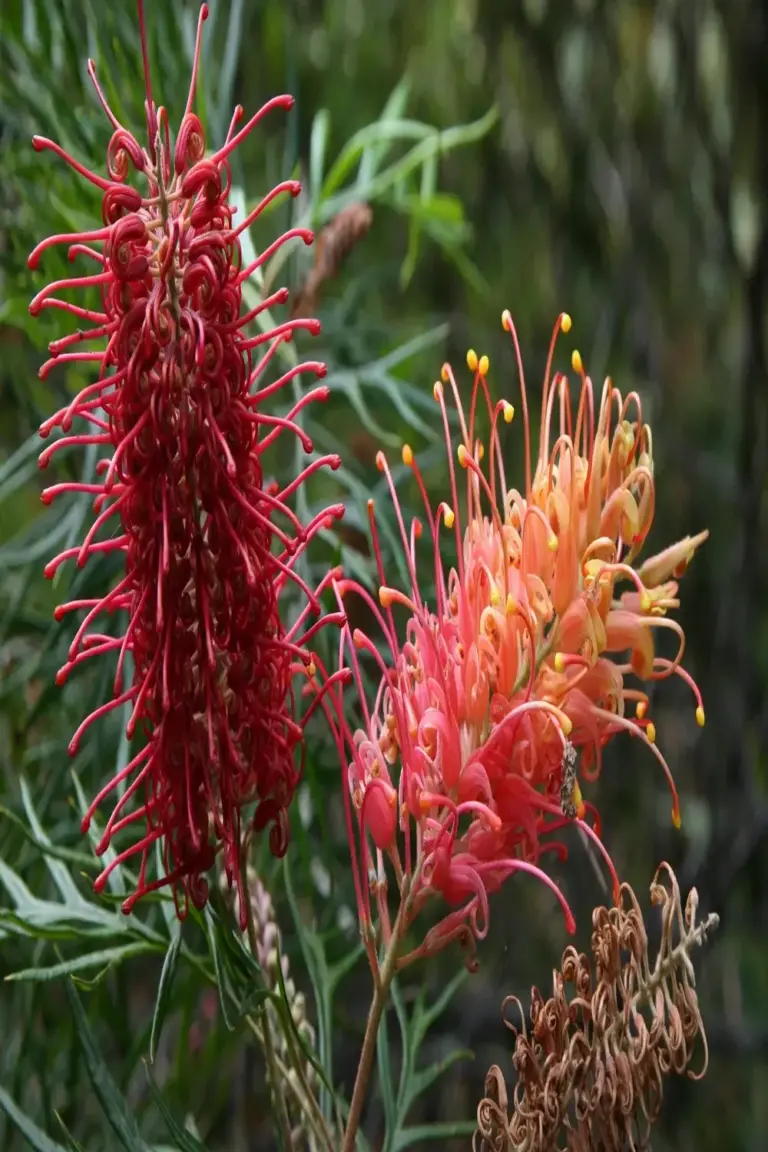
Grevillea banksii, the red-flowered parent behind the famous garden hybrids, grows as a shrub or small tree with divided leaves and cylindrical clusters of red flowers. The flower heads stand upright in dense cylinders, not one-sided toothbrushes. Banksii grows wild in Queensland. Garden plants sold as banksii selections carry the species name. Garden plants sold as ‘Robyn Gordon’, ‘Superb’, or ‘Peaches and Cream’ are hybrids, not banksii.
The three famous hybrids share one parentage. ‘Robyn Gordon’, ‘Superb’, and ‘Peaches and Cream’ are all crosses of Grevillea banksii and Grevillea bipinnatifida, according to cultivar registration records. They differ in flower color and size. ‘Robyn Gordon’ flowers deep red. ‘Superb’ flowers orange, red, and yellow. ‘Peaches and Cream’ opens yellow and ages to pink and orange. Their leaves look alike, deeply divided and fern-like. Color alone cannot split them with certainty, and that is honest. When two hybrids share parents and leaf shape, the flower color at full opening plus the cultivar tag settles the name. Without a tag, call it a banksii cross and stop. A wrong cultivar name is worse than a careful genus-level name.
The other parent matters too. Grevillea bipinnatifida grows as a low Western Australian shrub with deeply divided leaves and hanging racemes of red-orange flowers. Its flower clusters droop from the branches like bunches of grapes. That drooping habit shows up in its hybrid children, which often carry looser, arching flower heads than pure banksii. When a red-flowered shrub shows arching heads and finely divided leaves, bipinnatifida blood is likely. When the heads stand stiff and upright in dense cylinders, banksii dominates. Parentage reads in the flower posture.
Species hybridize readily in Grevillea, and named cultivars come from deliberate breeding or chance crosses, according to the Australian Native Plants Society profile of Grevillea beadleana. That habit is why nursery labels matter. A seedling from a hybrid does not come true to the parent. A cutting does. When you buy a named cultivar, you buy a clone. When you grow a seedling, you grow a gamble. For identification, the rule is simple. Trust the tag when it exists. Trust the flower plus leaf plus fruit when it does not.
5. Name the Pink and White Shrubs by Leaf and Style
Pink and white shrubs split by leaf shape, not by flower color. Flower color shifts with age and light. Leaf shape holds steady. Read the leaf first, then check the style.
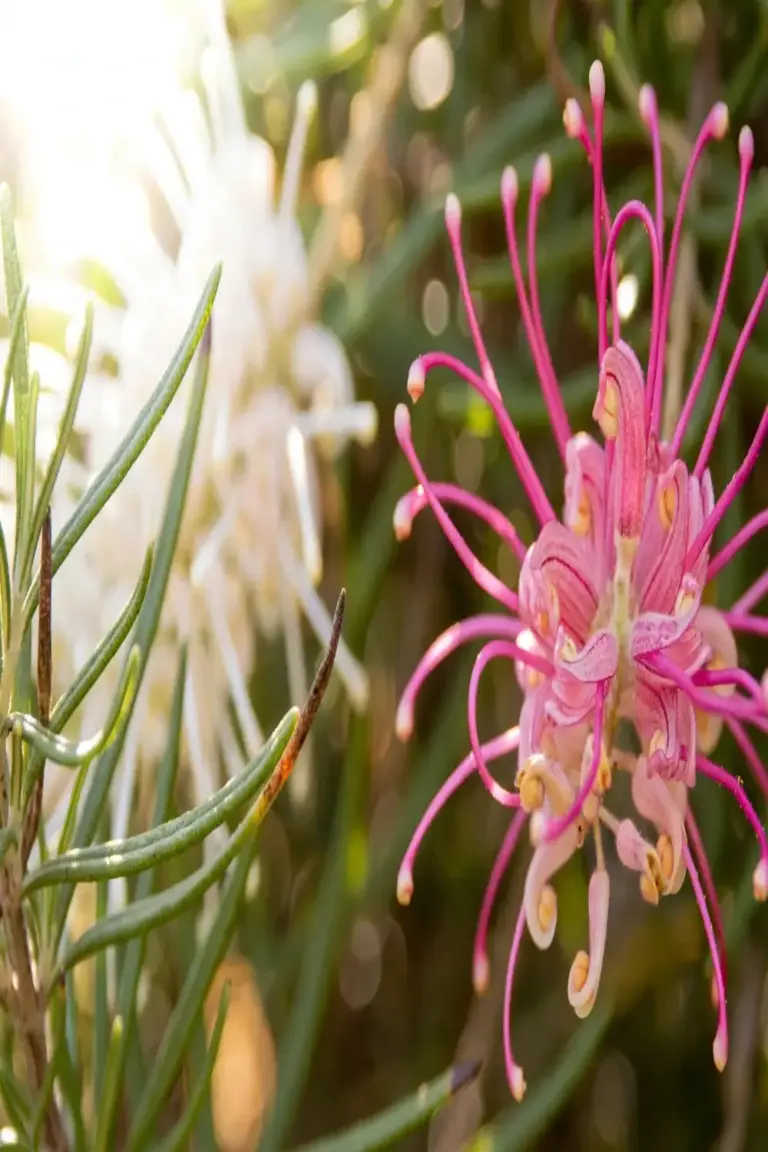
Juniper grevillea (Grevillea juniperina) carries needle-like, prickly leaves that look like juniper foliage. The leaves are stiff and sharp. The flowers are spider type, pink to red, with long styles that curve outward. The plant grows as a low shrub. The prickly leaf is the giveaway. When the leaf pricks your finger and the flower shows long spider styles, you hold juniper grevillea.
Woolly grevillea (Grevillea lanigera) carries small leaves with a woolly underside. The leaves feel soft and look gray-green. The flowers are spider type, pink to red. The plant grows low or flat. Woolly underside plus spider flower plus low habit names it. Juniper grevillea and woolly grevillea share flower color, so the leaf underside splits them. Prickly and smooth on top means juniper. Soft and woolly below means woolly.
Rosemary grevillea (Grevillea rosmarinifolia) carries narrow, pointed leaves that look like rosemary. The leaves are stiff and narrow with a pointed tip. The flowers are spider type, pink and white. The plant grows as a compact shrub. The rosemary look is the giveaway, but the flower proves it. True rosemary is a mint-family herb with square stems and opposite leaves. Rosemary grevillea carries alternate leaves and a Proteaceae flower with four tepals and one long style. Leaf plus flower together name it.
A fourth pink shrub rounds out the group. Grevillea thelemanniana, the hummingbird grevillea, carries small leaves and spider flowers in pink and red, with a low spreading habit. Its leaves are small and its flower heads are compact. Beginners confuse it with juniper grevillea, because both grow low and flower pink. The leaf splits them. Thelemanniana leaves are small and soft, never stiff needles. Juniper grevillea leaves are stiff needles that prick. Soft small leaf plus spider flower plus low habit points to thelemanniana type. Needle leaf plus spider flower points to juniper.
6. Spot the Groundcovers: Low Plants With Big Flowers
Groundcover grevilleas hug the ground and spread wide. They flower as heavily as the shrubs. Habit plus flower names them. Height alone never does, because a young shrub also grows low. Check the spread. A groundcover spreads wider than it grows tall, and its stems run along the ground.
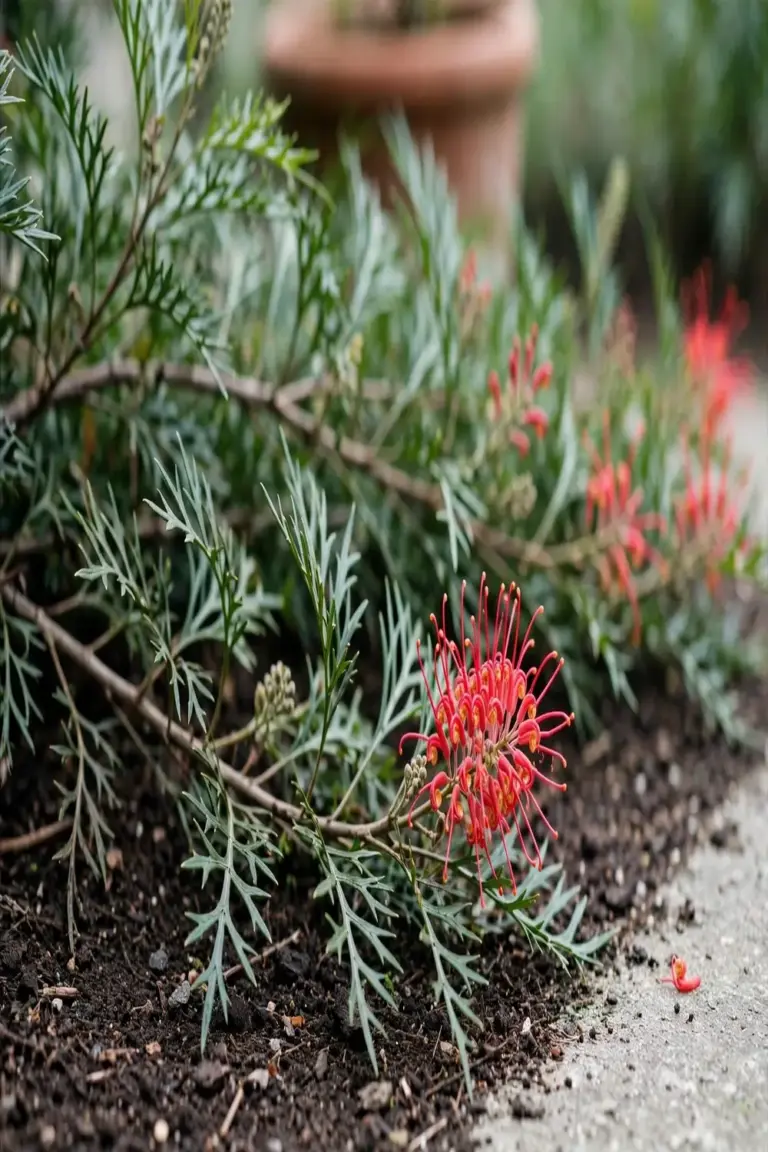
Prostrate forms of woolly grevillea and other low species carry the same flowers as their upright relatives. The flower arrangement stays spider or toothbrush. The leaf stays small or divided. The habit changes. When you meet a flat plant with grevillea flowers and a grevillea follicle, name the flower group first, then the leaf, then the habit. A flat plant with spider flowers and woolly leaves is a prostrate woolly type. A flat plant with toothbrush flowers and long sawtooth leaves is a low toothbrush type.
Potted grevilleas follow the same rule. The same native shrubs show up in pots on patios and balconies, and the pot does not change the key. Leaf plus flower plus fruit still name the plant. A potted plant with prickly needle leaves and spider flowers is still juniper grevillea. A potted plant with divided leaves and red cylindrical flowers is still a banksii cross. Do not let the pot shrink your reading. The field guides for gardeners in the archive show the same approach: the key travels with the plant, not with the bed.
Groundcover stems also root where they touch damp soil, so one plant can cover a wide patch and look like several plants. Check whether the stems connect. A single spreading plant shows connected stems running along the ground. Separate seedlings show separate crowns. That check matters when you photograph the habit shot, because a wide patch of one plant photographs differently from a cluster of seedlings.
7. Read the Spider Flowers: Long Styles, Open Heads
Spider flowers show long styles that stick out past the tepals. The flower head looks open and spidery, with styles curving outward like legs. The name describes the look, not a species. “Spider flower” is a flower form. Many grevillea species carry spider flowers. Never treat it as one plant.
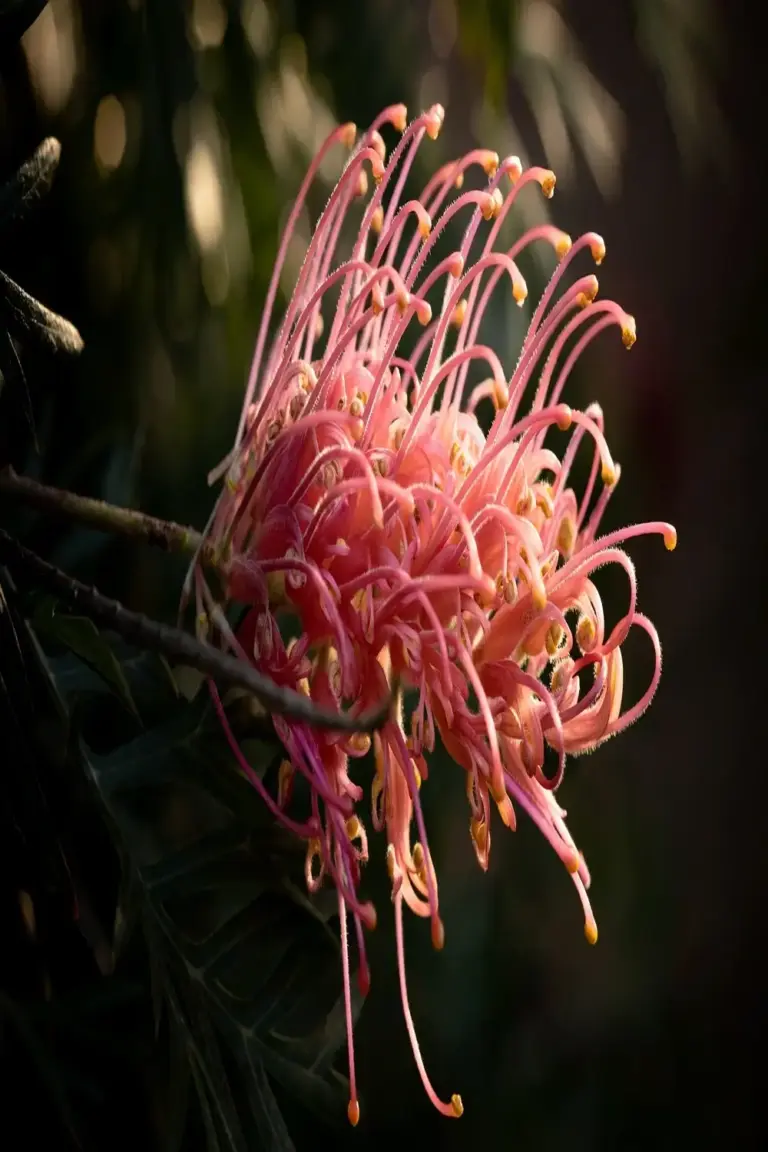
Read the style first, since spider styles run long and curved, tipped with a pollen presenter, while the tepals sit back and the head looks airy. Compare that with a toothbrush head, where the flowers line up tight on one side, and the two forms never blur once you have seen both. Spider heads look loose, while toothbrush heads look combed, with every flower facing one way.
Then read the leaf. Spider-flowered species span every leaf shape. Juniper grevillea shows needle leaves, woolly grevillea shows small woolly leaves, and rosemary grevillea shows narrow pointed leaves. Other spider species show divided or lobed leaves. The style names the form group. The leaf names the species. Both clues together give the answer.
8. Read the Toothbrushes: One-Sided Flower Heads
Toothbrush flowers line up on one side of the stem. The flowers sit in a one-sided raceme, all facing the same way, like bristles on a brush. The name describes the arrangement. Many grevillea species carry toothbrush flowers. Never treat it as one plant.
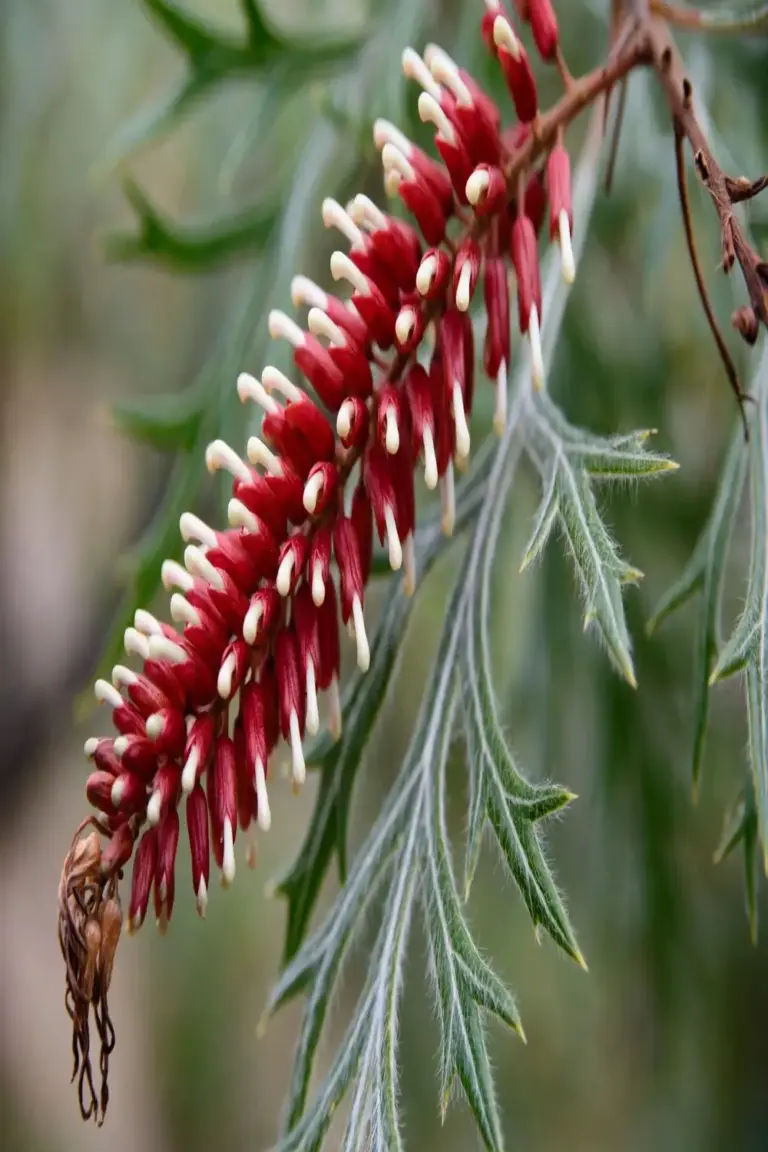
Grevillea longifolia is the classic toothbrush example. It grows as a large shrub with long sawtooth leaves and red toothbrush flowers. The leaves run 12 to 28 cm long with serrations that reach halfway to the midrib, and the undersides carry flat silky brownish hairs, according to the Australian National Botanic Gardens notes on the species. The flowers sit in one-sided racemes 4 to 8 cm long. The fruit is a thin-walled follicle that opens fast, so seed collection needs a close watch. Leaf plus toothbrush plus follicle names it.
Silky oak also carries toothbrush flowers, which is why beginners confuse the two groups. Habit splits them. Longifolia grows as a large shrub. Robusta grows as a tree to 40 m. Leaf splits them further. Longifolia leaves are long, sawtooth, and mostly simple. Robusta leaves are deeply divided and fern-like. When the plant is a shrub with sawtooth leaves and red toothbrush heads, think longifolia type. When the plant is a tree with fern leaves and orange toothbrush heads, think robusta.
Toothbrush and cylindrical heads also confuse beginners, because both look dense. The difference is the side. Toothbrush heads carry flowers on one side of the stem only. Cylindrical heads carry flowers all around the stem. Turn the head and look from the back, since a bare back means toothbrush and flowers all around mean cylindrical. That one turn settles more arguments than any photo of the flower face.
9. Separate the Lookalikes: Banksia, Hakea, Waratah, Bottlebrush
Four plants fool grevillea watchers. All four share the Proteaceae family except bottlebrush, which belongs to Myrtaceae. All four carry showy flowers. The fruit test splits them cleanly.
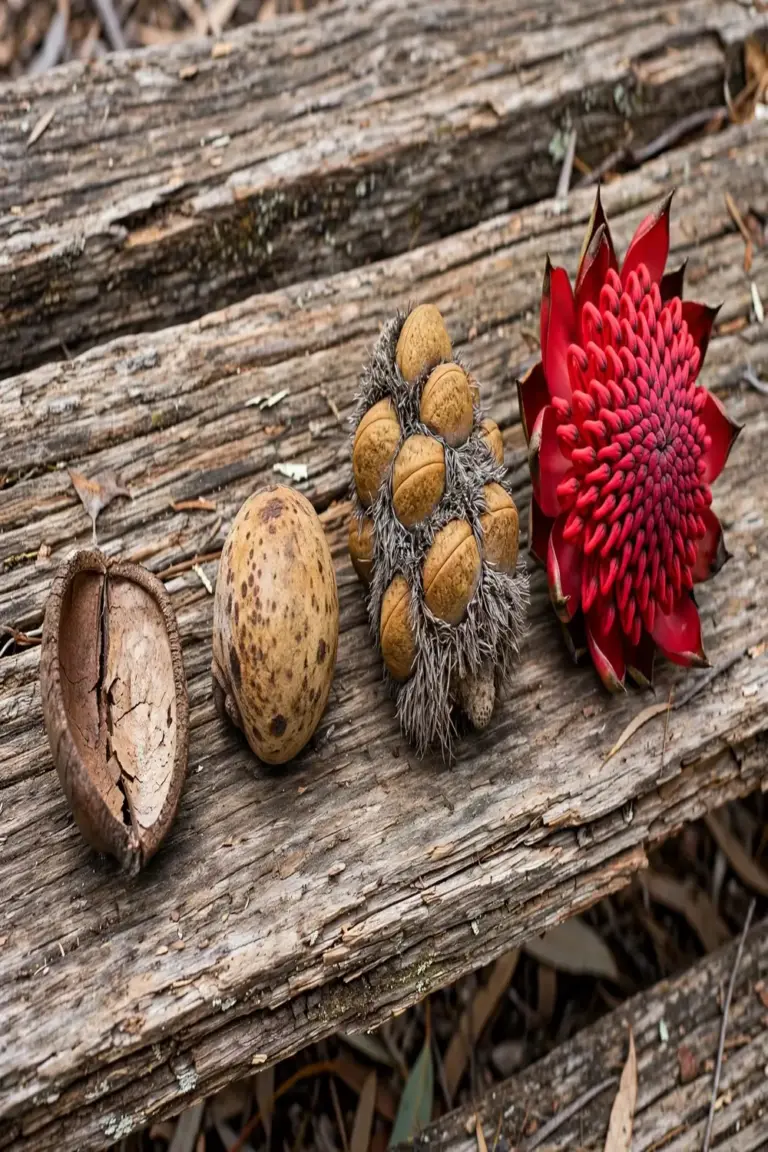
Hakea is the hardest split, because hakea flowers look like grevillea flowers. The fruit decides. Hakea fruit is a hard follicle, usually woody, that persists on the plant, according to the Northern Territory Herbarium FloraNT description of Hakea. Grevillea fruit is a thin-walled follicle that splits and drops its seeds. Hakea leaves also differ. Hakea leaf surfaces look alike on top and below. Grevillea leaf surfaces differ, with a silky or hairy underside. Hakea ovary and style are smooth. Grevillea ovary and style carry hairs. When the fruit is hard and woody and stays on the plant, you hold a hakea. When the fruit is thin-walled and splits, you hold a grevillea.
Banksia is the easiest split once you see the fruit. Banksia flowers pack into a dense woody spike that becomes a woody cone. The cone stays on the plant for years. Grevillea flowers never form a cone. Grevillea fruit is a single thin-walled follicle per flower. When you see a woody cone studded with old flower parts, you hold a banksia. When you see separate follicles, you hold a grevillea. Banksia leaves also help. Banksia leaves often carry sawtooth edges and a pale underside, but leaf alone never settles it. The cone settles it.
Waratah is the showiest split. Waratah flowers pack into a big domed head wrapped in red bracts. The head looks like one giant flower. Grevillea flowers never form a domed head with bracts. Waratah leaves are large, simple, and leathery. Grevillea leaves in the same garden are divided or narrow. When the flower head is a dome with showy bracts, you hold a waratah. When the flowers sit in racemes without bracts, you hold a grevillea.
Bottlebrush is the family split. Bottlebrush belongs to Myrtaceae, the myrtle family. Its flower is a brush of stamens, not a Proteaceae flower with four tepals and one style. Bottlebrush fruit is a small woody capsule that rings the stem. Grevillea fruit is a follicle. Bottlebrush leaves are simple and dotted with oil glands. Crush a bottlebrush leaf and it smells of myrtle oil. Crush a grevillea leaf and it smells green and plain. A brush of stamens means bottlebrush. Four tepals plus one long style means grevillea.
10. Photograph the Four Clues Before You Name It
Photograph four shots before you name any grevillea. Leaf plus underside. Flower head close up. Whole plant for habit. Fruit close up. Four photos beat forty guesses, and the fruit shot matters most because fruit confirms the genus.

Shoot the leaf twice. Once from above, once from below. The underside shows the silky hairs that separate grevillea from hakea. Shoot the flower head straight on and from the side. The side view shows whether the head is one-sided, open, or cylindrical. Shoot the whole plant with something for scale, a hand span or a hat. Habit reads wrong without scale. Shoot the fruit with the stem attached. A follicle on its stem reads cleaner than a follicle in a palm.
Then confirm with a key. The Australian National Botanic Gardens Grevillea Key aims to cover every known native taxon in Australia with descriptive data, illustrations, photos, and maps. PlantNET FloraOnline carries herbarium descriptions for each species. A field guide in print works when the phone has no signal. To use PlantNET well, search the name you suspect, then read the description line by line against your photos. Check leaf length, flower arrangement, fruit shape, and range. When every line matches, the name holds. When one line fails, back up one step in the key and try the next candidate. The same native shrubs appear in garden beds, in pots, and on bush walks, and the best Australian native plants for container gardens shows how often grevilleas turn up in pots, where the same four clues still apply.
Never collect a wild grevillea. Many species grow in narrow ranges. The alpine grevillea is the only grevillea native to Tasmania. One rare grevillea near Busselton is protected, and picking wild plants is illegal in reserves. Photograph the plant where it stands. Leave the fruit on the stem. A photo names the plant without harming the population.
Frequently Asked Questions
Check the fruit. Grevillea fruit is a thin-walled follicle that splits down one side and drops its seeds. Hakea fruit is hard and woody and stays on the plant. Leaf surfaces help too. Hakea leaves look alike on top and below. Grevillea leaves differ, with a silky or hairy underside. Flowers alone cannot split them.
No. Silky oak is Grevillea robusta, a Proteaceae tree. True oaks belong to Quercus, a different family. The name comes from the silky underside of the leaves and the figured timber. Read the botanical name on the tag. Grevillea robusta means grevillea. Quercus means oak.
A hybrid is a cross between two species. Cultivars like ‘Robyn Gordon’, ‘Superb’, and ‘Peaches and Cream’ are crosses of Grevillea banksii and Grevillea bipinnatifida. The tag names the cultivar in single quotes. A species tag carries a two-part Latin name with no quotes. Never call a hybrid a species.
No. Grevillea leaves span simple, lobed, pinnate, and needle forms, and one species can vary. Leaf narrows the field. Flower arrangement and fruit close it. Always check the follicle. A thin-walled follicle that splits down one side confirms the genus. Woody fruit that stays put points to hakea instead.
The Australian National Botanic Gardens counts 362 Grevillea species, with 357 in Australia and 355 endemic to the continent. Most are shrubs. A few grow as trees or groundcovers. Gardens hold a small slice of that total, mostly hybrids. Wild plants span alps to desert, and many grow in narrow local ranges.
Start With the Fruit, Then the Flower
Fruit names the genus. Flower names the group. Leaf names the species. Habit checks the answer. Run the four clues in that order and the grevillea in front of you stops being a mystery. Photograph the four shots, confirm with a key, and leave the wild plant standing.