
Name the growth form first and you cut 11 candidates to 3 or 4. A fern with a trunk is a tree fern, a fern on a tree trunk is an epiphyte, and a fern that scrambles over other plants is a climber. That single split names the group in seconds and rules out most wrong answers at once. Australia holds more than 400 native fern species, and this page keys out the 11 you meet most often in gardens, pots, and bush walks.
A fern is a spore plant. Ferns never flower and never make seeds. They reproduce by spores, and the spore clusters on the frond underside carry the name sorus in the singular and sori in the plural. Australian fern identification runs on that key: 4 clues across 11 common ferns, then four lookalikes that are not ferns at all.
I have learned that checking the underside of the frond settles more fern arguments than any photo of the whole plant does.
1. Start Australian Fern Identification With the Form, Not the Species
Name the growth form first, because form cuts 11 candidates to three or four. Tree ferns carry a trunk. Ground ferns rise from a rhizome at soil level. Epiphytes perch on a tree trunk, a rock, or a basket. Climbers scramble and cling. Stand back and read the whole plant before you touch a frond.
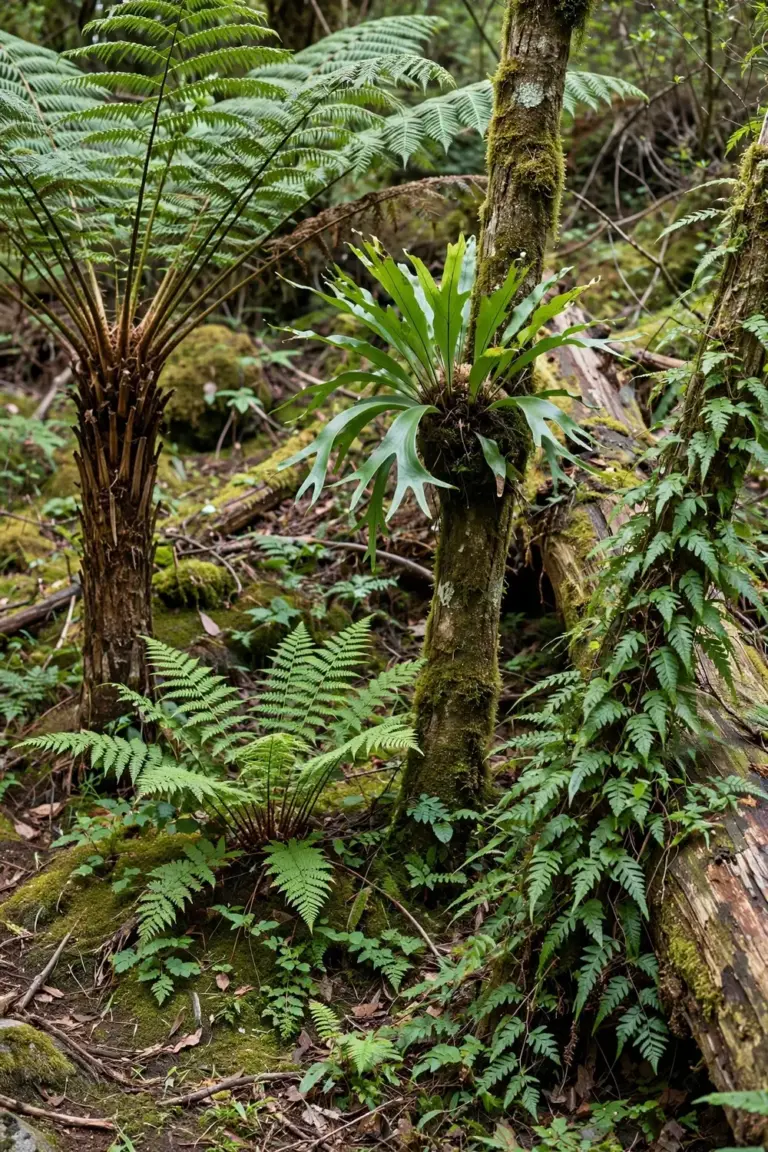
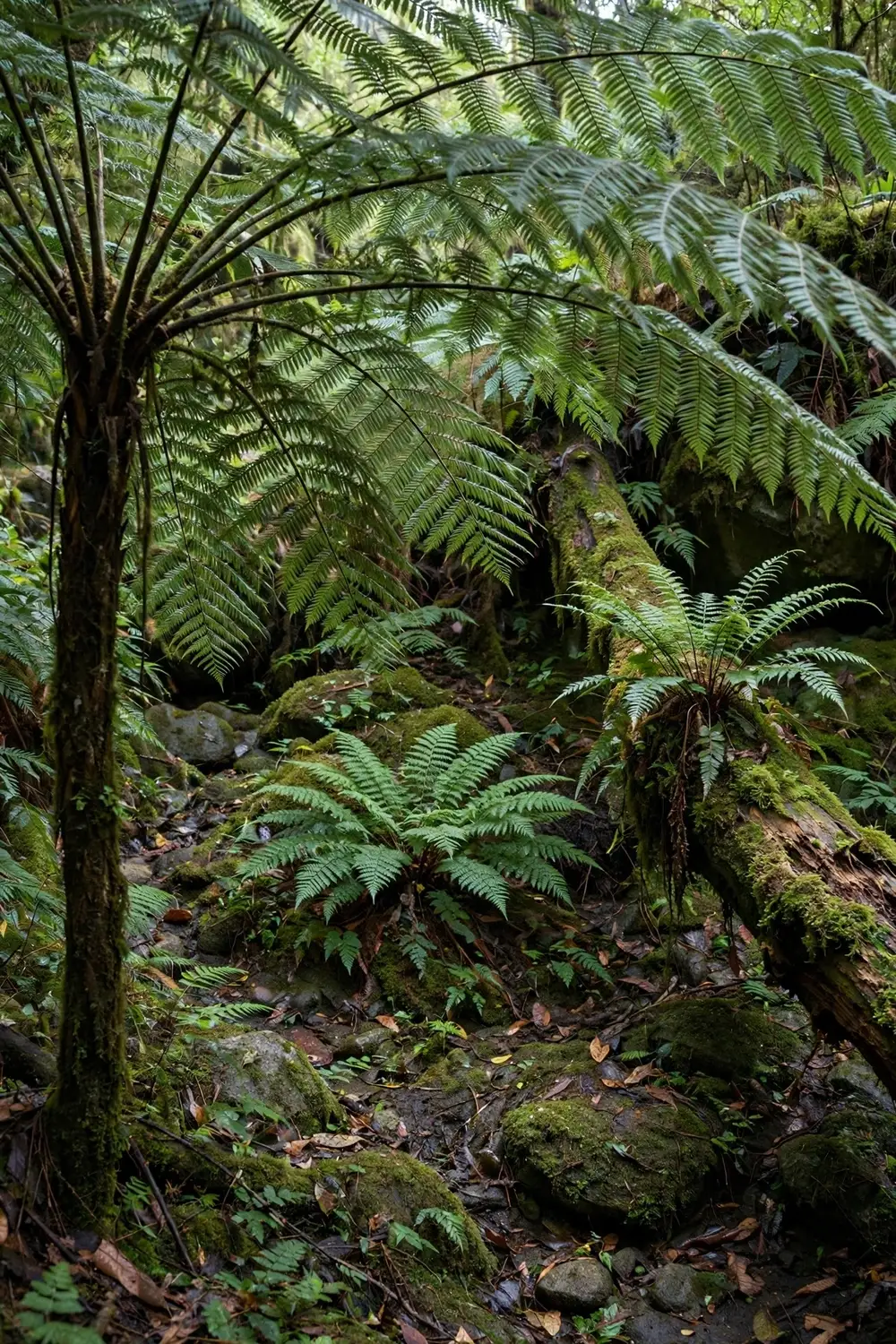
The trunk test separates tree ferns from everything else. A tree fern trunk is a rhizome wrapped in old frond bases and roots, not wood. A palm trunk is wood. A shrub trunk is wood. If the trunk feels fibrous and matted, with old frond bases packed into it, the plant sits in the tree fern group.
| Form | What You See | First Test |
|---|---|---|
| Tree fern | A trunk with a crown of fronds on top | Feel the trunk for matted fiber and old frond bases |
| Ground fern | Fronds rise from soil level, no trunk | Look for a creeping rhizome or a rosette at the base |
| Epiphyte | Fronds grow from a tree, rock, or basket | Check whether the roots grip bark or rock instead of soil |
| Climber | Fronds scramble or cling over other plants | Follow one frond back to its rooting point |
Form alone never finishes the job. Two tree ferns can share a trunk shape and still differ in stipe scales and sori. Form tells you which three or four candidates to test next. The 4-clue key in the next section runs those tests in order.
2. Run the 4-Clue Key: Form, Frond, Stem, Habitat
Work the four clues in order: form, frond, stem, habitat. Form narrows the group. Frond division and sori name the species. Stem and rhizome confirm it. Habitat breaks the last ties. A fern in a rainforest gully and the same shape on a dry rock wall are rarely the same species.
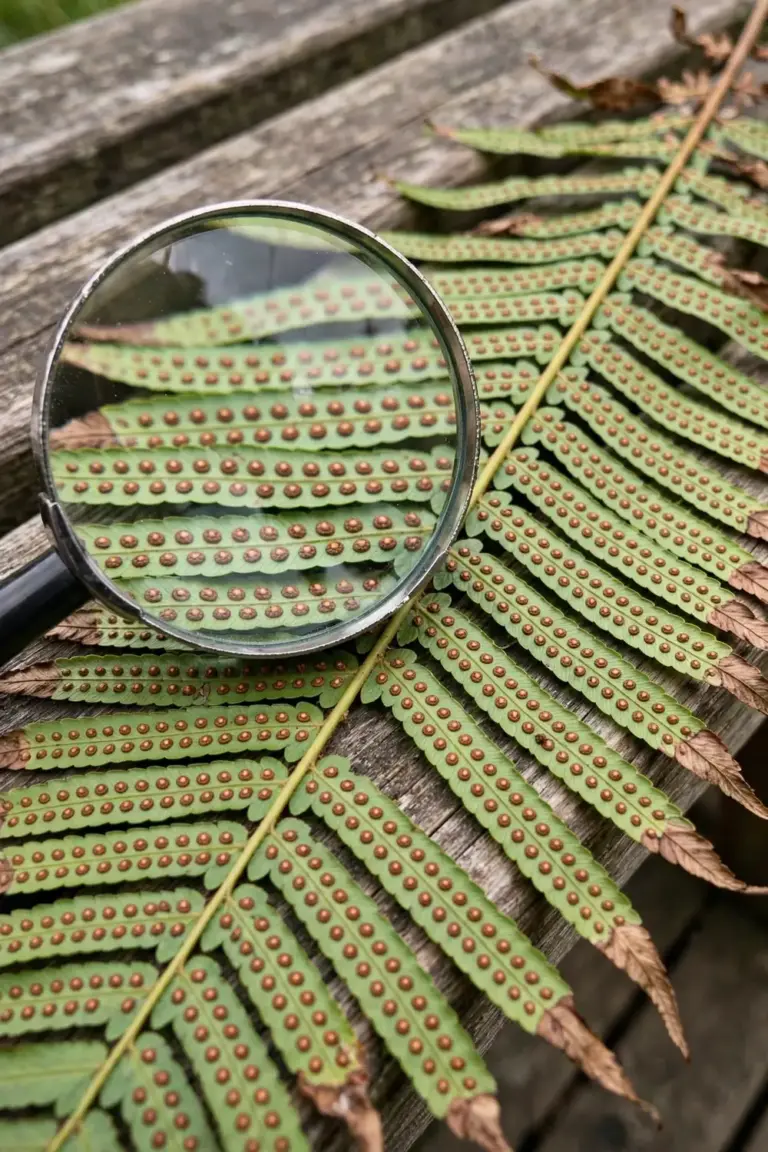
Frond division counts how many times the leafy blade splits. A simple frond never divides. A once-divided frond splits into leaflets called pinnae. A twice-divided frond splits again into pinnules. A thrice-divided frond splits a third time. Hold the frond flat and count the splits along one side of the central rib. The rib is the rachis, and the stalk below the leafy part is the stipe.
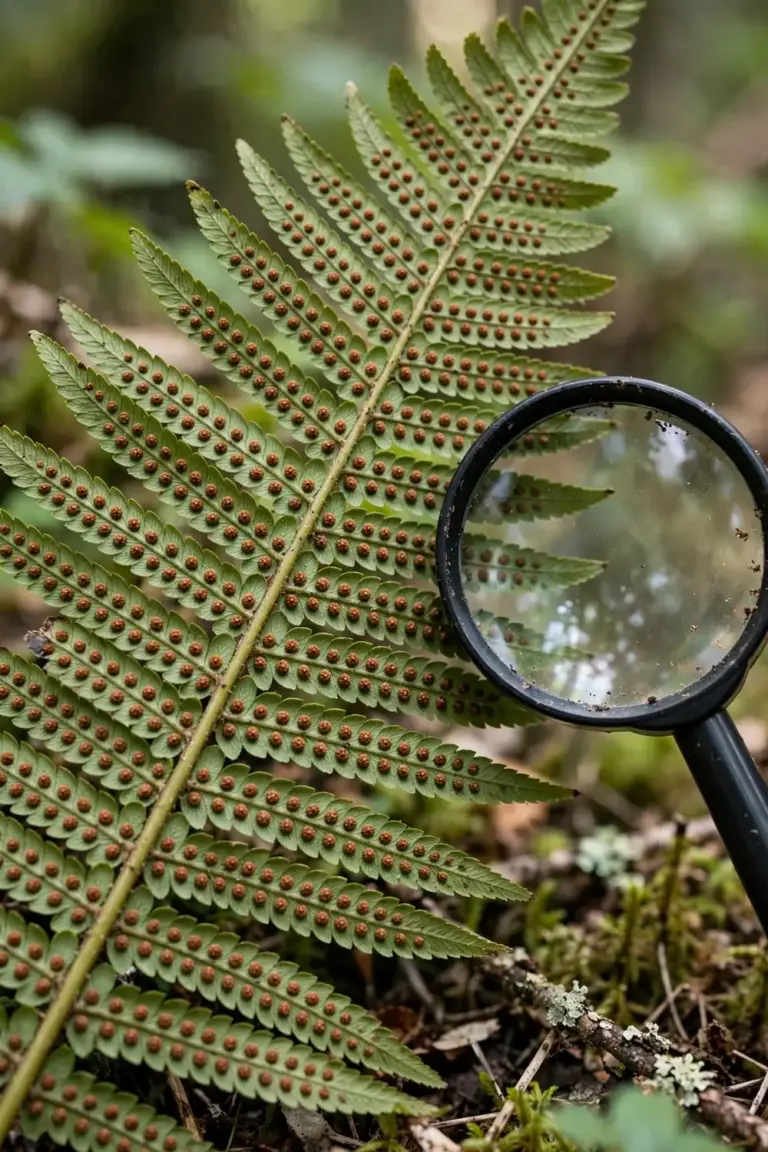
Sori sit on the frond underside, and their shape and position carry the identification. The University of Tasmania fern families key describes the family patterns: spleenworts carry sori in lines along single veins, water ferns carry sori on the margins or fused in groups, and bracken relatives carry round or linear sori on or just inside the segment margins. Turn a fertile frond over and read the pattern before you guess.
Stem and rhizome give the third clue. A trunk means a tree fern. A creeping rhizome means a ground fern or a climber. A rosette with no visible stem means a fern that crowns from one point. Scrape nothing and dig nothing. Look at the base, the stipe scales, and the hairs.
Habitat gives the fourth clue. Rainforest gullies, creek banks, rock walls, and tree trunks each host a different set. A fern on a rainforest tree trunk and a fern on a dry rock wall in the same garden are different plants even when the fronds look alike. Record the habitat with the photo.
3. Name the Soft Tree Fern by Its Hairy Stipe and Tiny Sori
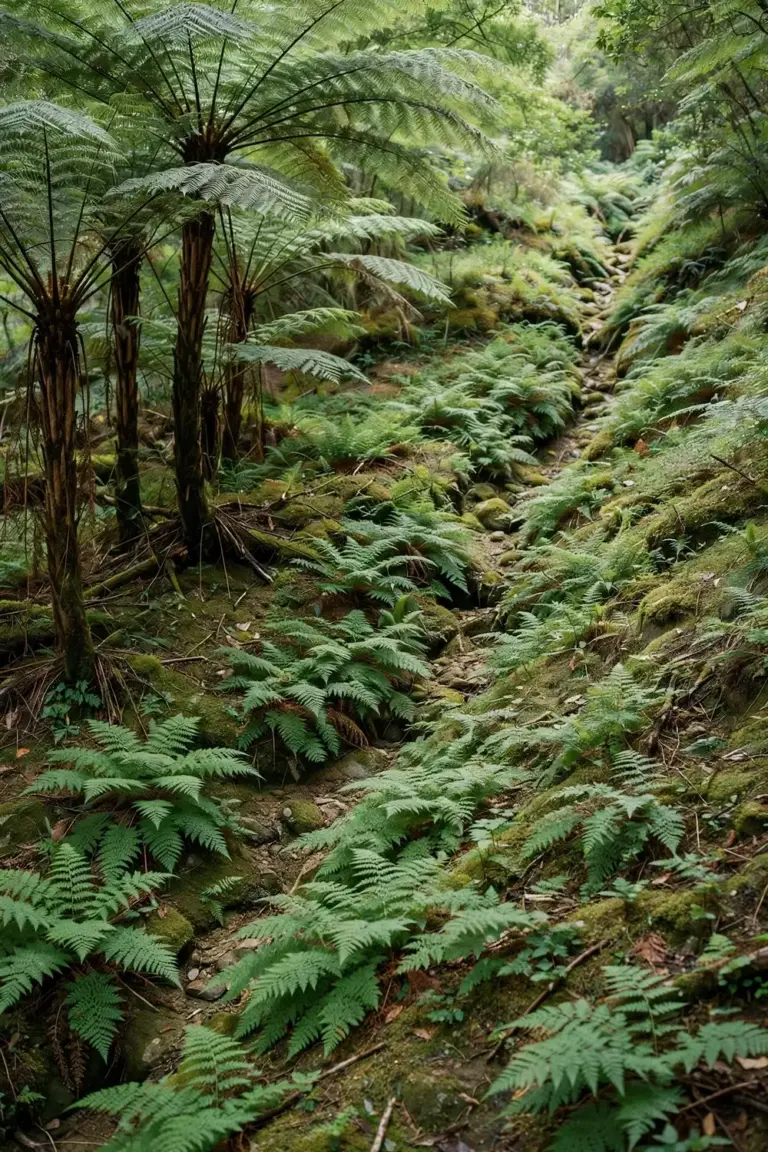
The soft tree fern is Dicksonia antarctica. It is the most widely grown tree fern in Australian gardens, and it grows from south-eastern Queensland through coastal New South Wales and Victoria to Tasmania. It carries a fibrous trunk, a spreading crown of dark green fronds, and a very hairy stipe base. The hairs feel soft and dense, and they separate this species from the scaly tree fern at a touch.
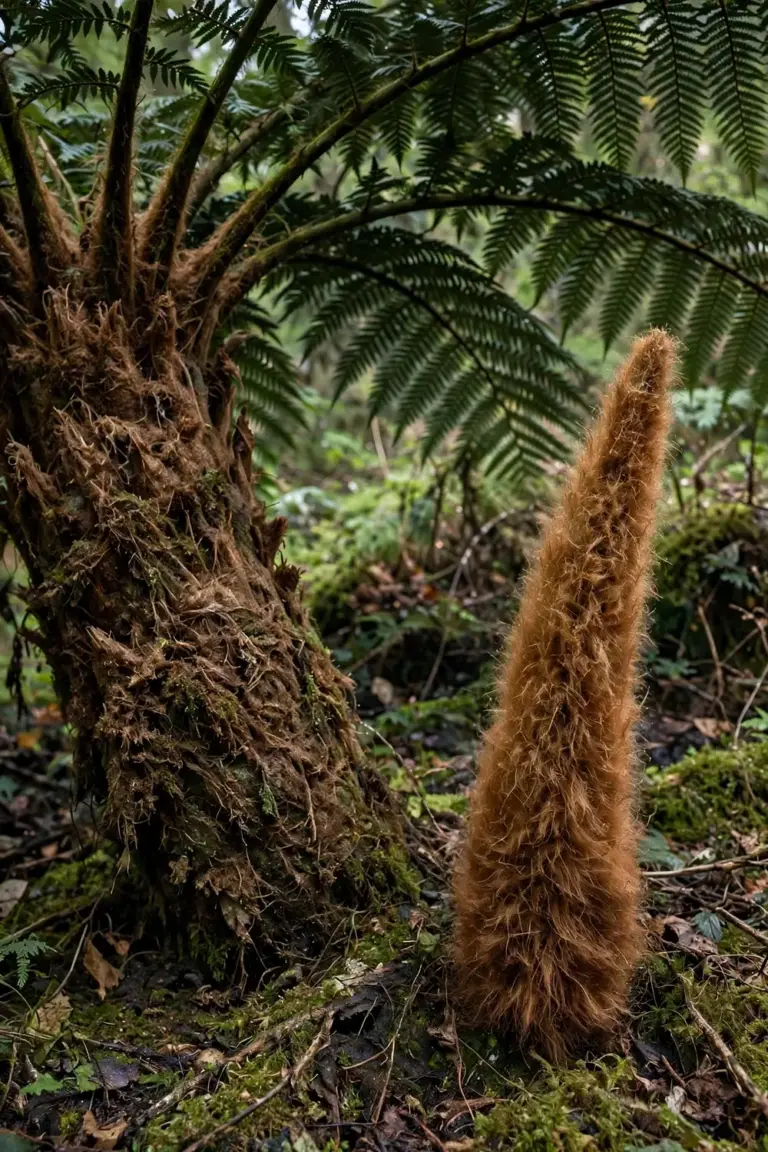
The sori settle the name. The Australian National Botanic Gardens notes record sori only 1 mm in diameter on this species, with the other Australian tree fern species carrying sori of 2 mm. A hand lens shows the dots. The same notes record that the species can grow up to 15 m in height, with a spreading canopy up to 6 m in diameter. Most garden plants stay far smaller, and height alone never names one.
Confused with: the scaly tree fern (Cyathea cooperi), which carries scales instead of hairs on the stipe, and young mother shield fern, which lacks a trunk. Habitat: moist gullies, creek beds, wet sclerophyll forest, and shaded garden corners.
4. Split the Rough Tree Fern by Its Rough Trunk and Persistent Stipe Bases
The rough tree fern is Alsophila australis, also sold and labelled under the synonym Cyathea australis. Its trunk feels rough because old stipe bases persist on it instead of falling cleanly away. Run a hand down the trunk. A rough, knobbly surface with stipe stubs points to this species. A trunk with clean oval scars points to the scaly tree fern instead.
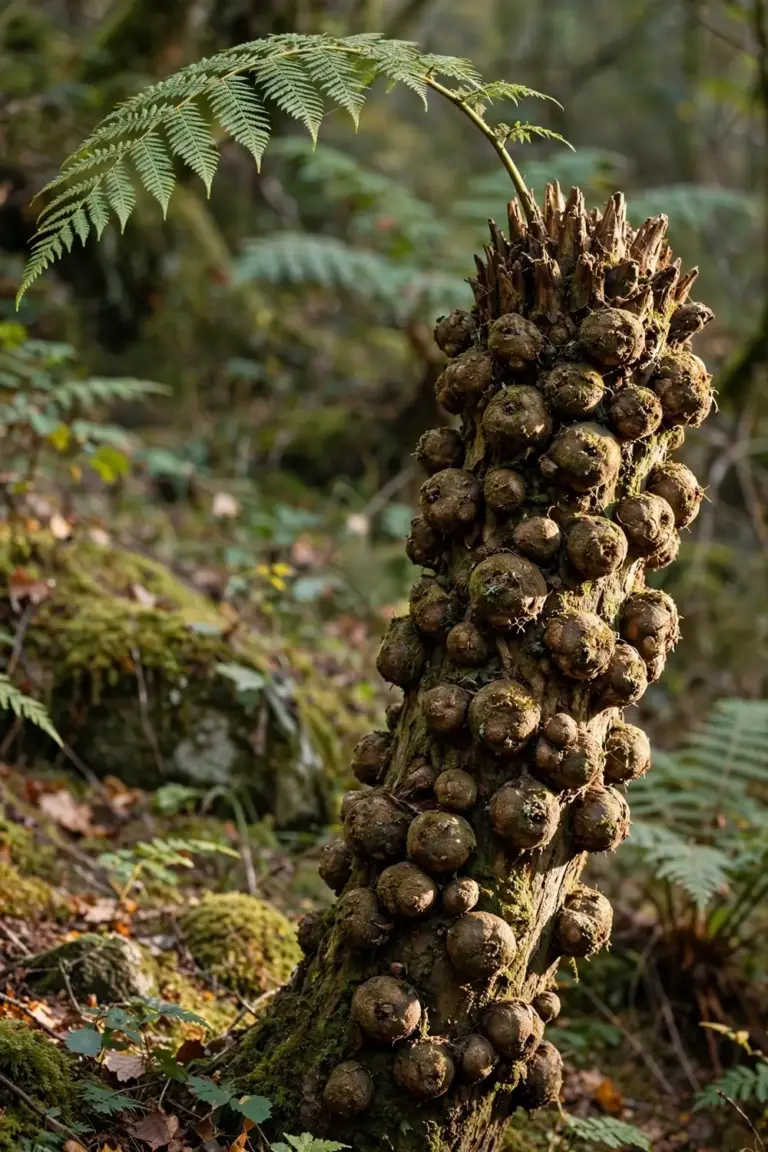
The fronds arch in a crown like other tree ferns, and the stipe carries scales. The trunk test comes first here because the fronds alone overlap with the scaly tree fern. Check the trunk, then the stipe base, then the sori. The Friends of Geelong Botanic Gardens tree fern guide treats trunk pattern, stipe scales, and sori together as the distinguishing set for tree ferns, and this species shows why: no single clue carries the name on its own.
Confused with: the scaly tree fern, which drops its stipes and leaves oval scars, and the prickly tree fern, which carries prickles on the stipe. Habitat: wet forest and sheltered gullies in eastern Australia.
5. Spot the Scaly Tree Fern by Two Scale Types
The scaly tree fern is Cyathea cooperi, also called the lacy tree fern and sometimes sold under the trade name Australian tree fern. Its decisive test is the stipe base. It carries two scale types at once: long white scales and short red-brown scales. No other common tree fern shows that pair. Look at the base of a living stipe in good light. The two scale types read clearly.
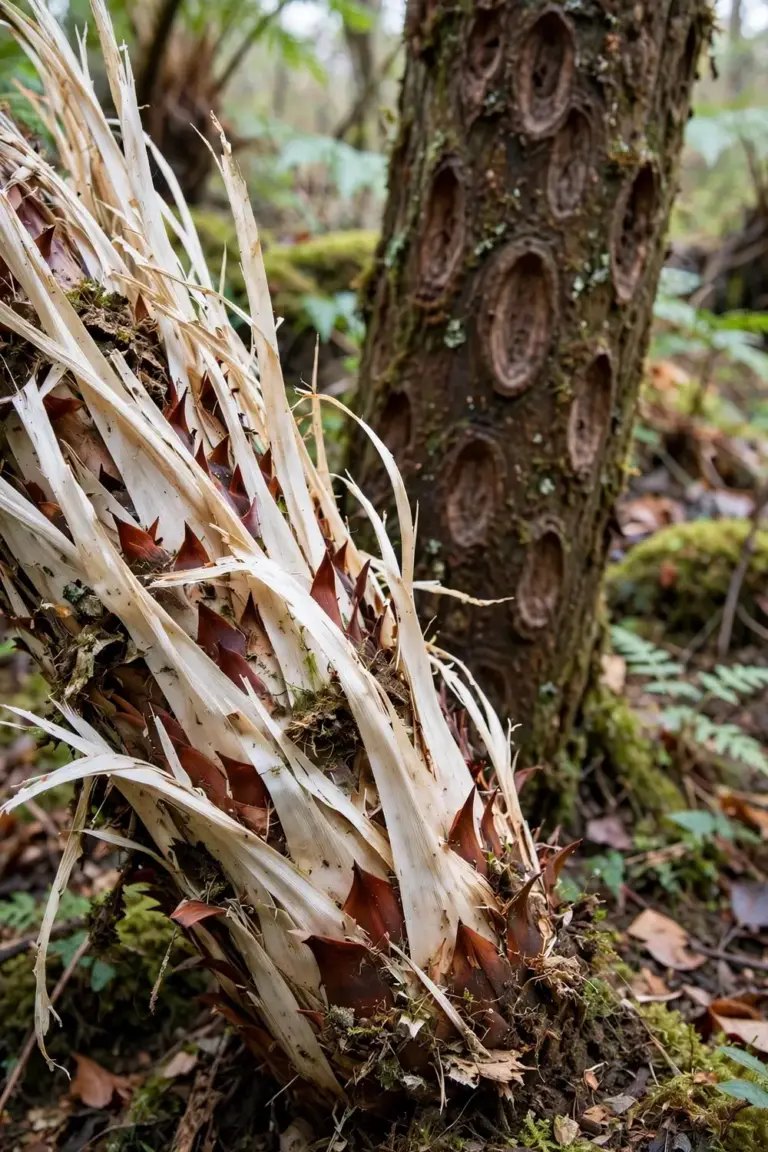
The trunk gives the second test. Old stipes fall cleanly away and leave large oval scars in a pattern on the trunk. The Friends of Geelong Botanic Gardens tree fern guide records a trunk 30 cm across at most and a height up to 15 m, with fronds up to 6 m long and sori ringed by circular indusia made of scales. Garden plants stay smaller, and frond length alone never names one.
Confused with: the rough tree fern, which keeps its stipe bases and feels rough, and the soft tree fern, which carries hairs instead of scales. Habitat: New South Wales and Queensland rainforest, and gardens across eastern Australia. The trade name “Australian tree fern” also covers the soft tree fern, so check the botanical name on the label before you trust the common name.
6. Tell the Prickly Tree Fern by Its Prickled Stipe
The prickly tree fern is Sphaeropteris australis. Its decisive test is the stipe. Small prickles stud the stipe and the rachis, and they catch a fingertip dragged lightly along the stalk. Wear gloves for the test. The prickles separate this species from the rough and scaly tree ferns, which carry scales and hairs but no prickles.
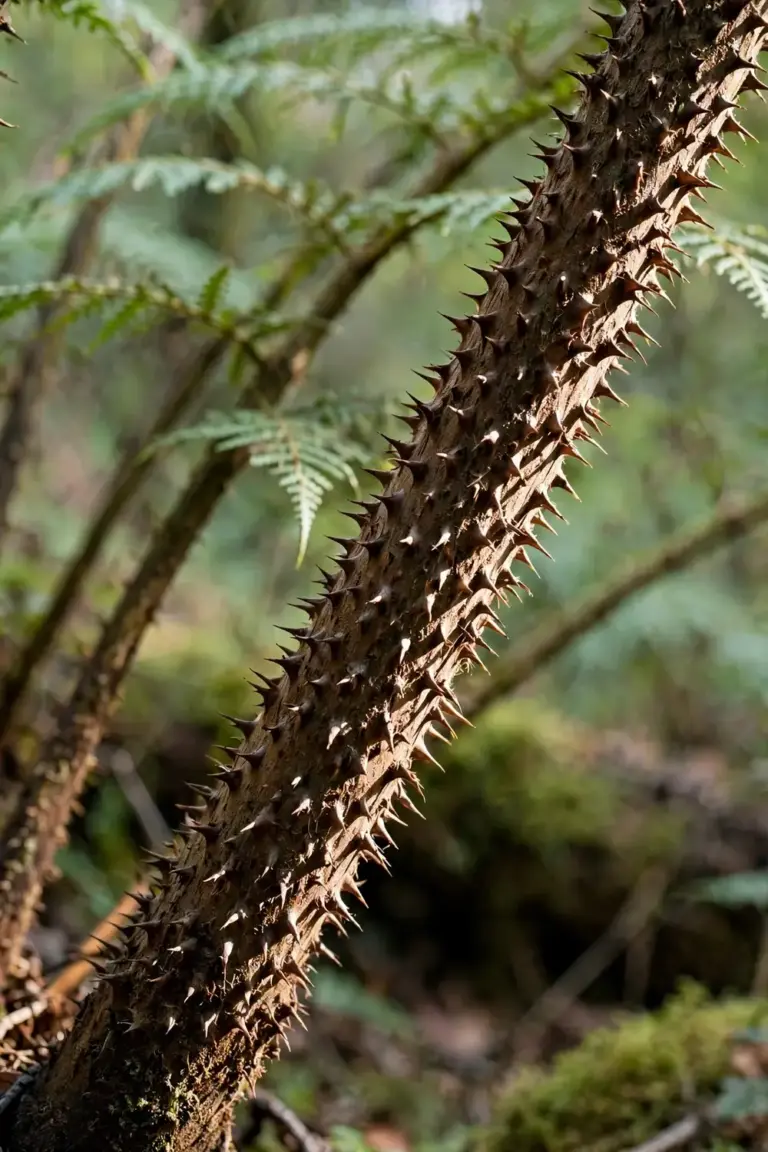
The fronds arch like other tree ferns, and the trunk is fibrous. The name trap sits in older books, which may label this plant Cyathea australis. Modern treatments place the prickly tree fern in Sphaeropteris and the rough tree fern in Alsophila. When a label reads Cyathea australis, check the stipe. Prickles mean the prickly tree fern. A rough trunk with persistent stipe bases means the rough tree fern.
Confused with: the rough tree fern, which shares the older name in some books, and the scaly tree fern, which shows two scale types and oval trunk scars. Habitat: wet forest in eastern Australia.
7. Recognise the Bird’s Nest Fern by Its Undivided Fronds
The bird’s nest fern is Asplenium nidus. It breaks the frond-division rule on purpose. Its fronds never divide. Each frond is one broad, undivided blade with a dark midrib, and the fronds rise in a rosette that forms a nest-like crown. The rosette traps leaf litter at its center, and the plant feeds from the debris it catches. One look at the rosette names the group.
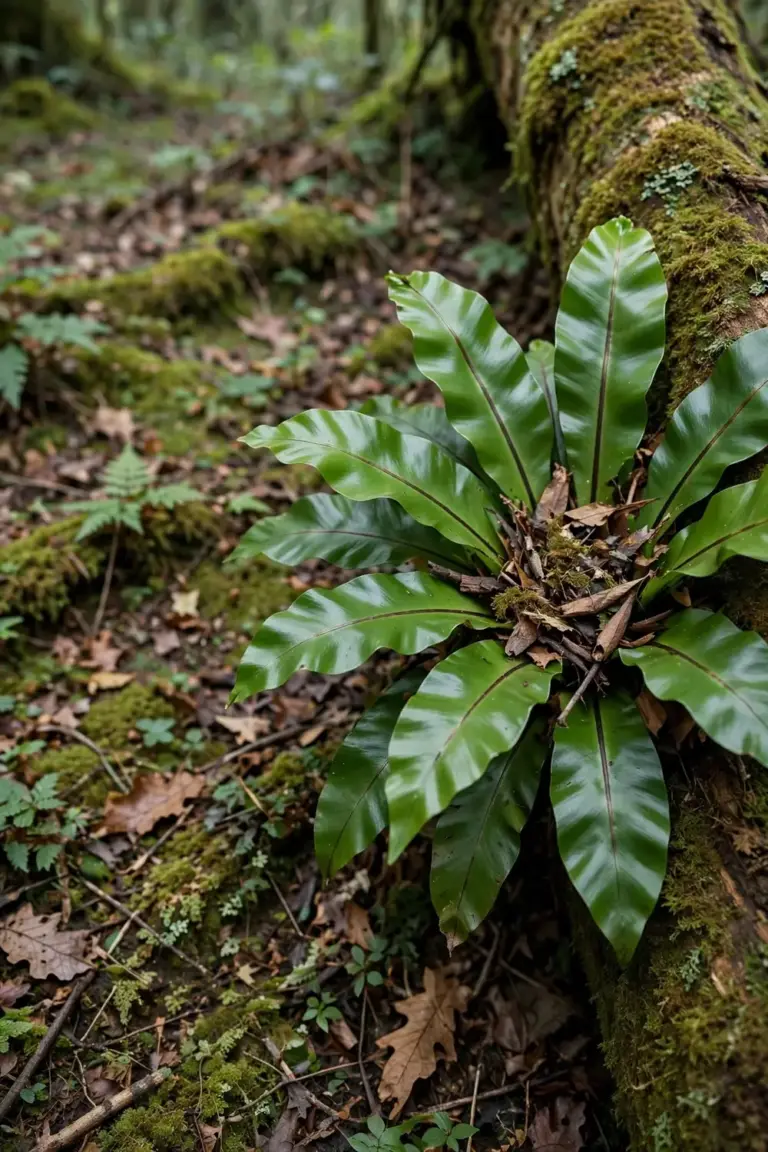
The sori confirm it. Spleenworts carry sori in lines along single veins, and the bird’s nest fern shows long lines of sori running along the veins on the frond underside. Turn a frond over and look for the lines. A rosette of undivided fronds with linear sori is the bird’s nest fern.
Confused with: other Asplenium spleenworts, which divide their fronds, and the staghorn fern, which grows as an epiphyte but carries forked fronds instead of undivided blades. Habitat: rainforest trees and rocks, and pots and baskets in gardens.
8. Read the Elkhorn Fern by Its Two Frond Types
The elkhorn fern is Platycerium bifurcatum. It carries two frond types on one plant, and that pair names it. Sterile shield fronds press flat against the trunk or board and form a round nest. Fertile fronds fork like antlers and hang outward, carrying sori near their tips. One plant shows both shapes at once. No other common epiphyte pairs a flat shield with forked antlers.
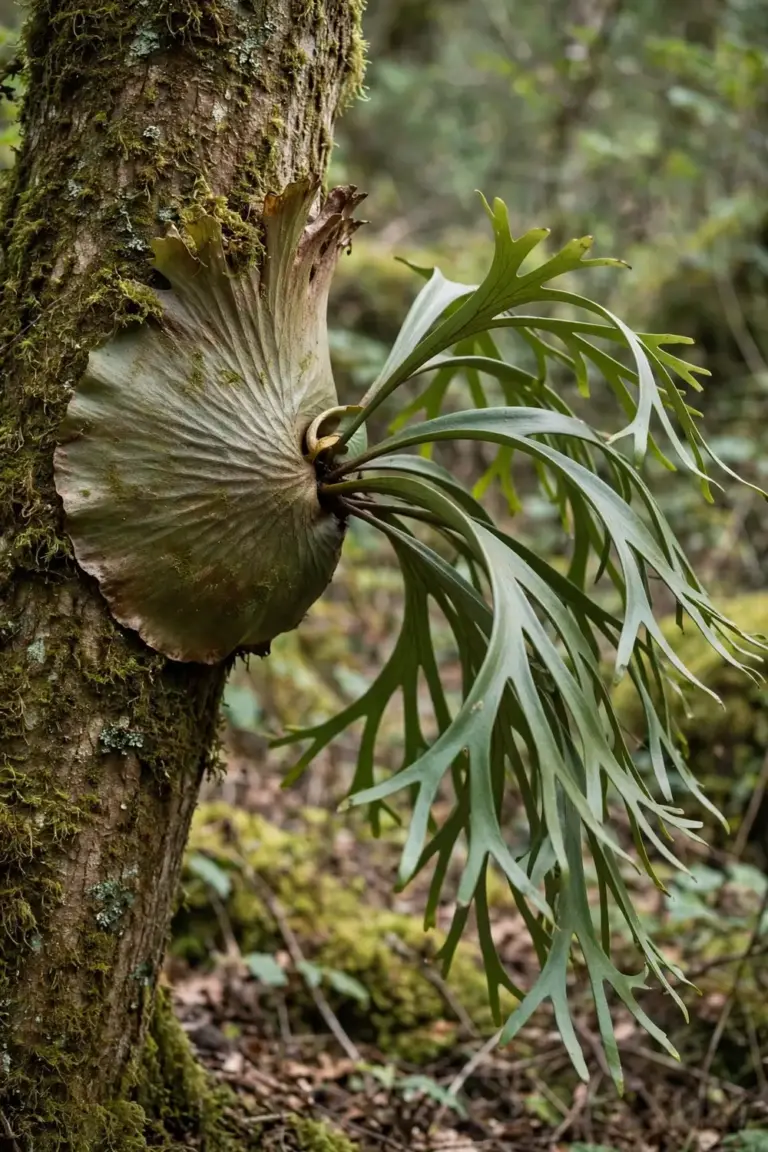
The growth form confirms it. Elkhorn ferns grow as epiphytes on trees, and they grip bark with roots behind the shield frond. The shield frond browns with age, and that browning is normal. A brown shield frond is not a dead plant. New green shield fronds grow over the old ones.
Confused with: the staghorn fern (Platycerium superbum), which is also a true fern and also an epiphyte. The staghorn carries one very large shield frond and longer, less forked fertile fronds. The elkhorn forks its fertile fronds repeatedly. Habitat: rainforest trees in eastern Australia, and mounted boards and baskets in gardens.
9. Separate the Fishbone Water Fern by Its Two Frond Shapes
The fishbone water fern is Blechnum nudum, also listed under the synonym Lomaria nuda. Its decisive test is dimorphism: sterile and fertile fronds look different on the same plant. Sterile fronds lie flat and broad, with pinnae set like the bones of a fish along the rachis. Fertile fronds stand narrower and stiffer, with sori running along the margins. One plant shows both shapes side by side.
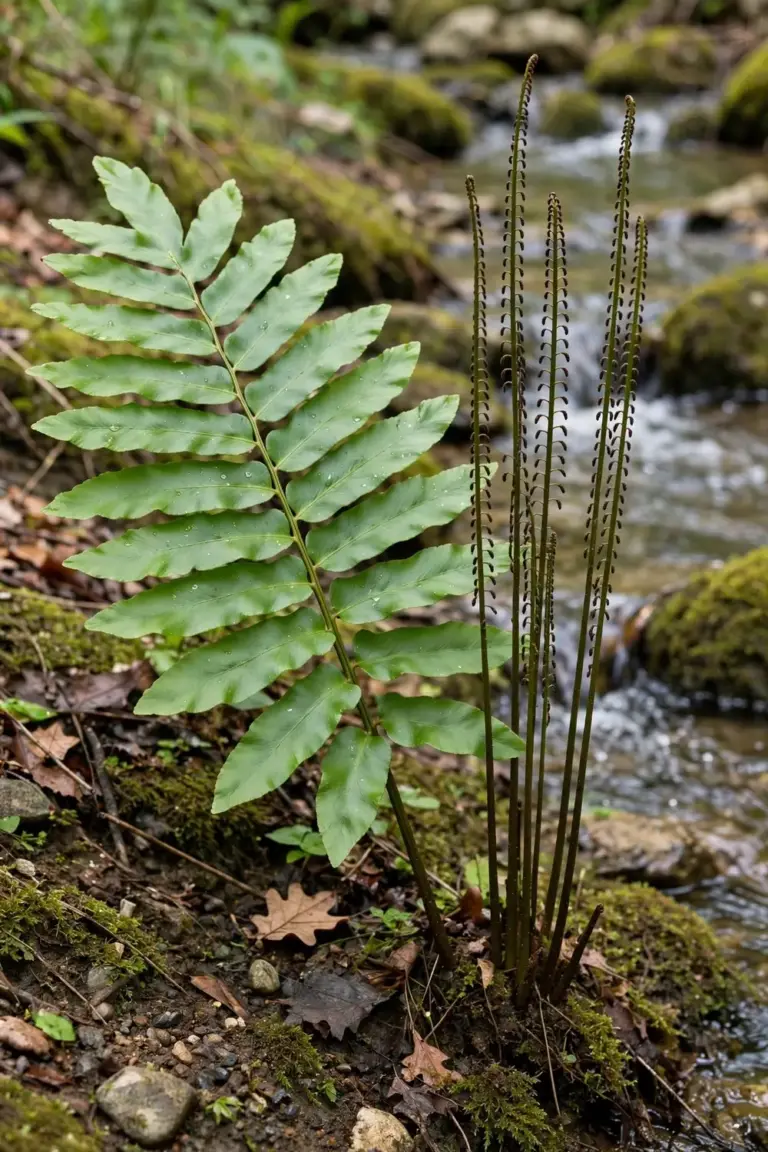
Water ferns carry sori on the margins or fused in groups, and the fishbone water fern shows the marginal pattern. The sterile fronds give the common name. The fertile fronds give the confirmation. Check both before you name it.
Confused with: other water ferns in the same family, which share the dimorphic habit, and the necklace fern, which is far smaller and creeps. Habitat: creek banks, wet gullies, and damp garden corners.
10. Trace the Necklace Fern by Its Beaded Pinnae
The necklace fern is Asplenium flabellifolium. It creeps. A thin rhizome trails along soil or rock, and small round pinnae hang along it like beads on a string. The pinnae are fan-shaped, and each one is small. The whole plant reads as a beaded thread rather than a clump. Follow one trailing stem and the beads give the name.
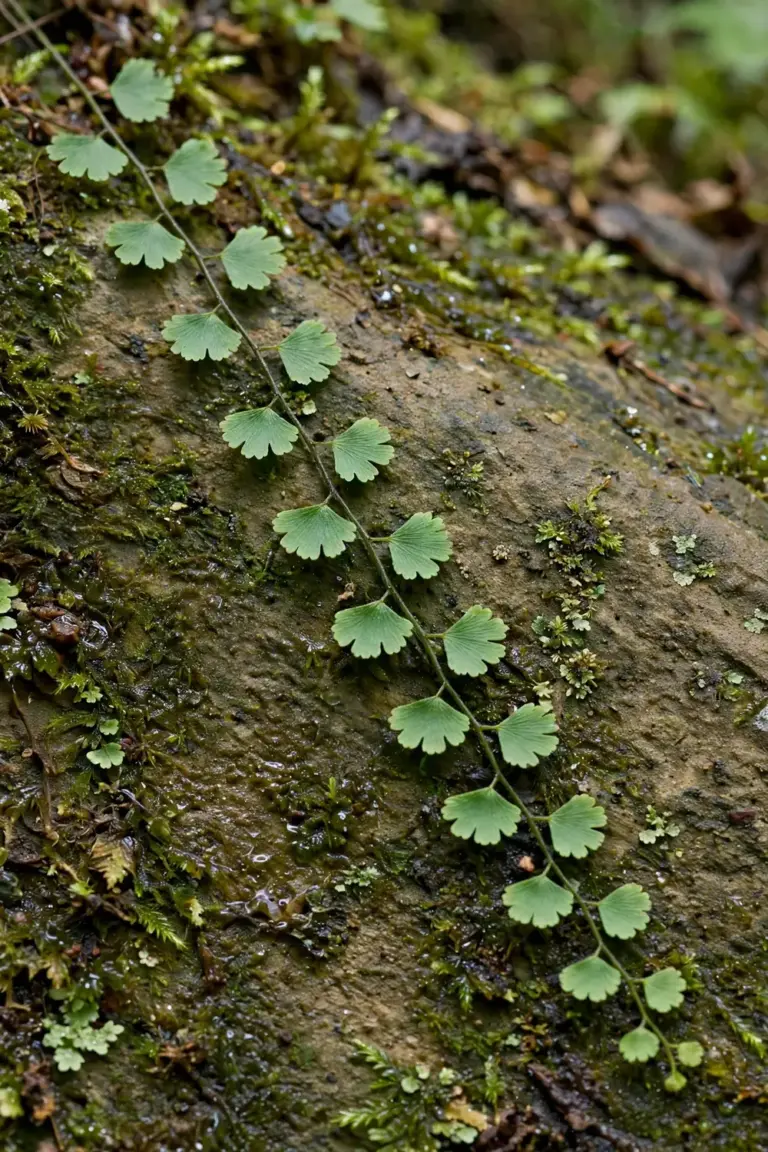
The sori confirm the spleenwort group. Sori run in lines along single veins on the pinna undersides. The creeping habit separates it from the other spleenworts in this key. The bird’s nest fern forms a rosette. The necklace fern trails.
Confused with: other creeping spleenworts, which share the trailing habit but carry differently shaped pinnae, and mosses, which have no true fronds and no stipe. Habitat: rock walls, creek banks, and damp shaded soil.
11. Check the Mother Shield Fern for Bulbils and Dark Scales
The mother shield fern is Polystichum proliferum. Its decisive test is the bulbil. Small plantlets grow from the upper parts of the fronds, and the frond tip may root where it touches soil. The common name comes from that habit: the mother frond carries its young. Look at the frond tips for small plantlets before you check anything else.
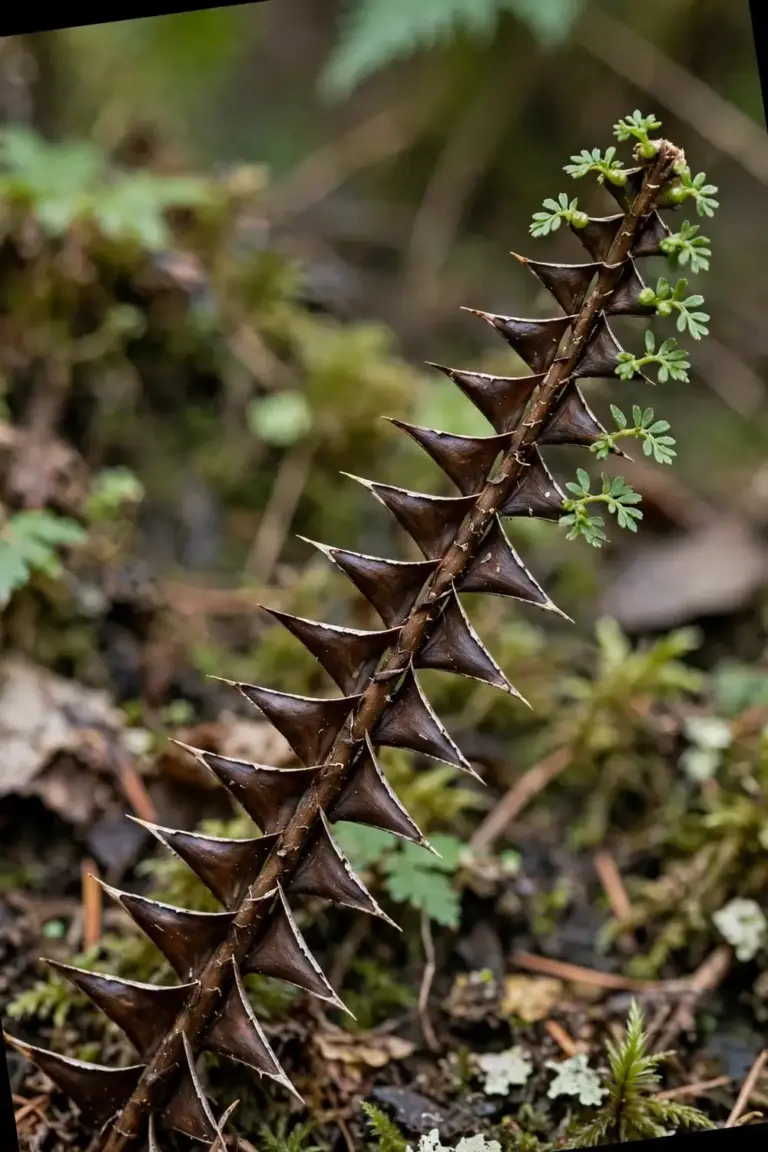
The second test is the scales. The University of Tasmania key describes numerous dark brown, triangular scales on the underside of the stipe and rachis, with fronds that feel harsh in texture and divide many times. The scales are obvious in good light. The same key warns that young mother shield ferns resemble immature soft tree ferns, and the dark scales separate them: the soft tree fern lacks those obvious dark brown scales on the frond underside.
Confused with: immature soft tree ferns, which lack the dark scales and the bulbils, and other shield ferns, which lack bulbils. Habitat: wet forest understorey and shaded garden beds in south-eastern Australia and Tasmania.
12. Rule Bracken In or Out by Its Triangular Frond and Margin Sori
Bracken is Pteridium esculentum. Its decisive test is the frond outline. Each frond is broadly triangular and divides three times, with the lowest pinnae the longest. The outline reads as a triangle on a stalk. No other common fern in this key shows that shape at that size. A triangular, thrice-divided frond on a long stipe points to bracken.
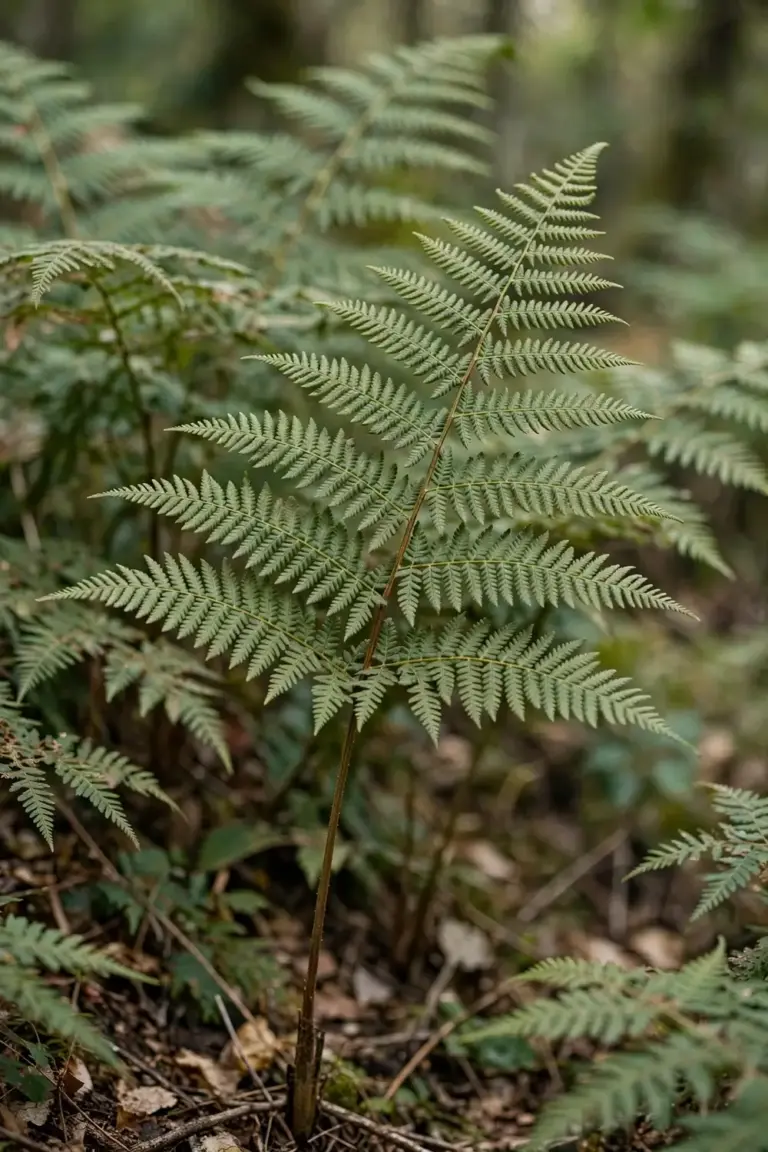
The sori confirm it. Bracken relatives carry sori on or just inside the segment margins, and bracken shows the marginal pattern. The rhizome runs deep underground and spreads widely, which is why bracken forms large colonies. Bracken is a widespread native, and it is toxic to livestock. That toxicity is an identification flag, not a treatment guide. Keep livestock away from bracken and check the frond shape before you act on a suspect plant.
Confused with: ground ferns with divided fronds, which lack the triangular outline and the deep spreading rhizome. Habitat: open forest, forest edges, disturbed ground, and paddocks across Australia.
13. Pick the King Fern by Its Trunk and Giant Fronds
The king fern is Todea barbara. Its decisive test is size paired with form. It builds a short, stout trunk and carries very large, leathery fronds that can overtop a person. The fronds divide twice, feel stiff and leathery, and rise from a crown on the trunk. A ground fern never reaches this scale, and a tree fern with a tall trunk is a different plant. A short trunk with giant fronds points to the king fern.
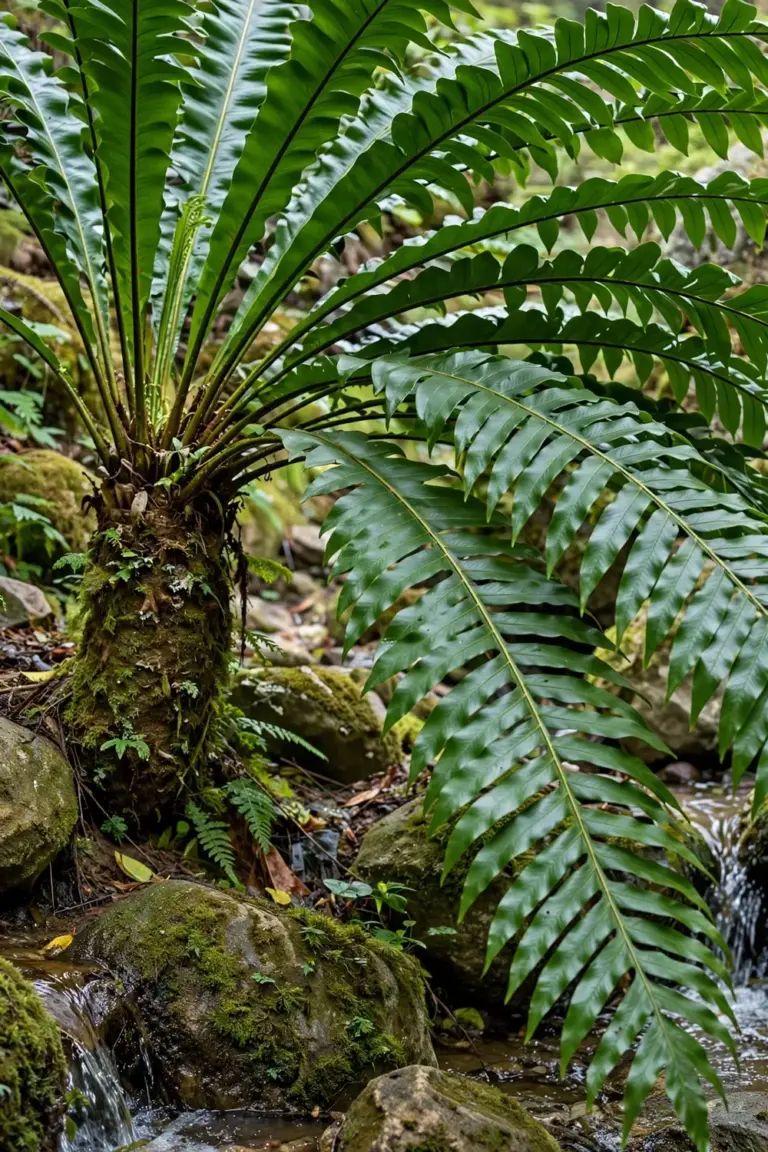
The sporangia confirm it. Instead of neat dots or lines, the sporangia coat the underside of the fertile pinnae in a continuous layer. Turn a fertile frond over and the underside reads as a uniform spore-bearing surface rather than a pattern of separate sori. That character separates the king fern from every other fern in this key.
Confused with: tree ferns, which carry taller trunks, and large ground ferns, which lack the trunk. Habitat: wet gullies and creek banks in eastern Australia.
14. Rule Out the Four Lookalikes That Are Not Ferns
Four plants fool fern watchers, and each fails one fern test. Run the fern tests on them and they drop out.
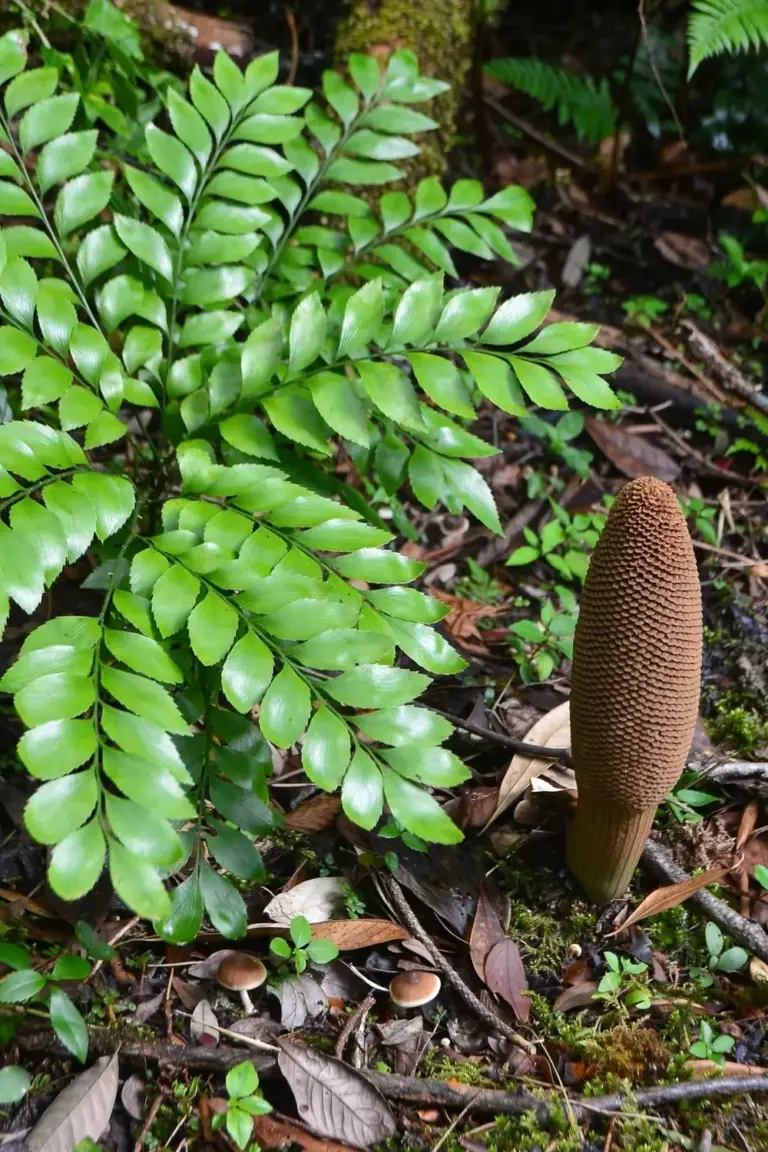
Bowenia is a cycad, not a fern. Its fronds look fern-like because they divide twice, with broad leaflets on a slender stalk. The test is reproduction. The University of California Museum of Paleontology cycad pages describe Bowenia as the only cycad with regularly bipinnate leaves, borne on separate branches from the cones, with both leaves and cones rising from a tuberous, subterranean stem. Cones mean a seed plant. Spores mean a fern. A plant with cones is not a fern, however feathery its leaves look.
Palm fronds are leaves, not fern fronds. A palm frond grows from a bud at the top of a woody trunk or stem, and its leaflets attach to a midrib. A palm frond never carries sori. Turn the leaflet over. No sori, no fern. Palm fronds grow from a single growing point and share no fern character beyond a feathery outline.
Moss and liverwort have no true fronds at all. They are small, soft, and lack a stipe, a rachis, and sori. A moss colony reads as a carpet. A liverwort reads as a flat, lobed sheet or a mat of tiny leaves. Neither one shows a frond with a stalk and a divided blade.
Asparagus fern is not a fern. It is Asparagus, a flowering plant in the same genus as the vegetable asparagus. What looks like a fern frond is a spray of needle-like cladodes, which are flattened stems, not leaves. Asparagus fern flowers and makes red berries. Ferns never flower and never make seeds. Flowers or berries rule a fern out at once. The vegetable asparagus sits in the same genus, which is why the name causes the mix-up.
15. Photograph the Four Clues Before You Name It
Photograph four shots before you settle on a name: the whole plant, one frond held flat, the frond underside showing the sori, and the base showing the trunk, rhizome, or rosette. Add the habitat in the caption: rainforest gully, creek bank, rock wall, tree trunk, pot. Four shots plus a habitat note answer most fern questions without touching the plant.

Check your answer against the recap table. Work down the rows and match form, decisive clue, and confused-with entry together. One matching clue is a guess. Three matching clues are an identification.
| Fern | Form | Decisive Clue | Confused With |
|---|---|---|---|
| Soft tree fern | Tree fern | Hairy stipe, 1 mm sori | Scaly tree fern, young mother shield fern |
| Rough tree fern | Tree fern | Rough trunk, persistent stipe bases | Scaly tree fern, prickly tree fern |
| Scaly tree fern | Tree fern | Two scale types, oval trunk scars | Rough tree fern, soft tree fern |
| Prickly tree fern | Tree fern | Prickles on the stipe | Rough tree fern, scaly tree fern |
| Bird’s nest fern | Epiphyte | Undivided fronds, linear sori | Other spleenworts, staghorn fern |
| Elkhorn fern | Epiphyte | Shield fronds plus forked antlers | Staghorn fern |
| Fishbone water fern | Ground fern | Dimorphic fronds, marginal sori | Other water ferns, necklace fern |
| Necklace fern | Ground fern | Beaded pinnae on a trailing stem | Other spleenworts, moss |
| Mother shield fern | Ground fern | Bulbils, dark brown scales | Immature soft tree fern |
| Bracken | Ground fern | Triangular frond, margin sori | Divided ground ferns |
| King fern | Tree fern | Short trunk, giant fronds, coated sporangia | Tree ferns, large ground ferns |
Never collect a protected fern. Many native ferns are protected, and picking or digging one is illegal in most states. Photograph the plant where it stands. Leave the fronds, the rhizome, and the trunk alone. Legally harvested tree ferns sold in retail nurseries carry a government serial number, which is how a legal plant proves its origin.
16. Frequently Asked Questions (FAQ)
No. A tree fern is a fern with a trunk-like rhizome, not a tree. The trunk is a rhizome wrapped in old frond bases and roots, not wood. True trees make wood and seeds. Tree ferns make spores and carry a fibrous trunk. The form-first key treats tree ferns as ferns, and the trunk test separates them from palms and shrubs.
Touch the stipe base. The soft tree fern carries dense, soft hairs at the stipe base. The scaly tree fern carries two scale types: long white scales plus short red-brown scales. The trunk backs the test up. The soft tree fern trunk stays fibrous and matted. The scaly tree fern trunk shows clean oval scars where old stipes fell away.
Some ferns are dimorphic, which means sterile and fertile fronds look different. The fishbone water fern shows broad sterile fronds and narrow fertile fronds. The elkhorn fern shows flat shield fronds and forked fertile fronds. Dimorphism is a normal fern character. Check both frond shapes before you name the plant.
Yes. Bracken is toxic to livestock. The fronds carry compounds that harm cattle, sheep, and horses when eaten in quantity. Identification comes first: confirm the triangular, thrice-divided frond and the marginal sori before you act. Keep livestock away from confirmed bracken and check local advice for control options in your state.
No. Many native ferns are protected, and picking or digging one is illegal in most states. Photograph the plant where it stands. Record the four clues: whole plant, flat frond, frond underside, and base. A photo set names the fern without harming it, and it leaves the plant for the next walker.
17. Start With Form, End With Sori
Form narrows the field. Frond division and sori name the species. Stem and habitat confirm it. That order works on all 11 ferns in this key, from the soft tree fern in a shaded gully to the necklace fern trailing over a rock wall. Photograph the four clues, match three of them against the recap table, and the name follows.