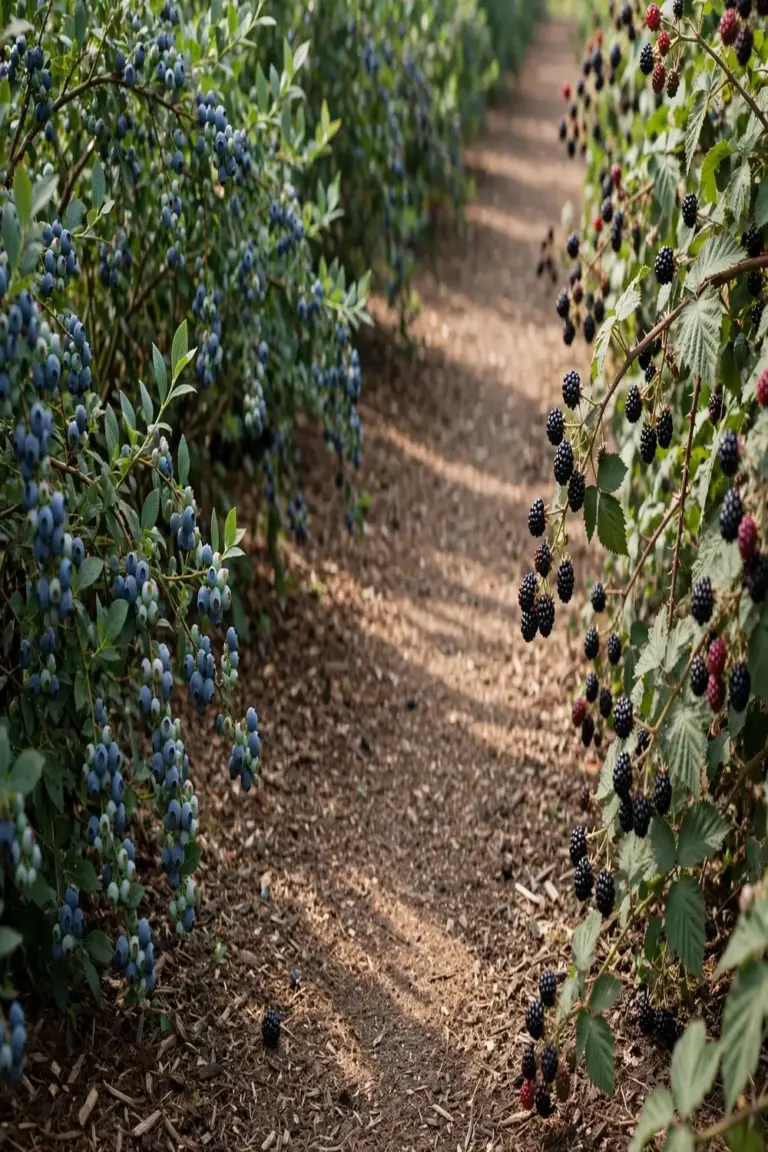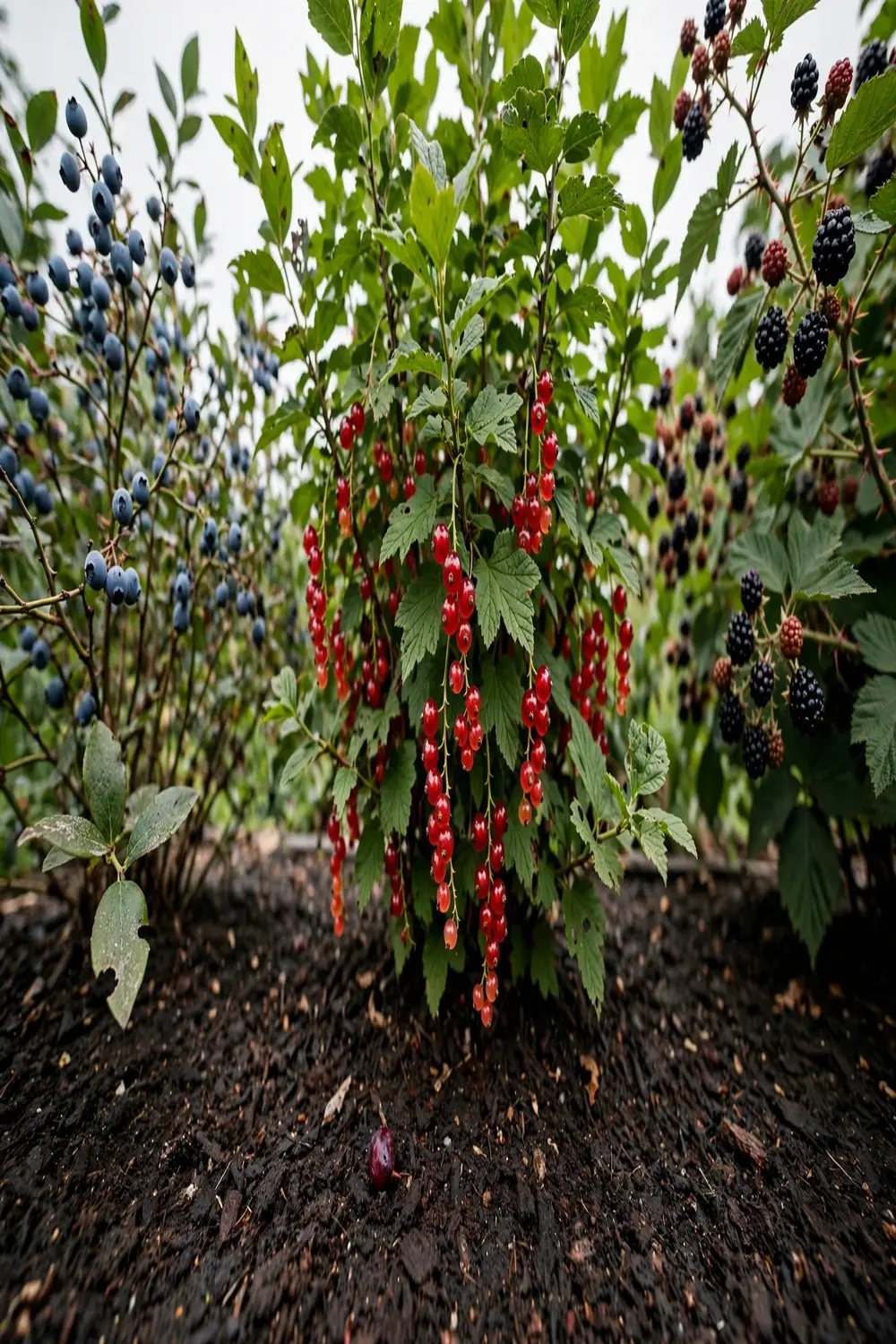

Name the berry bush before you taste a single fruit. Berry bushes in Australia grow in 3 groups, and 5 poisonous lookalikes share their beds. The groups are true berries on woody bushes, aggregate berries on canes, and native berries with names that trap the unwary. The rest of this page gives you a three-way key, one identification section per common species group, and a poisonous-lookalike list that ends in a hard rule. I have learned that checking leaf, stem, and fruit together names a berry bush faster than any single feature does.
1. Name the Berry Before You Taste It
Never eat a berry from a bush you have not positively identified. An “edible lookalike” is a guess, and guesses fail on berries. Deadly nightshade grows as an ordinary garden plant in Australia, and its shiny black berries look like food. Jerusalem cherry carries red-orange fruit that looks like a cherry tomato. Both are poisonous.
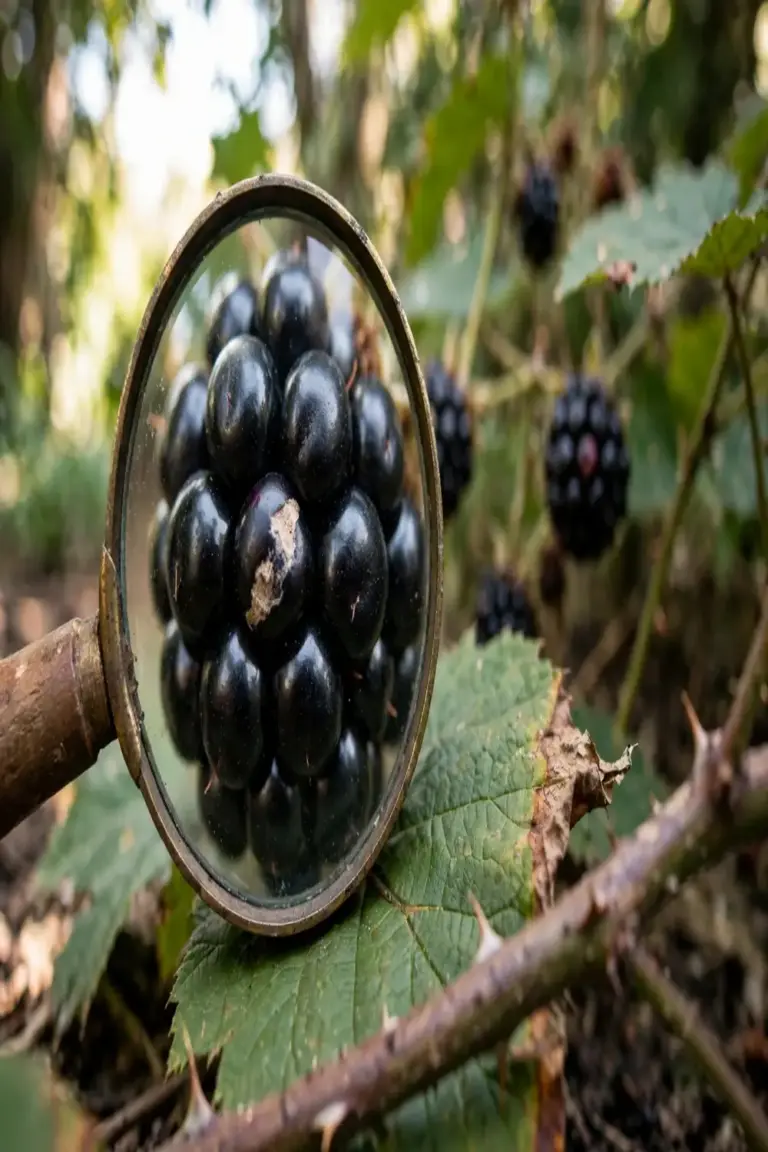
Identification runs on three features together. Check the leaf shape and arrangement. Check the stem for thorns, hairs, or smoothness. Check the fruit for size, color, and how it sits on the plant. One feature alone misleads. Leaf plus stem plus fruit together name the bush.
Keep a photo of the whole bush, one close leaf, and one close fruit before you ask anyone. A fruit photo alone rarely settles an identification. A leaf photo alone rarely settles one either. The three photos together give an identifier something to work with.
If a child eats an unknown berry, call the Poisons Information Centre and keep a sample or a photo of the plant. Do not wait for symptoms. Do not induce vomiting unless a medical professional tells you to. Note the time of eating and how many berries went in, because the person on the phone will ask.
If a bush stays unnamed after the three-feature check, leave the fruit alone. Photograph the whole bush, one leaf, and one fruit. Ask a local nursery, a Landcare group, or a botanic garden with the photos in hand. An unnamed berry costs nothing to skip. A wrong guess costs a hospital visit.
2. Sort Every Berry Bush Into 1 of 3 Groups
Every berry bush in an Australian garden falls into one of three groups. True berries grow on woody bushes. Aggregate berries grow on canes. Native berries grow on shrubs and ground-hugging plants with their own names. Sort first, then name the species. Sorting first saves the most common mistake: calling every dark berry a blackberry and every red berry a raspberry.
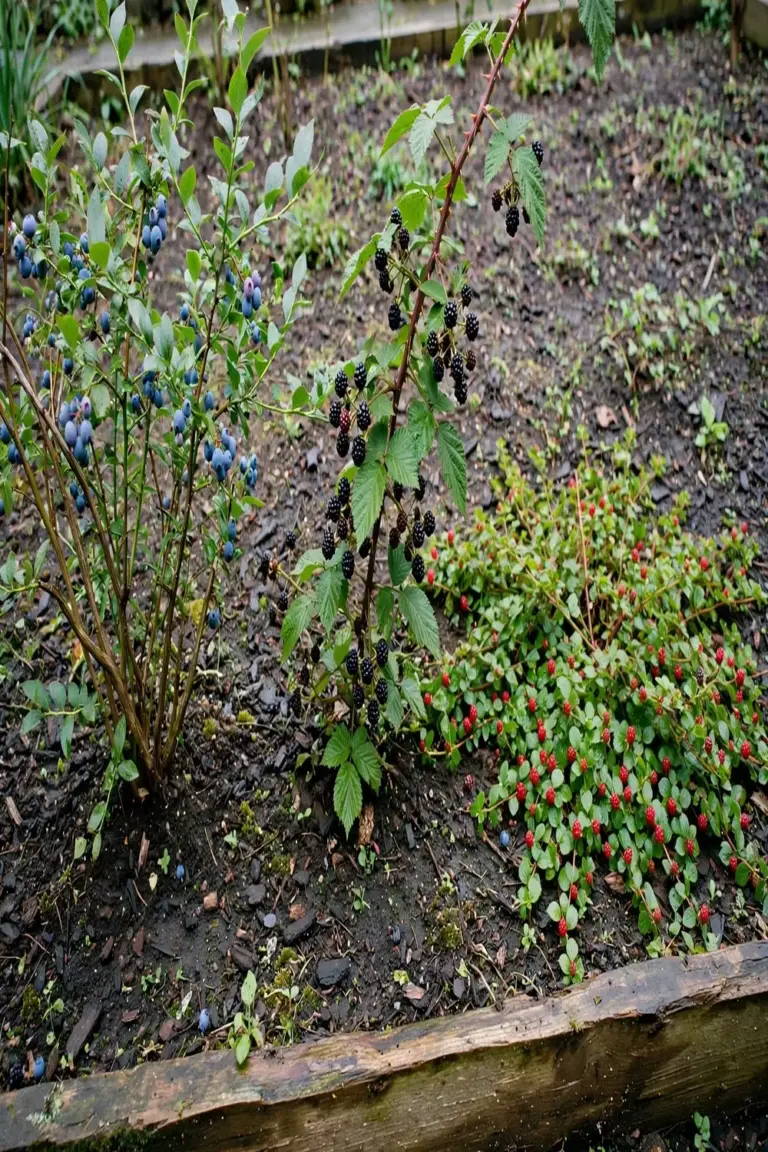
The table below covers every species group below, plus the poisonous lookalikes. Use it as a shortcut. Read the full section for any bush you plan to taste.
Botanists split the word “berry” into berries, drupes, and aggregate fruits. Gardeners use “berry” for all of them. This guide uses the gardener’s word and flags the botanical split where it changes the identification. The split matters most on canes. An aggregate fruit is many tiny drupelets fused around a core, and the core test in sections 6 and 7 separates raspberry from blackberry in one pick.
| Berry | Growth | Fruit Type | Edibility | Confused With |
|---|---|---|---|---|
| Blueberry | Woody bush | True berry | Safe | Blueberry ash |
| Currants | Woody bush | True berry | Safe | Gooseberry |
| Gooseberry | Woody bush | True berry | Safe | Currants |
| Elderberry | Woody shrub | Drupe cluster | Cook-only | Privet |
| Raspberry | Cane | Aggregate | Safe | Blackberry, native raspberry |
| Blackberry | Cane | Aggregate | Safe fruit, declared weed | Native raspberry |
| Loganberry, boysenberry, silvanberry | Cane | Aggregate | Safe | Blackberry |
| Lilly pilly | Woody shrub or small tree | Berry | Safe, tart | Blueberry ash |
| Midyim berry | Low shrub | Berry | Safe | Blueberry |
| Muntries | Ground-hugging shrub | Berry | Safe | Cranberry |
| Apple berry | Scrambling climber | Berry | Safe | None common |
| Native raspberry | Scrambling cane | Aggregate | Safe | Blackberry |
| Blueberry ash | Small tree | Drupe | Not eaten | Blueberry |
| Deadly nightshade | Herbaceous shrub | True berry | Do not eat | Blackberry |
| Jerusalem cherry | Shrub | True berry | Do not eat | Cherry tomato |
| Privet | Woody shrub | Drupe | Do not eat | Elderberry |
| Pokeweed | Herbaceous perennial | Berry cluster | Do not eat | Elderberry |
| Asparagus fern | Scrambling fern | Berry | Do not eat | None common |
3. Identify Blueberry by Its Crown Scar
A blueberry carries a five-pointed crown scar at the blossom end. Flip the fruit over. The scar sits where the flower fell away, shaped like a small star. No other common garden berry carries that mark. The fruit is dusty blue, round, and soft.
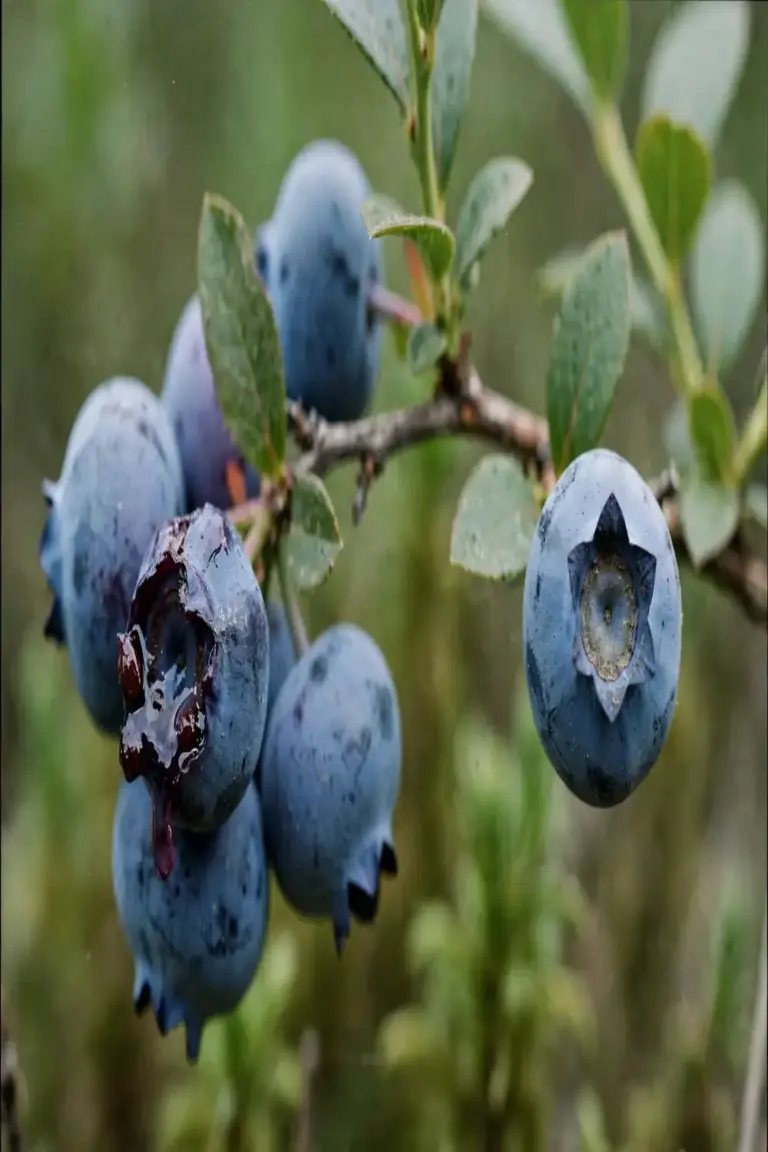
The bush is twiggy and woody, with small oval leaves that turn red in autumn in cool climates. Blueberries grow as shrubs, never as canes. A blueberry bush has no thorns, and the fruit hangs singly or in loose clusters from thin twigs. The flowers are small, white to pink, and bell-shaped.
Garden blueberries in Australia come from two main species groups: highbush types (Vaccinium corymbosum) and rabbiteye types (Vaccinium virgatum). Both carry the crown scar. Highbush types suit cool-temperate gardens. Rabbiteye types tolerate warmer districts. The scar test works on both, and it works at the fruit shop too.
Confused with: blueberry ash. Blueberry ash is a small tree with blue drupes, and its fruit lacks the crown scar. If the plant is a tree with a single trunk and no crown scar on the fruit, it is not a blueberry.
4. Identify Currants and Gooseberry by Their Clusters
Currants hang in strings. Red currants carry translucent red berries along a thin stem, each berry the size of a pea. White currants carry the same strings in pale gold. Blackcurrants carry dark berries with a strong, distinctive smell when you crush a leaf. The bushes are woody, thornless, and compact.
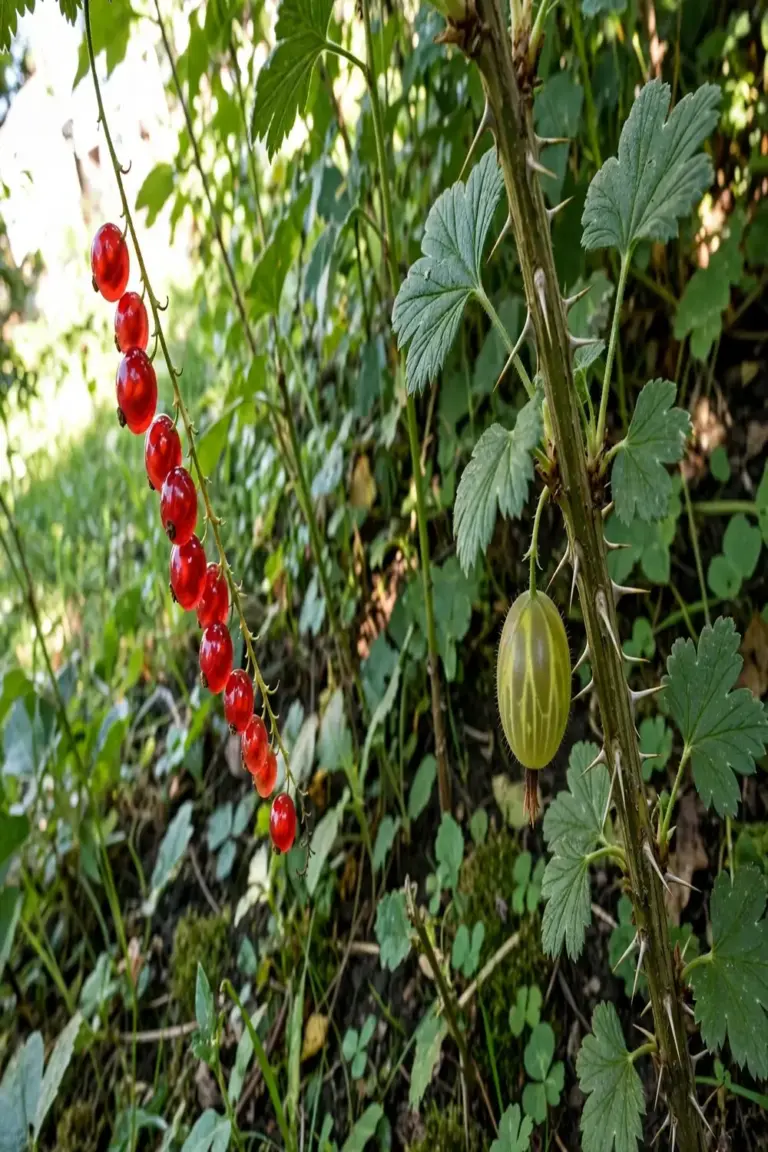
Gooseberry is the thorny cousin in the same genus, Ribes. Its stems carry sharp spines. Its fruit hangs singly or in pairs, larger than a currant, with visible stripes and a translucent skin. Green gooseberries ripen toward red or yellow. The thorns name it before the fruit does.
Currant leaves are lobed, like a small maple leaf with three to five lobes. Blackcurrant leaves release a strong, resinous smell when crushed. Red and white currant leaves smell faintly green. The leaf smell separates blackcurrant from red currant before the fruit ripens.
Gooseberries taste sharp when green and sweeten as they color. Cooks pick them green for pies and tarts. Fresh eaters wait for full color and a slight give under the thumb. The skin stays translucent at every stage, and the stripes stay visible through it.
Confused with: each other. Currants hang in strings. Gooseberry hangs singly on a thorny stem. If the stem has spines and the fruit hangs alone, it is a gooseberry. For pot-growing detail on red currants, see the red currant growing guide. White currants follow the same pot method in the white currant growing guide.
5. Identify Elderberry by Its Flat Clusters and Cook-Only Rule
Elderberry carries flat-topped clusters of tiny dark berries. The clusters sit like plates on the ends of branches. The shrub grows fast, with soft pithy stems and large compound leaves. The berries ripen to near-black in summer.
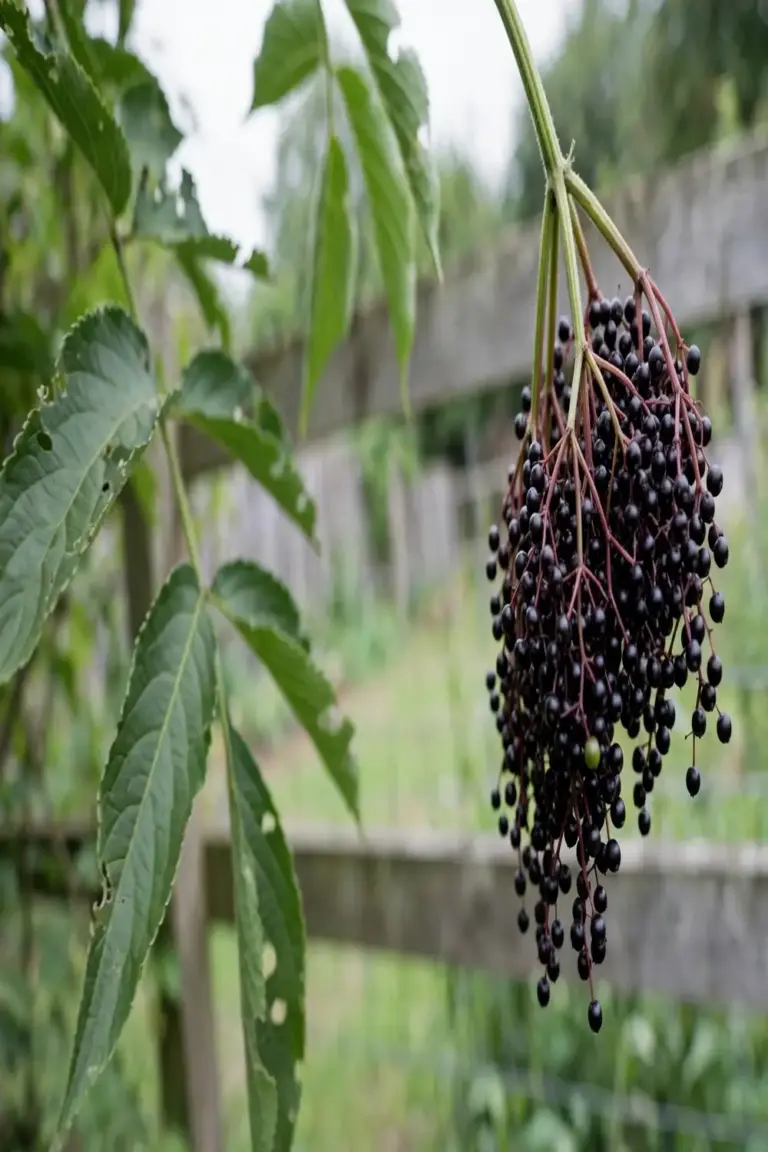
Elderberry is cook-only. Raw berries upset stomachs, and people generally eat them cooked, according to LSU AgCenter. Leaves, stems, and unripe fruit stay out of the pot. Cook ripe berries thoroughly and discard the stems. Red elderberry types stay off the table entirely.
Confused with: privet. Privet carries glossy black berries in upright clusters, and privet berries are poisonous. Elderberry clusters hang flat and droop. Privet clusters stand upright. If the cluster stands upright and the leaves are small, glossy, and oval, it is privet. Do not eat it.
Elderflower is the same plant at an earlier stage. The flat-topped flower clusters open white and fragrant in spring, and they draw bees for weeks. Elderflowers are edible and commonly used in drinks. The berries come later on the same clusters. If the flat cluster carries white flowers, it is elderflower season. If it carries dark berries, it is elderberry season.
6. Identify Raspberry by Its Hollow Cap
A raspberry pulls off its core. Pick a ripe raspberry and the fruit comes away hollow, leaving the pale receptacle behind on the plant, and that hollow cap is the test on every raspberry type, red or yellow. The fruit itself is soft. It is made of many tiny drupelets packed into a cone, and it crushes at a touch.
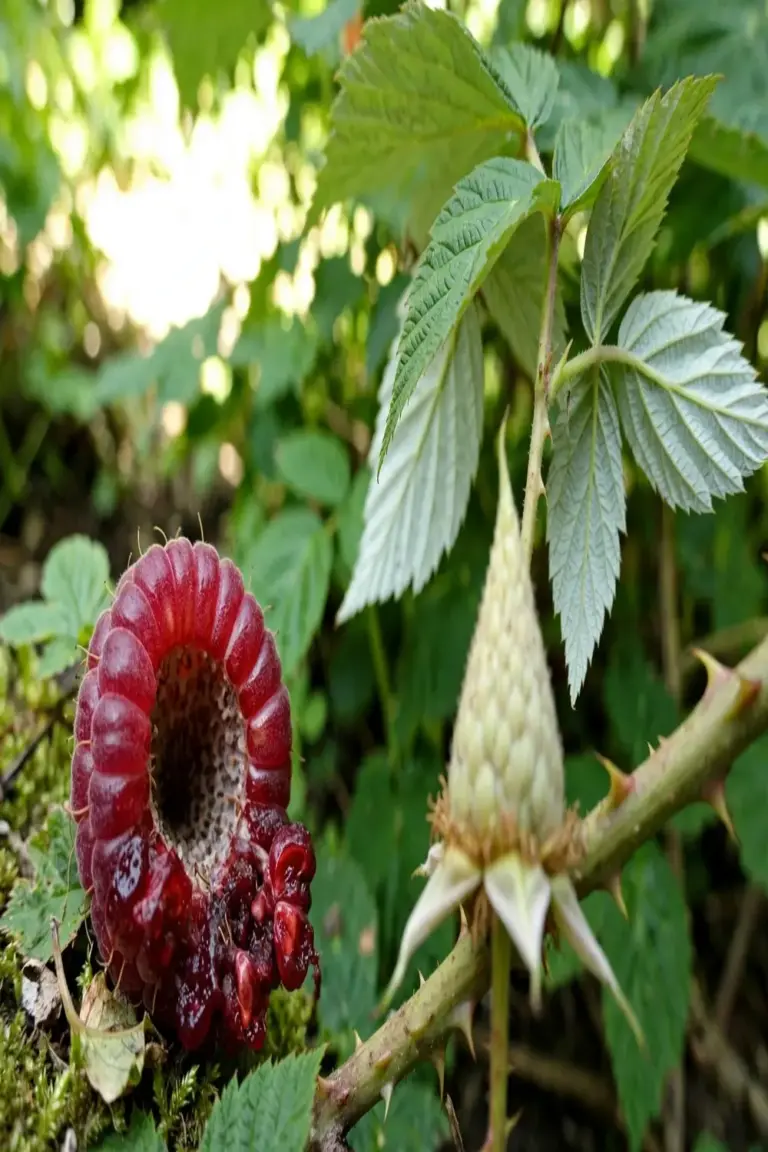
Raspberry canes carry fine thorns and arch over in their second year, and they fruit on those second-year canes before dying back. The leaves are compound with three to five leaflets, green on top and pale beneath. Raspberry fruit ripens in summer and autumn flushes. Summer-fruiting types crop once on last year’s canes. Autumn-fruiting types crop on new canes from late summer into autumn, and they keep fruiting until the first cold snap.
Confused with: blackberry and native raspberry. Blackberry fruit keeps its core when picked. Native raspberry carries rose-like leaves with five to seven leaflets. If the picked fruit is hollow, with the pale receptacle left on the plant, it is a raspberry. Taste confirms nothing. The hollow cap is the test.
7. Identify Blackberry by Its Solid Core and Thorny Canes
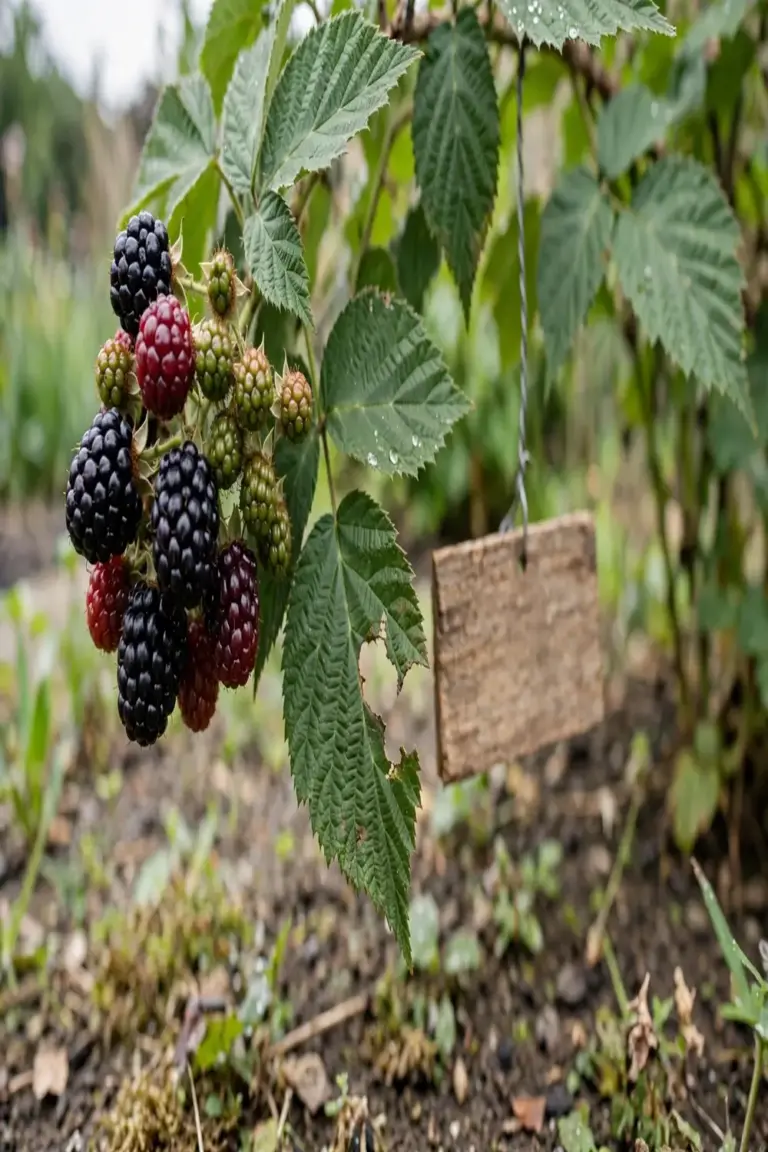
A blackberry keeps its core. Pick a ripe blackberry and the white core stays inside the fruit. The fruit is shiny black, made of many drupelets, and larger than a raspberry. The canes carry sharp prickles and arch or scramble to several metres.
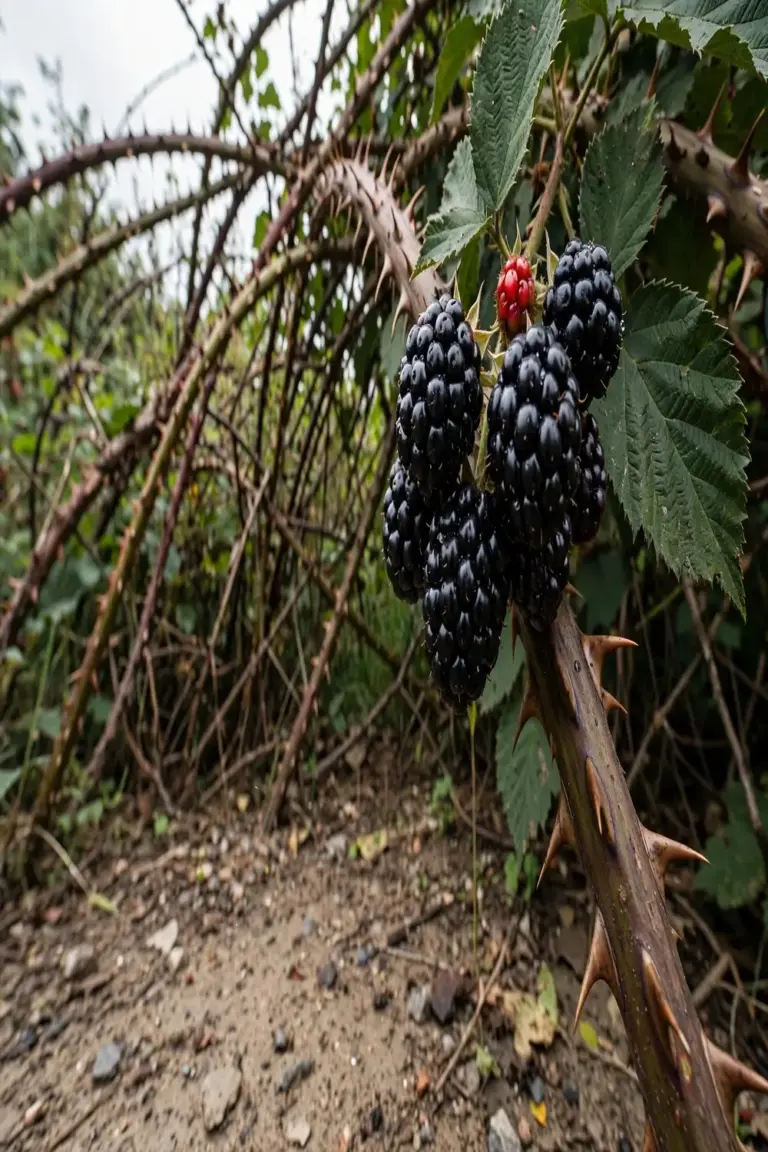
Blackberry is a declared weed in Australia. The NSW WeedWise blackberry profile describes the Rubus fruticosus aggregate as erect shrubs 0.3 to 7 m tall, with tangled prickly stems up to 7 m long, leaves in clusters of 3 to 5 leaflets, and fruit 1 to 3 cm across. The same profile records blackberry infesting about 9 million hectares of land in Australia. The weed spreads by seed, by cane tips that root where they touch soil, and by a woody crown with roots that reach deep. Garden cultivars such as Silvan, Chester Thornless, and Black Satin are exempt from the weed declaration in NSW. Wild blackberry is not.
Confused with: native raspberry. Wild blackberry forms dense thickets with stout, deeply prickled canes. Native raspberry carries thinner canes with rose-like leaves. If the thicket is impenetrable and the canes are thick with large prickles, it is blackberry. For growing detail on garden cultivars, see the blackberry growing guide.
8. Identify Loganberry, Boysenberry, and Silvanberry by Their Parents
Loganberry, boysenberry, and silvanberry are named hybrids on canes. Loganberry crosses raspberry with blackberry. Boysenberry crosses raspberry, blackberry, and loganberry. Silvanberry is an Australian-bred hybrid of the same family. All three carry aggregate fruit on thorny canes.
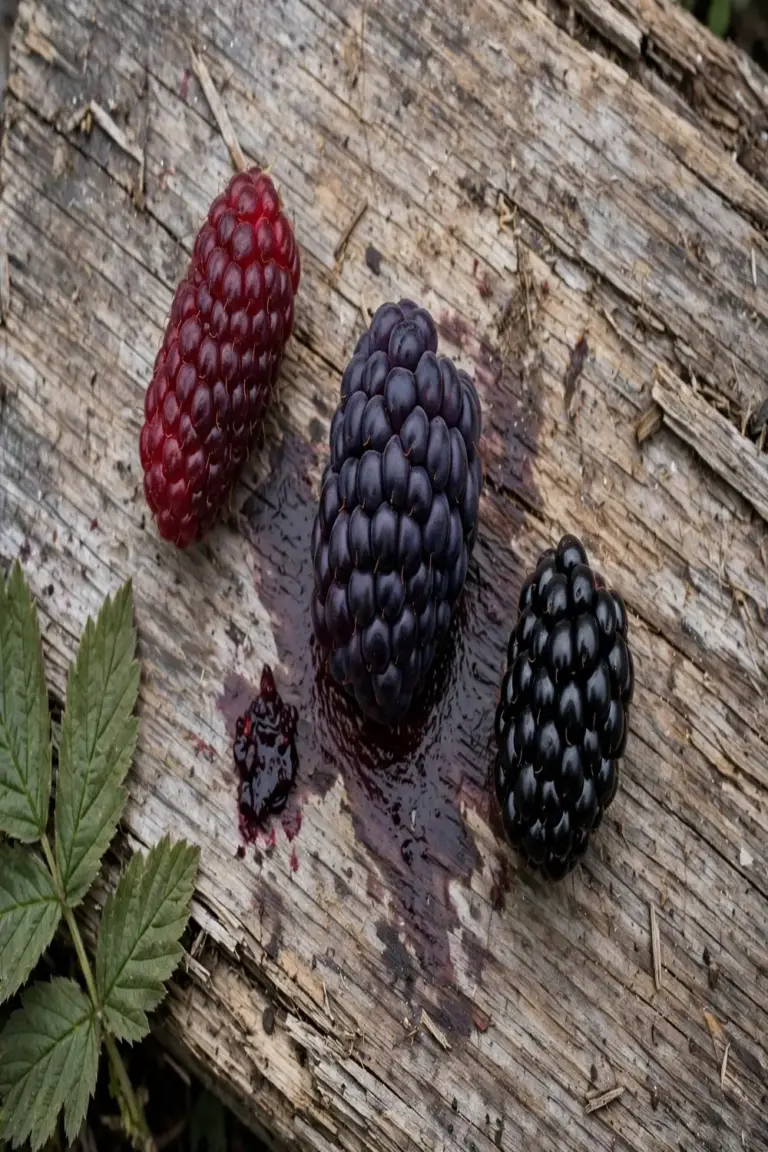
Loganberry fruit is long, dark red, and sharp tasting, and it softens fast after picking. Boysenberry fruit is large, dark purple, and soft, and it stains fingers on contact. Silvanberry fruit is large, glossy black, and sweet. The canes of all three need support, and all three fruit on second-year canes.
Confused with: blackberry. The named hybrids carry larger fruit and known parentage. A wild blackberry thicket with no planting history is blackberry. A planted cane with a variety label is one of the hybrids. If the cane came from a nursery pot with a name tag, trust the tag and check the fruit against the hybrid description. The tag is the fastest identification a hybrid ever gets.
9. Identify Lilly Pilly by Its Pink Fruit and Glossy Leaves
Lilly pilly carries pink, red, or purple fruit on a hedge shrub or small tree. The fruit is round, sometimes ribbed, and sits among glossy green leaves. New growth flushes bronze or pink. The leaves are oval, opposite, and glossy.
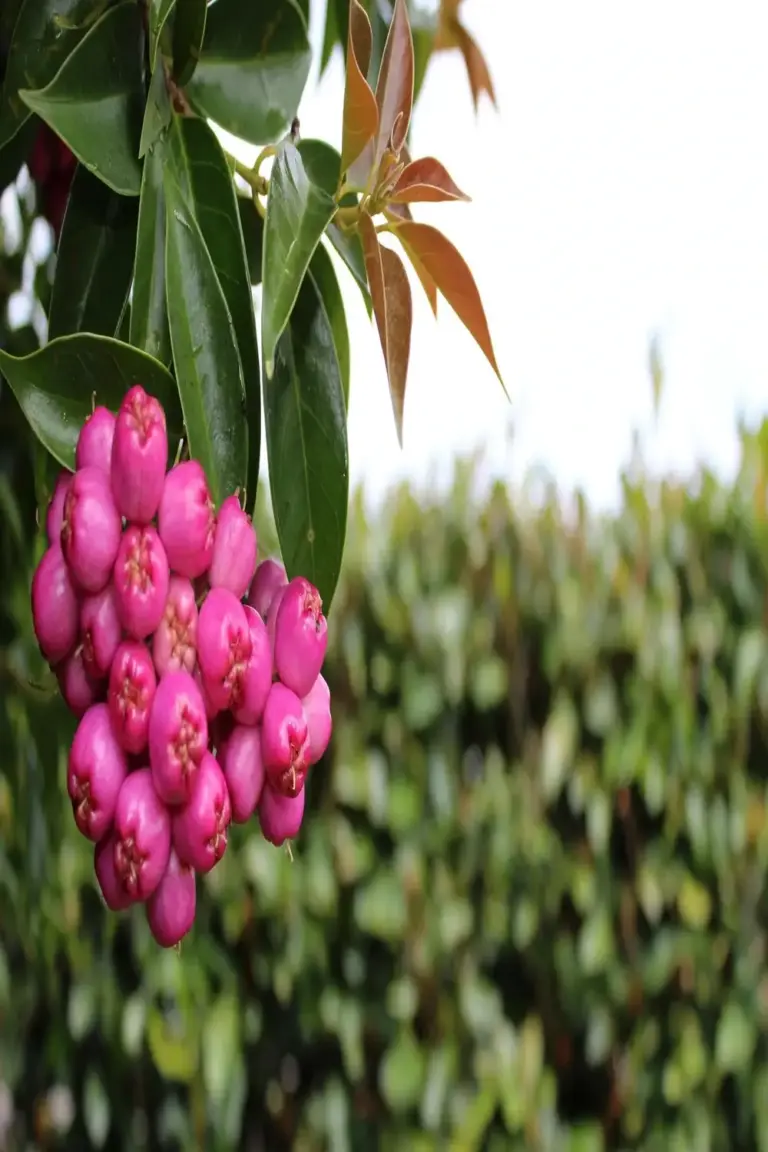
Lilly pilly fruit is edible but tart and astringent. Gardeners cook it into jam or jelly rather than eating it fresh off the bush. The fruit of Syzygium paniculatum, the magenta cherry, is the common edible type. Birds strip the fruit fast, so a bare bush in summer may mean birds got there first.
Confused with: blueberry ash. Lilly pilly fruit is pink to purple and soft. Blueberry ash fruit is hard, bright blue, and borne on a small tree. If the fruit is pink and the leaves are glossy and opposite, it is lilly pilly. The leaf arrangement settles it when the fruit color leaves doubt.
Two lilly pilly species dominate Australian gardens. Syzygium paniculatum, the magenta cherry, carries the common edible fruit. Syzygium australe, the scrub cherry, carries smaller fruit on a hedge shrub with bronze new growth. Both are edible. Both are tart. The hedge shrub in most Australian front yards is Syzygium australe.
10. Identify Midyim Berry by Its Spotted White Fruit
Midyim berry carries small white fruit with blue-gray spots. The fruit is about 1 cm across, soft, sweet, and aromatic, with a faint ginger flavor, according to Gardening With Angus. The shrub grows low and spreading, usually under 1 m tall, with small pointed leaves and fluffy white flowers in spring and summer.
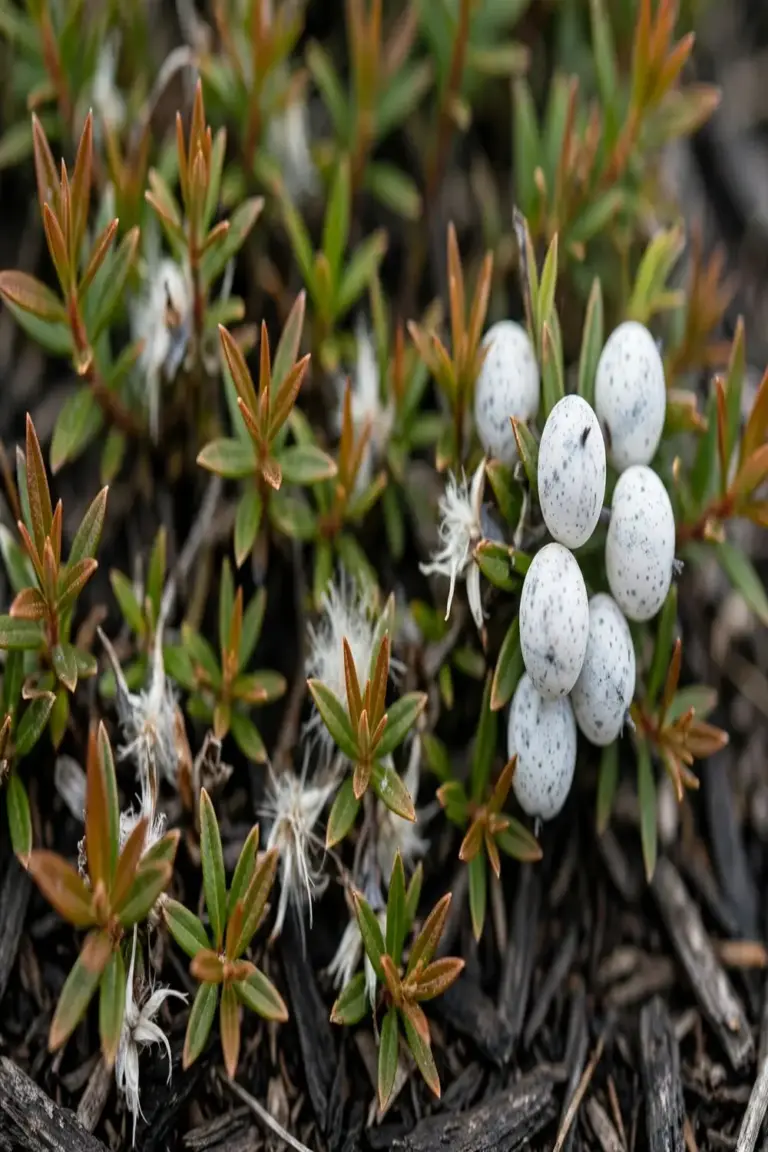
Midyim is Austromyrtus dulcis, a native of the New South Wales and Queensland coast. The berries ripen in autumn. The shrub suits a border or a pot. Birds and children both find the fruit fast. The cultivar Copper Tops, a cross with Austromyrtus tenuifolia, carries the same spotted fruit on a tidier shrub with coppery new growth.
Confused with: blueberry. Midyim fruit is white with spots, not dusty blue. Midyim leaves are small and pointed, and the shrub stays low and spreading. If the fruit is white with blue-gray spots on a low shrub, it is midyim.
11. Identify Muntries by Their Ground-Hugging Stems
Muntries grow flat. Kunzea pomifera spreads along the ground, rooting as it goes, and carries small round berries. The common name “emu apple” comes from the fruit’s apple-like flavour. The plant hugs coastal ground in south-eastern Australia.
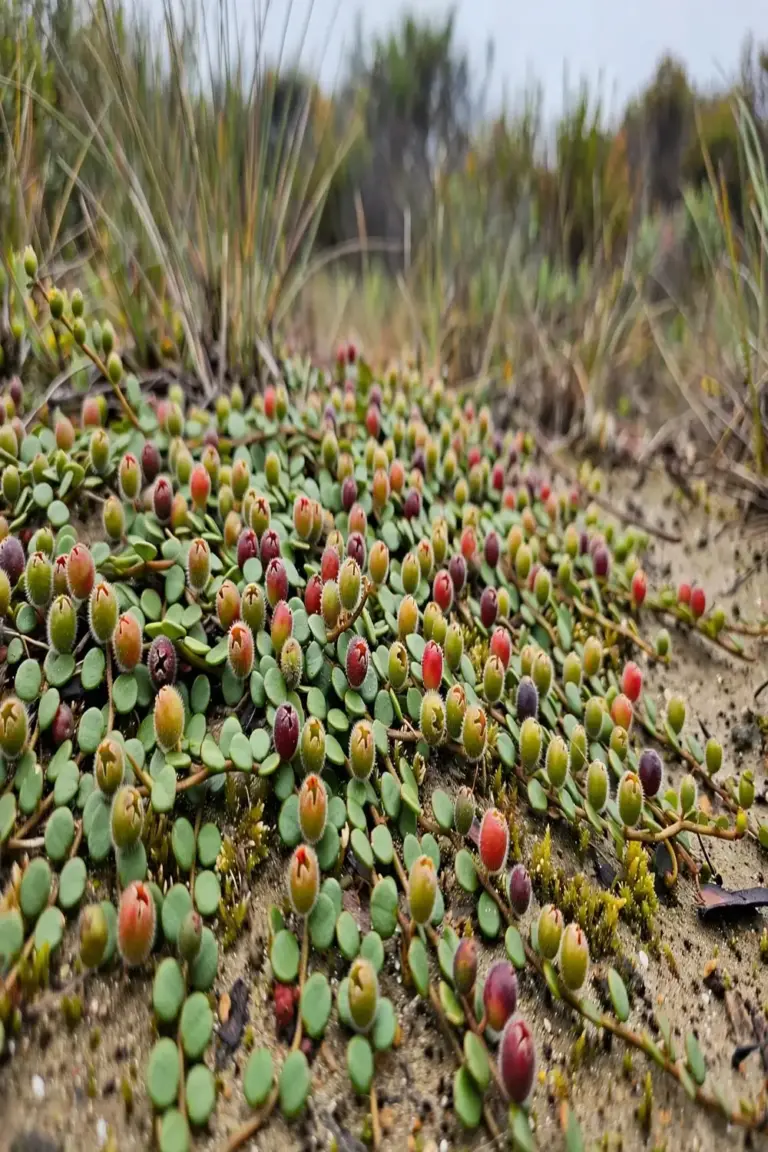
The berries are small, green to red, and edible. The leaves are small and round. The shrub forms a dense mat rather than an upright bush. A muntries patch looks like groundcover with berries tucked through it. The fruit dries well and keeps its flavour, which is why bushfood sellers stock it dried.
Confused with: cranberry. Cranberry is a northern hemisphere bog plant that does not grow wild in Australian gardens. If the ground-hugging berry shrub grows on the south-eastern coast with small round leaves, it is muntries. The mat habit is the giveaway. No other Australian berry shrub grows this flat.
12. Identify Apple Berry by Its Climbing Stems and Apple Flavour
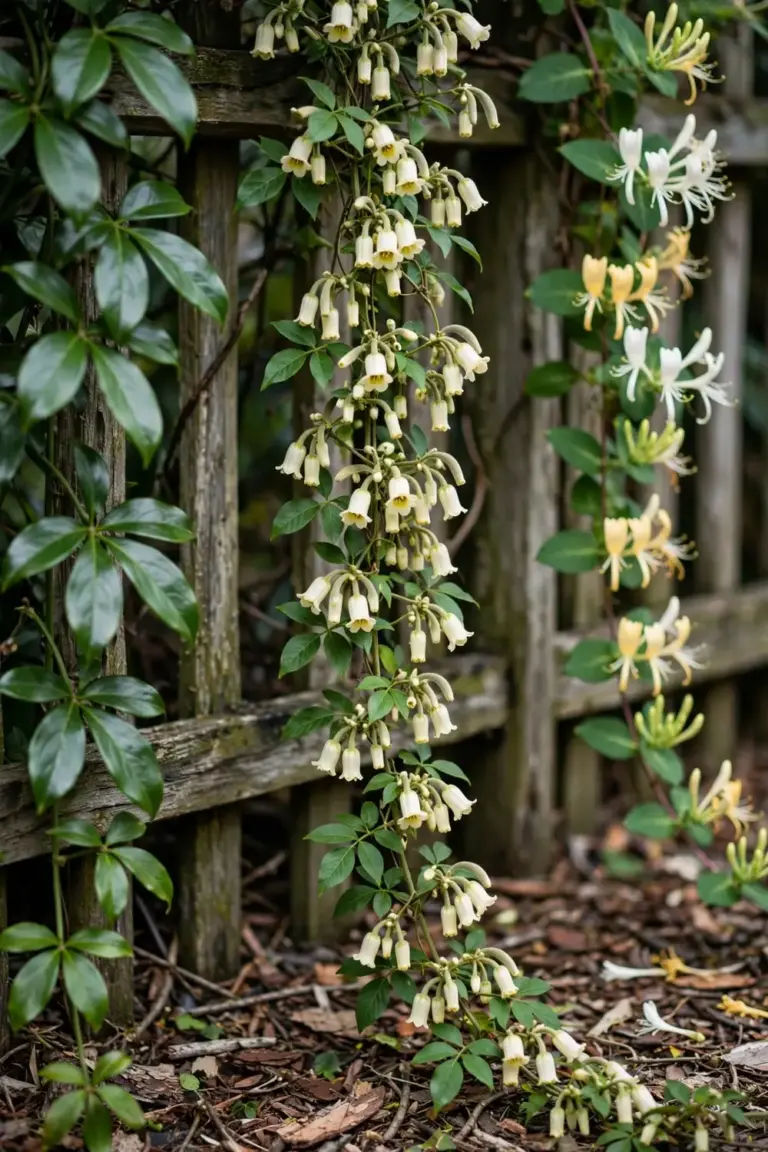
Apple berry climbs and scrambles. Billardiera scandens sends thin stems through neighbouring shrubs and carries small yellow-green berries with an apple-like flavour. The leaves are narrow and glossy. The flowers are small, cream, and bell-shaped.
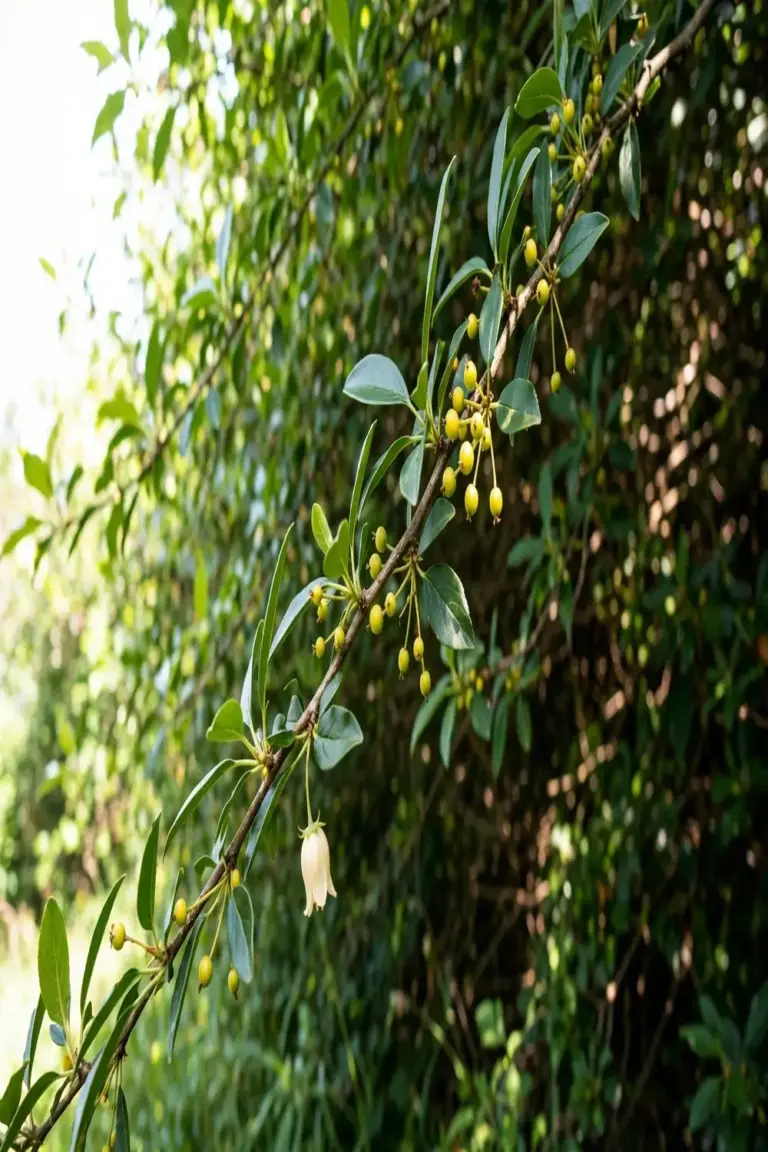
The fruit ripens from green to yellow, and it tastes faintly of apple. The plant grows in south-eastern forests and coastal scrub, where it scrambles through neighbouring shrubs. In a garden it scrambles through a fence or a shrub rather than standing alone. The flowers open cream and bell-shaped in spring, and the berries follow in summer.
Confused with: none common. Apple berry is the only common Australian garden climber with small yellow apple-flavoured fruit. If the stems scramble and the fruit tastes of apple, it is apple berry. This guide names it by its fruit. Climbing habit belongs to vine identification, and this article stays on fruit.
13. Identify Native Raspberry by Its Rose-Like Leaves
Native raspberry carries rose-like leaves. Rubus parvifolius, the true native small-leaf bramble, has compound leaves with toothed leaflets that look like rose leaves. The fruit is a small red aggregate berry on a scrambling cane. The canes carry prickles. The plant spreads along rainforest margins and tall open forest edges in eastern Australia.
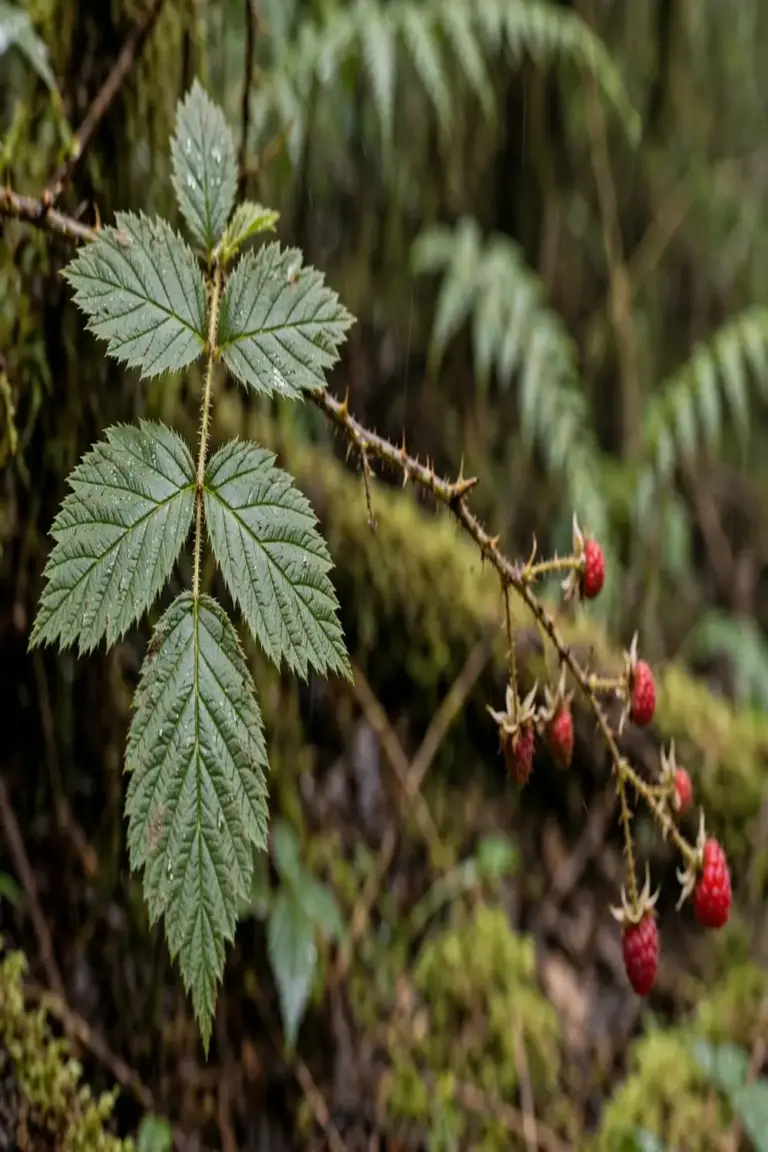
Rose-leaf bramble, Rubus rosifolius, looks similar and confuses the count. PlantNET describes Rubus rosifolius as a shrub with trailing glandular-hairy stems to 2 m long, leaves pinnate with 5 or 7 leaflets, leaflets 3 to 8 cm long, and fruit ovoid 20 mm long, red, and edible but insipid. Rubus rosifolius is naturalised in eastern Australia, not a true native. The true native is Rubus parvifolius.
Confused with: blackberry. Native raspberry canes are thinner, and the leaves look like rose leaves. Blackberry canes are thick, deeply prickled, and form impenetrable thickets. If the cane is thin and the leaf looks like a rose leaf, it is native raspberry.
14. Spot Blueberry Ash and Skip Its Fruit
Blueberry ash is a name trap. Elaeocarpus reticulatus is a small tree with bright blue drupes. The fruit looks like blueberries. People do not eat it.
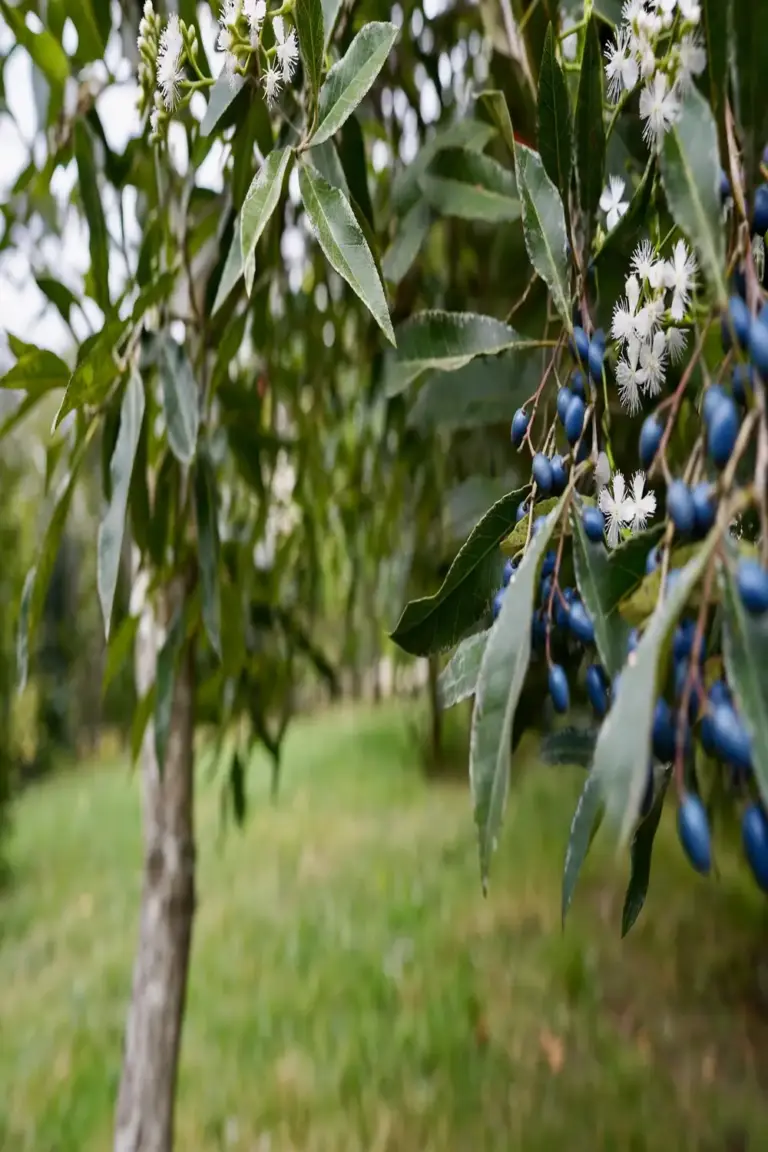
The tree carries narrow leaves with toothed edges and fringed white or pink flowers. The blue drupes hang in clusters. Birds eat them.
Confused with: blueberry ash. Blueberry is a twiggy shrub with a crown scar on each fruit. Blueberry ash is a tree with a single trunk and no crown scar. If the plant is a tree, the fruit is not a blueberry. Skip it. The scar test settles the question in one flip of the fruit.
15. Memorize 5 Poisonous Lookalikes and Do Not Eat Them
Five poisonous berries show up in Australian gardens. Learn all five before you taste anything unknown. Every entry below carries the same verdict: do not eat.
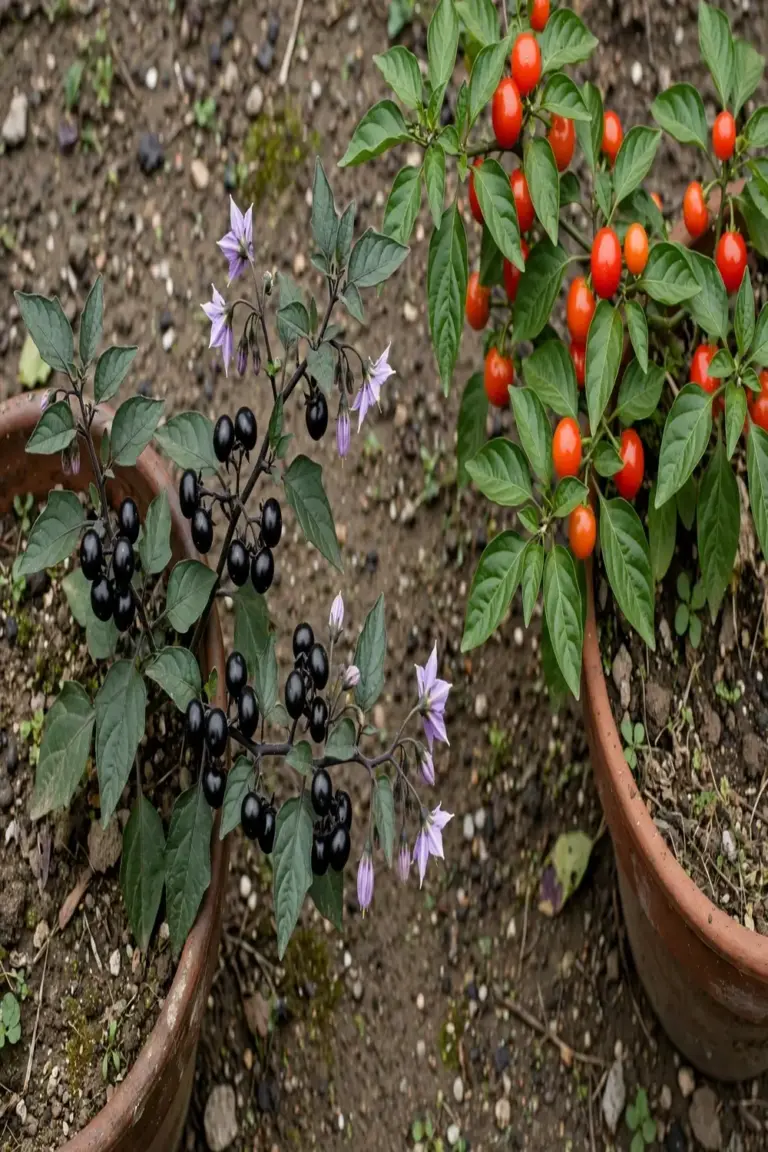
Deadly nightshade carries shiny black berries on a shrub about 1 m tall, with purple bell-shaped flowers. Australian Geographic reports that ingestion of a single leaf or 20 berries can be fatal to adults, and smaller doses can harm children. The plant is a common garden plant not native to Australia. Children reach for the berries because they look like dark cherries. Do not eat.
Jerusalem cherry carries round red-orange fruit that looks like a cherry tomato. The fruit is poisonous, and the whole plant carries the toxin solanocapsine. Children reach for it because the fruit looks like a toy tomato. The plant often sits in a pot on a patio, within a toddler’s reach. Do not eat.
Privet carries glossy black berries in upright clusters on a hedge shrub. The berries are poisonous, and children and pets are the usual victims. Privet hedges border thousands of Australian gardens. Birds eat the berries and spread the seed. Do not eat.
Pokeweed carries dark purple berries in drooping clusters on a tall herbaceous plant with red stems. The berries and roots are poisonous. Birds eat pokeweed berries safely. People cannot. The juice stains skin purple, which tempts children to treat it as paint. Do not eat.
Asparagus fern carries small red berries on a scrambling fern with needle-like leaves. The berries are poisonous. The plant scrambles through gardens and bushland. Its thorns scratch, and its berries tempt. Do not eat.
If someone eats an unknown berry, call the Poisons Information Centre on 13 11 26. Keep a sample or a photo of the plant. Do not wait for symptoms.
16. Berry Bush Identification FAQ
No. Birds tolerate toxins that harm people, and birds eat deadly nightshade, pokeweed, and privet berries safely. A bird eating a berry proves nothing about human safety. Name the bush first. Check the edibility verdict. If the name is uncertain, the berry stays uneaten. The bird test is a myth that sends people to hospital.
Yes. Lilly pilly fruit is edible, and Syzygium paniculatum is the common edible type. The fruit is tart and astringent fresh, so most gardeners cook it into jam or jelly with sugar. Birds strip the fruit fast. Wash the fruit and discard any damaged berries before cooking. If the bush is a lookalike with hard blue fruit, it is blueberry ash, not lilly pilly.
No. Blueberry ash is Elaeocarpus reticulatus, a small tree with bright blue drupes. Blueberry is Vaccinium, a twiggy shrub. Blueberry fruit carries a five-pointed crown scar at the blossom end. Blueberry ash fruit carries no crown scar. The two plants share a color and nothing else. Skip blueberry ash fruit. Buy or grow true blueberries instead.
Call the Poisons Information Centre at once. Keep a sample of the berry and a photo of the whole plant, including leaves and stem. Note the time of eating and how many berries went in. Do not induce vomiting unless a medical professional tells you to. Do not wait for symptoms. Fast action with a plant sample beats a perfect description given late.
Yes, the fruit is safe to eat. Wild blackberry fruit is the same edible aggregate fruit as garden cultivars. The weed problem is the plant, not the fruit. Wild blackberry spreads by seed, roots, and cane tips, and it infests millions of hectares. Pick the fruit, then check local weed rules before you dig or spray the plant. Never dump blackberry cuttings where they can root.
17. Walk Your Garden With the Key
Walk your garden with the key in hand. Sort each berry bush into one of three groups, and check leaf, stem, and fruit together before you name anything. Name the bush, then check the edibility verdict. The key works on garden berries, native berries, and the poisonous lookalikes that share their beds. A named berry is a safe berry. An unnamed berry stays uneaten. The three-feature check takes a minute, and it is the only test that holds across garden berries, native berries, and poisonous lookalikes alike.