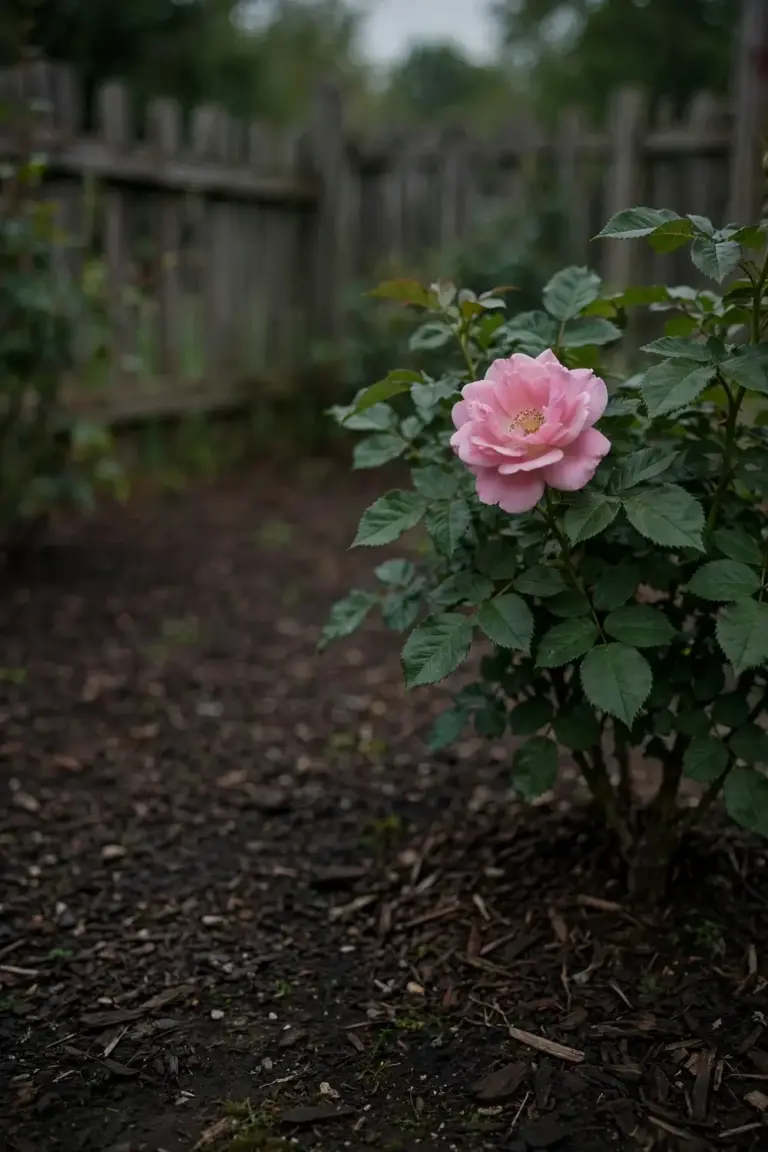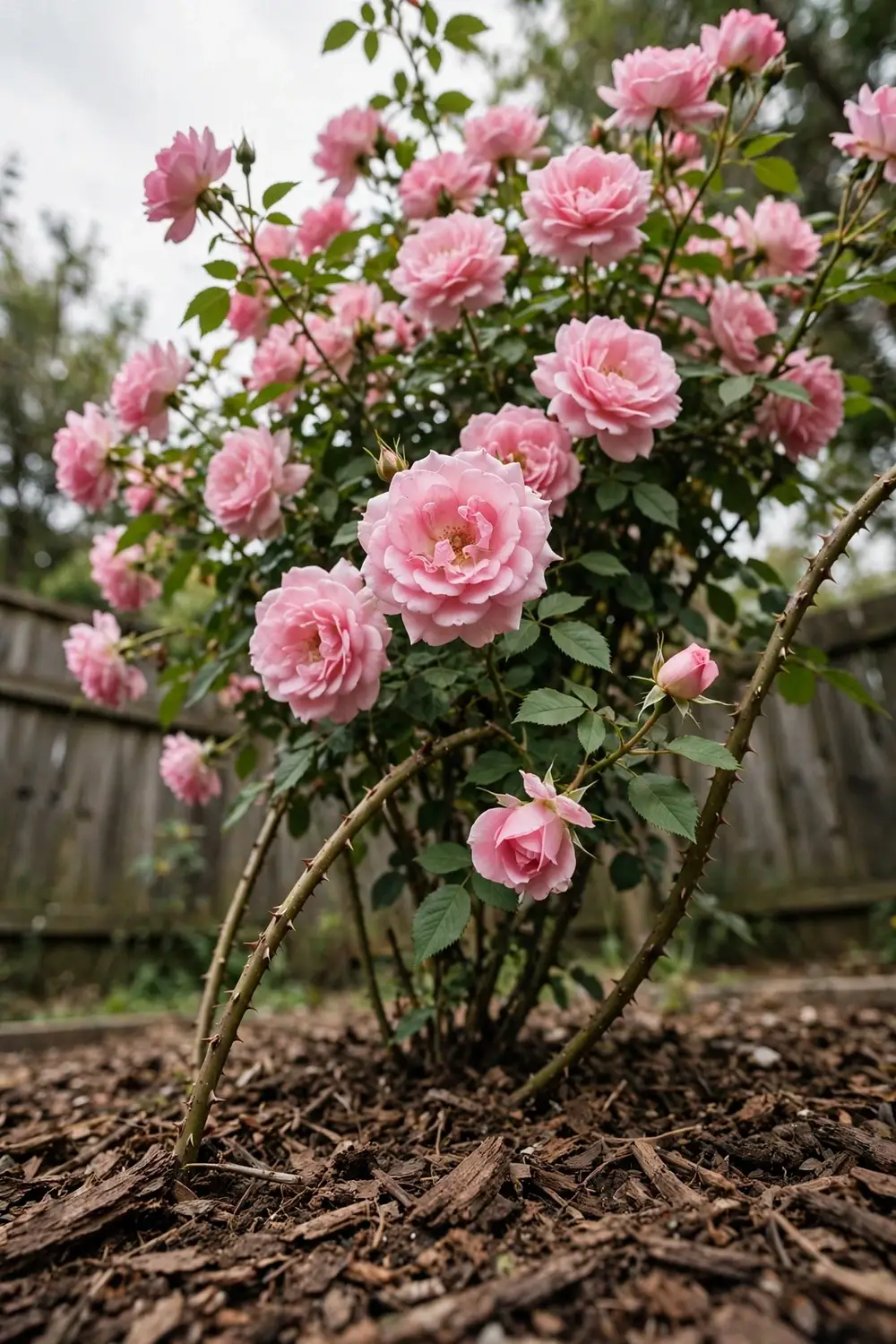

Plant a rose that fits the job you want done, give it 6 to 8 hours of sun, and prune it hard in winter. That is growing roses in Australia in one line. Roses flower on new growth, so the winter prune sets the next season.
A rose rewards a gardener who picks by job first and by flower color second. I have learned that the rose I cut back hard in July outblooms the rose I only tidy. The rest of this page walks from type selection to planting, feeding, pruning, pots, cut flowers, pests, and fixes.
1. Match the Rose Type to the Job First
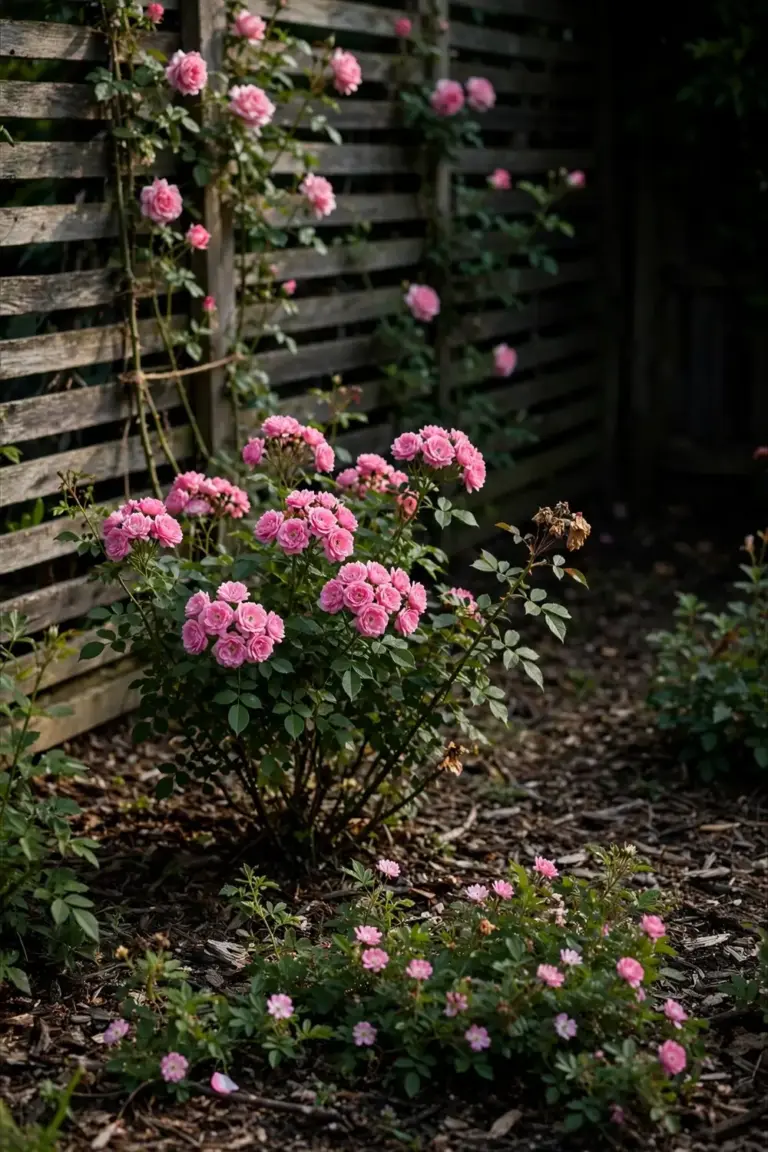
Pick the type by the job. A hybrid tea gives long single stems for cutting, while a floribunda gives clusters for mass color. A climber covers a wall, fence, or arch, and a shrub rose fills a bed with low care. A standard rose works as a feature in a pot or along a path edge, a groundcover rose covers a bank, and a miniature rose fits a small pot or a path edge.
| Rose Type | Growth | Best Job | Winter Prune |
|---|---|---|---|
| Hybrid tea | Upright bush, one bloom per stem | Cut flowers | Hard, to 3 to 5 strong canes |
| Floribunda | Bushy, clusters of blooms | Mass color in beds | Hard, shape the bush |
| Climber | Long canes that need support | Walls, fences, arches | Light, tie canes flat |
| Shrub or landscape | Broad bush, often repeat flowering | Low-care beds and hedges | Light, remove dead and crossing wood |
| Standard or tree rose | One trunk with a head of growth | Feature plant, pots, path edges | Hard on the head, keep the trunk clear |
| Groundcover or carpet rose | Low, spreading | Banks and bed edges | Light, shear spent growth |
| Miniature | Small bush, small blooms | Small pots and edging | Light, tidy the shape |
Desert rose is Adenium, a succulent from a different plant family. It is not a garden rose, and rose care does not apply to it. Check the botanical name before following any rose advice for a plant sold as a rose.
Start with the job, then the site. A narrow bed beside a path takes a floribunda or a miniature, since a climber would swallow the path within two seasons. A bare fence wants a climber with canes tied flat, because flat canes push side shoots along their full length and flower top to bottom. A pot on a balcony wants a miniature or patio rose, since a hybrid tea in a small pot dries out between waterings and blooms thin. When the job and the site agree, the variety choice gets easy: pick the healthiest plant in that type, not the prettiest photo on the label.
2. Plant Bare-Root Roses in Winter, Potted Roses in Any Mild Month
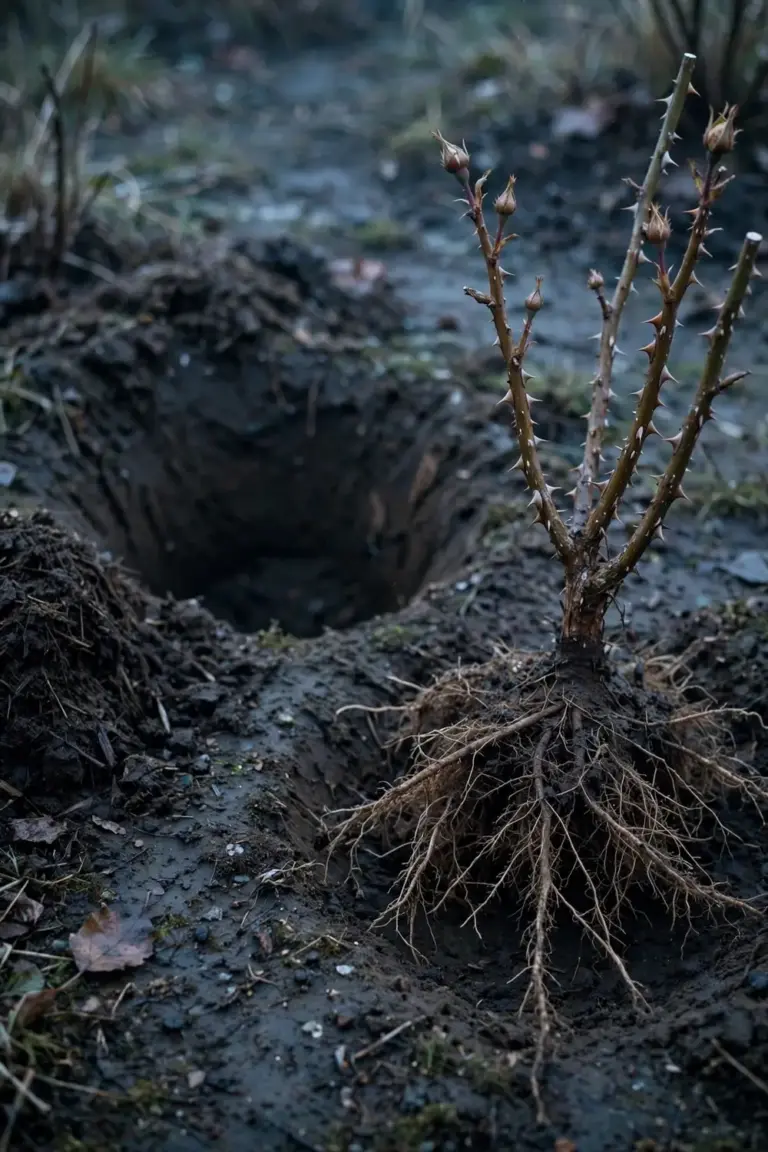
Plant bare-root roses while the plant sleeps. The bare-root window runs late autumn to early spring, and June and July suit most of Australia. Potted roses plant in any mild month. Skip planting in extreme heat or during a hard frost. Bare-root plants arrive with no soil on the roots. Heel them into a trench of damp soil if planting must wait more than a day, and never let the roots dry out in sun or wind.
| Climate Zone | Bare-Root Window | Winter Prune | Notes |
|---|---|---|---|
| Tropical north (far north QLD, NT) | May to July, in the cooler months | June to July, light | Heat and humidity press hard on roses. Afternoon shade and airflow matter more than cold protection. |
| Subtropical (Brisbane, northern NSW) | May to July | June to July | Roses grow well here. Watch black spot in wet summers. |
| Temperate (Sydney, Perth, Adelaide) | June to July | June to July | This zone fits the standard calendar. Bare-root planting peaks in June and July. |
| Cool (Melbourne, Canberra, Hobart) | June to August | Late July to early August | Late frosts punish early pruning. Hold the hard prune until late July or early August. |
The fall planting guide covers autumn planting timing for the rest of the garden. Roses follow their own winter calendar above.
3. Give Roses Sun, Air, and Soil That Drains
Give roses at least 6 to 8 hours of sun daily during the growing season, according to the Montana State University Extension shrub rose guide. Morning sun dries dew off leaves and cuts black spot pressure. Afternoon shade in hot zones keeps flower color longer. The site needs good air circulation to reduce disease.
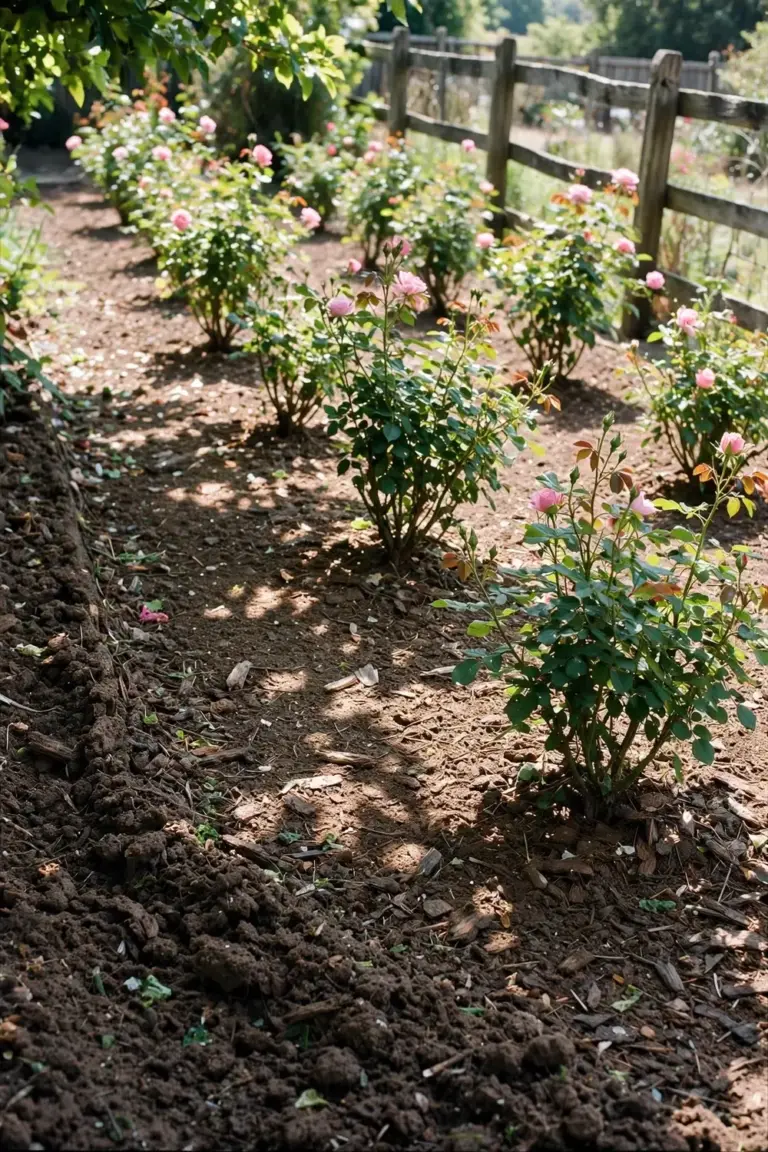
Roses refuse wet feet. The soil must drain freely. The soil health guide shows how to build soil that drains. If water pools after rain, the site fails. Work compost or aged manure through the bed before planting. Aim for soil pH 6.0 to 6.5, slightly acidic, per Penfield Roses. The Montana guide allows up to pH 7.0. Above pH 8.0, iron locks up and leaves turn yellow. Test the soil before adding lime or sulfur. A soil test costs less than a dead rose.
Sandy soils in Western Australia drain fast and hold little food, so feed little and often there and mulch to hold moisture. Heavy clay soils need organic matter worked through before planting. Never plant into a hole full of fresh manure, since fresh manure burns roots.
4. Buy Bare-Root or Potted, Grafted or Own-Root
Buy bare-root roses in winter. Bare-root plants cost less per plant, and nurseries stock more bare-root types in winter than at any other time. Buy potted roses when you want to see the plant in leaf or plant outside the bare-root window. Potted roses plant in any mild month.
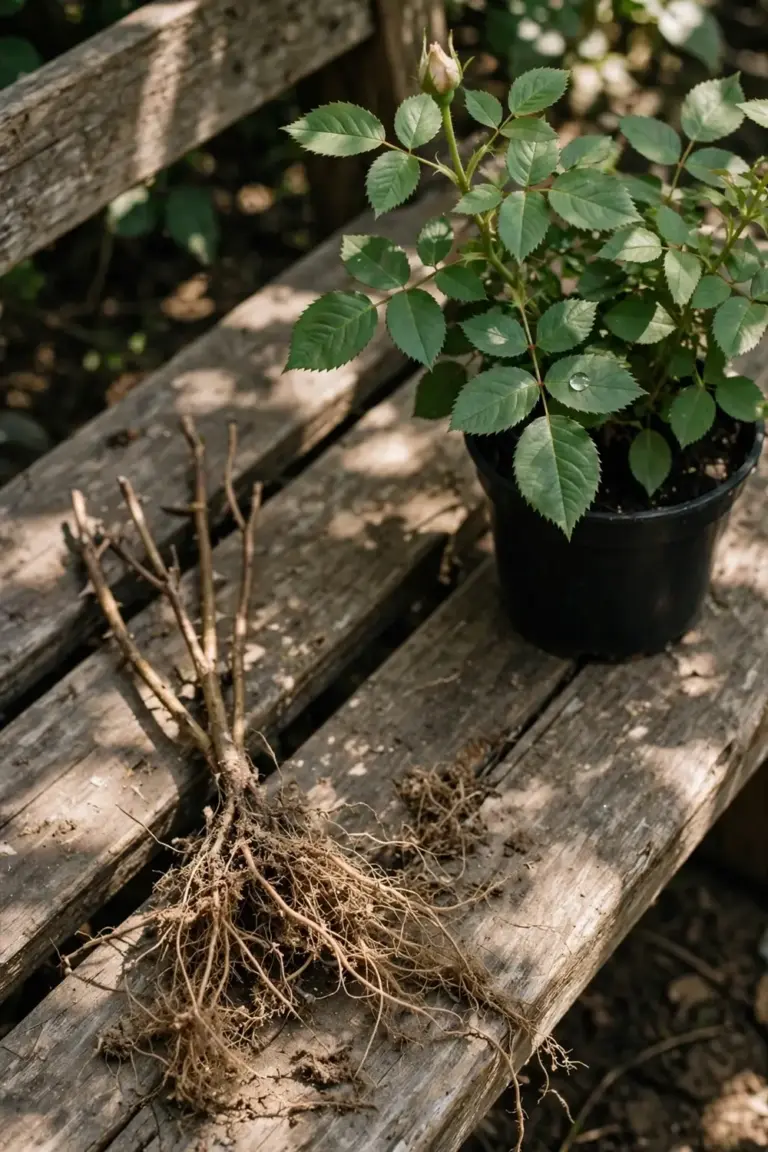
Most garden roses are grafted. A grafted rose joins a named variety onto a tough rootstock. The graft gives vigor and a broad choice of named varieties. The rootstock can send up suckers below the graft. Pull suckers off at the base when they appear. Own-root roses grow on their own roots, so they never sucker from a rootstock. Own-root plants often start slower than grafted plants.
Some named varieties are protected by plant breeders rights. Propagating a protected variety for sale breaks the law. Propagating for your own garden sits in a gray area in some places. Buy the plant when you want a named variety. Woody shrubs follow the same bare-root versus potted choice. That choice lives on planting shrubs in fall. This page stays on roses.
Grafted roses dominate nursery benches because the rootstock adds vigor and tolerates a wider spread of soils than the named variety manages on its own roots, which is why most named varieties reach gardens as grafted plants at all. The trade sits at the graft. Suckers from the rootstock look different from the named variety, with smaller leaves and faster, thinner growth, and they flower in the rootstock’s own color when they flower at all. Own-root roses dodge that trade. They never sucker from a rootstock, since no rootstock exists, and a winter freeze that kills the top leaves roots that regrow true to the variety. The cost is a slower start. An own-root rose often spends its first season growing roots while its grafted neighbor flowers.
5. Plant the Rose at the Right Depth
Plant the rose at the depth it grew in the nursery, with the graft union placed to suit your frost risk. Dig the hole twice the width of the root ball, per Penfield Roses. For shrub roses, the Montana guide digs holes 30 cm deep and 46 cm wide. Loosen the soil at the bottom and sides of the hole. Never wrap long roots around the inside of the hole. Trim roots to fit the hole instead.
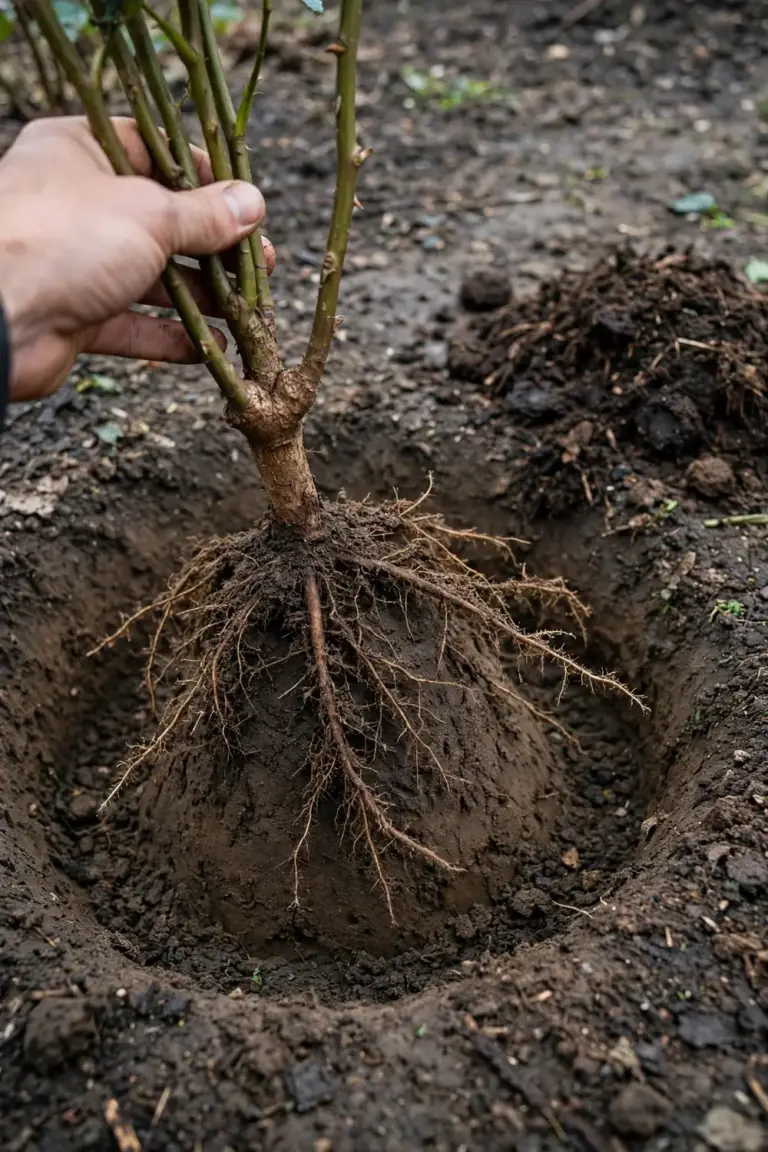
Soak bare-root roses in water for 24 hours before planting, per Penfield Roses. Spread the roots over a cone of soil in the hole. In frost zones, set the bud union about 5 cm below soil level, per the Montana guide. In warm frost-free zones, set the union at soil level so suckers show early. Backfill with soil mixed with compost. Firm the soil to remove air pockets. Water deep at planting. Mulch with a 5 cm layer, kept clear of the crown, per Penfield Roses. Mulch piled against the stem rots the stem.
6. Water Deep and Keep Leaves Dry
Water deep and water the soil, not the leaves. Roses need steady moisture through the growing season. Water deeply once or twice a week, per Penfield Roses, and more often in hot dry spells. Water early in the morning so leaves dry before evening. Drip irrigation or a soaker hose beats a sprinkler, since overhead watering wets leaves and feeds black spot.
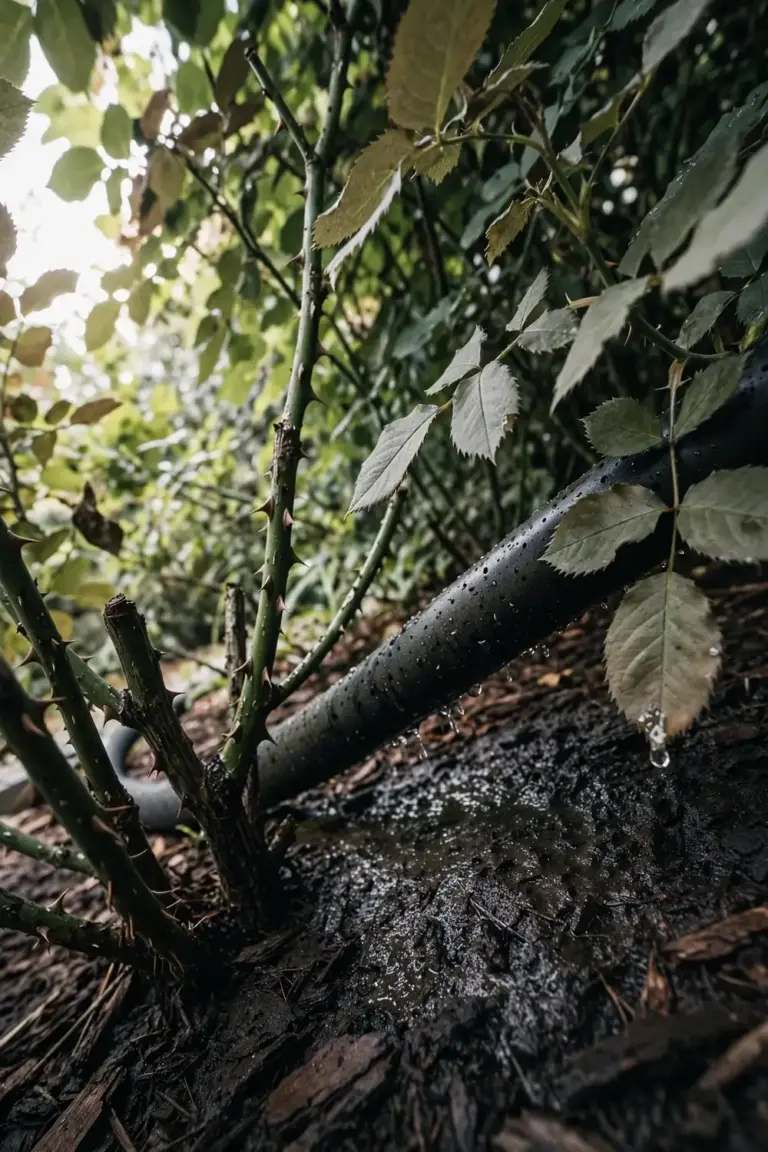
Soak the soil to about 25 cm deep once each week, per the Montana guide. A shallow sprinkle grows shallow roots. Drooping leaves and dry cracking soil signal thirst. A dry mulch can pull moisture from soil, so wet the soil before mulching. Keep mulch clear of the stem.
Watering rhythm follows the season, not the calendar. Spring growth and the first flush drink the most, and a rose pushing new canes in October wants a full soak each week even when rain falls, because light rain wets the mulch and never reaches the roots. Summer heat lifts demand further, and a rose in a windy coastal garden can dry out in three days while the same rose in a sheltered inland bed lasts a week. Autumn rain usually covers the plant, and winter dormancy needs almost nothing. The finger test settles it: push a finger 5 cm into the soil, and water when the soil feels dry at that depth. Soggy soil at that depth means the last watering still holds, so wait.
7. Feed Roses on a Three-Beat Schedule
Feed roses three times across the season, then stop. Roses are heavy feeders. A hungry rose blooms thin and invites disease. Feed at the right beats and the plant does the rest.
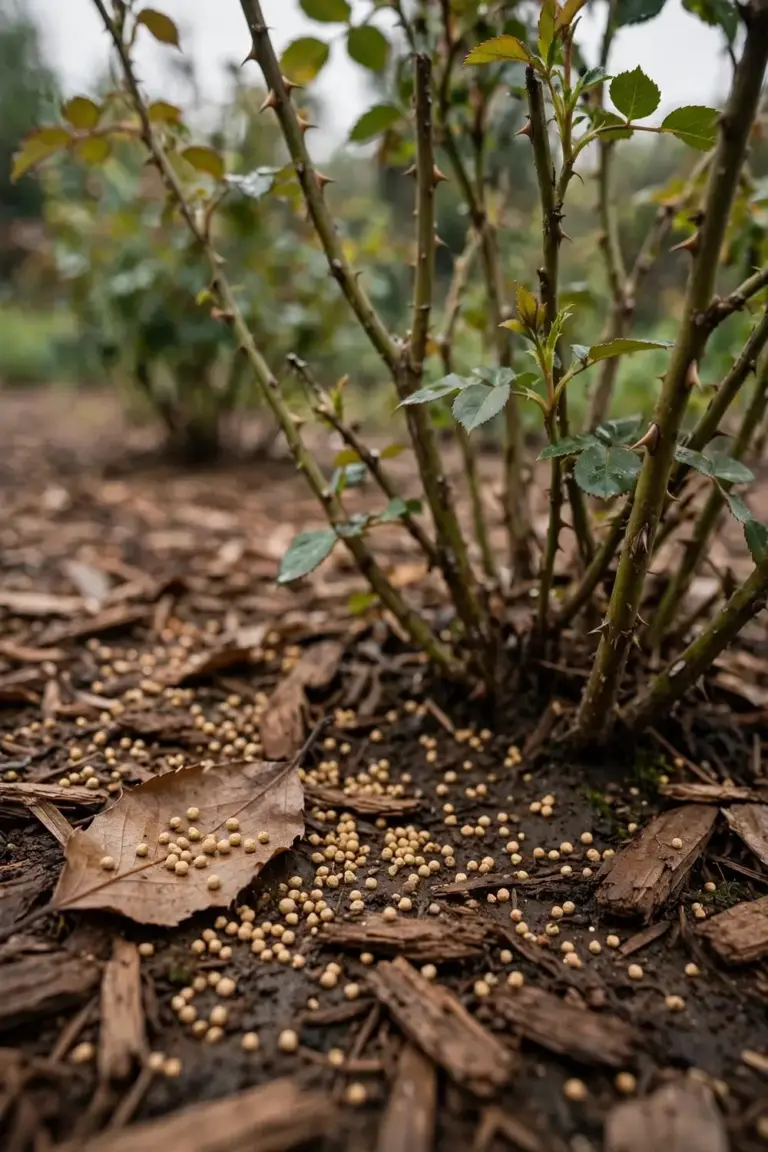
The first feed lands in early spring, as new growth emerges: use a balanced rose fertilizer. The second feed lands after each bloom cycle, with a high-phosphorus fertilizer to push repeat blooms. The third feed lands in late summer or early autumn, with a low-nitrogen fertilizer to harden growth before dormancy. Stop feeding no later than 6 weeks before the first frost, per Penfield Roses. Late feeding grows soft shoots that frost kills.
Skip fertilizer in the year of planting for shrub roses, per the Montana guide, since the plant needs roots first. Start feeding the year after planting. Water before and after feeding, because fertilizer on dry soil burns roots. Never feed a plant under extreme heat or stress.
Mulch does half the feeding job. A 5 cm layer of composted bark or aged manure breaks down across the season and feeds soil life, which in turn frees nutrients for the rose, while the same layer holds moisture and keeps weeds down. Keep the mulch clear of the stem. Mulch against the stem holds moisture on bark and rots it. Top the mulch up as it breaks down, usually once in spring and once in autumn. A rose in a pot wants the same treatment on a smaller scale, with fresh potting mix on top each spring and a slow-release rose food worked into the top few centimeters.
8. Prune Roses Hard in Winter, Light in Summer
Prune roses hard in winter. Winter pruning sets the shape and the next flush. Major rose pruning happens in winter in all states of Australia, per Ultimate Backyard. Perth, Sydney, and Brisbane prune in June or July. Melbourne, Canberra, and Tasmania prune in late July or early August. Roses that flower once, in spring, prune after flowering finishes, not in winter.
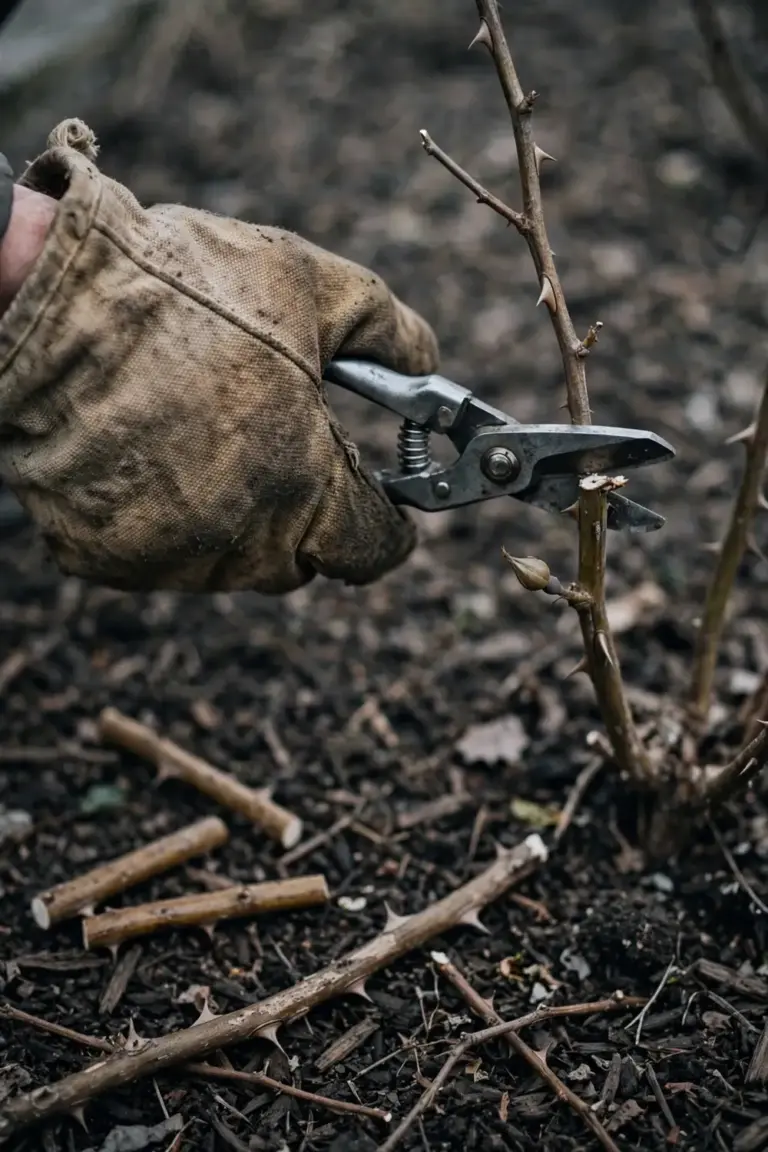
Start with dead and diseased wood. Cut it right back to healthy growth or to the base. Remove suckers from below the graft. Remove crossing branches that rub. Cut each main stem back by about one-third, per the same guide. Cut about 5 mm above an outward-facing bud, at a 45-degree angle, per Penfield Roses. An outward bud grows outward. An inward bud grows into congestion.
Prune by type. Hybrid teas and floribundas take a hard prune to 3 to 5 strong canes. Climbers take a light prune. Tie the long canes flat to push side shoots. Shrub roses need little pruning. Remove dead, unhealthy, or crowding branches to hold the shape. Standards take a hard prune on the head. Keep the trunk clear of shoots. Groundcover roses take a light shear after flowering. General pruning cuts for other garden plants live on spring pruning techniques. This page stays on rose cuts.
9. Deadhead Every Spent Flower
Deadhead spent flowers as soon as petals fall. Deadheading pushes the next flush. A rose left to set hips spends energy on seed. Cut the stem down to an outward bud, about 5 mm above the bud, per Ultimate Backyard. The next shoot grows from that bud and flowers within weeks.
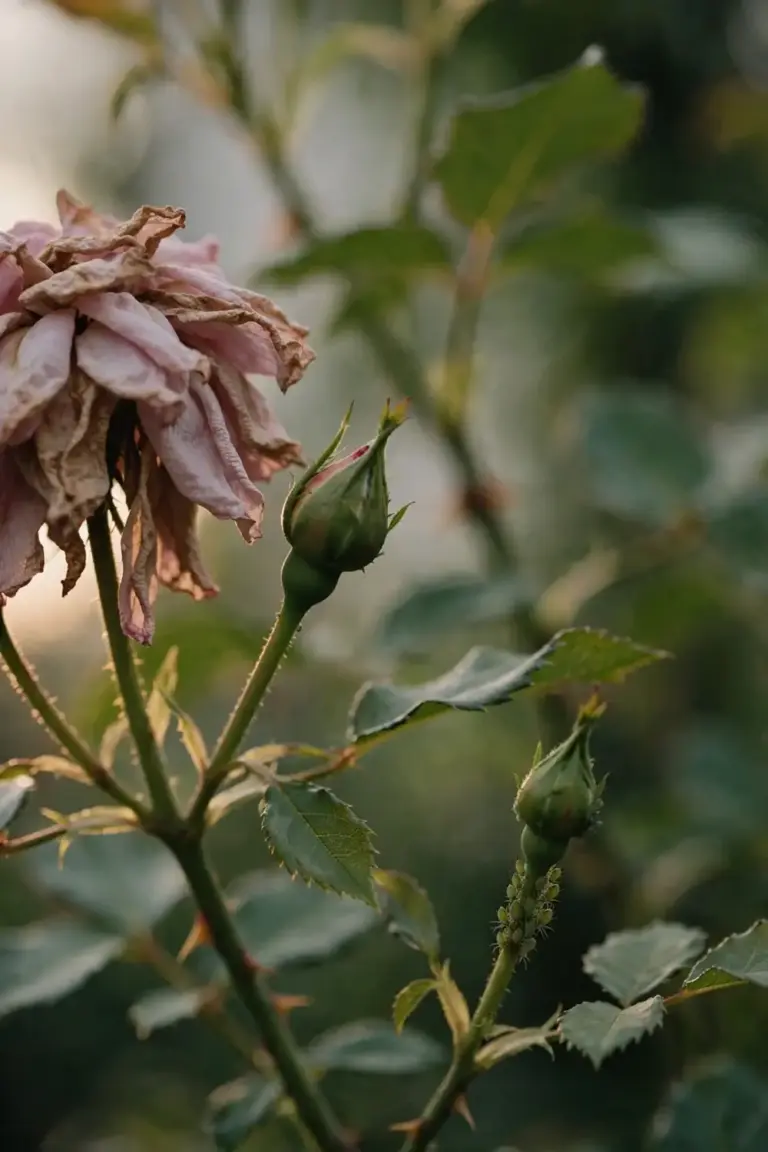
A light summer prune after the first flush sets up an autumn flush. Trim behind the spent flowers and feed at the same time. The plant answers with fresh shoots. Stop deadheading in late autumn if you want hips for winter color. Hips feed birds and color a bare garden. Skip hips on a young plant. A young plant needs roots first.
10. Grow Roses in Pots Without Shrinking the Plant
Grow one rose per large pot, since a large pot holds moisture and food while a small pot dries fast and starves the plant. Pick a pot with drainage holes. Line the base with coarse potting mix, not garden soil, because garden soil compacts in a pot and drowns roots.
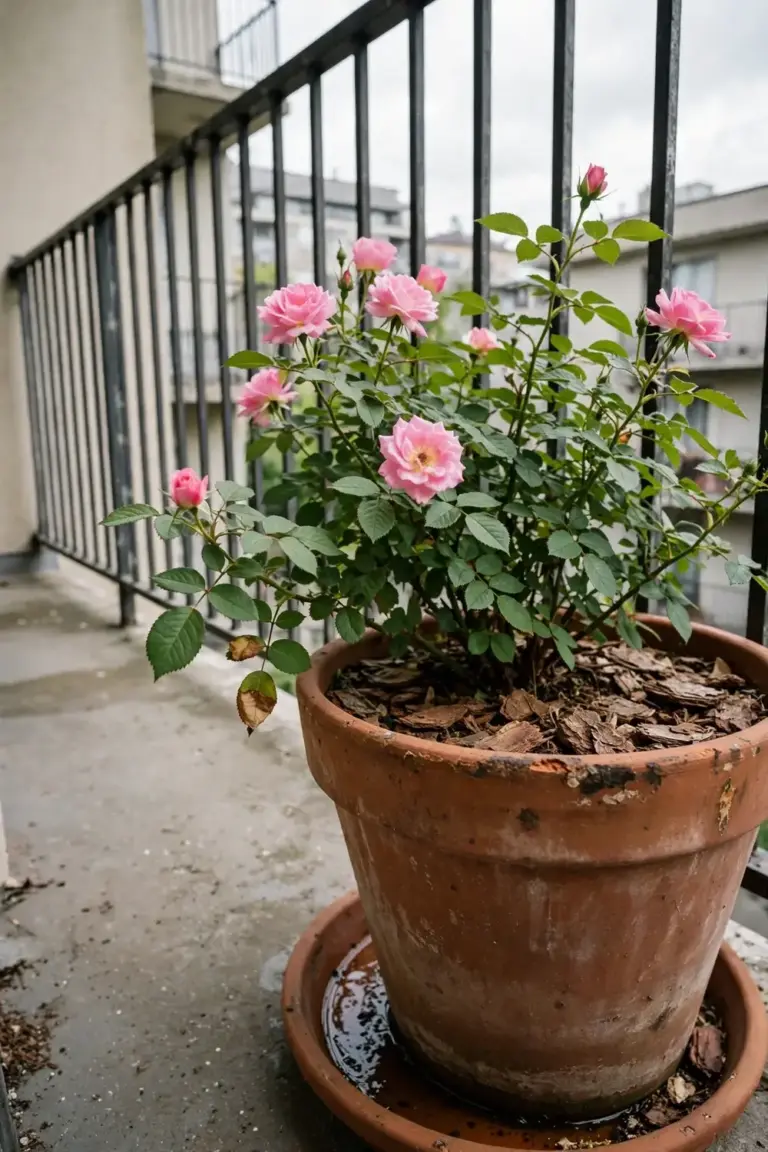
Potted roses drink more often than roses in the ground, so check the pot twice a week in summer and water until it runs from the base. Feed potted roses on the same three-beat schedule as roses in the ground. Top up mulch as it breaks down. Repot every two to three years into fresh mix, since root-bound roses bloom thin. Miniature and patio roses suit pots best. A vigorous climber fights a pot and loses.
Site the pot where the rose gets morning sun and shelter from hot afternoon wind. A pot on a west-facing balcony in a heatwave cooks roots, since the pot walls heat up and the small soil volume holds no buffer. Move the pot to afternoon shade in January and February in hot zones, then back to full sun in autumn. In frost zones, shift the pot to a sheltered wall in winter and wrap the pot in hessian if hard frosts loom. A rose in a pot never goes fully dormant in a warm winter, so check water once a week even when the plant looks asleep.
11. Propagate Roses From Cuttings, Not From Seed
Propagate roses from cuttings, since seed-grown roses rarely match the parent while a cutting keeps the variety true. Take cuttings in late summer from firm new growth, cutting a stem about 15 cm long and stripping the lower leaves. Dip the cut end in rooting hormone if you use one. Push the cutting into moist potting mix and cover with a clear bag to hold humidity. Keep the mix damp, not wet. Roots form over weeks. Harden the cutting off before planting out.
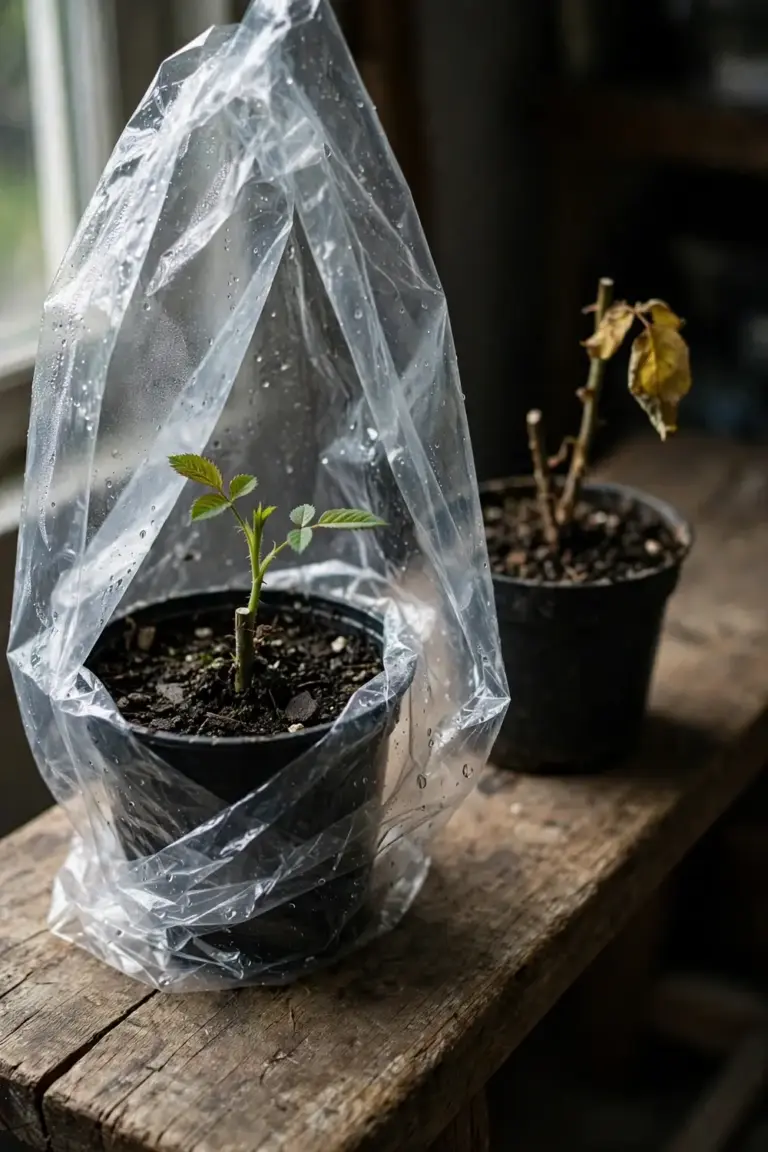
Some named varieties are protected by plant breeders rights, so do not propagate a protected variety for sale. Buy the plant when you want a named variety. A cutting from a garden rose also carries the parent’s diseases, so take cuttings only from healthy plants.
Late summer gives the best cuttings. The growth has firmed up from soft spring shoots but still carries the season’s vigor, and a cutting taken then roots before winter and grows away in spring. A cutting taken in winter from hardwood can root too, but it sits for months and rots more often. Keep the covered cutting out of direct sun, since direct sun cooks the air inside the bag. Check the mix weekly and water only when the top feels dry. Tug the cutting gently after six weeks: resistance means roots. Pot the cutting on when roots fill the small pot, then harden it off outdoors for a week before planting out.
12. Cut Roses for the Vase
Cut roses in the morning. Morning stems hold the most water. Cut when the outer petals start to loosen and the bloom shows color. A tight bud may never open indoors. A fully open bloom drops petals fast.
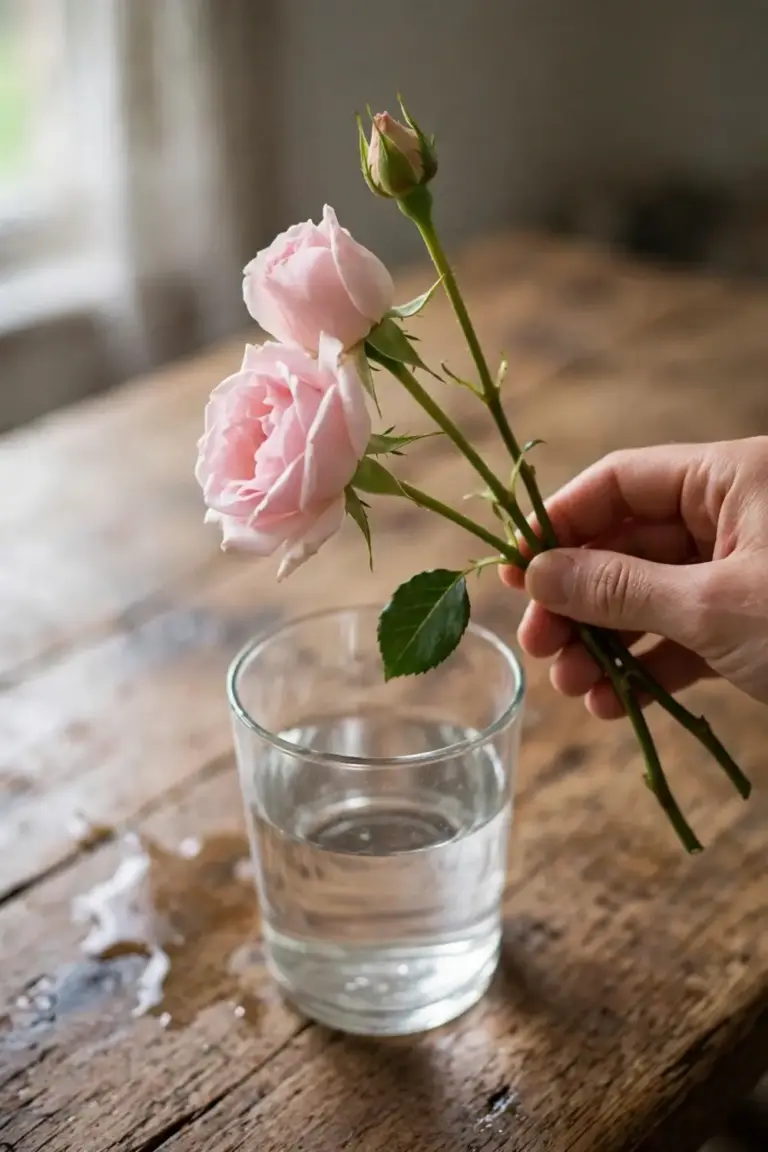
Cut the stem at a slant, 5 mm above an outward bud. Recut the stem under water before arranging. Strip leaves that sit below the waterline. Leaves underwater rot and cloud the water. Change the vase water every two days. Keep the vase out of direct sun and away from fruit bowls. Ripening fruit gives off ethylene gas. Ethylene gas shortens vase life.
Pick stems at different stages for a longer display. A vase with one tight bud, two half-open blooms, and one full flower opens in sequence across the week. The full flower fades first, the bud opens last, and the vase never sits empty. Pull spent blooms as they fade so the water stays clean.
13. Handle Pests and Diseases at Pointer Depth
Check roses weekly. Early catches stay small. Late catches spread. This section names each problem and the first move. Full treatment protocols sit in the disease guides.
| Problem | What You See | First Move |
|---|---|---|
| Aphids | Clusters of small insects on new growth and buds, sticky leaves | Blast with a strong jet of water, then insecticidal soap |
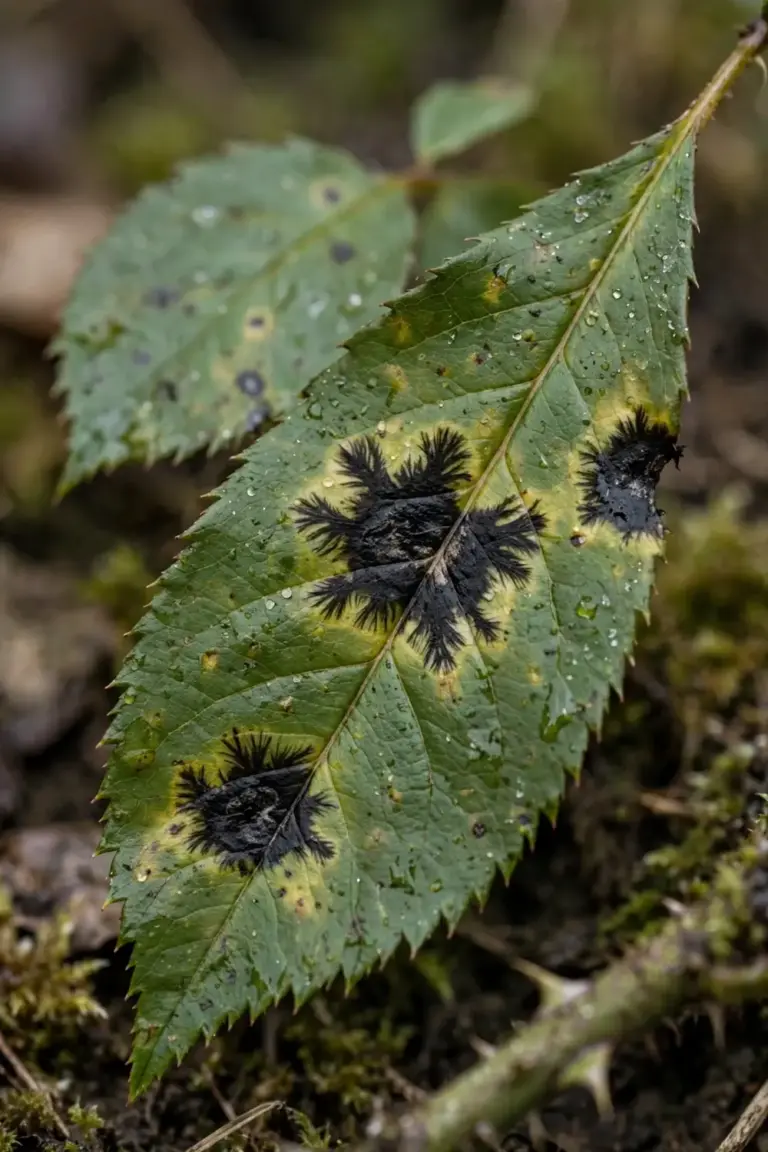
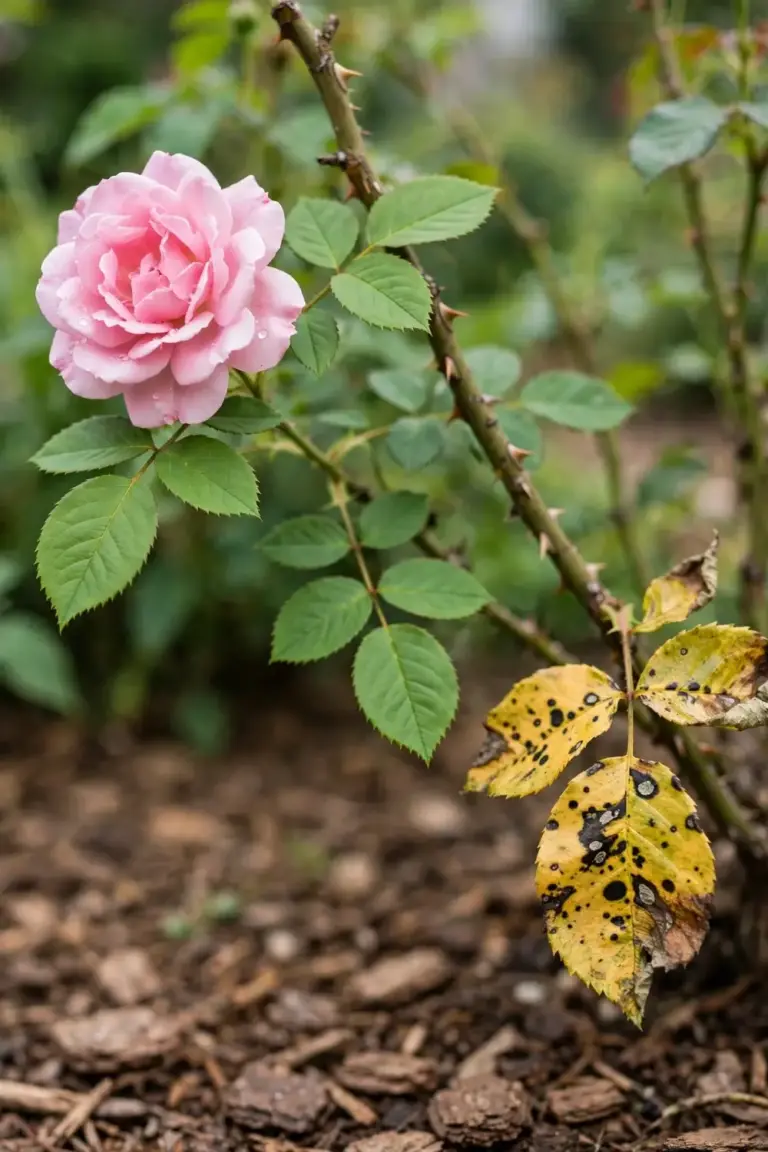
| Black spot | Circular black spots with yellow halos, leaves drop | Remove spotted leaves, water at the base, space for airflow |
| Powdery mildew | White powdery growth on leaves, buds, and stems in warm humid weather | Improve airflow, water at the base, keep leaves dry |
| Rust | Orange or brown spots under leaves | Remove infected leaves, improve airflow |
| Scale | Small bumps on stems, sticky honeydew | Scrub off with a soft brush, then horticultural oil per the label |
| Crown gall | Rough warty growth at the crown or roots | No cure; remove and bin the plant, do not compost it |
Black spot is the most common rose disease. The fungus Diplocarpon rosae causes black spot. Lesions run roughly circular and may reach 1.3 cm across, per the University of Wisconsin Plant Disease Diagnostics Clinic black spot fact sheet. The disease starts on lower leaves and spreads up the plant. Severe black spot defoliates the plant. Spores travel by wind and splashing rain. The fungus survives in leaf litter and infected canes.
Treat black spot only when the plant shows a history of severe disease and wet weather looms, per the same fact sheet. Fungicides with chlorothalonil, copper sulfate, or myclobutanil control black spot. Treat every 7 to 14 days from bud break until wet weather subsides. Rotate active ingredients to slow resistance. Follow the label. Prune diseased branches 15 to 20 cm below any obvious infection. Prune only in dry weather. Disinfest tools between cuts for at least 30 seconds with 70% alcohol or a 10% bleach solution, per the University of Wisconsin fact sheet. Rinse and oil tools after bleach.
Sanitation does more than any spray. Fallen leaves carry next season’s spores, and a bed left littered over winter hands the fungus a free start in spring, so rake the bed clean at the winter prune and bin the leaves rather than composting them. Compost heaps in home gardens rarely get hot enough to kill fungal spores. The same rule covers prunings: bin diseased canes, never compost them. Clean tools between plants, not just between cuts on one plant, when black spot runs through the bed.
Disease resistance is relative, never absolute. A variety listed as resistant still spots in a wet season. Resistance lowers pressure. It never removes it. No variety is disease-proof. Plant resistant varieties and space for airflow. Clean up fallen leaves, since fallen leaves carry next season’s spores.
14. Fix the Five Most Common Rose Failures
Diagnose by the symptom. Fix the cause, not the leaf.
No flowers. The plant gets too little sun, or the prune ran too light. Move the rose to 6 to 8 hours of sun. Prune hard in winter. Feed after each flush. A rose fed with high-nitrogen lawn fertilizer grows leaves at the expense of blooms, so keep lawn fertilizer off the rose bed. A rose in shade grows leaves and skips blooms.
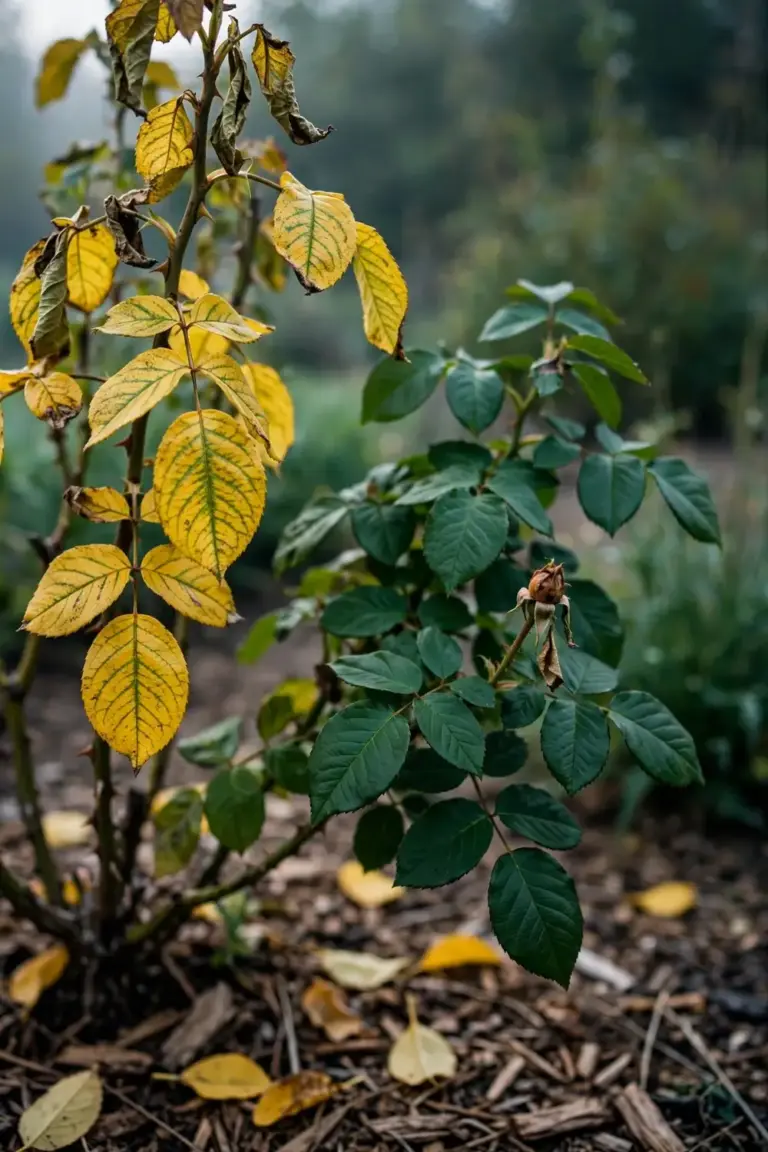
Yellow leaves with green veins. The soil runs alkaline and iron locks up. Test the soil pH. Above pH 8.0, iron stays unavailable, per the Montana guide. Lower pH with garden sulfur per label rates. A foliar spray of chelated iron greens leaves fast and fades fast. Fix the soil for a lasting answer.
Buds drop before opening. Heat, drought, or thrips drop buds. Water deep and mulch. Check buds for thrips. Thrips rasp petals and deform buds. Insecticidal soap controls thrips on contact. A dry week at bud stage drops buds too, and the plant recovers once deep watering resumes. Bud drop also follows a late feed that pushes soft growth into a hot spell.
Leggy growth with few blooms. The plant stretches for light. Move the rose to full sun. Prune hard to outward buds. A leggy rose in shade never fills out with fertilizer alone.
Suckers crowd the bush. Suckers grow from below the graft. They carry different leaves and no named blooms. Pull them off at the base. Cutting a sucker at soil level leaves a stub that regrows. Dig to the rootstock and tear the sucker clean off.
15. Frequently Asked Questions About Growing Roses in Australia
Roses grow in tropical Queensland with limits, since heat and humidity press hard on roses and black spot spreads fast in wet summers. Pick heat-tolerant types and disease-resistant varieties. Give afternoon shade and wide spacing for airflow. Water at the base. Accept thinner blooms in the wettest months. Roses in the far tropical north never match cool-climate displays.
Prevent powdery mildew with airflow, spacing, and dry leaves. Space roses so air moves through the bush, and water at the base with drip or a soaker hose. Prune for an open vase shape. Clean up fallen leaves. Morning sun dries dew fast. These steps lower mildew pressure without any spray program. A full mildew treatment protocol sits in the powdery mildew guide.
Prune roses in winter. Perth, Sydney, and Brisbane prune in June or July. Melbourne, Canberra, and Tasmania prune in late July or early August, per the same Australian pruning guide. Roses that flower once in spring prune after flowering finishes. Summer pruning means deadheading spent flowers. A light summer trim after the first flush sets up an autumn flush.
Yellow leaves point to water, feeding, or pH trouble. Overwatering drowns roots and yellows lower leaves. Underwatering yellows and crisps leaf edges. Alkaline soil locks up iron and yellows leaves between green veins. Test soil pH first. Fix drainage next. Feed only on the three-beat schedule. Yellow leaves from black spot show spots and halos first, then drop.
Roses grow well in pots on a balcony with sun. Pick a large pot with drainage holes and use potting mix, not garden soil. Give the pot 6 to 8 hours of sun. Water more often than roses in the ground. Feed on the three-beat schedule. Miniature and patio roses suit pots best, while a vigorous climber fights a pot. Move the pot to a sheltered spot in a frost.
16. Start With One Rose That Fits Your Site
Start with one rose that fits your site. Pick the type by the job. Plant bare-root in winter or potted in any mild month. Give sun, air, and drainage. Feed three times and stop before frost. Prune hard in winter and deadhead through summer. The plant answers with blooms. One healthy rose teaches more than six struggling roses.