
Growing apple tree in Australia starts with winter chill. Apple trees need 200 to 1,000 chill hours each winter, and the variety you pick must match the chill your garden gets. Pick a low-chill variety for a warm climate, give the tree full sun and a pollination partner, and it fruits. I have learned that the apple tree I match to my winter chill fruits, while the one I pick for its name alone leafs out and sulks. The rest of this page walks from chill matching to harvest, with varieties, planting, pruning, and thinning.
1. Match Chill Hours Before You Buy the Tree
A chill hour counts one hour between 0 and 7 degrees Celsius. The tree counts those hours across winter, and buds break evenly only after the variety’s requirement is met. Mississippi State Extension lists apples at 200 to 1,000 chill hours, with the exact figure set by variety. Short winters cause delayed leafing, weak flowering, and poor fruit set. West Virginia University Extension lists Gala and Pink Lady at 400 chill hours, which puts both in reach of cool-temperate Australian gardens. Check local chill records before you buy. Nursery labels and local chill records beat a national map. A low-chill variety in a cold garden breaks dormancy early and risks frost damage. A high-chill variety in a warm garden never wakes fully. Chill hours govern nectarines too. Read chill hours and disease pressure in nectarines before you pick a stone fruit. Cool-temperate gardens grow the full range. Warm-temperate and Mediterranean gardens grow most varieties. Subtropical gardens grow low-chill varieties only. Work out your chill before you shop. The Bureau of Meteorology keeps temperature records for most regions, and many nurseries publish chill figures for their districts. Chill calculators turn those records into a seasonal total. Models differ. One model counts hours below 7 degrees. Another weights hours by how cold they run. Totals from different models never match exactly. Treat any total as a guide, not a promise. Buy a variety rated below your garden’s usual total so a margin of safety covers a warm winter. A variety rated above your total fruits only in a cold year.
2. Pick a Variety for Your Climate and Your Kitchen
Pick the variety after chill, not before it. A variety that fruits in Hobart may sulk in Brisbane. A variety that fruits in Brisbane may bloom too early for a frost-prone inland garden. The table below sorts common varieties by chill band and use. Chill bands follow nursery chill charts. Exact hours vary by source, so treat each band as a band, not a promise. Nursery chill charts list Anna at 300 to 400 hours and Dorsett Golden under 100 hours.
| Variety | Chill Band | Use | Pollination | Notes |
|---|---|---|---|---|
| Anna | Low | Eating | Needs a partner | Early fruit, warm-climate staple |
| Dorsett Golden | Low | Eating | Needs a partner | Very low chill, pairs with Anna |
| Tropic Sweet | Low | Eating | Needs a partner | Warm-climate eating apple |
| Granny Smith | Medium | Cooking and eating | Needs a partner | Tart, keeps well |
| Gala | Medium | Eating | Needs a partner | Sweet, early season |
| Pink Lady (Cripps Pink) | Medium | Eating and keeping | Needs a partner | Pink Lady is the commercial name for Cripps Pink meeting grade standards |
| Fuji | Medium | Eating and keeping | Needs a partner | Sweet, stores well |
| Jonathan | High | Cooking and eating | Needs a partner | Cool-climate variety |
| Red Delicious | High | Eating | Needs a partner | Cool-climate variety |
Fraser Island Apple and Black Apple are not apples. The tree on this page is Malus domestica only. Cider apples exist, but cider making sits outside growing. Buy from a nursery that lists chill hours on the label. A label without chill hours leaves the most important question unanswered. Buy from a nursery that grows trees for your state, because a tree raised in a cool district may sulk in a warm one. Ask how the variety eats after a month in storage. Some apples stay crisp. Others turn soft and mealy. Granny Smith cooks down to a sharp puree. Gala eats best fresh. Fuji holds its crunch for weeks. Match the apple to the kitchen, not only to the climate. A cooking apple in a fresh-eating household wastes half the crop.
3. Choose the Rootstock That Sets the Tree Size
The rootstock sets the tree size. The variety sets the fruit. Grafting joins the two, so one tree carries known fruit on a chosen frame. Dwarf trees fit small gardens and pots. Standard trees need room and a ladder. The table below shows the common rootstocks.
| Rootstock | Tree Size | Support | Spacing |
|---|---|---|---|
| M9 | Dwarf, 30 to 40 percent of standard height | Stake or trellis for life | 2 to 3 m apart |
| M26 | Semi-dwarf, between dwarf and standard | Stake for the first years | Wider than M9 |
| MM106 | Semi-vigorous, near-standard vigour | Free-standing once established | Wider still |
| Seedling | Full size | Free-standing | 4 to 7.5 m apart |
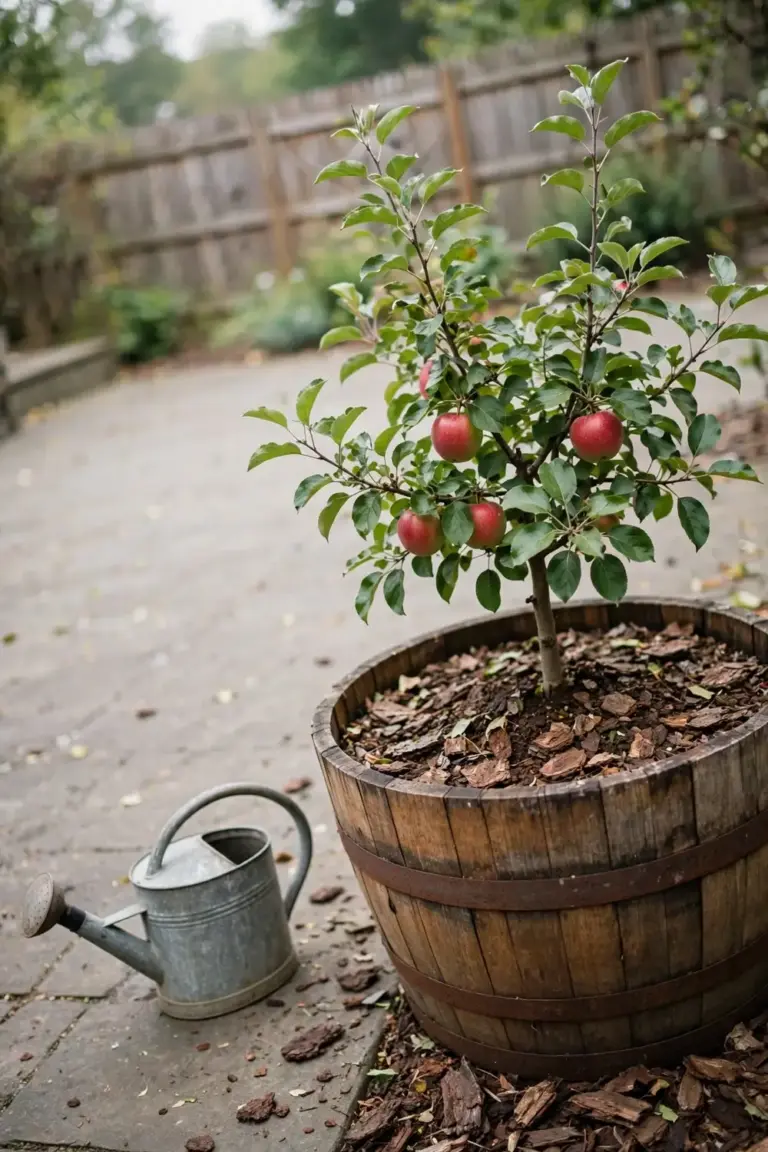
The University of Georgia home-garden apple guide notes that true dwarf trees need a trellis or a post. Nurtured Life’s Australian apple profile spaces dwarf trees 2 to 3 m apart and espalier trees 1 m apart. Lawn.com.au’s Australian apple guide spaces standard trees 4 to 7.5 m apart. Pots suit dwarf trees. Fruit Salad Trees’ Australian pot guidance starts a tree in a 30 to 40 cm pot and moves it up to a wine barrel as it grows. Seed grows a tree, but the fruit will not match the parent. Seedling apples take 5 years or more to fruit, while a grafted dwarf tree fruits in about 2 years. Bunnings’ Australian apple guide puts seedling fruiting at 5 years or more, and Garden Clinic’s apple notes put dwarf fruiting near 2 years. Nurseries graft a known variety onto a chosen rootstock, so the tree stays true to type and fruits early. If you still want the experiment, seed starting steps cover stratification and germination. Expect a surprise apple. Multi-graft trees carry two or three varieties on one frame. They suit small gardens with room for one tree. Each graft needs its own light and air, so prune each graft as its own small tree. Espalier trains a tree flat against a fence or wall. The form suits narrow beds and paths. Espalier needs yearly tying and pruning, and the work never stops. A free-standing dwarf tree asks less of you. Pick the form that fits the hours you will give it.
4. Plant in Full Sun and Well-Drained Soil
Apple trees need full sun. Lawn.com.au’s Australian apple guide sets the floor at 6 hours of morning sun. Morning sun dries dew off leaves and cuts disease pressure. Morning sun matters more than afternoon sun. The soil must drain. Apple roots die in waterlogged soil, and the tree stunts before it dies. Dig a test hole. Fill it with water. If water still stands after a few hours, pick another spot or build a raised bed. The University of Georgia home-garden apple guide puts the soil target near pH 6.5. Test the soil before planting. Lime moves slowly, so work it in before planting when the test calls for it. Building soil health pays before planting, because roots meet the soil you give them, not the soil you wish for. Prepare the bed weeks before planting. Dig over the soil and pull out perennial weeds. Weeds compete with young roots for water. A raised bed lifts roots above wet clay. Build the bed at least as wide as the mature canopy, and fill it with free-draining soil. Heavy clay holds water in winter and cracks in summer. Apple roots hate both. A north-facing slope warms early and suits apples in cool districts. A soil test tells you pH and little else. Watch how the soil behaves after rain. Water that drains within hours suits apples, and water that pools for days means the spot stays too wet.
5. Plant Bare-Rooted Stock in Winter
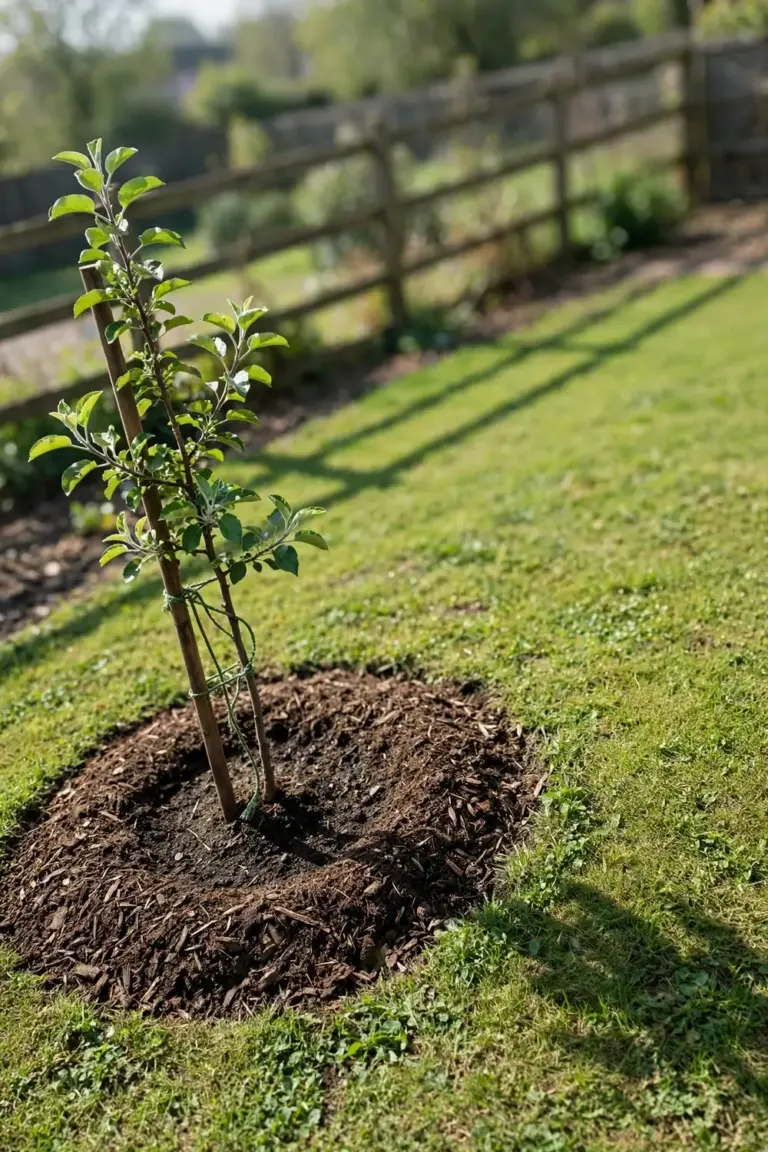
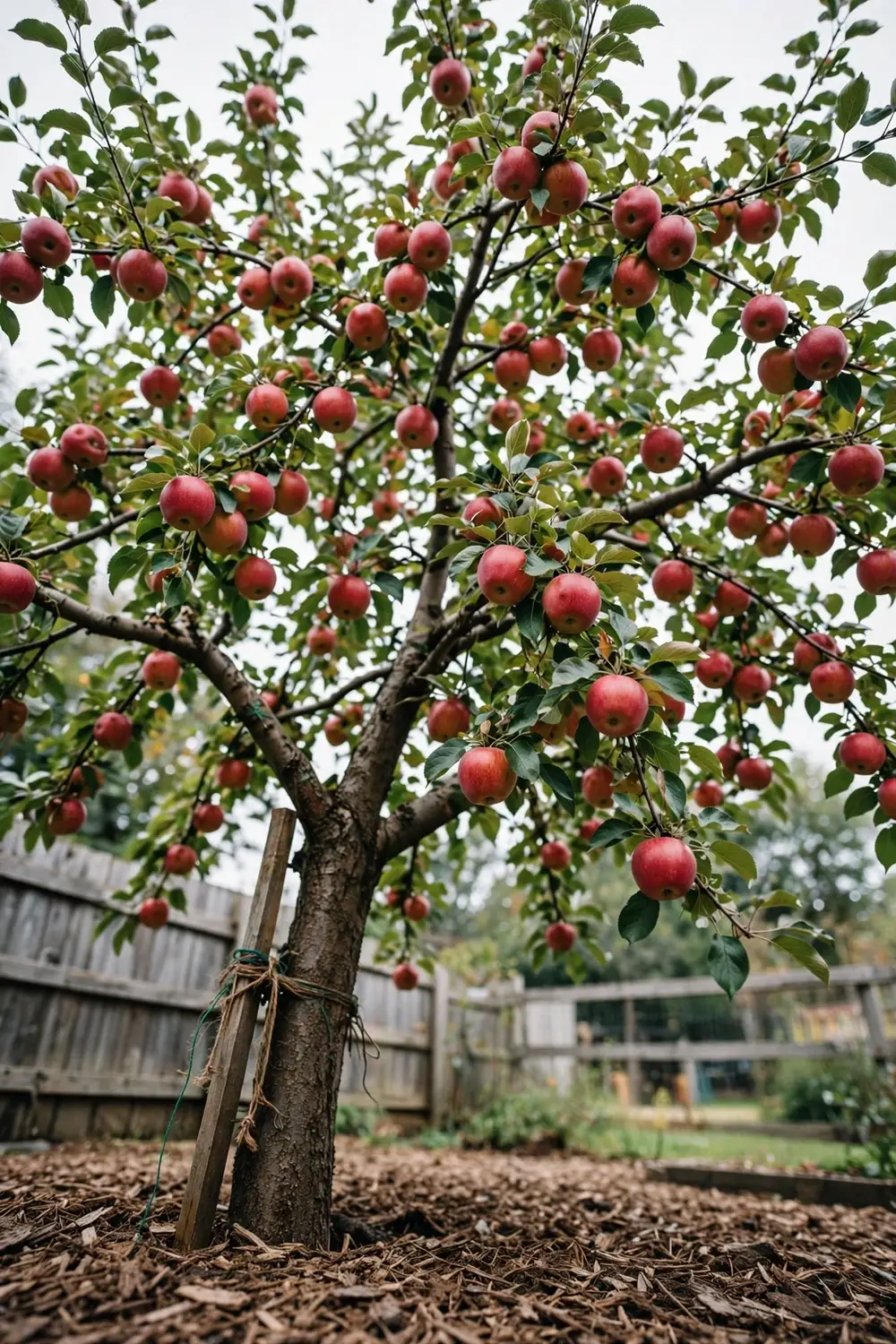
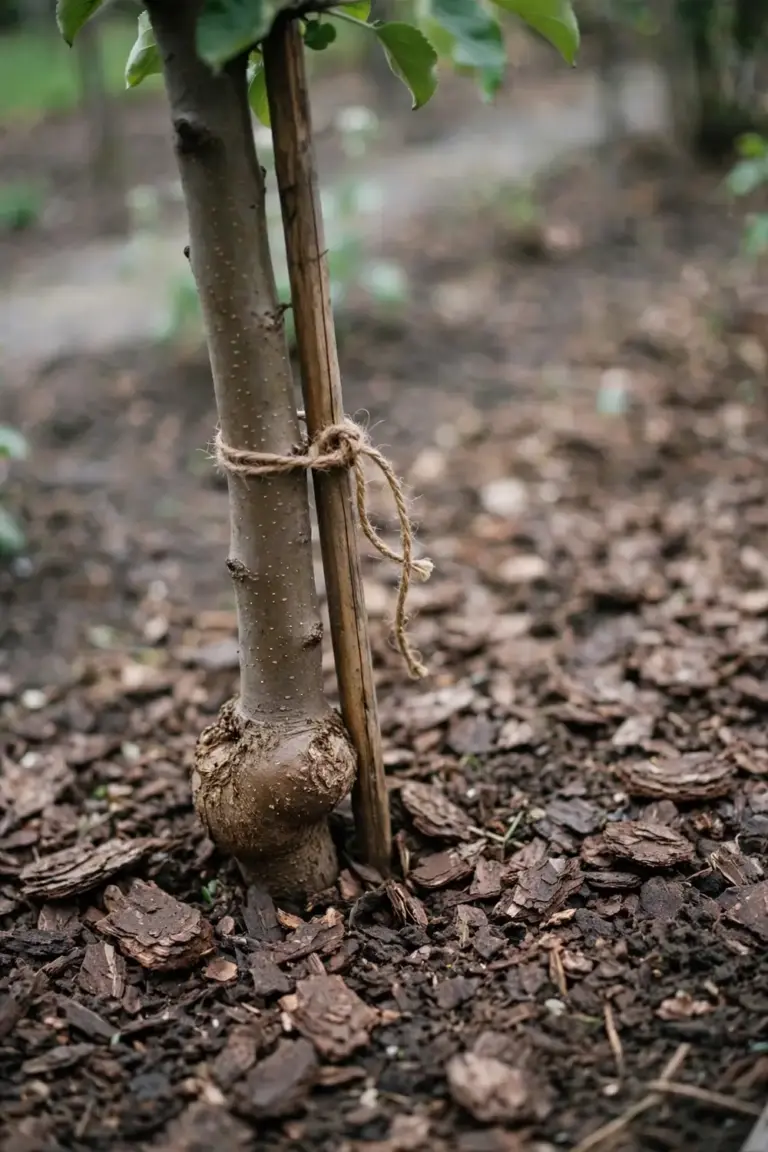
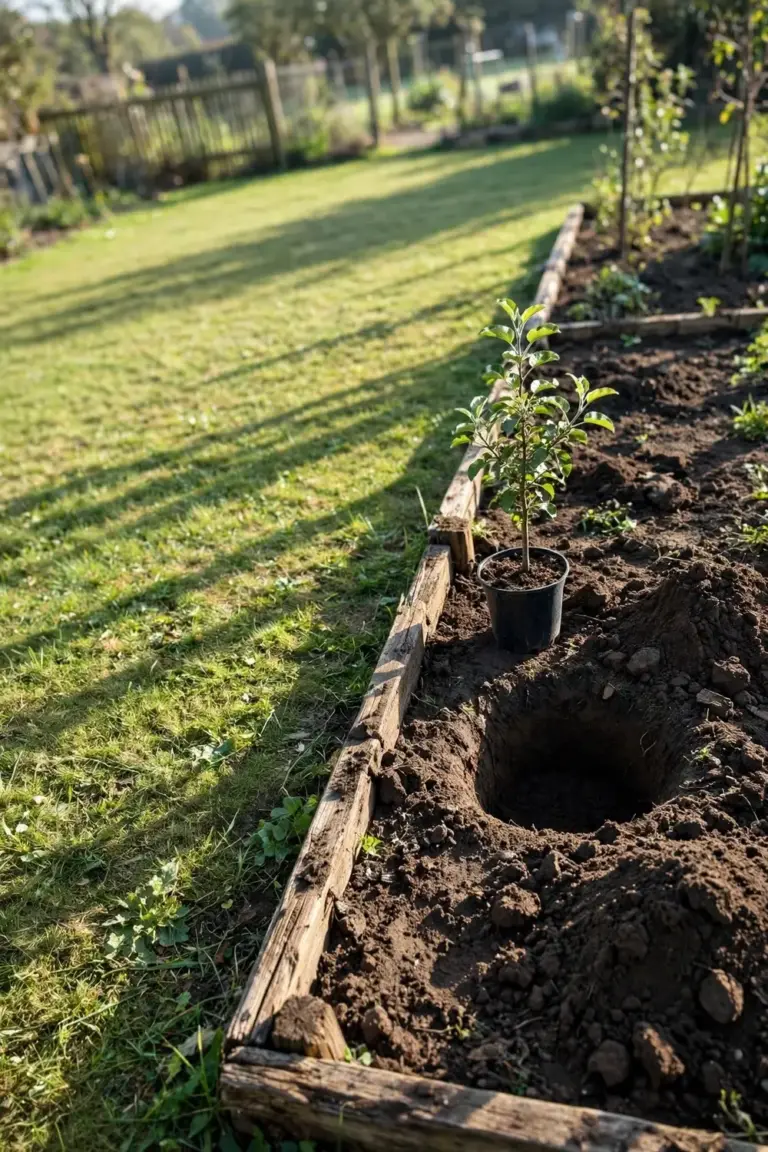
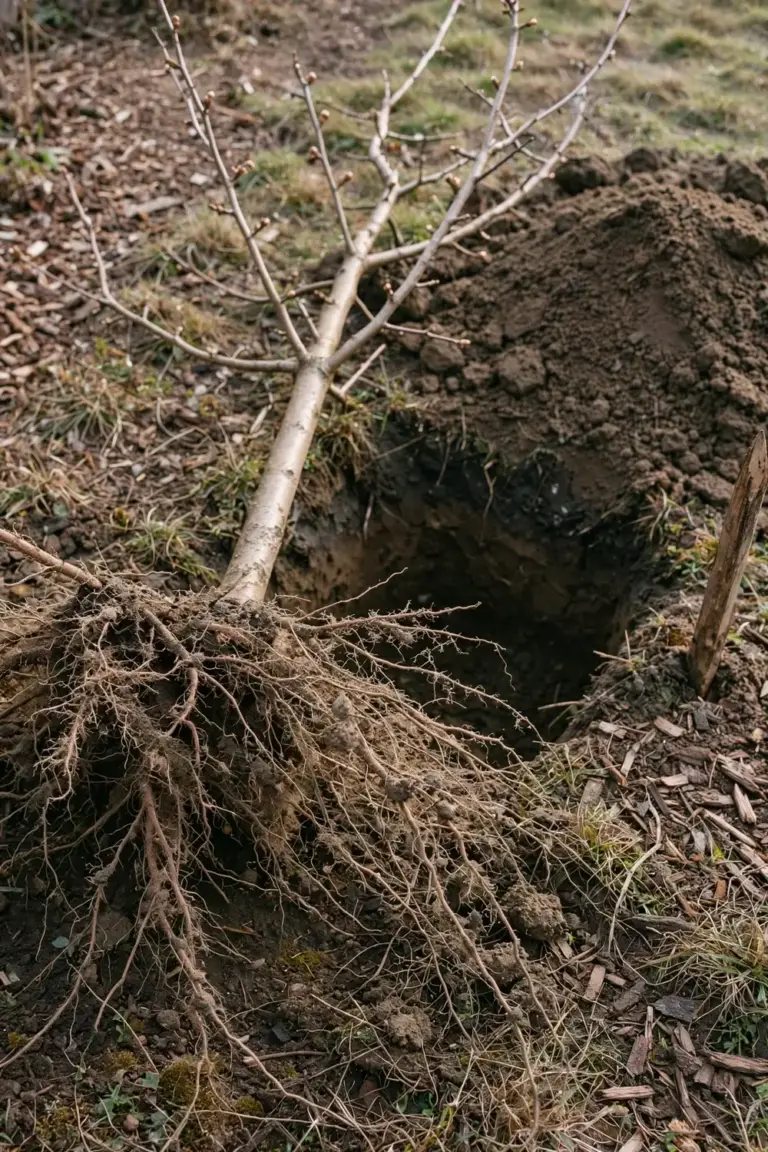
Plant in winter, while the tree sleeps. Bare-rooted stock costs less and establishes well in winter soil. Potted stock plants in any mild month, but winter still suits it best. Dig a hole twice the width of the pot. Bunnings’ Australian planting guide uses that width. Set the tree at the depth it grew in the nursery. Keep the graft union above the soil. Roots buried under soil rot. Roots left in air dry. Backfill with the soil you dug out. Skip manure and compost in the hole, because roots must grow out into the surrounding soil and rich hole fill keeps them circling. Water deep. Stake at planting, before roots spread. Mulch wide, clear of the trunk. Stake with a firm post and a soft tie. Drive the post before you set the tree, so the post never spears a root. Tie the trunk loosely. A tight tie strangles the trunk as it thickens. Water the tree on planting day. Soak the root zone, then leave it. Roots grow toward moisture, and a soaked zone pulls them outward. Check the tie each season. Loosen it as the trunk thickens. A forgotten tie cuts a ring around the bark. The ring girdles the tree and kills it above the cut. Label the variety at planting. Labels fade. A tree without a name loses its pollination partner.
6. Water Deep and Mulch Wide
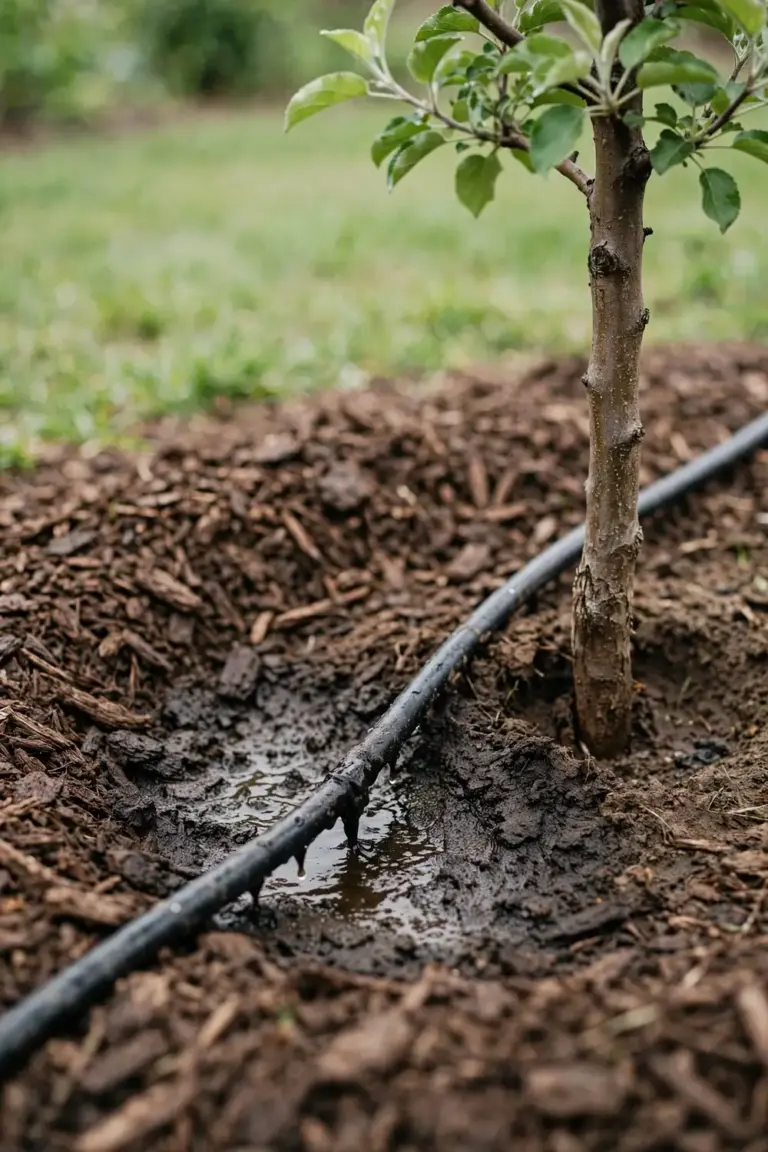
Water deep, then let the top soil dry. Shallow daily watering grows shallow roots. A deep soak in dry weather beats a sprinkle each day. Young trees need steady water while they establish. Established trees need water most during flowering and fruit set. Mulch holds moisture and cools roots. Lay a thick mulch ring and keep it clear of the trunk. Bark that stays wet rots. A tree that wilts in a hot week needs water at the roots, not a spray on the leaves. Check soil moisture with a finger before you water. Wet soil needs no more water. Mulch with straw, bark, or composted wood chips. Each one holds moisture and cools roots. Straw breaks down fast and needs topping up through the season. Bark lasts longer and suits paths as well as beds. Composted wood chips feed soil life as they rot. Fresh wood chips steal nitrogen from the soil surface, so compost them first or keep them clear of young roots. Drip lines beat sprinklers for apple trees. Drip puts water at the roots and keeps leaves dry. Dry leaves catch fewer diseases. A hose with a slow trickle works too. Move it around the canopy edge each time. A rain gauge beats a calendar, so water when the gauge stays dry.
7. Feed Lightly and Test Before You Add Lime
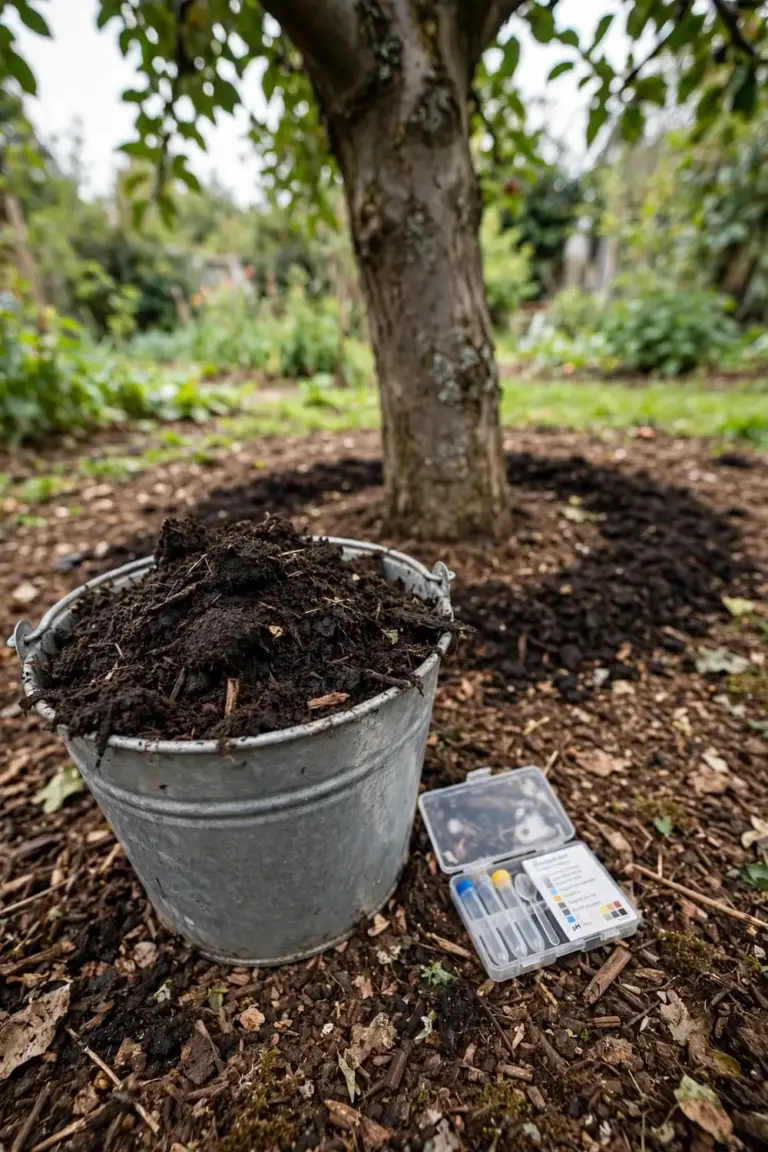
Apple trees are light feeders. Excess nitrogen grows leaves at the cost of fruit. Feed once in spring with a balanced fertilizer. Spread fertilizer under the canopy, clear of the trunk. Test the soil before you add lime. Lime raises pH, and an apple tree already near pH 6.5 needs none. A soil test decides the dose. Guesswork over-limes. A tree that grows pale leaves may lack iron, or it may sit in wet soil. Check drainage before you feed. Feeding a drowning tree fixes nothing. Compost feeds gently. A bucket of compost under the canopy each spring suits most trees. Compost releases nutrients slowly and builds soil life with them. Bagged fertilizer acts faster and risks more. A tree that grows soft, sappy shoots got too much nitrogen. Skip the next feed and let the tree harden. Pale leaves with green veins point to iron trouble, and iron trouble often traces to wet soil or high pH. Fix the soil before you chase the nutrient. A soil test settles the question.
8. Pair Varieties That Flower Together
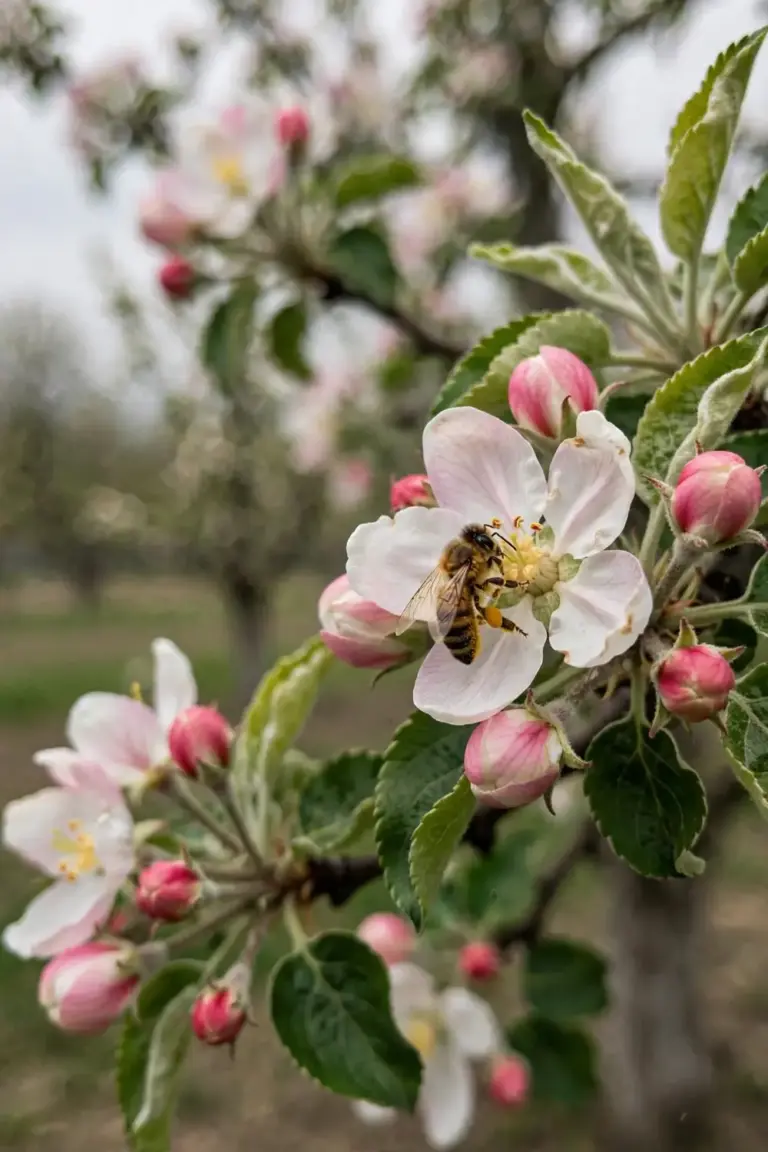
Most apples crop better with a second variety. The partner must flower at the same time. Nursery pollination charts sort varieties into flowering groups, and two trees from the same group pollinate each other. A tree one group either side also works. Bees carry the pollen, so plant the partner in the same garden. A lone tree still fruits when a neighbor’s apple flowers nearby, but the crop stays thin and uneven. Some varieties claim self-fertility, so treat the claim with care. A partner still lifts the crop. A crabapple flowers with apples and pollinates them. Plant a crabapple for pollen, not for eating. Its flowers open beside your apples, and bees carry the pollen across. Multi-graft trees carry two or more varieties on one trunk. The grafts pollinate each other, which solves the one-tree problem for small gardens. Bloom timing shifts with the season. A warm winter pushes bloom early. A cold spring holds it back. Partners chosen from the same flowering group still overlap in most years. Frost at bloom kills flowers in one night. A tree on high ground escapes the worst frost. A tree in a hollow catches it. Plant future trees where cold air drains away. Crabapples sit happily in small gardens, and one crabapple pollinates several apple trees around it. Bees do the rest.
9. Prune to an Open Centre Every Winter
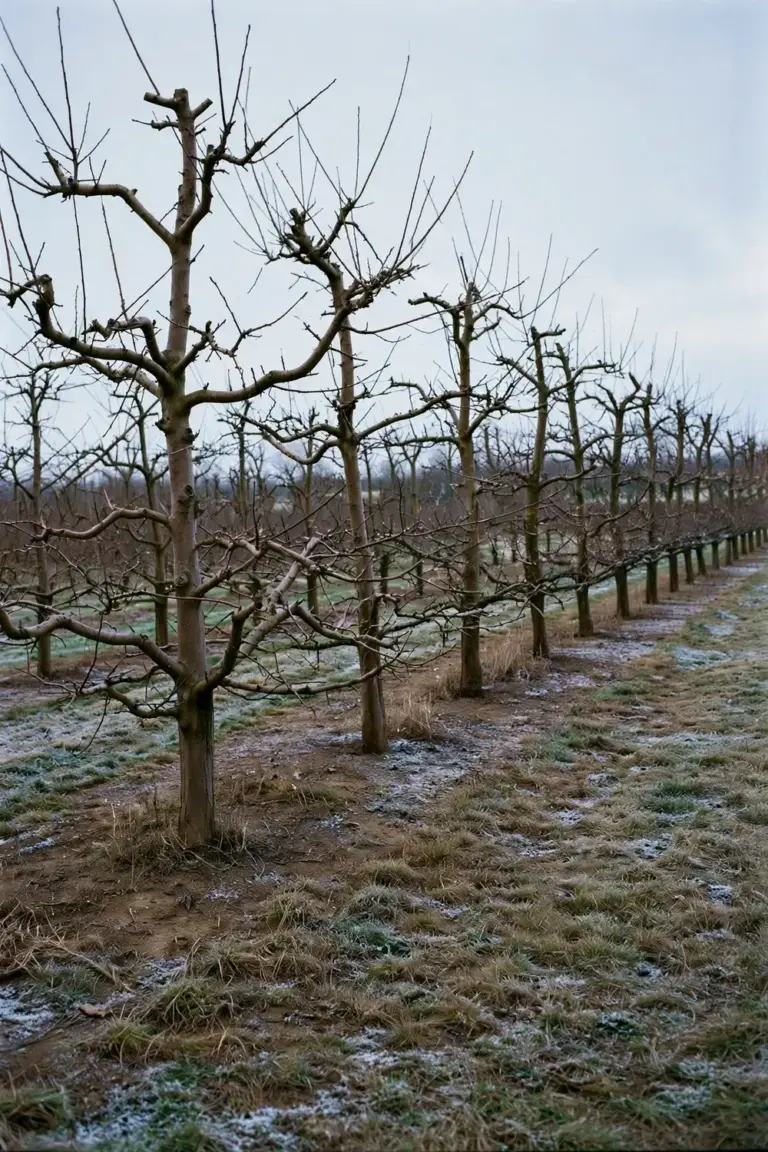
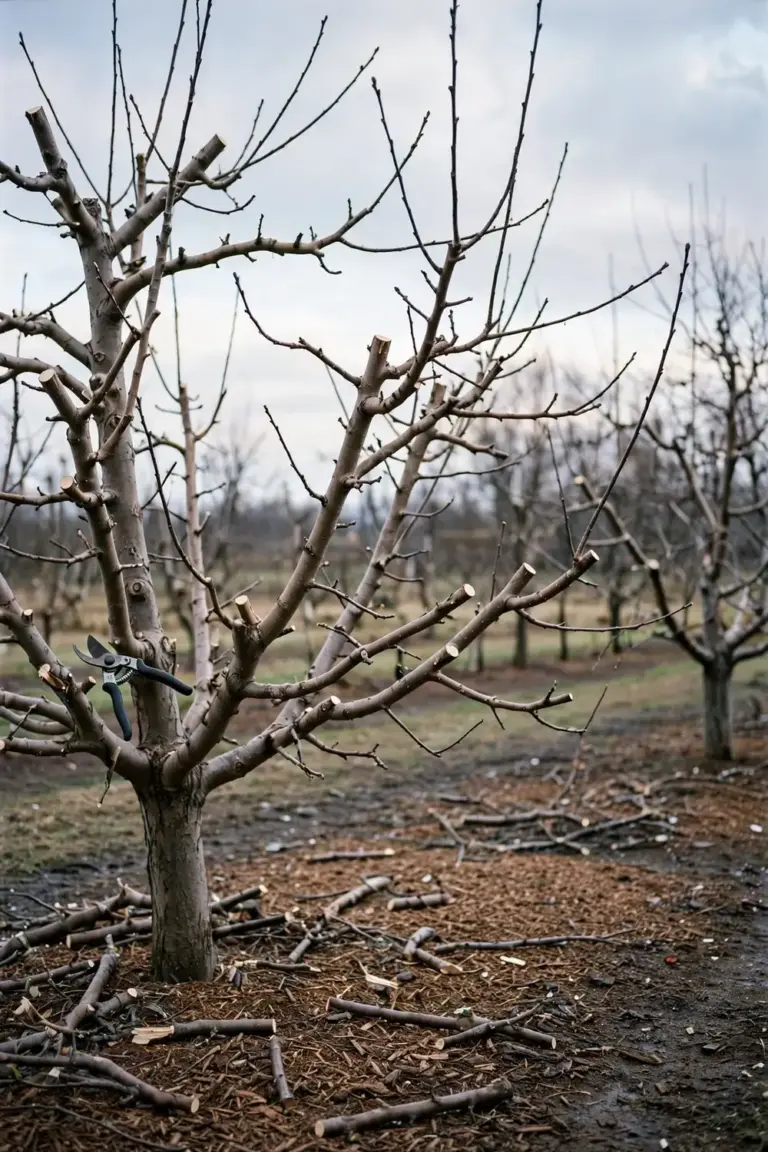
Prune in winter, while the tree sleeps. Cut dead, damaged, and crossing wood first. Open the center so light and air reach the spurs. Fruit grows on spurs, and spurs form on wood two or three years old. Monty Don’s apple advice notes that spurs form on wood two or three years old. Protect them. Penn State Extension’s apple training guide caps tree height at 90 percent of row spacing and removes at least two limbs each year. Prune to an outward bud. The new shoot grows away from the center. Keep removal near 20 percent of growth, per Gardening Australia’s pruning guidance. Summer trimming holds size. Winter pruning grows the tree. Hard winter pruning grows shoots without fruit. Clean cuts heal. Ragged cuts invite rot. Train a young tree in its first winters. Pick three or four scaffold branches spaced around the trunk. Cut the rest away. The scaffolds carry the fruit for the life of the tree. Spreaders push young branches outward. A wide crotch holds weight. A narrow crotch splits under a heavy crop. Tie branches down in summer to slow their growth and set fruit buds. A branch pulled toward horizontal fruits sooner than a branch left vertical. Check ties each month. A tie left too long cuts the bark.
10. Thin Fruit to One Apple per Cluster
Thin fruit after the tree drops its surplus fruit in early summer. Louisiana State University’s AgCenter thins apples to 15 to 20 cm apart, with one apple per fruiting spur. Thin early. Early thinning grows bigger fruit and steadies next year’s crop. Leave the largest, healthiest apple in each cluster. Remove damaged fruit first. A tree left unthinned crops heavily one year and lightly the next. Thinning feels wasteful. The tree pays it back in size and steadiness. Apple trees set more fruit than they can ripen. The tree drops its surplus in early summer. What stays still overloads the branches. Biennial bearing follows, and the tree crops heavily one year, then rests the next. Thinning breaks the cycle. A thinned tree fruits every year. Thin when fruitlets reach marble size. Small hands suit the work, and fingers pinch fruitlets off cleanly. Shears suit tight clusters. Work from the outside of the canopy inward, and step back often to judge the load.
11. Check Pests and Diseases Weekly
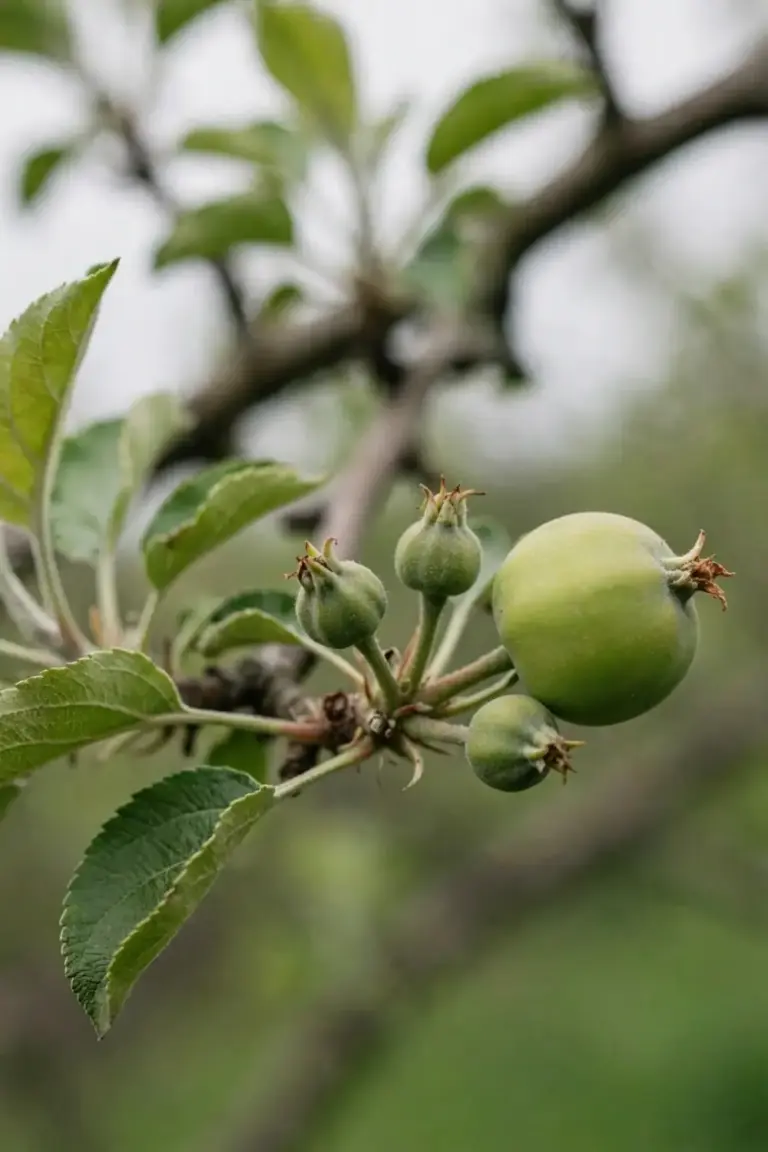
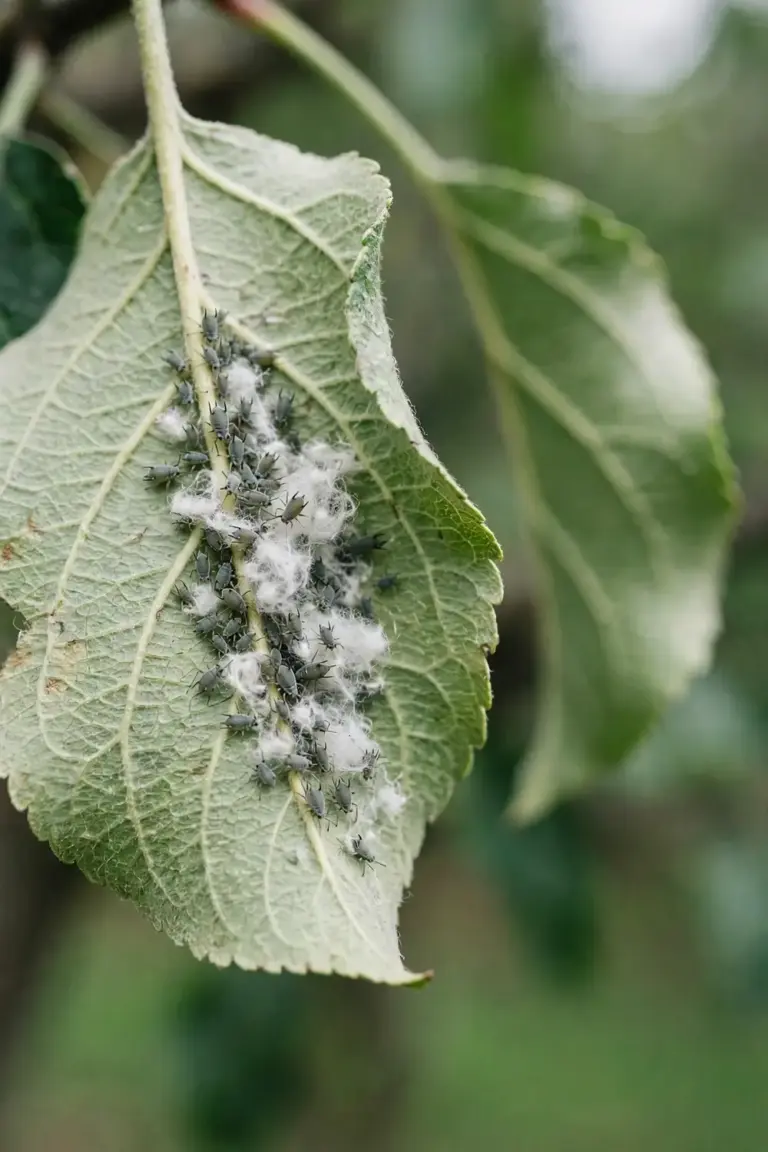
Check the tree each week from spring. Codling moth tunnels into fruit. Apple scab spots leaves and fruit. Woolly aphid coats shoots in white wax. Fruit fly stings ripening fruit and leaves a dimpled sting mark. Catch each early. Pick up fallen fruit. Fallen fruit shelters pests through winter. Apple scab control covers identification and options. Skip spray programs from overseas sources, because Australian labels govern Australian gardens. Follow the label. A tree that loses leaves early loses next year’s fruit too. Weekly checks cost minutes and save crops. Codling moth lays eggs on young fruit. The grub tunnels to the core. Cardboard bands around the trunk trap grubs that crawl down to pupate. Check bands weekly and destroy what you find. Fruit fly needs exclusion. Fine mesh bags over fruit keep flies off. Bagging suits small trees with few fruit. A large tree needs other controls. Woolly aphid hates a hard water jet. Blast colonies off shoots on a calm day with a hard jet from the hose. Sooty mold grows on aphid honeydew. Clear the aphids and the mold fades with them.
12. Pick at Full Colour and Store Cold
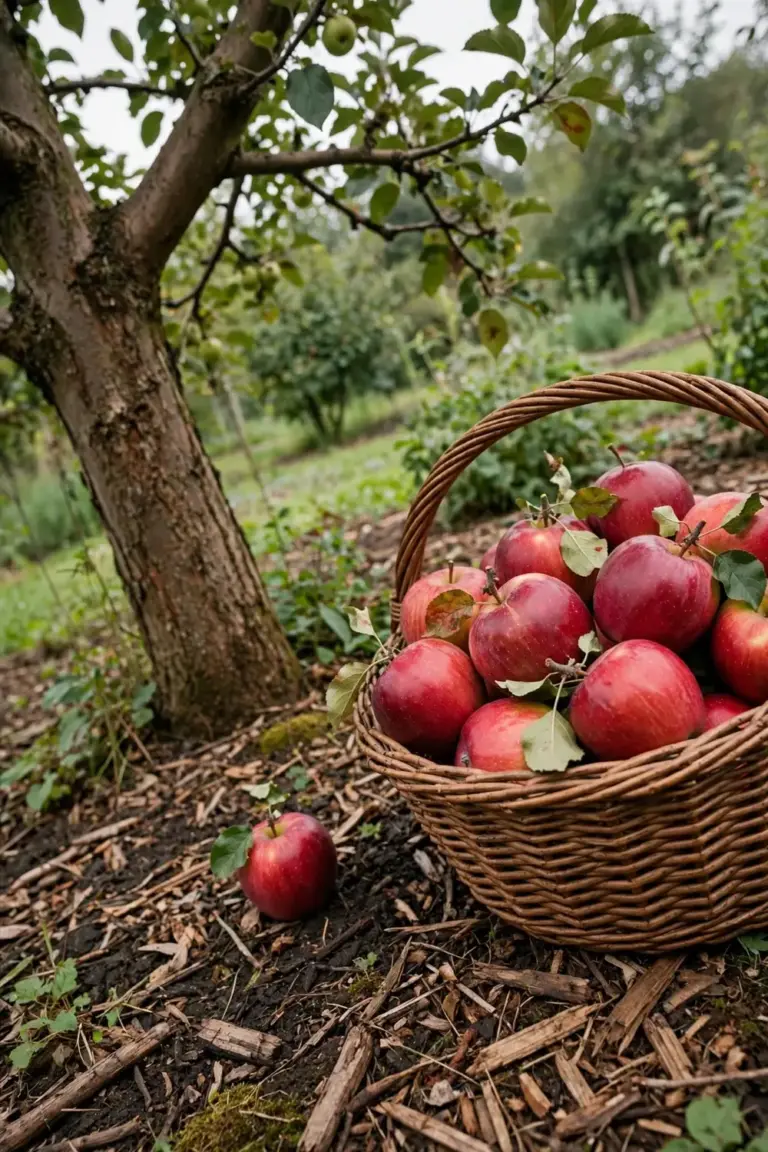
Pick when color, firmness, and flavor agree. Red color alone misleads, since Red Delicious colors before it ripens. Taste one apple. Sweet and crisp means ready. Lift and twist. A ripe apple parts from the spur with a gentle twist. Store sound apples near 0 degrees Celsius at 90 to 95 percent humidity, per Iowa State Extension storage guidance. Red Delicious keeps 3 to 5 months under those conditions. Use bruised apples first. Bruised fruit rots and spreads rot to sound neighbors. Check stored fruit each week. Remove any apple that softens. Sort fruit at harvest. Keep only sound apples for storage. Eat bruised apples first, then small apples, because large apples store worst. Windfalls suit cooking the same day. A windfall left on the ground feeds pests. Pick windfalls up each week. A stored apple that softens goes straight to the bin. One rotten apple spoils its neighbors. Check the store each week through winter. Keep the store dark and cool. Light and warmth wake stored fruit early.
13. Fix the Five Failures That Stop a Crop
Five failures stop most apple crops, and each one has a plain fix. Work through them in order. The first two cover flowering. The next two cover fruit and leaves. The last covers harvest. Most failures trace to chill, pollination, or water. Fix those three and the rest follows. A tree that fails one year can fruit the next. Give it the fix, then give it a season.
No Flowers in Spring
No flowers means the chill requirement went unmet, or last year’s pruning cut the spurs. Match chill first. Protect spurs at pruning. A tree that leafs out late and bare had too little chill. A tree that flowers on bare wood lost its spurs to hard pruning.
Flowers Drop Without Fruit
Flowers drop when frost hits bloom, when bees stay home in cold rain, or when no partner flowers nearby. Plant a partner. Skip frost pockets. A tree in a low hollow catches every frost. Higher ground drains cold air away.
Fruit Stays Small
Small fruit means the tree carried too many apples, or water ran short. Thin to one per cluster. Water deep in dry weather. A tree that sets 200 apples ripens none of them well. A tree thinned to 60 ripens fruit worth eating.
Leaves Yellow in Summer
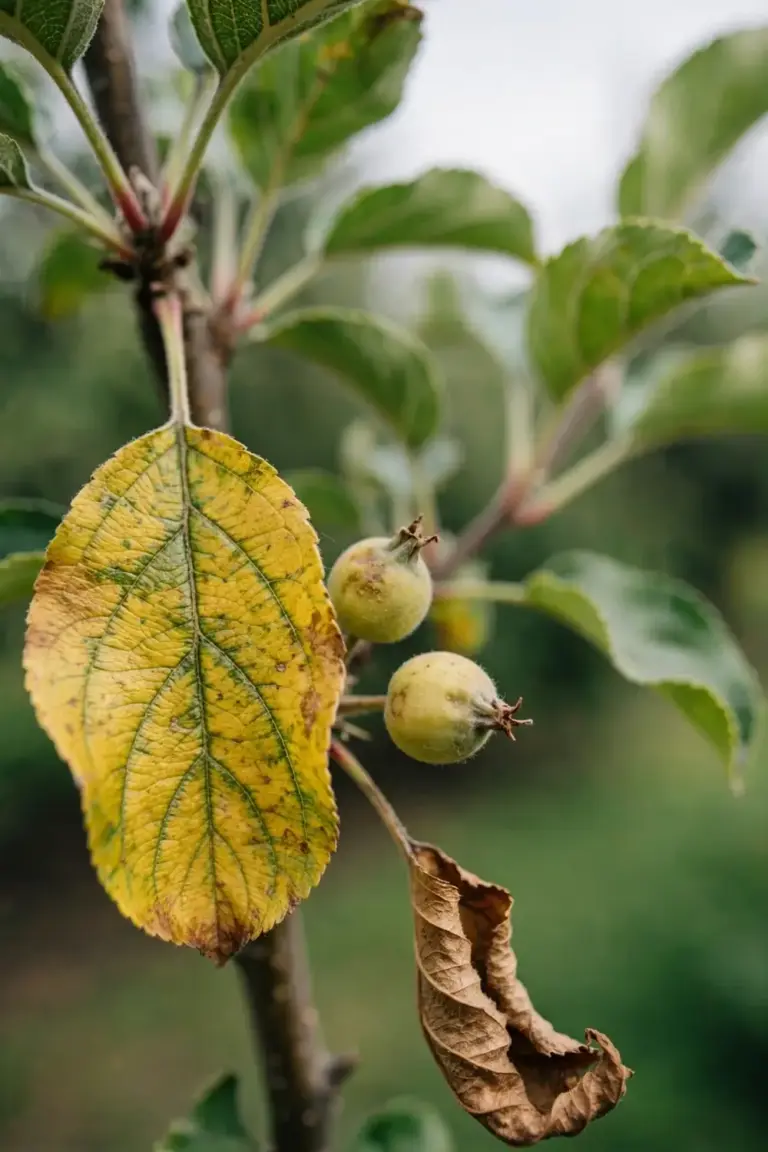
Yellow leaves mean water stress, nutrient shortage, or root trouble. Check soil moisture first. Test soil before feeding. A tree in wet soil yellows while drowning. A tree in dry soil yellows while thirsty. The fix differs, so check before you act.
Fruit Splits or Rots
Split fruit follows heavy rain after a dry spell. Rot follows bruises and fallen fruit, so pick up windfalls and use bruised apples first. A split apple still eats well on the day it splits. A rotten apple belongs in the bin, not on the tree.
14. Frequently Asked Questions
Yes, with low-chill varieties. Anna, Dorsett Golden, and Tropic Sweet fruit where winters stay mild. Plant in full sun, water through dry spells, and accept a smaller crop than a cool-climate garden grows. A high-chill variety in Brisbane leafs out late and fruits poorly, so chill matching decides the result.
Most apples crop far better with a partner. Plant two varieties that flower at the same time, or plant one multi-graft tree carrying two varieties. A lone tree still fruits when a neighbor’s apple flowers nearby. Self-fertile labels exist, but a partner lifts the crop on every variety. One tree in a small garden works when a crabapple or multi-graft fills the partner role.
You can grow a tree, but the fruit will not match the parent. Seedling apples take 5 years or more to fruit, and the apple may taste sharp, soft, or bland. Grafted stock stays true to type and fruits in about 2 years on dwarf rootstock. Grow seed as an experiment. Buy grafted stock for fruit you plan to eat.
Three causes cover most cases. Frost kills open bloom. Cold rain keeps bees inside. No partner flowers nearby. Check bloom dates against a partner variety, and plant a crabapple or multi-graft when the garden holds one tree. Late frost pockets cause repeat failure, so plant future trees on higher ground where cold air drains away.
Yes, on dwarf rootstock. Start in a 30 to 40 cm pot and up-pot as the tree grows, finishing in a wine barrel. Use free-draining potting mix, water often, and feed lightly in spring. A potted tree fruits well for years when roots stay cool and moist. Repot every few years, and prune to hold the size.
15. Start With Chill, Then Plant
Chill decides the variety, and the variety decides the partner. Buy grafted stock in winter. Plant it in sun. Prune it each winter. Thin it each summer, and the tree does the rest.